World

China doubles down on coal as energy crunch bites

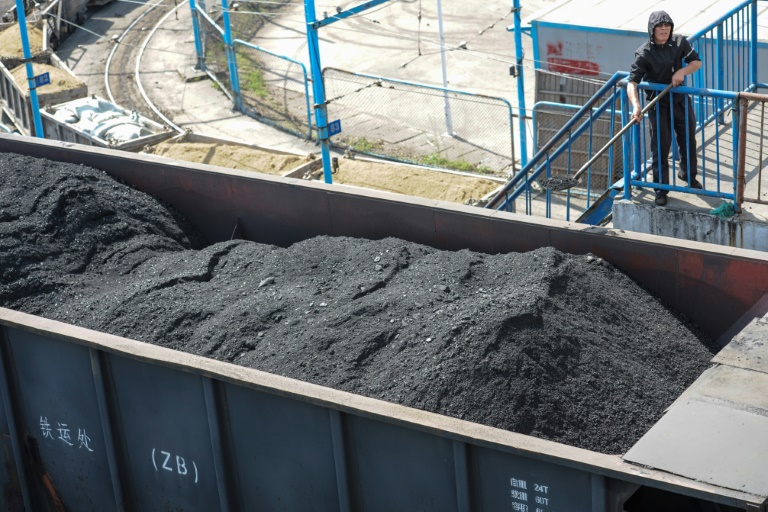
China has stepped up spending on coal in the face of extreme weather, a domestic energy crunch and rising global fuel prices — raising concerns Beijing’s policies may hinder the fight against climate change.

The country is the world’s biggest emitter of the greenhouse gases driving global warming, and President Xi Jinping has vowed to reduce coal use from 2026 as part of a broad set of climate promises.

Beijing has committed to peaking its carbon emissions by 2030 and achieving carbon neutrality by 2060. 

Overall carbon emissions in China have fallen for four consecutive quarters on the back of an economic slowdown, research reported by climate monitor Carbon Brief showed in early September.

But at the same time, slowing growth has led authorities to rely on smokestack industries in an effort to boost the economy.

The push to shore up coal power — which still makes up most of China’s energy supply — has alarmed analysts who warn that it will make an eventual transition to a renewables-dominated energy mix more difficult.

Spooked by an energy shortage last autumn, Chinese authorities in spring ordered coal producers to add 300 million tonnes of mining capacity this year — the equivalent of an extra month of coal production for the country.

In just the first quarter of 2022, regulators endorsed the equivalent of half the entire coal-fired power plant capacity approved in 2021, according to Greenpeace.

– Inefficiencies –

Authorities have also burned and mined more coal in recent weeks in order to meet increased air conditioning demand and make up for shrunken hydropower dams during China’s hottest-ever summer.

Premier Li Keqiang in June called for “releasing advanced coal capacity, as much as possible, and implementing long-term coal supply”.

The independent Climate Action Tracker warns that even the “most binding” climate targets laid out by Beijing would be in line with global warming of between three and four degrees Celsius before the end of the century — well above the Paris Agreement’s goal to limit global warming to 1.5C.

To meet that goal, it said, China would “need to reduce emissions as early as possible and well before 2030” — as well as “decrease coal and other fossil fuel consumption at a much faster rate than currently planned”.

Beijing’s unwillingness to let go of coal stems partly from inefficiencies in its power grid that prevent surplus energy from being transported across regions.

Coal and gas give local officials a ready source of energy and are, in practice, “the only way for local officials to avoid power shortages”, energy researcher Lauri Myllyvirta wrote in a Carbon Brief report.

– ‘Politically crucial year’ –

China has made real progress in building up renewable energy capacity.

The current operating solar capacity in the country accounts for nearly half the global total, according to San Francisco-based non-governmental organisation Global Energy Monitor (GEM).

But unlike wind or sunlight, stockpiles of coal and gas can be held for long periods of time and deployed as needed, giving local authorities a sense of security.

Yet, building more coal facilities means less focus on fixing problems with the grid, Myllyvirta said in comments to AFP, warning plant owners would be motivated to “slow down the transition as they will have an interest in making use of their brand-new assets”.

At the same time, the central government wants to “avoid large-scale blackouts, which we witnessed last winter in the northeastern provinces, in this politically crucial year for Xi”, Byford Tsang, senior policy adviser at climate think-tank E3G, told AFP.

President Xi is expected to secure an unprecedented third term in power at a major Communist Party meeting next month.

Tsang said skyrocketing international energy prices driven by the Russian invasion of Ukraine also pushed Beijing to shore up domestic coal production, pointing to a 17.5 percent drop in coal imports in the first half of this year compared to a year earlier.

Expanding coal capacity as a quick fix, however, goes against “immediate annual cuts in coal use that the UN and leading research organisations have called for”, GEM analysts said.

GEM said all of China’s proposed new mines could together emit as much as six million tonnes of the greenhouse gas methane each year once operational. That is roughly equivalent to the annual methane emissions of Austria, according to World Bank data.

“The more coal China builds now, the harder it becomes to finance and deliver renewable energy projects later,” Wu Jinghan, climate and energy project leader for Greenpeace East Asia, told AFP.

“The longer we wait to transition, the steeper the transition pathway becomes,” Wu said. “That means more disruptive and higher risk, financially and environmentally.”
'Crowns of the forest': Indonesian helps orchids bloom again

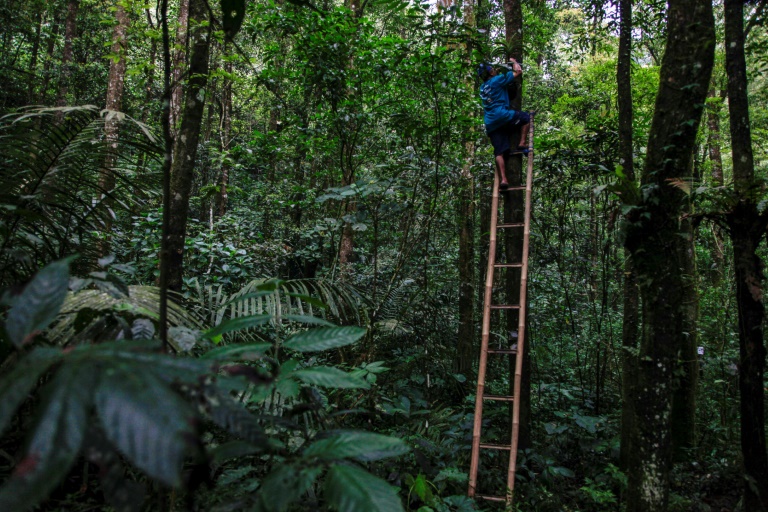
Orchids in hand and a bamboo ladder on his shoulder, farmer Musimin scans the forest at the foot of Indonesia’s most active volcano to point out clusters of the indigenous flowers he has been salvaging for years.

The 56-year-old, who goes by one name like many Indonesians, is a self-taught conservationist with no formal background in botanics. 

He has dedicated his career to cultivating plants he compares to gemstones, and has been on a one-man mission to save the exotic blooms unique to the land on the outskirts of Yogyakarta on Java island.

His work began after lava and ash ripped through the area from the powerful eruptions of Mount Merapi, the last major one in 2010.

“I remember orchids used to be abundant in the forest,” he said.

“Locals from surrounding villages could take any orchids they wanted, and they sold the flowers at nearby tourist destinations.”

But many were destroyed by the ash clouds that fell on the land below the volcano. 

So he set about saving their wilting fortunes, over the years building two bamboo greenhouses where he could preserve the most special kinds of orchids.

The volcano killed about 60 people when it erupted in 1994, destroying thousands of hectares of forest. 

Another eruption in 2010 left more than 300 dead, while also wreaking havoc on the land.

“The forest near my house was burnt dry and the orchids I used to easily find were gone. I regretted not keeping one or two of them,” said Musimin of the 1994 tragedy.

That encouraged him to join the local government’s effort to find the surviving orchids as he and his neighbours explored what remained.

They managed to revive at least 90 varieties of orchids that would also end up surviving the 2010 eruption, he said.

– ‘Pioneer of orchid conservation’ – 

Now Musimin mostly works alone and wants those who enter the forest to leave the orchids to blossom instead of trying to profit from them.

“A lot of people now choose to pick and sell orchids from the forest. I personally think the orchids are better off in their habitat, where they can live as the crowns of the forest,” he said.

Other orchid centres run by locals who learned about conservation from Musimin have sprung up in the forest around the volcano, said Mount Merapi National Park spokesperson Akhmadi.

“He is, indeed, the pioneer of orchid conservation in Mount Merapi. His work has become an example for other groups we are working with, that have emulated and further developed his programmes,” he said. 

With others now taking Musimin’s lead, the father of two wants to continue his orchid-saving legacy by passing down his self-taught botanical knowledge to his grandchild, whom he often takes into the forest. 

“I am showing him orchids as early as possible,” he said.

“Who knows, he could be my successor.”

'Crowns of the forest': Indonesian helps orchids bloom again

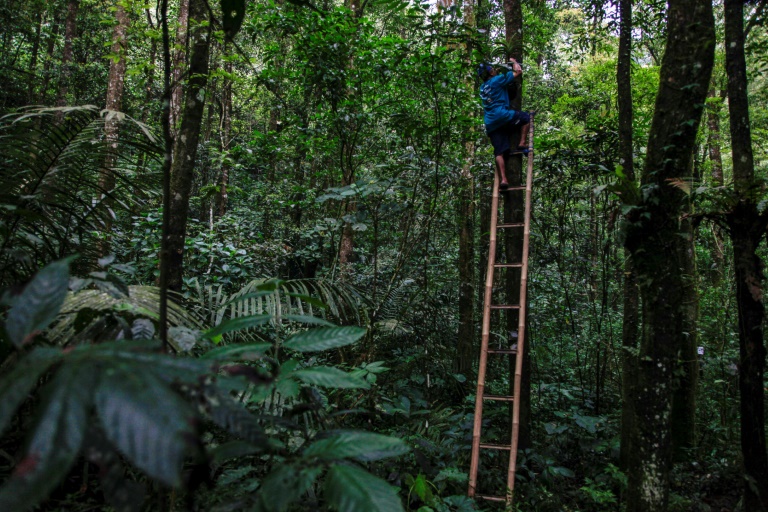
Orchids in hand and a bamboo ladder on his shoulder, farmer Musimin scans the forest at the foot of Indonesia’s most active volcano to point out clusters of the indigenous flowers he has been salvaging for years.

The 56-year-old, who goes by one name like many Indonesians, is a self-taught conservationist with no formal background in botanics. 

He has dedicated his career to cultivating plants he compares to gemstones, and has been on a one-man mission to save the exotic blooms unique to the land on the outskirts of Yogyakarta on Java island.

His work began after lava and ash ripped through the area from the powerful eruptions of Mount Merapi, the last major one in 2010.

“I remember orchids used to be abundant in the forest,” he said.

“Locals from surrounding villages could take any orchids they wanted, and they sold the flowers at nearby tourist destinations.”

But many were destroyed by the ash clouds that fell on the land below the volcano. 

So he set about saving their wilting fortunes, over the years building two bamboo greenhouses where he could preserve the most special kinds of orchids.

The volcano killed about 60 people when it erupted in 1994, destroying thousands of hectares of forest. 

Another eruption in 2010 left more than 300 dead, while also wreaking havoc on the land.

“The forest near my house was burnt dry and the orchids I used to easily find were gone. I regretted not keeping one or two of them,” said Musimin of the 1994 tragedy.

That encouraged him to join the local government’s effort to find the surviving orchids as he and his neighbours explored what remained.

They managed to revive at least 90 varieties of orchids that would also end up surviving the 2010 eruption, he said.

– ‘Pioneer of orchid conservation’ – 

Now Musimin mostly works alone and wants those who enter the forest to leave the orchids to blossom instead of trying to profit from them.

“A lot of people now choose to pick and sell orchids from the forest. I personally think the orchids are better off in their habitat, where they can live as the crowns of the forest,” he said.

Other orchid centres run by locals who learned about conservation from Musimin have sprung up in the forest around the volcano, said Mount Merapi National Park spokesperson Akhmadi.

“He is, indeed, the pioneer of orchid conservation in Mount Merapi. His work has become an example for other groups we are working with, that have emulated and further developed his programmes,” he said. 

With others now taking Musimin’s lead, the father of two wants to continue his orchid-saving legacy by passing down his self-taught botanical knowledge to his grandchild, whom he often takes into the forest. 

“I am showing him orchids as early as possible,” he said.

“Who knows, he could be my successor.”

Wanted crypto founder Do Kwon says 'not on the run'

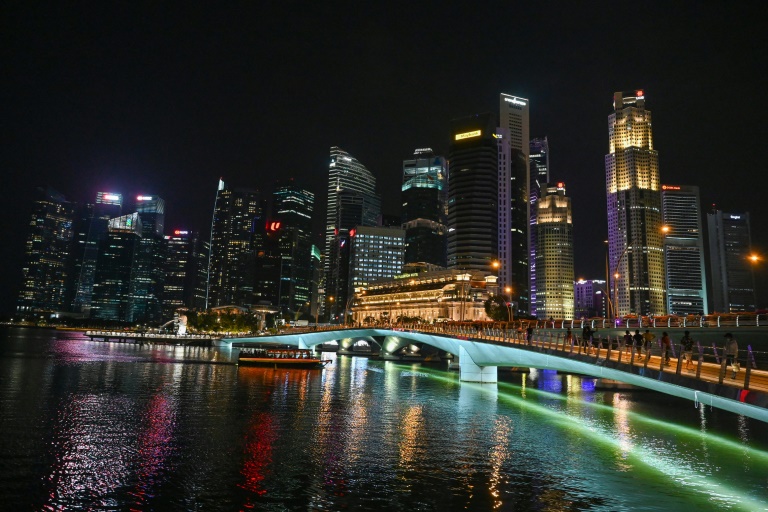
Do Kwon, the wanted South Korean founder of the failed cryptocurrency Terra, denied Sunday he was on the run after the Singapore police said he was not in the city-state as had been believed.

Kwon’s whereabouts have been thrown into question after the Singapore Police Force (SPF) statement late Saturday, and his tweets did not reveal where he was.

The collapse of Terraform Labs earlier this year wiped out about $40 billion of investors’ money.

A South Korean court on Wednesday issued an arrest warrant for Kwon.

Early Sunday he said on Twitter: “I am ‘not on the run’ or anything similar”, but did not reveal where he was.

“For any agency that has shown interest to communicate, we are in full cooperation and we don’t have anything to hide,” he added.

“We are in the process of defending ourselves in multiple jurisdictions… and look forward to clarifying the truth over the next few months.”

The 31-year-old was earlier believed to be in Singapore, where last month he gave his first media interview since the crypto operator folded in May.

Late Saturday, the SPF said in an email response to an AFP query that “Do Kwon is currently not in Singapore”.

“SPF will assist the Korean National Police Agency (KNPA) within the ambit of our domestic legislation and international obligations,” said the brief statement, which gave no further details.

Singapore’s Straits Times newspaper has reported that Kwon’s work permit in the city-state was due to expire on December 7, but his application for a renewal could be at risk now.

South Korean prosecutors have also issued arrest warrants for five other people — who were not named — linked to stablecoin TerraUSD and its sister token Luna.

Kwon’s Terra/Luna system disintegrated in May, with the price of both tokens plummeting to near zero, and the fallout hitting the wider crypto market. Its collapse sparked more than $500 billion in losses.

Stablecoins are designed to have a relatively stable price and are usually pegged to a real-world commodity or currency.

TerraUSD, however, was algorithmic — using code to maintain its price at around one US dollar.

Many investors lost their life savings when Luna and Terra entered a death spiral, and South Korean authorities have opened multiple criminal probes into the crash.

Wanted crypto founder Do Kwon says 'not on the run'

Do Kwon, the wanted South Korean founder of the failed cryptocurrency Terra, denied Sunday he was on the run after the Singapore police said he was not in the city-state as had been believed.

Kwon’s whereabouts have been thrown into question after the Singapore Police Force (SPF) statement late Saturday, and his tweets did not reveal where he was.

The collapse of Terraform Labs earlier this year wiped out about $40 billion of investors’ money.

A South Korean court on Wednesday issued an arrest warrant for Kwon.

Early Sunday he said on Twitter: “I am ‘not on the run’ or anything similar”, but did not reveal where he was.

“For any agency that has shown interest to communicate, we are in full cooperation and we don’t have anything to hide,” he added.

“We are in the process of defending ourselves in multiple jurisdictions… and look forward to clarifying the truth over the next few months.”

The 31-year-old was earlier believed to be in Singapore, where last month he gave his first media interview since the crypto operator folded in May.

Late Saturday, the SPF said in an email response to an AFP query that “Do Kwon is currently not in Singapore”.

“SPF will assist the Korean National Police Agency (KNPA) within the ambit of our domestic legislation and international obligations,” said the brief statement, which gave no further details.

Singapore’s Straits Times newspaper has reported that Kwon’s work permit in the city-state was due to expire on December 7, but his application for a renewal could be at risk now.

South Korean prosecutors have also issued arrest warrants for five other people — who were not named — linked to stablecoin TerraUSD and its sister token Luna.

Kwon’s Terra/Luna system disintegrated in May, with the price of both tokens plummeting to near zero, and the fallout hitting the wider crypto market. Its collapse sparked more than $500 billion in losses.

Stablecoins are designed to have a relatively stable price and are usually pegged to a real-world commodity or currency.

TerraUSD, however, was algorithmic — using code to maintain its price at around one US dollar.

Many investors lost their life savings when Luna and Terra entered a death spiral, and South Korean authorities have opened multiple criminal probes into the crash.

Thousands in shelters as Japan braces for dangerous typhoon

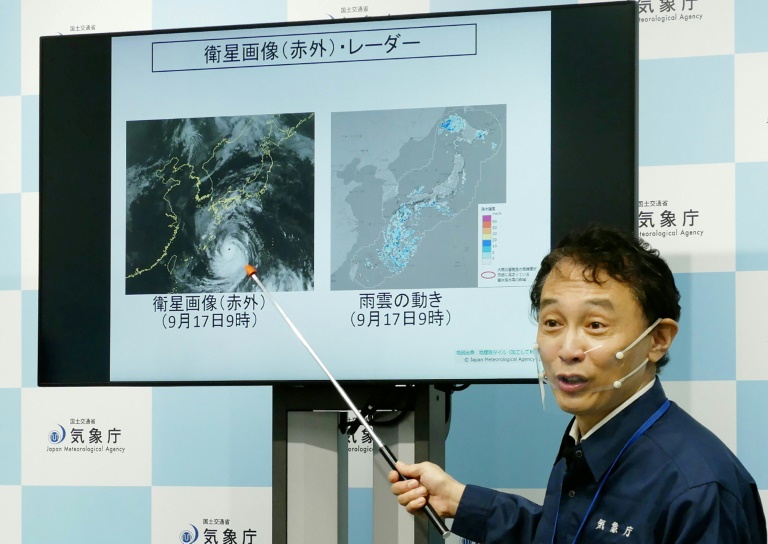
Thousands of people were in shelters in southwestern Japan on Sunday as powerful Typhoon Nanmadol churned towards the region, prompting authorities to urge nearly three million residents to evacuate.

The Japan Meteorological Agency (JMA) has issued a rare “special warning” for the Kagoshima region in southern Kyushu prefecture — an alert that is issued only when it forecasts conditions seen once in several decades.

By Sunday morning, 25,680 households in Kagoshima and neighbouring Miyazaki were already without power, while regional train services, flights and ferry runs were cancelled until the passage of the storm, local utilities and transport services said.

The JMA has warned the region could face “unprecedented” danger from high winds, storm surges and torrential rain.

“Maximum caution is required,” Ryuta Kurora, head of the JMA’s forecast unit said on Saturday.

“It’s a very dangerous typhoon.”  

“The wind will be so fierce that some houses might collapse,” Kurora told reporters, also warning of flooding and landslides.

So far, 2.9 million residents in Kyushu have been issued with evacuation warnings, according to the government’s Fire and Disaster Management Agency, and Kagoshima officials said over 8,500 people were already in local shelters by Sunday morning.

The evacuation warnings call on people to move to shelter or alternative accommodation that can withstand extreme weather.

But they are not mandatory, and during past extreme weather events authorities have struggled to convince residents to take shelter quickly enough.

Kurora urged people to evacuate before the worst of the storm arrived and warned that even in sturdy buildings residents would need to take precautions.

– ‘Highest caution possible’ –

“Please move into sturdy buildings before violent winds start to blow and stay away from windows even inside sturdy buildings,” he told a late night press conference.

By Sunday morning, bullet train operations in the area were halted, along with regional train lines, and NHK said at least 510 flights had been cancelled.

“The southern part of the Kyushu region may see the sort of violent wind, high waves and high tides that have never been experienced before,” the JMA said Sunday, urging residents to exercise “the highest caution possible.”

On the ground, a Kagoshima prefectural official told AFP there were no reports so far of injuries or structural damage but conditions were deteriorating.

“The rain and wind are getting stronger. The rain is so heavy that you cannot really see what’s out there. It looks all white,” he said.

At 9:00 am (0000 GMT), the typhoon was 80 kilometres (50 miles) southeast of Japan’s Yakushima island, and packing gusts up to 252 kilometres per hour.

It is expected to make landfall in Kyushu on Sunday evening, before turning northeast and sweeping up across Japan’s main island through early Wednesday.

Japan is currently in typhoon season and faces around 20 such storms a year, routinely seeing heavy rains that cause landslides or flash floods.

In 2019, Typhoon Hagibis smashed into Japan as it hosted the Rugby World Cup, claiming the lives of more than 100 people. 

A year earlier, Typhoon Jebi shut down Kansai Airport in Osaka, killing 14 people.

And in 2018, floods and landslides killed more than 200 people in western Japan during the country’s annual rainy season.

Scientists say climate change is increasing the severity of storms and causing extreme weather such as heat waves, droughts and flash floods to become more frequent and intense. 

Thousands in shelters as Japan braces for dangerous typhoon

Thousands of people were in shelters in southwestern Japan on Sunday as powerful Typhoon Nanmadol churned towards the region, prompting authorities to urge nearly three million residents to evacuate.

The Japan Meteorological Agency (JMA) has issued a rare “special warning” for the Kagoshima region in southern Kyushu prefecture — an alert that is issued only when it forecasts conditions seen once in several decades.

By Sunday morning, 25,680 households in Kagoshima and neighbouring Miyazaki were already without power, while regional train services, flights and ferry runs were cancelled until the passage of the storm, local utilities and transport services said.

The JMA has warned the region could face “unprecedented” danger from high winds, storm surges and torrential rain.

“Maximum caution is required,” Ryuta Kurora, head of the JMA’s forecast unit said on Saturday.

“It’s a very dangerous typhoon.”  

“The wind will be so fierce that some houses might collapse,” Kurora told reporters, also warning of flooding and landslides.

So far, 2.9 million residents in Kyushu have been issued with evacuation warnings, according to the government’s Fire and Disaster Management Agency, and Kagoshima officials said over 8,500 people were already in local shelters by Sunday morning.

The evacuation warnings call on people to move to shelter or alternative accommodation that can withstand extreme weather.

But they are not mandatory, and during past extreme weather events authorities have struggled to convince residents to take shelter quickly enough.

Kurora urged people to evacuate before the worst of the storm arrived and warned that even in sturdy buildings residents would need to take precautions.

– ‘Highest caution possible’ –

“Please move into sturdy buildings before violent winds start to blow and stay away from windows even inside sturdy buildings,” he told a late night press conference.

By Sunday morning, bullet train operations in the area were halted, along with regional train lines, and NHK said at least 510 flights had been cancelled.

“The southern part of the Kyushu region may see the sort of violent wind, high waves and high tides that have never been experienced before,” the JMA said Sunday, urging residents to exercise “the highest caution possible.”

On the ground, a Kagoshima prefectural official told AFP there were no reports so far of injuries or structural damage but conditions were deteriorating.

“The rain and wind are getting stronger. The rain is so heavy that you cannot really see what’s out there. It looks all white,” he said.

At 9:00 am (0000 GMT), the typhoon was 80 kilometres (50 miles) southeast of Japan’s Yakushima island, and packing gusts up to 252 kilometres per hour.

It is expected to make landfall in Kyushu on Sunday evening, before turning northeast and sweeping up across Japan’s main island through early Wednesday.

Japan is currently in typhoon season and faces around 20 such storms a year, routinely seeing heavy rains that cause landslides or flash floods.

In 2019, Typhoon Hagibis smashed into Japan as it hosted the Rugby World Cup, claiming the lives of more than 100 people. 

A year earlier, Typhoon Jebi shut down Kansai Airport in Osaka, killing 14 people.

And in 2018, floods and landslides killed more than 200 people in western Japan during the country’s annual rainy season.

Scientists say climate change is increasing the severity of storms and causing extreme weather such as heat waves, droughts and flash floods to become more frequent and intense. 

King Charles to host world leaders as UK readies for queen's funeral

Britain was gearing up Sunday for the momentous state funeral of Queen Elizabeth II as King Charles III prepared to host world leaders and as mourners queued for the final 24 hours left to view her coffin.

The first members of the public were already camping out in advance to catch a glimpse of Monday’s grand farewell at Westminster Abbey, which is expected to bring London to a standstill and be watched by billions of viewers worldwide.

US President Joe Biden flew in late Saturday, one of dozens of heads of state arriving as Britain stages its biggest-ever policing operation around the historic funeral for its longest-reigning monarch.

The death of Queen Elizabeth aged 96 on September 8 after seven decades on the throne has sparked an outpouring of emotion that has seen hundreds of thousands of people flock to see her coffin lying in state at the British parliament.

Those wanting to view the flag-draped casket have until 6:30 am (0530 GMT) on Monday to make it into the cavernous Westminster Hall.

Mourners have faced waits of up to 25 hours as queues have snaked for miles along the River Thames. Admission to the line looks set to be closed at some point on Sunday.

IT worker Shaun Mayo, 27, was among those relieved to have made it to Westminster Hall after queuing for 14 hours to pay his respects.

“It was incredibly emotional. She was like the nation’s granny,” he told AFP.

“We’ll all miss her.”

A man who was arrested after leaving the line of people filing past the coffin and approaching the casket on Friday has been charged with a public order offence, police said late Saturday.

Muhammad Khan, 28, from east London, was charged with behaviour intending to cause alarm, harassment or distress and will appear in a London court on Monday.

– Grandchildren hold vigil –

As mourners streamed by on Saturday evening, Prince William and his estranged younger brother Prince Harry led the queen’s eight grandchildren in a 12-minute vigil around the coffin.

Harry — who did two tours with the British Army in Afghanistan — wore the uniform of the Blues and Royals cavalry regiment in which he served.

The move appeared to be the latest olive branch offered by Charles towards his youngest son after Harry and his wife Meghan, now living in California, accused the royal family of racism.

No longer a working royal, Harry, 38, was stripped of his higher-ranking honorary military titles. The vigil will be the only time he will be seen in military dress at royal ceremonial occasions.

The king and his eldest son William, the new heir to the throne, had earlier surprised those standing in line along the Thames riverbank by staging an unscheduled walkabout to shake their hands and thank them for coming.

Queen Elizabeth’s state funeral, the first in Britain since the death of her first prime minister Winston Churchill in 1965, will take place Monday at Westminster Abbey in London at 11:00 am (1000 GMT).

While the leaders of the European Union, France, Japan and many other countries will attend, those of Russia, Afghanistan, Myanmar, Syria and North Korea were not invited.

Charles — at 73 the oldest monarch ever to ascend to the throne — will host the dozens of visiting dignitaries including Biden at a reception at Buckingham Palace on Sunday evening.

Leaders including Jacinda Ardern of New Zealand, Australia’s pro-republic Anthony Albanese, and Canada’s Justin Trudeau — prime ministers from countries where Queen Elizabeth was head of state — have paid their respects at Westminster Hall.

“In this time of great grief, we are thankful to be here paying our respects to The Queen for her services to duty, faith, family and the Commonwealth,” Albanese said on Twitter.

Trudeau said Queen Elizabeth “served for her entire life, and bore the weight of her duties with impeccable grace”, after signing the book of condolence.

Biden was expected to visit on Sunday to bid farewell to the monarch he said had “defined an era”.

The influx of dignitaries — along with that of hundreds of thousands of mourners from across Britain and around the world — poses an extraordinary challenge for Britain’s police.

More than 2,000 officers have been drafted from across the country to help Scotland Yard.

After the funeral, the queen’s coffin will be transferred by royal hearse to Windsor Castle, west of London, for a committal service.

That will be followed by a family-only burial in which the queen will be laid to rest alongside her late husband Prince Philip, her parents and her sister.

– ‘Good spot’ –

Britain will hold a minute’s silence at 8:00 pm (1900 GMT) on Sunday to reflect on the “life and legacy” of the queen ahead of her funeral. 

But some mourners have already begun gathering along the route in central London to make sure they have a front-row spot for her funeral procession.

The culmination of decades of meticulous planning, it will see 142 sailors pulling the gun-carriage bearing the queen’s lead-lined coffin. 

“We wanted to have a good spot to see the procession,” said Bill Parry, 59, a Royal Navy veteran as he waited in camping chairs with two other former servicemen.

“It’s not much to ask to sleep outside considering everything the queen did for us: 70 years of duty.”

The funeral will bring to an end 11 days of national mourning across the United Kingdom that has seen the personal sorrow of the royal family play out in the glare of intense international attention.

Camilla, the new queen consort, was the latest royal to pay tribute as she remembered her mother-in-law’s smile and “wonderful blue eyes”. 

“She’s been part of our lives for ever. I’m 75 now and I can’t remember anyone except The Queen being there,” Camilla said in televised comments.

“It must have been so difficult for her being a solitary woman” in a world dominated by men.

“There weren’t women prime ministers or presidents. She was the only one so I think she carved her own role.”

French footballer Pogba's brother charged in extortion case

The elder brother of Paul Pogba has been charged and detained over the alleged extortion of the French football star, a source close to the case said Saturday.

“We are going to challenge this decision,” Mathias Pogba’s lawyer, Yassine Bouzrou, told French broadcaster BFMTV, insisting that his client had committed no criminal offence.

A judicial source said that four other people being held and questioned over the case, aged between 27 and 36, had also been charged and detained.

The five have been held in custody since Tuesday and Wednesday.

Mathias Pogba, 32, has admitted to being behind a bizarre video published online on August 27 promising “great revelations” about the Juventus player and French national team member. 

The four others are all close to the Pogba brothers. 

Paul Pogba had filed a complaint with Turin prosecutors on July 16, saying he was the target of a 13-million-euro blackmail plot.

According to sources close to the Pogba family contacted by AFP, large sums of money are being demanded from Paul Pogba if he wants to avoid the dissemination of allegedly compromising videos.

Paul Pogba told investigators that his blackmailers wanted to discredit him by claiming he asked a marabout (holy man) to cast a spell on Paris Saint-Germain and France star Kylian Mbappe, which Pogba denies.

French prosecutors launched an investigation on September 2. It is being handled jointly by the French police’s anti-gang and central crime units.

Several people, including Pogba’s mother, have already been interviewed by police, a judiciary source told AFP.

On the field, Pogba’s hopes of playing for France at the World Cup in Qatar later this year hang in the balance after a knee injury. He had surgery that was described as “successful” earlier this month.

Arrests in Belgrade EuroPride gathering after ban

Police detained 64 people in Belgrade on Saturday as LGBTQ activists gathered for a EuroPride march despite a government ban.

The event had been intended as the cornerstone event of the EuroPride gathering. But the interior ministry banned the march earlier this week, citing security concerns after right wing groups threatened to hold protests.

Despite the official ban, demonstrators were able to march in the rain a few hundred metres from the Constitutional Court to a nearby park, a much shorter route than organisers had originally planned.

Serbian interior minister Aleksandar Vulin insisted that the ban was enforced, and that the people were merely “escorted to a concert”.

Local media reported skirmishes erupted outside the event, and a group of hooligans threw flares at the police.

Balkan country’s prime minister Ana Brnabic — who is openly gay — said 64 people were arrested and ten police officers injured on Saturday, but underlined that she was “proud” that the day ended with “no major incidents”.

Gay marriage is not legally recognised in Serbia, where homophobia remains deep-seated despite some progress over the years in reducing discrimination.  

“This is much bigger than a gay pride”, Luka Mazzanti Jovicevic, a Serbian attendee, told AFP.

“We are fighting for the future of the country.” 

Model and activist Yasmin Benoit said she had been to many gay pride parades “but this one is slightly more stressful than the others”.

“I’m from the UK where everyone is more supportive and it’s more commercial,” she told AFP.

“But here, this is really what Pride should be … standing up to the forces that want to stop us.”

There was a heavy police presence around the Pride rally, with officers pushing back the small groups of counter-demonstrators waving crosses and religious insignia.

“I am here to preserve Serbian traditions, faith and culture which are being destroyed by sodomites,” Andrej Bakic, 36, a counter-protester in a group surrounded by riot police told AFP on Saturday.

The Balkan country, a candidate for EU membership, had been under intense international pressure to allow the march. 

More than 20 embassies — including the US, France and Britain — have issued a joint statement urging the authorities to lift the ban. 

“We, as activists, will use our democratic right to civil disobedience and will protest,” the Belgrade Pride organisers said Saturday, after a court rejected their appeal to overturn the ban.

The interior ministry had also barred any counter protests but some far-right groups gathered in front of several Belgrade churches. 

Interior Minister Aleksandar Vulin warned in a statement that “we will not tolerate any violence in Belgrade streets, any more than illegal marches.”

The US embassy urged its citizens to avoid the event “because of the potential for unruly crowds, violence, as well as possible fines”.

Human rights groups and the European Union have called on the Serbian government to rescind the ban. 

“The Serbian government’s decision to cancel EuroPride is a shameful surrender to, and implicit sanctioning of, bigotry and threats of unlawful violence,” said Graeme Reid, director of the LGBT rights programme at Human Rights Watch.  

At least 15 members of the European Parliament joined the Pride march in a show of solidarity.

Belgrade Pride marches in 2001 and again in 2010 were marred by violence and rioting after far-right groups targeted the event. 

Since 2014, the parade has been organised regularly without any notable unrest but were protected with a large law enforcement presence.

The formal ban came just days after thousands took part in an anti-Pride demonstration in Belgrade, with biker gangs, Orthodox priests and far-right nationalists demanding the EuroPride rally be scrapped.

Close Bitnami banner
Bitnami