World

India welcomes back cheetahs, 70 years after local extinction

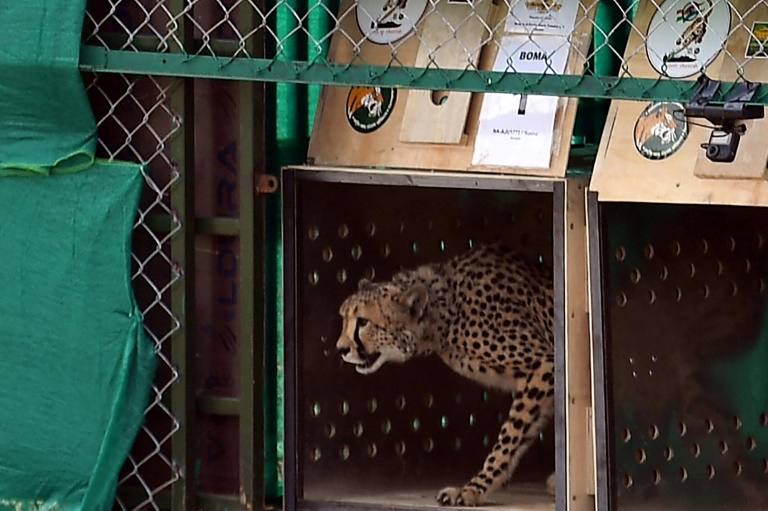
Eight Namibian cheetahs arrived in India Saturday, decades after their local extinction, in an ambitious project to reintroduce the spotted big cats that has divided experts on its prospects.

Officials say the project is the world’s first intercontinental relocation of cheetahs, the planet’s fastest land animal.

The five females and three males were moved from a game park in Namibia aboard a chartered Boeing 747 dubbed “Cat plane” for an 11-hour flight.

Prime Minister Narendra Modi presided over the release at Kuno National Park, a wildlife sanctuary 320 kilometres (200 miles) south of New Delhi selected for its abundant prey and grasslands.

“Today the cheetah has returned to the soil of India,” Modi said in a video address after their arrival, which coincided with the leader’s 72nd birthday.

“The nature loving consciousness of India has also awakened with full force,” he added. “We must not allow our efforts to fail.”

Each of the animals, aged between two and five and a half, have been fitted with a satellite collar to monitor their movements. 

They will initially be kept in a quarantine enclosure for about a month before being released in the open forest areas of the park.

Critics have warned the creatures may struggle to adapt to the Indian habitat.

A significant number of leopards are present in the park, and conservation scientist Ravi Chellam said that cubs could fall prey to feral dogs and other carnivores.

Under the government’s current action plan, “the prospects for a viable, wild and free-ranging population of cheetahs getting established in India is bleak,” he told AFP.

“The habitats should have been prepared first before bringing the cats from Namibia,” he added. “It is like us moving to a new city with only a sub-optimal place to stay — Not a nice situation at all.”

But organisers are unfazed.

“Cheetahs are very adaptable and (I’m) assuming that they will adapt well into this environment,” said Dr Laurie Marker, founder of the Namibia-based charity Cheetah Conservation Fund (CCF), which has been central to the project logistics.

“I don’t have a lot of worries,” she told AFP.

– Habitat loss and hunting –

India was once home to the Asiatic cheetah but it was declared extinct there by 1952. 

The critically endangered subspecies, which once roamed across the Middle East, Central Asia and India, are now only found, in very small numbers, in Iran.

Efforts to reintroduce the animals to India gathered pace in 2020 when the Supreme Court ruled that African cheetahs, a different subspecies, could be settled in India at a “carefully chosen location” on an experimental basis.

They are a donation from the government of Namibia, one of a tiny handful of countries in Africa where the magnificent creature survives in the wild.

Negotiations are ongoing for similar translocation from South Africa, with vets suggesting 12 cats could be moved. 

Cheetahs became extinct in India primarily because of habitat loss and hunting for their distinctive spotted coats. 

An Indian prince, the Maharaja Ramanuj Pratap Singh Deo, is widely believed to have killed the last three recorded cheetahs in India in the late 1940s.

One of the oldest of the big cat species, with ancestors dating back about 8.5 million years, cheetahs once roamed widely throughout Asia and Africa in great numbers, said CCF.

But today only around 7,000 remain, primarily in the African savannas.

The cheetah is listed globally as “vulnerable” on the International Union for the Conservation of Nature (IUCN) Red List of Threatened Species.

In North Africa and Asia it is “critically endangered”.

Their survival is threatened primarily by dwindling natural habitat and loss of prey due to human hunting, the development of land for other purposes and climate change.
In flooded Kryvyi Rih, residents defiant against Russia

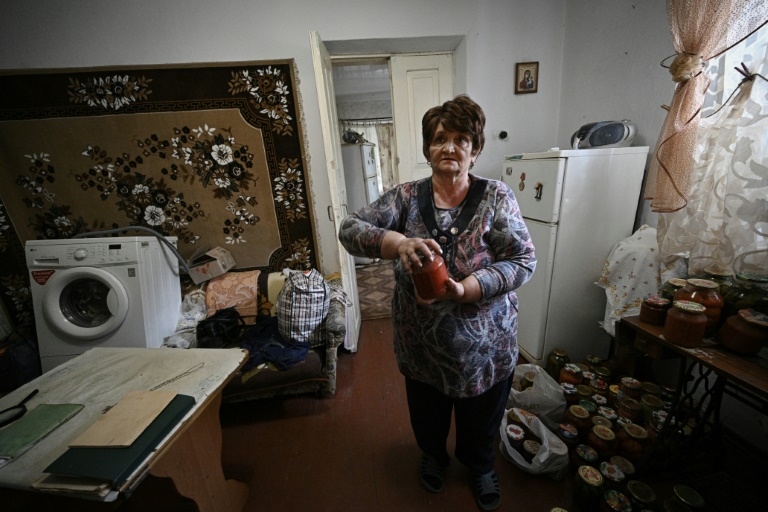
The basement of Ukrainian grandma Lyubov Adamenko is full of mud and sludge from the flood that hit her house after Russians blew up a nearby dam.

But the babushka (grandma) from Kryvyi Rih, southern Ukraine, is not defeated, quite the opposite.

“I found all my jams” she says, almost smiling.

Some jars are still floating around upside down, others are missing, but this is still a win for the robust babushka with thin red-painted lips.

She tells AFP how, every summer, she preserves fruits and vegetables ahead of the winter. 

Her grandparents, who built her little house with a vegetable garden, used to do the same.

Jarred and pickled food are a staple in post-soviet countries, where people have kept the tradition of preserving food to prevent potential winter hardships. 

Lyubov was born during the USSR era, and she will celebrate her seventieth birthday next week. 

But Russian soldiers behaving “worse than pigs” have already ruined her birthday party, Lyubov says.

On Wednesday, they blew up the Karachun hydraulic dam around 10 kilometres (six miles) from her family home.

The dam was built under Stalin in the 1930s, when Ukraine and Russia were part of the same federation.

“I used to play near it when I was a child,” Lyubov says.

– ‘A war against civilians’ –

After the dam was blown up, the Inhulets river surged and burst its banks.

The waters poured downstream and flooded more than a hundred homes, according to local authorities.

On Friday, some streets of Kryvyi Rih — President Volodymyr Zelensky’s hometown — were still covered in mud. 

Russia’s “terrorist state keeps waging a war against civilians” Zelensky said, “all the occupiers can do is to sow panic, create an emergency situation, and try to leave people without light, heat, water, and food.”

A few days earlier Ukrainian authorities accused Russia of striking strategic infrastructure, which led to massive power cuts in several regions. 

42-year-old worker Svytlana Shpuk, standing in the streets in rubber boots, says her house was among those damaged in the floods.

She says Russians “got angry because our army is pushing them back with their counter-offensive” that claimed huge gains in the northeast, and more moderate progress in the south.

This flood “is not a natural disaster, it’s their war. They just decided to flood us, the people” Svytlana sighs.

Kyiv-based analyst Sergiy Zgurets tells AFP that destroying the dam “was an attempt to raise the water level in the Inhulets River in order to damage the pontoon bridges installed by the Ukrainian military in the south.”

– Targeting the morale –

The Institute for the Study of War also deemed the river to be an “important geographical feature for the ongoing Ukrainian counteroffensive” as Ukrainian troops are trying to progress along the river. 

Water has been a “key tool” in the conflict between Ukraine and Russia for a while, an analyst at the British Janes research centre says.

Following the annexation of the Crimean peninsula in 2014, Kyiv built a dam to cut off water from the Russian-occupied territory. 

The dam was destroyed by Russia in the first days of the invasion, according to the analyst.

Ukrainian sources also opened a dam near Irpin end February, flooding the town of Demydyv, to slow down Russian troops. 

Russia hopes to “suppress the resistance of the Ukrainian population,” to “affect the morale and potentially foment unrest” from the population by cutting access to water or electricity, the Janes analyst says.

But, in Kryvyi Rih, that plan does not seem to be very successful. 

Babushka Lyubov Adamenko, a yowling kitten over her shoulder, wishes the Russian army “the same fate as the admiral ship”, the Russian missile cruiser Moskva,  that was sunk in mid-April. 

Arrests at Belgrade EuroPride gathering after ban

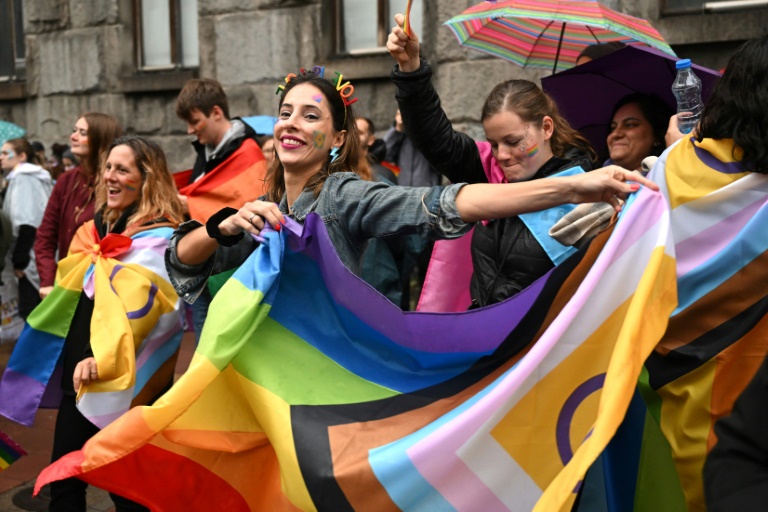
Serbian police arrested over 30 people as thousands of LGBTQ activists turned out for Belgrade’s EuroPride march on Saturday, despite a government ban.

The event had been intended as the cornerstone event of the EuroPride gathering. But the interior ministry banned the march earlier this week, citing security concerns after right wing groups threatened to hold protests.

And although the march took place without major incident, local media said clashes broke out between counter-demonstrators and police.

The interior ministry had also barred any counter protests but some far-right groups vowed to rally and gather in front of churches. 

Interior Minister Aleksandar Vulin had warned in a statement that “we will not tolerate any violence in Belgrade streets, any more than illegal marches.

Model and activist Yasmin Benoit said she had been to many gay pride parades “but this one is slightly more stressful than the others”.

“I’m from the UK where everyone is more supportive and it’s more commercial,” she told AFP.

“But here, this is really what Pride should be,” she added, referring to the societal struggle at the origins of the movement.

“We are fighting for the future of this country,” said Luka, a Serbian taking part in Saturday’s event.

– Gay marriage not recognised –

Despite the official ban, demonstrators were able to march in the rain a few hundred metres between the Constitutional Court to a nearby park, a much shorter route than organisers had originally planned.

Gay marriage is not legally recognised in Serbia, where homophobia remains deep-seated despite some progress over the years in reducing discrimination.  

The Balkan country, a candidate for EU membership, had been under intense international pressure to allow the march. 

More than 20 embassies — including the US, France and Britain — had issued a joint statement urging the authorities to lift the ban.

There was a heavy police presence around the Pride rally, with officers pushing back the small groups of counter-demonstrators waving crosses and religious insignia.

The interior ministry said 31 people were arrested. 

The authorities gave no details on those detained, but AFP journalists saw several counter-demonstrators being taken away.

According to N1 television, there were scuffles between police and the counter-demonstrators, some of whom threw smoke bombs at the officers and damaged several vehicles.

The US embassy had urged its citizens to avoid the event “because of the potential for unruly crowds, violence, as well as possible fines”.

– ‘Implicit sanctioning of bigotry’ –

Human rights groups and the European Union called on the Serbian government to rescind the ban. 

“The Serbian government’s decision to cancel EuroPride is a shameful surrender to, and implicit sanctioning of, bigotry and threats of unlawful violence,” said Graeme Reid, director of the LGBT rights programme at Human Rights Watch.  

At least 15 members of the European Parliament announced that they would join the Pride march in a show of solidarity.

Belgrade Pride marches in 2001 and again in 2010 were marred by violence and rioting after far-right groups targeted the event. 

Since 2014, the parade has been organised regularly without any notable unrest but were protected with a large law enforcement presence.

This year’s ban came just days after thousands took part in an anti-Pride demonstration in Belgrade, with biker gangs, Orthodox priests and far-right nationalists demanding the EuroPride rally be scrapped.

“I am here to preserve Serbian traditions, faith and culture which are being destroyed by sodomites,” Andrej Bakic, 36, a counter-protester in a group surrounded by riot police told AFP on Saturday.

Queen Elizabeth's grandchildren mount vigil around coffin

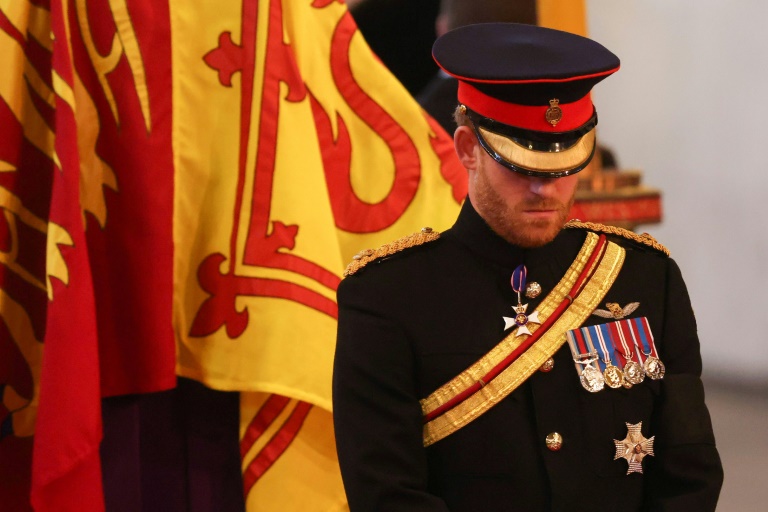
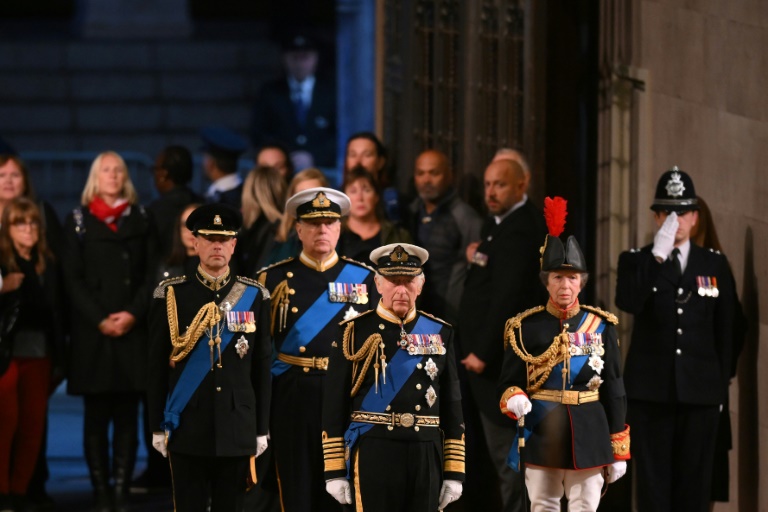
Queen Elizabeth II’s eight grandchildren mounted a vigil around her coffin on Saturday, hours after King Charles III and his heir Prince William staged an unscheduled London walkabout to thank those queueing overnight to pay their last respects.

William and his estranged brother Prince Harry led the 15-minute vigil inside parliament’s Westminster Hall, which has hosted tens of thousands of mourners since the late queen began lying in state there on Wednesday.

The grandchildren, aged from 44 to 14, stood silently with their eyes lowered as members of the public filed past.

Harry — who served two tours with the British Army in Afghanistan — wore his military uniform, despite no longer being a working royal, after being given special permission by his father.

The move appeared to be the latest olive branch offered by King Charles towards his youngest son after Harry and his wife Meghan, now living in California, accused the royal family of racism.

An impromptu walkabout by the king and his eldest son William earlier delighted mourners who had queued all night to see Queen Elizabeth’s coffin before Monday’s grand state funeral.

Cries of “God save the king” came from the riverside crowd as the royals thanked the well-wishers waiting patiently in line, before Charles went on to meet some of the many world leaders arriving for Monday’s lavish send-off.

“I’m so happy. He was so calm, and friendly and he was so gentle,” said Geraldine Potts-Ahmad, a secretary in her late 50s, as she struggled to contain her emotions after shaking hands with King Charles. 

“He is going to make the best king. That gentleness and that tenderness — I saw the queen in that.”

Queen Elizabeth’s death on September 8 aged 96, after a record-breaking 70 years on the throne, has sparked an outpouring of emotion.

Tens of thousands of people are braving waits that have stretched to more than 25 hours to view her coffin.

Volunteers handed out blue blankets to guard against the night-time chill.

– Fainting –

The sombre occasion was briefly disrupted late on Friday when a man burst out of the line and approached the coffin, which sits topped with the Imperial State Crown.

But otherwise, the mood remained reverential on Saturday as people walked slowly past the catafalque, bowing their heads, clasping their hands in prayer, or saluting in the case of some veterans wearing medals.

Some 435 people in the queue have needed medical treatment, often for head injuries after fainting, the London Ambulance Service said.

But Alison Whitham, an ex-nurse from Ashby in the English Midlands, said her 14-hour wait was well worth it after paying her final respects.

“It was very moving, very dignified, blissfully quiet,” the 54-year-old said.

“The fact that you could just concentrate, with nobody holding phones up, was so lovely.”

Police are mounting Britain’s biggest-ever security operation for Monday’s funeral, with hundreds of dignitaries including US President Joe Biden set to jet in and mourners already setting up camp in front of Westminster Hall and Buckingham Palace for the final goodbye.

“I went to princess Diana’s funeral when I was a teenager, I was right outside the abbey, and the atmosphere was incredible,” said Magdalena Staples, 38, who was camping outside Westminster Hall with her two children, aged nine and 10. 

“I wanted my children… to have the same experience. We’re camping for three nights, we’ve got hot clothes, snacks, a mattress and toilets nearby,” she added. 

Less than two weeks since she was appointed by the late queen, British Prime Minister Liz Truss was on Saturday beginning a packed series of meetings with world leaders including New Zealand counterpart Jacinda Ardern and Australia’s pro-republic PM Anthony Albanese.

Ardern, Albanese and Canadian Prime Minister Justin Trudeau were among leaders who paid their own respects at Westminster Hall.

They later held one-on-one talks with their new king as he received leaders of the Commonwealth realms — the 14 countries over which he now reigns in addition to the United Kingdom — at Buckingham Palace.

From Australia and Canada to Jamaica and Papua New Guinea, they have formally proclaimed him their new sovereign.

But republican movements are gaining ground in many of the countries, and efforts to keep them all in the royal fold will likely be a feature of his reign.

Biden was expected to visit Westminster Hall on Sunday.

– ‘Tide of emotion’ –

After visiting Wales on Friday, Charles joined a 15-minute vigil with his siblings — Princess Anne, Prince Andrew and Prince Edward — around their mother’s casket.

The personal sorrow of the queen’s family has been playing out in the glare of intense international attention.

Her granddaughters Princesses Beatrice and Eugenie, who were part of Saturday’s vigil, paid a heartfelt tribute to “our dearest Grannie”.

“We, like many, thought you’d be here forever,” the sisters said. “And we all miss you terribly.

“You were our matriarch, our guide, our loving hand on our backs leading us through this world. For now dear Grannie, all we want to say is thank you,” they added.

The public have until 6:30 am (0530 GMT) on Monday to view the coffin before the queen is honoured with Britain’s first state funeral in nearly six decades. 

The spectacular ceremony at Westminster Abbey — expected to be watched by billions around the globe — will see 142 sailors pulling the gun-carriage bearing her lead-lined coffin. 

It will be attended by more than 2,000 guests, but leaders from countries at loggerheads with the UK such as Russia, Belarus and Afghanistan have not been invited.

China’s vice president Wang Qishan will attend, Beijing’s foreign ministry confirmed, after a diplomatic spat saw Chinese officials barred from visiting the coffin inside parliament.

In flooded Kryvyi Rih, residents defiant against Russia

The basement of Ukrainian grandma Lyubov Adamenko is full of mud and sludge from the flood that hit her house after Russians blew up a nearby dam.

But the babushka (grandma) from Kryvyi Rih, southern Ukraine, is not defeated, quite the opposite.

“I found all my jams” she says, almost smiling.

Some jars are still floating around upside down, others are missing, but this is still a win for the robust babushka with thin red-painted lips.

She tells AFP how, every summer, she preserves fruits and vegetables ahead of the winter. 

Her grandparents, who built her little house with a vegetable garden, used to do the same.

Jarred and pickled food are a staple in post-soviet countries, where people have kept the tradition of preserving food to prevent potential winter hardships. 

Lyubov was born during the USSR era, and she will celebrate her seventieth birthday next week. 

But Russian soldiers behaving “worse than pigs” have already ruined her birthday party, Lyubov says.

On Wednesday, they blew up the Karachun hydraulic dam around 10 kilometres (six miles) from her family home.

The dam was built under Stalin in the 1930s, when Ukraine and Russia were part of the same federation.

“I used to play near it when I was a child,” Lyubov says.

– ‘A war against civilians’ –

After the dam was blown up, the Inhulets river surged and burst its banks.

The waters poured downstream and flooded more than a hundred homes, according to local authorities.

On Friday, some streets of Kryvyi Rih — President Volodymyr Zelensky’s hometown — were still covered in mud. 

Russia’s “terrorist state keeps waging a war against civilians” Zelensky said, “all the occupiers can do is to sow panic, create an emergency situation, and try to leave people without light, heat, water, and food.”

A few days earlier Ukrainian authorities accused Russia of striking strategic infrastructure, which led to massive power cuts in several regions. 

42-year-old worker Svytlana Shpuk, standing in the streets in rubber boots, says her house was among those damaged in the floods.

She says Russians “got angry because our army is pushing them back with their counter-offensive” that claimed huge gains in the northeast, and more moderate progress in the south.

This flood “is not a natural disaster, it’s their war. They just decided to flood us, the people” Svytlana sighs.

Kyiv-based analyst Sergiy Zgurets tells AFP that destroying the dam “was an attempt to raise the water level in the Inhulets River in order to damage the pontoon bridges installed by the Ukrainian military in the south.”

– Targeting the morale –

The Institute for the Study of War also deemed the river to be an “important geographical feature for the ongoing Ukrainian counteroffensive” as Ukrainian troops are trying to progress along the river. 

Water has been a “key tool” in the conflict between Ukraine and Russia for a while, an analyst at the British Janes research centre says.

Following the annexation of the Crimean peninsula in 2014, Kyiv built a dam to cut off water from the Russian-occupied territory. 

The dam was destroyed by Russia in the first days of the invasion, according to the analyst.

Ukrainian sources also opened a dam near Irpin end February, flooding the town of Demydyv, to slow down Russian troops. 

Russia hopes to “suppress the resistance of the Ukrainian population,” to “affect the morale and potentially foment unrest” from the population by cutting access to water or electricity, the Janes analyst says.

But, in Kryvyi Rih, that plan does not seem to be very successful. 

Babushka Lyubov Adamenko, a yowling kitten over her shoulder, wishes the Russian army “the same fate as the admiral ship”, the Russian missile cruiser Moskva,  that was sunk in mid-April. 

Biden en route to London to attend funeral of Elizabeth II

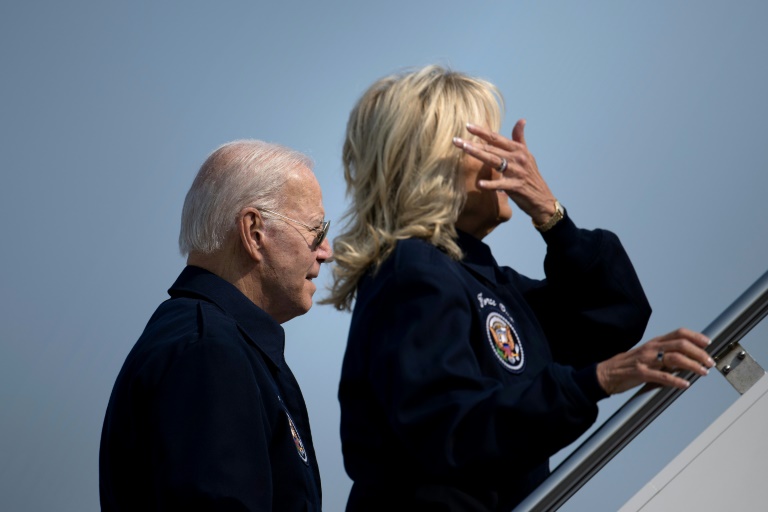
US President Joe Biden on Saturday headed to London to attend the funeral of Queen Elizabeth II.

The state funeral, the first in Britain since the death of Winston Churchill in 1965, will take place Monday at Westminster Abbey in London at 11:00 am (1000 GMT).

Biden will be among several hundred leaders from around the world attending the somber and historic event, along with some 2,000 other guests.

While the leaders of the European Union, France, Japan and many other countries will attend, those of Russia, Afghanistan, Myanmar, Syria and North Korea were not invited.

On Sunday, Biden will attend a reception organized by King Charles III, the White House announced. The two men spoke by phone on Wednesday, with Biden vowing to preserve the “special relationship” between their countries. 

A meeting Biden was to have held Monday with new Prime Minister Liz Truss at her Downing Street residence has been canceled, US and British officials announced, but the two instead will meet Wednesday in New York when both arrive to attend the annual United Nations General Assembly.

World leaders were beginning to gather in London on Saturday to prepare for Monday’s funeral.

Their presence — along with that of hundreds of thousands of mourners from across Britain and around the world — poses an extraordinary challenge to British police.

It will be London’s largest ever policing event, the city’s Metropolitan Police force said Friday. 

More than 2,000 officers have been drafted from across the country to help Scotland Yard.

After the funeral, the queen’s coffin will be transferred by royal hearse to Windsor Castle, west of London, for a committal service.

That will be followed by a family-only burial in which the queen will be laid to rest alongside her late husband Philip, both her parents and her younger sister.

'Are we ready?' Antiguans mull cutting ties with British monarchy

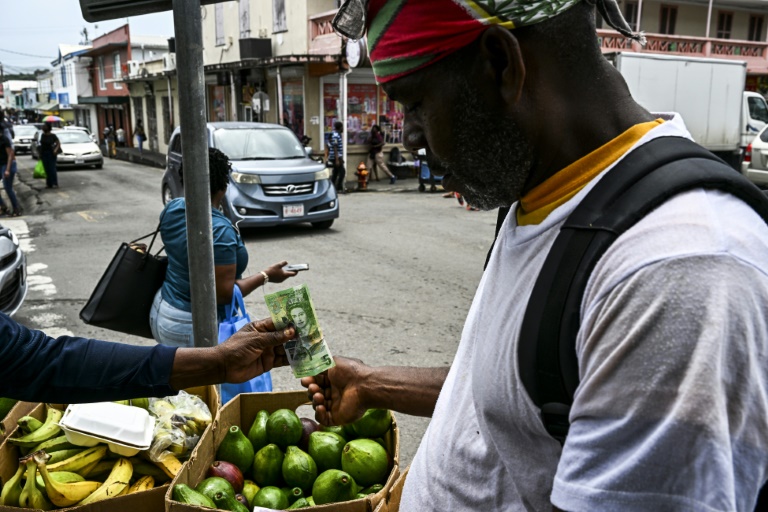
Republican movements may be gaining steam in British realms across the globe, but in the tiny Caribbean paradise of Antigua and Barbuda, residents have decidedly mixed feelings about their leaders’ push to break that final link.

Days after the death of Queen Elizabeth II, Antigua and Barbuda became the first of the 14 remaining realms now ruled over by her son, Charles, to openly float the idea of replacing the British monarch as its head of state.

Doing so would not be “an act of hostility” but “the final step to complete the circle of independence,” Prime Minister Gaston Browne told British broadcaster ITV news, saying that he hopes to hold a referendum on the matter within the next three years.

Whether his people want to take that step is an open question, admitted Browne’s chief of staff Lionel Hurst during an interview at the prime minister’s office overlooking the port capital of St John’s in the country’s main island, Antigua. 

“We’re not sure yet,” he said Friday. If Browne wins the next general election, which must be held by 2023, the years before any referendum would be spent “selling the idea” to Antiguans and Barbudans.

On St John’s busy Market Street, most residents agreed the idea would need to be sold.

“I think we should stay with the crown. This country cannot manage on its own,” 53-year-old Leonie Barker told AFP after buying groceries ahead of Tropical Storm Fiona, due to brush past the island Friday night.

Others said that it was too early to take a stand. 

Education and engagement on the idea are needed, 58-year-old Peter Thomas said.

“I think we have reached a stage in life (where) we would like to be on our own, but are we ready? That’s the next story,” he said.

Fashion designer and singer Kelly Richardson also said islanders needed more information, adding that he did not think it was “a bad idea.”

“I’m open to changes,” he told AFP from behind dark sunglasses.

Some could see potential on both sides. 

Antigua has already come far since independence in 1981, local cameraman JC Cornelius argued, so when it comes to removing the queen as head of state — “why not?”

But then again, he added, “unity and one love is really key. So, being with the queen… I mean, why not?”

The matter, he said, would require “some nice diligent consideration.”

– ‘Less than independence’ –

Browne’s hoped-for referendum would come nearly 400 years after Britain first colonized Antigua in 1632, followed by neighboring Barbuda in 1678.

Settlers began growing sugar on the islands — but with Indigenous Caribbean people dying by the thousands across the region, they imported African slaves to tend the profitable crop.

Emancipation finally came in 1833, and many of Antigua and Barbuda’s 97,000 people today are the descendants of slaves.

The country, whose economy is now heavily dependent on tourism, has been an independent nation for more than four decades — but, argues government spokesman Hurst, it’s a funny kind of independence.

“The monarchy is in England, we don’t deceive ourselves,” he told AFP.

“It’s kind of less than independence when your head of state is determined not by you, but by a tradition that lies 6,000 miles away.”

Any control Britain exerts is mostly procedural, however, he said — and breaking away from that is “symbolic.”

“In large part it will have a psychological impact on the people of Antigua and Barbuda, that is its primary purpose,” he said. 

Whether the younger generations are as impacted by the wounds of the past, however, also appears to be a question of some debate.

Generation Z’s biggest concern is not the nation’s psyche but development, 19-year-old student Kemani Sinclair told AFP, gesturing at the colorful buildings around the center of St John’s — some of which have fallen into disrepair.

The process of holding a referendum on removing the British monarchy would be a costly waste of money that could be spent elsewhere, he argued. 

“I truly believe Antigua shouldn’t become a republic. It’s just not ready,” Sinclair said.

Millions told to seek shelter as Japan warns on Typhoon Nanmadol

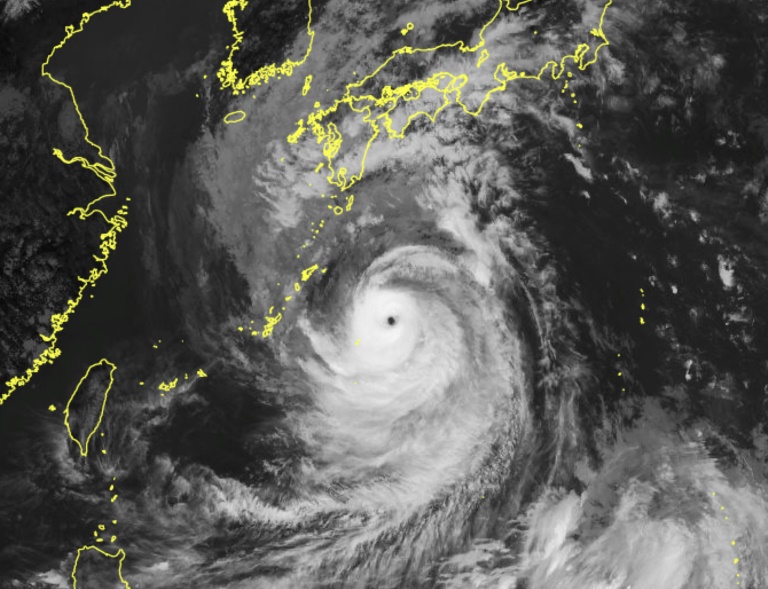
Two million people in Japan were told Saturday to seek shelter before the arrival of Typhoon Nanmadol, national broadcaster NHK said, as the weather agency issued a rare “special warning” about the powerful storm.

NHK, which compiles alerts issued by local authorities, said level four evacuation instructions — the second highest — were in place for people in Kagoshima, Kumamoto and Miyazaki in the southern Kyushu region.

The move came as the Japan Meteorological Agency issued its highest alert for the Kagoshima region, a warning that comes when it forecasts conditions only seen once in several decades.

It is the first typhoon-linked special warning issued outside of the Okinawa region since the current system began in 2013.

On Saturday evening, Typhoon Nanmadol was classed at the agency’s top category of “violent”, and was packing gusts of up to 270 kilometres (167 miles) as it hovered about 200 kilometres north-northeast of Minami Daito island, part of a string of remote isles that form the Okinawa region.

The storm is expected to approach or make landfall on Sunday in Kagoshima prefecture, then move north the following day before heading towards Japan’s main island.

“There are risks of unprecedented storms, high waves, storm surges, and record rainfall,” Ryuta Kurora, the head of the Japan Meteorological Agency’s forecast unit, told reporters. 

“Maximum caution is required,” he said, urging residents to evacuate early.

“It’s a very dangerous typhoon.”  

“The wind will be so fierce that some houses might collapse,” Kurora told reporters, also warning of flooding and landslides.

The evacuation warnings call on people to move to shelter or alternative accommodation that can withstand extreme weather.

But they are not mandatory, and during past extreme weather events authorities have struggled to convince residents to take shelter quickly enough.

Kurora said even inside strong buildings, residents should take precautions.

“Please move into sturdy buildings before violent winds start to blow and stay away from windows even inside sturdy buildings,” he told a late night press conference.

Japan is currently in typhoon season and faces around 20 such storms a year, routinely seeing heavy rains that cause landslides or flash floods.

In 2019, Typhoon Hagibis smashed into Japan as it hosted the Rugby World Cup, claiming the lives of more than 100 people. 

A year earlier, Typhoon Jebi shut down Kansai Airport in Osaka, killing 14 people.

And in 2018, floods and landslides killed more than 200 people in western Japan during the country’s annual rainy season.

Ahead of Typhoon Nanmadol’s arrival, flight cancellations began to affect regional airports including those in Kagoshima, Miyazaki and Kumamoto, according to the websites of Japan Airlines and All Nippon Airways. 

Scientists say climate change is increasing the severity of storms and causing extreme weather such as heat waves, droughts and flash floods to become more frequent and intense. 

King Charles surprises huge London queue for queen's coffin

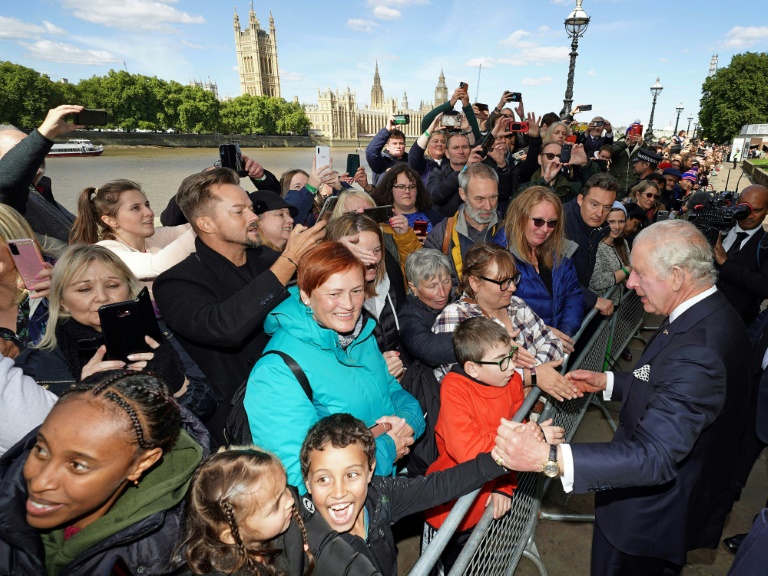
King Charles III and his heir Prince William on Saturday staged an unscheduled London walkabout to the delight of people queueing all night to see Queen Elizabeth’s coffin, ahead of her grand state funeral.

Cries of “God save the king” came from the riverside crowd opposite parliament as the new monarch and his elder son thanked the well-wishers waiting patiently in line, before Charles went on to meet some of the many world leaders arriving for Monday’s lavish send-off.

“I’m so happy. He was so calm, and friendly and he was so gentle,” said Geraldine Potts-Ahmad, a secretary in her late 50s, as she struggled to contain her emotions after shaking hands with Charles. 

“He is going to make the best king. That gentleness and that tenderness, I saw the queen in that.”

The queen’s death on September 8 aged 96, after a record-breaking 70 years on the throne, has sparked an outpouring of emotion.

Tens of thousands of people are braving waits that have stretched to more than 25 hours to view her flag-shrouded coffin. Volunteers handed out blue blankets to guard against the night-time chill.

Princes William and Harry were later set to lead a vigil of Queen Elizabeth II’s eight grandchildren on the four corners of the coffin, as it lies in state inside parliament’s Westminster Hall.

The sombre occasion was briefly disrupted late on Friday when a man burst out of the line and approached the coffin, which sits topped with the Imperial State Crown.

A live television feed of the mourners briefly cut away around 10:00 pm (2100 GMT) as police detained the man, two hours after Charles and his three siblings had held their own vigil in the cavernous hall.

But otherwise, the mood remained reverential on Saturday as people walked slowly past the catafalque, bowing their heads, clasping their hands in prayer, or saluting in the case of some medal-bedecked veterans.

– Fainting –

Some 435 people in the queue have needed medical treatment, often for head injuries after fainting, the London Ambulance Service said.

But Alison Whitham, an ex-nurse from Ashby in the English Midlands, said her 14-hour wait was well worth it after paying her final respects in the hall.

“It was very moving, very dignified, blissfully quiet,” the 54-year-old said.

“The fact that you could just concentrate, with nobody holding phones up, was so lovely.”

Police are mounting Britain’s biggest-ever security operation for Monday’s funeral, as hundreds of dignitaries including US President Joe Biden are set to jet in. 

Less than two weeks since she was appointed by the late queen, British Prime Minister Liz Truss was on Saturday beginning a packed series of meetings with world leaders including New Zealand counterpart Jacinda Ardern and Australia’s pro-republic Anthony Albanese.

Ardern, Albanese and Canadian Prime Minister Justin Trudeau were among leaders who paid their own respects at Westminster Hall. US President Joe Biden was expected to do so Sunday.

Charles himself was on Saturday scheduled to meet the prime ministers of the Commonwealth realms — the 14 former colonies over which he now reigns in addition to the United Kingdom.

From Australia and Canada to Jamaica and Papua New Guinea, they have formally proclaimed him their new sovereign.

But republican movements are gaining ground in many of the countries, and efforts to keep them all in the royal fold will likely be a feature of his reign.

– ‘Tide of emotion’ –

After visiting Wales, Charles joined the 15-minute vigil with his siblings — Princess Anne, Prince Andrew and Prince Edward — around their mother’s casket on Friday night.

They stood, silent and eyes lowered, while members of the public filed past.

The vigil will be repeated on Saturday evening by the grandchildren, including Prince William and his estranged younger brother Harry.

The duke of Sussex — who served two tours with the British Army in Afghanistan — has been given special permission by his father to wear military uniform despite no longer being a working royal.

The move appeared to be the latest olive branch offered to Harry by Charles after the duke and his wife Meghan, now living in California, accused the royal family of racism.

The personal sorrow of the queen’s family has been playing out in the glare of intense international attention.

But her youngest son Edward said: “We have been overwhelmed by the tide of emotion that has engulfed us and the sheer number of people who have gone out of their way to express their own love, admiration and respect.”

The public have until 6:30 am (0530 GMT) on Monday to view the coffin before the queen is honoured with Britain’s first state funeral in nearly six decades. 

The spectacular ceremony at Westminster Abbey — expected to be watched by billions around the globe — will see 142 sailors pulling the gun-carriage bearing her lead-lined coffin. 

It will be attended by more than 2,000 guests, but leaders from countries at loggerheads with the UK such as Russia, Belarus and Afghanistan have not been invited.

China’s vice president Wang Qishan will attend, Beijing’s foreign ministry confirmed, after a diplomatic spat saw Chinese officials barred from visiting the coffin inside parliament.

King Charles, Prince William meet mammoth queue for queen's coffin

King Charles III and his oldest son Prince William were on Saturday greeted by cheers as they shook hands with people queueing for hours through London to see Queen Elizabeth’s coffin as it lies in state ahead of her funeral. 

Cries of “God Save the King” came from the crowd as the new monarch and heir to the throne thanked members of the public before attention turns to the stream of world leaders arriving for the grand state send-off on Monday.   

“I’m so happy. He was so calm, and friendly and he was so gentle,” said Geraldine Potts-Ahmad, a secretary in her late 50s, as she struggled to contain her emotions after shaking hands with Charles. 

“He is going to make the best king. That gentleness and that tenderness, I saw the queen in that.”

The queen’s death on September 8 aged 96, after a record-breaking 70 years on the throne, has sparked an outpouring of emotion.

Members of the public are braving waits that have stretched to more than 25 hours, and chilly night-time temperatures, to view her flag-shrouded coffin.

Princes William and Harry were later set to lead a vigil of Queen Elizabeth II’s eight grandchildren at her coffin, joining tens of thousands of members of the public who have been queueing round the clock for days.

Lines have snaked for miles along the River Thames since Wednesday, when her coffin was brought to the UK parliament complex.

Those inside parliament’s Westminster Hall for the lying-in-state received a shock late on Friday when a man burst out of the line and approached the coffin, which sits topped with the Imperial State Crown.

A live television feed of the mourners briefly cut away around 10:00 pm (2100 GMT) as police detained the man, two hours after Charles and his three siblings had held their own vigil in the cavernous hall.

“He was arrested for an offence under the Public Order Act and is currently in custody,” London’s Metropolitan Police said.

– Fainting –

Some 435 people have needed medical treatment, often for head injuries after fainting in the queue, the London Ambulance Service said.

But Jenna O’Sullivan, a charity worker from Pontypridd in Wales, said her 14-hour wait was well worth it after paying her final respects at the coffin. 

“It was so emotional, with such a nice atmosphere of peace and calm,” the 36-year-old said. 

“The queue was long but it felt like a celebration. We made some lovely friends.”

Police are mounting Britain’s biggest-ever security operation for Monday’s funeral, as hundreds of dignitaries including US President Joe Biden are set to jet in. 

Less than two weeks into her premiership, British Prime Minister Liz Truss was on Saturday beginning a packed weekend of meetings with world leaders including her counterparts from New Zealand, Jacinda Ardern, and Australia, Anthony Albanese, at the government’s Chevening country residence.

On Sunday she was due to meet Biden, Irish Taoiseach Micheal Martin, Canadian premier Justin Trudeau and Polish leader Andrzej Duda in Downing Street.

Charles, meanwhile, was on Saturday scheduled to meet the prime ministers of the Commonwealth realms — the 14 former colonies over which he now reigns in addition to the United Kingdom — including those of Australia, The Bahamas, Canada, Jamaica and New Zealand. 

From Australia and Canada to Jamaica and Papua New Guinea, they have formally proclaimed him their new sovereign.

But republican movements are gaining ground in many of the countries, and efforts to keep them all in the royal fold will likely be a feature of his reign.

Charles on Friday wrapped up his maiden tour as monarch to the four UK nations with a visit to Wales, part of an operation dubbed “Spring Tide” to launch him in his new role.

– ‘Tide of emotion’ –

Back in London, Charles joined the 15-minute vigil with his siblings — Princess Anne, Prince Andrew and Prince Edward — around their mother’s casket on Friday night.

They stood, silent and eyes lowered, while members of the public filed past.

The vigil will be repeated on Saturday evening by the eight grandchildren, including the new heir to the throne Prince William and his estranged brother Harry.

Harry — who served two tours with the British army in Afghanistan — has been given special permission by his father to wear military uniform despite no longer being a working royal.

The move appeared to be the latest olive branch offered to Harry by Charles after the prince and his wife Meghan, now living in California, accused the royal family of racism.

The personal sorrow of the queen’s family has been playing out in the glare of intense international attention.

But the queen’s youngest son Edward said: “We have been overwhelmed by the tide of emotion that has engulfed us and the sheer number of people who have gone out of their way to express their own love, admiration and respect.”

The public have until early Monday to view the coffin before the queen is honoured with Britain’s first state funeral in nearly six decades. 

The spectacular ceremony at Westminster Abbey — expected to be watched by billions around the globe — will see 142 sailors pulling the gun-carriage bearing her lead-lined coffin. 

It will be attended by more than 2,000 guests, but leaders from countries at loggerheads with the UK such as Russia, Belarus and Afghanistan have not been invited.

China’s vice president Wang Qishan will attend, Beijing’s foreign ministry confirmed, after a diplomatic spat saw Chinese officials barred from visiting the coffin inside parliament.

Close Bitnami banner
Bitnami