World

'Like a new planet': Volcano draws visitors to Spanish isle

When the volcano erupted in La Palma last year, Teodoro Gonzalez Perez rushed to the Spanish island to see the lava flows with his own eyes — now he’s back for another look.

This time, he’s here to see the volcano closer up now it has quieted down.

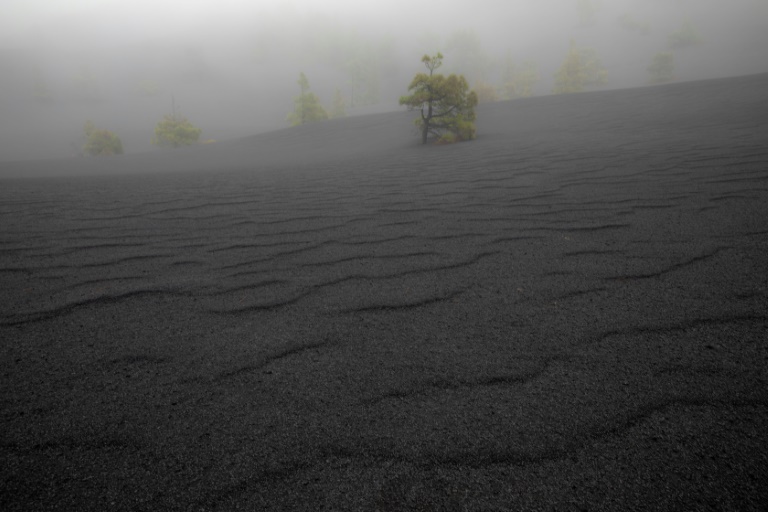
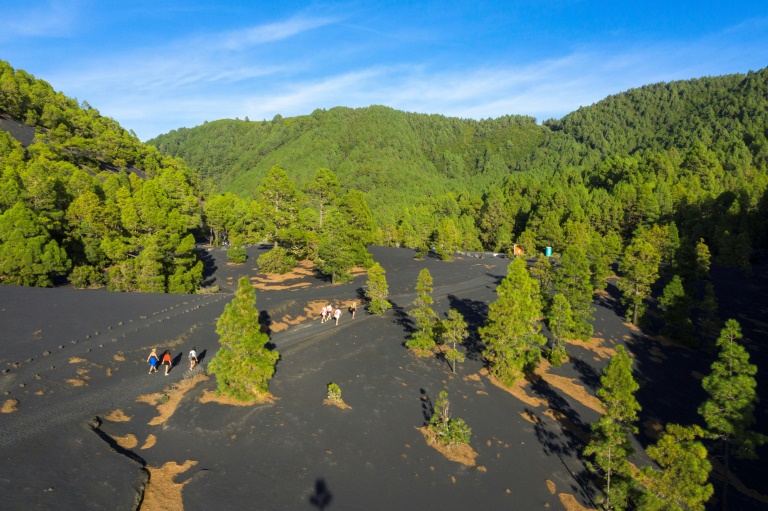
“It’s like walking on the surface of a new planet,” said the 54-year-old nurse from the nearby island of Tenerife while hiking through a lush pine forest carpeted with black ash to reach the site. 

“Visiting a volcano which recently erupted is an opportunity that only arises once in a lifetime,” he told AFP. 

Since the volcano erupted on September 19, 2021, spewing rivers of molten rock and ash plumes into the air, interest in visiting La Palma is booming.

The island is normally one of the less visited ones of Spain’s tourism-dependent Canary Islands off Africa’s northwestern coast.

In August, the average hotel occupancy on the island hit 90.9 percent, well above expectations, with visitors from the rest of Spain accounting for the bulk of the overnight stays, according to local hotel lobby group ASHOTEL.

“Before the eruption, we struggled to make the island known,” ASHOTEL’s vice president Carlos Garcia Sicilia told AFP.

“On the one hand, the volcano has been a misfortune, a huge blow to the island’s economy. On the other, I think half the planet has now heard of La Palma.”

While the images beamed around the world during the 85-day eruption focused on the destruction caused by the volcano, news reports also highlighted the tiny island’s charms — which has helped whet the appetite for travel to La Palma.

Nicknamed “La Isla Bonita” or “The Beautiful Island”, La Palma is a UNESCO-recognised biosphere reserve replete with verdant forests, rocky peaks and desert. 

– ‘As close as possible’ –

Since the eruption, the number of cruise ships stopping at the island has increased, as has the number of direct flights from mainland Spain and elsewhere in Europe.

Irish low-cost airline Ryanair opened its first base in La Palma in March and offers several direct flights per week to three Spanish cities as well as Milan.

Business is also booming for tour companies offering day trips by ferry from Tenerife, the largest and most visited island of the Canaries.

Excursiones Jesus, based in Tenerife, runs its 135-euro ($135) 11-hour tour of La Palma three days a week now, up from just one before the eruption.

“People want to get as close as possible to where the eruption happened,” company founder Jesus Molina told AFP.

The ash and rivers of lava spewing from the volcano swallowed up more than 1,000 homes, cut off highways and suffocated lush banana plantations. 

On a recent weekday, small groups of tourists could often be seen snapping pictures of excavators removing giant chunks of solidified lava from the centre of La Laguna, a town where the molten rock swallowed up a gas station and a supermarket.

Among those flocking to the island are regular visitors, one of whom is Rita Ley, a retired German woman who said she wanted to see what it looked like after the eruption.

“It is terrible to see that everything is destroyed, but it’s interesting to see how the earth is alive,” said the 59-year-old.

– Travel vouchers –

The government now sees tourism as key to the recovery of the island’s economy.

It has spent heavily to promote travel to La Palma and has given away 20,000 travel vouchers worth 250 euros to residents of Spain that can be used in hotels and restaurants on the island.

To help draw more tourists, the authorities have inaugurated a new zip-line and a visitors’ centre at the Roque de los Muchachos astronomical observatory.

It is also helping restore the tourism infrastructure.

Around 3,000 of La Palma’s 8,000 tourist beds were either destroyed in the eruption, or are located in areas that remain off limits due to dangerous levels of volcanic gases, mainly in Puerto Naos on the southwestern coast.

Hawaii and Iceland saw a similar increase in tourists after they experienced volcanic eruptions but visitor interest eventually waned and some tourism operators in La Palma expect the same to happen.

Jonas Perez, founder of Isla Bonita Tours, predicted the volcanic eruption “won’t be as fresh in people’s memory” in a few years.

“La Palma will no longer be as popular,” he said.

Indonesia investigating Google over app store payment system

Indonesia has launched an anti-trust investigation into Google over the tech firm’s insistence that its payment system be used for purchases from its app store, authorities said Thursday, accusing it of unfair business practices.

The US internet giant has been under legal scrutiny in a number of countries over its stipulation that its billing system be used by all buyers on Google Play.

Authorities in Jakarta said in a statement they suspected “Google has abused its dominant position by imposing conditional sales and discriminatory practices in digital application distribution in Indonesia”.

Google Play is the largest app distribution platform in Indonesia, a country of around 270 million people.

Third-party developers offering their apps on Google Play are charged a 15 to 30 percent service fee, higher than the five percent imposed by other payment systems, according to an initial probe by the nation’s anti-trust agency.

“The respective developers cannot refuse the obligation because Google can impose sanctions by removing their applications from the Google Play store and preventing them from making updates to their applications,” the agency said.

Google Indonesia said on Friday that it would work with the Indonesian authorities “to demonstrate how Google Play supports developers”.

It added that since early this month, it has started a pilot billing system, allowing an alternative payment system alongside the one used on Google Play.

The American multinational has faced a barrage of legal cases in the United States, Europe and Asia based on similar accusations.

Google has also faced claims that it unfairly forced its search engine and Chrome internet browser on phone makers using the Android operating system.

On Wednesday, the European Union’s second-highest court ruled that “Google imposed unlawful restrictions on manufacturers of Android mobile devices”.

The court upheld the EU’s record fine of more than four billion euros ($4 billion) against Google

That case was the third of three major cases brought against Google by the EU’s competition czar Margrethe Vestager, whose legal challenges were the first worldwide to directly take on Silicon Valley tech giants.

South Korea fined Google nearly $180 million last year for abusing its dominant market position in a similar case regarding the Android system.

Indonesia investigating Google over app store payment system

Indonesia has launched an anti-trust investigation into Google over the tech firm’s insistence that its payment system be used for purchases from its app store, authorities said Thursday, accusing it of unfair business practices.

The US internet giant has been under legal scrutiny in a number of countries over its stipulation that its billing system be used by all buyers on Google Play.

Authorities in Jakarta said in a statement they suspected “Google has abused its dominant position by imposing conditional sales and discriminatory practices in digital application distribution in Indonesia”.

Google Play is the largest app distribution platform in Indonesia, a country of around 270 million people.

Third-party developers offering their apps on Google Play are charged a 15 to 30 percent service fee, higher than the five percent imposed by other payment systems, according to an initial probe by the nation’s anti-trust agency.

“The respective developers cannot refuse the obligation because Google can impose sanctions by removing their applications from the Google Play store and preventing them from making updates to their applications,” the agency said.

Google Indonesia said on Friday that it would work with the Indonesian authorities “to demonstrate how Google Play supports developers”.

It added that since early this month, it has started a pilot billing system, allowing an alternative payment system alongside the one used on Google Play.

The American multinational has faced a barrage of legal cases in the United States, Europe and Asia based on similar accusations.

Google has also faced claims that it unfairly forced its search engine and Chrome internet browser on phone makers using the Android operating system.

On Wednesday, the European Union’s second-highest court ruled that “Google imposed unlawful restrictions on manufacturers of Android mobile devices”.

The court upheld the EU’s record fine of more than four billion euros ($4 billion) against Google

That case was the third of three major cases brought against Google by the EU’s competition czar Margrethe Vestager, whose legal challenges were the first worldwide to directly take on Silicon Valley tech giants.

South Korea fined Google nearly $180 million last year for abusing its dominant market position in a similar case regarding the Android system.

Biden to welcome S.Africa leader as Ukraine raises Africa priority

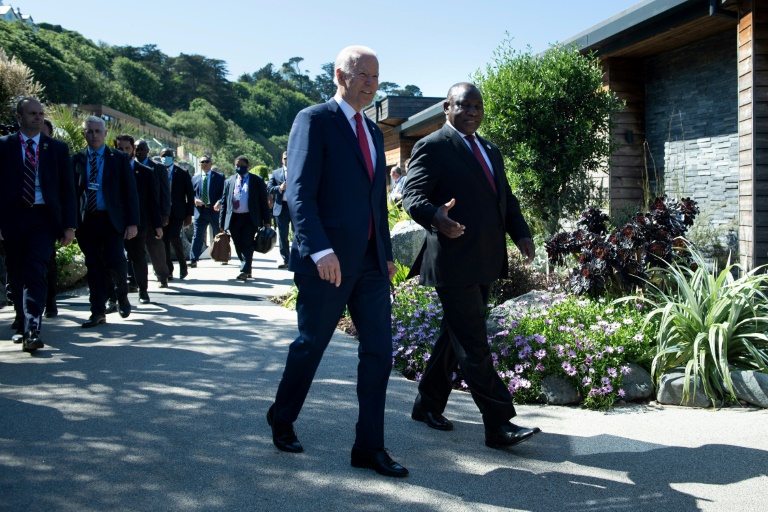
President Joe Biden on Friday will welcome South African leader Cyril Ramaphosa to the White House, part of a renewed US courting of the developing world power after its caution in condemning Russia.

The visit by Ramaphosa comes a month after US Secretary of State Antony Blinken made his own trip to South Africa, where he vowed that the United States will do more to listen to Africans.

Successive US administrations have focused much of their energy in Africa on countering the growing influence of China, which has become the continent’s dominant trading partner.

But Russia’s invasion of Ukraine has triggered a new front in the US battle for influence in Africa, where many nations have been reluctant to embrace the West in its campaign to punish and pressure Moscow.

“There are reasons for the perspectives that exist and one should never, I think, try to pretend that there aren’t histories,” said South Africa’s Foreign Minister Naledi Pandor.

She pointed to the former Soviet Union’s championing of anti-apartheid forces compared with periods of Western cooperation with South Africa’s former white supremacist regime.

“I think we’ve been fairly clear, in our view, that war doesn’t assist anyone and that we believe the inhumane actions we have seen against the people of Ukraine can’t be defended by anybody,” she said this week at the Council on Foreign Relations in Washington.

“But what we have said is that a lot of the public statements that are made by leading politicians are not assisting in ameliorating the situation, because the first prize must be to achieve peace.”

The United States has sought to highlight the invasion’s role in soaring food prices, as Ukraine was one of Africa’s largest suppliers of grain.

Russia has sought to blame food scarcities on Western sanctions, an argument dismissed by the United States, which says it is not restricting agricultural or humanitarian shipments.

– Common ground –

South Africa’s top diplomat broke with the usual polite bipartisanship of foreign dignitaries visiting Washington, not mincing words on Biden’s Republican predecessor Donald Trump, who notoriously referred to nations in the developing world with an epithet.

“We relate very well, I think probably better, with the Democrats than the Republicans,” she said. “You will recall how President Trump described Africa and no one has apologized for that as yet.”

Trump was the first US president in decades not to visit sub-Saharan Africa. Biden has not yet visited but has pledged a renewed interest, including with a summit of African leaders planned in Washington this December.

White House Press Secretary Karine Jean-Pierre said that Biden would speak to Ramaphosa about increasing trade and investment as well as efforts to combat climate change, a key priority for the US administration.

Like other developing nations, South Africa — whose eastern Mpumalanga province has one of the world’s largest concentrations of coal — argues that industrialized nations should bear the brunt of efforts to cut emissions due to their historic responsibility for climate change.

Wealthy nations at last year’s Glasgow climate conference promised $8.5 billion of financing to South Africa to transition away from coal.

Ramaphosa’s Washington visit comes amid political woes at home, three months before a party conference at which he will seek a new term.

The South African leader risks impeachment if a new independent panel established by parliament finds that he took part in an alleged cover-up of a heist at his luxury farmhouse.

Indonesia investigating Google over app store payment system

Indonesia has launched an anti-trust investigation into Google over the etch firm’s insistence that its payment system be used for purchases from its app store, authorities said Thursday, accusing it of unfair business practices.

The US internet giant has been under legal scrutiny in a number of countries over its stipulation that its billing system be used by all buyers on Google Play.

Authorities in Jakarta said in a statement they suspected “Google has abused its dominant position by imposing conditional sales and discriminatory practices in digital application distribution in Indonesia”.

Google Play is the largest app distribution platform in Indonesia, a country of around 270 million people.

Third-party developers offering their apps on Google Play are charged a 15 to 30 percent service fee, higher than the five percent imposed by other payment systems, according to an initial probe by the nation’s anti-trust agency.

“The respective developers cannot refuse the obligation because Google can impose sanctions by removing their applications from the Google Play store and preventing them from making updates to their applications,” the agency said.

Google Indonesia said on Friday that it would work with the Indonesian authorities “to demonstrate how Google Play supports developers”.

It added that since early this month, it has started a pilot billing system, allowing an alternative payment system alongside the one used on Google Play.

The American multinational has faced a barrage of legal cases in the United States, Europe and Asia based on similar accusations.

Google has also faced claims that it unfairly forced its search engine and Chrome internet browser on phone makers using the Android operating system.

On Wednesday, the European Union’s second-highest court ruled that “Google imposed unlawful restrictions on manufacturers of Android mobile devices”.

The court upheld the EU’s record fine of more than four billion euros ($4 billion) against Google

That case was the third of three major cases brought against Google by the EU’s competition czar Margrethe Vestager, whose legal challenges were the first worldwide to directly take on Silicon Valley tech giants.

South Korea fined Google nearly $180 million last year for abusing its dominant market position in a similar case regarding the Android system.

Indonesia investigating Google over app store payment system

Indonesia has launched an anti-trust investigation into Google over the etch firm’s insistence that its payment system be used for purchases from its app store, authorities said Thursday, accusing it of unfair business practices.

The US internet giant has been under legal scrutiny in a number of countries over its stipulation that its billing system be used by all buyers on Google Play.

Authorities in Jakarta said in a statement they suspected “Google has abused its dominant position by imposing conditional sales and discriminatory practices in digital application distribution in Indonesia”.

Google Play is the largest app distribution platform in Indonesia, a country of around 270 million people.

Third-party developers offering their apps on Google Play are charged a 15 to 30 percent service fee, higher than the five percent imposed by other payment systems, according to an initial probe by the nation’s anti-trust agency.

“The respective developers cannot refuse the obligation because Google can impose sanctions by removing their applications from the Google Play store and preventing them from making updates to their applications,” the agency said.

Google Indonesia said on Friday that it would work with the Indonesian authorities “to demonstrate how Google Play supports developers”.

It added that since early this month, it has started a pilot billing system, allowing an alternative payment system alongside the one used on Google Play.

The American multinational has faced a barrage of legal cases in the United States, Europe and Asia based on similar accusations.

Google has also faced claims that it unfairly forced its search engine and Chrome internet browser on phone makers using the Android operating system.

On Wednesday, the European Union’s second-highest court ruled that “Google imposed unlawful restrictions on manufacturers of Android mobile devices”.

The court upheld the EU’s record fine of more than four billion euros ($4 billion) against Google

That case was the third of three major cases brought against Google by the EU’s competition czar Margrethe Vestager, whose legal challenges were the first worldwide to directly take on Silicon Valley tech giants.

South Korea fined Google nearly $180 million last year for abusing its dominant market position in a similar case regarding the Android system.

Spanish islanders struggle one year after volcanic eruption

“Our plan now is… there are no plans,” said a tearful Leticia Sanchez Garcia, a year after her house was buried under lava from a volcano that erupted on the Spanish island of La Palma.

After living with friends for months, the 34-year-old was finally able to move in May, along with her partner and three young children, into a prefabricated wooden house provided by the government.

Yet for her and many others on the tiny isle, part of the Canary Islands chain off Africa’s northwest coast, life remains difficult.

On Monday, it will be a year to the day since the Tajogaite volcano — previously known as Cumbre Vieja for the ridge on which it sits — erupted.

A year on, Sanchez and others like her face an uncertain future.

Sanchez works as a geriatric nursing assistant, but her contract expires in December. 

Her partner lost his job when the banana plantation where he worked was destroyed by the volcano. Now he is employed by the local government as a street sweeper but his contract too ends in December.

The family can stay in the three-bedroom house for one year for free.

“I am still in denial,” she admitted, sitting on the patio of her new house in Los Llanos de Aridane, the economic centre of the island of around 83,000 people.

“I still think I will return one day.” 

From the patio, Garcia can see the volcano that upended her life and the mountain slope where her house once stood. But she avoids looking in that direction, she said.

She missed her “garden, her chickens, making plans with friends”.

– ‘Rather be dead’ –

The volcano rumbled for 85 days, ejecting ash and rivers of lava that swallowed up more than a 1,000 homes.

It also destroyed schools, churches and health centres, cut off highways and suffocated the lush banana plantations that drive the island’s economy.

So far, the government has provided more than 500 million euros ($500 million) towards temporary housing, road repairs, clearing ash and financial support to people who lost their jobs.

But many locals complain that the pace of reconstruction is too slow.

Applications for public aid are complex, they say: craftsmen are often booked out, building materials scarce and construction permits too slow in coming.

So far, only five of the 121 prefabricated houses bought by the government have been allotted to people left homeless by the volcano, says the regional government.

Around 250 people whose homes were destroyed are still living in hotels, according to the Platform of Victims of the Volcano, which lobbies for those who lost their property.

Another 150 are staying with friends and family. 

“No one died in the eruption,” said the group’s president, Juan Fernando Perez Martin, a 70-year-old former high school teacher who has polio.

“But some of us would rather be dead than suffer all these strong emotions, all these problems we are facing.” 

His house, which was adapted for his wheelchair, was buried under more than 20 metres (65 feet) of molten rock.

Frustrated by the delays in getting government aid, he took out a bank loan to buy a more modest house in the central town of El Paso and adapt it for his disability. He lives there with his Mexican wife.

– ‘In limbo’ –

One of the few items they were able to take when they fled their previous home was a portrait of the Virgin of Guadalupe, which now features prominently in their kitchen.

Everything else is gone, including Martin’s prized collection of nearly 6,000 books.

“I can never recover that,” he told AFP in the patio of his new home where he likes to smoke cigars.

While the eruption was officially declared over on Christmas Day, the volcano will continue to release toxic gases for a long time.

That is why some 1,100 people are still unable to return to their homes in and around Puerto Naos, a resort town on the southwest coast of the island.

The gas levels in the area are considered too dangerous. Signs featuring skulls and crossbones at the entrance to the town warn of the “risk of asphyxiation”.

“We are in limbo,” said Eulalia Villalba Simon, 58, who owns a restaurant and flat in Puerto Naos to which she no longer has access.

She now rents an apartment on the other side of the island, surviving thanks to aid from the government and charities.

“We don’t know when we can go back or even if we will be able to return because we have been told it could last for months or years,” she said.

“We don’t know what will happen.”

South Korea repatriates remains of 88 Chinese soldiers

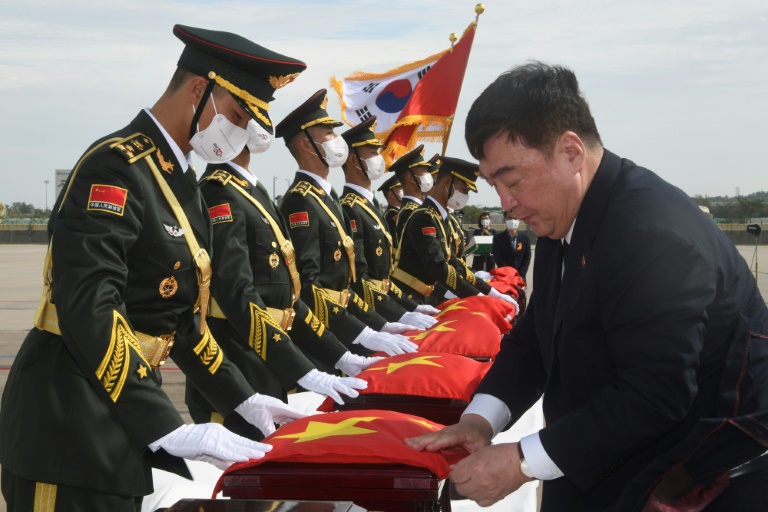
South Korea repatriated on Friday the remains of 88 Chinese soldiers killed during the Korean War, the first such ceremony since South Korea’s President Yoon Suk-yeol took office in May.

South Korean honour guards handed over wooden caskets with the remains during a ceremony at Incheon airport near Seoul, where they were loaded onto a Chinese air force cargo plane, a live video of the event showed.

The remains were received hours later in China’s northeastern city of Shenyang in a military ceremony attended by Chinese veterans of the three-year conflict.

This was the ninth such handover since the two countries — former Cold War-era foes — signed a 2014 agreement on the issue, and brings the total sets of returned Chinese remains to 913.

Friday’s repatriations are also the first to take place since the inauguration of South Korea’s Yoon, who has sought to maintain a friendly relationship with Beijing even as he moves to deepen ties with major security ally Washington.

“Our yearly handovers of the remains of Chinese troops are held on a humanitarian basis, but also symbolise friendly cooperation between South Korea and China,” Lee Do-hoon, South Korea’s second vice foreign minister, said at the event.

Lee added the two countries would pursue “diverse forms” of cooperation, as they mark 30 years since bilateral diplomatic relations were established.

China intervened on North Korea’s side during the 1950-53 Korean War, which is known in China as the War to Resist US Aggression and Aid Korea.

An estimated three million Communist Chinese troops fought alongside Pyongyang’s forces, and helped tip the balance of the conflict.

Beijing’s intervention saved the North from defeat and pushed US-led United Nations forces back across the 38th parallel, before the war ended in a stalemate that persists to this day.

Casualty figures remain disputed but Western estimates commonly cite a figure of 400,000 Chinese deaths, while Chinese sources give a death toll of about 180,000.

Hong Kongers rush to learn new skills ahead of life abroad

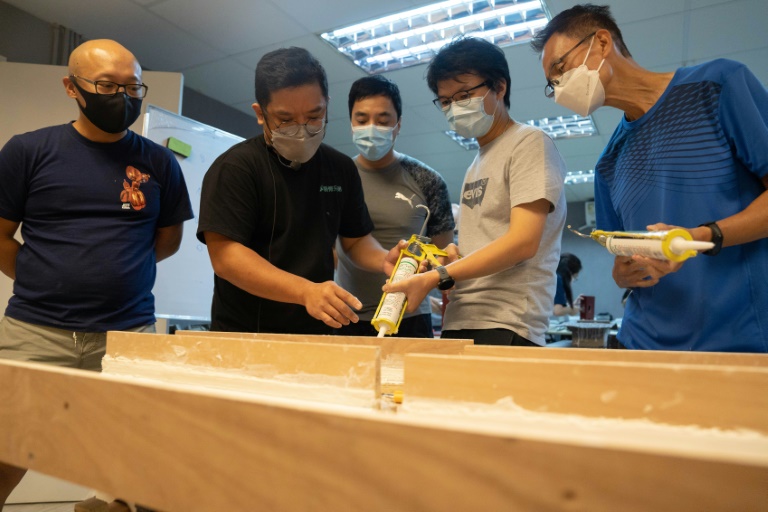
Inside the bowels of a Hong Kong industrial building, Eric Pun was among two dozen people crammed into a classroom learning to drill holes — acquiring a new set of skills before heading abroad.

Savvy businesses have started offering crash courses in subjects like home repair and hairdressing, capitalising on a wave of people departing Hong Kong as China cracks down on dissent and strict pandemic rules upend the economy.

For Pun, a 35-year-old nurse emigrating to Australia with his family, taking the home repair class was both a practical cost-saving measure and a way to prepare mentally for the unknown.

“In Hong Kong, if there is a problem you can go to the property management office or hire someone from the mall… but when my family lives in a house, I’ll have to rely on myself,” he told AFP.

Spending a day at Renobro, one of the handful of companies offering home-repair lessons, costs HK$1,980 ($250) and courses are fully booked weeks in advance, according to company co-founder and instructor Lau Chun-yu.

“More than a thousand people have participated in our course,” Lau said.

“When we first started, we didn’t expect so many people would be emigrating.” 

Lau said his students, who are mostly in their thirties and include doctors and teachers, race through a one-day syllabus of more than 40 skills, such as caulking, plastering and rewiring appliances.

“Most of them aren’t well-prepared, but… they hope to go over as soon as possible,” he said, citing fears that foreign countries may tighten immigration controls in the long run.

– Brain drain –

Hong Kong is currently experiencing an exodus of local and foreign talent.

Many residents have baulked at Beijing’s sweeping crackdown on dissent following huge and sometimes violent democracy protests three years ago.

Stringent zero-Covid rules also remain in place two and half years into the pandemic, restricting daily life and isolating the city internationally.

Latest census figures showed a record dip in Hong Kong’s population, which fell 1.6 percent to 7.29 million compared with a year earlier. The labour force has plunged to 3.75 million, the lowest in nearly a decade.

Many of those leaving are families with school-aged children. 

Official primary school figures released earlier this month showed there were 70 fewer classes across 60 schools this academic year. More than 4,000 teachers have left their jobs in the past school year.

The United Kingdom became one of the most popular destinations for Hong Kongers after it announced a visa scheme that provided a pathway to citizenship, arguing Beijing had abandoned its pre-handover promise to allow residents key freedoms and autonomy. 

So far more than 140,000 people have applied under the British scheme since it was launched in January 2021.

Other common choices for relocation include Canada, Australia and the United States, mirroring a similar wave of emigration that occurred ahead of Hong Kong’s 1997 handover from Britain.

– ‘I want to be equipped’ –

Despite their optimism for life overseas, many would-be emigrants told AFP they were worried about job prospects and wanted to learn more skills as insurance.

Fashion retailer Kimi Chau, 35, took a series of hairdressing classes in preparation for her move to Britain along with her husband and five-year-old.

“I want to be equipped for a job after I’ve arrived… If I could learn more skills before I leave, then if the opportunity came along for me to open up a business, I would be more confident,” she told AFP.

Chau said her concerns about Hong Kong’s education system amid a shifting political climate drove her to leave.

“Because I have a kid, the issue felt closer to home and I didn’t take a long time to decide.” 

On a sweltering August afternoon, Chau and other hairdressing students brought along friends and family members to the salon where they took their classes for an informal graduation ceremony and a bittersweet farewell.

Instructor Jason Yip said the hairdressing industry has a relatively low entry threshold and Hong Kongers can get a job quickly, adding that roughly one-third of his students plan to emigrate.

Yip added that many of his students appreciate the social dimension of hairdressing, as a way to stay close to family members and to connect with like-minded Hong Kongers.

“For them, (hairdressing) can become a kind of hobby, and they are quite happy to have it after arriving in a new place,” Yip said. 

“That kind of joy is shared and there is a sense of achievement.”

Putin, Xi hail 'great power' ties at talks defying West

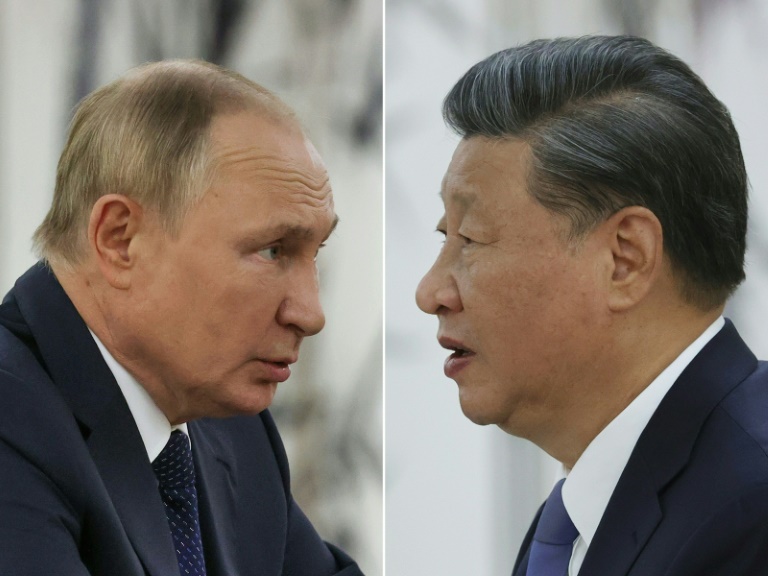
Russian President Vladimir Putin and Chinese leader Xi Jinping met for their first face-to-face talks since the start of the conflict in Ukraine on Thursday, hailing their strategic ties in defiance of the West.

Sitting across from each other at two long rounded tables and flanked by aides, the two leaders met on the sidelines of a summit of the Shanghai Cooperation Organisation (SCO) in ex-Soviet Uzbekistan.

The meeting was part of Xi’s first trip abroad since the early days of the pandemic. For Putin, it was a chance to show Russia has not been fully isolated despite Western efforts.

“China is willing to make efforts with Russia to assume the role of great powers, and play a guiding role to inject stability and positive energy into a world rocked by social turmoil,” Xi told Putin at the talks.

Chinese state broadcaster CCTV also quoted Xi as saying China was willing to work with Russia to support “each other’s core interests”.

Putin took a clear broadside at the United States, which has been leading efforts to support Ukraine and impose sanctions on Russia.

“Attempts to create a unipolar world have recently acquired an absolutely ugly form and are completely unacceptable,” Putin said.

“We highly appreciate the balanced position of our Chinese friends in connection with the Ukrainian crisis,” Putin told Xi, while reiterating Moscow’s backing for China on Taiwan.

“We adhere to the principle of one China. We condemn the provocation of the US and their satellites in the Taiwan Strait,” Putin said, after a US Senate committee on Wednesday took the first step towards Washington directly providing billions of dollars in military aid to Taiwan.

– ‘Alternative’ to West –

It was the first in-person meeting between the two leaders since Putin saw Xi in early February for the Winter Olympic Games in Beijing, days before the Russian leader launched the military offensive in Ukraine.

The Kremlin has touted the SCO summit in the ancient Silk Road city of Samarkand as showing there is an “alternative” to Western-dominated international institutions.

The SCO — made up of China, India, Pakistan, Russia and the ex-Soviet Central Asian nations of Kazakhstan, Kyrgyzstan, Tajikistan and Uzbekistan — was set up in 2001 as a political, economic and security organisation to rival Western institutions.

The leaders of those countries were to attend, as well as Iranian President Ebrahim Raisi, Turkish President Recep Tayyip Erdogan and President Alexander Lukashenko of Belarus.

Putin met the leaders of Kyrgyzstan and Turkmenistan earlier Thursday, as well as with Raisi and Pakistani Prime Minister Shehbaz Sharif.

With both Raisi and Sharif he said ties were “developing positively”, while the Iranian leader told Putin that US-backed sanctions on both countries would only make their relationship “stronger”.

“The Americans think whichever country they impose sanctions on, it will be stopped. Their perception is a wrong one,” Raisi said.

For Putin, the summit comes at an important time, as his forces face major battlefield setbacks in Ukraine and amid a continued Western push to make Russia an international pariah.

For Xi, it is an opportunity to shore up his credentials as a global statesman ahead of a pivotal congress of the ruling Communist Party in October.

The Chinese leader also met Thursday with Belarus’s strongman leader Lukashenko, who was quoted by state news agency Belta as thanking Xi for China’s “serious support in these difficult times”.

Lukashenko has been shunned by Western leaders after a fierce crackdown on the opposition two years ago and for backing Russia on Ukraine.

Chinese state media said Xi would also meet Erdogan on Friday.

– ‘No-limits’ relationship –

Formerly Cold War allies with a tempestuous relationship, China and Russia have drawn closer in recent years as part of what they call a “no-limits” relationship acting as a counterweight to the global dominance of the United States.

The two countries have also stepped up military cooperation, with China sending hundreds of troops to take part in military exercises last month in Russia’s far east.

The defence ministry in Moscow said Thursday that Russian and Chinese warships were on a joint patrol in the Pacific and planning a live-fire artillery exercise at sea.

Other global leaders sounded alarm about deepening ties between Moscow and Beijing.

US State Department spokesman Ned Price said China and Russia “share a vision for the world that is starkly at odds with the vision that’s at the center of the international system, the vision that has been at the center of the international system for the past eight decades.”

Taiwan’s foreign ministry said the two countries were inflicting harm on “international peace, stability, democracy and freedom”.

Putin was also set to hold talks Friday with Erdogan and Indian Prime Minister Narendra Modi.

Security was tight in Samarkand — a city of grand tiled mosques that was one of the hubs of Silk Road trade routes between China and Europe — with a huge police presence on the streets and armoured vehicles parked downtown.

Close Bitnami banner
Bitnami