World

Stocks mostly slide; pound hits 37-year dollar low

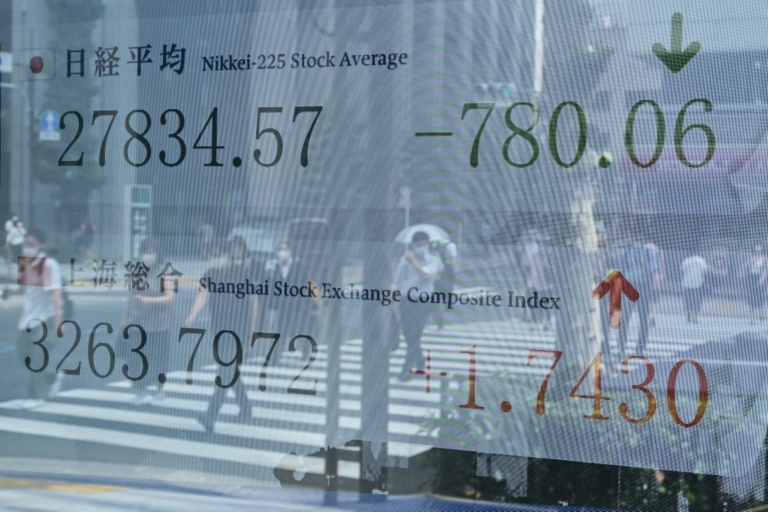
Stock markets mostly slumped Friday, while the British pound tanked to a 37-year dollar low as weak UK retail sales stoked global recession fears.

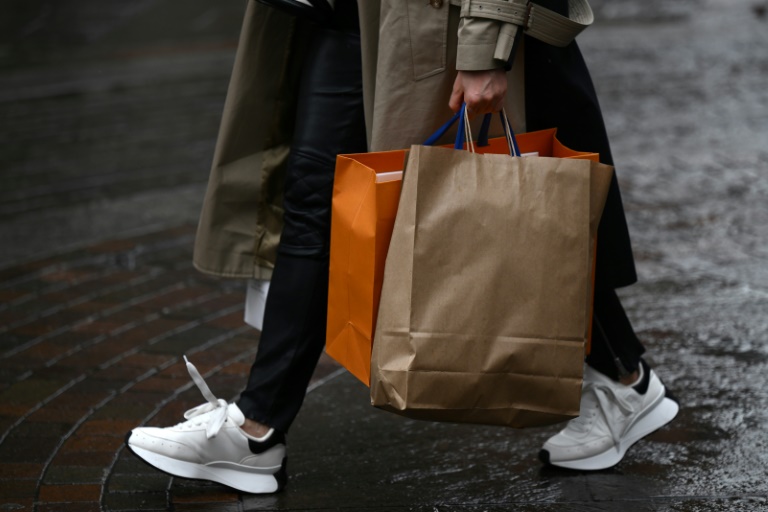
Sterling slid to $1.1351, the lowest level since 1985, on news that British retail sales tumbled by far more than forecast in August as shoppers faced rampant inflation.

Sales by volume dived 1.6 percent last month, more than triple expectations.

Eurozone and Asian stock markets tumbled but London pushed into positive territory as the weak pound boosted exporters.

Sterling has hit a series of 1985 lows in recent weeks, also as the US Federal Reserve implements aggressive hikes interest rate hikes.

– ‘Markets in pain’ –

“Markets are in a lot of pain, and the UK’s retail data has made things only worse for traders as it clearly pointed out one thing: an imminent recession,” said AvaTrade analyst Naeem Aslam.

“When you look at the sterling against the dollar, it seems like there are no buyers out there.”

Elsewhere, Frankfurt equities dived 1.5 percent and Paris shed 1.2 percent as investors digested confirmation of record-high inflation in the eurozone.

“Data for August confirm that price pressures are very strong and broad-based” with eurozone inflation at 9.1 percent, said Capital Economics analyst Jack Allen-Reynolds.

“The European Central Bank will need to continue hiking interest rates aggressively at forthcoming meetings.”

The ECB had last week hiked its key rate by a historic 75 basis points, and markets expect a similar-sized move at the October policy meeting.

Asian equities also dropped Friday, tracking Wall Street losses as investors express concern over persistently high consumer prices and the increasing likelihood of further interest rate hikes.

The Fed and Bank of England are widely expected to ramp up borrowing costs next week.

The US central bank has lifted borrowing costs by 75 basis points at each of its last two meetings. 

Asian investors meanwhile shrugged off brighter data from powerhouse economy China.

China’s factory output and retail sales beat expectations in August, new data released on Friday showed, despite the economy being hammered by Covid-related curbs, heatwaves and a deepening property market slump.

– Key figures at around 1030 GMT –

London – FTSE 100: UP 0.1 percent at 7,292.21 points

Frankfurt – DAX: DOWN 1.5 percent at 12,764.90

Paris – CAC 40: DOWN 1.2 percent at 6,082.93

EURO STOXX 50: DOWN 1.1 percent at 3,502.91

Tokyo – Nikkei 225: DOWN 1.1 percent at 27,567.75 (close)

Shanghai – Composite: DOWN 2.3 percent at 3,126.40 (close)

Hong Kong – Hang Seng Index: DOWN 0.9 percent at 18,761.69 (close)

New York – Dow: DOWN 0.6 percent to 30,961.82 (close)

Pound/dollar: DOWN at $1.1388 from $1.1467 on Thursday

Euro/pound: UP at 87.59 pence from 87.21 pence 

Euro/dollar: DOWN at $0.9974 from $1.0001

Dollar/yen: DOWN at 143.25 yen from 143.45 yen

Brent North Sea crude: UP 0.4 percent at $91.18 per barrel

West Texas Intermediate: UP at $85.21 per barrel

burs/rfj/bcp/lth
Wave of Lebanon bank 'heists' to seize back frozen savings

A man held up a Lebanese bank to withdraw his frozen savings Friday, the latest in a string of “depositor heists” in the crisis-hit country that have garnered wide public support.

Lebanon has been mired in an economic crisis for more than two years, since the value of its currency began plummeting and banks started imposing draconian restrictions on withdrawals.

The holdup of a Beirut bank on Wednesday by an activist who filmed herself using a toy gun appears to have sparked a series of copycat raids by people fed up at being unable to withdraw their savings.

There were another three such incidents in the country on Friday.

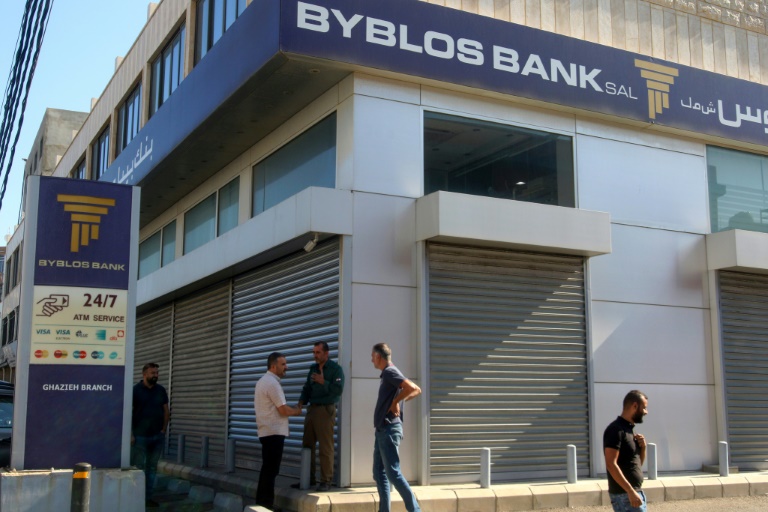
In one of them, a man carrying a gun and jerrycan of fuel demanded staff at a branch of the Byblos bank in the southern town of Ghaziyeh hand over his deposit.

Accompanied by his son, the man in his 50s threatened bank staff with the gun, which a Lebanese television channel said may have been a toy, before making his demand.

“He emptied a jerrycan of fuel on the floor,” a bank security guard told an AFP correspondent.

The man walked away with about $19,000 in cash but turned himself in to police moments later as a crowd formed in front of the bank to support him.

– Not ‘a bank robber’ –

A few hours later in the Beirut neighbourhood of Tariq al-Jdideh, a tense security situation developed around a branch of Blom Bank, although details were unclear.

Witnesses outside the bank said an indebted shop-owner had demanded access to his trapped savings.

He was locked inside the bank together with police officers, the witnesses told AFP at the scene, but was thought to be unarmed.

Another man armed with a hunting rifle stormed a bank in Beirut’s Ramlet el-Baida neighbourhood on Friday, witnesses told an AFP photographer at the scene.

The spate of heists comes two days after a young activist stormed a central Beirut bank with fuel and plastic gun to demand the deposits of her sister, who needed to pay for cancer treatment.

The woman identified as Sali Hafiz made off with around $13,000 and became an instant hero on social media with a picture of her standing on a desk inside the bank during the raid going viral on social media.

“She had every right to do this. I would do the same if I was as brave as her,” said Carla Chehab, a 28-year-old Beirut resident.

“And don’t let anyone call her a bank robber. The thieves are the banks, the government and all rich people protecting them,” she added.

Also on Wednesday, a man held up a bank in the city of Aley northeast of Beirut, the official National News Agency reported.

– Emergency meeting –

As the bank heists snowballed on Friday, the Lebanese interior minister called for an emergency meeting in the afternoon.

The raids are seen as mostly acts of desperation by Lebanese depositors who do not have criminal records and are trying to settle bills, drawing wide sympathy from the general public.

Last month, a man received widespread sympathy after he stormed a Beirut bank with a rifle and held employees and customers hostage for hours, to demand some of his $200,000 in frozen savings to pay hospital bills for his sick father.

He was detained but swiftly released and was present Friday outside the bank in Tariq al-Jdideh to express his support.

Lebanon has been battered by one of its worst-ever economic crises.

Its currency has lost more than 90 percent of its value on the black market, while poverty and unemployment have soared.

Banks have been widely accused of operating like a cartel and of spiriting large amounts out of the country for senior Lebanese officials at a time when foreign transfers were already blocked for ordinary citizens.

The country’s main depositors’ association voiced its support for desperate bank clients.

“We call on every depositor who refuses injustice, oppression and theft to support any depositor who asks for what is rightfully theirs,” association member Tala Khalil told AFP.

According to local media, the bankers association called an emergency meeting to defuse the risk of further attacks by deciding a three-day nationwide closure next week.

King Charles in Wales as miles-long London queue paused

King Charles III arrived in Wales Friday for the last of his visits to the UK’s four nations, as miles-long queues to see his late mother’s coffin reached capacity.

Ahead of Monday’s state funeral of Queen Elizabeth II, Charles and his three siblings — Princess Anne, Prince Andrew and Prince Edward — were due to hold a family vigil in front of the flag-shrouded casket as it lies in state in parliament.

The “Vigil of the Princes”, with all four royals in ceremonial military uniform, will last for 15 minutes from 1830 GMT.

Eight of the queen’s grandchildren, including princes William and Harry, will hold a similar vigil on Saturday evening, royal sources confirmed.

Her death last week at the age of 96 has triggered an outpouring of emotion, with tens of thousands queueing for hours, many through the night, to pay their respects in Westminster Hall.

The queue was paused for “at least” six hours after a park at the end of the line reached capacity, the government said, but members of the public continued to drift there regardless.

Charles, until last week the longest-serving Prince of Wales in history, was greeted by a military gun salute after flying by helicopter to Cardiff Castle.

A spokesman for the king said he had a “lifelong commitment to the country’s people” and would have a private audience with Welsh First Minister Mark Drakeford, of the centre-left Labour party, during his visit.

Joined by Queen Consort Camilla, Charles was cheered by onlookers waving the Welsh and UK flags as he was driven to an Anglican service in Cardiff’s Llandaff Cathedral, before heading on to meet members of the Welsh parliament.

Protests were threatened after Charles was quick to pass the prince of Wales title to his son William last week. But Drakeford — an avowed republican — downplayed that prospect during the king’s visit.

“I don’t think that this is the week in which that debate needs to surface, but people have that right,” he told the BBC Friday. 

“I think it will be exercised with restraint, and it will be a footnote to the dominant feelings of the day.”

– ‘Unique and timeless’ –  

The queen will be honoured with a state funeral — the first Britain has seen in nearly six decades — at Westminster Abbey on Monday morning, with more than 2,000 guests expected.

After the service, the coffin will be transferred by royal hearse to Windsor Castle, west of London, before a committal service at St George’s Chapel attended by many past and present royal staff.

A private burial will follow attended only by members of the royal family in which the queen will be laid to rest alongside her late husband Philip, parents and sister.

US President Joe Biden, Canadian Prime Minister Justin Trudeau, Australian leader Anthony Albanese and French President Emmanuel Macron have all confirmed their attendance at the funeral, as have Japan’s Emperor Naruhito and numerous other royals.

“The queen held a unique and timeless position in all our lives,” the Duke of Norfolk Edward Fitzalan-Howard, also known as the Earl Marshal who is organising the funeral, told reporters.

“It is our aim and belief that… the next few days will unite people across the globe and resonate with people of all faiths, whilst fulfilling Her Majesty and her family’s wishes to pay a fitting tribute to an extraordinary reign,” he said.

Police have mounted a massive security operation ahead of the funeral, as the crowds file past the queen round the clock all weekend and global dignitaries jet in. 

Early Friday, two police officers were stabbed in central London, one suffering “life-changing” injuries, the Metropolitan force said, but it ruled out any link to terrorism.

An official delegation from China has been banned from attending the lying in state following an intervention by House of Commons Speaker Lindsay Hoyle, parliamentary sources said.

It comes after China sanctioned several British lawmakers over their criticism of the country’s human rights record.

– ‘Won’t happen again’ –

The state funeral will follow the queen’s coffin lying in state at Westminster Hall, parliament’s oldest building, for four full days.

The line to enter the vast hall where it has rested since late Wednesday has attracted an endless stream of mourners, and the government said early Friday that those at the end faced a wait of at least 14 hours.

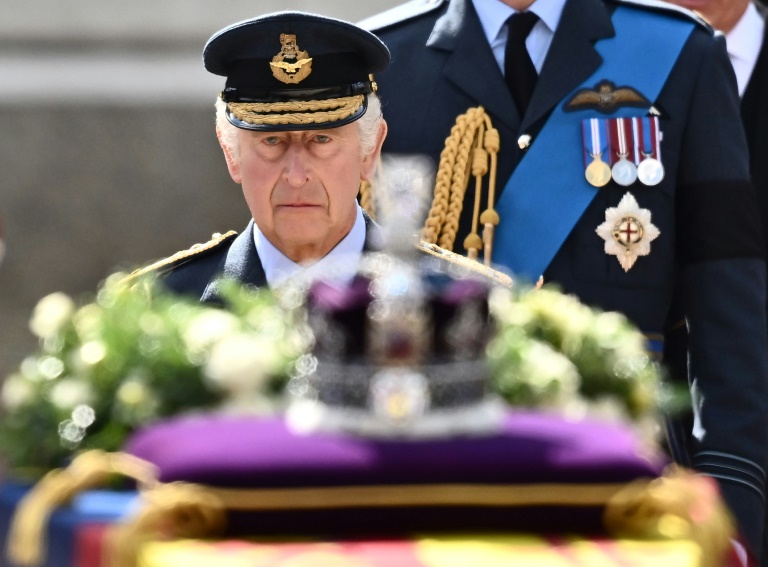
The casket is draped in the Royal Standard flag, with the Imperial State Crown, her ceremonial Orb and Sceptre on top, with tall, flickering candles at each corner.

The sombre atmosphere inside is completed with guards in ceremonial uniform posted around the podium in a constant vigil.

Mourners marked their moment in front of the coffin in various ways, from bows or curtsies to the sign of the cross or by simply removing their hats, an AFP reporter observed Friday.

Some wiped away tears. Others brought infants in pushchairs. Old soldiers stopped and gave one last salute to their former commander-in-chief.

Meanwhile, in Cardiff, crowds gathered ahead of Charles’s visit.

“Something like this won’t happen again,” said barman Jack Grimshaw, 27, who turned out with his young son.

“The royal family has been around for so many years (but) we didn’t have a new king for so long.”

Not everyone was happy to see the new monarch in Wales. Zahra Ameri, 22, said the funeral was a “waste of money”.

“I’m hoping that Wales becomes independent. Of course it would be a disturbance in our economy because we do rely on the UK, but I strongly believe in independence,” she said.

Other senior royals have kept up visits to other parts of the country.

William and wife Kate on Thursday travelled to Sandringham, the family’s private winter retreat in eastern England, to view floral tributes left by the public.

French traffic controllers' strike disrupts European air travel

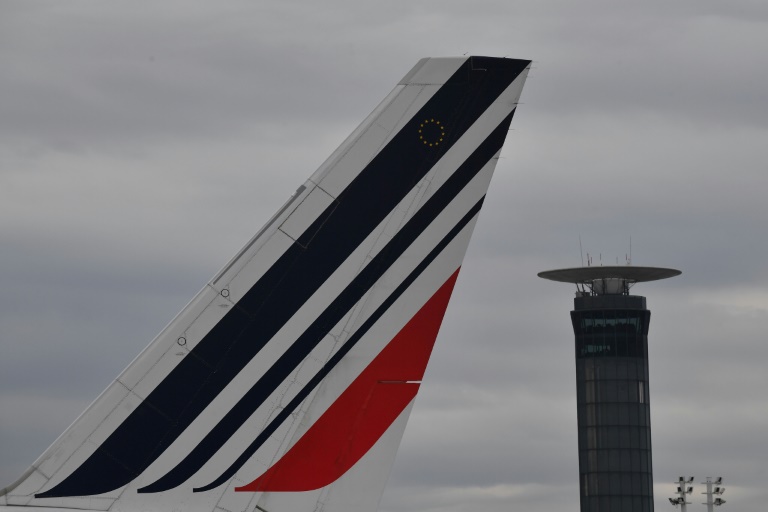
Around 1,000 flights to and from France were cancelled Friday as the country’s air traffic controllers went on strike, with their action also causing delays across European airspace.

France’s DGAC civil aviation authority said 16 airports were operating a skeleton service, as were traffic control centres guiding planes overflying French territory at high altitude.

But several regional airports were closed and the DGAC warned of “cancellations and significant delays across the country”.

At Paris’ enormous Charles de Gaulle hub, only a few cancellations were listed on departures boards among morning flights mostly going ahead, and staff in high-visibility vests were directing passengers.

“I thought we’d have lots of travellers coming to see us, but it hasn’t turned out that way, I’m surprised… I suppose most people were forewarned,” one worker told AFP, asking not to be named.

But Christina Sharikadze, waiting at the Air France ticket desk, said “we didn’t get any message, nothing at all… we’re trying to figure something out” to replace a cancelled flight home to Georgia.

European air traffic body Eurocontrol said it was seeing “significant disruption”, with delays totalling over 500,000 minutes by 8:30 am (0630 GMT).

That was more than three times the level across the whole of last Friday when air traffic was moving normally.

Delays of an average 25 minutes per flight were mostly down to the strike, Eurocontrol said.

Around 21,000 planes are expected to pass through Eurocontrol airspace on Friday, down by around one third.

Air France dropped around half its 800 planned services Friday, while Europe’s largest airline Ryanair said it had cancelled 420 flights overflying or landing in France.

The DGAC said it was working with Eurocontrol to divert planes around French airspace.

The SNCTA air traffic controllers’ union said its members are concerned that pay is not keeping up with soaring inflation.

Air traffic controllers are among France’s best-paid civil servants, earning an average of 5,000 euros ($4,985) per month according to a parliamentary report.

The union also warns that recruitment is falling short, risking gaps in the profession’s ranks.

One-third of existing air traffic controllers are expected to retire between 2029 and 2035, and training new ones takes at least five years.

The SNCTA says the long wait for new recruits means fresh funding is needed for additional training capacity.

It has filed notice of a further strike on September 28-30.

Prices soaring everywhere: from beans in Brazil to pork in China

Consumers and businesses around the world are facing steeper prices for everything from Mexico’s beloved tortillas to the aluminium cans used by beer companies.

Inflation jumped after countries emerged from Covid lockdowns and it has soared since Russia invaded Ukraine, with the IMF expecting consumer prices to rise by 8.3 percent globally this year.

Here is a look at how higher prices are affecting the world:

– Fuel –

The invasion of Ukraine by Russia, the world’s third largest oil producer, sent crude oil prices through the roof.

The main international contract, Brent North Sea, almost hit $140 per barrel, but has now dropped back below $100.

Prices at the pump have followed suit, surging to over two euros per litre in eurozone countries and above five dollars per gallon in the United States, before falling back in recent weeks.

Natural gas has also become more expensive, especially in Europe, where electricity prices hit record levels in Germany and France.

Energy prices were up 38.3 percent in the eurozone in August from the same month last year.

Higher energy prices ripple throughout the economy as they affect the production and transportation costs of companies.

– Pasta, beans and tortillas –

The war sent food prices soaring as the war disrupted grain exports from Ukraine, a major supplier of wheat and sunflower oil to countries around the world.

In May, Allianz estimated that pasta prices had risen 19 percent in the eurozone over the previous 18 months.

In Canada, another large exporter of wheat, a 500-gram package had risen by 60 cents in July from the same month last year, to CAN$3.16, according to official data.

In Thailand, the price for instant noodles, which is controlled by the state, rose for the first time in 14 years in August — a 17 percent increase to seven bahts (20 US cents).

The price of the corn flour used to make tortillas in Mexico — a staple used for tacos and other dishes — is up by around 13 percent from last year and contributing to two-decade high inflation.

Pinto beans, a Brazilian staple, cost nearly 23 percent more in August than at the same time last year.

– Meat –

With grain more expensive, feeding livestock has become costlier and farmers have in turn raised their prices.

Pork, the most popular meat in China, cost 22 percent more in August than last year. 

Chinese authorities are considering tapping into their strategic reserves of pork for a second time this year in order to stabilise prices.

In Argentina, ground beef patties are popular as their prices have traditionally been low, but these have shot up by three quarters in the past 12 months. 

The country currently has one of the highest inflation rates in the world at 56.4 percent over the first eight months of the year.

In Europe, it is chicken prices that have taken wing as farmers have had to contend with bird flu in addition to cost pressures. Wholesale prices were up by a third in August from the same month last year.

– Beer –

Brewers have been hit with not only rising grain prices, but also for the aluminium cans and glass bottles for their beer.

These are 70 percent more expensive than before the war in Ukraine, according to the trade association of European brewers. 

Heineken, the world’s second-largest brewery group, hiked its prices by an average of 8.9 percent over the first half of this year. 

According to estimates by Bloomberg, AB InBev, the world’s top brewer whose beers include Budweiser and Corona, has increased its prices by eight percent.

In Britain, the cost of a pint has risen above four pounds ($4.6), the highest price since 1987, according to Britain’s Office for National Statistics.

– Newspapers –

Paper prices have climbed as demand has risen following the end of Covid lockdowns. Printing is an energy-intensive process.

Several French dailies raised their prices earlier this year, as have a number British newspapers like the Sun, the Times and Sunday Mail.

Others have reduced their number of pages.

In Europe overall, the prices of newspapers were 6.5 percent higher in July, according to official data.

King Charles travels to Wales as miles-long queue paused

King Charles III headed to Wales Friday for the last of his visits to the UK’s four nations, including a meeting with its republican leader, as miles-long queues to see his late mother’s coffin reached capacity.

Ahead of Monday’s state funeral of Queen Elizabeth II, Charles and his three siblings — Princess Anne, Prince Andrew and Prince Edward — were due to hold a family vigil in front of the flag-shrouded casket as it lies in state in parliament.

The so-called Vigil of the Princes, with all four royals in ceremonial military uniform, will last for 15 minutes from 1830 GMT.

Eight of the queen’s grandchildren, including princes William and Harry, will hold a similar vigil on Saturday evening, royal sources confirmed.

Her death last week at the age of 96 has triggered an outpouring of emotion, with tens of thousands queueing for hours, many through the night, to pay their respects to the late monarch in Westminster Hall.

The queue was paused for “at least” six hours after a park at the end of the line reached capacity, the government said.

Charles, until last week the longest-serving Prince of Wales in history, was due to fly by helicopter to Cardiff early on Friday.

A spokesman for the king said he had a “lifelong commitment to the country’s people” and would have a private audience with Welsh First Minister Mark Drakeford, of the centre-left Labour party, during his visit.

Protests were threatened after Charles was quick to pass the prince of Wales title to his son William last week. But Drakeford — an avowed republican — downplayed that prospect during the king’s visit.

“I don’t think that this is the week in which that debate needs to surface, but people have that right,” he told the BBC Friday. 

“I think it will be exercised with restraint, and it will be a footnote to the dominant feelings of the day.”

– ‘Unique and timeless’ –  

The queen will be honoured with a state funeral — the first Britain has seen in nearly six decades — at Westminster Abbey on Monday morning, with more than 2,000 guests expected.

After the service, the coffin will be transferred by royal hearse to Windsor Castle, west of London, before a committal service at St George’s Chapel attended by many past and present royal staff.

A private burial will follow attended only by members of the royal family in which the queen will be laid to rest alongside her late husband Philip, parents and sister.

US President Joe Biden, Canadian Prime Minister Justin Trudeau, Australian leader Anthony Albanese and French President Emmanuel Macron have all confirmed their attendance at the funeral, as have Japan’s Emperor Naruhito and numerous other royals.

“The queen held a unique and timeless position in all our lives,” Duke of Norfolk Edward Fitzalan-Howard, also known as the Earl Marshal who is organising the funeral, told reporters.

“It is our aim and belief that… the next few days will unite people across the globe and resonate with people of all faiths, whilst fulfilling Her Majesty and her family’s wishes to pay a fitting tribute to an extraordinary reign,” he said.

Police have mounted a massive security operation ahead of the funeral, as the crowds file past the queen round the clock all weekend and global dignitaries jet in. 

Early Friday, two police officers were stabbed in central London, but the Metropolitan force ruled out any link to terrorism.

An official delegation from China has reportedly been banned from attending the lying in state following an intervention by House of Commons Speaker Lindsay Hoyle, parliamentary sources said.

It comes after China sanctioned several British lawmakers over their criticism of the country’s human rights record.

– ‘Won’t happen again’ –

The state funeral will follow the queen’s coffin lying in state at Westminster Hall, parliament’s oldest building, for four full days.

The line to enter the vast hall where it has rested since late Wednesday has attracted an endless stream of mourners, and the government said early Friday that those at the end faced a wait of at least 14 hours.

The casket is draped in the Royal Standard flag, with the Imperial State Crown, her ceremonial Orb and Sceptre on top, with tall, flickering candles at each corner.

The sombre atmosphere inside is completed with guards in ceremonial uniform posted around the podium in a constant vigil.

Mourners marked their moment in front of the coffin in various ways, from bows or curtsies to the sign of the cross or by simply removing their hats, an AFP reporter observed Friday.

Some wiped away tears. Others brought infants in pushchairs. Old soldiers stopped and gave one last salute to their former commander-in-chief.

Meanwhile, in Cardiff, crowds gathered ahead of Charles’s visit.

“Something like this won’t happen again,” said barman Jack Grimshaw, 27, who turned out with his young son.

“The royal family has been around for so many years (but) we didn’t have a new king for so long.”

Other senior royals have kept up visits to other parts of the country.

William and wife Kate on Thursday travelled to Sandringham, the family’s private winter retreat in eastern England, to view floral tributes left by the public.

Elizabeth’s youngest son Prince Edward and his wife Sophie visited Manchester in northwest England to view a book of condolence at the city’s central library and floral tributes.

India's Adani briefly listed as world's second-richest person

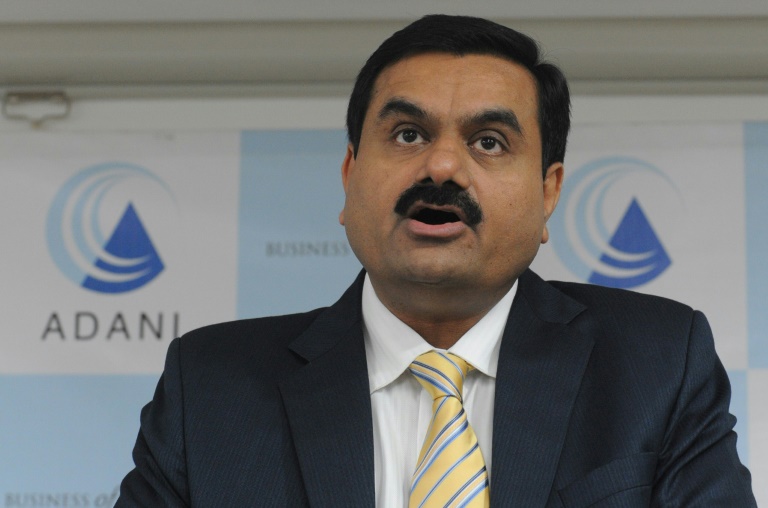
Indian industrialist Gautam Adani briefly became the world’s second-richest person on the Forbes real-time billionaire tracker on Friday, weeks after becoming the first Asian to break into the top three.

The self-made billionaire’s net worth surged $4 billion overnight to $154 billion, according to Forbes, ranking him ahead of LVMH’s Bernard Arnault and Amazon’s Jeff Bezos.

Tesla founder Elon Musk remained well out in front with a fortune of more than $270 billion.

Arnault — who at times held the top spot in May 2021 — and Adani traded the number two position during the day as the share prices of their companies fluctuated.

Adani, 60, made his fortune in ports and commodities trading and now operates India’s second-largest conglomerate with interests ranging from coal mining and edible oils to airports and news media.

His ballooning net worth reflects a stratospheric rise in the market capitalisation of his publicly listed companies, as investors back the Adani Group’s aggressive expansion of old and new businesses.

Shares in the flagship Adani Enterprises — of which the billionaire owns 75 percent — have soared more than 2,700 percent since March 2020, and doubled in value in the past six months.

Stock price surges in other group companies including Adani Transmission, Adani Power, Adani Ports and Adani Green Energy catapulted Adani past fellow Indian billionaire Mukesh Ambani this year.

Analyst estimates indicated the market capitalisation of Adani’s seven listed companies also briefly overtook those of the Tata group on Friday morning, making the Adani Group India’s largest conglomerate.

Born in the city of Ahmedabad in the western state of Gujarat to a middle-class family, Adani dropped out of college to work in the diamond industry before starting his export business in 1988.

In 1995, he won a contract to build and operate a commercial shipping port at Mundra in Gujarat, which has since grown to become India’s largest port.

At the same time, Adani expanded into thermal power generation and coal mining in India and overseas.

In recent years, the conglomerate has forayed into petrochemicals, cement, data centres and copper refining, in addition to establishing a renewable energy business with ambitious targets.

Recent investments in Indian news media and a bid for 5G airwaves this year have raised speculation that the billionaire’s empire could soon impinge on sectors dominated by Ambani’s Reliance Industries.

But Adani’s rapid expansion into capital-intensive businesses has also raised financial alarms, with Fitch Group’s CreditSights last week reiterating that they “remain concerned over the Adani Group’s leverage”.

Germany seizes Russian energy firm's subsidiaries

Berlin on Friday took control of the German operations of Russian oil firm Rosneft to secure energy supplies which have been disrupted after Moscow invaded Ukraine.

Rosneft’s German subsidiaries, which account for about 12 percent of oil refining capacity in the country, were placed under trusteeship of the Federal Network Agency, the economy ministry said in a statement.

“The trust management will counter the threat to the security of energy supply,” it said.

The seizures come as Germany is scrambling to wean itself off its dependence on Russian fossil fuels. Moscow has stopped natural gas deliveries to Germany via the Nord Stream 1 pipeline.

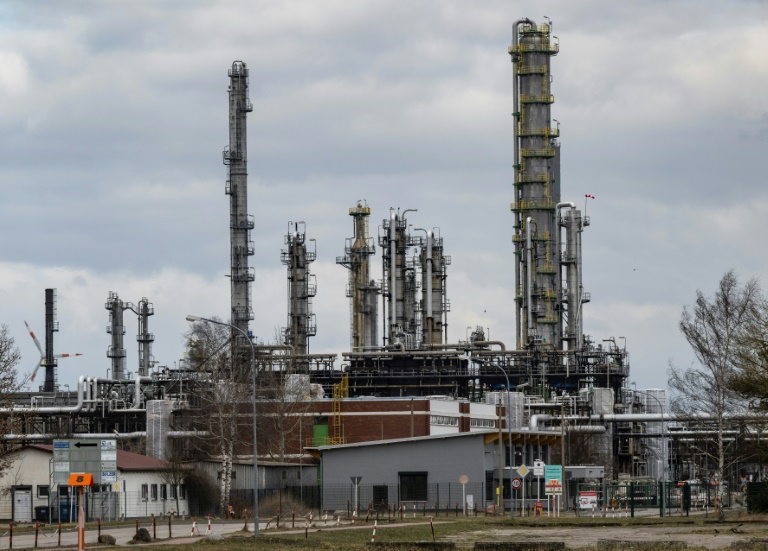
The move covers the companies Rosneft Deutschland GmbH (RDG) and RN Refining & Marketing GmbH (RNRM) and thereby their corresponding stakes in three refineries: PCK Schwedt, MiRo and Bayernoil.

Fears had been running high particularly for PCK Schwedt, which is close to the Polish border and supplies around 90 percent of the oil used in Berlin and the surrounding region, including Berlin-Brandenburg international airport.

The refineries’ operations had been disrupted as the German government decided to slash Russian oil imports, with an aim to halt them completely by year’s end.

By taking control of the sites, the German authorities can then run the refining operations using crude from countries other than Russia.

– Energy earthquake –

Russia’s war in Ukraine has set off an energy earthquake in Europe and especially in Germany, with prices skyrocketing as Moscow dwindled supplies.

Germany has found itself severely exposed given its heavy reliance on Russian gas.

Moscow had also built up a grip over Germany’s oil refineries, pipelines and other gas infrastructure through energy giants Rosneft and Gazprom over the years.

Energy deals with Russia were long seen as part of a German policy of keeping the peace through cooperation with Russian President Vladimir Putin’s regime.

The cheap energy supplied by Russia was also key in keeping German exports competitive. As a result, the share of Russian gas in Germany had grown to 55 percent of total imports before the Ukraine war.

But that approach has come back to haunt Germany. 

In early April, the German government took the unprecedented step of temporarily taking control of Gazprom’s German subsidiary, after an opaque transfer of ownership of the company sent alarm bells ringing in Berlin.

Germany has also been scrambling to find new sources of energy as deliveries from Russia have dwindled in the wake of the invasion of Ukraine.

The German government has also taken the stark step of firing up mothballed coal power plants, while putting two of its nuclear power plants on standby through April, rather than phasing them out completely as planned by year’s end. 

Germany seizes Russian energy firm's subsidiaries

Berlin on Friday took control of the German operations of Russian oil firm Rosneft to secure energy supplies which have been disrupted after Moscow invaded Ukraine.

Rosneft’s German subsidiaries, which account for about 12 percent of oil refining capacity in the country, were placed under trusteeship of the Federal Network Agency, the economy ministry said in a statement.

“The trust management will counter the threat to the security of energy supply,” it said.

The seizures come as Germany is scrambling to wean itself off its dependence on Russian fossil fuels. Moscow has stopped natural gas deliveries to Germany via the Nord Stream 1 pipeline.

The move covers the companies Rosneft Deutschland GmbH (RDG) and RN Refining & Marketing GmbH (RNRM) and thereby their corresponding stakes in three refineries: PCK Schwedt, MiRo and Bayernoil.

Fears had been running high particularly for PCK Schwedt, which is close to the Polish border and supplies around 90 percent of the oil used in Berlin and the surrounding region, including Berlin-Brandenburg international airport.

The refineries’ operations had been disrupted as the German government decided to slash Russian oil imports, with an aim to halt them completely by year’s end.

By taking control of the sites, the German authorities can then run the refining operations using crude from countries other than Russia.

– Energy earthquake –

Russia’s war in Ukraine has set off an energy earthquake in Europe and especially in Germany, with prices skyrocketing as Moscow dwindled supplies.

Germany has found itself severely exposed given its heavy reliance on Russian gas.

Moscow had also built up a grip over Germany’s oil refineries, pipelines and other gas infrastructure through energy giants Rosneft and Gazprom over the years.

Energy deals with Russia were long seen as part of a German policy of keeping the peace through cooperation with Russian President Vladimir Putin’s regime.

The cheap energy supplied by Russia was also key in keeping German exports competitive. As a result, the share of Russian gas in Germany had grown to 55 percent of total imports before the Ukraine war.

But that approach has come back to haunt Germany. 

In early April, the German government took the unprecedented step of temporarily taking control of Gazprom’s German subsidiary, after an opaque transfer of ownership of the company sent alarm bells ringing in Berlin.

Germany has also been scrambling to find new sources of energy as deliveries from Russia have dwindled in the wake of the invasion of Ukraine.

The German government has also taken the stark step of firing up mothballed coal power plants, while putting two of its nuclear power plants on standby through April, rather than phasing them out completely as planned by year’s end. 

Asian stocks lose ground as investors eye Fed decision next week

Asian markets dropped on Friday, tracking Wall Street losses as investors continue to show concern over persistently high global inflation and the likelihood of further interest rate hikes.

Major markets in Tokyo, Shanghai, Hong Kong, Seoul, Taipei, Mumbai and Sydney were lower, in line with overall market sentiment ahead of a decision from the US Federal Reserve next week.

Asian stocks were on course to extend their weekly declines into a fifth straight week, following on from continuing weakness in US and European equities.

The Nikkei in Tokyo lost 1.1 percent at the close, as investors “found it difficult to aggressively take positions” ahead of a long weekend and the Fed’s upcoming decision, Seiichi Suzuki, chief equity market analyst at Tokai Tokyo Research Institute, told AFP.

China’s factory output and retail sales beat expectations in August, new data released on Friday showed, despite the economy being hammered by Covid-related curbs, heatwaves and a deepening property market slump.

The data did little to buoy China’s main stock market, however, with Shanghai closing down 2.3 percent. Hong Kong closed down 0.9 percent. 

Europe’s main stock markets slid at the open on Friday, with London’s FTSE 100 index particularly impacted by disappointing UK retail sales data.

Wall Street’s three main indices rallied briefly on Thursday, but the gains fizzled. Traders took little comfort from US President Joe Biden’s announcement of a tentative deal to avert a potentially damaging railroad strike.

All eyes remain on the Fed, which has already instituted two consecutive 75-basis-point hikes and is widely expected to carry out a third. 

On Thursday, US retail sales data showed a surprising increase in August, but the report also downgraded sales in the month prior, tempering the good news.

Weekly US jobless claims retreated once again, and industrial production fell modestly in August.

The new data was not enough, however, to offset the widespread bearish sentiment following higher-than-expected US inflation data released earlier in the week, which showed yearly inflation slowing by less than forecast and monthly inflation rising.

– Fed expectations –

Analysts expect the Fed to continue raising interest rates, in a bid to cool an overheating economy and combat inflation, which remains near decades-highs in major economies.

“Because of the dramatic rise in Treasury yields, the Fed is going to have to keep raising rates beyond (next week),” said prominent investor Louis Navellier in his podcast on Thursday.

“I think they might now raise rates in November just before the (US) midterm elections and possibly December.”

Other commentators echoed that view. OANDA’s senior market analyst Edward Moya addressed the concern that further hikes could send the world’s largest economy into a recession.

“The latest round of data suggest the Fed can stick to aggressive rate hikes as the labour market remains strong and as the economy slowly softens,” he said.

“The risks of the Fed sending the economy into a severe recession are growing but right now the data doesn’t support that argument.”

Now that the data is in, markets are fully focused on the Fed’s decision as their next potential pivot, said Fiona Cincotta, senior financial markets analyst at City Index.

“This is a market waiting for the next catalyst,” she told Bloomberg News. 

“What we saw in the selloff on Tuesday is the repricing of expectations of the Fed. Until we really hear from the Fed we are not going to get a very clear direction.”

– Key figures at around 0815 GMT –

Tokyo – Nikkei 225: DOWN 1.1 percent at 27,567.75 (close)

Shanghai – Composite: DOWN 2.3 percent at 3,126.40 (close)

Hong Kong – Hang Seng Index: DOWN 0.9 percent at 18,761.69 (close)

EURO STOXX 50: DOWN 1.5 percent at 3,488.36

London – FTSE 100: DOWN 0.3 percent at 7,261.92

Frankfurt – DAX: DOWN 1.8 percent at 12,727.57

Paris – CAC 40: DOWN 1.5 percent at 6,068.11

New York – Dow: DOWN 0.6 percent to 30,961.82 points (close)

Euro/dollar: DOWN at $0.9960 from $0.9997 

Pound/dollar: DOWN $1.1369 at from $1.1472 

Euro/pound: UP 87.61 pence from 87.14 pence 

Dollar/yen: DOWN at 143.44 yen from 143.45 yen 

Brent North Sea crude: DOWN 0.6 percent at $90.30 per barrel

West Texas Intermediate: DOWN 0.9 percent to $84.34 per barrel

Close Bitnami banner
Bitnami