World

Typhoon Muifa lashes eastern China, forcing 1.6 million from their homes

High winds and heavy rain lashed China’s densely populated east coast on Friday, after Typhoon Muifa forced around 1.6 million people to leave their homes and grounded most flights at Shanghai’s main airports.

Muifa is the strongest tropical cyclone to hit Shanghai — home to more than 25 million people — since record-keeping began in 1949, state broadcaster CCTV said.

However, there were no immediate reports of any deaths or casualties.

At least 426,000 people were evacuated in Shanghai and another 1.2 million people were taken to temporary shelters in neighbouring Zhejiang province, CCTV added. 

Heavy rainfall led to traffic tailbacks and floods in several areas of the Yangtze river delta region, a major global manufacturing hub.

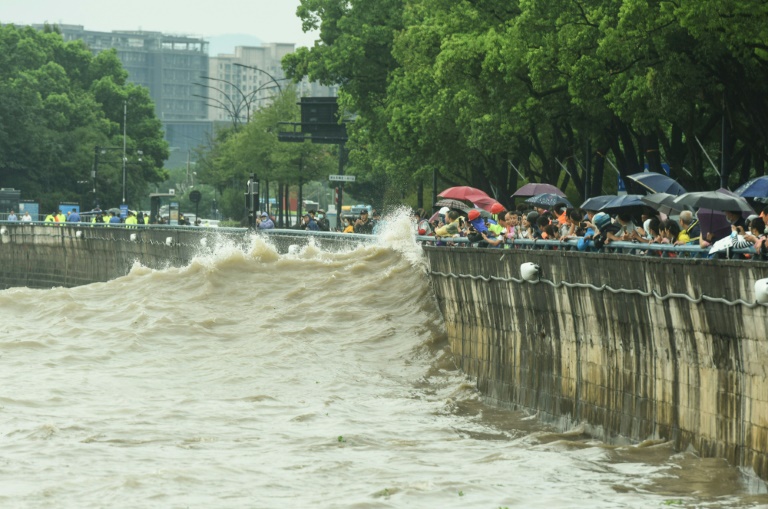
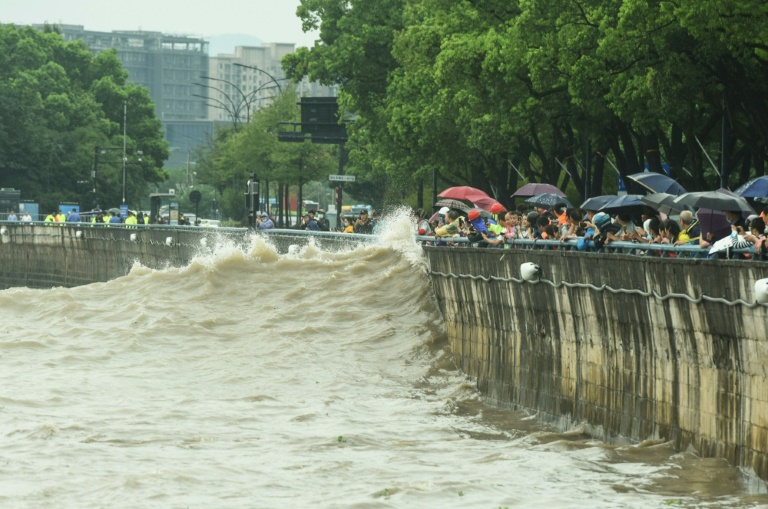
Giant waves were seen crashing onto the coastline in Hangzhou bay, to the south of Shanghai, and national radio reported a landslide in Ninghai County in Zhejiang province.

Packing winds of up to 82 kilometres (50 miles) per hour, the storm made landfall at around 12:00 am Friday (1600 GMT Thursday) in coastal areas of Qingdao, state news agency Xinhua reported.

Muifa previously hit the city of Zhoushan in Zhejiang on Wednesday and Shanghai’s Fengxian district on Thursday.

It also led to the cancellation of all flights to China’s biggest financial hub.

Air travel slowly resumed in Shanghai as the storm moved north, but most flights from the city’s two main airports were cancelled Thursday morning, according to aviation data provider Flightradar24.

Operations at some of Asia’s largest container shipping ports in Shanghai and neighbouring Ningbo that were halted because of the typhoon were scheduled to resume Thursday, according to statements from port officials. 

Officials ordered all fishing vessels in the Yellow Sea and Bohai Sea to anchor in ports as northeast China braced for the typhoon.

The storm came soon after Typhoon Hinnamnoor hit Shanghai and its neighbouring region last week, causing the suspension of Shanghai ferry services and school closures in parts of Zhejiang.

Muifa is the 12th typhoon to hit China this year, according to state media.

Tropical storms, which are expected to increase as the planet warms, were sharply up in 2021, a report by the US National Oceanic and Atmospheric Administration said earlier this month.

Typhoon Muifa lashes eastern China, forcing 1.6 million from their homes

High winds and heavy rain lashed China’s densely populated east coast on Friday, after Typhoon Muifa forced around 1.6 million people to leave their homes and grounded most flights at Shanghai’s main airports.

Muifa is the strongest tropical cyclone to hit Shanghai — home to more than 25 million people — since record-keeping began in 1949, state broadcaster CCTV said.

However, there were no immediate reports of any deaths or casualties.

At least 426,000 people were evacuated in Shanghai and another 1.2 million people were taken to temporary shelters in neighbouring Zhejiang province, CCTV added. 

Heavy rainfall led to traffic tailbacks and floods in several areas of the Yangtze river delta region, a major global manufacturing hub.

Giant waves were seen crashing onto the coastline in Hangzhou bay, to the south of Shanghai, and national radio reported a landslide in Ninghai County in Zhejiang province.

Packing winds of up to 82 kilometres (50 miles) per hour, the storm made landfall at around 12:00 am Friday (1600 GMT Thursday) in coastal areas of Qingdao, state news agency Xinhua reported.

Muifa previously hit the city of Zhoushan in Zhejiang on Wednesday and Shanghai’s Fengxian district on Thursday.

It also led to the cancellation of all flights to China’s biggest financial hub.

Air travel slowly resumed in Shanghai as the storm moved north, but most flights from the city’s two main airports were cancelled Thursday morning, according to aviation data provider Flightradar24.

Operations at some of Asia’s largest container shipping ports in Shanghai and neighbouring Ningbo that were halted because of the typhoon were scheduled to resume Thursday, according to statements from port officials. 

Officials ordered all fishing vessels in the Yellow Sea and Bohai Sea to anchor in ports as northeast China braced for the typhoon.

The storm came soon after Typhoon Hinnamnoor hit Shanghai and its neighbouring region last week, causing the suspension of Shanghai ferry services and school closures in parts of Zhejiang.

Muifa is the 12th typhoon to hit China this year, according to state media.

Tropical storms, which are expected to increase as the planet warms, were sharply up in 2021, a report by the US National Oceanic and Atmospheric Administration said earlier this month.

World Bank warns recession risk rising amid higher interest rates

The threat of a global recession is growing as central banks focus on bringing down soaring inflation rates, the World Bank warned Thursday, calling on governments to help boost supply to ease the constraints behind rising prices.

Inflation worldwide has been rising at the fastest pace seen in decades, due to supply constraints amid high demand as countries emerged from the pandemic. It has been exacerbated this year by the Russian invasion of Ukraine and Covid lockdowns in China.

Major central banks have responded forcefully, raising borrowing costs to cool demand and douse red-hot inflation.

But in a new paper, World Bank economists warned that the actions may not be enough to bring high prices under control, leading to a need for more interest rate hikes, which in turn will put the brakes on growth.

Many countries will not be able to avoid a recession, but the worldwide slowdown and tightening monetary policy “could give rise to significant financial stress and trigger a global recession in 2023,” the paper said.

In that scenario, global GDP growth would slow to 0.5 percent in 2023 — a 0.4 percent contraction in per capita growth, meeting the technical definition of a global recession.

“Global growth is slowing sharply, with further slowing likely as more countries fall into recession,” World Bank President David Malpass said in a statement. 

“My deep concern is that these trends will persist, with long-lasting consequences that are devastating for people in emerging market and developing economies.”

He urged policymakers to “shift their focus from reducing consumption to boosting production.”

The World Bank in early June slashed its forecast for global growth to 2.9 percent, more than a full point lower than the estimate in January.

– Not all doom and gloom –

Indermit Gill, the newly installed chief economist at the Washington-based development lender, said his biggest concern is that because of the slowdown and pandemic crisis, “poverty reduction has stopped.”

But he expressed some optimism as well.

“It’s not an all doom and gloom story,” he told reporters, noting that because of work done to improve economic policies and management before the pandemic, countries are better able to protect the poor.

“I have the feeling that we will come out on the right side of this because the world has changed now and you know, there’s a lot more capability around,” he said.

The worst case scenario described in the paper Thursday would entail a recession in advanced economies and sharp declines in growth in emerging and developing economies.

“The global economy is now in its steepest slowdown following a post-recession recovery since 1970,” the World Bank said. 

“Under the circumstances, even a moderate hit to the global economy over the next year could tip it into recession.”

World Bank warns recession risk rising amid higher interest rates

The threat of a global recession is growing as central banks focus on bringing down soaring inflation rates, the World Bank warned Thursday, calling on governments to help boost supply to ease the constraints behind rising prices.

Inflation worldwide has been rising at the fastest pace seen in decades, due to supply constraints amid high demand as countries emerged from the pandemic. It has been exacerbated this year by the Russian invasion of Ukraine and Covid lockdowns in China.

Major central banks have responded forcefully, raising borrowing costs to cool demand and douse red-hot inflation.

But in a new paper, World Bank economists warned that the actions may not be enough to bring high prices under control, leading to a need for more interest rate hikes, which in turn will put the brakes on growth.

Many countries will not be able to avoid a recession, but the worldwide slowdown and tightening monetary policy “could give rise to significant financial stress and trigger a global recession in 2023,” the paper said.

In that scenario, global GDP growth would slow to 0.5 percent in 2023 — a 0.4 percent contraction in per capita growth, meeting the technical definition of a global recession.

“Global growth is slowing sharply, with further slowing likely as more countries fall into recession,” World Bank President David Malpass said in a statement. 

“My deep concern is that these trends will persist, with long-lasting consequences that are devastating for people in emerging market and developing economies.”

He urged policymakers to “shift their focus from reducing consumption to boosting production.”

The World Bank in early June slashed its forecast for global growth to 2.9 percent, more than a full point lower than the estimate in January.

– Not all doom and gloom –

Indermit Gill, the newly installed chief economist at the Washington-based development lender, said his biggest concern is that because of the slowdown and pandemic crisis, “poverty reduction has stopped.”

But he expressed some optimism as well.

“It’s not an all doom and gloom story,” he told reporters, noting that because of work done to improve economic policies and management before the pandemic, countries are better able to protect the poor.

“I have the feeling that we will come out on the right side of this because the world has changed now and you know, there’s a lot more capability around,” he said.

The worst case scenario described in the paper Thursday would entail a recession in advanced economies and sharp declines in growth in emerging and developing economies.

“The global economy is now in its steepest slowdown following a post-recession recovery since 1970,” the World Bank said. 

“Under the circumstances, even a moderate hit to the global economy over the next year could tip it into recession.”

TikTok adds authenticity feature that mirrors BeReal

TikTok on Thursday added an authenticity feature that has been a winner for French app BeReal, taking a page from Meta’s playbook by copying a rival.

The social media giant described its TikTok Now feature as “a daily photo and video experience to share your most authentic moments” using a smartphone’s front and rear cameras simultaneously.

“You’ll receive a daily prompt to capture a 10-second video or a static photo to easily share what you’re up to,” TikTok said in a post.

TikTok said the Now feature was available on the app in the United States and will be rolled out worldwide in coming weeks.

People have been flocking to BeReal, a new social network app that calls on users to share true glimpses of their lives rather than cherry-picked moments.

Once a day, BeReal prompts users to take photos of what they are doing, giving them two minutes to post. 

The app uses front and rear facing cameras on phones, putting “selfies” into context.

The approach is a sharp contrast to the carefully curated images common on Instagram and Facebook.

“The ideal of BeReal is you are just in a moment — where are you and what are you doing right now,” said Jennifer Stromer-Galley, a professor at Syracuse University’s School of Information Studies in the United States.

“Our lived lives, not our best lives — maybe you are walking the dog or in your pajamas eating cereal.”

Launched two years ago by French entrepreneurs, BeReal has seen its popularity surge in recent months.

BeReal’s rise signals that people are tired of polished online images that don’t reflect actual life, Creative Strategies tech analyst Carolina Milanesi told AFP.

Stromer-Galley, however, questioned whether the authenticity factor alone would be enough to keep people loyal to BeReal, as other social networks vie for their attention.

Instagram told AFP it has worked internally on a BeReal-like prototype feature but is not testing it.

Instagram-parent Meta has a history of copying features such as ephemeral photos and live streaming video that proved hits with users of rival apps, bolstering the appeal of its platform while fending off competition.

Florida flies migrants to wealthy Martha's Vineyard

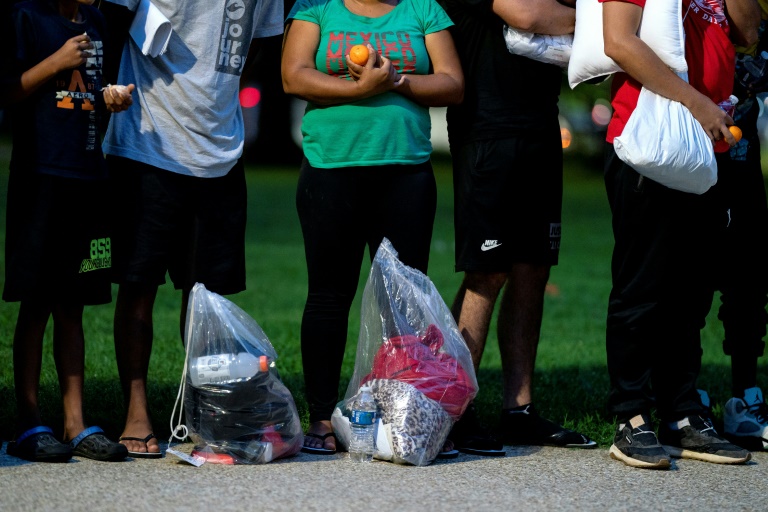
Florida Governor Ron DeSantis took credit Thursday for sending two planeloads of undocumented Venezuelans to wealthy Martha’s Vineyard, Massachusetts, as Republicans play up immigration issues before November mid-term elections.

Around 50 of the migrants, including children, landed Wednesday on the island, where Democratic presidents from John F. Kennedy to Bill Clinton and Barack Obama have summered.

According to Dylan Fernandes, a local state legislator, they were flown on chartered flights.

On Thursday two buses reportedly also from Texas deposited dozens of migrants in front of the Washington residence of Vice President Kamala Harris, the latest of such moves by Texas Republican Governor Greg Abbott.

“Immigrants are being dropped off on Martha’s Vineyard by chartered flights from Texas. Many don’t know where they are. They say they were told they would be given housing and jobs,” Fernandes wrote on Twitter.

“Republicans who call themselves Christians have been plotting for some time to use human lives — men, women, and children — as a political pawns. It is evil and inhumane,” he said.

– Anti-immigration politics –

The moves came as DeSantis and Abbott, two of the country’s most prominent and combative Republican governors, have sought to highlight the issue of tens of thousands of migrants trying to cross the southern border into the United States each month.

Abbott, whose state is the first destination for most of the migrants crossing from Mexico, has been sending buses of them northward, mainly to Washington, Chicago and New York, since April. 

Most of the migrants have been permitted to stay in the country by border officials after officially requesting asylum.

Some 10,000 have been bused across the country by Texas, and Abbott says the action is to provide relief to border communities.

The Texas governor, who is seeking relection in November, said Thursday that Vice President Harris claims the border is secure and denies the existence of an immigration crisis.

“We’re sending migrants to her backyard to call on the Biden administration to do its job & secure the border,” he tweeted.

DeSantis has supported Abbott, and his aides said he was behind the flight to Martha’s Vineyard.

While his state is not on the southwest border, it is a destination for many migrants entering the country legally and illegally.

DeSantis is also seeking reelection in the November midterm vote, and is also a top contender to run for president under the Republican banner in 2024.

“We are not a sanctuary state. . . We will help facilitate that transport for you to be able to go to greener pastures,” DeSantis said at an official event in Florida Thursday.

“In Florida, we take what is happening at the southern border seriously.”

Charlie Crist, the Democrat challenging DeSantis for the Florida governorship, said sending the migrants to Martha’s Vineyard was a wholly political move.

“Florida is spending $12 million to fly innocent migrant children out of our state when that money could be spent on fighting to help Floridians and lower costs,” Crist said on Twitter.

“Everything Ron DeSantis does is to score political points and feed red meat to his base in his thinly veiled attempt to run for president.”

US rail companies, unions reach 'tentative' deal to avert strike

A jubilant President Joe Biden announced a tentative deal Thursday to avoid a crippling strike by railroad unions following all-night talks as the clock ran down on threats to disrupt US supply chains in the run-up to midterm elections.

“It feels good!” Biden told a tired-looking group of negotiators invited into the Oval Office after their sleepless night. “They should be home in bed,” he said.

Biden, who was personally calling into the negotiations as late as 9:00 pm on Wednesday, issued a pre-dawn statement announcing the preliminary resolution, which allows for a 24 percent wage increase between 2020 and 2024, including an immediate payout.

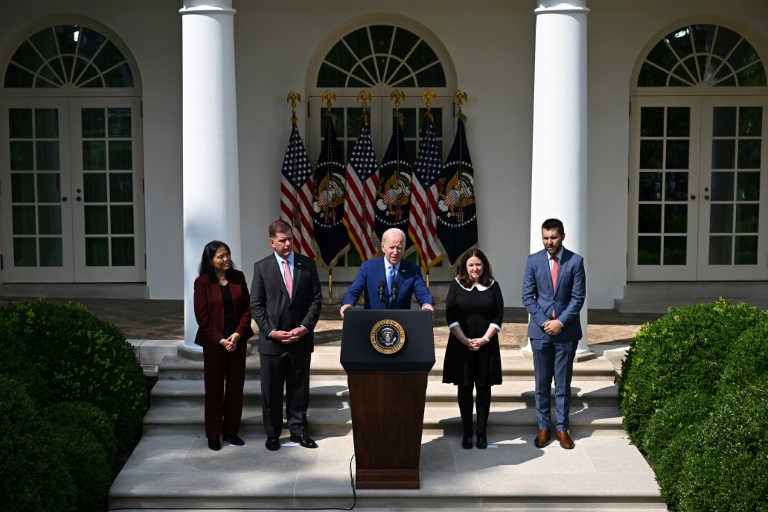
At a hastily organized celebration in the Rose Garden, Biden called the agreement “a big win for America” and said the “dignity” of railroad workers had been honored.

The deal was a relief after worries that a Friday deadline would trigger nationwide stoppages, snarling critical supplies to an economy in the midst of a jittery recovery from the Covid-era shutdown.

For Biden personally, a strike would have been politically damaging as he tries to steer his Democratic party’s uphill bid to hold on to Congress in November, with Republicans focusing heavily on high inflation.

Biden, in his initial statement, said “the hard work done to reach this tentative agreement means that our economy can avert the significant damage any shutdown would have brought.”

“These rail workers will get better pay, improved working conditions, and peace of mind around their health care costs: all hard-earned.”

The Association of American Railroads, which represents the nation’s freight railroads, welcomed the deal.

Major freight carrier Union Pacific said it “looks forward to the unions ratifying these agreements and working with employees as we focus on restoring supply chain fluidity.”

– All-nighter –

In the West Wing, exhausted staffers recounted an all-nighter which saw cabinet secretaries huddle with union leaders and rail executives at the Labor Department building.

“There were 20 plus hours in negotiations. At no point did anyone ever get to go home,” a senior official told reporters.

At 9:00 pm Wednesday, Biden called in and “his message was we have to get agreement — a shutdown is unacceptable — and that they need to respond in good faith to each other.”

Agriculture Secretary Tom Vilsack and Transport Secretary Pete Buttigieg made calls “throughout the day and night” and at 2:00 am, Labor Secretary Marty Walsh “called the White House and said it looks like a deal is coming together,” the official said.

Final details were ironed out, one of the union boards was woken at 3:00 am and two hours later the deal was announced.

“Failure was not an option,” the official said.

– Inflation fears –

Polls show voters are worried about soaring prices in the post-pandemic economy, where supply chain issues have been a constant scourge and annual inflation has surged to a 40-year high.

The Association of American Railroads had warned that a strike would bring 7,000 trains to a halt, costing $2 billion a day.

Farmers and retailers had warned that a strike would hit US supply chains already battered by the Covid-19 pandemic.

“There is no real substitute for moving agricultural goods,” warned American Farm Bureau Federation president Zippy Duvall.

Recognizing the danger, Biden had appointed an arbitration panel back in July to facilitate the negotiations. Asked by reporters in the Rose Garden what Americans should do about rapidly rising food prices and other inflation, he said the railroad deal would bring relief.

“Rail’s moving and (inflation) is not going to go up,” Biden said.

Amtrak, the US rail passenger operator, which had announced plans to cancel long-distance train services if freight workers went on strike, said it would immediately get trains rolling again.

“Amtrak is working to quickly restore canceled trains and reaching out to impacted customers to accommodate on first available departures,” it said in a statement.

Vast queues to see queen's coffin as William remembers Diana walk

Tens of thousands of mourners Thursday faced nine-hour queues to pay their last respects to Queen Elizabeth II, as her grandson Prince William said walking behind her coffin stirred challenging memories of following his mother Diana’s casket as a teenager.

Royal officials have pledged a “fitting tribute” to Britain’s longest-serving monarch as they revealed she would be buried alongside her husband Prince Philip in Windsor Castle following Monday’s state funeral at Westminster Abbey.

The funeral of Queen Elizabeth, who died a week ago aged 96 after 70 years on the throne, is set to draw leaders and royalty from around the world.

It will follow four full days of her coffin lying in state at neighbouring Westminster Hall. The casket is lying on a catafalque in the middle of the vast 11th-century building.

Draped in the Royal Standard flag, the casket is adorned with the Imperial State Crown, her ceremonial Orb and Sceptre, while tall, flickering candles stand at each corner.

Mourners — many waiting through the night — have been queueing to file past and pay their last respects to the much-loved monarch during the first full day of the lying in state.

– Tears and final salutes –

“It’s very peaceful,” Londoner Rupa Jones, 43, told AFP after emerging from the hall, the oldest part of Britain’s parliament, calling the experience “overwhelming”.

She and her aunt had queued for nearly seven hours through the night for their fleeting moment in front of the coffin.

The sombre atmosphere inside was completed by guards in ceremonial uniform posted around the podium in a constant vigil. One fainted overnight.

Defence Secretary Ben Wallace, as a member of the monarch’s bodyguard in Scotland, the Royal Company of Archers, took a turn on guard.

Mourners marked their moment in front of the coffin in various ways, from bows or curtsies to the sign of the cross or by simply removing their hats.

Some wiped away tears with tissues. Others brought infants in pushchairs. Old soldiers stopped and gave one last salute to their former commander-in-chief.

Former prime minister Theresa May was among those who filed past the coffin.

By 5:30 pm (1630 GMT), the queue had grown to 4.2 miles (6.75 kilometres) long on the south bank of the River Thames, with an estimated queueing time of at least nine hours.

Organisers have prepared up to 10 miles of queueing infrastructure, with expectations that hundreds of thousands will participate, in particular over the weekend.

Musician Jacqui Smith, among those in line overnight, was sad but enthusiastic about the reign of the new king.

“I’ve been waiting for it for a long time,” she told AFP from Lambeth Bridge. “I love the queen, but I’m a real Charles fan.”

Justin Welby, the Archbishop of Canterbury who will give the sermon at the funeral, spoke to those queueing, soaking up mourners’ experiences.

Prime Minister Liz Truss’s spokesperson said: “The people of the United Kingdom are demonstrating not only respect for each other in queuing in such a responsible way and showing a great response to this situation.”

– Painful memories of Diana –

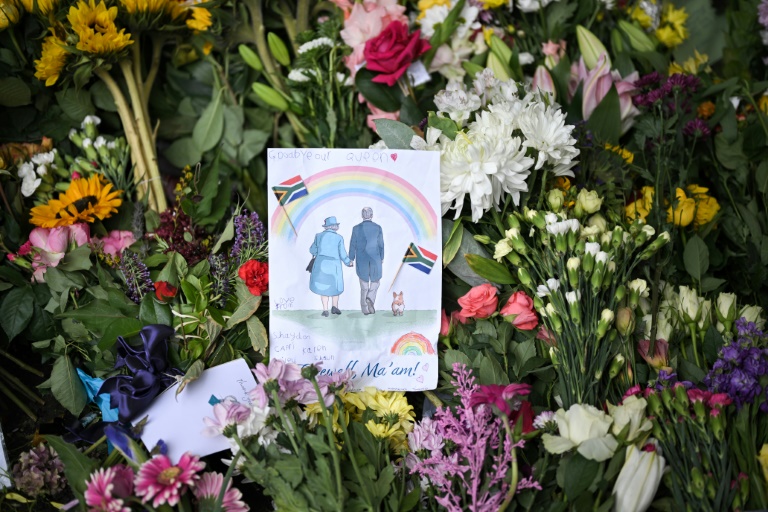
William and his wife Kate visited Sandringham, the royal family’s private winter retreat in eastern England, to view the floral tributes.

Thousands greeted the couple as they shook hands with members of the public, with Kate receiving a stream of colourful bunches of flowers.

Led by his father, the new King Charles III, William, his younger brother Prince Harry and other members of the royal family walked behind Queen Elizabeth’s coffin as it was taken on a gun carriage in a ceremonial procession from Buckingham Palace to Westminster Hall on Wednesday.

William, now the heir to the throne and the new Prince of Wales, revealed that the walk had brought back painful memories, after doing the same for his mother Diana, who was killed in a car crash in Paris in 1997.

“Doing the walk yesterday was challenging. It brought back a few memories,” William, 40, told a group of well-wishers, Sky News footage showed.

In 1997, William and Harry, then aged 15 and 12, moved the world by walking behind their late mother’s coffin.

“It’s one of those moments when you think to yourself: I’ve prepared myself for this, but I’m not that prepared,” William told mourners at Sandringham.

– Funeral plans revealed –

The first details from the funeral plans — the first state funeral in Britain since that of Queen Elizabeth’s first prime minister Winston Churchill in 1965 — were revealed on Thursday by organiser Edward Fitzalan-Howard.

As the Earl Marshal, a hereditary role belonging to the Dukes of Norfolk since 1672, Fitzalan-Howard has spent the last two decades preparing for the queen’s funeral.

“The queen held a unique and timeless position in all our lives,” he told reporters.

“It is our aim and belief that… the next few days will unite people across the globe and resonate with people of all faiths, whilst fulfilling Her Majesty and her family’s wishes to pay a fitting tribute to an extraordinary reign.”

“The respect, admiration and affection in which The Queen was held make our task both humbling and daunting — an honour and a great responsibility,” he added.

More than 2,000 guests are expected to pack the historic abbey at 1000 GMT Monday for a church service dedicated to her life and reign.

US President Joe Biden, Canadian Prime Minister Justin Trudeau, Australian Prime Minister Anthony Albanese and French President Emmanuel Macron have all confirmed their attendance, as have Japan’s Emperor Naruhito and numerous other royals.

– Private burial –

After the service, the coffin will be transferred by royal hearse to her Windsor Castle home, west of London, before a committal service at St George’s Chapel at 1500 GMT.

Queen Elizabeth will be buried together with her husband Prince Philip, who died in April last year aged 99.

His coffin has been resting since then in the chapel vault.

They will both be buried in the King George VI Memorial Chapel, alongside Queen Elizabeth’s parents, king George and his wife queen Elizabeth, and the ashes of her sister princess Margaret.

“The service and burial will be entirely private, given it is a deeply personal family occasion,” a senior palace official said.

King Charles, 73, was spending the day working from Highgrove, his family home in southwest England.

“People who have worked with the king know just how resilient and hardworking he is,” his spokesman told reporters.

“Anyone who saw the king in Westminster Hall yesterday could see that he was reflecting and mourning for his mother.

“Today his focus will be on state business and ensuring that state business is complete, before another busy travel programme.”

Kerry urges rich-poor unity on climate effort ahead of UN talks

US climate envoy John Kerry on Thursday urged African countries to help overcome divisions between rich and poor nations at the upcoming UN COP27 talks.

Meeting African environment ministers, Kerry acknowledged the historic role of wealthy countries in stoking climate change but said tackling today’s emissions was a global problem.

“There are some folks unfortunately who are willing to sort of allocate responsibility in a sort of historical… way,” he said at talks in the Senegalese capital Dakar.

“(They are) pointing a finger at us — ‘what you guys created, you guys need to clear’,” Kerry said.

“Well, guess what: Mother Nature does not measure where the emissions come from — they don’t have a label of one country or another.”

The United States is the world’s richest country and its second biggest emitter of heat-trapping carbon dioxide.

But the first place goes to China, which joins developing economies in a negotiating bloc at the UN climate talks.

Kerry pointed to the worsening impact from climate change on Africa. 

“(The) climate crisis here in Africa is more acute than it is in some other parts of the world,” Kerry said.

“This year has seen devastating floods in South Africa, Mozambique and Uganda that just killed hundreds and displaced tens of thousands.

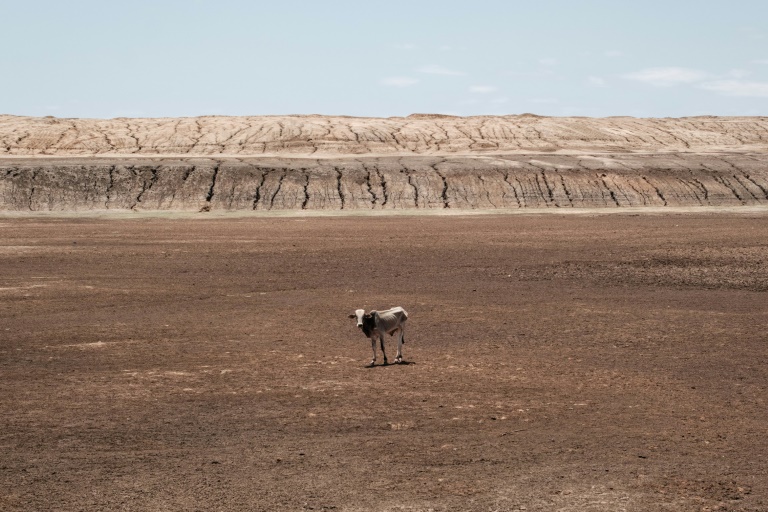
“Meanwhile, the Horn of Africa is in its fourth year of drought, with more than 18 million suffering from food insecurity as a consequence.”

– Money and emissions –

COP27 — the 27th Conference of the Parties to the UN Framework Convention on Climate Change (UNFCCC) — will take place at the Egyptian resort of Sharm el-Sheikh from November 6-18.

The annual climate parlays are dominated by often fierce debate on national pledges on emissions curbs and on funding.

Wealthy countries have previously promised billions of dollars to help poorer nations avert carbon emissions and build resilience against climate change.

On Wednesday, a bloc of the world’s poorest countries said they would urge COP27 to push ahead with another envisioned area of climate finance — a fund to compensate vulnerable nations for damage such as floods and rising seas.

Ministers and experts from the 46-nation Least Developed Countries (LDC) bloc, also meeting in Dakar, said setting up a funding mechanism for the proposed fund was of “crucial importance.”

Kerry took a swing at former president Donald Trump, who ditched the UN’s landmark 2015 agreement on climate change.

“President (Joe) Biden has brought unprecedented resources to the table, joining the Paris Agreement again on Day One after the miserable decision of a president who didn’t know the science,” he said.

Kerry, a former secretary of state, also pointed to the United States’ help for Africa, which last year amounted to $8.2 billion in humanitarian and climate adaptation aid.

“I will say to you bluntly: the developed world needs to do more… but we need you to also be at the table to do the things that make the difference to be able to deploy the funding and make it work,” he said.

'You sold Ukraine': Izyum contends with occupation's fallout

The troubles in the Ukrainian city of Izyum did not leave with retreating Russian troops, in fact some residents have now accused each other of cosying up to the occupiers.

Just after President Volodymyr Zelensky’s symbolic visit Wednesday to mark the strategic hub’s liberation in Ukraine’s lightning counter-offensive, dozens of mostly elderly people gathered outside the charred town hall.

They were in no mood for celebration.

“You sold Ukraine for a ration (of food),” a woman shouted at Svitlana Ficher, a 55-year-old who received Russian aid during the occupation. 

Izyum, a predominantly Russian-speaking city of about 50,000 people, had been fully occupied since April and had become a key logistics base for Moscow.

Its re-capture marked a strategic victory for Kyiv that has recently claimed sweeping successes in the northeastern Kharkiv region, putting Moscow on the back foot.

Zelensky made an impromptu appearance on Wednesday, when, flanked by soldiers he watched Ukraine’s flag being hoisted over the main square. 

But occupation has left a stain of suspicion and blame on the city that comes in addition to the war-shattered buildings, burned military vehicles and suffering of its locals. 

– ‘Traitor’ –

Residents on Wednesday also demanded to see the mayor — some people wanted to know when state aid would arrive and essential services resume. 

Others like Ficher complained they had been left to fend for themselves — but were in turn accused of cosying up to the occupier.

“She wants to be fed by Russia,” a man yelled, as others came to the Ficher’s defence. 

About half of Izyum’s inhabitants, including mayor Valeri Marchenko, left when Moscow’s troops approached. 

Some of those who stayed supported Russian rule.  

Ficher told AFP she was no collaborator and was only trying to survive. 

“I came to tell the mayor he’s an idiot, he’s a liar. He saved (himself) but he left the people behind,” she said. 

“We had no information about evacuation. I couldn’t leave, no one gave me such a possibility. And now I’m a traitor because I survived thanks to Russian food.”

Marchenko did not show up.

– ‘You are free’ –

Back in the square, others quarrelled over who was responsible for the massive destruction experienced by the city.

“These quarrels, it’s the problem of democracy. With the Russians it would not happen,” said a man who did not give his name. 

A Ukrainian soldier speaking on condition of anonymity said many pro-Russian residents took the road towards the Moscow-controlled east even before Ukrainian troops arrived.

They left behind a city slowly returning to life.

“Since the last four days we’ve been ecstatic,” said Taisiya Litovka, a 46-year-old nurse, explaining she wanted communications to be restored so she could call her children. 

“When the military came there. We asked them: ‘when is the curfew?’ They said: ‘what are you talking about? You are free’,” she said.

It had been a long time since she saw so many people outside, she added. 

A little further away, Georgyi Zhykidze, a 60-year-old Georgian married to a woman from Izyum, walked with a Ukrainian flag wrapped around his shoulders as two tanks roared by. 

“We moved here because we had a war in Georgia but the war followed us. We have a common enemy in Georgia and in Ukraine: it’s Russia.”

Close Bitnami banner
Bitnami