World

US blacklists Russian neo-Nazi fighters, children's rights head

The US Treasury placed top Russian finance officials, a neo-Nazi fighter group, and a children’s rights official who allegedly directs the removal of Ukrainian children to Russia on its sanctions blacklist Thursday.

Some 22 individuals and two entities were added to the Treasury’s blacklist, including justice officials in occupied Crimea and members of Chechen Republic leader Ramzan Kadyrov’s family.

In a parallel move, the Treasury and US Commerce Department banned the export of quantum computing services, hardware and software to Russia and Belarus in a move the Treasury said would degrade Moscow’s ability to rebuild its military after heavy losses in the continuing war with Ukraine.

“As Ukraine presses forward with defending its freedom, today we’re taking steps to further degrade Russia’s ability to rebuild its military, hold perpetrators of violence accountable, and further financially isolate (Russian President Vladimir) Putin,” said Treasury Secretary Janet Yellen in a statement.

The new sanctions took aim at the heads of key Russian financial institutions including NSPK, which runs the Mir payment card network; the National Settlement Depository; CCP NCC, which manages settlement for the Moscow stock exchange; and the Deposit Insurance Agency.

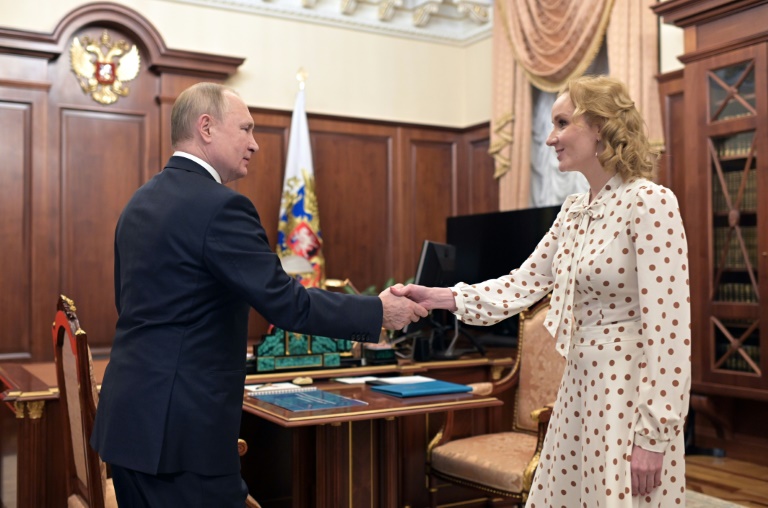
The Treasury blacklisted Maria Alexeyevna Lvova-Belova, the Presidential Commissioner for Children’s Rights. 

Working directly under Putin, the Treasury said, Lvova-Belova has overseen the deportation of “thousands” of Ukrainian children to Russia.

“Lvova-Belova’s efforts specifically include the forced adoption of Ukrainian children into Russian families, the so-called ‘patriotic education’ of Ukrainian children, legislative changes to expedite the provision of Russian Federation citizenship to Ukrainian children, and the deliberate removal of Ukrainian children by Russia’s forces,” it said.

The Treasury also put sanctions on Task Force Rusich, a neo-Nazi paramilitary group fighting in Ukraine associated with the Wagner mercenary army controlled by close Putin advisor Yevgeny Prigozhin.

US Treasury sanctions aim to freeze any assets those designated might have under US jurisdiction and forbid any US individuals or companies — including international banks with US operations — to do business with them, effectively limiting their access to global financial networks.

UK probes Microsoft's $69 bn bid for gaming giant

Britain on Thursday announced an “in-depth investigation” into Microsoft’s planned $69-billion takeover of US gaming giant Activision Blizzard, citing UK competition concerns.

US technology giant Microsoft in January announced a bid to create the world’s third biggest gaming company by revenue, behind China’s Tencent and Japan’s Sony, by purchasing the owner of hit games “Candy Crush” and “Call Of Duty”.

The proposed deal, already controversial owing to allegations of sexual harassment against women at Activision, now faces a probe by Britain’s Competition and Markets Authority.

“The CMA has referred the anticipated acquisition by Microsoft Corporation of Activision Blizzard, Inc. for an in-depth investigation,” a statement said. 

It added that the “merger may be expected to result in a substantial lessening of competition within a market or markets in the United Kingdom”.

Activision Blizzard’s portfolio also includes the popular game “World Of Warcraft”.

Sorcha O’Carroll, senior director of mergers at the CMA, previously expressed concern that Microsoft could use its control over Call Of Duty and World Of Warcraft “to harm rivals, including recent and future rivals in multi-game subscription services and cloud gaming”.

Sony has expressed concerns that Call of Duty might no longer be accessible on its PlayStation console.

Microsoft dismissed such a suggestion, however, saying in a statement Thursday that “it makes zero business sense… to remove Call of Duty from PlayStation given its market leading console position”.

UN member states may allow Zelensky to speak by video

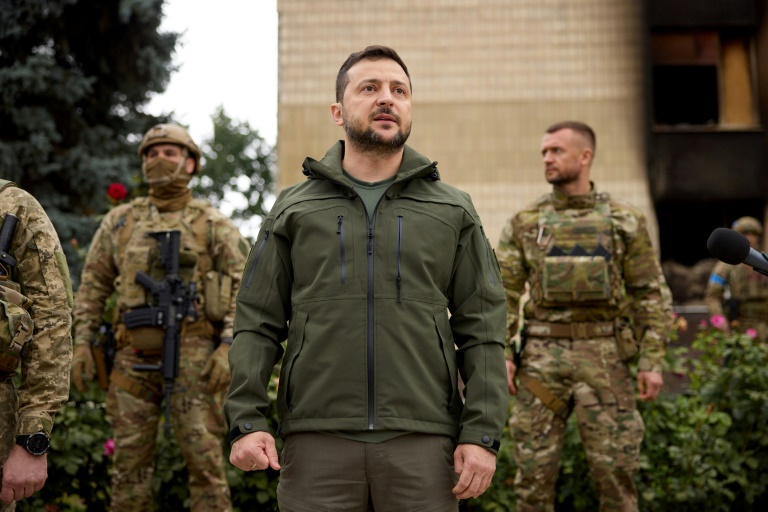
UN member states will vote Friday on making an exception to allow Ukrainian leader Volodymyr Zelensky to address next week’s General Assembly by video, according to diplomatic sources.

World leaders were allowed to speak by video in 2020 and in 2021 due to the Covid pandemic, but this year the event has gone back to in-person.

Only heads of government or state are allowed to speak. 

Countries like China and Russia that haven’t sent a head of state or government can have another top official speak on their behalf, but only after the heads have spoken.

A draft text seen by AFP, which will be submitted to the General Assembly on Friday, notes that some leaders cannot participate for reasons beyond their control “owing to ongoing foreign invasion, aggression, military hostilities.”

As a result, it suggests “Ukraine may submit a pre-recorded statement of its Head of State.” 

According to the latest available schedule, Ukraine’s address is slated for Wednesday, September 21 in the afternoon. 

Since the invasion of Ukraine by Russia in February, the Ukrainian president has made several video addresses to the members of the Security Council. 

The last occasion was August, when the video address was opposed by Russia, in vain.

Stocks sag as inflation fears persist

Stock markets retreated on Thursday as investors fret over red-hot inflation and the prospect of tighter monetary policy.

Wall Street’s three main indices spent part of the morning in positive territory, but then sank lower.

If the Dow was off only marginally, the broader S&P 500 shed 0.6 percent and the tech-heavy Nasdaq Composite fell 1.1 percent.

London dipped less than a tenth of a percent, but both Frankfurt and Paris fell further.

“The markets remain skittish following recent hot inflation readings that led to a sharp selloff on Tuesday,” analysts at US firm Schwab said in a note.

The data showed US annual consumer price inflation slowing by 8.3 percent in August from 8.5 percent in July but markets had expected a bigger fall.

The reading sparked a rout on equities as it stoked concern of more hefty Federal Reserve interest rate hikes.

While higher borrowing costs help to cool inflation, they can also put a brake on economic growth.

Global consumer prices have soared this year on Russia’s invasion of Ukraine — which has hiked energy and food costs — and because of supply chain strains worsened by Covid lockdowns in China.

Investors were also tracking US government data on Thursday which showed a surprise, 0.3 percent bounce in retail sales in August.

But while the headline gain was much better than the flat result economists had projected, the figure for July was revised down to show a 0.4 percent drop, so the August increase means the total remains below the level in June.

“The key takeaway from the report is that it does not connote much vigor in retail spending activity in August,” said analyst Patrick O’Hare at Briefing.com.

First-time jobless claims also fell last week, indicating the US labour market remains tight, and giving Fed policymakers more latitude to continue aggressively raising interest rates.

“Today’s US data dump did little to change the market’s view of what the Fed might do next week,” said Forex.com analyst Fawad Razaqzada.

“Investors are confident the US central bank will tighten monetary policy by 75 basis points on Wednesday, something which could push the economy into slowdown and cause earnings to decline.”

– Oil, yen tumble –

Razaqzada said in this economic environment investors are finding it difficult to hold onto stocks which pay low dividends and are taking profits when they can.

Eventually, though, equities will “price in” or reflect the expectations of interest rate hikes. 

“Until this happens, it is unlikely that the stock market will be able to shine very brightly,” said Razaqzada.

Asian bourses mostly logged cautious gains Thursday, but Shanghai and Seoul dipped.

The yen was under pressure as weak Japanese data further fuelled speculation of possible intervention from the Bank of Japan to support the unit.

Crude prices tumbled nearly four percent following a warning from the International Energy Agency that growth in demand could halt in the final months of this year. 

– Key figures at around 1530 GMT –

New York – DOWN less than 0.1 percent at 31,124.96 points

EURO STOXX 50: DOWN 0.9 percent at 3,534.08

London – FTSE 100: DOWN less than 0.1 percent at 7,274.08 (close)

Frankfurt – DAX: DOWN 0.7 percent at 12,937.69 (close)

Paris – CAC 40: DOWN 1.2 percent at 6,147.37 (close)

Tokyo – Nikkei 225: UP 0.2 percent at 27,875.91 (close) 

Hong Kong – Hang Seng Index: UP 0.4 percent at 18,930.38 (close)

Shanghai – Composite: DOWN 1.2 percent at 3,199.92 (close)

Dollar/yen: UP at 143.43 yen from 143.08 yen late Wednesday

Euro/dollar: UP at $0.9992 from $0.9981

Pound/dollar: DOWN at $1.1493 from $1.1539

Euro/pound: UP at 86.97 pence from 86.49 pence 

Brent North Sea crude: DOWN 3.8 percent at $90.74 per barrel

West Texas Intermediate: DOWN 3.8 percent at $85.09 per barrel

burs-rl/lth

Indonesia investigating Google over app store payment system

Indonesia has launched an anti-trust investigation into Google over the tech firm’s insistence that its payment system be used for purchases from its app store, authorities said Thursday, accusing it of unfair business practices.

The US internet giant has been under legal scrutiny in a number of countries over its stipulation that its billing system be used by all buyers on Google Play.

Authorities in Jakarta said in a statement they suspected “Google has abused its dominant position by imposing conditional sales and discriminatory practices in digital application distribution in Indonesia”.

Google Play is the largest app distribution platform in Indonesia, a country of 270 million people.

Third party developers offering their apps on Google Play are charged a 15 to 30 percent service fee, higher than the five percent imposed by other payment systems, according to an initial probe by the nation’s anti-trust agency.

“The respective developers cannot refuse the obligation because Google can impose sanctions by removing their applications from the Google Play store and preventing them from making updates to their applications,” the agency said.

Google did not immediately reply to a request for comment from AFP.

The American multinational has faced a barrage of legal cases in the United States, Europe and Asia based on similar accusations.

Google has also faced claims that it unfairly forced its search engine and Chrome internet browser on phone makers using the Android operating system.

On Wednesday, the European Union’s second-highest court ruled that “Google imposed unlawful restrictions on manufacturers of Android mobile devices”.

That case was the third of three major cases brought against Google by the EU’s competition czar Margrethe Vestager, whose legal challenges were the first worldwide to directly take on Silicon Valley tech giants.

South Korea fined Google nearly $180 million last year for abusing its dominant market position in a similar case regarding the Android system.

'Love in midst of horror': the Auschwitz wedding

The two newlyweds have dressed up for the picture, but they are not smiling. And for good reason: their union was sealed at Auschwitz — the only wedding known to have taken place in the death camp.

The yellowed photo of Rudolf Friemel, an Austrian communist who resisted the Nazis, and his Spanish wife Margarita Ferrer Rey, is now on show in his home town Vienna.

It is the centrepiece of an exhibition, “The Wedding of Auschwitz”, which uses papers donated by their family to tell the couple’s heart-breaking story.

Friemel met Ferrer Rey in Spain after going there to fight with the International Brigades in 1936 against General Franco’s fascists during the Spanish Civil War.

He was sent to Auschwitz in 1942 after returning home.

In the camp he was set to work repairing SS vehicles, and was held in “better conditions than other prisoners”, according to Vienna’s Social Democratic mayor, Michael Ludwig, who wrote the introduction to the catalogue.

But why the Nazis granted the Friemels — their bitter enemies — “such an unique privilege to be able to marry remains a mystery to this day,” Ludwig added.

– Escape attempt –

“What I find most interesting is that we see that there was love in the midst of horror,” the couple’s grandson, Rodolphe Friemel, told AFP from his home in southern France.

He wondered if “maybe my grandparents did all this just to see each other again,” with Margarita allowed to travel to Auschwitz from Vienna for the wedding with their son — who was born in 1941 — and Friemel’s father.

The marriage was registered at 11 a.m. on March 18, 1944, as the slaughter at the camp reached its peak. 

Some one million Jews were murdered at Auschwitz-Birkenau as well as homosexuals, prisoners of war and others persecuted by Germany’s Nazi regime.

Friemel, 48, gave the wedding documents, including congratulations messages from other prisoners, to the Vienna City Library early this year to ensure their preservation.

His grandfather was allowed to wear civilian clothes and let his hair grow for the occasion, and a cell was made available to the couple for their wedding night in the camp brothel.

But the respite was shortlived. Rudolf Friemel was hanged in December 1944 for helping to organise an escape attempt. The camp was liberated a month later.

All his wife and child — who moved to France after the war — were left with were his heartbreaking letters and poems.

Margarita died in 1987.

The show runs at Vienna City Library until the end of the month. 

Shock video sparks horror at France attacks trial

A video showing how an Islamist extremist ploughed his truck into a crowd in Nice killing 86 people while France was celebrating its national day sparked anguish and horror at the attack trial on Thursday.

Tunisian Mohamed Lahouaiej-Bouhlel, 31, was killed by police after a four-minute rampage down the seaside embankment of the Promenade des Anglais, where thousands of locals and tourists were celebrating July 14 or Bastille Day in 2016.

The footage, never shown in public, was presented as evidence at the trial of eight people suspected of helping Lahouaiej-Bouhlel or knowing of his intentions.

Witnesses and survivors gasped in horror as the screen filled with people mowed down by the criss-crossing vehicle, their bodies broken and squashed under its wheels.

Presiding judge Laurent Raviot had warned the courtroom that the images, filmed by a bystander, were “terrifying”.

When the lights were dimmed for the screening, a sharp intake of breath went through the courtroom, followed quickly by several cries of anguish.

Veronique Marchand, a 79-year old woman whose husband died in the attack, screamed and left the room. Her cries continued to be heard from the corridor through the closed doors.

Another woman, among the plaintiffs, also left the room after bursting out in tears, just as the footage showed the killer swerving his truck from side to side to mow down as many people as possible.

Another scene shows a jazz band finishing their performance, and then the truck ploughing from behind into the applauding audience which was completely unaware of the mortal danger until it was too late.

“I now think that I shouldn’t have watched this,” said Jean-Claude Hubler, president of the “Life for Nice” survivors’ association, after the lights went up, revealing tearful faces in shock and sadness.

“It’s hard to watch but this is what happened,” another man said.

The judge ordered all smartphones and laptop computers shut down during the viewing, including those of reporters.

Seven psychologists were present to assist anyone under duress, as well as firemen and police.

Some of the accused watched the footage of the massacre, others looked down.

The video was resealed as evidence immediately after the screening, and is not to be shown again.

The seven men and one woman standing trial in Paris are accused of crimes ranging from being aware of the killer’s intentions to providing logistical support and supplying weapons.

Only one suspect, Ramzi Kevin Arefa, faces the maximum penalty of life imprisonment if convicted as a repeat offender. The others risk between five and 20 years in prison.

The trial, which is set to last until December 16, is the latest legal process over the wave of Islamist attacks that have struck France since 2015.

EU chief vows unfaltering backing on Kyiv visit

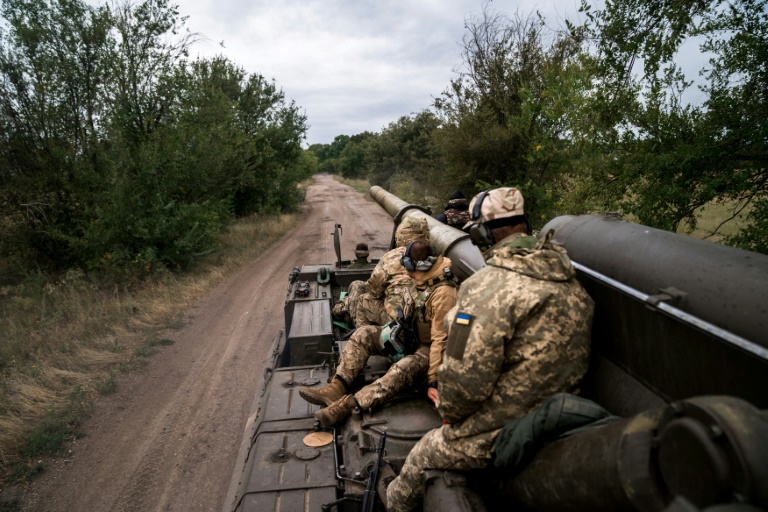
EU chief Ursula von der Leyen said Thursday that war-torn Ukraine would have Europe’s support for “as long as it takes”, as she visited Kyiv for talks on closer integration with the bloc.

Her trip coincided with a meeting between Russian President Vladimir Putin and his increasingly close ally Chinese leader Xi Jinping in ex-Soviet Uzbekistan, where the men hailed their strategic ties in defiance of the West.

It also comes as Ukrainian forces consolidate gains against Russian forces in the east of the country in a dramatic offensive aided by Western weapons.

Von der Leyen said Thursday’s visit was her third to Ukraine since Russia invaded in February, but this one was different.

“We will never be able to match the sacrifice that the Ukrainians are making,” she told reporters during a joint press conference with Ukraine leader Volodymyr Zelensky.

“But what we can tell you is that you’ll have your European friends by your side as long as it takes,” she said.

Upon her arrival she noted her discussions with Ukraine’s leaders would be about “getting our economies and people closer.”

Ukraine gained EU candidacy status in June at the same time as ex-Soviet Moldova, which borders Ukraine and like its neighbour has had Russian troops stationed in an eastern breakaway region.

Zelensky told the same press conference that his country wants to join the European single market ahead of a decision on whether to grant Kyiv full EU membership.

– Zelensky promises ‘victory’ –

The historic candidacy vote angered Moscow, which has tried to retain political and military influence in both countries since the collapse of the Soviet Union three decades ago.

EU countries have staunchly supported Ukraine since Moscow invaded in February by hitting Russia with economic penalties. 

Many members of the bloc have supplied Kyiv with advanced weapons that have helped Ukrainian forces in recent weeks recapture swathes of territory.

Von der Leyen said just ahead of her trip that the successive waves of EU sanctions against Russia would remain and that Europeans must keep their resolve against Moscow.

“I want to make it very clear, the sanctions are here to stay,” she told the European Parliament.

The Kremlin maintains that Russia has weathered the economic penalties and Moscow has responded by reducing or halting entirely gas flows to European countries.

With winter fast approaching, this has forced the EU to source alternative supplies, agree plans to cut consumption and roll out financial support in the face of skyrocketing prices.

Ukrainian energy facilities, including Europe’s biggest atomic plant, have been hit by Russian strikes and Zelensky on Thursday thanked the EU leader for linking Kyiv to “European power grids”.

“It’s in everyone’s interest: European countries can get cheap electricity from Ukraine” and “we’ll be able to get money for salaries and social payments in such difficult times,” he said.

– Putin praises Xi’s stance –

Ukraine’s forces have also posted slower, but steady gains in the southern Kherson region near the Black Sea.

The Ukrainian presidency said on Thursday that intense fighting was ongoing around that southern front, adding that the military situation “remains extremely difficult.”

Local officials in the region around Zelensky’s hometown of Kryvyi Rih reported fresh Russian strikes Thursday after attacks damaged a dam and saw dozens of homes flooded.

In the eastern Donetsk region, which has been partially controlled by Russian-backed separatists since 2014, fresh shelling killed two civilians and left another 13 wounded.

In the Ukrainian-held Donetsk town of Bakhmut, AFP journalists said streets were deserted and the sound of nearby artillery was audible in the town’s centre.

Flames were still licking a residential building hit by Russian strikes overnight and plumes of thick smoke were rising as firefighters battled the blaze.

At the meeting in Uzbekistan, Putin blasted attempts to create a “unipolar world” and praised China’s stance on the conflict.

“We highly appreciate the balanced position of our Chinese friends in connection with the Ukrainian crisis,” Putin told Xi.

Beijing has not explicitly endorsed Moscow’s invasion but it has steadily built economic and strategic ties with Russia over the six months of the war. 

burs-jbr/jmm/ach 

Florida governor flies migrants to toney Martha's Vineyard

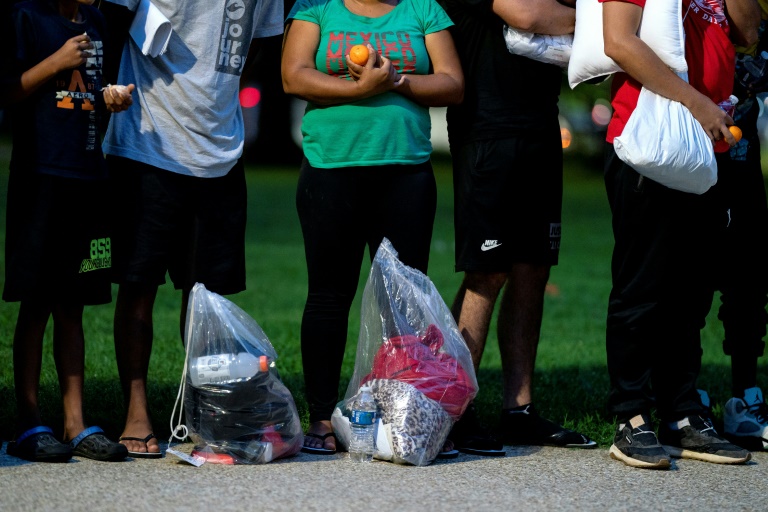
Florida Governor Ron DeSantis took credit Thursday for sending two planeloads of undocumented Venezuelans to wealthy Martha’s Vineyard, Massachusetts, as Republicans play up immigration issues before the November election.

Around 50 of the migrants, including children, landed Wednesday on the island, where Democratic presidents from John F. Kennedy to Bill Clinton and Barack Obama have summered.

According to Dylan Fernandes, a local state legislator, they were flown on chartered flights that took off from Texas.

And on Thursday two buses reportedly also from Texas deposited dozens of migrants in front of the Washington residence of Vice President Kamala Harris, the latest of such moves by Texas Republican Governor Greg Abbott.

“Immigrants are being dropped off on Martha’s Vineyard by chartered flights from Texas. Many don’t know where they are. They say they were told they would be given housing and jobs,” Fernandes wrote on Twitter.

“Republicans who call themselves Christians have been plotting for some time to use human lives — men, women, and children — as a political pawns. It is evil and inhumane,” he said.

The moves came as DeSantis and Abbott, two of the country’s most prominent and combative Republican governors, have sought to highlight politically the issues of tens of thousands of migrants trying to cross the southwest border into the United States each month.

Abbott, whose state is the first destination for most of the migrants crossing from Mexico,  has been sending buses of them northward, mainly to Washington, Chicago and New York, since April. 

Abbott says the action is to provide relief to Texas border communities.

The Texas governor said Thursday that Vice President Harris claims the border is secure and denies the existence of an immigration crisis.

“We’re sending migrants to her backyard to call on the Biden administration to do its job & secure the border,” he tweeted.

DeSantis has supported Abbott and his aides said he was behind the flight to Martha’s Vineyard.

While his state is not on the southwest border, it is a destination for many migrants entering the country legally and illegally.

DeSantis is also seeking reelection in the November midterm vote, and is also a top contender to run for president under the Republican banner in 2024.

“States like Massachusetts, New York, and California will better facilitate the care of these individuals who they have invited into our country,” DeSantis spokesperson Taryn Fenske told US media when asked about the flights to Martha’s Vineyard.

US rail companies, unions reach 'tentative' deal to avert strike

US President Joe Biden announced Thursday that railroad companies and unions had reached a tentative deal to avert a strike that had threatened to disrupt travel and supply chains.

The agreement was reached after marathon talks at the Labor Department in Washington that began Wednesday and stretched late into the night.

Biden, in a statement released by the White House, said the deal, which comes two months before midterm elections, “is an important win for our economy and the American people.

“The hard work done to reach this tentative agreement means that our economy can avert the significant damage any shutdown would have brought,” the president said.

“These rail workers will get better pay, improved working conditions, and peace of mind around their health care costs: all hard-earned.”

Unions representing freight company workers had threatened to go on strike at midnight on Friday if a deal had not been reached.

The Association of American Railroads, which represents the nation’s freight railroads, welcomed the agreement, which calls for a 24 percent wage increase between 2020 and 2024.

Major freight carrier Union Pacific said it “looks forward to the unions ratifying these agreements and working with employees as we focus on restoring supply chain fluidity.”

– Amtrak restoring services –

Amtrak, the US rail passenger operator, which had announced plans to cancel long-distance train services if freight workers went on strike, said it would immediately get trains rolling again.

“Amtrak is working to quickly restore canceled trains and reaching out to impacted customers to accommodate on first available departures,” it said in a statement.

In his statement, Biden called the deal a “win for tens of thousands of rail workers who worked tirelessly through the pandemic to ensure that America’s families and communities got deliveries.”

“I thank the unions and rail companies for negotiating in good faith and reaching a tentative agreement that will keep our critical rail system working and avoid disruption of our economy,” he said.  

Biden regularly expresses strong support for workers but is also struggling to avoid further economic damage ahead of the midterm congressional elections in early November.

Voters already are worried about soaring prices in the post-pandemic economy, where supply chain issues have been a constant scourge and annual inflation has surged to a 40-year high.

The Association of American Railroads had warned that a strike would bring 7,000 trains to a halt, costing $2 billion a day.

Biden in July appointed an arbitration panel to facilitate the discussions and head off a work stoppage. 

Farmers and retailers had warned that a strike would hit US supply chains already battered by the Covid-19 pandemic.

“There is no real substitute for moving agricultural goods,” warned American Farm Bureau Federation president Zippy Duvall.

Close Bitnami banner
Bitnami