World

Royals escort queen on final journey from Buckingham Palace

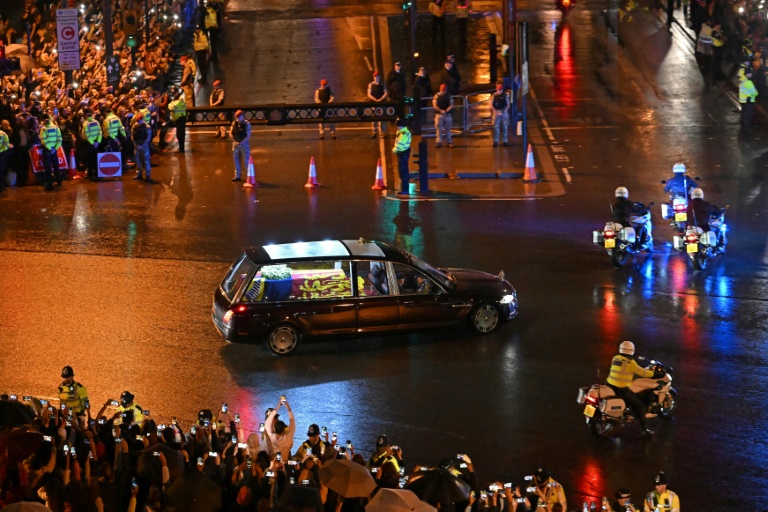
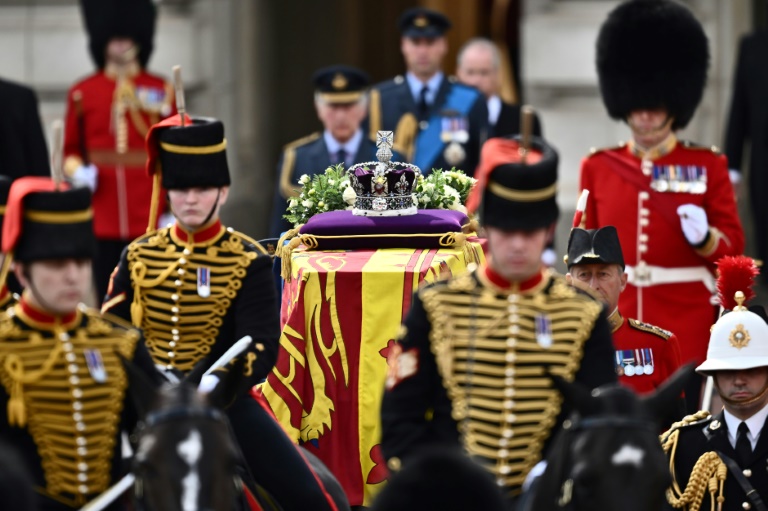
To the strains of a military band, King Charles III on Wednesday led his family in procession behind Queen Elizabeth II’s coffin as she left Buckingham Palace for the final time to lie in state until her funeral.

The king, his siblings, and sons, princes William and Harry, walked at 75 steps a minute behind the horse-drawn gun carriage carrying the queen’s body to Westminster Hall, where hundreds of thousands of people will pay their last respects.

Soldiers in red dress uniform played Beethoven’s Funeral March and Big Ben tolled out each minute as the casket — covered by a royal standard and topped with the Imperial State Crown — passed in front of hushed crowds lining the route. 

The grand procession through the flag-lined heart of London represented the latest spectacular step in the 11 days of intricately choreographed national mourning across the United Kingdom that will culminate with the funeral on Monday of its longest-reigning monarch. 

The sight of the new king’s two sons inevitably evoked memories of 1997, when William and Harry, then aged just 15 and 12, walked, heads bowed, behind the coffin of their mother, princess Diana.

But it comes with the once-close brothers now reportedly not on speaking terms, after Harry’s move to the United States.

The public, some of whom began queueing on Monday, will begin filing past the coffin from 5:00 pm (1600 GMT), with mourners already warned they will face an endurance test to wait in lines that could tail back five miles (eight kilometres).

Hundreds of people were already queueing at around 8:20 am with those at the front having spent the night equipped with blankets, camping seats, a tents and rain ponchos. 

As day broke, a steady stream of mourners joined the back of the queue along the River Thames under the watchful eye of an army of stewards in fluorescent jackets. 

“The night was quite wet, cold and wet, but I got a little chair and a big umbrella so I kept fairly dry,” Dan Ford, a 52-year-old retired police officer, told AFP.

Brian Flatman, 85, said there was “no way” he would pass up the chance to pay his respects having missed the queen’s 1953 coronation. 

“I was 16, we got there before midnight, Hyde Park Corner, superb position, but very quickly I became suddenly ill and had to crawl all the way to South London,” he recalled. 

“This time there is no way I can miss that. I will dedicate a few seconds there (by the coffin) to her life of dedication. What an example.”

Strict rules and airport-style security measures have been put in place, with “far more” people expected than the 200,000 who filed past the coffin of the queen’s mother when she died in 2002, according to Prime Minister Liz Truss’s spokesman.

The government has advised people to wear “suitable clothing” and to bring portable battery packs to keep their mobile phones charged — an indication that some people will need to wait overnight for a glimpse of the casket.

Hotel rooms in the British capital are increasingly hard to find, with even budget rooms going for £300 ($350) per night, while transport bosses and police are under pressure to keep the city moving and safe in exceptional circumstances.  

“It’s a massive challenge for the Metropolitan Police and for me personally, but we have been preparing for many, many years,” the newly appointed head of the London police force, Mark Rowley, told Sky News on Tuesday.

– UK tour – 

The body of the late 96-year-old queen, who died “peacefully” at her Balmoral estate in Scotland on Thursday, was flown to London aboard an RAF plane on Tuesday evening from the Scottish capital Edinburgh.

It was then driven to Buckingham Palace, past crowds of motorists who stopped their vehicles at the side of the road to catch a glimpse of the coffin.

Her arrival was greeted with the flashes of thousands of mobile phone camera lights, under the illuminated columns of the landmark palace.

“Welcome Home Ma’am,” The Sun tabloid said on Wednesday on its front page. The Times ran with the headline “Home to Rest” and the Daily Mail “Home to her Family”.

The procession on Wednesday mirrored a similar ceremony in Edinburgh on Monday when her coffin was driven through the hushed streets of the city to lie “at rest” at St Giles’ Cathedral.

There, some 33,000 people filed past the coffin overnight to Tuesday afternoon, the Scottish government said.

“Scotland has now bid our Queen of Scots a sad, but fond farewell. We will not see her like again,” said First Minister Nicola Sturgeon.

After Scotland and England, Charles continued his tour of the four nations of the United Kingdom on Tuesday by visiting Northern Ireland for the first time as king. He visits Wales on Friday.

The 73-year-old new head of state has won wide praise in the British media for his dignified and often heartfelt reaction to his mother’s death, which has led to a rare moment of public unity in Britain.

He has seen his popularity recover since the death of his former wife Diana in a 1997 car crash — and his ratings have surged in recent days, according to a new survey on Tuesday. 

The mourning has also obscured — albeit briefly — the broader country’s sharp political divisions and a severe cost-of-living crisis that is expected to cause a major increase in poverty over the winter. 

– No invite for Putin –

The procession on Wednesday meant another prominent role for the queen’s scandal-hit son Andrew, who settled a case in the US earlier this year in which he was accused of sexually assaulting a 17-year-old.

Not everyone shares the public mood of sadness and remembrance sparked by the queen’s death, with royal fatigue increasingly evident on social media in the face of blanket media coverage.

British police have also faced criticism from civil liberties groups over their treatment of anti-monarchy protesters who have publicly challenged Charles’ accession to the throne.

Video footage and witnesses have drawn attention to police arresting or intimidating people who shouted slogans against the monarchy or held up placards reading “Not My King”.

The queen’s funeral will take place in Westminster Abbey in front of 2,000 VIP guests, with the day declared a public holiday in Britain.

Hundreds of heads of state and government, as well as global royalty, are expected, but Russia, Belarus, Myanmar have not been invited to send representatives.

US President Joe Biden has confirmed he will attend, as will French President Emmanuel Macron and Canadian Prime Minister Justin Trudeau.

burs-del/phz/ah
French court convicts Yemenia Airways over fatal 2009 crash

A Paris court on Wednesday convicted Yemen’s national airline of involuntary homicide and injuries over a 2009 crash that killed nearly everyone onboard except a 12-year-old girl who miraculously survived.

Yemenia Airways was sentenced to the maximum fine of 225,000 euros ($225,000) and ordered to pay one million euros to two victims’ associations for damages and costs.

Its executives did not attend the hearings, blaming the civil war raging in their country.

Flight Yemenia 626 was on approach to Moroni, the capital of the Comoros islands that lie between Mozambique and Madagascar, on June 29, 2009, after departing from the airport in the Yemeni capital Sanaa.

Among the 142 passengers and 11 crew were 66 French citizens heading to France’s overseas territory of Mayotte, part of the Comoros archipelago. 

Just before 11:00 pm, the Airbus A310 plunged into the Indian Ocean with its engines running at full throttle, killing everyone on board except Bahia Bakari, then just 12 years old.

Investigators and experts found there was nothing wrong with the aircraft, blaming instead “inappropriate actions by the crew during the approach to Moroni airport, leading to them losing control”.

Prosecutors accused the company of pilot training programmes “riddled with gaps” and of continuing to fly to Moroni at night despite several non-functioning landing lights.

Even though the airline had complied with all regulations, there were “two cases of carelessness directly linked to the accident,” the presiding judge said in reading out the verdict.

She faulted the continued night flights to Moroni despite the light outages, and the assignment of a co-pilot with “weak spots” in his training.

“The negligences committed demonstrate an inadequate culture of security and responsibility at the airline,” she said.

The airline’s lawyers said they would appeal the decision.

– ‘Relief’ –

The sole survivor of the crash, Bahia Bakari, was en route from Paris to attend a wedding in the Comoros with her mother, who perished in the crash.

After blacking out following the plane’s impact with the water, she found herself surrounded by wreckage in the sea, where she drifted for 12 hours before being rescued.

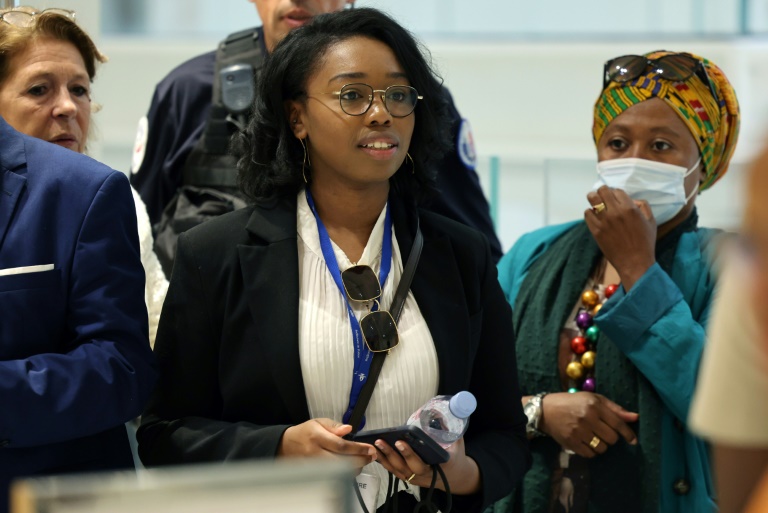
“It’s a relief to hear the judiciary say the airline is guilty,” Bakari told journalists at the Paris courthouse.

“It’s not going to change my story, this is something that has impacted me and will impact me my entire life, but it’s a relief because I had never said openly that I felt the airline was guilty,” she said.

Bakari, now 26, recounted her experiences during the trial last May and June, and has also written a book titled “I’m Bahia, the Miracle Girl”.

Around 560 people had joined the suit as plaintiffs, many of them from the region around Marseille in southern France, home to many of the victims.

A video feed to the southern port city was set up for their benefit, allowing them to follow part of the proceedings.

Zelensky vows 'victory' on frontline visit to liberated Kharkiv region

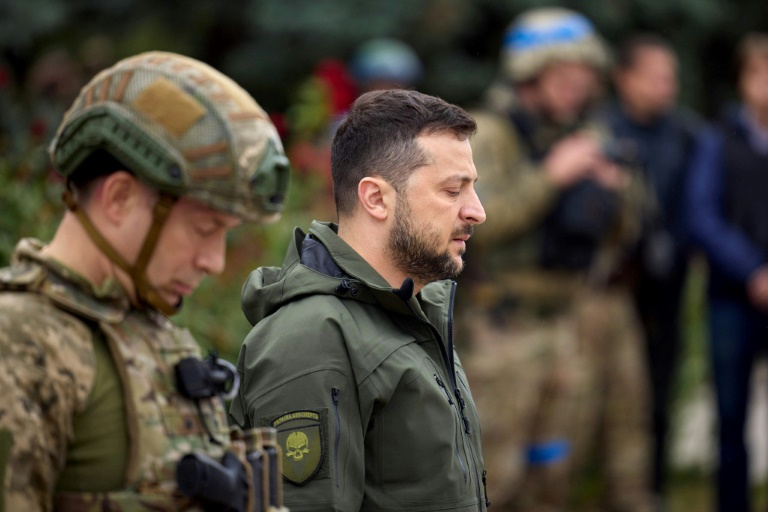
Ukrainian President Volodymyr Zelensky on Wednesday promised “victory” on a visit to the strategic city of Izyum that was recently recaptured from Russia by Kyiv’s army in a lightning counter-offensive.

The visit comes at a decisive moment in Russia’s six-month invasion, with Ukraine routing Moscow’s forces from swathes of the east and seriously undermining the Kremlin’s ambitions to capture the entire Donbas region of Ukraine.

“Our blue-yellow flag is already flying in deoccupied Izyum. And it will be so in every Ukrainian city and village,” Zelensky said in a statement on social media.

“We are moving in only one direction — forward and towards victory.” 

Pictures distributed by his office showed the Ukrainian leader wearing dark-green and flanked by guards as he took selfies with soldiers and thanked troops at a flag-rising ceremony.

Ukraine has claimed sweeping successes in the northeastern Kharkiv region that borders Russia in recent days and also says it has clawed back territory along a southern front near the Kherson region on the Black Sea.

Zelensky said Wednesday that Russia’s occupation of Crimea — annexed by Russia in 2014 — was a “tragedy” and promised that his forces would eventually recapture the peninsula.

Kyiv says that since the beginning of September its forces have retaken hundreds of villages, towns and cities that were captured by Russian forces that invaded Ukraine on February 24.

– ‘They killed my son’ –

In the recaptured eastern Ukrainian village of Bogorodychne, 58-year-old Mykola told AFP he had “barely survived” the Russian occupation during which his brother was killed.

“How can I describe it in words? It was difficult. I was afraid,” he said.  

Wiping tears from her eyes with a veil, Mykola’s mother Nina said: “I cry every day. They killed my son.” 

Moscow said its forces were hitting back on areas recaptured in Kharkiv with “massive strikes,” claiming — without providing evidence — to have inflicted losses on Ukrainian military hardware and servicemen.

In a battlefield update on Wednesday, Russia also claimed to have captured dozens of Ukrainian servicemen in the southern Kherson and Zaporizhzhia regions.

The Kremlin, which has made little mention of the setbacks in recent days vowed to continue fighting, claiming that the percieved threat Kyiv posed to Russia remains.

“The leadership of this country must take actions that eliminate threats to the Russian Federation” President Vladimir Putin’s spokesman, Dmitry Peskov told journalists.

The Ukrainian official in charge of the eastern Donetsk region, which has been partially controlled by pro-Moscow separatists since 2014, said Russian forces had attacked the entire front line region over the past 24 hours.

– ‘Life and death’ –

Pavlo Kyrylenko, the Donetsk governor, said one civilian had been killed and again urged all others to leave, describing the order as a “matter of life and death.”

Military observers have credited the success of Ukraine’s push back into the east on Western-supplied arms, particularly long-range precision artillery and also training of Ukrainian forces by Western allies.

The Ukrainian military announced on social media Wednesday that some 5,000 Ukrainian military had been trained as part of a joint program with the United Kingdom.

Western countries have also hit back against Russia with waves of economic penalties.

EU commission president Ursula von der Leyen on Wednesday said the successive waves of EU sanctions against Russia for its invasion of Ukraine would remain and that Europeans must keep their resolve against Moscow.

“I want to make it very clear, the sanctions are here to stay. This is the time for us to show resolve, not appeasement,” von der Leyen said in European Parliament during her annual State of the Union speech.

Ukraine’s first lady Olena Zelenska attended the gathering in Strasbourg, receiving a standing ovation from lawmakers.

She also told MEPs that she would travel Wednesday to Kyiv to meet Ukrainian President Volodymyr Zelensky. 

Shy male albatrosses prefer divorce to confrontation: study

Most albatrosses mate for life but shy males who avoid confrontation are more likely to get dumped, researchers said Wednesday, adding it was the first time personality had been shown to predict divorce in a wild animal.

Wandering albatrosses, which traverse the Southern Hemisphere and have the largest wingspan of any bird at more than three metres (10 feet), are among the most monogamous animals.

They can live for more than 50 years, and while they spend much of that time on the wing, they meet up every two years with the same partner to breed.

Divorce is a “super rare event”, occurring around 13 percent of the time, Ruijiao Sun, the lead author of a new study published in the journal Biology Letters, told AFP.

But “if they find that their breeding success is too low with a specific partner they may look for another one,” said the PhD student at Woods Hole Oceanographic Institution in the US.

To find out how an individual bird’s personality affects their likeliness of getting divorced, the researchers drew on a unique database.

Since 1959, scientists have been tracking a colony of wandering albatrosses on Possession Island, in the southern Indian Ocean’s Crozet archipelago.

“We put a stainless ring on the leg with a number,” marine biologist and study co-author Stephanie Jenouvrier told AFP.

“Because they’re not really scared we can approach very slowly and we can read the number,” she added, saying it allowed the team to “reconstruct the entire history of these birds”.

Sun said the birds “breed every two years because they take a whole year to rear their chick and it’s super energy-consuming, so they take a one-year sabbatical after to recover and they do not spend that time together”.

– Shy guys finish last –

Over more than a decade, the researchers measured the boldness of nearly 2,000 birds by observing how they respond to a human approaching their nest.

They found that shyer male albatrosses were up to twice as likely to get divorced than their bolder rivals — but no difference was found in females.

“We show for the first time the link between personality and divorce in a wild species, thanks to probably the best dataset in the world,” Sun said. 

Wandering albatrosses have “elaborate courtship processes”, the study said, as the birds raise up their wings, squawk and generally dance around.

Sometimes during the process, a pushy outsider male couple tries to cut in. That is when the shyer males avoid confrontation — and accept divorce.

However there are other factors affecting divorce rates, the researchers said.

There are more male than female albatrosses, because females tend to forage in areas where they are more likely to get caught up in fishing lines.

The surplus of males means that females quickly find a new mate, but it can take males more than four years, the study found.

Also, “individuals that are in a long-term relationship are less likely to divorce than the ones that are new to each other,” Jenouvrier said.

Last year research indicated that climate change could also be driving albatrosses to divorce, as the birds have to travel farther to find decreasing numbers of fish.

Stocks extend global selloff on US inflation gloom

Global equities sank further Wednesday as stronger-than-expected US inflation data sparked fears of a prolonged campaign of Federal Reserve interest rate hikes.

London was the heaviest faller in Europe after news that UK inflation slowed last month but held close to a 40-year high.

Asia tanked after Wall Street took its worst beating in weeks Tuesday on news of hot US inflation.

The dollar edged down in choppy trade, while oil prices were mixed Wednesday.

US inflation slowed slightly in August to 8.3 percent, but this trumped market expectations of about eight percent.

– ‘Caught up’ –

European markets are “caught up in the negative sentiment that has taken hold across global markets,” said Victoria Scholar, head of investment at Interactive Investor.

“Hotter-than-expected US inflation figures prompted heavy selling on Wall Street,” she added.

Global consumer prices have soared for months, exacerbated by Russia’s invasion of Ukraine — which has hiked energy and food costs — as well as owing to supply chain strains and Covid lockdowns in China.

The Fed has already instituted two consecutive 75-basis-point hikes, and a third such move is widely expected at its meeting next week.

After the latest US inflation data, some investors are even predicting the next Fed hike could be a full percentage point.

Aggressive rate tightening by central banks worldwide is denting economic activity as consumers and businesses face higher loan repayments.

In the UK, inflation slowed to 9.9 percent in August but remained almost in double digits.

The news boosted the pound on hopes of another interest rate hike next week from the Bank of England.

“There has been a fresh bout of anxiety on financial markets amid worries that inflation is still proving to be a formidable opponent to take down,” said Hargreaves Lansdown analyst Susannah Streeter.

In Asia, Tokyo led the region’s losses with the Nikkei plunging 2.8 percent.

Hong Kong stocks closed down more than two percent, with Chinese conglomerate Fosun hit hard by media reports that the group was under regulator scrutiny.

– Key figures at around 1115 GMT –

London – FTSE 100: DOWN 1.1 percent at 7,307.45 points

Frankfurt – DAX: DOWN 0.6 percent at 13,110.78

Paris – CAC 40: DOWN 0.3 percent at 6,225.22   

EURO STOXX 50: DOWN 0.4 percent at 3,573.69

Tokyo – Nikkei 225: DOWN 2.8 percent at 28,818.62 (close) 

Hong Kong – Hang Seng Index: DOWN 2.5 percent at 18,847.10 (close)

Shanghai – Composite: DOWN 0.8 percent at 3,237.54 (close)

New York – Dow: DOWN 3.9 percent at 31,104.97 (close)

Euro/dollar: UP at $1.0006 from $0.9970 late Tuesday

Pound/dollar: UP at $1.1559 from $1.1493 

Euro/pound: DOWN at 86.56 pence from 86.75 pence 

Dollar/yen: DOWN at 143.24 yen from 144.58 yen 

Brent North Sea crude: DOWN 0.1 percent at $93.07 per barrel

West Texas Intermediate: UP 0.4 percent at $87.68 per barrel

burs/rfj/bcp/lth

Stocks extend global selloff on US inflation gloom

Global equities sank further Wednesday as stronger-than-expected US inflation data sparked fears of a prolonged campaign of Federal Reserve interest rate hikes.

London was the heaviest faller in Europe after news that UK inflation slowed last month but held close to a 40-year high.

Asia tanked after Wall Street took its worst beating in weeks Tuesday on news of hot US inflation.

The dollar edged down in choppy trade, while oil prices were mixed Wednesday.

US inflation slowed slightly in August to 8.3 percent, but this trumped market expectations of about eight percent.

– ‘Caught up’ –

European markets are “caught up in the negative sentiment that has taken hold across global markets,” said Victoria Scholar, head of investment at Interactive Investor.

“Hotter-than-expected US inflation figures prompted heavy selling on Wall Street,” she added.

Global consumer prices have soared for months, exacerbated by Russia’s invasion of Ukraine — which has hiked energy and food costs — as well as owing to supply chain strains and Covid lockdowns in China.

The Fed has already instituted two consecutive 75-basis-point hikes, and a third such move is widely expected at its meeting next week.

After the latest US inflation data, some investors are even predicting the next Fed hike could be a full percentage point.

Aggressive rate tightening by central banks worldwide is denting economic activity as consumers and businesses face higher loan repayments.

In the UK, inflation slowed to 9.9 percent in August but remained almost in double digits.

The news boosted the pound on hopes of another interest rate hike next week from the Bank of England.

“There has been a fresh bout of anxiety on financial markets amid worries that inflation is still proving to be a formidable opponent to take down,” said Hargreaves Lansdown analyst Susannah Streeter.

In Asia, Tokyo led the region’s losses with the Nikkei plunging 2.8 percent.

Hong Kong stocks closed down more than two percent, with Chinese conglomerate Fosun hit hard by media reports that the group was under regulator scrutiny.

– Key figures at around 1115 GMT –

London – FTSE 100: DOWN 1.1 percent at 7,307.45 points

Frankfurt – DAX: DOWN 0.6 percent at 13,110.78

Paris – CAC 40: DOWN 0.3 percent at 6,225.22   

EURO STOXX 50: DOWN 0.4 percent at 3,573.69

Tokyo – Nikkei 225: DOWN 2.8 percent at 28,818.62 (close) 

Hong Kong – Hang Seng Index: DOWN 2.5 percent at 18,847.10 (close)

Shanghai – Composite: DOWN 0.8 percent at 3,237.54 (close)

New York – Dow: DOWN 3.9 percent at 31,104.97 (close)

Euro/dollar: UP at $1.0006 from $0.9970 late Tuesday

Pound/dollar: UP at $1.1559 from $1.1493 

Euro/pound: DOWN at 86.56 pence from 86.75 pence 

Dollar/yen: DOWN at 143.24 yen from 144.58 yen 

Brent North Sea crude: DOWN 0.1 percent at $93.07 per barrel

West Texas Intermediate: UP 0.4 percent at $87.68 per barrel

burs/rfj/bcp/lth

Death of Queen Elizabeth II: What happens next?

As preparations build for next week’s state funeral, the royal family on Wednesday will walk behind the queen’s coffin in a procession through central London, after which thousands of members of the public are expected to come to pay their final respects at her lying in state.

Here is how the United Kingdom plans to say goodbye to Queen Elizabeth II.

– Wednesday, September 14 –

Starting at 2:22 pm (13:22 GMT), the king leads the procession behind the gun carriage carrying the queen’s coffin from Buckingham Palace to parliament’s Westminster Hall, joined by senior members of the royal family.

A gun salute in Hyde Park fires 38 shots at one-minute intervals during the procession. Big Ben also tolls every 60 seconds. Hyde Park also has a big screen showing the events.

Charles’ sons, Princes William and Harry, his sister Princess Anne, and brothers Princes Andrew and Edward, walk with him, while others including William’s wife Kate and Harry’s wife Meghan travel by car.

The coffin arrives at 3:00 pm precisely and is placed on a catafalque, a raised platform.

During the lying-in-state, another “Vigil of the Princes” involving the king and the queen’s three other children plus other senior royals takes place.

Archbishop of Canterbury Justin Welby conducts a short service after the coffin arrives, attended by the king.

The queen lies in state until the funeral, with huge crowds expected as members of the public pay their respects. 

Westminster Hall is open for 24 hours a day, starting at 5:00 pm on Wednesday and ending at 6:30 am on Monday.

The government warned people the line to view the queen in her coffin was “expected to be very long” and “you will need to stand for many hours, possibly overnight, with very little opportunity to sit down”.

The line to get into Westminster Hall is to stretch over Lambeth Bridge and follow the River Thames into southeast London, passing landmarks such as the Tate Modern museum, according to the government’s route map.

– Friday, September 16 –

Charles and Camilla visit Wales where a service is held at Cardiff’s Llandaff Cathedral and he receives a message of condolence at the Senedd, the Welsh national assembly building.

The visit to Wales completes trips to all four nations that make up the United Kingdom.

– Sunday, September 18 –

At 8:00 pm a minute’s silence will be observed nationwide to mourn the queen and honour her life of service to the country.

– Monday, September 19 –

The queen’s coffin is taken in procession to Westminster Abbey for a state funeral at 11:00 am expected to be watched by millions around the world.

Political leaders and heads of state including US President Joe Biden are expected to attend, sparking a major security operation.

After the funeral, the coffin is taken to Windsor, for a televised committal service at St George’s Chapel, with a private interment planned for later in the evening.

The queen will be interred at the King George VI memorial chapel, alongside her husband, Prince Philip, the ashes of her sister Princess Margaret, their mother, also called Elizabeth, and father, George VI.

Two dead in shooting at Thai military facility

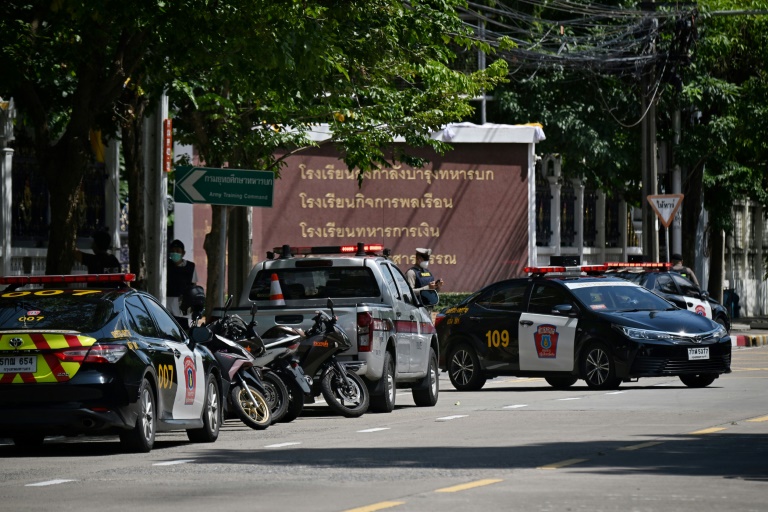
A Thai soldier killed two people and wounded one other in a shooting at a military facility in Bangkok on Wednesday, police and army officials said.

Sergeant Major Yongyuth Mungkornkim, a clerk at the Royal Thai Army War College, shot three other soldiers around 8:45 am (0145 GMT), the military said in a statement.

The 59-year-old tried to flee the scene but surrendered himself around 10 am, deputy national police spokesman Kissana Phathanacharoen told reporters. 

“The army would like to offer condolences to the families of the deceased soldiers and the wounded. This incident was a loss for both the families and organisation. It is something that wasn’t expected to happen,” deputy army spokesperson Senior Colonel Sirichan Nga-thong said in a statement.

“The cause and motivation for the incident is under investigation.”

In the aftermath of the shooting, police officers and soldiers guarded the gates of the facility, part of a large complex of military buildings in the north of the capital.

The military in its statement named the victims as Sergeant Major Nopparat Inthasunthorn and Sergeant Major Prakarn Sinsong. 

The third soldier, Sergeant Major Yongyuth Panyanuwat, was taken to hospital for treatment, the military added.

Acting Prime Minister Prawit Wongsuwan told reporters that police were investigating but it was too early to be sure of the shooter’s motives.

Another senior army officer, Major General Burin Thongprapai, told reporters the suspect is thought to have suffered mental health problems following brain surgery after a motorbike accident. 

Police spokesman Kissana said that as the suspect was a serving soldier, the case would be handled by a military court. 

While Thailand has high rates of gun ownership, mass shootings are extremely rare.

But in the past year, there have been at least two other cases of shooting murders by serving soldiers, according to the Bangkok Post.

And in 2020, in one of the kingdom’s deadliest incidents in recent years, a soldier gunned down 29 people in a 17-hour rampage and wounded scores more before he was shot dead by commandos.

That mass shooting, which shocked Thailand, was linked to a debt dispute between gunman Sergeant-Major Jakrapanth Thomma and a senior officer, and the military top brass were at pains to portray the killer as a rogue soldier.

The military has powerful influence in many aspects of life in Thailand from politics to business, and has intervened to seize power numerous times over the decades, most recently in 2014.

Russian Orthodox Church says ready for new pope meeting

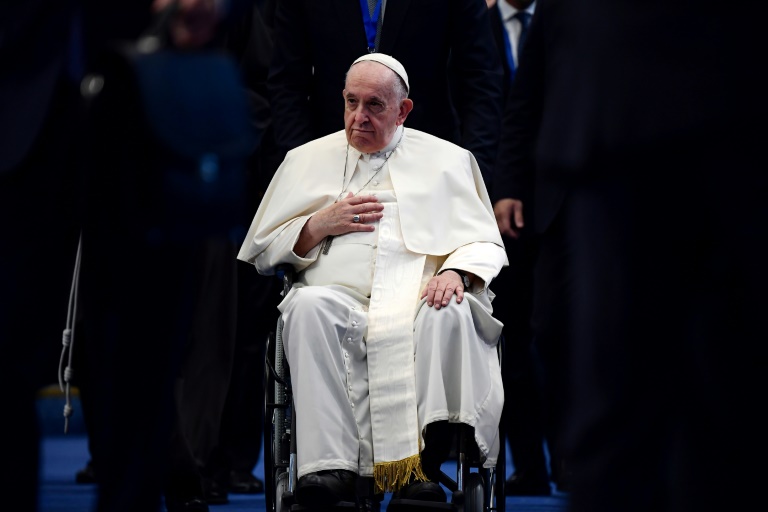
The Russian Orthodox Church said Wednesday it was ready for a new meeting between Patriarch Kirill and Pope Francis after weeks of diplomatic tensions sparked by the Ukraine war.

The news came after the pope opened an inter-faith meeting in ex-Soviet Kazakhstan where he lashed the manipulation of faith for political ends.

The gathering is being attended by around 100 delegations from 50 countries, but Putin’s close ally, Patriarch Kirill, is a notable absentee.

The pope has previously called for peace and denounced a “cruel and senseless war”, but Kirill has firmly defended Putin’s operation.

After opening the meeting in the capital Nur-Sultan, the pope spoke with Kirill’s “foreign minister,” Metropolitan Anthony of Volokolamsk, for around 15 minutes.

Anthony said a meeting between the two pontiffs was “a possibility,” provided it was “well prepared.”

“We need to see when, where (this would happen) and the most important thing is that we want something concrete to come out of the meeting, such as the joint call that we had in Havana,” he told journalists, referring to a historic 2016 meeting between Francis and Kirill in Cuba — the first since the schism in the Christian church in 1054. 

Anthony said the pope himself thought a meeting was “needed” and regretted that a meeting planned in June in Jerusalem had been scrapped “by the Holy See.” 

“We were ready for this meeting but it was cancelled by the Holy See,” after an announcement by Pope Francis in an interview to Italian daily Corriere della Sera.

“This interview was really unexpected, this type of statement clearly doesn’t strengthen unity among Christians, we were surprised,” Anthony said.

“But we need to move forward, it is important that the two religious leaders forge that path so that we, Christians, can help people.”

– ‘Manipulations’ –

Pope Francis, in remarks that drew applause, warned on Wednesday that faith should not be manipulated to defend conflict or buttress power.

“May we never justify violence. May we never allow the sacred to be exploited by the profane. The sacred must never be a prop for power, nor power a prop for the sacred,” he said.

“Let us free ourselves of those reductive and destructive notions that offend the name of God by harshness, extremism and forms of fundamentalism, and profane it through hatred, fanaticism, and terrorism,” he said. 

“Our time (is) still plagued by the scourge of war,” Francis said.

“A leap forward is required, and it needs to come from us,” he said, although he did not name the Ukraine war specifically. 

A message from Kirill, published on the Orthodox Church’s website and sent to participants of the meeting, said that “we have witnessed distortions of historical facts and unprecedented manipulations of mass consciousness.” 

“More than ever before, people find it difficult to navigate the flow of information, resist ideological indoctrination, and maintain a sober mind and peace of mind” Kirill said. 

Russia paints itself as a target of anti-Russian campaigns that it says “the collective West” are conducting to try to shore up waning influence.

The 85-year-old Argentinian pope, who is forced by knee pain to use a wheelchair, arrived on Tuesday in Nur-Sultan for his 38th trip abroad since becoming pontiff in 2013.

He is the second pope to visit Kazakhstan after John Paul II’s trip in September 2001.

The grand Imam Of Al Azhar mosque Sheikh Ahmed Al-Tayeb, and representatives of many different faiths and international organisations are also taking part in the meetings. 

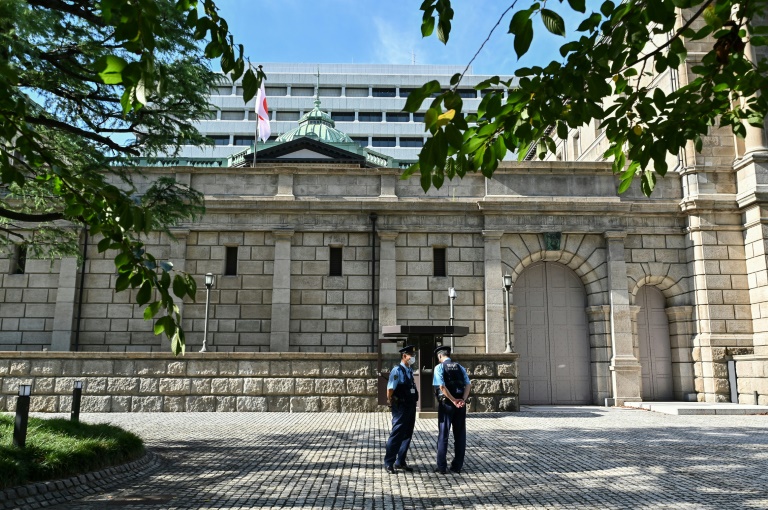
Japan central bank conducts 'rate check' as yen sinks: reports

Japan’s central bank on Wednesday conducted an operation often seen as a precursor to currency intervention, local media said, as the yen continues to crater against a strengthening dollar.

The financial daily Nikkei and other local media said the Bank of Japan (BoJ) carried out a “rate check”. A Bank spokesman contacted by AFP declined to comment.

A rate check involves asking market participants about their foreign exchange trading, said Toshikazu Horiuchi of IwaiCosmo Securities.

“Basically it’s a warning, which is the next best thing to an intervention when the exchange rate is fluctuating,” he told AFP.

The yen has tumbled from around 115 per dollar in March to  below 140 in recent weeks, as the BoJ maintains its monetary easing policies despite sometimes sharp rate hikes elsewhere, including from the Federal Reserve, to tackle inflation.

In early Tokyo trade, a dollar fetched 144.94 yen, after worse-than-expected US inflation data raised the prospect of even steeper US rate hikes to tame prices.

The rate check reports saw the yen strengthen quickly, with the dollar touching a low of 143.53 within an hour.

Japanese government officials also sought to calm the waters by insisting they were monitoring the currency swings and would not rule out any option to prevent further falls.

Speaking to reporters Wednesday evening, Finance Minister Shunichi Suzuki declined to comment on the rate check reports. 

But he said that if falls continued, “necessary steps will be taken in the market with all options on the table”.  

He was tightlipped on whether intervention had been decided or implemented, adding only: “in cases where it is, it’s done swiftly, without missing a beat.”

Horiuchi said a rate check is often seen as a precursor of an intervention, “so that’s why the market reacts very sensitively.”

“But its actual impact hinges on whether an intervention is really possible.”

– ‘Many moving parts’ –

Japan’s government has few options though, particularly before the next Federal Reserve meeting, said Hideo Kumano, chief economist at Dai-ichi Life Research Institute.

“There are so many moving parts, like preparation for interventions and behind-the-scenes negotiations with the United States,” he told AFP.

“That leads me to believe that this series of verbal interventions is not directly linked with the work to put bullets in the gun (and carry out an intervention).”

A weaker yen can help Japanese companies sell products overseas, but the levels seen in recent weeks are starting to put pressure on households and businesses due to higher import prices.

Inflation more broadly has risen to seven-year highs in Japan, partly due to the impact of the war in Ukraine on energy prices, though it is still less severe than in many major economies.

Japan’s central bank has been in no hurry to shift course on its ultra-loose monetary policy, viewing the measures as necessary to achieve its long-standing goal of sustained two percent inflation.

The bank sees recent price increases as temporary and linked to exceptional factors like the Ukraine conflict and pandemic-related supply chain issues.

Close Bitnami banner
Bitnami