World

Asian stocks slump, tracking US losses after inflation report

Asian markets dropped on Wednesday, tracking losses in the United States and Europe as traders responded negatively to higher-than-expected US inflation data that raised fears of a prolonged period of interest rate hikes.

Tokyo, Hong Kong, Shanghai, Seoul, Taipei and Sydney were all lower, reversing gains made in recent days due to positive market expectations from the US labour department’s consumer price index (CPI) report.

On Tuesday, US government data showed the annual increase in CPI had slowed slightly in August to 8.3 percent, but that prices continued to rise month-on-month, increasing by 0.1 percent.

The news shook equity markets, where there had been widespread expectations of US year-on-year inflation being around eight percent, with a decrease in prices compared with July.

Tokyo led the day’s losses in Asia, with the Nikkei 225 plunging 2.8 percent.

In Hong Kong, stocks closed down more than two percent, with Chinese conglomerate Fosun seeing billions wiped off its value as jittery investors reacted to media reports that the group was under regulator scrutiny.

Major European bourses followed the trend, with London, Frankfurt and Paris opening lower. 

– ‘Scorching hot’ inflation –

The United States and other economies have been battling sky-high price increases for months, with US yearly inflation hitting a 40-year high of 9.1 percent in June.

Wall Street shares plunged following the CPI news, with the Dow losing nearly 1,300 points and the S&P 500 falling 4.3 percent on Tuesday.

The data will have dashed hopes of a slowdown in the US Federal Reserve’s campaign of increasing interest rates to cool the overheating economy.

The Fed has already instituted two consecutive 75-basis-point hikes, and there are widespread expectations it will make a similarly sized increase at its meeting next week.

After Tuesday’s data, however, some investors are now predicting the next Fed hike could be by a full percentage point.

Of concern to the Fed will be the fact that “core” US CPI, which excludes volatile food and energy prices, accelerated sharply, rising 6.3 percent on a year ago, higher than the 5.9 percent seen in July and June.

Despite welcome relief from falling gasoline prices, food, housing and medical care costs continued to rise.

“Core inflation was scorching hot, coming in double expectations,” said senior market analyst Edward Moya at OANDA.

“The Fed will likely have to be even more aggressive with raising rates and that is bad news for risky assets.”

Investor Louis Navellier warned that persistently high interest rates to control inflation could lead to a US recession.

“Stocks are taking it very hard as forecasts are rising for Fed Funds to get higher and stay there longer resulting in a discount of future earnings multiples and increasing recession fears,” he said in a note.

In Britain, new data Wednesday showed inflation eased in August, but it remains close to the previous month’s 40-year peak as the country battles a cost-of-living crisis.

– Yen stabilises –

The dollar, which had earlier this week fallen against its major rivals in anticipation of slowing inflation, surged in Asian trade.

The yen plunged to 144.94 against the US currency, before recovering sharply following reports that the Japanese central bank had conducted a “rate check”, an exercise often seen as a precursor to currency intervention. 

The yen returned to 143.53 to the dollar within an hour of those reports. 

The euro also lost ground on Wednesday, dropping back below parity with the US currency once again.

The dollar’s rise is partly because the Fed has moved more aggressively with interest rate hikes than central banks in other major economies.

The European Central Bank raised its key rate by 75 basis points this month, with officials indicating a similarly sized increase could come at the next meeting in October.

Inflation has soared around the globe this year owing to extremely high energy and food bills.

This has been caused to a large extent by supply constraints after economies reopened from coronavirus pandemic lockdowns, and in the wake of Russia’s invasion of Ukraine.

– Key figures at around 0730 GMT –

Tokyo – Nikkei 225: DOWN 2.8 percent at 28,818.62 (close) 

Hong Kong – Hang Seng Index: DOWN 2.5 percent at 18,847.10 (close)

Shanghai – Composite: DOWN 0.8 percent at 3,237.54 (close)

New York – Dow: DOWN 3.9 percent at 31,104.97 (close)

London – FTSE 100: DOWN 0.9 percent at 7,321.47 

Frankfurt – DAX: DOWN 0.3 percent at 13,148.25 

Paris – CAC 40: DOWN 0.3 percent at 6,229.08 

EURO STOXX 50: DOWN 0.25 percent at 3,577.35

Euro/dollar: UP at $1.000 from $0.9974 

Pound/dollar: UP at $1.1547 from $1.1500  

Euro/pound: DOWN at 86.61 pence from 86.74 pence  

Dollar/yen: DOWN at 143.07 yen from 144.43 yen 

Brent North Sea crude: DOWN 0.02 percent at $93.15 per barrel

West Texas Intermediate: UP 0.1 percent at $87.42 per barrel

burs-aha/axn

Asian stocks slump, tracking US losses after inflation report

Asian markets dropped on Wednesday, tracking losses in the United States and Europe as traders responded negatively to higher-than-expected US inflation data that raised fears of a prolonged period of interest rate hikes.

Tokyo, Hong Kong, Shanghai, Seoul, Taipei and Sydney were all lower, reversing gains made in recent days due to positive market expectations from the US labour department’s consumer price index (CPI) report.

On Tuesday, US government data showed the annual increase in CPI had slowed slightly in August to 8.3 percent, but that prices continued to rise month-on-month, increasing by 0.1 percent.

The news shook equity markets, where there had been widespread expectations of US year-on-year inflation being around eight percent, with a decrease in prices compared with July.

Tokyo led the day’s losses in Asia, with the Nikkei 225 plunging 2.8 percent.

In Hong Kong, stocks closed down more than two percent, with Chinese conglomerate Fosun seeing billions wiped off its value as jittery investors reacted to media reports that the group was under regulator scrutiny.

Major European bourses followed the trend, with London, Frankfurt and Paris opening lower. 

– ‘Scorching hot’ inflation –

The United States and other economies have been battling sky-high price increases for months, with US yearly inflation hitting a 40-year high of 9.1 percent in June.

Wall Street shares plunged following the CPI news, with the Dow losing nearly 1,300 points and the S&P 500 falling 4.3 percent on Tuesday.

The data will have dashed hopes of a slowdown in the US Federal Reserve’s campaign of increasing interest rates to cool the overheating economy.

The Fed has already instituted two consecutive 75-basis-point hikes, and there are widespread expectations it will make a similarly sized increase at its meeting next week.

After Tuesday’s data, however, some investors are now predicting the next Fed hike could be by a full percentage point.

Of concern to the Fed will be the fact that “core” US CPI, which excludes volatile food and energy prices, accelerated sharply, rising 6.3 percent on a year ago, higher than the 5.9 percent seen in July and June.

Despite welcome relief from falling gasoline prices, food, housing and medical care costs continued to rise.

“Core inflation was scorching hot, coming in double expectations,” said senior market analyst Edward Moya at OANDA.

“The Fed will likely have to be even more aggressive with raising rates and that is bad news for risky assets.”

Investor Louis Navellier warned that persistently high interest rates to control inflation could lead to a US recession.

“Stocks are taking it very hard as forecasts are rising for Fed Funds to get higher and stay there longer resulting in a discount of future earnings multiples and increasing recession fears,” he said in a note.

In Britain, new data Wednesday showed inflation eased in August, but it remains close to the previous month’s 40-year peak as the country battles a cost-of-living crisis.

– Yen stabilises –

The dollar, which had earlier this week fallen against its major rivals in anticipation of slowing inflation, surged in Asian trade.

The yen plunged to 144.94 against the US currency, before recovering sharply following reports that the Japanese central bank had conducted a “rate check”, an exercise often seen as a precursor to currency intervention. 

The yen returned to 143.53 to the dollar within an hour of those reports. 

The euro also lost ground on Wednesday, dropping back below parity with the US currency once again.

The dollar’s rise is partly because the Fed has moved more aggressively with interest rate hikes than central banks in other major economies.

The European Central Bank raised its key rate by 75 basis points this month, with officials indicating a similarly sized increase could come at the next meeting in October.

Inflation has soared around the globe this year owing to extremely high energy and food bills.

This has been caused to a large extent by supply constraints after economies reopened from coronavirus pandemic lockdowns, and in the wake of Russia’s invasion of Ukraine.

– Key figures at around 0730 GMT –

Tokyo – Nikkei 225: DOWN 2.8 percent at 28,818.62 (close) 

Hong Kong – Hang Seng Index: DOWN 2.5 percent at 18,847.10 (close)

Shanghai – Composite: DOWN 0.8 percent at 3,237.54 (close)

New York – Dow: DOWN 3.9 percent at 31,104.97 (close)

London – FTSE 100: DOWN 0.9 percent at 7,321.47 

Frankfurt – DAX: DOWN 0.3 percent at 13,148.25 

Paris – CAC 40: DOWN 0.3 percent at 6,229.08 

EURO STOXX 50: DOWN 0.25 percent at 3,577.35

Euro/dollar: UP at $1.000 from $0.9974 

Pound/dollar: UP at $1.1547 from $1.1500  

Euro/pound: DOWN at 86.61 pence from 86.74 pence  

Dollar/yen: DOWN at 143.07 yen from 144.43 yen 

Brent North Sea crude: DOWN 0.02 percent at $93.15 per barrel

West Texas Intermediate: UP 0.1 percent at $87.42 per barrel

burs-aha/axn
EU plans 'comprehensive reform' of electricity market

The EU plans a “deep and comprehensive” reform of the electricity market to cope with an energy crisis spurred by Russia’s war in Ukraine, European Commission chief Ursula von der Leyen said Wednesday.

The measures include a cap on electricity producers’ profits that would raise 140 billion euros ($140 billion) and “cushion” consumers from high prices, she said in her annual State of the European Union address.

Other steps involve rationing energy, temporary state aid and decoupling the prices of gas and electricity.

She also announced the creation of a new bank designed to spur investment of up to three billion euros in hydrogen as a Green alternative to fossil fuels.

The measures were in response to soaring energy costs as Europe painfully unhitches its decades-long dependency on Russian fossil fuels.

Sanctions on Russia and Moscow retaliation cutting off gas supplies have sent prices skyrocketing, leaving Europe to confront a difficult coming winter.

“Russia keeps on actively manipulating our energy market. They prefer to flare the gas than to deliver it,” von der Leyen said.

“This market is not functioning any more.”

– Gas reserves –

To partly prepare for a tough winter, the bloc has hastily stockpiled gas reserves, hitting 84 percent of capacity well ahead of an October deadline, von der Leyen said.

But the hole left by missing Russian supplies will still hurt.

The idea to tax profits by non-gas electricity providers is to divert the money to households and businesses to weather the situation.

“These companies are making revenues they never accounted for, they never even dreamt of,” von der Leyen said.

“In these times it is wrong to receive extraordinary record profits benefiting from war and on the back of consumers,” she said.

She said “major oil, gas and coal companies” would also “have to give a crisis contribution”.

At the same time, von der Leyen highlighted that the EU is pivoting to “reliable suppliers”, naming the United States, Norway and Algeria among them.

Longer-term, the EU wants greater reliance on renewable energies, von der Leyen said, hammering a key promise of her mandate. The hydrogen investment bank proposal is another step towards that future.

– Kyiv trip –

Another announcement made by von der Leyen was planned legislation to secure critical raw materials for the EU as it shifts towards greater use of electric vehicles and other more environmentally friendly technologies.

In her speech, she highlighted the stranglehold China has over resources such as lithium that are key to the energy transition.

“Today, China controls the global processing industry. Almost 90 percent of rare earths and 60 percent of lithium are processed in China,” she said in her annual State of the European Union address.

The proposed law would identify “strategic projects all along the supply chain” and “build up strategic reserves where supply is at risk,” she said.

As for Russia, the EU chief signalled that the bloc would maintain its sanctions pressure on Russia as long as it waged its war in Ukraine.

“I want to make it very clear, the sanctions are here to stay. This is the time for us to show resolve, not appeasement,” she said.

Ukraine’s first lady Olena Zelenska attended the gathering in Strasbourg, receiving a standing ovation from lawmakers.

Von der Leyen told MEPs that she would travel to Kyiv to meet Ukrainian President Volodymyr Zelensky, her third trip to the Ukrainian capital since the war started.

“I will travel to Kiev today to meet President Zelensky” to discuss “in detail” the continuation of European aid, she said in her major annual political address.

“For the first time in its history, this Parliament is debating the state of our Union while war is raging on European soil,” said von der Leyen, dressed in Ukrainian colours.

EU plans 'comprehensive reform' of electricity market

The EU plans a “deep and comprehensive” reform of the electricity market to cope with an energy crisis spurred by Russia’s war in Ukraine, European Commission chief Ursula von der Leyen said Wednesday.

The measures include a cap on electricity producers’ profits that would raise 140 billion euros ($140 billion) and “cushion” consumers from high prices, she said in her annual State of the European Union address.

Other steps involve rationing energy, temporary state aid and decoupling the prices of gas and electricity.

She also announced the creation of a new bank designed to spur investment of up to three billion euros in hydrogen as a Green alternative to fossil fuels.

The measures were in response to soaring energy costs as Europe painfully unhitches its decades-long dependency on Russian fossil fuels.

Sanctions on Russia and Moscow retaliation cutting off gas supplies have sent prices skyrocketing, leaving Europe to confront a difficult coming winter.

“Russia keeps on actively manipulating our energy market. They prefer to flare the gas than to deliver it,” von der Leyen said.

“This market is not functioning any more.”

– Gas reserves –

To partly prepare for a tough winter, the bloc has hastily stockpiled gas reserves, hitting 84 percent of capacity well ahead of an October deadline, von der Leyen said.

But the hole left by missing Russian supplies will still hurt.

The idea to tax profits by non-gas electricity providers is to divert the money to households and businesses to weather the situation.

“These companies are making revenues they never accounted for, they never even dreamt of,” von der Leyen said.

“In these times it is wrong to receive extraordinary record profits benefiting from war and on the back of consumers,” she said.

She said “major oil, gas and coal companies” would also “have to give a crisis contribution”.

At the same time, von der Leyen highlighted that the EU is pivoting to “reliable suppliers”, naming the United States, Norway and Algeria among them.

Longer-term, the EU wants greater reliance on renewable energies, von der Leyen said, hammering a key promise of her mandate. The hydrogen investment bank proposal is another step towards that future.

– Kyiv trip –

Another announcement made by von der Leyen was planned legislation to secure critical raw materials for the EU as it shifts towards greater use of electric vehicles and other more environmentally friendly technologies.

In her speech, she highlighted the stranglehold China has over resources such as lithium that are key to the energy transition.

“Today, China controls the global processing industry. Almost 90 percent of rare earths and 60 percent of lithium are processed in China,” she said in her annual State of the European Union address.

The proposed law would identify “strategic projects all along the supply chain” and “build up strategic reserves where supply is at risk,” she said.

As for Russia, the EU chief signalled that the bloc would maintain its sanctions pressure on Russia as long as it waged its war in Ukraine.

“I want to make it very clear, the sanctions are here to stay. This is the time for us to show resolve, not appeasement,” she said.

Ukraine’s first lady Olena Zelenska attended the gathering in Strasbourg, receiving a standing ovation from lawmakers.

Von der Leyen told MEPs that she would travel to Kyiv to meet Ukrainian President Volodymyr Zelensky, her third trip to the Ukrainian capital since the war started.

“I will travel to Kiev today to meet President Zelensky” to discuss “in detail” the continuation of European aid, she said in her major annual political address.

“For the first time in its history, this Parliament is debating the state of our Union while war is raging on European soil,” said von der Leyen, dressed in Ukrainian colours.

Two dead in shooting at Thai military facility

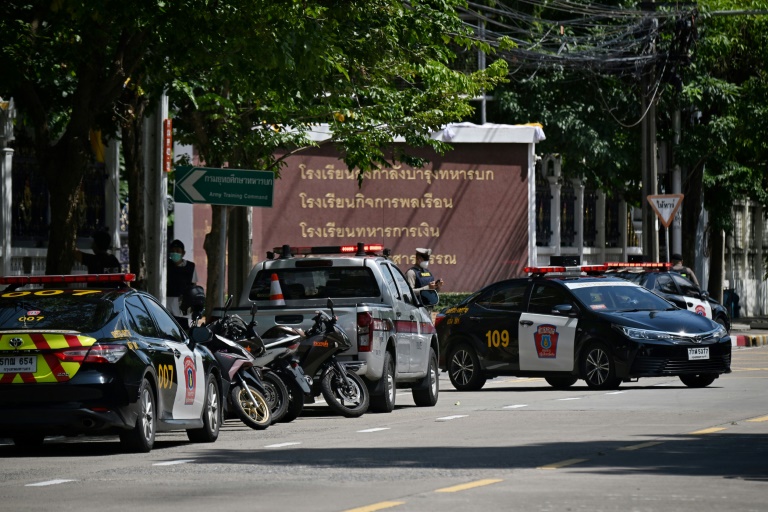
A Thai soldier killed two people and wounded one other in a shooting at a military facility in Bangkok on Wednesday, police and army officials said.

Sergeant Major Yongyuth Mungkornkim, a clerk at the Royal Thai Army War College, shot three other soldiers around 8:45 am (0145 GMT), the military said in a statement.

The 59-year-old tried to flee the scene but surrendered himself around 10 am, deputy national police spokesman Kissana Phathanacharoen told reporters. 

“The army would like to offer condolences to the families of the deceased soldiers and the wounded. This incident was a loss for both the families and organisation. It is something that wasn’t expected to happen,” deputy army spokesperson Senior Colonel Sirichan Nga-thong said in a statement.

“The cause and motivation for the incident is under investigation.”

In the aftermath of the shooting, police officers and soldiers guarded the gates of the facility, part of a large complex of military buildings in the north of the capital.

The military statement named the victims as Sergeant Major Nopparat Inthasunthorn and Sergeant Major Prakarn Sinsong. 

The third soldier, Sergeant Major Yongyuth Panyanuwat, was taken to hospital for treatment, the statement said.

Acting Prime Minister Prawit Wongsuwan told reporters that police were investigating but it was too early to be sure of the shooter’s motives.

The suspect’s mental health is being assessed as part of the probe, police said. Initial reports suggested the weapon used was a 9mm pistol.

While Thailand has high rates of gun ownership, mass shootings are extremely rare.

But in the past year, there have been at least two other cases of shooting murders by serving soldiers, according to the Bangkok Post.

And in 2020, in one of the kingdom’s deadliest incidents in recent years, a soldier gunned down 29 people in a 17-hour rampage and wounded scores more before he was shot dead by commandos.

That mass shooting, which shocked Thailand, was linked to a debt dispute between gunman Sergeant-Major Jakrapanth Thomma and a senior officer, and the military top brass were at pains to portray the killer as a rogue soldier.

The military has powerful influence in many aspects of life in Thailand from politics to business, and has intervened to seize power numerous times over the decades, most recently in 2014.

Health groups call for fossil fuel non-proliferation treaty

Around 200 health organisations and more than 1,400 health professionals on Wednesday called for governments to establish a binding international treaty on phasing out fossil fuels, which they said pose “a grave and escalating threat to human health”.

A letter proposing the “fossil fuel non-proliferation treaty” said it could work similarly to the World Health Organization’s Framework Convention on Tobacco Control — except this time the harmful controlled substances would be coal, oil and gas. 

The WHO was among the health organisations from around the world who signed the letter. 

“The modern addiction to fossil fuels is not just an act of environmental vandalism. From the health perspective, it is an act of self-sabotage,” WHO chief Tedros Adhanom Ghebreyesus said in a statement.

The letter called on national governments to develop and implement a legally binding mechanism that would immediately stop all future fossil fuel expansion, as well as phasing out existing production.

It emphasised that the transition should be carried out in “a fair and equitable manner,” and that high-income countries should support lower-income nations to ensure the change “reduces poverty rather than exacerbating it”.

Air pollution, mostly from burning fossil fuels, has been linked to the deaths of seven million people a year.

Climate change has also spurred more frequent and severe extreme weather events, which can have a lasting impact on health even beyond those initially affected by the disasters, including smoke from wildfires and diseases spread after floods. 

The letter also pointed to the heightened health risks faced by the workers who extract, refine, transport and distribute fossil fuels and related products.

Phasing out fossil fuels would prevent 3.6 million deaths a year from air pollution alone, the letter said, adding that “the same cannot be said for proposed false solutions, such as carbon capture and storage”.

– Either fossil fuels or health –

Diarmid Campbell-Lendrum, the head of the WHO’s climate change unit, said that “from a health point of view, you can’t fix a disease without calling out what is causing it”.

The call for a treaty was important because it did not “try to use false accounting or imaginary solutions to continue to prop up the burning of fossil fuels,” he told AFP.

“We can either have fossil fuels or we can have health — we can’t have both.”

Courtney Howard, an emergency physician in Canada’s sub-Arctic region who signed the letter, said that the city of Yellowknife had some of the worst air quality in the world when it was ringed by wildfires in 2014.

“We had a doubling of emergency department visits for asthma, a 50 percent increase in pneumonia and one of our pharmacies ran out of one of the breathing medicines,” Howard told AFP.

She said that phasing out fossils fuels is “something we need to do for everybody — for everybody’s kids.”

Jeni Miller, the executive director of the Global Climate and Health Alliance which helped coordinate the letter, called for international dialogue and negotiation to make the treaty a reality.

“The costs of inaction are increasing,” she said.

Health groups call for fossil fuel non-proliferation treaty

Around 200 health organisations and more than 1,400 health professionals on Wednesday called for governments to establish a binding international treaty on phasing out fossil fuels, which they said pose “a grave and escalating threat to human health”.

A letter proposing the “fossil fuel non-proliferation treaty” said it could work similarly to the World Health Organization’s Framework Convention on Tobacco Control — except this time the harmful controlled substances would be coal, oil and gas. 

The WHO was among the health organisations from around the world who signed the letter. 

“The modern addiction to fossil fuels is not just an act of environmental vandalism. From the health perspective, it is an act of self-sabotage,” WHO chief Tedros Adhanom Ghebreyesus said in a statement.

The letter called on national governments to develop and implement a legally binding mechanism that would immediately stop all future fossil fuel expansion, as well as phasing out existing production.

It emphasised that the transition should be carried out in “a fair and equitable manner,” and that high-income countries should support lower-income nations to ensure the change “reduces poverty rather than exacerbating it”.

Air pollution, mostly from burning fossil fuels, has been linked to the deaths of seven million people a year.

Climate change has also spurred more frequent and severe extreme weather events, which can have a lasting impact on health even beyond those initially affected by the disasters, including smoke from wildfires and diseases spread after floods. 

The letter also pointed to the heightened health risks faced by the workers who extract, refine, transport and distribute fossil fuels and related products.

Phasing out fossil fuels would prevent 3.6 million deaths a year from air pollution alone, the letter said, adding that “the same cannot be said for proposed false solutions, such as carbon capture and storage”.

– Either fossil fuels or health –

Diarmid Campbell-Lendrum, the head of the WHO’s climate change unit, said that “from a health point of view, you can’t fix a disease without calling out what is causing it”.

The call for a treaty was important because it did not “try to use false accounting or imaginary solutions to continue to prop up the burning of fossil fuels,” he told AFP.

“We can either have fossil fuels or we can have health — we can’t have both.”

Courtney Howard, an emergency physician in Canada’s sub-Arctic region who signed the letter, said that the city of Yellowknife had some of the worst air quality in the world when it was ringed by wildfires in 2014.

“We had a doubling of emergency department visits for asthma, a 50 percent increase in pneumonia and one of our pharmacies ran out of one of the breathing medicines,” Howard told AFP.

She said that phasing out fossils fuels is “something we need to do for everybody — for everybody’s kids.”

Jeni Miller, the executive director of the Global Climate and Health Alliance which helped coordinate the letter, called for international dialogue and negotiation to make the treaty a reality.

“The costs of inaction are increasing,” she said.

Foxconn strikes $19.4 bn deal to make chips in India

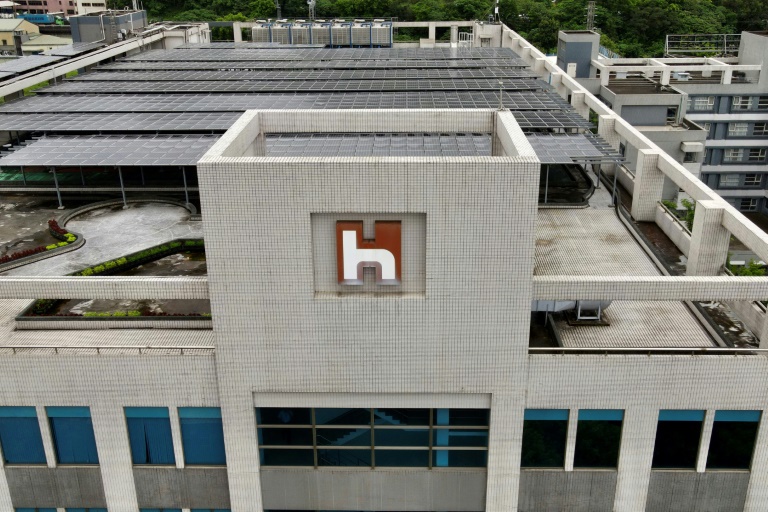
Taiwanese electronics giant Foxconn will invest $19.4 billion to make semiconductors in India with local conglomerate Vedanta, backed by New Delhi’s push to boost tech self-reliance after a global chip shortage.

Semiconductors are an essential component of nearly all modern electronics, from smartphones to kitchen appliances and cars, but the coronavirus pandemic kneecapped global production and leading manufacturers are still struggling to meet demand.

India approved a $10 billion incentive plan last December to kickstart its own domestic industry by covering up to half of all project costs.

The deal announced Tuesday is the scheme’s most ambitious investment to date and will see a manufacturing facility built in Prime Minister Narendra Modi’s home state of Gujarat.

“India’s own Silicon Valley is a step closer now,” Vedanta group chairman Anil Agarwal tweeted on Tuesday, thanking the government for helping “tie things up so quickly”.

Vedanta, one of India’s biggest mining companies, will take a 60 percent share in the joint venture for its first step into chip-making.

Foxconn, the world’s top iPhone assembler, will take the minority stake.

“The improving infrastructure and the government’s active and strong support increases confidence in setting up a semiconductor factory,” Foxconn vice president Brian Ho said in a statement.

The facilities will be operational by 2024 and will also manufacture display screens for phones and tablets, the companies said.

Shares in Vedanta rose six percent in Mumbai a day after the announcement.

India has sought to boost its domestic production capacity in a range of strategic sectors, including military hardware and advanced technology. 

“In the current geopolitical scenario, trusted sources of semiconductors… are key to the security of critical information infrastructure,” India’s technology ministry said earlier.

The government’s semiconductor incentive scheme has already successfully wooed several investors, with Singapore’s IGSS Ventures announcing $3.2 billion in July to make chips in Tamil Nadu state.

Another partnership between NextOrbit of the UAE and Israel’s Tower Semiconductor signed on in May for a $2.9 billion plant in Karnataka state.

The vast majority of the world’s top chips are made by just two companies — TSMC of Taiwan and South Korea’s Samsung — both of which are running at full capacity to alleviate the ongoing global shortage.

Taiwan says beauty queen barred from waving flag in Malaysia

Taipei accused China on Wednesday of pressuring organisers of a Malaysian trade event into barring a Taiwanese beauty queen waving the island’s flag on stage.

Miss Taiwan Kao Man-jung was photographed crying as other contestants in a beauty pageant appeared on stage during Tuesday’s opening ceremony of the 2022 World Congress on Innovation and Technology (WCIT), according to Taiwanese authorities.

“China pressured the Malaysian organisers to ban Miss Kao from holding our national flag on stage,” Taiwan’s foreign ministry said, adding that it had instructed its representative office in Malaysia to lodge a formal complaint with the organisers. 

Beijing regards the self-ruled democratic island as part of its territory to be seized one day, by force if needed. 

It bristles at any international recognition of Taiwan and often reacts with anger over the display of its flag at international events or by foreign celebrities.

Taiwan’s foreign ministry said such suppression “would only disgust Taiwanese people and the international community even more” and accused Beijing of deploying “vile actions”. 

Taiwanese media reported that Kao was stopped just as she was about to go on stage, while other contestants were seen waving the flags of their countries.

AFP has approached the WCIT for comment. 

Celebrities including US pop stars Madonna and Katy Perry have sparked ire in China in the past for showing Taiwan’s flag, which Beijing views as a show of support for the island’s independence. 

In 2016, a teen Taiwanese K-pop singer was forced to apologise for waving the flag during an online broadcast, which stoked anger in China and accusations that she was an independence advocate.

Her video apology went viral on the day of Taiwan’s 2016 presidential elections, which saw the island elect Tsai Ing-wen as its first female leader in a landslide victory.

China suspended all communications with Taiwan after her win and has ramped up military pressure because her government does not consider the island as a part of China.

Roadside bomb claimed by Pakistan Taliban kills eight in northwest

A bomb killed the former head of a pro-government militia and seven others in northwestern Pakistan, officials said Wednesday, in an attack claimed by the local Taliban.

The blast happened Tuesday night in Kabal town in the Swat valley, which was largely ruled by the Pakistan Taliban during a 2007-2009 insurgency.

For years Islamabad encouraged tribal vigilante forces known as peace committees to defend their villages against militants.

Most have been disbanded since the insurgency was largely crushed and security improved across the country.

Swat district police officer Zahid Nawaz Marwat told AFP that former peace committee head Idrees Khan was killed when his pick-up truck was hit by a roadside bomb.

Another local police official confirmed the death toll, which included two local policemen, two private guards and three labourers.

The attack was claimed by the outlawed Tehreek–e-Taliban Pakistan (TTP), who said Khan was involved in the killing their members.

The group also claimed responsibility for a clash with Pakistani military in which three soldiers were killed Tuesday in Kurram district, bordering Afghanistan.

The TTP declared an indefinite ceasefire in June to facilitate peace talks being brokered by Afghanistan, but there have been regular clashes since then despite both sides saying the truce was still on.

Since the Taliban returned to power in Afghanistan last year Islamabad has regularly complained of attacks by the TTP, especially along their porous frontier.

The Pakistan and Afghanistan Taliban are separate groups, but share a common ideology.

Close Bitnami banner
Bitnami