World

Crowds gather as queen's coffin to go on display in London

King Charles III leads a procession of the coffin of his mother Queen Elizabeth II through London on Wednesday before hundreds of thousands of people pay their final respects.

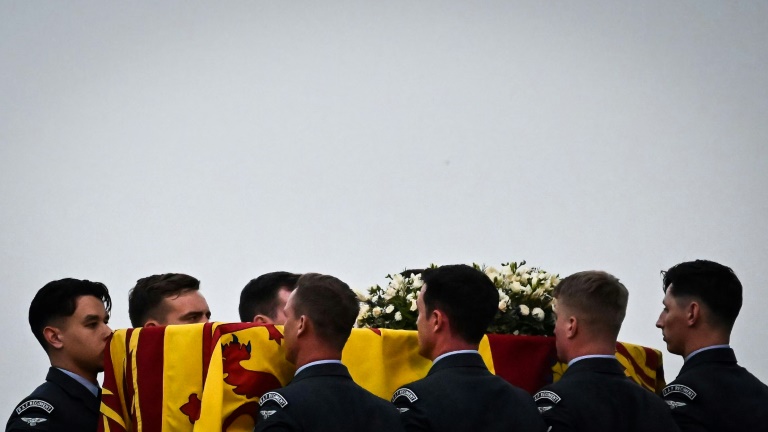
Six days after her death in Scotland, Queen Elizabeth’s body will be borne on a horse-drawn gun carriage from her Buckingham Palace home to Westminster Hall where she will remain for four days until her funeral Monday.

The king and other senior royals are expected to walk in silence behind the hearse as it winds through the capital’s streets and then hold a vigil upon its arrival at the cavernous 12th-century hall in the Westminster parliament complex.

The public will be let in from 5:00 pm (1600 GMT), with mourners already warned they will face an endurance test in round-the-clock queues.

“It’s going to be emotional and I don’t know how I’ll feel going in there as the first one,” said Vanessa Nanthakumaran, a 56-year-old administration assistant originally from Sri Lanka, who took her place at the head of the queue on Monday evening.

“It’s our duty to say thank you. It’s going to be prayers from the heart. It’s going to be very sombre, quiet and overwhelming.”

The government on Wednesday released the map of the full route for the queue, which could snake back up to five miles (eight kilometres) along the river Thames, terminating in Southwark Park. 

Strict rules and airport-style security measures have been put in place, with “far more” people expected than the 200,000 who filed past the coffin of the queen’s mother when she died in 2002, according to Prime Minister Liz Truss’s spokesman.

The government has advised people to wear “suitable clothing” and to bring portable battery packs to keep their mobile phones charged — an indication that some people will need to wait overnight for a glimpse of the casket.

Hotel rooms in the capital are increasingly hard to find, with even budget rooms going for £300 ($350) per night, while transport bosses and police are under pressure to keep the city moving and safe in exceptional circumstances.  

“It’s a massive challenge for the Metropolitan Police and for me personally, but we have been preparing for many, many years,” the newly appointed head of the London police force, Mark Rowley, told Sky News on Tuesday.

– UK tour – 

The body of the late 96-year-old monarch, who died “peacefully” at her Balmoral estate in Scotland last Thursday, was flown to London aboard an RAF plane on Tuesday evening from the Scottish capital Edinburgh.

It was then driven to Buckingham Palace, with images of her coffin arriving for one last night at home splashed across Wednesday’s newspapers.

“Welcome Home Ma’am,” read the headline of The Sun, while the Times ran with the headline “Home to Rest” and the Daily Mail “Home to her Family”.

The procession on Wednesday will mirror a similar ceremony in Edinburgh on Monday when her casket was driven through the hushed streets of the city to St Giles’ Cathedral.

There, some 33,000 people filed past the coffin overnight to Tuesday afternoon, the Scottish government said.

“Scotland has now bid our Queen of Scots a sad, but fond farewell. We will not see her like again,” said First Minister Nicola Sturgeon.

After Scotland and England, Charles continued his tour of the four nations of the United Kingdom on Tuesday by visiting Northern Ireland for the first time as king. 

A trip to Wales is expected on Friday.

The 73-year-old new head of state has won wide praise in the British media for his dignified and often heartfelt reaction to his mother’s death, which has led to a rare moment of public unity in Britain.

He has seen his popularity recover since the death of his former wife Diana in a 1997 car crash — and his ratings have surged in recent days, according to a new survey on Tuesday. 

The mourning has also obscured — albeit briefly — the broader country’s sharp political divisions and a severe cost-of-living crisis that is expected to cause a major increase in poverty over the winter. 

– Big Ben –

The procession of the queen’s coffin will begin at precisely 2:22 pm (1322 GMT) and will be attended by all of the queen’s siblings. 

Big Ben will toll and artillery guns will fire salutes in Hyde Park.

The ceremony will also mean another prominent role for the queen’s scandal-hit son Andrew, who settled a case in the US earlier this year in which he was accused of sexually assaulting a 17-year-old.

Over the last week, he has made what is expected to be a brief return to the public eye during national mourning. 

Not everyone shares the public mood of sadness and remembrance sparked by the queen’s death, with royal fatigue increasingly evident on social media in the face of blanket media coverage.

British police have also faced criticism from civil liberties groups over their treatment of anti-monarchy protesters who have publicly challenged Charles’ accession to the throne.

Video footage and witnesses have drawn attention to police arresting or intimidating people who shouted slogans against the monarchy or held up placards reading “Not My King”.

The queen’s funeral will take place in Westminster Abbey in front of 2,000 VIP guests, with the day declared a public holiday in Britain.

Hundreds of heads of state and government, as well as global royalty, are expected, but Russia, Belarus, Myanmar and North Korea have not been invited to send representatives.

US President Joe Biden has confirmed he will attend, as will French President Emmanuel Macron and Canadian Prime Minister Justin Trudeau.

burs-adp/jv
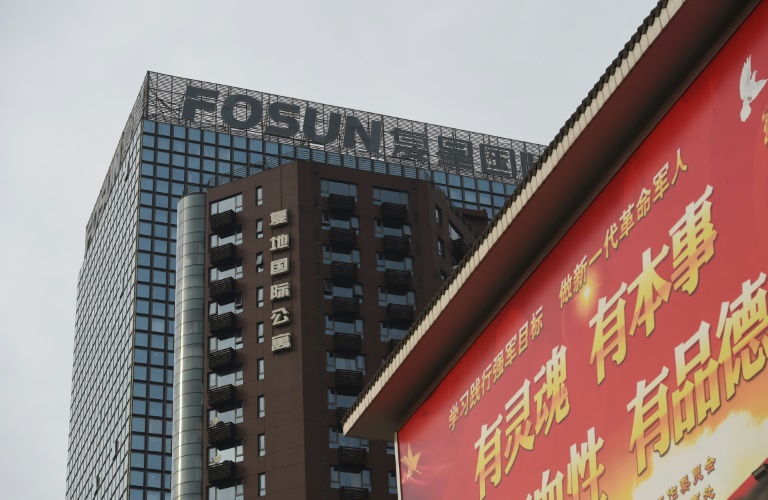
Shares in Chinese conglomerate Fosun dive on report of watchdog scrutiny

Club Med owner Fosun, one of China’s largest private-sector conglomerates, saw billions wiped off its value on Wednesday as jittery investors reacted to a media report that the group was under regulatory scrutiny.

There has been growing concern about the debts of Chinese companies, particularly after a run of high-profile defaults in the property sector last year that rippled through the wider economy.

Bloomberg News on Tuesday cited unnamed sources as saying that regulators, including China’s banking watchdog and the local commission overseeing state investments, have told large lenders and state-owned enterprises to closely examine their exposure to Fosun.

Shares in Fosun International Limited, the conglomerate’s flagship company, slid as much as 9.6 percent in Hong Kong to HK$4.41 on Wednesday, the lowest level since November 2012.

Fosun’s Chief Financial Officer Alex Gong rejected the Bloomberg report as “completely false”.

“Neither the China Banking and Insurance Regulatory Commission (CBIRC) nor the Shanghai Banking and Insurance Regulatory Commission have asked commercial banks to find out about Fosun’s financial exposure, and those institutions have not received any notice of this,” Gong told the South China Morning Post.

The public had a “one-sided interpretation” of Fosun’s recent reductions in shareholdings and divestments and failed to see that they were part of a long-term financial strategy, the Shanghai-based company added in a statement.

– Circus and football –

Co-founded by tycoon Guo Guangchang in 1992 during the heady days of China’s initial “reform and opening” period, Fosun started off in pharmaceuticals and real estate but has since built a sprawling business empire that includes tourism and finance. 

A prolific buyer of global assets, Fosun owns French brand Club Med and has a controlling stake in the fashion house Lanvin.

It owns English Premier League football club Wolverhampton Wanderers and has a major stake in Canadian circus producer Cirque du Soleil.

In 2020, Fosun struck a deal with Germany’s BioNTech to manufacture its coronavirus vaccine in China and later became its exclusive distributor to the Greater China region.

Chinese companies have faced growing scrutiny over their debt exposure, especially those in the property sector. 

Multiple construction giants, including Evergrande, have defaulted on debts and been forced into major restructuring.

Beijing has also launched regulatory investigations in multiple sectors, including education and technology businesses, clipping their growth.

In recent months China’s economy has been reeling from a debt crisis in its massive property sector, mortgage boycotts, as well as disruptions from coronavirus lockdowns in finance and manufacturing hubs.

Fosun faces as much as $8 billion in bond repayments through 2023, according to Bloomberg News.

The CBIRC’s request to banks to check their exposure to Fosun debt does not mean it wants lenders to change their financing, and the regulator’s move may not result in any action, Bloomberg reported.

The Beijing branch of the State-owned Assets Supervision and Administration Commission was also among the regulators who asked institutions it oversees for closer scrutiny regarding Fosun, the report added.

Fosun’s debt stood at 261 billion yuan ($37.7 billion) as of June 30, up from 237 billion yuan at the end of last year, according to an earnings report last month.

Moody’s last month downgraded Fosun, citing weak liquidity and a weakening portfolio amid asset sales.

Google, Meta face record fines in South Korea over privacy violations

South Korea has fined Google and Meta more than $71 million collectively for gathering users’ personal information without consent for tailored ads, regulators said Wednesday, the country’s highest-ever data protection fines.

Investigations into the two US tech giants found they had been “collecting and analysing” data on their users, and monitoring their use of websites and applications, the Personal Information Protection Commission said.

The data was used to “infer the users’ interests or used for customised online advertisements”, it said, adding that neither Google nor Meta had clearly informed South Korean users of this practice or obtained their consent in advance.

As a result, Google was fined 69.2 billion won ($49.7 million) and Meta 30.8 billion won ($22.1 million).

“It is the largest fine for the violation of the Personal Information Protection Act,” the commission said in a statement.

Regulators said the majority of the users in South Korea — 82 percent for Google and 98 percent for Meta — had unknowingly allowed them to collect data on their online use.

“It can be said that the possibility and the risk of infringement of the rights of the users are high,” the statement said.

Last year, South Korea fined Google nearly $180 million for abusing its dominance in the mobile operating systems and app markets, saying it was hampering market competition.

Giant US tech companies are regularly criticised for dominating markets by elbowing out rivals, with multiple governments globally seeking to rein them in.

The European Union has slammed Google with record antitrust penalties, and also gone after Apple and Microsoft.

Japan central bank conducts 'rate check' as yen sinks: reports

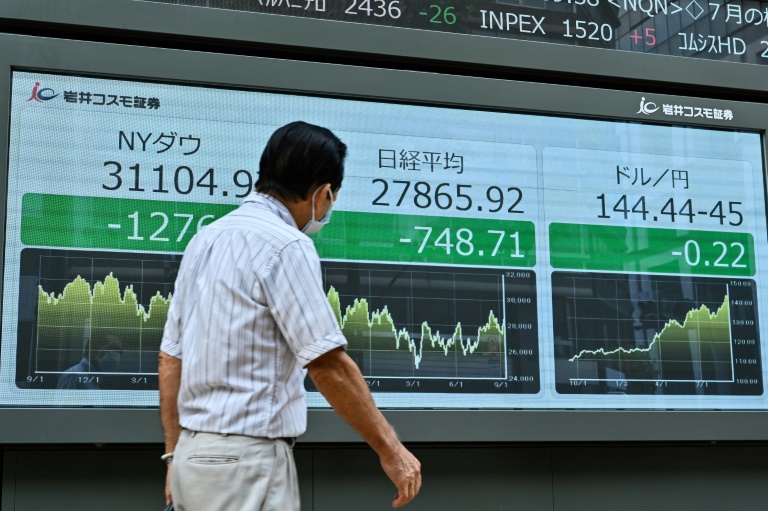
Japan’s central bank on Wednesday conducted an operation often seen as a precursor to currency intervention, local media said, as the yen continues to crater against a strengthening dollar.

The financial daily Nikkei and other local media said the Bank of Japan (BoJ) carried out a “rate check”. A Bank spokesman contacted by AFP declined to comment.

A rate check involves asking market participants about their foreign exchange trading, said Toshikazu Horiuchi of IwaiCosmo Securities.

“Basically it’s a warning, which is the next best thing to an intervention when the exchange rate is fluctuating,” he told AFP.

The yen has tumbled from around 115 per dollar in March to lower than 140 in recent weeks, as the BoJ maintains its monetary easing policies despite sometimes sharp rate hikes elsewhere, including from the Federal Reserve, to tackle inflation.

In early Tokyo trade, a dollar fetched 144.94 yen, after worse-than-expected US inflation data raised the prospect of even steeper US rate hikes to tame prices.

The rate check reports saw the yen strengthen quickly, with the dollar touching a low of 143.53 within an hour.

Earlier Wednesday, Japanese government officials sought to calm the waters by insisting they were monitoring the currency swings and would not rule out any option to prevent further falls.

Masato Kanda, vice finance minister for international affairs, told reporters that the yen’s move was “rapid” and “concerning”.

“When a rate check is conducted, sometimes it evolves into an intervention, so that’s why the market reacts very sensitively,” Horiuchi said.

“But its actual impact hinges on whether an intervention is really possible.”

A weaker yen can help Japanese companies to sell products overseas, but the levels seen in recent weeks are starting to put pressure on households and businesses due to higher import prices.

Inflation more broadly has risen to seven-year highs in Japan, partly due to the impact of the war in Ukraine on energy prices, though it is still less severe than in many major economies.

Japan’s central bank has been in no hurry to shift course on its ultra-loose monetary policy, viewing the measures as necessary to achieve its long-standing goal of sustained two percent inflation.

The bank sees recent price increases as temporary, and linked to exceptional factors like the Ukraine conflict and pandemic-related supply chain issues.

Gripes over electric car tax credit as Biden visits Detroit show

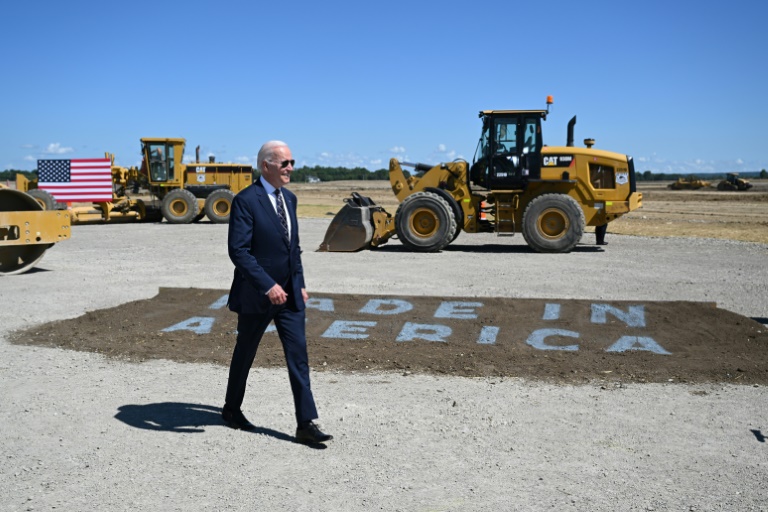
Fresh off of recent legislative triumphs aimed at supporting US manufacturing, President Joe Biden is set for an upbeat appearance Wednesday at the first Detroit Auto Show since the pandemic.

After months of inaction in Congress, Biden capped the summer by signing into law major new investments in semiconductor production and combatting climate change, lending the US president’s Democratic Party some momentum heading into the November midterm elections.

But not far below the celebratory surface, the auto industry is grumbling over a change in the consumer EV tax credit policy that industry officials warn could slow the transition to emission-free vehicles.

At issue are sourcing requirements in the recently passed Inflation Reduction Act meant to prod automakers into using EV batteries produced in North America as well as critical materials sourced from North America or countries with which the United States has a free trade agreement.

The restrictions come as Washington seeks to wean its economic dependence on Russia and China, and as pandemic-induced shortages underscored the vulnerability of having far-flung supply chains.

But auto industry officials and EV experts worry the measure — which affects a consumer tax credit of up to $7,500 on EVs — will slow their adoption in the United States.

“You’re going to see a stalling in the rate of growth,” said John Eichberger, executive director of the Fuels Institute, a nonprofit research group which is funded by a range of energy and transportation companies but does not engage in policy advocacy.

– ‘Missed opportunity’ –

A self-professed “car guy,” Biden has made previous presidential visits to tour General Motors and Ford plants in Michigan — a key electoral swing state.

Biden’s appearance Wednesday at the Detroit Auto Show lends some shine to the revived event following a three-year pandemic hiatus.

Since the last show in 2019, Detroit’s “Big 3” — GM, Ford and Chrysler (now called Stellantis) — have announced tens of billions of dollars in EV investment and unveiled numerous new offerings.

Last Thursday, GM unveiled the Equinox EV, a model with a starting price of $30,000, less than half the average price of EVs now available in the market.

On the same day, Stellantis brand Jeep showed images of two new electric SUVs and confirmed that its all-electric SUV for Europe would launch in 2023. 

The arrival of EV versions of popular models like the Ford F-150 has meant that EV sales in the United States surged more than 66 percent in the second quarter compared with the period a year ago, according to Cox Automotive. 

EVs comprised 5.6 percent of the total US market, according to Cox.

Still, a meaningful transition to EVs from the internal combustion engine faces several challenges, including shortfalls of lithium and other key battery materials and doubts over consumer demand, in part because of lofty price tags — something the $7,500 tax credit aims to combat.

The Alliance for Automotive Innovation, a Washington trade group representing big automakers, highlighted fine print around the tax credit that it said would derail EV growth.

One of those is the requirement that automakers gradually increase minimum levels for choice materials through 2026.

The alliance praised tax credits in the bill for EV manufacturing plants, but said they were offset by the consumer provisions.

– ‘A bumpy road’ –

“Unfortunately, the EV tax credit requirements will make most vehicles immediately ineligible for the incentive,” said John Bozzella, president of the lobby group.

“That’s a missed opportunity at a crucial time and a change that will surprise and disappoint customers in the market for a new vehicle,” he added.

Alan Amici, chief executive of the Center for Automotive Research in Ann Arbor, Michigan, said the industry sees economic benefits to sourcing locally in light of the issues that surfaced during the pandemic.

But it takes time to adjust supply chains, he said.

“The industry needs to figure that out,” said Amici, adding that companies are studying the measure and hoped Washington officials might show flexibility in implementing the policy.

Eichberger cited analysis showing that, in certain years, only a few EV models would qualify for the credit under the standard.

He warned that a leveling off or decline in EV sales in the next couple of years could kill momentum for a transition that remains at an early stage.

“It’s going to be a bumpy road, and this is another bump,” Eichberger said.

Two dead in shooting at Thai military facility

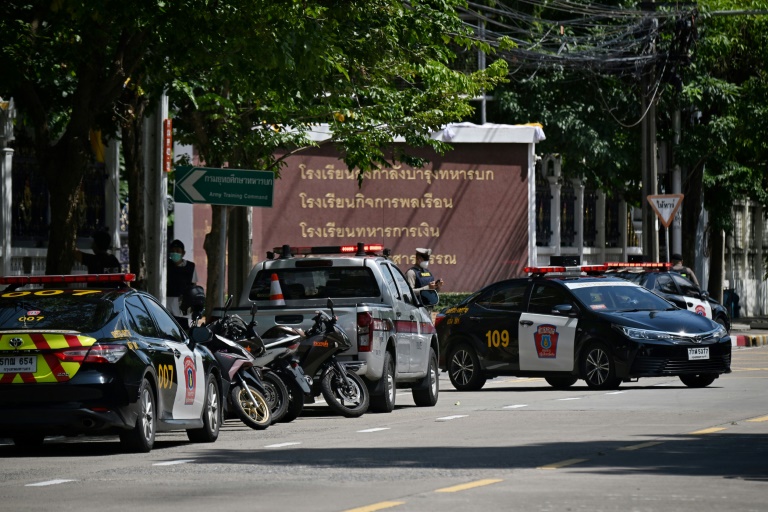
A Thai soldier killed two people and wounded one other in a shooting at a military facility in Bangkok on Wednesday, police and army officials said.

Sergeant Major Yongyuth Mungkornkim, a clerk at the Royal Thai Army War College, shot three other soldiers around 8:45 am (0145 GMT), the military said in a statement.

The 59-year-old tried to flee the scene but surrendered himself around 10 am, deputy national police spokesman Kissana Phathanacharoen told reporters. 

“The army would like to offer condolences to the families of the deceased soldiers and the wounded. This incident was a loss for both the families and organisation. It is something that wasn’t expected to happen,” deputy army spokesperson Senior Colonel Sirichan Nga-thong said in a statement.

“The cause and motivation for the incident is under investigation.”

In the aftermath of the shooting, police officers and soldiers guarded the gates of the facility, part of a large complex of military buildings in the north of the capital.

The military statement named the victims as Sergeant Major Nopparat Inthasunthorn and Sergeant Major Prakarn Sinsong. 

The third soldier, Sergeant Major Yongyuth Panyanuwat, was taken to hospital for treatment, the statement said.

Police are investigating the shooting, spokesman Kissana said, with initial reports suggesting the weapon used was a 9mm pistol.

While Thailand has high rates of gun ownership, mass shootings are extremely rare.

But in the past year, there have been at least two other cases of shooting murders by serving soldiers, according to the Bangkok Post.

And in 2020, in one of the kingdom’s deadliest incidents in recent years, a soldier gunned down 29 people in a 17-hour rampage and wounded scores more before he was shot dead by commandos.

That mass shooting, which shocked Thailand, was linked to a debt dispute between gunman Sergeant-Major Jakrapanth Thomma and a senior officer, and the military top brass were at pains to portray the killer as a rogue soldier.

The military has powerful influence in many aspects of life in Thailand from politics to business, and has intervened to seize power numerous times over the decades, most recently in 2014.

Health groups calls for fossil fuel non-proliferation treaty

Around 200 health organisations and more than 1,400 health professionals on Wednesday called for governments to establish a binding international treaty on phasing out fossil fuels, which they said pose “a grave and escalating threat to human health”.

A letter proposing the “fossil fuel non-proliferation treaty” said it could work similarly to the World Health Organization’s Framework Convention on Tobacco Control — except this time the harmful controlled substances would be coal, oil and gas. 

The WHO was among the health organisations from around the world who signed the letter. 

“The modern addiction to fossil fuels is not just an act of environmental vandalism. From the health perspective, it is an act of self-sabotage,” WHO chief Tedros Adhanom Ghebreyesus said in a statement.

The letter called on national governments to develop and implement a legally binding mechanism that would immediately stop all future fossil fuel expansion, as well as phasing out existing production.

It emphasised that the transition should be carried out in “a fair and equitable manner,” and that high-income countries should support lower-income nations to ensure the change “reduces poverty rather than exacerbating it”.

Air pollution, mostly from burning fossil fuels, has been linked to the deaths of seven million people a year.

Climate change has also spurred more frequent and severe extreme weather events, which can have a lasting impact on health even beyond those initially affected by the disasters, including smoke from wildfires and diseases spread after floods. 

The letter also pointed to the heightened health risks faced by the workers who extract, refine, transport and distribute fossil fuels and related products.

Phasing out fossil fuels would prevent 3.6 million deaths a year from air pollution alone, the letter said, adding that “the same cannot be said for proposed false solutions, such as carbon capture and storage”.

– Either fossil fuels or health –

Diarmid Campbell-Lendrum, the head of the WHO’s climate change unit, said that “from a health point of view, you can’t fix a disease without calling out what is causing it”.

The call for a treaty was important because it did not “try to use false accounting or imaginary solutions to continue to prop up the burning of fossil fuels,” he told AFP.

“We can either have fossil fuels or we can have health — we can’t have both.”

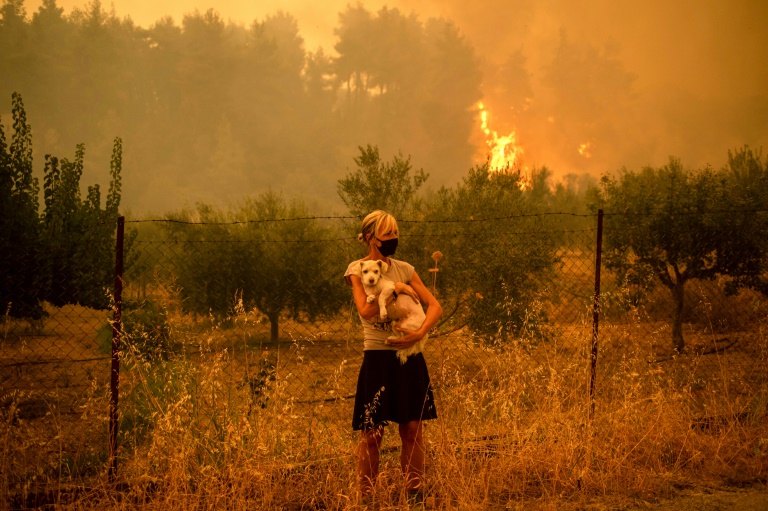
Courtney Howard, an emergency physician in Canada’s sub-Arctic region who signed the letter, said that the city of Yellowknife had some of the worst air quality in the world when it was ringed by wildfires in 2014.

“We had a doubling of emergency department visits for asthma, a 50 percent increase in pneumonia and one of our pharmacies ran out of one of the breathing medicines,” Howard told AFP.

She said that phasing out fossils fuels is “something we need to do for everybody — for everybody’s kids.”

Jeni Miller, the executive director of the Global Climate and Health Alliance which helped coordinate the letter, called for international dialogue and negotiation to make the treaty a reality.

“The costs of inaction are increasing,” she said.

Health groups calls for fossil fuel non-proliferation treaty

Around 200 health organisations and more than 1,400 health professionals on Wednesday called for governments to establish a binding international treaty on phasing out fossil fuels, which they said pose “a grave and escalating threat to human health”.

A letter proposing the “fossil fuel non-proliferation treaty” said it could work similarly to the World Health Organization’s Framework Convention on Tobacco Control — except this time the harmful controlled substances would be coal, oil and gas. 

The WHO was among the health organisations from around the world who signed the letter. 

“The modern addiction to fossil fuels is not just an act of environmental vandalism. From the health perspective, it is an act of self-sabotage,” WHO chief Tedros Adhanom Ghebreyesus said in a statement.

The letter called on national governments to develop and implement a legally binding mechanism that would immediately stop all future fossil fuel expansion, as well as phasing out existing production.

It emphasised that the transition should be carried out in “a fair and equitable manner,” and that high-income countries should support lower-income nations to ensure the change “reduces poverty rather than exacerbating it”.

Air pollution, mostly from burning fossil fuels, has been linked to the deaths of seven million people a year.

Climate change has also spurred more frequent and severe extreme weather events, which can have a lasting impact on health even beyond those initially affected by the disasters, including smoke from wildfires and diseases spread after floods. 

The letter also pointed to the heightened health risks faced by the workers who extract, refine, transport and distribute fossil fuels and related products.

Phasing out fossil fuels would prevent 3.6 million deaths a year from air pollution alone, the letter said, adding that “the same cannot be said for proposed false solutions, such as carbon capture and storage”.

– Either fossil fuels or health –

Diarmid Campbell-Lendrum, the head of the WHO’s climate change unit, said that “from a health point of view, you can’t fix a disease without calling out what is causing it”.

The call for a treaty was important because it did not “try to use false accounting or imaginary solutions to continue to prop up the burning of fossil fuels,” he told AFP.

“We can either have fossil fuels or we can have health — we can’t have both.”

Courtney Howard, an emergency physician in Canada’s sub-Arctic region who signed the letter, said that the city of Yellowknife had some of the worst air quality in the world when it was ringed by wildfires in 2014.

“We had a doubling of emergency department visits for asthma, a 50 percent increase in pneumonia and one of our pharmacies ran out of one of the breathing medicines,” Howard told AFP.

She said that phasing out fossils fuels is “something we need to do for everybody — for everybody’s kids.”

Jeni Miller, the executive director of the Global Climate and Health Alliance which helped coordinate the letter, called for international dialogue and negotiation to make the treaty a reality.

“The costs of inaction are increasing,” she said.

40 years on, survivors recall horror of Lebanon's Sabra and Shatila massacre

Forty years after Christian militiamen massacred Palestinian refugees and Lebanese nationals in the country’s Sabra and Shatila refugee camps, the horrors of the tragedy remain seared into survivors’ memories.

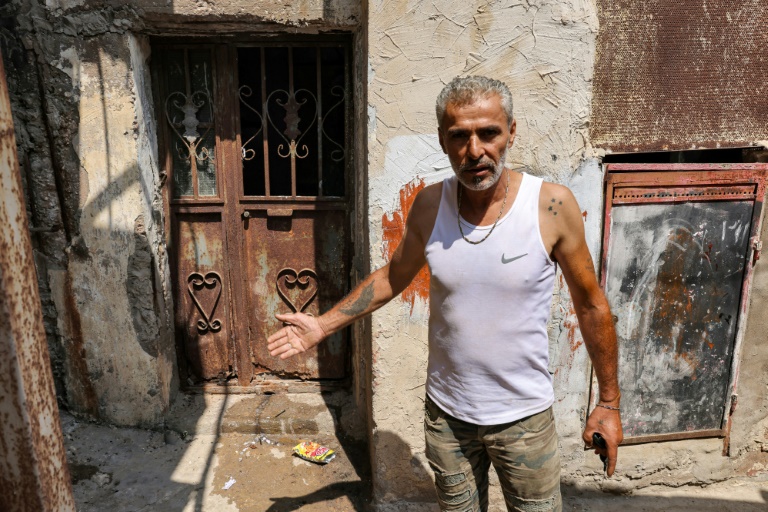
Najib al-Khatib, whose father and 10 other family members were killed in the massacre, still remembers the stench of corpses.

It “lingered for more than five or six months. A horrible smell,” the 52-year-old Lebanese survivor said.

“They would spray chemicals every day, but the smell stayed,” he told AFP from the Sabra camp for Palestinian refugees, where he lives with his family.

From September 16 to 18, 1982, Christian militiamen allied with Israel massacred between 800 and 2,000 Palestinians in the Sabra and Shatila camps on Beirut’s outskirts. They also murdered at least 100 Lebanese and some Syrians.

Israeli troops, who had invaded in June that year as Lebanon’s civil war raged, sealed off the camp while the militiamen went on their killing spree, targeting unarmed civilians.

Camp residents have been readying to mark the massacre’s 40th anniversary on Friday.

“Until today, the smell is still in our heads — the smell of the dead,” Khatib said.

– ‘Horses and corpses’ –

Khatib walked down an alleyway in the impoverished Sabra camp where he witnessed the atrocities four decades earlier.

“This is my grandmother’s house. During the massacre, it was full” of dead bodies, he recalled. “They were piled up here. Horses and corpses, all on top of each other.”

“This area was full of people they killed,” he said.

One of Khatib’s most harrowing memories was finding his father’s body at the door of his house.

“He was shot in his legs,” he said. “They had hit him in the head with a hatchet.”

Despite global outcry, no one has ever been arrested or put on trial for the massacre.

It came just days after the assassination of Lebanese president-elect Bashir Gemayel — seen as a hero by many Lebanese Christians but hated by many in Lebanon for his cooperation with Israel.

In Israel, an inquiry found a number of officials, including then defence minister Ariel Sharon, were indirectly responsible.

It laid blame on Elie Hobeika, intelligence chief of the Lebanese Forces — a right-wing Christian militia — for the killings.

The LF, then allied to Israel, has maintained silence, never responding to the accusations.

A group of survivors tried to launch a lawsuit in Belgium against Sharon, but the court threw out the case in September 2003.

– ‘Unimaginable’ –

Umm Abbas, a Lebanese resident of Sabra who witnessed the massacre, recalled the “unimaginable scenes” that have gone unpunished.

“What did I see? A pregnant woman who had her baby ripped out of her stomach, they cut her in two,” the 75-year-old said.

Another woman, “she was also pregnant, they ripped the baby from her stomach too”, she said.

Sitting in an alley, Umm Abbas recalled bulldozers scooping up dead bodies and dumping them on top of each other.

“They put them all in a deep hole, I saw them,” she said.

Survivors mark the massacre every year, some visiting the graveyard in Sabra where many of the victims were buried.

A simple stone memorial pays tribute to the “martyrs” of the massacre.

Palestinian Amer Okkar prayed at the site, where the makeshift graves still bear no tombstones.

“We found everyone slaughtered on the ground, in all the alleyways and along this street,” the 59-year-old former militant remembered.

“We found pills and machetes and hashish and drugs on the ground — no one could kill like that unless they were on drugs,” he said.

Seeds of change for Dijon mustard amid shortage

France’s favourite condiment, Dijon mustard, is hard to find these days, with signs on supermarket shelves warning the lucky few who spot jars that they can only take one home.

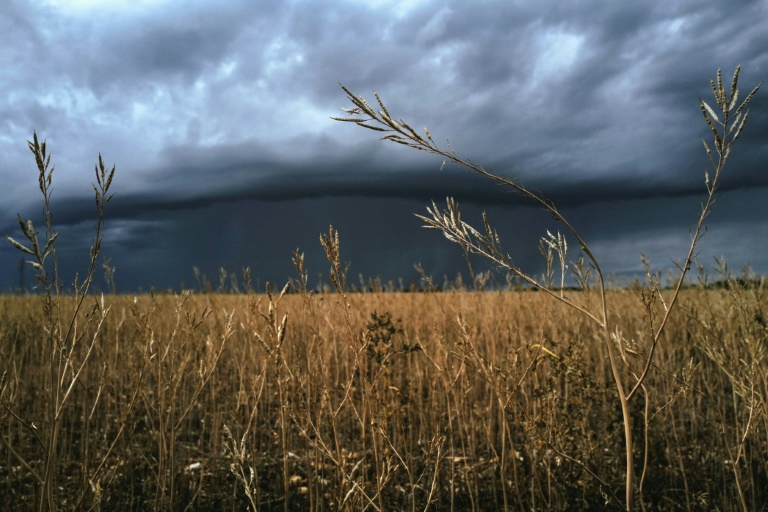
A heatwave across the ocean in Canada, the world’s top mustard seed producer, is to blame for the drastic shortage that has dragged on for months in France.

Canada supplies around 80 percent of the mustard seeds used by French makers of the spicy condiment, the rest coming mostly from Burgundy, the region that surrounds Dijon.

But a drought slashed the Canadian harvest by half in 2021.

Now French mustard makers are aiming to boost production at home in Burgundy.

“It’s very important to increase that share so we can face weather risks that differ from one country to the other,” Luc Vandermaesen, president of the Burgundy Mustard Association, an industry group, told AFP.

“We can’t put all our eggs in one basket,” said Vandermaesen, who is also the chief executive of France’s third biggest mustard maker, Reine de Dijon (Queen of Dijon).

– Double the price –

The Dijon region has been famous for its mustard seeds since the Middle Ages, but production has been decimated by pests as chemicals used to kill them have been banned.

Output was divided by three between 2017 and 2021, falling from 12,000 tonnes to 4,000 tonnes.

In June, local producers were urged to more than double the area planted with mustard seeds to 10,000 hectares.

“The Canadian problems revived the importance of the Burgundy sector,” said Fabrice Genin, president of the Association of Mustard Seeds Producers of Burgundy.

As an incentive, mustard makers agreed to pay 2,000 euros ($2,008) per tonne for Burgundy seeds in 2023, up from 1,300 euros last year and more than double what they paid in 2021. 

The appeal appears to have worked, with 10,000 hectares planned for mustard seeds, said Jerome Gervais, a mustard expert at the chamber of agriculture in Burgundy’s Cote d’Or department. 

The number of seed producers jumped from 160 to more than 500, he added. 

“It’s more than hoped,” Gervais said.

– ‘Revenge’ –

Francois Detain, a farmer in Agencourt, gave up mustard seed production in 2019 after his fields were wrecked by a dry spring and an insect infestation.

But the price offered for mustard seeds allowed him to bring them back, even though Russia’s invasion of Ukraine has made fertilisers more expensive.

A drop in the prices of grains and oilseeds has also made mustard seeds more attractive.

“It’s sort of a revenge for us to be able to replant a local crop,” Detain said.

Shipping costs — which have soared due to supply chain bottlenecks since Covid pandemic lockdowns were lifted — have also given an edge to Burgundy seeds over those from Canada.

By next year, Burgundy should be producing 15,000 tonnes of mustard seeds, meeting 40 percent of the needs of mustard makers, Gervais said.

“(Store) shelves should be replenished in October,” Vandermaesen said. 

“The shortage will be completely over in early 2023. We are very confident for Christmas.”

Close Bitnami banner
Bitnami