World

French cinema giant Jean-Luc Godard dies aged 91

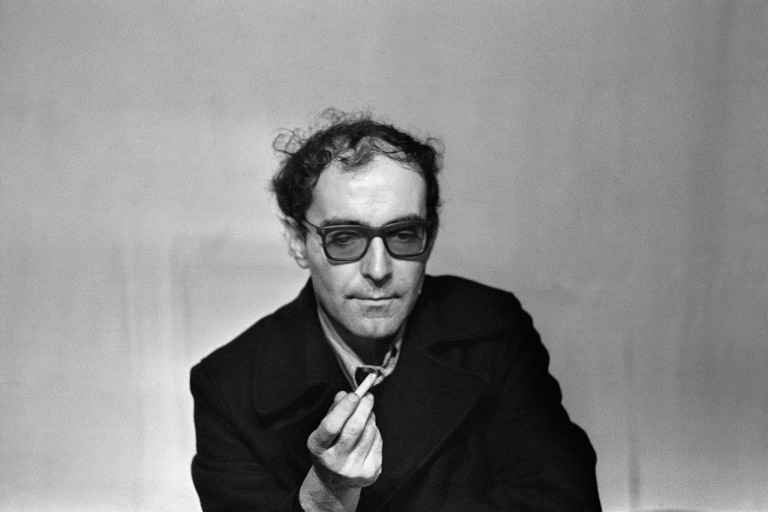
Jean-Luc Godard, one of the most influential filmmakers of the 20th century and the father of the French New Wave, died “peacefully at home” on Tuesday aged 91, his family said.

The legendary maverick blew up the conventions of cinema in the 1960s, shooting his gangster romance “Breathless” on the streets of Paris with a hand-held camera, using a shopping trolley for panning shots.

He continued to thumb his nose at Hollywood and an older generation of French filmmakers by breaking all the rules again in “Contempt” (1963) with Brigitte Bardot and “Pierrot le Fou” in 1965.

“No official (funeral) ceremony will take place,” his family said. “He will be cremated… And it really must happen in private.”

The secrecy — and choosing to disappear in a puff of smoke — is typical of Godard, who loved to surprise the world from his lair in the Swiss village of Rolle where he lived as a virtual recluse for decades.

It was there that he died “peacefully at home”, his wife Anne-Marie Mieville at his side, his producers said.

Godard’s influence is hard to underestimate, with directors from Martin Scorsese, Quentin Tarantino and Paul Thomas Anderson to Robert Altman, the maker of “M*A*S*H” and “The Player”, often speaking of their debt to him.

– Film’s ‘John Lennon and Che Guevara’ –

French President Emmanuel Macron hailed the director’s talent and mourned the loss of a “national treasure”.

“Jean-Luc Godard, the most iconoclastic filmmaker of the New Wave, invented a resolutely modern, intensely free art. We have lost a national treasure, a genius,” Macron tweeted.

Godard’s house, with green shutters and a green bench out front, looked empty on Tuesday, its shades drawn, with an abandoned ashtray and teapot on the windowsill, an AFP reporter said.

Despite the filmmaker’s often difficult relationship with critics, The Guardian’s Peter Bradshaw heaped praise on Godard, saying, “The last great 20th-century modernist is dead.”

He compared him to other 1960s rebels like John Lennon and Che Guevara.

“Or maybe Godard was the medium’s Socrates, believing that an unexamined cinema was not worth having,” he added.

Guy Lodge, of the screen bible Variety, tweeted that it was “glib to say ‘he changed everything’, but he sure changed a hell of a lot of things.”

Indeed, Godard became a “god” to many 1960s political and artistic radicals who would hang on every word of his often contradictory — and tongue-in-cheek — declarations on the state of cinema and the world.

– ‘Every edit is a lie’ –

“All you need for a movie is a gun and a girl,” he once proclaimed, in a nod to US actress Jean Seberg, the star of “Breathless”.

The movie was a fashion as well as a film landmark, her pixie haircut copied by millions bowled over by her effortless Parisian cool.

“A story should have a beginning, a middle and an end — but not necessarily in that order,” Godard later famously declared, and “every edit is a lie”.

As he grew older, Godard would occasionally emerge from his Swiss bolthole to make low-budget films well into his 80s.

He never, however, regained the capacity to shock or move more mainstream audiences as he had in the 1960s, though a small band of disciples remained doggedly loyal to the master.

His periodic appearances at the Cannes film festival — often via FaceTime — still drew crowds, however, though he no longer held the sway he did when he had managed to shut down the festival entirely in 1968 in solidarity with the student protests in Paris.

Cannes also saw the premiere in 2017 of “Redoubtable”, a tragi-comic film about Godard’s doomed romance with the French actress Anne Wiazemsky, directed by the Oscar-winning director of “The Artist”, Michel Hazanavicius.
Paris to scale back monument lighting as energy bills bite

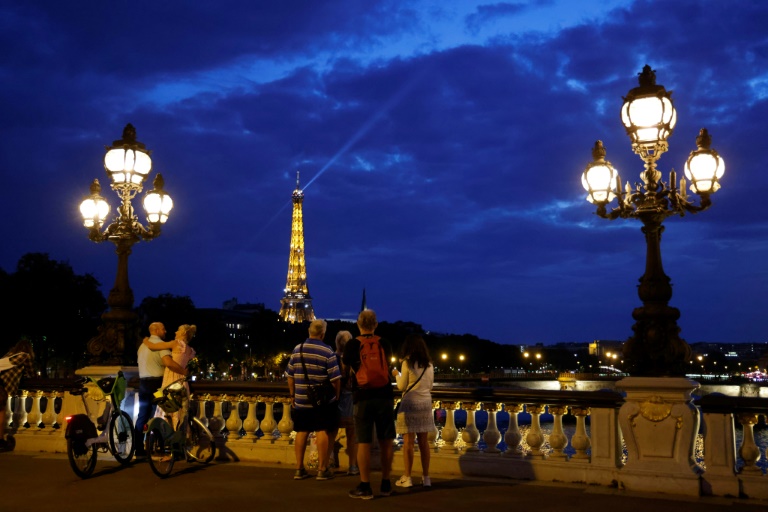
Paris will start switching off the ornamental lights that grace city monuments hours earlier than usual, plunging the Eiffel Tower and other landmarks in the dark to cope with surging electricity costs, officials said Tuesday.

Most monuments operated by the city will now go unlit from 10:00 pm, (2000 GMT), a potential disappointment for the tens of millions of tourists to the romantic City of Lights.

The Eiffel Tower, usually bathed in a warm glow until 1:00 am, and which comes ablaze with dazzling white lights every hour, will now go dark after the last visitor leaves, at 11:45 pm.

But streets lights will remain on for security, as will the illuminations of the city’s ornate bridges over the Seine river, Mayor Anne Hidalgo said at a press conference.

The “energy sobriety” plan aims to cut energy use by 10 percent, said Hidalgo, which could help soften the blow of rising costs by some 10 million euros ($10.2 million).

Hidalgo, a Socialist who played up her efforts to green Paris during a failed presidential run earlier this year, said she would also push the government to do the same for national monuments in the city, such as the Pantheon or the Arc de Triomphe.

In August, President Emmanuel Macron warned that high energy prices caused by the war in Ukraine could signal “the end of abundance,” widely interpreted as preparing public opinion for a difficult winter ahead.

Paris to scale back monument lighting as energy bills bite

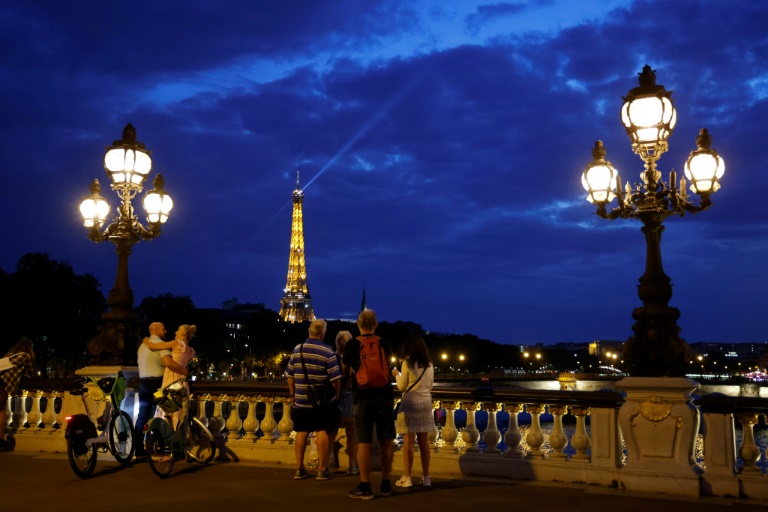
Paris will start switching off the ornamental lights that grace city monuments hours earlier than usual, plunging the Eiffel Tower and other landmarks in the dark to cope with surging electricity costs, officials said Tuesday.

Most monuments operated by the city will now go unlit from 10:00 pm, (2000 GMT), a potential disappointment for the tens of millions of tourists to the romantic City of Lights.

The Eiffel Tower, usually bathed in a warm glow until 1:00 am, and which comes ablaze with dazzling white lights every hour, will now go dark after the last visitor leaves, at 11:45 pm.

But streets lights will remain on for security, as will the illuminations of the city’s ornate bridges over the Seine river, Mayor Anne Hidalgo said at a press conference.

The “energy sobriety” plan aims to cut energy use by 10 percent, said Hidalgo, which could help soften the blow of rising costs by some 10 million euros ($10.2 million).

Hidalgo, a Socialist who played up her efforts to green Paris during a failed presidential run earlier this year, said she would also push the government to do the same for national monuments in the city, such as the Pantheon or the Arc de Triomphe.

In August, President Emmanuel Macron warned that high energy prices caused by the war in Ukraine could signal “the end of abundance,” widely interpreted as preparing public opinion for a difficult winter ahead.

Stocks climb, dollar down before US inflation data

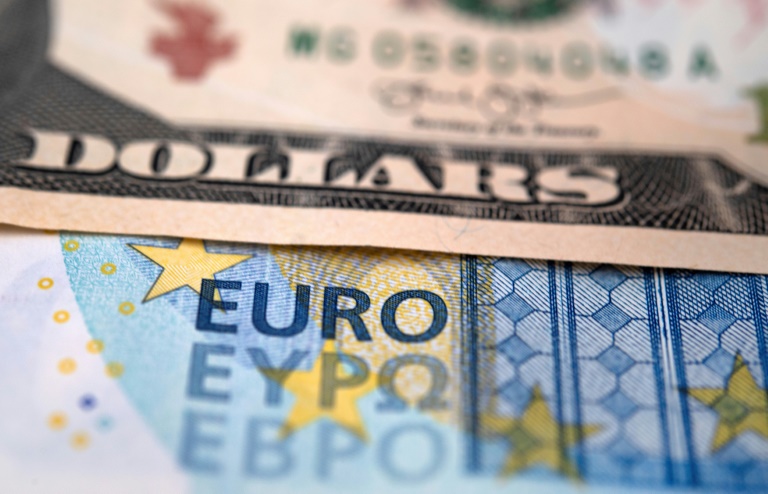
Stock markets rose slightly and the dollar extended recent losses Tuesday with all eyes on the latest US inflation print.

While traders expect Tuesday’s data to show the pace of price rises cooling in the world’s biggest economy, they still expect the Federal Reserve to continue hiking US interest rates by sizeable amounts in the coming months.

The dollar, which has reached multi-year highs against the yen and pound in recent weeks, is reversing direction after investors priced in more aggressive tightening of American borrowing costs.

“The last few days have seen a notable improvement in market sentiment,” noted Craig Erlam, senior market analyst at Oanda trading group. 

“It’s not always easy to pinpoint what’s driving such a turnaround but the fact that it’s happening in the days leading up to the US inflation report is certainly interesting.”

Erlam said a drop in the inflation rate could “trigger a broader risk rebound in the markets. 

“It may not be enough to tip the Fed balance in favour of a more modest 50 basis point rate hike next week but it may slow the pace of tightening thereafter.”

Analysts’ consensus is for inflation to slow to eight percent, driven mostly by falling gasoline prices. US inflation hit a 40-year high in June, touching 9.1 percent.

Markets are largely pricing in another 75-basis-point interest rate hike by the Fed at its next gathering.

This after the US central bank has already made consecutive hikes of that amount, while Fed boss Jerome Powell has indicated the increases would continue until inflation is tamed.

The European Central Bank last week raised its key interest rate by 75 basis points, a record-amount for the eurozone.

Inflation has soared around the globe this year owing to sky-high energy and food bills.

This has been caused to a large extent by supply constraints after economies reopened from pandemic lockdowns and in the wake of Russia’s invasion of Ukraine.

– Key figures at around 1100 GMT –

London – FTSE 100: UP 0.4 percent at 7,499.19 points

Frankfurt – DAX: UP 0.7 percent at 13,492.77

Paris – CAC 40: UP 0.6 percent at 6,371.48   

EURO STOXX 50: UP 0.7 percent at 3,671.60 

Tokyo – Nikkei 225: UP 0.3 percent at 28,614.63 (close)

Hong Kong – Hang Seng Index: DOWN 0.2 percent at 19,326.86 (close)

Shanghai – Composite: UP 0.1 percent at 3,263.80 (close)

New York – Dow: UP 0.7 percent at 32,381.34 (close)

Euro/dollar: UP at $1.0178 from $1.0120

Pound/dollar: UP at $1.1729 from $1.1680 

Euro/pound: UP at 86.77 pence from 86.64 pence 

Dollar/yen: DOWN at 142.11 yen from 142.82 yen  

Brent North Sea crude: UP 1.2 percent at $95.17 per barrel

West Texas Intermediate: UP 1.2 percent at $88.83 per barrel

Cheetahs to arrive in India for Modi's birthday

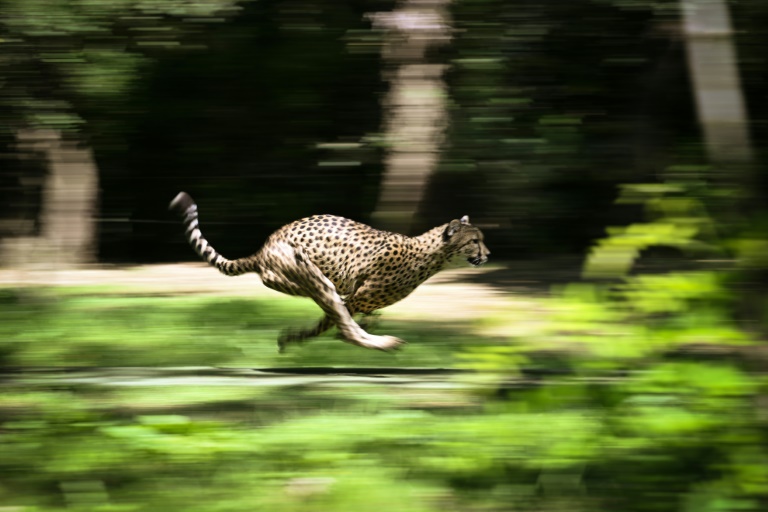
Eight cheetahs will be sent to India where they will be personally welcomed by Prime Minister Narendra Modi on his birthday, officials said Tuesday, in an ambitious project to reintroduce the speedy big cats to the country.

India in the past was home to Asiatic cheetahs but the species was declared extinct domestically by 1952. A prince is believed to have killed the last three specimens.

However, New Delhi has since 2020 been working to reintroduce the animals after the Supreme Court announced that African cheetahs, a different subspecies, could be settled in a “carefully chosen location” on an experimental basis.

The five males and three females will arrive from Namibia on Saturday and will initially be kept in a quarantine enclosure at the Kuno National Park in the central state of Madhya Pradesh.

India is also planning to ship in more cheetahs from South Africa at a later date.

“The prime minister himself will be releasing the animals into the quarantine enclosures,” an environment ministry official told AFP.

The cats will then be moved to larger spaces and once they acclimatise will be released into open forest in the park.

Local media reports said the cheetahs will touch down in the western city of Jaipur after a 10-hour journey and will then travel by helicopter to the Kuno park.

Environment Minister Bhupender Yadav said the project was part of global efforts to conserve the animal.

Modi’s presence for the launch “will give enthusiasm and energy to all of us”, he added. 

– Leopard conflict –

The Kuno park was selected as a home because of its abundant prey and grasslands.

But critics have warned that the cheetahs may struggle to adapt to the habitat and may clash with the significant number of leopards already present.

Adrian Tordiffe, a veterinary wildlife professor at the University of Pretoria who is involved in the project, said South Africa had pressed India to use additional parks to help separate the two species.

“I don’t think it’s going to be a big problem for the adults… they are very familiar with coexisting with other predators,” Tordiffe told AFP.

“But we might have a situation where we have a problem with cubs’ survival.”

Cheetahs became extinct in India primarily because of habitat loss and hunting for their distinctive spotted pelts. 

An Indian prince, the Maharaja Ramanuj Pratap Singh Deo, is widely believed to have killed the last three recorded cheetahs in India in the late 1940s.

The incoming animals have been prepped for the journey with health check-ups, vaccinations and radio collaring, the Indian Express newspaper reported.

Considered vulnerable under the IUCN Red List of Threatened Species, there are fewer than 7,000 cheetahs left around the world — primarily in the African savannas.

Crowds queue through the night to pay respects to queen

Thousands of people queued throughout the night in Edinburgh on Tuesday to pay their respects to Queen Elizabeth II before her coffin was to be flown to London ahead of a state funeral.

Her eldest son and successor, King Charles III, will meanwhile visit Northern Ireland to meet political and religious leaders before a church service.

Charles, 73, is on a tour of all four nations of the United Kingdom to mark the start of his reign. He is due to visit Wales on Friday before the queen’s funeral on September 19.

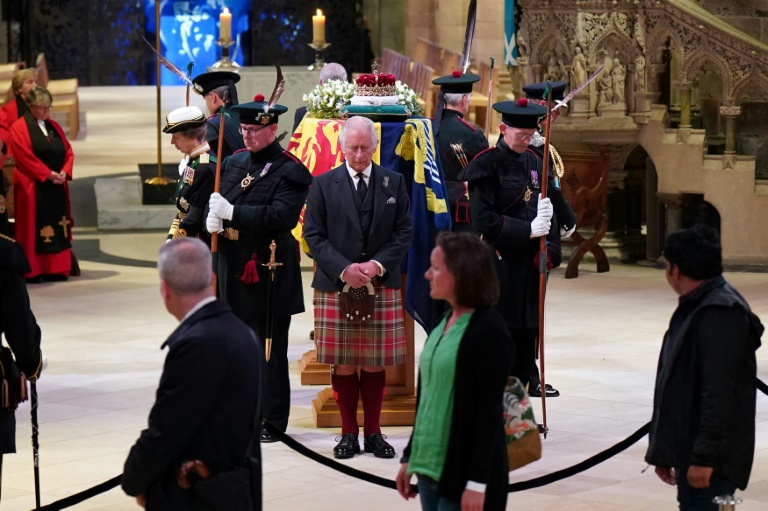
In Edinburgh on Monday evening, Charles and his three siblings held a 10-minute vigil beside their mother’s coffin in Saint Giles’ cathedral, as people paid their respects at the 12th-century place of worship.

Four members of the monarch’s Scottish bodyguard, the Royal Company of Archers, stood heads bowed at each corner of the oak coffin. 

It was draped in the Royal Standard of Scotland and topped with the ancient Crown of Scotland and a wreath including heather from Balmoral, the remote royal retreat where the 96-year-old head of state died peacefully last Thursday.

Images of the poignant, pomp-filled scene dominated the front pages of Britain’s newspapers on Tuesday. 

“The Queen’s guard,” headlined The Times, alongside a photo of a sombre-looking Charles.

– ‘End of an era’ –

Mourners queued for hours to file past the casket through the night. Waiting times were still roughly two hours at around 6:00 am (0500 GMT) and expected to lengthen through the morning, the Scottish government said.

One man, Gavin Hamilton from Edinburgh, queued for more than five hours and finally got inside the cathedral at 2:50 am, with thousands more behind him in the line.

“There were people in the queue with me who had travelled from Aberdeen, over 100 miles (160 kilometres) away, to do this,” he added.

The queen’s only daughter, Princess Anne, will accompany her mother’s body later on Tuesday afternoon on the next leg of its journey by Royal Air Force jet to an airfield near London.

The huge crowds in Edinburgh are a sign of what can be expected in the capital in the build-up to the funeral.

The queen will first be driven to Buckingham Palace, then transferred to Westminster Hall on Wednesday, where she will lie in state for four days. 

Earlier on Monday, Charles, again flanked by his three siblings, had led a procession on foot carrying the queen’s body through hushed Edinburgh streets packed with mourners.

The queen’s coffin had been driven on Sunday to the Scottish capital from Balmoral and held overnight at the royal residence of the Palace of Holyroodhouse.

Accompanied by kilted soldiers, the late queen was taken from the royal residence to the cathedral for a prayer service.

Thousands of people lined the route along the city’s famous Royal Mile to watch the procession make its way to the ancient place of worship, as cannons fired at one-minute intervals from Edinburgh Castle.

The royals were joined by Prime Minister Liz Truss and Scottish First Minister Nicola Sturgeon at the service for the country’s longest-serving monarch, who reigned for 70 years.

People who queued for hours spoke of their deep emotions after they finally got to file by the coffin. 

“It’s a real sense of connection to history — and bear in mind that we’re one of the few countries left with this sense of pageantry and connection to the past,” said Rob Parsons, 28, after emerging from the cathedral.

“Seeing her obviously is a way of accepting the fact that it’s the end of an era.”

– ‘Heartbreaking’ –

Ahead of Charles’s visit to Northern Ireland, people there expressed deep sadness at the queen’s death.

“We’ve been followers of the royal family my whole life,” said Christine Flynn, 37, paying her respects at Belfast’s Platinum Jubilee mural, which has become a focus for mourners in the city.

“I think it’s just very heartbreaking that we’ve lost the queen. It feels like a member of my family.”

While large crowds are expected to welcome Charles in Northern Ireland on Tuesday, the visit to a deeply divided region still scarred by sectarian violence could prove testing.

Charles will meet Belfast’s feuding political leaders — split between fiercely loyal unionists and nationalists who want to reunify with Ireland — before attending an Anglican religious service in the city.

The president, prime minister and foreign minister of Ireland are also set to attend.

– ‘Unique event’ –

Hundreds of thousands of mourners are expected in London to file past the queen’s coffin at Westminster. The first arrived for the queue on Monday — more than 48 hours before the line opens.

It is predicted to snake for several miles (kilometres) along the banks of the River Thames.

“It’s going to be emotional and I don’t know how I’ll feel going in there as the first one,” said Vanessa Nanthakumaran, a 56-year-old administration assistant originally from Sri Lanka.

“It’s going to be a once-in-a-lifetime chance to be part of this unique event,” she told AFP.

Britain is in 10 days of national mourning for Elizabeth II, who was a fixture of the nation’s life and consciousness for seven decades. 

Charles has seen his popularity recover since the death of his former wife Diana in a 1997 car crash. But he has also been embroiled in several scandals in recent years.

With republican movements gaining ground from Australia to the Bahamas, the new king faces a challenge keeping the Commonwealth realms in the royal fold.

New Zealand’s prime minister, Jacinda Ardern, reiterated on Monday she believed her country would eventually become a republic.

“I believe it’s likely to occur in my lifetime but I don’t see it as a short-term measure or anything that is on the agenda anytime soon,” she said.

Asian stocks rally ahead of key US inflation data

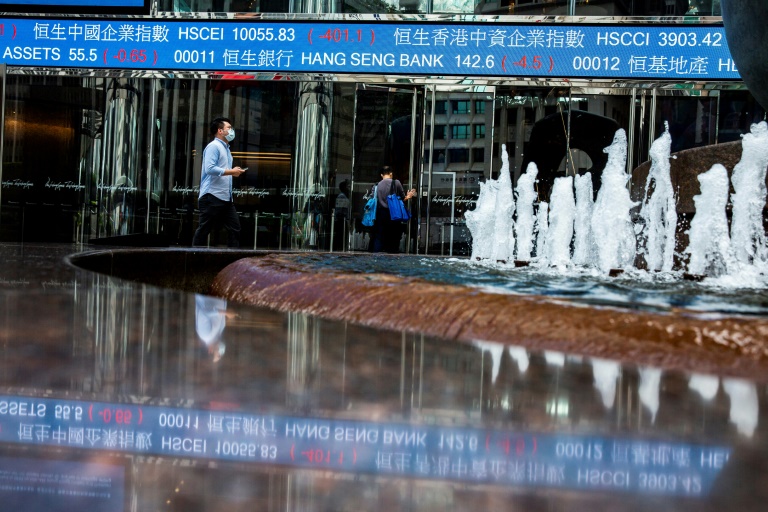
Asian stocks largely continued a global rally on Tuesday, ahead of the release of key US consumer price data that is expected to show slightly slowing inflation in the world’s largest economy.

Stocks rose in Japan, Australia, Singapore and Taiwan, with South Korea and Shanghai also gaining after reopening following a public holiday. European stocks were steady at the open.

Hong Kong shares edged lower at the close, erasing modest gains made earlier in the day.

US consumer price index (CPI) data will be released on Tuesday, with analysts expecting inflation to slow to eight percent, driven mostly by falling gasoline prices. US inflation hit a 40-year high in June, touching 9.1 percent.

Easing inflation, however, is unlikely to slow the pace of the US Federal Reserve’s tightening of monetary policy, with another 75-basis-point interest rate hike expected at its meeting next week.

The Fed has already instituted two consecutive rate hikes of that amount, and in recent days bank chief Jerome Powell has indicated the increases will continue until inflation is tamed.

While the overall US inflation number is expected to slow, prices for food and housing are projected to have increased, raising the strain on household budgets.

“Risks remain skewed to the upside, due to an uncertain outlook for key inputs, including agricultural and energy commodities, as well as the pass-through of wage gains in a tight labour market,” according to Barclays US analysts Pooja Sriram and Jonathan Hill.

Last week, the European Central Bank also adopted a policy of monetary tightening, raising its key rate by a historic 75 basis points, with analysts expecting a similar-sized increase at the next policy meeting in October.

– ‘Locked in’ –

In Tokyo, stocks closed higher on Tuesday, with investors ending the session by tempering some of the gains with caution at the Nikkei’s rise over recent days.

Brokerage Okasan Online Securities said investors were looking “to square their positions” ahead of the US CPI data being released.

Seoul led the day’s gains in Asia, rising by 2.7 percent on Tuesday.

US stocks on Monday had ended bullish: the broad-based S&P 500 advanced 1.1 percent, continuing the upswing last week that snapped a three-week losing streak.

“Wall Street is locked into Tuesday’s inflation report that will likely show pricing pressure relief but will not change the Fed from maintaining an aggressive stance of tightening monetary policy,” said Edward Moya, senior market analyst at OANDA.

“Even if inflation falls below the 8 percent level, the Fed should still deliver a 75-basis-point rate hike at the September 21st policy decision.”

The euro stabilised to $1.0143 against the dollar on Tuesday, after a surge a day earlier that saw it gain 1.4 percent against the US currency and 1.6 percent against the yen, before paring those increases in later trading.

Oil prices climbed higher as Tuesday progressed — after an initial fall in the Asian morning — as a weaker dollar offset some of the concerns around demand destruction.

Other key data expected later this week includes US retail sales and industrial production on Thursday; China home and retail sales as well as industrial production on Friday; and Euro area CPI, also on Friday.

– Key figures at around 0815 GMT –

Tokyo – Nikkei 225: UP 0.3 percent at 28,614.63 (close)

Hong Kong – Hang Seng Index: DOWN 0.2 percent at 19,326.86 (close)

Shanghai – Composite: UP 0.1 percent at 3,263.80 (close)

New York – Dow: UP 0.7 percent at 32,381.34 (close)

London – FTSE 100: UP 0.1 percent at 7,480.97 points

Frankfurt – DAX: UP 0.3 percent at 13,437.53 points   

Paris – CAC 40: UP 0.6 percent at 6,369.77 points   

EURO STOXX 50: UP 0.5 percent at 3,664.98 points 

Euro/dollar: UP at $1.0143 from $1.0120  

Pound/dollar: UP at $1.1717 from $1.1680 

Euro/pound: DOWN at 86.57 pence from 86.64 pence 

Dollar/yen: DOWN at 142.28 yen from 142.82 yen  

Brent North Sea crude: UP 1 percent at $94.98 per barrel

West Texas Intermediate: UP 1.1 percent at $88.73 per barrel

The 'majestic' Singapore orchid named in honour of Queen Elizabeth

Elizabeth is majestic, hardy and “very fashionable”, said a top Singapore flower curator — referring not to the late monarch, but to an orchid named after the queen when she visited the former British colony.

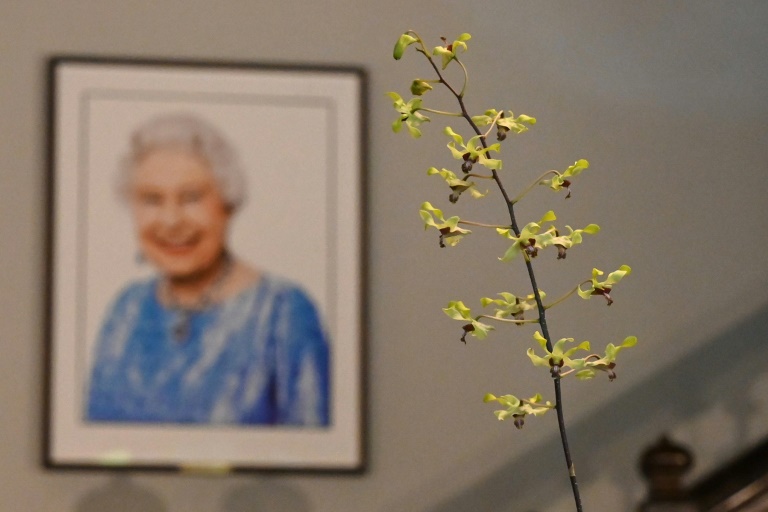
After Queen Elizabeth II’s death last week, the city-state’s Botanic Gardens loaned a towering sprig of Dendrobium Elizabeth to the British high commissioner’s residence, to be displayed alongside pictures of the monarch.

The orchid hybrid, with twisted Dresden-yellow petals and a uranium-green lip, was named in honour of the queen when she visited Singapore in 1972, said Whang Lay Keng, curator at Singapore’s National Orchid Garden.

“Dendrobium Elizabeth is a majestic, robust and resilient plant,” she told AFP.

“It’s kind of like how Queen Elizabeth carried herself.”

Flowering just twice a year, the Dendrobium Elizabeth was bred from orchids originating from Singapore and Papua New Guinea, and carries just about 40 blooms per plant. 

Orchid-mad Singapore boasts the delicate, colourful blooms as their national flower, and the city-state often christens new hybrids after visiting dignitaries as part of its diplomatic charm offensive. 

The tradition took root in 1957 during British colonial rule — which spanned more than 140 years — when an orchid variety was named after the wife of London’s high commissioner to Singapore at the time. 

Queen Elizabeth first made a state visit to Singapore in 1972, followed by two more trips in 1989 and 2006.

“During the 1970s, the colour yellow-green was very popular, so naturally we wanted to select something that was fashionable and very interesting,” Whang said, adding that “yellow is a colour of royalty”.

But the tropical lowland orchid also has very distinct Southeast Asian traits.

It is a “sun-loving plant that thrives in a moist and humid climate, where sunlight and warmth are important for its growth”, the orchid curator said. 

Among the more than 200 orchid hybrids named after visiting leaders and celebrities — displayed in the VIP section of the city’s sprawling Botanic Gardens — there is also the Dendrobium Memoria Princess Diana. The pastel-white bloom was so dubbed after the death of the princess of Wales.

The 'majestic' Singapore orchid named in honour of Queen Elizabeth

Elizabeth is majestic, hardy and “very fashionable”, said a top Singapore flower curator — referring not to the late monarch, but to an orchid named after the queen when she visited the former British colony.

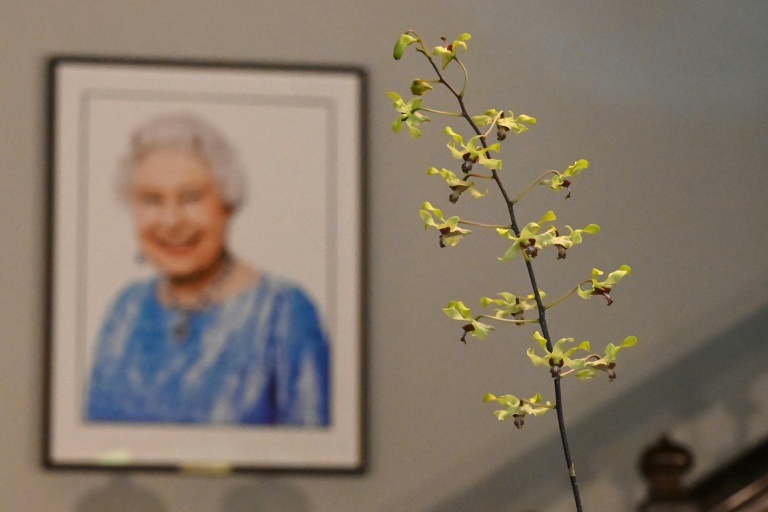
After Queen Elizabeth II’s death last week, the city-state’s Botanic Gardens loaned a towering sprig of Dendrobium Elizabeth to the British high commissioner’s residence, to be displayed alongside pictures of the monarch.

The orchid hybrid, with twisted Dresden-yellow petals and a uranium-green lip, was named in honour of the queen when she visited Singapore in 1972, said Whang Lay Keng, curator at Singapore’s National Orchid Garden.

“Dendrobium Elizabeth is a majestic, robust and resilient plant,” she told AFP.

“It’s kind of like how Queen Elizabeth carried herself.”

Flowering just twice a year, the Dendrobium Elizabeth was bred from orchids originating from Singapore and Papua New Guinea, and carries just about 40 blooms per plant. 

Orchid-mad Singapore boasts the delicate, colourful blooms as their national flower, and the city-state often christens new hybrids after visiting dignitaries as part of its diplomatic charm offensive. 

The tradition took root in 1957 during British colonial rule — which spanned more than 140 years — when an orchid variety was named after the wife of London’s high commissioner to Singapore at the time. 

Queen Elizabeth first made a state visit to Singapore in 1972, followed by two more trips in 1989 and 2006.

“During the 1970s, the colour yellow-green was very popular, so naturally we wanted to select something that was fashionable and very interesting,” Whang said, adding that “yellow is a colour of royalty”.

But the tropical lowland orchid also has very distinct Southeast Asian traits.

It is a “sun-loving plant that thrives in a moist and humid climate, where sunlight and warmth are important for its growth”, the orchid curator said. 

Among the more than 200 orchid hybrids named after visiting leaders and celebrities — displayed in the VIP section of the city’s sprawling Botanic Gardens — there is also the Dendrobium Memoria Princess Diana. The pastel-white bloom was so dubbed after the death of the princess of Wales.

Ruto to be sworn in as Kenya's president after divisive poll

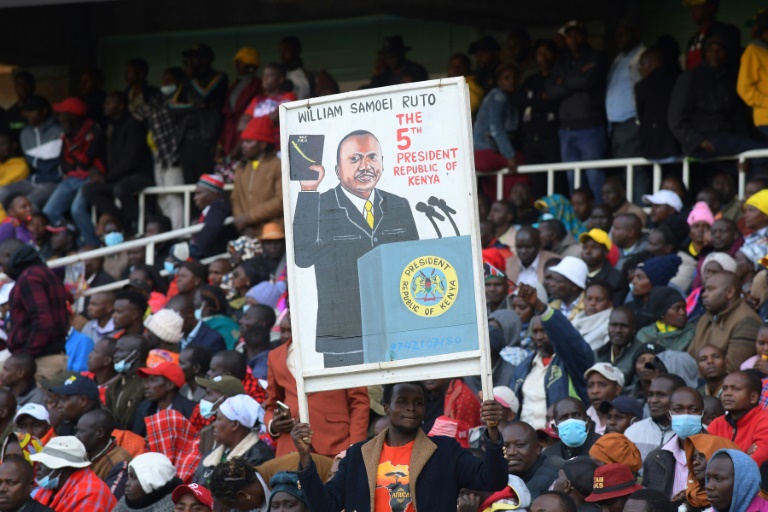
Tens of thousands of spectators packed a Nairobi stadium on Tuesday to watch William Ruto being sworn in as Kenya’s president after his narrow victory in a bitterly fought but largely peaceful election.

Several people were injured as crowds tried to force their way into the site, with television footage showing dozens of people falling on top of each other in a crush at one entrance gate.

Police have told Kenyans to watch proceedings from home after the 60,000-seat stadium was filled before dawn, with many spectators clad in the bright yellow of Ruto’s party and waving Kenyan flags.

About 20 heads of state and government are expected to attend the ceremony, with Ruto by law obligated to take the oath of office by 2:00 pm (1100 GMT), five weeks to the day since the August 9 election.

“Dawn of Ruto era,” trumpeted the frontpage headline in The Standard newspaper, while the Star said: “Time for Ruto.” 

A notoriously ambitious politician who has been deputy president since 2013, Ruto beat his rival Raila Odinga — who had been backed by outgoing president Uhuru Kenyatta — by less than two percentage points.

He now faces a daunting task to steer a polarised country gripped by a cost-of-living crisis and punishing drought, say analysts.

The 55-year-old rags-to-riches businessman who once sold chickens on the roadside will become the fifth president in Kenya’s post-independence history.

His rise to State House has been closely watched by the international community, which depends on Kenya as a reliable and stable democratic partner in a turbulent region.

– ‘Hand of brotherhood’ –

Foreign allies and independent observers praised the conduct of the vote, which was largely peaceful and free of the violence that has marred past elections in the country of 50 million people.

Ruto won by only around 200,000 votes out of 14 million but the Supreme Court on September 5 upheld his victory, dismissing his opponents’ claims of fraud and mismanagement.

Outgoing head of state Kenyatta, who in a stunning turn of events had backed his longtime arch-rival Odinga in the election race, has promised a smooth transfer of power.

Kenyatta finally shook hands with Ruto at a meeting at the presidential residence on Monday after pointedly failing to publicly congratulate his deputy for several weeks.

Ruto has struck a conciliatory tone, extending a “hand of brotherhood” to his rivals and their supporters.

“We are not enemies. We are Kenyans,” Ruto said after the court’s decision.

But observers say he faces a tough assignment building goodwill after a divisive and expensive political campaign that lasted well over a year and was peppered with acrimony and personal slander.

“This is the time to close ranks, embrace opponents and help forge a united front devoid of cheap political competition,” The Standard wrote in an editorial.

Many ordinary Kenyans stayed away from the ballot box, with disillusionment particularly among the youth and economic hardship blamed for the low turnout.

The East African political and economic powerhouse is reeling from a once-in-a-generation drought and inflation is at five-year highs. 

– Generous send-off –

Ruto said Sunday that Kenya was “in a deep economic hole” and repeated his pledge to lower the cost of living as a priority upon taking office.

From humble beginnings, the multi-millionaire cast himself as a champion for the downtrodden during his campaign, vowing to create jobs and tackle a cost-of-living crisis.

Among his ambitious promises was the creation of a 50-billion shilling ($415 million) “hustler fund” to provide loans to small businesses, and a commitment to bring down prices for fuel, grain and fertiliser.

The task to turn around the economic fortunes of the country may not be easy, the International Crisis Group think tank said, urging Ruto to quickly address the challenges.

“Given sky-high popular expectations and an economy in dire straits, governing may well prove tougher than campaigning,” it said.

Ruto’s inauguration marks the end of Kenyatta’s nearly decade in power, and one of the rare occasions his powerful family has not been at the apex of Kenyan politics.

Already one of Kenya’s wealthiest citizens, the outgoing president will receive a generous send-off under Kenya’s constitution as he leaves office having served two terms, the maximum allowed by law. 

The 60-year-old will receive a tax-free lump sum of $324,000 and more than $600,000 in allowances every year.

Kenyatta, the son of Kenya’s first president Jomo Kenyatta, will also have access to fully furnished offices, dozens of aides, VIP security and new cars of his choice, replaced every three years. 

Close Bitnami banner
Bitnami