World

Queen Elizabeth II begins solemn final journey

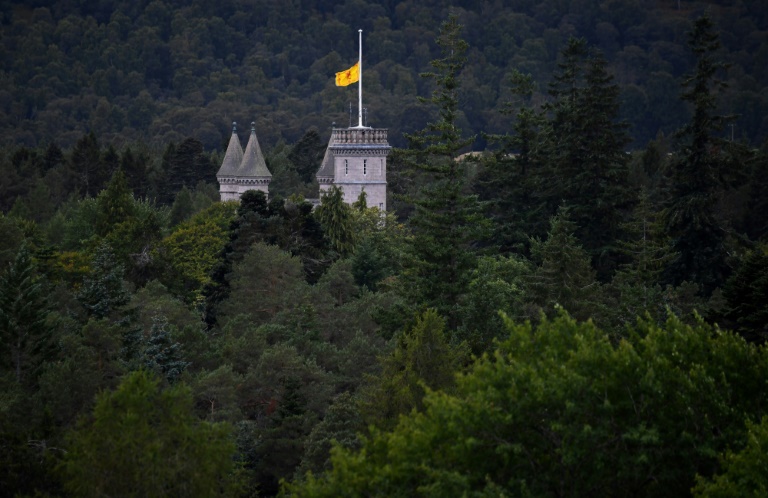
Britain’s Queen Elizabeth II embarks on her final journey on Sunday with thousands of her mourning subjects expected to line her coffin’s route from the Scottish retreat where she died.

The solemn departure of the queen’s oak casket from Balmoral Castle for Edinburgh marks the start of an odyssey of national mourning culminating in her state funeral in London on September 19.

Her journey begins a day after her son Charles III was formally proclaimed king, and after her warring grandsons William and Harry, and their wives Kate and Meghan, briefly reunited for a walkabout.

A hearse carrying the coffin of Britain’s longest-serving monarch will make a six-hour journey through Scottish towns before arriving in Edinburgh, where it will rest for two days so people can pay tribute.

The king himself will then travel to Edinburgh on Monday for a prayer service, before the body of the queen, who died at Balmoral on Thursday aged 96, is flown to the capital on Tuesday.

She will then lie in state for four days in an event expected to draw at least a million people, ahead of a funeral set to be watched worldwide and draw numerous heads of state.

“We are living in history right now,” said Laura Burns, 49, who was planning to try to see the queen’s coffin passing in Edinburgh after coming to the city because her son is starting at university.

“It’s a very respectful atmosphere,” she told AFP.

– Show of unity –

While Charles’ accession has pushed Britain into what newspapers have called the new “Carolean” era, Britain and the royal family are still coming to terms with the end of the Elizabethan age.

Prince William broke his silence with an emotional tribute to his beloved “Grannie” on Saturday.

“She was by my side at my happiest moments. And she was by my side during the saddest days of my life,” said William, who has now become the Prince of Wales.

But the queen’s death also brought a surprise show of unity from William, 40, and his younger brother Harry, 37, when they emerged with their wives to speak to well-wishers outside Windsor Castle, near London.

The sight of the two couples who have barely seen each other since 2020, together — even if they separated to speak and shake hands with different sides of the cheering crowds — will likely spark rumours of a reconciliation.

The picture of the four royals was splashed across the front of The Sun newspaper on Sunday with the headline “All 4 One”.

Senior royals including the queen’s children, Princess Anne and Princes Andrew and Edward and their families also inspected flowers outside Balmoral, where they have remained since the queen’s death.

The queen’s coffin, draped with a Scottish Royal Standard and floral wreath, has been kept in Balmoral’s ballroom and will be carried to her hearse by six estate gamekeepers.

– ‘Many, many people’ –

The symbolism of the queen’s last journey will be heavy for a nation that has strong royal connections — but where there is a strong Scottish independence movement intent on severing the centuries-old union with the United Kingdom.

The cortege will leave at 10:00 am (0900 GMT) then weave through Aberdeen and Dundee before reaching Edinburgh at 4:00 pm.

Dedicated viewing points are being set up along the route, although mourners will be asked not to throw flowers at the convoy as it passes.

“We anticipate many, many people will be keen to pay their respects,” First Minister Nicola Sturgeon said.

The queen’s coffin will be taken to the Holyroodhouse Palace, the monarch’s official residence in Scotland, where it will rest for a day.

King Charles and other royals will on Monday take part in a procession to convey her coffin along Edinburgh’s Royal Mile to St Giles’ Cathedral.

The following day the coffin will be flown by Royal Air Force jet to Northolt airfield near London, and driven to Buckingham Palace. Then, on Wednesday, it will be moved to Westminster Hall to lie in State.

King Charles will also visit Northern Ireland and Wales in a show of national unity, accompanied by British Prime Minister Liz Truss, who was only appointed by the late queen on Tuesday.

He has seen his popularity recover since Diana’s death in a 1997 car crash, but he takes the throne at a moment of deep anxiety in Britain over the spiralling cost of living and international instability caused by the war in Ukraine.

– ‘Inspiring example’ –

Charles vowed at the formal Accession Council at St James’s Palace on Saturday that he would “strive to follow the inspiring example I have been set” by his mother during her “lifetime of service”.

The centuries-old tradition was televised live for the first time, featuring a fanfare of trumpets and a court official wearing a feathered hat to declare him king from a palace balcony.

Thousands of people have gathered outside Buckingham Palace and other royal residences in recent days to lay flowers and messages of condolence, or simply to experience history in the making.

But officials expect far more people to pay their respects while the queen lies in state, before the televised funeral service at Westminster Abbey opposite.

The funeral for the queen — who came to the throne aged just 25 in 1952 — will be attended by national leaders including US President Joe Biden, Australian Prime Minister Anthony Albanese and possibly Japanese Emperor Naruhito. 

Her record 70 years on the throne were a constant during a turbulent time for Britain, from a world of post-war deprivation and the loss of its empire, to more recent traumas like the coronavirus pandemic.

Charles’s coronation, an elaborate ritual steeped in tradition and history, will take place in the same historic surroundings of Westminster Abbey, as it has for centuries, on a date to be fixed.

Massive California fire eases with rains

California firefighters were able to beat back a massive wildfire outside Los Angeles after a tropical storm brought rains and cooler temperatures, US authorities said on Saturday. 

The Fairview Fire was 40 percent contained as of Saturday evening after forcing evacuation orders and leaving two people dead, fire officials said.

The blaze erupted on Monday at the midpoint of a ferocious heat wave in the southwestern United States, scorching 28,000 acres (11,300 hectares) and destroying more than 20 buildings.

The remnants of storm Kay, which made landfall Thursday in Mexico as a hurricane before rolling north up the Pacific Coast, brought rains that helped calm the fire.

“Fire activity has been greatly reduced due to the moisture from Tropical Storm Kay,” a statement from Cal Fire, the California Department of Forestry and Fire Protection, said.

Authorities warned, however, that the rains brought a risk of flash flooding and mudflows in areas where burned-out soil cannot absorb the sudden downpour.

“We could go from a fire suppression event into significant rain, water rescues, mudslides, debris (flows),” Jeff Veik of Cal Fire’s Riverside Unit said Friday.

The western United States is more than two decades into a historic drought that scientists say is being worsened by human-made climate change.

Much of the countryside is parched and overgrown, creating the conditions for hot, fast and destructive wildfires.

UN chief 'never seen climate carnage' like Pakistan floods

United Nations Secretary-General Antonio Guterres said Saturday that he has “never seen climate carnage” on such a scale as he toured parts of Pakistan hit by floods, blaming wealthier countries for the devastation.

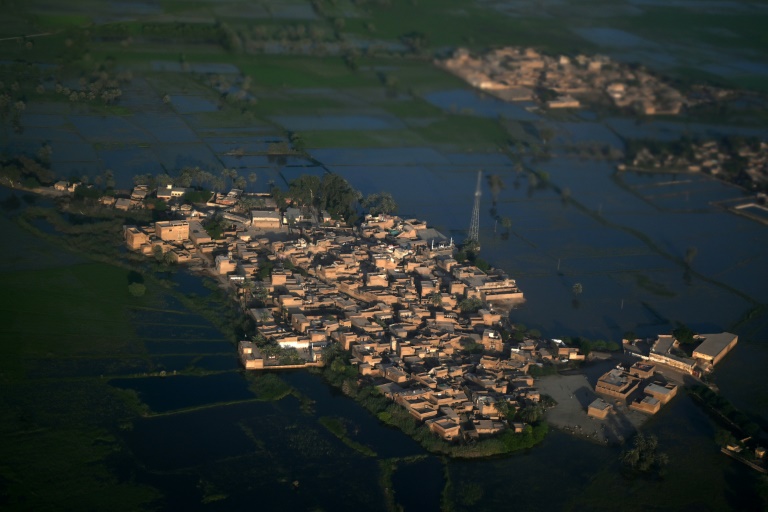
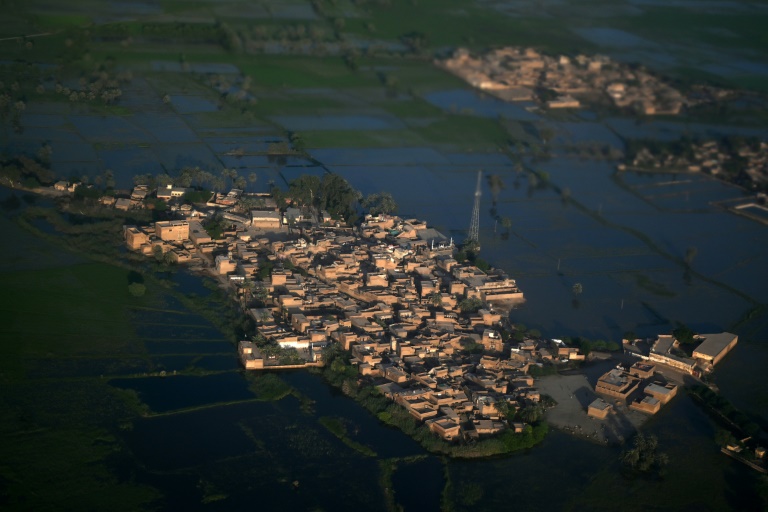
Nearly 1,400 people have died in flooding that covers an area the size of the United Kingdom and has wiped out crops and destroyed homes, businesses, roads and bridges.

Guterres has said he hopes his visit will galvanise support for Pakistan, which has put the provisional cost of the catastrophe at more than $30 billion, according to the government’s flood relief centre.

“I have seen many humanitarian disasters in the world, but I have never seen climate carnage on this scale,” he said at a press conference in the port city of Karachi after witnessing the worst of the damage in southern Pakistan. 

“I have simply no words to describe what I have seen today.”

Pakistan receives heavy — often destructive — rains during its annual monsoon season, which is crucial for agriculture and water supplies.

But downpours as intense as this year’s have not been seen for decades, while rapidly melting glaciers in the north have for months heaped pressure on waterways. 

“Wealthier countries are morally responsible for helping developing countries like Pakistan to recover from disasters like this, and to adapt to build resilience to climate impacts that unfortunately will be repeated in the future,” Guterres said, adding that G20 nations cause 80 percent of today’s emissions. 

Pakistan is responsible for less than one percent of global greenhouse gas emissions, but is eighth on a list compiled by the NGO Germanwatch of countries most vulnerable to extreme weather caused by climate change.

– ‘Insanity and suicide’ –

Around 33 million people have been affected by the floods, which have destroyed around two million homes and business premises, washed away 7,000 kilometres (4,300 miles) of roads and collapsed 500 bridges.

Guterres has lamented the lack of attention the world has given to climate change — particularly industrialised nations.

“This is insanity, this is collective suicide,” he said after arriving in Pakistan on Friday.

The effect of the torrential rain has been twofold — destructive flash floods in rivers in the mountainous north, and a slow accumulation of water in the southern plains.

“All the children, men and women are roasting in this scorching heat. We have nothing to eat, there is no roof on our heads,” Rozina Solangi, a 30-year-old housewife living in a displacement camp near Sukkur, told AFP on Friday.

“He must do something for us poor,” she said of the UN chief’s visit. 

The meteorological office said Pakistan has received five times more rain than normal in 2022. Padidan, a small town in Sindh province, has been drenched by more than 1.8 metres (71 inches) since the monsoon began in June.

Water levels have reached far higher in areas where rivers and lakes have burst their banks, creating dramatic inland seas. 

Thousands of temporary campsites have mushroomed on slivers of high ground in the south and west — often roads and railway tracks in a landscape of water.

With people and livestock crammed together, the camps are ripe for outbreaks of disease, with many cases of mosquito-borne dengue reported, as well as scabies.

During his speedy tour, Guterres stopped at some of these makeshift camps and met with desperate flood victims, including a woman who gave birth overnight. 

Wearing an Ajrak shawl with a traditional Sindhi block print, he later inspected the 4,500-year-old UNESCO world heritage site Mohenjo-daro, which has suffered water damage from the relentless monsoon rain.

UN chief 'never seen climate carnage' like Pakistan floods

United Nations Secretary-General Antonio Guterres said Saturday that he has “never seen climate carnage” on such a scale as he toured parts of Pakistan hit by floods, blaming wealthier countries for the devastation.

Nearly 1,400 people have died in flooding that covers an area the size of the United Kingdom and has wiped out crops and destroyed homes, businesses, roads and bridges.

Guterres has said he hopes his visit will galvanise support for Pakistan, which has put the provisional cost of the catastrophe at more than $30 billion, according to the government’s flood relief centre.

“I have seen many humanitarian disasters in the world, but I have never seen climate carnage on this scale,” he said at a press conference in the port city of Karachi after witnessing the worst of the damage in southern Pakistan. 

“I have simply no words to describe what I have seen today.”

Pakistan receives heavy — often destructive — rains during its annual monsoon season, which is crucial for agriculture and water supplies.

But downpours as intense as this year’s have not been seen for decades, while rapidly melting glaciers in the north have for months heaped pressure on waterways. 

“Wealthier countries are morally responsible for helping developing countries like Pakistan to recover from disasters like this, and to adapt to build resilience to climate impacts that unfortunately will be repeated in the future,” Guterres said, adding that G20 nations cause 80 percent of today’s emissions. 

Pakistan is responsible for less than one percent of global greenhouse gas emissions, but is eighth on a list compiled by the NGO Germanwatch of countries most vulnerable to extreme weather caused by climate change.

– ‘Insanity and suicide’ –

Around 33 million people have been affected by the floods, which have destroyed around two million homes and business premises, washed away 7,000 kilometres (4,300 miles) of roads and collapsed 500 bridges.

Guterres has lamented the lack of attention the world has given to climate change — particularly industrialised nations.

“This is insanity, this is collective suicide,” he said after arriving in Pakistan on Friday.

The effect of the torrential rain has been twofold — destructive flash floods in rivers in the mountainous north, and a slow accumulation of water in the southern plains.

“All the children, men and women are roasting in this scorching heat. We have nothing to eat, there is no roof on our heads,” Rozina Solangi, a 30-year-old housewife living in a displacement camp near Sukkur, told AFP on Friday.

“He must do something for us poor,” she said of the UN chief’s visit. 

The meteorological office said Pakistan has received five times more rain than normal in 2022. Padidan, a small town in Sindh province, has been drenched by more than 1.8 metres (71 inches) since the monsoon began in June.

Water levels have reached far higher in areas where rivers and lakes have burst their banks, creating dramatic inland seas. 

Thousands of temporary campsites have mushroomed on slivers of high ground in the south and west — often roads and railway tracks in a landscape of water.

With people and livestock crammed together, the camps are ripe for outbreaks of disease, with many cases of mosquito-borne dengue reported, as well as scabies.

During his speedy tour, Guterres stopped at some of these makeshift camps and met with desperate flood victims, including a woman who gave birth overnight. 

Wearing an Ajrak shawl with a traditional Sindhi block print, he later inspected the 4,500-year-old UNESCO world heritage site Mohenjo-daro, which has suffered water damage from the relentless monsoon rain.

Battlefield chaos amid Ukraine's eastern advance

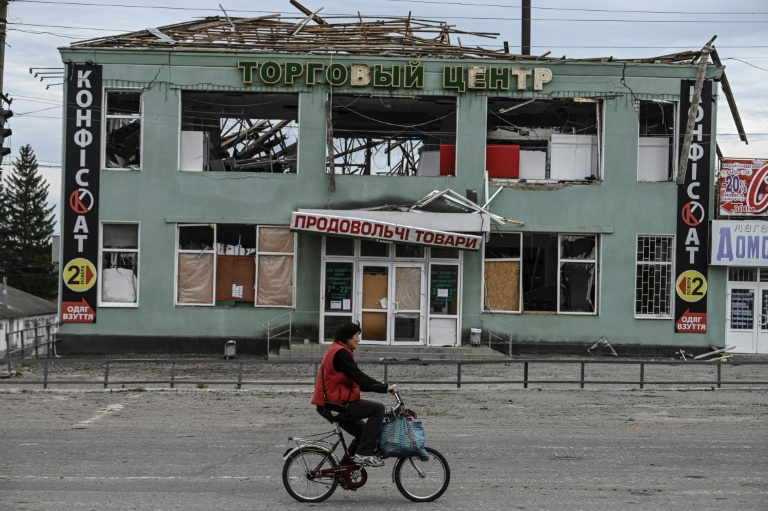
Balakliya, a key city in Ukraine’s northeastern Kharkiv region, was taken back from Russian forces this week, but it bears the scars of the violent conflict.

The city and the surrounding area has suffered from the months of violent conflict. It came back into Ukrainian hands as Kyiv’s counter-offensive, begun earlier this month, began to bore fruit.

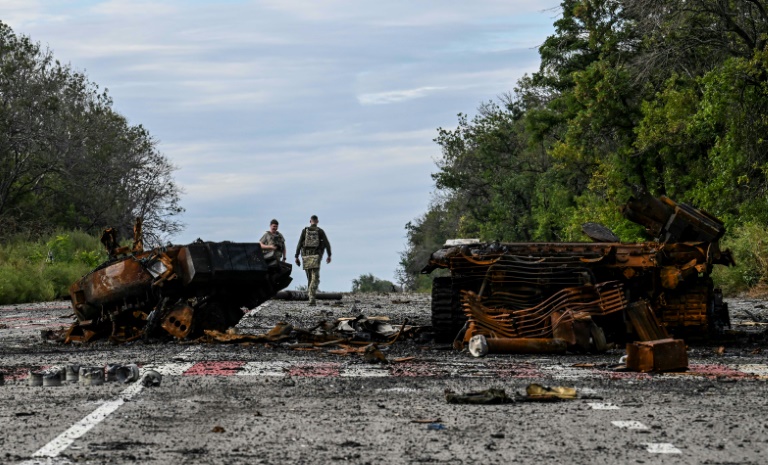
To the north of the city lay a motley mixture of dozens of civilian vehicles, lorries and burnt-out Russian armoured vehicles — some bearing the Z symbol of the invading forces.

A few kilometres (miles) away, Ukrainian soldiers worked hauling away armoured vehicles and a tank recently abandoned by the Russian military.

Cases of munitions abandoned by the Russian forces were strewn across the highways.

Access to Balakliya, which before the war had a population of 27,000, has been made precarious after Russian forces destroyed two bridges before they pulled out on Wednesday, residents told AFP.

According to Ukrainian media only around one third of the population — mainly the elderly — stayed in the city during its occupation.

Now Ukrainian soldiers patrolled the main street, while a few residents made their way around — for the most part on foot or by bike.

Although some buildings had escaped unscathed, many had either been destroyed or damaged.

“We were happy to meet the Ukrainian forces” when they arrived Wednesday, said 59-year-old Olexander Sidorov, an employee with a local electricity firm who battled to keep supplies going despite the conflict.

At the same time, he lamented the scale of the destruction.

– Borsch for the troops –

Many streets were all but deserted, but in the main square somebody had already raised the Ukrainian flag over statue of Ukrainian national poet Taras Chevtchenko.

Ukraine’s defence ministry announced on Twitter Saturday that Balakliya was back in Ukrainian hands.

Iryna Stepanenko, 52, out biking in the city for the first time in months, recalled the months of occupation.

“There was a lot of fear, shelling. It was scary. We were hiding in the basement for three months,” she explained.

They had not expected the return of Ukrainian troops, she admitted.”When I saw ours with those patches, with the Ukrainian flag, oh it was great. Great.”

But she still did not feel safe.

“I’m worried the Russians could return. I’m worried the shelling could start again.”

Andrii Kiktiov, 49, said the Russians had killed one of his friends for breaking a curfew during a “very scary” occupation.

“Moving around without a passport was forbidden,” he said.

“All the phones were checked. If they found something with a yellow or blue colour on your phone they would put it on the ground and smash it with a butt of a rifle.”

Alla Plesak, 53, could not hide her joy at seeing Ukraine taking back the city. She said she was off to prepare food for the troops with a friend.

“At the moment, the macaroni is waiting to be cooked. And my friend is finishing cooking the borsch”, a traditional Ukrainian soup.

There were “tears, just tears” when the troops arrived, she added.

Danylo Grygorenko, a volunteer of 24, had brought in food and medical supplies for isolated residents.

“People are happy that it arrived, that people are back in their home (in Ukraine),” he said. “That there is no Russian occupation, no more oppression, no more basements, no FSB (Russia’s Federal Security Service).

“But at the same time people are traumatised by the occupation.”

And in the distance, people could still hear the regular retort of artillery blasts.

US opioid crisis doc wins top prize at Venice film festival

A documentary tracing an artist’s campaign against the family behind the US opioid drug epidemic scooped the Golden Lion, the top prize at the Venice Film Festival, on Saturday.

Cate Blanchett won her second Venice acting award for her performance as a predatory classical music conductor in “Tar” — having won in 2008 for her unexpected turn as Bob Dylan in “I’m Not There”.

She vowed to “drink a lot of red wine” out of the Volpi Cup she was awarded, and thanked “people around the world who make music which has kept us going in the last couple of years”.

And Colin Farrell was named best actor for his part in the pitch-black Irish drama “The Banshees of Inisherin”, which also won the best screenplay award for writer-director Martin McDonagh.

But the jury, led by Julianne Moore, determined that the best of the 23 films in competition was “All the Beauty and the Bloodshed”. 

It is the latest documentary from Oscar-winner Laura Poitras, who previously made history as the first contact with whistleblower Edward Snowden when he exposed massive surveillance by the National Security Agency. 

Her new film explores the traumatic and brilliant life of photographer Nan Goldin, and her recent campaign to publicly shame the Sackler family who own the pharmaceutical firm behind painkiller Oxycontin. 

“I’ve known a lot of brave and courageous people in my life but I’ve never known anyone like Nan,” Poitras said as she picked up the award. 

“Someone who could decide to take on the billionaire Sackler family, which is ruthless and responsible for countless deaths and so much bloodshed.” 

The opioid addiction crisis has caused more than 500,000 overdose deaths in the United States — and the Sackler’s company has been ordered to pay up to $6 billion in damages. 

– Cannibal wins –

Taylor Russell won the best newcomer award for “Bones and All” in which she played alongside Timothee Chalamet as lovelorn cannibals. 

Italy’s Luca Guadagnino also won best director for the film, which saw him reunited with Chalamet following their Oscar-nominated “Call Me By Your Name”.

The Special Jury prize went to “No Bears” by Iran’s Jafar Panahi who in July was imprisoned for “propaganda against the system”. His detention was the subject of a flash-mob protest Friday on the Venice red carpet, led by Moore.

The film’s actor, Reza Heydari, told journalists after the awards he had received a message earlier in the day from Panahi in prison.

“He told me do not get in trouble for him,” he said. “The award he has received brings a message — an artist in a prison or outside a prison can still produce his message because he loves art and he loves cinema.”

The second place Silver Lion went to “Saint Omer” by French director Alice Diop, inspired by the true story of a Senegalese migrant on trial for infanticide in France.

– Mixed reviews –

Critics were deeply divided over many of the films at this year’s festival, but it was a stellar year for individual actors.  

There were rave reviews for Brendan Fraser, making an unlikely comeback from the Hollywood wilderness as a morbidly obese English professor in “The Whale”. 

And Hugh Jackman’s performance as a father dealing with a depressed teenager in “The Son” was labelled the best of his career.

Netflix had been hoping for a big year, but its much-hyped Marilyn Monroe biopic, “Blonde”, tested the patience of many critics, despite acclaim for its Cuban star Ana de Armas.

Russia 'regroups' troops in east as Ukraine advances

Russia announced Saturday it was pulling back troops from the eastern Kharkiv region of Ukraine as Kyiv announced its troops had seized a key logistics hub in a lightning counter-offensive.

A Moscow-backed separatist leader in the east meanwhile said Russian forces were fighting “difficult” battles against Kyiv’s troops in several parts of eastern Donetsk region.

A Ukrainian official also said Kyiv’s troops were closing in on the eastern city of Lysychansk, captured by Russian troops after fierce artillery battles in July.

Moscow’s announcement of the pull back alongside Kyiv’s claim to have entered the town of Kupiansk are the most significant shifts in battlefield dynamics after months of fighting in eastern Ukraine that has been dominated by Moscow.

“A decision was made to regroup Russian troops stationed in the Balakliya and Izyum regions to bolster efforts along the Donetsk front,” Russia’s defence ministry said in a statement.

News of the draw down came just after Ukrainian special forces published images on social media showing camouflage-clad officers with automatic weapons “in Kupiansk”.

The town of some 27,000 people — which was captured with in the first week of Russia’s invasion launched on February 24 — “was and will always be Ukrainian,” the special forces said.

But observers expect Ukrainian forces to make further gains in the Kharkiv region, which borders Russia and has been either controlled by Russia or shelled by its artillery for months.

– ‘Astonishing’ advance –

There was no official confirmation that Kyiv’s troops had also routed Russian forces from Iyzum — an important staging ground for Russia’s war effort — with a pre-war population of around 45,000 people.

But images flooding social media appeared to show Ukrainian forces within the city and Russian observers of the conflict said there were initial reports Moscow’s army had already withdrawn.

“Ukrainian troops are advancing in eastern Ukraine, liberating more cities and villages. Their courage coupled with Western military support brings astonishing results,” foreign ministry spokesman Oleg Nikolenko said in a statement on social media. 

“It’s crucial to keep sending arms to Ukraine. Defeating Russia on the battlefield means winning peace in Ukraine,” he added.

His assessment came after President Volodymyr Zelensky said late Friday his troops had already retaken some 30 towns and villages in the northeastern Kharkiv region.

Ukraine’s push appears to have caught Russian troops largely off guard.

One day before Russia announced its three-day operation to redeploy forces from Kharkiv to the industrial Donbas region further south it said it was dispatching reinforcements to Kharkiv.

State media on Friday published footage of Russian tanks, artillery and support vehicles moving in columns on dirt roads moving towards Kharkiv.

– ‘Frightening’ –

The capture of urban hubs like Kupiansk and Izyum would be a significant blow to Russia’s ability to resupply its positions on the eastern frontline and could see Russia’s hold over the east severely diminished.

In one village captured by the advancing Ukrainians, electric pylons were toppled and cables lay across the ground and houses were gutted, AFP journalists reported.

On the road towards the recaptured town of Balakliya, the journalists saw abandoned Russian armour painted with the letter “Z” — a symbol of Russia’s invasion.

Ukrainian troops were also advancing along portions of the southern front line, a spokesperson said Saturday, in some regions by dozens of kilometres, into territory captured by Russian troops at the beginning of the invasion.

Russian news agencies meanwhile reported six large explosions in Nova Kakhovka, a town held by Russian troops in the southern Kherson region.

Meanwhile in the eastern Donetsk region, rebel leader Denis Pushilin said the situation in the town of Lyman was “very difficult” and that there was also fighting in “a number of other localities,” particularly in the northern part of the region.

– ‘We will stand by Ukraine’ –

German Foreign Minister Annalena Baerbock arrived in the Ukrainian capital on Saturday for a surprise visit, which she said was to demonstrate Berlin’s support for Ukraine.

It came a week after Ukrainian Prime Minister Denys Shmygal’s trip to Berlin where he had repeated Kyiv’s call for weapons.

Baerbock pledged continued “deliveries of weapons, and with humanitarian and financial support”.

Over recent weeks Germany has sent an array of weapons to Kyiv, supplementing other Western-supplied weapons that observers say have hurt Russia’s supply and command abilities.

Baerbock’s visit follows US Secretary of State Antony Blinken’s, during which he promised a nearly $3 billion military package for Ukraine.

In a meeting in Brussels with NATO Secretary General Jens Stoltenberg, Blinken said Russia’s push to send reinforcements showed Moscow was paying “huge costs” in its bid to capture and then hold Ukrainian territory.

However, Russian forces were still inflicting serious damage with a campaign of shelling in Kharkiv city and in the industrial region of Donbas in the east.

The head of the Kharkiv region, Oleg Synegubov, said Russian shelling Saturday on the Kholodnogirskiy district of the city had left at least one person dead and two more injured.

Earlier, Pavlo Kyrylenko, the head of the Donetsk region, which is part of Donbas, said Russian shelling had left two dead.

Concerns have also been rising in recent days over fresh shelling near Ukraine’s Zaporizhzhia nuclear power plant in the south of the country.

The International Atomic Energy Agency said Friday recent attacks near the plant had compromised the safe operation of the facility.

French President Emmanuel spoke with Zelensky on Saturday and said the situation at the plant was “worrying,” according to the Elysee.

The Ukraine leader again said the site should demilitarised during the call, according to a tweet.

Preparing to turn 100, Disney packs its expo with surprises

Disney had plenty to offer movie fans at its biennial D23 Expo, with previews of two new animated features and an announcement that the entertainment giant’s centennial next year will include a sequel to Pixar hit “Inside Out.”

A constellation of stars filled Hall D at the Convention Center in Anaheim, California for the expo on Friday, as Disney presented exclusive images and made the surprise announcement about “Inside Out 2.” 

The sequel to the 2015 film will again portray a series of competing emotions (anger, joy, fear, sadness, disgust) struggling to coexist in the head of young Riley. Amy Poehler will again voice Joy.

But this time, Poehler told fans at the Expo, Riley is a teenager, and will be experiencing a new emotion — which the actress would not reveal.

Kelsey Mann (“Lightyear,” “The Good Dinosaur”) directs the film, set for a summer 2024 release.

There were other surprises on the opening day of D23.

Disney subsidiary Pixar announced plans for “Elio,” an animation about an 11-year-old boy who feels he doesn’t fit in, but, after an alien encounter, accidentally becomes Earth’s ambassador.

First images of the production, also set for a 2024 release, depict colorful aliens as well as the faces of Elio, played by Yonas Kibreab (from the “Obi-Wan Kenobi” mini series), and his mother Olga, voiced by America Ferrara (of “Ugly Betty” fame).

– Mufasa grows up –

The studio also presented a clip from its first long-form series, “Win or Lose,” which follows the adventures of a ragtag school softball team. Each chapter is told from the perspective of a different character.

Expo attendees also saw early scenes from “Elemental,” set for a 2023 release. The film tells the story of the love between Ember (Leah Lewis of “Nancy Drew”) and Wade (Mamoudou Athie, “Jurassic World: Dominion”) who live in the city of Elemento.

The catch: the city’s inhabitants are literally made of the basic elements — fire, air, water or earth — so they face an elemental struggle to live together despite their obvious differences. (Wade is described as a “sappy water guy” — while Ember, of course, is fire.)

The Expo’s afternoon session also brought the first clips of Disney’s live-action adaptation of “The Little Mermaid,” starring Halle Bailey, and of “Mufasa: The Lion King,” which with computer-generated images follows the transformation of the orphan cub into the ruler of a lush kingdom. 

Disney also showed a short clip of “Wish,” which is set in the Kingdom of Wishes and tells the origins of magic. 

The animated production marks the studio’s celebration — through late 2023 — of its 100 years of existence. Ariana DeBose (“West Side Story”) stars. 

– ‘We all accept each other’ – 

The festivities began Friday at the Convention Center with stars such as Jake Gyllenhaal, Jamie Lee Curtis, Kristen Bell, Jude Law, Patrick Dempsey, Amy Adams and Maya Rudolph in attendance.

Disney said it will include “100 Years of Wonder” in its logo, and it introduced fans to its Memorabilia exhibit, which tells the story of the company founded in October 1923 by Walt Disney and his brother Roy Disney.

A prominent part of the exhibit: the Mickey Mouse One, an aircraft that belonged to Walt Disney himself.

Thousands of fans of “the happiest place on Earth” lined up early to enjoy interactive experiences, purchase products and meet friends.

Princesses and Peter Pan, witches, storm troopers and an array of fantastical creatures filled the halls as the Expo — normally held every two years but canceled last year due to the Covid-19 pandemic — returned.

“Feels like I’ve got to get emotional, because I’ve been so looking forward to come back,” said actor Allen Waiserman, who arrived on opening day disguised as Cinderella’s wicked stepmother. 

Waiserman said he had worked for months on his outfit, and the transformation on Friday took five hours. 

“It’s not just about the Disney brand anymore. It’s about all the fans that we’ve met, who become like family for us — who accept you for whoever you are,” he said.

“All of my friends here accept me for being dressed in drag.”

He added, “You know, we’re just so happy to be back together.”

D23 runs through Sunday.

Fendi kicks off New York Fashion Week by celebrating the Baguette

Fendi kicked off New York’s Fashion Week with a show celebrating its flagship Baguette bag, in a strong comeback for the runway after pandemic disruption.

The Italian luxury house pulled out all the stops 25 years after the small bag became a fashion staple when it was carried by actress Sarah Jessica Parker on “Sex and the City,” with 1990s supermodel Linda Evangelista closing out the show on Friday, 15 years after she last walked a runway.

The bag’s creator Silvia Venturini Fendi and the artistic director of Fendi’s women’s collections, Kim Jones, collaborated with designer Marc Jacobs, Tiffany & Co., Sarah Jessica Parker herself and the Japanese bag manufacturer Porter.

The result was an entire collection designed around the compact, rectangular purse — known for being worn under the shoulder, like carrying a baguette.

With techno music pounding through Manhattan’s Hammerstein Ballroom, models paraded with every form of the Baguette possible. 

There were bags, yes, but also mini Baguettes stitched on to Baguettes, or woven into the fabric of the clothes themselves — pockets, parkas and sweaters; parachute skirts, cellophane opera capes and large fur hats — recycled, says Fendi.

Silver and fluorescent yellow tones ran throughout, in homage to the glass facades of New York’s skyscrapers and to the safety vests worn by the city’s ubiquitous workers.

– The ’90s are back –

Meanwhile, the triumphant return of Evangelista came a year after she announced she was stepping out of the spotlight after botched cosmetic treatments. 

She was not the only star: Sarah Jessica Parker, of course, also attended; as did South Korean actor and model Lee Min-ho, who was greeted by a cheering crowd as he exited on to 34th Street.

Covid-19 saw Fashion Week all but scrubbed in 2020, while in 2021 live shows returned but without many designers.

In 2022, however, it is back to its frenetic pace, with 101 shows on the official calendar through Wednesday, and the three other major shows — in London, Paris and Milan — to follow.

“The live show is something that is not replaceable,” Steven Kolb, chief executive of the American fashion union (CFDA), told AFP. 

New York brand Proenza Schouler also held its show Friday, in the monumental hall of one of the city’s first Beaux-Arts buildings in Manhattan’s financial district. 

The American brand Tommy Hilfiger is also among the big names to be parading in New York this season.  

But it is the European houses such as Fendi, Marni of Italy, and COS, part of the Swedish H&M group, that CFDA is especially pleased to see. 

“That really elevates the international reputation of New York,” says Kolb, who also sees it as a recognition of the size of the US market. 

Even before the pandemic, New York had to deal with major defections such as Ralph Lauren and Calvin Klein, who wanted a change of pace or went to show their collections elsewhere. 

And the American market still has to do without a great talent like Kerby Jean-Raymond, founder of Pyer Moss, this season. 

Albania suffers renewed cyberattack, blames Iran

Albania has suffered a renewed cyberattack, the country’s interior ministry said on Saturday, blaming Iran which Tirana also accused of an earlier assault on its digital systems.

“The national police’s computer systems were hit Friday by a cyberattack which, according to initial information, was committed by the same actors who in July attacked the country’s public and government service systems,” the ministry said in a statement.

“In order to neutralise the criminal act and secure the systems,” the authorities have shut down computer control systems at seaports, airports and border posts, the statement said. 

In a tweet, Prime Minister Edi Rama denounced “another cyberattack (committed by) the same aggressors already condemned by Albania’s friendly countries and allies.”

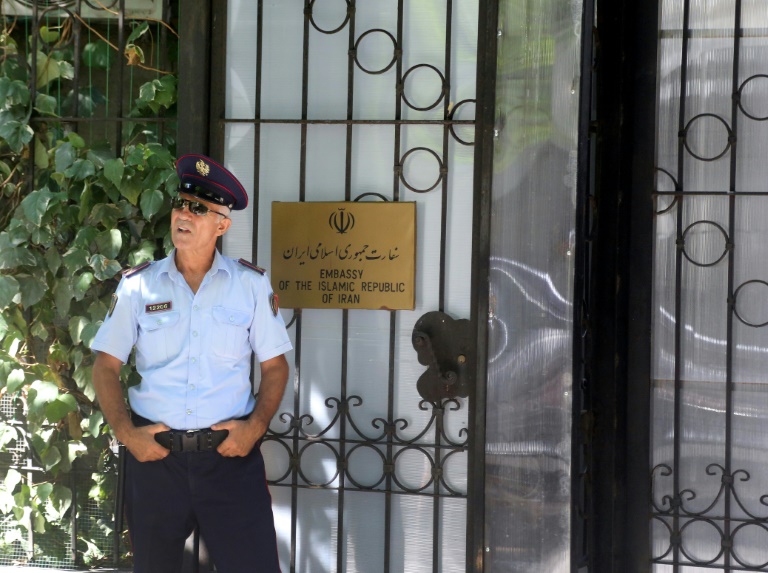
Albania blamed Iran for the July attack and on Wednesday cut diplomatic ties over the affair.

The two countries have been bitter foes for years, since the Balkan state began hosting members of the opposition People’s Mujahedeen of Iran, or Mujahedeen-e-Khalq (MEK), on its soil.

Rama on Wednesday accused Iran of directing a cyberattack against Albanian institutions on July 15 in a bid to “paralyse public services and hack data and electronic communications from the government systems”.

It was the first time Tirana spoke about the alleged attack.

“The Council of Ministers has decided on the severance of diplomatic relations with the Islamic Republic of Iran with immediate effect,” said Rama.

“The said attack failed its purpose. Damages may be considered minimal compared to the goals of the aggressor. All systems came back fully operational and there was no irreversible wiping of data.”

The prime minister went on to say that Iranian diplomats and embassy staff had 24 hours to leave the country.

– Iranian denials –

Iran rejected the accusation it was behind the cyberattack as “baseless” and called Albania’s decision to sever diplomatic ties “an ill-considered and short-sighted action”.

“Iran as one of the target countries of cyberattacks on its critical infrastructure rejects and condemns any use of cyber space as a tool to attack the critical infrastructure of other countries,” its foreign ministry said.

The US announced sanctions Friday on Iran’s Ministry of Intelligence and Security and its minister Esmail Khatib over Tehran’s alleged involvement.

The Islamic republic has also been targeted by cyberattacks, most notably in 2010 when the Stuxnet virus — believed to have been engineered by Israel and the US — infected its nuclear programme.

Albania agreed in 2013 to take in members of the MEK at the request of Washington and the United Nations, with thousands settling in the Balkan country over the years.

Following the collapse of its communist government in the early 1990s, Albania has transformed into a steadfast ally of the United States and the West, officially joining NATO in 2009.

The MEK backed Ayatollah Ruhollah Khomeini in the 1979 revolution that ousted the shah but rapidly fell out with the new Islamic authorities and embarked on a decades-long campaign to overthrow the regime.

The MEK regularly hosts summits in Albania that have long attracted support from conservative US Republicans, including former vice president Mike Pence, who delivered a keynote address at an event in June.

A month later, the group postponed another summit citing unspecified security threats targeting the event.

Close Bitnami banner
Bitnami