World

Albania suffers renewed cyberattack, blames Iran

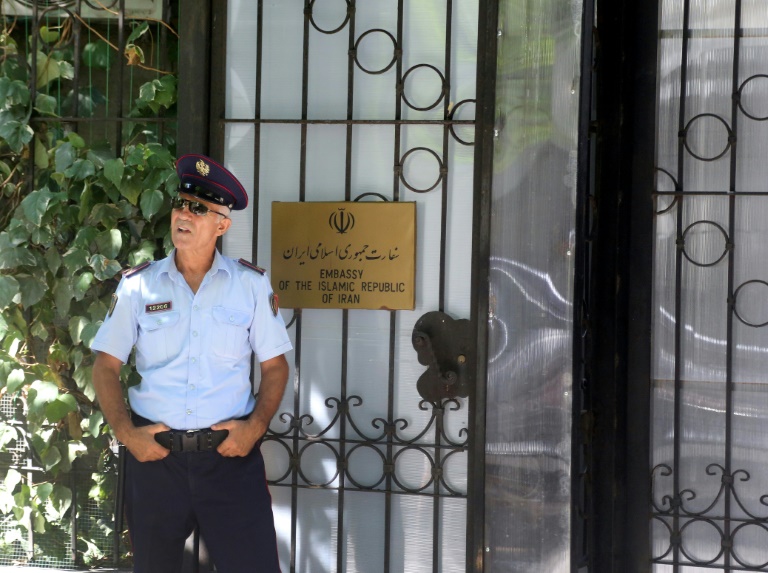
Albania has suffered a renewed cyberattack, the country’s interior ministry said on Saturday, blaming Iran which Tirana also accused of an earlier assault on its digital systems.

“The national police’s computer systems were hit Friday by a cyberattack which, according to initial information, was committed by the same actors who in July attacked the country’s public and government service systems,” the ministry said in a statement.

“In order to neutralise the criminal act and secure the systems,” the authorities have shut down computer control systems at seaports, airports and border posts, the statement said. 

In a tweet, Prime Minister Edi Rama denounced “another cyberattack (committed by) the same aggressors already condemned by Albania’s friendly countries and allies.”

Albania blamed Iran for the July attack and on Wednesday cut diplomatic ties over the affair.

The two countries have been bitter foes for years, since the Balkan state began hosting members of the opposition People’s Mujahedeen of Iran, or Mujahedeen-e-Khalq (MEK), on its soil.

Rama on Wednesday accused Iran of directing a cyberattack against Albanian institutions on July 15 in a bid to “paralyse public services and hack data and electronic communications from the government systems”.

It was the first time Tirana spoke about the alleged attack.

“The Council of Ministers has decided on the severance of diplomatic relations with the Islamic Republic of Iran with immediate effect,” said Rama.

“The said attack failed its purpose. Damages may be considered minimal compared to the goals of the aggressor. All systems came back fully operational and there was no irreversible wiping of data.”

The prime minister went on to say that Iranian diplomats and embassy staff had 24 hours to leave the country.

– Iranian denials –

Iran rejected the accusation it was behind the cyberattack as “baseless” and called Albania’s decision to sever diplomatic ties “an ill-considered and short-sighted action”.

“Iran as one of the target countries of cyberattacks on its critical infrastructure rejects and condemns any use of cyber space as a tool to attack the critical infrastructure of other countries,” its foreign ministry said.

The US announced sanctions Friday on Iran’s Ministry of Intelligence and Security and its minister Esmail Khatib over Tehran’s alleged involvement.

The Islamic republic has also been targeted by cyberattacks, most notably in 2010 when the Stuxnet virus — believed to have been engineered by Israel and the US — infected its nuclear programme.

Albania agreed in 2013 to take in members of the MEK at the request of Washington and the United Nations, with thousands settling in the Balkan country over the years.

Following the collapse of its communist government in the early 1990s, Albania has transformed into a steadfast ally of the United States and the West, officially joining NATO in 2009.

The MEK backed Ayatollah Ruhollah Khomeini in the 1979 revolution that ousted the shah but rapidly fell out with the new Islamic authorities and embarked on a decades-long campaign to overthrow the regime.

The MEK regularly hosts summits in Albania that have long attracted support from conservative US Republicans, including former vice president Mike Pence, who delivered a keynote address at an event in June.

A month later, the group postponed another summit citing unspecified security threats targeting the event.
Ukraine seizes key supply hub from Russian forces in east

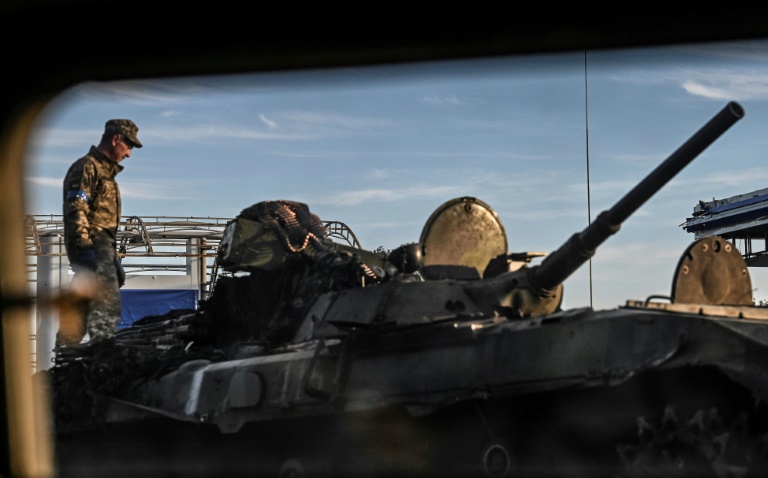
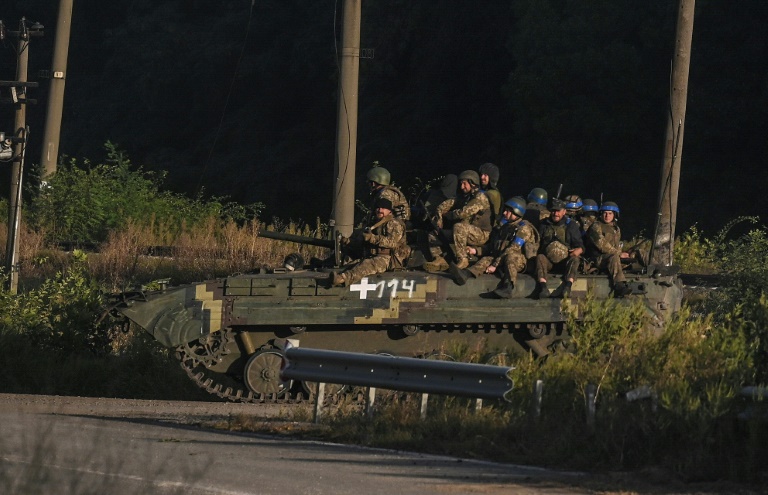
Ukrainian forces said Saturday they had entered Kupiansk in eastern Ukraine, dislodging Russian troops from a key logistics hub in a lightning counter-offensive that has seen swathes of territory recaptured.

A pro-Russia separatist leader called fighting “difficult” in the Donetsk region while Moscow insisted its forces were “regrouping” after Ukraine’s apparent battlefield gains.

Ukrainian special forces published images on social media showing camouflage-clad officers with automatic weapons “in Kupiansk”. 

It “was and will always be Ukrainian,” their statement said.

The town of some 27,000 people, which sits on a crucial supply route for Russia forces in the east, fell within the first week after the Kremlin ordered its invasion of Ukraine on February 24.

Observers of the conflict expect Ukrainian forces to announce further gains in the Kharkiv region, which borders Russia, and has been either controlled by Russia or shelled by its artillery for months.

Denis Pushilin, the rebel official, said the situation in the town of Lyman in the Donetsk region was “very difficult” and that there was also fighting in “a number of other localities,” particularly in the northern part of the region.

– ‘Astonishing’ advance –

There was no official confirmation that Kyiv’s troops had also routed Russian forces from Iyzum — an important staging ground for Russia’s war effort — with a pre-war population of around 45,000 people.

But images flooding social media appeared to show Ukrainian forces within the city and Russian observers of the conflict said there were initial reports Moscow’s army had already withdrawn.

“Ukrainian troops are advancing in eastern Ukraine, liberating more cities and villages. Their courage coupled with Western military support brings astonishing results,” foreign ministry spokesman Oleg Nikolenko said in a statement on social media. 

“It’s crucial to keep sending arms to Ukraine. Defeating Russia on the battlefield means winning peace in Ukraine,” he added.

His assessment of the pace of the Ukrainian gains came after President Volodymyr Zelensky announced late Friday that his troops had retaken some 30 towns and villages in the northeastern Kharkiv region as part of the sweep.

Ukraine’s push appears to have caught Russian troops largely off guard.

Russia’s defence ministry said on Saturday that its forces were “regrouping” in an effort “to achieve the goals of the special military operation to liberate Donbas”.

This came after Moscow on Friday made the surprise announcement it was dispatching reinforcements to Kharkiv, with images on state media showing tanks and artillery and support vehicles moving in columns on dirt roads.

– ‘Frightening’ –

The capture of urban hubs like Kupiansk and Izyum would be a significant blow to Russia’s ability to effectively resupply positions on the eastern frontline and could see Russia pushed back from Kharkiv entirely.

In one village captured by the advancing Ukrainians, electric pylons were toppled and cables lay across the ground and houses were gutted, AFP journalists reported.

“It was frightening,” said 61-year-old Anatoli Vasiliev recalling the battle earlier this week that saw Ukrainian forces recapture the village from the Russians.

“There were bombings and explosions everywhere.”

Ukrainian troops were also advancing along portions of the southern front line, a spokesperson said Saturday, in some regions by dozens of kilometres, into territory captured by Russian troops at the beginning of the invasion.

Russian news agencies meanwhile reported six large explosions in Nova Kakhovka, a town held by Russian troops in the southern Kherson region.

– ‘We will stand by Ukraine’ –

German Foreign Minister Annalena Baerbock arrived in the Ukrainian capital on Saturday for a surprise visit, which she said was to demonstrate Berlin’s support for Ukraine in its battle against Russia.

It came a week after Ukrainian Prime Minister Denys Shmygal’s trip to Berlin where he had repeated Kyiv’s call for weapons.

She pledged continued “deliveries of weapons, and with humanitarian and financial support”.

Over recent weeks Germany has sent an array of weapons to Kyiv, supplementing other Western-supplied weapons that observers say have hurt Russia’s supply and command abilities.

Baerbock’s visit follows US Secretary of State Antony Blinken’s, during which he promised a nearly $3 billion military package for Ukraine.

In a meeting in Brussels with NATO Secretary General Jens Stoltenberg, Blinken said Russia’s push to send reinforcements showed Moscow was paying “huge costs” in its bid to capture and then hold Ukrainian territory.

However, Russian forces were still inflicting serious damage with a campaign of shelling in Kharkiv city and in the industrial region of Donbas in the east.

The head of the Kharkiv region, Oleg Synegubov, said Russian shelling had left 14 civilians injured.

Pavlo Kyrylenko, the head of the Donetsk region, which is part of Donbas, said Russian shelling had left two dead.

UN chief 'never seen climate carnage' like Pakistan floods

United Nations Secretary-General Antonio Guterres said Saturday that he has “never seen climate carnage” on such a scale as he toured parts of Pakistan hit by floods, blaming wealthier countries for the devastation.

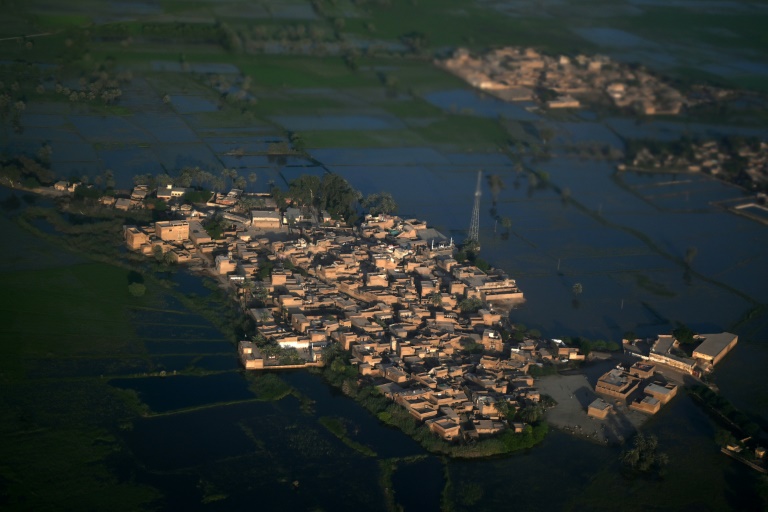
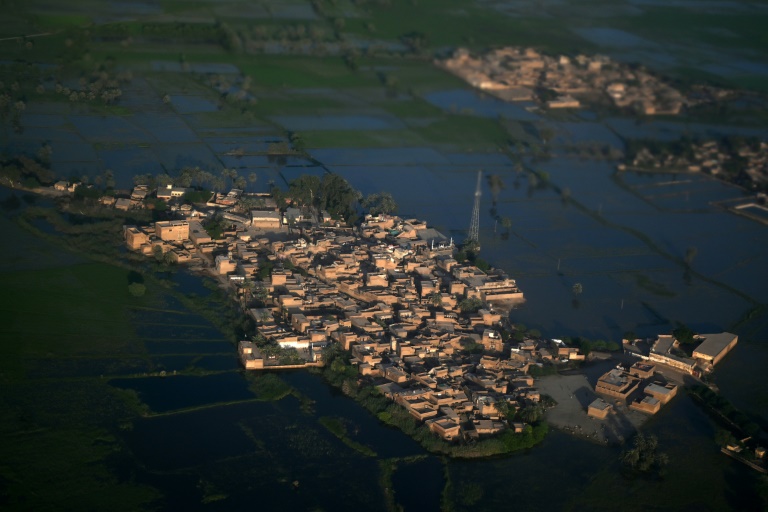
Nearly 1,400 people have died in flooding that covers an area the size of the United Kingdom and has wiped out crops and destroyed homes, businesses, roads and bridges.

Guterres has said he hopes his visit will galvanise support for Pakistan, which has put the provisional cost of the catastrophe at more than $30 billion, according to the government’s flood relief centre.

“I have seen many humanitarian disasters in the world, but I have never seen climate carnage on this scale,” he said at a press conference in the port city of Karachi after witnessing the worst of the damage in southern Pakistan. 

“I have simply no words to describe what I have seen today.”

Pakistan receives heavy — often destructive — rains during its annual monsoon season, which is crucial for agriculture and water supplies.

But downpours as intense as this year’s have not been seen for decades, while rapidly melting glaciers in the north have for months heaped pressure on waterways. 

“Wealthier countries are morally responsible for helping developing countries like Pakistan to recover from disasters like this, and to adapt to build resilience to climate impacts that unfortunately will be repeated in the future,” Guterres said, adding that G20 nations cause 80 percent of today’s emissions. 

Pakistan is responsible for less than one percent of global greenhouse gas emissions, but is eighth on a list compiled by the NGO Germanwatch of countries most vulnerable to extreme weather caused by climate change.

– ‘Insanity and suicide’ –

Around 33 million people have been affected by the floods, which have destroyed around two million homes and business premises, washed away 7,000 kilometres (4,300 miles) of roads and collapsed 500 bridges.

Guterres has lamented the lack of attention the world has given to climate change — particularly industrialised nations.

“This is insanity, this is collective suicide,” he said after arriving in Pakistan on Friday.

The effect of the torrential rain has been twofold — destructive flash floods in rivers in the mountainous north, and a slow accumulation of water in the southern plains.

“All the children, men and women are roasting in this scorching heat. We have nothing to eat, there is no roof on our heads,” Rozina Solangi, a 30-year-old housewife living in a displacement camp near Sukkur, told AFP on Friday.

“He must do something for us poor,” she said of the UN chief’s visit. 

The meteorological office said Pakistan has received five times more rain than normal in 2022. Padidan, a small town in Sindh province, has been drenched by more than 1.8 metres (71 inches) since the monsoon began in June.

Water levels have reached far higher in areas where rivers and lakes have burst their banks, creating dramatic inland seas. 

Thousands of temporary campsites have mushroomed on slivers of high ground in the south and west — often roads and railway tracks in a landscape of water.

With people and livestock crammed together, the camps are ripe for outbreaks of disease, with many cases of mosquito-borne dengue reported, as well as scabies.

During his speedy tour, Guterres stopped at some of these makeshift camps and met with desperate flood victims, including a woman who gave birth overnight. 

Wearing an Ajrak shawl with a traditional Sindhi block print, he later inspected the 4,500-year-old UNESCO world heritage site Mohenjo-daro, which has suffered water damage from the relentless monsoon rain.

UN chief 'never seen climate carnage' like Pakistan floods

United Nations Secretary-General Antonio Guterres said Saturday that he has “never seen climate carnage” on such a scale as he toured parts of Pakistan hit by floods, blaming wealthier countries for the devastation.

Nearly 1,400 people have died in flooding that covers an area the size of the United Kingdom and has wiped out crops and destroyed homes, businesses, roads and bridges.

Guterres has said he hopes his visit will galvanise support for Pakistan, which has put the provisional cost of the catastrophe at more than $30 billion, according to the government’s flood relief centre.

“I have seen many humanitarian disasters in the world, but I have never seen climate carnage on this scale,” he said at a press conference in the port city of Karachi after witnessing the worst of the damage in southern Pakistan. 

“I have simply no words to describe what I have seen today.”

Pakistan receives heavy — often destructive — rains during its annual monsoon season, which is crucial for agriculture and water supplies.

But downpours as intense as this year’s have not been seen for decades, while rapidly melting glaciers in the north have for months heaped pressure on waterways. 

“Wealthier countries are morally responsible for helping developing countries like Pakistan to recover from disasters like this, and to adapt to build resilience to climate impacts that unfortunately will be repeated in the future,” Guterres said, adding that G20 nations cause 80 percent of today’s emissions. 

Pakistan is responsible for less than one percent of global greenhouse gas emissions, but is eighth on a list compiled by the NGO Germanwatch of countries most vulnerable to extreme weather caused by climate change.

– ‘Insanity and suicide’ –

Around 33 million people have been affected by the floods, which have destroyed around two million homes and business premises, washed away 7,000 kilometres (4,300 miles) of roads and collapsed 500 bridges.

Guterres has lamented the lack of attention the world has given to climate change — particularly industrialised nations.

“This is insanity, this is collective suicide,” he said after arriving in Pakistan on Friday.

The effect of the torrential rain has been twofold — destructive flash floods in rivers in the mountainous north, and a slow accumulation of water in the southern plains.

“All the children, men and women are roasting in this scorching heat. We have nothing to eat, there is no roof on our heads,” Rozina Solangi, a 30-year-old housewife living in a displacement camp near Sukkur, told AFP on Friday.

“He must do something for us poor,” she said of the UN chief’s visit. 

The meteorological office said Pakistan has received five times more rain than normal in 2022. Padidan, a small town in Sindh province, has been drenched by more than 1.8 metres (71 inches) since the monsoon began in June.

Water levels have reached far higher in areas where rivers and lakes have burst their banks, creating dramatic inland seas. 

Thousands of temporary campsites have mushroomed on slivers of high ground in the south and west — often roads and railway tracks in a landscape of water.

With people and livestock crammed together, the camps are ripe for outbreaks of disease, with many cases of mosquito-borne dengue reported, as well as scabies.

During his speedy tour, Guterres stopped at some of these makeshift camps and met with desperate flood victims, including a woman who gave birth overnight. 

Wearing an Ajrak shawl with a traditional Sindhi block print, he later inspected the 4,500-year-old UNESCO world heritage site Mohenjo-daro, which has suffered water damage from the relentless monsoon rain.

Afghan girls protest school closure in eastern city

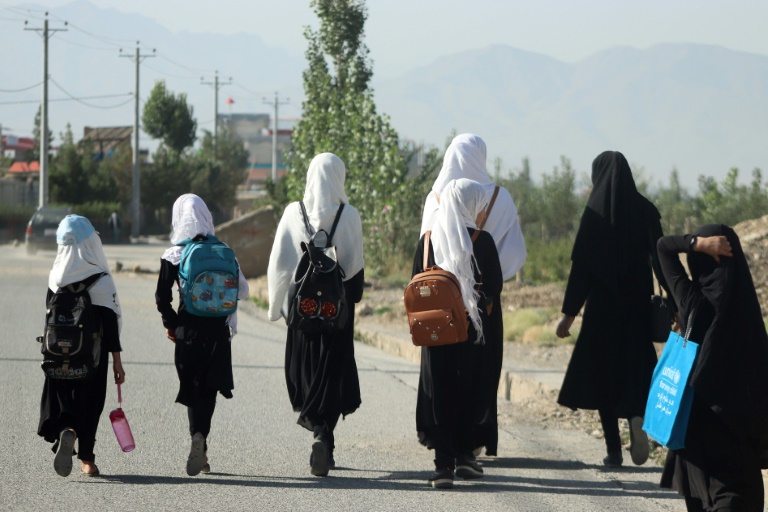
Dozens of girls protested in an eastern Afghan city on Saturday after Taliban authorities shut their secondary schools just days after classes resumed, an activist and residents said.

Last week, five government secondary schools in the eastern province of Paktia restarted classes after hundreds of girls and tribal leaders demanded they reopen.

But when students in provincial capital Gardez went for classes on Saturday, they were told to return home, a women’s rights activist and residents said.

“This morning when they did not allow the girls to enter schools, we held a protest,” said activist Yasmin, an organiser of the rally.

Dressed in their school uniforms — a white headscarf and black shalwar kameez — the girls marched through the centre of Gardez to protest the closure.

Four of the newly reopened schools are in Gardez and one in Samkani.

The Taliban have imposed harsh restrictions on girls and women to comply with their austere vision of Islam since returning to power in August last year — effectively squeezing them out of public life.

In March, they shuttered all girls’ secondary schools hours after reopening them for the first time under their rule.

Images posted on social media Saturday showed the girls marching through the city centre as residents and shopkeepers watched.

“The Taliban did not allow anyone to take footage of the protest. In fact, they broke some protesters’ mobile phones,” Yasmin told AFP by telephone.

Two residents from the city also confirmed the protest, which journalists were not allowed to cover.

“The students protested peacefully, but soon the rally was dispersed by security forces,” one Gardez resident who asked not to be named told AFP.

Officials maintain the ban is just a “technical issue” and classes will resume once a curriculum based on Islamic rules is defined.

A few public schools continue to operate in parts of the country following pressure from local leaders and families.

They remain shut in most provinces, however, including the capital Kabul as well as Kandahar, the de facto power centre of the Taliban.

Around three million girls are currently banned from getting secondary education in Afghanistan, according to UNICEF.

Belgium's biggest trial opens, six years after worst bombing

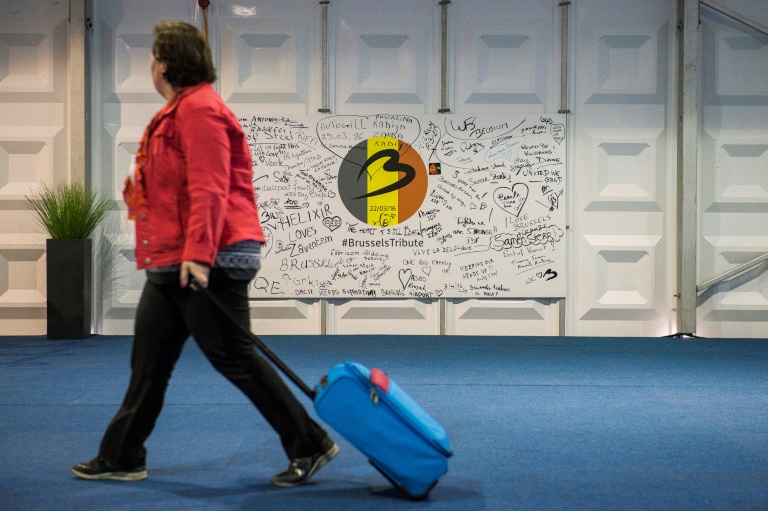
Six years after Belgium’s deadliest peacetime attack, a Brussels court will this week host a landmark trial that survivors hope will mark a step forward in their recovery and that of their nation.

The case against alleged members of an Islamic State (IS) group cell that launched both the March 2016 suicide bombings in Brussels and the November 2015 attacks in Paris will begin Monday.

The Belgian attacks, in which three suicide bombers hit Brussels airport and a crowded underground metro station, killed 32 people and shattered the lives of hundreds of survivors.

Nine alleged jihadists, including the cell’s 32-year-old French ring-leader Salah Abdeslam, will face a variety of charges. One, thought to have been killed in Syria, will be tried in his absence.

The trial will be the largest ever staged in front of a Belgian jury, with 960 civil plaintiffs represented and the sprawling former headquarters of the NATO military alliance converted into a high-security court complex.   

Abdeslam, already convicted in France and sentenced to life for his role in Paris, will not attend Monday’s preliminary hearing, his lawyer said.

– ‘Turn the page’ –

But many of the victims of the attacks are planning to attend the trial from day one, seeking understanding and closure following the carnage.

“My life was completely destroyed. I lost my friends, gave up my hobby as a pilot,” said Philippe Vandenberghe, an airport manager who rushed to assist wounded passengers and now suffers from post-traumatic stress disorder.

Vandenberghe had a first aid certificate, but nothing to prepare him for the aftermath of an indiscriminate suicide bombing on a crowded airport concourse.

He faced screaming victims engulfed in thick smoke and surrounded by broken glass and twisted metal.

The image of two children who had just lost their mother haunts him.  

“I gave first aid to 18 different people. I’m sure that I saved one woman,” the 51-year-old told AFP at his home in Louvain-la-Neuve.

Today he is unemployed, after a legal battle with his former employer and insurer over medical bills. He paints, helps out charity groups and is training as an ambulance driver.

On Monday he will be in court, hoping that the trial will mark the start of a new stage in his recovery.

“We’re hoping that our suffering will be recognised, that’s the important part,” he said.

Before the bombings Sebastien Bellin, now 44, was a professional basketballer. Now, after around 15 surgeries, he has lost the use of one of his legs, and still re-lives the experience.

“I don’t know if one can turn the page, what happened will always exist within us,” he said.

“Personally, I’ve given up on all hate, that would waste the energy I need to rebuild myself. I’ve also accepted my handicap,” he said, describing the trial as an “important step”.

Some victims and witnesses won’t attend the hearings. Police commander Christian De Coninck will follow from home, doubtful the accused will say anything constructive.

“They’re not worth my time to make the trip,” he told AFP. “I don’t want to hear them spouting rubbish about their unhappy childhoods, the influential imams, the duty to fight for the caliphate.” 

After Monday’s preliminary hearing, the court will sit again on October 10 to choose 12 jurors and 24 potential substitutes. Evidential hearings will begin on October 13 and last eight months, until June next year.

Kyiv claims 'astonishing' advances in east Ukraine

Kyiv said Saturday its forces were making lightning gains in the east of the country in a shock counter-offensive to recapture territory that fell to Russia shortly after Moscow’s February invasion.

German Foreign Minister Annalena Baerbock meanwhile arrived in the Ukrainian capital for a surprise visit, which she said was to demonstrate Berlin’s support for Ukraine in its battle against Russia.

“Ukrainian troops are advancing in eastern Ukraine, liberating more cities and villages. Their courage coupled with Western military support brings astonishing results,” foreign ministry spokesman Oleg Nikolenko said in a statement on social media. 

“It’s crucial to keep sending arms to Ukraine. Defeating Russia on the battlefield means winning peace in Ukraine,” he added.

His assessment of the pace of the Ukrainian gains came after President Volodymyr Zelensky announced late Friday that his troops had retaken some 30 towns and villages in the northeastern Kharkiv region as part of the sweep.

Ukraine’s push appears to have caught Russian troops largely off guard.

Moscow made the surprise announcement it was dispatching reinforcements to Kharkiv, with images on state media showing tanks and artillery and support vehicles moving in columns on dirt roads.

– ‘It was frightening’ –

The largest city so far to fall into Ukrainian hands again is Balakliya with an estimated pre-war population of around 30,000.

There were unconfirmed reports that Ukrainians were advancing further east.

The capture of urban hubs like Kupiansk and Izium would be a significant blow to Russia’s ability to effectively supply positions on the eastern frontline.

In one village captured by the advancing Ukrainians, electric pylons were toppled and cables strewn lay across the ground and houses were gutted, AFP journalists reported.

“It was frightening,” said 61-year-old Anatoli Vasiliev recalling the battle earlier this week that saw Ukrainian forces recapture the village from the Russians.

“There were bombings and explosions everywhere.”

– ‘We will stand by Ukraine’ –

Baerbock was in Kyiv Saturday for her second trip to Ukraine, which comes a week after Ukrainian Prime Minister Denys Shmygal’s trip to Berlin where he had repeated Kyiv’s call for weapons.

“I have travelled to Kyiv today to show that they can continue to rely on us. That we will continue to stand by Ukraine for as long as necessary with deliveries of weapons, and with humanitarian and financial support,” she said.

Over the last weeks, Germany has sent howitzers, rocket launchers and anti-aircraft missiles to Kyiv, part of an arsenal of Western-supplied weapons that observers say have hurt Russia’s supply and command abilities.

Baerbock’s visit comes on the heels of a trip from US Secretary of State Antony Blinken who promised a nearly $3 billion military package for Ukraine.

In a meeting in Brussels with NATO Secretary General Jens Stoltenberg, Blinken said Russia’s push to send reinforcements showed Moscow was paying “huge costs” in its bid to capture and then hold Ukrainian territory.

However, Russian forces were still inflicting serious damage with a campaign of shelling in Kharkiv city and in the industrial region of Donbas in the east.

Oleg Synegubov, the head of the Kharkiv said Russian shelling had left 14 civilians injured.

Pavlo Kyrylenko, the head of the Donetsk region, which is part of Donbas, said Russian shelling meanwhile had left two dead.

UN chief says world paying 'horrific price' for fossil fuels folly

United Nations Secretary-General Antonio Guterres said on Saturday that developing nations were paying a “horrific price” for the world’s reliance on fossil fuels, as he toured parts of Pakistan hit by floods blamed on climate change.

Nearly 1,400 people have died in flooding that covers a third of the country — an area the size of the United Kingdom — and has wiped out crops and destroyed homes, businesses, roads and bridges.

Guterres hopes his visit will galvanise support for Pakistan, which has put the provisional cost of the catastrophe at more than $30 billion, according to the government’s flood relief centre on Friday.

“Pakistan and other developing countries are paying a horrific price for the intransigence of big emitters that continue to bet on fossil fuels,” Guterres said in a tweet, shortly before heading to see some of the most flood-affected areas.

“From Islamabad, I am issuing a global appeal: Stop the madness. Invest in renewable energy now. End the war with nature.”

Pakistan receives heavy — often destructive — rains during its annual monsoon season, which is crucial for agriculture and water supplies.

But downpours as intense as this year’s have not been seen for decades, while rapidly melting glaciers in the north have for months heaped pressure on waterways. 

– ‘Insanity and suicide’ –

Before touring flood-affected areas in southern Sindh and Balochistan provinces, Guterres on Saturday said financial help was “not a matter of generosity, it’s a matter of justice”.

“Humanity has been waging war on nature, and nature strikes back… but it was not Sindh that has made the emissions of greenhouse gases that have accelerated climate change so dramatically.”

Guterres has lamented the lack of attention the world has given to climate change — particularly industrialised nations.

“This is insanity, this is collective suicide,” he said after arriving in Pakistan on Friday.

Pakistan is responsible for less than one percent of global greenhouse gas emissions, but is eighth on a list compiled by the NGO Germanwatch of countries most vulnerable to extreme weather caused by climate change.

Around 33 million people have been affected by the floods, which have destroyed around two million homes and business premises, washed away 7,000 kilometres (4,300 miles) of roads and collapsed 500 bridges.

The effect of the torrential rain has been twofold — destructive flash floods in rivers in the mountainous north, and a slow accumulation of water in the southern plains.

“All the children, men and women are roasting in this scorching heat. We have nothing to eat, there is no roof on our heads,”  Rozina Solangi, a 30-year-old housewife living in a displacement camp near Sukkur, told AFP on Friday.

“He must do something for us poor,” she said of the UN chief’s visit. 

The meteorological office said Pakistan has received five times more rain than normal in 2022. Padidan, a small town in Sindh province, has been drenched by more than 1.8 metres (71 inches) since the monsoon began in June.

Water levels have reached far higher in areas where rivers and lakes have burst their banks, creating dramatic inland seas. 

Thousands of temporary campsites have mushroomed on slivers of high ground in the south and west — often roads and railway tracks in a landscape of water.

With people and livestock crammed together, the camps are ripe for outbreaks of disease, with many cases of mosquito-borne dengue reported, as well as scabies.

UN chief says world paying 'horrific price' for fossil fuels folly

United Nations Secretary-General Antonio Guterres said on Saturday that developing nations were paying a “horrific price” for the world’s reliance on fossil fuels, as he toured parts of Pakistan hit by floods blamed on climate change.

Nearly 1,400 people have died in flooding that covers a third of the country — an area the size of the United Kingdom — and has wiped out crops and destroyed homes, businesses, roads and bridges.

Guterres hopes his visit will galvanise support for Pakistan, which has put the provisional cost of the catastrophe at more than $30 billion, according to the government’s flood relief centre on Friday.

“Pakistan and other developing countries are paying a horrific price for the intransigence of big emitters that continue to bet on fossil fuels,” Guterres said in a tweet, shortly before heading to see some of the most flood-affected areas.

“From Islamabad, I am issuing a global appeal: Stop the madness. Invest in renewable energy now. End the war with nature.”

Pakistan receives heavy — often destructive — rains during its annual monsoon season, which is crucial for agriculture and water supplies.

But downpours as intense as this year’s have not been seen for decades, while rapidly melting glaciers in the north have for months heaped pressure on waterways. 

– ‘Insanity and suicide’ –

Before touring flood-affected areas in southern Sindh and Balochistan provinces, Guterres on Saturday said financial help was “not a matter of generosity, it’s a matter of justice”.

“Humanity has been waging war on nature, and nature strikes back… but it was not Sindh that has made the emissions of greenhouse gases that have accelerated climate change so dramatically.”

Guterres has lamented the lack of attention the world has given to climate change — particularly industrialised nations.

“This is insanity, this is collective suicide,” he said after arriving in Pakistan on Friday.

Pakistan is responsible for less than one percent of global greenhouse gas emissions, but is eighth on a list compiled by the NGO Germanwatch of countries most vulnerable to extreme weather caused by climate change.

Around 33 million people have been affected by the floods, which have destroyed around two million homes and business premises, washed away 7,000 kilometres (4,300 miles) of roads and collapsed 500 bridges.

The effect of the torrential rain has been twofold — destructive flash floods in rivers in the mountainous north, and a slow accumulation of water in the southern plains.

“All the children, men and women are roasting in this scorching heat. We have nothing to eat, there is no roof on our heads,”  Rozina Solangi, a 30-year-old housewife living in a displacement camp near Sukkur, told AFP on Friday.

“He must do something for us poor,” she said of the UN chief’s visit. 

The meteorological office said Pakistan has received five times more rain than normal in 2022. Padidan, a small town in Sindh province, has been drenched by more than 1.8 metres (71 inches) since the monsoon began in June.

Water levels have reached far higher in areas where rivers and lakes have burst their banks, creating dramatic inland seas. 

Thousands of temporary campsites have mushroomed on slivers of high ground in the south and west — often roads and railway tracks in a landscape of water.

With people and livestock crammed together, the camps are ripe for outbreaks of disease, with many cases of mosquito-borne dengue reported, as well as scabies.

'Explosions everywhere' as Ukraine forces recapture village

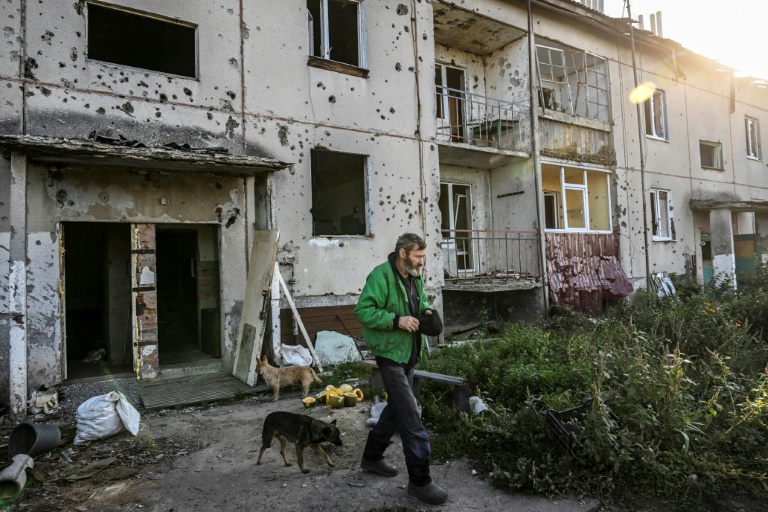
Electric pylons toppled, cables strewn across the ground; gutted houses and roads dotted with craters — the village of Grakove in eastern Ukraine bears the scars of Ukraine’s bitter counter-offensive.

“It was frightening,” said 61-year-old Anatoli Vasiliev, recalling this week’s battle when Ukrainian troops recaptured Grakove from the Russians.

“There were bombings and explosions everywhere.”

Vasiliev stood in front of the local church, whose bell had been damaged by a projectile.

Some of the Russian soldiers “took phones, but I managed to keep mine by hiding it so I could communicate with my family,” he said.

Ukrainians have announced significant territorial gains in the eastern Kharkiv region.

President Volodymyr Zelensky said Friday 30 towns and cities had been recaptured there.

Among the debris scattered through Grakove — and in front of houses still inhabited — dogs and cats search for scraps of food.

Only about 30 of the village’s 800 pre-war inhabitants remain.

The road leading to Grakove from Ukraine’s second city Kharkiv, a regional hub, is lined with the skeletons of cars destroyed in explosions or crushed by tanks.

– ‘I was scared’ –

Disarmed mines are scattered around the side of the road, waiting to be picked up. A tow truck carries off a captured Russian military vehicle.

Travelling in the opposition direction are two armoured cars taking troops to the front. Artillery fire echoes in the distance.

In the village, police and a team from the Kharkiv region’s prosecutors office exhume the bodies of two men aged in their thirties.

The officials here suspect a war crime: the remains show signs of torture and execution.

Village resident Sergiy Lutsay told AFP Russian soldiers had forced him to bury the bodies at gunpoint.

“They came to my house. I was with my 70-year-old father,” he said. 

“I was scared they would threaten him. They told me to come to dig a hole.”

This, he said, was soon after the Russian invasion began on February 24.

An official from the prosecutors’ office said the bodies would be sent for an medical examination to determine the cause of death.

– ‘Evidence of atrocities’ – 

Sergiy Bolvinov, deputy chief of police for the Kharkiv region, said Lutsay had told them that the victims “had wounds on the back of the head and their ears had been cut off”.

Lutsay did not confirm the details to journalists.

Ukraine has accused Russian forces of a string of war crimes in towns and villages outside Kyiv that its forces recaptured in March.

Ukraine reoccupied the territory when Moscow pulled back its forces after a failed bid to capture the capital at the start of the invasion.

“This is not the only evidence of atrocities committed by the Russians,” said Bolvinov.

“There are two other sites like this one in the village. We will be investigating them.”

Police warned journalists warned from straying off roads or investigating abandoned buildings because demining work was still under way.

Close Bitnami banner
Bitnami