World

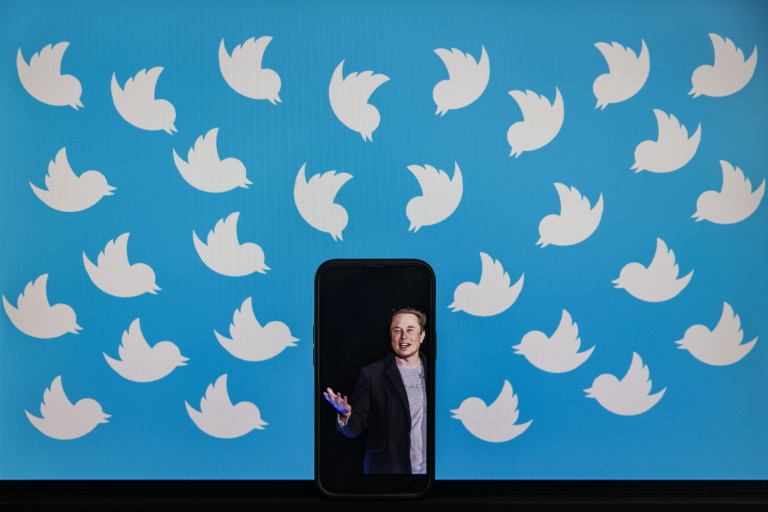
Musk's latest reason to drop Twitter deal – whistleblower payment

Elon Musk on Friday added a severance payment made by Twitter to a whistleblower to the list of reasons he feels entitled to walk away from his $44 billion deal to buy the social media platform.

A termination letter sent to Twitter accused the firm of not informing him about a multi-million dollar severance payment it made in June to departing security chief Peiter Zatko, who went on to file a whistleblower complaint criticizing Twitter’s security practices, according to a copy of the letter filed with the Securities and Exchange Commission.

Musk’s lawyers argued that failing to seek his consent before paying Zatko provides another legal basis to break the merger deal with Twitter he inked in April.

Twitter disagreed.

“My friend seems to be arguing that Twitter should have gratuitously told Musk that there existed a disgruntled former employee who made various allegations that had been inquired upon and found to be without merit,” Twitter attorney William Savitt said earlier this week.

“That doesn’t make any sense.”

Twitter did not respond to a request for comment on Friday.

Musk, the world’s richest man, said in his original termination letter that he was canceling the deal because he was misled by Twitter concerning the number of bot accounts on its platform, allegations rejected by the company.

In a mixed ruling earlier this week, Kathaleen McCormick, the chancellor of the Delaware court that is overseeing the case, said Musk could add whistleblowing revelations from Zatko that surfaced in August.

But she denied his request to push back the litigation, saying prolonging the suit “would risk further harm to Twitter too great to justify.”

Musk has been locked in a bitter legal battle with Twitter since announcing in July that he was pulling the plug on the purchase of the company following a complex, volatile, months-long courtship.

The five-day trial is due to go ahead beginning October 17 in the Delaware court. 

Canada admired its queen, but not so much the monarchy

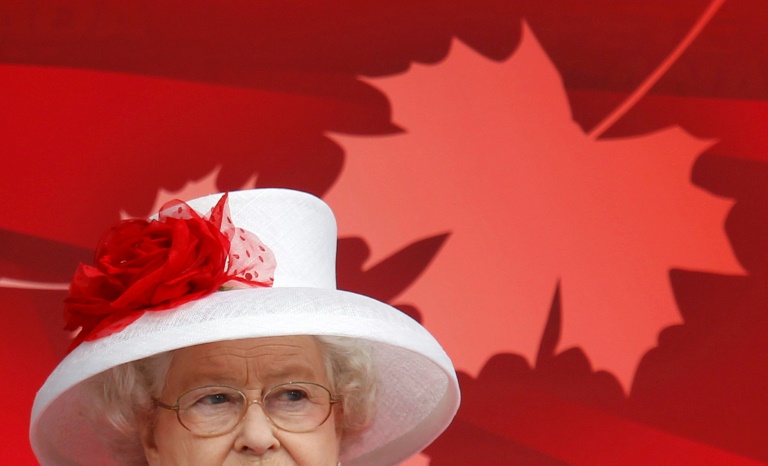
Canadians were attached to Queen Elizabeth II right to the end, but their relationship with the monarchy has been increasingly strained and experts believe her death on Thursday will reignite debate over its future.

“Canada is a monarchist exception in the middle of a rather republican continent,” said Marc Chevrier, a politics professor at the University of Quebec in Montreal.

In a few weeks, after the period of mourning, “the debates will resurface, Pandora’s box will open,” he added.

The British monarch is Canada’s head of state, but the role is largely ceremonial, even more so than in Britain. Here the royals are represented by a governor general, who is selected by the prime minister.

Prime Minister Justin Trudeau hailed Elizabeth’s reign, noting that she had been “queen for almost half of Canada’s existence,” and announced a 10-day period of mourning.

All flags have been lowered across the country and a national commemorative ceremony is planned in the capital Ottawa on the same day as her funeral in London.

But when it comes to pomp, the country has become increasingly ambivalent toward the monarchy.

“Even in English-speaking Canada, support for the monarchy has diminished over the years,” said Philippe Lagasse, a professor at Carleton University in Ottawa and expert on the role of the monarchy in Canada.

According to a poll last April, a small majority of Canadians — rising to 71 percent in French-speaking Quebec province — would even like to dispense with the monarchy, whose role today is largely ceremonial.

Sixty-seven percent said they opposed Charles succeeding his mother as king of the country. His visit to the country last May went almost unnoticed.

– Monarchy entrenched –

To follow the lead of Barbados, which in 2021 chose to secede from the British Crown and become a republic, Canada would need to bring in major reforms of its institutions and constitutional laws.

A founding principle at the birth of Canada in 1867, “the monarchy is the keystone of all constitutional law,” explains Chevrier. For example, he noted that “the office of prime minister does not even appear in the Canadian constitution, which only mentions the monarch.”

Amending the constitution and abolishing the monarchy would require a titanic effort and potentially years of political negotiations since it requires the unanimous approval of Parliament as well as the governments of all 10 Canadian provinces.

Such a debate would likely be heated in an increasingly politically divided Canada.

And then all royal symbolism could be targeted with an eye to further erase ties with the British monarchy, believes Lagasse.

Queen Elizabeth’s face appears on Canadian coins and $20 bills, for example.

Certain protocols would have to also change, in particular the oath of citizenship. New Canadian citizens are required to pledge their “allegiance to Her Majesty Queen Elizabeth II, Queen of Canada, to her heirs and successors.”

The oath was unsuccessfully challenged in court in 2014 by a trio of immigrants who argued it violated their religious and conscientious beliefs.

For an increasingly diverse and multicultural Canadian population, which is in the midst of reckoning with its colonial history, the link to the monarchy seems less and less relevant.

Princess of Wales: from commoner to future queen

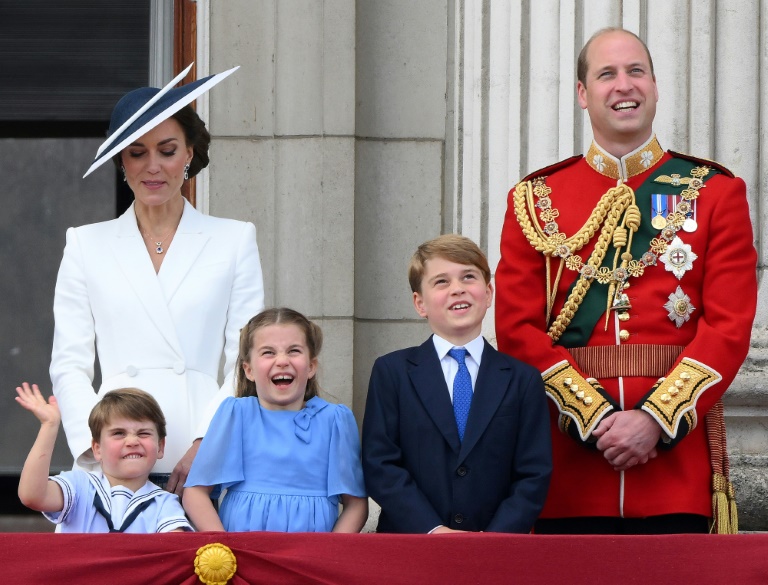
The Princess of Wales has proved a model royal since joining Britain’s most famous family, making poised public appearances while avoiding the harsh criticism doled out to her sister-in-law Meghan.

Catherine, who married the now heir to the throne Prince William in 2011, stepped up appearances as his grandmother Queen Elizabeth II retreated from the public eye. 

The couple, both 40, played a prominent role during the 2020 coronavirus pandemic and have consistently been the most popular royals behind the late monarch in recent years.

She has balanced royal duties, which included a prominent role in Platinum Jubilee celebrations, with being a hands-on mum to her three children.

Catherine won plaudits for effortlessly comforting her youngest son Prince Louis when he became restless during the Platinum Jubilee Pageant earlier this year.

The former Kate Middleton is the daughter of businessman Michael and former air stewardess Carole Middleton.

She began dating William while studying history of art at the University of St Andrews in Scotland.

The couple have been together ever since — bar a brief breakup in 2007 that Kate has said made her “a stronger person”.

She worked briefly as a buyer at high-street fashion chain Jigsaw before her marriage at London’s historic Westminster Abbey in 2011, where she wore a lace-sleeved gown by Alexander McQueen’s Sarah Burton.

William’s choice to marry a “commoner” after a live-in relationship sharply contrasted with his father, the now King Charles III, in his 1981 marriage to 20-year-old aristocrat Diana Spencer, when he was 12 years her senior.

Kate has since given little away about her experiences in joining the royal family, unlike her sister-in-law Meghan, who married William’s younger brother, Prince Harry, in 2018.

Harry and Meghan sensationally quit frontline royal duties and moved to North America in March 2020, then spoke out about life behind the palace walls.

Meghan, an American former television actress, told Oprah Winfrey in a March 2021 interview that she had a frosty reception, and catalogued her hounding by the tabloid press.

In the early days of her courtship, photographers tracked Kate’s every move, too, drawing parallels to the media treatment of William’s mother, who died in 1997.

There were also reports that William’s friends mocked her mother’s former profession and that courtiers said Carole Middleton used insufficiently “posh” phrases.

William, however, has spoken of his warm relationship with his wife’s parents.

– Kate v Meghan –

Kate gave birth to Prince George, who will be next-in-line to the throne after William, in 2013, followed by Princess Charlotte in 2015 and Prince Louis in 2018.

She has spoken about her struggles with severe morning sickness, saying in a podcast that she was “not the happiest of pregnant people”. 

Prince Harry was often photographed at events with his brother and Kate, seeming to feel relaxed and warm in their company.

When Meghan appeared on the scene, the couples appeared to get on well, prompting predictions that the foursome would become the face of the modern monarchy.

But rumours of a rift began to spread soon after Meghan and Harry’s 2018 showpiece wedding at St George’s Chapel in Windsor Castle.

The Sun reported in November that year that Meghan had made Kate cry at her daughter Charlotte’s bridesmaid dress fitting.

In her bombshell Oprah interview, Meghan claimed the opposite was true but Kate had apologised and sent her flowers.

She complained, however, that Buckingham Palace had never corrected the report.

Critics have accused Britain’s unforgiving tabloids of targeting mixed-race Meghan in a way Kate has not faced — a point not lost on Harry.

In November 2016, soon after their relationship became public, Harry said a “line had been crossed”, accusing comment pieces of having “racial undertones”.

In the aftermath of the couple’s accusation of royal racism, much was made of the contrasting treatment meted out to the two women.

– ‘Shop-window mannequin’ –

Kate has nonetheless provoked criticism from feminist commentators over her perfectly turned-out appearance, even just hours after giving birth.

To be sure, the fact she did not hide her post-partum bump was welcomed.

But British film star Keira Knightley said Kate’s well-groomed look put pressure on women to “look beautiful” and “hide our pain”.

The novelist Hilary Mantel even accused Kate of resembling a “shop-window mannequin with no personality of her own”.

Kate comes across as passionate when talking about some issues, however, particularly children’s development and early influences.

“Our early childhoods shape our adult lives,” she said.

In July 2021, she launched a Royal Foundation Centre for Early Childhood.

She is also known as a keen amateur photographer, and has taken her own official photographs of her family in their house and garden.

During the pandemic, William — who caught Covid — and Kate publicly backed the vaccine rollout. They spoke to medical staff and those hesitant about getting the jab.

Crown Jewels: The royal family's precious gems

The Crown Jewels form the centrepiece of the royal coronation, and symbolise the pomp and history of the British monarchy over the centuries.

– The Imperial State Crown –

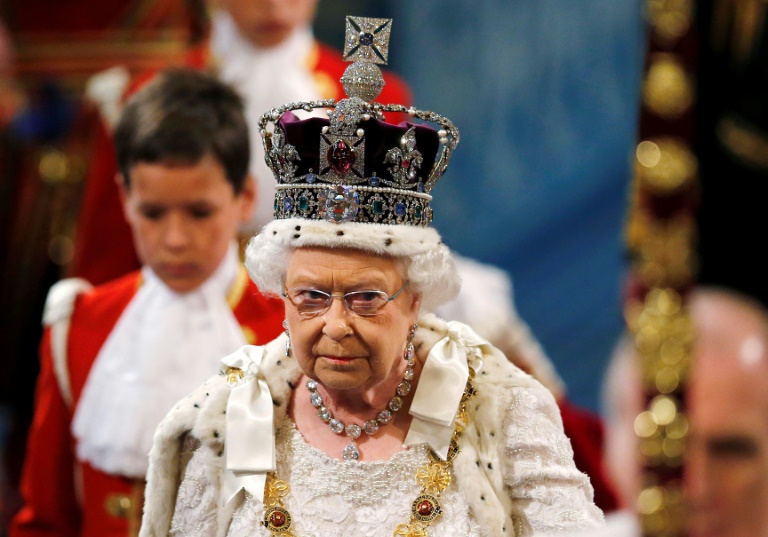
The crown was commissioned for king George VI’s coronation in 1937.

Used for formal events such as the state opening of parliament, Queen Elizabeth II wore it following her coronation ceremony.

The crown bears 2,868 diamonds, 269 pearls, 17 sapphires and 11 emeralds.

It weighs 1,060 grams (2.3 pounds) and is 31.5 centimetres (12.4 inches) tall.

The second-largest stone cut from the Cullinan Diamond — the largest diamond ever mined — adorns the front.

– The Sovereign’s Sceptre –

A gold rod with a globe, cross and dove at the top, the sceptre’s design symbolises the Christian Holy Ghost.

It is associated with the monarch’s pastoral role towards the people.

It weighs 1,150 grams and is 110.2 centimetres long.

– The Sovereign’s Sceptre –

The sceptre represents the monarch’s temporal power and good governance and complements the spiritual power symbolised by the Sovereign’s Sceptre with Cross.

It weighs 1,170 grams and is 92.2 centimetres long.

The largest colourless cut diamond in the world, the Cullinan I, reigns at the top. It weighs 106 grams and is known as the “First Star of Africa”.

The diamond’s weight meant the sceptre had to be reinforced in 1910.

– The Sovereign’s Orb –

The orb represents the monarch’s power and the Christian world.

The gold piece of jewellery is surrounded by a band of diamonds, emeralds, rubies, sapphire and pearls and topped with amethyst and a cross.

It is 27.5 centimetres high and weighs 1,320 grams.

– The gold Ampulla –

The eagle-shaped vessel holds the consecrated oil used in coronation ceremonies.

The eagle’s head comes off to allow oil to be poured into the vessel.

The design is based on a legend that the Virgin Mary appeared to medieval English saint Thomas Becket and handed him a golden eagle and oil to anoint future English kings.

It weighs 660 grams and measures 20.7 x 10.4 centimetres.

– The Spurs –

Gold, leather, velvet and gold thread make up one of the most ancient parts of Britain’s royal coronation paraphernalia.

The use of spurs to represent knighthood in coronations dates back to the coronation of Richard I in 1189.

Spurs were traditionally fastened to the king’s feet during coronation ceremonies but presented and placed on the altar for queens.

– The Cullinan Diamond –

It was the largest diamond ever mined when discovered in South Africa in 1905, weighing 621 grams in its uncut state.

The Transvaal government presented it to King Edward VII on his 66th birthday in 1907 as a gesture of reconciliation after the Second Boer War (1899-1902).

Three employees of Asschers of Amsterdam worked 14-hour days for eight months to cut and polish nine large stones from the original gem.

When workers began to cut the diamond, the first blow broke the knife rather than the diamond.

– St Edward’s Crown –

Crown jeweller Robert Viner made it in 1661 for the coronation of king Charles II, after the previous medieval crown was melted down by parliamentarian rebels in 1649 during the English Civil War.

Monarchs did not wear the solid gold crown in coronation ceremonies for more than 200 years as it was too heavy.

It weighs 2,040 grams and is 30.2 centimetres tall.

– Coronation ring –

The ring dates back to the coronation of King William IV in 1831. 

Queen Victoria did not wear it for her coronation in 1838 as her fingers were too small.

– Purple Robe of Estate –

Twelve seamstresses from the Royal School of Needlework took 3,500 hours to make it. 

The robe is made of silk and embroidered with the monarch’s cipher, wheat ears and olive branches.

– The Stone of Scone – 

Also known as the “Stone of Destiny”, it is the ancient symbol of Scotland’s monarchy.

The sandstone slab weighs 152 kilograms (335.1 pounds).

English king Edward I seized it in 1296 and incorporated it into the throne at Westminster, London.

Scottish nationalists stole it from London’s Westminster Abbey in 1950 and it later reappeared in Arbroath Abbey, Scotland. It was formally returned to Scotland in 1996.

The stone will only leave Scotland again for a coronation at Westminster Abbey.

Charles III to be proclaimed king after vowing 'lifelong service'

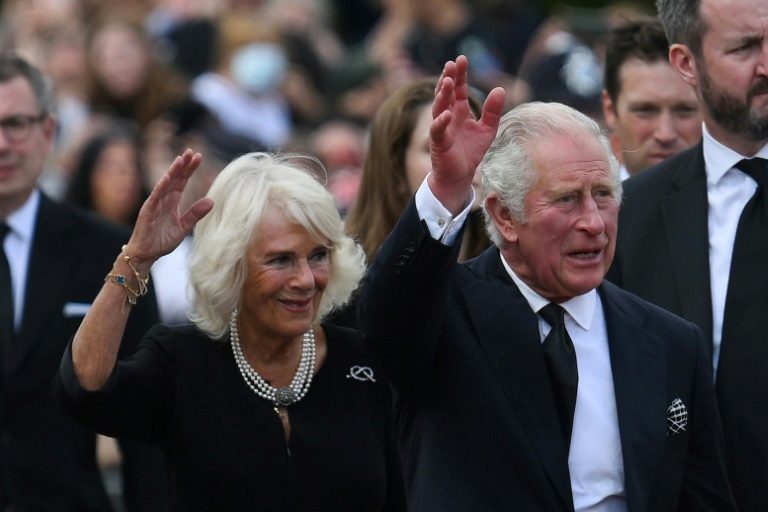
Britain’s Charles III will officially be proclaimed king in a ceremony on Saturday, a day after he vowed in his first speech to mourning subjects that he would emulate his “darling mama”, Queen Elizabeth II.

The 73-year-old automatically became monarch upon the queen’s death Thursday, but an Accession Council ceremony at St James’s Palace early Saturday is a constitutional formality to recognise his sovereignty. 

Featuring trumpets and a balcony proclamation, the pomp-filled protocol is the latest part of a 10-day programme of official mourning — which will last even longer for the royals — held across Britain leading up to the queen’s funeral.

An emotional Charles set the tone for his reign in a televised address Friday in which he hailed his mother’s “unswerving devotion” during her record-breaking seven decades on the throne.

“Queen Elizabeth’s was a life well lived, a promise with destiny kept, and she is mourned most deeply in her passing. That promise of lifelong service I renew to you all today,” he said.

The new king also named his elder son and next heir Prince William, 40, as the new Prince of Wales, while expressing love for his younger son Harry and daughter-in-law Meghan. 

The move means William’s wife Kate assumes the Princess of Wales title once held by his mother and Charles’ ex-wife, the late Princess Diana.

– Flower, cheers, kisses –

Crowds have massed outside Buckingham Palace both to mourn the queen and to wish Charles well, some of them shouting “God Save the King” as he greeted them on his return from Scotland on Friday.

The oldest monarch to ascend to the British throne, he received flowers, cheers and even kisses after travelling from the Balmoral retreat where his 96-year-old mother passed away peacefully.  

Earlier, church bells and ceremonial gun salutes for the departed monarch rang out across the United Kingdom as it tries to come to terms with the passing of the only monarch most have ever known.

Charles will be formally proclaimed king by the Accession Council, comprising other royals and political and religious figures including Queen Consort Camilla, Prince William, Prime Minister Liz Truss and the Archbishop of Canterbury.

The centuries-old proceedings will be televised for the first time.

The council will first meet without Charles at 10:00 am (0900 GMT) inside St James’s Palace to proclaim him. Then he will join it to make a formal declaration as king and sign official documents. 

The “principal proclamation” will be read to the public at 11:00 am from a balcony at St James’s Palace — which sits near Buckingham Palace — following a fanfare by three trumpeters. 

It will then also be read out in Scotland, Northern Ireland and Wales.

– ‘His own person’ –

As Charles’s pre-recorded address was broadcast to the nation, dignitaries attended a remembrance service for his mother at St Paul’s Cathedral which saw the first official rendition of the updated national anthem “God Save the King”.

“Suddenly you feel that he’s his own person,” said Barbara Lewis, a retiree from west London who was among several hundred mourners outside the cathedral.

The new king’s adult life has been lived in the shadow of his mother’s record-breaking reign, which encompassed a period of extraordinary change in Britain and around the world.

Her death has sparked heartfelt tributes from every corner of the globe.

Buckingham Palace revealed Charles and other members of the royal family would observe an extended mourning period from now until seven days after her funeral.

The date of the funeral, which will be attended by heads of state and government, has yet to be officially announced but is expected to be on Monday, September 19.

US President Joe Biden has said he will attend. The Kremlin said Russian President Vladimir Putin will not.

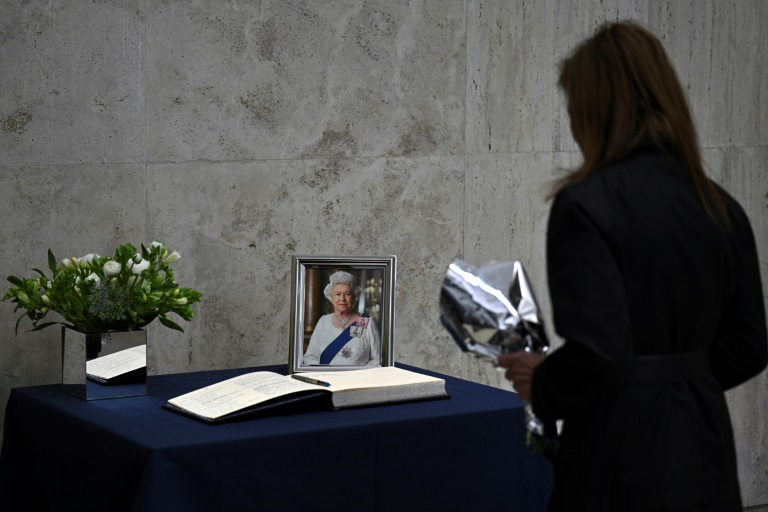
Her London palace has become a magnet for thousands of mourners, with flowers piling up in one of many poignant signs of the genuine reverence felt for her.

“She has been our monarch all my life,” said Joan Russell, a 55-year-old project manager from northeast London, tears running down her cheeks.

– ‘Awesome responsibility’ –

Leading two days of tributes to the queen in parliament, Truss — only appointed by the late monarch on Tuesday — offered the nation’s support to Charles as she acknowledged the “awesome responsibility” now upon him.

While the government has said there is no obligation on organisations to suspend business during its 10-day mourning period, many are doing so out of respect.

England’s Premier League postponed all matches this weekend, while railway and postal workers halted upcoming strikes over pay amid soaring inflation and spiralling energy prices gripping Britain.

The queen’s death comes as the government strives to rush through emergency legislation to tackle the kind of war-fuelled economic privation that marked the start of her reign in 1952.

Elizabeth’s public appearances had become rarer in the months since she spent an unscheduled night in hospital in October 2021.

Although smiling, she was visibly thinner and stooped in her last official photographs from Tuesday when she appointed Truss.

The new leader was the 15th prime minister of her reign, which started with Winston Churchill in 1952.

– Consistently popular –

Elizabeth’s body is expected to remain at Balmoral before being taken to the Palace of Holyroodhouse in Edinburgh on Sunday. 

From the Scottish capital, her coffin is due to travel to London on Tuesday to lie in state for several days.

Officials expect more than one million people to file past the catafalque in Westminster Hall, the oldest part of the UK parliament complex, before the televised funeral service at Westminster Abbey opposite.

The funeral will be a public holiday in the form of a Day of National Mourning.

Charles’s coronation, an elaborate ritual steeped in tradition and history, will take place in the same historic surroundings, as it has for centuries, on a date to be fixed.

Queen Elizabeth II came to the throne aged just 25 in a blighted post-war world dominated by political figures from Churchill to Mao Zedong and Joseph Stalin.

In the ensuing decades, the last vestiges of Britain’s vast empire crumbled, while at home Brexit shook the foundations of her kingdom. 

Her family endured a series of scandals and the death of Diana in a car crash in Paris in 1997, which she was initially seen as responding poorly to.

But throughout, she remained consistently popular and was head of state not just of the United Kingdom but 14 former British colonies, including Australia and Canada. 

Royal funerals: pomp, pageantry and sometimes privacy

Funerals for senior royals since World War II have tended to be very public affairs, with pomp, pageantry and popular fervour.

– 1952: King George VI –

On February 6, 1952, King George VI died suddenly after a long illness at the age of 56.

At his funeral on February 15, his coffin was carried to Paddington station in west London on a gun carriage from Westminster Hall at the Palace of Westminster, where he lay in state, to St George’s Chapel, Windsor Castle. 

A silent crowd lined the route along London’s foggy streets during the three-hour procession. His eldest daughter, who at the age of 25 had become Queen Elizabeth II, followed in a horse-drawn coach.

A year later, on March 24, George’s mother, the dowager Queen Mary, died aged 85. Over two days, 120,000 people paid homage at Westminster.

– 1979: Lord Mountbatten –

On August 27, 1979, Louis Mountbatten, the queen’s cousin and last viceroy of India, was killed at the age of 79, by an Irish Republican Army bomb placed on his boat.

The assassination rocked the United Kingdom. Mountbatten was a decorated naval commander, uncle of Queen Elizabeth II’s husband, Prince Philip, and mentor of the couple’s eldest son and heir, Prince Charles.

On September 5, hundreds of thousands of people gathered in London along with representatives of the British armed forces, US Marines and French, Canadian, Indian and Burmese soldiers to pay him a solemn farewell.

An escort of six tanks took the coffin from Westminster Abbey to Waterloo station where it was transported to Romsey, near Southampton, southern England, for burial at the town’s abbey.

– 1997: Princess Diana –

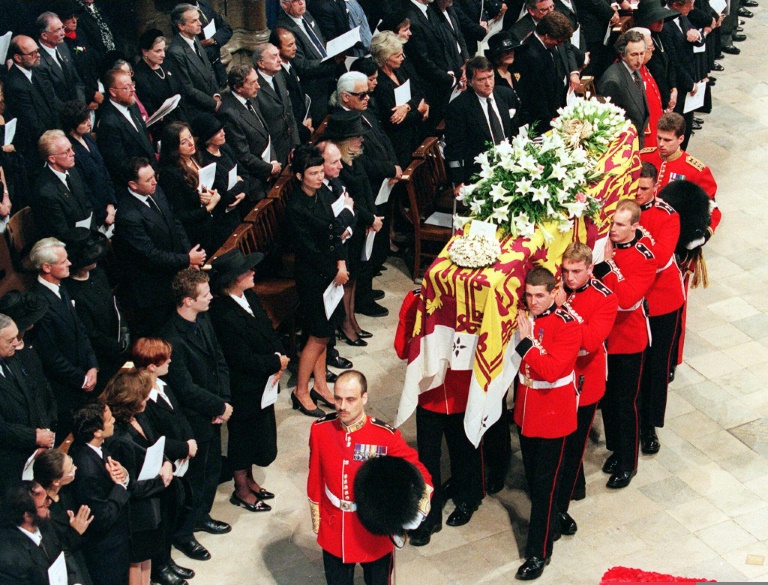
On September 6, 1997, the country came to a standstill for the funeral of Diana, Princess of Wales, who died in Paris on August 31 in a car crash aged 36.

Her death sent shockwaves around the world. Millions of people lined the streets and an estimated 2.5 billion viewers watched the service on television.

When the procession passed Buckingham Palace, Queen Elizabeth II, who had been criticised for her stand-offish initial reaction to the death of the former wife of Prince Charles, publicly bowed her head.

The couple’s two young sons, princes William and Harry, walked, heads bowed, behind their mother’s coffin. Diana was buried at Althorp, the family’s historic home in Northamptonshire, on an island in the middle of a lake.

– 2002: Princess Margaret –

Led by Queen Elizabeth II’s frail 101-year-old mother, also called Elizabeth, the royal family on February 15, 2002, laid to rest the monarch’s younger sister Princess Margaret, who had died six days earlier aged 71 after a series of strokes.

The private funeral was attended by some 450 family and friends, including 30 or so members of the royal family such as the queen, Margaret’s ex-husband Lord Snowdon, and her two children Viscount Linley and Lady Sarah Chatto.

Despite concerns over her own health, the Queen Mother attended the service at St George’s Chapel in Windsor Castle. 

It was exactly 50 years since she had buried her husband, King George VI. In a break with royal tradition, Margaret was cremated.

– 2002: The Queen Mother –

Just seven weeks after Margaret, the Queen Mother, Queen Elizabeth, died in her sleep on March 30 at Windsor. Her funeral on April 9 marked the end of an era. 

The royal matriarch was the last empress consort of India and a link to a bygone age. She was much loved as a symbol of resistance to the Nazi enemy during World War II.

Over four days, more than 200,000 people filed past her coffin paying their respects. Her funeral at Westminster Abbey was attended by 2,000 people.

More than a million people lined the 37-kilometre (23-mile) route taken by the funeral procession to Windsor, where she was interred with her husband at the King George VI memorial chapel, and alongside Margaret’s ashes.

– 2021: Prince Philip, Duke of Edinburgh –

Queen Elizabeth II’s husband of 73 years died on April 9, 2021, just a few months shy of his 100th birthday and after a lengthy stay in hospital for a heart condition.

Coronavirus restrictions limited his funeral on April 18 to just 30, with social distancing, face masks — and no public crowds.

The duke’s coffin was borne to St George’s Chapel on a specially adapted Land Rover he had designed himself.

His remains were interred in the Royal Vault at Windsor, with instructions to be transferred on his wife’s death to the King George VI memorial chapel.

Pentagon combines sea drones, AI to police Gulf region

Iran’s recent seizure of unmanned US Navy boats shined a light on a pioneering Pentagon program to develop networks of air, surface and underwater drones for patrolling large regions, meshing their surveillance with artificial intelligence.

The year-old program operates numerous unmanned surface vessels, or USVs, in the waters around the Arabian peninsula, gathering data and images to be beamed back to collection centers in the Gulf.

The program operated without incident until Iranian forces tried to grab three seven-meter Saildrone Explorer USVs in two incidents, on August 29-30  and September 1.

In the first, a ship of Iran’s Islamic Revolutionary Guard Corps hooked a line to a Saildrone in the Gulf and began towing it away, only releasing it when a US Navy Patrol boat and helicopter sped to the scene. 

In the second, an Iranian destroyer picked up two Saildrones in the Red Sea, hoisting them aboard.

Two US Navy destroyers and helicopters quickly descended, and persuaded the Iranians to give them up the next day, but only after stripping cameras from them, according to the US military.

The Iranians said the USVs were in international shipping lanes and were picked up “to prevent possible accidents.”

The US Navy said the USVs were operating well out of shipping lanes and unarmed.

Vice Admiral Brad Cooper, commander of US Naval Forces Central Command, called the Iranian actions “flagrant, unwarranted and inconsistent with the behavior of a professional maritime force.” 

US forces “will continue to fly, sail and operate anywhere international law allows,” he added.

– One year at sea –

The drones are operated by the Bahrain-based US 5th Fleet’s Task Force 59, created last year to integrate unmanned systems and artificial intelligence into Middle East operations.

Airborne and subsea drones are pretty well developed and proven, but unmanned surface boats are much newer and yet essential for the future, 5th Fleet spokesman Commander Tim Hawkins told AFP. 

Since starting last year, the US Navy and regional partners have deployed both slow USVs like Saildrones and battery-powered speedboats like the Mantas T-12.

Equipped with solar panels and sail wings, the Saildrones carry multiple sensors and cameras, and are designed to spend up to a year at sea transmitting data by satellite.

San Francisco-based Saildrone operates around 100 vessels around the world for clients including the Pentagon, major oceanographic institutes, meteorological agencies, and groups studying fisheries and pollution.

“Having circumnavigated Antarctica in 2019 and then having sailed through the eye of a category-four hurricane last year, there really isn’t any maritime environment our drones cannot operate,” said Saildrone spokeswoman Susan Ryan.

– Focus on Iranian activities –

In the Gulf, Hawkins would only say that they collect information for “enhancing our vigilance of the surrounding seas and strengthening our regional deterrence posture.”

But Iranian activities are likely the main target. 

Iran also patrols the region and has accosted and seized foreign commercial vessels and harassed US Navy ships in several tense confrontations in recent years.

The US Navy has sought to prevent Iran from shipping weapons to Yemen’s Houthi rebels and other groups, and also helps enforce sanctions on Iran.

The key, Hawkins said, is taking the information collected from all sorts of unmanned sources, in the air, on the ground and on the sea, and making sense of it quickly.

Artificial intelligence helps identify unusual activity, like unnoticed vessels, in the USV data that human observers might miss.

“You need artificial intelligence to pick out what warrants more attention,” he said.

– No secret –

Hawkins said it was unclear why only after a year into the program that the Iranians suddenly decide to try to retrieve some Saildrones.

None of what the US is doing is secret, he noted. 

The program was announced last September, and in February the 5th Fleet hosted International Maritime Exercise 2022, which brought together 10 countries and more than 80 USVs to try out in the Gulf.

Even so, the US chose to place Task Force 59 in the tension-filled Gulf instead of another less challenging region, and the activities apparently have Tehran bothered. 

The US military says the program is in part about developing tactics and doctrines for operating USVs, including learning how to deal with a country like Iran trying to grab them off the sea.

Right now the US operates them with manned surface vessels nearby to deal with interference.

“You can’t just go pick up stuff out of the ocean that has a country’s flag on it,” said one US official.

“If it’s the sovereign property of our nation, they have to give it over,” the official said.

Argentine reverence for Queen Elizabeth marred by Falklands memories

Argentines wavered between admiration and disillusion in appraising the legacy of Queen Elizabeth II of Britain, a country with which they share a complex history marred by a territorial war fought brutally on her watch.

The government in Buenos Aires reacted swiftly to news of the monarch’s demise, assuring the British people it shared their grief in this “painful moment.”

The Argentine press expressed its open reverence, declaring the queen a “symbol of the 20th century” and describing her as someone “we knew better than our own aunts.”

But on the streets, praise for the queen’s record was clouded by lingering hurt over the 1982 war over the Falkland Islands that both countries claim as their own.

“I would have liked the queen to have returned the islands to us before she died,” home-maker Maria Lujan Rodriguez, 51, told AFP in Buenos Aires.

Celia Carlen, 88, was another among those to lay flowers at the British embassy in the capital for a “very sensible, balanced” monarch.

The islands, yes, “I think they should give them back to us. But I separate the two things,” said Carlen.

During the war, which lasted 74 days and left more than 900 dead — 649 Argentinian and 255 British soldiers as well as three inhabitants of the island — Elizabeth was the target of much vitriol, many say misaddressed.

At the time, fans of football — a sport adopted from Britain to become all but a religion in Argentina — sang songs referring to her as “the most stupid queen.”

– ‘Archaic system’ –

Argentine political scientist Rosendo Fraga underlined the war had been a political decision by the government of Prime Minister Margaret Thatcher.

The monarchy has no executive or policy-making power, but the queen’s public profile made her an easy target for public invective.

Mirtha Legrand, a 95-year-old TV host and celebrity just 10 months younger than the queen, summed up the ambivalence Argentines feel.

“It is very painful. I’ve been following her since she was crowned at 25,” said Legrand.  “She was a great queen, but I cannot forget that she ruled during the Falklands War. I cannot forget. It was a very sad moment for everyone.”

Two nations share a long history with many ups and downs.

Two deadly British invasions of Buenos Aires in 1806 and 1807 were followed by a period of economic investment that saw British money poured into agriculture, energy, and the largest railway network in Latin America.

Then, war struck yet again.

Argentina sent soldiers to lay claim to the Falkland Islands off the Patagonian coast, angering Thatcher.

With the queen’s okay, the prime minister sent nearly 30,000 troops halfway round the world to retake the islands that Argentina has claimed as its own since 1833 and calls the “Malvinas.”

The queen’s own son Prince Andrew, then 22, was part of the deployment as a helicopter pilot.

Britain emerged victorious, but the campaign left a deep wound, despite diplomatic and economic ties recovering since then.

The Argentina-based Center of Falklands War Veterans said in a statement Elizabeth II had “embodied the suffering of peoples subjugated under colonial and economic rule throughout her reign, an archaic system.”

In April this year, at a ceremony to commemorate the 40th anniversary of the war, President Alberto Fernandez reaffirmed: “The Falklands were, are and will be Argentine.” 

– ‘Bravo Lilibet’ –

A poll last year found more than 81 percent of Argentines support the claim to sovereignty over the islands.

But in a 2013 referendum among Falkland Islanders, 97 percent voted to stay within the British realm, prompting the queen to declare it an overseas territory.

She raised ire in Buenos Aires by telling parliament at the time that Britain “will ensure the security, good governance and development of the Overseas Territories, including by protecting the Falkland Islanders’… right to determine their political futures.”

One of the monarch’s last acts, in May this year, was to declare the settlement of Port Stanley (called Puerto Argentino by Argentina) the official “capital” city of the islands. 

“This exposes the colonial nature of the illegal and illegitimate occupation of our islands,” the Argentine government shot back.

For retired teacher Elizabeth Farinez, 67, there was a “somewhat conflictive relationship with English people, but we must recognize that she (Elizabeth) was quite a lady. 

“We should say: ‘Bravo Lilibet, you did very well, for seventy years you ruled England very well’.”

Why go back to the Moon?

On September 12, 1962, then US president John F Kennedy informed the public of his plan to put a man on the Moon by the end of the decade.

It was the height of the Cold War and America needed a big victory to demonstrate its space superiority after the Soviet Union had launched the first satellite and put the first man in orbit.

“We choose to go to the Moon,” Kennedy told 40,000 people at Rice University, “because that challenge is one that we are willing to accept, one we are unwilling to postpone, and one which we intend to win.”

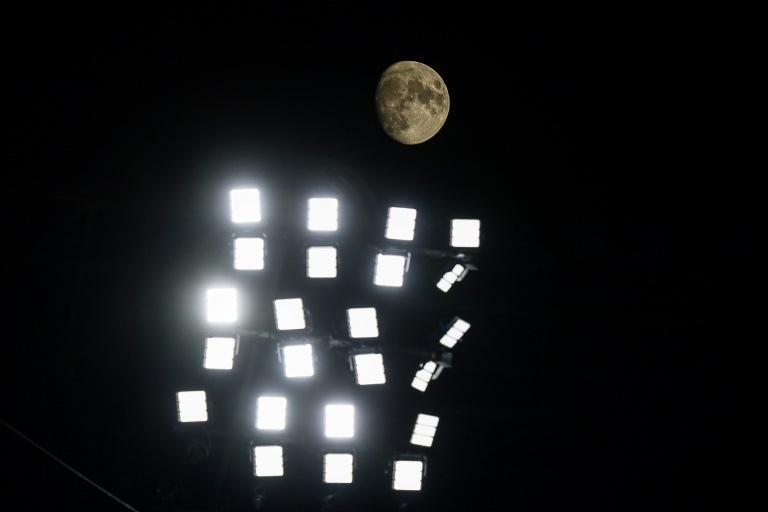
Sixty years on, the United States is about to launch the first mission of its return program to the Moon, Artemis. But why repeat what has already been done?

Criticism has risen in recent years, for example from Apollo 11 astronaut Michael Collins, and the Mars Society founder Robert Zubrin, who have long advocated for America to go directly to Mars.

But NASA argues re-conquering the Moon is a must before a trip to the Red Planet. Here’s why.

– Long space missions –

NASA wants to develop a sustainable human presence on the Moon, with missions lasting several weeks –- compared to just a few days for Apollo. 

The goal: to better understand how to prepare for a multi-year round trip to Mars. 

In deep space, radiation is much more intense and poses a real threat to health. 

Low Earth Orbit, where the International Space Station (ISS) operates, is partly shielded from radiation by the Earth’s magnetic field, which isn’t the case on the Moon. 

From the first Artemis mission, many experiments are planned to study the impact of this radiation on living organisms, and to assess the effectiveness of an anti-radiation vest. 

What’s more, while the ISS can often be resupplied, trips to the Moon — a thousand times further — are much more complex. 

To avoid having to take everything with them, and to save costs, NASA wants to learn how to use the resources present on the surface. 

In particular, water in the form of ice, which has been confirmed to exist on the lunar south pole, could be transformed into rocket fuel by cracking it into its separate hydrogen and oxygen atoms.

– Testing new gear –

NASA also wants to pilot on the Moon the technologies that will continue to evolve on Mars. First, new spacesuits for spacewalks.

Their design was entrusted to the company Axiom Space for the first mission which will land on the Moon, in 2025 at the earliest. 

Other needs: vehicles  — both pressurized and unpressurized — so that the astronauts can move around, as well as habitats.

Finally, for sustainable access to an energy source, NASA is working on the development of portable nuclear fission systems. 

Solving any problems that arise will be much easier on the Moon, only a few days away, than on Mars, which can only be reached in at least several months.

– Establishing a waypoint –

A major pillar of the Artemis program is the construction of a space station in orbit around the Moon, called Gateway, which will serve as a relay before the trip to Mars. 

All the necessary equipment can be sent there in “multiple launches,” before finally being joined by the crew to set off on the long voyage, Sean Fuller, responsible for the Gateway program, told AFP.

“Kind of like you’re stopping at your gas station to make sure you get all the stuff, and then you’re off on your way.”

– Maintaining leadership over China –

Apart from Mars, another reason put forward by the Americans for settling on the Moon is to do so before the Chinese, who plan to send taikonauts by the year 2030.

China is the United States’ main competition today as the once proud Russian space program has withered.

“We don’t want China suddenly getting there and saying, “This is our exclusive territory,'” NASA boss Bill Nelson said in a recent interview.

– For the sake of science –

While the Apollo missions brought back to Earth nearly 400 kilograms of lunar rock, new samples will make it possible to further deepen our knowledge of this celestial object and its formation. 

“The samples that we collected during the Apollo missions changed the way we view our solar system,” astronaut Jessica Meir told AFP. “I think we can expect that from the Artemis program as well.”

She expects further scientific and technological breakthroughs too, just like during the Apollo era.

Why go back to the Moon?

On September 12, 1962, then US president John F Kennedy informed the public of his plan to put a man on the Moon by the end of the decade.

It was the height of the Cold War and America needed a big victory to demonstrate its space superiority after the Soviet Union had launched the first satellite and put the first man in orbit.

“We choose to go to the Moon,” Kennedy told 40,000 people at Rice University, “because that challenge is one that we are willing to accept, one we are unwilling to postpone, and one which we intend to win.”

Sixty years on, the United States is about to launch the first mission of its return program to the Moon, Artemis. But why repeat what has already been done?

Criticism has risen in recent years, for example from Apollo 11 astronaut Michael Collins, and the Mars Society founder Robert Zubrin, who have long advocated for America to go directly to Mars.

But NASA argues re-conquering the Moon is a must before a trip to the Red Planet. Here’s why.

– Long space missions –

NASA wants to develop a sustainable human presence on the Moon, with missions lasting several weeks –- compared to just a few days for Apollo. 

The goal: to better understand how to prepare for a multi-year round trip to Mars. 

In deep space, radiation is much more intense and poses a real threat to health. 

Low Earth Orbit, where the International Space Station (ISS) operates, is partly shielded from radiation by the Earth’s magnetic field, which isn’t the case on the Moon. 

From the first Artemis mission, many experiments are planned to study the impact of this radiation on living organisms, and to assess the effectiveness of an anti-radiation vest. 

What’s more, while the ISS can often be resupplied, trips to the Moon — a thousand times further — are much more complex. 

To avoid having to take everything with them, and to save costs, NASA wants to learn how to use the resources present on the surface. 

In particular, water in the form of ice, which has been confirmed to exist on the lunar south pole, could be transformed into rocket fuel by cracking it into its separate hydrogen and oxygen atoms.

– Testing new gear –

NASA also wants to pilot on the Moon the technologies that will continue to evolve on Mars. First, new spacesuits for spacewalks.

Their design was entrusted to the company Axiom Space for the first mission which will land on the Moon, in 2025 at the earliest. 

Other needs: vehicles  — both pressurized and unpressurized — so that the astronauts can move around, as well as habitats.

Finally, for sustainable access to an energy source, NASA is working on the development of portable nuclear fission systems. 

Solving any problems that arise will be much easier on the Moon, only a few days away, than on Mars, which can only be reached in at least several months.

– Establishing a waypoint –

A major pillar of the Artemis program is the construction of a space station in orbit around the Moon, called Gateway, which will serve as a relay before the trip to Mars. 

All the necessary equipment can be sent there in “multiple launches,” before finally being joined by the crew to set off on the long voyage, Sean Fuller, responsible for the Gateway program, told AFP.

“Kind of like you’re stopping at your gas station to make sure you get all the stuff, and then you’re off on your way.”

– Maintaining leadership over China –

Apart from Mars, another reason put forward by the Americans for settling on the Moon is to do so before the Chinese, who plan to send taikonauts by the year 2030.

China is the United States’ main competition today as the once proud Russian space program has withered.

“We don’t want China suddenly getting there and saying, “This is our exclusive territory,'” NASA boss Bill Nelson said in a recent interview.

– For the sake of science –

While the Apollo missions brought back to Earth nearly 400 kilograms of lunar rock, new samples will make it possible to further deepen our knowledge of this celestial object and its formation. 

“The samples that we collected during the Apollo missions changed the way we view our solar system,” astronaut Jessica Meir told AFP. “I think we can expect that from the Artemis program as well.”

She expects further scientific and technological breakthroughs too, just like during the Apollo era.

Close Bitnami banner
Bitnami