World

Hong Kong jails five for sedition over children's books

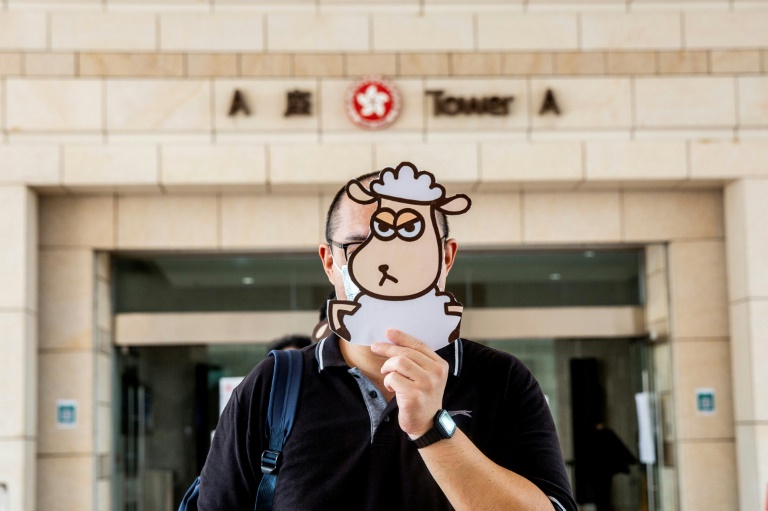
Hong Kong jailed five speech therapists for sedition on Saturday over a series of illustrated children’s books that portrayed the city’s democracy supporters as sheep defending their village from wolves.

They join a growing list of residents jailed under a colonial-era sedition offence which authorities have deployed alongside a national security law introduced by Beijing in 2020 to stamp out dissent.

The group, who are all in their twenties and belonged to a speech therapists’ union, have been behind bars for over a year while awaiting a verdict. 

They were all handed a 19-month jail term for a picture book series that began in 2020 to explain Hong Kong’s democracy movement to children. The group could be released in 31 days after deductions for time served, one of their lawyers estimated. 

Three of them struck a defiant tone during Saturday’s sentencing. 

Melody Yeung told the court she did not regret her choices and hopes to always stand on the side of the sheep.

“My only regret is I couldn’t publish more picture books before getting arrested.”

Defendant Sidney Ng’s lawyer quoted his client as saying the prosecution “had the objective effect of intimidating civil society and alienating Hong Kongers from one another”.

Judge Kwok Wai-kin scolded the defendents for “brainwashing” children and sowing the “seed of instability” in the city and across China.

The judge, handpicked by Hong Kong’s leader from a pool of jurists to hear national security cases, had convicted the group on Wednesday for conspiring to spread seditious content.

– ‘People’s history’ –

Prosecutors had argued the books contained “anti-China sentiment” and were aimed at “inciting readers’ hatred against the mainland authorities”.

In one book, a village of sheep fights off invading wolves, while another portrays the canines as spreading disease in the ovine hamlet.

On Saturday, the judge said the books were “a brainwashing exercise” and there was clear evidence of fear, hatred and discontent being instilled in children’s minds.

“Once (the children) had internalised this mindset, the seed of instability will be sowed,” he said.

But the defendants maintained the books chronicled “history from the people’s perspective” and were meant to help children understand systemic injustice in society.

“Rather than being seditious, (the books) were recording courageous acts for a just cause,” Ng said.

Amnesty International, which recently exited Hong Kong because of the national security law, described the convictions as “an absurd example of unrelenting repression”.

Hong Kong was a bastion of free expression within China and home to a vibrant and outspoken publishing industry.

But Beijing has unleashed a sweeping political crackdown on the city in response to huge and sometimes violent democracy protests three years ago.

The sedition law, which carries a maximum sentence of two years in jail, was dormant for decades but has recently been embraced by police and prosecutors.

Dogs, drones and a happy ending for Venezuela's rescued 'fanatics'

Maria Villamizar feared the worst when she learned 16 people had vanished in Venezuela’s mountain town of La Grita, a famous meeting point for Catholic pilgrims near the Colombia border.

“It was shocking because we had never heard of something like this here,” Villamizar, a government employee in the farming town of 90,000, told AFP on Friday. 

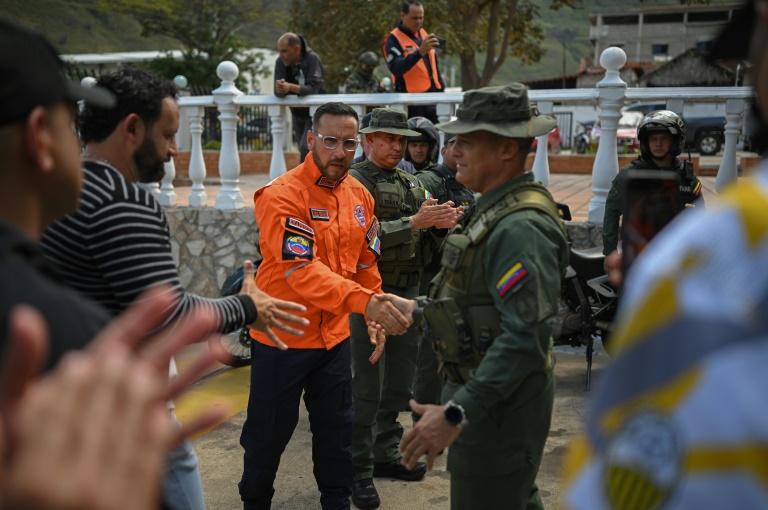
More than 160 police officers aided by dogs and drones were deployed to find the group after they went missing on August 22, when they set off for a religious retreat, leaving their cell phones behind to avoid being disturbed.

Local media labeled the group “religious fanatics” and a cult of “extraterrestrials” who were waiting for “the end of the world.”

Officers searched for days in the mountains before announcing on Thursday that the group, which included a 20-day-old baby, had been located and were safe and sound on a farm called El Rodeo.

Agents showed the group videos on their phones of locals expressing concern about them, said Yesnardo Canal, a local police officer.

“The children, innocently, said they had become famous, but the adults were ashamed,” and many apologized, Canal said.

“They were surprised. The last thing they thought was that all this commotion was happening.”

All 16 were transferred back to La Grita early Friday and have undergone medical and psychological examinations, police said.

The news triggered relief across La Grita.

“Thank God they are fine,” Villamizar said in a local church, standing near towering stained glass windows and a figure of Jesus Christ that local Catholics credit for multiple miracles.

“There was anxiety” and “very crazy theories,” said Deivis Marquez, 30, deacon of the church.

“For us it was a great joy” that the lost people, who live in and around La Grita, turned up, he said.

“Everywhere you went” in the town, people were talking about the missing group, said Maria Isabel Rolon, 53, at her street stall in front of the basilica where she sells paintings and holy cards.

– ‘It was not a game’ –

Some parents have expressed outrage that their children were taken on the retreat.

A father of six minors in the group asked police for help when he was unable to reach them, police told AFP.

Another parent said their 13-year-old had gone on the retreat without their permission. 

“It was not a show,” said Yeilen Gutierrez, the 13-year-old’s aunt. “It was not a game, it was a child who was missing.”

After days of anxiety, calm has now returned to La Grita.

The town is an important agricultural hub in Venezuela, and has a certain mystique for the Catholic parishioners. 

Every year on August 6 the city receives hundreds of pilgrims who go to give “thanks” to the Christ of La Grita for his “favors”.

Locals are “deeply religious people,” said Juan Escalante, mayor of the Jauregui municipality, to which La Grita belongs. 

“It is important that we receive these families with open arms.”

Charles III to be proclaimed king after vowing 'lifelong service'

Britain’s Charles III will officially be proclaimed king in a ceremony on Saturday, a day after he vowed in his first speech to mourning subjects that he would emulate his “darling mama”, Queen Elizabeth II.

The 73-year-old automatically became monarch upon the queen’s death Thursday, but an Accession Council ceremony at St James’s Palace early Saturday is a constitutional formality to recognise his sovereignty. 

Featuring trumpets and a balcony proclamation, the pomp-filled protocol is the latest part of a 10-day programme of official mourning — which will last even longer for the royals — held across Britain leading up to the queen’s funeral.

An emotional Charles set the tone for his reign in a televised address Friday in which he hailed his mother’s “unswerving devotion” during her record-breaking seven decades on the throne.

“Queen Elizabeth’s was a life well lived, a promise with destiny kept, and she is mourned most deeply in her passing. That promise of lifelong service I renew to you all today,” he said.

The speech dominated the front pages of Britain’s newspapers on Saturday, with his heartfelt tribute to his “darling mama” headlining the Daily Telegraph, Daily Express, Daily Mail, The Sun, and Daily Star.

Charles looking pensive as he arrived at Buckingham Palace for the first time as king made the front page image on the Independent, Guardian and The Times, which also carried the words “God Save the King”.

The new king also named his elder son and next heir Prince William, 40, as the new Prince of Wales, while expressing love for his younger son Harry and daughter-in-law Meghan. 

The move means William’s wife Kate assumes the Princess of Wales title once held by his mother and Charles’ ex-wife, the late Princess Diana.

– Flower, cheers, kisses –

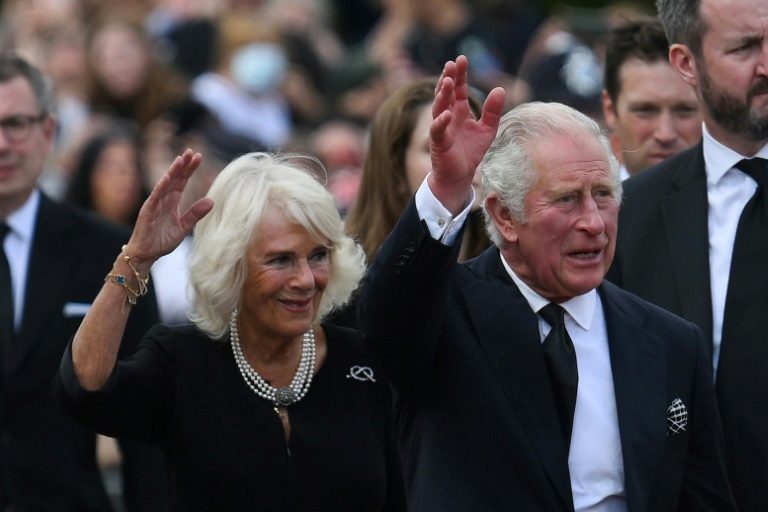
Crowds have massed outside Buckingham Palace both to mourn the queen and to wish Charles well, some of them shouting “God Save the King” as he greeted them on his return from Scotland on Friday.

The oldest monarch to ascend to the British throne, he received flowers, cheers and even kisses after travelling from the Balmoral retreat where his 96-year-old mother passed away peacefully.  

Earlier, church bells and ceremonial gun salutes for the departed monarch rang out across the United Kingdom as it tries to come to terms with the passing of the only monarch most have ever known.

Charles will be formally proclaimed king by the Accession Council, comprising other royals and political and religious figures including Queen Consort Camilla, Prince William, Prime Minister Liz Truss and the Archbishop of Canterbury.

The centuries-old proceedings will be televised for the first time.

The council will first meet without Charles at 10:00 am (0900 GMT) inside St James’s Palace to proclaim him. Then he will join it to make a formal declaration as king and sign official documents. 

The “principal proclamation” will be read to the public at 11:00 am from a balcony at St James’s Palace — which sits near Buckingham Palace — following a fanfare by three trumpeters. 

It will then also be read out in Scotland, Northern Ireland and Wales.

– ‘His own person’ –

As Charles’s pre-recorded address was broadcast to the nation, dignitaries attended a remembrance service for his mother at St Paul’s Cathedral which saw the first official rendition of the updated national anthem “God Save the King”.

“Suddenly you feel that he’s his own person,” said Barbara Lewis, a retiree from west London who was among several hundred mourners outside the cathedral.

Buckingham Palace revealed Charles and other members of the royal family would observe an extended mourning period from now until seven days after her funeral.

The date of the funeral, which will be attended by heads of state and government, has yet to be officially announced but is expected to be on Monday, September 19.

US President Joe Biden has said he will attend. The Kremlin said Russian President Vladimir Putin will not.

The queen’s London palace has become a magnet for thousands of mourners, with flowers piling up in one of many poignant signs of the genuine reverence felt for her.

“She has been our monarch all my life,” said Joan Russell, a 55-year-old project manager from northeast London, tears running down her cheeks.

– ‘Awesome responsibility’ –

Leading two days of tributes to the queen in parliament, Truss — only appointed by the late monarch on Tuesday — offered the nation’s support to Charles as she acknowledged the “awesome responsibility” now upon him.

While the government has said there is no obligation on organisations to suspend business during its 10-day mourning period, many are doing so out of respect.

England’s Premier League postponed all matches this weekend, while railway and postal workers halted upcoming strikes over pay amid soaring inflation and spiralling energy prices gripping Britain.

The queen’s death comes as the government strives to rush through emergency legislation to tackle the kind of war-fuelled economic privation that marked the start of her reign in 1952.

Elizabeth’s public appearances had become rarer in the months since she spent an unscheduled night in hospital in October 2021.

Although smiling, she was visibly thinner and stooped in her last official photographs from Tuesday when she appointed Truss.

The new leader was the 15th prime minister of her reign, which started with Winston Churchill in 1952.

– Consistently popular –

Elizabeth’s body is expected to remain at Balmoral before being taken to the Palace of Holyroodhouse in Edinburgh on Sunday. 

From the Scottish capital, her coffin is due to travel to London on Tuesday to lie in state for several days.

Officials expect more than one million people to file past the catafalque in Westminster Hall, the oldest part of the UK parliament complex, before the televised funeral service at Westminster Abbey opposite.

The funeral will be a public holiday in the form of a Day of National Mourning.

Charles’s coronation, an elaborate ritual steeped in tradition and history, will take place in the same historic surroundings, as it has for centuries, on a date to be fixed.

Queen Elizabeth II came to the throne aged just 25 in a blighted post-war world dominated by political figures from Churchill to Mao Zedong and Joseph Stalin.

In the ensuing decades, the last vestiges of Britain’s vast empire crumbled, while at home Brexit shook the foundations of her kingdom. 

Her family endured a series of scandals and the death of Diana in a car crash in Paris in 1997, which she was initially seen as responding poorly to.

But throughout, she remained consistently popular and was head of state not just of the United Kingdom but 14 former British colonies, including Australia and Canada. 

Dogs, drones and a happy ending for Venezuela's rescued 'fanatics'

Maria Villamizar feared the worst when she learned 16 people had vanished in Venezuela’s mountain town of La Grita, a famous meeting point for Catholic pilgrims near the Colombia border.

“It was shocking because we had never heard of something like this here,” Villamizar, a government employee in the farming town of 90,000, told AFP on Friday. 

More than 160 police officers aided by dogs and drones were deployed to find the group after they went missing on August 22, when they set off for a religious retreat, leaving their cell phones behind to avoid being disturbed.

Local media labeled the group “religious fanatics” and a cult of “extraterrestrials” who were waiting for “the end of the world.”

Officers searched for days in the mountains before announcing on Thursday that the group, which included a 20-day-old baby, had been located and were safe and sound on a farm called El Rodeo.

Agents showed the group videos on their phones of locals expressing concern about them, said Yesnardo Canal, a local police officer.

“The children, innocently, said they had become famous, but the adults were ashamed,” and many apologized, Canal said.

“They were surprised. The last thing they thought was that all this commotion was happening.”

All 16 were transferred back to La Grita early Friday and have undergone medical and psychological examinations, police said.

The news triggered relief across La Grita.

“Thank God they are fine,” Villamizar said in a local church, standing near towering stained glass windows and a figure of Jesus Christ that local Catholics credit for multiple miracles.

“There was anxiety” and “very crazy theories,” said Deivis Marquez, 30, deacon of the church.

“For us it was a great joy” that the lost people, who live in and around La Grita, turned up, he said.

“Everywhere you went” in the town, people were talking about the missing group, said Maria Isabel Rolon, 53, at her street stall in front of the basilica where she sells paintings and holy cards.

– ‘It was not a game’ –

Some parents have expressed outrage that their children were taken on the retreat.

A father of six minors in the group asked police for help when he was unable to reach them, police told AFP.

Another parent said their 13-year-old had gone on the retreat without their permission. 

“It was not a show,” said Yeilen Gutierrez, the 13-year-old’s aunt. “It was not a game, it was a child who was missing.”

After days of anxiety, calm has now returned to La Grita.

The town is an important agricultural hub in Venezuela, and has a certain mystique for the Catholic parishioners. 

Every year on August 6 the city receives hundreds of pilgrims who go to give “thanks” to the Christ of La Grita for his “favors”.

Locals are “deeply religious people,” said Juan Escalante, mayor of the Jauregui municipality, to which La Grita belongs. 

“It is important that we receive these families with open arms.”

UN chief says world paying 'horrific price' for fossil fuels folly

United Nations Secretary-General Antonio Guterres said developing nations were paying a “horrific price” for the world’s reliance on fossil fuels, as he toured parts of Pakistan hit by floods blamed on climate change.

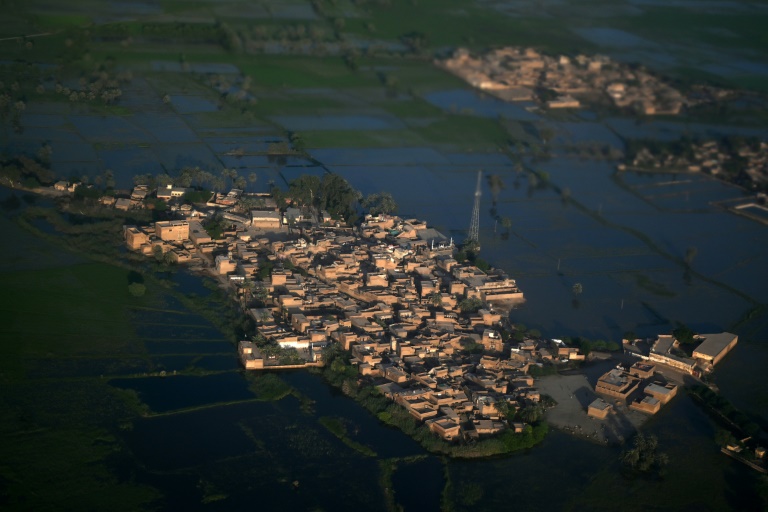
Nearly 1,400 people have died in flooding that covers a third of the country — an area the size of the United Kingdom — wiping out crops and destroying homes, businesses, roads and bridges.

Guterres hopes his visit will galvanise support for Pakistan, which needs at least $10 billion to repair damaged infrastructure.

“Pakistan and other developing countries are paying a horrific price for the intransigence of big emitters that continue to bet on fossil fuels,” Guterres said in a tweet, shortly before heading to see some of the most flood-affected areas.

“From Islamabad, I am issuing a global appeal: Stop the madness. Invest in renewable energy now. End the war with nature.”

Pakistan receives heavy — often destructive — rains during its annual monsoon season, which is crucial for agriculture and water supplies.

But downpours as intense as this year’s have not been seen for decades.

– ‘Insanity and suicide’ –

On Friday Guterres lamented the lack of attention the world gave to climate change — particularly the industrialised nations that scientists blame.

“This is insanity, this is collective suicide,” he said.

Pakistan is responsible for less than one percent of global greenhouse gas emissions, but is eighth on a list compiled by the NGO Germanwatch of countries most vulnerable to extreme weather caused by climate change.

Guterres is touring flood-hit parts of the south on Saturday, and will also visit Mohenjo-daro, a centuries-old UNESCO-designated world heritage site threatened by the deluge.

Some 33 million people have been affected by the floods, which have destroyed around two million homes and business premises, washed away 7,000 kilometres (4,500 miles) of roads and collapsed 500 bridges.

The effect of the torrential rain has been twofold — destructive flash floods in rivers in the mountainous north, and a slow accumulation of water in the southern plains.

“If he comes and sees us, Allah will bless him,” Rozina Solangi, a 30-year-old housewife from a flooded village near Sukkur, told AFP Friday.

“All the children, men and women are roasting in this scorching heat. We have nothing to eat, there is no roof on our heads. So he must do something for us poor.”

The meteorological office says Pakistan received five times more rain than normal in 2022. Padidan, a small town in Sindh province, has been drenched by more than 1.8 metres (71 inches) since the monsoon began in June.

Thousands of temporary campsites have mushroomed on slivers of dry land in the south and west — often roads and railway tracks are the only ground in a landscape of water.

With people and livestock cramped together, the camps are ripe for outbreaks of disease, with many cases of mosquito-borne dengue reported, as well as scabies.

UN chief says world paying 'horrific price' for fossil fuels folly

United Nations Secretary-General Antonio Guterres said developing nations were paying a “horrific price” for the world’s reliance on fossil fuels, as he toured parts of Pakistan hit by floods blamed on climate change.

Nearly 1,400 people have died in flooding that covers a third of the country — an area the size of the United Kingdom — wiping out crops and destroying homes, businesses, roads and bridges.

Guterres hopes his visit will galvanise support for Pakistan, which needs at least $10 billion to repair damaged infrastructure.

“Pakistan and other developing countries are paying a horrific price for the intransigence of big emitters that continue to bet on fossil fuels,” Guterres said in a tweet, shortly before heading to see some of the most flood-affected areas.

“From Islamabad, I am issuing a global appeal: Stop the madness. Invest in renewable energy now. End the war with nature.”

Pakistan receives heavy — often destructive — rains during its annual monsoon season, which is crucial for agriculture and water supplies.

But downpours as intense as this year’s have not been seen for decades.

– ‘Insanity and suicide’ –

On Friday Guterres lamented the lack of attention the world gave to climate change — particularly the industrialised nations that scientists blame.

“This is insanity, this is collective suicide,” he said.

Pakistan is responsible for less than one percent of global greenhouse gas emissions, but is eighth on a list compiled by the NGO Germanwatch of countries most vulnerable to extreme weather caused by climate change.

Guterres is touring flood-hit parts of the south on Saturday, and will also visit Mohenjo-daro, a centuries-old UNESCO-designated world heritage site threatened by the deluge.

Some 33 million people have been affected by the floods, which have destroyed around two million homes and business premises, washed away 7,000 kilometres (4,500 miles) of roads and collapsed 500 bridges.

The effect of the torrential rain has been twofold — destructive flash floods in rivers in the mountainous north, and a slow accumulation of water in the southern plains.

“If he comes and sees us, Allah will bless him,” Rozina Solangi, a 30-year-old housewife from a flooded village near Sukkur, told AFP Friday.

“All the children, men and women are roasting in this scorching heat. We have nothing to eat, there is no roof on our heads. So he must do something for us poor.”

The meteorological office says Pakistan received five times more rain than normal in 2022. Padidan, a small town in Sindh province, has been drenched by more than 1.8 metres (71 inches) since the monsoon began in June.

Thousands of temporary campsites have mushroomed on slivers of dry land in the south and west — often roads and railway tracks are the only ground in a landscape of water.

With people and livestock cramped together, the camps are ripe for outbreaks of disease, with many cases of mosquito-borne dengue reported, as well as scabies.

Japan emperor expected to attend Queen Elizabeth's funeral: media

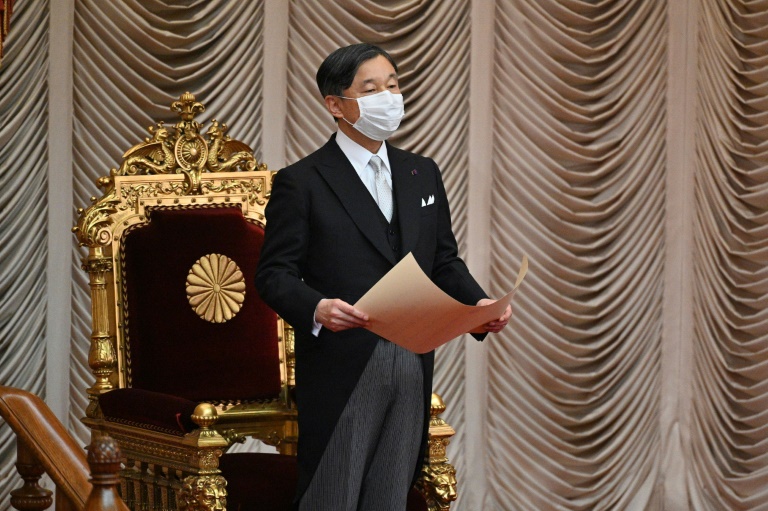
Japan’s Emperor Naruhito is expected to attend Queen Elizabeth’s state funeral, local media reported on Saturday.

If confirmed, this will be his first overseas trip since he ascended the Chrysanthemum throne in 2019 following his father’s abdication.

Naruhito was scheduled to visit Britain as his first overseas trip after the ascension, but it was postponed due to the pandemic.

Public broadcaster NHK reported Saturday that the Imperial Household Agency and the Japanese government are making arrangements, citing unnamed sources. 

Both were not immediately available to confirm the reports.

The Mainichi Shimbun daily noted that this is a rare response, as the emperor does not typically attend any funerals in Japan and overseas, though other members of the royal family do.

Empress Masako will also attend if her condition allows, reports said.

Local media cited close ties between Japanese and British royals as reasons for Naruhito’s possible attendance. 

Naruhito’s father Akihito attended the queen’s coronation in 1953 as the crown prince in place of then-emperor Hirohito. 

In 1975, the queen made the first visit to Japan by a British monarch and met Hirohito.  

In a statement released after her death, Naruhito hailed her “many achievements and contributions”, saying he felt “deep sorrow”. 

The 62-year-old emperor — who studied at Oxford University — thanked her for “many considerations she has given me during my studies and visits to the UK”. 

Prime Minister Fumio Kishida is also reportedly considering attending the funeral. 

Wide open race for Venice film fest prizes

The race was wide open ahead of awards night in Venice on Saturday, after a festival featuring a dark Marilyn Monroe biopic, an imprisoned Iranian director and a morbidly obese Brendan Fraser.

Critics have been deeply divided on many of the 23 films in competition at the 79th Venice Film Festival, but it has been a stellar year for individual actors.  

There was a huge standing ovation for Fraser, who made an unlikely comeback from the Hollywood wilderness as a 600-pound (272-kilogram) English professor in “The Whale”, sparking talk of Oscar nominations and a “Brendanaissance”.

Cate Blanchett is also an awards frontrunner for her performance as a classical music conductor in “Tar”, which takes a nuanced look at cancel culture.

And Hugh Jackman’s performance as a father dealing with a depressed teenager in “The Son” has been labelled the best of his career.

While some reviewers found the Monroe biopic “Blonde” too relentlessly grim, most were bowled over by the “ferociously emotional” performance from Cuban star Ana de Armas. 

Sexual identity has been a recurring theme across the 11-day festival, with Trace Lysette becoming the first trans actress to star in a competition entry for “Monica”.

Last year’s best actress winner Penelope Cruz played the mother to a trans teen in “L’Immensita”, whose director Emanuele Crialese admitted for the first time at its press conference that he was born a woman. 

– Politics and protest –

Picking the winners falls to a jury led by actor Julianne Moore, and also featuring Nobel-winning author Kazuo Ishiguro. 

A last-minute favourite for the top prize Golden Lion is “No Bears” by Iran’s Jafar Panahi, who was imprisoned for “propaganda against the system” in July. That was the subject of a flash-mob protest Friday on the Venice red carpet, led by Moore.

Another political film to win rave reviews was the documentary “All the Beauty and the Bloodshed”, which follows artist Nan Goldin and her fight against the Sackler family, held responsible for the opioid drug crisis in the United States. 

It is the latest from Laura Poitras, the journalist who first made contact with whistleblower Edward Snowden and won an Oscar for the resulting film, “Citizenfour”. 

There has also been a lot of love in Venice for “The Banshees of Inisherin”, a pitch-black Irish comedy-drama tracing the falling out of two friends played by Colin Farrell and Brendan Gleeson.

“Argentina 1985”, the true story of the lawyers who took on the country’s military junta, was also widely praised. 

Venice is seen as a launchpad for Academy Award campaigns, eight of the last 10 Best Director Oscars having gone to films that premiered at the festival.

Netflix had been hoping for a big year, but “Blonde” tested the patience of many critics, as did Mexico’s two-time Oscar winner Alejandro Gonzalez Inarrituto, with his fantastical semi-autobiography “Bardo”. 

The streamer is also behind “White Noise”, a sharp satire of US consumerism and academia starring Adam Driver — but that, too, got a mixed reception from reviewers. 

Was Queen Elizabeth II a media-savvy monarch?

Queen Elizabeth II’s coronation — broadcast live for eight straight hours by the BBC in 1953 — was the first major event of the television age.

Six decades later, aged 86, she showed a surprising gift for comedy, joining “James Bond” star Daniel Craig for a sketch in which both appeared to parachute into the opening ceremony of the 2012 London Olympics.

And she topped British television ratings last year with her final carefully choreographed Christmas message, a tradition she began in 1957.

But did that mean the queen — who often floated above the criticism some of her family attracted — could be considered media-savvy?  

Royal biographers are divided on how much mental space the queen gave to the media, which she kept at a respectful distance for the seven decades of her reign. 

She may officially have been the first British royal to embrace social platforms, with 12.3 million Instagram followers, though few believe she ever concerned herself much with her online profile.

– ‘Real acting’ –

But she knew how to play a role. 

Frank Cottrell-Boyce, who co-wrote the action hero sketch at the Olympics, as well as one with beloved fictional character Paddington Bear for her Platinum Jubilee this year, on Friday hailed her “brilliant” comic timing. 

“That’s real acting going on there. Paddington isn’t really in the room,” he told the BBC of the latter skit, in which the queen claimed she kept a marmalade sandwich in her handbag at all times. 

She decided early on to embrace mass media, historian Robert Lacey said, following the example of her grandfather George V.

The queen saw radio and television as a “way to talk to directly” to her subjects, he told AFP. 

Her first radio broadcast came at just 14 when she addressed British children at the start of World War II.

Over time, her Christmas speeches evolved from rather stilted affairs in a ballgown to highly sophisticated fireside chats — her office or sitting rooms carefully dressed with family photos to reflect her theme.

– ‘Innate reticence’ –

But the queen was less than enthusiastic about letting the cameras behind the curtain to peek at the Windsors’ private lives.

Royal biographers like Andrew Morton — whose study of her strained relationship with her sister Margaret appeared last year — suspect the queen’s innate reticence didn’t help her complicated ties to the media.

It was the family themselves that made the first breach when her husband Prince Philip invited the BBC into the Palace in 1969 to film the fly-on-the-wall documentary, “Royal Family”.

The queen’s press secretary at the time, William Heseltine, admitted in 2019 that “the queen was a reluctant convert, but became much more aware of the possibilities and was prepared to participate when it came to actual filming”.

The documentary was replete with awkward scenes of family barbecues and breakfasts, the royals using Tupperware, and Philip wondering if the queen’s father was “mad”. 

The naturalist David Attenborough, then a top BBC executive, even warned it risked “killing the monarchy”.

The film has not been shown since the 1970s, reportedly at the request of the Palace, and has been taken down every time it has appeared on YouTube.

– ‘Mystique of monarchy’ –

Despite that experience, historian Morton said the royal family “hitched their wagon to television in the 1980s… and so swapped the mystique of monarchy for what you might call the shallow applause of the studio audience”.

The author said the Palace has always tried to portray the royal family “like a swan, gliding beautifully along the surface of British society” despite the dramas going on internally.

Their press office, known as “the Abominable No Man because they always used to say ‘no comment’… defined the agenda,” he told the US public broadcaster PBS.

“They defined what was private and what was public and they would move it whenever they wished.”

Rather than undermining the institution, the British anti-monarchy group Republic has long claimed that the media and the royals have a symbiotic relationship.

“There is a huge disconnection between the media’s portrayal of public attitudes (towards the royals) and how people actually feel,” its head Graham Smith said.

He pointed to a poll saying most Britons were “not interested” in the queen’s Platinum Jubilee celebrations earlier this year. 

“If this is the public response to a celebration of her reign, then the monarchy will be in serious trouble” with King Charles, he added.

'Nobody knows where their village is': New inland sea swamps Pakistan

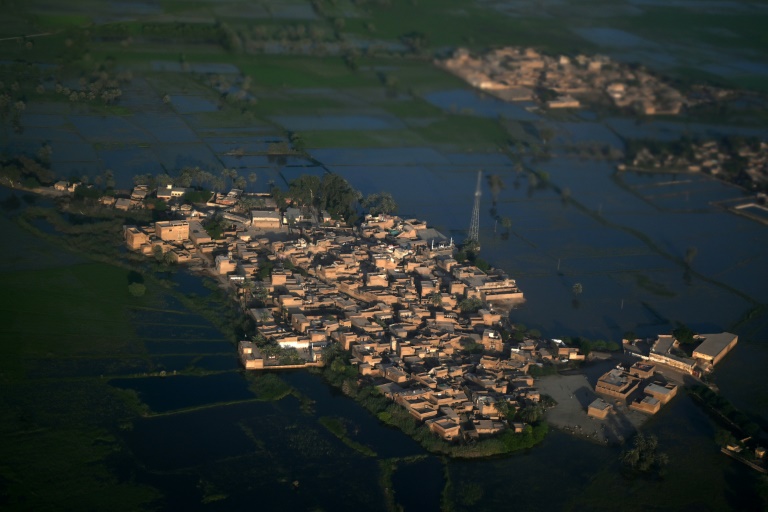
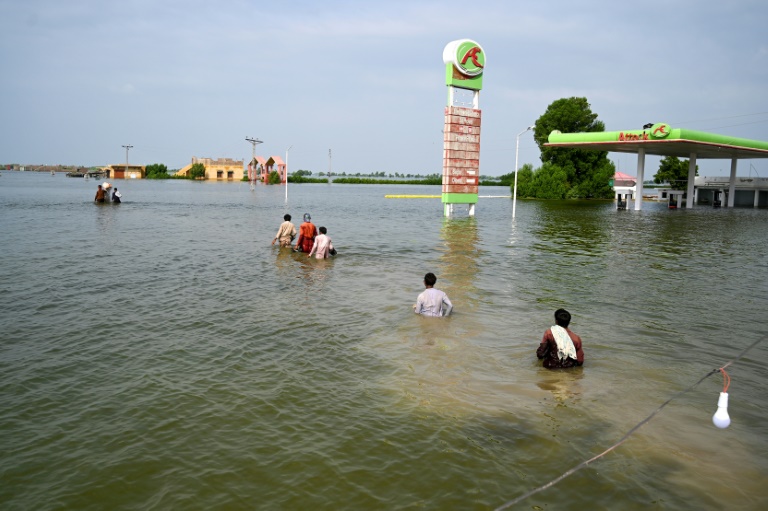
From a hastily erected embankment protecting Mehar city, mosque minarets and the price board of a gas station poke above a vast lake that has emerged, growing to tens of kilometres wide.

Beyond this shoreline in southern Sindh, hundreds of villages and swathes of farmland are lost beneath the water — destroyed by floods that have affected nearly a third of Pakistan. 

“Nobody knows where their village is anymore, the common man can no longer recognise his own home,” Ayaz Ali, whose village is submerged under nearly seven metres (23 feet) of water, told AFP.

The Sindh government says more than 100,000 people have been displaced by this new body of water, brought by record rains and the Indus River overflowing its banks.

Across the country, about 33 million people have been affected by the flooding, nearly two million homes and businesses destroyed, 7,000 kilometres (1.3 miles) of roads washed away and 256 bridges knocked out.

A bus conductor with a sharp memory, Ali acts as a navigator for the navy, identifying each submerged village by the pattern of electricity pylons and distinct tree lines. 

Navy volunteers cruise the waters on two lifeboats delivering aid donated by locals, ferrying people in need of medical care back to the city. 

With Ali’s help, they search out patches of high ground where families still shelter, refusing to evacuate despite a desperate situation worsened by the scorching heat. 

“Their homes and belongings are so precious to them,” said one serviceman, who asked not to be named, looking out at the expanse of water.  

“When I joined the navy, I could never have imagined doing this,” he added.

Engine cut, the boat navigates slowly through the tops of trees, and heads duck under power lines ahead of a hamlet of crumbling houses encircled by water. 

– ‘How can we leave?’ –

This time, dozens of people are waiting. 

Many still refuse to leave their homes, concerned their livestock — all that they have left — will be stolen or will die, and fearing a worse situation at the makeshift relief camps that have sprung up all over the country. 

“Our life and death is linked with our village, how can we leave?” said Aseer Ali, kneedeep in water, refusing to let his wife, who is eight months pregnant, evacuate.

Some relent -– men with fever, toddlers with diarrhoea, and an elderly woman silent in her anguish — are among those helped onto the boat that carries double its capacity on a weighed-down journey back to the city.

Among them is a young mother who had only recently lost her newborn when the water rose around her home last week. 

She sways dizzily from the effects of heat stroke, her two-year-old child also distressed by the burning midday sun -–  both repeatedly drenched in water by a navy serviceman. 

– ‘Immense need’ –

A new 10-kilometre mud embankment has so far held back the flood from Mehar city, with a population of hundreds of thousands. 

But the city has swelled with displaced victims who over the past three weeks have fled to makeshift camps in car parks, schools and on motorways. 

“More families keep arriving at the camp. They are in a terrible condition,” Muhammad Iqbal, from the Alkhidmat Foundation — a Pakistan-based humanitarian organisation that is the only welfare presence at the city’s largest camp, which hosts about 400 people. 

“There is an immense need for drinking water and toilet facilities,” he added, but they may have to wait longer — the government’s priority is to drain the flooded areas. 

Pressure has heaped on swollen dams and reservoirs, forcing engineers to make intentional breaches to save densely populated areas at the cost of worsening the situation in the countryside.

“They all have gone all out to protect the city but not the poor people of the rural areas,” said Umaida Solangi, a 30-year-old perched with her children on a wooden bed at a city camp. 

Close Bitnami banner
Bitnami