World

Stocks tank, dollar rises as traders prepare for big rate hikes

Equity markets suffered more losses in Asia on Wednesday and the dollar extended a rally after a forecast-beating US economic report gave new life to talk of a third straight blockbuster interest rate hike next month.

The services sector data showed the world’s top economy remained resilient in the face of surging prices and borrowing costs, highlighting the job the Federal Reserve has in taming inflation while trying to prevent a recession — a goal many observers doubt can be achieved.

The reading added to the gloom blanketing trading floors as investors face a range of headwinds including a worsening energy crisis in Europe, Russia’s war in Ukraine and Chinese economic woes caused by Covid-19 lockdowns.

“Overall, the (services) survey paints a picture of solid activity in the services sector of the US economy supported by wages growth suggesting the Fed still has more work to do in order to cool the economy,” said National Australia Bank’s Rodrigo Catril.

All three main indexes on Wall Street finished in the red Tuesday as they reopened after a long weekend, with expectations growing that the Fed will announce a third successive 75 basis-point rate hike later this month.

Several top Fed officials — including head Jerome Powell — have lined up in recent weeks to say their main focus is bringing inflation down from four-decade highs, even if that means tipping the economy into recession.

The prospect of more big rate hikes has sent the dollar soaring this year, and on Wednesday it hit a new 24-year high of 143.71 yen, leading to speculation the Bank of Japan will step in to support its currency.

The euro remained lodged below parity with the dollar, even as the European Central Bank prepares to ramp up rates, having done so in July for the first time in eight years.

And the greenback was also pushing towards a 37-year peak against sterling, which saw a brief rally Tuesday on reports new UK Prime Minister Liz Truss was planning a £130 billion ($150 billion) package to freeze energy bills.

The losses in New York were tracked by Asia, where Hong Kong, Tokyo, Sydney, Seoul and Taipei all lost at least one percent. Singapore, Wellington and Manila also fell, though Shanghai and Jakarta edged up.

“The September swoon is in play as a resilient economy paves the way for more Fed tightening,” said OANDA’s Edward Moya. 

“Stocks are going to struggle because too much of the (US) economy is doing well. The dovish pivot and the end of interest rate hikes with the December (Fed meeting) is not how this will play out.”

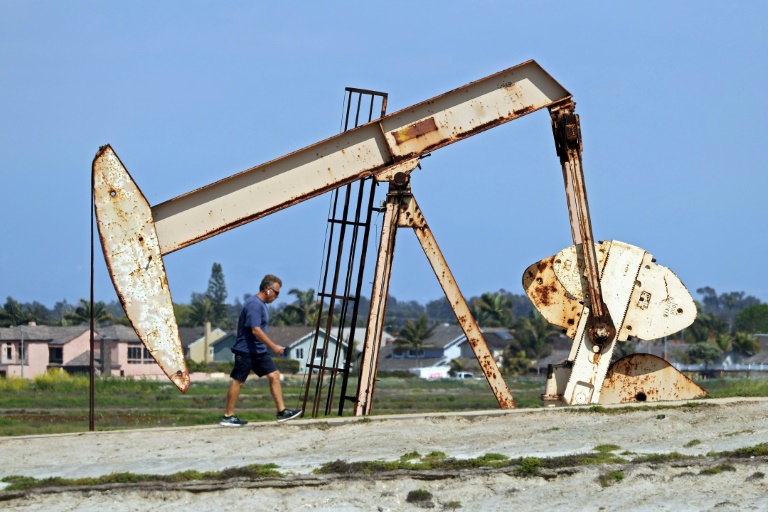
Expectations that leading economies will tip into recession, China’s lockdown of millions across the country and the stronger dollar continue to push oil prices lower, with both main contracts down more than one percent Wednesday.

Bets on a plunge in demand have seen the commodity tank about 20 percent in recent months, putting them below the levels seen just before Russia invaded Ukraine and sent prices skyrocketing.

And while concerns remain about supplies, OANDA’s Moya added: “The short-term crude demand outlook appears to be poised for another wave of China Covid-related lockdowns.

“Despite some better-than-expected US services data, global growth isn’t looking good at all and that is trouble for crude prices.”

– Key figures at around 0230 GMT –

Tokyo – Nikkei 225: DOWN 1.0 percent at 27,362.83 (break)

Hong Kong – Hang Seng Index: DOWN 1.4 percent at 18,943.18

Shanghai – Composite: UP 0.2 percent at 3,249.72

Euro/dollar: DOWN at $0.9892 from $0.9905 on Tuesday

Pound/dollar: DOWN at $1.1480 from $1.1519

Dollar/yen: UP at 143.40 yen from 142.80 yen

Euro/pound: UP at 86.16 pence from 85.97 pence

West Texas Intermediate: DOWN 1.6 percent at $85.50 per barrel

Brent North Sea crude: DOWN 1.2 percent at $92.69 per barrel

New York – Dow: DOWN 0.6 percent at 31145.30 (close)

London – FTSE 100: UP 0.2 percent at 7,300.44 (close) 
'Wrath of God': Israel's response to 1972 Munich massacre

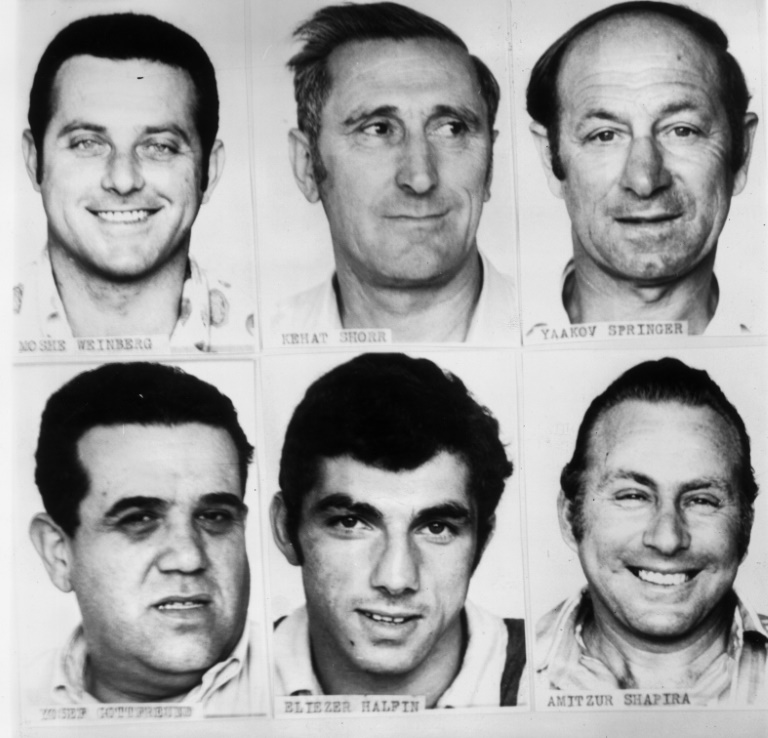
The killing of 11 Israelis at the 1972 Munich Olympics prompted Israel to turn to a strategy which endures to this day: deploying secret operatives abroad to assassinate its enemies.

Ever since the Mossad intelligence service embarked on its Operation “Wrath of God” to hunt down senior militants it blamed for the Munich bloodbath, it has covertly targeted Israel’s enemies overseas.

Half a century ago next week, Palestinian gunmen from the Black September militant group broke into the Olympic village and stormed the quarters of the Israeli athletes and their coaches.

After a violent hostage drama, worsened by the blunders of German security services, all the Israelis were dead — sparking deep dismay in the Jewish state less than three decades after the Holocaust.

“It was a real shock for the Israeli population,” recalls Ehud Barak, a former Israeli prime minister who at the time served as a commando leading an elite military unit.

“The combination of the nature of the assassinations and the helplessness of the athletes who were attacked and the fact that it was on German soil somehow resonates,” he told AFP.

The killings sparked “deep sorrow with a lot of outrage” and a concerted drive to “take revenge, to kill (the) people involved” and to prevent similar attacks in the future, he said.

The clandestine programme was spearheaded by then Mossad chief Zvi Zamir, prime minister Golda Meir and her counterterrorism adviser Aharon Yariv, said historian Michael Bar-Zohar.

Initially, “after Munich, Golda Meir didn’t know what to do”, Bar-Zohar said.

The two security chiefs, both with “the air of university professors”, met Meir, the Israeli historian said.

“They were timid, well-dressed, and said one thing: ‘Now we must destroy Black September’.”

The trio, aware it would be nigh impossible to hunt down all members of Black September, instead devised a strategy of “smashing the head of the serpent” by killing the group’s leadership, said Bar-Zohar.

“Golda really hesitated,” he said. “Should she authorise assassinations throughout Europe and the Middle East?

“She said ‘yes’.”

Over the next few months, the heads of Black September and their allies from the Palestine Liberation Organization began to die in mysterious circumstances in Rome, Paris and Cyprus.

– Lipstick and bombs – 

Among those targeted were three Palestinians, who were killed in Beirut in April 1973 by a hit squad dressed in women’s clothing.

One of the operatives disguised with make-up and fake breasts was Barak, then a commander of the Sayeret Matkal unit deployed to kill Mohammed Youssef al-Najjar, Kamal Adwan and Kamal Nasser.

The hit squad travelled by naval vessel, then smaller speedboats to reach Beirut, where they were met by Mossad agents with rental cars posing as tourists.

The team anticipated that more than a dozen young men walking through an upmarket area of Beirut could arouse suspicion.

“So we decided to ‘make some of us girls’,” said Barak, now 80. “I was the commander of the unit, but I had a baby face at the time, so I was one of the girls.

“I was a brunette, not a blonde, with lipstick and blue on the eye, and we took some military socks to fill our breasts,” he recalled.

The four agents disguised as women wore wide trousers, hiding weapons in jackets and bags, and were armed with hand grenades and explosives.

Splitting up into small groups, they headed toward the homes of their targets but came under heavy fire. Two Israelis were killed, along with several Lebanese civilians and the three Palestinians.

Within hours, Barak was back home in Israel, where his wife quizzed him on the eyeshadow and lipstick smeared across his face.

“I couldn’t tell her,” the ex-premier recalled, adding that happily “she turned on the radio and there were discussions about what had happened”.

– Hunting the ‘Red Prince’ –

Such early successes may have made Israel overconfident, however, contributing to subsequent failures.

Three months after the Beirut operation, Mossad believed they had located Ali Hassan Salameh, Black September’s head of operations, known as the “Red Prince”.

Israel dispatched assassins to the Norwegian town of Lillehammer where, in a case of mistaken identity, they killed the Moroccan waiter Ahmed Bouchikhi.

The hit squad was “too sure of themselves”, said Bar-Zohar, who has authored a series of books about Israeli intelligence including the Norway operation.

“They arrived in Lillehammer with false information… They were already fairly certain that it was a routine operation and they ignored all the evidence that proved it wasn’t him,” he said.

“For example, they saw that the man they were following lived in a run-down neighbourhood, that he rode a bicycle, that he went alone to the swimming pool. A terrorist chief doesn’t do that.”

After killing the wrong man, three Israeli agents were arrested by Norwegian police and spent 22 months in prison.

Undeterred, Mossad pushed on with a years-long operation to ensnare Salameh.

Israel deployed an operative code-named “D” to Beirut, who befriended the Palestinian and his beauty queen wife Georgina Rizk.

D, in a 2019 documentary aired by Israel’s Channel 13, described his time undercover as “my real life” in Beirut, where he frequented a sports club with Salameh and studied his habits and movements.

“I considered him at the same time a friend and a mortal enemy,” D said. “It’s not easy. You know, deep down inside, that he must die.”

In January 1979, nearly five years after the start of the operation, Salameh was killed by a car bomb in Beirut.

– Targeting Iran –

The assassination of a top Black September member did not end the killing spree.

Israel instead turned its sights on other targets, such as those it blamed for attacks on Israelis during the first Palestinian Intifada, or uprising, as well targets from its arch-enemy Iran.

Ronen Bergman, author of the book “Rise and Kill First” about Israel’s targeted killings, said the Munich attacks made Israel realise “there would be no-one else” to protect its own interests and citizens.

“There is a direct link between what happened then and what we see now,” he said.

Today “Israel is using targeted killings as one of its main weapons in its policy of defending national security interests,” he said.

Bergman pointed to the death of top Iranian nuclear scientist Mohsen Fakhrizadeh, whose assassination outside Tehran nearly two years ago was blamed on Israel.

The author said that, while targeted killings were “really effective” against the organisers of attacks against Israelis, “there is still a debate about how effective are the assassination of nuclear scientists that started back in 2007”.

“Those are very hard to measure, but it is clear that Israel is continuing with the same kind of policy.”

Israel accuses Iran of seeking to develop a nuclear weapon, a goal which Tehran denies, and vehemently opposes negotiations between the Islamic republic and world powers reviving the frayed 2015 nuclear deal.

Few expect Israel’s “shadow war” with Iran, and Mossad’s clandestine operations, to end anytime soon.

Earlier this year, Israeli Prime Minister Yair Lapid said his country will do “whatever we must to prevent Iran from acquiring a nuclear capability”.

One century on, cult of Mussolini persists in Italy

One hundred years after he took power, the cult of Benito Mussolini persists in the small Italian town of Predappio, where his tomb draws tens of thousands of visitors each year.

Many are just curious but others are driven by nostalgia for a past that weighs heavily on the party tipped for victory in the general election on September 25 — Giorgia Meloni’s post-fascist Brothers of Italy.

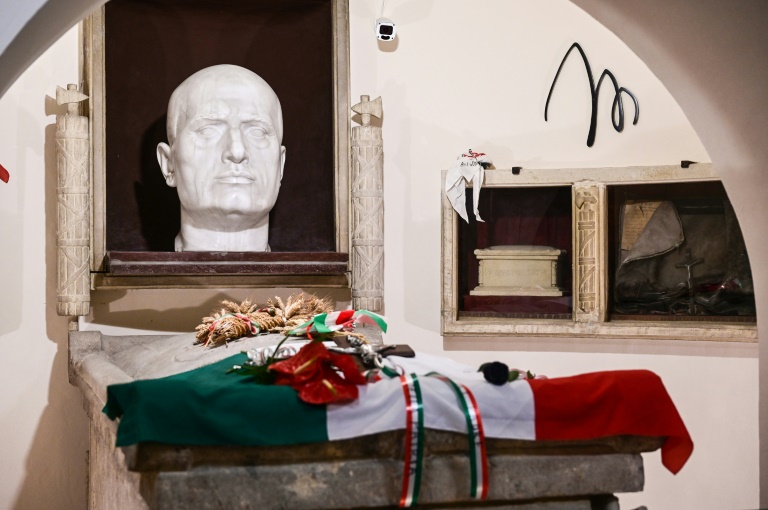
A white marble bust of “Il Duce” adorns the crypt in the family chapel in the cemetery of this northeastern town, where Mussolini was born, while his sarcophagus is draped with the tricolour Italian flag.

“We will never forget you!” says one message in the gold book of condolences, while others say: “We will be reborn” and “Come back!”

One young visitor with a shaved head, visibly moved, brushed the tombstone with one hand before giving the Fascist salute to the man described on one of the ribbons in the crypt as the “father of the country”.

Others who came with their families took a more nuanced view of the legacy of Mussolini, who took power after the so-called March on Rome in October 1922 before installing a dictatorship in 1925 that lasted until 1943.

“Mussolini was a great statesman. He promoted labour law and social protection. But he made mistakes with his alliance with Hitler and the shameful racial laws,” said Fabiana di Carlo, a 42-year-old civil servant visiting from Rome with her daughter.

Her view is typical of many Italians, who draw a line between what Mussolini did before and after his alliance with the Nazis and Italy’s entry into World War II.

An IPSOS survey last year found 66 percent of Italians between 16 and 25 agreed the Fascist regime was “a dictatorship to condemn in part but which also brought benefits”.

– Nostalgic attitudes –

The legacy of Fascism is being reexamined in this centenary year due to the surge in support for Meloni. 

Her party grew out of the Italian Social Movement, which was itself founded by Mussolini supporters after his death in April 1945.

In Predappio, many visitors said they would be voting for Meloni. 

They included di Carlo, who said the Brothers of Italy leader was “intelligent and competent”, and voiced hope she would become Italy’s first female prime minister.

Meloni insists there is “no room for nostalgic attitudes of Fascism” in her party — which advocates a eurosceptic, nationalist Christian programme — although it has rejected calls to remove the MSI’s tricolour flame from its logo. 

Her likely ascent to power is causing concern both at home and across Europe. But she is polling at around 24 percent, as part of a right-wing coalition that together commands around 47 percent support.

“I don’t think there is any risk of returning to historic Facism,” said Gianfranco Miro Gori, a local leader of the National Association of Italian Partisans, the name for the WWII anti-fascist fighters.

“But it is possible there will be a crackdown in the authoritarian sense and a restriction of freedoms, such as freedom of the press,” he said.

However, 39-year-old Ivano, an admirer of Mussolini who works in a vineyard in Cuneo in northwest Italy and was visiting Predappio, insisted there was nothing to fear from Meloni.

“She isn’t Fascist. She’s Atlanticist and anti-Putin,” he said.

– Fascist souvenirs –

Mussolini’s tomb draws more than 70,000 visitors a year and there is a lively tourist trade in Predappio, where numerous shops sell fascist souvenirs.

There are “anti-Communist” bracelets, swastikas, bottles of wine adorned with the dictator’s image, posters proclaiming “Italy for the Italians” and even a “Fascist Handbook”.

A 40-something couple from Milan, Giovanna and Alessandro, left one shop bearing a Mussolini calendar. 

“We are hoping for a Meloni win in the election. She will enforce respect for the rules and security,” Alessandro said.

Near the home where Mussolini was born and where his father had a blacksmith’s workshop, an exhibition dedicated to the March on Rome takes visitors through the dark history of Facism.

Among 170 objects borrowed from private collectors, there are uniforms, bladed weapons, guns and yellowed photos that illustrate the insurrection by Mussolini’s blackshirts, their links to the Catholic church and industry.

“It’s a cultural event which, in an objective, documented manner, invites us to reflect on what the March on Rome was. It’s not an apology for Fascism,” said Franco d’Emilio, one of the exhibition’s curators.

The goal is to “make Predappio known for what it is — that is, the Italian capital of the history of Fascism”, commented Francesco Minutillo, a former leader of Brothers of Italy.

Germany's nuclear stay fails to quell debate

Germany’s decision to keep two atomic plants on standby through the winter amid a power crunch has exposed cracks in the government and unleashed criticism from economic and energy experts.

The major u-turn in government policy was made after a second stress test to assess Germany’s energy security as Russia reduces gas supplies to Europe.

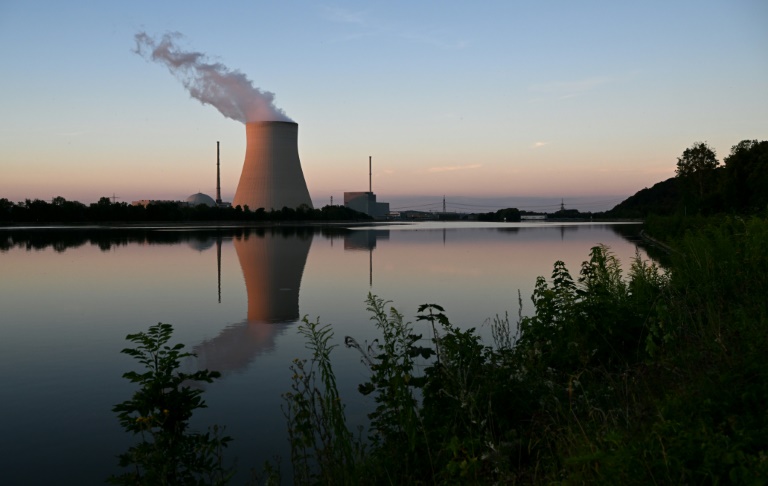
Germany’s three remaining nuclear plants were set to be retired at the end of the year. Instead, two of the fleet will be kept in reserve “until mid-April 2023 in case needed”, Economy Minister Robert Habeck said on Monday.

But the decision has become a “stress test for the coalition” of Chancellor Olaf Scholz’s Social Democrats, Habeck’s Greens and the liberal FDP, according to the Sueddeutsche Zeitung daily.

Finance Minister Christian Lindner of the FDP has made no attempts to hide his push for the three plants to remain in use rather than just kept on standby.

“We shouldn’t be too picky, but instead do everything that makes our lives easier,” he told the Sueddeutsche Zeitung Monday ahead of the nuclear announcement.

That included “the continued operation of the nuclear power plants until at least 2024”, the FDP boss said.

In a sign that he has not shifted his position, Lindner also retweeted several voices in his party criticising Monday evening’s decision as not going far enough.

– ‘Kept running’ – 

Habeck’s decision partly delays the nuclear exit decided under former chancellor Angela Merkel after the Fukushima disaster in 2011.

He said the subject of nuclear energy was “bound with a lot of emotions” but that the partial extension was needed to avoid an “extremely unlikely” electricity crisis.

But in light of skyrocketing electricity bills, all possible resources needed to be mobilised, according to Veronika Grimm, a member of the government’s council of economic advisors.

“That means not just coal plants but nuclear power plants too,” she told daily FAZ on Tuesday. 

“The plants should be kept running, not just be on standby, as is currently planned, because only then will it lower the price of electricity,” she said.

The government should examine extending the lifetime of the plants by five years and even bringing recently closed plants back online to keep prices “within limits”, she said.

By contrast, Claudia Kemfert of the economic research institute DIW pointed out that “nuclear plants are not adapted to act as network reserves because they cannot be fired up and shut down easily”.

Meanwhile, the financial daily Handelsblatt wrote that the partial extension was simply “the worst of all possible decisions”.

– ‘Completely absurd’ –

“We are heading towards an energy supply crisis,” opposition CDU leader Friedrich Merz told German public radio.

Shutting down electricity generating capacity at a time of crisis was “completely absurd”, he said, adding that the war-related crisis was being aggravated by “the decisions of the federal government”.

Habeck had “ducked the risk of coming into conflict with a part of his party”, Handelsblatt wrote. 

The extension is a touchy issue for the Greens, which has its roots in Germany’s anti-nuclear movement.

The decision was “hard to take but necessary as it stands”, Green party chief Omid Nouripour told public television.

Habeck stressed Monday that Germany would not waver from its plan to move on from atomic energy.

“New fuel rods will not be put in,” he said, adding that the issues this winter “cannot be compared” with the next one. 

Habeck’s ministry has chartered five floating terminals for the import of liquefied natural gas (LNG) to substitute for Russian supplies, the first of which are scheduled to come online at the end of the year.

At the same time, it has also moved to restart mothballed coal power plants and fill gas storage ahead of the winter to guard against an energy shortfall.

Germany's nuclear stay fails to quell debate

Germany’s decision to keep two atomic plants on standby through the winter amid a power crunch has exposed cracks in the government and unleashed criticism from economic and energy experts.

The major u-turn in government policy was made after a second stress test to assess Germany’s energy security as Russia reduces gas supplies to Europe.

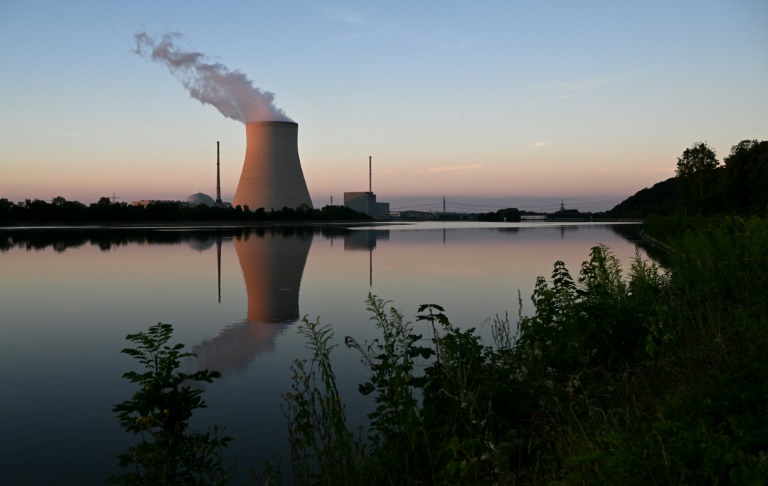
Germany’s three remaining nuclear plants were set to be retired at the end of the year. Instead, two of the fleet will be kept in reserve “until mid-April 2023 in case needed”, Economy Minister Robert Habeck said on Monday.

But the decision has become a “stress test for the coalition” of Chancellor Olaf Scholz’s Social Democrats, Habeck’s Greens and the liberal FDP, according to the Sueddeutsche Zeitung daily.

Finance Minister Christian Lindner of the FDP has made no attempts to hide his push for the three plants to remain in use rather than just kept on standby.

“We shouldn’t be too picky, but instead do everything that makes our lives easier,” he told the Sueddeutsche Zeitung Monday ahead of the nuclear announcement.

That included “the continued operation of the nuclear power plants until at least 2024”, the FDP boss said.

In a sign that he has not shifted his position, Lindner also retweeted several voices in his party criticising Monday evening’s decision as not going far enough.

– ‘Kept running’ – 

Habeck’s decision partly delays the nuclear exit decided under former chancellor Angela Merkel after the Fukushima disaster in 2011.

He said the subject of nuclear energy was “bound with a lot of emotions” but that the partial extension was needed to avoid an “extremely unlikely” electricity crisis.

But in light of skyrocketing electricity bills, all possible resources needed to be mobilised, according to Veronika Grimm, a member of the government’s council of economic advisors.

“That means not just coal plants but nuclear power plants too,” she told daily FAZ on Tuesday. 

“The plants should be kept running, not just be on standby, as is currently planned, because only then will it lower the price of electricity,” she said.

The government should examine extending the lifetime of the plants by five years and even bringing recently closed plants back online to keep prices “within limits”, she said.

By contrast, Claudia Kemfert of the economic research institute DIW pointed out that “nuclear plants are not adapted to act as network reserves because they cannot be fired up and shut down easily”.

Meanwhile, the financial daily Handelsblatt wrote that the partial extension was simply “the worst of all possible decisions”.

– ‘Completely absurd’ –

“We are heading towards an energy supply crisis,” opposition CDU leader Friedrich Merz told German public radio.

Shutting down electricity generating capacity at a time of crisis was “completely absurd”, he said, adding that the war-related crisis was being aggravated by “the decisions of the federal government”.

Habeck had “ducked the risk of coming into conflict with a part of his party”, Handelsblatt wrote. 

The extension is a touchy issue for the Greens, which has its roots in Germany’s anti-nuclear movement.

The decision was “hard to take but necessary as it stands”, Green party chief Omid Nouripour told public television.

Habeck stressed Monday that Germany would not waver from its plan to move on from atomic energy.

“New fuel rods will not be put in,” he said, adding that the issues this winter “cannot be compared” with the next one. 

Habeck’s ministry has chartered five floating terminals for the import of liquefied natural gas (LNG) to substitute for Russian supplies, the first of which are scheduled to come online at the end of the year.

At the same time, it has also moved to restart mothballed coal power plants and fill gas storage ahead of the winter to guard against an energy shortfall.

Negev desert winemakers show way ahead in Israel's hot climate

In Israel’s Negev desert, winemakers are sharing their knowledge of growing vines in the blistering heat with European producers also facing fierce temperatures this summer.

Walking between rows of ripe grapes growing from the scorched land, David Pinto enthuses about how his vineyard has come of age in the past three years.

“We’re masters of the conditions, without depending on the whims of the weather,” said Pinto, whose estate near the town of Yeruham carries his name.

With nearly year-round sunshine and little rain in the barren Negev, Pinto has adopted a micro-irrigation system to conserve resources and drip water slowly onto the vines.

Such techniques may soon need to be used across the Mediterranean region, with winemakers in France forced to start picking earlier than usual due to an exceptionally dry and hot summer.

“Winemakers from Bordeaux came to visit us following the heatwave in France,” said Pinto, who advised his guests on ways to adapt to climate changes.

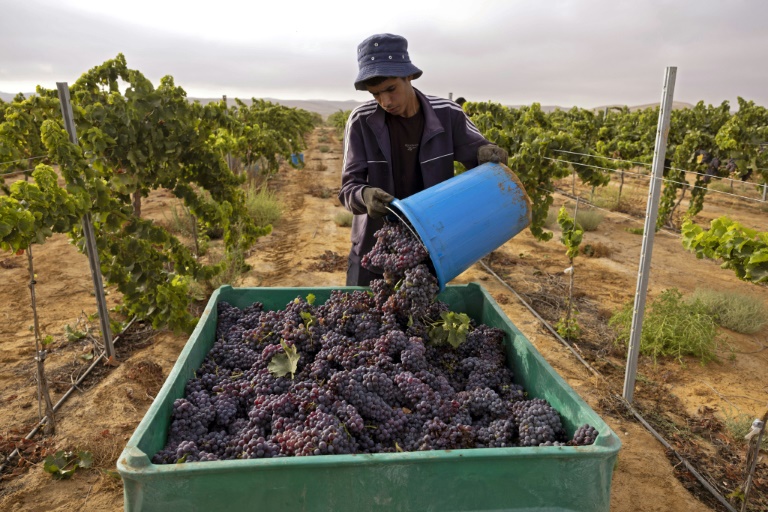
“Now we share the same challenges, with the extreme climate and the dryness that harms the grapes,” he added, while workers plucked grapes in the early morning light.

Israel’s greener north has long been the centre of its viniculture, but more pioneering winemakers are discovering its sun-baked south.

Pinto, whose wines sell for 89 shekels ($26), is one of more than 25 wineries now dotted across the desert landscape.

They include Ramat Negev, adjacent to the Egyptian border, and Nana, located near the vast crater-like formation of Makhtesh Ramon.

– Enduring extreme heat –

Ilan Abitbol, who advises various Israeli winemakers, is busy creating a variety of blends on a small plot of land.

“The temperature of the Negev gives a particular identity to the region’s wines: more dry, stronger in alcohol,” he said.

Pinto’s Malbec, for example, brings a weighty 14.5 percent alcohol volume to the table.

“We’re used to extreme temperatures, whereas in Europe, the climatic changes have an impact on the vines, because they’re not used to these temperatures,” said Abitbol.

For Yaakov Oriya, Pinto’s winemaker, there are unique opportunities in a desert region, where wine has been produced for centuries since Byzantine times.

“When you’re faced with a different land like this, you can create different wines,” he said, including dessert and sparkling varieties.

“We’re not the first to make wine in this region but making the desert bloom remains a wonderful objective,” said Oriya.

On the Pinto estate, where sturdy olive and argan trees also grow, the family is expecting to produce 55,000 bottles this season.

Beyond their own commercial gains, Jimmy Pinto, David’s father, said the wine industry can boost the wider economy in the sparsely-populated desert.

“Creating a winery here in Yeruham contributes to our efforts to develop the region,” he said.

Jimmy Pinto likened the years-long work in the fields to an educational network he has developed for children in remote areas.

“It’s a great challenge, but in the same way that we think that the children of this region can be better, we want to produce a wine that will be the best,” he said.

“And in these two areas, it takes time before you see the fruits of your investment.”

Manhunt in Canada continues for second suspect in stabbing rampage

A second suspect remained at large in Canada Tuesday night after the death of his brother despite a massive and intensifying manhunt in and around an Indigenous community left reeling by a deadly stabbing spree.

The attack in the James Smith Cree Nation Indigenous community and the town of Weldon on Sunday left 10 dead and 18 wounded.

A massive manhunt for the two brothers across the vast Prairies region ensued, focusing at one point on Regina, Saskatchewan province’s capital 300 kilometers (185 miles) to the south. The body of one of them was found Monday evening.

The search suddenly turned back to this Indigenous community on Tuesday after police released an emergency message warning that investigators had “received reports of a possible sighting” of suspect Myles Sanderson.

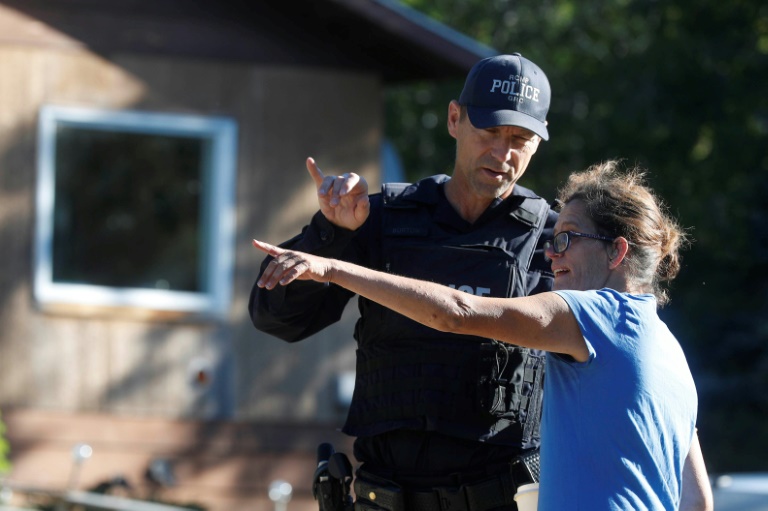
Police in heavily armoured vehicles surged into the community, while calling on area residents to “seek immediate shelter/shelter in place.” A police helicopter flew overhead into the Indigenous area.

But hours later the lockdown was lifted.

Late Monday federal police assistant commissioner Rhonda Blackmore announced they had found the mutilated body of one suspect, 31-year-old Damien Sanderson, in a grassy area near a house that was being examined in the James Smith Cree Nation.

The other Sanderson — who is also wanted for breaching parole in May after serving part of a sentence for assault and robbery — is suspected of having killed his brother, she said. Myles Sanderson is 32 rather than 30 previously reported.

“He may be injured and seek medical attention,” Blackmore added.

A motive is not yet known for the rampage. But Myles Sanderson has a history of explosive violence that led to nearly 60 past criminal convictions.

In the James Smith Cree Nation and nearby Weldon, residents have described overwhelming grief and fear. 

“It’s just devastating,” Weldon resident Ruby Works told AFP. “Our lives will never be the same.”

The former Olympian described an eerie tension settling across the region. 

“The town is too quiet…. People are scared to come out of their homes,” she said. “Usually you see kids playing outside. Now you don’t see any.”

Before the lockdown, she said residents of the nearby Indigenous community had also been “locking themselves in.” 

People are pressed “against the glass looking out the window. They are scared (that) he might come back and do it again,” Works added.

“I won’t sleep until they catch him.”

Prime Minister Justin Trudeau has called the attacks shocking and heartbreaking, while lamenting that “tragedies like these have become all too commonplace.”

He said Tuesday that Canadian authorities are doing everything they can to end the crisis.

Since 2017, Canada has witnessed a gunman masquerading as a policeman kill 22 people in Nova Scotia, another murder six worshippers at a Quebec City mosque, and a driver of a van kill 11 pedestrians in Toronto.

Authorities have not yet released the names of the victims, but a handful have been identified on social media, including a veteran, an addictions counsellor, a mother of two who worked as a security guard at a local casino, and an elderly widower.

Works said she fell to the ground “and lost my breath for a minute” when she learned that her 77-year-old friend Wes Petterson was among those killed, describing him as a kind, gentle soul.

Ivor Burns told local broadcasters his sister Gloria Burns, 62, was found “lying in her driveway with her friend and a young boy.” “They were massacred,” he said.

Her son Dillon posted on social media that his mother died “protecting a young man while he was being attacked,” adding that “she would’ve done the same for any of us… (even) for the man who has taken her life.”

Several residents and Indigenous leaders suggested rampant drug and alcohol abuse has been a factor in a trend of violent incidents in the area.

Police believe some of the victims were targeted and others were attacked randomly.

Eighteen remain in hospital, including four in critical condition, according to officials.

Real life, right now — photo app claims to capture authenticity

It’s not all sunsets and selfie smiles — people are flocking to a new social network app that calls on users to share true glimpses of their lives rather than cherry-picked moments.

Once a day, BeReal simultaneously prompts users to take photos of what they are doing, giving them two minutes. The app uses front and rear facing cameras on phones, putting shared “selfies” into context.

The app shuns software filters that add glossy special effects or touch-up effects.

The approach is a sharp contrast to the carefully cultivated images common on Instagram and Facebook that often focus on parties, holidays, fancy food and perfect weather.

“The ideal of BeReal is you are just in a moment — where are you and what are you doing right now,” said Jennifer Stromer-Galley, a professor at Syracuse University school of information studies in the United States.

“Our lived lives, not our best lives — maybe you are walking the dog or in your pajamas eating cereal.”

Launched two years ago by French entrepreneurs, BeReal has seen its popularity surge in recent months.

It was the most downloaded app in the United States at start of September, and ranked among the top three in Britain and France, according to figures provided by market tracker Data.ai.

BeReal has been downloaded nearly 35 million times worldwide and is proving popular with Gen Z, people born between the late 1990s and about 2010, Data.ai figures showed.

“It does seem to have really taken off as the next potential social media application,” Stromer-Galley said of BeReal, though cautioning that the same was once said for ephemeral photo sharing app Snapchat.

BeReal creator Alexis Barreyat was at a mountain bike event when it struck him how social media users focused more on perfecting content than what was happening around them, according to venture capitalist Jean de La Rochebrochard, who invested in the startup.

“While he was in the moment, he was surprised to see so many influencers busy staging their life with multiples shots, stories, trying out dozens of filters while completely missing the show,” the investor wrote in a blog.

“It was even making some of them and their audience miserable.”

– Done with perfect? –

BeReal’s rise in popularity signals that people are tired of polished online images that don’t reflect actual life, Creative Strategies tech analyst Carolina Milanesi told AFP.

“I think the younger generation is done with fake and perfect, because life isn’t,” Milanesi said.

“Gen Z seems a bit of a sweet spot; the fact they want to be who they are and they want to be portraying how real life is and how they navigate through it.”

One BeReal user posted a playful video of her scrambling about her home in a frenzy to stage a flattering photo with just two minutes to get ready. Another lamented on Twitter about a friend abruptly ending a phone call to take a selfie after getting a BeReal alert.

“The app is called BeReal NOT wait until I think I look cute enough to post,” read a tweet by the account of @garrett_parker1.

It remains to be seen whether BeReal’s popularity will endure.

“It is not quite clear what there is to stick around for after you get the voyeurism of seeing other people’s lived experiences,” Stromer-Galley said.

BeReal’s use of front and back smartphone cameras also raises questions of privacy and risk of stalkers or hackers.

“Let’s say the back camera shows a friend or your children or where you live — or your desk or computer screen at work,” Stromer-Galley said.

LinkIn profiles show that BeReal, which has not been granting media interviews, was founded by Barreyat and Kevin Perreau, and has 126 employees.

Instagram told AFP it has worked internally on a BeReal-like prototype feature but is not testing it.

Truss to meet cabinet, face MPs on first full day in power

Britain’s new prime minister Liz Truss convenes her senior ministers for an inaugural cabinet meeting on Wednesday on her first full day in office, before she faces a barrage of questions in parliament.

Truss, who officially became leader Tuesday at an audience with head of state Queen Elizabeth II in Scotland after the resignation of Boris Johnson, is set to meet her top team at a morning meeting. 

They include the most diverse top team in British history ever: Kwasi Kwarteng as Chancellor of the Exchequer, James Cleverly as foreign secretary and Suella Braverman as interior minister.

They face a daunting in-tray of issues, most notably decades-high inflation and how to deal with energy bills set to rise by 80 percent next month and even more again in January.

Meanwhile, the Bank of England has tipped the country to fall into recession later this year.

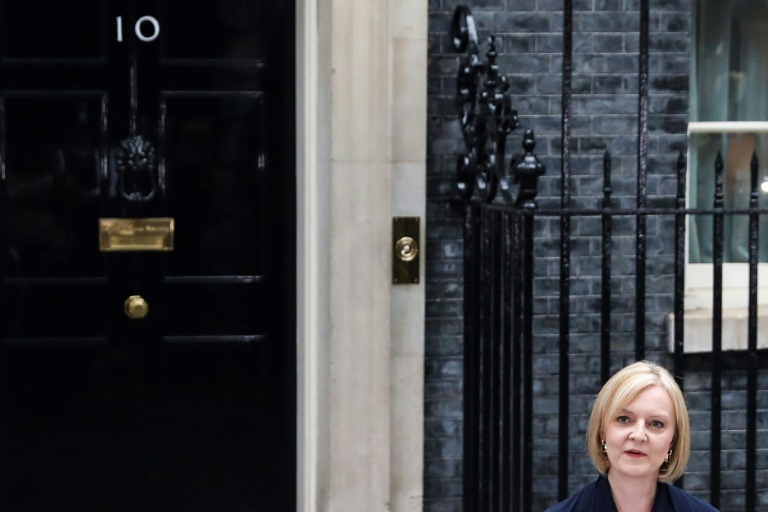
But Truss was bullish as she entered Downing Street for the first time as premier, narrowly avoiding a heavy downpour.

“I am confident that together we can ride out the storm,” she said.

Her new ministers may be asked to sign off immediately on a plan to freeze energy bills for the coming winter, possibly longer, costing tens of billions of pounds, according to reports.

Tax cuts and diverting some health funding to social care could also reportedly be on the agenda.

“I will cut taxes to reward hard work and boost business-led growth and investment,” Truss promised, while also vowing “action this week” on gas and electricity bills and broader energy policy.

– ‘Almost ungovernable’ –

After Cabinet, Truss will travel to the House of Commons to spar with opposition Labour leader Keir Starmer, in the rival pair’s first Prime Minister’s Questions session.

The often rowdy weekly session, which sees the prime minister quizzed by MPs, will test Truss’s political mettle and rhetorical skills as well as her level of Conservative support.

The 47-year-old won an internal ballot of Tory members on Monday, securing 57 percent of the vote, after a gruelling contest against former finance minister Rishi Sunak that began in July.

But the initial stage of the contest saw her net the support of less than a third of the parliamentary party.

She now faces a tough challenge reuniting the ruling Tories following a bitter leadership battle.

Conservative MPs are “almost ungovernable” and have “no appetite to cope with difficult decisions,” according to a government insider quoted by the Financial Times on Monday.

“They did for Boris and they may do for Liz, too,” the source told the paper.

Truss will likely face a volley of hostile questions from Starmer and the Labour ranks, as they look to capitalise on months of Tory disarray.

Labour has opened up a double-digit lead in the polls but may have to wait two years for the next general election. 

Truss vowed Monday to lead the Conservatives to victory “in 2024”, with an election due by January 2025 at the latest.

– ‘Dreadful policy’ –

Truss, who pitched herself to the Tory grassroots as a tax-cutting free-trade champion ready to slash taxes immediately to turbo-charge growth, faces warnings that these moves could make inflation worse.

The UK has already seen prices rise this year at their steepest rate for four decades, driven by spiralling energy costs.

Under her mooted plans to tackle the situation, gas and electricity bills for both households and businesses would be capped near current levels for the coming winter at least.

The government would lend or guarantee private sector loans to energy providers to make up the difference they pay with soaring global wholesale prices.

It remains unclear whether the government will pay for the plan through extra borrowing or ask consumers to pick up the tab over the next two decades through levies on their energy bills.

Paul Johnson, of the respected Institute for Fiscal Studies (IFS) think-tank, said it was “a dreadful policy” but likely necessary. 

“Hugely expensive, untargeted, increases risk of shortages,” he noted on Twitter. 

But he warned the scale of the problem “means there may just be no practical alternative.”

Other pressing matters for Truss include resolving post-Brexit tensions with the European Union, particularly over trading arrangements in Northern Ireland, and Western support for Ukraine.

Wildfire hits Brasilia National Park amid drought

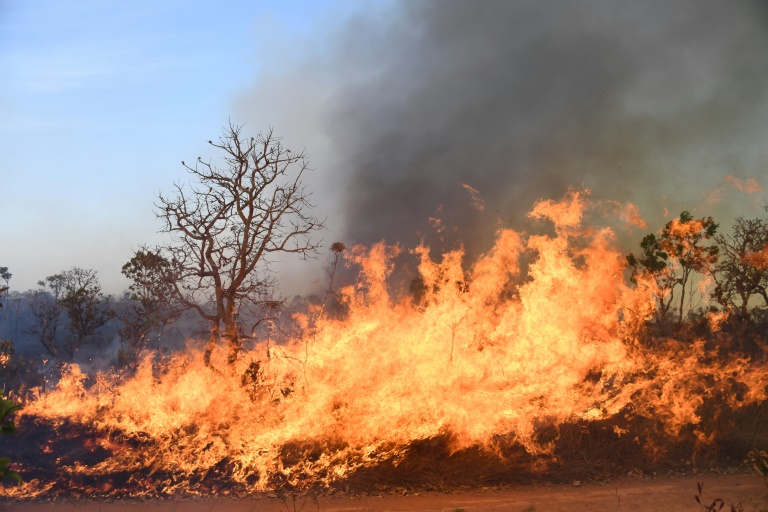
Firefighters raced Tuesday to contain a massive blaze devastating a national park in the Brazilian capital, which is suffering from a heat wave and more than four months of drought.

The fire, which hit the park Monday, has burned through around 2,000 hectares (nearly 5,000 acres) of the 42,000 hectare reserve in Brasilia, according to the national parks service, ICMBio.

Forty firefighters from ICMBio and the Brasilia fire department managed to control one of the fire’s two fronts Monday night.

The blaze is concentrated in an area around 30 kilometers (19 miles) from the presidential offices, the Planalto Palace.

“Severe conditions,” including temperatures of more than 30 degrees Celsius (86 Fahrenheit) and critically low humidity of around 30 percent, have exacerbated the already flammable situation left by the drought, ICMBio said.

The Brazilian capital has not had rain in 122 days.

Officials said they did not yet know what caused the fire.

Brasilia National Park was established in 1961, the year after the ultra-modernist capital was inaugurated in Brazil’s central-west — a region with a prolonged dry season that typically runs from May to September.

The Brasilia blaze comes as officials report an alarming surge in fires in the Brazilian Amazon.

Last month was the worst August in 12 years, with 33,116 fires detected in Brazil’s share of the world’s biggest rainforest, according to satellite monitoring by the national space agency, INPE.

President Jair Bolsonaro, who is up for reelection in October, has faced international outcry over a surge of fires and destruction in the Amazon, whose billions of carbon-absorbing trees are a key buffer against global warming.

Close Bitnami banner
Bitnami