World

UN watchdog urges security zone at Ukraine nuclear plant

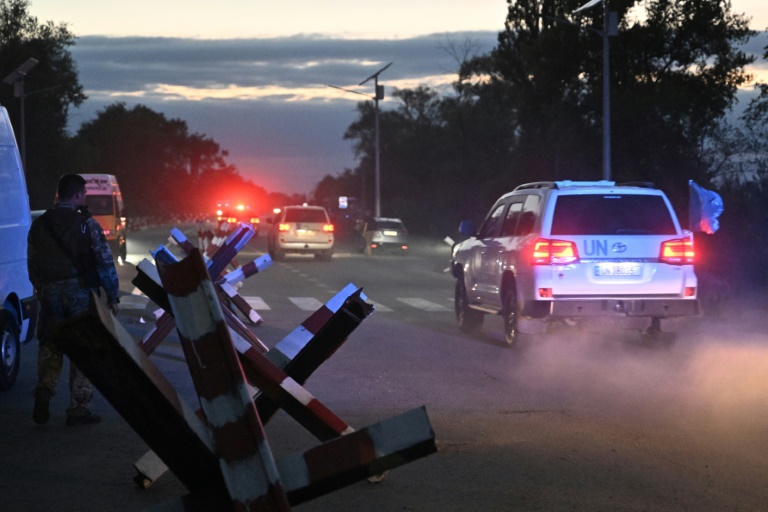
The UN’s atomic watchdog called Tuesday for a security zone to be set up around Ukraine’s Zaporizhzhia nuclear power plant, which is occupied by Russia, as the area was hit by more shelling.

Russian troops seized control of the plant — Europe’s biggest atomic facility — in March and there have been repeated attacks in the vicinity, sparking fears of a nuclear disaster.

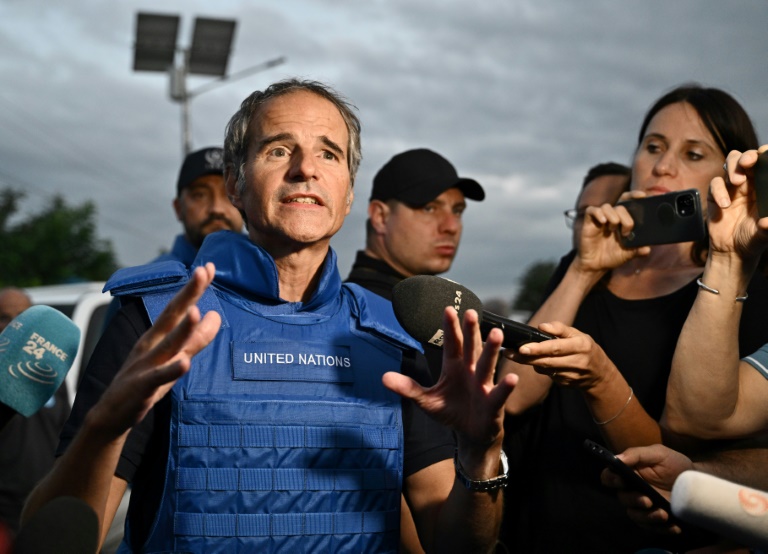
“The current situation is untenable,” the International Atomic Energy Agency (IAEA) said in a report after it sent inspectors to the plant last week.

“There is an urgent need for interim measures to prevent a nuclear accident…. This can be achieved by the immediate establishment of a nuclear safety and security protection zone.”

At the United Nations, Russia said it regretted that the report did not blame Ukraine for the attacks.

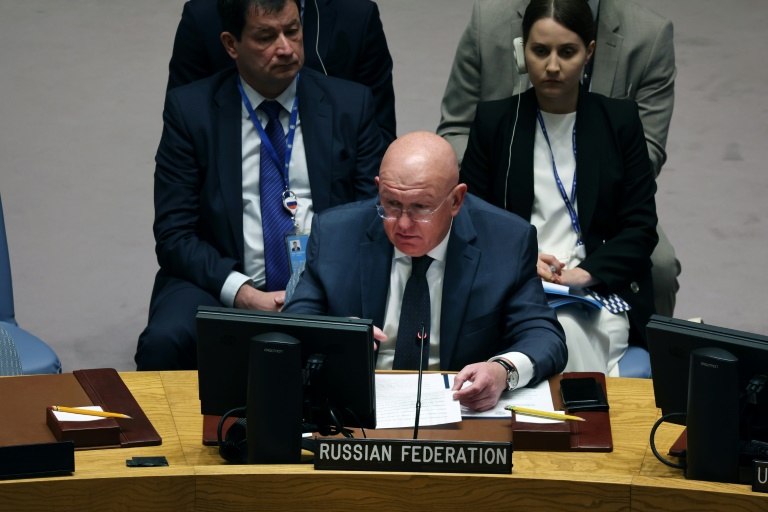
“We do understand your position as an international regulator, but in the current situation it’s very important to call things by their name,” Russian envoy Vassily Nebenzia told a Security Council session attended virtually by IAEA head Rafael Grossi.

Russia and Ukraine have blamed each other for shelling of the site, which took place again Tuesday despite the watchdog’s recommendations.

“If the provocations by the Kyiv regime continue, there is no guarantee that there won’t be serious consequences, and the responsibility for that lies fully with Kyiv and its Western backers and all other members of Security Council,” Nebenzia said.

Ukrainian President Volodymyr Zelensky said he welcomed the fact that the report noted the Russian military occupation of the plant.

He said that if the proposed security zone was aimed at demilitarizing “the territory of the nuclear power plant… then we can support it.”

Kyiv and Moscow continued to trade blame Tuesday for attacks on the Zaporizhzhia plant, and on the city of Energodar where it is situated.

The IAEA sent a 14-person team to the site last week. At least two members were to remain on a permanent basis to ensure the facility’s safety.

But on Monday, the last working reactor was disconnected from the grid after shelling caused a fire.

Meanwhile US President Joe Biden’s administration said it would be counterproductive to brand Russia a state sponsor of terrorism, rejecting calls from Ukraine and lawmakers to take the far-reaching action.

Biden, asked by a reporter on Monday if he would blacklist Russia as a terrorist state, said simply, “no,” after months of non-committal answers from senior officials.

Asked Tuesday whether a decision had been made, White House Press Secretary Karine Jean-Pierre said a terrorism designation was “not the most effective or strongest path forward” to “hold Russia accountable.”

She said the designation would hamper aid delivery to parts of war-ravaged Ukraine or prevent aid groups and companies from participating in a deal brokered by the United Nations and Turkey to ship badly needed grain from Ukraine’s blockaded ports.

– Russia buying rockets – 

Separately on Tuesday, a pro-Kremlin official in the Russian-controlled port city of Berdyansk in southern Ukraine was seriously injured in a car blast, according to Moscow-installed authorities.

In the past months, several officials installed by Russian forces in Moscow-controlled territories in Ukraine have been killed or wounded in attacks.

Kyiv has not formally claimed responsibility.

Ukraine has recently claimed its first gains in a counter-offensive against the Russian army in the south, saying it has recaptured several areas and destroyed multiple targets.

A US official said Tuesday that Russia is buying millions of rockets and artillery shells from North Korea to replenish stocks depleted by months of intense fighting.

“This purchase indicates that the Russian military continues to suffer from severe supply shortages in Ukraine, due in part to export controls and sanctions,” the US official said, on grounds of anonymity.

Western sanctions have made it harder for Moscow to acquire components to manufacture replacements, including computer chips.

President Vladimir Putin attended large-scale military exercises Tuesday involving China and several Russia-friendly countries, as Moscow seeks to strengthen partnerships in Asia in the face of Western sanctions. 

And the European Commission laid out the new hurdles facing Russian travellers seeking EU entry visas, in the latest punitive measures taken in response to Moscow’s invasion.

Dollar weighs on yen and euro as US stocks extend slump

The euro and yen sunk to new multi-year lows against the dollar on Tuesday as investors focused on central bank efforts to contain surging inflation and fears of an economic slowdown.

The dollar struck a 24-year high of $142.98 yen, while the euro sank to $0.9864, a level unseen since December 2002.

“Recession concerns around the world continue to boost the appetite for US dollar, even at these levels,” said City Index and FOREX.com analyst Fawad Razaqzada.

“Investors are becoming more and more convinced that the Fed is going to hike by 75 basis points this month and proceed with further aggressive hikes until inflation comes back under control,” he added.

The Fed has increased the key lending rate four times this year, including two supersized 75 basis points (0.75 percentage point) hikes in June and July, with Fed chief Jerome Powell indicating another similar increase is possible this month.

Yields on US government debt continue to rise as investors expect further hikes.

The Fed’s earlier start to raising interest rates, and pledge to continue to aggressively raise them until it has tamed surging inflation, has boosted the attractiveness of the dollar for investors.

The European Central Bank brought an end to eight years of negative interest rates with a surprisingly-aggressive 0.50 percentage point hike in July, and is expected to hike interest rates on Thursday by at least the same amount to tackle surging eurozone inflation.

Meanwhile the Bank of Japan has dug in its heels on its easy-money policies as it seeks to ensure inflation is here to stay after a long deflationary period. 

In the first session back after the Labor Day holiday, Wall Street fell again, extending an equity downturn as worries about tightening central bank policy and Europe’s energy woes offset good US services industry data.

European stocks ended the day higher despite poor German data, a day after tumultuous trading as Russia curbed gas supplies to Europe.

– ‘Wait-and-see mood’ –

Nevertheless, traders are still wary.

“Investors remain cautious amid worries about the slowing global economy,” noted Hargreaves Lansdown analyst Susannah Streeter.

“There is a wait-and-see mood hanging over markets.”

Russia’s decision over the weekend to halt gas supplies to Germany in retaliation for sanctions over Ukraine sent shock waves through European trading floors on Monday as it ramped up expectations of a painful recession in major economies.

That continues to bedevil the euro, as well as measures that European governments are taking to prop up their economies in face of the energy crisis.

Razaqzada said these measures are likely to fuel inflation even further. This would require the ECB to hike interest rates even more aggressively, meaning a sharper recession.

“So, it is a catch-22 situation for the ECB,” he said.

“For this reason, traders are reluctant to buy the euro.”

Similarly, the yield on 10-year British government bonds surged to the highest level since 2011 after Britain’s new Prime Minister Liz Truss unveiled a 130-billion-pound package to freeze consumer energy bills. 

– Key figures at around 2050 GMT –

New York – Dow: DOWN 0.6 percent at 31145.30 (close)

New York – S&P 500: DOWN 0.4 percent at 3,908.19 (close)

New York – Nasdaq: DOWN 0.7 percent at 11,544.91 (close)

London – FTSE 100: UP 0.2 percent at 7,300.44 (close) 

Frankfurt – DAX: UP 0.9 percent at 12,871.44 (close)

Paris – CAC 40: UP 0.2 percent at 6,104.61 (close)

EURO STOXX 50: UP 0.3 percent at 3,572.76 (close)

Tokyo – Nikkei 225: FLAT at 27,626.51 (close)

Hong Kong – Hang Seng Index: DOWN 0.1 percent at 19,202.73 (close)

Shanghai – Composite: UP 1.4 percent at 3,243.45 (close)

Euro/dollar: DOWN at $0.9905 from $0.9929 on Monday

Pound/dollar: UP at $1.1519 from $1.1517

Dollar/yen: UP at 142.80 yen from 140.60 yen

Euro/pound: DOWN at 85.97 pence from 86.21 pence

West Texas Intermediate: UP less than 0.1 percent at $86.88 per barrel

Brent North Sea crude: DOWN 3.0 percent at $92.93 per barrel

burs-jmb/jh

Russia 'regrets' IAEA report did not blame Ukraine: UN envoy

Russia on Tuesday voiced regret that a report by the UN nuclear watchdog warning of risks at Ukraine’s Zaporizhzhia plant did not blame Kyiv for shelling the Moscow-occupied site.

“We regret that in your report… the source of the shelling is not directly named,” Russian Ambassador Vasily Nebenzya told a Security Council session attended virtually by Rafael Grossi, head of the International Atomic Energy Agency (IAEA).

“We do understand your position as an international regulator, but in the current situation it’s very important to call things by their name,” he said.

The IAEA in a report released earlier Tuesday called for a demilitarized zone to be set up outside Europe’s largest nuclear plant, which was seized by Russian troops during their invasion of Ukraine.

Both sides have blamed each other for shelling, which took place again Tuesday despite the watchdog’s recommendations.

“If the provocations by the Kyiv regime continue, there is no guarantee that there won’t be serious consequences, and the responsibility for that lies fully with Kyiv and its Western backers and all other members of Security Council,” Nebenzya said.

Western powers voiced dismay at his remarks, saying that the fundamental issue was Russia’s invasion of and occupation of the plant.

“Despite Russia’s song and dance here today to avoid acknowledging responsibility for its actions, Russia has no right to expose the world to unnecessary risk and the possibility of the nuclear catastrophe,” senior US diplomat Jeffrey DeLaurentis told the session.

Ukraine also hit back, saying that there were no issues at the plant until Russia seized it.

“The world not only deserves but needs the representatives of the IAEA to force Russia to demilitarize the territory of the (nuclear power plant) and return full control over the plant to Ukraine,” said Sergiy Kyslytsya, Ukraine’s ambassador.

Grossi, speaking after a visit to Zaporizhzhia, said that nuclear inspectors were more accustomed to traveling after a disaster such as in Chernobyl and Fukushima.

“In this case, had the historical, ethical imperative to prevent something from happening,” Grossi said.

“We are playing with fire and something very, very catastrophic could take place.”

Brazil fines Apple $2.4 mn, prohibits sale of iPhone without charger

Apple has been barred from selling iPhones without a charger in Brazil and fined more than $2 million over the issue, the government said Tuesday, after accusing the US tech giant of “discriminatory practices.”

In an official notice, Brazilian authorities ordered “the immediate suspension of the distribution of iPhone brand smartphones, regardless of model or generation, that are not accompanied by a battery charger.”

The Ministry of Justice and Public Security ordered the California company to pay a fine of 12.28 million reais (nearly $2.4 million).

The measure from the Department of Consumer Protection and Defense effectively prohibits the sale of all iPhone 12 and 13 models.

Apple has been under investigation in Brazil since December for “the sale of an incomplete product,” “discrimination against the consumer” and “the transfer of responsibility to third parties” by offering iPhone 12s and newer versions without chargers for power outlets, according to an official statement. 

The company has faced fines from Brazilian state agencies before, but “did not take any measures to minimize the harm and until now continued to sell the cellular devices without chargers,” the statement said. 

According to Brazilian authorities, Apple alleges that the decision to exclude chargers from iPhone sales comes from an “environmental commitment.”

But the ministry determined “there is no effective demonstration of environmental protection on Brazilian soil as a consequence” of Apple’s policy, and accused the company of “deliberate discriminatory practices against consumers.”

“There is no justification for an operation which, in aiming to reduce carbon emissions, leads to the introduction into the consumer market of a product whose use depends on the acquisition of another (product) which is also marketed by the company,” the official notice added. 

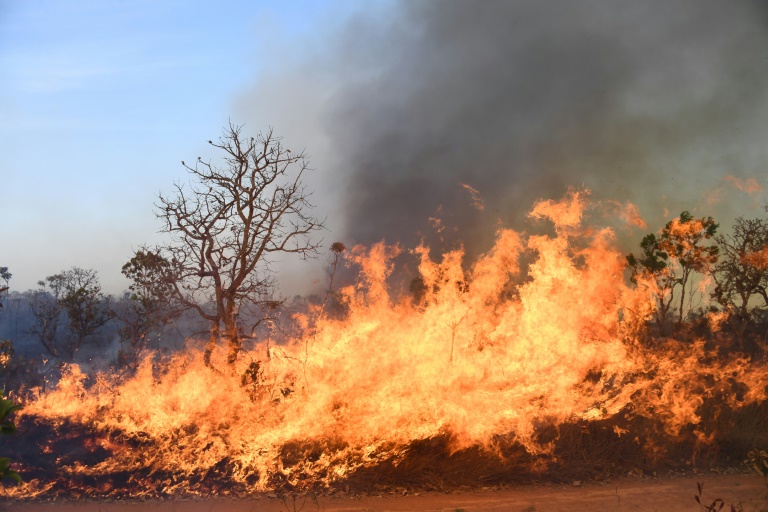
Wildfire hits Brasilia National Park amid drought

Firefighters raced Tuesday to contain a massive blaze devastating a national park in the Brazilian capital, which is suffering from a heat wave and more than four months of drought.

The fire, which hit the park Monday, has burned through around 2,000 hectares (nearly 5,000 acres) of the 42,000 hectare reserve in Brasilia, according to the national parks service, ICMBio.

Forty firefighters from ICMBio and the Brasilia fire department managed to control one of the fire’s two fronts Monday night.

The blaze is concentrated in an area around 30 kilometers (19 miles) from the presidential offices, the Planalto Palace.

“Severe conditions,” including temperatures of more than 30 degrees Celsius (86 Fahrenheit) and critically low humidity of around 30 percent, have exacerbated the already flammable situation left by the drought, ICMBio said.

The Brazilian capital has not had rain in 122 days.

Officials said they did not yet know what caused the fire.

Brasilia National Park was established in 1961, the year after the ultra-modernist capital was inaugurated in Brazil’s central-west — a region with a prolonged dry season that typically runs from May to September.

The Brasilia blaze comes as officials report an alarming surge in fires in the Brazilian Amazon.

Last month was the worst August in 12 years, with 33,116 fires detected in Brazil’s share of the world’s biggest rainforest, according to satellite monitoring by the national space agency, INPE.

President Jair Bolsonaro, who is up for reelection in October, has faced international outcry over a surge of fires and destruction in the Amazon, whose billions of carbon-absorbing trees are a key buffer against global warming.

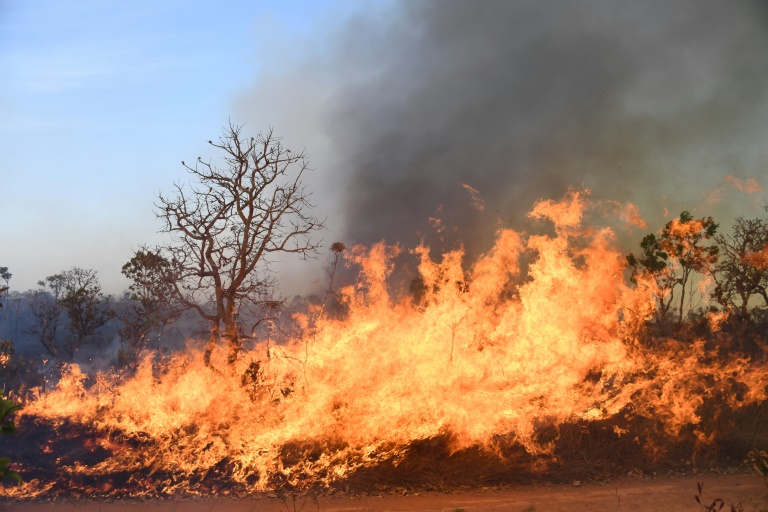
Wildfire hits Brasilia National Park amid drought

Firefighters raced Tuesday to contain a massive blaze devastating a national park in the Brazilian capital, which is suffering from a heat wave and more than four months of drought.

The fire, which hit the park Monday, has burned through around 2,000 hectares (nearly 5,000 acres) of the 42,000 hectare reserve in Brasilia, according to the national parks service, ICMBio.

Forty firefighters from ICMBio and the Brasilia fire department managed to control one of the fire’s two fronts Monday night.

The blaze is concentrated in an area around 30 kilometers (19 miles) from the presidential offices, the Planalto Palace.

“Severe conditions,” including temperatures of more than 30 degrees Celsius (86 Fahrenheit) and critically low humidity of around 30 percent, have exacerbated the already flammable situation left by the drought, ICMBio said.

The Brazilian capital has not had rain in 122 days.

Officials said they did not yet know what caused the fire.

Brasilia National Park was established in 1961, the year after the ultra-modernist capital was inaugurated in Brazil’s central-west — a region with a prolonged dry season that typically runs from May to September.

The Brasilia blaze comes as officials report an alarming surge in fires in the Brazilian Amazon.

Last month was the worst August in 12 years, with 33,116 fires detected in Brazil’s share of the world’s biggest rainforest, according to satellite monitoring by the national space agency, INPE.

President Jair Bolsonaro, who is up for reelection in October, has faced international outcry over a surge of fires and destruction in the Amazon, whose billions of carbon-absorbing trees are a key buffer against global warming.

Markets brace as UK's new PM readies 'bold' economic action

Britain’s new Prime Minister Liz Truss is getting down to business fast with plans for a big-spending offensive to rein in soaring energy prices, putting her on collision course with nervous financial markets.

In the Conservative race to succeed Boris Johnson, Truss overcame warnings from former finance minister Rishi Sunak that her plans for debt-financed tax cuts risked inflaming double-digit inflation.

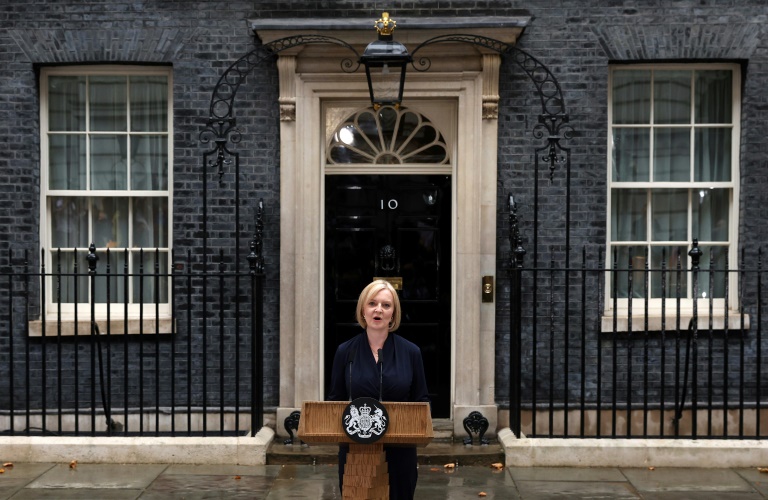
Undaunted, Truss declared from the steps of 10 Downing Street Tuesday that tax cuts would indeed form part of her package to address economic turmoil stoked by Russia’s war in Ukraine and the pandemic aftermath.

“I have a bold plan to grow the economy through tax cuts and reform,” she told the nation. 

“I am confident that together we can ride out the storm,” she added, after heavy rain almost forced her speech indoors.

But another kind of storm, imperilling Britain’s ability to borrow cheaply, awaits if the markets reject Truss’s plans.

Those plans reportedly include a pandemic-sized package worth up to £130 billion ($150 billion) to freeze energy bills for households and businesses, many of whom risk going to the wall this winter.

On the bond markets, the UK’s 10-year borrowing rate rose above 3.0 percent on Tuesday, for the first time since 2014.

The pound, weighed by fears of a looming recession in Britain, has been falling against the dollar faster than other major currencies.

The sterling has lost more than six percent against the dollar since early August as surveys showed Truss on track to beat Sunak.

Deutsche Bank strategist Shreyas Gopal warned of the potential for a debt crisis similar to the 1970s, when the UK had to turn to the International Monetary Fund (IMF) for a bailout.

That helped destroy the political credibility of the then Labour government, ushering in more than a decade of Conservative rule under Margaret Thatcher.

“If investor confidence erodes further, this dynamic could become a self-fulfilling balance-of-payments crisis whereby foreigners would refuse to fund the UK external deficit,” Gopal said.

– ‘Serious questions’ –

Geoffrey Yu from BNY Mellon Markets said: “This sets the UK up for some serious questions on fiscal credibility -– it is already being tested in bond markets.

“However, we think fears of unfunded tax cuts and energy subsidies precipitating a fiscal collapse are not justified,” he added.

Kwasi Kwarteng, before he was named as Truss’s chancellor of the exchequer, sought to placate the markets on Monday in the Financial Times.

“I want to provide reassurance that this will be done in a fiscally responsible way,” he wrote of her plans.

“Liz is committed to a lean state and, as the immediate shock subsides, we will work to reduce the debt-to-GDP ratio over time,” Kwarteng added, after the ratio ballooned to over 95 percent during the pandemic.

Some in the markets are willing to give Truss and Kwarteng the benefit of the doubt, arguing the energy plan expected on Thursday could prove the right fix for a pressing emergency.

“For the near-term this seems an effective way to bring greater certainty and relieve the (interest rate) pressure on the Bank of England,” IG senior market analyst Joshua Mahony said.

“But the long-term consequence will undoubtedly result in another pile of debt that will ultimately need paying through higher taxes,” he cautioned.

Two dead, thousands told to flee California wildfire

At least two people are dead and thousands have been ordered to flee a rapidly spreading fire in California, with the region’s oppressive heatwave expected to peak Tuesday.

Several buildings were destroyed as the Fairview fire erupted southeast of Los Angeles, racing to consume 2,400 acres (1,000 hectares) in less than 24 hours.

Firefighters said two people were known to have died in the blaze, and one person had been hospitalized with burn injuries.

More than 3,000 homes are under orders to evacuate, and all local schools have been shuttered.

The blaze was “spreading very quickly before firefighters even got on scene,” a local fire department spokesman said on Twitter.

California is in the middle of a ferocious heatwave, with temperatures of 110 Fahrenheit (43 Celsius) being recorded in several areas.

That, coupled with a two-decade drought that has left the countryside tinder dry, is creating ideal conditions for explosive wildfires.

The heat hit the state, as well as parts of neighboring Arizona and Nevada, last week, and is forecast to continue until around Thursday.

– Flex Alert –

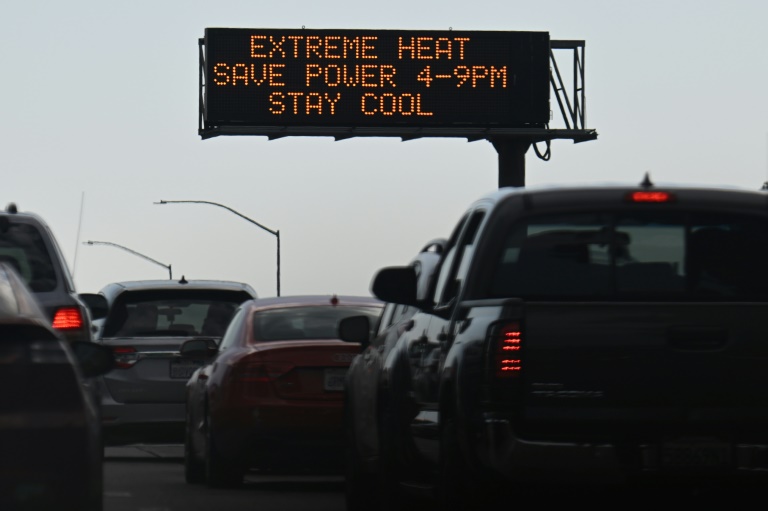
The California Independent System Operator (ISO), which runs the state’s power grid, has issued several consecutive “Flex Alerts.”

These call on households to limit power consumption between 4:00 pm and 9:00 pm to avoid straining the over-burdened system.

That typically means turning up the thermostat on air conditioning systems, avoiding using major appliances, and not charging electric vehicles during this time.

But California ISO president Elliot Mainzer warned Monday that an incredibly hot Tuesday would put even more pressure on the grid, and called for consumers to redouble their efforts.

“This is an extraordinary heat event we are experiencing, and the efforts by consumers to lean in and reduce their energy use after 4:00 pm are absolutely essential,” said Mainzer.

“Over the last several days we have seen a positive impact on lowering demand because of everyone’s help, but now we need a reduction in energy use that is two or three times greater than what we’ve seen so far as this historic heat wave continues to intensify.”

California has abundant solar installations, including on homes, which typically provide for around a third of the state’s power requirements during daylight.

But when the sun goes down, that supply falls quickly, leaving traditional generation to plug the gap. The problem is particularly acute in the early evening when temperatures are still high, but solar starts dropping out of the power mix.

Scientists say global warming, which is being driven chiefly by humanity’s unchecked burning of fossil fuels, is making natural weather variations more extreme.

Heat waves are getting hotter and more intense, while storms are getting wetter and, in many cases, more dangerous.

UN atomic watchdog urges 'security' zone at Ukraine nuclear plant

The UN’s atomic watchdog called Tuesday for a security zone to be set up around Ukraine’s Zaporizhzhia nuclear power plant, which is occupied by Russia and been the site of recent shelling.

Russian troops seized control of the plant — Europe’s biggest atomic facility — in early March and there have been repeated attacks in the vicinity, sparking fears of a nuclear disaster, as both sides trade blame for shelling the site.

“The current situation is untenable,” the International Atomic Energy Agency (IAEA) said in a report after it sent a team of inspectors to the plant last week.

“There is an urgent need for interim measures to prevent a nuclear accident arising from physical damage caused by military means,” the IAEA said. 

“This can be achieved by the immediate establishment of a nuclear safety and security protection zone,” it added in its report.

“The IAEA recommends that shelling on site and in its vicinity should be stopped immediately to avoid any further damages to the plant and associated facilities,” it said.

Moscow-installed official in Zaporizhzhia Vladimir Rogov criticised the idea of a security zone, saying instead what was needed to protect the plant’s integrity was agreement on implementing a ceasefire.

“In other words, if something happens in the perimetre of the nuclear plant, those who fired will immediately and severely be punished,” the Tass news agency quoted him as saying.

The commissioner for human rights in the Ukrainian parliament Dmytro Lubinets said the report “pays almost no attention to the facts related to the safety of the personnel and the war crimes committed by the Russian servicemen in relation to the employees of the nuclear plant: murder, torture, illegal arrests and criminal prosecution, etc”.

– Humanitarian corridor – 

Russia Tuesday accused Ukraine of repeatedly shelling around the nuclear plant.

There were seven strikes on the territory of the plant, Rogov said on social media. 

“Ukrainian soldiers opened fire on Energodar and its surroundings,” damaging a power line and reducing the capacity of the last working reactor, Rogov said.

In the past 24 hours, the territory of the nuclear plant and its neighbouring city of Energodar were hit 15 times, the Russian defence ministry said in its daily briefing. 

“Kyiv continues its provocations at the Zaporizhzhia nuclear power plant in order to create a threat of a man-made disaster,” the ministry added.

Radiation levels around the plant are “normal”, according to the ministry. 

The UN atomic watchdog had sent a 14-person team to the site last week to assess the situation.

At least two members of the team were to remain on a permanent basis to ensure the facility’s safety.

On Monday, the last working reactor at the embattled nuclear plant was disconnected from the grid after shelling caused a fire.

Ukrainian Deputy Prime Minister Iryna Vereshchuk Tuesday called for a humanitarian corridor to be established for civilians wanting to leave the area around the nuclear plant.

– Sanctions, drills – 

A pro-Kremlin official in the Russian-controlled port city of Berdyansk in southern Ukraine was “seriously” injured in a car blast Tuesday, Moscow-installed authorities said.

The car of city commandant Artem Bardin exploded in “the very centre of Berdyansk”, Rogov said on social media, calling the incident a “terrorist attack”. 

Bardin is in a “serious condition and has been hospitalised”, according to Rogov. 

In the past months, several officials installed by Russian forces in Moscow-controlled territories in Ukraine have been killed or wounded in attacks.

Kyiv has not formally claimed responsibility.

Ukraine has claimed its first gains in a counter-offensive against the Russian army in the south, saying it has recaptured several areas and destroyed multiple targets.

A US official said Tuesday that Russia is buying large amounts of ammunition from North Korea to replenish stocks depleted by months of intense fighting in Ukraine.

“The Russian Ministry of Defense is in the process of purchasing millions of rockets and artillery shells from North Korea for use on the battlefield in Ukraine,” the US official said in a statement.

“This purchase indicates that the Russian military continues to suffer from severe supply shortages in Ukraine, due in part to export controls and sanctions,” the official said, on grounds of anonymity.

Western sanctions have made it harder for Moscow to acquire components to manufacture replacements, including computer chips.

President Vladimir Putin attended large-scale military exercises Tuesday involving China and several Russia-friendly countries, as Moscow seeks to strengthen partnerships in Asia in the face of Western sanctions. 

And the European Commission laid out Tuesday the new hurdles facing Russian travellers seeking EU entry visas, in the latest punitive measures taken in response to Moscow’s invasion of Ukraine.

Ministers from EU member states agreed last week to suspend the 2007 EU-Russia visa facilitation deal, stopping short of an outright travel ban.

Israeli president retraces father's footsteps at Nazi camp

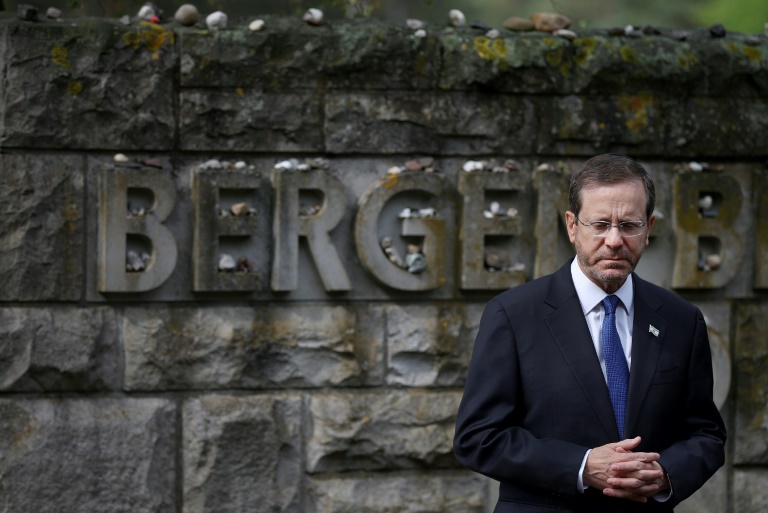
Israeli President Isaac Herzog visited the Bergen-Belsen Nazi concentration camp on Tuesday, retracing the footsteps of his father who helped liberate the site as a British army officer in 1945.

Recounting Chaim Herzog’s first moments at the camp — Isaac’s father and former Israeli president — the leader said he “stood on a wooden box, shouting in Yiddish before hundreds of skeletons”.

“‘Jews! There are still living Jews!” Herzog recalled his father saying.

The camp is one of the most notorious of World War II, where over 50,000 people died, including the diarist Anne Frank.     

In 1945, it was covered with barracks that the British army quickly burned down to stop diseases from spreading.

Today, there are huge mass graves covered with grass, on which small stones are placed as tributes for the dead.

Standing next to a stone brought from Jerusalem by Chaim Herzog in 1987 when he became the first Israeli president to visit Germany after World War II, his son Isaac urged the two countries to keep up the fight against anti-Semitism.

“That is our duty. On behalf of the past and for the sake of the future,” he said. 

Germany’s President Frank-Walter Steinmeier, who accompanied Herzog on Tuesday’s visit, said it took a long time for Germans to realise that they too were liberated at the end of the war. 

Paying tribute to Chaim Herzog, he said Germany must “never forget the Holocaust”.

– ‘Hell on earth’ –

Bergen-Belsen was one of the first concentration camps to be liberated by the Western Allies, who arrived to find it riddled with disease and about 10,000 unburied corpses.

Those held at the camp included Jews as well as prisoners of war, homosexuals and political opponents.

In a speech earlier Tuesday at the Bundestag, Herzog said he would “never forget how (his father) described to me the horrors” he witnessed at the camp.

“The stench. The human skeletons in striped pyjamas, the piles of corpses, the destruction, the hell on earth.”

During Chaim Herzog’s trip back in 1987, he said: “I bring with me neither forgiveness nor forgetfulness. The only ones who can forgive are the dead; the living have no right to forget.”

Isaac Herzog said he brought that same bequest to Germany on the current visit, “etched on my heart”.

At the site now dotted with pine, oak and birch trees, five survivors — Swedish national Jovan Rajs, Israelis No’omi Rinat and Jochevet Ritz-Olewski, American Menachem Rosensaft and German Albrecht Weinberg — also joined the ceremony.

Weinberg, now 97, was 20 years old when Bergen-Belsen was liberated. 

He had spent 60 years in the United States before returning to his city of origin, Leer, in northern Germany, which invited him back and named a school after him.

Weinberg said he goes to the school regularly to recount his experiences to pupils “who cannot understand how something like that could happen”. 

“I am one of the last survivors,” he told AFP.

“As long as I can, I will continue to speak about what happened.”

Close Bitnami banner
Bitnami