World

Russia buying N. Korean munitions for Ukraine: US

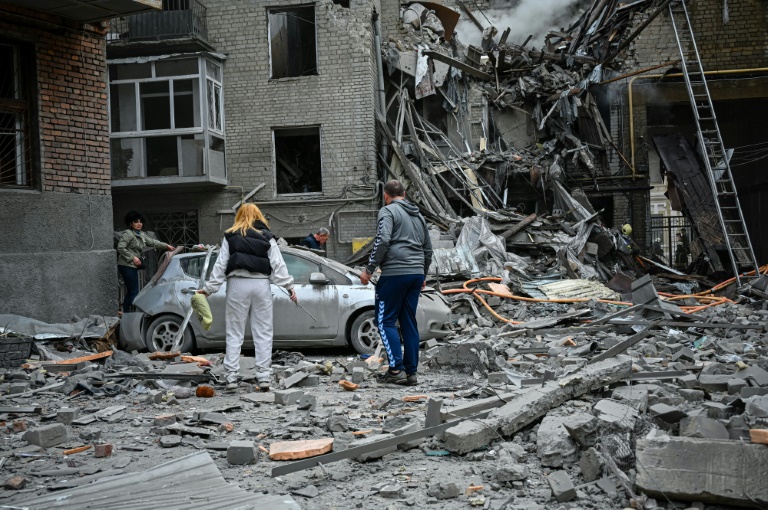
Russia is buying large amounts of ammunition from North Korea to replenish stocks depleted by months of intense fighting in Ukraine, a US military spokesman said Tuesday.

“We do have indications that Russia has approached North Korea to request ammunition,” Pentagon spokesman Brigadier General Pat Ryder said.

A separate statement from a US official said the purchase would involve rockets and artillery shells “for use on the battlefield in Ukraine.”

“This purchase indicates that the Russian military continues to suffer from severe supply shortages in Ukraine, due in part to export controls and sanctions,” the statement said.

Russia invaded Ukraine on February 24 with the apparent expectation of seizing control of the country within weeks.

But Ukraine has halted the advance with the help of weaponry and munitions from the United States and other NATO and European allies.

Both sides in the war have used huge amounts of artillery ammunition and lost large volumes of armor in the grinding battle.

But the acquisition of longer-range missiles from the United States and allies has permitted Ukraine to target dozens of Russian ammunition depots behind the front lines.

And Western sanctions have made it harder for Moscow to acquire components to manufacture replacements, including computer chips.

Ryder said the purchase from North Korea underscores the “challenges” the Russians have in logistics and supply chains for its forces inside Ukraine.

Manhunt for second suspect in Canada stabbing spree

A manhunt extended for a third day Tuesday in the search for a suspect accused of multiple deadly stabbings in a remote Canadian Indigenous community and nearby town, with no motive yet known for the rampage. 

The attack in the James Smith Cree Nation Indigenous community and the town of Weldon in Saskatchewan province on Sunday left 10 dead and 18 wounded.

An intense hunt across the vast Prairies region for two brothers believed responsible — Myles and Damien Sanderson, aged 30 and 31 respectively — narrowed after the older sibling was found dead on Monday.

Damien Sanderson’s mutilated body was “located outdoors in a heavily grassed area in proximity to a house that was being examined” in the James Smith Cree Nation, police assistant commissioner Rhonda Blackmore told a news conference late Monday.

The younger Sanderson — who is also wanted for breaching parole in May after serving part of a sentence for assault and robbery — is suspected of having killed his brother, she said. He remains at large and is considered armed and dangerous.

“He may be injured and seek medical attention,” Blackmore added.

According to Evan Bray, police chief of the provincial capital Regina, Myles Sanderson could be hiding out in the city — 300 kilometers (185 miles) from the site of the attack — after fleeing in a vehicle.

Authorities across Saskatchewan and two neighboring provinces, along with Canada-US border officials remain on high alert for the suspect, who has a history of explosive violence that led to nearly 60 past criminal convictions.

– Residents hide indoors –

Prime Minister Justin Trudeau has called the attacks shocking and heartbreaking, while lamenting that “tragedies like these have become all too commonplace.”

Since 2017, Canada has witnessed a gunman masquerading as a policeman kill 22 people in Nova Scotia, another kill six worshippers at a Quebec City mosque, and a driver of a van kill 11 pedestrians in Toronto.

In the James Smith Cree Nation and nearby Weldon, residents described overwhelming grief and fear.

“Both communities are destroyed. All lives are shattered,” Ruby Works told public broadcaster CBC. 

She named her friend and Weldon neighbor Wes Petterson, a 77-year-old widower, as among those killed.

“If someone needed a hand, he helped. He was a kind-hearted man,” Works said. “He didn’t deserve this.”

Residents of the small town are terrified, she added, many staying locked indoors.

The James Smith Cree Nation has asked for privacy as they mourn.

“My sister was lying in her driveway with her friend and a young boy. They’re all dead. They were massacred,” Ivor Burns, told local broadcasters. His sister Gloria Burns, 62, was an addictions counsellor.

He, along with several Indigenous leaders, suggested rampant drug and alcohol abuse has been a factor in a trend of violent incidents in the area. 

Gloria Burns’ son Dillon posted on social media that his mother died “protecting a young man while he was being attacked,” adding that “she would’ve done the same for any of us… (even) for the man who has taken her life.”

In an online tribute, Lana Head, a 49-year-old mother of two who worked as a security guard at a local casino, was remembered as a “sweet and caring” person with an infectious smile.

Police believe some of the victims were targeted and others were attacked randomly.

Eighteen remain in hospital, including four in critical condition, according to officials.

Roots rock: Chimpanzees drum to their own signature beats

The drummers puff out their chests, let out a guttural yell, then step up to their kits and furiously pound out their signature beat so that everyone within earshot can tell who is playing.

The drum kit is the giant gnarled root of a tree in the Ugandan rainforest — and the drummer is a chimpanzee. 

A new study published Tuesday found that not only do chimpanzees have their own styles — some preferring straightforward rock beats while others groove to more freeform jazz — they can also hide their signature sound if they do not want to reveal their location.

The researchers followed the Waibira chimpanzee group in western Uganda’s Budongo Forest, recording the drum sessions of seven male chimps and analysing the intervals between beats. 

The chimps mostly use their feet, but also their hands to make the sound, which carries more than a kilometre through the dense rainforest. 

The drumming serves as a kind of social media, allowing travelling chimpanzees to communicate with each other, said Vesta Eleuteri, the lead author of the study published in the journal Animal Behaviour.

The PhD student said that after just a few weeks in the rainforest she was able to recognise exactly who was drumming.

“Tristan — the John Bonham of the forest — makes very fast drums with many evenly separated beats,” she said, referring to the legendarily hard-hitting drummer of rock band Led Zeppelin.

Tristan’s drumming “is so fast that you can barely see his hands”, Eleuteri said.

– Hiding their style –

But other chimps like Alf or Ila make a more syncopated rhythm using a technique in which both their feet hit a root at almost the same time, said British primatologist Catherine Hobaiter, the study’s senior author.

The research team was led by scientists from Scotland’s University of St Andrews, and several of the chimpanzees are named after Scottish single malt whiskies, including Ila — for Caol Ila — and fellow chimp Talisker.

Hobaiter, who started the habituation of the Waibira group in 2011, said it long been known that chimpanzees drummed.

“But it wasn’t until this study that we understood they’re using these signature styles when they’re potentially looking for other individuals — when they’re travelling, when they’re on their own or in a small group,” she told AFP.

The researchers also discovered that the chimps sometimes choose not to drum in their signature beat, to avoid revealing their location or identity.

“They have this wonderful flexibility to express their identity and their style, but also to sometimes keep that hidden,” Hobaiter said.

Michael Wilson, a specialist on chimpanzees at the University of Minnesota who was not involved in the research, said the study’s methodology was sound.

But he was not “completely convinced, though, that the drumming is sufficiently distinctive that you could reliably tell all individuals apart,” because some patterns seemed very similar, he said, calling for more research.

– ‘A sense of music’ –

While plenty of animals produce sounds we think of as music — such as birdsong — the research could open the door to the possibility that chimpanzees enjoy music on a level generally thought to only be possible for humans. 

“I do think that chimpanzees, like us, potentially have a sense of rhythmicity, a sense of music, something that touches them on an almost emotional level, in the way that we might have a sense of awe when we hear an amazing drum solo or another kind of dramatic musical sound,” Hobaiter said.

Most research on the culture of chimpanzees has looked at their tools or food, she said.

“But if we think about human culture we don’t think about the tools we use — we think about how we dress, the music we listen to,” she added.

Next the researchers plan to investigate how neighbouring and far-off communities of chimpanzees drum in their own differing styles.

Hobaiter has already been looking at chimpanzees in Guinea, where there are very few trees to drum in the open savannah.

“We’ve got early hints that they might be throwing rocks against rocks” to make sound, she said.

“Literal rock music in this case.”

New UK PM Truss promises to 'ride out' economic storm

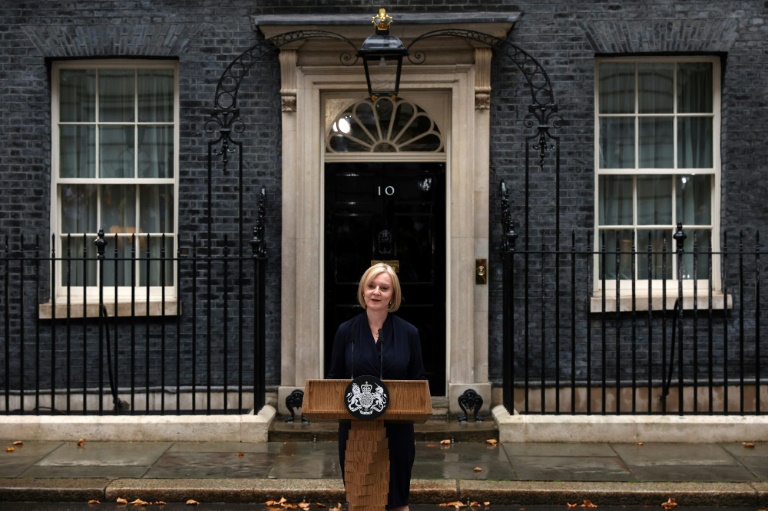
Liz Truss on Tuesday promised that Britain would see sunnier days ahead despite the current economic gloom, as she made her first speech as prime minister after taking over from Boris Johnson.

Heavy rain and thunder forced supporters of the country’s third female prime minister to scramble for cover as they waited for her to arrive in Downing Street.

But the clouds lifted as the 47-year-old former foreign secretary’s motorcade swept in, and she vowed that the country would “ride out the storm” of double-digit inflation and soaring energy prices.

“I will take action this week to deal with energy bills and to secure our future energy supply,” she said.

“As strong as the storm may be, I know that the British people are stronger,” she added, outlining her priorities as the economy, energy and health.

Truss was announced winner of an internal vote of Conservative party members on Monday, after a gruelling contest that began with Johnson’s resignation in July.

She arrived in Downing Street after a 1,000-mile (1,600-kilometre) round trip from London to see Queen Elizabeth II in the Scottish Highlands, where she accepted the invitation to form a government.

The 30-minute audience was held at the head of state’s remote Balmoral retreat as the queen, 96, was deemed unfit to return to London due to ill health.

As soon as Thursday, Truss is expected to sanction a freeze on household energy bills to prevent steep hikes this winter, and possibly beyond, at a cost of tens of billions of pounds.

– Energy crisis – 

Her new team is due to be assembled in time for a Cabinet meeting on Wednesday morning before her first appearance in parliament as prime minister.

Business Secretary Kwasi Kwarteng is expected to become finance minister, with Attorney General Suella Braverman moved to the tricky brief of home secretary, and James Cleverly to foreign affairs.

If confirmed, it would mean no white men in any of Britain’s four main ministerial posts for the first time ever.

The incoming prime minister faces a daunting to-do list, with the UK in the grip of its worst economic crisis in decades.

Hard-pressed households facing 80-percent increases in electricity and gas bills from October have demanded immediate action to prevent millions being forced to choose between heating and eating this winter.

Businesses have also warned they could be forced to close because of even steeper hikes in energy costs.

Truss, who touts herself as a free-market liberal, has promised tax cuts to stimulate growth, despite warnings that greater borrowing could make inflation worse.

The contrast to her beaten leadership rival Rishi Sunak’s more cautious approach has opened another rift in the Conservative party that was already divided by Johnson’s departure.

Recent opinion polls suggest a sizeable chunk of the British public have no faith in her ability to tackle the cost-of-living crisis.

A new poll by YouGov said only 14 percent expect Truss — the fourth Tory prime minister in six years — to do a better job than Johnson.

– Comeback? –

Johnson, whose tenure was dominated by Brexit and Covid and cut short by a succession of scandals, earlier promised Truss his unswerving support as he made a farewell speech in Downing Street.

“I will be supporting Liz Truss and the new government every step of the way,” he said, before leaving for Balmoral to tender his resignation to the queen.

He urged the Tories to put aside their ideological differences which have seen the party fight like cats and dogs over how best to tackle the energy crisis.

“If Dilyn (his dog) and Larry (the Downing Street cat) can put behind them their occasional difficulties then so can the Conservative party,” he added.

But former newspaper polemicist Johnson failed to dampen speculation that he is eyeing a potential return to the political front line.

“Like Cincinnatus, I am returning to my plough,” he said. Latin scholars were quick to point out that the Roman statesman eventually returned to politics.

Johnson, 58, remains popular among grassroots Tories as a charismatic election winner who took the country out of the European Union.

Despite repeated accusations of corruption and cronyism during his tenure, and an unprecedented police fine for breaking his own lockdown rules, Johnson is said to be smarting at having to leave.

Speculation has swirled that he could bide his time for a comeback, particularly if Truss struggles to overcome the country’s many problems.

In her acceptance speech on Monday, Truss ruled out seeking her own mandate from the public at an early general election, vowing victory in 2024.

G7 corporate climate plans spell 2.7C heating: analysis

The decarbonisation plans of some of the biggest corporations from G7 nations put Earth on course to heat a potentially catastrophic 2.7 degrees Celsius — blowing Earth well past the Paris Agreement temperature goals, analysis showed Tuesday.

As more and more firms announce their intention to become carbon neutral by mid-century at the latest, scrutinising corporate claims of green action is increasingly important to check whether they are aligned with the latest climate science. 

CDP, a non-profit that runs a global disclosure system for companies to manage their environmental impacts, looked at the climate plans of more than 4,000 firms across the world’s seven largest economies.

They found that current plans would lead to a world by 2100 that is 2.7C hotter than currently — a far cry from the temperature goals of the 2015 Paris deal, which enjoins nations to limit warming to “well below” 2C above pre-industrial levels. 

Europe was the best performer, with rapid action since 2021 likely to have “cooled” the temperature prediction some 0.3C, the analysis showed. 

Businesses in Canada, on the other hand, were the worst performing in terms of decarbonisation plans, with 88 percent of reported greenhouse gas emissions coming from firms that have no disclosed net zero plans.

Across all regions and sectors, only the European power generation sector achieved a temperature rating below 2C, driven by targets from renewable and nuclear energy companies.

Many companies have plans in place to reduce emissions directly produced from their business operations, such as vehicle exhausts and office heating.

Far fewer have plans covering emissions produced by the consumption or use of their products and which often count for most of their carbon footprints.

Companies in Germany, Italy and the Netherlands had policies to reduce their emissions across their entire value chain, which equated with a 2.2C temperature rise, according to the CDP.

“However, despite this progress, the average temperature ratings for corporates remain well above 1.5C across all major European economies,” it said.

G7 corporate climate plans spell 2.7C heating: analysis

The decarbonisation plans of some of the biggest corporations from G7 nations put Earth on course to heat a potentially catastrophic 2.7 degrees Celsius — blowing Earth well past the Paris Agreement temperature goals, analysis showed Tuesday.

As more and more firms announce their intention to become carbon neutral by mid-century at the latest, scrutinising corporate claims of green action is increasingly important to check whether they are aligned with the latest climate science. 

CDP, a non-profit that runs a global disclosure system for companies to manage their environmental impacts, looked at the climate plans of more than 4,000 firms across the world’s seven largest economies.

They found that current plans would lead to a world by 2100 that is 2.7C hotter than currently — a far cry from the temperature goals of the 2015 Paris deal, which enjoins nations to limit warming to “well below” 2C above pre-industrial levels. 

Europe was the best performer, with rapid action since 2021 likely to have “cooled” the temperature prediction some 0.3C, the analysis showed. 

Businesses in Canada, on the other hand, were the worst performing in terms of decarbonisation plans, with 88 percent of reported greenhouse gas emissions coming from firms that have no disclosed net zero plans.

Across all regions and sectors, only the European power generation sector achieved a temperature rating below 2C, driven by targets from renewable and nuclear energy companies.

Many companies have plans in place to reduce emissions directly produced from their business operations, such as vehicle exhausts and office heating.

Far fewer have plans covering emissions produced by the consumption or use of their products and which often count for most of their carbon footprints.

Companies in Germany, Italy and the Netherlands had policies to reduce their emissions across their entire value chain, which equated with a 2.2C temperature rise, according to the CDP.

“However, despite this progress, the average temperature ratings for corporates remain well above 1.5C across all major European economies,” it said.

Dollar weighs on yen and euro

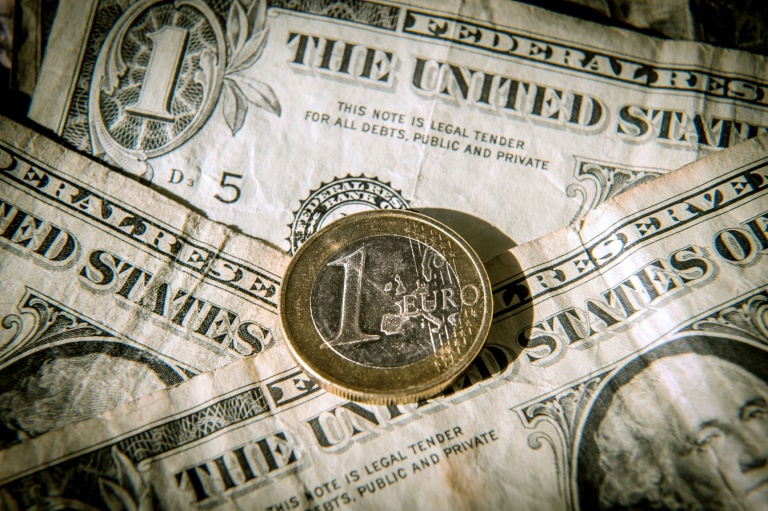
The euro and yen sunk new multi-year lows against the dollar on Tuesday as investors focused on central bank efforts to contain surging inflation and fears of an economic slowdown.

The dollar struck a 24-year high of $142.98 yen, while the euro sank to $0.9864, a level unseen since December 2002.

“Recession concerns around the world continue to boost the appetite for US dollar, even at these levels,” said City Index and FOREX.com analyst Fawad Razaqzada.

“Investors are becoming more and more convinced that the Fed is going to hike by 75 basis points this month and proceed with further aggressive hikes until inflation comes back under control,” he added.

The Fed has increased the key lending rate four times this year, including two supersized 75 basis points (0.75 percentage point) hikes in June and July, with Fed chief Jerome Powell indicating another similar increase is possible this month.

Yields on US government debt continue to rise as investors expect further hikes.

The Fed’s earlier start to raising interest rates, and pledge to continue to aggressively raise them until it has tamed surging inflation, has boosted the attractiveness of the dollar for investors.

The European Central Bank brought an end to eight years of negative interest rates with a surprisingly-aggressive 0.50 percentage point hike in July, and is expected to hike interest rates on Thursday by at least the same amount to tackle surging eurozone inflation.

Meanwhile the Bank of Japan has dug in its heels on its easy-money policies as it seeks to ensure inflation is here to stay after a long deflationary period. 

Wall Street stocks wobbled during morning trading after a three-day holiday weekend, with the Dow down 0.1 percent approaching midday.

European stocks ended the day higher despite poor German data, a day after tumultuous trading as Russia curbed gas supplies to Europe.

– ‘Wait-and-see mood’ –

Nevertheless, traders are still wary.

“Investors remain cautious amid worries about the slowing global economy,” noted Hargreaves Lansdown analyst Susannah Streeter.

“There is a wait-and-see mood hanging over markets.”

Russia’s decision over the weekend to halt gas supplies to Germany in retaliation for sanctions over Ukraine sent shock waves through European trading floors on Monday as it ramped up expectations of a painful recession in major economies.

That continues to bedevil the euro, as well as measures that European governments are taking to prop up their economies in face of the energy crisis.

Razaqzada said these measures are likely to fuel inflation even further. This would require the ECB to hike interest rates even more aggressively, meaning a sharper recession.

“So, it is a catch-22 situation for the ECB,” he said.

“For this reason, traders are reluctant to buy the euro.”

Similarly, the yield on 10-year British government bonds surged to the highest level since 2011 after Britain’s new Prime Minister Liz Truss unveiled a 130-billion-pound package to freeze consumer energy bills. 

“UK gilt yields have pushed above three percent for the first time since 2014, in anticipation that the Bank of England may have to adopt a slightly more aggressive rate posture,” said CMC Markets analyst Michael Hewson.

In Asia on Tuesday, Shanghai advanced after China unveiled fresh economy-boosting measures, but the overall picture was mixed.

Sydney dipped after the Reserve Bank of Australia lifted interest rates to a near eight-year high and warned of more pain ahead.

– Key figures at around 1530 GMT –

New York – Dow: DOWN 0.1 percent at 31,287.54 points

EURO STOXX 50: UP 0.2 percent at 3,496.77

London – FTSE 100: UP 0.2 percent at 7,300.44 (close) 

Frankfurt – DAX: UP 0.9 percent at 12,871.44 (close)

Paris – CAC 40: UP 0.2 percent at 6,104.61 (close)

Tokyo – Nikkei 225: FLAT at 27,626.51 (close)

Hong Kong – Hang Seng Index: DOWN 0.1 percent at 19,202.73 (close)

Shanghai – Composite: UP 1.4 percent at 3,243.45 (close)

Euro/dollar: DOWN at $0.9913 from $0.9929 on Monday

Pound/dollar: UP at $1.1532 from $1.1517

Dollar/yen: UP at 142.90 yen from 140.60 yen

Euro/pound: DOWN at 85.94 pence from 86.21 pence

West Texas Intermediate: DOWN 0.2 percent at $86.66 per barrel

Brent North Sea crude: DOWN 3.2 percent at $92.70 per barrel

burs-rl/rox

PSG face backlash over mockery of train travel option

French football giants Paris Saint-Germain on Tuesday faced accusations of failing to take climate change seriously, after coach Christophe Galtier and star Kylian Mbappe mocked a suggestion that they should take the train rather than private planes for short-haul travel.

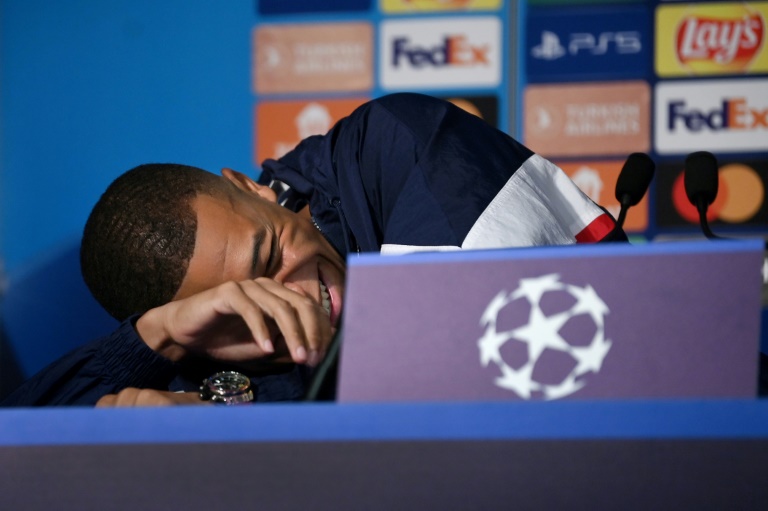
Galtier and Mbappe were asked at a press conference on Monday whether they had discussed an offer from the state railway group SNCF to provide travel for them to away games.

Galtier initially smirked at the idea while Mbappe bent double in laughter over the suggestion — with the clip quickly going viral on social media.

“We had a chat with our travel organisers earlier to see if we can travel by sand-yacht,” Galtier replied sarcastically, referring to sail-powered beach buggies that are popular on some French beaches.

Politicians, campaigners and even the prime minister weighed in on Tuesday, condemning both men for being out-of-touch and arrogant at a time when Europe faces an energy crisis and spiralling temperatures linked to climate change. 

“I think it’s important that they realise what world we live in, that they are aware that there is a climate crisis that is no longer a hypothesis about tomorrow but a reality today,” Prime Minister Elisabeth Borne told reporters while visiting a Paris police station. 

Economy Minister Bruno Le Maire called Galtier’s response “inappropriate” while Paris’ left-wing mayor Anne Hidalgo tweeted: “It’s not on to answer stuff like that???? Wake up guys??? This is Paris.”

– Private jets –

The controversy began over the weekend when PSG notched up an easy 3-0 away victory against Nantes to stay top of Ligue 1 on their trip to the French city, which is 380 kilometres (240 miles) west of Paris but located on a high-speed train line.

The side — owned by an investment fund of major gas producer Qatar — boasted on social media that they had made the return trip with shirt sponsors Qatar Airways, but their travel choice was publicly questioned due to its carbon footprint.

“Paris-Nantes is less than two hours by TGV,” Alain Krakovitch, the head of SNCF’s TGV high-speed passenger trains, wrote on Twitter afterwards.

“I renew our proposal for a TGV offer adapted to your specific needs in line with our common interests — safety, speed, services and eco-mobility,” he added.

The PSG team recently went by road to a clash with Lille, the club said, and may also take the coach for other upcoming matches.

The Qatar-owned club takes “security, public order, logistical problems and the environment” into consideration when planning travel, it said. 

The controversy comes against the background of a growing clamour in France from environmental campaigners for restrictions on private jet travel to reduce greenhouse gas emissions.

Pressure group Attac had on Friday pilloried PSG’s Argentinian star Lionel Messi for his use of private air travel.

“From June to August, Messi made 52 flights with his private jet, amounting to 1,502 tons of CO2 emissions. That’s as much as a single French person would be responsible for in 150 years,” it said.

Star French attacker Karim Benzema also faced criticism over the summer for posting a video from his holidays in Miami which flaunted his wealth — and carbon footprint — with sports cars, jet skis and motor boats.

Many teams in the top Spanish, Italian and English leagues, including Juventus and Liverpool, regularly travel by train.

– Role model? –

Communication experts said they were amazed at the insensitivity of the PSG manager’s reply on the same day that President Emmanuel Macron was urging French people to lower their air conditioning and heating to save electricity.

Europe faces an energy crunch this winter after Russia cut its gas deliveries to the continent.

The press conference behaviour was a rare faux pas for World Cup-winning posterboy Mbappe who has forged a reputation as a mature, socially-minded player despite his young age of just 23.

“I have no thoughts,” he replied in the press conference when asked for his view on the train travel option.

Contacted by AFP, his representatives declined to comment on Tuesday.

“It is a devastating blow to his image,” Frank Hocquemiller, an agent for several French international footballers, told AFP. “Footballers need to understand that if you are a role model, or in his case an icon, everything carries great importance.” 

French climatologist Valerie Masson-Delmotte said she wanted Mbappe to set an example.

“What he says, what he does, these things have an influence far beyond what scientists might say or do, because he inspires so many people,” she told France Inter radio.

burs-sjw-adp/pvh

Russia buying N. Korean munitions for Ukraine: US

Russia is buying large amounts of ammunition from North Korea to replenish stocks depleted by months of intense fighting in Ukraine, a US official said Tuesday.

Russia invaded Ukraine on February 24 with the apparent expectation of seizing control of the country within weeks.

But Ukraine has halted the advance with the help of weaponry and munitions from the United States and other NATO and European allies.

“The Russian Ministry of Defense is in the process of purchasing millions of rockets and artillery shells from North Korea for use on the battlefield in Ukraine,” a US official said in a statement.

“This purchase indicates that the Russian military continues to suffer from severe supply shortages in Ukraine, due in part to export controls and sanctions,” the official said, on grounds of anonymity.

Both sides in the war have used huge amounts of artillery ammunition and lost large volumes of armor in the grinding battle.

But Western sanctions have made it harder for Moscow to acquire components to manufacture replacements, including computer chips.

Under that pressure, the US official said, “We expect Russia could try to purchase additional North Korean military equipment going forward.”

100% compostable coffee balls bid to take on Nespresso

Switzerland’s biggest retailer launched a new coffee machine invention on Tuesday — fully compostable coffee balls which it hopes will shake up the global market and take on Nespresso’s global dominance.

The Migros supermarket chain hopes its innovation will cash in on consumers’ environmental concerns by eliminating the aluminium and plastic waste of regular coffee capsules.

Rather than capsules, the new pods are balls of compressed coffee covered with a thin film made from algae. 

With its new system, which took five years to develop, Migros is parking its tanks on the lawns of its Swiss compatriot Nestle, the giant in the coffee pod sector with its Nespresso brand.

The machines and coffee balls went on sale in Switzerland and France from Tuesday, but interest in other countries is “already huge”, chief executive Fabrice Zumbrunnen said at the launch in Zurich, eyeing a wider rollout.

There are other compostable coffee pods on the market but Migros believes that this is the first system to use biodegradable balls.

The balls have to be used in the Migros CoffeeB system and are not compatible with other coffee machines.

Switzerland’s largest employer said the new development was in response to the growing environmental consciousness of consumers, saying that some 63 billion coffee capsules are sold each year around the world, generating around 100,000 tonnes of waste.

Migros is currently a small player in the market.

According to market researchers Euromonitor International, the market share of its Cafe Royal brand was limited to 0.3 percent in western Europe in 2021, compared to 12.1 percent for Nespresso alone, while Nestle also owns the Nescafe and Dolce Gusto labels. 

But Migros is hoping its compostable coffee system will gain it some market share. 

It points out that the coffee beans used to make the biodegradale balls are sourced from sustainable crops, with fair trade and organic certification.

The cases the balls come in look like egg cartons and are made of recyclable materials. The coffee machines themselves are largely made from recycled materials, Migros said. 

Close Bitnami banner
Bitnami