World

China logs hottest August since records began

China has logged its hottest August since records began, state media reported Tuesday, following an unusually intense summer heat wave that parched rivers, scorched crops and triggered isolated blackouts.

Southern China last month sweltered under what experts said may have been one of the worst heat waves in global history, with parts of Sichuan province and the megacity of Chongqing clocking a string of days well over 40 degrees Celsius (104 Fahrenheit).

The average temperature nationwide was 22.4C in August, exceeding the norm by 1.2C, state broadcaster CCTV reported, citing the country’s weather service.

Some 267 weather stations across the country matched or broke temperature records last month, the report said.

It was also China’s third-driest August on record, with average rainfall 23.1 percent lower than average.

“The average number of high-temperature days was abnormally high, and regional high-temperature processes are continuing to impact our country,” CCTV reported the weather service as saying.

Scientists say extreme weather like heat waves, droughts and flash floods is becoming more frequent and intense due to human-induced climate change.

Last month, temperatures as high as 45C prompted multiple Chinese provinces to impose power cuts as cities battled to cope with a surge in electricity demand partly driven by people cranking up the air conditioning.

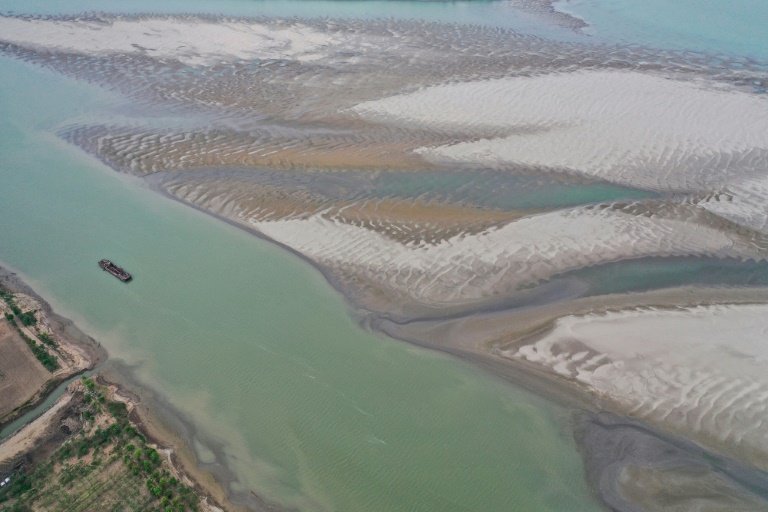
Images from Chongqing showed a tributary of the mighty Yangtze river had almost run dry, a scene echoed further east where the waters of China’s largest freshwater lake also receded extensively.

– ‘Severe threat’ –

Chongqing and the eastern megacity of Shanghai switched off outdoor decorative lighting to mitigate the power crunch, while authorities in Sichuan imposed industrial power cuts as water levels dwindled at major hydroelectric plants.

As local authorities warned that the drought posed a “severe threat” to this year’s harvest, the central government approved billions of yuan in subsidies to support rice farmers.

“This is a warning for us, reminding us to have a deeper understanding of climate change and improve our ability to adapt to it in all respects,” said Zhang Daquan, a senior official at China’s National Climate Centre, in comments carried Monday by the state-run People’s Daily newspaper.

“It is also necessary to raise awareness across all of society to adapt to climate change… and strive to minimise social and economic impacts and losses,” Zhang said.

Higher-than-usual temperatures are also expected across China throughout September, CCTV cited the weather service’s deputy director Xiao Chan as saying.

Li Shuo, senior global policy adviser at Greenpeace East Asia, told AFP that while it was difficult to attribute individual weather events to climate change, “scientifically a long-term warming trend and long-term extreme weather impacts can definitely be said to have direct connection with climate change”.

Li said he thought the extreme weather experienced by China this summer, especially in the southwest of the country, was “once again sounding an alarm for China”.

– Coal boost –

Scientists have said a rapid reduction in global carbon dioxide emissions is needed to avert potentially disastrous global heating and its associated climate impacts.

China, the world’s largest greenhouse gas emitter, has pledged to bring its carbon emissions to a peak by 2030 and cut them to zero by 2060.

But the record-busting summer heat and drought, combined with a power crunch last year, have pushed authorities to pivot back towards carbon-rich coal use in what they have portrayed as a bump on the road towards a more sustainable future.

Beijing said earlier this year it would raise coal mining capacity by 300 million tonnes and has stepped up approvals of coal plants and related infrastructure.
Five Pakistan soldiers killed in clash with Taliban

Pakistan’s Taliban accused the military Tuesday of breaking a fragile ceasefire, after the army said five soldiers and at least four militants died in a gun battle in the country’s northwest.

Tehreek-e-Taliban Pakistan (TTP) declared an indefinite ceasefire in June to facilitate peace talks being brokered by neighbouring Afghanistan, but there have been regular clashes since then despite both sides saying the truce was still on.

In the latest clash on Monday, the Pakistan military said it raided a militant hideout in Boyya, North Waziristan, following an intelligence tip-off.

“Intense fire exchange took place between own troops and terrorists,” the military’s public relations wing said in a statement.

It said four militants were killed, and five soldiers, including an officer, “embraced martyrdom”.

On Tuesday a TTP commander confirmed the clash and accused the government of bad faith, saying troops had attacked them in six districts recently, including Peshawar, the capital of Khyber Pakhtunkhwa province.

“The government was not honouring its commitment regarding the ceasefire,” the commander told AFP.

A government official who has been party to negotiations with the group accused them of “targeted killings” and “increasing their movements” in parts of the country.

Since the Taliban returned to power in Afghanistan last year Islamabad has regularly complained of attacks by the TTP, especially along their porous frontier.

The Pakistan and Afghanistan Taliban are separate groups, but share a common ideology.

Afghanistan insists it will not allow its soil to be used by foreign militants, but hundreds of Pakistan Taliban fighters are believed to be in the country, as well as much of the group’s leadership.

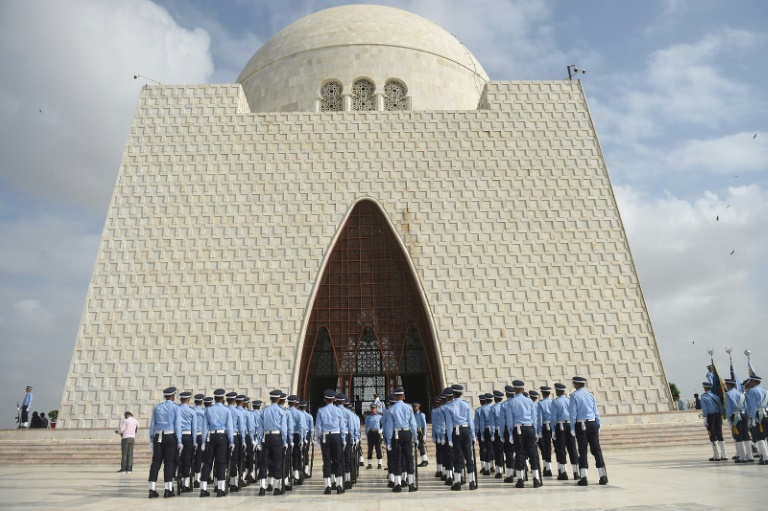
On Tuesday Pakistan’s military marked Defence Day, honouring those who died in the 1965 war with India.

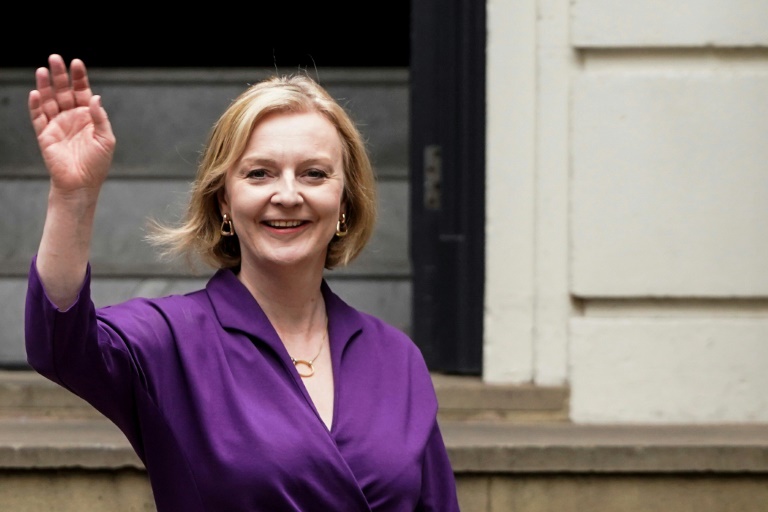
Liz Truss becomes new UK PM after audience with queen

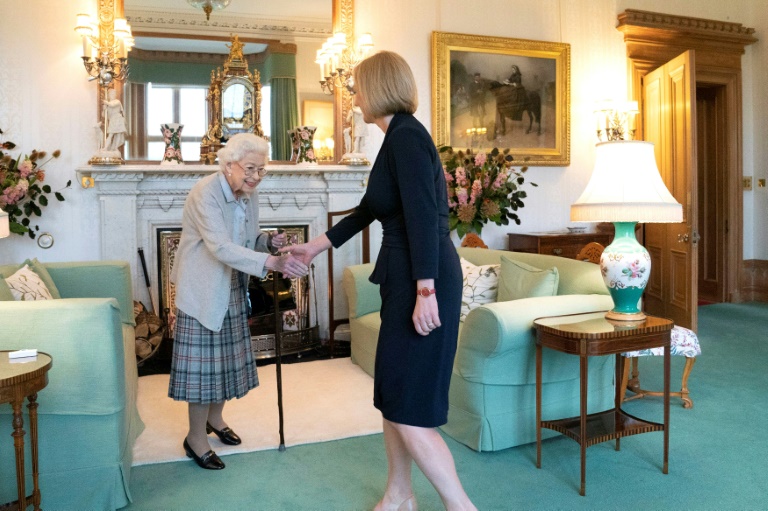
Liz Truss on Tuesday officially became Britain’s new prime minister, at an audience with head of state Queen Elizabeth II after the resignation of Boris Johnson.

The former foreign secretary, 47, was seen in an official photograph shaking hands with the monarch to accept her offer to form a new government and become the 15th prime minister of her 70-year reign.

The symbolic ceremony took place at the sovereign’s remote Balmoral retreat in the Scottish Highlands, as the queen, 96, was deemed unfit to return to London due to ill health.

“The queen received in audience the right honourable Elizabeth Truss MP today and requested her to form a new administration,” Buckingham Palace said in a statement. 

“Ms Truss accepted Her Majesty’s offer and kissed hands upon her appointment as prime minister. 

The last time the handover of power took place at Balmoral was in 1885, when queen Victoria was on the throne. 

Normally, the outgoing and incoming prime minister meet the queen in quick succession at Buckingham Palace in central London. 

It has only been held once outside London since 1952, when Winston Churchill met the new queen at Heathrow Airport after the death of her father, king George VI.

Truss, who was announced winner of an internal vote of Conservative party members on Monday, after a gruelling contest that began in July.

She is expected to make her first speech as prime minister outside 10 Downing Street at about 4:00 pm (1500 GMT) on Tuesday — weather permitting.

Heavy rain and storms are forecast, mirroring the gloomy economic situation that she and her new senior ministers will now have to tackle.

The appointments are due to be finalised before she hosts her first cabinet meeting and faces questions in parliament on Wednesday.

Business Secretary Kwasi Kwarteng is expected to become finance minister, with Attorney General Suella Braverman moved to the tricky brief of home secretary, and James Cleverly to foreign affairs.

If confirmed, it would mean no white men in any of Britain’s four main ministerial posts for the first time ever.

– To-do list –

The incoming prime minister faces a daunting to-do list, with the UK in the grip of its worst economic crisis in decades, with double-digit inflation and sky-rocketing gas and electricity bills.

Truss, who touts herself as a free-market liberal, has promised tax cuts to stimulate growth, despite warnings that greater borrowing could make inflation worse.

British media reported on Tuesday that she would freeze energy bills for hard-pressed households and business which could cost some £100 billion ($116 billion).

The contrast to her beaten leadership rival Rishi Sunak’s more cautious approach has opened another rift in the Conservative party that was already divided by Johnson’s departure.

Recent opinion polls suggest a sizeable chunk of the British public have no faith in her ability to tackle the cost-of-living crisis.

A new poll by YouGov said only 14 percent expect Truss — the fourth Tory prime minister in six years — to do a better job than Johnson.

Johnson, whose tenure was dominated by Brexit and Covid and cut short by a succession of scandals, earlier promised Truss his unswerving support as he made a farewell speech in Downing Street.

“I will be supporting Liz Truss and the new government every step of the way,” he said, before leaving for Balmoral to cheers and applause from supporters.

He urged the Tories to put aside their ideological differences which have seen the party fight like cats and dogs over how best to tackle the energy crisis.

“If Dilyn (his dog) and Larry (the Downing Street cat) can put behind them their occasional difficulties then so can the Conservative party,” he added.

– Comeback? –

But former newspaper polemicist Johnson failed to dampen speculation that he is eyeing a potential return to the political front line.

“Like Cincinnatus, I am returning to my plough,” he said. Latin scholars were quick to point out that the Roman statesman eventually returned to politics.

Johnson, 58, remains popular among grassroots Tories as a charismatic election winner who took the country out of the European Union.

Despite repeated accusations of corruption and cronyism during his tenure, and an unprecedented police fine for breaking his own lockdown rules, Johnson is said to be smarting at having to leave.

Speculation has swirled that he could bide his time for a comeback, particularly if Truss struggles to overcome the country’s many problems.

In her acceptance speech on Monday, Truss ruled out seeking her own mandate from the public at an early general election, vowing victory in 2024.

South African GDP shrinks, hit by floods, energy crisis

South Africa’s economy shrank in the second quarter, as floods and an energy crisis put a halt to months of growth, official data showed Tuesday.

The dip in output after two consecutive quarters of modest growth dragged Africa’s most industrialised economy back below pre-coronavirus pandemic levels.

The official statistics agency StatsSA said gross domestic product retreated by 0.7 percent in the second quarter.

“The economy took almost two years to recover from the impact of COVID-19,” the agency said in a statement. “The recovery was short lived”.

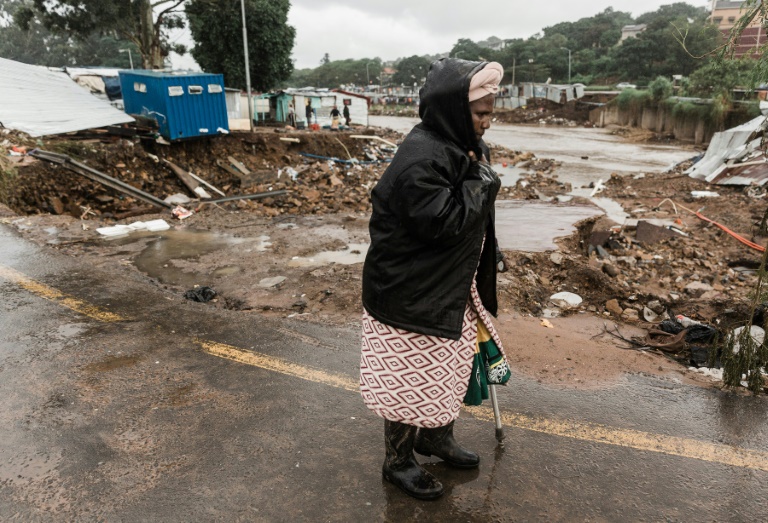
Devastating floods that killed more than 450 people in the southeastern KwaZulu-Natal province and power cuts caused by a prolonged energy crisis contributed to the decline, “weakening an already fragile national economy”, the agency said.

“The flooding had a negative impact on a number of industries, most notably manufacturing,” StatsSA said. 

Damages to factories and plants, and disruptions to logistics and supply chains caused by the torrential rains, pulled national manufacturing output down by 5.9 percent, it said. 

Mining and the electricity, gas and water supply industry were hampered by weeks of severe rolling blackouts, known locally as load shedding, it said. 

More European energy firms get state aid as prices soar

Finland and Switzerland offered financial backing to utility companies on Tuesday, the latest energy firms in Europe to receive state support as gas prices have spiked since Russia invaded Ukraine.

The conflict has created a cash crunch for power companies in Europe, prompting governments in several countries to open credit lines in recent months.

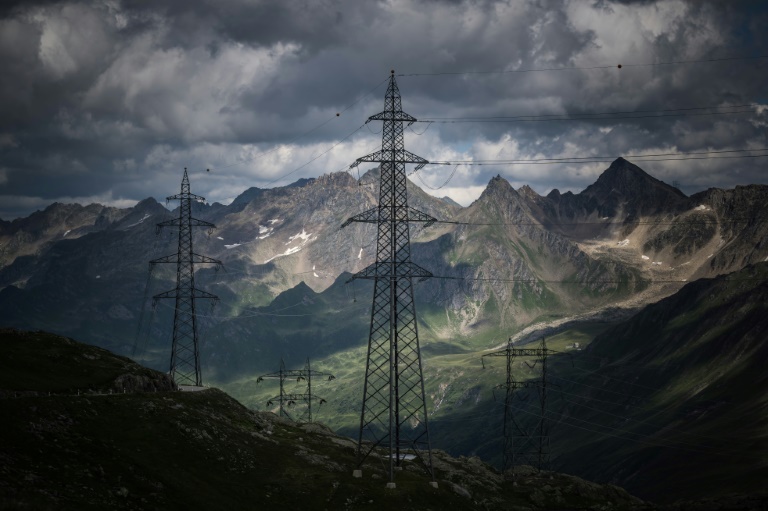
The Swiss Federal Energy office said Tuesday that Axpo, a publicly-owned Swiss electricity group, will have access to four billion Swiss francs ($4.1 billion) in credit to ensure liquidity after it requested the temporary aid last week.

“The government responded favourably to avoid putting Switzerland’s energy supply in jeopardy,” the office said in a statement, adding that Axpo was an electricity firm of “systemic importance” for the country.

In Finland, utility group Fortum said it had agreed on a bridge financing arrangement with the state — which is also the majority owner — to “ensure access to sufficient liquidity resources” if power prices continue to rise.

The liquidity facility gives Fortum access to 2.35 billion euros ($2.34 billion) through state-owned holding company Solidium, but Fortum said “utilisation of the arrangement is a last resort.”

“The European energy crisis is a result of Russia’s decision to use energy as a weapon,” Fortum CEO Markus Rauramo said, adding that this has put his company and other Nordic energy suppliers “in a difficult situation.”

“There is great uncertainty in the market and energy prices have been record high,” Rauramo said.

Gas prices have soared since Russia invaded Ukraine.

Utilities rely on futures markets to guarantee a certain price for their supplies. Under the contracts, they are required to put collateral upfront.

But if prices rise, a company is required to put up more collateral, creating a potential cash crunch.

Fortum said the collateral tied up Nordic commodities exchange Nasdaq amounted to around 3.5 billion euros as of September 5.

“Regulatory changes are urgently needed to curb the unreasonably high margining and collateral requirements,” Rauramo said.

– Europe-wide problem –

Other governments in Europe have offered billions of euros in loans to energy firms.

German energy giant Uniper said last week it would need an additional four billion euros in state-backed loans after already having used a nine-billion-euro credit line, following a July deal.

Fortum, which is the majority owner of Uniper, clarified in its statement that its arrangement with the Finnish state could not be used to cover Uniper’s needs.

Also last week, Austria announced a two-billion-euro loan for Wien Energie, the country’s main electricity provider.

At the weekend, Sweden said it would provide liquidity guarantees to Nordic and Baltic energy companies worth up to $23 billion in a bid to prevent a financial crisis sparked by Europe’s energy crunch. 

Independently of the agreement with Fortum, the Finnish government also proposed Sunday a rescue package of up to 10 billion euros in loans and guarantees for energy companies facing insolvency.

burs-jll/po/lth

European stocks climb, euro steadier

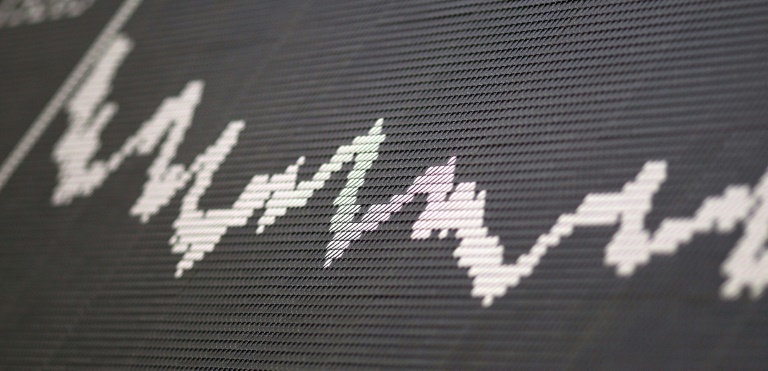
European stocks rose Tuesday but gains were capped by Europe’s worsening energy crisis, economic slowdown fears and central bank efforts to contain surging inflation.

Frankfurt, London and Paris equities carved out gains nearing the half-way stage, despite poor German data and after tumultuous trading the previous day as Russia curbed gas supplies to Europe.

The euro climbed a day after hitting a 20-year low versus the dollar, while sterling was lifted by reports that new UK Prime Minister Liz Truss could freeze a looming surge in energy bills.

World oil prices slid on demand concerns, one day after jumping as OPEC and allies trimmed production in an attempt to lift the market. 

– ‘Wait-and-see mood’ –

“Investors remain cautious amid worries about the slowing global economy,” noted Hargreaves Lansdowne analyst Susannah Streeter.

“There is a wait-and-see mood hanging over markets.”

Frankfurt rebounded somewhat despite news that Germany’s industrial orders slumped for the sixth consecutive month in July.

That again raised the spectre that recession was looming in Europe’s biggest economy.

The European Central Bank was Thursday expected to hike interest rates to tackle surging eurozone inflation.

Eurozone stocks had tumbled Monday on heightened energy concerns after Russia said it would not restart gas flows to Germany and effectively most of the continent.

Russia’s decision — in retaliation for sanctions over Ukraine — sent shock waves through trading floors as it ramped up expectations of a painful recession in major economies.

In Asia on Tuesday, Shanghai advanced after China unveiled fresh economy-boosting measures, but the overall picture was mixed.

Sydney dipped after the Reserve Bank of Australia lifted interest rates to a near eight-year high and warned of more pain ahead.

Wall Street reopens Tuesday following a long US holiday weekend.

– Key figures at around 1010 GMT –

London – FTSE 100: UP 0.3 percent at 7,309.63 points

Frankfurt – DAX: UP 1.2 percent at 12,914.47

Paris – CAC 40: UP 0.7 percent at 6,133.90

EURO STOXX 50: UP 0.8 percent at 3,518.27

Tokyo – Nikkei 225: FLAT at 27,626.51 (close)

Hong Kong – Hang Seng Index: DOWN 0.1 percent at 19,202.73 (close)

Shanghai – Composite: UP 1.4 percent at 3,243.45 (close)

New York – Dow: Closed for public holiday

Euro/dollar: UP at $0.9938 from $0.9929 on Monday

Pound/dollar: UP at $1.1598 from $1.1517

Dollar/yen: UP at 141.62 yen from 140.60 yen

Euro/pound: DOWN at 85.69 pence from 86.21 pence

West Texas Intermediate: DOWN 0.2 percent at $86.74 per barrel

Brent North Sea crude: DOWN 2.8 percent at $93.06 per barrel

burs-rfj/bcp/cdw

Bolstering Asia ties, Putin watches military drills with China

President Vladimir Putin attended large-scale military exercises on Tuesday involving China and several Russia-friendly countries as Moscow seeks to strengthen partnerships in Asia in the face of Western sanctions. 

Russia has found itself increasingly isolated as tensions between Moscow and Western capitals soared since Russia sent troops into pro-Western Ukraine on February 24. 

Slapped with unprecedented sanctions from Washington and Brussels, Putin has pursued closer ties with countries in Africa, South America and Asia — especially China. 

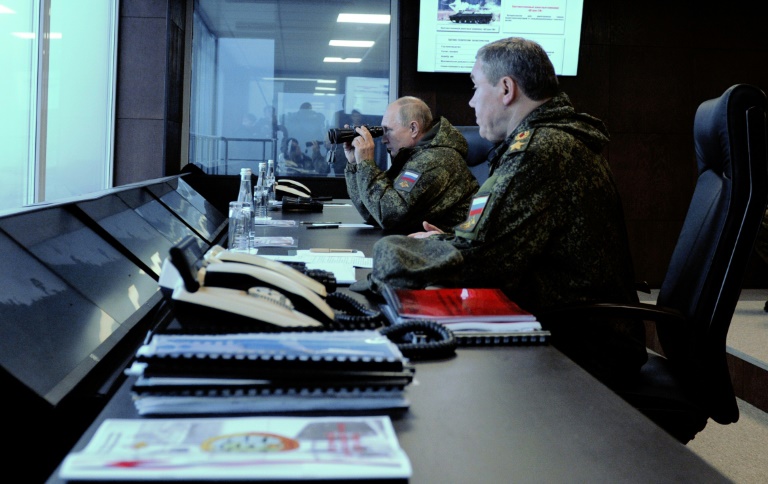
Putin on Tuesday attended the Vostok-2022 manoeuvres that are being held in training grounds in Russia Far East and in the waters off its eastern coast, Kremlin spokesman Dmitry Peskov told local news agencies.

Putin was meeting with Defence Minister Sergei Shoigu and military chief of staff Valery Gerasimov at the Sergeyevsky military range and would later observe the final phase of the military exercises, Peskov was quoted as saying.

The drills, involving several of Russia’s neighbours, as well as Syria, India and key ally China, started on September 1 and are due to end Wednesday. 

According to Moscow, over 50,000 soldiers and more than 5,000 units of military equipment, including 140 aircraft and 60 ships, were to be involved in the drills. 

Similar drills were last held in 2018.

Putin’s visit to Russia’s Far East will continue on Wednesday in the port city of Vladivostok where he is expected to address the Eastern Economic Forum. 

Over 5,000 people will be taking part in the four-day forum that kicked off on Monday with the largest delegation hailing from China, according to the Kremlin. 

At the forum’s plenary session Putin will be joined by China’s top legislator Li Zhanshu — who ranks third in the Chinese government hierarchy — with a bilateral meeting also on the agenda.

Li will become the highest-ranking Communist party politician to travel to the country since Moscow’s military intervention in Ukraine.

– ‘No limits’ relationship –

“Russia-China relations of comprehensive partnership and strategic cooperation are developing progressively,” the Kremlin said in a statement ahead of the meeting.

It also noted “China’s balanced approach to the Ukraine crisis” and Beijing’s “understanding” of the reasons behind Russia’s offensive. 

Beijing and Moscow have drawn closer in recent years, ramping up cooperation as part of what they call a “no limits” relationship, acting as a counterweight to the global dominance of the United States.

Beijing has refused to condemn Moscow’s intervention in Ukraine and provided diplomatic cover by blasting Western sanctions and arms sales to Kyiv, heightening tensions between China and the West.

Tensions were further strained during the August visit of US House Speaker Nancy Pelosi to self-ruled, democratic Taiwan, which China considers its territory.

Moscow was in full solidarity with Beijing during the visit with Putin accusing Washington of “destabilising” the world. 

At the economic forum, Putin was also expected to hold a bilateral meeting with Myanmar junta chief Min Aug Hlaing.

Russia and China have been accused of arming Myanmar’s junta with weapons used to attack civilians since last year’s coup. 

Meanwhile in Moscow, Russia’s Foreign Minister Sergei Lavrov, who had visited Myanmar and Cambodia in August, on Tuesday was hosting Thai counterpart Don Pramudwinai. 

Later in the month, the Shanghai Cooperation Organisation (SCO) summit scheduled for September 15 and 16 in Uzbekistan could also become an opportunity for Moscow and Beijing to further cement ties. 

An in-person meeting is reportedly planned between Vladimir Putin and Chinese President Xi Jinping, who has not left China since 2020 due to the coronavirus pandemic. 

The two leaders last met in Beijing in early February ahead of the  Winter Olympics Games and days before Putin launched an offensive in Ukraine.

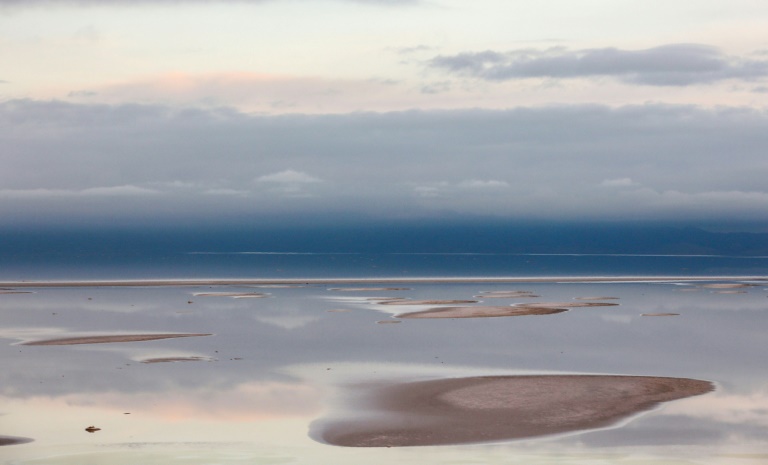
Lake Urmia risks fully drying up: Iran wetlands chief

Iran’s Lake Urmia will dry out completely if rescue efforts are not prioritised over the needs of farmers in the drought gripping the region, an environment official said Tuesday.

The warning comes just four years after a Japanese government-funded programme had raised hopes of stabilising what was once the Middle East’s largest lake and turning around one of the worst ecological disasters of recent decades.

“If the water quotas are not delivered and the approved plans are not fully realised, the lake will definitely dry up and there will be no hope of its recovery,” said the head of the environment department’s wetlands unit, Arezoo Ashrafizadeh.

“According to the law, the energy ministry is obliged to provide the environmental water needs of Lake Urmia,” she told Iran’s ISNA news agency.

“But the lake has not received its water entitlement due to a decrease in rainfall among other reasons.”

Ashrafizadeh said there needed to be a halt to all new dam construction and measures to “stop agricultural activities” if the lake is to be restored.

Situated in the mountains of northwestern Iran not far from the Turkish border, Lake Urmia is designated as a site of international importance under the United Nations Convention on Wetlands that was signed in the Iranian city of Ramsar in 1971.

The lake has no outlet to the sea and its former size was the result of the volume of water flowing into it matching or exceeding the volume being removed by humans or evaporating off.

The lake once covered 5,000 square kilometres (1,930 square miles). Since 1995, it has been shrinking, according to the UN Environment Programme, due to a combination of rising temperatures, reduced rainfall, dam-building and over-farming.

The drying out has threatened the habitats of shrimp, flamingos, deers and wild sheep and caused salt storms that pollute nearby cities and farms.

Ashrafizadeh said the lake “has not yet completely dried up, but its northern and southern parts have been separated and about 1,000 square kilometres (386 square miles) of the lake remain.”

In 2013, Iran and the UN Development Programme launched a campaign to save the lake with funding from the Japanese government.

The plan saw some success as in 2017, the lake expanded in size to reach 2,300 square kilometres (888 square miles) before starting to shrink again in the face of a protracted drought.

In mid-July, police arrested several people for “destroying public property and disturbing the security of the population” after they demonstrated against the drying up of the lake.

It was one of spate of demonstrations in Iran this year against the drying up of rivers and lakes in drought-affected areas of the centre and west.

A largely arid country, Iran suffers from chronic dry spells that are expected to worsen with climate change.

China logs hottest August since records began

China has logged its hottest August since records began, state media reported Tuesday, following an unusually intense summer heat wave that parched rivers, scorched crops and triggered isolated blackouts.

Southern China last month sweltered under what experts said may have been one of the worst heat waves in global history, with parts of Sichuan province and the megacity of Chongqing clocking a string of days well over 40 degrees Celsius (104 Fahrenheit).

The average temperature nationwide was 22.4C in August, exceeding the norm by 1.2C, state broadcaster CCTV reported, citing the country’s weather service.

Some 267 weather stations across the country matched or broke temperature records last month, the report said.

It was also China’s third-driest August on record, with average rainfall 23.1 percent lower than average.

“The average number of high-temperature days was abnormally high, and regional high-temperature processes are continuing to impact our country,” CCTV reported the weather service as saying.

Scientists say extreme weather like heat waves, droughts and flash floods is becoming more frequent and intense due to human-induced climate change.

Last month, temperatures as high as 45C prompted multiple Chinese provinces to impose power cuts as cities battled to cope with a surge in electricity demand partly driven by people cranking up the air conditioning.

Images from Chongqing showed a tributary of the mighty Yangtze river had almost run dry, a scene echoed further east where the waters of China’s largest freshwater lake also receded extensively.

– ‘Severe threat’ –

Chongqing and the eastern megacity of Shanghai switched off outdoor decorative lighting to mitigate the power crunch, while authorities in Sichuan imposed industrial power cuts as water levels dwindled at major hydroelectric plants.

As local authorities warned that the drought posed a “severe threat” to this year’s harvest, the central government approved billions of yuan in subsidies to support rice farmers.

“This is a warning for us, reminding us to have a deeper understanding of climate change and improve our ability to adapt to it in all respects,” said Zhang Daquan, a senior official at China’s National Climate Centre, in comments carried Monday by the state-run People’s Daily newspaper.

“It is also necessary to raise awareness across all of society to adapt to climate change… and strive to minimise social and economic impacts and losses,” Zhang said.

UK-France relationship set to stay testy with Truss

There is little chance of Britain resetting relations with France under incoming prime minister Liz Truss, experts say, with the neighbours’ geographical proximity and sometimes diverging interests making for a testy post-Brexit relationship.

Truss played on tense cross-Channel ties during the Conservative party leadership election, declaring, “The jury’s out” when asked whether French President Emmanuel Macron was a “friend or foe”.

It was the latest in a string of barbs at Paris from UK leaders that have at times exasperated the French.

“The United Kingdom is a friendly, strong and allied nation, regardless of its leaders, and sometimes in spite of its leaders,” Macron later responded.

“(Truss’s) pitch to the party faithful is that she’s going to be very tough on Europe and very tough particularly on Macron, because that plays well with the Conservative base,” former British ambassador to Paris Peter Ricketts told AFP.

Led since 2017 by the passionately pro-EU Macron, Britain’s historic rival France has become a preferred scapegoat for post-Brexit tensions.

– Intimate enemies –

“Because of the nearness and because of the huge movement of people and freight… the Brexit irritations and annoyances tend to happen mostly between Britain and France,” Ricketts said.

Around 55 percent of goods trucks — around a million vehicles — leaving Britain in 2020 used the ferry or rail crossings between Dover and Calais, according to UK government figures.

Meanwhile the French government reported 12 million British visitors in 2019 — the last year before the coronavirus crisis — and Britain 3.6 million French.

Since 2020, restrictive coronavirus measures and Brexit rule changes have triggered border jams, often blamed by eurosceptic UK politicians and tabloids on French intransigence.

London and Paris also rowed in 2021 over shortages of AstraZeneca’s Covid-19 vaccine.

“We can be sure of a continued high level of stress and friction” at the border, Ricketts said, highlighting a new EU advance travel registration system known as ETIAS beginning next year.

In fact, “we could be in a full-fledged trade war with the European Union in eight months” if Truss abandons parts of the Brexit deal relating to checks at the Irish border, said Anand Menon, professor of European politics at King’s College London.

But Menon argued escalation was unlikely given the danger it might worsen the cost-of-living crisis.

Less crucial to the economy have been noisy disputes over issues like fishing licences for French boats around the Channel islands — now mostly resolved — and migrants trying to cross to Britain in dinghies.

London has repeatedly threatened to withdraw tens of millions of euros paid to support French coastal policing.

More than 27,000 people have attempted to cross the Channel so far in 2022 — almost as many as in the whole of 2021.

– ‘Global Britain’ –

British and French interests further afield can be closely aligned — for instance in trade and security.

The two governments “don’t always come to the same solutions … but they do share many of the same instincts”, said Georgina Wright, Europe programme director at French think-tank Institut Montaigne.

Since 2010, they have been linked by treaties providing for a shared expeditionary force, missile development and even nuclear testing.

French Foreign Minister Catherine Colonna, herself a former ambassador to London, nevertheless told RTL radio on Monday that “because of Britain’s attitude to the European question, (relations) aren’t up to the role our two countries ought to play” on the global stage.

For now, Britain’s leaders are pursuing the go-it-alone slogan of “Global Britain”.

“There’s absolutely no political payback for working closely with the EU” on foreign policy, Menon said.

Britain has sided with other European powers including France in trying to bring the United States and Iran back to the deal to limit Tehran’s nuclear programme in exchange for sanctions relief.

But while both have responded to Russia’s invasion of Ukraine with strong sanctions, some in France complain of British grandstanding over arms deliveries, while London mistrusts Paris’ insistence on keeping talks going with Russian President Vladimir Putin.

And there was a fierce clash with Paris last year over the Indo-Pacific, when Britain struck an alliance dubbed AUKUS with the US and Australia that saw Sydney cancel a lucrative order for French submarines.

“The AUKUS affair is ‘Global Britain’ applied to Asia… It’s logical,” said Jean-Pierre Maulny of the Paris-based Institute for International and Strategic Relations (IRIS).

“But that logic runs against French interests and those of the Europeans in general,” he added.

“I don’t think that Liz Truss (becoming prime minister) will change a huge amount,” Maulny predicted, adding, “In the short term we have no hope (of improving ties)”.

Close Bitnami banner
Bitnami