World

Strong earthquake in southwest China kills 30

At least 30 people were killed when a strong earthquake struck southwestern China on Monday, state media reported, as violent tremors in a remote region damaged homes and left some areas without electricity.

The magnitude 6.6 quake hit about 43 kilometres (26 miles) southeast of the city of Kangding in Sichuan province at a depth of 10 kilometres, according to the US Geological Survey.

The death toll now stands at “more than 30 dead”, according to state broadcaster CCTV.

Tremors shook buildings in the provincial capital of Chengdu — where millions are confined to their homes under a strict Covid lockdown — and in the nearby megacity of Chongqing, local residents told AFP.

“I felt it quite strongly. Some of my neighbours on the ground floor said they felt it very noticeably,” said Chen, a resident of Chengdu.

“But because Chengdu is currently under epidemic management, people aren’t allowed to leave their residential compounds, so many of them rushed out into their courtyards,” she added.

At least one town had suffered “severe damage” from landslides triggered by the quake, CCTV reported.

A road to another town was blocked and telecommunications lines in areas home to more than 10,000 people were severed, the broadcaster said, adding that shocks also forced some power stations offline in the areas of Garze and Ya’an.

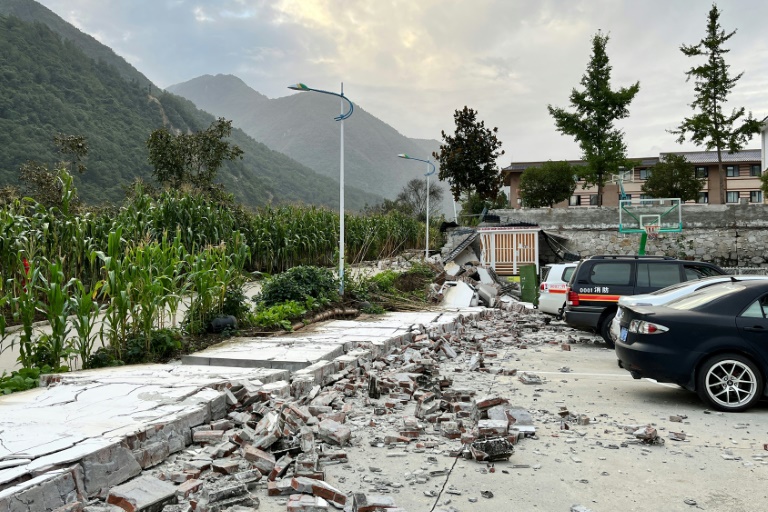
Footage broadcast by CCTV appeared to show damaged buildings and a street strewn with fallen masonry in Garze.

A video posted online by the China Earthquake Networks Center showed boulders thundering down mountainsides in Luding county, kicking up clouds of dust as tremors swayed roadside telephone wires.

State media reported that several aftershocks were recorded in nearby areas. A smaller magnitude 4.6 tremor hit eastern Tibet less than an hour after the initial quake, according to the USGS.

Hundreds of rescue workers were dispatched to the epicentre, CCTV reported, alongside footage of firefighters in orange jumpsuits boarding trucks and navigating a highway littered with rocks and other debris.

The Sichuan seismological authority said more than 1,000 soldiers had been sent to help rescue workers.

Authorities also sent thousands of tents, blankets and foldable beds to the affected areas, according to the broadcaster.

Other state media photos showed officials in military fatigues heaving shovels and other equipment along a highway — all while wearing face masks as a Covid precaution.

President Xi Jinping called for local authorities to “make saving lives the first priority, go all out to rescue people in disaster-stricken areas, and minimise loss of life,” according to CCTV.

A resident of Chongqing said the quake was “pretty noticeable” and that it had shaken the lights and furniture in his fifth-floor apartment.

“I was pretty scared,” he told AFP, “but it didn’t seem to faze people here.”

– Summer of extremes –

Earthquakes are fairly common in China, especially in the country’s seismically active southwest.

A magnitude 8.0 quake in 2008 in Sichuan’s Wenchuan county left tens of thousands dead and caused enormous damage.

At least four people were killed and dozens more injured after two earthquakes in southwestern China in June.

That month a shallow 6.1-magnitude shock hit a sparsely populated area about 100 kilometres west of Chengdu.

It was followed three minutes later by a second quake of magnitude 4.5 in a nearby county, where the deaths and injuries occurred.

Authorities in Chengdu extended the city’s lockdown on Sunday as they fight a Covid flare-up with hundreds of cases.

The region has also suffered a summer of extreme weather, with a record-breaking heatwave noticeably drying rivers in Chongqing.
Strong earthquake in southwest China kills 30

At least 30 people were killed when a strong earthquake struck southwestern China on Monday, state media reported, as violent tremors in a remote region damaged homes and left some areas without electricity.

The magnitude 6.6 quake hit about 43 kilometres (26 miles) southeast of the city of Kangding in Sichuan province at a depth of 10 kilometres, according to the US Geological Survey.

The death toll now stands at “more than 30 dead”, according to state broadcaster CCTV.

Tremors shook buildings in the provincial capital of Chengdu — where millions are confined to their homes under a strict Covid lockdown — and in the nearby megacity of Chongqing, local residents told AFP.

“I felt it quite strongly. Some of my neighbours on the ground floor said they felt it very noticeably,” said Chen, a resident of Chengdu.

“But because Chengdu is currently under epidemic management, people aren’t allowed to leave their residential compounds, so many of them rushed out into their courtyards,” she added.

At least one town had suffered “severe damage” from landslides triggered by the quake, CCTV reported.

A road to another town was blocked and telecommunications lines in areas home to more than 10,000 people were severed, the broadcaster said, adding that shocks also forced some power stations offline in the areas of Garze and Ya’an.

Footage broadcast by CCTV appeared to show damaged buildings and a street strewn with fallen masonry in Garze.

A video posted online by the China Earthquake Networks Center showed boulders thundering down mountainsides in Luding county, kicking up clouds of dust as tremors swayed roadside telephone wires.

State media reported that several aftershocks were recorded in nearby areas. A smaller magnitude 4.6 tremor hit eastern Tibet less than an hour after the initial quake, according to the USGS.

Hundreds of rescue workers were dispatched to the epicentre, CCTV reported, alongside footage of firefighters in orange jumpsuits boarding trucks and navigating a highway littered with rocks and other debris.

The Sichuan seismological authority said more than 1,000 soldiers had been sent to help rescue workers.

Authorities also sent thousands of tents, blankets and foldable beds to the affected areas, according to the broadcaster.

Other state media photos showed officials in military fatigues heaving shovels and other equipment along a highway — all while wearing face masks as a Covid precaution.

President Xi Jinping called for local authorities to “make saving lives the first priority, go all out to rescue people in disaster-stricken areas, and minimise loss of life,” according to CCTV.

A resident of Chongqing said the quake was “pretty noticeable” and that it had shaken the lights and furniture in his fifth-floor apartment.

“I was pretty scared,” he told AFP, “but it didn’t seem to faze people here.”

– Summer of extremes –

Earthquakes are fairly common in China, especially in the country’s seismically active southwest.

A magnitude 8.0 quake in 2008 in Sichuan’s Wenchuan county left tens of thousands dead and caused enormous damage.

At least four people were killed and dozens more injured after two earthquakes in southwestern China in June.

That month a shallow 6.1-magnitude shock hit a sparsely populated area about 100 kilometres west of Chengdu.

It was followed three minutes later by a second quake of magnitude 4.5 in a nearby county, where the deaths and injuries occurred.

Authorities in Chengdu extended the city’s lockdown on Sunday as they fight a Covid flare-up with hundreds of cases.

The region has also suffered a summer of extreme weather, with a record-breaking heatwave noticeably drying rivers in Chongqing.
Russia revokes print licence of independent paper, jails ex-reporter for treason

Russian courts on Monday revoked the print licence of top independent newspaper Novaya Gazeta and jailed a respected ex-reporter for 22 years for treason, in the latest moves against the media and journalists.

Russian independent media have in recent years faced unprecedented pressure, with authorities further tightening the screws since the start of Moscow’s February offensive in Ukraine.

All main independent media outlets have been shut down in Russia or suspended their domestic operations after a series of media restrictions were imposed on coverage of the Ukraine conflict.

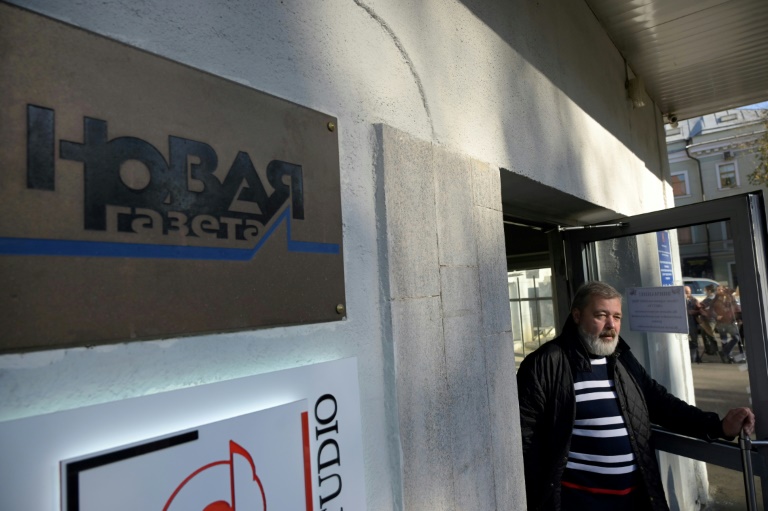
A Moscow court “invalidated the registration certificate of the print version of Novaya Gazeta”, the outlet, which suspended publication in late March, said on social media.

It later said the decision “killed” the newspaper.

“The newspaper was killed today. They stole 30 years of life from its employees. Deprived readers of the right to receive information,” Novaya Gazeta said, adding that its “free spirit” will continue to exist. 

UN Human Rights Office spokeswoman Ravina Shamdasani said the decision was “another blow to the independence of Russian media”.

In a statement, the court confirmed the verdict which followed legal proceedings initiated by Russia’s media watchdog Roskomnadzor.

The media regulator is also seeking to shut down Novaya Gazeta’s website and a print magazine it launched in July. 

Two court hearings are scheduled for later this month.

Monday’s ruling came less than a week after the death of the last Soviet leader Mikhail Gorbachev, who helped in the founding of Novaya Gazeta in the early 1990s.

Novaya Gazeta chief editor Dmitry Muratov led the procession at Gorbachev’s Moscow funeral on Saturday.

Novaya Gazeta has paid a heavy price for its independent stance and investigative coverage over the years.

Since 2000, six of its journalists and contributors have been killed in connection with their work, including top investigative reporter Anna Politkovskaya.

– Ex-reporter jailed for treason –

Also on Monday, a Moscow court jailed respected former defence reporter Ivan Safronov for 22 years on treason charges for divulging state secrets. 

The judge said Safronov will serve the time in a “strict regime penal colony”, AFP reported from court.

The 32-year-old worked for business newspapers Kommersant and Vedomosti and was one of Russia’s most respected journalists covering defence, politics and the country’s space programme. 

Safronov appeared in court on Monday inside a glass cage for defendants wearing a grey tracksuit and black puffy vest, his hands in handcuffs. 

Around a hundred people gathered in the Moscow courthouse for the verdict, applauding Safronov and chanting “Freedom!” after the sentence was read out. 

Safronov smiled and shouted out “I love you!” before he was taken out of the courtroom, an AFP reporter saw. 

His lawyer Dmitry Kachev said the verdict cannot be called “anything other than inadequate” and said Safronov was sentenced for his “journalistic work”. 

Safronov’s lawyers told reporters that they will appeal the verdict.

Safronov was arrested in July 2020, after leaving journalism to serve as an adviser to the head of the state space agency.

He was accused of collecting confidential information about Russian military, defence and security and handing it over to foreign intelligence.

Safronov’s case was heard behind closed doors based on evidence that was also kept secret.

Prosecutors last week requested a sentence of 24 years in jail for Safronov, after he reportedly turned down a plea deal for a shorter sentence. 

At the start of his trial in April, Safronov called the case a “complete travesty of justice” and said he was not guilty. 

The ex-journalist has said his reporting was based on analysis of open sources and conversations with officials.

Safronov’s case triggered a backlash from independent journalists and his former colleagues.

On Monday, a dozen independent media, including Novaya Gazeta, published a statement demanding Safronov’s release, saying the harsh sentence was “revenge” for his work.

French trial opens over 2016 Nice massacre

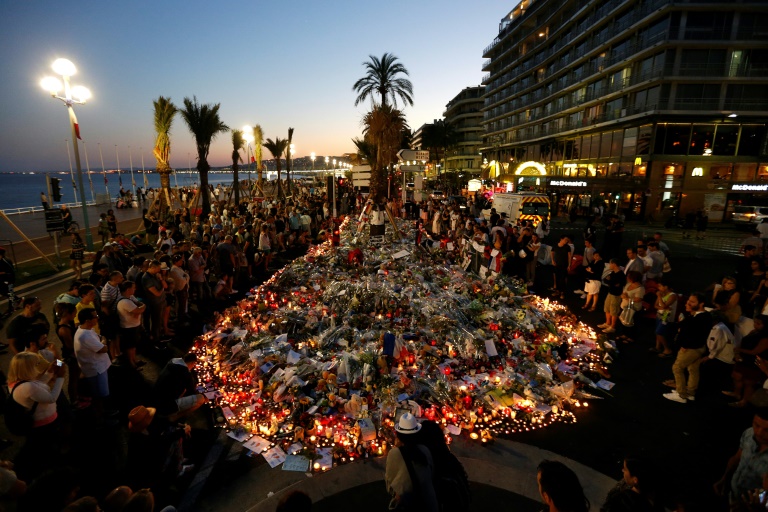
Eight suspects went on trial Monday over the harrowing July 2016 attack in the Mediterranean city of Nice, where an Islamist extremist killed 86 people by driving a truck into thousands of locals and tourists celebrating France’s national day.

The attacker, a 31-year-old Tunisian named Mohamed Lahouaiej-Bouhlel, was shot and killed by police after a four-minute rampage down the seaside embankment of the Promenade des Anglais.

The seven men and one woman standing trial in Paris are accused of crimes ranging from being aware of his intentions to providing logistical support and supplying weapons.

Only one suspect, Ramzi Kevin Arefa, faces the maximum penalty of life imprisonment if convicted as a repeat offender. The others risk between five and 20 years in prison.

The trial, which is set to last until December 16, is the latest legal process over the wave of Islamist attacks that have struck France since 2015.

On June 29, a Paris court convicted all 20 suspects in the trial over the November 2015 attacks in the French capital that left 130 dead.

The Nice trial is taking place at the historic Palais de Justice in Paris, in the same purpose-built courtroom that hosted the November 2015 attacks hearings. A special venue has also been set up in Nice to allow victims to follow proceedings via a live broadcast.

“We’re waited six years for this,” Seloua Mensi, whose sister, aged 42, was killed in the attack, told AFP in Nice. “The trial is going to be very difficult for us, but it’s important to be able to speak about what we went through.

“Confronting the accused, seeing them and understanding what happened, will allow us to rebuild our lives,” she said.

– ‘Frustration’ –

The extremist Islamic State (IS) group rapidly claimed responsibility for the Nice attack, though French investigators ultimately did not find any links between the attacker and the jihadist organisation which at the time controlled swathes of Iraq and Syria.

Of the accused, three suspects are charged with association in a terrorist conspiracy and the five others with association in a criminal conspiracy and violating arms laws.

The attack, which saw 15 children and adolescents among the dead and more than 450 wounded, was the second most deadly postwar atrocity on French soil after the November 2015 Paris attacks.

Six years after the attack, “the fact that the sole perpetrator is not there will create frustration. There will be many questions that no one will be able to answer,” said Eric Morain, a lawyer for a victims’ association that is taking part in the trial.

“We are trying to prepare them for the fact that the sentences may not be commensurate with their suffering,” said Antoine Casubolo-Ferro, another lawyer for the victims.

French Justice Minister Eric Dupond-Moretti commented: “I understand this frustration, it is human. But there will be a legal response. We respond to this barbarism through the law”. 

– ‘Wound will never heal’ –

Of the accused, only seven will appear in court after one suspect, Brahim Tritrou, being tried in absentia, fled judicial supervision to Tunisia where he is now believed to be under arrest.

Just three of the accused are currently under arrest with one held in connection with another case. The defendants are a mix of Tunisians, French-Tunisians and Albanians. 

Some 30,000 people had gathered on the seafront to watch a fireworks display celebrating France’s annual Bastille Day holiday on July 14 when Lahouaiej-Bouhlel began his rampage.

Nice was struck again in October 2020 when a Tunisian Islamist radical stabbed three people to death at a church.

Nice’s right-wing mayor, Christian Estrosi, said: “This wound will never heal, whatever the outcome of the trial. This wound is too deep.”

According to French and Tunisian press reports, the body of Lahouaiej-Bouhlel was repatriated to Tunisia in 2017 and buried in his hometown of M’saken, south of Tunis. This has never been confirmed by the Tunisian authorities.

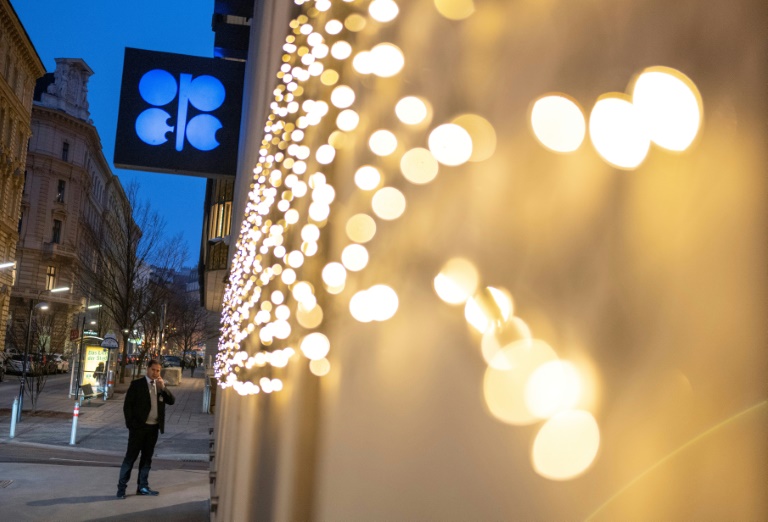
OPEC+ agrees oil output cut to prop up prices

The OPEC+ oil cartel agreed Monday to cut production for the first time in more than a year as it seeks to lift prices that have tumbled due to recession fears.

The move could irk the United States as it has pressed the group to increase output in order to bring down energy prices that have fuelled decades-high inflation.

OPEC+, a 23-nation coalition led by Saudi Arabia and Russia, had agreed to huge cuts in output in 2020 when the Covid pandemic sent oil prices crashing, but it began to increase production modestly again last year as the market improved.

Oil prices soared to almost $140 a barrel in March after Russia invaded Ukraine.

But they have since receded below $100 per barrel amid recession fears, Covid lockdowns in major consumer China and Iran nuclear talks that could bring Iranian crude back into the market.

While analysts had expected another modest increase at Monday’s ministerial meeting, OPEC+ said in a statement that it decided to reduce output by 100,000 barrels per day in October, returning to the production level of August.

The group also left the door open to holding talks prior to its next scheduled meeting on October 5 “to address market developments, if necessary”.

“First and foremost it is a clear message from the group: OPEC+ will not allow the oil price to slide. Further cuts will be initiated if necessary,” Bjarne Schieldrop, chief commodities analyst at SEB research group, told AFP.

While analysts said the cut was mostly symbolic, oil prices rose by more than three percent following the announcement, with the international benchmark, Brent, exceeding $96 per barrel while the US contract, WTI, reached almost $90.

At its last meeting, OPEC+ agreed to a small rise of 100,000 barrels per day for September after US President Joe Biden travelled to Saudi Arabia to plead for a production bump — although it was six times lower than its previous decisions. 

Energy Minister Abdulaziz bin Salman last month had appeared to open the door to the idea of cutting output, which has since received the support of several member states and the cartel’s joint technical committee.

He said “volatility and thin liquidity send erroneous signals to markets at times when clarity is most needed”.

Craig Erlam, analyst at OANDA trading platform, said the cut was “also a blow to President Biden as the hike last month was viewed as a token gesture after his visit.”

“Now it’s clear how valuable that actually was, or wasn’t as it turns out. The political damage it caused was a waste and if anything, it looks worse than if nothing had changed in the first place,” Erlam said.

– Iran talks –

Caroline Bain, commodities expert at Capital Economics, said the cut was not a total surprise and “little more than symbolic” as OPEC+ has struggled to meet its quotas due to lacklustre production in some of its member countries.

“The bigger picture is that OPEC+ is producing well below its output target and this looks unlikely to change given that Angola and Nigeria, in particular, appear unable to return to pre-pandemic levels of production,” Bain said.

In efforts to curb rising oil prices, the United States and its allies have released crude from their emergency reserves.

And in a bid to curb Russia’s war funding, the G7 group of industrialised powers agreed Friday to move “urgently” towards capping the price of Russian oil. 

Moscow has warned that it will no longer sell oil to countries that adopt the unprecedented mechanism.

Another geopolitical issue is clouding the outlook.

Negotiations aimed at reviving a landmark nuclear deal between Tehran and world powers could lead to an easing of oil sanctions in return for curbs to the atomic activities.

However, Washington said Thursday that Tehran’s latest response to a European Union draft was “unfortunately… not constructive”. 

UN Myanmar envoy says won't return until allowed to meet Suu Kyi

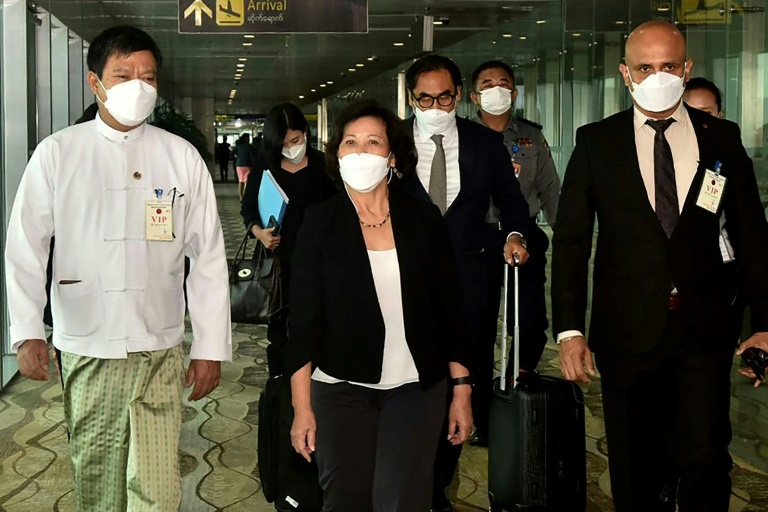
The UN’s Myanmar special envoy on Monday vowed not to visit the country again unless she is allowed to meet ousted leader Aung San Suu Kyi, after a heavily-criticised trip to meet the junta.

Diplomatic efforts to resolve Myanmar’s bloody impasse led by the UN and the Association of Southeast Asian Nations regional bloc have made little headway, with the generals refusing to engage with opponents.

United Nations Special Envoy Noeleez Heyzer met with senior junta leaders in the capital last month during her first visit, 10 months after her appointment.

The trip drew criticism from both the junta and the military’s opponents.

She was denied access to detained democracy figurehead Suu Kyi, who has been sentenced to a total of two decades in prison. The UN envoy later irked junta officials who accused her of issuing a “one-sided statement” of what had been discussed.

Heyzer had called for an immediate end to violence and the release of all political prisoners, her office said at the time.

More than 2,200 people have been killed and more than 15,000 arrested in the military’s crackdown on dissent since it seized power in February 2021, according to a local rights group.

Days after Heyzer’s visit dozens of Myanmar civil society groups dismissed her trip as the “latest evidence of the historical ineffectualness” of UN envoys, and criticised her meeting with junta chief Min Aung Hlaing.

They also called for her mandate to be terminated and for UN Secretary General Antonio Guterres to intervene personally in the crisis. 

“If I ever visit Myanmar again, it will only be if I can meet with Daw Aung San Suu Kyi,” she told a seminar at the Singapore-based think-tank, the ISEAS-Yusof Ishak Institute, using a Burmese honorific for Suu Kyi.

Heyzer added there was “no clear path” out of Myanmar’s crisis and warned of a “multidimensional catastrophe” if the international community failed to broker efforts towards peace in the country. 

In July the junta stoked renewed international condemnation when it executed Phyo Zeya Thaw, a former lawmaker from Suu Kyi’s National League for Democracy party, for offences under anti-terrorism laws.

In response, the UN Security Council — including junta allies Russia and China — issued a rare condemnation of the junta.

Guterres appointed Heyzer, a Singaporean sociologist, last year. She replaced Swiss diplomat Christine Schraner Burgener, who military leaders blocked from visiting the country where she had also hoped to meet with Suu Kyi.

Cambodian Foreign Minister and ASEAN envoy for Myanmar Prak Sokhonn has visited Myanmar twice but both times the military has denied him visits with Suu Kyi. 

Floods cripple Indian tech hub Bangalore

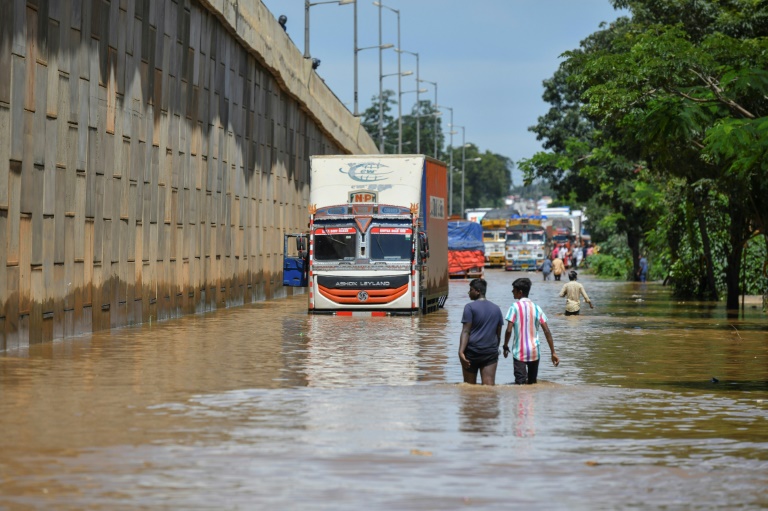
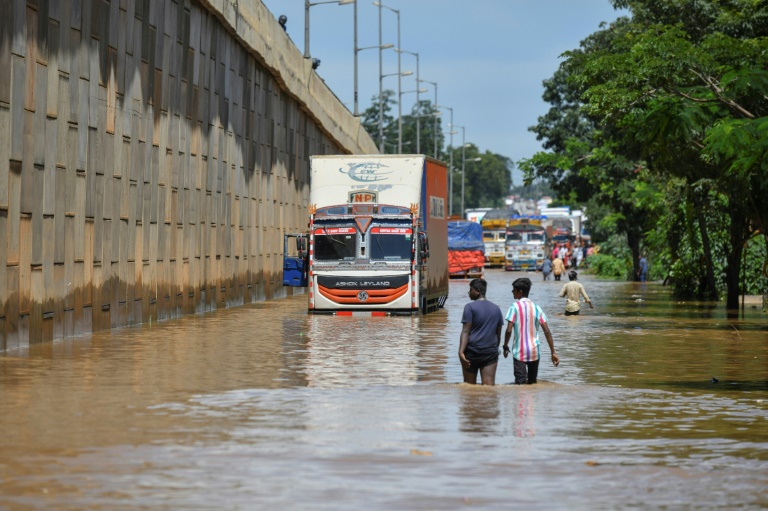
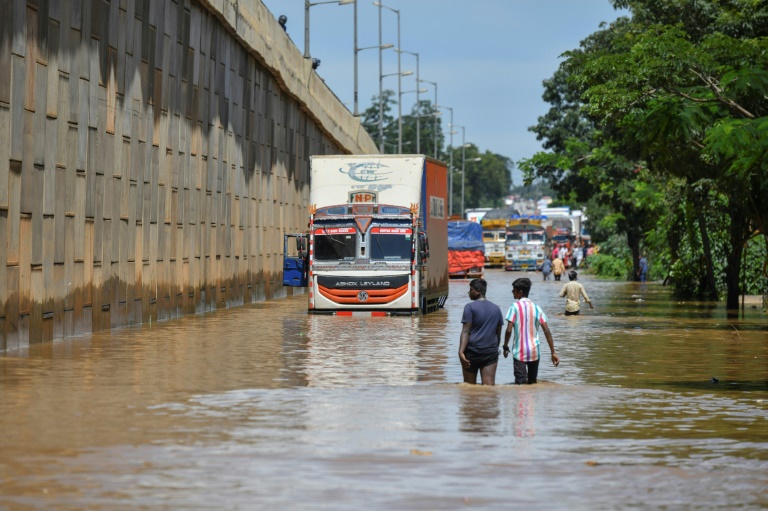
Floods blamed on shoddy infrastructure crippled Indian IT hub Bangalore on Monday, with employees in the huge tech sector told to work from home and dozens of areas reportedly left without drinking water.

The southern metropolis of around 8.5 million people boomed in the 1990s, with its myriad outsourcing and software companies now employing millions in the “back office of the world”.

But the city’s companies have complained that infrastructure development has not kept up, with perennial traffic jams and unplanned construction on the dried-up beds of lakes leading to frequent flooding even after moderate rainfall.

On Monday large parts of the city were under water, with authorities deploying rubber dinghies to ferry people around and footage on social media showing tractors being used to transport travellers from the airport.

The umbrella group for the IT sector, the Outer Ring Road Companies Association (ORRCA), advised employees to work from home while many schools and colleges were shut.

The supply of drinking water to more than 50 areas of the city was halted for two days after a pumping station was inundated, media reports said, as more rain was forecast.

“Honestly, the traffic situation in Bangalore is always bad but this is now another level,” said one back-office employer for food delivery company Swiggy, requesting to stay anonymous.

“It’s worse than ever before because of how many people have rushed back to the city after Covid. The infrastructure can’t take the strain,” he told AFP.

str-ash-ng-stu/dva

Floods cripple Indian tech hub Bangalore

Floods blamed on shoddy infrastructure crippled Indian IT hub Bangalore on Monday, with employees in the huge tech sector told to work from home and dozens of areas reportedly left without drinking water.

The southern metropolis of around 8.5 million people boomed in the 1990s, with its myriad outsourcing and software companies now employing millions in the “back office of the world”.

But the city’s companies have complained that infrastructure development has not kept up, with perennial traffic jams and unplanned construction on the dried-up beds of lakes leading to frequent flooding even after moderate rainfall.

On Monday large parts of the city were under water, with authorities deploying rubber dinghies to ferry people around and footage on social media showing tractors being used to transport travellers from the airport.

The umbrella group for the IT sector, the Outer Ring Road Companies Association (ORRCA), advised employees to work from home while many schools and colleges were shut.

The supply of drinking water to more than 50 areas of the city was halted for two days after a pumping station was inundated, media reports said, as more rain was forecast.

“Honestly, the traffic situation in Bangalore is always bad but this is now another level,” said one back-office employer for food delivery company Swiggy, requesting to stay anonymous.

“It’s worse than ever before because of how many people have rushed back to the city after Covid. The infrastructure can’t take the strain,” he told AFP.

str-ash-ng-stu/dva

Floods cripple Indian tech hub Bangalore

Floods blamed on shoddy infrastructure crippled Indian IT hub Bangalore on Monday, with employees in the huge tech sector told to work from home and dozens of areas reportedly left without drinking water.

The southern metropolis of around 8.5 million people boomed in the 1990s, with its myriad outsourcing and software companies now employing millions in the “back office of the world”.

But the city’s companies have complained that infrastructure development has not kept up, with perennial traffic jams and unplanned construction on the dried-up beds of lakes leading to frequent flooding even after moderate rainfall.

On Monday large parts of the city were under water, with authorities deploying rubber dinghies to ferry people around and footage on social media showing tractors being used to transport travellers from the airport.

The umbrella group for the IT sector, the Outer Ring Road Companies Association (ORRCA), advised employees to work from home while many schools and colleges were shut.

The supply of drinking water to more than 50 areas of the city was halted for two days after a pumping station was inundated, media reports said, as more rain was forecast.

“Honestly, the traffic situation in Bangalore is always bad but this is now another level,” said one back-office employer for food delivery company Swiggy, requesting to stay anonymous.

“It’s worse than ever before because of how many people have rushed back to the city after Covid. The infrastructure can’t take the strain,” he told AFP.

str-ash-ng-stu/dva

Two Russian embassy staff among six killed in Kabul suicide attack

A suicide bomber struck Monday near the Russian embassy in the Afghan capital Kabul, killing two staff from the diplomatic mission and four others.

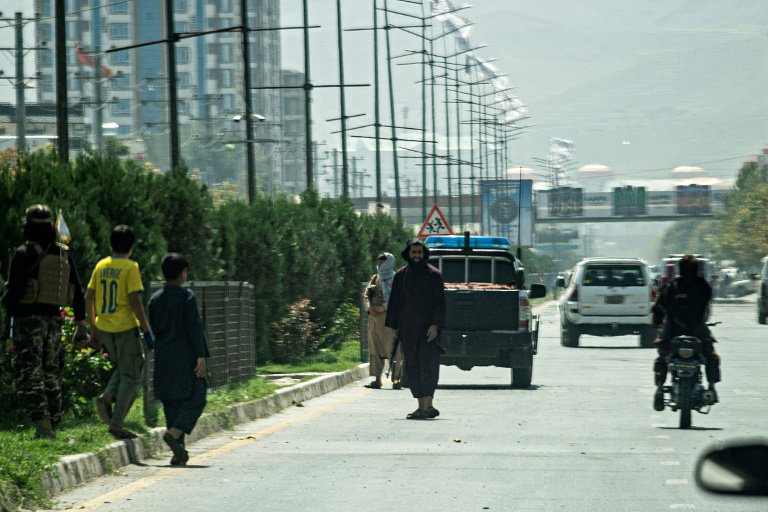
In the first attack targeting a foreign mission since the Taliban seized power in August last year, the bomber struck near the entrance of the embassy’s consular section.

“Without any doubt, we are talking about a terrorist act, which is absolutely unacceptable,” Kremlin spokesman Dmitry Peskov told journalists in Moscow.

Afghanistan’s foreign ministry confirmed the deaths of two embassy staff.

Four Afghans waiting for consular services were also killed and several more wounded, Kabul police said.

Violence in Afghanistan has largely declined since the Taliban returned to power, but several bomb blasts — some targeting minority communities — have rocked the country in recent months, many claimed by the jihadist Islamic State (IS) group.

As with other recent attacks, heavy Taliban security quickly sealed off the area and prevented media from filming nearby.

No group has so far claimed the attack on the diplomatic mission. 

Russian Foreign Minister Sergei Lavrov said immediate steps were taken to boost security at the embassy, located on one of Kabul’s main roads and leading to the parliament building.

– Intelligence ‘weakness’ –

The attack is sure to embarrass the Taliban leadership, which for months has encouraged foreign nations to reopen their Kabul missions, insisting security was guaranteed.

During the chaotic takeover of the country by the Taliban last year, the Russian embassy was one of the few to remain open as most nations shut down and evacuated staff.

The Afghan foreign ministry said an investigation had been launched and authorities “will not allow the enemies to sabotage relations between both countries with such negative actions”.

Afghan security analyst Hekmatullah Hekmat said the attack showed the government’s “weakness” in gathering intelligence.

“If they can’t prevent such attacks in the heart of Kabul, then they can’t provide security in the countryside,” he told AFP.

The United Nations mission in Afghanistan condemned the bombing.

“UNAMA stresses the need for the de facto authorities to take steps to ensure the safety and security of the people as well as diplomatic missions,” it tweeted.

On Friday, a suicide bomber struck one of western Afghanistan’s biggest mosques, killing at least 18 people, including its influential pro-Taliban imam. The cleric, Mujib ur Rahman Ansari, who had called for those who committed even the “smallest act” against the government to be beheaded, was killed in that attack in the city of Herat.

The attack against Ansari came despite authorities providing him with heavy security, including a bulletproof vehicle and bodyguards.

Several mosques across the country have been targeted this year, some in attacks claimed by IS.

At least 21 people were killed and dozens more wounded on August 17 when a blast ripped through a mosque packed with worshippers in Kabul.

IS has primarily targeted minority communities such as Shiites, Sufis and Sikhs.

While IS is a Sunni Islamist group like the Taliban, the two are bitter rivals and greatly diverge on ideological grounds.

Taliban officials claim that IS has been defeated but experts say the group is the main security challenge for the country’s current Islamist rulers.

brw-burs-jd-fox/it

Close Bitnami banner
Bitnami