World

Strong earthquake in southwest China kills 46

At least 46 people were killed when a strong earthquake struck southwestern China on Monday, state media reported, as violent tremors in a remote region damaged homes and left some areas without electricity.

The magnitude 6.6 quake hit about 43 kilometres (26 miles) southeast of the city of Kangding in Sichuan province at a depth of 10 kilometres, according to the US Geological Survey.

Chinese state broadcaster CCTV said that 17 people died in Ya’an city, while 29 deaths were reported in neighbouring Ganzi Prefecture.

“Another 16 people were missing and 50 were injured,” CCTV said late Monday. 

Tremors shook buildings in the provincial capital of Chengdu — where millions are confined to their homes under a strict Covid lockdown — and in the nearby megacity of Chongqing, local residents told AFP.

“I felt it quite strongly. Some of my neighbours on the ground floor said they felt it very noticeably,” said Chen, a resident of Chengdu.

“But because Chengdu is currently under epidemic management, people aren’t allowed to leave their residential compounds, so many of them rushed out into their courtyards,” she added.

At least one town had suffered “severe damage” from landslides triggered by the quake, CCTV reported.

A road to another town was blocked and telecommunications lines in areas home to more than 10,000 people were severed, the broadcaster said, adding that shocks also forced some power stations offline in the areas of Garze and Ya’an.

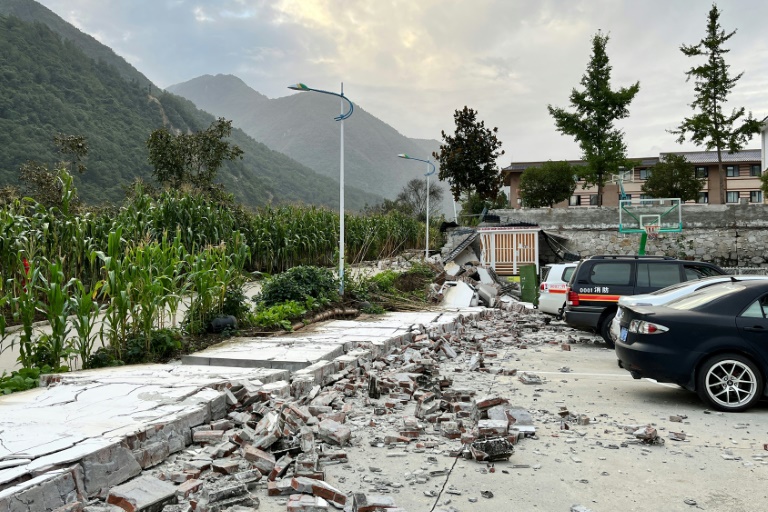
Footage broadcast by CCTV appeared to show damaged buildings and a street strewn with fallen masonry in Garze.

A video posted online by the China Earthquake Networks Center showed boulders thundering down mountainsides in Luding county, kicking up clouds of dust as tremors swayed roadside telephone wires.

– Rescue teams dispatched –

State media reported that several aftershocks were recorded in nearby areas. A smaller magnitude 4.6 tremor hit eastern Tibet less than an hour after the initial quake, according to the USGS.

Hundreds of rescue workers were dispatched to the epicentre, CCTV reported, alongside footage of firefighters in orange jumpsuits boarding trucks and navigating a highway littered with rocks and other debris.

The Sichuan seismological authority said more than 1,000 soldiers had been sent to help the rescue workers.

Authorities also sent thousands of tents, blankets and foldable beds to the affected areas, according to the broadcaster.

Other state media photos showed officials in military fatigues heaving shovels and other equipment along a highway — all while wearing face masks as a Covid precaution.

President Xi Jinping called for local authorities to “make saving lives the first priority, go all out to rescue people in disaster-stricken areas, and minimise loss of life”, according to CCTV.

A resident of Chongqing said the quake was “pretty noticeable” and that it had shaken the lights and furniture in his fifth-floor apartment.

“I was pretty scared,” he told AFP, “but it didn’t seem to faze people here.”

– Summer of extremes –

Earthquakes are fairly common in China, especially in the country’s seismically active southwest.

A magnitude 8.0 quake in 2008 in Sichuan’s Wenchuan county left tens of thousands dead and caused enormous damage.

In June, at least four people were killed and dozens more injured after two earthquakes in southwestern China.

That month, a shallow 6.1-magnitude shock hit a sparsely populated area about 100 kilometres west of Chengdu.

It was followed three minutes later by a second quake of magnitude 4.5 in a nearby county, where the deaths and injuries occurred.

Authorities in Chengdu extended the city’s lockdown on Sunday as they fight a Covid flare-up with hundreds of cases.

The region has also suffered a summer of extreme weather, with a record-breaking heatwave noticeably drying rivers in Chongqing.
Strong earthquake in southwest China kills 46

At least 46 people were killed when a strong earthquake struck southwestern China on Monday, state media reported, as violent tremors in a remote region damaged homes and left some areas without electricity.

The magnitude 6.6 quake hit about 43 kilometres (26 miles) southeast of the city of Kangding in Sichuan province at a depth of 10 kilometres, according to the US Geological Survey.

Chinese state broadcaster CCTV said that 17 people died in Ya’an city, while 29 deaths were reported in neighbouring Ganzi Prefecture.

“Another 16 people were missing and 50 were injured,” CCTV said late Monday. 

Tremors shook buildings in the provincial capital of Chengdu — where millions are confined to their homes under a strict Covid lockdown — and in the nearby megacity of Chongqing, local residents told AFP.

“I felt it quite strongly. Some of my neighbours on the ground floor said they felt it very noticeably,” said Chen, a resident of Chengdu.

“But because Chengdu is currently under epidemic management, people aren’t allowed to leave their residential compounds, so many of them rushed out into their courtyards,” she added.

At least one town had suffered “severe damage” from landslides triggered by the quake, CCTV reported.

A road to another town was blocked and telecommunications lines in areas home to more than 10,000 people were severed, the broadcaster said, adding that shocks also forced some power stations offline in the areas of Garze and Ya’an.

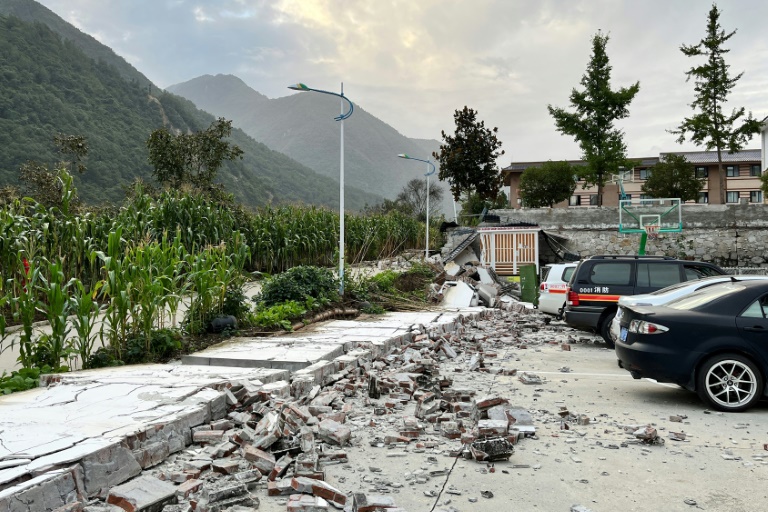
Footage broadcast by CCTV appeared to show damaged buildings and a street strewn with fallen masonry in Garze.

A video posted online by the China Earthquake Networks Center showed boulders thundering down mountainsides in Luding county, kicking up clouds of dust as tremors swayed roadside telephone wires.

– Rescue teams dispatched –

State media reported that several aftershocks were recorded in nearby areas. A smaller magnitude 4.6 tremor hit eastern Tibet less than an hour after the initial quake, according to the USGS.

Hundreds of rescue workers were dispatched to the epicentre, CCTV reported, alongside footage of firefighters in orange jumpsuits boarding trucks and navigating a highway littered with rocks and other debris.

The Sichuan seismological authority said more than 1,000 soldiers had been sent to help the rescue workers.

Authorities also sent thousands of tents, blankets and foldable beds to the affected areas, according to the broadcaster.

Other state media photos showed officials in military fatigues heaving shovels and other equipment along a highway — all while wearing face masks as a Covid precaution.

President Xi Jinping called for local authorities to “make saving lives the first priority, go all out to rescue people in disaster-stricken areas, and minimise loss of life”, according to CCTV.

A resident of Chongqing said the quake was “pretty noticeable” and that it had shaken the lights and furniture in his fifth-floor apartment.

“I was pretty scared,” he told AFP, “but it didn’t seem to faze people here.”

– Summer of extremes –

Earthquakes are fairly common in China, especially in the country’s seismically active southwest.

A magnitude 8.0 quake in 2008 in Sichuan’s Wenchuan county left tens of thousands dead and caused enormous damage.

In June, at least four people were killed and dozens more injured after two earthquakes in southwestern China.

That month, a shallow 6.1-magnitude shock hit a sparsely populated area about 100 kilometres west of Chengdu.

It was followed three minutes later by a second quake of magnitude 4.5 in a nearby county, where the deaths and injuries occurred.

Authorities in Chengdu extended the city’s lockdown on Sunday as they fight a Covid flare-up with hundreds of cases.

The region has also suffered a summer of extreme weather, with a record-breaking heatwave noticeably drying rivers in Chongqing.

African leaders slam Western absence from climate summit

African leaders criticised on Monday the lack of Western counterparts at a meeting in Rotterdam where they pleaded for funds to help their countries adapt to global warming.

Senegalese President and African Union chief Macky Sall, and Congolese President Felix Tshisekedi said wealthy countries responsible for most CO2 emissions should have been there.

They were speaking at the Africa Adaptation Summit in the Dutch port city, which comes two months before the crucial COP27 climate conference in Egypt in November.

“I cannot fail to note with a touch of bitterness the absence of the leaders of the industrialised world,” Sall said at the opening of the event.

“Because these are the main polluters of our planet and it is they who should finance adaptation.”

The Senegalese leader added that it was “not just the fate of Africa that is at stake but the fate of humanity and the future of the planet.”

Tshisekedi of the Democratic Republic of Congo also had harsh words for Western leaders, with Dutch Prime Minister Mark Rutte being the only one who showed up to the summit in person.

“I deplore the absence of the leaders of the industrialised nations and the private sector who are, as we know, the greatest polluters,” Tshisekedi said.

“The African continent has the smallest impact on climate change, but paradoxically suffers the majority of its consequences,” he said.

– ‘Moral duty’ –

The continent of Africa emits just some three percent of global CO2 emissions, former UN chief Ban Ki-moon added.

“We have a moral duty” to help African countries adapt, he said.

The summit, the first to focus on helping Africa adapt to the fallout from climate change, brings together the African Union, the International Monetary Fund (IMF) and the Netherlands-based Global Center on Adaptation.

They are hoping to raise pledges of some $250 million in capital to attract investors in adaptation programmes.

“We have to find $250 million, it’s not that much to ask,” said Senegal’s Sall.

Dutch premier Rutte admitted in his closing remarks that the turnout of non-African leaders had been disappointing.

“I know that many wanted to come, but simply I think the attendance has not been at a level we would have liked,” said Rutte.

The international community had to “think this through how in future… we have as many leaders present as possible” at future COP conferences and other climate meetings, he said.

African nations agreed at a summit in Gabon last week on a common push to limit global warming to 1.5 degrees Celsius — a goal that scientists fear is increasingly elusive — at upcoming UN climate talks.

That and the Rotterdam meeting are part of a series of regional meetings ahead of the COP27 in Sharm el-Sheikh from November 6 to 18.

Suspects on the run after deadly Canada stabbing rampage

Canadian police scoured Saskatchewan and neighboring provinces on Monday in a massive manhunt for two fugitives suspected of carrying out a stabbing spree that killed 10 people and wounded 15.

The killings in the James Smith Cree Nation Indigenous community and the town of Weldon in Saskatchewan are among the deadliest incidents of mass violence to ever hit the nation.

Evan Bray, police chief of provincial capital Regina, said that the two suspects may hiding out in the city — 300 kilometers (185 miles) from the site of the attack — after suspected sightings late Sunday.

They “are still at large, despite relentless efforts” to locate them, Bray said.

“There’s a lot of grief. There’s a lot of anxiety in our province and in our communities this morning,” he said, vowing to continue the pursuit until the suspects are caught.

Police have released few details of the crimes, except for descriptions of the alleged attackers they say fled in a vehicle.

They have been identified as Myles and Damien Sanderson, aged 30 and 31 respectively, both with black hair and brown eyes.

– ‘Terrified residents’ –

Local people in the remote area spoke of their shock and devastation.

Weldon resident Diane Shier told the daily Saskatoon Star Phoenix her neighbor, a man who lived with his adult grandson, was killed in the attack. The grandson reportedly hid in the basement and called police.

“It was about 7:30 am. My husband was in the garden. He saw police cars and an ambulance come to town. It’s a little town. This is terrible, terrible. We’ve still got our doors locked, staying inside, not going out,” she told the newspaper.

Fellow town resident Ruby Works said the killings would haunt the town.

“No one in this town is ever going to sleep again. They’re going to be terrified to open their door,” Works said.

Another resident, Robert Rush, said he had left his granddaughter at home to go buy a birthday cake for his wife. “I gave her two guns and a bat,” he said.

Royal Canadian Mounted Police Assistant Commissioner Rhonda Blackmore told a news conference on Sunday that authorities believe “some of the victims were targeted by the suspects and others were attacked randomly.”

“To speak to a motive would be extremely difficult at this point in time,” she added.

No information has been released about the victims.

Prime Minister Justin Trudeau said he was “shocked and devastated by the horrific attacks,” adding in a statement that Canadians are mourning this “tragic violence.”

– 13 crime scenes –

Federation of Sovereign Indigenous Nations Chief Bobby Cameron lamented “the unspeakable violence that claimed the lives of innocent people.”

In a statement, he blamed “harmful illegal drugs (that) invade our communities” for the destruction.

Blackmore said “maximum” police resources were being deployed for the search for the suspects across Saskatchewan and neighboring Alberta and Manitoba provinces.

Thirteen crime scenes in the Indigenous community and Weldon were being combed for clues as the manhunt across a huge region was underway.

Regina city was packed with sports fans who descended on the city for a sold-out annual Labour Day match between the Canadian Football League’s Saskatchewan Roughriders and Winnipeg Blue Bombers.

In recent years, Canada has witnessed a rampaging gunman masquerading as a policeman kill 22 people in Nova Scotia, another kill six and wound five worshippers at a Quebec City mosque, and a driver of a van kill 11 pedestrians in Toronto.

“There are no words to adequately describe the pain and loss caused by this senseless violence,” said Saskatchewan Premier Scott Moe after Sunday’s attack.

Eurozone stocks, euro tumble as Russia fuels energy crisis

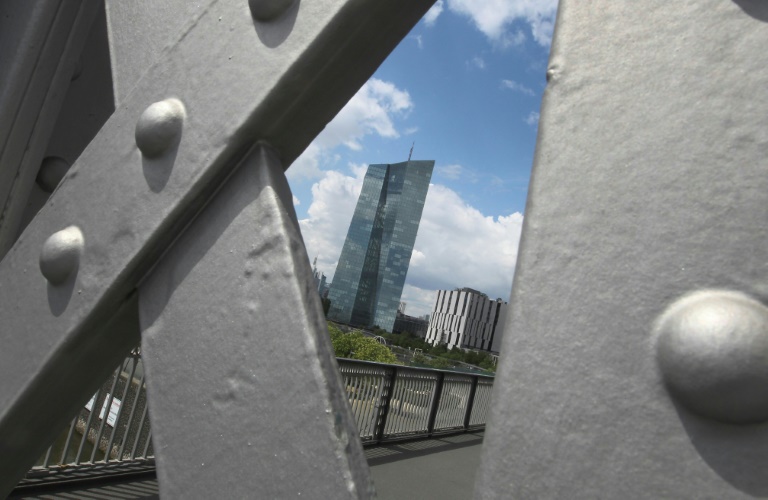
Eurozone stocks tumbled Monday and the euro hit a new 20-year dollar low on energy crisis fears, after Russia said it would not restart gas flows to Germany and effectively most of the continent.

Natural gas prices spiked almost a third, while oil added to strong gains as OPEC and its Russia-led allies decided at a meeting Monday to lower crude output in a bid to lift prices.

Europe’s fast-moving gas crisis sent Frankfurt equities slumping more than three percent before trimming losses, while Paris shed two percent at one stage.

The gas crisis also hit the pound, which hit a post-pandemic low of $1.1444. It pulled back up to above $1.15 after Liz Truss was confirmed as the successor to Britain’s Prime Minister Boris Johnson. London’s blue-chip FTSE-100 index eked out a gain.

– ‘Weaponization of energy’ –

“Russia’s ongoing weaponization of energy supplies continues to increase downside risks for European economies and the euro,” said Lee Hardman, currency analyst at financial services group MUFG. 

The euro sank Monday to $0.9878, its lowest since December 2002, despite expectations the European Central Bank will hike interest rates again Thursday to combat soaring inflation.

The shared eurozone unit has collapsed by about 13 percent against the dollar since the start of the year, hit also by the US Federal Reserve’s more aggressive monetary tightening.

State gas giant Gazprom announced late Friday the key Nord Stream pipeline would remain shut indefinitely, blaming leaks.

Gazprom’s announcement came the same day as the G7 nations said they would work to quickly implement a price cap on Russian oil exports, a move that would starve the Kremlin of critical revenue for its war on Ukraine.

Resumption of deliveries via the pipeline, which runs from near Saint Petersburg to Germany under the Baltic Sea, had been due to resume on Saturday after what Gazprom had described as three days of maintenance work.

– ‘Grim shadow before winter’ –

The news intensified an energy crisis caused by Europe’s sanctions on Moscow for its invasion of Ukraine in February.

Investors are fearful of an energy supply crunch during the peak-demand northern hemisphere winter.

That could potentially lead to a painful recession.

“Russia’s decision to turn off Europe’s gas hangs over the continent like a grim shadow ahead of winter,” said AJ Bell investment director Russ Mould.

But Michael Hewson at CMC Markets said the surge in gas prices on Monday was “relatively modest in nature, probably because to some extent markets had expected this card to get played at some point, just not as soon as it has.”

At the same time, governments worldwide are grappling with the impact of rocketing domestic energy costs.

Germany on Sunday unveiled a new 65-billion-euro package to help households cope with soaring prices, and eyed windfall profits from energy companies to help fund the move.

That took Berlin’s total relief to almost 100 billion euros since the start of the Ukraine war.

Elsewhere on Monday, Asian bourses experienced mixed trade as last week’s upbeat US jobs report partly offset fears over Europe’s outlook — and China’s new Covid lockdowns.

US markets were closed Monday for a public holiday.

– Key figures at around 1530 GMT –

London – FTSE 100: UP less than 0.1 percent at 7,287.43 points (close)

Frankfurt – DAX: DOWN 2.2 percent at 12,760.78 (close)

Paris – CAC 40: DOWN 1.2 percent at 6,093.22 (close) 

EURO STOXX 50: DOWN 1.5 percent at 3,490.01

Tokyo – Nikkei 225: DOWN 0.1 percent at 27,619.61 (close)

Hong Kong – Hang Seng Index: DOWN 1.2 percent at 19,225.70 (close)

Shanghai – Composite: UP 0.4 percent at 3,199.91 (close)

New York – Dow: Closed Monday for public holiday

Euro/dollar: DOWN at $0.9921 from $0.9954 on Friday

Dollar/yen: UP at 140.53 yen from 140.20 yen

Pound/dollar: DOWN at $1.1507 from $1.1509

Euro/pound: DOWN at 86.22 pence from 86.48 pence

West Texas Intermediate: UP 3.0 percent at $89.44 per barrel

Brent North Sea crude: UP 3.1 percent at $95.93 per barrel

burs-rl/cdw

Israel concedes soldier likely shot Al Jazeera journalist

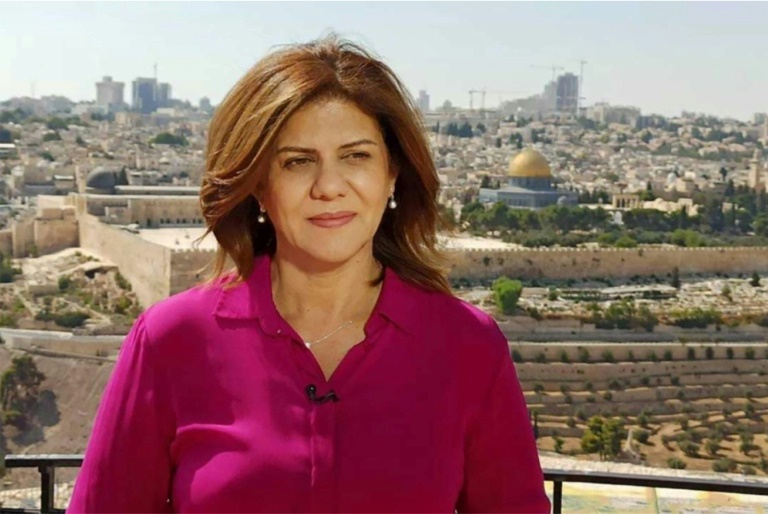
The Israeli army conceded Monday for the first time that one of its soldiers had likely shot Palestinian-American reporter Shireen Abu Akleh after having mistaken her for a militant.

“There is a high possibility that Ms Abu Akleh was accidentally hit by IDF (Israel Defence Forces) gunfire that was fired toward suspects identified as armed Palestinian gunmen,” said the army’s final investigation report into her May 11 death.

The acknowledgement comes after months in which the army had insisted it was impossible to determine the source of the deadly shot that killed the celebrated Al Jazeera journalist in the occupied West Bank, saying it could have been militant fire.

“Our conclusion is that it’s not possible to determine unequivocally which gunfire killed her, but there’s a higher probability that she was hit by an errant shot of an IDF soldier who did not identify her as a journalist,” a senior Israeli military officer said.

Abu Akleh was wearing a bulletproof vest marked “Press” and a helmet when she was shot in the head during an Israeli army operation.

The Abu Akleh family said that Israel had “refused to take responsibility for the murder” of the journalist, in a press release issued in the wake of the  army’s report.

“We remain deeply hurt, frustrated and disappointed,” the family said, calling for a “credible” US investigation.

The Palestinian Authority accused Israel of intentionally killing the reporter in the Jenin refugee camp, in the northern West Bank, whereas Israel has insisted that even if a soldier fired the fatal shot it was not deliberate.

– ‘Call for accountability’ –

On Monday, the senior army officer told reporters that the soldiers were under heavy fire and aimed to hit Abu Akleh because they had mistaken her for a Palestinian militant.

“When they fired in her direction they didn’t know she was a journalist, it was a mistake, they thought they were firing at terrorists shooting at them,” the officer said.

“He’s sorry about it and I’m sorry about it too,” the officer said of the soldier who shot in the direction of Abu Akleh. 

“He didn’t do it on purpose, it’s totally clear,” he added.

Bu the New York-based Committee to Protect Journalists was critical of the army’s report.

Its “admission of guilt is late and incomplete. They provided no name for Shireen Abu Akleh’s killer and no other information than his or her own testimony that the killing was a mistake,” said Sherif Mansour, CPJ’s Middle East and North Africa programme coordinator.

Israeli rights group B’Tselem, a campaigner against Israeli settlement expansion, condemned the army’s report as a “whitewash”. The killing was “no mistake, it’s policy,” it said.

A United Nations investigation concluded in June that there was “no evidence of activity by armed Palestinians close by” when Abu Akleh was shot.

The United States on July 4 said she was likely shot by Israeli fire but that there was no evidence her killing was intentional and that the bullet was too damaged for a conclusive finding.

The US statement outraged Abu Akleh’s family and Palestinian leaders who accused Washington of failing to seek accountability from Israel over the killing of the journalist, who also held US citizenship.

“We are continuing to call for accountability and for justice for Shireen,” Lina Abu Akleh, the journalist’s niece, said in Washington after meeting US Secretary of State Antony Blinken.

In May, Israel’s military advocate had said there was no suspicion of criminal activity since the event took place in an active combat zone.

The military advocate said Monday that the circumstances of the incident “do not raise the suspicion of a crime having been committed which would justify the opening of a criminal investigation”.

UN warns famine 'at the door' in Somalia

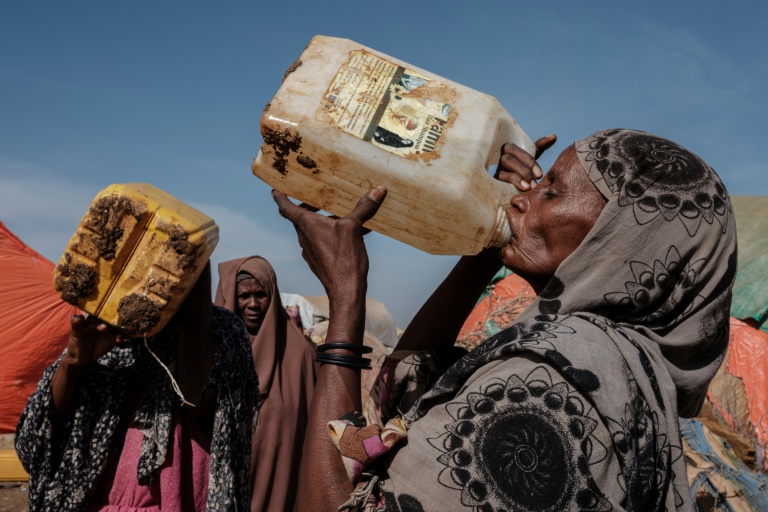
The United Nations warned Monday that Somalia was on the brink of famine for the second time in just over a decade, and that time was running out to save lives in the drought-ravaged country. 

“Famine is at the door and we are receiving a final warning,” UN humanitarian chief Martin Griffiths told a press conference in the Somali capital Mogadishu. 

“The unprecedented failure of four consecutive rainy seasons, decades of conflict, mass displacement, severe economic issues are pushing many people to… the brink of famine.”

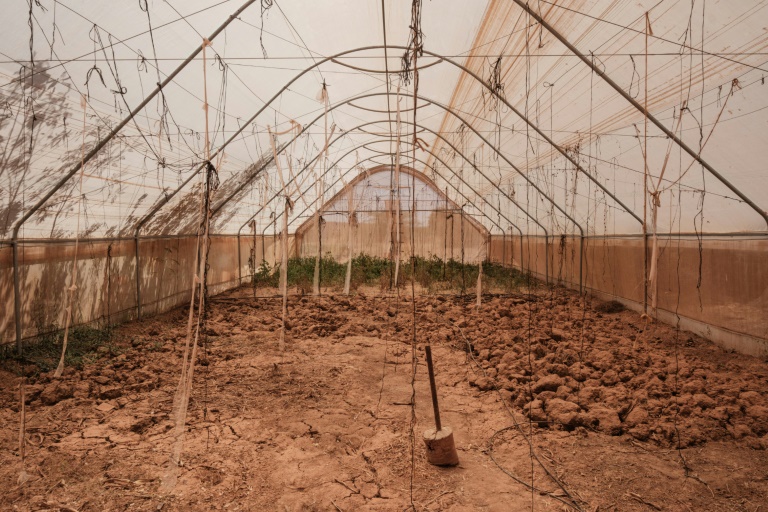
Millions of people are at risk of starvation in Somalia and its neighbours in the Horn of Africa including Ethiopia and Kenya which are in the grip of the worst drought in four decades after four failed rainy seasons wiped out livestock and crops.

A food and nutrition report has “concrete indications” that famine will strike Baidoa and Burhakaba in the Bay region of south-central Somalia between October and December, said the head of the UN Office for the Coordination of Humanitarian Affairs (OCHA), who began a visit to the country on Thursday.

“I’ve been shocked to my core these past few days by the level of pain and suffering we see so many Somalis enduring,” he added. 

“We are in the last moment of the 11th hour to save lives.”

Humanitarian agencies have been ringing alarm bells for months and say the situation in the Horn of Africa is likely to deteriorate with a likely fifth failed rainy season in the offing.

– ‘Worst fears now a reality’ –

Griffiths said the situation was worse than during Somalia’s last famine in 2011 when 260,000 people died, more than half of them children under the age of six. 

The UN’s World Food Programme (WFP) last month said the number of people at risk of starvation across the Horn had increased to 22 million.

“Our worst fears for Somalia are now a reality: Famine is imminent if funds do not arrive immediately,” WFP executive director David Beasley said on Twitter.

“The world MUST act now – this is a global call to action.”

In Somalia alone, the number of people facing crisis hunger levels is 7.8 million, or about half the population, while around a million have fled their homes on a desperate quest for food and water, UN agencies say. 

Griffiths described scenes of heart-rending suffering during a visit to Baidoa, describing it as the epicentre of the crisis where he saw “children so malnourished they could barely speak” or cry.

He said 1.5 million children across the country were at risk of acute malnutrition by October if nothing changed. 

Conflict-wracked Somalia is considered one of the most vulnerable to climate change but is particularly ill-equipped to cope with the crisis.

A deadly insurgency by the radical Islamist Al-Shabaab group for more than a decade and a half against the fragile federal government is limiting humanitarian access to many areas.

A long-running political crisis also diverted attention away from the drought, but new President Hassan Sheikh Mohamud used his inauguration speech in June to appeal for international help to stave off disaster.

In recent years, increasingly extreme droughts and floods have added to the devastation caused by a locust invasion and the Covid-19 pandemic.

The UN’s World Meteorological Organization (WMO) has said the Horn was likely facing a fifth straight failed rainy season over the months of October to December.

– ‘Sleepwalking’ to catastrophe – 


At the start of this year, the WFP had put the number of people facing hunger across the Horn at 13 million, and appealed for donors to open their wallets.

Funds were initially slow in coming, with Russia’s invasion of Ukraine among other crises drawing attention from the disaster in the Horn, humanitarian workers said.

The war in Ukraine has also sent global food and fuel prices soaring, making aid delivery more expensive.

In June, British charity Save the Children had issued an alert that the international community was “sleepwalking towards another catastrophic famine” in Somalia.

OCHA has said the March-May 2022 rainy season was the driest on record in the last 70 years, and 2020-2022 had surpassed “the horrific droughts in both 2010-2011 and 2016-2017 in duration and severity”.

“An estimated 2.3 million girls and boys are at imminent risk of violence, exploitation, abuse, neglect, and death from severe acute malnutrition as result of food and nutrition crisis across Somalia,” it said in August.

In 2017, more than six million people in Somalia, more than half of them children, needed aid because of a prolonged drought across East Africa.

But early humanitarian action averted famine that year.

Germany seeks 'forgiveness' 50 years after Munich Olympics massacre

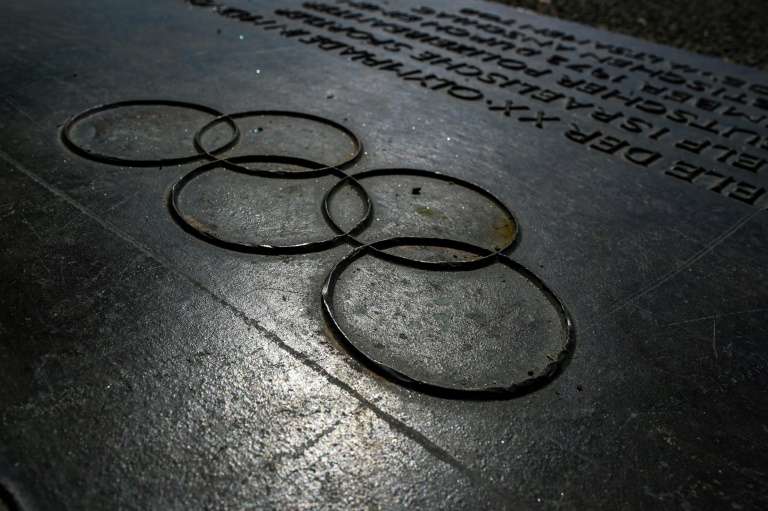
Germany on Monday sought “forgiveness” from families of victims in the 1972 Munich Olympics attack, admitting responsibility for a litany of failings that led to the deaths of 11 Israelis.

The apology by President Frank-Walter Steinmeier on behalf of Germany 50 years on came after a bitter and long fight by bereaved relatives for appropriate compensation and for Berlin to own up to mistakes made that led to the massacre. 

“We cannot make up for what has happened, not even for what you have experienced and suffered in terms of defensiveness, ignorance and injustice. I am ashamed of that,” said Steinmeier at a solemn ceremony at the Fuerstenfeldbruck airbase where the attack reached its tragic climax.

“As head of state of this country and in the name of the Federal Republic of Germany, I ask you for forgiveness for the lack of protection of the Israeli athletes at the time of the Olympic Games in Munich, and for the lack of clarification afterwards, and for the fact that what happened happened.”

Israel’s President Isaac Herzog hailed Steinmeier for what he described as a “brave and historic speech”.

“It represents, half a century later, an important step of morality and justice for the victims, for the families, and for history itself,” said the president, who is in Germany for a state visit.

– ‘Hardheartedness’ –

On September 5, 1972, eight gunmen of the Palestinian militant group Black September stormed into the Israeli team’s flat at the Olympic village, shooting dead two and taking nine Israelis hostage.

West German police responded with a bungled rescue operation in which all nine hostages were killed, along with five of the eight hostage-takers and a police officer.

Despite the devastation, the International Olympic Committee announced on the morning of September 6 that the Games would go on.

Steinmeier summarised the entire episode as a triple failing: in the preparation of the Games and its security concept; the events of September 5 and 6; and the third failure that “began the day after the assassinations — the silence, the suppression and the forgetting”. 

For decades, there was disregard for the victims’ suffering, he said, calling it “years of hardheartedness”. 

The Games were meant to showcase a new Germany 27 years after the Holocaust, and to be a marked difference from Hitler’s 1936 propaganda showcase. But instead, they opened a deep rift with Israel.

In 2012, Israel released 45 official documents on the killings, including specially declassified material, which lambasted the performance of the German security services.

Included in the reports is an official account from the former Israeli intelligence head Zvi Zamir who said the German police “didn’t make even a minimal effort to save human lives”.

– ‘Inhuman and incomprehensible’ –

Bereaved relatives have over the years battled to obtain an official apology from Germany, access to official documents and appropriate compensation beyond an initial 4.5 million euros.

As recently as just two weeks ago, relatives of the victims said they were offered 10 million euros — including the sum that had already been given.

Herzog said grieving relatives simply “hit a wall” whenever they tried to raise the issue with Germany or even with the International Olympic Committee. 

“I think there was tragic suppression here,” he said on Sunday, noting the slew of failings that were “inhuman and incomprehensible” such as “the fact that the hostages were being led to slaughter and the Games went on.”

After families threatened to boycott Monday’s ceremonies, a deal was finally agreed last Wednesday for Berlin to provide 28 million euros ($28 million) in compensation. 

Steinmeier had admitted that it was “shameful” that a deal was so late in coming.

Ankie Spitzer, whose husband Andre Spitzer was killed in the hostage-taking only a year and three months after they married, said that she managed to make a life for herself over the decades, but “could not find peace because justice hadn’t been done”. 

“You would think that mighty Germany would have done everything in its power not to add Jewish blood to its already bloody soil,” she told the ceremony.

“Everybody is asking now if I finally feel closure. They don’t understand that there will never be closure. The hole in my heart will never ever heal.”

Serbian PM visits northern Kosovo after unrest

Serbian Prime Minister Ana Brnabic travelled to northern Kosovo Monday, marking the first trip by a senior official from Belgrade to the former breakaway province in years following a recent bout of unrest. 

The visit comes just over a week after Serbia and Kosovo signed a landmark arrangement that will allow for the free movement of their citizens between the long-time rivals’ territories.

The deal followed weeks of negotiations in Brussels after northern Kosovo was rocked by unrest this summer with Serb protesters blocking border crossings and firing at police over a plan by Kosovo authorities to introduce a new set of travel documents for people entering the territory with Serbian IDs. 

In the ethnically divided city of Mitrovica, about a thousand local Serbs greeted Brnabic, waving Serbian flags and holding signs that read “We have only one prime minister” and “Welcome to Serbia, holy land of Kosovo”.

“I sincerely hope that the temporary institutions in Pristina become genuinely committed to dialogue and finding a certain compromise needed for long-term normalisation of ties between Belgrade and Pristina,” said Brnabic during a press conference, referring to Kosovo authorities.

“That is something we need — not just for our European integration — but for ourselves,” she added. 

Serbia has been a candidate to join the European Union since 2012, however, most experts doubt the country stands a chance of entering the bloc until Belgrade hammers out a deal to normalise ties with Kosovo. 

– Heavy security –

Brnabic’s delegation travelled with a heavy security detail, while NATO troops were stationed along the main roads in the area and a helicopter circled overhead.

During her one-day Kosovo tour, the 46-year-old was set to visit educational facilities, a Serbian Orthodox monastery, and chat with local farmers.

The area has long been a flashpoint between the two communities following the bitter war in the 1990s that triggered a NATO bombing campaign paving the way for Kosovo’s unilateral declaration of independence from Serbia in 2008. 

Serbia deeply resents Kosovo’s breakaway status and has never recognised its independence.

Serbs in northern Kosovo have long refused to acknowledge Pristina’s authority and have largely remained loyal to the Serbian government in Belgrade.

Another point of tension between the two countries has been over vehicle licence plates that Pristina has imposed across Kosovo, including on the Serbian minority living in the north.

On Sunday, Serbian President Aleksandar Vucic said both Germany and France have offered to send additional envoys to assist in the negotiations with Pristina.  

Kosovo’s ethnic Albanian majority fought Serbian forces in 1999 with support from NATO warplanes.

In 2008 it declared independence, which has been recognised by most, but not all, EU member states.

The latest unrest in Kosovo prompted NATO chief Jens Stoltenberg to say that the 3,700 NATO peacekeepers deployed in Kosovo would do what was necessary to ensure a secure environment.

Truss named UK leader as embattled Tories urged to unite

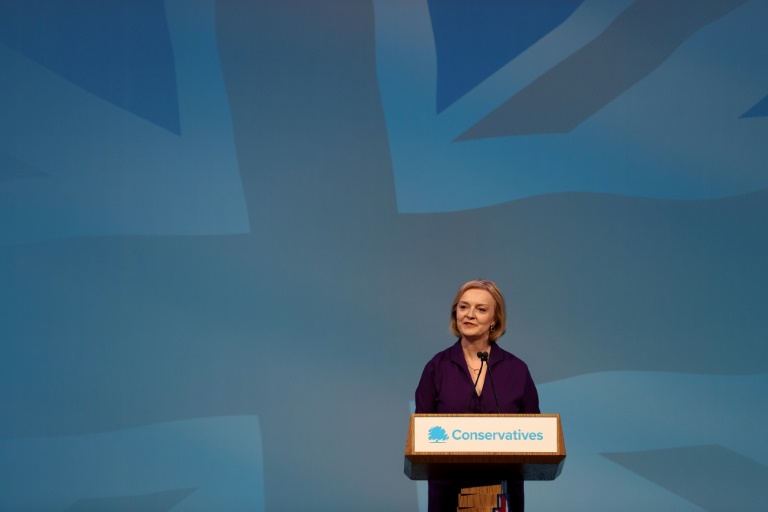
Britain’s new Conservative leader Liz Truss Monday vowed “bold” action to fix the country’s worst economic crisis in decades, as she was confirmed as Prime Minister Boris Johnson’s successor after a gruelling party contest.

The foreign secretary resisted pressure for a politically perilous early election to confirm her new mandate, vowing instead to “deliver a great victory for the Conservative party in 2024”.

Truss beat her rival, former finance minister Rishi Sunak, by about 57 to 43 percent after a summer-long contest decided by just over 170,000 Conservative members — a tiny sliver of Britain’s electorate.

Sunak — who has been lukewarm about whether he would serve in Truss’s cabinet — tweeted that now was the time for the party to unite as “one family”.

But Truss ignored her applauding rival as she marched up to the stage of the central London convention hall, calling it an “honour” to be elected after undergoing “one of the longest job interviews in history”.

“I campaigned as a conservative, and I will govern as a conservative,” she said, touting Tory values of low taxes and personal responsibility.

Truss vowed a “bold plan” to address tax cuts and the energy crisis, which she has indicated will be financed by much higher borrowing — even at the risk of stoking double-digit inflation.

Truss, 47, will be the UK’s third woman to become prime minister following Theresa May and Margaret Thatcher.

– Public mistrust –

She will formally take office on Tuesday, after Johnson tenders his resignation to Queen Elizabeth II.

“I know she has the right plan to tackle the cost-of-living crisis, unite our party and continue the great work of uniting and levelling up our country,” Johnson tweeted.

“Now is the time for all Conservatives to get behind her 100 per cent.”

The leadership contest began in July after Johnson announced his departure following a slew of scandals and resignations from his government, including Sunak’s.

Truss reserved a portion of her short speech to praising Johnson’s record, including on Brexit and the Covid pandemic, and said he was “admired from Kyiv to Carlisle”.

That won applause from the Tory faithful present. The right-wing ideologue, however, faces a tough task in winning over public opinion.

A YouGov poll in late August found 52 percent thought Truss would make a “poor” or “terrible” prime minister.

Forty-three percent said they did not trust her “at all” to deal with the crisis in the cost of living, as energy prices rocket amid Russia’s war in Ukraine.

– ‘Worst in-tray’ –

Truss is also viewed with mistrust among some of Britain’s allies, after taking a hard line against the European Union over post-Brexit trading rules for Northern Ireland.

“I look forward to a constructive relationship, in full respect of our agreements,” European Commission president Ursula von der Leyen said, flagging climate change and Ukraine as areas for cooperation.

Ireland’s government also gave Truss a wary welcome, but the scale of the challenges ahead saw the Smarkets betting exchange give her a 25 percent chance of failing to last through 2023.

The Tory winner faces “the worst in-tray for a new prime minister since Thatcher”, The Sunday Times wrote.

Millions say that with energy bills set to rise by 80 percent from October — and even higher from January — they face a painful choice between eating and heating this winter, according to surveys.

Polls show public support for an early general election, and the Conservatives face a growing challenge to retain their grip on power with the opposition Labour party riding high.

Labour leader Keir Starmer sent his own congratulations to Truss.

– Storm clouds –

“But after 12 years of the Tories all we have to show for it is low wages, high prices, and a Tory cost-of-living crisis,” he tweeted.

“Only Labour can deliver the fresh start our country needs.”

On Tuesday morning, Johnson will deliver a farewell speech at Downing Street before flying to Scotland — where heavy rain is forecast — to hand his resignation to Queen Elizabeth.

For the first time in her 70-year reign, the 96-year-old monarch will appoint the prime minister at her Scottish retreat, Balmoral, rather than at Buckingham Palace in London.

The queen has been suffering mobility problems and has cancelled a number of public engagements.

Truss is expected to fly separately to accept the queen’s invitation to form a new government, to ensure continuity of government in case of any mishaps.

On her return to Downing Street, the new prime minister will then give a short address to the nation. By tradition, that happens on the steps of Number 10.

But it may have to be moved indoors with forecasts for thundery downpours, matching Britain’s dismal outlook as the Truss government starts life.

Close Bitnami banner
Bitnami