World

Cuban peso at weakest in decades as economic crisis persists

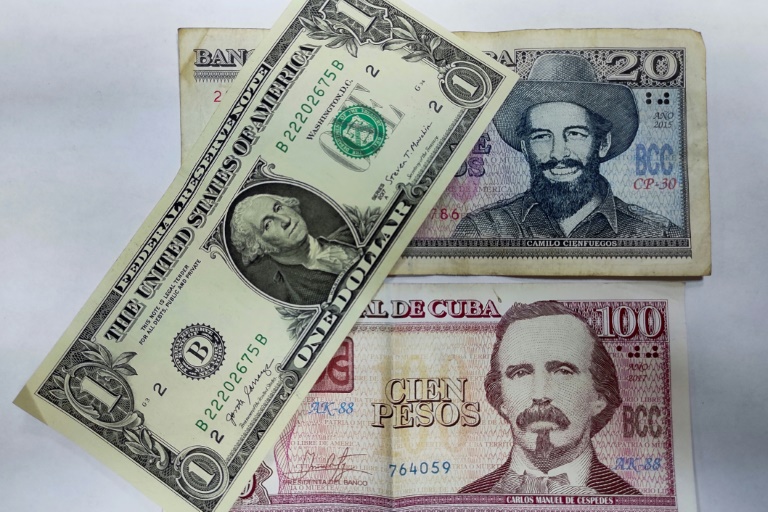
The Cuban peso is at its weakest against the US dollar since the 1990s, a currency tracker said Sunday, as the communist island struggles through its worst economic crisis since the fall of the Soviet bloc.

It now takes 150 Cuban pesos to buy a US dollar — and the same to buy a euro — on the informal currency market, according to independent journal El Toque, which publishes a daily listing of unofficial exchange rates. 

“The exchange rate is a reflection of the contraction in national productive activity, of scarcity, of monetary imbalances and of despair,” Colombia-based Cuban economist Pavel Vidal told AFP. 

Cuba is undergoing its worst economic crisis since the 1990s, with food and medicine shortages and daily blackouts.

The island’s currency hit its low point of 150 at week’s end, slipping slightly from the previous rate of 148 pesos to the dollar. 

The island’s central bank, trying to put the brakes on peso devaluation, last month began trading at a fixed parity of 120 pesos in state exchange houses — the same rate then prevailing in the informal market.

The dollar’s value skyrocketed in January 2021 after the central government in Havana announced financial reform measures and set the official exchange rate at 24 pesos.

That unleashed a spiral in costs, with the inflation rate hitting 70 percent by the end of 2021.

Vidal said the government’s “desperate” effort to obtain foreign currency to pay for imports and support productive activity was understandable.

“However,” he said, “the exchange market is not the way.”

A fixed rate of 120 pesos to the dollar “is not going to work in an economy that continues to suffer a balance-of-payments crisis” and where an aging electricity system results in regular blackouts.

Ukraine PM visits Berlin, seeking more weapons

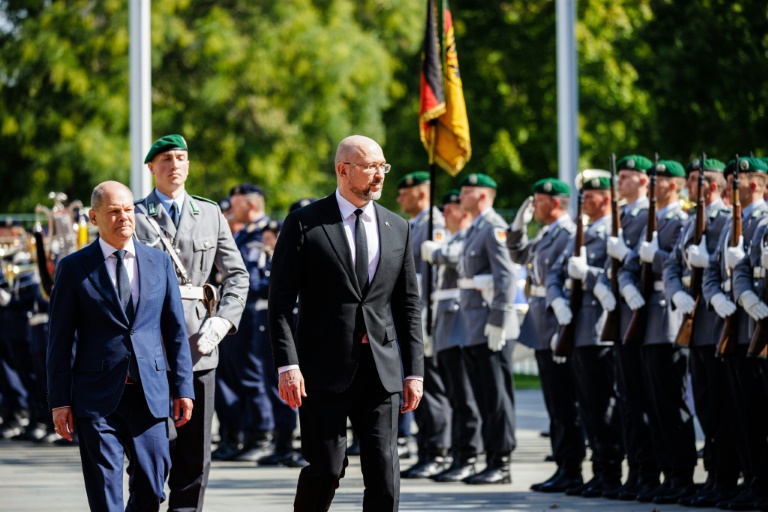
Ukraine’s Prime Minister Denys Shmygal on Sunday voiced hopes that Germany would become a leading player helping Kyiv to build up its air defences, as he sought more heavy weapons for Kyiv from Berlin.

Shmygal is the first high-level Ukrainian official to visit Germany in months, a sign of eased tensions between Kyiv and Berlin after a rocky patch.

Germany’s initial stuttering response on providing military support to Kyiv following Russia’s invasion of Ukraine had sparked consternation.

But Shmygal acknowledged during his visit that Germany has since significantly stepped up its military aid, with heavy armaments such as the tank howitzer 2000 or MARS rocket launchers all “working well on the battle field”.

The air defence system Iris-T is expected to be delivered in the autumn, he said, adding that Ukraine “hopes that Germany will become one of the leaders in the process of developing Ukrainian air defence”.

In a speech on his vision for Europe on Monday, Chancellor Olaf Scholz had said he saw Germany taking on “special responsibility” to help Ukraine build up its artillery and air defence systems.

– ‘Solidarity’ –

Defence ministers of NATO allies are expected to arrive in Germany on Thursday for a meeting led by the United States to coordinate military needs for Ukraine.

Ahead of the talks, Scholz stressed Germany’s commitment to bolstering Ukraine, but added that it would be done in coordination with “our friends and allies”.

The Ukrainian prime minister had made the first stop on his trip to Berlin a meeting with President Frank-Walter Steinmeier, where Shmygal said he “discussed the military situation, strengthening sanctions and the need to provide weapons for Ukraine”. 

Shmygal also thanked Germany “for solidarity with Ukrainians and support”.

Germany will “continue to stand reliably by Ukraine’s side,” Steinmeier reassured Shmygal, according to the German president’s spokeswoman.

The cordial read-outs of their talks marked a clear change in tone from previous months, when a row had erupted in April because Steinmeier’s offer to visit Ukraine was rebuffed.

Steinmeier, a former foreign minister from Scholz’s Social Democratic Party, had been shunned over his years-long detente policy towards Moscow — something which he has admitted was a mistake following the outbreak of war.

– ‘Hybrid war’ –

Germany’s SPD has historically championed close ties with Russia, born out of the “Ostpolitik” policy of rapprochement and dialogue with the then Soviet Union, devised by former SPD chancellor Willy Brandt in the 1970s.

That tradition contributed to Germany initially refusing any weapons deliveries to Kyiv, with a previous decision to send only 5,000 helmets sparking anger and mockery.

But Scholz’s coalition, which also includes the Greens and liberal FDP, has since made a sharp U-turn.

Howitzers, rocket launchers and anti-aircraft missiles are among the weapons that have arrived in Kyiv. 

Heavier weapons like the IRIS-T anti-aircraft systems, rocket launchers mounted on pick-ups and anti-drone equipment are due in a further military aid package worth over 500 million euros. 

Ukrainian soldiers are currently being trained in Germany to use the anti-aircraft Leopard tanks.

On Sunday, former Russian president Dmitry Medvedev accused Germany of leading a “hybrid war” against Russia, justifying a stop in gas deliveries via the Nord Stream 1 pipeline to Europe.

“Firstly, Germany is an unfriendly country. Secondly, it has imposed sanctions against all of the Russian economy… and it is delivering lethal arms to Ukraine,” Medvedev said in support of his statement in a message published on Telegram.

The EU should “completely abandon” Russian energy, Shmygal said in a post on Telegram after his meeting with Scholz, adding that Moscow had “unleashed an energy war against Europe”.

“There is already a decision on the embargo on Russian coal and oil, but an embargo on gas is also needed,” he said, a day before he is due in Brussels where he will join the EU’s chief diplomat Josep Borrell at a meeting of the EU-Ukraine Association Council.

Pope Francis beatifies 'Smiling' John Paul I

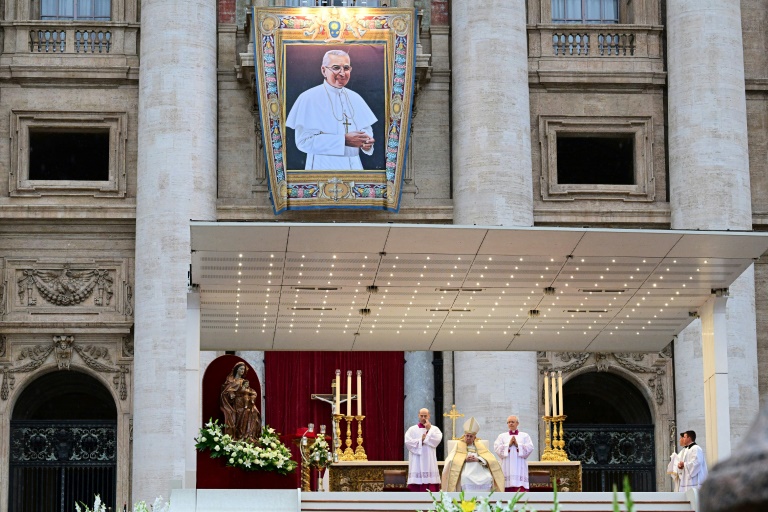
Thousands of people gathered in St Peter’s Square on Sunday as Pope Francis presided over the beatification of John Paul I, the so-called “Smiling Pope” who led the Catholic Church for just 33 days before dying in contested circumstances.

John Paul I, the son of a bricklayer from the Dolomite mountains and a particularly warm and pastoral figure, was elected pope on August 26, 1978, at the age of 65.

He died just 33 days later, on September 28, 1978, of a heart attack, making him the shortest serving pontiff in modern church history.

A crowd of several thousand including Italian President Sergio Mattarella gathered under umbrellas through a thunderstorm to listen to the beatification mass — a step before canonization and becoming a “saint”. 

“With a smile, Pope John Paul managed to communicate the goodness of the Lord,” said Pope Francis during Sunday’s mass.

“How beautiful is a Church with a happy, serene and smiling face, that never closes doors, never hardens hearts, never complains or harbours resentment, does not grow angry or impatient, does not look dour or suffer nostalgia for the past.”

A wall hanging representing the late pope was hung on the front of St Peter’s basilica.

The death of John Paul I death sparked intense speculation as to the cause, from suicide — he seemed reluctant to take on the position of pope — to murder, allegedly by those who opposed his plans to reform the church, particularly the powerful Vatican bank.

Many have since discounted this and biographer Christophe Henning said the swirling rumours can be explained by the sudden nature of his death and the “calamitous communication” by the Vatican at the time.

No autopsy was conducted to determine the cause of death, and the Vatican issued inconsistent and false information about what happened.

For example, his lifeless body — sitting in bed, his reading glasses on his nose and typewritten documents in his hand — was found by a nun.

However, the Vatican did not want to acknowledge the presence of a woman in his bedroom, so said his secretary found him.

“For me it does not seem that there is really a doubt” about his death by natural causes, particularly given “we know that he was in fragile health”, Henning told AFP.

– ‘Friendly to everybody’ –

The Vatican announced in October 2021 that it had recognised a miracle attributed to John Paul I, allowing him to become beatified, a process when a person becomes “blessed” and the final step before becoming a saint.

The miracle was the sudden healing of a gravely ill 11-year-old girl in Buenos Aires in 2011, after a local priest prayed to the late pontiff.

Under the rules of the Catholic Church, in most cases a second miracle needs to be recognised before someone can be made a saint. 

Born as Albino Luciani on October 17, 1912, in the northern Italian town of Canale d’Agordo, John Paul I rose to become Patriarch of Venice, Cardinal and then head of the Catholic Church.

The last Italian pope, he was seen as a man of consensus, of humility and simplicity and a strong sense of pastoral duty.

“Open to dialogue and listening, he gave priority to pastoral visits and direct contact with the faithful,” the Vatican said in a beatification brochure.

He defended the church’s opposition to abortion and contraception while also seeking to reform its governance.

Sister Margherita Marin, who helped John Paul I in the papal apartments, recalled a man who was “friendly to everyone”.

“He knew how to treat his colleagues with a lot of respect,” she told a Vatican press conference on Friday.

Among the most recent popes, John XXIII (1958-1963), Paul VI (1963-1978) and John Paul II (1978-2005) were proclaimed saints. 

The predecessor of Pope Francis, Benedict XVI, is still alive and living in the Vatican after resigning in 2013.

Chile votes on overhaul of dictatorship-era constitution

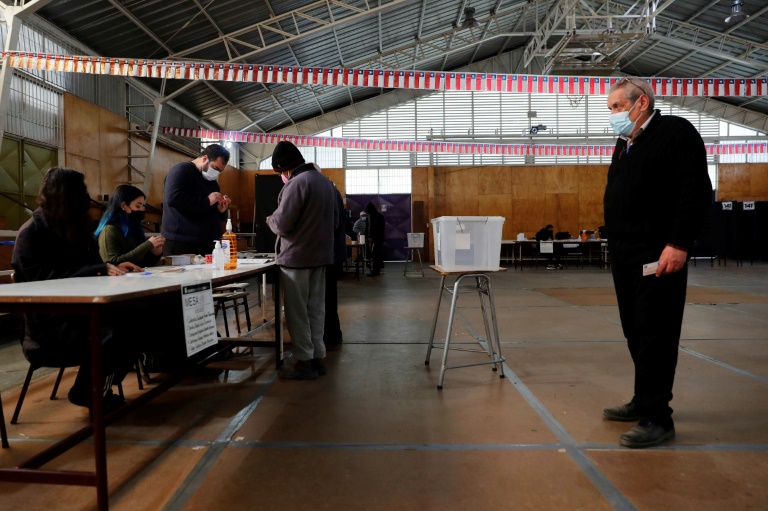
Chileans voted Sunday on whether to adopt a new constitution that would break from the era of Augusto Pinochet’s dictatorship, foster a more welfare-based society and boost Indigenous rights.

Although Chileans previously voted in droves for a rewrite of the current constitution — adopted in 1980 during Pinochet’s rule — opinion polls suggest the new text could be rejected.

Polling stations opened at 8:00 am (1200 GMT), with long lines of voters gathered in some parts of the country.

Social upheaval that began in 2019 provided the impulse to overhaul the constitution, but the 388-article draft — including proposals to legalize abortion — has proved controversial and often confusing.

“I will reject it because it was a constitution that started badly,” Maria Angelica Ebnes, a 66-year-old homemaker, told AFP in Santiago. “It was forced, through violence.”

In October 2019, protests sprung up mostly in the capital led by students initially angered by a proposed metro fare hike.

Those demonstrations spiraled into wider discontent with the country’s neoliberal economic system as well as growing inequality.

Those in favor of the new text are still holding out hope of victory.

“People will go out to vote en masse and the polls will be wrong once again,” said Juan Carlos Latorre, a legislator in the ruling coalition of leftist President Gabriel Boric, who supports the new text.

Boric called for national unity whatever the outcome as he voted in Punta Arenas.

More than 15 million Chileans are eligible to vote in the compulsory referendum.

– Protect natural resources –

Among the chief concerns of opponents is the prominence given to the country’s Indigenous peoples, who make up close to 13 percent of the 19 million population.

Proposals to enshrine reproductive rights and protect the environment as well as natural resources such as water, which some say is exploited by private mining companies, have also garnered much attention.

The new constitution would also overhaul Chile’s government, replacing the Senate with a less powerful “chamber of regions,” and requiring women to hold at least half of positions in public institutions.

While recent polls have had the “reject” vote leading by as much as 10 percentage points, sociologist Marta Lagos said the result was not certain.

In the vast Santiago metropolitan area, the majority of people appear likely to vote in favor of the new constitution, Lagos said.

“There’s always the possibility that all the polls are wrong,” Lagos told AFP. “(But) I don’t think this possibility is more than five percent, and ‘reject’ is 95 percent likely to win.”

Only a simple majority is required for the new constitution to be adopted.

Around 40 world-renowned economists and political scientists have expressed their support for the new constitution.

Yet some fear the new text would generate instability and uncertainty, which could then harm the economy.

“What you can see is a certain conservatism in the Chilean electorate that we haven’t seen for years,” said Lagos.

It was certainly muted last December when millennial Boric was elected president.

– Social tensions –

Those in favor of the new constitution say it will prompt changes in a conservative country marked by social and ethnic tensions and lay the foundation for a more egalitarian society.

They say the current constitution gave private enterprise free rein over crucial industries and created a fertile breeding ground for the rich to prosper and the poor to struggle.

Although the 1980 constitution has undergone several reforms since it was adopted, it retains the stigma of having been introduced during a dictatorship.

Chileans have already voted once to rewrite the constitution and then again to elect the representatives to do so, making Sunday’s vote the third time in just two years that they have gone to the polls over the issue.

The new text was drawn up by a constitutional convention made up of 154 members — mostly with no political affiliation — split equally between men and women and with 17 places reserved for Indigenous people.

The resulting proposal recognizes 11 Indigenous peoples and offers them greater autonomy, particularly on judicial issues.

Some critics accuse the authors of trying to turn the traditionally marginalized Indigenous people into a higher class of citizens.

If accepted, Chile’s congress will then start deciding how to apply the new laws. 

If the new text is rejected, the current constitution will remain in place.

Germany agrees 65bn-euro inflation relief package

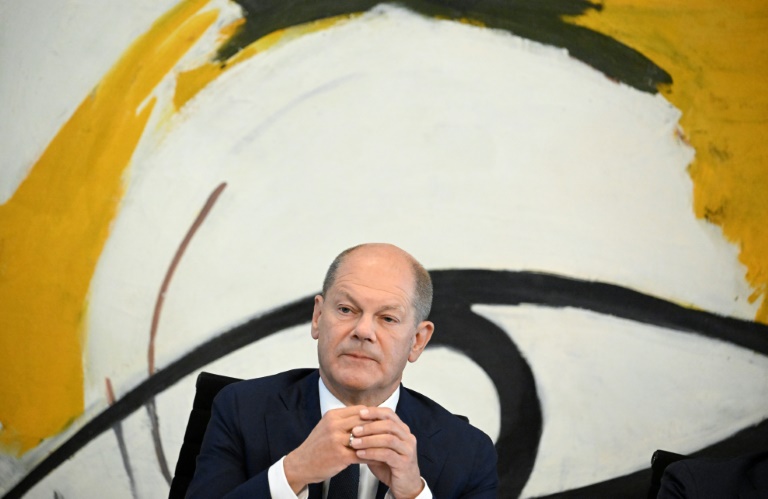
The German government on Sunday unveiled a new multi-billion euro plan to help households cope with soaring prices, and said it was eyeing windfall profits from energy companies to help fund the relief.

German businesses and consumers are feeling the pain from sky-high energy prices, as Europe’s biggest economy seeks to extricate itself from reliance on Russian supplies in the wake of Moscow’s invasion of Ukraine.

Rapid measures to prepare for the coming cold season will ensure that Germany would “get through this winter,” Chancellor Olaf Scholz said at the unveiling of the 65-billion-euro ($65-billion) package. 

The latest agreement, which brings total relief to almost 100 billion euros since the start of the Ukraine war, was hammered out overnight into Sunday by Germany’s three-way ruling coalition of Scholz’s Social Democrats, the Greens, and the liberal FDP. 

Among the headline measures are one-off payments to millions of vulnerable pensioners and a plan to skim off energy firms’ windfall profits.

The government’s latest relief package came two days after Russian energy giant Gazprom said it would not restart gas deliveries via the Nord Stream 1 pipeline on Saturday as planned after a three-day maintenance.

The government had made “timely decisions” to avoid a winter crisis, Scholz said, including filling gas stores and restarting coal power plants.

But preventative measures, including a drive to reduce consumption, have done little to break a sharp increase in household bills.

– Third package –

The latest announcement follows two previous relief packages totalling 30 billion euros, which included a reduction in the tax on petrol and a popular heavily subsidised public transport ticket.

But with the expiration of many of those measures at the end of August and consumer prices still on an upward march, the government has been under pressure to provide new support.

Inflation rose again to 7.9 percent in August, after falling for two straight months thanks to previous government relief measures.

Scholz said however that not everyone is suffering from the high consumer prices. 

Some energy companies which may not be using gas to generate electricity could “simply use the fact that the high price of gas determines the price of electricity and are therefore making a lot of money,” he said.

“We have therefore resolved to change the market organisation in such a way that these random profits no longer occur or that they are skimmed off.”

The trimming of windfall profits would create “financial headroom that should be used specifically to relieve the burden for consumers in Europe,” the government said in its policy paper.

The move could potentially bring “double-digit billions” of euros in relief, finance minister Christian Lindner estimated in the press conference.

The government said it would seek to implement the measure through a reform of the European energy market in the first instance, before forging ahead on its own.

Energy companies were earning “insane amounts of money” under the current system, Economy Minister Robert Habeck said in a statement. 

Brussels on Monday said it would prepare “emergency” action to reform the electricity market and bring prices under control.

– ‘Never walk alone’ –

Repeating his mantra that Germans will “never walk alone” through the energy crisis, the chancellor unveiled a raft of measures, including a one-off payment of 300 euros to millions of pensioners to help them cover rising power bills.

The government will similarly target students with a smaller one-time transfer of 200 euros, and a heating cost payment for people receiving housing benefits.

Berlin also set aside 1.5 billion euros for work on a successor to the wildly popular nine-euro monthly ticket on local and regional transport networks. 

The relief package as a whole should be financed without planning to take on further debt, Lindner said.

“These measures are included within the government’s existing budget plans,” covering 2022 and 2023, he said, with the remainder covered by the windfall energy profit measures.

Germany agrees 65bn-euro inflation relief package

The German government on Sunday unveiled a new multi-billion euro plan to help housesholds cope with soaring prices, and said it was eyeing windfall profits from energy companies to help fund the relief.

German businesses and consumers are feeling the pain from sky-high energy prices, as Europe’s biggest economy seeks to extricate itself from reliance from Russian supplies in the wake of Moscow’s invasion of Ukraine.

Rapid measures to prepare for the coming cold season will ensure that Germany would “get through this winter,” Chancellor Olaf Scholz said at the unveiling of the 65-billion-euro ($65-billion) package. 

The latest agreement, which brings total relief to almost 100 billion euros since the start of the Ukraine war, was hammered out overnight into Sunday by Germany’s three-way ruling coalition of Scholz’s Social Democrats, the Greens, and the liberal FDP. 

Among the headline measures are one-off payments to millions of vulnerable pensioners and a plan to skim off energy firms’ windfall profits.

The government’s latest relief package came two days after Russian energy giant Gazprom said it would not restart gas deliveries via the Nord Stream 1 pipeline on Saturday as planned after a three-day maintenance.

The government had made “timely decisions” to avoid a winter crisis, Scholz said, including filling gas stores and restarting coal power plants.

But preventative measures, including a drive to reduce consumption, have done little to break a sharp increase in household bills.

– Third package –

The latest announcement follows two previous relief packages totalling 30 billion euros, which included a reduction in the tax on petrol and a popular heavily subsidised public transport ticket.

But with the expiration of many of those measures at the end of August and consumer prices soaring, the government has been under pressure to provide new support.

Inflation rose again to 7.9 percent in August, after falling for two straight months thanks to previous government relief measures.

The take-off in energy prices is expected to push inflation in Germany to around 10 percent by the end of the year, its highest rate in decades.

Scholz said however that not everyone is suffering from the high consumer prices. 

Some energy companies which may not be using gas to generate electricity were “simply using the fact that the high price of gas determines the price of electricity and are therefore making a lot of money,” he said.

“We have therefore resolved to change the market organisation in such a way that these random profits no longer occur or that they are skimmed off.”

The trimming of windfall profits would create “financial headroom that should be used specifically to relieve the burden for consumers in Europe,” the government said in its policy paper.

The move could potentially bring “double-digit billions” of euros in relief, finance minister Christian Lindner estimated in the press conference.

The government said it would push for the move to be implemented across the European Union, before going ahead with the measure on its own.

Brussels on Monday said it would prepare “emergency” action to reform the electricity market and bring prices under control.

Scholz said he expected the EU to “deal quickly” with the issue, adding that it was “very clear that we need rapid changes in this area”.

– ‘Never walk alone’ –

Repeating his mantra that Germans will “never walk alone” through the energy crisis, the chancellor unveiled a raft of measures, including a one-off payment of 300 euros to millions of pensioners to help them cover rising power bills.

The government will also target students with a smaller one-time transfer of 200 euros, and an heating cost payment for people receiving housing benefits.

Berlin also set aside 1.5 billion euros for work on a successor to the wildly popular nine-euro monthly ticket on local and regional transport networks. 

The relief package as a whole should be financed without planning to take on further debt, Lindner said.

“These measures are included within the government’s existing budget plans,” covering 2022 and 2023, he said, with the remainder covered by the windfall energy profit measures.

Pope Francis beatifies 'Smiling' John Paul I

Thousands of people gathered in St Peter’s Square on Sunday as Pope Francis presided over the beatification of John Paul I, the so-called “Smiling Pope” who led the Catholic Church for just 33 days before dying in contested circumstances.

John Paul I, the son of a bricklayer from the Dolomite mountains and a particularly warm and pastoral figure, was elected pope on August 26, 1978, at the age of 65.

He died just 33 days later, on September 28, 1978, of a heart attack, making him the shortest serving pontiff in modern church history.

A crowd of several thousand including Italian President Sergio Mattarella gathered under umbrellas through a thunderstorm to listen to the beatification mass — a step before canonization and becoming a “saint”. 

“With a smile, Pope John Paul managed to communicate the goodness of the Lord,” said Pope Francis during Sunday’s mass.

“How beautiful is a Church with a happy, serene and smiling face, that never closes doors, never hardens hearts, never complains or harbours resentment, does not grow angry or impatient, does not look dour or suffer nostalgia for the past.”

A wall hanging representing the late pope was hung on the front of St Peter’s basilica.

The death of John Paul I death sparked intense speculation as to the cause, from suicide — he seemed reluctant to take on the position of pope — to murder, allegedly by those who opposed his plans to reform the church, particularly the powerful Vatican bank.

Many have since discounted this and biographer Christophe Henning said the swirling rumours can be explained by the sudden nature of his death and the “calamitous communication” by the Vatican at the time.

No autopsy was conducted to determine the cause of death, and the Vatican issued inconsistent and false information about what happened.

For example, his lifeless body — sitting in bed, his reading glasses on his nose and typewritten documents in his hand — was found by a nun.

However, the Vatican did not want to acknowledge the presence of a woman in his bedroom, so said his secretary found him.

“For me it does not seem that there is really a doubt” about his death by natural causes, particularly given “we know that he was in fragile health”, Henning told AFP.

– ‘Friendly to everybody’ –

The Vatican announced in October 2021 that it had recognised a miracle attributed to John Paul I, allowing him to become beatified, a process when a person becomes “blessed” and the final step before becoming a saint.

The miracle was the sudden healing of a gravely ill 11-year-old girl in Buenos Aires in 2011, after a local priest prayed to the late pontiff.

Under the rules of the Catholic Church, in most cases a second miracle needs to be recognised before someone can be made a saint. 

Born as Albino Luciani on October 17, 1912, in the northern Italian town of Canale d’Agordo, John Paul I rose to become Patriarch of Venice, Cardinal and then head of the Catholic Church.

The last Italian pope, he was seen as a man of consensus, of humility and simplicity and a strong sense of pastoral duty.

“Open to dialogue and listening, he gave priority to pastoral visits and direct contact with the faithful,” the Vatican said in a beatification brochure.

He defended the church’s opposition to abortion and contraception while also seeking to reform its governance.

Sister Margherita Marin, who helped John Paul I in the papal apartments, recalled a man who was “friendly to everyone”.

“He knew how to treat his colleagues with a lot of respect,” she told a Vatican press conference on Friday.

Among the most recent popes, John XXIII (1958-1963), Paul VI (1963-1978) and John Paul II (1978-2005) were proclaimed saints. 

The predecessor of Pope Francis, Benedict XVI, is still alive and living in the Vatican after resigning in 2013.

Pakistan floods wash away a family's marriage hopes

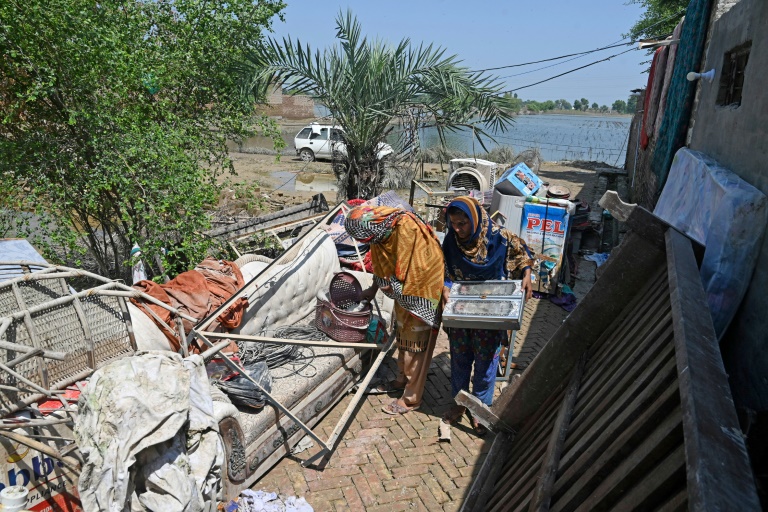
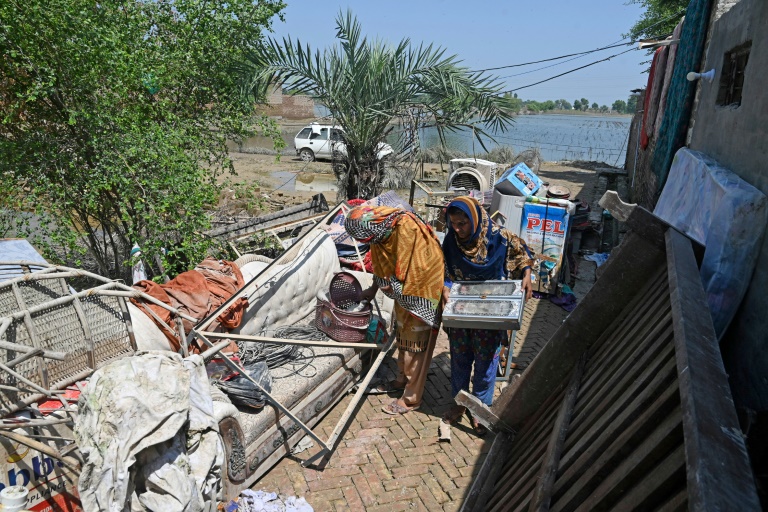
Truck driver and father-of-seven Mureed Hussain was planning for his daughter’s October wedding when floodwater inundated his home, taking away the entire back wall and, with it, her hard-earned dowry.

“I had been collecting her dowry for almost three years,” Hussain told AFP from the courtyard of his four-room house, which he shares with his brother’s family.

“I would provide for the house and also spend a little on her dowry.” 

Record monsoon rains have caused devastating floods across Pakistan since June, killing more than 1,200 people and leaving almost a third of the country under water, affecting the lives of 33 million.

The hardest hit are the poor in rural parts of the country, who have seen their homes, belongings, life savings, and crops washed away.

Hussain’s village in Punjab province was badly affected, with floodwater destroying or damaging scores of buildings.

Also washed away are marriage plans for Hussain’s daughter, Nousheen.

Each month Hussain would put away a couple of thousand rupees for her dowry from the 17,000 rupee salary ($80) he makes driving trucks.

It is customary for families in patriarchal Pakistan to provide extravagant dowries when a daughter is married. 

In many areas, parents are expected to start saving up for their daughters’ dowries from the day they are born.

While demanding a large dowry is officially banned by law, it is still a practice observed by many.

The families of grooms frequently present the parents of their future daughter-in-law with an extensive list of demands — including furniture, household goods and clothing.

In the case of wealthy families, it can even include cars and homes.

Failing to come up with the goods is considered shameful, and the bride-to-be often faces ill-treatment by her in-laws if a decent dowry is not provided.

– Shock and tears –

“I wanted to marry off my other two daughters after her and one remaining son,” Hussain said.

“I had thought I would be able to do it gradually.”

When the floods reached his home, Hussain fled with his wife and family to a nearby railway station on elevated land.

When the waters receded, Hussain trudged through mud two days ago and returned to his home with his wife and daughters.

“They started crying when they saw the damage,” he said.

His wife, Sughra Bibi, teared up again as she recalled her shock at the condition of the home — and her daughter’s dowry.

Over the years, Sughra had bought a custom-made bed set and dressing table, as well as a juicer, washing machine, iron, bedsheets, and quilts.

Everything was badly damaged by the floodwater.

“It’s blackened, so whoever sees it will say we have given her old things,” Sughra said.

With the wedding called off, Nousheen is putting on a brave face.

“It was supposed to be a happy time for my family, and I was very excited,” the 25-year-old told AFP.

“I have seen how difficult it was for my parents to put this dowry together for me. Now they have to do it all over again.”

“It’s such a big problem for us now,” father Hussain said.

“Should we rebuild our house, sow wheat or get our children married? All three things are so important for us.”

Pakistan floods wash away a family's marriage hopes

Truck driver and father-of-seven Mureed Hussain was planning for his daughter’s October wedding when floodwater inundated his home, taking away the entire back wall and, with it, her hard-earned dowry.

“I had been collecting her dowry for almost three years,” Hussain told AFP from the courtyard of his four-room house, which he shares with his brother’s family.

“I would provide for the house and also spend a little on her dowry.” 

Record monsoon rains have caused devastating floods across Pakistan since June, killing more than 1,200 people and leaving almost a third of the country under water, affecting the lives of 33 million.

The hardest hit are the poor in rural parts of the country, who have seen their homes, belongings, life savings, and crops washed away.

Hussain’s village in Punjab province was badly affected, with floodwater destroying or damaging scores of buildings.

Also washed away are marriage plans for Hussain’s daughter, Nousheen.

Each month Hussain would put away a couple of thousand rupees for her dowry from the 17,000 rupee salary ($80) he makes driving trucks.

It is customary for families in patriarchal Pakistan to provide extravagant dowries when a daughter is married. 

In many areas, parents are expected to start saving up for their daughters’ dowries from the day they are born.

While demanding a large dowry is officially banned by law, it is still a practice observed by many.

The families of grooms frequently present the parents of their future daughter-in-law with an extensive list of demands — including furniture, household goods and clothing.

In the case of wealthy families, it can even include cars and homes.

Failing to come up with the goods is considered shameful, and the bride-to-be often faces ill-treatment by her in-laws if a decent dowry is not provided.

– Shock and tears –

“I wanted to marry off my other two daughters after her and one remaining son,” Hussain said.

“I had thought I would be able to do it gradually.”

When the floods reached his home, Hussain fled with his wife and family to a nearby railway station on elevated land.

When the waters receded, Hussain trudged through mud two days ago and returned to his home with his wife and daughters.

“They started crying when they saw the damage,” he said.

His wife, Sughra Bibi, teared up again as she recalled her shock at the condition of the home — and her daughter’s dowry.

Over the years, Sughra had bought a custom-made bed set and dressing table, as well as a juicer, washing machine, iron, bedsheets, and quilts.

Everything was badly damaged by the floodwater.

“It’s blackened, so whoever sees it will say we have given her old things,” Sughra said.

With the wedding called off, Nousheen is putting on a brave face.

“It was supposed to be a happy time for my family, and I was very excited,” the 25-year-old told AFP.

“I have seen how difficult it was for my parents to put this dowry together for me. Now they have to do it all over again.”

“It’s such a big problem for us now,” father Hussain said.

“Should we rebuild our house, sow wheat or get our children married? All three things are so important for us.”

China's No. 3 leader to visit Russia next week

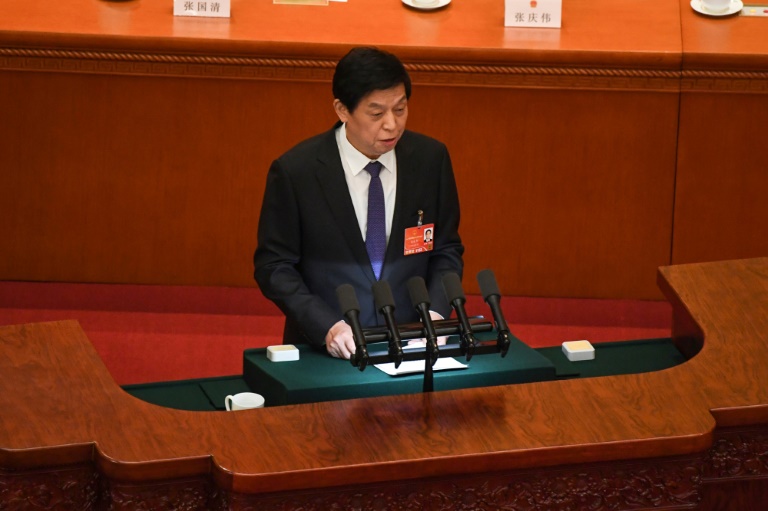
China’s top legislator Li Zhanshu will visit Russia next week, state media reported Sunday, becoming the highest-ranking Communist Party politician to travel to the country since Moscow’s invasion of Ukraine.

Beijing and Moscow have drawn closer in recent years, ramping up cooperation as part of what they call a “no limits” relationship, acting as a counterweight to the global dominance of the United States.

Meanwhile, tensions between China and the West have risen as Beijing has refused to condemn Moscow’s invasion of Ukraine and provided diplomatic cover by blasting Western sanctions and arms sales to Kyiv.

Li, who ranks third in the Chinese government hierarchy, will pay official visits to Russia, Mongolia, Nepal and South Korea from Wednesday until September 17, according to the official Xinhua news agency.

He will attend the Eastern Economic Forum due to be held over four days from Monday in Russia’s far eastern city of Vladivostok, Xinhua reported.

Li, 72, is likely to retire from his role in the Communist Party at a landmark conference next month, where President Xi Jinping is expected to secure a precedent-busting third consecutive term in office.

Xi himself has not left China since the start of the Covid-19 pandemic in early 2020.

Close Bitnami banner
Bitnami