World

ECB poised for big rate hike in face of record inflation

After raising interest rates for the first time in over a decade at their last meeting, European Central Bank policymakers are poised to deliver another bumper hike on Thursday in a show of determination to tame soaring inflation.

Steep increases in the price of energy in the wake of the Russian invasion of Ukraine have heaped pressure on households and sent the pace of consumer price rises to new highs. 

Eurozone inflation hit 9.1 percent in August, a record in the history of the single currency and well above the two-percent rate targeted by the ECB.

The “only question” for the ECB’s meeting was “whether it will be a 50 or 75 basis point hike,” said Carsten Brzeski, head of macro at the ING bank.

Speaking at the annual Jackson Hole central banking symposium at the end of August, ECB board member Isabel Schnabel said the ECB needed to show “determination” to tame price rises.

Under this approach, the central bank would respond “more forcefully to the current bout of inflation, even at the risk of lower growth and higher unemployment”, she said.

– ‘Only question’ –

The ECB’s 25-member governing council surprised with a 50-basis-point hike at its last meeting in July, bringing an end to eight years of negative interest rates in one fell swoop.

In her speech in the United States, Schnabel stressed the need for the people to “trust” that the ECB will restore their purchasing power.

The Frankfurt-based institution is already playing catch up with other central banks in the US and Britain that started raising rates harder and faster in response to inflation.

So-called forward guidance issued by the ECB, which limited its scope for action, has been ditched. Policymakers would now take their decisions “meeting-by-meeting”, the ECB President Christine Lagarde announced in July.

With that, the door has been opened for the ECB to follow in the footsteps of the US Federal Reserve and raise rates by a 75 basis points.

Following August’s red-hot inflation numbers, the influential head of the German central bank, Joachim Nagel, said the ECB needed a “strong rise in interest rates in September”.

– ‘Steady pace’ –

“Further interest rate steps are to be expected in the following months,” the Bundesbank president predicted.

But the ECB’s chief economist, Philip Lane, has counselled colleagues to follow a “steady pace” of interest rate rises.

Hiking at a rate that was “neither too slow nor too fast” was important due to the “high uncertainty” around the economy and the future path of inflation.

Alongside its policy decisions, the ECB will also share an updated set of economic forecasts for the eurozone.

In its last estimates, published in June, the ECB said it expected inflation to sit at 6.8 percent in 2022 before falling to 3.5 percent next year, while growth would slow from 2.8 percent this year to 2.1 in 2023.

But a more severe energy shock as Russia reduces gas deliveries to Europe could push the eurozone into a “deeper winter recession” and hold growth to zero percent in 2023, said Frederik Ducrozet, head of macroeconomic research at Pictet.

At the same time, the soaring cost of energy would drive inflation close to double digits by the end of the year, he predicted.

The ECB had “no choice but to commit to faster monetary tightening as long as inflation keeps rising” even as a recession loomed, said Ducrozet. 
ECB poised for big rate hike in face of record inflation

After raising interest rates for the first time in over a decade at their last meeting, European Central Bank policymakers are poised to deliver another bumper hike on Thursday in a show of determination to tame soaring inflation.

Steep increases in the price of energy in the wake of the Russian invasion of Ukraine have heaped pressure on households and sent the pace of consumer price rises to new highs. 

Eurozone inflation hit 9.1 percent in August, a record in the history of the single currency and well above the two-percent rate targeted by the ECB.

The “only question” for the ECB’s meeting was “whether it will be a 50 or 75 basis point hike,” said Carsten Brzeski, head of macro at the ING bank.

Speaking at the annual Jackson Hole central banking symposium at the end of August, ECB board member Isabel Schnabel said the ECB needed to show “determination” to tame price rises.

Under this approach, the central bank would respond “more forcefully to the current bout of inflation, even at the risk of lower growth and higher unemployment”, she said.

– ‘Only question’ –

The ECB’s 25-member governing council surprised with a 50-basis-point hike at its last meeting in July, bringing an end to eight years of negative interest rates in one fell swoop.

In her speech in the United States, Schnabel stressed the need for the people to “trust” that the ECB will restore their purchasing power.

The Frankfurt-based institution is already playing catch up with other central banks in the US and Britain that started raising rates harder and faster in response to inflation.

So-called forward guidance issued by the ECB, which limited its scope for action, has been ditched. Policymakers would now take their decisions “meeting-by-meeting”, the ECB President Christine Lagarde announced in July.

With that, the door has been opened for the ECB to follow in the footsteps of the US Federal Reserve and raise rates by a 75 basis points.

Following August’s red-hot inflation numbers, the influential head of the German central bank, Joachim Nagel, said the ECB needed a “strong rise in interest rates in September”.

– ‘Steady pace’ –

“Further interest rate steps are to be expected in the following months,” the Bundesbank president predicted.

But the ECB’s chief economist, Philip Lane, has counselled colleagues to follow a “steady pace” of interest rate rises.

Hiking at a rate that was “neither too slow nor too fast” was important due to the “high uncertainty” around the economy and the future path of inflation.

Alongside its policy decisions, the ECB will also share an updated set of economic forecasts for the eurozone.

In its last estimates, published in June, the ECB said it expected inflation to sit at 6.8 percent in 2022 before falling to 3.5 percent next year, while growth would slow from 2.8 percent this year to 2.1 in 2023.

But a more severe energy shock as Russia reduces gas deliveries to Europe could push the eurozone into a “deeper winter recession” and hold growth to zero percent in 2023, said Frederik Ducrozet, head of macroeconomic research at Pictet.

At the same time, the soaring cost of energy would drive inflation close to double digits by the end of the year, he predicted.

The ECB had “no choice but to commit to faster monetary tightening as long as inflation keeps rising” even as a recession loomed, said Ducrozet. 

At least 10 dead, 15 injured in Canada stabbing rampage

A stabbing spree in an Indigenous community and a nearby town in Canada’s Saskatchewan province left at least 10 people dead and 15 injured on Sunday, police said, as they launched a manhunt for two suspects.

Police responding to emergency calls found 10 dead in the remote Indigenous community of James Smith Cree Nation and the nearby town of Weldon, Saskatchewan, Royal Canadian Mounted Police Assistant Commissioner Rhonda Blackmore told a news conference.

She said at least 15 other people had been injured and transported to hospitals.

“We are actively looking for the two suspects,” she added.

The alleged attackers fled in a vehicle and have been identified as Myles and Damien Sanderson, aged 30 and 31 respectively, both with black hair and brown eyes.

The James Smith Cree Nation, with a population of 2,500, declared a local state of emergency, while many residents of Saskatchewan province were urged to shelter in place.

Prime Minister Justin Trudeau called the attacks “horrific and heartbreaking” in a tweet, offering condolences and urging residents to heed authorities’ instructions.

Blackmore said authorities believe “some of the victims were targeted by the suspects and others were attacked randomly.”

“To speak to a motive would be extremely difficult at this point in time,” she added.

Weldon resident Diane Shier told local media her neighbor, a man who lived with his grandson, was killed in the attack. 

“I am very upset because I lost a good neighbor,” she told the Canadian Press.

– ‘Maximum’ police resources –

A dangerous person alert had been issued in the morning in Saskatchewan, as police responded to multiple stabbings in multiple locations in the Indigenous community and Weldon.

Police received a call at 5:40 am (11:40 GMT) about a stabbing at the James Smith Cree Nation, followed quickly by more calls reporting further stabbings, at a total of 13 separate locations, Blackmore said.

Several checkpoints have been set up on highways and roads across the region, as “maximum” police resources were deployed for the search for the suspects, she added.

After reported sightings of the two men in Regina, the provincial capital more than 300 kilometers (185 miles) to the south, the alert and search expanded to include neighboring Manitoba and Alberta provinces — a vast region almost half the size of Europe.

In Regina, police chief Evan Bray said authorities were on high alert with additional officers deployed as sports fans descended on the city for a sold-out Labour Day weekend match between the Canadian Football League’s Saskatchewan Roughriders and Winnipeg Blue Bombers.

The Saskatchewan Health Authority told AFP in a statement it had activated emergency protocols to deal with “a high number of critical patients.”

“We can confirm that multiple people are being triaged and cared for at multiple sites and that a call for additional staff to help respond to this situation has occurred,” it added.

Three helicopters were dispatched from Saskatoon and Regina to the remote northern communities to transport stabbing victims and bring a doctor to the scene.

Bolsonaro's Brazil: four 'dystopian' years

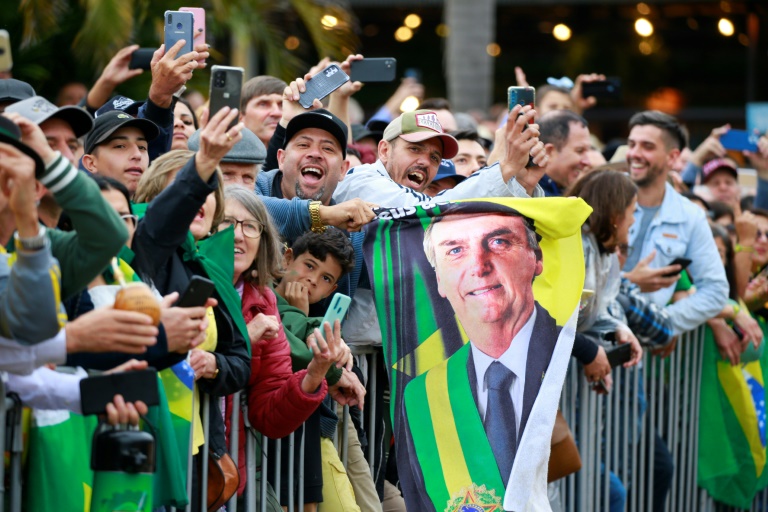
In his first four years in office, far-right President Jair Bolsonaro kept true to his to mission to “dismantle” the legacy of previous governments, analysts say, often with harmful fallout for Brazil. 

As a result, he is seen by supporters as a man who is true to his word, with a poll this week showing Bolsonaro closing in on rival Luiz Inacio Lula da Silva — the favorite ahead of October presidential elections.

Some 32 percent of would-be voters told pollsters they would stick with 67-year-old Bolsonaro’s brand of “God, Homeland and Family,” his stated anti-corruption focus and detestation of “communism.”

Leftist ex-president Lula, 76, seeking the votes of Brazil’s millions of downtrodden, still leads with 45 precent of voter intention, according to pollsters Datafolha.

Despite the many controversies that have surrounded Bolsonaro over the past four years, Lula’s lead over him has been shrinking.

“We have to deconstruct many things, undo many things,” Bolsonaro said shortly after he was sworn in in January 2019.

He kept his word. 

Launching a crusade against “left-wing ideology, “the man who has repeatedly defended Brazil’s dictatorship of 1964 to 1985 quickly went about scrapping the culture ministry and cutting funding for environmental protection, science and the arts.

“In the environment, education, health, public security and culture, the results have been catastrophic,” Anthony Pereira, a Latin America specialist at the Florida International University (FIU) in Miami, told AFP. 

In terms of diplomacy, Bolsonaro adopted an anti-globalization posture, leaving Brazil more isolated on the international stage.

At home, he publicly supported private gun ownership. The number of firearm permits in circulation skyrocketed nearly 500 percent from 2018 to 2022 in a country that already has a major violent crime problem.

Indigenous peoples increasingly became targets under a hostile government, with 305 reported cases of Indigenous land invasion in 2021 — a 180-percent rise from 2018, according to official data.

The voice of Bolsonaro’s Evangelical Christian support base became ever more audible in the school curriculum, with a focus on eliminating “leftist” ideologies and doing away with more open interpretations of gender.

Last but not least, deforestation of the Brazilian Amazon — crucial to efforts to curtail global warming — increased 75 percent per year on average despite an international outcry.

Bolsonaro’s first four years amounted to “a mandate to destroy what had been built since the return to democracy,” said analyst Gaspard Estrada of the Sciences Po university in France.  

– ‘Spiral into disorder’ –

The past two years, in particular, were marked by a climate of growing political polarization and what Kevin Ivers of the DCI Group consulting firm described as an example of a “spiral into disorder led by declining populists.”

The coronavirus pandemic deeply scarred trust in Bolsonaro, a fierce anti-vaxxer and proponent of quack remedies against what he called a “little flu.”

Brazil’s 685,000 Covid-19 deaths have prompted dozens of attempts to impeach Bolsonaro, who faces several criminal investigations, including for “crimes against humanity.”

He has made enemies of the Supreme Court and electoral watchdog bodies with unsubstantiated claims of bias and the potential for election fraud.

This was all part of “a deliberate strategy (to) move towards an increasingly autocratic government,” said political scientist Geraldo Monteiro.

If anything positive came out of it all, it is that “Brazil’s institutions of investigation, accountability and control have functioned to protect democracy to some extent” against Bolsonaro’s attacks, said Pereira. 

Also on Bolsonaro’s watch, there has been a reform of the pension system — including a longer contribution period — privatization of airports and ports, and infrastructure expansion, with the construction of roads, bridges, port terminals and irrigation projects.

– Hunger ‘does not really exist’ –

Recently, his government has been credited with better-than-expected growth figures, but Bolsonaro’s Brazil is nevertheless battling double-digit inflation. Nearly 10 million people are unemployed.

During the worst of the pandemic, many commented on Bolsonaro’s apparent lack of empathy for the stricken and people who lost loved ones, whom he told to “stop whining.”

More recently he has insisted that “hunger does not really exist in Brazil” even as investigations showed 33.1 million of Brazil’s 213 million people were suffering severe food shortages.

True to his characterization as the “Trump of the tropics,” Bolsonaro does not back down in an argument, does not apologize, and is no stranger to spreading misinformation. 

His commitment to combating corruption has also been called into question, with at least two ministers on his watch charged with graft.

When it comes to corruption, “we have moved to a higher level,” said Estrada. 

“The Brazilian situation is dystopian, we are outside of reality.”

Germany, Israel mark 50 years since Munich Olympics massacre

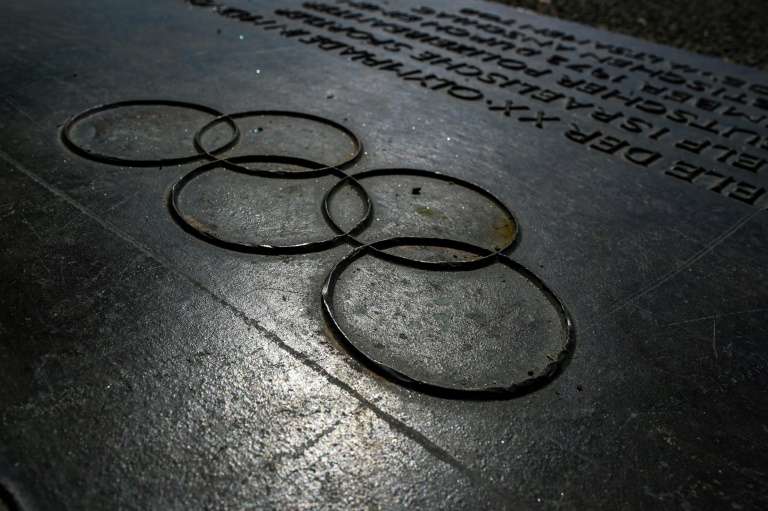
Germany and Israel’s presidents will on Monday lead commemorations marking 50 years since the Munich Olympics attack, with hopes that a long-awaited compensation deal for bereaved families will help them finally begin healing from the painful episode.

A row over the financial offer previously made by Berlin to victims’ relatives had threatened to sour the ceremony, with family members planning a boycott. 

But a deal was finally agreed on Wednesday for Berlin to provide 28 million euros ($28 million) in compensation. It also — for the first time — sees the German state acknowledging its “responsibility” in failings that led to the deaths of 11 Israelis.

Germany’s President Frank-Walter Steinmeier admitted on Sunday it was “shameful” that it had taken such a long time for Berlin to reach the agreement with victims’ families.

“For far too long, we have refused to acknowledge the pain of the bereaved,” said Steinmeier at a state banquet for his Israeli counter Isaac Herzog.

“And for far too long, we have not wanted to acknowledge that we also bear our share of responsibility. It was up to us to ensure the safety of the Israeli athletes,” he said.

Ahead of Monday’s ceremony at the Fuerstenfeldbruck air base where the hostage-taking reached its tragic climax, Germany’s official in charge of fighting anti-Semitism, Felix Klein, said it was “time for an apology”.

“And I think the president will find the right words at the commemoration event on Monday,” he told the Funke newspaper group. 

– ‘No minimal effort’ –

On September 5, 1972, eight gunmen of the Palestinian militant group Black September stormed into the Israeli team’s flat at the Olympic village, shooting dead two and taking nine Israelis hostage.

West German police responded with a bungled rescue operation in which all nine hostages were killed, along with five of the eight hostage-takers and a police officer.

The Games were meant to showcase a new Germany 27 years after the Holocaust but instead opened a deep rift with Israel. 

In 2012, Israel released 45 official documents on the killings, including specially declassified material, which lambasted the performance of the German security services.

Included in the reports is an official account from the former Israeli intelligence head Zvi Zamir who said the German police “didn’t make even a minimal effort to save human lives”.

– ‘Inhuman and incomprehensible’ –

Bereaved relatives have over the years battled to obtain an official apology from Germany, access to official documents and appropriate compensation beyond an initial 4.5 million euros.

As recently as just two weeks ago, relatives of the victims said they were offered 10 million euros — including the sum that had already been given.

Ankie Spitzer, whose husband Andre Spitzer was killed in the hostage-taking, had called the previous offer “insulting”.

“I came home with the coffins after the massacre,” she told AFP. “You don’t know what we’ve gone through for the past 50 years.”

Herzog underlined the pain faced by the grieving relatives, saying they simply “hit a wall” whenever they tried to raise the issue with Germany or even with the International Olympic Committee. 

“I think there was tragic suppression here,” he said, noting the litany of failings that were “inhuman and incomprehensible” such as “the fact that the hostages were being led to slaughter and the Games went on”.

After an initial suspension, then-IOC president Avery Brundage had declared that “the Games must go on”.

Herzog voiced hope that the agreement would bring “this painful episode to a place of healing”. 

“I hope that from now on, we shall continue to remember, invoke, and most importantly reaffirm the lessons of this tragedy, including the importance of fighting terror, for future generations,” said the Israeli president.

OPEC+ to meet amid economic downturn fears

Faced with recession fears, the OPEC+ countries are expected to agree a modest increase in oil production at a meeting on Monday, with some experts even forecasting a cut to support prices. 

The 13 members of the Organization of the Petroleum Exporting Countries (OPEC) cartel, led by Saudi Arabia, and their 10 partners, led by Russia, are meeting to adjust their quotas for October. Talks are due to start at 1100 GMT. 

Far from their highs near $140 a barrel, Brent North Sea crude and US WTI crude prices suffered their third consecutive monthly decline in August amid a gloomy global economic outlook. 

That’s enough to fuel speculation.

“It is not entirely clear whether OPEC+ will agree another 100,000 barrels per day increase,” as in September, Caroline Bain of Capital Economics wrote in a note. 

“In light of the recent slide in oil prices… we wouldn’t rule out no change or even a cut.” 

Saudi Energy Minister Abdulaziz bin Salman last month appeared to open the door to the idea, which has since received the support of several member states and the cartel’s joint technical committee. 

He said “volatility and thin liquidity send erroneous signals to markets at times when clarity is most needed”.

– Eyes on Iran deal –

OPEC+ is resisting Western calls to open its taps more widely to contain soaring prices.  

“The group clearly wants to keep prices high,” said Craig Erlam, an analyst at Oanda. 

“They may fear that Iranian crude could tip the balance in the market in favour of supply and therefore lower prices,” he added. 

Matthew Holland of Energy Aspects said a cut in production — which would be the first since the drastic cuts made to cope with moribund demand during the coronavirus pandemic — would come up at the next meeting in October. 

Everything will depend on the progress of Iranian nuclear negotiations aimed at reviving a landmark agreement between Tehran and world powers that gave Iran sanctions relief in exchange for curbs on its nuclear programme.

Hopes for a deal, which would be accompanied by an easing of US sanctions notably on oil, have been revived recently. 

However Washington said Thursday Tehran’s latest response to a European Union draft was “unfortunately… not constructive”. 

Amena Bakr, an analyst at Energy Intelligence, warned against over-interpreting the Saudi energy minister’s comments, saying only that “volatility is bad for the market”. 

“It’s a message to all Western governments that have been intervening in the market and trying to manage the market” since the start of the war in Ukraine, she said. 

In the latest announcement, the seven most industrialised countries decided Friday to “urgently” cap the price of Russian oil, in order to limit Moscow’s earnings from the sale of hydrocarbons. 

But Russia has warned that it will no longer sell oil to countries that have adopted the unprecedented mechanism.  

Supply would then be reduced, contributing to a new surge in prices which, despite the recent decline, remain historically high and extremely volatile. 

OPEC+ to meet amid economic downturn fears

Faced with recession fears, the OPEC+ countries are expected to agree a modest increase in oil production at a meeting on Monday, with some experts even forecasting a cut to support prices. 

The 13 members of the Organization of the Petroleum Exporting Countries (OPEC) cartel, led by Saudi Arabia, and their 10 partners, led by Russia, are meeting to adjust their quotas for October. Talks are due to start at 1100 GMT. 

Far from their highs near $140 a barrel, Brent North Sea crude and US WTI crude prices suffered their third consecutive monthly decline in August amid a gloomy global economic outlook. 

That’s enough to fuel speculation.

“It is not entirely clear whether OPEC+ will agree another 100,000 barrels per day increase,” as in September, Caroline Bain of Capital Economics wrote in a note. 

“In light of the recent slide in oil prices… we wouldn’t rule out no change or even a cut.” 

Saudi Energy Minister Abdulaziz bin Salman last month appeared to open the door to the idea, which has since received the support of several member states and the cartel’s joint technical committee. 

He said “volatility and thin liquidity send erroneous signals to markets at times when clarity is most needed”.

– Eyes on Iran deal –

OPEC+ is resisting Western calls to open its taps more widely to contain soaring prices.  

“The group clearly wants to keep prices high,” said Craig Erlam, an analyst at Oanda. 

“They may fear that Iranian crude could tip the balance in the market in favour of supply and therefore lower prices,” he added. 

Matthew Holland of Energy Aspects said a cut in production — which would be the first since the drastic cuts made to cope with moribund demand during the coronavirus pandemic — would come up at the next meeting in October. 

Everything will depend on the progress of Iranian nuclear negotiations aimed at reviving a landmark agreement between Tehran and world powers that gave Iran sanctions relief in exchange for curbs on its nuclear programme.

Hopes for a deal, which would be accompanied by an easing of US sanctions notably on oil, have been revived recently. 

However Washington said Thursday Tehran’s latest response to a European Union draft was “unfortunately… not constructive”. 

Amena Bakr, an analyst at Energy Intelligence, warned against over-interpreting the Saudi energy minister’s comments, saying only that “volatility is bad for the market”. 

“It’s a message to all Western governments that have been intervening in the market and trying to manage the market” since the start of the war in Ukraine, she said. 

In the latest announcement, the seven most industrialised countries decided Friday to “urgently” cap the price of Russian oil, in order to limit Moscow’s earnings from the sale of hydrocarbons. 

But Russia has warned that it will no longer sell oil to countries that have adopted the unprecedented mechanism.  

Supply would then be reduced, contributing to a new surge in prices which, despite the recent decline, remain historically high and extremely volatile. 

UK to learn name of new prime minister after long vote

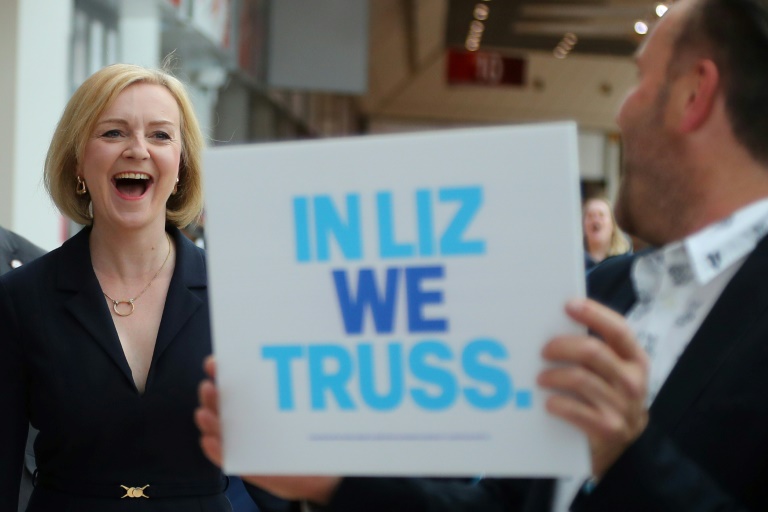
The UK will learn Monday who will be its next prime minister, with Liz Truss the favourite to succeed Boris Johnson and take charge as the country battles a spiralling cost-of-living crisis.

The result will be announced at 12:30 pm (1130 GMT), after foreign minister Truss and her rival, former finance minister Rishi Sunak, spent the summer rallying support among the Conservative Party members who cast the final vote.

If she wins, Truss will become the UK’s third female prime minister following Theresa May and Margaret Thatcher.

The 47-year-old has consistently been ahead of 42-year-old Sunak in polling among the estimated 200,000 Tory members eligible to vote. 

The leadership contest began in July after Johnson announced his resignation following a slew of scandals and resignations from his government.

Postal and online voting closed Friday after eight weeks of campaigning that Truss described to the BBC as “the longest job interview in history”.

The vote may not reflect general public opinion, however.

A YouGov poll in late August found 52 percent thought Truss would make a “poor” or “terrible” prime minister.

Forty-three percent said they did not trust her “at all” to deal with the burning issue of the rise in the cost of living.

– ‘Worst in-tray’ –

Whoever emerges as winner faces “the worst in-tray for a new prime minister since Thatcher”, The Sunday Times wrote.

The UK is gripped by its worst cost-of-living crisis in generations, with inflation soaring into double digits and energy prices shooting up on the back of Russia’s war in Ukraine. 

Millions say that with bills set to rise by 80 percent from October — and even higher from January — they face a painful choice between eating and heating this winter, according to surveys. 

“If I’m elected prime minister, I will act immediately on bills and on energy supply,” Truss told the BBC on Sunday, while declining to give details.

“Within one week I will make sure there is an announcement on how we are going to deal with the issue,” she added.

Truss has campaigned on a promise to slash taxes and prioritise economic growth, just as Britain is tipped to enter recession later this year.

She said Sunday she would “within a month present a full plan for how we are going to reduce taxes” and “get the British economy going”.

Sunak has vowed further government support to help people pay their energy bills and said curbing inflation would be his priority, attacking Truss’s tax-slashing plans as reckless. 

“Helping people with the cost of living and energy bills comes above everything else that I might like to do,” he told the BBC on Sunday.

“We shouldn’t rule anything out. I mean, we’re facing a genuine emergency. I think anyone pretending that that isn’t the situation isn’t being straight with the country,” he said.

Polls show public support for an early general election and the Conservatives face a growing challenge to retain their 12-year grip on power.

Truss became foreign minister a year ago after holding a series of ministerial posts in departments including education, international trade and justice.

She began her political journey as a teenage member of the centrist Liberal Democrats before switching to the right-wing Conservatives.

In 2016, she campaigned for the UK to remain in the European Union but quickly switched allegiance when Britons backed Brexit.

Her dress sense and love of photo opportunities — posing in a tank in Estonia and wearing a fur hat in Moscow — have earned her comparisons to Tory icon Thatcher.

Her sometimes stiff style has become visibly more relaxed and allies have sought to soften her image, revealing her love of karaoke and socialising.

– Highland ceremony –

The announcement Monday by Conservative Party officials of who will take over the leadership sets in motion a chain of events.

On Tuesday, Johnson will deliver a farewell speech at Downing Street.

He will then formally tender his resignation to Queen Elizabeth II, after which she will appoint his successor in a so-called kissing of hands ceremony. 

For the first time in her reign, the 96-year-old monarch will appoint the prime minister at her Scottish retreat, Balmoral, rather than at Buckingham Palace in London.

This comes as the queen has suffered mobility problems and been forced to cancel a number of public engagements.

The next prime minister will be the 15th since the queen took the throne.

Truss v Sunak: contrasting approaches in UK leadership battle

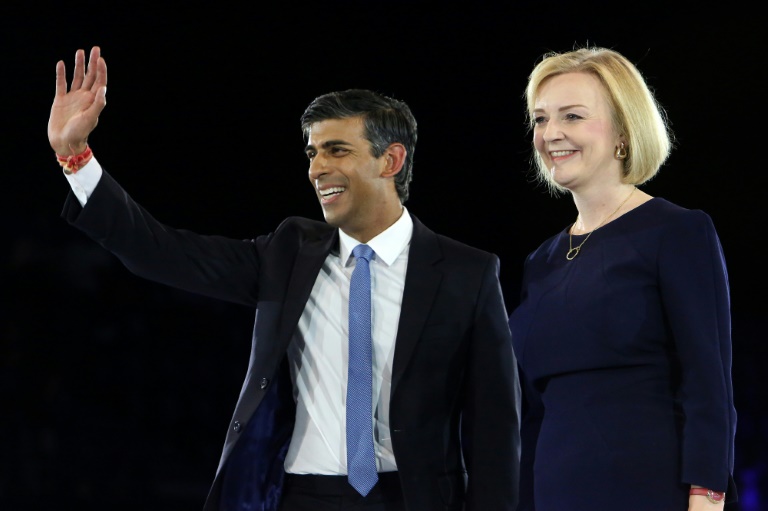
Liz Truss will become Britain’s third female prime minister if she wins the Conservative leadership election, while rival Rishi Sunak hopes to be the first non-white incumbent in Downing Street.

The campaign, sparked by Prime Minister Boris Johnson’s resignation in July, has highlighted the pair’s differing approaches to tackling the country’s spiralling cost of living crisis.

Sunak, whose resignation as finance minister over a series of government scandals helped to spark the leadership contest, is considered a better public speaker.

But he has come under fire for clinging to fiscal orthodoxy to tackle runaway inflation and has been hamstrung by his image as a wealthy technocrat.

At the same time, he has faced accusations of treachery for bringing down the Tories’ Brexit hero Johnson.

Foreign Secretary Truss has in contrast emerged as the favourite in the vote of grassroots Tory members, the result of which will be announced Monday.

“She’s a better politician,” said John Curtice, a political scientist at the University of Strathclyde in Glasgow.

“If you ask me what Liz Truss’s campaign was about I will immediately say to you: ‘a tax cut not a handout’. Very clear,” he told AFP.

“There is no strapline for Sunak, nothing.”

For Curtice, Truss has effectively conveyed “traditional Conservative messages” to Tory members while Sunak has been more nuanced.

“It’s also a bit of a lecture,” Curtice said, assessing that Sunak has come across as “a wee bit brittle” under pressure.

“You can see that she’s been in the game for longer,” he added.

– Political journey –

Truss, 47, has described her ascent towards the top of British politics as a “journey” that has seen her criticised for being ambitiously opportunistic.

She comes from a left-wing family and initially joined the centrist Liberal Democrats before jumping ship to the right-wing Conservatives.

She became MP for the South West Norfolk constituency in eastern England in 2010, surviving revelations of an affair that almost cost her the nomination.

Since 2012 she has held a series of ministerial posts in departments including education and finance as well as a difficult spell in justice.

In 2016, she campaigned for the UK to remain in the European Union but quickly became one of its strongest supporters when Britons voted for Brexit.

When the UK left the EU, Johnson put her in charge of negotiating new free trade deals before appointing her as foreign secretary last year.

In the role, she took on the controversial task of trying to overcome differences with Brussels about post-Brexit trade in Northern Ireland.

Like Johnson, she has talked tough on Russia and given unswerving backing to Ukraine.

Truss’s dress sense and choice of photo opportunities — posing in a tank in Estonia and wearing a fur hat in Moscow — have earned her comparisons to Tory icon Margaret Thatcher.

Her sometimes stiff style has become visibly more relaxed and allies have sought to soften her image, revealing her love of karaoke and socialising.

– Establishment elite? –

“For a party that’s gone in quite a populist direction in recent years, she’s been able to present herself as more authentic, more ordinary than Rishi Sunak, who is all too easily presented as part of the global elite,” said Tim Bale, from Queen Mary University of London.

“Like Boris Johnson, she is keen on the idea that there is some kind of elite that has to be countered and she sets herself up as being outside the establishment, despite having been in government for eight years.”

Sunak, 42, the grandson of Indian immigrants, grew up as the son of a doctor and a pharmacist in Southampton, on England’s south coast.

He attended the prestigious fee-paying Winchester College school, then Oxford University. 

Truss, who went to a state school in Leeds, northern England, also studied at Oxford. Both studied politics, philosophy and economics.

Sunak met his wife, Akshata Murty, whose father founded the Indian tech giant Infosys, at US university Stanford before jobs at Goldman Sachs and investment funds.

He has represented the constituency of Richmond in northern England since 2015, where he was soon marked out as a potential future prime minister.

He became finance minister in early 2020, quickly winning plaudits for spearheading government support to people and businesses affected by the coronavirus pandemic.

But Sunak, a self-confessed geek with a love of “Star Wars”, saw opinion turn against him this year, after it emerged that his wife did not pay UK tax.

Critics have also used his private wealth, expensive clothes and houses to portray him as out of touch with the ordinary public.

Germany agrees 65bn-euro inflation relief package

The German government on Sunday unveiled a new multi-billion-euro plan to help households cope with soaring prices, and said it was eyeing windfall profits from energy companies to help fund the relief.

German businesses and consumers are feeling the pain from sky-high energy prices, as Europe’s biggest economy seeks to extricate itself from reliance on Russian supplies in the wake of Moscow’s invasion of Ukraine.

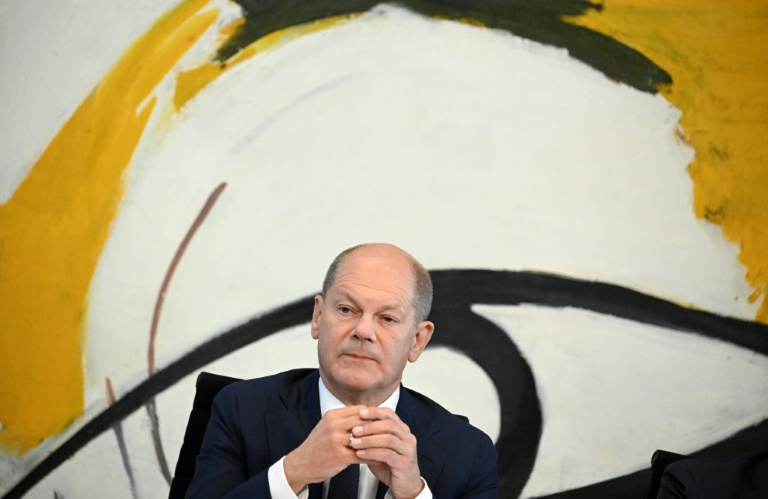
Rapid measures to prepare for the coming cold season will ensure that Germany would “get through this winter”, Chancellor Olaf Scholz said at the unveiling of the 65-billion-euro ($65-billion) package. 

The latest agreement, which brings total relief to almost 100 billion euros since the start of the Ukraine war, was hammered out overnight into Sunday by Germany’s three-way ruling coalition of Scholz’s Social Democrats, the Greens, and the liberal FDP.

Among the headline measures are one-off payments to millions of vulnerable pensioners and a plan to skim off energy firms’ windfall profits.

The government’s latest relief package came two days after Russian energy giant Gazprom said it would not restart gas deliveries via the Nord Stream 1 pipeline on Saturday as planned after a three-day maintenance.

Ukraine’s President Volodymyr Zelensky late Sunday said his country had foreseen the energy complications.

“Ukraine has repeatedly warned Europe that maintaining Nord Stream ties with Russia would be a problem that could turn into disaster at any moment. That is exactly what has happened,” he said.

– Third package –

Scholz said the German government had made “timely decisions” to avoid a winter crisis, including filling gas stores and restarting coal power plants.

But preventative measures, including a drive to reduce consumption, have done little to break a sharp increase in household bills.

The latest announcement follows two previous relief packages totalling 30 billion euros, which included a reduction in the tax on petrol and a popular heavily subsidised public transport ticket.

But with the expiration of many of those measures at the end of August and consumer prices still on an upward march, the government has been under pressure to provide new support.

Inflation rose again to 7.9 percent in August, after falling for two straight months thanks to previous government relief measures.

Scholz said however that not everyone was suffering from the high consumer prices. 

Some energy companies which may not be using gas to generate electricity could “simply use the fact that the high price of gas determines the price of electricity and are therefore making a lot of money,” he said.

“We have therefore resolved to change the market organisation in such a way that these random profits no longer occur or that they are skimmed off.”

The trimming of windfall profits would create “financial headroom that should be used specifically to relieve the burden for consumers in Europe,” the government said in its policy paper.

The move could potentially bring “double-digit billions” of euros in relief, Finance Minister Christian Lindner estimated in the press conference.

The government said it would seek to implement the measure through a reform of the European energy market in the first instance, before forging ahead on its own.

Energy companies were earning “insane amounts of money” under the current system, Economy Minister Robert Habeck said in a statement. 

Brussels on Monday said it would prepare “emergency” action to reform the electricity market and bring prices under control.

– ‘Never walk alone’ –

Repeating his mantra that Germans will “never walk alone” through the energy crisis, the chancellor unveiled a raft of measures, including a one-off payment of 300 euros to millions of pensioners to help them cover rising power bills.

The government will similarly target students with a smaller one-time transfer of 200 euros, and a heating cost payment for people receiving housing benefits.

Berlin also set aside 1.5 billion euros for work on a successor to the wildly popular nine-euro monthly ticket on local and regional transport networks. 

The relief package as a whole should be financed without planning to take on further debt, Lindner said.

“These measures are included within the government’s existing budget plans,” covering 2022 and 2023, he said, with the remainder covered by the windfall energy profit measures.

burs-ah/jj

Close Bitnami banner
Bitnami