World

K-pop, K-drama… K-art. Frieze fair lands in Seoul

The art world landed in Seoul this week for the inaugural edition of Frieze in Asia, as the vibrant South Korean capital looks to position itself as the region’s next art hub.

Previous Frieze fairs have been held in traditional art capitals like London, Paris and New York, but industry experts say Seoul was a natural pick for the first Asian edition of the prestigious event.

South Korea has emerged as a cultural powerhouse in recent years with the global success of the Oscar-winning film “Parasite” and the Netflix series “Squid Game”, and with K-pop superstars BTS sweeping the Billboard music charts.

“Frieze looks to cities where there is a vast appreciation of culture,” Patrick Lee, the inaugural director of Frieze Seoul, told AFP.

Seoul boasts a rich art scene, he added, with “incredibly talented artists, world-class museums, corporate collections, non-profits, biennales and galleries, which make it an ideal location for an art fair”.

The fair also takes place at a time when the art world is turning away from Hong Kong — long considered the hub of the lucrative Asian art market — over looming financial and political uncertainties, as well as quarantine restrictions still imposed on visitors. 

“Seoul is definitely the most vibrant and exciting market in Asia for now,” said Alice Lung, director of Galerie Perrotin, which opened its second Seoul gallery last month.

Tim Schneider, art business editor of Artnet News, said the openings by major Western galleries like Pace, Lehmann Maupin, Perrotin and Thaddaeus Ropac, followed by Frieze, confirmed that Seoul had “levelled up” on the international art stage.

“Frieze Seoul is just the final confirmation that the demand has been here,” he told AFP.

– Covid boost –

The local art market has seen explosive growth since the start of the Covid-19 pandemic, with local art fairs seeing record foot traffic and sales figures last year.

“When the borders were closed for a while, people focused on online viewing,” Lung of Galerie Perrotin told AFP.

“This helped Korean artists and galleries grow faster without any physical limitation, bringing in new collectors,” especially millennials and Generation Z, she said.

During this time, skyrocketing housing prices prompted many young South Koreans to seek alternate investment options, such as stocks, cryptocurrency and, for some, artworks.

“Many young people tasted bitter losses from stock and crypto investments and artwork appeared a safe bet, especially after high-profile success cases,” said Hwang Dal-seung, president of the Galleries Association of Korea.

The late Samsung chairman Lee Kun-hee left a trove of antiques and artworks — including works by Claude Monet, Salvador Dali and Pablo Picasso — reportedly worth two to three trillion won ($1.5-2.2 billion) which had soared in value during his decades-long ownership, Hwang added.

Schneider said South Korea was a “microcosm of Asia” in terms of the rise of collectors born after 1980, who now exercise heavy influence on the market.

“Buyers from this age group and this region have been reshaping the hierarchy of which artists are most in demand internationally, as well as significantly ramping up the speed at which artists can transition from the emerging level to blue-chip prices and global fame,” he added.

The country’s art market was estimated to be worth around 532.9 billion won in the first half of 2022, according to a July report from the state-run Korea Arts Administration Service — more than the whole of 2021.

– Fresh approach –

Thaddaeus Ropac, who opened his Seoul gallery last year, said South Korea offered a balanced demographic of collectors.

“You have very established collectors who are not too young anymore and who have incredible experience and who collect art for 30 years or 40 years and you see the results, which I think is quite astonishing in its quality,” Ropac told AFP.

“But then you also feel a very fresh new approach to art” from younger collectors, he added.

The Austrian gallerist, who began working with South Korean artists nearly two decades ago, said the country’s art scene — artists, curators, collectors — had been “built for generations”.

The arrival of Frieze Seoul would certainly open new doors for South Korea’s art market, he said, but it was “also a result of what Seoul has become”.

Schneider added: “Historically, anytime a grade-A international fair sets up shop in a new city, it simultaneously confirms that the art-market infrastructure there is sustainable.”

But he dismissed framing Seoul’s rise in terms of Hong Kong’s potential fall.

“I think it’s misguided to act as if Asia –– a massive continent composed of numerous countries with unique cultural histories and tremendous wealth –– can’t support two legitimate art-market hubs,” he said.

Argentine ministry links four deaths to Legionnaires' disease 

Argentine health officials said Saturday that four people in a clinic in northwestern Tucuman province had died of Legionnaires’ disease, a relatively rare bacterial infection of the lungs.

Health Minister Carla Vizzotti told reporters that Legionnaires’ had been identified as the underlying cause of double pneumonia in the four, who had suffered high fevers, body aches and trouble breathing.

The deaths, all since Monday, occurred in a single clinic in the city of San Miguel de Tucuman.

The latest, on Saturday morning, was that of a 48-year-old man with underlying health problems. A 70-year-old woman who had undergone surgery in the clinic was also a victim.

Seven other symptomatic cases have been identified, all from the same establishment and nearly all involving clinic personnel, provincial officials said.

Of those seven, “four remain hospitalized, three of them under respiratory assistance, and three are under home surveillance, with less complicated clinical symptoms,” said provincial health minister Luis Medina Ruiz on Saturday.

The disease, which first appeared at a 1976 meeting of the American Legion veterans group in the US city of Philadelphia, has been linked to contaminated water or unclean air-conditioning systems.

When the outbreak in Tucuman was first detected, doctors tested the afflicted for Covid-19, flu and the hantavirus, but ruled all of them out. 

Samples were then sent to the prestigious Malbran Institute in Buenos Aires. Tests there pointed to Legionnaires’.

On Wednesday, Medina Ruiz had said that “toxic and environmental causes” could not be ruled out. He noted that the clinic’s climate-control systems were being checked.

Vizzotti said authorities are working to ensure the clinic is safe for patients and staff.

Hector Sale, president of the Tucuman provincial medical college, earlier this week described the bacterial infection as “aggressive.”

But he added that it is not normally transmitted person-to-person, and that no close contact of any of the 11 infected people showed symptoms.

NASA will not try new Moon rocket launch attempt in coming days

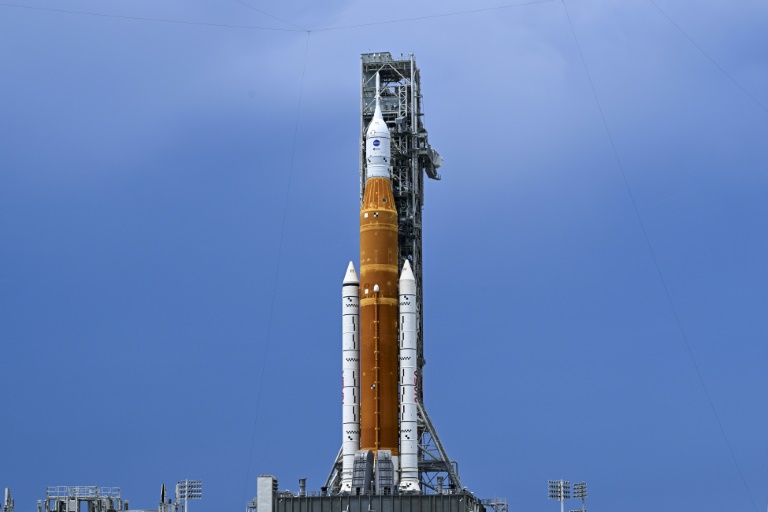
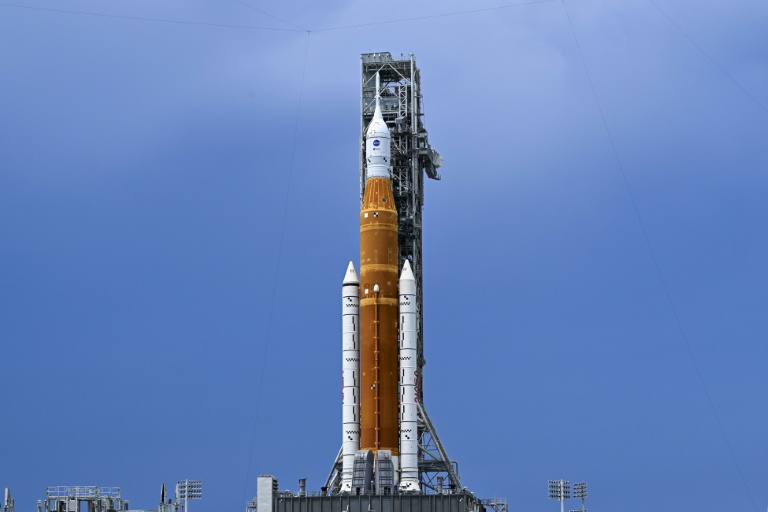
After scrapping a second attempt to get its new 30-story rocket off the ground due to a fuel leak, NASA announced on Saturday it will not try again during its current window of opportunity, which ends early next week.

Determined by the position of the Earth and Moon, the current launch period for NASA’s Artemis 1 mission ends Tuesday and is “definitely off the table,” said Jim Free, associate administrator for Exploration Systems Development, at a press conference Saturday, without confirming a new date.

The next possible launch windows according to NASA are September 19 to October 4 and then October 17 to 31.

Millions around the globe and crowds gathered on beaches in Florida had hoped to witness the historic blastoff of the Space Launch System (SLS), but a leak near the base of the rocket was found as ultra-cold liquid hydrogen was pumped in.

“The launch director waived off today’s Artemis I launch,” NASA said in a statement. “Multiple troubleshooting efforts to address the area of the leak… did not fix the issue.”

The latest postponement “was the right decision after you develop this kind of leak,” astronaut Victor Glover told reporters.

“These (are) really incredibly complex machines. When you see a scrub, people should gain confidence, not lose confidence.” 

The initial launch attempt on Monday was also halted after engineers detected a fuel leak and a sensor showed that one of the rocket’s four main engines was too hot.

– Next month? –

The rocket will likely have to be hauled back into its assembly building to undergo certification tests that are carried out periodically.

Soon after Saturday’s launch was scrubbed, NASA Administrator Bill Nelson said that a next attempt may have to be put off until mid-October because early next month a crew will use the Kennedy Space Center to travel to the International Space Station.

Early in the morning, launch director Charlie Blackwell-Thompson had given the go-ahead to start filling the rocket’s tanks with cryogenic fuel.

About three million liters of ultra-cold liquid hydrogen and oxygen were due to be pumped into the spacecraft, but the process soon hit problems, with Artemis mission manager Mike Sarafin later describing the issue as “not a manageable leak.”

The purpose of the Artemis 1 mission is to verify that the Orion capsule, which sits atop the SLS rocket, is safe to carry astronauts in the future.

Mannequins equipped with sensors are standing in for astronauts on the mission and will record acceleration, vibration and radiation levels.

– Apollo’s twin sister –

Once launched, it will take several days for the spacecraft to reach the Moon, flying around 60 miles (100 kilometers) at its closest approach.

The capsule will fire its engines to get to a distant retrograde orbit (DRO) of 40,000 miles beyond the Moon, a record for a spacecraft rated to carry humans.

The trip is expected to last around six weeks and one of its main objectives is to test the capsule’s heat shield, which at 16 feet in diameter is the largest ever built.

On its return to Earth’s atmosphere, the heat shield will have to withstand speeds of 25,000 miles per hour and a temperature of 5,000 degrees Fahrenheit (2,760 degrees Celsius) — roughly half as hot as the Sun.

Artemis is named after the twin sister of the Greek god Apollo, after whom the first Moon missions were named.

Unlike the Apollo missions, which sent only white men to the Moon between 1969 and 1972, Artemis missions will see the first person of color and the first woman step foot on the lunar surface.

A successful Artemis 1 mission would come as a huge relief to the US space agency, after years of delays and cost overruns.

A government audit estimates the Artemis program’s cost will grow to $93 billion by 2025, with each of its first four missions clocking in at a whopping $4.1 billion per launch.

The next mission, Artemis 2, will take astronauts to the Moon without landing on its surface.

The crew of Artemis 3 is to land on the Moon in 2025 at the earliest, with later missions envisaging a lunar space station and a sustainable presence on the lunar surface.

A crewed trip to the red planet aboard Orion, which would last several years, could be attempted by the end of the 2030s.

NASA will not try new Moon rocket launch attempt in coming days

After scrapping a second attempt to get its new 30-story rocket off the ground due to a fuel leak, NASA announced on Saturday it will not try again during its current window of opportunity, which ends early next week.

Determined by the position of the Earth and Moon, the current launch period for NASA’s Artemis 1 mission ends Tuesday and is “definitely off the table,” said Jim Free, associate administrator for Exploration Systems Development, at a press conference Saturday, without confirming a new date.

The next possible launch windows according to NASA are September 19 to October 4 and then October 17 to 31.

Millions around the globe and crowds gathered on beaches in Florida had hoped to witness the historic blastoff of the Space Launch System (SLS), but a leak near the base of the rocket was found as ultra-cold liquid hydrogen was pumped in.

“The launch director waived off today’s Artemis I launch,” NASA said in a statement. “Multiple troubleshooting efforts to address the area of the leak… did not fix the issue.”

The latest postponement “was the right decision after you develop this kind of leak,” astronaut Victor Glover told reporters.

“These (are) really incredibly complex machines. When you see a scrub, people should gain confidence, not lose confidence.” 

The initial launch attempt on Monday was also halted after engineers detected a fuel leak and a sensor showed that one of the rocket’s four main engines was too hot.

– Next month? –

The rocket will likely have to be hauled back into its assembly building to undergo certification tests that are carried out periodically.

Soon after Saturday’s launch was scrubbed, NASA Administrator Bill Nelson said that a next attempt may have to be put off until mid-October because early next month a crew will use the Kennedy Space Center to travel to the International Space Station.

Early in the morning, launch director Charlie Blackwell-Thompson had given the go-ahead to start filling the rocket’s tanks with cryogenic fuel.

About three million liters of ultra-cold liquid hydrogen and oxygen were due to be pumped into the spacecraft, but the process soon hit problems, with Artemis mission manager Mike Sarafin later describing the issue as “not a manageable leak.”

The purpose of the Artemis 1 mission is to verify that the Orion capsule, which sits atop the SLS rocket, is safe to carry astronauts in the future.

Mannequins equipped with sensors are standing in for astronauts on the mission and will record acceleration, vibration and radiation levels.

– Apollo’s twin sister –

Once launched, it will take several days for the spacecraft to reach the Moon, flying around 60 miles (100 kilometers) at its closest approach.

The capsule will fire its engines to get to a distant retrograde orbit (DRO) of 40,000 miles beyond the Moon, a record for a spacecraft rated to carry humans.

The trip is expected to last around six weeks and one of its main objectives is to test the capsule’s heat shield, which at 16 feet in diameter is the largest ever built.

On its return to Earth’s atmosphere, the heat shield will have to withstand speeds of 25,000 miles per hour and a temperature of 5,000 degrees Fahrenheit (2,760 degrees Celsius) — roughly half as hot as the Sun.

Artemis is named after the twin sister of the Greek god Apollo, after whom the first Moon missions were named.

Unlike the Apollo missions, which sent only white men to the Moon between 1969 and 1972, Artemis missions will see the first person of color and the first woman step foot on the lunar surface.

A successful Artemis 1 mission would come as a huge relief to the US space agency, after years of delays and cost overruns.

A government audit estimates the Artemis program’s cost will grow to $93 billion by 2025, with each of its first four missions clocking in at a whopping $4.1 billion per launch.

The next mission, Artemis 2, will take astronauts to the Moon without landing on its surface.

The crew of Artemis 3 is to land on the Moon in 2025 at the earliest, with later missions envisaging a lunar space station and a sustainable presence on the lunar surface.

A crewed trip to the red planet aboard Orion, which would last several years, could be attempted by the end of the 2030s.

Al-Shabaab kill at least 19 Somali civilians

Fighters from the Islamist insurgent group Al-Shabaab have killed at least 19 civilians in a night-time attack in central Somalia, clan chiefs and local officials said on Saturday.

The attack comes two weeks after Al-Shabaab, which has waged a long insurgency against the Somali state, besieged a hotel in the capital Mogadishu for 30 hours, leaving 21 people dead and 117 injured.

The sources said at least eight vehicles were travelling on a road between the towns of Beledweyne and Maxaas when the insurgents intercepted and burned them and killed the passengers overnight Friday to Saturday by Afar-Irdood village.

“The terrorists massacred innocent civilians who were travelling… last night. We don’t have the exact number of victims, but 19 dead bodies have been collected,” local clan elder Abdulahi Hared told AFP.

“The dead bodies are still being collected, including women and children. They could be more than 20,” said Ali Jeyte, the governor of the Hiiraan region where the attack happened.

“This was a horrible attack that has never happened in our region. These were innocent civilians who did nothing to deserve this,” added another local clan leader, Mohamed Abdirahman.

Al-Shabaab in a statement said they targeted fighters from a local sub-clan that recently helped government forces and that they killed 20 “militiamen and those who were transporting material for them”, destroying nine of their vehicles.

Local fighters and the security forces recaptured several villages from Al-Shabaab in the region in late August.

President Hassan Sheikh Mohamud “strongly condemns the despicable acts of murder against innocent civilians”, the Somali presidency said on Twitter.

“The President underscored that his government will leave no stone unturned in the fight against terrorism in Somalia and the region.”

Ali Gudlawe, president of Hirshabelle state where the attack took place, released a statement offering condolences to the victims’ loved ones and promising to continue “operations to cleanse” the region of Al-Shabaab.

“The only way we have is to be united to fight and liberate our country from them. I call upon the society not to be discouraged,” said his counterpart in Jubaland state, Ahmed Madobe.

– ‘All-out war’ –

The Al-Qaeda-linked group has been fighting Somalia’s internationally backed federal government since 2007.

It has been driven out of the country’s main cities, including Mogadishu in 2011, but remains a serious security threat in large areas of the countryside.

Mohamud, elected in May after a protracted political crisis, promised to wage “an all-out war” to eliminate Al-Shabaab following the Mogadishu hotel attack.

The bloody siege drew international condemnation from partners including the United States, Britain, Turkey and the United Nations.

After Mohamud’s election, President Joe Biden said he would restore a US military presence in Somalia to fight Al-Shabaab.

The Pentagon had recommended the move, considering the rotation system of Biden’s predecessor Donald Trump as too risky and ineffective.

Turkey offers to mediate in Ukraine nuclear plant standoff

Turkey’s President Recep Tayyip Erdogan offered on Saturday to mediate in the standoff over a Russian-occupied nuclear power station in Ukraine stoking fears of an atomic disaster.

The offer came hours before the global atomic energy watchdog said that Ukraine’s Zaporizhzhia nuclear facility had been disconnected from its last remaining main power line to the grid and was now relying on a reserve line.

Alarm has grown in recent weeks over shelling in the area of Europe’s largest nuclear plant.

Ukraine said Friday it had bombed a Russian base in the nearby town of Energodar, destroying three artillery systems as well as an ammunition depot.

Erdogan on Saturday told his Russian counterpart Vladimir Putin that “Turkey can play a facilitator role in the Zaporizhzhia nuclear power plant, as they did in the grain deal,” the Turkish presidency said. 

Ukraine, one of the world’s largest grain exporters, was forced to halt almost all deliveries after Russia invaded in late February, raising fears of a global food crisis.

Exports of grain across Black Sea ports resumed after Kyiv and Moscow signed a deal in July, with the United Nations and Turkey acting as guarantors. 

There was no immediate mention of Erdogan having also spoken to Ukraine’s President Volodymyr Zelensky on Saturday to offer his mediation.

– Gas deliveries halted –

Last month, Erdogan warned of the danger of a nuclear disaster when he visited the western city of Lviv for talks with the Ukrainian leader. 

The Turkish president said he wanted to avoid “another Chernobyl”, referring to the world’s worst nuclear accident in another part of Ukraine in 1986, when it was still part of the Soviet Union.

This week, a 14-strong team from the International Atomic Energy Agency (IAEA) visited Zaporizhzhia, with the UN nuclear watchdog’s chief Rafael Grossi saying the site had been damaged in fighting.

“Ukraine’s Zaporizhzhia Nuclear Power Plant (ZNPP) has once again lost the connection to its last remaining main external power line,” the IAEA said in a statement Saturday.

“But the facility is continuing to supply electricity to the grid through a reserve line,” the agency added.

The Russian invasion of pro-Western Ukraine has killed thousands of people and caused millions to flee their homes.

Western powers have reacted by dispatching military aid to Kyiv in a bid to stem the Russian advance and slapping economic sanctions on Moscow.

On Friday, the Group of Seven major industrial democracies vowed to move urgently to set a price cap on Russian oil imports, a crucial source of revenue for Moscow.

As if on cue, Russian energy giant Gazprom said it had halted gas deliveries to Germany for an indefinite period as there were leaks in a turbine. 

Its German manufacturer said that was not a valid reason to halt gas flows.

– ‘We need more unity’ –

EU Economy Commissioner Paolo Gentiloni said Saturday the European Union was in better shape to handle the possibility of a total halt in Russian gas deliveries, thanks to storage capacity and energy-saving measures.

“We are well prepared to resist Russia’s extreme use of the gas weapon,” he told reporters on the sidelines of the European House-Ambrosetti economic forum. 

In the European Union, “gas storage is currently at about 80 percent, thanks to the diversification of supplies,” even if the situation varies from one country to another, Gentiloni said.

Zelensky picked up on the theme in his evening address Saturday.

“Russia wants to destroy the normal life of every European — in all countries of our continent,” he said, referring to the shutdown of the Nord Stream pipeline.

Where it could not do so by military means, it weaponised its energy resources, he added.

“To protect ourselves in Europe, we need more unity, more coordination, more help to each other.”

Ukraine has accused Russia of storing ammunition at Zaporizhzhia and deploying hundreds of soldiers there.

It also suspects Moscow is intending to divert power from the plant to the nearby Crimean peninsula, annexed by Russia in 2014. 

Turkey offers to mediate in Ukraine nuclear plant standoff

Turkey’s President Recep Tayyip Erdogan offered on Saturday to mediate in the standoff over a Russian-occupied nuclear power station in Ukraine stoking fears of an atomic disaster.

The offer came hours before the global atomic energy watchdog said that Ukraine’s Zaporizhzhia nuclear facility had been disconnected from its last remaining main power line to the grid and was now relying on a reserve line.

Alarm has grown in recent weeks over shelling in the area of Europe’s largest nuclear plant.

Ukraine said Friday it had bombed a Russian base in the nearby town of Energodar, destroying three artillery systems as well as an ammunition depot.

Erdogan on Saturday told his Russian counterpart Vladimir Putin that “Turkey can play a facilitator role in the Zaporizhzhia nuclear power plant, as they did in the grain deal,” the Turkish presidency said. 

Ukraine, one of the world’s largest grain exporters, was forced to halt almost all deliveries after Russia invaded in late February, raising fears of a global food crisis.

Exports of grain across Black Sea ports resumed after Kyiv and Moscow signed a deal in July, with the United Nations and Turkey acting as guarantors. 

There was no immediate mention of Erdogan having also spoken to Ukraine’s President Volodymyr Zelensky on Saturday to offer his mediation.

– Gas deliveries halted –

Last month, Erdogan warned of the danger of a nuclear disaster when he visited the western city of Lviv for talks with the Ukrainian leader. 

The Turkish president said he wanted to avoid “another Chernobyl”, referring to the world’s worst nuclear accident in another part of Ukraine in 1986, when it was still part of the Soviet Union.

This week, a 14-strong team from the International Atomic Energy Agency (IAEA) visited Zaporizhzhia, with the UN nuclear watchdog’s chief Rafael Grossi saying the site had been damaged in fighting.

“Ukraine’s Zaporizhzhia Nuclear Power Plant (ZNPP) has once again lost the connection to its last remaining main external power line,” the IAEA said in a statement Saturday.

“But the facility is continuing to supply electricity to the grid through a reserve line,” the agency added.

The Russian invasion of pro-Western Ukraine has killed thousands of people and caused millions to flee their homes.

Western powers have reacted by dispatching military aid to Kyiv in a bid to stem the Russian advance and slapping economic sanctions on Moscow.

On Friday, the Group of Seven major industrial democracies vowed to move urgently to set a price cap on Russian oil imports, a crucial source of revenue for Moscow.

As if on cue, Russian energy giant Gazprom said it had halted gas deliveries to Germany for an indefinite period as there were leaks in a turbine. 

Its German manufacturer said that was not a valid reason to halt gas flows.

– ‘We need more unity’ –

EU Economy Commissioner Paolo Gentiloni said Saturday the European Union was in better shape to handle the possibility of a total halt in Russian gas deliveries, thanks to storage capacity and energy-saving measures.

“We are well prepared to resist Russia’s extreme use of the gas weapon,” he told reporters on the sidelines of the European House-Ambrosetti economic forum. 

In the European Union, “gas storage is currently at about 80 percent, thanks to the diversification of supplies,” even if the situation varies from one country to another, Gentiloni said.

Zelensky picked up on the theme in his evening address Saturday.

“Russia wants to destroy the normal life of every European — in all countries of our continent,” he said, referring to the shutdown of the Nord Stream pipeline.

Where it could not do so by military means, it weaponised its energy resources, he added.

“To protect ourselves in Europe, we need more unity, more coordination, more help to each other.”

Ukraine has accused Russia of storing ammunition at Zaporizhzhia and deploying hundreds of soldiers there.

It also suspects Moscow is intending to divert power from the plant to the nearby Crimean peninsula, annexed by Russia in 2014. 

Turkey offers to mediate in Ukraine nuclear plant standoff

Turkey’s President Recep Tayyip Erdogan offered on Saturday to mediate in the standoff over a Russian-occupied nuclear power station in Ukraine stoking fears of an atomic disaster.

The offer came hours before the global atomic energy watchdog said that Ukraine’s Zaporizhzhia nuclear power plant had been disconnected from its last remaining main power line to the grid and was now relying on a reserve line.

Alarm has grown in recent weeks over shelling in the area of Europe’s largest nuclear plant, Zaporizhzhia.

Ukraine said Friday it had bombed a Russian base in the nearby town of Energodar, destroying three artillery systems as well as an ammunition depot.

Erdogan on Saturday told his Russian counterpart Vladimir Putin that “Turkey can play a facilitator role in the Zaporizhzhia nuclear power plant, as they did in the grain deal,” the Turkish presidency said. 

Ukraine, one of the world’s largest grain exporters, was forced to halt almost all deliveries after Russia invaded in late February, raising fears of a global food crisis.

Exports of grain across Black Sea ports resumed after Kyiv and Moscow in July signed a deal, with the United Nations and Turkey acting as guarantors. 

There was no immediate mention of Erdogan having also spoken to Ukraine’s President Volodymyr Zelensky on Saturday to offer his mediation.

Last month, Erdogan warned of the danger of a nuclear disaster when he visited Lviv for talks with the Ukrainian leader. 

The Turkish leader said he wanted to avoid “another Chernobyl”, referring to the world’s worst nuclear accident in another part of Ukraine in 1986, when it was still part of the Soviet Union.

This week, a 14-strong team from the International Atomic Energy Agency visited Zaporizhzhia, with the UN nuclear watchdog’s chief Rafael Grossi saying the site had been damaged in fighting.

– ‘Gas weapon’ –

“Ukraine’s Zaporizhzhia Nuclear Power Plant (ZNPP) has once again lost the connection to its last remaining main external power line, but the facility is continuing to supply electricity to the grid through a reserve line, the International Atomic Energy Agency (IAEA) was informed at the site today,” the agency said in a statement Saturday.

The Russian invasion of pro-Western Ukraine has killed thousands of people and caused millions to flee their homes.

Western powers have reacted by dispatching military aid to Kyiv in a bid to stem the Russian advance, and slapping economic sanctions on Moscow.

On Friday, the Group of Seven major industrial democracies vowed to move urgently to set a price cap on Russian oil imports, a crucial source of revenue for Moscow.

As if on cue, Russian gas giant Gazprom said it had halted gas deliveries to Germany for an indefinite period as there were leaks in a turbine. Its German manufacturer said that that was not a valid reason to halt gas flows.

EU Economy Commissioner Paolo Gentiloni on Saturday however said the European Union was in better shape to handle the possibility of a total halt in Russian gas deliveries, thanks to storage capacity and energy-saving measures.

“We are well prepared to resist Russia’s extreme use of the gas weapon,” he told reporters on the sidelines of an economic forum. 

In the European Union, “gas storage is currently at about 80 percent, thanks to the diversification of supplies,” even if the situation varies from one country to another, Gentiloni said. 

Ukraine has accused Russia of storing ammunition at Zaporizhzhia and deploying hundreds of soldiers there. 

It also suspects Moscow is intending to divert power from the plant to the nearby Crimean peninsula, annexed by Russia in 2014. 

Turkey offers to mediate in Ukraine nuclear plant standoff

Turkey’s President Recep Tayyip Erdogan offered on Saturday to mediate in the standoff over a Russian-occupied nuclear power station in Ukraine stoking fears of an atomic disaster.

The offer came hours before the global atomic energy watchdog said that Ukraine’s Zaporizhzhia nuclear power plant had been disconnected from its last remaining main power line to the grid and was now relying on a reserve line.

Alarm has grown in recent weeks over shelling in the area of Europe’s largest nuclear plant, Zaporizhzhia.

Ukraine said Friday it had bombed a Russian base in the nearby town of Energodar, destroying three artillery systems as well as an ammunition depot.

Erdogan on Saturday told his Russian counterpart Vladimir Putin that “Turkey can play a facilitator role in the Zaporizhzhia nuclear power plant, as they did in the grain deal,” the Turkish presidency said. 

Ukraine, one of the world’s largest grain exporters, was forced to halt almost all deliveries after Russia invaded in late February, raising fears of a global food crisis.

Exports of grain across Black Sea ports resumed after Kyiv and Moscow in July signed a deal, with the United Nations and Turkey acting as guarantors. 

There was no immediate mention of Erdogan having also spoken to Ukraine’s President Volodymyr Zelensky on Saturday to offer his mediation.

Last month, Erdogan warned of the danger of a nuclear disaster when he visited Lviv for talks with the Ukrainian leader. 

The Turkish leader said he wanted to avoid “another Chernobyl”, referring to the world’s worst nuclear accident in another part of Ukraine in 1986, when it was still part of the Soviet Union.

This week, a 14-strong team from the International Atomic Energy Agency visited Zaporizhzhia, with the UN nuclear watchdog’s chief Rafael Grossi saying the site had been damaged in fighting.

– ‘Gas weapon’ –

“Ukraine’s Zaporizhzhia Nuclear Power Plant (ZNPP) has once again lost the connection to its last remaining main external power line, but the facility is continuing to supply electricity to the grid through a reserve line, the International Atomic Energy Agency (IAEA) was informed at the site today,” the agency said in a statement Saturday.

The Russian invasion of pro-Western Ukraine has killed thousands of people and caused millions to flee their homes.

Western powers have reacted by dispatching military aid to Kyiv in a bid to stem the Russian advance, and slapping economic sanctions on Moscow.

On Friday, the Group of Seven major industrial democracies vowed to move urgently to set a price cap on Russian oil imports, a crucial source of revenue for Moscow.

As if on cue, Russian gas giant Gazprom said it had halted gas deliveries to Germany for an indefinite period as there were leaks in a turbine. Its German manufacturer said that that was not a valid reason to halt gas flows.

EU Economy Commissioner Paolo Gentiloni on Saturday however said the European Union was in better shape to handle the possibility of a total halt in Russian gas deliveries, thanks to storage capacity and energy-saving measures.

“We are well prepared to resist Russia’s extreme use of the gas weapon,” he told reporters on the sidelines of an economic forum. 

In the European Union, “gas storage is currently at about 80 percent, thanks to the diversification of supplies,” even if the situation varies from one country to another, Gentiloni said. 

Ukraine has accused Russia of storing ammunition at Zaporizhzhia and deploying hundreds of soldiers there. 

It also suspects Moscow is intending to divert power from the plant to the nearby Crimean peninsula, annexed by Russia in 2014. 

NASA postpones rocket launch to Moon after fuel leak

NASA on Saturday scrapped a second attempt to get its new 30-story rocket off the ground and send an uncrewed test capsule toward the Moon after engineers detected a fuel leak.

Millions around the globe and crowds gathered on beaches in Florida had hoped to witness the historic blastoff of the Space Launch System (SLS), but a leak near the base of the rocket was found as ultra-cold liquid hydrogen was pumped in.

“The launch director waived off today’s Artemis I launch,” NASA said in a statement. “Multiple troubleshooting efforts to address the area of the leak… did not fix the issue.”

The latest postponement “was the right decision after you develop this kind of leak,” astronaut Victor Glover told reporters.

“These (are) really incredibly complex machines. When you see a scrub, people should gain confidence, not lose confidence.” 

The initial launch attempt on Monday was also halted after engineers detected a fuel leak and a sensor showed that one of the rocket’s four main engines was too hot.

– Next week? –

Another attempt could take place Monday or Tuesday next week but NASA has to consider data from the latest aborted flight before making a decision.

After Tuesday, the rocket has to be hauled back into its assembly building to undergo tests that are carried out periodically.

The mission management team will meet Saturday afternoon and later hold a news conference.

They need to determine if another attempt can be made soon, said NASA administrator Bill Nelson.

The launch may have to be put off until mid-October because early next month a crew will use the Kennedy Space Center to travel to the International Space Station, Nelson said on NASA’s internal video network.

Early Saturday, launch director Charlie Blackwell-Thompson had given the go-ahead to start filling the rocket’s tanks with cryogenic fuel.

About three million liters of ultra-cold liquid hydrogen and oxygen were due to be pumped into the spacecraft, but the process soon hit problems.

The purpose of the Artemis 1 mission is to verify that the Orion capsule, which sits atop the SLS rocket, is safe to carry astronauts in the future.

Mannequins equipped with sensors are standing in for astronauts on the mission and will record acceleration, vibration and radiation levels.

– Apollo’s twin sister –

It will take several days for the spacecraft to reach the Moon, flying around 60 miles (100 kilometers) at its closest approach.

The capsule will fire its engines to get to a distant retrograde orbit (DRO) of 40,000 miles beyond the Moon, a record for a spacecraft rated to carry humans.

The trip is expected to last around six weeks and one of its main objectives is to test the capsule’s heat shield, which at 16 feet in diameter is the largest ever built.

On its return to Earth’s atmosphere, the heat shield will have to withstand speeds of 25,000 miles per hour and a temperature of 5,000 degrees Fahrenheit (2,760 degrees Celsius) — roughly half as hot as the Sun.

Artemis is named after the twin sister of the Greek god Apollo, after whom the first Moon missions were named.

Unlike the Apollo missions, which sent only white men to the Moon between 1969 and 1972, Artemis missions will see the first person of color and the first woman step foot on the lunar surface.

A successful Artemis 1 mission would come as a huge relief to the US space agency, after years of delays and cost overruns.

A government audit estimates the Artemis program’s cost will grow to $93 billion by 2025, with each of its first four missions clocking in at a whopping $4.1 billion per launch.

The next mission, Artemis 2, will take astronauts to the Moon without landing on its surface.

The crew of Artemis 3 is to land on the Moon in 2025 at the earliest, with later missions envisaging a lunar space station and a sustainable presence on the lunar surface.

A crewed trip to the red planet aboard Orion, which would last several years, could be attempted by the end of the 2030s.

Close Bitnami banner
Bitnami