World

NASA postpones rocket launch to Moon after fuel leak

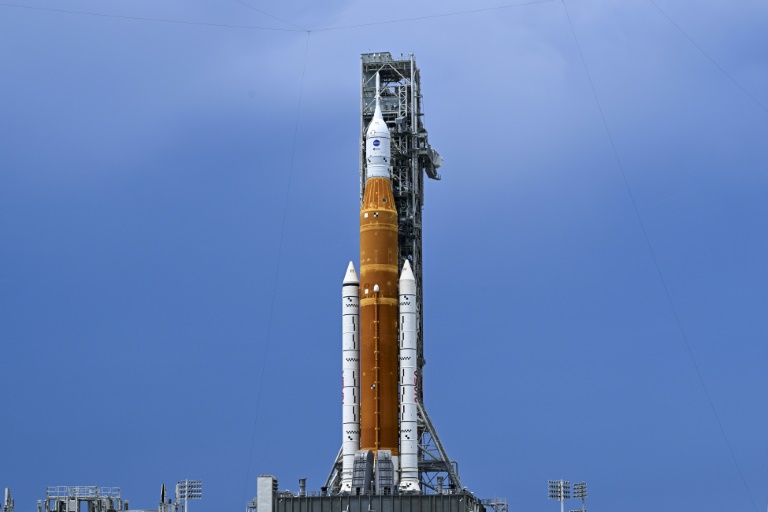
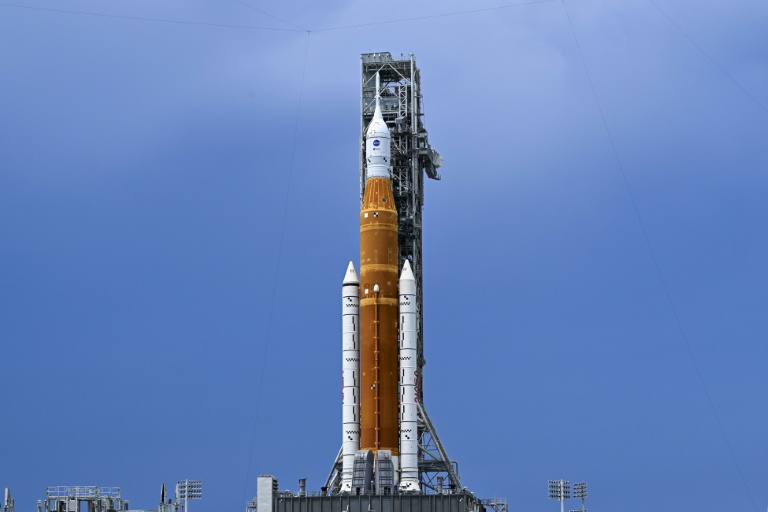
NASA on Saturday scrapped a second attempt to get its new 30-story rocket off the ground and send an uncrewed test capsule toward the Moon after engineers detected a fuel leak.

Millions around the globe and crowds gathered on beaches in Florida had hoped to witness the historic blastoff of the Space Launch System (SLS), but a leak near the base of the rocket was found as ultra-cold liquid hydrogen was pumped in.

“The launch director waived off today’s Artemis I launch,” NASA said in a statement. “Multiple troubleshooting efforts to address the area of the leak… did not fix the issue.”

The latest postponement “was the right decision after you develop this kind of leak,” astronaut Victor Glover told reporters.

“These (are) really incredibly complex machines. When you see a scrub, people should gain confidence, not lose confidence.” 

The initial launch attempt on Monday was also halted after engineers detected a fuel leak and a sensor showed that one of the rocket’s four main engines was too hot.

– Next week? –

Another attempt could take place Monday or Tuesday next week but NASA has to consider data from the latest aborted flight before making a decision.

After Tuesday, the rocket has to be hauled back into its assembly building to undergo tests that are carried out periodically.

The mission management team will meet Saturday afternoon and later hold a news conference.

They need to determine if another attempt can be made soon, said NASA administrator Bill Nelson.

The launch may have to be put off until mid-October because early next month a crew will use the Kennedy Space Center to travel to the International Space Station, Nelson said on NASA’s internal video network.

Early Saturday, launch director Charlie Blackwell-Thompson had given the go-ahead to start filling the rocket’s tanks with cryogenic fuel.

About three million liters of ultra-cold liquid hydrogen and oxygen were due to be pumped into the spacecraft, but the process soon hit problems.

The purpose of the Artemis 1 mission is to verify that the Orion capsule, which sits atop the SLS rocket, is safe to carry astronauts in the future.

Mannequins equipped with sensors are standing in for astronauts on the mission and will record acceleration, vibration and radiation levels.

– Apollo’s twin sister –

It will take several days for the spacecraft to reach the Moon, flying around 60 miles (100 kilometers) at its closest approach.

The capsule will fire its engines to get to a distant retrograde orbit (DRO) of 40,000 miles beyond the Moon, a record for a spacecraft rated to carry humans.

The trip is expected to last around six weeks and one of its main objectives is to test the capsule’s heat shield, which at 16 feet in diameter is the largest ever built.

On its return to Earth’s atmosphere, the heat shield will have to withstand speeds of 25,000 miles per hour and a temperature of 5,000 degrees Fahrenheit (2,760 degrees Celsius) — roughly half as hot as the Sun.

Artemis is named after the twin sister of the Greek god Apollo, after whom the first Moon missions were named.

Unlike the Apollo missions, which sent only white men to the Moon between 1969 and 1972, Artemis missions will see the first person of color and the first woman step foot on the lunar surface.

A successful Artemis 1 mission would come as a huge relief to the US space agency, after years of delays and cost overruns.

A government audit estimates the Artemis program’s cost will grow to $93 billion by 2025, with each of its first four missions clocking in at a whopping $4.1 billion per launch.

The next mission, Artemis 2, will take astronauts to the Moon without landing on its surface.

The crew of Artemis 3 is to land on the Moon in 2025 at the earliest, with later missions envisaging a lunar space station and a sustainable presence on the lunar surface.

A crewed trip to the red planet aboard Orion, which would last several years, could be attempted by the end of the 2030s.
Al-Shabaab kill at least 19 Somali civilians

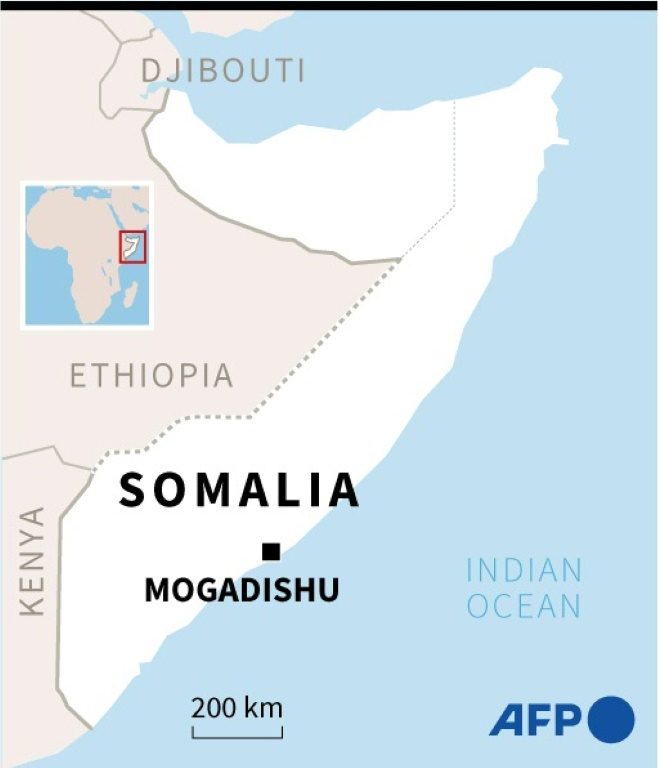
Fighters from the Islamist insurgent group Al-Shabaab have killed at least 19 civilians in a night-time attack in central Somalia, clan chiefs and local officials said on Saturday.

The attack comes two weeks after Al-Shabaab, which has waged a long insurgency against the Somali state, besieged a hotel in the capital Mogadishu for 30 hours, leaving 21 people dead and 117 injured.

The sources said at least eight vehicles were travelling on a road between the towns of Beledweyne and Maxaas when the insurgents intercepted and burned them and killed the passengers overnight Friday to Saturday by Afar-Irdood village.

“The terrorists massacred innocent civilians who were travelling… last night. We don’t have the exact number of victims, but 19 dead bodies have been collected,” local clan elder Abdulahi Hared told AFP.

“The dead bodies are still being collected, including women and children. They could be more than 20,” said Ali Jeyte, the governor of the Hiiraan region where the attack happened.

“This was a horrible attack that has never happened in our region. These were innocent civilians who did nothing to deserve this,” added another local clan leader, Mohamed Abdirahman.

Al-Shabaab in a statement said they targeted fighters from a local sub-clan that recently helped government forces and that they killed 20 “militiamen and those who were transporting material for them”, destroying nine of their vehicles.

Local fighters and the security forces recaptured several villages from Al-Shabaab in the region in late August.

Ali Gudlawe, president of Hirshabelle state where the attack took place, released a statement offering condolences to the victims’ loved ones and promising to continue “operations to cleanse” the region of Al-Shabaab.

“The only way we have is to be united to fight and liberate our country from them. I call upon the society not to be discouraged,” said his counterpart in Jubaland state, Ahmed Madobe.

– ‘All-out war’ –

The Al-Qaeda-linked group has been fighting Somalia’s internationally backed federal government since 2007.

It has been driven out of the country’s main cities, including Mogadishu in 2011, but remains a serious security threat in large areas of the countryside.

Somali President Hassan Sheikh Mohamud, elected in May after a protracted political crisis, promised to wage “an all-out war” to eliminate Al-Shabaab following the Mogadishu hotel attack.

The bloody siege drew international condemnation from partners including the United States, Britain, Turkey and the United Nations.

After Mohamud’s election, President Joe Biden said he would restore a US military presence in Somalia to fight Al-Shabaab.

The Pentagon had recommended the move, considering the rotation system of Biden’s predecessor Donald Trump as too risky and ineffective.

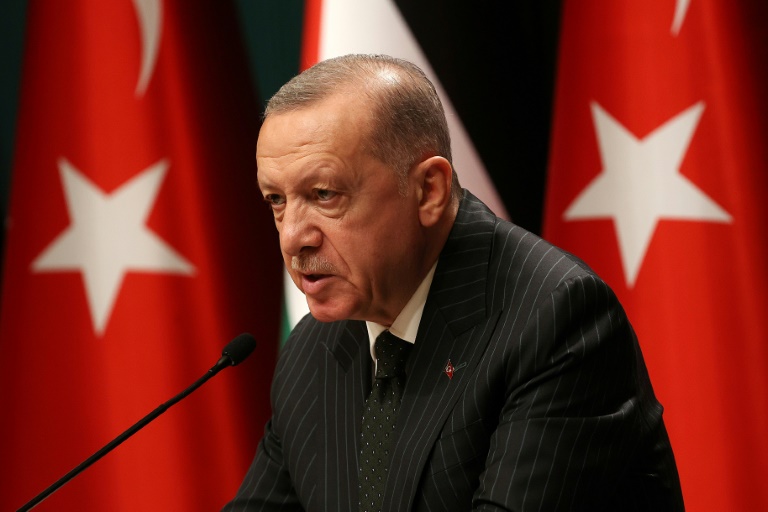
Erdogan challenges Greece over airspace violations

President Recep Tayyip Erdogan on Saturday warned Greece it would pay a “heavy price” if it kept on harassing Turkish fighter jets over the Aegean and hinted at military action. 

The two uneasy NATO neighbours have long-standing sea and air boundary disputes which lead to near-daily air force patrols and interception missions mostly around Greek islands near Turkey’s coastline. 

“Hey Greece, take a look at history. If you go further, you will pay a heavy price,” Erdogan told a packed rally in the Black Sea city of Samsun.  

Greece and Turkey have a fraught history going back centuries with disputes over maritime borders and the 1974 division of Cyprus. 

Turkey has in recent months complained of what it calls provocative actions by Athens, saying such moves undermine peace efforts. 

In one such incident, Ankara said last weekend Greece had used a Russian-made air defence system to harass Turkish jets on a reconnaissance mission in what it termed a “hostile action”.

In his address, Erdogan accused Greece of “attempting to threaten us with S-300s”. 

Athens has dismissed the allegations and often accuses Ankara of overflying Greek islands.

Turkey says Greece is stationing troops on islands in the Aegean Sea in violation of peace treaties signed after World Wars I and II.

– ‘Don’t forget Izmir’-

An infuriated Erdogan accused Greece of “occupying” the islands. 

“We have only one word to tell Greece: Do not forget Izmir (Smyrna in Greek),” Erdogan said, referring to the end of the Greek occupation after Turkish forces entered the city in the Aegean coast in 1922. 

“Your occupation of the islands does not bind us,” Erdogan said. 

“When the time comes, we will do what’s necessary. As we say, we may come suddenly one night”, using his often-repeated words when he threatens to launch an operation into neigbouring Syria.  

In June, Turkish Foreign Minister Mevlut Cavusoglu said Ankara would challenge Greece’s sovereignty over the islands if it continued to send troops there.  

The Aegean Sea has a complex geography with over 2,000 islands, most of them Greek.

The two countries came to the brink of a war in the 1990s over a pair of small uninhabited islets known collectively as Kardak in Turkish and Imia in Greek. 

Erdogan cut off dialogue with Greece after accusing Greek Prime Minister Kyriakos Mitsotakis of lobbying against US arms sales to his country.

Mitsotakis “no longer exists” for him, he fumed in May. 

Greece and Turkey are also competing for US arms. 

In June, Greece formalised a request for US-made F-35 fighter jets.

Turkey is negotiating for F-16 purchases after Washington kicked Ankara out of the F-35 programme for taking delivery of an advanced Russian missile defence system in 2019.

NASA postpones rocket launch to Moon after fuel leak

NASA on Saturday scrapped a second attempt to get its new 30-story rocket off the ground and send its uncrewed test capsule toward the Moon after engineers detected a fuel leak.

With millions around the globe and hundreds of thousands on nearby beaches waiting for the historic launch of the massive Space Launch System (SLS), a leak near the base of the rocket was found as ultra-cold liquid hydrogen was being pumped in.

“The launch director waived off today’s Artemis I launch,” NASA said in a statement. “Multiple troubleshooting efforts to address the area of the leak… did not fix the issue.”

Though the area around the launch site was closed to the public, an estimated 400,000 people had gathered nearby to see — and hear — the most powerful vehicle that NASA has ever launched climb into space.

The initial launch attempt on Monday was also halted after engineers detected a fuel leak and a sensor showed that one of the rocket’s four main engines was too hot.

Early Saturday, launch director Charlie Blackwell-Thompson had given the go-ahead to start filling the rocket’s tanks with cryogenic fuel.

About three million liters of ultra-cold liquid hydrogen and oxygen were due to be pumped into the spacecraft, but the process soon hit problems.

No new date for another try was immediately announced.

After the latest delay, there are backup opportunities on Monday or Tuesday. After that, the next launch window will not be until September 19, due to the Moon’s position.

The purpose of the Artemis 1 mission is to verify that the Orion capsule, which sits atop the SLS rocket, is safe to carry astronauts in the future.

Mannequins equipped with sensors are standing in for astronauts on the mission and will record acceleration, vibration and radiation levels.

– Apollo’s twin sister –

It will take several days for the spacecraft to reach the Moon, flying around 60 miles (100 kilometers) at its closest approach. The capsule will fire its engines to get to a distant retrograde orbit (DRO) of 40,000 miles beyond the Moon, a record for a spacecraft rated to carry humans.

The trip is expected to last around six weeks and one of its main objectives is to test the capsule’s heat shield, which at 16 feet in diameter is the largest ever built.

On its return to Earth’s atmosphere, the heat shield will have to withstand speeds of 25,000 miles per hour and a temperature of 5,000 degrees Fahrenheit (2,760 degrees Celsius) — roughly half as hot as the Sun.

Artemis is named after the twin sister of the Greek god Apollo, after whom the first Moon missions were named.

Unlike the Apollo missions, which sent only white men to the Moon between 1969 and 1972, Artemis missions will see the first person of color and the first woman step foot on the lunar surface.

A government audit estimates the Artemis program’s cost will grow to $93 billion by 2025, with each of its first four missions clocking in at a whopping $4.1 billion per launch.

The next mission, Artemis 2, will take astronauts to the Moon without landing on its surface.

The crew of Artemis 3 is to land on the Moon in 2025 at the earliest, with later missions envisaging a lunar space station and a sustainable presence on the lunar surface.

According to NASA chief Bill Nelson, a crewed trip to the red planet aboard Orion, which would last several years, could be attempted by the end of the 2030s.
NASA postpones rocket launch to Moon after fuel leak

NASA on Saturday scrapped a second attempt to get its new 30-story rocket off the ground and send its uncrewed test capsule toward the Moon after engineers detected a fuel leak.

With millions around the globe and hundreds of thousands on nearby beaches waiting for the historic launch of the massive Space Launch System (SLS), a leak near the base of the rocket was found as ultra-cold liquid hydrogen was being pumped in.

“The launch director waived off today’s Artemis I launch,” NASA said in a statement. “Multiple troubleshooting efforts to address the area of the leak… did not fix the issue.”

Though the area around the launch site was closed to the public, an estimated 400,000 people had gathered nearby to see — and hear — the most powerful vehicle that NASA has ever launched climb into space.

The initial launch attempt on Monday was also halted after engineers detected a fuel leak and a sensor showed that one of the rocket’s four main engines was too hot.

Early Saturday, launch director Charlie Blackwell-Thompson had given the go-ahead to start filling the rocket’s tanks with cryogenic fuel.

About three million liters of ultra-cold liquid hydrogen and oxygen were due to be pumped into the spacecraft, but the process soon hit problems.

No new date for another try was immediately announced.

After the latest delay, there are backup opportunities on Monday or Tuesday. After that, the next launch window will not be until September 19, due to the Moon’s position.

The purpose of the Artemis 1 mission is to verify that the Orion capsule, which sits atop the SLS rocket, is safe to carry astronauts in the future.

Mannequins equipped with sensors are standing in for astronauts on the mission and will record acceleration, vibration and radiation levels.

– Apollo’s twin sister –

It will take several days for the spacecraft to reach the Moon, flying around 60 miles (100 kilometers) at its closest approach. The capsule will fire its engines to get to a distant retrograde orbit (DRO) of 40,000 miles beyond the Moon, a record for a spacecraft rated to carry humans.

The trip is expected to last around six weeks and one of its main objectives is to test the capsule’s heat shield, which at 16 feet in diameter is the largest ever built.

On its return to Earth’s atmosphere, the heat shield will have to withstand speeds of 25,000 miles per hour and a temperature of 5,000 degrees Fahrenheit (2,760 degrees Celsius) — roughly half as hot as the Sun.

Artemis is named after the twin sister of the Greek god Apollo, after whom the first Moon missions were named.

Unlike the Apollo missions, which sent only white men to the Moon between 1969 and 1972, Artemis missions will see the first person of color and the first woman step foot on the lunar surface.

A government audit estimates the Artemis program’s cost will grow to $93 billion by 2025, with each of its first four missions clocking in at a whopping $4.1 billion per launch.

The next mission, Artemis 2, will take astronauts to the Moon without landing on its surface.

The crew of Artemis 3 is to land on the Moon in 2025 at the earliest, with later missions envisaging a lunar space station and a sustainable presence on the lunar surface.

According to NASA chief Bill Nelson, a crewed trip to the red planet aboard Orion, which would last several years, could be attempted by the end of the 2030s.
Russians bid farewell to Gorbachev, but without Putin

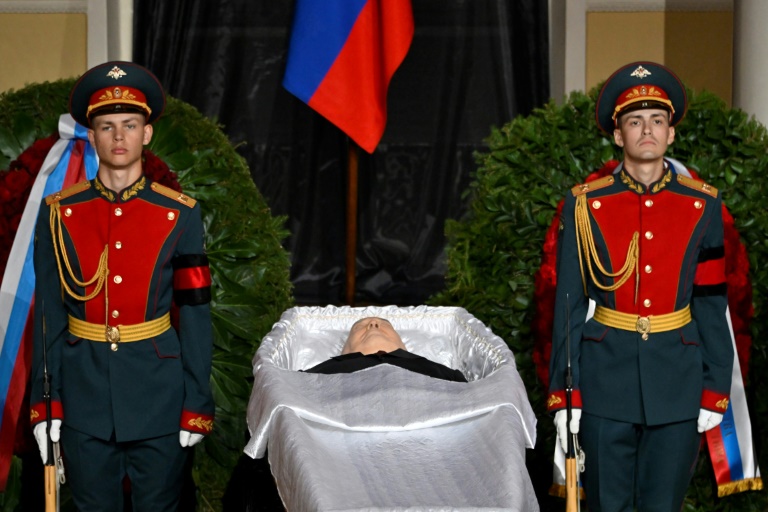
Russians on Saturday paid their final respects to the last leader of the Soviet Union, Mikhail Gorbachev, in a ceremony held in Moscow without much fanfare and with President Vladimir Putin notably absent.

Several thousand mourners queued up to quietly file past Gorbachev’s open casket as it was flanked by honour guards under the Russian flag in the historic Hall of Columns.

The hall has long been used for the funerals of high officials in Russia and was where the body of Joseph Stalin first lay in state during four days of national mourning after his death in 1953.

After several hours the coffin was taken out of the hall in a procession led by Dmitry Muratov, the Nobel Peace Prize-winning editor-in-chief of independent newspaper Novaya Gazeta, which Gorbachev helped found.

The coffin was taken to Moscow’s prestigious Novodevichy Cemetery, where it was lowered into the grave to the sounds of a military band playing the Russian national anthem and a gun salute.

Gorbachev was buried next to his wife Raisa, who died from cancer in 1999.

With Russia facing increasing international isolation over its military action in Ukraine, many of those in attendance at the hall pointed to Gorbachev’s opening of the country to the rest of the world.

“It was a breath of freedom, which was lacking for a long time, an absence of fear,” 41-year-old translator Ksenia Zhupanova said at the entrance to the hall.

“I am against shutting us out from the outside world, I am for openness, for dialogue. This is what Mikhail Sergeyevich showed the world,” she said, using Gorbachev’s patronymic. 

The mourners were of all ages, some old enough to remember the years of Soviet stagnation before Gorbachev came to power, others young enough to have only lived in Russia under Putin.

The Kremlin had said Putin would not attend Saturday’s funeral due to his “work schedule”.

Gorbachev died on Tuesday at the age of 91 following a “serious and long illness”, the hospital where he was treated said. 

In power between 1985 and 1991, he sought to transform the Soviet Union with democratic reforms, but eventually triggered its demise.

One of the great political figures of the 20th century, he was lionised in the West for helping to end the Cold War and trying to change the USSR.

But many in Russia despised him for the economic chaos and loss of global influence that followed the Soviet collapse.

– Orban in attendance –

He had spent most of the last few decades out of the political limelight and his death this week was barely acknowledged in official circles in Russia.

State television on Thursday showed images of Putin, alone, laying a bouquet of red roses near Gorbachev’s open casket at the hospital where he died.

Putin had a call with Turkish President Recep Tayyip Erdogan on Saturday, the Kremlin said, during which the two discussed Ukraine and Erdogan passed on his condolences for Gorbachev’s death.

The only senior foreign figure to attend was Hungarian Prime Minister Viktor Orban, who laid flowers at the casket.

“Many things were needed for Central Europe to get rid of Communism peacefully, without loss of life or bloodshed. One of them was Mikhail Gorbachev. God rest his soul!” Orban said in a post on Facebook.

Before the Ukraine conflict, Orban had one of the closest relationships with Putin of any EU leader, but the Kremlin said there were no talks planned during his visit to Moscow.

After Gorbachev’s death, tributes poured in from Western capitals, where he is remembered for allowing countries in Eastern Europe to free themselves from Soviet domination and for signing a landmark nuclear arms reduction pact with the United States.

Known affectionately in the West as “Gorby”, he was awarded the Nobel Peace Prize in 1990. 

– Berlin flags at half-mast –

Flags were also flying at half-mast in Berlin on Saturday, in memory of the man who held back Soviet troops as the Berlin Wall fell in 1989. 

In Russia, Gorbachev’s steps towards peace and reform have been overshadowed by the economic troubles that followed the fall of the Soviet Union. 

Putin, who called the Soviet collapse the greatest geopolitical catastrophe of the 20th century, has spent much of his more than 20-year rule reversing parts of Gorbachev’s legacy.

By cracking down on independent media and political opposition, critics say, Putin has worked to undo Gorbachev’s efforts to bring “glasnost”, or openness, to the Soviet system.

And with the launch earlier this year of the military campaign in Ukraine, he has sought to reassert Russian influence in one of the countries that won its independence when the Soviet Union fell apart.

On the streets of Moscow this week some expressed their continued anger and bitterness at Gorbachev, but those who turned up for Saturday’s funeral paid tribute to his legacy.

“(Gorbachev) helped the development of the country, the bringing of freedom of speech and freedom of thought,” said 19-year-old Irina Kaplanova.

He was not an “absolutely ideal politician”, she said, but was “a great reformer, and a person who acted in accordance with their conscience and knew how to admit mistakes”.

Erdogan challenges Greece over airspace violations

President Recep Tayyip Erdogan on Saturday warned Greece it would pay a “heavy price” if it kept on harassing Turkish fighter jets over the Aegean and hinted at military action. 

The two uneasy NATO neighbours have long-standing sea and air boundary disputes which lead to near-daily air force patrols and interception missions mostly around Greek islands near Turkey’s coastline. 

“Hey Greece, take a look at history. If you go further, you will pay a heavy price,” Erdogan told a packed rally in the Black Sea city of Samsun.  

Greece and Turkey have a fraught history going back centuries with disputes over maritime borders and the 1974 division of Cyprus. 

Turkey has in recent months complained of what it calls provocative actions by Athens, saying such moves undermine peace efforts. 

In one such incident, Ankara said last weekend Greece had used a Russian-made air defence system to harass Turkish jets on a reconnaissance mission in what it termed a “hostile action”.

In his address, Erdogan accused Greece of “attempting to threaten us with S-300s”. 

Athens has dismissed the allegations and often accuses Ankara of overflying Greek islands.

Turkey says Greece is stationing troops on islands in the Aegean Sea in violation of peace treaties signed after World Wars I and II.

– ‘Don’t forget Izmir’-

An infuriated Erdogan accused Greece of “occupying” the islands. 

“We have only one word to tell Greece: Do not forget Izmir (Smyrna in Greek),” Erdogan said, referring to the end of the Greek occupation after Turkish forces entered the city in the Aegean coast in 1922. 

“Your occupation of the islands does not bind us,” Erdogan said. 

“When the time comes, we will do what’s necessary. As we say, we may come suddenly one night”, using his often-repeated words when he threatens to launch an operation into neigbouring Syria.  

In June, Turkish Foreign Minister Mevlut Cavusoglu said Ankara would challenge Greece’s sovereignty over the islands if it continued to send troops there.  

The Aegean Sea has a complex geography with over 2,000 islands, most of them Greek.

The two countries came to the brink of a war in the 1990s over a pair of small uninhabited islets known collectively as Kardak in Turkish and Imia in Greek. 

Erdogan cut off dialogue with Greece after accusing Greek Prime Minister Kyriakos Mitsotakis of lobbying against US arms sales to his country.  

Mitsotakis “no longer exists” for him, he fumed in May. 

Greece and Turkey are also competing for US arms. 

In June, Greece formalised a request for US-made F-35 fighter jets.

Turkey is negotiating for F-16 purchases after Washington kicked Ankara out of the F-35 programme for taking delivery of an advanced Russian missile defence system in 2019.

Ousted Sri Lanka leader faces arrest calls after return

Deposed Sri Lankan president Gotabaya Rajapaksa faced calls for his arrest Saturday after returning home from self-imposed exile under the protection of his successor’s government.

Rajapaksa fled the island nation under military escort in July after a huge crowd stormed his official residence following months of demonstrations sparked by an unprecedented economic crisis. 

The 73-year-old announced his resignation from Singapore and spent weeks under virtual house arrest at a Bangkok hotel before his return late on Friday. 

Leaders of the protest campaign that toppled his government said Rajapaksa, who lost his presidential immunity after leaving office, should now be brought to justice. 

“Gotabaya returned because no country is willing to accept him, he has no place to hide,” Joseph Stalin, the leader of a teachers’ trade union that helped mobilise demonstrators, told AFP. 

“He should be arrested immediately for causing such misery for the 22 million people of Sri Lanka,” he added. “He can’t live freely as if nothing has happened.”

Rajapaksa’s government was accused of chaotic mismanagement as the Sri Lankan economy spiralled into a blistering downturn.

The crisis saw acute shortages of food, lengthy blackouts and long queues at gas stations for scarce fuel supplies after the country ran out of foreign currency to pay for vital imports.

Sri Lanka’s main opposition alliance, the Samagi Jana Balawegaya (SJB), has yet to comment on Rajapaksa’s return, but a former minister from the bloc said the ousted leader needed to be prosecuted. 

“Gotabaya must be held to account for his crimes before and during his presidency,” Ajith Perera told reporters in Colombo.

Rajapaksa was garlanded with flowers by ministers and senior politicians after disembarking from his flight in Colombo.

He was driven in a security convoy to a new official residence in the capital provided to him by the government of President Ranil Wickremesinghe, his successor.

Wickremesinghe depends on Rajapaksa’s Sri Lanka Podujana Peramuna (SLPP) party to govern and on Friday passed an austerity budget — a precondition for an International Monetary Fund bailout — with the grouping’s support. 

“Gotabaya’s return demonstrates that the SLPP is still powerful despite the humiliation they suffered,” Hasith Kandaudahewa, a senior lecturer on international relations at the University of Colombo, told AFP. 

Rajapaksa began receiving guests at his new home on Saturday with his elder brother — former president Mahinda Rajapaksa — one of the first to call on him, witnesses said.

Mahinda was serving as premier in his brother’s administration when he too was chased from his home by a mob who were responding to an attack on protesters by government loyalists.

Asia Society Policy Institute director Akhil Bery said the powerful family, which has dominated Sri Lankan politics for much of the past two decades, could be plotting a comeback. 

Their allies “might be betting that the unpopular decisions Ranil has had to take will lay the groundwork for the Rajapaksas’ return”, the analyst told AFP. 

Wickremesinghe’s government has drastically increased the cost of fuel and electricity to help repair the nation’s finances at a time when household budgets are under pressure from runaway inflation.

– ‘Bring him to justice’ –

Rights activists have vowed to press for Gotabaya’s prosecution on a litany of charges, including his alleged role in the 2009 assassination of prominent newspaper editor Lasantha Wickrematunge.

“We welcome his decision to return so that we can bring him to justice for the crimes he has committed,” Tharindu Jayawardhana, a spokesman for the Sri Lanka Young Journalists’ Association, said Friday.

Several corruption cases lodged against Rajapaksa stalled after he was elected president.

Rajapaksa also faces charges in a US court over Wickrematunge’s murder and the torture of Tamil prisoners at the end of the island’s traumatic civil war in 2009.

– ‘Prosperity and splendour’ –

Rajapaksa won a landslide election in 2019 after promising “vistas of prosperity and splendour” but saw his popularity nosedive as the country’s crisis worsened. 

His government was accused of introducing unsustainable tax cuts that drove up government debt and exacerbated the country’s economic problems on top of the Covid-19 pandemic.

Wickremesinghe was elected by parliament to see out the remainder of Rajapaksa’s term. He has since cracked down on street protests and arrested leading activists. 

The government defaulted on its $51 billion foreign debt in April and the central bank forecasts a record eight percent GDP contraction this year. 

After months of negotiations, the International Monetary Fund agreed on Thursday to a conditional $2.9 billion bailout package to repair Sri Lanka’s battered finances. 

Turkey offers to mediate in Ukraine nuclear plant standoff

Turkey’s President Recep Tayyip Erdogan offered on Saturday to mediate in the standoff over a Russian-occupied nuclear power station in war-torn Ukraine that has raised fears of an atomic disaster.

Alarm has grown in recent weeks over shelling hitting the area of Europe’s largest nuclear plant, Zaporizhzhia.

Ukraine on Friday said it bombed a Russian base in the nearby town of Energodar, destroying three artillery systems as well as an ammunition depot.

Erdogan on Saturday told his Russian counterpart Vladimir Putin “that Turkey can play a facilitator role in the Zaporizhzhia nuclear power plant, as they did in the grain deal,” the Turkish presidency said. 

Ukraine, one of the world’s largest grain exporters, was forced to halt almost all deliveries after Russia invaded in late February, raising fears of a global food crisis.

Exports of grain across Black Sea ports resumed after Kyiv and Moscow in July inked a deal with the United Nations and Turkey acting as guarantors. 

There was no immediate mention of Erdogan having also spoken to Ukraine’s President Volodymyr Zelensky on Saturday to offer his mediation.

Last month, Erdogan warned of the danger of a nuclear disaster when he visited Lviv for talks with the Ukrainian leader. 

The Turkish leader said he wanted to avoid “another Chernobyl”, referring to the world’s worst nuclear accident in another part of Ukraine in 1986, when it was still part of the Soviet Union.

This week, a 14-strong team from the International Atomic Energy Agency visited Zaporizhzhia, with the UN nuclear watchdog’s chief Rafael Grossi saying the site had been damaged in fighting.

Russia’s envoy to Vienna, Mikhail Ulyanov, said six IAEA inspectors would stay behind for several days and that two more would remain there “on a permanent basis”.

– ‘Gas weapon’ –

The Russian invasion of pro-Western Ukraine has killed thousands of people and caused millions to flee their homes.

Western powers have reacted by dispatching military aid to Kyiv in a bid to stem the Russian advance, and slapping economic sanctions on Moscow.

On Friday, the Group of Seven major industrial democracies vowed to move urgently to set a price cap on Russian oil imports, a crucial source of revenue for Moscow.

As if on cue, Russian gas giant Gazprom said it had halted gas deliveries to Germany for an indefinite period as there were leaks in a turbine. Its German manufacturer said that was not a valid reason to halt gas flows.

EU Economy Commissioner Paolo Gentiloni on Saturday however said the European Union was “well prepared” in the event of a total halt in Russian gas deliveries, thanks to storage capacity and energy-saving measures.

“We are well prepared to resist Russia’s extreme use of the gas weapon,” he told reporters on the sidelines of an economic forum organised by The European House — Ambrosetti. 

In the European Union, “gas storage is currently at about 80 percent, thanks to the diversification of supplies,” even if the situation varies from one country to another, Gentiloni said. 

Ukraine has accused Russia of storing ammunition at Zaporizhzhia and deploying hundreds of soldiers there. 

It also suspects Moscow is intending to divert power from the plant to the nearby Crimean peninsula, annexed by Russia in 2014. 

Russians bid farewell to Gorbachev, but without Putin

Russians on Saturday paid their final respects to the last leader of the Soviet Union, Mikhail Gorbachev, in a ceremony held in Moscow without much fanfare and with President Vladimir Putin notably absent.

Several thousand mourners queued up to quietly file past Gorbachev’s open casket as it was flanked by honour guards under the Russian flag in the historic Hall of Columns.

The hall has long been used for the funerals of high officials in Russia and it was where the body of Joseph Stalin first lay in state during four days of national mourning after his death in 1953.

With Russia facing increasing international isolation over its military action in Ukraine, many of those in attendance pointed to Gorbachev’s opening of the country to the rest of the world.

“It was a breath of freedom, which was lacking for a long time, an absence of fear,” 41-year-old translator Ksenia Zhupanova said at the entrance to the hall.

“I am against shutting us out from the outside world, I am for openness, for dialogue. This is what Mikhail Sergeyevich showed the world,” she said, using Gorbachev’s patronymic. 

The mourners were of all ages, some old enough to remember the years of Soviet stagnation before Gorbachev came to power, others young enough to have only lived in Russia under Putin.

Gorbachev died on Tuesday at the age of 91 following a “serious and long illness”, the hospital where he was treated said. 

In power between 1985 and 1991, he sought to transform the Soviet Union with democratic reforms, but eventually triggered its demise.

One of the great political figures of the 20th century, he was lionised in the West for helping to end the Cold War and trying to change the USSR, but despised by many in Russia for the economic chaos and loss of global influence that followed the Soviet collapse.

– Putin busy with ‘work schedule’ –

He had spent most of the last few decades out of the political limelight and his death this week was barely acknowledged in official circles in Russia.

State television on Thursday showed images of Putin, alone, laying a bouquet of red roses near Gorbachev’s open casket at the hospital where he died.

The Kremlin said Putin would not attend Saturday’s funeral due to his “work schedule”.

He had a call with Turkish President Recep Tayyip Erdogan on Saturday, the Kremlin said, during which the two discussed Ukraine and Erdogan passed on his condolences for Gorbachev’s death.

There were few signs of an official presence at the ceremony, where Gorbachev’s daughter Irina Virganskaya sat to the side of the coffin with other family members.

Gorbachev was to be buried later Saturday at Moscow’s prestigious Novodevichy Cemetery next to his wife Raisa, who died from cancer in 1999.

The only senior foreign figure to attend was Hungarian Prime Minister Viktor Orban, who laid flowers at the casket.

Before the Ukraine conflict, Orban had one of the closest relationships with Putin of any EU leader, but the Kremlin said there were no talks planned during his visit to Moscow.

After Gorbachev’s death, tributes poured in from Western capitals, where he is remembered for allowing countries in Eastern Europe to free themselves from Soviet rule and for signing a landmark nuclear arms reduction pact with the United States.

– Berlin flags at half-mast –

Known affectionately in the West as Gorby, he was awarded the Nobel Peace Prize in 1990. 

Flags were also flying at half-mast in Berlin on Saturday, in memory of the man who held back Soviet troops as the Berlin Wall fell in 1989. 

In Russia, Gorbachev’s steps towards peace and reform have been overshadowed by the economic troubles that followed the fall of the Soviet Union. 

Putin, who called the Soviet collapse the greatest geopolitical catastrophe of the 20th century, has spent much of his more than 20-year rule reversing parts of Gorbachev’s legacy.

By cracking down on independent media and political opposition, critics say, Putin has worked to undo Gorbachev’s efforts to bring “glasnost”, or openness, to the Soviet system.

And with the launch earlier this year of the military campaign in Ukraine, he has sought to reassert Russian influence in one of the countries that won its independence when the Soviet Union fell apart.

On the streets of Moscow this week some expressed their continued anger and bitterness at Gorbachev, but those who turned up for Saturday’s funeral paid tribute to his legacy.

“(Gorbachev) helped the development of the country, the bringing of freedom of speech and freedom of thought,” said 19-year-old Irina Kaplanova.

He was not an “absolutely ideal politician,” she said, but was “a great reformer, and a person who acted in accordance with their conscience and knew how to admit mistakes.”

Close Bitnami banner
Bitnami