AFP

Stocks fall, euro nears dollar parity as recession fears build

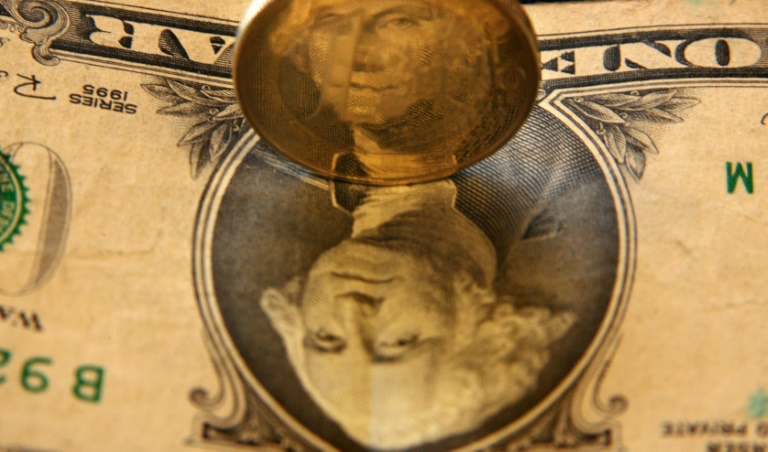
Equities fell Tuesday, along with oil, on fears that central bank moves to fight inflation will spark a recession, while the euro fell towards parity with the dollar as cost-of-living crises loom over the eurozone economy.

Worries about a Covid flare-up in China — fuelling fears of more lockdowns — added to the downbeat mood, just as investors prepare for a week of data and earnings that could have huge implications for markets.

Wall Street ended with more losses, with tech firms taking the brunt of the selling on expectations for an extended period of hefty interest rate hikes — the sector is particularly susceptible to higher borrowing costs.

A forecast-beating US jobs report last week suggested the world’s top economy was coping with higher Federal Reserve rates, but it also gave the bank more room to continue lifting — leading to concerns it could go too far and cause a contraction.

“While the jobs report on Friday highlighted that the US is faring better than the rest in the race to avoid a recession, the rest of the world is sinking under the weight of a cost-of-living crisis and higher interest rates,” said OANDA’s Craig Erlam.

He added that a recent bounce in stocks had faded “and we now head into earnings season and another week of major economic reports fearful of what may lie ahead”.

Tokyo, Shanghai, Hong Kong, Seoul, Singapore, Wellington, Mumbai and Taipei all fell, though Sydney and Jakarta edged up.

London, Paris and Frankfurt were also down at the open.

Bets on a drop in demand caused by a possible recession also hit the crude market, with both main contracts extending Monday’s losses.

– Euro nears dollar parity –

The Fed’s sharp rate hikes have sent the dollar soaring, with the euro particularly under pressure as the European Central Bank moves more slowly in tightening monetary policy and the region faces an energy crisis caused by the Ukraine war.

Sanctions on oil imports from Russia and Moscow’s warnings that it will shut off gas to Europe have led analysts to predict the eurozone will fall into recession, and pushed the euro to a 20-year low and close to parity with the greenback.

But commentators said that even if the ECB lifted rates more quickly, that would add to the economic pain.

While the single currency picked up slightly after hitting a low of $1.0003, there is a broad expectation that it is a matter of time before the $1.0000 level is breached. 

There is a fear that a planned 10-day shutdown of Russia’s key Nord Stream 1 gas pipeline for maintenance could be extended by Moscow in retaliation for European sanctions linked to its invasion of Ukraine.

French Economy and Finance Minister Bruno Le Maire warned over the weekend that there is a strong chance Moscow will turn off the taps in the winter.

“The next few weeks could be challenging for Europe, with possibly maximum uncertainty stretching into August,” said SPI Asset Management’s Stephen Innes.

“Investors increasingly believe that gas may not start to flow through Nord Stream 1 again following the scheduled maintenance on July 11-21, with further ‘temporary’ interruptions seen as likely.”

Investors are also awaiting the upcoming corporate reporting season with the dollar in mind.

The currency’s strength will not only “affect this quarter’s earnings, but more likely it’s going to affect the revenue generation outlook for the next couple of quarters and that, I think, is a big problem”, Kimberly Forrest, of Bokeh Capital Partners, told Bloomberg Radio.

And markets strategist Louis Navellier added: “Earnings will be very revealing, the outlook for the second half (of the year) more so, as far as the state of consumer demand and the impact of inflationary pressures on profit margins and revenue growth.

“There is already early downward pressure with 71 S&P companies having already issued negative guidance versus outlook given in the first quarter earnings”, the highest since the final three months of 2019.

– Key figures at around 0810 GMT –

Tokyo – Nikkei 225: DOWN 1.8 percent at 26,336.66 (close)

Hong Kong – Hang Seng Index: DOWN 1.3 percent at 20,844.74 (close)

Shanghai – Composite: DOWN 1.0 percent at 3,281.47 (close)

London – FTSE 100: DOWN 0.5 percent at 7,162.27

Euro/dollar: DOWN at $1.0008 from $1.0041 on Monday

Pound/dollar: DOWN at $1.1840 from $1.1892 

Euro/pound: UP at 84.52 pence from 84.38 pence

Dollar/yen: DOWN at 137.34 yen from 137.41 yen

West Texas Intermediate: DOWN 2.3 percent at $101.66 per barrel

Brent North Sea crude: DOWN 2.1 percent at $104.90 per barrel

New York – Dow: DOWN 0.5 percent at 31,173.84 (close)
'Everywhere they dig': looters hunt Albanian antiques

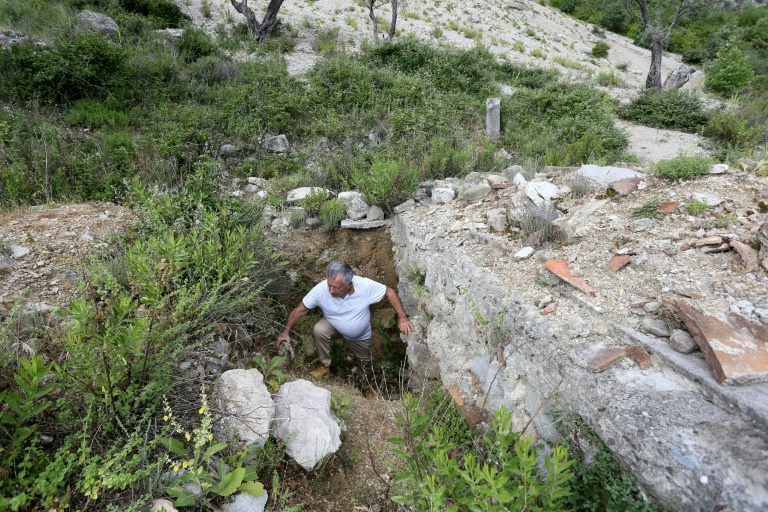
Shards of ceramics litter the fields of an ancient city in southeastern Albania, where looters have raided the area’s highlands in search of antiquities to sell to international traffickers. 

Illicit treasure hunters operate with near impunity in the country, stirring outrage among archaeologists over the theft of priceless national heritage that feeds a global black market.  

The government says it is working on measures to protect and preserve the sites looters prey on, but so far to little avail — even though removing archaeological artifacts is a crime, as in most countries. 

Now covered in wild vegetation, the region near present-day Korce was once home to the city of Hija e Korbit, or the “Shadow of the Raven”. 

The site, nestled against a hillside, has been ravaged in recent years by looters armed with shovels and backhoes searching for rare metals and artefacts.

“There are people from all regions who rush to these places,” says Axhem Lageshtari, 60, a local resident. 

“Everywhere they dig. They search in the hope of finding gold, silver or other valuables.”

The area gained notoriety after the 1980s discovery of more than 600 silver coins — including some dating back centuries to the rule of Alexander the Great. 

Experts tell AFP that illegal excavations have been detected at almost every important archaeological site in the region, which is home to historic necropolises, forts and other remains dating from the Bronze Age to the early Middle Ages.

“The problem is particularly worrying in Hija e Korbit, an important archaeological city that has not yet been explored by archaeologists,” laments Rovena Kurti, the head of the department of prehistory at the Tirana Institute of Archaeology.

“They damage the site and plunder the heritage,” adds Kurti.

– ‘Powerless’ –

The scavengers often destroy scientific data and remove objects from their environmental context which is needed for experts to understand the site’s history, explains Cecile Oberweiler, the former director of the Franco-Albanian mission in Korce. 

Northeast of the capital Tirana, the remains of a church from the 11th or 12th century have been disfigured with gaping holes left by looters. 

The church of the Holy Virgin Mary was supposed to be protected as a recognised cultural monument, but that failed to stop the trespassers from ransacking the area. 

“We can give it any name but in truth, it is currently a ruin preyed upon by looters,” says archaeologist Skender Mucaj.

The pillaging of the site has been particularly painful for local resident Nora Braia. 

“I come every Tuesday to pray to the Virgin Mary. She saved the life of my sick son, but I was powerless to save this shelter,” Braia, 80, tells AFP through tears, saying she hopes the assailants “will be chased by misfortune”. 

Experts say not enough is being done legally to stop the looting.

Albania’s ministry of culture told AFP that efforts are under way to fight the “illicit trafficking of cultural property”, including a national action plan unveiled in 2018 along with initiatives to improve coordination with international organisations. 

– ‘A blind eye’ –

There are no official estimates of the market value of the objects taken from Albania.

But researchers are certain that some of the artefacts have fallen into the hands of international traffickers and then been sold in auctions to museums and private collections abroad. 

“It is a fight that Albania cannot lead alone, the responsibility also falls on the authorities of other countries who turn a blind eye when these objects are displayed in their museums,” said Neritan Ceka, an archaeologist and art historian.

The recent indictment of Jean-Luc Martinez — the former head of the Louvre in Paris who was charged with conspiring to hide the origin of archaeological treasures — highlighted the extent of the illegal trade in antiquities.

French archaeologist Pascal Darcque said the problem was widespread and that museums often do not take seriously the process of vetting objects for sale and their origins.  

“Their sale must be blocked and if their geographical origin can be established, the object must be returned,” Darcque said. 

Panama government reduces fuel prices in face of protests

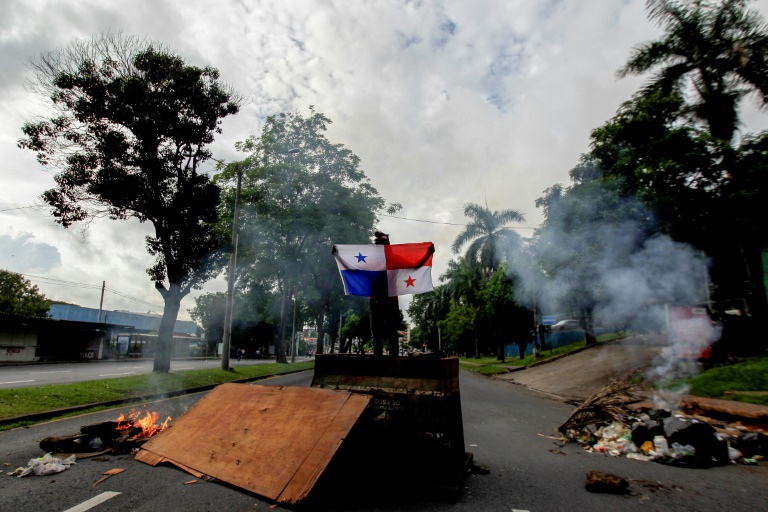
Panama’s president announced a reduction in gasoline prices and freezing of rates for several other essential products Monday in the face of continuing protests against inflation and corruption.

“I understand the dissatisfaction of various sectors with the situation we are experiencing, caused by the effects of the pandemic and the consequences of the conflict in Ukraine,” Laurentino Cortizo said in a statement. 

The price of gasoline for private vehicles will be reduced to $3.95 per gallon from July 15, he said, a drop of 24 percent from the price at the end of June. 

Public transportation has already benefited from the lower price since May. 

On Monday, hundreds protested in Panama in the second week of demonstrations against increases in fuel prices, which have risen 47 percent since January. 

Cortizo also announced that his government would draft a decree to freeze the prices of a dozen essential food products. 

Several unions, however, say that protests will continue until there is a general reduction in prices and gasoline rates drop below $3 per gallon.

In the western provinces of Veraguas and Chiriqui, near the border with Costa Rica, protesters blocked the Inter-American Highway, which connects the country to the rest of Central America. 

In Panama City, a group of students clashed with police around the University of Panama, where a group of people temporarily seized a patrol car and broke its windows. 

Inflation “means that fewer and fewer people can live in dignity,” said Saul Mendez, secretary-general of the country’s main construction union. 

According to Mendez, for citizens to regain their purchasing power, the prices of medicine, food, electricity and fuel must be lowered or frozen, in addition to a general wage increase. 

The Panamanian government set up a round table on Monday in the city of Santiago de Veraguas, one of the hotbeds of the protest, but no agreement was reached. 

Pacific leaders struggle to keep focus on climate at key summit

US-China rivalry and divisions over regional leadership threatened to overshadow a landmark summit of island leaders that got under way Tuesday in the Fijian capital, Suva.

This year’s Pacific Islands Forum is the most important meeting in years, coming after a Covid-enforced hiatus and as low-lying tropical isles run out of time for climate action.

But instead of a singular focus on the threat posed by rising sea levels and ever-more-powerful storms, China’s bid to play a bigger regional security role looks set to dominate the agenda.

The Solomon Islands in April signed a highly contentious security agreement with China, upsetting decades-old alliances with the West.

And on the eve of the summit, Beijing-allied leaders in the tiny nation of Kiribati announced the country would be renouncing membership of the forum altogether, fracturing a region that puts a high value on unity and consensus.

– ‘Breakdown in our connections’ –

The remaining leaders gathered at Suva’s luxurious Grand Pacific Hotel are expected to discuss a strategy to guide the Pacific through to 2050, keenly focused on the existential threat posed by climate change.

But Fiji president and chair of the Pacific Islands Forum, Voreqe Bainimarama, used his opening remarks to acknowledge the “breakdown in our connections” with the Micronesian nations, of which Kiribati is a part, that has occurred in recent years.

It had been hoped a carefully negotiated agreement with Micronesia would be enough to heal a schism that emerged when the region’s chosen candidate to lead the forum was snubbed.

But Kiribati’s exit sparked concerns about a fracturing of the Pacific’s closely held unity, which gives the region of small island states heft in global climate negotiations.

Tuvaluan foreign minister Simon Kofe told AFP he was “surprised and saddened” by Kiribati’s departure, but was optimistic the nation could be enticed to rejoin.

Last year, Kofe made headlines when he addressed the COP summit standing knee-deep in water to draw attention to the threat climate change poses to his low-lying nation, which may disappear below rising seas in the next 50 years.

Faced with such a threat, his top priorities at the summit are climate related, although he said he understood “how some members want to discuss the security issues”.

Concerns about regional security — brought to the fore by the Solomons-China pact — “draw a bit of attention away from climate change”, Kofe said.

– Security v climate –

The summit will be a key opportunity for Australia’s newly-elected prime minister, Anthony Albanese, to improve relations with the Pacific, which soured under the previous conservative government.

Albanese, who will arrive in Suva on Wednesday, sought to knit the issues of climate and security together Tuesday ahead of his departure for the summit.

“Our neighbours in the Pacific understand that climate change is a national security issue,” he told a press conference in Sydney.

Biles's Olympic meltdown sparks stars into going public on mental health

American gymnastics superstar Simone Biles’s legacy may not be the four Olympic gold medals she won in her career but a remarkable meltdown at the Tokyo Olympics which sparked other sports greats to speak out about their battle with mental health issues.

Biles’s attack of the twisties — a condition meaning gymnasts lose the ability to orientate themselves in mid-air — is perhaps the most abiding image of the Games.

Since then, retired French football icon Thierry Henry and Irish rugby great Keith Earls have spoken frankly about their problems.

Biles’s travails followed Japan’s four-time Grand Slam winner Naomi Osaka who had admitted to her battles with depression in May last year.

Henry usually cut a very composed and assured figure on and off the pitch so his admission came out of the blue and a surprise to many. 

“To cry was impossible,” Henry told L’Equipe newspaper in March.

“You are not allowed to show your weaknesses.

“It was: ‘Thierry, do not cry, do not cry, do not cry!’

“I did cry when I was on my own, but I struggled with myself not to crack in public.

“Now I cry,” added the Arsenal legend.

Earls has accrued over 90 caps for Ireland and was a pivotal member of the 2018 Six Nations Grand Slam winning side.

He was diagnosed as bi-polar in 2013 after biting the bullet and going to see a psychiatrist.

The 34-year-old’s openness in his 2021 autobiography ‘Fight or Flight: My Life, My Choices’ was described as “inspiring” by his Ireland team-mate James Ryan.

“My admiration of him (Earls) has grown more, the way he’s able to normalise that, that it doesn’t matter who you are… Mental health doesn’t discriminate,” said Ryan.

Earls says that on the back of his revelations other team-mates have decided to go and see a psychiatrist.

This transparency seems to have broken the taboo where it was not seen as the done thing for sports people to go and see someone to discuss their mental health. 

“Twenty years ago it was the same thing regarding mentally preparing for events,” Greg Decamps, a researcher in sports psychology at Bordeaux University told AFP. 

“Nobody said ‘I am seeing a mental coach’.

“We are beginning to see the same thing in terms of consultations at sports psychology clinics.

“Because we cannot expect athletes to perform if there are unresolved psychological problems.” 

England’s men’s cricket Test captain Ben Stokes is another who has opened the door on mental health issues. 

The 31-year-old followed a long list of cricketers such as Marcus Trescothick, Sarah Taylor and Andrew Flintoff who have struggled with mental health when he admitted his problems last year, taking four months away from the game to manage his illness. 

“I was in a real dark place and having some difficult thoughts,” he said in May when he was elevated to the captaincy. 

“I now realise talking is such a powerful thing and it has completely changed me.”

– ‘There was suffering’ –

That is not to say in the unforgiving world of sport the floodgates have opened entirely over something that some still see as a stigma.

“Sport is a world that prides itself on excellence, strength, virility and where any sign of weakness is prohibited,” said Decamp. 

“Those who speak out will be regarded, often wrongly, as incapable of going to a national championships or to an Olympics.”

Decamp says teams still keep their lips sealed if the reason for a player or an athlete’s absence is due to mental health issues.

Some sporting bodies, though, have taken steps to address the issue.

In the United States the National Women’s Soccer League (NWSL) brought in in February this year “six months of paid mental health leave.”

This was welcomed by many players, including Cari Roccaro, who played a leading role in getting the NWSL to adopt such a policy after she suffered mental health issues.

“Girls who tear their ACL are still getting paid, even though they are away from the team for months,” said Roccaro in March.

“Why treat a mental injury any different?”   

Perhaps surprisingly success on the court or pitch does not protect you from the black dogs of depression.

According to Olivier Krumbholz, coach of France’s Olympic gold medal women’s handball winning team, mental health problems are more evident than ever before and “even more so when there are good results.”

He told AFP that following the team’s moment of glory in Tokyo “there was suffering.”

China banks to repay some customers after mass protests

Customers of rural Chinese banks whose withdrawals have been frozen will begin to get some money back Friday, regulators said, after depositors clashed with authorities at a rare protest over the weekend.

China’s rural banking sector has been hit hard by Beijing’s efforts to rein in a property bubble and spiralling debt, in a financial crackdown that has had ripple effects across the world’s second-largest economy.

Four banks in Henan province froze cash withdrawals in mid-April in the face of regulatory scrutiny into alleged mismanagement, leaving thousands of savers without funds and sparking sporadic demonstrations.

In one of the largest such rallies, hundreds gathered Sunday outside a branch of the People’s Bank of China in Henan’s capital Zhengzhou demanding their money.

The protests prompted a harsh official response, with demonstrators forced onto buses by police and beaten by plain clothes men, according to eyewitness accounts given to AFP and verified photos on social media.

Some depositors will now be able to get their money back, Henan’s provincial banking and insurance regulator said in a statement on Monday.

Individual customers with deposits of up to 50,000 yuan ($7,442) will be repaid starting Friday, the regulator said, while arrangements for repaying others will be separately announced.

“Funds that are involved in illegal or criminal (activity) will temporarily not be repaid,” the regulator said.

The announcement came a day after local police said it had arrested members of a “criminal gang” accused of taking over local banks and making illegal transfers through fictitious loans.

Protesters in a social media chat group seen by AFP were sceptical about the repayments, with one suggesting that “people with more than 50,000 yuan (in deposits) will have to continue waiting endlessly”.

The Henan banks are among a wave of small local financial institutions hit by cash flow and management woes.

Anhui province also announced Monday that it would begin repaying the deposits of some customers of a Bengbu city bank after online complaints and local media reports of frozen withdrawals. 

Protests are rare in tightly controlled China, where authorities enforce social stability at all costs and opposition is swiftly repressed.

But desperate citizens have occasionally succeeded in organising mass gatherings, usually when their targets are local governments or individual corporations.

The Henan demonstrations — and subsequent crackdown — have prompted an outpouring of support, with many on the Weibo platform pointing the finger at local officials.

“Why are you treating ordinary people like this?” one user asked in a post on Monday. 

Some of Sunday’s demonstrators accused officials of colluding with local banks to suppress rallies. 

Provincial authorities were accused last month of abusing the country’s mandatory Covid-19 health code to effectively bar protesters from public spaces.

The pass has become a ubiquitous part of life in China under Beijing’s strict zero-Covid strategy, and is required to access the vast majority of buildings, shopping centres, public places and also certain public transport.

Palestinians say US economic push no substitute for peace

Ahead of Joe Biden’s first visit to Jerusalem as US president, Washington’s ambassador said his team will “pound tables” to press Israeli officials into making concessions to the Palestinians.

But ambassador Thomas Nides was talking about ensuring Palestinians have access to economic benefits such as 4G internet, not throwing American diplomatic muscle into reviving a peace process moribund since 2014.

Biden’s first Middle East tour since entering the White House last year begins in Israel on Wednesday, and he is expected to meet Palestinian president Mahmud Abbas on Friday in Bethlehem, in the Israeli-occupied West Bank.

US-Palestinian ties have improved under Biden, after hitting an all-time low under his predecessor Donald Trump, a staunch backer of the Israelis.

Along with the prospect of faster internet, the visit may also see the US restore funding to hospitals in Israeli-annexed east Jerusalem, which have historically served Palestinians.

But some Palestinians said they are weary of US diplomacy which, they claim, emphasises economic benefits above core issues of the seven-decade conflict.

“It would be nice to have the 4G,” said Mohammed Mostafa, a former Palestinian Authority deputy prime minister and ex-chief executive of Paltel, the largest telecoms operator in the Palestinian territories.

“But it’s obviously not a substitute for solving the bigger issues like Jerusalem, like sovereignty or like freedom,” he told AFP.

“Israel thinks people will forget about the bigger picture,” he added.

– Hamas expects ‘nothing’ –

The 4G pledge, which ambassador Nides highlighted in an interview with the Times of Israel, would offer an immediate boost to Palestinian businesses, Mostafa said.

Palestinians are currently forced to either buy Israeli SIM cards or struggle with slower 3G connections.

“Israeli operators have a significant part of the Palestinian telecoms and broadband market,” Mostafa said. “This would be a chance to bring that back to Palestinian companies.”

But “the Israelis think ‘we’re going to give you 4G so you’ll keep quiet on the other things,” Mostafa added. “We are interested, but we also want bigger things.”

Until July 1, Israel was led by prime minister Naftali Bennett, a right-winger who opposed the Palestinians’ over-arching demand — the establishment of their own state.

Bennett embraced an approach known as “shrinking the conflict,” seeking to defuse tensions by improving economic opportunities in the West Bank and the blockaded Gaza Strip, which is controlled by the Islamist group Hamas. 

One such key policy was to increase permits for Palestinians, including from Gaza, to seek relatively lucrative work in Israel. 

Asked about the expectations from Biden’s visit, Hamas official Basem Naim said: “Nothing.”

Yair Lapid, Bennett’s replacement as Israeli premier and a centrist, supports a two-state solution to the Palestinian conflict.

But he is only serving as a caretaker leader ahead of elections in November, and is therefore seen as having little space to launch bold peace initiatives.

When Lapid visited Paris last week, French President Emmanuel Macron said there was “no alternative to a resumption of political dialogue between Israelis and Palestinians.”

Senior Israeli officials have told AFP that Lapid was “open” to meeting Abbas, but not to launching a new peace initiative for the moment.

– ‘Throwing money at occupation’ –

In an opinion piece for the Washington Post at the weekend, Biden asserted that his administration has restored approximately $500 million in support for Palestinians, after Trump slashed funding. 

But while Israeli authorities have promised to raise a sea of flags to welcome Biden in Jerusalem, there are few signs of ceremonial anticipation across the West Bank.

For Sam Bahour, a prominent Palestinian-American businessman in the West Bank, apathy about Biden’s visit transcends the latest fluctuations in Israeli governance.

“The Biden administration has fallen into the Israeli trap –- that trap is fragmenting all of the Palestinian rights under international law, and then using them as playing cards as if they were giving concessions back to the Palestinians,” he said.

Backing Israeli initiatives in the West Bank is simply “throwing money at the occupation”. 

Bahour said Palestinians can manage with slower internet, but not without statehood.

“We don’t need 4G,” he said. “We need the fourth generation of Palestinians not to live under military occupation.”

Asian stocks fall, euro nears dollar parity as recession fears build

Asian stocks mostly fell Tuesday, along with oil, on fears that central bank moves to fight inflation will spark a recession, while the euro fell towards parity with the dollar as energy and cost-of-living crises loom over the eurozone economy.

Worries about a fresh Covid flare-up in China — fuelling talk of another round of painful lockdowns — added to the downbeat mood comes, just as investors prepare for a big week of data and earnings that could have huge implications for markets.

Wall Street ended with more losses, with tech firms taking the brunt of the selling on expectations for an extended period of hefty interest rate hikes — the sector is particularly susceptible to higher borrowing costs.

A forecast-beating US jobs report last week suggested the world’s top economy was coping with higher Federal Reserve rates, but it also gave the bank more room to continue lifting — leading to concerns it could go too far and cause a contraction.

“While the jobs report on Friday highlighted that the US is faring better than the rest in the race to avoid a recession, the rest of the world is sinking under the weight of a cost-of-living crisis and higher interest rates,” said OANDA’s Craig Erlam.

He added that a recent bounce in stocks had faded “and we now head into earnings season and another week of major economic reports fearful of what may lie ahead”.

In early Asian trade, Tokyo, Shanghai, Hong Kong, Seoul, Wellington, Taipei and Jakarta all fell, though Sydney and Singapore edged up.

Bets on a drop in demand caused by a possible recession also hit the crude market, with both main contracts extending Monday’s losses.

The Fed’s sharp rate hikes in recent months have sent the dollar soaring across the board, with the euro particularly under pressure as the European Central Bank moves more slowly in tightening monetary policy and as the region faces a severe energy crisis caused by the Ukraine war.

Sanctions on oil imports from Russia and Moscow’s warnings that it will shut off gas to Europe have led most analysts to predict the eurozone will fall into recession, and pushed the euro to a 20-year low and close to parity with the greenback.

But commentators said that even if the ECB lifted rates more quickly, that would simply add to the misery and economic pain.

While the single currency picked up slightly after hitting a low of $1.0006, there is a broad expectation that it is a matter of time before the $1.0000 level is breached. 

Investors are also cautiously awaiting the upcoming corporate reporting season with the dollar in mind.

The currency’s strength will not only “affect this quarter’s earnings, but more likely it’s going to affect the revenue generation outlook for the next couple of quarters and that, I think, is a big problem”, Kimberly Forrest, of Bokeh Capital Partners, told Bloomberg Radio.

And markets strategist Louis Navellier added: “Earnings will be very revealing, the outlook for the second half (of the year) more so, as far as the state of consumer demand and the impact of inflationary pressures on profit margins and revenue growth.

“There is already early downward pressure with 71 S&P companies having already issued negative guidance versus outlook given in the first quarter earnings”, the highest since the final three months of 2019.

– Key figures at around 0230 GMT –

Tokyo – Nikkei 225: DOWN 1.7 percent at 26,362.76 (break)

Hong Kong – Hang Seng Index: DOWN 0.8 percent at 20,965.41

Shanghai – Composite: DOWN 0.2 percent at 3,307.96

Euro/dollar: DOWN at $1.0022 from $1.0041 on Monday

Pound/dollar: DOWN at $1.1883 from $1.1892 

Euro/pound: DOWN at 84.34 pence from 84.38 pence

Dollar/yen: DOWN at 137.13 yen from 137.41 yen

West Texas Intermediate: DOWN 1.0 percent at $103.08 per barrel

Brent North Sea crude: DOWN 0.8percent at $106.25 per barrel

New York – Dow: DOWN 0.5 percent at 31,173.84 (close)
London – FTSE 100: UNCHANGED at 7,196.59 (close)

Global talent, Korean-trained: K-pop's new recipe for world domination

From Indian K-pop idols to Swedish songwriters, South Korea’s music industry is now a hotbed of global talent — a smart strategy as it aims for world domination, experts say.

K-pop bands have long included non-Koreans: Blackpink’s Lisa is Thai, while Japan and China are both well represented, and Korean-American singers have topped the local charts.

But after megastars like Psy and BTS brought K-pop to a global audience, the South Korean entertainment agencies behind almost all the popular groups are recruiting further afield.

DR Music’s girl group Blackswan only has two Koreans in its six-woman line-up, and last month added the industry’s first Indian “idol”, who joins Brazilian and Senegalese members.

In the United States a Korean-American K-pop singer, AleXa, recently won NBC’s American Song Contest, the US version of Eurovision. Though she sang in English, her training in Seoul made her stand out.

Staff at NBC said they had “never worked with an artist who could find a camera on stage faster”, according to Angelina Foss, creative director at South Korea’s ZB Label.

By the end of filming, other contestants were asking AleXa for tips, Foss said, adding that it was “just part of the training”.

– ‘Next step’ –

With comprehensive training programmes covering everything from acting and etiquette to stunt coordination, K-pop artists make some Western pop stars look like they are not even trying.

Recruited in open castings or found through online audition tapes, South Korea’s entertainment agencies identify the raw talent and then get to work.

At ZB Label, part of industry powerhouse Zanybros which has produced thousands of K-pop music videos, the bosses are “always thinking — what’s the next step in K-pop”, Foss said.

They signed AleXa because they believe she has the “full package” and saw her potential as a young Korean-American to appeal to K-pop’s growing global fandom.

AleXa has studied dance since she was two but said the training regime was still gruelling.

“I trained every day of the week. I had dance classes every single day,” said AleXa, who also did years of competitive cheerleading while growing up in Tulsa, Oklahoma.

“I had weekly evaluations, which is a very big thing in the K-pop industry,” she said, explaining that trainees perform for company staff to assess their progress.

After “months and months and months” of work, her bosses decided she was ready to “debut” as a fully fledged star.

In K-pop machinery the concept of an artist’s debut is very important, and obsessive detail is put into styling, staging and cinematography.

“Concept and execution are very, very critical,” said AleXa, whose songs are written in Sweden but produced in Seoul with a US audience but global YouTube views in mind.

– ‘Strive for perfection’ –

K-pop recruiters are fanning out across the world, with BTS’s agency Hybe hosting auditions in cities including London, Bangkok, Sydney and Tokyo, but at the same time global talent is flocking to South Korea.

Iyanu Anderson, 24, discovered K-pop as a teenager in Britain where she studied Korean at university before moving to Seoul, now working as a dancer, actress and model.

“I’d love to be trained,” said Anderson, who has appeared in a Samsung commercial with BTS and performed as a backing dancer at their three March concerts in Seoul.

“But to debut as an artist, I’m not sure,” she told AFP, citing the huge pressure, scrutiny and workload facing K-pop idols.

Even as a backup dancer “there is a certain amount of pressure, just because when we’re shooting a commercial, they strive for perfection”.

“Sometimes we’re shooting for hours and hours and one thing is out of line. And then it’s a whole new setup,” she said.

It is “quite difficult” for overseas performers to adapt to the hard-driving K-pop system, said Michelle Cho, assistant professor at the University of Toronto.

But the industry itself is being forced to adapt to draw top talent from across the globe, she added.

K-pop managers are “paying attention to pop cultural or youth cultural aesthetics and styles… in lots of different places”, Cho explained.

If they manage to successfully diversify casting and train new types of stars, “that can only be a good thing” for the industry and its global prospects, she said.

Apple's self-driving car effort stuck in low gear: report

Apple’s quest to produce a viable self-driving car remains stalled despite years of work, with its team plagued by setbacks as rivals race ahead, The Information tech news website reported Monday.

Buzz surrounding a potential Apple car began some eight years ago with the vehicles being touted as the first new “big thing” from the company since its iconic co-founder Steve Jobs died in October 2011.

However, self-driving Apple cars have had trouble on streets near its Silicon Valley headquarters, bumping curbs, straying from lanes, and almost hitting a jogger legally crossing a road, The Information said, citing interviews with people who worked on the project.

The article maintained that team troubles resulted from ever-shifting goals and leadership, staff turnover, and lack of faith in the project by high-ranking Apple executives.

Apple chief Tim Cook early last year portrayed self-driving cars as an ideal match for the technology giant during an interview released by the New York Times.

“An autonomous car is a robot and so there are a lot of things you can do with autonomy; we will see what Apple does,” Cook told journalist Kara Swisher’s “Sway” podcast.

Cook hinted that an option could be for Apple to build an autonomous-driving technology platform used by automakers.

He expressed admiration for electric carmaker Tesla, which is among companies developing autonomous driving capabilities.

Apple first revealed its self-driving tech aspirations in 2016 and Cook has since then said he saw autonomous driving systems as a “core technology” for the future.

Apple acknowledged last year that it trimmed its team devoted to self-driving car technology but stressed that it’s still in the race.

Most major auto manufacturers and many technology groups are currently developing autonomous vehicles, considered to be the future of the automobile, along with electric power.

Less than a year ago, Waymo, the self-driving unit at Google’s parent company Alphabet, expanded its robotaxi service to riders in San Francisco in another step toward fully autonomous ride-hailing.

The company allows “trusted testers” to hail rides in self-driving cars with an “autonomous specialist” on board for backup.

The move expanded the Waymo ride-hailing program which has been operating in Phoenix, Arizona since 2017 as rivals work to launch similar operations.

Waymo has been moving ahead of most competitors and has raised billions of dollars in anticipation of a wider launch.

Close Bitnami banner
Bitnami