AFP

Stocks bounce as China eases quarantine measures

Stock markets climbed Tuesday and oil prices rallied further as China slashed the quarantine time for visitors, fuelling hopes of recovery for the world’s second largest economy.

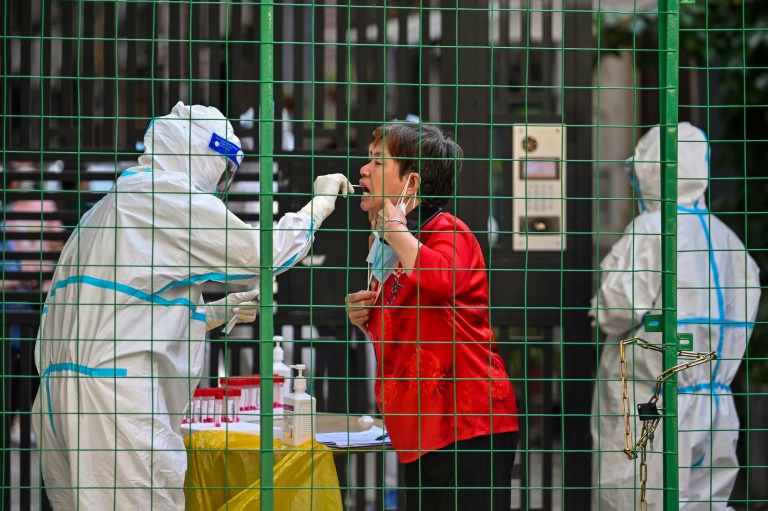
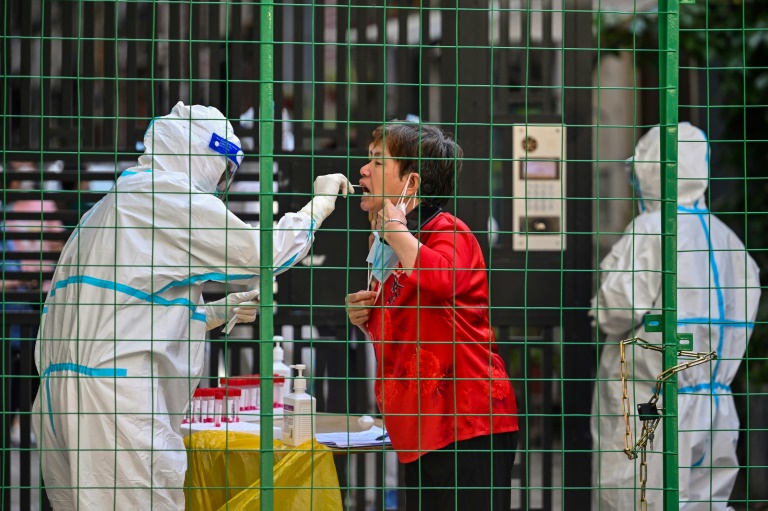
The news came as Beijing and Shanghai appeared to have contained a Covid outbreak that had forced officials to impose lockdowns that compounded global supply chain snarls, further pushing up inflation.

Authorities said inbound travellers would have to quarantine for only 10 days instead of three weeks.

The news boosted share prices, already striving to rebound from recent sharp losses triggered by fears of a global recession.

“The Covid crisis appears to be rapidly retreating in China,” noted Susannah Streeter, senior investment and markets analyst at Hargreaves Lansdown.

“The prospects of rapid recovery for the world’s second largest economy is helping lift miners, as metals prices rise in expectation of a surge in demand in the commodity-hungry economy.”

At the same time, G7 leaders meeting in Germany condemned China’s “non-transparent and market-distorting” international trade practices in an end-of-summit statement that hit out directly at Beijing for the first time.

Traders also digested comments from European Central Bank President Christine Lagarde, who said the ECB would go “as far as necessary” to fight inflation that is set to remain “undesirably high”.

Ben Laidler, a global markets strategist at online trading platform eToro, said current economic weakness had been largely factored in by dealers.

“Much is already discounted by markets, which may be in ‘bad news is good news’ mode, as a slowdown cools inflation and interest rate fears,” he said.

Global equity markets are recovering ground as investors believe central banks could decide to raise interest rates by more modest amounts than previously thought.

The US Federal Reserve and its peers are hiking borrowing costs in an attempt to cool inflation, which has soared around the world to the highest levels in decades.

However, such action has increased the prospect of a global recession, causing economists to think that future rate hikes could be less steep than in recent months.

“Wall Street seems to be close to figuring out how high central banks may take rates over in the short-term and that is supportive for long-term investors to scale into positions,” said market analyst Edward Moya at OANDA trading platform. 

Wall Street stocks opened higher, with the Dow adding 0.6 percent.

Europe’s main indices were higher in afternoon trading, with London and Paris both rising 1.1 percent, while Frankfurt added 0.8 percent.

Asian markets closed higher.

– Oil jumps as G7 targets Russia –

Oil prices, a major driver of the soaring inflation, rose on fears of further supply tightening, in addition to prospects for higher Chinese demand.

This comes after G7 leaders agreed to work on a price cap for Russian oil, a US official said Tuesday, as part of efforts to cut the Kremlin’s revenues.

International sanctions placed on Russia following its invasion of Ukraine are taking their toll.

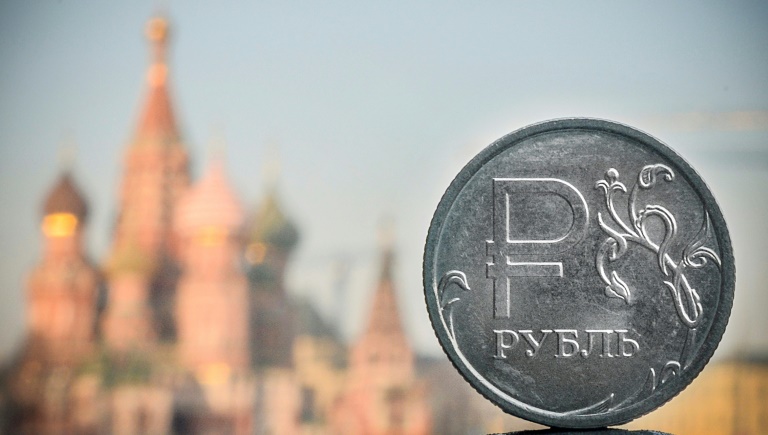
Moody’s ratings agency has confirmed that Russia defaulted on its foreign debt for the first time in a century, after bond holders did not receive $100 million in interest payments.

– Key figures at around 1330 GMT –

London – FTSE 100: UP 1.1 percent at 7,336.93 points

Frankfurt – DAX: UP 0.8 percent at 13,292.26

Paris – CAC 40: UP 1.1 percent at 6,115.94

EURO STOXX 50: UP 0.6 percent at 3,519.16

New York – Dow: UP 0.6 percent at 31,636.49

Tokyo – Nikkei 225: UP 0.7 percent at 27,049.47 (close)

Hong Kong – Hang Seng Index: UP 0.9 percent at 22,418.97 (close)

Shanghai – Composite: UP 0.9 percent at 3,409.21 (close)

Brent North Sea crude: UP 1.4 percent at $112.57 per barrel

West Texas Intermediate: UP 1.1 percent at $110.77 per barrel

Euro/dollar: DOWN at $1.0533 from $1.0583 Monday

Pound/dollar: DOWN at $1.2219 from $1.2268

Euro/pound: DOWN at 86.20 pence from 86.24 pence

Dollar/yen: UP at 136.19 yen from 135.48 yen

burs-rl/lth
US Capitol assault panel to hear from key White House aide

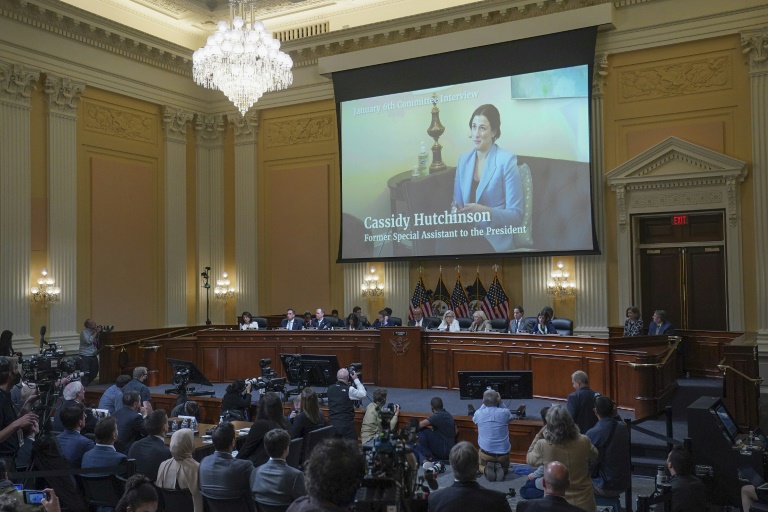
A former top White House aide with unique access to Donald Trump and inner workings of the West Wing was expected to testify publicly Tuesday before the committee probing the attack on the US Capitol.

Cassidy Hutchinson, an executive assistant to Trump’s chief of staff Mark Meadows, was a central figure in the White House around the period of the insurrection on January 6 last year.

She has already been the source of several blockbuster revelations, appearing in videotaped depositions at two previous hearings and memorably naming a group of House Republicans who sought pardons from Trump following the violence.

She was also in contact with officials in the battleground state of Georgia, where Trump infamously pressured officials to “find” enough votes to overcome Joe Biden’s victory margin in a phone call that is the subject of a criminal probe.

Hutchinson testified behind closed doors in February, March and May, revealing she saw Meadows incinerate documents in his office after meeting a Republican congressman implicated in the plot to overturn the election.

The lawmaker, Scott Perry, was pivotal in Trump’s failed effort to install his own pliant attorney general as part of a plan to co-opt the Justice Department into his scheme to cling to power.

It was Hutchinson, according to CNN, who told the select committee that Trump voiced approval for the “hang Mike Pence” chants from rioters at the Capitol — an allegation that was among the many eye-popping claims to come out of the opening hearing on June 9.

Hutchinson also testified that she remembered a Secret Service agent informing Meadows of intelligence reports saying there could potentially be violence on January 6.

– ‘Public spirit’ –

“I don’t know what Cassidy Hutchinson will say today,” conservative political commentator Bill Kristol, a founder of the advocacy group Defending Democracy Together, posted on Twitter. 

“But by agreeing to step forward and testify under oath, this young woman is showing far more public spirit, integrity and courage than many of her well-established elders who have chosen a far easier and less honorable path.”

Meadows himself has refused to testify before the panel since handing over thousands of text messages and other documents in the early stages of the investigation.

The House of Representatives held Meadows in contempt in December but the Justice Department decided not to charge him.

The announcement of Tuesday’s hearing with less than 24 hours’ notice raised eyebrows across Washington, since the committee had said it was pushing the rest of its hearings to July and perhaps beyond.

The panel revealed the about-face in a brief release which didn’t mention the purpose of the hearing or reveal who would appear, simply saying it would “present recently obtained evidence and receive witness testimony.”

The reason for the change of plan remained a mystery hours ahead of Hutchison’s appearance, although US media reported she had become more cooperative since changing lawyers earlier this month.

Congressional media outlet Punchbowl reported that there had been “sincere concerns” about Hutchinson’s safety because of what she knows and has already revealed.

The committee did not say if there would be more than one witness and Washington insiders speculated that documentary filmmaker Alex Holder’s footage of Trump and his family could also figure.

Meanwhile, Trump lawyer John Eastman, the architect of the former president’s scheme to overturn the election, revealed in a court filing Monday that the FBI had seized his cell phone. 

He said he was confronted by FBI agents as he was leaving a restaurant and called for a judge to have his phone returned.

Bankrupt Sri Lanka opens oil market to foreign firms

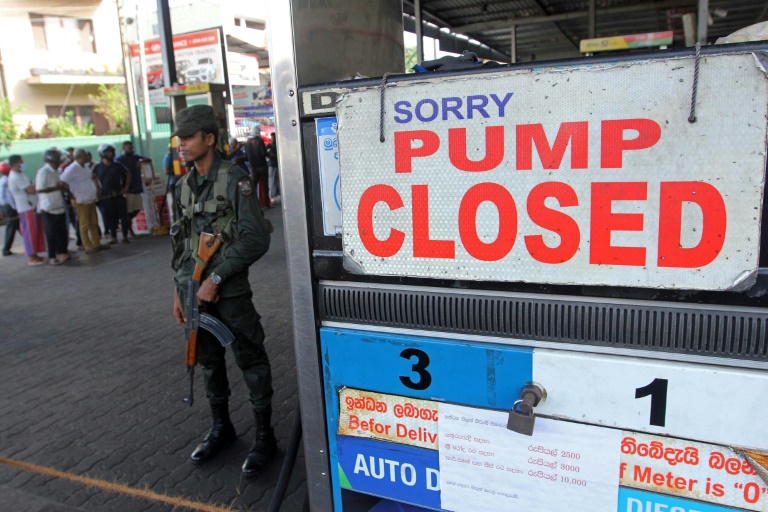
Cash-strapped Sri Lanka announced Tuesday it was opening its oil market to foreign competition, a day after chronic fuel shortages forced a nationwide halt to petrol and diesel sales.

The South Asian island country is suffering an unprecedented economic crisis because it cannot afford to import essentials, including enough oil and gas to meet energy needs. 

Lengthy blackouts are now a feature of daily life, while motorists have been forced to wait in daylong queues for scarce supplies of petrol. 

A rationing system has been in effect but on Monday night the government banned fuel sales for two weeks to conserve Sri Lanka’s limited stockpiles for emergencies. 

Ministers said the crisis had made it an appropriate time to allow market entry from firms in oil-producing nations “to enable them to import and sell fuel using their funds”, a cabinet statement said Tuesday. 

Sri Lanka’s oil industry was nationalised in 1961, though a third of the market was granted to a local unit of India’s state-owned oil and gas company in 2003. 

Despite the sales ban, long queues of vehicles were seen outside pumping stations on Monday with motorists hoping to top up whenever supplies resumed.

Sri Lanka defaulted on its $51 billion foreign debt in April and is currently in bailout talks with the International Monetary Fund.

The government has dispatched ministers to Russia and Qatar to source discounted oil, while President Gotabaya Rajapaksa this week met with Moscow’s envoy in Sri Lanka to discuss fuel and other imports.

A US delegation is also in Colombo to assess the country’s needs after the United Nations issued a flash appeal to some 1.7 million urgently in need of food support.

President Joe Biden on Tuesday announced a $20 million grant to feed around 800,000 children while at the G7 Summit in Germany.

About 50 migrants dead in 'horrific' truck tragedy in Texas

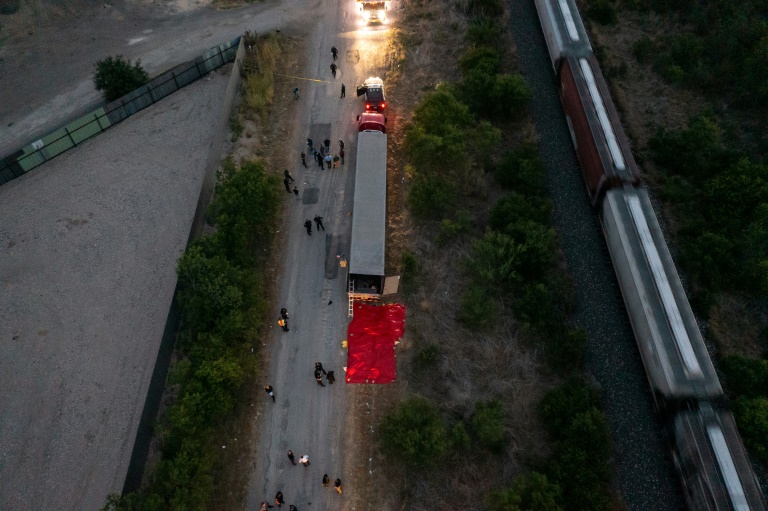
US police Tuesday were investigating the grim discovery of about 50 bodies in and around a trailer truck abandoned in sweltering heat near the Texas city of San Antonio, with victims identified as from Mexico, Guatemala and Honduras.

The shocking finding was one of the worst disasters involving migrants in the United States in recent years — and came five years after a similar deadly incident in the same Texas city, a few hours from the Mexican border.

The White House — facing intense pressure over its immigration policies — called the tragedy “absolutely horrific and heartbreaking,” and said President Joe Biden, flying to a NATO summit in Madrid, has been briefed on the incident.

San Antonio Fire Chief Charles Hood told reporters that at least 46 victims had died and 16 people had been transported to the hospital alive and conscious — 12 adults and four children.

Early Tuesday, Mexican President Andres Manuel Lopez Obrador said the toll had reached 50, mostly from Latin American nations including Mexico.

“It’s a tremendous misfortune… so far there are 50 dead: 22 from Mexico, seven from Guatemala, two from Honduras and 19 still without information about their nationality,” the Mexican leader said at a morning press conference.

US officials said three people were in custody over the incident.

Hood, the fire chief, said survivors had suffered heat stroke and heat exhaustion, and that there were no signs of water in the truck.

“It was a refrigerated tractor-trailer but there was no visible working A/C unit on that rig,” Hood said.

– ‘Desperation of migrants’ –

San Antonio, which lies about 250 kilometers (150 miles) from the border, is a major transit route for people smugglers.

It has also been gripped by a record-breaking heat wave, and temperatures in the area hit 103 degrees Fahrenheit (39.5 degrees Celsius) on Monday.

The US Customs and Border Protection agency director, Chris Magnus said he was “horrified” at the deaths near San Antonio.

“This speaks to the desperation of migrants who would put their lives in the hands of callous human smugglers who show no regard for human life,” he added on Twitter.

The vehicle was found near Highway I-35, a major US artery that stretches to the Mexican border.

According to San Antonio police chief William McManus, authorities were first alerted by an emergency call at about 5:50 pm local time (2250 GMT).

“A worker who works in one of the buildings up here behind me heard a cry for help,” he told reporters. 

“(He) came out to investigate, found a trailer with the doors partially open, opened them up to take a look, and found a number of deceased individuals inside.”

– Migration politics –

Texas Governor Greg Abbott, a Republican who advocates a tough line on immigration, quickly hit out at Biden over the disaster — blaming the Democrat’s “deadly open border policies.”

“These deaths are on Biden,” Abbott tweeted. “They show the deadly consequences of his refusal to enforce the law.”

San Antonio was the site of a similar migrant tragedy in 2017, when 10 people suffocated to death in a sweltering trailer with broken air conditioning and clogged ventilation holes.

The truck driver later pleaded guilty to charges related to the deaths.

In Geneva, the United Nations’ human rights office said it was “deeply disturbed” by the incident.

“This is not the first such tragedy, and it illustrates again the critical need for regular safe pathways for migration as well as for accountability for those persons whose conduct has directly led to such loss of life,” said spokeswoman Ravina Shamdasani.

7 million in 'desperate need' after Bangladesh floods

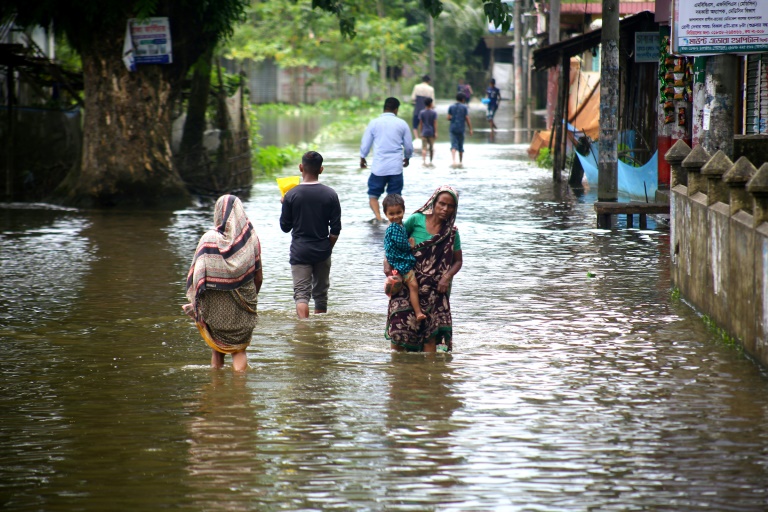
More than seven million Bangladeshis are still in “desperate” need of shelter and aid after deadly floods earlier this month, the Red Cross said Tuesday.

At least 101 people were killed in the country’s northeast when rivers swelled to record levels and inundated rural villages, after some of the heaviest rains in a century. 

“The scale of devastation this time is so much more” than earlier floods, said Sanjeev Kafley of the International Federation of Red Cross and Red Crescent Societies (IFRC).

An estimated 7.2 million people were in “desperate need of shelter and emergency relief items” in the worst-hit Sylhet region, the IFRC said in a statement. 

The government has sent food rations and other emergency humanitarian aid to those hit by the floods, said Nitai Dey Sarker of Bangladesh’s disaster management authority.

He added that once flood waters receded further, relief workers would send corrugated iron as building material for those who had lost their homes.

Sarker said the situation had improved around Bangladesh in recent days, but many in the northeast fear more floods to come, with two-thirds of the monsoon season still ahead of them.

“We are still stuck up in the flood shelter and yet to head back home to calculate the damage,” Abdul Hakim, a farmer from Sylhet, told AFP.

“The water levels in the rivers are rising again and that is very worrying,” he added.

The government said nearly 200,000 people were sheltering in schools and colleges that had been closed to accommodate those forced to flee their homes.

Erdogan to meet Biden for crunch NATO expansion talks

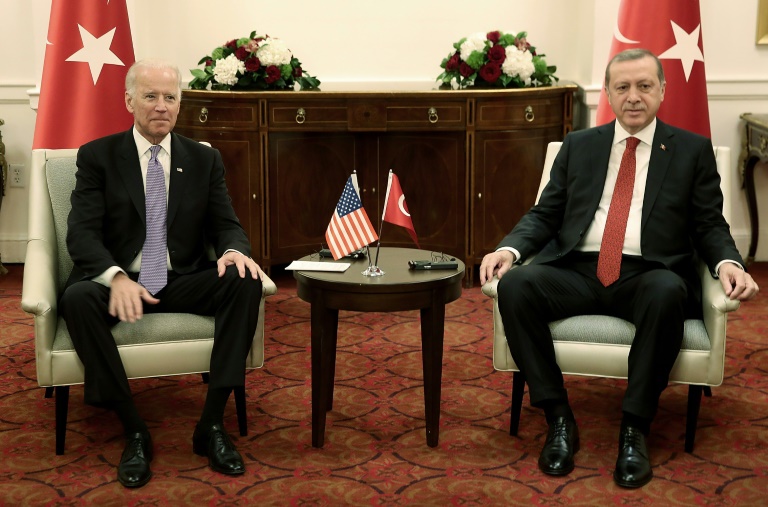
Turkish President Recep Tayyip Erdogan said on Tuesday he would meet US President Joe Biden on the sidelines of the NATO summit in Madrid for talks on Russia’s invasion of Ukraine and the bloc’s expansion into two Nordic states.

Analysts believe the meeting could play a crucial role in breaking down Turkey’s resistance to bids by Sweden and Finland to join the Western defence alliance in response to the war.

The two leaders have had a chilly relationship since Biden’s election because of US concerns about human rights under Erdogan.

Biden and Erdogan last met briefly in October on the sidelines of a G20 summit in Rome.

“We spoke with Mr Biden this morning and he expressed his desire to get together tonight or tomorrow. We said it was possible,” Erdogan said.

He was speaking to reporters before flying to Madrid for talks that will start with his meeting with the leaders of the two Nordic countries and the NATO secretary general.

Erdogan said he wanted to see the results of preparatory talks held on Monday in Brussels before deciding whether Sweden and Finland had done enough to lift his objections to their membership of the military alliance.

Turkey is a NATO member and could veto both countries’ applications at the summit.

“We are a 70-year-old member of NATO. Turkey is not a country that randomly joined NATO,” Erdogan said.

“We will see what point they (Finland and Sweden) have reached,” he added. “We do not want empty words. We want results.”

– ‘Open mind’ –

Ankara has accused Finland and more particularly Sweden of offering a safe haven to Kurdish militants who have been been waging decades-long insurgency against the Turkish state.

The Turkish leader has also called on the two countries to lift arms embargoes imposed on Turkey in 2019 over Ankara’s military offensive in Syria.

The two countries went into the NATO meeting open to the possibility that Turkey might only lift its objections after the summit concludes on Thursday.

“We have made progress. That is definitely the case,” said Swedish Foreign Minister Ann Linde.

“We are prepared for something positive to happen today, but also for it to take more time,” she added. “We must be patient and continue discussions even after the summit.”

Finnish President Sauli Niinisto said that he was neither “optimistic nor pessimistic at this stage”.

“We will go into this afternoon’s discussion with Erdogan with an open mind,” he told Finnish media.

– Fighter jet talks –

Erdogan’s ability to maintain a close working relationship with Russian President Vladimir Putin while supporting Ukraine’s war effort has made him an important player in the conflict.

But those ties have also complicated his relations with Biden and the NATO bloc.

Washington has sanctioned Ankara for taking delivery of an advanced Russian missile defence system in 2019.

The purchase saw the United States drop Turkey from the F-35 joint strike fighter programme and impose trade restrictions on its military procurement agency.

But Washington has signalled that it may be willing to move past the dispute.

Biden’s administration has dangled the possibility of supplying Ankara with older-generation F-16 jets that could replenish Turkey’s ageing air force fleet.

“The most important issue is the F-16 issue. It is still on the table,” Erdogan said of his upcoming talks with Biden.

Stocks bounce as China eases quarantine measures

Stock markets jumped Tuesday and oil prices rallied further as China slashed the quarantine time for visitors, fuelling hopes of recovery for the world’s second largest economy.

The news came as Beijing and Shanghai appeared to have contained a Covid outbreak that had forced officials to impose lockdowns that compounded global supply chain snarls, further pushing up inflation.

Authorities said inbound travellers would have to quarantine for only 10 days instead of three weeks.

The news boosted share prices, already striving to rebound from recent sharp losses triggered by fears of a global recession.

“The Covid crisis appears to be rapidly retreating in China,” noted Susannah Streeter, senior investment and markets analyst at Hargreaves Lansdown.

“The prospects of rapid recovery for the world’s second largest economy is helping lift miners, as metals prices rise in expectation of a surge in demand in the commodity-hungry economy.”

At the same time, G7 leaders will condemn China’s “distorting” international trade practices in an end-of-summit statement Tuesday, a senior US official said.

“You’ll see leaders release a collective statement, which is unprecedented in the context of the G7, acknowledging the harms caused by China’s non-transparent, market distorting, industrial directives,” the official told reporters.

Traders digested comments also from European Central Bank boss Christine Lagarde, who said the ECB would go “as far as necessary” to fight inflation that is set to remain “undesirably high”.

Ben Laidler, a global markets strategist at online trading platform eToro, said current economic weakness had been largely factored in by dealers.

“Much is already discounted by markets, which may be in ‘bad news is good news’ mode, as a slowdown cools inflation and interest rate fears,” he said.

Global equity markets are recovering ground as investors believe central banks could decide to raise interest rates by more modest amounts than previously thought.

The US Federal Reserve and its peers are hiking borrowing costs in an attempt to cool inflation, which has soared around the world to the highest levels in decades.

However, such action has increased the prospect of a global recession, causing economists to think that future rate hikes could be less steep than in recent months.

– Oil jumps as G7 targets Russia –

Oil prices, a major driver of the soaring inflation, jumped around two percent Tuesday on fears of further supply tightening, in addition to prospects for higher Chinese demand.

This comes after G7 leaders agreed to work on a price cap for Russian oil, a US official said Tuesday, as part of efforts to cut the Kremlin’s revenues.

International sanctions placed on Russia following its invasion of Ukraine are taking their toll.

Moody’s ratings agency has confirmed that Russia defaulted on its foreign debt for the first time in a century, after bond holders did not receive $100 million in interest payments.

– Key figures at around 1030 GMT –

London – FTSE 100: UP 1.2 percent at 7,246.58 points

Frankfurt – DAX: UP 0.8 percent at 13,286.57

Paris – CAC 40: UP 1.2 percent at 6,121.49

EURO STOXX 50: UP 0.9 percent at 3,569.57

Tokyo – Nikkei 225: UP 0.7 percent at 27,049.47 (close)

Hong Kong – Hang Seng Index: UP 0.9 percent at 22,418.97 (close)

Shanghai – Composite: UP 0.9 percent at 3,409.21 (close)

New York – Dow: DOWN 0.2 percent at 31,438.26 (close)

Brent North Sea crude: UP 2.3 percent at $117.74 per barrel

West Texas Intermediate: UP 1.8 percent at $111.55 per barrel

Euro/dollar: UP at $1.0590 from $1.0583 Monday

Pound/dollar: FLAT at $1.2268

Euro/pound: UP at 86.33 pence from 86.24 pence

Dollar/yen: UP at 136.01 yen from 135.48 yen

Stocks bounce as China eases quarantine measures

Stock markets jumped Tuesday and oil prices rallied further as China slashed the quarantine time for visitors, fuelling hopes of recovery for the world’s second largest economy.

The news came as Beijing and Shanghai appeared to have contained a Covid outbreak that had forced officials to impose lockdowns that compounded global supply chain snarls, further pushing up inflation.

Authorities said inbound travellers would have to quarantine for only 10 days instead of three weeks.

The news boosted share prices, already striving to rebound from recent sharp losses triggered by fears of a global recession.

“The Covid crisis appears to be rapidly retreating in China,” noted Susannah Streeter, senior investment and markets analyst at Hargreaves Lansdown.

“The prospects of rapid recovery for the world’s second largest economy is helping lift miners, as metals prices rise in expectation of a surge in demand in the commodity-hungry economy.”

At the same time, G7 leaders will condemn China’s “distorting” international trade practices in an end-of-summit statement Tuesday, a senior US official said.

“You’ll see leaders release a collective statement, which is unprecedented in the context of the G7, acknowledging the harms caused by China’s non-transparent, market distorting, industrial directives,” the official told reporters.

Traders digested comments also from European Central Bank boss Christine Lagarde, who said the ECB would go “as far as necessary” to fight inflation that is set to remain “undesirably high”.

Ben Laidler, a global markets strategist at online trading platform eToro, said current economic weakness had been largely factored in by dealers.

“Much is already discounted by markets, which may be in ‘bad news is good news’ mode, as a slowdown cools inflation and interest rate fears,” he said.

Global equity markets are recovering ground as investors believe central banks could decide to raise interest rates by more modest amounts than previously thought.

The US Federal Reserve and its peers are hiking borrowing costs in an attempt to cool inflation, which has soared around the world to the highest levels in decades.

However, such action has increased the prospect of a global recession, causing economists to think that future rate hikes could be less steep than in recent months.

– Oil jumps as G7 targets Russia –

Oil prices, a major driver of the soaring inflation, jumped around two percent Tuesday on fears of further supply tightening, in addition to prospects for higher Chinese demand.

This comes after G7 leaders agreed to work on a price cap for Russian oil, a US official said Tuesday, as part of efforts to cut the Kremlin’s revenues.

International sanctions placed on Russia following its invasion of Ukraine are taking their toll.

Moody’s ratings agency has confirmed that Russia defaulted on its foreign debt for the first time in a century, after bond holders did not receive $100 million in interest payments.

– Key figures at around 1030 GMT –

London – FTSE 100: UP 1.2 percent at 7,246.58 points

Frankfurt – DAX: UP 0.8 percent at 13,286.57

Paris – CAC 40: UP 1.2 percent at 6,121.49

EURO STOXX 50: UP 0.9 percent at 3,569.57

Tokyo – Nikkei 225: UP 0.7 percent at 27,049.47 (close)

Hong Kong – Hang Seng Index: UP 0.9 percent at 22,418.97 (close)

Shanghai – Composite: UP 0.9 percent at 3,409.21 (close)

New York – Dow: DOWN 0.2 percent at 31,438.26 (close)

Brent North Sea crude: UP 2.3 percent at $117.74 per barrel

West Texas Intermediate: UP 1.8 percent at $111.55 per barrel

Euro/dollar: UP at $1.0590 from $1.0583 Monday

Pound/dollar: FLAT at $1.2268

Euro/pound: UP at 86.33 pence from 86.24 pence

Dollar/yen: UP at 136.01 yen from 135.48 yen

46 migrants found dead in trailer truck in Texas

At least 46 migrants were found dead Monday in and around a large trailer truck that was abandoned on the roadside on the outskirts of the Texas city of San Antonio.

The grim discovery was one of the worst disasters involving migrants in the United States in recent years — and came five years after a similar deadly incident in the same central Texas city, a few hours from the Mexican border.

“At this time we have processed approximately 46 bodies that have been triaged and tagged and declared deceased,” San Antonio Fire Chief Charles Hood told reporters.

He said that 16 people had been transported to the hospital alive and conscious — 12 adults and four children.

There were no initial details on the age or nationalities of the deceased.

“The patients that we saw were hot to the touch, they were suffering from heat stroke, heat exhaustion, no signs of water in the vehicle, it was a refrigerated tractor-trailer but there was no visible working A/C unit on that rig,” Hood said.

Officials said three people were in custody over the incident.

“Tonight we are dealing with a horrific human tragedy,” San Antonio Mayor Ron Nirenberg told a press conference.

“So I would urge you all to think compassionately and pray for the deceased, the ailing, the families,” he said.

“And we hope that those responsible for putting these people in such inhumane conditions are prosecuted to the fullest extent of the law.” 

– ‘Alleged human smuggling’ –

San Antonio, which lies about 250 kilometers (150 miles) from the border, is a major transit route for people smugglers.

It has also been gripped by a record-breaking recent heat wave, and temperatures in the area hit 103 degrees Fahrenheit (39.5 degrees Celsius) on Monday. 

The vehicle was found on a road near Highway I-35, a major US artery that stretches all the way to the border with Mexico.

A large-scale emergency operation was underway at the scene involving police, firefighters and ambulances.

According to San Antonio police chief William McManus, authorities were first alerted by an emergency call at about 5:50 pm local time (2250 GMT).

“A worker who works in one of the buildings up here behind me heard a cry for help,” he told reporters. 

“(He) came out to investigate, found a trailer with the doors partially open, opened them up to take a look, and found a number of deceased individuals inside.”

He said the probe had been turned over to the federal Department of Homeland Security (DHS).

In a statement, the DHS said it had initiated an investigation after receiving the call from San Antonio police “regarding an alleged human smuggling event”.

Dozens of emergency responders who had worked at the scene underwent a stress debriefing following the operation.

“We’re not supposed to open up a truck and see stacks of bodies in there, none of us come to work imagining that,” Hood said.

– ‘A better life’ –

Texas Governor Greg Abbott, a Republican who advocates a tough line on immigration, hit out at President Joe Biden over the disaster — blaming the Democrat’s “deadly open border policies.”

“These deaths are on Biden,” Abbott tweeted. “They show the deadly consequences of his refusal to enforce the law.”

Beto O’Rourke, the Democratic party’s candidate to run against Abbott in November, called for “urgent action” following the incident.

“Dismantle human smuggling rings and replace them with expanded avenues for legal migration that reflect our values and meet our country’s needs,” he said.

Mexico’s foreign minister, Marcelo Ebrard, called the incident a “tragedy” and said the Mexican consul was headed to the site. 

Ebrard said the nationalities of the victims were not yet known, but that two Guatemalans were among the survivors.

San Antonio was the site of a similar migrant tragedy in 2017, when 10 people suffocated to death in a sweltering trailer with broken air conditioning and clogged ventilation holes as they traveled into the United States.

Dozens more had been hospitalized with heat stroke and dehydration — with the truck believed to have been holding as many as 200 people, most of whom fled when it stopped in a parking lot. The truck driver later pleaded guilty to charges related to the deaths.

After news broke of Monday’s discovery, the archbishop of San Antonio, Gustavo Garcia-Siller tweeted “Lord have mercy on them. They hoped for a better life.”

“Once again, the lack of courage to deal with immigration reform is killing and destroying lives.”

In Geneva, the United Nations’ human rights office said it was “deeply disturbed” by the incident.

“This is not the first such tragedy, and it illustrates again the critical need for regular safe pathways for migration as well as for accountability for those persons whose conduct has directly led to such loss of life,” said spokeswoman Ravina Shamdasani.

Moody's says Russia defaulted on debt

Moody’s ratings agency has confirmed that Russia defaulted on its foreign debt for the first time in a century, after bond holders did not receive $100 million in interest payments.

The historic default follows a series of unprecedented Western sanctions that have increasingly isolated Russia from the global financial system following its invasion of Ukraine.

Russia lost the last avenue to service its foreign-currency loans after the United States removed an exemption last month that allowed US investors to receive Moscow’s payments.

“On 27 June, holders of Russia’s sovereign debt had not received coupon payments on two eurobonds worth $100 million by the time the 30-calendar-day grace period expired, which we consider an event of default under our definition,” Moody’s said.

Moscow said on Monday there were “no grounds to call this situation a default”, as the payments had not reached creditors due to the “the actions of third parties”.

The Russian authorities insist they have the funds to honour the country’s debt, calling the predicament a “farce” and accusing the West of pushing an “artificial” default.

Moody’s warned that more defaults “are likely”.

Moody’s released an “issuer comment” instead of a formal default declaration, as sanctions bar credit ratings agencies from covering Russia’s sovereign debt.

– ‘Limited’ impact –

The sanctions have included freezing the Russian government’s stockpile of $300 billion in foreign currency reserves held abroad, making it more complicated for Moscow to settle its foreign debts.

After the United States closed the last payment loophole last month, Russia said it would pay debt in rubles that could be converted into foreign currency, using a Russian financial institution as a paying agent.

But Moody’s said it “would likely treat payments in rubles as a default for bonds that do not allow for such redenomination in the contractual terms”.

Noting that Moody’s no longer covers Russia, Kremlin spokesman Dmitry Peskov said: “Does this mean that Moody’s restarted the ratings process? The agency must surely explain itself.”

The country last defaulted on its foreign debt in 1918, when Bolshevik revolution leader Vladimir Ilich Lenin refused to recognise the massive debts of the deposed tsar’s regime.

Russia defaulted on domestic debt in 1998 when, due to a drop in commodity prices, it faced a financial squeeze that prevented it from propping up the ruble and paying off debts that accumulated during the first war in Chechnya.

The International Monetary Fund’s number two official, Gita Gopinath, said in March that a Russian default would have “limited” impact on the global financial system.

Close Bitnami banner
Bitnami