AFP

Abortion ban: one more obstacle faced by US servicewomen

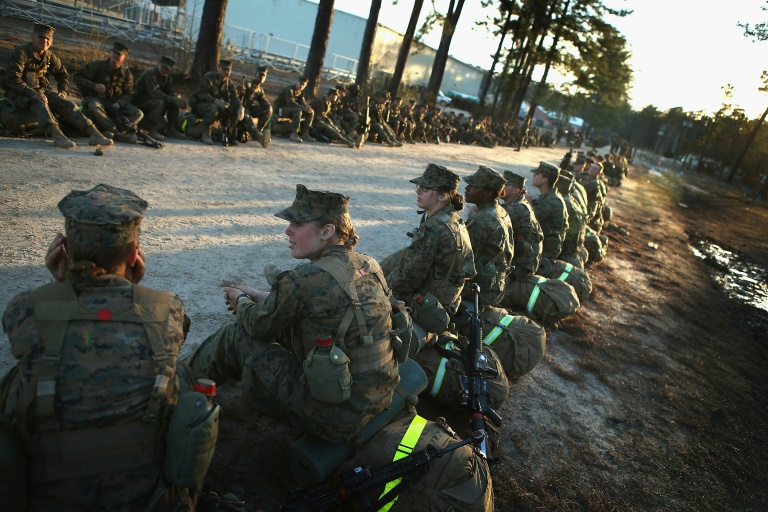
Abortion bans enacted across America will be especially painful for women in the US military, one more hurdle they have to face in a man’s world where sexual assault and unwanted pregnancies occur more often than in the rest of society.

After Friday’s tectonic decision by the US Supreme Court overturning constitutional protections for abortion rights, Defense Secretary Lloyd Austin vowed to review Pentagon policies to “ensure we continue to provide seamless access to reproductive health care as permitted by federal law.”

However, Austin stopped short of announcing any new measures to help the more than 230,000 women serving in the US military, including at large military bases in conservative states such as Texas or Kentucky, which either already have or will soon enact sweeping abortion bans.

Under a 1976 law, military medics can perform abortions only in cases of proven rape or incest, or if the mother’s life is in danger.

That means female service members stationed in states that curtail abortion will have to travel out of state and find a civilian clinic that performs the procedure, often taking time off work to do so.

Additional difficulties servicewomen will face are numerous: having to cover medical and travel expenses on modest military salaries, taking leaves of absence that may hurt their careers and having to disclose sexual activity that is discouraged in the military.

“I can see that being potentially a little bit more challenging for military women,” said Julie, a military nurse who spoke to AFP on the condition her last name not be used.

“I fear that women are going to access unsafe practices, so that they don’t have to disclose why they need four or five days off… and do have a procedure done, if they need to go to a different state two states away, three states away,” she said.

– ‘Dark cloud’ –

Women face additional sexual and reproductive risks in the army.

While they make up only 17 percent of the military, servicewomen are generally young and of childbearing age (75 percent of new recruits are under 22). And nearly one-quarter have been victims of military sexual trauma, according to a 2018 study by the journal Trauma, Violence & Abuse.

Yet even in cases of a rape, women are reluctant to turn to a military doctor, who would be required to report the assault and order an investigation.

Most instances of sexual abuse in the military are committed by a superior officer and women may fear reprisals if they seek medical care.

Access to family planning is another obstacle: Sexual activity is discouraged in the ranks, especially during deployment, so women may be reluctant to turn to military medics for the types of contraceptives that require a doctor’s prescription in the United States.

According to a study published in 2020 by the journal Military Medicine, women, especially those serving in the navy, are typically reprimanded for sexual activity during deployments, including missions that often last months on end.

Such reprimands stay on a woman’s record and may hurt her career.

“While they may not be officially punished, there is a dark cloud above anyone who becomes pregnant in deployment,” the journal quoted a navy reservist as saying. “They would not generally receive transfer awards or good evaluation marks.”

Democratic lawmakers in the House of Representatives have introduced a bill that would expand access to abortion within the military health care system.

Representative Jackie Speier of California, who chairs a House subcommittee on military personnel, said women in the military experience unwanted pregnancy at rates 22 percent greater than civilians.

“Our brave service members deserve the same access to basic health care as the people they are fighting to protect,” Speier said when introducing the bill earlier this month.

Democratic lawmakers also recently petitioned Austin to facilitate abortions for servicewomen by reimbursing travel costs as well as expanding insurance coverage for contraceptive products.
In protest-hit Ecuador, shortages of key goods start to bite

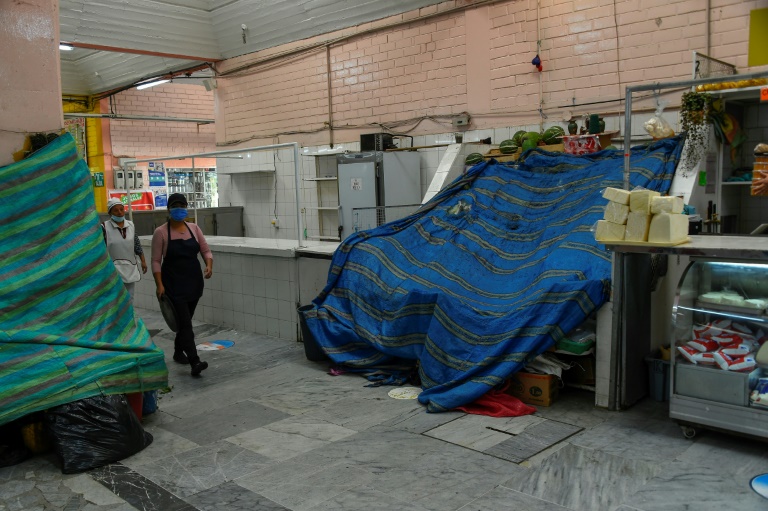
Holding rotten peppers in her hands, Mariana Morales says she has been unable to open her stall at the Santa Clara market north of Ecuador’s capital Quito for a week.

Usually overflowing with fruits and vegetables, the market now is home to tarp-covered display cases, empty trays and deserted stalls — the effects of two weeks of nationwide Indigenous-led protests that are being felt far and wide.

In Guayaquil, the country’s second largest city, Andean produce such as potatoes and corn are already in short supply.

“The situation is difficult because there is no one left to bring food from the highlands,” said Rosa, an Indigenous woman who has sold vegetables in a port market in the southwestern city for 15 years.

An estimated 14,000 protesters are taking part in the nationwide show of discontent against rising hardship, particularly increased fuel prices, in an economy dealt a serious blow by the coronavirus pandemic.

The ironic side effect of their demonstrations has been a worsening of several economic factors: rising prices, shortages and deserted markets.

While the largest mobilization has by far been in the capital, where the number of protesters is close to 10,000 — numerous checkpoints and barricades block the main roads throughout the country, in particular on the vital Panamerican highway.

The country’s energy ministry warned Sunday that those roadblocks and barricades could end up forcing a halt to oil production within 48 hours, which would be a dire development for an economy depending on oil exports.

– ‘Everything is too expensive’ – 

Since the beginning of the roadblocks, Guayaquil’s only wholesale market has been out of stock.

The supply center normally receives nearly 3,000 truckloads of food from the Andean highlands every day, but that figure has dropped by almost 70 percent.

In Quito, where main access roads are blocked intermittently, authorities are trying to organize protection for trucks by the army and police. 

On Thursday, an attack on one of these conveys left 17 soldiers injured.

Santa Clara, like five other markets in the capital, was forced to close for several days and only partially resumed operations on Saturday.

“The peppers were brand new and now it’s all wasted,” Morales said, plunging her fingers into the rotten produce.

Despite the ruined vegetables, the 69-year-old has not gone to the wholesale market to stock back up due to the explosion in prices, explaining: “A bag of carrots that used to cost $25 is now worth $100.”

Consumers are finding it difficult to afford a number of products, from eggs to chicken to cooking fuel.

Morales said it gives her a “guilty conscience” to charge customers a dollar for just one green onion stalk.

Silvana Quimi, a housewife in Guayaquil where food prices have doubled in one week, said that now “everything is too expensive.”

“Before, I was sold a kilo of tomatoes for half a dollar, now it costs me a dollar.”

Things are similar in the capital where a bunch of bananas, which used to cost $1.00, now costs $2.00. 

“What is available costs an arm and a leg,” said Agustin Pazmino, a 56-year-old trader.

Conservative President Guillermo Lasso “during his campaign promised us heaven, but we live in hell,” he said.

A no-confidence hearing over what opposition lawmakers say is Lasso’s role in the protests resumed in Congress for a second day late Sunday. Five people have died so far. 

The National Assembly will eventually vote on whether to oust Lasso, a former banker who took power a year ago.

Ukraine war pushes France to rethink coal power station closure

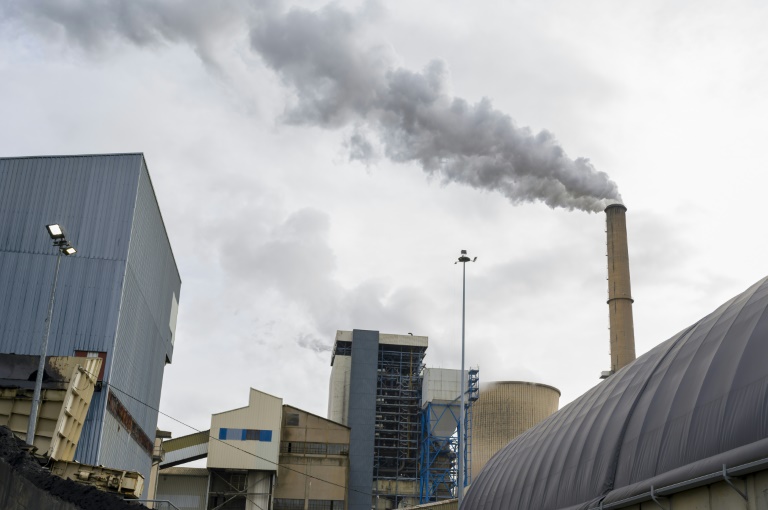
France has become the latest country to reconsider its energy options because of the war in Ukraine, announcing Sunday it was looking into reopening a recently closed coal-fired power station.

The energy transition ministry said it was considering reopening the station at Saint-Avold in eastern France this winter, “given the situation in Ukraine” and the effect it was having on the energy markets.

“We are keeping open the possibility of being able to put the Saint-Avold station back in action for a few hours more if we need it next winter,” said a ministry statement, confirming a report on RTL radio.

But France would still be producing less than one percent of its electricity through coal power, and no Russian coal would be used, the statement added.

President Emmanuel Macron’s commitment to eventually shut all France’s coal-fired stations remained unchanged, the ministry statement said.

Saint-Avold was only closed on March 31, and the only coal-fired power station still operating in France is in Cordemais, in the west of the country.

Most of France’s electricity production comes from nuclear power: 67 percent in 2020. In the same year, coal only accounted for 0.3 percent.

Austria, Germany and the Netherlands have all announced recently that they would be making greater use of coal for their energy needs because of the effects of Russia’s invasion of Ukraine.

The war there has sent global energy prices soaring and raised the prospect of shortages if supplies are cut off. 

Russian energy giant Gazprom has already stopped deliveries to a number of European countries, including Poland, Bulgaria, Finland and the Netherlands.

But the shift back towards fossil fuels has caused alarm in the European Commission, and among environmental campaigners.

They point to the risk that the European Union will miss its targets for cutting back on polluting energy sources, and potentially disastrous consequences for the climate.

Menswear regains its muscle at Paris Fashion Week

Menswear proved to be in reinvigorated form as Paris Fashion Week ended on Sunday, with spectacle, innovation and the return of big-name designers to the catwalk.   

The week concluded with the surprising return of fabled French designer Hedi Slimane, formerly of Dior and Saint Laurent and now with Celine. Two years ago, he had announced he was done with the official fashion calendar.

Slimane became hugely influential as a stylist and photographer for musicians such as David Bowie, Mick Jagger, The Libertines and Daft Punk in the early 2000s.

But he has not presented a live show since February 2020, having dismissed them as “obsolete”, preferring to present collections with videos shot in luxurious French locales.

He gave no explanation for his reappearance on the catwalk but returns amid a sense of a renaissance in menswear. Fashionistas mobbed the gates to the Palais de Tokyo in central Paris on Sunday.  

Slimane’s new collection harked back to the indie-rock vibes that made his name — skinny black trousers, even skinnier ties, golden suits and leather jackets, and lots of dark sunglasses. 

– ‘A boom’ –

The past few seasons have often seen men’s and women’s shows merging into one — with London Fashion Week doing away with the distinction altogether. 

But this week in Paris seemed to reaffirm the divide, with houses wanting to boost their focus on menswear at a time when demand is rising.  

US designer Matthew Williams presented his first-ever standalone menswear show for Givenchy this week.

“It’s good to give space to men and women, to each and everyone their platform to tell a story,” Williams told fashion site WWD. “There’s more room for more looks.”

His show was grounded in real-life styles from his native California, he said, with a lot of utilitarian knee-length shorts, cargo trousers and relaxed knitwear — much of it in monochrome with a few splashes of pastel colours. 

“Commercially, menswear is a market that has developed a lot with a particularly strong dynamic in Asia that has created a boom for pret-a-porter men’s designers,” said Serge Carreira, fashion expert at Sciences Po University. 

– ‘More accessible’ –

Also marking her first menswear show was France’s Marine Serre, one of the biggest names to emerge in recent years. 

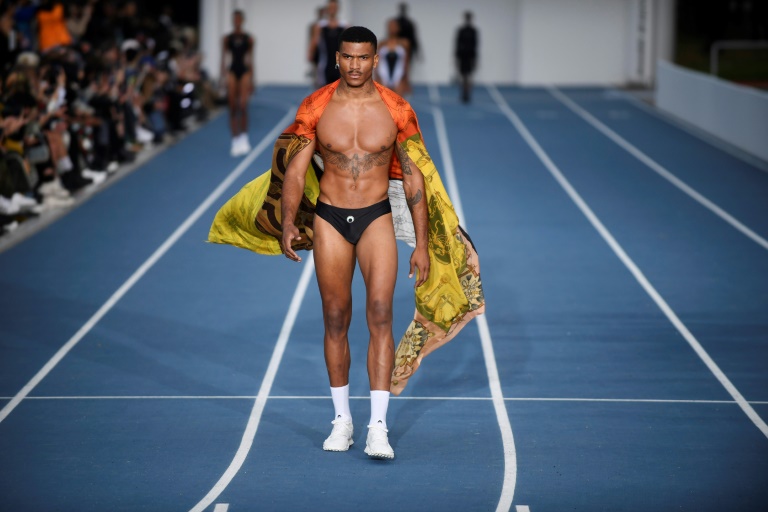
The 30-year-old has made sustainability and inclusivity central to her brand, and that was evident at her sports-themed show in a stadium outside Paris on Saturday. 

Many pieces were upcycled from old scarves and linen — that had been turned into everything from speedos to flags and leotards. 

The models came in all shapes and sizes, from children to older people, alongside celebrities such as ex-footballer Djibril Cisse and Paralympic gold medallist Alexis Hanquinquant, as well as Madonna’s daughter Lourdes Leon in one of the house’s trademark moon-patterned bodysuits. 

“Thirty percent of our sales have been for menswear in the last collections — we’re not at 50/50 but we do quite a bit of men’s and we have no intention of doing less,” Serre told AFP after the show.

“Upcycling is quite rare in men’s but the locker-room lends itself very well to it,” she added. 

“These are shapes that are less complex: it’s easier and we can have better prices that mean it is more accessible for everyone to wear upcycled pieces.” 

Meanwhile, familiar names also made a mark this week. 

Dior took inspiration from the childhood Normandy home of the label’s founder, with a flower-filled garden runway and some straw hats and chic outdoor loungewear among the outfits. 

Hermes was also in a relaxed, pastel-infused mood, which designer Veronique Nichanian told AFP was inspired by “lightness, comfort, fun and colours that pop.”

Funeral held in Brazil for slain British journalist

Grieving family and friends paid their last respects Sunday to British journalist Dom Phillips, who was murdered in the Amazon earlier this month along with an Indigenous expert.

Phillips, 57, and Bruno Pereira, 41, were shot dead while returning from an expedition in a remote region of the rainforest that is plagued by drug trafficking, illegal gold mining and fishing.

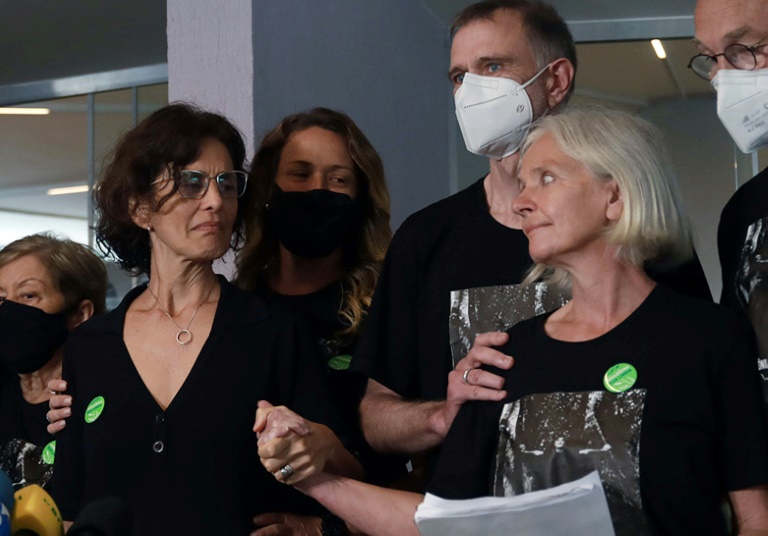
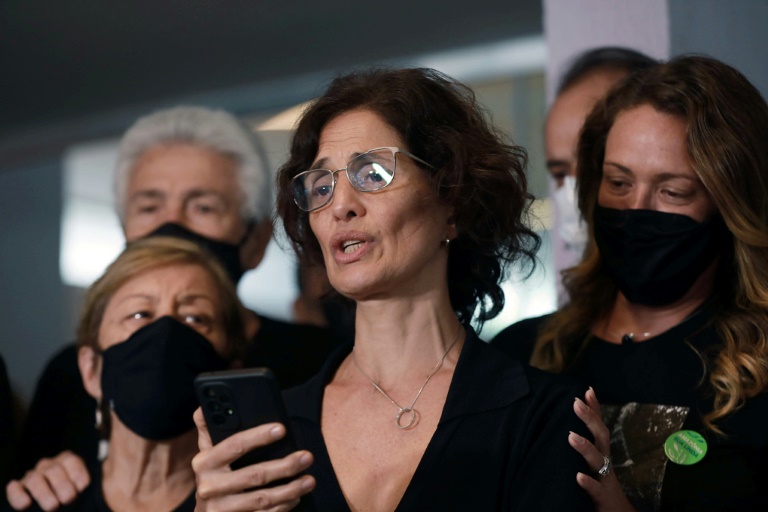
“Dom will be cremated in the country he loved, Brazil, which he had chosen as home,” his widow, Brazilian Alessandra Sampaio, told reporters through tears after his funeral at the Parque da Colina cemetery outside Rio de Janeiro.

“Dom was a very special person, not only for defending what he believed in as a professional, but also for having a huge heart and a great love for humanity,” Sampaio said. 

“Let’s celebrate the sweet memory of Dom and his presence in our lives.”

The journalist’s sister Sian Phillips said he was killed “because he was trying to tell the world what was happening to the Amazon and its people.”

Three suspects have been arrested in the crime, including a fisherman who confessed to burying the bodies and led investigators to the scene.

Sampaio said the family will pay close attention to the investigation into the murder of her husband and his colleague, thanking all the Indigenous people who helped look for the two men before their remains were found.

The disappearance of Phillips and Pereira on June 5 sparked an international outcry. 

Activists have blamed the killings on President Jair Bolsonaro for allowing commercial exploitation of the Amazon at the cost of the environment and law and order.

Phillips, the author of dozens of articles on the Amazon and a long-time contributor to The Guardian newspaper and other major news organizations, was traveling to the Javari Valley as part of research for an upcoming book.

Pereira was serving as his guide, and had previously traveled with him in 2018 to the area.

An outspoken defender of Indigenous rights, Pereira had received multiple death threats before the double murder.

He was laid to rest Friday in his home state of Pernambuco, in northeastern Brazil, to solemn funeral Indigenous hymns performed by members of a tribe he spent his life and work defending.

So far, three suspects are in custody over the killings. A fourth turned himself in last week, but police said his version of events was not credible. 

Police have said five other people who helped hide the bodies have been identified.

Long road ahead to hammer out UN biodiversity blueprint

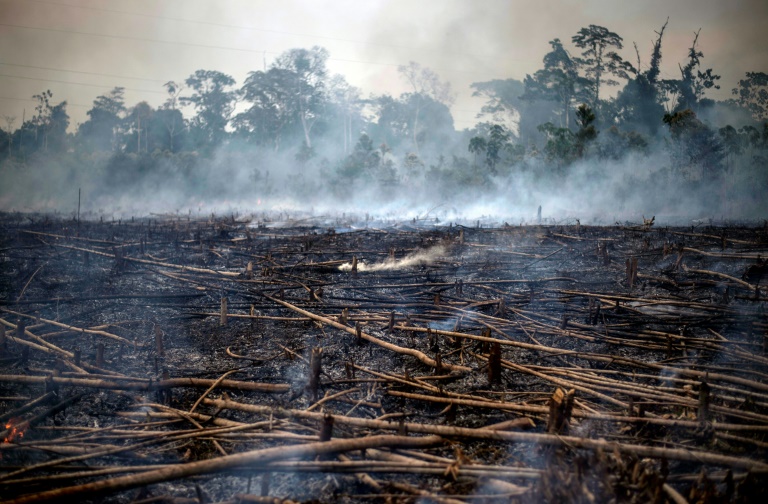
Delegates from almost 200 nations have made little progress towards hammering out a blueprint for a global pact to protect nature from human activity, after almost a week of difficult talks in Nairobi.

The meetings wrapping up Sunday were aimed at ironing out differences among the UN Convention on Biological Diversity’s (CBD) 196 members, with barely six months before a crucial COP15 summit in December.

The ambitious goal is to draw up a draft text outlining a global framework to “live in harmony with nature” by 2050, with key targets to be met by 2030.

Many hope the landmark deal, when finalised, will be as ambitious in its goals to protect life on Earth as the Paris agreement was for climate change.

A closing media release from the CBD said delegates had “achieved consensus on several targets”.

Elizabeth Maruma Mrema, the CBD’s executive secretary, acknowledged at the closing news conference that progress had been “limited”.

But she added: “We cannot afford to fail.”

“There’s a lot of work — lot more that what we thought,” said Basile van Havre, co-chair of the CBD. But he added: “That work is doable.”

– ‘Security issue for humanity’ –

“Most of the time was spent on technical bickering, with major decisions left unresolved and postponed for the COP,” Brian O’Donnell, director of the Campaign for Nature, told AFP earlier.

“It is now critically important that environment ministers and heads of state engage, take ownership and rescue this process.”

Delegates in Nairobi spent hours discussing formulations or seeking to introduce new elements, instead of reconciling differing viewpoints and refining rather than overhauling the text.

One delegate on Saturday night spoke of feeling “desperate”. Another described the Nairobi round as “a step” and voiced hope for further informal meetings before December.

“We need to continue with the dialogue with the intention to simplify and reduce the brackets (on the disputed issues) and alternatives,” said Vinod Mathur, head of India’s National Biodiversity Authority.

For that to happen, warned Francis Ogwal of Uganda, one of the two co-chairs of the Kenya negotiations, “there has to be a very big shift of mind in the way we are negotiating”.

Proposals include a global commitment to set aside at least 30 percent of both land and oceans as protected zones by the end of the decade, as well as efforts to cut plastic and agricultural pollution.  

But time is running out.

One million species are threatened with extinction and tropical forests are disappearing, while intensive agriculture is depleting the soil and pollution is affecting even the most remote areas of the planet.

“It’s not any longer an ecological issue only… It is increasingly an issue that affects our economy, our society, our health, our wellbeing,” Marco Lambertini, director general of WWF International, told a press conference.

“It is a security issue for humanity.”

– ‘Crucial’ to fix food system –

Lambertini accused some countries of using a “delaying tactic”, pointing the finger at Brazil in particular. Behind the scenes, Argentina and South Africa were also getting blamed.

One of the main stumbling blocks concerns agriculture, particularly targets for a reduction in pesticides and fertilisers.

The European Union wants to see the pesticide issue specifically mentioned in the text, but “there is little support” for that position, said one delegate.

Delegates from the Global South have highlighted the need to produce more, with much of the planet undergoing a major food security crisis, and reject any reference to agroecology, the use of ecological principles in farming.  

“Agriculture is currently responsible for 70 percent of biodiversity loss,” said Guido Broekhoven of WWF International, adding that it was “absolutely crucial” to fix a system where 30 percent of food goes to waste.

Countries are also divided on the issue of the funding needed to implement the biodiversity goals.

Brazil, backed by 22 countries including Argentina, South Africa, Cameroon, Egypt and Indonesia, renewed calls for rich countries to provide at least $100 billion a year until 2030 to help developing countries preserve their rich biodiversity. 

The African bloc is also asking for a fund dedicated to biodiversity, according to one country delegate.

Although leaders of 93 countries committed in September 2020 to ending the biodiversity crisis, the issue is struggling to gain as much traction on the international political agenda as climate change.

“There is also a need to see where our political leaders want us to be,” said Canada’s van Havre.

“We’re looking to see who’s going to step up to pick up that ball.”

'Elvis' puts the King back in spotlight in N.American theaters

Baz Luhrmann’s rock’n’roll biopic “Elvis” hip-swiveled to the top of the box office on its opening weekend in North America, taking in an estimated $30.5 million in a rare tie with “Top Gun: Maverick,” industry watcher Exhibitor Relations reported Sunday. 

The nearly three-hour long extravaganza by director Luhrmann, known for glitzy films like “Moulin Rouge!” and “The Great Gatsby,” brought in nearly double the average for the musical biography genre, said analyst David A. Gross of Franchise Entertainment Research.

Despite being a “risky proposition,” in part for casting relative newcomer Austin Butler as Elvis Presley alongside Tom Hanks as his exploitative manager, Colonel Tom Parker, the film has impressed audiences and critics, Gross said.

“This is the Baz Luhrmann show, a music, dance and sex appeal spectacular — it’s a hit,” he said.

“Elvis” was locked in a dead heat with “Top Gun: Maverick” — the crowd-pleasing sequel to the original 1986 film that once again features Tom Cruise as cocky Navy test pilot Pete “Maverick” Mitchell.

It also earned an estimated $30.5 million in its fifth weekend of release.

It is now the highest grossing film of the year worldwide, breaking the $1 billion mark with nearly $522 million in ticket sales in North America and $484 million overseas.

In third place was “Jurassic World Dominion,” Universal’s sixth installment in the “Jurassic Park” franchise, at $26.4 million. 

The latest dinosaur frightfest stars Chris Pratt and Bryce Dallas Howard alongside franchise originals Sam Neill, Laura Dern and Jeff Goldblum.

Fourth spot went to horror film “The Black Phone” starring Ethan Hawke as a serial killer, which earned $23.4 million on its opening weekend. 

“Lightyear,” Pixar and Disney’s latest computer-animated offering from the “Toy Story” empire, took the fifth position with $17.7 million in its second week. 

The spinoff from the wildly successful animation series stars Chris Evans and has taken $88.8 million domestically and $63 million overseas, after a lackluster opening.

Rounding out the top 10 were: 

“Doctor Strange in the Multiverse of Madness” ($1.7 million)

“Jugjugg Jeeyo” ($604,000)

“Everything Everywhere All At Once” ($533,346)

“The Bob’s Burgers Movie” ($513,000)

“The Bad Guys” ($440,000)

Rival camps dig in for fight after US abortion ruling

Elected leaders across the US political divide rallied Sunday for a long fight ahead on abortion — state by state and in Congress — with total bans in force or expected soon in half of the vast country.

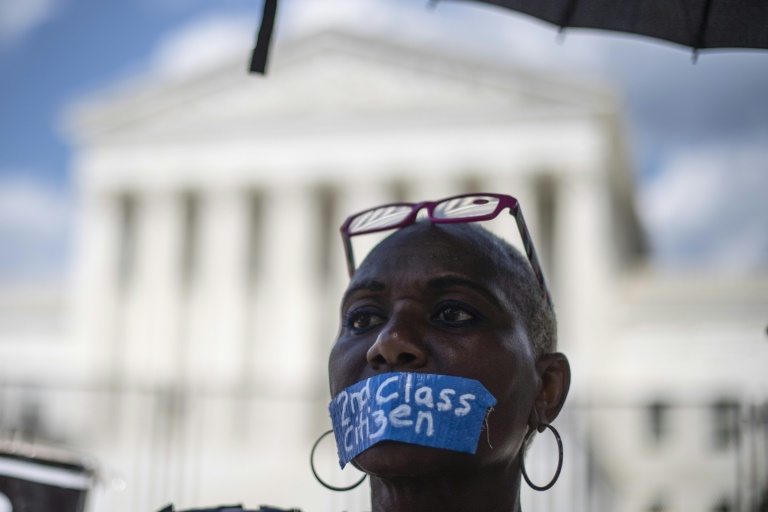
Two days after the US Supreme Court scrapped half-century constitutional protections for the procedure, abortion rights defenders kept up their mobilization, with a candlelight vigil planned outside the high court in Washington Sunday night.

Dozens of arrests and some instances of vandalism were reported during a weekend of mostly peaceful protests that turned disorderly in places — as the country grapples with a new level of division: between states where abortion is or will soon be illegal, and those that still allow it.

Conservative-led US state legislatures have moved swiftly, with at least eight imposing immediate bans on abortion — many with exceptions only if a woman’s life is in danger — and a similar number to follow suit within weeks.

In a first glimpse of the legal battles ahead, the nation’s largest abortion provider Planned Parenthood filed suit in Utah seeking to block the state’s ban.

And Democratic governors in Michigan and Wisconsin have stepped in to try to keep abortion legal in their Midwestern states.

Defending the ban now in effect in South Dakota, which makes no exception for victims of rape or incest, Republican Governor Kristi Noem called the Supreme Court’s ruling “wonderful news in the defense of life.”

Speaking on ABC’s “This Week,” Noem also voiced support for legislation banning “telemedicine abortions” in which a doctor prescribes pills to end a pregnancy — set to become a key resource in many places where abortion is illegal.

Governor Asa Hutchinson of Arkansas likewise argued that “forcing someone to carry a child to term” in order to save an unborn baby was an “appropriate” use of government power.

States now should now focus on helping mothers and newborns by expanding services including adoption, he said on NBC’s “Meet the Press.”

But the Republican also opposed calls to go further with a federal abortion ban — an ultimate goal of many on the religious right — or restrictions on contraception, which he said is “not going to be touched” in Arkansas.

Fears that the Supreme Court’s strong conservative majority — made possible by Donald Trump — will now seek to target other rights like same-sex marriage and contraception have fueled the nationwide mobilization since Friday.

– ‘Appalling’ –

President Joe Biden has condemned the Supreme Court’s ruling as a “tragic error” — but with power now resting with often anti-abortion state legislatures, he has also acknowledged his hands are largely tied.

The president’s main hope is for voters to turn out in defense of abortion rights in November’s midterm elections — and in the meantime, Biden’s Democrats have vowed to defend women’s reproductive rights every way they can.

In Wisconsin, where an 1849 law banning abortion except to save the life of the mother may go into effect, Governor Tony Evers vowed to offer clemency to any doctors who face prosecution, according to local media.

And Michigan’s Governor Gretchen Whitmer promised to “fight like hell,” saying a temporary injunction has been filed to keep abortion legal in her state.

Congresswoman Alexandria Ocasio-Cortez warned nightmare scenarios may soon come true — as women are forced to continue with unwanted pregnancies, travel long distances to states where abortion remains legal, or undergo clandestine abortions.

“Forcing women to carry pregnancies against their will will kill them. It will kill them,” the progressive lawmaker told NBC, urging Biden to explore opening health care clinics on federal lands in conservative states in order to help people access abortion services.

A CBS poll released Sunday showed that a solid majority — 59 percent — of Americans and 67 percent of women disapproved of the court’s ruling.

While thousands of people rallied peacefully through the weekend — most of them in protest, but many others celebrating — there were isolated incidents of violence, as police fired tear gas on protesters in Arizona and a pickup truck drove through a group of protesters in Iowa.

In the Virginia city of Lynchburg, police were investigating a case of vandalism Saturday at an anti-abortion pregnancy center — which was spray-painted with graffiti and had its windows smashed.

And in Colorado, police were probing a suspected arson attack Saturday at a similar anti-abortion center in the town of Longmont, which was painted with graffiti reading: “If abortions aren’t safe, neither are you.”

Wake held in Brazil for slain British journalist

Grieving family and friends paid their last respects Sunday to British journalist Dom Phillips who was murdered in the Amazon earlier this month along with his local guide.

Phillips, 57, and Bruno Pereira, 41, an expert in Indigenous affairs, were shot while returning from an expedition in a remote region of the rainforest that is plagued by drug trafficking, illegal gold mining and fishing.

“Dom will be cremated in the country he loved, Brazil, which he had chosen as home,” his widow, Brazilian Alessandra Sampaio, told reporters through tears after a wake for Phillips was held at the Parque da Colina cemetery outside Rio de Janeiro.

“Dom was a very special person, not only for defending what he believed in as a professional, but also for having a huge heart and a great love for humanity,” Sampaio said. 

“Let’s celebrate the sweet memory of Dom and his presence in our lives.”

She said the family will pay close attention to the investigation into the murder of her husband and his colleague and demand justice.

Three suspects have been arrested in the crime, including a fisherman who confessed to burying the bodies and led investigators to the scene.

The disappearance of Phillips and Pereira on June 5 sparked an international outcry. Activists have blamed the killings on President Jair Bolsonaro for allowing commercial exploitation of the Amazon at the cost of the environment and law and order.

Pereira, an outspoken defender of Indigenous rights, had received multiple death threats before the double murder.

He was laid to rest Friday in his home state of Pernambuco, in northeastern Brazil, to solemn funeral Indigenous hymns performed by members of a tribe he spent his life and work defending.

Menswear regains its muscle at Paris Fashion Week

Menswear proved to be in reinvigorated form as Paris Fashion Week ended on Sunday, with spectacle, innovation and the return of big-name designers to the catwalk.   

The week was set to conclude with the surprise return of Hedi Slimane, the former Dior and Saint Laurent designer, now with French brand Celine. Just two years ago he announced he was done with the official fashion calendar.

Slimane — who became hugely influential as the stylist behind bands such as The Libertines and Daft Punk in the 2000s — has not presented a live show in Paris since February 2020. He had dismissed them as “obsolete”, preferring to present collections with videos shot in luxurious French locales. 

He gave no explanation for his reappearance on the catwalks, but he returns when there is a sense of a renaissance in menswear.

– ‘A boom’ –

The past few seasons have often seen men’s and women’s shows merging into one — with London Fashion Week doing away with the distinction altogether. 

But this week in Paris seemed to reaffirm the divide, with houses wanting to boost their focus on menswear at a time when demand is booming.  

US designer Matthew Williams presented his first-ever standalone menswear show for Givenchy this week.

“It’s good to give space to men and women, to each and everyone their platform to tell a story,” Williams told fashion site WWD. “There’s more room for more looks.”

His show was grounded in real-life styles from his native California, he said, with a lot of utilitarian knee-length shorts, cargo trousers and relaxed knitwear — much of it in monochrome with a few splashes of pastel colours. 

“Commercially, menswear is a market that has developed a lot with a particularly strong dynamic in Asia that has created a boom for pret-a-porter men’s designers,” said Serge Carreira, fashion expert at Sciences Po University. 

– ‘More accessible’ –

Also marking her first menswear show was France’s Marine Serre, one of the biggest names to emerge in recent years. 

The 30-year-old has made sustainability and inclusivity central to her brand, and that was evident at her sports-themed show in a stadium outside Paris on Saturday. 

Many pieces were upcycled from old scarves and linen — that had been turned into everything from speedos to flags and leotards. 

The models came in all shapes and sizes, from children to older people, alongside celebrities such as ex-footballer Djibril Cisse and Paralympic gold medallist Alexis Hanquinquant, as well as Madonna’s daughter Lourdes Leon in one of the house’s trademark moon-patterned bodysuits. 

“Thirty percent of our sales have been for menswear in the last collections — we’re not at 50/50 but we do quite a bit of men’s and we have no intention of doing less,” Serre told AFP after the show.

“Upcycling is quite rare in men’s but the locker-room lends itself very well to it,” she added. 

“These are shapes that are less complex: it’s easier and we can have better prices that mean it is more accessible for everyone to wear upcycled pieces.” 

Meanwhile, familiar names also made a mark this week. 

Dior took inspiration from the childhood Normandy home of the label’s founder, with a flower-filled garden runway and some straw hats and chic outdoor loungewear among the outfits. 

Hermes was also in a relaxed, pastel-infused mood, which designer Veronique Nichanian told AFP was inspired by “lightness, comfort, fun and colours that pop.”

Close Bitnami banner
Bitnami