AFP

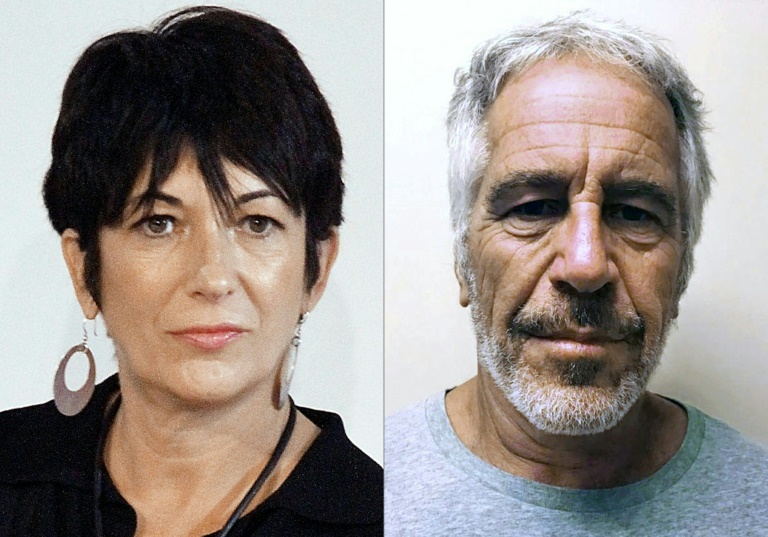
Ghislaine Maxwell put on suicide watch ahead of sentencing: lawyer

Jailed former socialite Ghislaine Maxwell has been placed on suicide watch — despite not being suicidal — according to her lawyers, who said they would move to postpone her sentencing for sex trafficking if she remained in isolation. 

“Ms. Maxwell was abruptly removed from general population and returned to solitary confinement” on Friday, attorney Bobbi Sternheim wrote in a letter Saturday to Judge Alison Nathan.

She has been denied access to legal documents and time to meet with lawyers and this has “prevented her from preparing for sentencing,” which is set for Tuesday, he added.

Maxwell, who was convicted in New York federal court for helping the late financier Jeffrey Epstein sexually abuse girls, was placed on suicide watch without a psychological evaluation “and without justification,” Sternheim said. 

A psychologist evaluated the 60-year-old on Saturday and “determined she is not suicidal,” he added.

If Maxwell remains on suicide watch, her lawyers will move on Monday to postpone her sentencing, Sternheim said.

The Oxford-educated daughter of the late British press baron Robert Maxwell was convicted late last year on five of six sexual abuse counts, the most serious for sex trafficking minors, and her sentence could amount to an effective life term behind bars.

Prosecutors have asked that Maxwell receive between 30 and 55 years in jail.

Her lawyers have called on Nathan to hand down a sentence less than the US probation office’s recommended 20 years, citing a traumatic childhood and claiming that Maxwell is being unfairly punished because Epstein escaped trial.

Epstein killed himself in 2019 while awaiting his own sex crimes trial in New York.

Maxwell has already been held in detention for some two years following her arrest in New Hampshire in the summer of 2020.

burs-sw/ec

G7 touts $600 bn global infrastructure plan to rival China

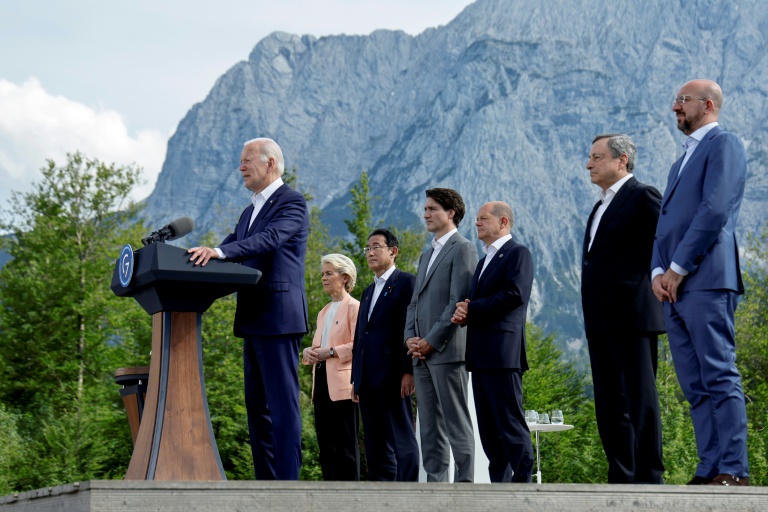
The G7 group of rich democracies on Sunday announced an attempt to compete with China’s formidable Belt and Road Initiative by raising some $600 billion for global infrastructure programmes in poor countries.

The Partnership for Global Infrastructure and Investment, unveiled with fanfare by US President Joe Biden and G7 allies from Canada, Germany, Italy, Japan and the European Union, aims to fill a huge gap left as communist China uses its economic clout to stretch diplomatic tentacles into the furthest reaches of the world.

Biden said the target was for the United States to bring $200 billion to the table, with the rest of the G7 another $400 billion by 2027.

Funding the kinds of projects that China currently dominates — everything from roads to harbours in far-flung corners of the world — is not “aid or charity,” Biden said.

Highlighting the geostrategic thinking behind the plan, Biden said such projects “deliver returns for everyone, including the American people and the people of all our nations.”

Around the world, the role of China’s democratic rivals is “a chance for us to share our positive vision for the future” and for other countries to “see for themselves the concrete benefits of partnering with democracies,” he said.

European Commission chief Ursula von der Leyen echoed this, saying “it is up to us to give a positive, powerful investment impulse to the world, to show our partners in the developing world that they have a choice.”

Although China was not referred to by name, the rivalry loomed large over the leaders’ presentation, a relaunch of a first attempt at a Western infrastructure fund that Biden laid out during last year’s G7 summit in Britain.

Unlike China’s state-run BRI initiative, the proposed G7 funding would depend largely on private companies being willing to commit to massive investments and is therefore not guaranteed.

According to US officials, however, that is a good thing.

In this capitalist vs communist scenario, US officials say, recipient countries will be able to avoid the debt traps and other strongarm tactics allegedly used by the Chinese.

– ‘Not too late’ –

Between now and 2027, the US government and allies will shoot for the $600-billion figure “through grants, federal financing, and leveraging private sector investments,” the White House said.

“This will only be the beginning: the United States and its G7 partners will also seek to mobilise hundreds of billions in additional capital from other like-minded partners, multilateral development banks, development finance institutions, sovereign wealth funds, and more.”

With the investment target largely aspirational, a senior US official acknowledged that the West is currently in second place behind China.

“There’s no doubt that the Belt and Road Initiative has been around for several years and it’s made a lot of cash disbursements and investments — and that we’re coming to this after years of their investments,” the official said.

“But I would argue that it is definitely not too late. And I’m not even sure that it is late.”

The official, briefing reporters on condition of anonymity, said that “many countries” which partnered with China were suffering buyer’s remorse, concluding that Beijing was more interested in establishing economic and geostrategic footholds than benefiting locals.

By contrast, “we’re coming to you with an offer to make investments to actually improve your country, to improve the economy and to have lasting effects on GDP and your populations,” the official said.

“I think that is the deal that is being offered.”

While the obvious targets for the US-led initiative are in Africa, South America and much of Asia are also on the radar. Fallout from Russia’s devastating invasion of Ukraine means that “even places in eastern Europe” could be brought into the fold, the official said.

Long road ahead to hammer out UN biodiversity blueprint

Delegates from almost 200 nations have made little progress towards hammering out a blueprint for a global pact to protect nature from human activity, after almost a week of difficult talks in Nairobi.

The meetings wrapping up Sunday were aimed at ironing out differences among the UN Convention of Biological Diversity’s 196 members, with barely six months before a crucial COP15 summit in December.

The ambitious goal is to draw up a draft text outlining a global framework to “live in harmony with nature” by 2050, with key targets to be met by 2030.

Many hope the landmark deal, when finalised, will be as ambitious in its goals to protect life on Earth as the Paris agreement was for climate change.

But progress at the talks in the Kenyan capital was slow.

“Most of the time was spent on technical bickering, with major decisions left unresolved and postponed for the COP,” said Brian O’Donnell, director of the Campaign for Nature.

“It is now critically important that environment ministers and heads of state engage, take ownership and rescue this process,” he told AFP.

Delegates in Nairobi spent hours discussing formulations or seeking to introduce new elements, instead of reconciling differing viewpoints and refining rather than overhauling the text.

– ‘Security issue for humanity’ –

One delegate on Saturday night spoke of feeling “desperate”. Another described the Nairobi round as “a step” and voiced hope for further informal meetings before December.

“We need to continue with the dialogue with the intention to simplify and reduce the brackets (on the disputed issues) and alternatives,” said Vinod Mathur, head of India’s National Biodiversity Authority.

For that to happen, warned Francis Ogwal of Uganda, one of the two co-chairs of the Kenya negotiations, “there has to be a very big shift of mind in the way we are negotiating”.

Proposals include a global commitment to set aside at least 30 percent of both land and oceans as protected zones by the end of the decade, as well as efforts to cut plastic and agricultural pollution.  

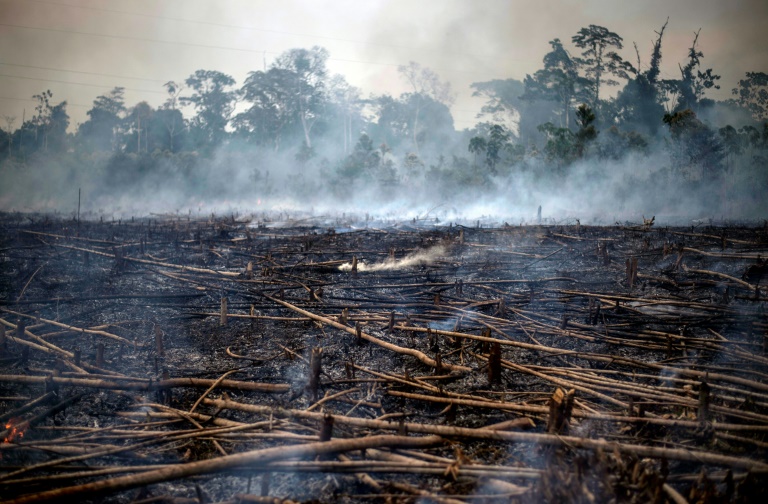
But time is running out, with one million species threatened with extinction and tropical forests disappearing, while intensive agriculture is depleting the soil and pollution is affecting even the most remote areas of the planet.

“It’s not any longer an ecological issue only… It is increasingly an issue that affects our economy, our society, our health, our wellbeing,” Marco Lambertini, director general of WWF International, told a press conference.

“It is a security issue for humanity.”

– ‘Crucial’ to fix food system –

Lambertini accused some countries of using a “delaying tactic”, pointing the finger at Brazil in particular. Behind the scenes, Argentina and South Africa were also getting the blame.

One of the main stumbling blocks concerns agriculture, particularly targets for a reduction in pesticides and fertilisers.

The European Union wants to see the pesticide issue specifically mentioned in the text, but “there is little support” for that position, according to one delegate.

Delegates from the Global South have highlighted the need to produce more, with much of the planet undergoing a major food security crisis, and reject any reference to agroecology, the use of ecological principles in farming.  

“Agriculture is currently responsible for 70 percent of biodiversity loss,” said Guido Broekhoven of WWF International, adding that it was “absolutely crucial” to fix a system where 30 percent of food goes to waste.

Countries are also divided on the issue of the funding needed to implement the biodiversity goals.

Brazil, backed by 22 countries including Argentina, South Africa, Cameroon, Egypt and Indonesia, renewed calls for rich countries to provide at least $100 billion a year until 2030 to help developing countries preserve their rich biodiversity. 

The African bloc is also asking for a fund dedicated to biodiversity, according to one country delegate.

Although leaders of 93 countries committed in September 2020 to ending the biodiversity crisis, the issue is struggling to gain as much traction on the international political agenda as climate change.

“There is also a need to see where our political leaders want us to be,” said Canada’s Basile van Havre, co-chair of the Kenyan talks.

“We’re looking to see who’s going to  step up to pick up that ball.”

France caps visitor numbers at Marseille Calanques coves

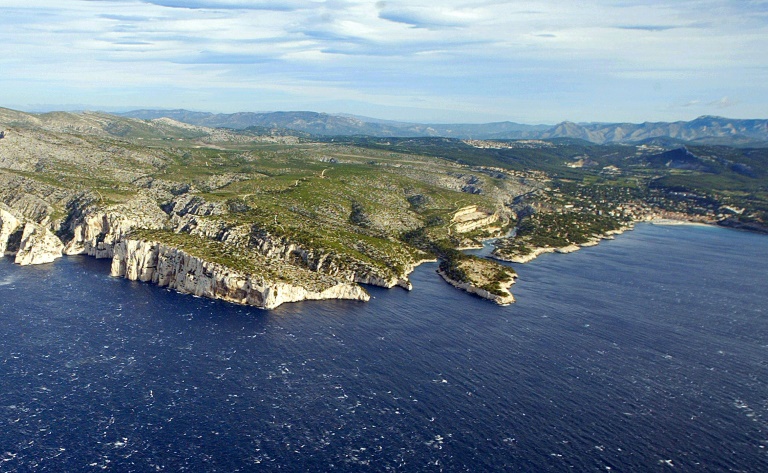
Two popular coves in the “Calanques” area  near Marseille, among southern France’s main attractions, saw visitor numbers capped on Sunday for the first time to protect their fragile ecosystem.

The coast between Marseille and Cassis features France’s best-known Calanques, age-old rock formations featuring steep cliffs, offering spectacular views, rare marine fauna and protected swimming.

Hugely popular with locals and visitors alike, they are often accessible only by boat or hiking trails.

Because the limestone formations have little or no topsoil, plants have had to take root in cracks between the rocks, making their hold tenuous and vulnerable to disturbances.

“The Sugiton and Pierres Tombees calanques have fallen victim to very serious soil erosion because of overcrowding,” said the Calanques National Park which manages the landscape of narrow vertical cliffs, inlets and beaches.

“This phenomenon is threatening the landscapes that we love so much, and bio-diversity,” it said.

Access to Sugiton and Pierres Tombees was limited to 400 people each on Sunday, compared to the usual summer daily visitor numbers of 2,500.

The new measure is to allow “the natural regeneration” of the cove, Nicolas Chardin, the national park’s interim director, told AFP at the Sugiton beach on Sunday.

Online bookings are free of charge, but anyone found at the beaches without a pass on capped days can be fined 68 euros ($72).

“Everything went well this morning, let’s hope it stays that way the entire season,” Mathieu Benquet, who heads the national park’s police team, told AFP.

However, many people — including several foreigners — had been turned away at the several checkpoints along the access path to the cove because they didn’t have the required QR code.

Some visitors, hoping for a cooling swim on a hot day, were unhappy about the new rule.

“We’ve been coming here for 10 years, it feels like our home cove,” said Younes Azabib, a 26-year old Marseille resident.

“We thought of everything, the picnic and the pizzas. But we didn’t think to book,” said his friend, Bilal.

But others appreciated the new-found calmness at the beach.

“This is great,” said Isabelle, a 50-year old Marseille resident who usually stays away during the summer because of crowds. “It’s finally possible to have a swim.”

Nicolas Ponsot, a 41-year-old father of three, also welcomed the visitor cap, saying “it helps to preserve this whole eco-system”.

The new rule is to be applied again next Sunday and then daily between July 10 and August 21, the national park said.

Bankrupt Sri Lanka seeks discounted Russian oil

Cash-strapped Sri Lanka on Sunday announced sending ministers to Russia and Qatar to try and secure cheap oil a day after the government said it had all but run out of fuel.

The government meanwhile extended a two-week closure of non-essential state institutions until further notice in order to save fuel, maintaining only a skeleton staff to provide minimum services.

Energy Minister Kanchana Wijesekera said two ministers will travel to Russia on Monday to discuss getting more oil following last month’s purchase of 90,000 tonnes of Siberian crude.

That shipment was arranged through Coral Energy, a Dubai-based intermediary, but politicians have been urging the authorities to negotiate directly with President Vladimir Putin’s government.

“Two ministers are going to Russia and I will go to Qatar tomorrow to see if we can arrange concessionary terms,” Wijesekera told reporters in Colombo.

Wijesekera had announced on Saturday that Sri Lanka was virtually out of petrol and diesel after several scheduled shipments were delayed indefinitely due to “banking” reasons.

Fuel reserves were sufficient to meet less than two days’ demand and it was being reserved for essential services, Wijesekera said while apologising for the situation.

The state-run Ceylon Petroleum Corporation on Sunday hiked the price for diesel by 15 percent to 460 rupees ($1.27) a litre and petrol by 22 percent to 550 rupees.

Since the beginning of the year, diesel prices have gone up nearly four-fold and gasoline has almost tripled.

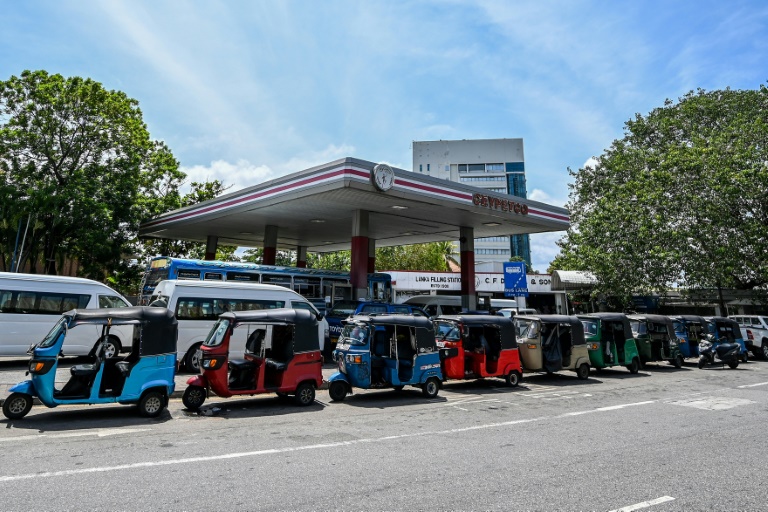
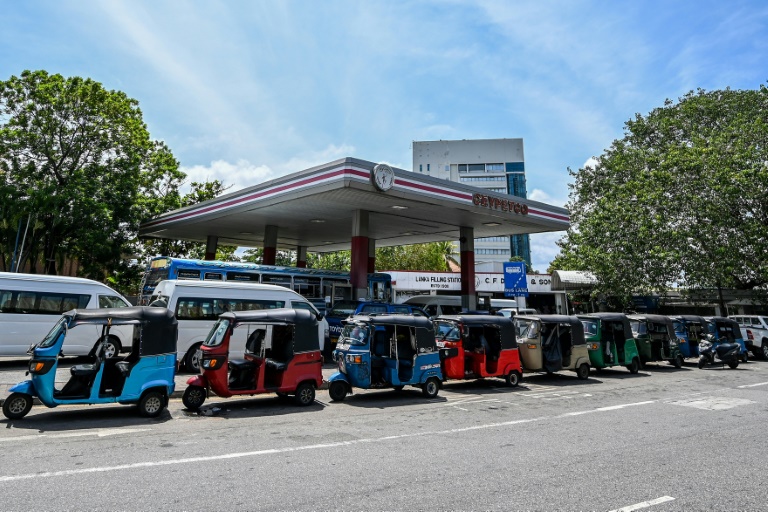
Wijesekera said there would be an indefinite delay in getting new shipments of oil and urged motorists not to queue up until he introduces a token system to a limited number of vehicles daily.

– US takes stock-

A delegation from the US Treasury and the State Department meanwhile arrived to “explore the most effective ways for the US to support Sri Lankans in need”, the US embassy in Colombo said.

“As Sri Lankans endure some of the greatest economic challenges in their history, our efforts to support economic growth and strengthen democratic institutions have never been more critical,” US ambassador Julie Chung said in a statement.

US Deputy Assistant Secretary of Treasury for Asia Robert Kaproth and Deputy Assistant Secretary of State for South and Central Asia Kelly Keiderling were in the delegation.

The embassy said it had committed $158.75 million in new financing in the past two weeks to help Sri Lankans.

About 1.7 million residents need “life-saving assistance”, according to the United Nations which issued a flash appeal last week.

Four out of five people in the nation of 22 million have reduced their food intake due to severe shortages and galloping prices, the UN noted.

Prime Minister Ranil Wickremesinghe warned parliament on Wednesday that more hardships were on the way.

“Our economy has faced a complete collapse,” Wickremesinghe said. “We are now facing a far more serious situation beyond the mere shortages of fuel, gas, electricity and food.”

Unable to repay its $51 billion foreign debt, the government declared it was defaulting in April and is negotiating with the International Monetary Fund for a possible bailout.

Sri Lanka’s official inflation at the end of May was 45.3 percent, according to official data, but private economists have placed it at 128 percent, the second-highest in the world after Zimbabwe.

Bankrupt Sri Lanka seeks discounted Russian oil

Cash-strapped Sri Lanka on Sunday announced sending ministers to Russia and Qatar to try and secure cheap oil a day after the government said it had all but run out of fuel.

The government meanwhile extended a two-week closure of non-essential state institutions until further notice in order to save fuel, maintaining only a skeleton staff to provide minimum services.

Energy Minister Kanchana Wijesekera said two ministers will travel to Russia on Monday to discuss getting more oil following last month’s purchase of 90,000 tonnes of Siberian crude.

That shipment was arranged through Coral Energy, a Dubai-based intermediary, but politicians have been urging the authorities to negotiate directly with President Vladimir Putin’s government.

“Two ministers are going to Russia and I will go to Qatar tomorrow to see if we can arrange concessionary terms,” Wijesekera told reporters in Colombo.

Wijesekera had announced on Saturday that Sri Lanka was virtually out of petrol and diesel after several scheduled shipments were delayed indefinitely due to “banking” reasons.

Fuel reserves were sufficient to meet less than two days’ demand and it was being reserved for essential services, Wijesekera said while apologising for the situation.

The state-run Ceylon Petroleum Corporation on Sunday hiked the price for diesel by 15 percent to 460 rupees ($1.27) a litre and petrol by 22 percent to 550 rupees.

Since the beginning of the year, diesel prices have gone up nearly four-fold and gasoline has almost tripled.

Wijesekera said there would be an indefinite delay in getting new shipments of oil and urged motorists not to queue up until he introduces a token system to a limited number of vehicles daily.

– US takes stock-

A delegation from the US Treasury and the State Department meanwhile arrived to “explore the most effective ways for the US to support Sri Lankans in need”, the US embassy in Colombo said.

“As Sri Lankans endure some of the greatest economic challenges in their history, our efforts to support economic growth and strengthen democratic institutions have never been more critical,” US ambassador Julie Chung said in a statement.

US Deputy Assistant Secretary of Treasury for Asia Robert Kaproth and Deputy Assistant Secretary of State for South and Central Asia Kelly Keiderling were in the delegation.

The embassy said it had committed $158.75 million in new financing in the past two weeks to help Sri Lankans.

About 1.7 million residents need “life-saving assistance”, according to the United Nations which issued a flash appeal last week.

Four out of five people in the nation of 22 million have reduced their food intake due to severe shortages and galloping prices, the UN noted.

Prime Minister Ranil Wickremesinghe warned parliament on Wednesday that more hardships were on the way.

“Our economy has faced a complete collapse,” Wickremesinghe said. “We are now facing a far more serious situation beyond the mere shortages of fuel, gas, electricity and food.”

Unable to repay its $51 billion foreign debt, the government declared it was defaulting in April and is negotiating with the International Monetary Fund for a possible bailout.

Sri Lanka’s official inflation at the end of May was 45.3 percent, according to official data, but private economists have placed it at 128 percent, the second-highest in the world after Zimbabwe.

French energy giants urge consumers to cut back

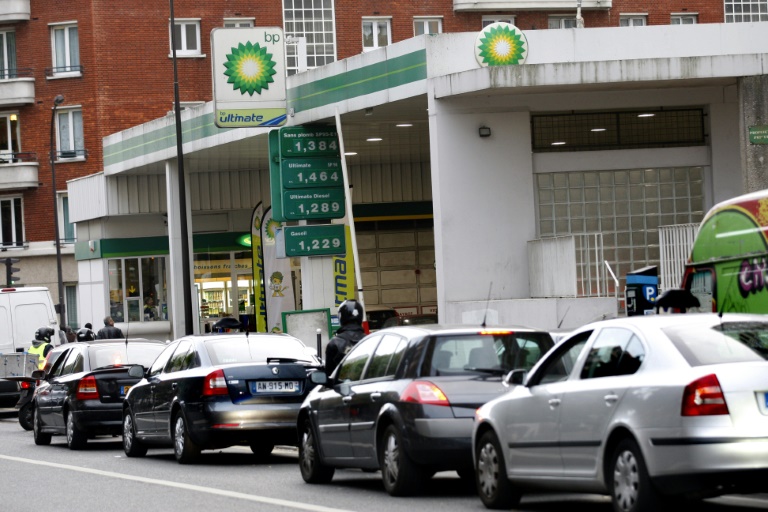
Consumers should start cutting back on their energy use immediately, the bosses of France’s three big energy companies urged Sunday, warning of social tensions next winter unless reserves are replenished.

“The effort has to be immediate, collective and massive,” Patrick Pouyanne of TotalEnergies, Jean-Bernard Levy of EDF and Catherine MacGregor of ENGIE wrote in an op-ed piece in the JDD weekly.

The call came after the French government said this week it aimed to have its natural gas reserves at full capacity by autumn as European countries brace for supply cuts from major supplier Russia with the Ukraine war dragging on, and would build a floating terminal to receive more gas supplies by ship.

The three energy bosses said in the article that European energy production was further hampered by hydro-electric production suffering from drought.

“The surge in energy prices resulting from these difficulties threatens our social and political fabric and impacts families’ purchasing power too severely,” they said, adding: “The best energy is the one we don’t use.”

They said “every consumer and every company must change their habits and immediately limit their energy consumption, be it of electricity, gas or oil products”.

Replenishing reserves of natural gas over the summer is a priority, as is “eliminating the national waste” of energy, they said.

France is less dependent than neighbour Germany on Russian gas deliveries as it covers close to 70 percent of its electricity needs from nuclear energy.

But according to the International Energy Agency (IEA), France needs to accelerate the deployment of low-carbon energy technologies and energy efficiency solutions if it wants to reach its energy and climate targets.

France notably needs “more sustained and consistent policies” to develop alternatives to fossil fuels, such as wind and solar energy, the IEA said.

Abortion pills to become next battleground in US reproductive fight

As conservative US states rush to enact abortion bans following the Supreme Court’s bombshell decision, the fight over reproductive rights in America is poised to shift to a new battleground: abortion-inducing pills.

With little other means at its disposal, the Biden administration will focus on expanding access to abortion pills for women living in states where the procedure is banned or restricted — while those states and powerful conservative groups are sure to mount legal challenges to prohibit their use.

Hours after the high court shredded 50 years of constitutional protections for abortion rights on Friday, President Joe Biden ordered health officials to make sure abortion pills were available to American women.

“I will do all in my power to protect a woman’s right in states where they will face the consequences of today’s decision,” he said in televised address to the nation.

The pills, which can be used without significant risk to terminate a pregnancy up to 10 weeks’ gestation, already account for half of all abortions carried out in the United States.

Demand is set to soar further after 11 states mostly in the Republican-led conservative South moved to severely restrict or fully ban abortion, with others set to follow suit.

Already Saturday, some activists rallying outside the Supreme Court in the US capital Washington held up posters with instructions on where women can get abortion pills, while others chanted “My body, my choice.”

Rebecca Gomperts, a Dutch physician who runs Aid Access, an Austria-based organization that provides abortion pills over the internet, is confident that the situation now faced by American women is not as tragic as it was 50 years ago, before the landmark Roe vs. Wade ruling of 1973 that enshrined abortion rights in America.

“The abortion pills cannot be stopped,” Gomperts told AFP in a phone interview. “So there is always access to a safe abortion if a woman has an unwanted pregnancy.”

But after Friday’s ruling, that may be easier said than done.

– A legal grey area –

The Food and Drug Administration, America’s health regulator, approved the use of abortion pills two decades ago and last year allowed for them to be prescribed via telemedicine and delivered by mail.

But their use in anti-abortion states remains a legal grey area and will likely become a front line in future court battles over reproductive rights.

According to the Guttmacher Institute, a research group that supports access to abortion, 19 US states require that abortion pills be physically administered by a clinician, thus prohibiting their delivery by mail.

And in states that ban all methods of abortion, women may be prohibited from seeking tele-health appointments with out-of-state doctors or foreign clinicians, like Gomperts’ group. 

In this case, they may have to travel to a state where reproductive tele-health appointments are allowed and get the medication delivered to an out-of-state address.

But there is another complication.

A medication abortion requires two drugs: first, a dose of mifepristone is taken to block the hormones that support a pregnancy; then, 24 to 48 hours later, misoprostol is taken to induce contractions.

That raises a question: can a woman from an anti-abortion state be prosecuted if she receives the first dose elsewhere, but takes the second dose after returning home?

As liberal states take action to facilitate abortions for women from other parts of the country, there are fears that conservative states may seek to prosecute health workers and advocacy groups involved in those efforts — and even the patients themselves.

Anticipating such plans, Biden’s Attorney General Merrick Garland on Friday warned that states cannot ban abortion pills, authorized by the federal regulator, “based on disagreement with the FDA’s expert judgment about its safety and efficacy” since federal law preempts state law.

As these legal battles prepare to play out, anti-abortion advocate Savannah Craven said she and her colleagues will work on getting all methods of abortion, including with pills, banned across the United States.

“I believe in the sanctity and dignity of human life. Life begins in the womb, life begins at conception,” she said.

But the argument fell flat with Elizabeth Kellogg and her husband Dan Reitz, who showed up to protest outside the Supreme Court with their eight-month-old daughter Lorelei.

“If it were about life, they’d be worried about the life of the birther, they’d be worried about life after birth,” Kellogg told AFP. 

“Very little is being done to actually hold up the sanctity of life in the way that it is proclaimed.”

Sri Lanka hikes fuel prices as US delegation arrives

Sri Lanka hiked fuel prices on Sunday, creating further pain for ordinary people as officials from the United States arrived for talks aimed at alleviating the island’s dire economic crisis.

Ceylon Petroleum Corporation (CPC) said it raised the price of diesel, used widely in public transport, by 15 percent to 460 rupees ($1.27) a litre while upping petrol 22 percent to 550 rupees ($1.52).

The announcement came a day after Energy Minister Kanchana Wijesekera said there would be an indefinite delay in getting new shipments of oil.

Wijesekera said oil due last week had not turned up while shipments scheduled to arrive next week would also not reach Sri Lanka due to “banking” reasons.

Wijesekera apologised to motorists and urged them not to join long queues outside pumping stations. Many have left their vehicles in queues hoping to top up when supplies are restored.

Official sources said the island’s remaining fuel supply was sufficient for about two days, but that authorities were saving it for essential services. 

– US assesses crisis –

A delegation from the US Treasury and the State Department arrived for talks to “explore the most effective ways for the US to support Sri Lankans in need”, the US embassy in Colombo said.

“As Sri Lankans endure some of the greatest economic challenges in their history, our efforts to support economic growth and strengthen democratic institutions have never been more critical,” US ambassador Julie Chung said in a statement.

The embassy said it had committed $158.75 million in new financing in the past two weeks to help Sri Lankans.

The UN has already issued an emergency appeal to raise $47 million to feed the most vulnerable segments of the island’s 22 million people.

About 1.7 million residents need “life-saving assistance”, according to the UN, with four out of five people reducing their food intake due to severe shortages and galloping prices.

Last week, the government closed non-essential state institutions and schools for two weeks to reduce commuting because of the energy crisis.

Several hospitals across the country reported a sharp drop in the attendance of medical staff due to the fuel shortage.

Prime Minister Ranil Wickremesinghe warned parliament on Wednesday that more hardships were on the way.

“Our economy has faced a complete collapse,” Wickremesinghe said. “We are now facing a far more serious situation beyond the mere shortages of fuel, gas, electricity and food.”

Unable to repay its $51 billion foreign debt, the government declared it was defaulting in April and is negotiating with the International Monetary Fund for a possible bailout.

Rich heritage buried under impoverished Gaza Strip

While workers laboured on a large construction site in the Gaza Strip, a security guard noticed a strange piece of stone sticking out of the earth.

“I thought it was a tunnel,” said Ahmad, the young guard, referring to secret passages dug by the Islamist group Hamas to help it battle Israel.

In the Gaza Strip, ruled by Hamas and repeatedly ravaged by war, people are more familiar with burying the dead than digging up their heritage.

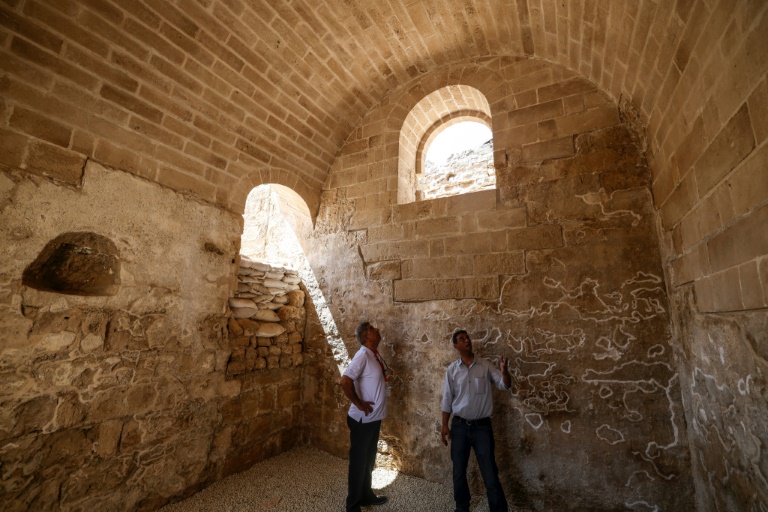
But what Ahmad found in January was part of a Roman necropolis dating from about 2,000 years ago — representative of the impoverished Palestinian territory’s rich, if under-developed, archaeological treasures.

After the last war between Israel and Hamas in May 2021 left a trail of damage in Gaza, Egypt began a reconstruction initiative worth $500 million.

As part of that project in Jabaliya, in the north of the coastal enclave, bulldozers were digging up the sandy soil in order to build new concrete buildings when Ahmad made his discovery.

“I notified the Egyptian foremen, who immediately contacted local authorities and asked the workers to stop,” said Ahmad, a Palestinian who preferred not to give his full name.

With rumours on social media of a big discovery, Gaza’s antiquities service called in the French non-governmental group Premiere Urgence Internationale and the French Biblical and Archaeological School of Jerusalem to evaluate the site’s importance and mark off the area.

“The first excavations permitted the identification of about 40 tombs dating from the ancient Roman period between the first and second centuries AD,” said French archaeologist Rene Elter, who led the team dispatched to Jabaliya.

“The necropolis is larger than these 40 tombs and should have between 80 and 100,” he said.

One of the burial sites found so far is decorated with multi-coloured paintings representing crowns and garlands of bay leaves, as well as jars for funereal drinks, the archaeologist added.

– ‘Treasures’ of Gaza –

Archaeology is a highly political subject in Israel and the Palestinian territories, and discoveries are used to justify the territorial claims of each people.

While the Jewish state has a number of archaeologists reporting on an impressive number of ancient treasures, the sector is largely neglected in Gaza.

Authorities periodically announce discoveries in the territory, but tourism at archaeological sites is limited.

Israel and Egypt, which shares a border with Gaza, tightly restrict the flow of people in and out of the enclave administered by Hamas since 2007.

“However, there is no difference between what you can find in Gaza and on the other side of the barrier” in Israel, Elter said. “It’s the same great history.”

“In Gaza, a lot of sites have disappeared because of conflict and construction, but the territory is an immense archaeological site which needs many teams of experts,” he added.

Stakes and fences have been erected around the Roman necropolis, which is watched over constantly by guards as new buildings go up nearby.

“We are trying to fight antiquities trafficking,” said Jamal Abu Rida, director of the local archaeological service tasked with protecting the necropolis and which hopes to find investors for further excavation.

Since Hamas took control 15 years ago, Gaza has endured four wars and numerous escalations of tension.

“The image of Gaza is often associated with violence, but its history is bursting with archaeological treasures that need to be protected for future generations,” said Jihad Abu Hassan, director of the local Premiere Urgence mission.

Demographics add to the pressure.

Gaza is a tiny, overcrowded strip of land whose population in 15 years has ballooned from 1.4 million to 2.3 million. As a result, building construction has accelerated.

“Some people avoid telling authorities if there is an archaeological discovery on a construction site out of fear of not being compensated” for the resulting work stoppage, Abu Hassan said.

“We lose archaeological sites every day,” which shows the need for a strategy to defend the enclave’s heritage, including training local archaeologists, he said.

Over the last few years, his organisation has helped to educate 84 archaeological technicians. Doing so also offers employment prospects, in an impoverished territory where youth joblessness exceeds 60 percent.

– Still hunting stones –

One rare success is the preservation of the Byzantine monastery of Saint Hilarion.

It opened several years ago to the public and includes an atrium, baths and multiple churches, standing as testament to an era when Gaza was a crossroads for Mediterranean pilgrims.

“We receive around 14,000 visitors a year, including school students,” said Fadel al-Otol, 41, a Palestinian archaeologist whose early passion for ancient ruins was formalised with training in France.

As a child during the first Palestinian intifida, or uprising, Otol said he hunted stones to hurl at Israeli soldiers.

“Today I look for stones to prove to the military that we have a great history,” he said.

Wandering around the Saint Hilarion site, Otol pondered his dream: “That we excavate all the archaeological sites of Gaza and that they be accessible to the public to show our history and culture to the entire world.”

If nothing is done, he said, “the sites would disappear forever.”

Close Bitnami banner
Bitnami