AFP

26 more dead in India monsoon fury, waters recede in Bangladesh

At least 26 more people have died in monsoon flooding and lightning strikes in India, as millions remained marooned in the country and neighbouring Bangladesh, authorities said Monday.

Floods are a regular menace in India and Bangladesh, but experts say climate change is increasing their frequency, ferocity and unpredictability for the two countries’ 1.6 billion people.

In India’s northeastern state of Assam, three people were killed in landslides while six others died in flood waters, disaster management authorities said.

In the eastern state of Bihar, lightning triggered by storms killed at least 17 people, according to local disaster management minister Renu Devi.

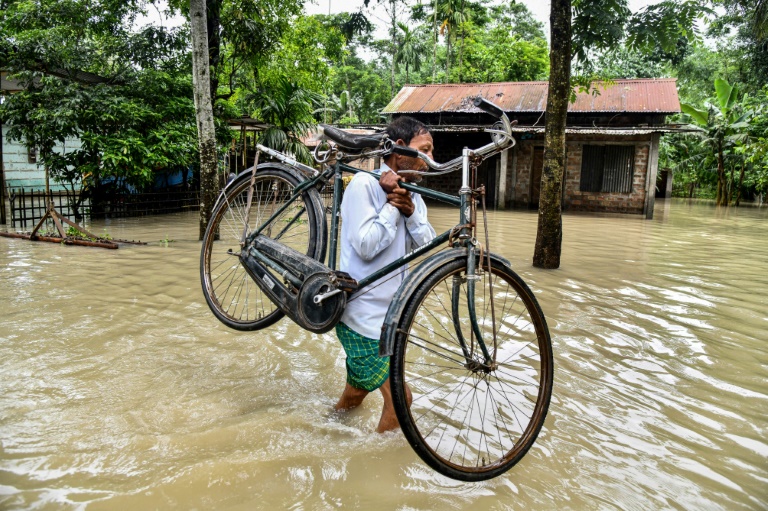
Assam continued to reel under severe flooding, with 5,140 villages across the state’s 33 districts submerged by surging waters.

More than 100,000 villagers are taking refuge in relief shelters.

The state was first hit in April when pre-monsoon rains arrived, causing floods that killed 44 people.

The floodwaters receded after a few weeks, only to rise again in June at the start of the annual monsoon season and taking the state toll to 71 so far.

In neighbouring Meghalaya state, at least 16 people have been killed since last Thursday after landslides and surging rivers that submerged roads.

Monsoon storms have also unleashed devastating floods in Bangladesh that have left millions stranded and killed dozens so far.

On Monday, flood water was gradually receding from the northeastern district of Sylhet, though millions are still marooned, said Mosharraf Hossain, the chief administrator of the district.

“The relief shelters are full of affected people. There’s a huge crisis of food and drinking water. Many are scared to return home while many lost their houses in floodwater,” he told AFP.

But the receding water is flooding districts further downstream in Habiganj and Brahmanbaria, officials said.

In Jamalpur district, an eight-year-old girl was swept away by strong currents from her inundated backyard and later found dead, police officer Aminul Islam told AFP.

Heavy rainfall also continued in the southeastern Chittagong Hills districts leading to waterlogging in the port city and exacerbating risks of landslides.

Air industry recovery gathering pace despite uncertainty: IATA

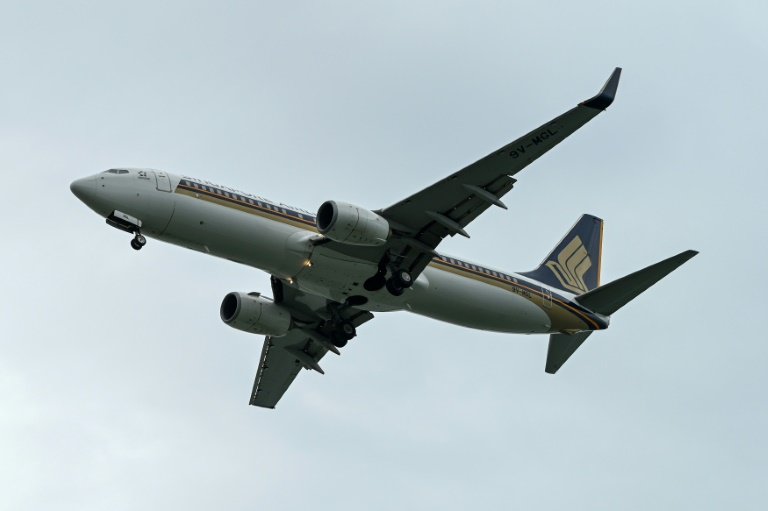
Air passengers are expected to hit 83 percent of pre-pandemic levels this year and the aviation industry’s return to profit is “within reach” in 2023 despite ongoing uncertainty, the International Air Transport Association said on Monday.

Industry losses are expected to drop to $9.7 billion this year, a “huge improvement” from $137.7 billion in 2020 and $42.1 billion in 2021, IATA said in an upgraded industry outlook ahead of its annual general meeting in Doha.

“Airlines are resilient. People are flying in ever greater numbers. And cargo is performing well against a backdrop of growing economic uncertainty,” the document quoted IATA director general Willie Walsh as saying.

The aviation industry was sent reeling by the pandemic, with passenger numbers plunging 60 percent in 2020 and remaining 50 percent down in 2021. Airlines lost nearly $200 billion over two years.

While some firms in the sector went bankrupt, others — backed often by states — have emerged from the pandemic with profits intact.

IATA said industry-wide profitability “appears within reach” in 2023, adding that North American airlines were expected to return an $8.8 billion profit this year.

More than 1,200 aircraft are expected to be delivered in 2022, while cargo volumes should reach a record 68.4 million tonnes “despite economic challenges”, it added.

“Strong pent-up demand, the lifting of travel restrictions in most markets, low unemployment in most countries, and expanded personal savings are fueling a resurgence in demand that will see passenger numbers reach 83 percent of pre-pandemic levels in 2022,” IATA said.

Airlines, desperate to put the coronavirus pandemic behind them, go into the talks in Doha ahead of a potential summer of chaos with shortages and strikes that could threaten their recovery.

While trade is roaring back to life, representatives from the aviation sector meeting until Tuesday in Qatar have a packed agenda with multiple geopolitical crises including the war in Ukraine and the environment.

Cracks are already showing in the sector’s recovery, though industry figures are optimistic about the future despite the issues.

In the past few weeks, delays and cancellations caused by a lack of staff at airports and strikes for better pay have wreaked havoc upon travellers.

The problems originate with the pandemic when airlines and airports laid off thousands of workers during its worst-ever crisis. Now, they are scrambling for employees.

Also reflecting the enduring disruption, IATA was forced to move its annual general meeting from Shanghai to Qatar as China continues to grapple with the pandemic.

The global association represents 290 airlines, accounting for 83 percent of air travel worldwide.

Air industry recovery gathering pace despite uncertainty: IATA

Air passengers are expected to hit 83 percent of pre-pandemic levels this year and the aviation industry’s return to profit is “within reach” in 2023 despite ongoing uncertainty, the International Air Transport Association said on Monday.

Industry losses are expected to drop to $9.7 billion this year, a “huge improvement” from $137.7 billion in 2020 and $42.1 billion in 2021, IATA said in an upgraded industry outlook ahead of its annual general meeting in Doha.

“Airlines are resilient. People are flying in ever greater numbers. And cargo is performing well against a backdrop of growing economic uncertainty,” the document quoted IATA director general Willie Walsh as saying.

The aviation industry was sent reeling by the pandemic, with passenger numbers plunging 60 percent in 2020 and remaining 50 percent down in 2021. Airlines lost nearly $200 billion over two years.

While some firms in the sector went bankrupt, others — backed often by states — have emerged from the pandemic with profits intact.

IATA said industry-wide profitability “appears within reach” in 2023, adding that North American airlines were expected to return an $8.8 billion profit this year.

More than 1,200 aircraft are expected to be delivered in 2022, while cargo volumes should reach a record 68.4 million tonnes “despite economic challenges”, it added.

“Strong pent-up demand, the lifting of travel restrictions in most markets, low unemployment in most countries, and expanded personal savings are fueling a resurgence in demand that will see passenger numbers reach 83 percent of pre-pandemic levels in 2022,” IATA said.

Airlines, desperate to put the coronavirus pandemic behind them, go into the talks in Doha ahead of a potential summer of chaos with shortages and strikes that could threaten their recovery.

While trade is roaring back to life, representatives from the aviation sector meeting until Tuesday in Qatar have a packed agenda with multiple geopolitical crises including the war in Ukraine and the environment.

Cracks are already showing in the sector’s recovery, though industry figures are optimistic about the future despite the issues.

In the past few weeks, delays and cancellations caused by a lack of staff at airports and strikes for better pay have wreaked havoc upon travellers.

The problems originate with the pandemic when airlines and airports laid off thousands of workers during its worst-ever crisis. Now, they are scrambling for employees.

Also reflecting the enduring disruption, IATA was forced to move its annual general meeting from Shanghai to Qatar as China continues to grapple with the pandemic.

The global association represents 290 airlines, accounting for 83 percent of air travel worldwide.

Stock markets mixed as recession worries persist

Markets were mixed Monday having pared earlier losses but sentiment continues to be clouded by fears that central bank moves to rein in soaring inflation will induce a recession.

The tepid performances come after a sell-off last week fuelled by the Federal Reserve’s sharp interest rate hike — the biggest in nearly 30 years — and a warning of more to come, while increases in Britain and Switzerland added to the gloom.

And while the S&P 500 and Nasdaq saw gains on Friday, there is a sense that indexes still have some way down to go before they find a bottom, with economic data suggesting economies are beginning to feel the pinch.

Cleveland Fed chief Loretta Mester added to the worry, saying that the risk of a recession in the United States was increasing and it would take several years to bring inflation down from four-decade highs to the bank’s two percent target.

She told CBS’s “Face The Nation” on Sunday that while she was not predicting a contraction, the Fed’s decision not to act sooner to fight rising prices was hurting the economy.

In Asian trade Monday, Tokyo, Shanghai Sydney, Seoul, Taipei, Bangkok and Wellington were all in the red, though there were gains in Hong Kong, Mumbai, Singapore, Manila and Jakarta.

London, Paris and Frankfurt edged up in early trade.

Analysts warned there was likely to be more pain ahead for traders as the Ukraine war drags on and uncertainty continues to reign.

“Central banks’ hawkish rhetoric and concerns over a global economic slowdown/recession (are) not helping sentiment and at this stage it is hard to see a turn in fortunes until we see evidence of a material ease in inflationary pressures,” said National Australia Bank’s Rodrigo Catril.

And Stephen Innes of SPI Asset Management added: “Most of these major central banks are praying for some relief from inflation and hoping the data falls in line, but unless there is a detent in the Ukraine-Russia war, escalation will continue to drive energy price fears so it could be a tough road ahead.”

Oil prices edged up Monday after suffering a hefty drop Friday over demand worries caused by a possible recession.

However, US Energy Secretary Jennifer Granholm said prices could continue to surge if the European Union cuts off imports of the commodity from Russia in response to the Ukraine war.

She said Joe Biden had called on global suppliers to ramp up output to help temper the price rises, with the president to discuss the issue at an upcoming visit to Saudi Arabia next month.

– Key figures at around 0720 GMT –

Tokyo – Nikkei 225: DOWN 0.7 percent at 25,771.22 (close)

Hong Kong – Hang Seng Index: UP 0.4 percent at 21,150.87

Shanghai – Composite: FLAT at 3,315.43

London – FTSE 100: UP 0.2 percent at 7027.78

Dollar/yen: DOWN at 134.86 yen from 134.99 yen late Friday

Pound/dollar: UP at $1.2243 from $1.2221

Euro/dollar: UP at $1.0529 from $1.0493

Euro/pound: UP at 85.98 pence from 85.83 pence

West Texas Intermediate: UP 0.4 percent at $109.98

Brent North Sea crude: UP 0.5 percent at $113.65 a barrel

New York – Dow: DOWN 0.1 percent at 29,888.78 (close)

— Bloomberg News contributed to this story —

Macau casino stocks slump as Covid restrictions kick in

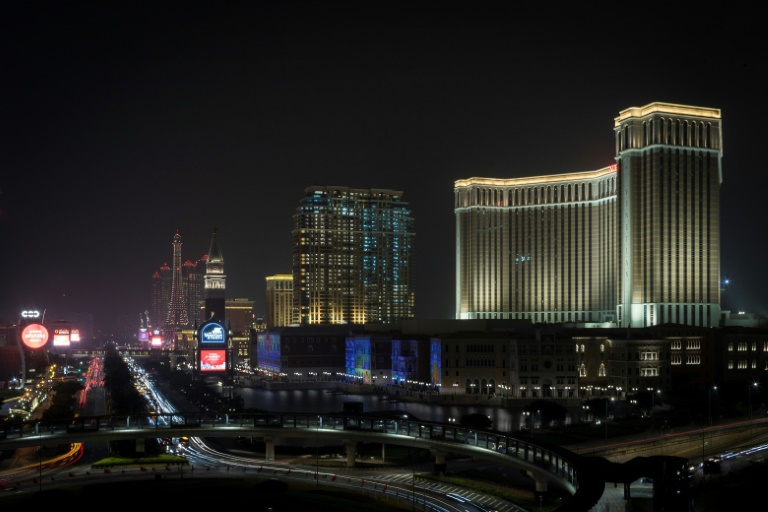
Macau casino stocks slumped on Monday as the Chinese gaming hub battled a Covid-19 outbreak that has prompted tightened social distancing restrictions and mass testing. 

The sector has been hammered by the pandemic, with vital tourism revenues wiped out by some of the world’s harshest measures to tackle the virus — including tough border controls, weeks-long quarantines and targeted lockdowns.

Case numbers are small by global comparison, with only 34 found so far in citywide mass testing according to local media, but the outbreak sent casino stocks tumbling. 

Sands China fell as much as eight percent while Wynn Macau dropped more than seven percent, though both partially recovered.

A Bloomberg Intelligence index of Macau’s six major casino operators fell as much as five percent, taking their total losses this year to 28 percent.

The virus has been kept largely under control in Macau but the government said a chain of transmission discovered on Saturday posed an “extremely high” risk of community transmission.

Citywide mass testing, expected to take place over 48 hours until Tuesday, had covered almost 340,000 people by Monday morning.

Government offices and banks are shut, dining in has been suspended at restaurants, school lessons have been cancelled and residents have been asked to stay at home.

Macau’s casinos usually account for about 80 percent of government revenue and more than half of the city’s gross domestic product, with nearly a fifth of the working population employed by the industry.

Almost all gambling is forbidden in mainland China but it is permitted in Macau, a former Portuguese colony that boasts a casino industry bigger than Las Vegas.

The pandemic is not the only challenge the sector is facing. 

Chinese President Xi Jinping’s anti-corruption campaign has seen increased scrutiny of big-spending gamblers and corrupt officials who might travel to Macau to launder money.

In September Macau announced plans to criminalise underground banking in the industry and place government representatives on the boards of casino operators to oversee their dealings.

However, when the new rules were unveiled at the beginning of this year they were less punishing than expected.

The six major casino operators are all required to bid again for their licences this year as they have expired.

'Huge uncertainty' for EU firms over China's Covid curbs, chamber warns

Many European firms are rethinking their investments in China because of its strict Covid controls, a top business group said Monday, warning that disruptions had pummelled operations.

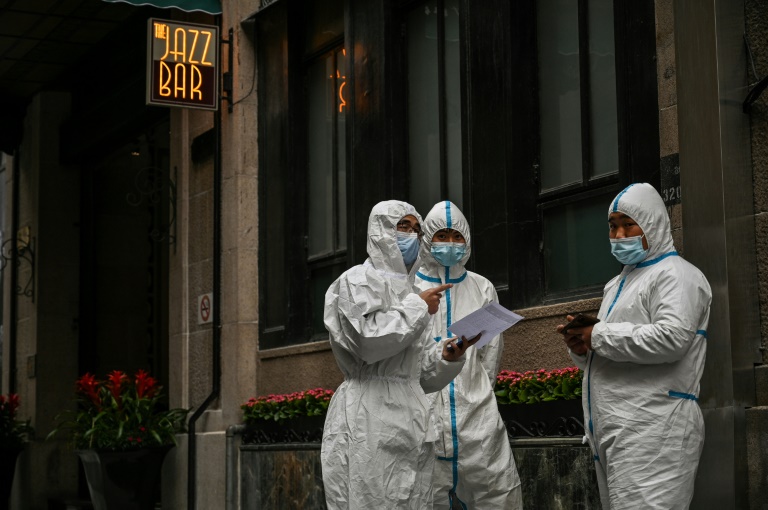
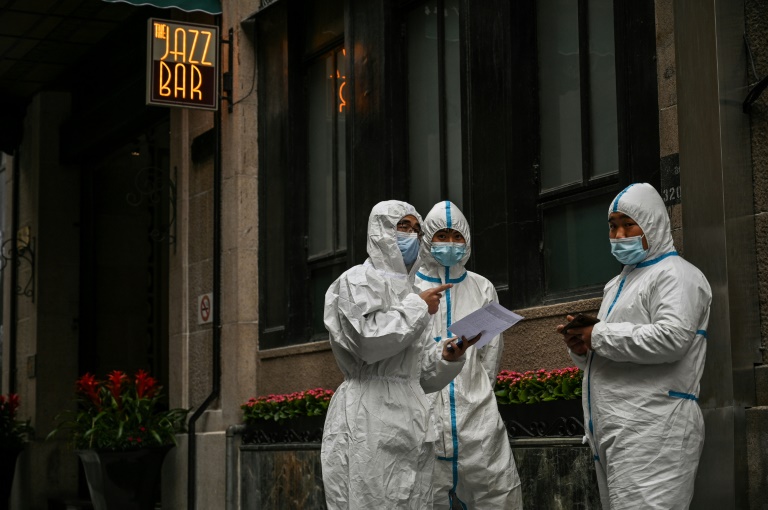
While the rest of the world has steadily removed coronavirus curbs, China has remained committed to its zero-Covid strategy, using lockdowns and mass testing to stamp out all infections.

But this strategy has hammered businesses and snarled supply chains — 60 percent of respondents in a survey of European businesses said it has become harder to do business in China, in large part due to Covid controls.

“We hope that China is really waking up,” Bettina Schoen-Behanzin, vice president of the European Union Chamber of Commerce in China, told AFP.

“(We hope) that they find a way to get out of this zero-tolerance Covid strategy because it causes huge uncertainty and this is for sure not good for investment.”

The chamber conducted the survey on over 600 member firms in February and March just as strict lockdowns were imposed in several areas to control China’s worst Covid outbreak in two years — from business hub Shanghai to the northern breadbasket province of Jilin.

The body also did a follow-up in April to assess the impact of the lockdowns and the Russian invasion of Ukraine.

It found that 92 percent of member companies were hit by supply chain problems, and three-quarters said their operations were negatively impacted by the Covid controls.

Further, 60 percent of respondents said in April that they had lowered their 2022 revenue projections.

The Ukraine war also impacted confidence — a third of the firms surveyed cited geopolitical tensions as a reason for the Chinese market becoming less attractive.

“The role China played over the last two years in bolstering European companies’ global revenues looks set to diminish,” the report released on Monday said.

“And recent events have led many to question just how many eggs they are willing to keep in their China basket.”

The Covid containment measures also hampered European firms’ ability to recruit international and local talent, the chamber said.

Its annual survey found that 58 percent of companies faced difficulties in recruiting international and local talent, pointing to the Covid controls and “a wealth of ever-changing visa and work permit procedures and extreme limitations on travel in and out of China”.

– ‘The world does not wait’ –

China is the world’s second-biggest economy with a huge market, however, making it difficult for firms to walk away.

“Companies, businesses are not leaving China, because the market is too big, the market is too important, and there are for sure many growth opportunities ahead,” Schoen-Behanzin told AFP.

“But they are localising, they are onshoring, and they are rethinking their footprint in China, in Asia,” she added.

“They are shifting, especially future investments.”

However, if the Covid restrictions drag on for another year, companies could start to feel even more pain.

“The world does not wait for China,” Schoen-Behanzin said.

“If there is no change, then definitely companies will start to think about backup plans and they obviously would go into other markets.”

'Huge uncertainty' for EU firms over China's Covid curbs, chamber warns

Many European firms are rethinking their investments in China because of its strict Covid controls, a top business group said Monday, warning that disruptions had pummelled operations.

While the rest of the world has steadily removed coronavirus curbs, China has remained committed to its zero-Covid strategy, using lockdowns and mass testing to stamp out all infections.

But this strategy has hammered businesses and snarled supply chains — 60 percent of respondents in a survey of European businesses said it has become harder to do business in China, in large part due to Covid controls.

“We hope that China is really waking up,” Bettina Schoen-Behanzin, vice president of the European Union Chamber of Commerce in China, told AFP.

“(We hope) that they find a way to get out of this zero-tolerance Covid strategy because it causes huge uncertainty and this is for sure not good for investment.”

The chamber conducted the survey on over 600 member firms in February and March just as strict lockdowns were imposed in several areas to control China’s worst Covid outbreak in two years — from business hub Shanghai to the northern breadbasket province of Jilin.

The body also did a follow-up in April to assess the impact of the lockdowns and the Russian invasion of Ukraine.

It found that 92 percent of member companies were hit by supply chain problems, and three-quarters said their operations were negatively impacted by the Covid controls.

Further, 60 percent of respondents said in April that they had lowered their 2022 revenue projections.

The Ukraine war also impacted confidence — a third of the firms surveyed cited geopolitical tensions as a reason for the Chinese market becoming less attractive.

“The role China played over the last two years in bolstering European companies’ global revenues looks set to diminish,” the report released on Monday said.

“And recent events have led many to question just how many eggs they are willing to keep in their China basket.”

The Covid containment measures also hampered European firms’ ability to recruit international and local talent, the chamber said.

Its annual survey found that 58 percent of companies faced difficulties in recruiting international and local talent, pointing to the Covid controls and “a wealth of ever-changing visa and work permit procedures and extreme limitations on travel in and out of China”.

– ‘The world does not wait’ –

China is the world’s second-biggest economy with a huge market, however, making it difficult for firms to walk away.

“Companies, businesses are not leaving China, because the market is too big, the market is too important, and there are for sure many growth opportunities ahead,” Schoen-Behanzin told AFP.

“But they are localising, they are onshoring, and they are rethinking their footprint in China, in Asia,” she added.

“They are shifting, especially future investments.”

However, if the Covid restrictions drag on for another year, companies could start to feel even more pain.

“The world does not wait for China,” Schoen-Behanzin said.

“If there is no change, then definitely companies will start to think about backup plans and they obviously would go into other markets.”

Bankrupt Sri Lanka opens IMF talks, begins shutdown

Sri Lanka closed schools and halted all non-essential government services on Monday, beginning a two-week shutdown to conserve fast-depleting fuel reserves as the International Monetary Fund opened talks with Colombo on a possible bailout.

The country of 22 million people is in the grip of its worst economic crisis after running out of dollars to finance even the most essential imports, including fuel.

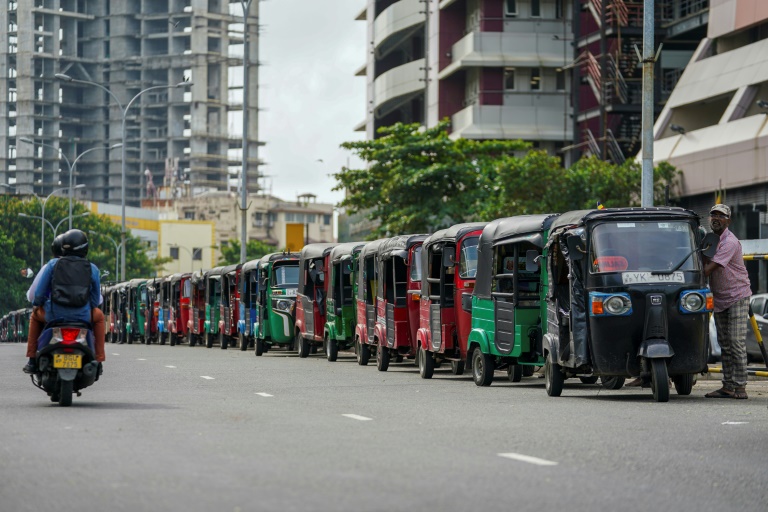
On Monday schools were shut and state offices worked with skeleton staff as part of government plans to reduce commuting and save precious petrol and diesel. Hospitals and the main seaport in Colombo were still operating. 

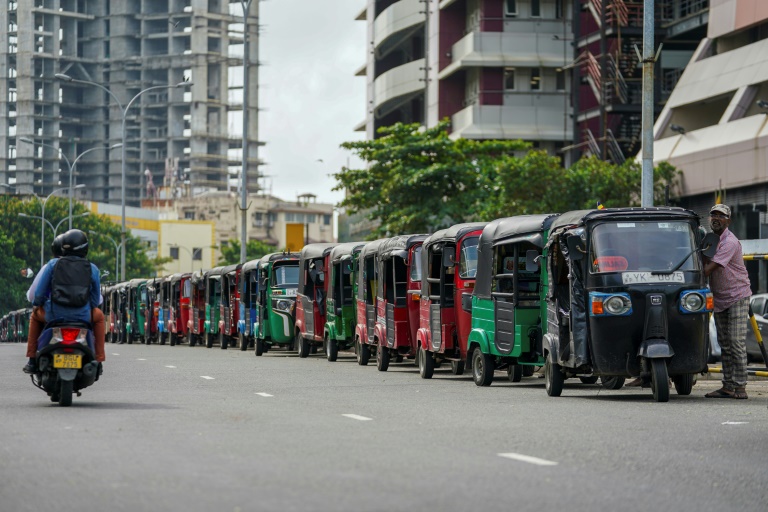
Hundreds of thousands of motorists remained in miles-long queues for petrol and diesel even though the energy ministry announced they will not have fresh stocks of fuel for at least three more days.

The country defaulted on its $51 billion foreign debt in April and went cap-in-hand to the IMF.

The first in-person talks with the IMF on Sri Lanka’s bailout request commenced in Colombo on Monday and will continue for 10 days, the lender and the government said in brief statements.

Prime Minister Ranil Wickremesinghe was also due to meet visiting Australian Home Affairs Minister Clare O’Neil to “deepen cooperation and assist Sri Lanka as the country faces very difficult economic times,” Canberra said in a statement.

It said O’Neil will also discuss strengthening engagement on transnational crime, including people-smuggling following a surge in would-be illegal immigrants by boat in the past month.

Sri Lanka is facing record-high inflation and lengthy power blackouts, all of which have contributed to months of protests — sometimes violent — calling on President Gotabaya Rajapaksa to step down. 

Police arrested 21 student activists who blocked all gates to the presidential secretariat building after declaring Monday, Rajapaksa’s 73rd birthday, a “day of mourning”.

The shutdown order came last week as the United Nations launched its emergency response to feed thousands of pregnant women who were facing food shortages.

Four out of five people in Sri Lanka have started skipping meals as they cannot afford to eat, the UN has said, warning of a looming “dire humanitarian crisis” with millions in need of aid.

Bankrupt Sri Lanka opens IMF talks, begins shutdown

Sri Lanka closed schools and halted all non-essential government services on Monday, beginning a two-week shutdown to conserve fast-depleting fuel reserves as the International Monetary Fund opened talks with Colombo on a possible bailout.

The country of 22 million people is in the grip of its worst economic crisis after running out of dollars to finance even the most essential imports, including fuel.

On Monday schools were shut and state offices worked with skeleton staff as part of government plans to reduce commuting and save precious petrol and diesel. Hospitals and the main seaport in Colombo were still operating. 

Hundreds of thousands of motorists remained in miles-long queues for petrol and diesel even though the energy ministry announced they will not have fresh stocks of fuel for at least three more days.

The country defaulted on its $51 billion foreign debt in April and went cap-in-hand to the IMF.

The first in-person talks with the IMF on Sri Lanka’s bailout request commenced in Colombo on Monday and will continue for 10 days, the lender and the government said in brief statements.

Prime Minister Ranil Wickremesinghe was also due to meet visiting Australian Home Affairs Minister Clare O’Neil to “deepen cooperation and assist Sri Lanka as the country faces very difficult economic times,” Canberra said in a statement.

It said O’Neil will also discuss strengthening engagement on transnational crime, including people-smuggling following a surge in would-be illegal immigrants by boat in the past month.

Sri Lanka is facing record-high inflation and lengthy power blackouts, all of which have contributed to months of protests — sometimes violent — calling on President Gotabaya Rajapaksa to step down. 

Police arrested 21 student activists who blocked all gates to the presidential secretariat building after declaring Monday, Rajapaksa’s 73rd birthday, a “day of mourning”.

The shutdown order came last week as the United Nations launched its emergency response to feed thousands of pregnant women who were facing food shortages.

Four out of five people in Sri Lanka have started skipping meals as they cannot afford to eat, the UN has said, warning of a looming “dire humanitarian crisis” with millions in need of aid.

Australian PM hopes for 'diplomatic' progress in Assange legal saga

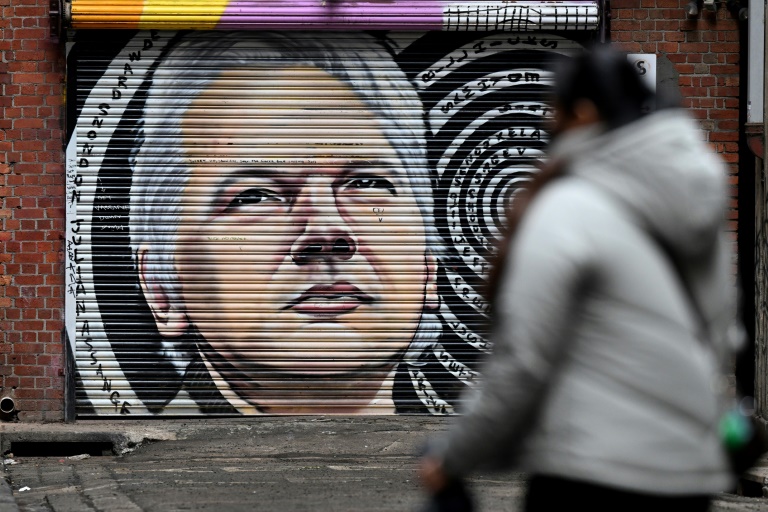
Australia’s prime minister said Monday he will engage “diplomatically” over the US prosecution of Julian Assange, but he is standing by earlier remarks questioning the purpose of further legal action.

As domestic pressure mounted on him to intervene in the WikiLeaks founder’s case, Prime Minister Anthony Albanese said he is sticking to comments he made while in opposition last year that “enough is enough”.

“I do not see what purpose is served by the ongoing pursuit of Mr Assange,” Albanese said at the time.

But the Australian leader took a swipe at “people who think that if you put things in capital letters on Twitter and put an exclamation mark, then that somehow makes it more important”.

Instead, he said: “I intend to lead a government that engages diplomatically and appropriately with our partners.”

Assange’s wife Stella Assange told ABC radio Monday that she understood the Albanese government was raising her husband’s case with US President Joe Biden’s administration.

“That is extremely welcome news,” she said, adding that she had not been able to see Assange since a British court last week cleared the path for his extradition to the United States.

“When I heard the news I just wanted to give him a hug,” she said.

Assange’s long-running legal saga began in 2010 after WikiLeaks published more than 500,000 classified US documents about the wars in Iraq and Afghanistan.

He has been held on remand at a top-security jail in southeast London since 2019 for jumping bail in a previous case accusing him of sexual assault in Sweden.

That case was dropped but he was not released on grounds he was a flight risk in the US extradition case.

As Assange’s potential US extradition looms, several high profile Australians, including former foreign minister Bob Carr, have called on Albanese to demand the US drop the prosecution.

“If Albanese asks, my guess is America will agree,” Carr wrote Monday in an op-ed in the Sydney Morning Herald.

Carr argued Assange’s prosecution stood in sharp contrast to the US pardoning former military intelligence officer Chelsea Manning, who had leaked the secret files to WikiLeaks. 

“Our new prime minister can say: ‘We’re not fans of the guy either, Mr President, but it’s gone on long enough. We’re good allies. Let this one drop’.”

While campaigning for May elections that swept his Labor Party to power, Albanese said that Assange had “paid a big price for the publication of that information already”.

Carr was serving as foreign minister in 2012 when Assange, who was facing sexual assault allegations, sought refuge in the Ecuadorian embassy in London.

For much of the past decade, Australia’s previous conservative government did not publicly advocate for Assange’s release.

Close Bitnami banner
Bitnami