AFP

Bolsonaro views disaster zone from air after deadly Brazil rains

President Jair Bolsonaro sent his condolences Monday to the families of 91 people who died in torrential rains in northeastern Brazil, as rescue workers continued a grim search for victims.

Releasing an updated toll, authorities said 26 people remained missing in the region around the city of Recife, where days of downpours triggered flooding and landslides that swept away virtually everything in their path.

Bolsonaro posted a video on Twitter that showed him flying in a helicopter over a disaster zone where brown floodwater still inundated large areas and gashes of mud scarred hillsides where houses once stood.

“I tried to land, but the pilots’ recommendation was that, given the instability of the soil, we could have an accident. So we decided against it,” the far-right president told a news conference.

He recalled a string of devastating floods in Brazil that have killed hundreds of people in recent months, and which experts say are being aggravated by climate change.

“We send our condolences to the families. Our top priority is comforting the families and getting aid to the population,” he said.

– ‘Can’t eat or sleep’ –

The force of the landslides ripped apart houses in neighborhoods including Jardim Monteverde, a poor community just outside Recife.

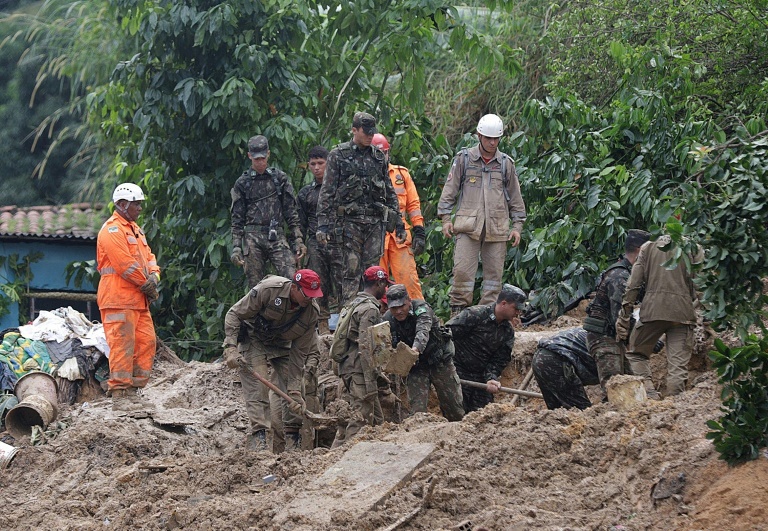
Rescue workers have found more than 20 bodies buried in the mud that tore through the neighborhood Saturday, and said they expect to find more.

“I can’t eat or sleep. It’s just so much pain,” said Maria Lucia da Silva, a 56-year-old resident whose neighbors’ house was destroyed, killing 11 people. A 12th member of the family remains missing.

“I’ve lived here for 40 years. They were like my family. I watched a lot of them grow up,” Da Silva told AFP, crying behind her sunglasses.

Dozens of emergency workers are still digging through the ocean of muck, as clean-up crews in yellow uniforms clear the streets, slowly working their way through the wreckage, an AFP photographer saw.

In just hours on Friday and Saturday, parts of Pernambuco received 70 percent of the rain they usually get in the entire month of May.

“We never saw so much rain fall in so little time,” said 60-year-old retiree Mario Guadalupe.

“I saw the landslide happen. First part of the hill gave way, then it was just a tsunami of mud. It nearly took out my house.”

– ‘Screaming for help’ –

Such tragedies are becoming a familiar script in Brazil.

They tend to hit hardest in poor neighborhoods, especially hillside favelas, or slums.

In February, 233 people were killed in floods and landslides in the southeastern city of Petropolis, in Rio de Janeiro state.

In January, torrential rains claimed at least 28 lives in southeastern Brazil, mostly in Sao Paulo state.

And in December, storms killed 24 people in the northeastern state of Bahia.

On that occasion, Bolsonaro — who trails leftist ex-president Luiz Inacio Lula da Silva in polling ahead of elections in October — faced criticism for not interrupting his year-end beach vacation to visit the disaster zone.

“Unfortunately these tragedies happen, a country the size of a continent has its share of problems,” Bolsonaro said Monday.

On the ground, many residents were angry.

“A lot of people lost everything — even their lives. We’re screaming for help. We need food, houses, clothing. So don’t just come here to campaign. We need action,” said Jardim Monteverde resident Jailson Gomes de Souza, 34.

Bolsonaro’s government announced it has allocated one billion reais ($210 million) in emergency and reconstruction funds for areas hit by the latest storms.

Meteorologists say the heavy rains lashing Brazil’s northeast are the product of a typical seasonal phenomenon called “eastern waves” — areas of atmospheric disturbance that move from Africa to Brazil’s northeastern coastal region.

The region remains at “very high” risk for further floods, said the national disaster monitoring center, Cemaden.

“We urge people to respect the alerts issued by the authorities” and evacuate if necessary, said Regional Development Minister Daniel Ferreira.
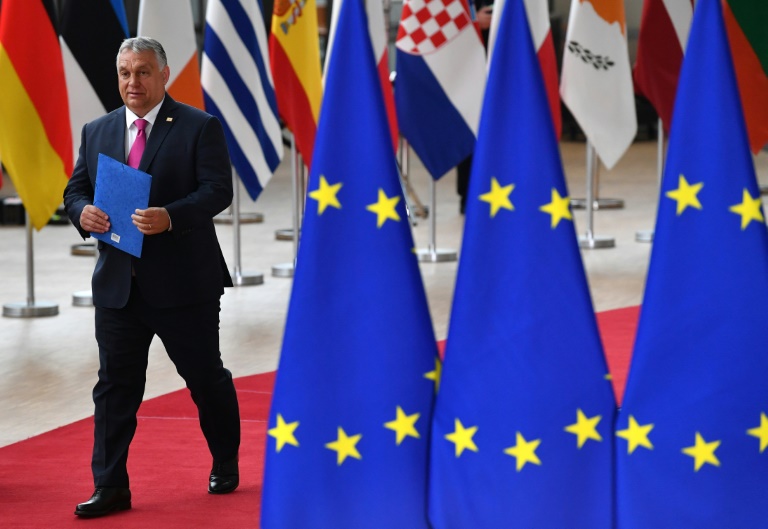
EU leaders seek to break oil ban deadlock as Russia advances in Donbas

European Union leaders met in Brussels on Monday seeking to overcome Hungarian opposition to an embargo on Russian oil, as Moscow’s forces made gains in the eastern Donbas region of Ukraine.

Ukrainian President Volodymyr Zelensky urged the 27-nation bloc to end internal “quarrels” and adopt more sanctions against Moscow, including an embargo on Russian oil.

“All quarrels in Europe must end, internal disputes that only encourage Russia to put more and more pressure on you,” he told the emergency EU summit via video-link.

“It is time for you to be not separate, not fragments, but one whole.” 

In Washington, US President Joe Biden said he would not send rocket systems to Ukraine that could hit Russian territory, despite urgent requests from Kyiv for such weapons and extensive US military aid for Ukraine since the war began.

EU diplomats have drafted a watered-down agreement that would see pipeline oil exempted from the ban, in the hopes of unblocking talks on the bloc’s sixth round of Russian sanctions.

Ahead of the meeting, Hungarian Prime Minister Viktor Orban told reporters the proposal was a “good solution” but warned there was “no agreement at all” as things stood.

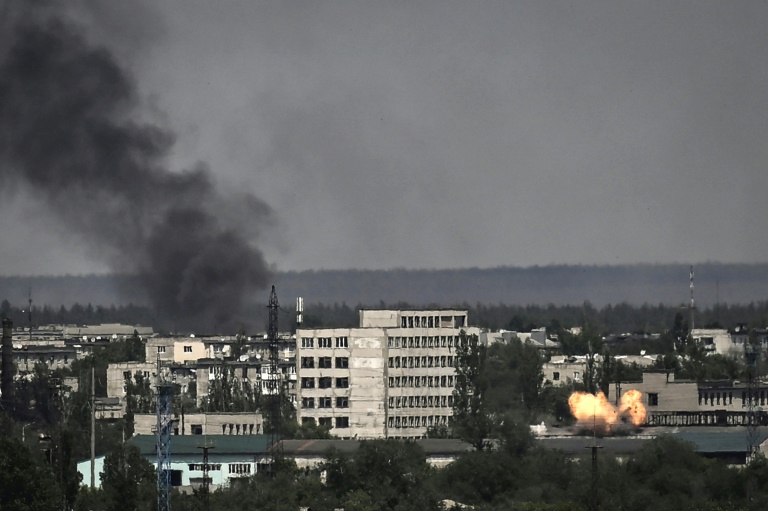
On the ground, Russian forces pressed their offensive in Donbas.

“The situation in Severodonetsk is as complicated as possible,” Lugansk regional governor Sergiy Gaiday said on Telegram, saying the whole region was under continuous bombardment — “air bombs, and artillery, and tanks. Everything”.

In Severodonetsk, street battles were being fought as the Russians advanced into the city, he added.

– Weapons supplies –

In Washington, Biden told reporters: “We are not going to send to Ukraine rocket systems that can strike into Russia.”

Ukraine has received extensive US military aid since with legislators approving another $40 billion (37.1 billion euros) assistance package earlier in May.

France’s new foreign minister Catherine Colonna said on a visit to Kyiv that Paris was ready to boost military aid to Ukraine to help it counter Russia’s invasion.

France will “continue to reinforce arms deliveries,” Colonna said at a news conference with her Ukrainian counterpart Dmytro Kuleba.

The arms would arrive “in the coming weeks”, she said.

The highest-ranking French official to visit the capital since Russia invaded Ukraine on February 24, Colonna also visited Bucha, near Kyiv, where Russian troops have been accused of committing war crimes against civilians.

“This should never have happened,” Colonna told reporters after visiting an Orthodox church in the town. “It must never happen again.”

Her visit came as a French journalist was killed while working in Ukraine.

Frederic Leclerc-Imhoff was “on board a humanitarian bus” when “he was mortally wounded,” French president Emmanuel Macron wrote on Twitter on Monday.

Governor Gaiday said evacuations there had been halted after the death of the journalist.

– Oil sanctions –

A sixth wave of EU measures against Moscow was put on the table weeks ago, but has been rejected by Orban and resisted by neighbouring countries also reliant on pipelined Russia oil.

Macron cautiously told reporters that a long-sought-after deal was “getting closer”, but others doubted that the Hungarian leader was ready to sign on at this stage.

“I don’t think we’ll reach an agreement today,” Estonian Prime Minister Kaja Kallas said at a political meeting ahead of the summit

Hungary has asked for at least four years and 800 million euros ($860 million) in EU funds to adapt its refineries and increase pipeline capacity for alternative suppliers, like Croatia.

But under the compromise proposal the Druzhba pipeline could be excluded from a sanctions package “for the time being”, an EU official told AFP.

– ‘We’re close!’ –

Since failing to capture Kyiv in the war’s early stages, Russia’s army has narrowed its focus, hammering Donbas cities with relentless artillery and missile barrages as it seeks to consolidate its control.

But Ukrainian forces pushed back over the weekend in the southern region of Kherson, the country’s military leadership said.

The Ukrainian general staff claimed the move had put their adversary into “unfavourable positions” around the villages of Andriyivka, Lozovo and Bilohorka and forced Moscow to send reserves to the area.

“Kherson, hold on. We’re close!” it tweeted Sunday.

At the same time, two people were injured following an explosion in the Moscow-controlled city of Melitopol in south-eastern Ukraine, with local pro-Kremlin authorities blaming Kyiv.

Russia-installed authorities said the city had been targeted by a “terrorist attack”.

“The Ukrainian government continues its war on the civilian population and the infrastructure of cities,” a statement said.

At least five people died following strikes on civilian infrastructure in Ukraine’s separatist-controlled city of Donetsk, according to Russian investigators.

Authorities in the DNR said on Telegram that two apartment blocks and three schools were hit in the attack, accusing Kyiv of using artillery and rockets with cluster munitions.

burs-sea/imm/jj

Zelensky urges EU end 'quarrels', adopt oil sanctions on Russia

Ukraine’s President Volodymyr Zelensky urged the European Union Monday to stop its “quarrels” and adopt fresh sanctions on Russia as the bloc’s leaders sought a compromise deal with Hungary to target Moscow’s key oil exports.

The 27-nation EU has spent weeks haggling over a proposed embargo on Russian oil but come up against stubborn resistance from Hungarian premier Viktor Orban.

Leaders meeting in Brussels were hoping to persuade Orban to accept a watered-down version of the ban that would keep the oil flowing by pipeline to a handful of countries, including Hungary. 

Zelensky, in a video address, called on them to adopt “effective” sanctions against Russian oil to make the Kremlin pay the price for its war on Ukraine.

“All quarrels in Europe must end, internal disputes that only encourage Russia to put more and more pressure on you,” Zelensky told the EU summit. 

“It is time for you to be not separate, not fragments, but one whole.”

Orban, often the odd man out in EU decision making, said a proposal only to stop oil deliveries to the EU by ship was a “good solution” as he arrived for the talks.

“It means that an atomic bomb won’t be thrown on the Hungarian economy,” he said. 

But he warned that Budapest still needed a “guarantee” it could keep on receiving Russian oil by sea if anything happened to the pipeline crossing Ukraine.

Orban said “there is no agreement at all” yet. 

He did not, however, threaten to veto the leaders’ planned summit statement, arguing that it was the European Commission’s job to fine-tune the sanctions package.

– ‘Getting closer’ –

A sixth wave of EU measures against Moscow was put on the table four weeks ago, but EU unity shown in implementing five earlier waves of unprecedented sanctions on Moscow appeared to have hit its limit.

The latest proposed compromise would exclude the Druzhba pipeline from the oil embargo and only impose sanctions on crude shipped to the EU by tanker vessel, which counts for two-thirds of Russian oil imports.

While French President Emmanuel Macron told reporters that a long-sought-after deal was “getting closer”, others doubted that.

“I don’t think we’ll reach an agreement today,” Estonian Prime Minister Kaja Kallas said ahead of the summit.

“Of course, we’re going to have discussions, but everybody needs to be on board,” she said, adding that she did not expect a solution before another summit to be held in late June. 

An EU official said the leaders would attempt to find a “political agreement” on the Russian oil ban, with exceptions for specific countries worked out “as soon as possible”.

EU sanctions require the backing of all member states and ambassadors fell short of finalising a deal just hours before the start of the summit. 

– ‘Orban’s antics’ –

Landlocked Hungary imports 65 percent of its oil from Russia through the Druzhba pipeline and, along with Slovakia and the Czech Republic, has asked for an exception from the import ban.

Diplomats said a two-year delay to the embargo had been granted to the countries concerned, but that Budapest wanted at least four years and nearly 800 million euros ($860 million) in EU funding to adapt its refineries.

“There is quite a lot of sympathy for Hungary’s oil supply issues, which are great, despite the antics by Orban,” an EU diplomat said on condition of anonymity.

Hungary’s intransigence comes on the back of Orban’s recent resounding re-election to a fourth term and some experts are sceptical about the official claims of alarm over a Russian oil ban.

Further complicating the stand-off is Hungary’s share of the EU’s 800-billion-euro recovery fund, which Brussels has yet to approve due to disagreements over Budapest’s respect for the rule of law.

burs-del/rmb/jj

After Uvalde, Biden vows to keep up pressure for gun regulation

Under pressure to act after the latest US mass shooting that left 21 people dead, President Joe Biden vowed on Monday to push for stricter gun regulation, an uphill battle given the Democrats’ narrow congressional majority.

“I’ve been pretty motivated all along” to act on guns, Biden told reporters in Washington.

“I’m going to continue to push,” he said, adding, “I think things have gotten so bad that everybody is getting more rational about it.”

Biden spoke as the grieving Texas town of Uvalde was holding its first wakes for some of the 19 children and two teachers gunned down last week at their elementary school by a local teenager who was then killed by police.

The first funerals are set for Tuesday, with others scheduled through mid-June. The huge number of victims, many with horrific wounds, has left the town’s two funeral homes turning to embalmers and morticians from across Texas for help.

One anonymous donor has pledged $175,000 to help cover funeral costs, Texas Governor Greg Abbott said.

An impromptu memorial in the heart of Uvalde, a town of 15,000 about an hour’s drive from the Mexican border, has drawn a steady stream of mourners. So have churches in the mostly Latino city, including the Sacred Heart Catholic Church, where Biden and First Lady Jill Biden prayed when they visited on Sunday. 

– ‘Rational action’ –

The Uvalde massacre — the deadliest school attack since 20 children and six staff were killed in Newtown, Connecticut in 2012 — came less than two weeks after 10 people died in an attack at a grocery store in Buffalo, New York by a young gunman targeting African Americans.

Congress has repeatedly failed to agree on tighter gun regulations despite the grim recurrence of mass shootings, but the latest killings in the country’s epidemic of gun violence have sparked a push for new measures. 

While mass shootings draw anguished attention and spur momentary demands for change, most gun violence in this country passes with scant notice.

The country’s Memorial Day weekend — Monday is a national holiday — has been marked by shootings that killed at least four people and wounded dozens, according to the Gun Violence Archive website.

Gunfire Sunday at a festival in Taft, Oklahoma left one person dead and seven, including an infant, wounded; while in Chattanooga, Tennessee, six adolescents were wounded Saturday during an apparent altercation, Mayor Tim Kelly tweeted. 

Gun-control advocates hoped the shock over the Uvalde shooting, coming even as people in Buffalo were burying victims of the attack there, might finally prompt politicians to act.

A few key lawmakers did express guarded optimism on Sunday — though any gun-control effort faces deep resistance from most Republicans and some rural-state Democrats in a country where guns outnumber people.

“There are more Republicans interested in talking about finding a path forward this time than I have seen since Sandy Hook,” Democratic Connecticut Senator Chris Murphy told local TV on Sunday, adding that bipartisan “serious negotiations” were underway.

Biden said Monday he is deliberately “not negotiating with any of the Republicans yet.”

But, he added, “I know what happened when we had rational action before” on gun regulation.

“It did significantly cut down mass murders.”

Killer whale stranded in France's River Seine dies

A killer whale stranded for weeks in France’s River Seine was found dead Monday after attempts to guide it back to sea failed and revealed it was severely sick, local authorities said.

Regional officials had already decided to euthanise the killer whale — also known as an orca — to end its suffering, but a sailor spotted the animal lying on its side Monday morning. 

Sea Shepherd France, who went out to the animal and confirmed its death, said on Twitter they were watching over the orca’s body to prevent it from being hit by a ship, which would compromise the autopsy.

The investigation will try to establish why the orca got stranded and how it died, as well as gather information on its illness, local authorities said. 

A group of experts attempted to use sonar techniques to help guide the animal back into its natural salt-water habitat this weekend, after its appearance in the iconic French river that flows through Paris astonished onlookers.

But the operation seeking to save the animal encountered “a lack of alertness, inconsistent reactions to sound stimuli and erratic and disoriented behaviour,” regional authorities said in a statement. 

“The sound recordings also revealed vocal calls similar to cries of distress,” it said, adding that the animal appeared to be in a “critical state of health”.

“Her skin was so ulcerated… She must have been in agony. Pieces of skin were falling off, there was nothing that could be done,” said Gerard Mauger, vice-president of GECC, a Cherbourg-based association for the conservation of marine animals in the Channel.

“Everything was ready to euthanise her” when she was found dead, Mauger added. 

The animal appeared to be suffering from mucormycosis, a fungal infection increasingly seen among marine mammals and which causes them severe distress.

Killer whales, which, despite their name belong to the dolphin family, are occasionally spotted in the English Channel but such sightings are considered rare, and even rarer in a river.

Experts said that while being in a river helped the animal to conserve energy, it also complicated its search for prey, especially for a species known to hunt in packs.

Hurricane approaches Mexican Pacific beach resorts

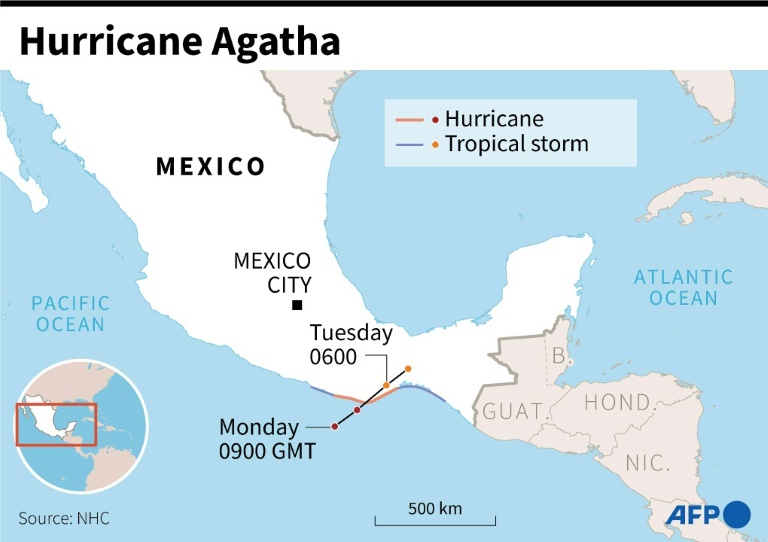
The first hurricane of the East Pacific season on Monday barreled towards a string of beach resorts in southwest Mexico, where authorities opened shelters for thousands of people in its projected path.

At 1500 GMT, Hurricane Agatha was located 80 kilometers (50 miles) southwest of Puerto Angel in Oaxaca state, packing maximum sustained winds of 175 kilometers per hour, according to the US National Hurricane Center (NHC).

The Category 2 hurricane — the second weakest on a scale of five — was expected to make landfall on Monday afternoon or evening and rapidly weaken as it moves inland, forecasters predicted.

Residents along the coast stocked up on food and water and took measures to protect their homes and businesses.

Seaports in the area closed and airlines canceled flights to an international airport in Huatulco.

A hurricane warning was in effect for a stretch of coastline including Puerto Escondido and other surf towns popular with national and foreign tourists.

“Storm surge is expected to produce extremely dangerous coastal flooding” and will be accompanied by “large and destructive waves,” the NHC warned.

In Oaxaca and neighboring Chiapas state, “life-threatening flash flooding and mudslides may occur,” it added.

Authorities opened around 200 storm shelters with room for up to 26,800 people, while hotels prepared to provide refuge to tourists.

“The shelters are already open and people are arriving,” Roberto Castillo, a civil protection official in Huatulco, told AFP.

Mexico is buffeted by hurricanes on both its Pacific and Atlantic coasts, generally between the months of May and November.

Norwegian buys 50 Boeing 737 MAX, ending dispute

Low-cost carrier Norwegian Air Shuttle said Monday it would buy 50 Boeing 737 MAX 8 planes, ending a dispute between the companies and helping revive the US-made aircraft after two deadly crashes.

The jets will be delivered between 2025 and 2028, or around the same time that Norwegian’s aircraft leasing deals come to an end, and the contract includes an option for 30 more, the company said in a statement.

The order is welcome news for the US manufacturer’s flagship Boeing 737 MAX 8, which was grounded for 20 months following two fatal accidents and has been gradually returning to service since late 2020. 

Norwegian’s order is part of “the resolution of a dispute we have” with Boeing, the company’s chief executive Geir Karlsen told broadcaster TV2.

The Nordic low-cost carrier and Boeing have been locked in a legal battle for several years, with the Norwegian carrier launching legal proceedings against the US giant for compensation following setbacks related to its 737 MAX and 787 Dreamliner long-range jets.

Without giving further details, Karlsen mentioned “a compensation of two billion kroner ($212 million, 197 million euros) that we used to buy planes under advantageous conditions.”

According to Karlsen, the price paid is “much lower” than the one Norwegian had to pay a few years ago for its first 737 MAX — which it has since sold — but also than the one offered by European competitor Airbus.

Norwegian said the deal remains subject to “various closing conditions” that it hopes will be concluded by the end of June.

The company, which currently operates 61 aircraft, plans to ramp up operations to have 70 in service this summer and 85 in the summer of 2023. 

– ‘Becoming more normal’ –

Plagued by over-ambitious expansion, technical problems and the Covid pandemic, the company narrowly avoided bankruptcy last year via an extensive restructuring that led it, among other things, to give up its long-haul flight, reduce its fleet and cancel numerous orders.

Securing the 50 aircraft means Norwegian is also returning to fully owning its own fleet after it was forced to rely on leased aircraft due to its financial woes.

Unless the option to buy more aircraft is implemented, Norwegian’s flight capacity is not expected to increase beyond what has already been announced. 

“This is rather a sign of an airline that is becoming more normal, that no longer lives exclusively on leased aircraft but owns part of its fleet itself,” Sydbank analyst Jacob Pedersen commented to business website e24.no. 

For Boeing, this order solidifies the revival of the 737 MAX aircraft.

The 737 MAX was temporarily grounded worldwide following two crashes in Indonesia and Ethiopia, in 2018 and 2019, that killed a combined 346 people.

After Caribbean Arajet and American Allegiant Air put in orders for the aircraft, British carrier IAG — parent company of British Airways — also just ordered 50 planes with an option for 100 more.

Norwegian on Monday also noted that the Boeing 737 MAX 8 is “approximately 14 percent more fuel-efficient compared to the previous-generation aircraft,” thus limiting emissions and cutting energy costs in view of rising fuel prices.

Game over for English tech jargon as France overhauls rules

French officials on Monday continued their centuries-long battle to preserve the purity of the language, overhauling the rules on using English video game jargon.

While some expressions find obvious translations — “pro-gamer” becomes “joueur professionnel” — others seem a more strained, as “streamer” is transformed into “joueur-animateur en direct”.

The culture ministry, which is involved in the process, told AFP the video game sector was rife with anglicisms that could act as “a barrier to understanding” for non-gamers.

France regularly issues dire warnings of the debasement of its language from across the Channel, or more recently the Atlantic.

Centuries-old language watchdog the Academie Francaise warned in February of a “degradation that must not be seen as inevitable”.

It highlighted terms including train operator SNCF’s brand “Ouigo” (pronounced “we go”) along with straightforward imports like “big data” and “drive-in”.

However, Monday’s changes were issued in the official journal, making them binding on government workers.

Among several terms to be given official French alternatives were “cloud gaming”, which becomes “jeu video en nuage”, and “eSports”, which will now be translated as “jeu video de competition”.

The ministry said experts had searched video game websites and magazines to see if French terms already existed.

The overall idea, said the ministry, was to allow the population to communicate more easily.

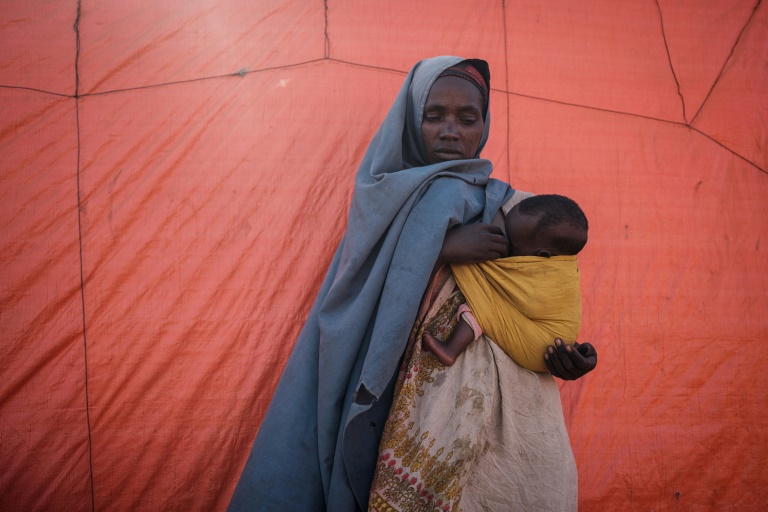
Famine looms in Horn of Africa after four seasons of poor rains: agencies

Four consecutive seasons of poor rains have left millions of drought-stricken people in Kenya, Somalia and Ethiopia facing starvation, aid agencies and meteorologists said Monday, warning that the October-November monsoon “could also fail”.

The unprecedented drought is “a climatic event not seen in at least 40 years”, said the statement by meterological experts and humanitarian groups including UN agencies.

“The 2022 March-May rainy season appears likely to be the driest on record,” it said.

Insufficient rainfall has destroyed crops, killed livestock and forced huge numbers of people to leave their homes in search of food and water, with the prospect of a fifth failed monsoon threatening to plunge the troubled region even deeper into catastrophe. 

“Should these forecasts materialise, the already severe humanitarian emergency in the region would further deepen,” the agencies said.

The drought has already wiped out 3.6 million livestock in parts of Kenya and Ethiopia where local populations rely heavily on pastoralism to eke out a living. Meanwhile, one in three animals have died in Somalia since mid-2021.

More than 16.7 million people in the three countries are experiencing acute hunger with the number projected to rise to 20 million by September.

The dire conditions have been exacerbated by the conflict in Ukraine, which has contributed to soaring food and fuel costs, the statement added. 

Without funding to scale up the aid response, an already dire situation will get worse, it said. 

“A rapid scaling up of actions is needed now to save lives and avert starvation and death.”

Current appeals to respond to the drought remain well underfunded, it added. 

A previous appeal in February by the UN’s World Food Programme raised less than four percent of the cash needed.

East Africa endured a harrowing drought in 2017 but early humanitarian action averted a famine in Somalia.

In contrast, 260,000 people — half of them children under the age of six — died of hunger or hunger-related disorders when a famine struck the country in 2011.

Experts say extreme weather events are happening with increased frequency and intensity due to climate change.

Equity markets extend rally as China eases curbs

Stock markets in Asia and Europe were higher Monday as investors were cautiously optimistic, despite concerns over inflation, as China eases some of its strict Covid curbs in Shanghai and Beijing.

After Tokyo and Hong Kong closed more than two percent higher, London equities added 0.2 percent while Frankfurt and Paris closed up by more than 0.7 percent.

Fears over the soaring cost of living cast a shadow, however, as oil rose back above $120 a barrel for the first time in two months, deepening fears that central banks could raise interest rates aggressively and drag down economic recovery.

Oil prices are rising on the back of European efforts to ban Russian supplies over the Ukraine war, but also from signs that China’s economic activity could pick up as Covid-related restrictions are eased.

New data on Monday showed inflation in both Germany and Spain soaring on higher energy and food prices, turning up the pressure on the European Central Bank to speed up monetary tightening, with a first rate hike expected in July.

“Worries about global growth have eased — and hopes (are) that China’s worst Covid woes may be over,” boosting the world’s number-two economy, said Hargreaves Lansdown analyst, Susannah Streeter.

“There was a ripple of relief across European markets after authorities in Shanghai announced a lifting of restrictions from Wednesday, with more production now expected to begin across the manufacturing and tech hub.”

– Eyes turn to US –

The gains on Monday added to growing hope that a months-long sell-off may have run its course.

Markets have been pummelled this year as soaring prices forced central banks to hike interest rates and warn of more to come.

As investors look for signs on whether the inflation surge may have passed in the US, May jobs data — due for release on Friday — should provide a fresh snapshot of the economy and possibly an idea about the US Federal Reserve’s next policy moves.

European leaders began a summit Monday to discuss a Russian oil embargo, but Hungarian Prime Minister Viktor Orban warned that the bloc has yet to come up with a compromise that he could agree to.

The 27 are “not managing to reach agreement on a ban on Russian energy as Hungary continues to refuse to wean itself off Russian oil,” said Ipek Ozkardeskaya, analyst with Swissquote.

– Key figures at around 1600 GMT –

London – FTSE 100: UP 0.2 percent at 7,600.06 points (close)

Frankfurt – DAX: UP 0.8 percent at 14,575.98 (close)

Paris – CAC 40: UP 0.7 percent at 6,548.71 (close)

EURO STOXX 50: UP 0.8 percent at 3,841.62

Tokyo – Nikkei 225: UP 2.2 percent at 27,369.43 (close)

Hong Kong – Hang Seng Index: UP 2.1 percent at 21,123.93 (close)

Shanghai – Composite: UP 0.6 percent at 3,149.06 (close)

New York – Dow: UP 1.8 percent at 33,212.96

Euro/dollar: UP at $1.0779 from $1.0735 on Friday

Pound/dollar: UP at $1.2650 from $1.2631

Euro/pound: UP at 85.21 pence from 84.99 pence

Dollar/yen: UP at 127.59 yen from 127.11 yen

Brent North Sea crude: UP 1.2 percent at $119.82 per barrel

West Texas Intermediate: UP 1.0 percent at $116.19

burs-rfj-cdw/spm

Close Bitnami banner
Bitnami