AFP

Musk says deal to buy Twitter 'temporarily on hold'

Elon Musk said on Friday he was putting a temporary halt on his much-anticipated deal to buy Twitter, sending shares in the social media giant plunging. 

Musk, the world’s richest man and founder of automaker Tesla, had made the eradication of spam accounts and bots one of the centerpieces of his proposed $44 billion takeover of Twitter.

When the deal was announced in late April he said he wanted to make Twitter “better than ever” by “defeating the spam bots and authenticating all humans”.

But on Friday he wrote: “Twitter deal temporarily on hold pending details supporting calculation that spam/fake accounts do indeed represent less than 5% of users.”

Two hours after his first tweet, Musk took to the platform again to say he was “still committed to acquisition”.

Reliable figures for the number of users are seen as vital to judge future revenue streams.

Twitter did not immediately respond to AFP’s request for comment.

– ‘Horror show’ –

In his tweet, Musk linked to an article from May 2 referencing Twitter’s latest filing to US regulators.

The filing said an internal review had concluded Twitter had 229 million “monetizable daily active users” in the first quarter of this year, and just five percent were regarded as false or spam accounts. 

Analyst Dan Ives from Wedbush said the Twitter “circus show” was likely to translate into a “Friday 13th horror show”.

“The nature of Musk creating so much uncertainty in a tweet (and not a filing) is very troubling,” he said.

Wall Street investors were likely to interpret the tweet as an attempt by Musk to pull out of the deal or trying to force a lower price, said Ives.

Market analyst Susannah Streeter of Hargreaves Landsdown said the takeover bid had been bumpy but now “risks hitting the skids”.

Friday’s initial announcement saw Twitter’s shares drop by 20 percent in early electronic trading before Wall Street opened, but Tesla’s stock rose.

– ‘False and misleading’ –

Musk is boss of both Tesla and SpaceX and is estimated to be worth $240 billion, according to Forbes.

But his style of ownership — an in particular his use of Twitter — has frequently landed him in hot water with the authorities.

He has been tangled in legal troubles ever since he tweeted in 2018 that he had enough funds to take Tesla private — a claim that a judge last month decided was “false and misleading”.

His potential stewardship of the social media platform has hit several bumps since the takeover attempt was made public, not least over the future status of Donald Trump.

The former US president was kicked off Twitter and other social networks following the attack on the US Capitol on January 6, 2021.

On Wednesday, Musk said he would be open to lifting a ban on Trump’s account.

Activist groups responded by urging advertisers to boycott the platform if Musk opened the gates to abusive and misinformative posts.
Pakistan parched and pummelled by blistering heatwave

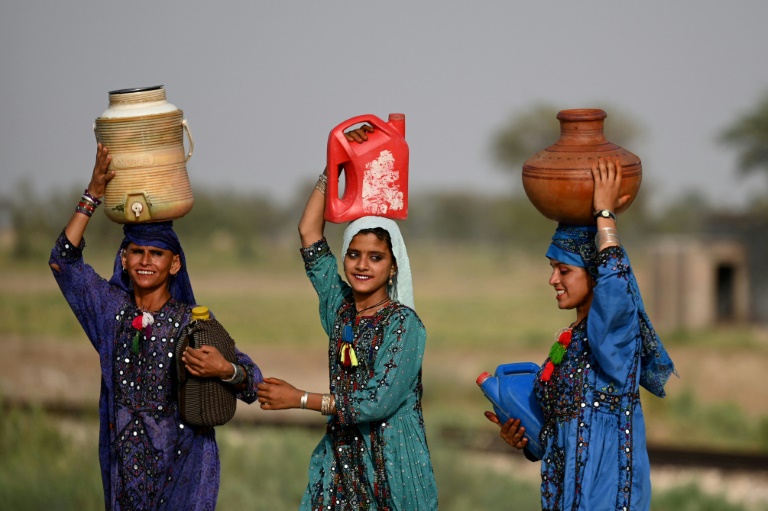
Pakistan was in the grip of a heatwave on Friday, with parts of the nation previously scalded by temperatures of nearly 50 degrees Celsius as officials warned of acute water shortages and a health threat.

Swathes of the country have been smothered by high temperatures since late April, in extreme weather the World Meteorological Organization (WMO) has warned is consistent with climate change.

On Thursday the city of Jacobabad in Sindh province hit 49.5C (121 degrees Fahrenheit), the Pakistan Meteorological Department (PMD) said, with temperatures forecast to remain high until the end of the week.

“It’s like fire burning all around,” said labourer Shafi Mohammad, who is from a village on the outskirts of Jacobabad where residents struggle to find reliable access to drinking water.

Nationwide, the PMD alerted temperatures were between 6C and 9C above normal, with the capital Islamabad — as well as provincial hubs Karachi, Lahore and Peshawar — recording temperatures around 40C on Friday.

“This year we have jumped from winter right into summer,” said PMD chief forecaster Zaheer Ahmad Babar.

Pakistan has endured heightened heatwaves since 2015, he said, focused in upper Sindh province and southern Punjab province.

“The intensity is increasing, and the duration is increasing, and the frequency is increasing,” he told AFP.

Jacobabad nurse Bashir Ahmed says that, for the past six years, heat stroke cases in the city have been diagnosed earlier in the year — starting in May, rather than June or July.

“This is just increasing,” he said.

– ‘Take cover’ –

Punjab province irrigation spokesman Adnan Hassan said the Indus river — Pakistan’s key waterway — had shrunk by 65 per cent “due to a lack of rains and snow” this year.

Sheep have reportedly died from heatstroke and dehydration in the Cholistan Desert of Punjab — Pakistan’s most populous province, which also serves as the national breadbasket.

“There is a real danger of a shortfall in food and crop supply this year in the country should the water shortage persist,” Hassan said.

On Tuesday climate minister Sherry Rehman warned residents in the megacity of Lahore “to take cover for the hottest hours of the day”.

The heatwave has also ravaged India, with temperatures in parts of Rajasthan hitting 48.1C on Thursday.

Pakistan — home to 220 million — says it is responsible for less than one percent of global greenhouse gas emissions.

But it ranks as the nation eighth most affected by extreme weather events, according to a 2021 study by environmental group Germanwatch.

Extreme heat can also trigger cascading disasters that could pummel Pakistan’s generally impoverished population.

The mountainous portions of the country are home to more than 7,000 glaciers, a number larger than any region outside the poles.

Quickly melting glaciers can swell lakes, which then burst their banks and unleash torrents of ice, rock and water in events known as glacial lake outburst floods.

Last weekend a key highway bridge in the Gilgit-Baltistan region was swept away in flash flooding caused by glacier melting.

In April, officials warned there were 33 lakes in Pakistan in danger of unleashing similar dangerous deluges.

Markets rebound after Fed boss calms nerves over rates

Global stock markets rebounded Friday on easing fears about the pace of interest rate rises in the United States that are aimed at bringing down the country’s highest inflation in decades.

European equities were up around 1.5 percent nearing the half-way stage following solid gains in Asia. 

Stocks have suffered sharp losses this week, particularly on Wall Street, as investors seek safety also amid the Ukraine war and Chinese lockdowns.

“Investors are continuing to wrestle with worries over inflation as the oil price climbs back up again and supply concerns resurface amid ongoing geo-political tensions,” noted Susannah Streeter, senior investment and markets analyst at Hargreaves Lansdown.

Stocks have tumbled for much of this week on fears the Federal Reserve was planning to lift US interest rates by 75 basis points at a single meeting.

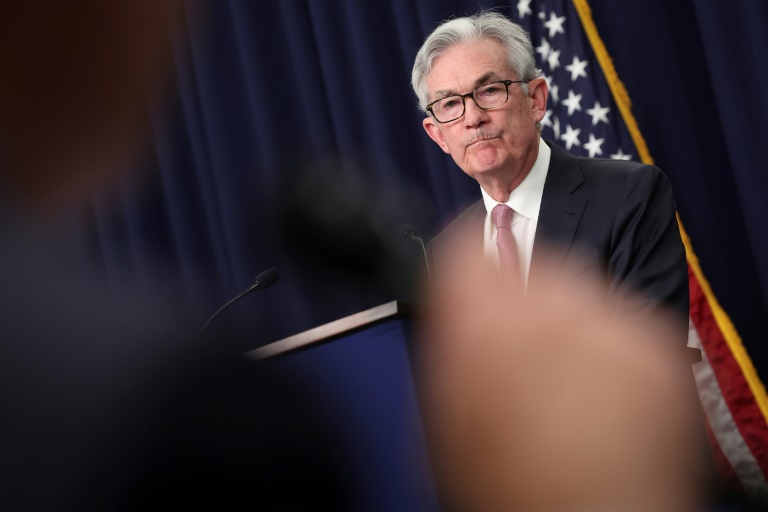
However equities on Friday staged “a relief rally” after Fed boss Jerome Powell calmed nerves over the potential hefty increase, said Jeffrey Halley, analyst at OANDA trading group. 

“The rally today looks more like a technical rebound after a torrid week than a structural turn in sentiment,” he added.

Oil prices climbed Friday after much volatility, while the euro recovered from five-year lows against the dollar.

Bitcoin held above $30,000, a day after the cryptocurrency slumped under $27,000, or lowest level since late 2020.

Its crash this week was fuelled by the collapse of two so-called “stablecoin” cryptocurrencies — TerraUSD and Tether — which proved to be anything but stable, leaving investors panicked. 

On the corporate front Friday, Twitter’s share price plunged after Elon Musk said he was putting a temporary halt on his much-anticipated deal to buy the social media giant. 

“Twitter deal temporarily on hold pending details supporting calculation that spam/fake accounts do indeed represent less than 5% of users,” he wrote on the platform.

Musk, the world’s richest man and founder of automaker Tesla, had made the eradication of spam accounts and bots one of the centrepieces of his proposed $44 billion takeover of Twitter.

Friday’s announcement saw shares drop by 20 percent in early electronic trading before Wall Street opened.

– Key figures at around 1100 GMT –

London – FTSE 100: UP 1.7 percent at 7,352.49 points

Frankfurt – DAX: UP 1.4 percent at 13,931.74

Paris – CAC 40: UP 1.7 percent at 6,312.64

EURO STOXX 50: UP 1.6 percent at 3,670.69

Hong Kong – Hang Seng Index: UP 2.7 percent at 19,898.77 (close)

Shanghai – Composite: UP 0.9 percent at 3,084.28 (close)  

New York – Dow: DOWN 0.3 percent at 31,730.30 (close)

Tokyo – Nikkei 225: UP 2.6 percent at 26,427.65 (close)

Brent North Sea crude: UP 1.9 percent at $109.44 per barrel

West Texas Intermediate: UP 2.0 percent at $108.21 per barrel

Euro/dollar: UP at $1.0386 from $1.0382 at 2100 GMT Thursday

Pound/dollar: DOWN at $1.2191 from $1.2199

Euro/pound: UP at 85.18 pence from 85.08 pence

Dollar/yen: DOWN at 128.90 yen from 129.97 yen

Climate change made deadly S. Africa rains twice as likely

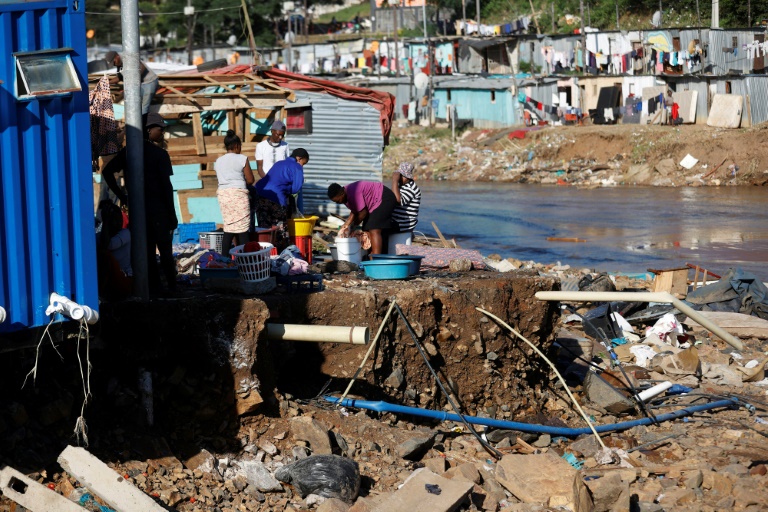
Rainfall that caused catastrophic floods and landslides last month in and around Durban, South Africa, was made twice as likely by global warming, scientists said Friday. 

An exceptional downpour — more than 35 centimetres (14 inches) over two days — on April 11-12 claimed hundreds of lives and caused $1.5 billion in damage across the provinces KwaZulu-Natal and Eastern Cape.

Without climate change, rain of this intensity would happen roughly once every 40 years, according to a report from the World Weather Attribution consortium, a global network of scientists that quantify the impact of a warming world on individual extreme weather events.

But an increase in Earth’s average surface temperature of nearly 1.2 degrees Celsius since the late-19th century has shortened that interval to about 20 years.

“The probability of an event such as the rainfall that resulted in this disaster has approximately doubled due to human-induced climate change,” the scientists said in a statement.

As the planet continues to hot up in coming decades, so too will the frequency and intensity of devastating floods caused by these downpours, they warned.

The same is true for heatwaves, droughts, tropical cyclones — also known as hurricanes or typhoons — and wildfires.

Most of the world’s nations have embraced a target of capping global warming at 1.5C, but current greenhouse gas reduction commitments would see temperatures rise far higher.

– Basic physics –

Scientists have long predicted such impacts. In the case of heavy rains, it’s basic physics: every extra degree of global warming increases the amount of water in the atmosphere by about seven percent.

But only recently has an accumulation of climate data and more sophisticated tools made it possible to answer the most obvious of questions: To what extent is a particular weather disaster caused by global warming?

The heatwave, for example, that gripped western North America last June — sending temperatures in Canada to a record 49.6C (121F) — would have been “virtually impossible” without human-induced climate change, the WWA determined.

And record-setting rainfall and flooding last July in Germany and Belgium that left more than 200 dead up was made up to nine times more likely.

Friederike Otto, lead author of the South Africa assessment, said the destruction was a result not just rainfall intensity, but the exposure of human populations.

“Most people who died in the floods lived in informal settlements,” said Otto, a scientist at Imperial College London’s Grantham Institute and a pioneer in the burgeoning field of event attribution studies. 

“So, again, we are seeing how climate change disproportionately impacts the most vulnerable people.”

Early warning systems and urban infrastructure such sewage systems and flood controls are also critical factors.  

The WWA is currently assessing the unprecedented heatwave that scorched large swathes of India and Pakistan during March and April.

Emirates airline announces 'significantly' lower $1.1 bn annual loss

Emirates airline announced a “significantly reduced” annual loss of $1.1 billion dollars on Friday, five times lower than a year before, as pandemic travel restrictions ease.

Losses came in at 3.9 billion dirhams ($1.1 billion) in the 2021-2022 financial year to March, with revenues up 91 percent, as the airline expanded its global capacity and reinstated flights, Emirates said in a statement.

The Middle East’s largest carrier said it received a capital injection of $954 million from its owner, the government of Dubai, to help it survive the crisis.

“This year, we focussed on restoring our operations quickly and safely wherever pandemic-related restrictions eased across our markets,” said its chairman and chief executive, Sheikh Ahmed bin Saeed Al-Maktoum.

“Business recovery picked up pace particularly in the second half of the year. Robust customer demand drove a huge improvement in our financial performance compared to our unprecedented losses of last year and we built up our strong cash balance.”

In Friday’s statement, it said the Emirates Group — which includes ground-handling firm Dnata — recorded an annual loss of 3.8 billion dirhams ($1.0 billion), but with revenues up by 86 percent and “strong customer demand”.

Over the fiscal year, Emirates carried 19.6 million passengers, up from 6.6 million in the same period of the previous year.

“2021-22 was also a significant year as the UAE marked its 50th anniversary and hosted the world at Expo 2020 Dubai which generated increased global engagement and visitation to the UAE,” Sheikh Ahmed said.

– ‘Recalled and rehired’ –

In the previous year, Emirates posted a $5.5 billion annual loss, its first in more than three decades, after the pandemic devastated the aviation industry. 

Like many other major airlines, it announced heavy layoffs when its fleet was grounded.

In Friday’s statement, it said that as operations ramped up, “employees previously on furlough or made redundant were recalled and rehired, and new recruitment drives were held”.

The group’s total workforce increased by 13 percent to 85,219 employees, it added.

Emirates specialises in long-haul flights, with its fleet solely composed of large Airbus A380 and Boeing 777 aircraft, dozens of which it grounded amid a lack of passenger traffic. 

It added that the group invested $2.2 billion in new aircraft and facilities and received its final five new A380 plane during the financial year.

Emirates is currently flying to 140 destinations, almost its full travel network of 158 destinations in 85 countries before the pandemic.

Tourism has long been an economic mainstay of Dubai, which welcomed more than 16 million visitors in 2019. Before the pandemic, the aim had been to reach 20 million.

After an initial strict lockdown, life in the Gulf emirate — one of the first destinations to welcome visitors again in July 2020 — has returned to largely normal, with restaurants and hotels up and running and beaches open to the public.

The United Arab Emirates, made up of seven emirates including Dubai, has launched an energetic vaccination drive with some of the highest inoculation rates worldwide.

Ukraine finance minister eyes reconstruction as war rages

The war is not over, but Ukraine’s finance minister says the first signs of economic recovery are emerging after Russian troops retreated away from the capital and northern areas.

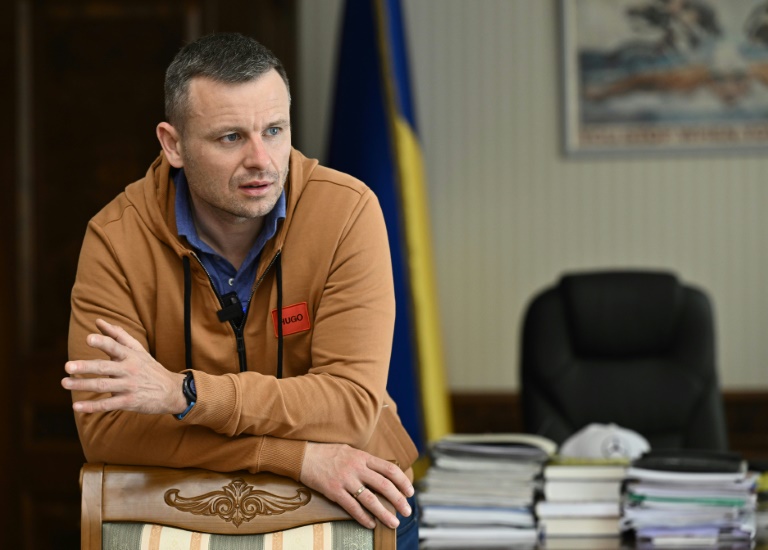
“The war continues but we are not seeing the same level of escalation as we saw in the first two months,” Finance Minister Sergiy Marchenko told AFP in an interview in his Kyiv office, decorated with Ukraine’s blue and yellow flag.

“In the first two months we saw attacks and bombings of large cities,” Marchenko said. “Now the military front has been localised to specific territories.”

Already one of Europe’s poorest countries before the Russian invasion beganon February 24, Ukraine’s economy is now in shambles.

Cities have been levelled by fighting, infrastructure is shattered and over six million people have left Ukraine. A Russian blockade has prevented Ukraine to use its ports to ship its key agricultural exports such as wheat and sunflower oil.

The International Monetary Fund and World Bank have forecast that the Ukrainian economy will shrink by between 35 and 45 percent this year.

Marchenko said gross domestic product could contract by as much as 50 percent, with the overall damage from the conflict totalling $600 billion.

Customs duty revenues fell 70 percent compared to pre-war levels and tax collection dropped 25-30 percent. Exports and imports fell by almost half and inflation topped 16 percent in April from a year ago, Marchenko said.

– ‘A way to survive’ –

After fierce Ukrainian resistance forced Russian troops to pull away from areas outside of Kyiv and from northern Ukraine, many residents have returned to the capital and businesses have reopened.

Ukraine’s central bank has seen “first signs of revival” in April and May, Marchenko said.

“Consumer demand is rising,” said Marchenko, who sported jeans and a mustard-coloured hoodie for the interview as — like other Ukrainian officials — the 41-year-old minister has traded his formal suit for more casual wear during the war.

“As of today, 37 embassies have returned to Kyiv and it gives a signal to citizens to return gradually to Kyiv and renew economic activity,” he added.

With heavy fighting continuing in the country’s east and south, many companies have relocated to western Ukraine to keep their businesses running. 

If no default on the payment of the foreign debt or even its rescheduling is envisaged by Kyiv, “we need $5 billion a month to cover the budget deficit,” the minister said. 

His priority is now to ensure the flow of permanent international financial aid. 

“We are asking for a high level of financial support but the price is also high. This for us is a way to survive,” Marchenko said. 

Facing the Kremlin’s advancing forces, the economist said Kyiv is “now an outpost for democracy” and defeat is not an option. 

“We cannot lose this war and we need the arms, finances and sanctions.”

– ‘Banal robbery’ –

Vast amounts of funds are needed not only for the war effort, but also to rebuild Ukraine. 

President Volodymyr Zelensky has already called for a new Marshall Plan — the US economic aid programme for the reconstruction of Europe after World War II — for his country. 

Marchenko said he backed using Russian assets seized abroad to rebuild Ukraine — an idea floated by several Western countries, including the United States.

He also accused Russian forces of mass “robbery” in Ukraine, saying Russian soldiers have stolen from ordinary people’s homes as well as grain and “other mineral, raw, intellectual resources.”

“We are dealing with bandits who entered the house and are taking away everything they like,” he said, calling it the “banal robbery of a country.” 

Marchenko said it is Ukraine’s critical infrastructure — such as roads, bridges and power supplies — that has suffered most and that needs to be rebuilt first. 

He wants people to return to territories retaken by Kyiv and “start a normal life with electricity, water and gas supplies”.

Emirates airline announces 'significantly' lower $1.1 bn annual loss

Emirates airline announced a “significantly reduced” annual loss of $1.1 billion dollars on Friday, down from $5.5 billion a year earlier, as pandemic travel restrictions ease.

Losses came in at 3.9 billion dirhams ($1.1 billion) in the 2021-2022 financial year to March, with revenues up 91 percent, as the airline expanded its global capacity and reinstated flights, Emirates said in a statement.

The carrier said it received a capital injection of $954 million from its owner, the government of Dubai, to help it survive the crisis.

“This year, we focussed on restoring our operations quickly and safely wherever pandemic-related restrictions eased across our markets,” said its chairman and chief executive, Sheikh Ahmed bin Saeed Al-Maktoum.

“Business recovery picked up pace particularly in the second half of the year. Robust customer demand drove a huge improvement in our financial performance compared to our unprecedented losses of last year and we built up our strong cash balance.”

Over the fiscal year, Emirates carried 19.6 million passengers, up by 197 percent from the same period the previous year.

“2021-22 was also a significant year as the UAE marked its 50th anniversary and hosted the world at Expo 2020 Dubai which generated increased global engagement and visitation to the UAE,” Sheikh Ahmed said.

Asian stocks up after Fed boss calms nerves over rates

Asian equities were mostly up Friday following a tumultuous trading period on Wall Street, but analysts said the outlook remained bleak as inflation, the Ukraine war and Chinese lockdowns weigh on sentiment.

World markets have been volatile for much of 2022, with investors fretting about supply chain snarls due to China’s Covid curbs and as Europe weighs cutting out Russian oil over Moscow’s invasion.

The Federal Reserve last week announced its largest rate hike since 2000 to slow surging inflation and signalled that similar increases were likely in the coming months — a possibility that sent stocks on a rollercoaster.

But after Fed chief Jerome Powell on Thursday said the United States was not actively considering a steeper 75-basis-point move, markets experienced a bounce in Asia. 

“Asia-Pacific equities are staging a relief rally today after Wall Street stabilised late in the session as Jerome Powell calmed nerves over potential 0.75 percent rate hikes,” said Jeffrey Halley of OANDA. 

However, he warned that the positive showing should be taken with a grain of salt. 

“Nothing has materially changed in the world from yesterday, and if anything, Russia/Europe risks are increasing,” he said.

“The rally today looks more like a technical rebound after a torrid week than a structural turn in sentiment.”

After a bruising day on Wall Street — with the Dow falling for the sixth straight session — Asian equities were higher Friday. Japan and Hong Kong closed with a two percent bump. 

Frankfurt, London and Paris all opened higher as well, while oil remained up, with the US benchmark crude WTI trading at more than $106 a barrel.

“Such intraday volatility and sentiment flip-flopping is indicative of nervous investors and in itself, a bearish signal,” said Lewis Grant of Federated Hermes Limited. 

“As long as the war continues and macro pressures persist, it is likely that both energy names and value stocks will remain relative safe-havens for fully-invested, long-only equity investors.”

– Crypto seesaw –

Cryptocurrencies also saw great volatility this week. Bitcoin on Thursday tumbled below $27,000 — its lowest level since late 2020 — but by Friday its value was holding steady above $30,000.

Its crash was fuelled by the collapse of two so-called “stablecoin” cryptocurrencies — TerraUSD and Tether — which proved to be anything but stable, leaving investors panicked. 

While the digital currency market had stabilised by Friday, Stephen Innes of SPI Asset Management said “the seven-day moves in some of the ‘other crypto experiments’ on monster volume are insane and increasingly difficult to watch”.

– Key figures at around 0830 GMT –

Hong Kong – Hang Seng Index: UP 2.7 percent at 19,898.77 (close)

Shanghai – Composite: UP 0.9 percent at 3,084.28 (close)  

London – FTSE 100: UP 1.3 percent at 7,331.28

Tokyo – Nikkei 225: UP 2.6 percent at 26,427.65 (close)

West Texas Intermediate: UP 0.7 percent at $106.86 per barrel

Brent North Sea crude: UP 0.9 percent at $108.36 per barrel

Euro/dollar: UP at $1.0404 from $1.0382 at 2100 GMT Thursday

Pound/dollar: UP at $1.2205 from $1.2199

Euro/pound: UP at 85.26 pence from 85.08 pence

Dollar/yen: DOWN at 128.82 yen from 129.97 yen

New York – Dow: DOWN 0.3 percent at 31,730.30 (close)

Honda yearly earnings solid despite chip crunch

Japanese auto giant Honda said Friday net profit rose 7.6 percent in the financial year to March, benefiting from strong motorbike sales and a weaker yen.

The company also expects net profit to remain steady in the current financial year, even as the global microchip shortage and virus-related supply chain disruption cause headaches for the car industry.

Honda said annual net profit rose 7.6 percent to 707 billion yen ($5.5 billion) in 2021-22 and issued a forecast of 710 billion yen net profit for the year to March 2023.

Sales last year were up 10.5 percent, it said, “due mainly to increased sales revenue in motorcycle business and financial services business operations as well as positive foreign currency translation effects.”

But “despite shifting to a recovery trend, the economic environment surrounding the company, its consolidated subsidiaries and its affiliates… continued to be difficult due to the impact of (the) semiconductor supply shortage, and increases in raw material costs, among other factors.”

Honda said its factories in Japan and overseas had been forced to suspend or reduce output due to supply chain and staffing issues related to Covid-19.

Toyota, the world’s top-selling carmaker, this week also posted a record full-year net profit, helped by strong sales and a cheaper yen.

The currency has touched 20-year lows against the dollar in recent weeks, inflating the value of Japanese automakers’ overseas profits.  Some analysts believe this will help them offset their current challenges.

In April, Honda said it will invest nearly $40 billion into electric vehicle technology over the next decade as it works towards switching all sales away from traditional fuel cars.

Toshiba in early talks with 10 potential buyout 'partners'

Troubled conglomerate Toshiba said Friday it has been approached by 10 potential investors as it weighs going private, a move that would be highly unusual in corporate Japan.

The engineering giant was once a symbol of the country’s industrial prowess, producing everything from rice cookers to laptops and nuclear plants.

But more recently it has faced scandals, financial woes and resignations, while management and shareholders have clashed over buyout and spin-off proposals.

Despite the challenges, its earnings are growing, and on Friday Toshiba said annual net profit leapt 70 percent on-year, continuing a recovery from the painful lows of the 2010s.

Shareholders in March shunned a plan to split the company into two, stirring internal turmoil after a shock takeover offer from private equity fund CVC Capital Partners was dropped.

Toshiba said Friday it has been holding confidential, non-binding discussions with 10 “potential partners” who want to suggest “strategic alternatives” for its future.

That could include privatisation “to enhance the company’s corporate value”, the company said in a statement.

Potential investors must express interest this month, and Toshiba said it will announce the total number of interested parties before its next annual general meeting, which will be held by the end of June.

The situation is being closely watched in business circles for clues on what the future may hold for other huge, diversified conglomerates in Japan and elsewhere.

Any move by a foreign equity fund to take Toshiba private would likely face regulatory hurdles, because the company handles sensitive sectors such as nuclear power generation and defence equipment.

Annual net profit in the year to March jumped 70.8 percent to 194.7 billion yen ($1.5 billion) on “increased sales in all business segments, and increased operating income mainly from semiconductors and energy”, Toshiba said.

For the current financial year, the company expects operating profit to rise seven percent to 170 billion yen on projected sales of 3.3 trillion yen, down one percent. 

It did not issue an official net profit forecast.

Hideki Yasuda, senior analyst at Toyo Securities, told AFP that activist shareholders want to maximise short-term profits, so are pushing for Toshiba to take “steps to expand its earnings”.

However, a key problem is that “different activists are saying different things”, with some backing a buyout and others not, he told AFP ahead of the earnings announcement.

“Because they hold different visions, it’s difficult to devise a strategy with a common denominator.”

Close Bitnami banner
Bitnami