AFP

India relaxes environment rules for coal mines, citing heatwave

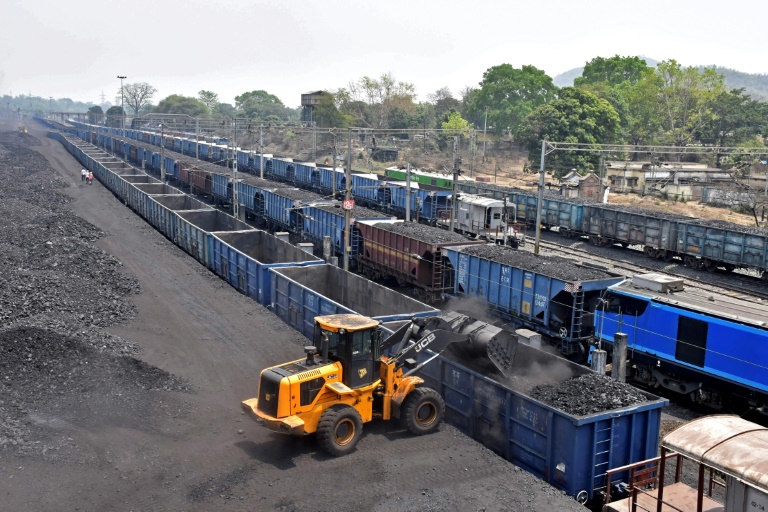
India has relaxed environmental compliance rules for coal mines seeking to ramp up production as power outages exacerbate a sweltering heatwave, a government notice showed.

Coal makes up more than two-thirds of India’s energy needs, even as unseasonably hot weather illustrates the threat from climate change caused by burning fossil fuels.

Soaring temperatures have prompted higher energy demand in recent weeks and left India facing a 25-million-tonne shortfall at a time when coal spot prices have skyrocketed since the start of the year.

In a letter dated May 7 seen by AFP, the Environment Ministry said it has allowed a “special dispensation” to the Ministry of Coal to relax certain requirements — like public consultations — so mines could operate at increased capacities. 

The relaxation comes after it received a request from the Ministry of Coal “stating that there is huge pressure on domestic coal supply in the country and all efforts are being made to meet the demand of coal for all sectors”.

Coal mining projects previously cleared to operate at 40-percent capacity may now increase capacity to 50 percent without undertaking fresh environment impact studies, the authority said.

The letter coincided with the government launching a new scheme last week to lease abandoned state-owned coal pits to private mining companies, assuring them of fast-track environment approvals.

“The Ministry of Environment and Forests understands that they need to cut out the red tape,” coal ministry official Anil Kumar Jain said at the launch event Friday.

The government hopes to woo private mining giants — like Vedanta and Adani — to revive more than 100 dormant coal mines previously deemed too expensive to operate, using new technology and fresh capital.

– Coal needs set to double –

India needs a billion tonnes of coal annually to meet its current domestic demand. 

Most of its needs are met by domestic producers, with a record 777 million tonnes mined in the fiscal year to the end of March.

The shortfall is imported from countries like Indonesia, Australia and South Africa.

The government says it plans to increase domestic coal production to 1.2 billion tonnes in the next two years to support a post-pandemic economic recovery.

Despite a commitment to increase its renewable energy capacity to 175 gigawatts by 2022 and 500 gigawatts by 2030, Coal and Mines Minister Pralhad Joshi said Friday that India’s coal needs are set to double by 2040.

A renewed focus on accelerating coal production risks India missing Prime Minister Narendra Modi’s COP26 commitment to meet 50 percent of energy demand through renewable energy by 2030, according to experts.

The world’s third-biggest carbon emitter, already home to 1.4 billion people, is projected by the UN to become the planet’s most populous nation by the middle of the decade.
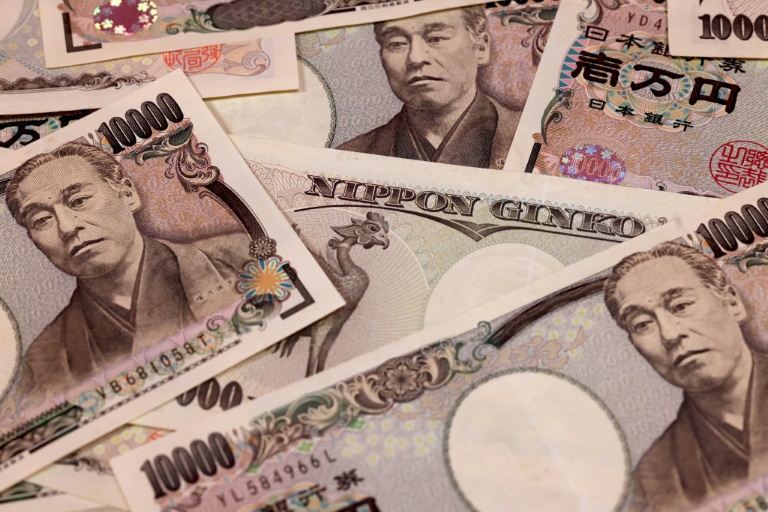

Where's the money? Japan town sues after $360,000 subsidy mix-up

A Japanese town that accidentally sent a resident $360,000 in financial aid said on Wednesday it has been forced to file a lawsuit after the recipient refused to return the funds.

“We’re sorry to cause trouble to residents… We’re now suing this household,” an official from Abu told AFP, adding that the decision would be approved at a council meeting on Thursday.

Last month, the town in western Yamaguchi prefecture, sent 100,000 yen ($768) each to 463 low-income households affected by the pandemic. 

But in the process, they mistakenly transferred an additional lump sum of 46.3 million yen to a single household. 

Red-faced officials immediately visited the recipient, who has not been identified, and were told the money would be returned.

But despite frantic follow-up letters and calls, there was no sign of the money.

When they finally made face-to-face contact again, according to a letter released by the mayor, the recipient admitted having “moved the money and being unable to return it but said they were willing to atone for the sin.”

The incident has made headlines in Japan, with the local mayor releasing a video of apology to his contituents, saying he was “deeply sorry” for the mistake.

It was this big! Cambodian fishermen hook giant endangered stingray

Cambodian fishermen on the Mekong River got a shock when they inadvertently hooked an endangered giant freshwater stingray four metres long and weighing 180 kilos, scientists said on Wednesday.

The female leviathan, one of Southeast Asia’s largest and rarest species of fish, was caught by accident last week in Stung Treng province when it swallowed a smaller fish that had taken a baited hook.

An international team of experts on the US-funded Wonders of the Mekong project worked with the fishermen to unhook the ray before weighing and measuring it and returning it unharmed to the river.

The giant Mekong is a crucial habitat for a vast array of species large and small, but project leader Zeb Hogan, a fish biologist from the University of Nevada, said the river’s underwater ecosystem was poorly understood.

“They are unseen worlds, underappreciated and out of sight,” he said in a statement issued by his university.

More than 1,000 fish species call the Mekong home and the stingray is not the only giant lurking in the muddy waters — the giant catfish and giant barb also reach up to three metres long and 270 kilos in weight.

The study group said in the statement that the remote location where the ray was caught has pools up to 80 metres deep and could harbour even bigger specimens.

But they also warned that underwater video footage showed plastic waste even in the deepest stretches of the Mekong, along with “ghost nets” — abandoned by fishers but still able to snare fish. 

Environmentalists have long voiced concerns about dam building along the Mekong River that will destroy fish stocks

The famous waterway starts in China and twists south through parts of Thailand, Laos, Myanmar, Cambodia and Vietnam, feeding 60 million people through its basin and tributaries.

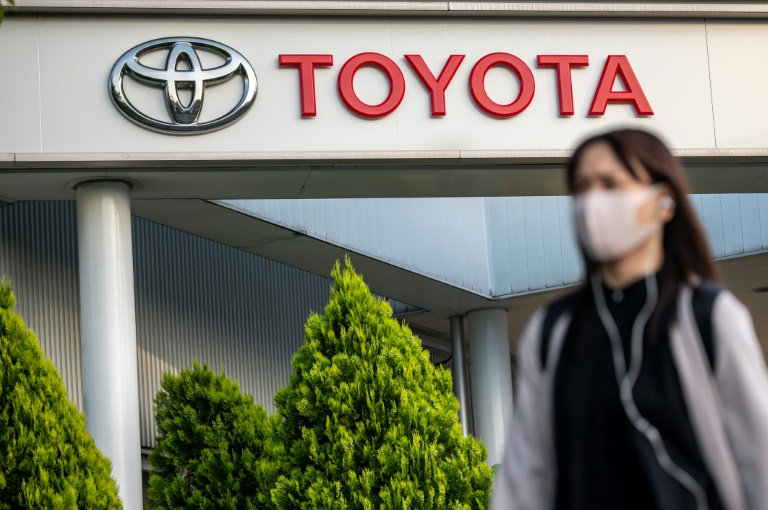
Toyota posts record full-year net profit, forecasts cautious

Toyota on Wednesday posted a record full-year net profit helped by strong sales and a cheaper yen, but issued cautious forecasts as the pandemic and the war in Ukraine disrupt supply chains.

The Japanese auto giant, which kept its crown as the world’s top-selling carmaker in 2021, reported a net profit of 2.85 trillion yen ($22 billion), up 26.9 percent from the previous year. 

But for the current year to March 2023, it said it expects to post an annual net profit of 2.26 trillion yen ($17.3 billion), citing ongoing uncertainties.

Toyota said its robust results were due in part to beneficial foreign exchange rates, with a cheaper yen helping inflate profits from sales abroad.

It also cited cost reduction efforts and stronger sales helped by marketing efforts.

In the year to March 2022, operating profit surged 36.3 percent year-on-year to three trillion yen, as sales increased 15.3 percent to 31.4 trillion yen — also a record.

Toyota’s strong sales came despite the firm being forced to repeatedly adjust production targets because of supply chain issues ranging from the semiconductor shortage to pandemic-linked factory closures.

On Tuesday, it said it was suspending production at eight domestic plants for six days due to the impact of China’s tough Covid measures — particularly in economic engine Shanghai, which has been under lockdown since April.

The closure forced Toyota to lower its global production target in May by 50,000 units to 700,000 vehicles, the latest in a string of revisions.

Operations were also hit by an earthquake in Japan and a cyberattack on a Toyota supplier.

The firm set a production target for the current fiscal year of 9.7 million units, after meeting a revised target of 8.5 million units for the year to March 2022.

“This fiscal year it’s going to be even more difficult than other years to make a forecast,” said chief communications officer Jun Nagata.

“Overall recovery from Covid-19 is going to be a big positive factor,” he said, but “raw material prices are soaring and the inflation in various areas will have an impact on the daily lives of people.”

“And then there is the Ukrainian factor, that is causing a lot of concerns in many areas,” he added, noting continuing constraints also with the supply of chips and other parts.

– Chips, currency, Covid, conflict –

Russia’s invasion of Ukraine is the most unpredictable factor for now, said Masayuki Kubota, chief strategist of Rakuten Securities.

“The chip shortage and the impact of Covid are issues that have been there for a while and drag on, but the more serious problem is Russia,” he told AFP.

“It is not clear how the Russia situation will turn out,” so companies are likely to issue conservative full-year forecasts, he added.

In March, Toyota said it would suspend operations at its only factory in Russia and stop shipping vehicles to the country.

Other factors though are likely to be more positive for the automaker, including the slide in the yen. The currency has touched 20-year lows against the dollar in recent weeks.

A weaker yen inflates the value of Toyota’s profits made overseas and some analysts believe this will help the firm and other Japanese automakers offset some of the challenges of the current business environment.

Rising commodity prices could also be a boon, said Kubota.

“Surge in gasoline prices have in the past worked in favour of fuel-efficient Japanese gasoline cars,” he said, though pricier commodities can also affect production costs.

Like other automakers, Toyota is still struggling with the impact of a global shortage of semiconductors — an essential component of modern vehicles.

Toyota has found itself unable to escape the crisis but is better placed than some rivals, having developed strong ties with domestic suppliers after Japan’s 2011 earthquake and tsunami.

Summer heatwave bleaches 91% of Great Barrier Reef: report

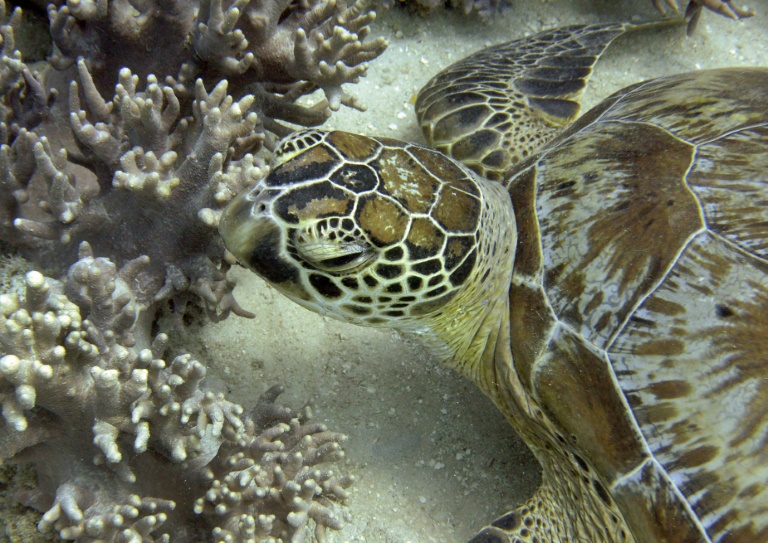
A prolonged summer heatwave in Australia left 91 percent of the Great Barrier Reef’s coral damaged by bleaching, according to a new government monitoring report.

It was the first time on record the reef had suffered bleaching during a La Nina weather cycle, when cooler temperatures would normally be expected.

The Reef Snapshot report offered new details of the damage caused by the fourth “mass bleaching” the world’s largest coral reef system has experienced since 2016, which was first revealed in March.

“Climate change is escalating, and the Reef is already experiencing the consequences of this,” the report warned.

The Great Barrier Reef Marine Park Authority, which published the report late Tuesday, conducted extensive surveys of the World Heritage-listed reef between September 2021 and March 2022.

It found that after waters began to warm last December, all three major regions of the reef experienced bleaching — a phenomenon that occurs when coral is stressed and expels brightly coloured algae living in it.

– ‘Higher mortality’ –

Although bleached corals are still alive, and moderately affected sections of the reef may recover, “severely bleached corals have higher mortality rates”, the report said.

Of the 719 reefs surveyed, the report said 654 — or 91 percent — showed some level of coral bleaching.

The report was published 10 days before Australia’s May 21 federal election, in which climate change policy has emerged as a key issue for voters.

Australia’s 2019-2020 “Black Summer” bushfires and deadly east coast floods that swept away cars and engulfed homes this year have highlighted the country’s growing climate risks.

Prime Minister Scott Morrison has, however, resisted calls to make the country’s 2030 emissions reduction target more ambitious, while vowing to mine and export coal for as long as there are buyers.

The Labor opposition has promised to boost renewables and commit to a 43 percent cut in greenhouse gases by 2030 but made no mention of phasing out coal burning. 

– ‘Not normal’ –

“Although bleaching is becoming more and more frequent, this is not normal, and we should not accept that this is the way things are,” Australian Marine Conservation Society campaigner Lissa Schindler said.

“Both major political parties need to face up to the fact that their climate goals are not enough for the Reef.”

During Australia’s election campaign, there has been another force in favour of climate action at play, with more than 20 climate-focused independent candidates running for key seats.

These independents — mostly women — are being financed to stand for election by a fund, Climate 200, set up by activist-philanthropist Simon Holmes a Court.

Most of them are standing in urban, conservative seats against ruling Liberal Party candidates, seeking to sway voters who want stronger climate action. 

Polls indicate a few conservative-held seats may be at risk, including Treasurer Josh Frydenberg’s.

Greenpeace activist Martin Zavan, meanwhile, said fossil fuels were to blame for the coral bleaching.

“Whoever leads the Australian government after the election must have the courage to stand up to the vested interests of the fossil fuel industry and drastically cut emissions by replacing coal and gas with clean energy,” he said.

Next month, the United Nations’ World Heritage Committee will decide whether to list the reef as “in danger”.

Australia was able to avoid a threatened UN downgrade of the reef’s World Heritage status in 2015 by creating a “Reef 2050” plan and pouring billions of dollars into protection.

Elon Musk says he would lift Twitter ban on Trump

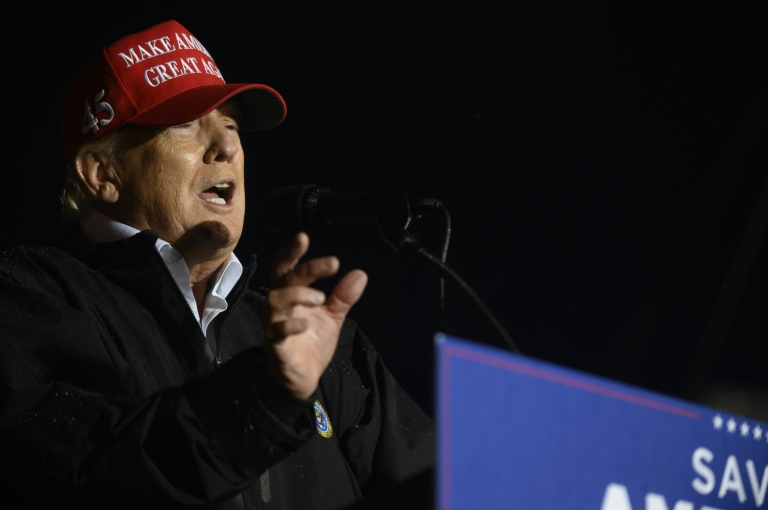
Elon Musk said on Tuesday that as owner of Twitter he would lift the ban on Donald Trump, contending that kicking the former US president off the platform “alienated a large part of the country.”

Musk’s endorsement of a Trump return to the global messaging platform triggered fears among activists that Musk would “open the floodgates of hate.”

“I would reverse the permanent ban,” the billionaire said at a Financial Times conference, noting that he doesn’t own Twitter yet, so “this is not like a thing that will definitely happen.”

Trump has stated publicly that he would not come back to Twitter if permitted, opting instead to stick with his own social network, which has failed to gain traction.

The Tesla chief’s $44-billion deal to buy Twitter must still get the backing of shareholders and regulators, but he has voiced enthusiasm for less content moderation and “time-outs” instead of bans.

Trump was booted from Twitter and other online platforms after supporters fired up by his tweets and speech alleging election fraud attacked the US Capitol on January 6, 2021 in a deadly bid to stop Joe Biden from being certified as the victor in the US presidential election.

“I think that was a mistake because it alienated a large part of the country, and did not ultimately result in Donald Trump not having a voice,” Musk said.

Musk maintained that permanent bans undermine trust in Twitter as an online town square where everyone can be heard.

“Elon Musk would open the floodgates of hate and disinformation on Twitter,” said Media Matters for America president Angelo Carusone.

“Whether Elon Musk is a fully red-pilled right-wing radical or just someone very interested in enabling right-wing extremists, the result is the same.”

The American Civil Liberties Union (ACLU), however, backed Musk’s perspective.

“Elon Musk’s decision to re-platform President Trump is the right call,” said organization director Anthony Romero.

“Like it or not, president Trump is one of the most important political figures in this country, and the public has a strong interest in hearing his speech.”

Romero pointed out that some of Trump’s controversy causing tweets have wound up being evidence in lawsuits against the former president by the ACLU and others.

Musk reasoned that permanent bans at Twitter should be rare, and reserved for accounts that are spam, scams or run by software “bots.”

“That doesn’t mean that somebody gets to say whatever they want to say,” Musk said.

“If they say something that is illegal or otherwise just destructive to the world, then there should be a perhaps a timeout, a temporary suspension, or that particular tweet should be made invisible or have very limited attraction.”

– Ad boycott? –

Activist groups have called on Twitter advertisers to boycott the service if it opens the gates to abusive and misinformative posts with Musk as its owner.

“Under Musk’s management, Twitter risks becoming a cesspool of misinformation, with your brand attached,” said an open letter signed by more than two dozen groups including Media Matters, Access Now and Ultraviolet.

Twitter makes most of its revenue from ads, and that could be jeopardized by advertisers’ reaction to content posted on the platform, the San Francisco-based tech firm said in a filing with US regulators.

“We believe that our long-term success depends on our ability to improve the health of the public conversation on Twitter,” the company said in a regulatory filing.

Efforts toward that goal include fighting abuse, harassment, and spam, Twitter told regulators.

“Elon Musk owes the world a better explanation of how the platform will deal with the likes of Trump than an edict that his ouster was wrong because it proved unpopular in some places,” said Suzanne Nossel, chief of human rights nonprofit PEN America.

The Knight Foundation said that a survey it commissioned found that only 41 percent of adults in the United States believe Trump was deprived of free expression rights by social media platforms that banned him.

“People died because of Donald Trump’s Twitter account,” said Muslim Advocates senior policy counsel Sumayyah Waheed.

“I’m terrified of what else would be allowed under Musk’s watch.”

EA Sports to end FIFA video-game partnership after three decades

The wildly popular FIFA video-game series will be rebranded EA Sports FC next year, its publisher Electronic Arts said on Tuesday, ending a three-decade relationship with football’s governing body.

Launched in 1993, a generation of millions of football fans and gamers across the globe grew up playing the game and it became a huge money-spinner.

But “months of tense negotiations” between California-based Electronic Arts (EA) and governing body FIFA failed to end in an agreement to extend the partnership, The New York Times reported.

FIFA reportedly wanted the $150 million it gets annually from EA to be increased to $250 million or more. 

The game has more than 150 million player accounts, according to EA, and The New York Times said it had generated more than $20 billion in sales over the past two decades.

No major changes to how the game plays are anticipated and EA said that it has retained relationships with other leagues and associations, such as UEFA, the Premier League and Spain’s La Liga.

However, FIFA events such as the World Cup will not feature.

“Our vision for EA Sports FC is to create the largest and most impactful football club in the world, at the epicenter of football fandom,” said EA chief executive Andrew Wilson.

“For nearly 30 years, we’ve been building the world’s biggest football community with hundreds of millions of players, thousands of athlete partners, and hundreds of leagues, federations, and teams. 

“EA Sports FC will be the club for every one of them, and for football fans everywhere.”

FIFA swiftly responded by saying that it will launch “new football video games developed with third-party studios and publishers”.

“I can assure you that the only authentic, real game that has the FIFA name will be the best one available for gamers and football fans,” said its president Gianni Infantino.

Summer heatwave bleaches 91% of Great Barrier Reef: report

A prolonged summer heatwave in Australia left 91 percent of the Great Barrier Reef’s coral damaged by bleaching, according to a new government monitoring report.

It was the first time on record the reef had suffered bleaching during a La Nina weather cycle, when cooler temperatures would normally be expected.

The Reef Snapshot report offered new details of the damage caused by the fourth “mass bleaching” the world’s largest coral reef system has experienced since 2016, which was first revealed in March.

“Climate change is escalating, and the Reef is already experiencing the consequences of this,” the report warned.

The Great Barrier Reef Marine Park Authority, which published the report late Tuesday, conducted extensive surveys of the World Heritage-listed reef between September 2021 and March 2022.

It found that after waters began to warm last December, all three major regions of the reef experienced bleaching — a phenomenon that occurs when coral is stressed and expels brightly coloured algae living in it.

– ‘Higher mortality’ –

Although bleached corals are still alive, and moderately affected sections of the reef may recover, “severely bleached corals have higher mortality rates”, the report said.

Of the 719 reefs surveyed, the report said 654 — or 91 percent — showed some level of coral bleaching.

The report was published 10 days before Australia’s May 21 federal election, in which climate change policy has emerged as a key issue for voters.

Australia’s 2019-2020 “Black Summer” bushfires and deadly east coast floods that swept away cars and engulfed homes this year have highlighted the country’s growing climate risks.

Prime Minister Scott Morrison has, however, resisted calls to make the country’s 2030 emissions reduction target more ambitious, while vowing to mine and export coal for as long as there are buyers.

The Labor opposition has promised to boost renewables and commit to a 43 percent cut in greenhouse gases by 2030 but made no mention of phasing out coal burning. 

– ‘Not normal’ –

“Although bleaching is becoming more and more frequent, this is not normal, and we should not accept that this is the way things are,” Australian Marine Conservation Society campaigner Lissa Schindler said.

“Both major political parties need to face up to the fact that their climate goals are not enough for the Reef.”

During Australia’s election campaign, there has been another force in favour of climate action at play, with more than 20 climate-focused independent candidates running for key seats.

These independents — mostly women — are being financed to stand for election by a fund, Climate 200, set up by activist-philanthropist Simon Holmes a Court.

Most of them are standing in urban, conservative seats against ruling Liberal Party candidates, seeking to sway voters who want stronger climate action. 

Polls indicate a few conservative-held seats may be at risk, including Treasurer Josh Frydenberg’s.

Greenpeace activist Martin Zavan, meanwhile, said fossil fuels were to blame for the coral bleaching.

“Whoever leads the Australian government after the election must have the courage to stand up to the vested interests of the fossil fuel industry and drastically cut emissions by replacing coal and gas with clean energy,” he said.

Next month, the United Nations’ World Heritage Committee will decide whether to list the reef as “in danger”.

Australia was able to avoid a threatened UN downgrade of the reef’s World Heritage status in 2015 by creating a “Reef 2050” plan and pouring billions of dollars into protection.

The 1997 chess game that thrust AI into the spotlight

With his hand pushed firmly into his cheek and his eyes fixed on the table, Garry Kasparov shot a final dark glance at the chessboard before storming out of the room: the king of chess had just been beaten by a computer.

May 11, 1997 was a watershed for the relationship between man and machine, when the artificial intelligence (AI) supercomputer Deep Blue finally achieved what developers had been promising for decades. 

It was an “incredible” moment, AI expert Philippe Rolet told AFP, even if the enduring technological impact was not so huge. 

“Deep Blue’s victory made people realise that machines could be as strong as humans, even on their territory,” he said.

Developers at IBM, the US firm that made Deep Blue, were ecstatic with the victory but quickly refocused on the wider significance. 

“This is not about man versus machine. This is really about how we, humans, use technology to solve difficult problems,” said Deep Blue team chief Chung-Jen Tan after the match, listing possible benefits from financial analysis to weather forecasting. 

Even Chung would have struggled to comprehend how central AI has now become — finding applications in almost every field of human existence.

“AI has exploded over the last 10 years or so,” UCLA computer science professor Richard Korf told AFP. 

“We’re now doing things that used to be impossible.”

– ‘One man cracked’ –

After his defeat, Kasparov, who is still widely regarded as the greatest chess player of all time, was furious.

He hinted there had been unfair practices, denied he had really lost and concluded that nothing at all had been proved about the power of computers. 

He explained that the match could be seen as “one man, the best player in the world, (who) has cracked under pressure”.

The computer was beatable, he argued, because it had too many weak points. 

Nowadays, the best computers will always beat even the strongest human chess players. 

AI-powered machines have mastered every game going and now have much bigger worlds to conquer.

Korf cites notable advances in facial recognition that have helped make self-driving cars a reality. 

Yann LeCun, head of AI research at Meta/Facebook, told AFP there had been “absolutely incredible progress” in recent years. 

LeCun, one of the founding fathers of modern AI, lists among the achievements of today’s computers an ability “to translate any language into any language in a set of 200 languages” or “to have a single neural network that understands 100 languages”. 

It is a far cry from 1997, when Facebook didn’t even exist. 

– Machines ‘not the danger’ –

Experts agree that the Kasparov match was important as a symbol but left little in the way of a technical legacy.

“There was nothing revolutionary in the design of Deep Blue,” said Korf, describing it as an evolution of methods that had been around since the 1950s.

“It was also a piece of dedicated hardware designed just to play chess.”

Facebook, Google and other tech firms have pushed AI in all sorts of other directions.

They have fuelled increasingly powerful AI machines with unimaginable amounts of data from their users, serving up remorselessly targeted content and advertising and forging trillion-dollar companies in the process. 

AI technology now helps to decide anything from the temperature of a room to the price of vehicle insurance. 

Devices from vacuum cleaners to doorbells come with arrays of sensors to furnish AI systems with data to better target consumers. 

While critics bemoan a loss of privacy, enthusiasts believe AI products just make everyone’s lives easier. 

Despite his painful history with machines, Kasparov is largely unfazed by AI’s increasingly dominant position. 

“There is simply no evidence that machines are threatening us,” he told AFP last year. 

“The real danger comes not from killer robots but from people — because people still have a monopoly on evil.”

The 1997 chess game that thrust AI into the spotlight

With his hand pushed firmly into his cheek and his eyes fixed on the table, Garry Kasparov shot a final dark glance at the chessboard before storming out of the room: the king of chess had just been beaten by a computer.

May 11, 1997 was a watershed for the relationship between man and machine, when the artificial intelligence (AI) supercomputer Deep Blue finally achieved what developers had been promising for decades. 

It was an “incredible” moment, AI expert Philippe Rolet told AFP, even if the enduring technological impact was not so huge. 

“Deep Blue’s victory made people realise that machines could be as strong as humans, even on their territory,” he said.

Developers at IBM, the US firm that made Deep Blue, were ecstatic with the victory but quickly refocused on the wider significance. 

“This is not about man versus machine. This is really about how we, humans, use technology to solve difficult problems,” said Deep Blue team chief Chung-Jen Tan after the match, listing possible benefits from financial analysis to weather forecasting. 

Even Chung would have struggled to comprehend how central AI has now become — finding applications in almost every field of human existence.

“AI has exploded over the last 10 years or so,” UCLA computer science professor Richard Korf told AFP. 

“We’re now doing things that used to be impossible.”

– ‘One man cracked’ –

After his defeat, Kasparov, who is still widely regarded as the greatest chess player of all time, was furious.

He hinted there had been unfair practices, denied he had really lost and concluded that nothing at all had been proved about the power of computers. 

He explained that the match could be seen as “one man, the best player in the world, (who) has cracked under pressure”.

The computer was beatable, he argued, because it had too many weak points. 

Nowadays, the best computers will always beat even the strongest human chess players. 

AI-powered machines have mastered every game going and now have much bigger worlds to conquer.

Korf cites notable advances in facial recognition that have helped make self-driving cars a reality. 

Yann LeCun, head of AI research at Meta/Facebook, told AFP there had been “absolutely incredible progress” in recent years. 

LeCun, one of the founding fathers of modern AI, lists among the achievements of today’s computers an ability “to translate any language into any language in a set of 200 languages” or “to have a single neural network that understands 100 languages”. 

It is a far cry from 1997, when Facebook didn’t even exist. 

– Machines ‘not the danger’ –

Experts agree that the Kasparov match was important as a symbol but left little in the way of a technical legacy.

“There was nothing revolutionary in the design of Deep Blue,” said Korf, describing it as an evolution of methods that had been around since the 1950s.

“It was also a piece of dedicated hardware designed just to play chess.”

Facebook, Google and other tech firms have pushed AI in all sorts of other directions.

They have fuelled increasingly powerful AI machines with unimaginable amounts of data from their users, serving up remorselessly targeted content and advertising and forging trillion-dollar companies in the process. 

AI technology now helps to decide anything from the temperature of a room to the price of vehicle insurance. 

Devices from vacuum cleaners to doorbells come with arrays of sensors to furnish AI systems with data to better target consumers. 

While critics bemoan a loss of privacy, enthusiasts believe AI products just make everyone’s lives easier. 

Despite his painful history with machines, Kasparov is largely unfazed by AI’s increasingly dominant position. 

“There is simply no evidence that machines are threatening us,” he told AFP last year. 

“The real danger comes not from killer robots but from people — because people still have a monopoly on evil.”

Close Bitnami banner
Bitnami