AFP

Asian markets slide, China growth behind target

Asian stocks opened lower on Monday in cautious trade, as China posted higher-than-expected economic growth but officials still warned of “significant challenges ahead”.

Tokyo’s benchmark Nikkei 225 index was down 1.25 percent in early trade, while Hong Kong and Sydney were closed for holidays.

Stocks in Shanghai, which reported the first Covid-19 deaths since the start of its weeks-long lockdown, were slightly down.

China’s largest city and economic powerhouse has stewed under a patchwork of lockdown restrictions this year amid the country’s worst Covid-19 outbreak since the start of the pandemic.

The country reported first-quarter economic growth of 4.8 percent, the National Bureau of Statistics said, as the pandemic threatens Beijing’s ambitious annual growth target.

That figure was up from 4.0 percent in the final months of 2021.

The world’s second-biggest economy was already losing steam in the latter half of last year with a property slump and regulatory crackdowns.

All of this adds to pressure on officials to meet the country’s full-year growth target of around 5.5 percent, in a key year for President Xi Jinping who is eyeing another term in power.

“We must be aware that with the domestic and international environment becoming increasingly complicated and uncertain, economic development is facing significant difficulties and challenges,” said NBS spokesman Fu Linghui.

Oil prices, which have been elevated since Russia’s February invasion of Ukraine, were up again, with Brent Crude topping $112 a barrel.

Stephen Innes of SPI Asset Management said the rise was “likely to fuel inflation fears, and rate hike jitters around the meaningful Fed action required to snuff those fears out”.

Russia is a major global oil and gas supplier, and — along with Ukraine — is also a key player in the grain sector.

The conflict has shaken markets for these commodities, and the impact has been felt from the Middle East to South America.

The war has sent oil prices soaring, with reports swirling about further energy sanctions on Russia.

Central banks in several major economies including the United States, Canada and Britain have already started raising interest rates to contain prices, but the European Central Bank on Thursday kept its stimulus plans and rates unchanged.

– Key figures around 0250 GMT –

Tokyo – Nikkei 225: DOWN 1.83 percent at 26,596.66

Shanghai – Composite: DOWN 0.42 percent at 3,197.72

Hong Kong – Hang Seng Index: Closed for a holiday

Euro/dollar: DOWN at $1.0798 from $1.0801

Pound/dollar: DOWN at 1.3037 from $1.3063

Euro/pound: UP at 82.83 pence from 82.67 pence

Dollar/yen: UP at 126.53 yen from 126.39 yen

Brent North Sea crude: UP 0.66 percent at $112.44 per barrel

West Texas Intermediate: UP 0.52 percent at $107.51 per barrel

New York – Dow: DOWN 0.3 percent at 34,451.23 (close)

London – FTSE 100: UP 0.5 percent at 7,616.38 (close)

Divers find 'no leaks' from fuel-laden ship sunk off Tunisia

Divers who inspected the hull of a tanker loaded with 750 tonnes of fuel that sank off southeast Tunisia detected no leaks on Sunday, officials said.

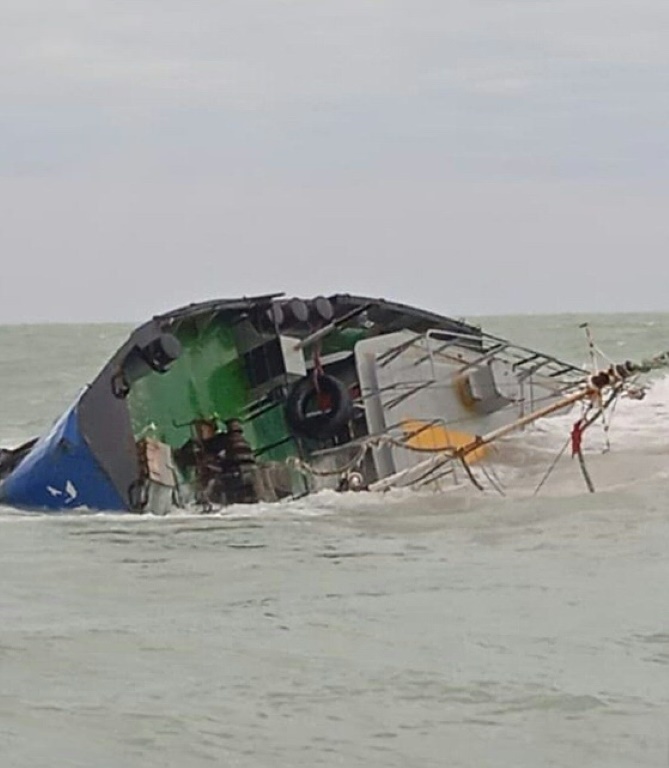
The Equatorial Guinea-flagged Xelo, which sank Saturday in the Gulf of Gabes, has settled on its side at a depth of almost 20 metres (65 feet), the environment ministry said.

“No leak has been detected,” it said in a statement.

The inspection was carried out by divers accompanied by the ship’s captain and engineer, said Mohamed Karray, spokesman for a court in Gabes city that is investigating the sinking.

The Xelo was travelling from Egypt to Malta when it went down.

With the scene sealed off by Tunisia’s military, the defence ministry released pictures showing the vessel submerged on its side.

The crew of the Xelo had issued a distress call on Friday evening and sought shelter in Tunisian waters from bad weather before going down.

Tunisian authorities rescued the seven-member crew, who received first aid and were moved to a hotel.

Transport Minister Rabie Majidi said Sunday that rescue workers had checked during the operation that the valves were closed, and the team of divers ensured they were sealed and intact.

“The situation is not dangerous, the outlook is positive, the ship is stable because luckily it ran aground on sand,” he told reporters.

The minister said the priority was to pump the diesel fuel and prevent any spillage or pollution.

An Italian ship specialised in cleaning up marine pollution will be sent alongside a team of divers to aid with efforts, an Italian official said.

As a precaution, protective booms have already been placed around the wreck.

Environment Minister Leila Chikhaoui has also been at the scene in the port of Gabes to follow up on the incident.

Tunisian officials are investigating the itinerary of the tanker, which reportedly has Turkish and Libyan owners.

The Tunisia branch of the World Wildlife Fund has expressed concern about another “environmental catastrophe” in the region, an important fishing zone.

The tanker is 58 metres (63 yards) long and nine metres wide, according to ship monitoring website vesseltracker.com.

It began taking on water around seven kilometres (four miles) offshore in the Gulf of Gabes and the engine room was engulfed, according to the environment ministry.

South Africa flood toll rises to 443 as deluge eases

The death toll from floods that have battered South Africa climbed above 440 on Sunday as abating rains allowed rescue operations to accelerate after one of the deadliest storms in living memory.

Torrential rains that started lashing the southeastern coastal region last weekend quickly triggered heavy floods and landslides that smashed into Durban city and surrounding areas, pulling with them buildings and people.

By Sunday 443 people, including two police emergency workers, had died from the raging floods.

Scientists warn that floods and other extreme weather events are becoming more powerful and frequent as the world gets warmer because of climate change.

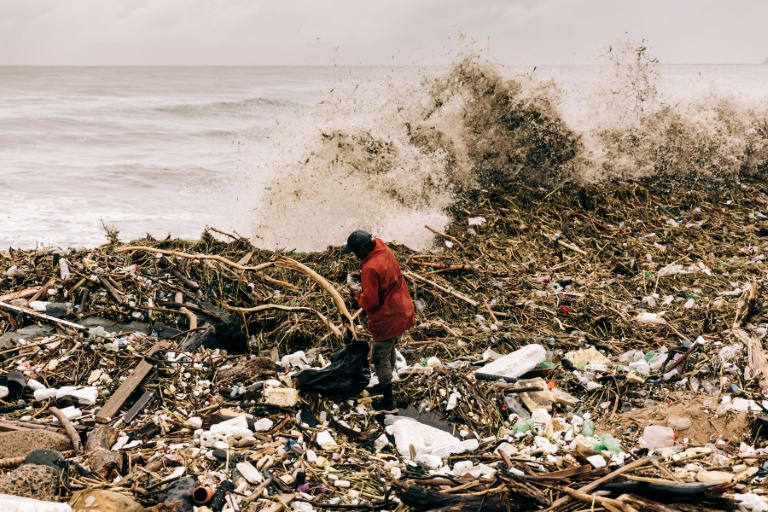
At least 63 other people are still missing and feared dead after the floodwaters — the strongest to have struck KwaZulu-Natal in recent memory — engulfed the region, trashing the idyllic beaches with debris.

– Emotional prayers –

Amid the destruction, climbing temperatures and an overcast sky, survivors sought divine solace and temporary distraction from their misery while observing Easter Sunday.

Thulisile Mkhabela went to church, at a large white concrete building with a tiled roof ceiling — one of a few solid structures left standing by the raging floods that engulfed her Inanda township.

She recalled watching her house gradually collapse under the weight of the waters six days ago.

It started with the living room. “We took out whatever we could,” she said, and took the children to what was thought to be a secure outbuilding. 

As “soon as we took them out then the bedroom started collapsing”, she said.

The family then moved to an outbuilding, which had also been damaged but held together for the rest of the night.

That building has since collapsed and they are now “squatting” in her brother’s two-bedroom house where 12 people are crammed.

Worshippers at the United Congregational Church of Southern Africa raised hands as tears rolled down, while others fell to the ground during emotional prayers.

“The loss of life, destruction of homes, the damage to the physical infrastructure… make this natural disaster one of the worst ever in recorded history of our province,” said Sihle Zikalala, the premier of the KwaZulu-Natal province.

Rains were starting to let up on Sunday, allowing for search and relief aid operations to continue in and around Durban. 

The city of 3.5 million was overcast but the South African Weather Service said rainfall would have cleared by midweek.

But recovery operations and humanitarian relief continued in the economic hub and tourist magnet city, whose beaches and warm Indian Ocean waters would normally have been teeming with Easter holidaymakers.

The government, churches and charities were marshalling relief aid for the more than 40,000 people left homeless by the raging floodwaters.

The government has announced an immediate one billion rand ($68 million) in emergency relief funding. 

– Hospitals and schools destroyed –

Deputy Social Development Minister Hendrietta Bogopane-Zulu said some 340 social workers had been deployed to offer support to traumatised survivors, with many still missing children and other relatives.

Most casualties were in Durban, a port city and a major economic hub.

Parts of the city have been without water since Monday after floods ripped away infrastructure.

Scores of hospitals and more than 500 schools have been destroyed.

The intensity of the floods took South Africa, the most economically advanced African country, by surprise.

While the southeastern region has suffered some flooding before, the devastation has never been so severe. South Africans have previously watched similar tragedies hit neighbouring countries such as cyclone-prone Mozambique.

The country is still struggling to recover from the Covid pandemic and deadly riots last year that killed more than 350 people, mostly in the now flood-struck southeastern region.

Divers find 'no leaks' from fuel-laden ship sunk off Tunisia

Divers who inspected the hull of a tanker loaded with 750 tonnes of fuel that sank off southeast Tunisia detected no leaks on Sunday, officials said.

The Equatorial Guinea-flagged Xelo, which sank Saturday in the Gulf of Gabes, has settled on its side at a depth of almost 20 metres (65 feet), the environment ministry said.

“No leak has been detected,” it said in a statement.

The inspection was carried out by divers accompanied by the ship’s captain and engineer, said Mohamed Karray, spokesman for a court in Gabes city that is investigating the sinking.

The Xelo was travelling from Egypt to Malta when it went down.

With the scene sealed off by Tunisia’s military, the defence ministry released pictures showing the vessel submerged on its side.

The crew of the Xelo had issued a distress call on Friday evening and sought shelter in Tunisian waters from bad weather before going down.

Tunisian authorities rescued the seven-member crew, who received first aid and were moved to a hotel.

Transport Minister Rabie Majidi said Sunday that rescue workers had checked during the operation that the valves were closed, and the team of divers ensured they were sealed and intact.

“The situation is not dangerous, the outlook is positive, the ship is stable because luckily it ran aground on sand,” he told reporters.

The minister said the priority was to pump the diesel fuel and prevent any spillage or pollution.

An Italian ship specialised in cleaning up marine pollution will be sent alongside a team of divers to aid with efforts, an Italian official said.

As a precaution, protective booms have already been placed around the wreck.

Environment Minister Leila Chikhaoui has also been at the scene in the port of Gabes to follow up on the incident.

Tunisian officials are investigating the itinerary of the tanker, which reportedly has Turkish and Libyan owners.

The Tunisia branch of the World Wildlife Fund has expressed concern about another “environmental catastrophe” in the region, an important fishing zone.

The tanker is 58 metres (63 yards) long and nine metres wide, according to ship monitoring website vesseltracker.com.

It began taking on water around seven kilometres (four miles) offshore in the Gulf of Gabes and the engine room was engulfed, according to the environment ministry.

Divers find 'no leaks' from fuel-laden ship sunk off Tunisia

Divers who inspected the hull of a tanker loaded with 750 tonnes of fuel that sank off southeast Tunisia detected no leaks on Sunday, officials said.

The Equatorial Guinea-flagged Xelo, which sank Saturday in the Gulf of Gabes, has settled on its side at a depth of almost 20 metres (65 feet), the environment ministry said.

“No leak has been detected,” it said in a statement.

The inspection was carried out by divers accompanied by the ship’s captain and engineer, said Mohamed Karray, spokesman for a court in Gabes city that is investigating the sinking.

The Xelo was travelling from Egypt to Malta when it went down.

With the scene sealed off by Tunisia’s military, the defence ministry released pictures showing the vessel submerged on its side.

The crew of the Xelo had issued a distress call on Friday evening and sought shelter in Tunisian waters from bad weather before going down.

Tunisian authorities rescued the seven-member crew, who received first aid and were moved to a hotel.

Transport Minister Rabie Majidi said Sunday that rescue workers had checked during the operation that the valves were closed, and the team of divers ensured they were sealed and intact.

“The situation is not dangerous, the outlook is positive, the ship is stable because luckily it ran aground on sand,” he told reporters.

The minister said the priority was to pump the diesel fuel and prevent any spillage or pollution.

As a precaution, protective booms have been placed around the wreck.

Environment Minister Leila Chikhaoui has also been at the scene in the port of Gabes to follow up on the incident.

Tunisian officials are investigating the itinerary of the tanker, which reportedly has Turkish and Libyan owners.

The Tunisia branch of the World Wildlife Fund has expressed concern about another “environmental catastrophe” in the region, an important fishing zone.

The tanker is 58 metres (63 yards) long and nine metres wide, according to ship monitoring website vesseltracker.com.

It began taking on water around seven kilometres (four miles) offshore in the Gulf of Gabes and the engine room was engulfed, according to the environment ministry.

South Africa flood toll rises to 443 as deluge eases

The death toll from floods that have battered South Africa’s east coast has risen to 443, including a rescuer, a regional official said on Sunday, as dozens more are still missing.

“The death toll now stands at 443,” Sihle Zikalala, the premier of the KwaZulu-Natal province told a media briefing, adding 63 other people are still unaccounted for.

A member of the rescue and recovery team “experienced difficult breathing and was airlifted to… hospital. Unfortunately he passed away”. 

Rains were starting to let up in the flood-ravaged east, allowing for search and relief aid operations to continue after one of the deadliest storms in living memory.

Zikalala said the “inclement weather has slowed our assessment and rescue operation on the ground, but we are once again back in the full swing”.

Floodwaters engulfed parts of the southeastern coastal city of Durban and surrounding areas early last week ripping apart roads, destroying hospitals and sweeping away homes and those trapped inside.

– ‘Rains clearing’ –

The city of 3.5 million was overcast but the South African Weather Service’s Puseletso Mofokeng said “rainfall is actually clearing”.

“The rainfall is going to clear (away) completely as we move to Wednesday,” he told AFP.

But recovery operations and humanitarian relief continued in the economic hub and tourist magnet city whose beaches and warm Indian Ocean waters would normally have been teeming with Easter holidaymakers.

The number of flood-related emergency calls had decreased compared to early last week.

“Emergency services are still currently on high alert on Sunday morning,” Robert McKenzie of the provincial KwaZulu-Natal emergency services told AFP.

It rained on Saturday and overnight, “however now, it has stopped,” said McKenzie. 

Even so, emergency services were busy attending to a scene in the district of Pinetown where a house collapsed overnight.

“Fortunately now the flood waters have receded and (some) roads cleared. It’s a lot easier to access the community,” he said.

Christians congregated at churches across the city and further afield to offer prayers for those affected by the floods as they celebrated Easter Sunday.

“It’s a tragedy of overwhelming proportions,” said Thabo Makgoba, the Archbishop of Cape Town in his Easter message, a day after his visited Durban.

“The community is suffering severe emotional stress and pain,” said Makgoba, successor to Desmond Tutu.

Government, churches and charities were marshalling relief aid for the more than 40,000 people left homeless by the raging floodwaters.

The government has announced an immediate one billion rand ($68 million) in emergency relief funding. 

– Hospitals and schools destroyed –

Deputy Social Development Minister Hendrietta Bogopane-Zulu, said some 340 social workers had been deployed to offer support to traumatised survivors with many still missing children and other relatives.

Most casualties were in Durban, a port city and a major economic hub.

Parts of the city have been without water and electricity since Monday after floods ripped away infrastructure.

Scores of hospitals and hundreds of schools have been destroyed.

The intensity of the floods took South Africa, the most economically advanced African country, by surprise.

While the southeastern region has suffered some flooding before, the devastation has never been so severe. South Africans have previously watched similar tragedies hit neighbouring countries such as cyclone-prone Mozambique.

These floods have forced President Cyril Ramaphosa to postpone a working visit to Saudi Arabia that was scheduled to begin Tuesday.

The loss of hundreds of lives “and thousands of homes, as well as the economic impact and the destruction of infrastructure, calls for all hands on deck,” said Ramaphosa.

The country is still struggling to recover from the Covid pandemic and deadly riots last year that killed more than 350 people, mostly in the now flood-struck southeastern region.

S.Africa deluge easing but flood emergency lingers

Rains were expected to let up in South Africa’s flood-ravaged east Sunday after one of the deadliest storms in living memory killed nearly 400 and left tens of thousands homeless

Floodwaters engulfed parts of the southeastern coastal city of Durban and surrounding areas this week ripping apart roads, destroying hospitals and sweeping away homes and those trapped inside.

The city of 3.5 million was overcast but national forecaster with the South African Weather Service, Puseletso Mofokeng, said “rainfall is actually clearing”.

“The rainfall is going to clear all completely as we move to Wednesday,” he told AFP.

But recovery operations and humanitarian relief continued in the coastal city of 3.5 million whose beaches and warm Indian Ocean waters would normally have been teeming with Easter holidaymakers.

The number of flood-related emergency calls had decreased compared to early last week.

“Emergency services are still currently on high alert on Sunday morning,” Robert McKenzie of the provincial KwaZulu-Natal emergency services told AFP.

It rained on Saturday and overnight, “however now, it has stopped,” said McKenzie. 

Even so, emergency services were busy attending to a scene in the district of Pinetown where a house collapsed overnight.

“Fortunately now the flood waters have receded and (some) roads cleared. It’s a lot easier to access the community,” he said.

Christians congregated at churches across the city to pray for those affected by the floods as they celebrated Easter Sunday.

Government and charities were marshalling relief aid for the more than 40,000 people left homeless by the raging floodwaters.

The government has announced an immediate one billion rand ($68 million) in emergency relief funding. 

– Hospitals and schools destroyed –

Deputy Social Development minister Hendrietta Bogopane-Zulu, said some 340 social workers had been deployed to offer support to traumatised survivors with many still missing children and other relatives.

The death toll rose Saturday to 398 while 27 people were reported still missing, the government said in a Saturday statement. 

Most casualties were in Durban, a port city and a major economic hub.

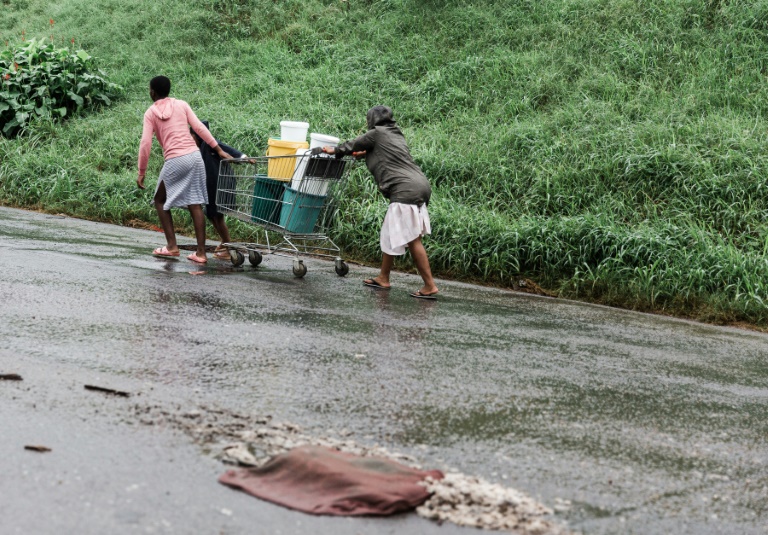
Parts of the city have been without water and electricity since Monday after floods ripped away infrastructure. Desperate residents have been seen carrying buckets of water using shopping trolleys.

Scores of hospitals and hundreds of schools have been destroyed.

The intensity of the floods took South Africa, the most economically advanced African country, by surprise.

It has previously watched similar tragedies hit neighbouring countries such as cyclone-prone Mozambique.

President Cyril Ramaphosa has postponed a working visit to Saudi Arabia that was scheduled to begin Tuesday.

“The loss of nearly 400 lives and thousands of homes, as well as the economic impact and the destruction of infrastructure, calls for all hands on deck,” said Ramaphosa.

The country is still struggling to recover from the Covid pandemic and deadly riots last year that killed more than 350 people, mostly in the now flood-struck southeastern region.

Divers inspect fuel-laden ship sunk off Tunisia

Divers on Sunday inspected the hull of a tanker loaded with 750 tonnes of fuel that sank off southeastern Tunisia, with no leak detected so far, officials said.

“With the improvement in weather conditions, a team of divers accompanied by the ship’s captain and engineer who know its layout are on site to examine the hull,” Mohamed Karray, spokesman for the court in Gabes city, which is investigating Saturday’s sinking, told AFP.

The Equatorial Guinea-flagged Xelo was travelling from Egypt to Malta when it went down.

Images released by the environment and defence ministries showed divers heading for the site in the Gulf of Gabes, and then getting into the water at the scene that has been sealed off by Tunisia’s military.

Defence ministry photos showed the vessel largely submerged.

The crew of the Xelo had issued a distress call on Friday evening and sought shelter in Tunisian waters from bad weather before going down, authorities said.

Environment Minister Leila Chikhaoui, who travelled to the port of Gabes on Saturday to help oversee the response, said the situation was “under control”.

“We think the hull is still watertight and there is no leakage for the moment,” she told AFP.

As a precaution, protective booms to contain any oil slick have been placed around the wreck.

The Tunisia branch of the World Wildlife Fund expressed concern about another “environmental catastrophe” in the region, an important fishing zone which has already suffered from pollution.

The tanker is 58 metres (63 yards) long and nine metres wide, according to ship monitoring website vesseltracker.com.

It began taking on water around seven kilometres (four miles) offshore in the Gulf of Gabes and the engine room was engulfed, according to the environment ministry.

It said Tunisian authorities rescued the seven-member crew, who received first aid and were being accommodated in a hotel.

Coachella's return brings big business to California desert

“We’ve waited years for this!” exclaims Jesus Medina as he dishes out burritos to the hungry masses at Coachella, the music festival that’s back on in the California desert after three years.

After a Covid-induced hiatus, Coachella Valley businesses are flourishing with the return of one of music’s most-touted events, a boon for the region that counts festivals as key to its economic engine.

With just a little over 90,000 residents, Indio’s motto is “The City of Festivals,” events that make it at least $3 million in direct revenue alone, according to municipal figures, which includes ticket-sharing dollars and transient occupancy taxes from campers.

The benefit to businesses from liquor stores to hotels to gas stations took that figure soaring even higher — until the pandemic stymied live performance and put Coachella on indefinite hiatus.

“We had everything ready in 2020, but the pandemic canceled everything,” Medina told AFP in Spanish. His business “Cena Vegana” sold more than a thousand burritos on Friday, during Coachella’s opening day.

“It doesn’t stop, the lines are endless — this is a great opportunity for us.”

Coachella draws in more than 125,000 people daily over the course of two three-day weekends. 

Thousands of people occupy hotels in neighboring areas including Palm Springs, the resort area bordered by the San Jacinto mountains and known for its palm trees, golf courses and spas.

Business has been “quiet for years, a couple years, but we’re full and it’s busy,” said Char Pershind, manager of the Zoso Hotel.

Nearly all of the 162 rooms at Zoso are booked by people attending and working at the festival, and virtually everything is sold out for the event’s second weekend.

In 2019, the last time Coachella attendees descended on the valley, Pershind worked at a different hotel, and says this year many more people are in town for the shows.

“People have been cooped up for so long… they want to get out and enjoy the air,” she said.

“I know they come for the music — but they come for a lot more.”

– ‘Reminder I was here’ –

For Mitchell Car, who works at a bustling vintage clothing and accessories shop, Coachella is a golden opportunity to expand sales.

“Lots of times people come and they don’t have their outfits,” Car told AFP.

This year, the festival’s giving 1970s vibes with bell-bottom silhouettes of yore, along with bursts of neon and glitter adding sheen to the Empire Polo Club grounds where the stages spring up each year.

“They’re always searching: what’s hip? What’s unique?” said Car, whose primary clientele come from New York, San Francisco and Los Angeles. “I had the photographer for Harry Styles in the store the other day.”

Food choices abound on the festival grounds, where Santiago Restrepo is dishing up traditional Venezuelan arepas to hungry concert-goers.

“At first it was a bit difficult for us, because it’s the first time we’ve used this sales model,” he told AFP. “But when people started arriving in the middle of the afternoon we were ready.”

“After 4:00 pm, we didn’t stop for a second until 1:00 am.”

A few feet away, Coachella partiers are lined up to snag souvenirs celebrating the festival’s return.

In the official store, it took people an hour-and-a-half to reach the front of the line where some 20 people doled out merch, the most expensive item ringing up at $150 for a 2022 sweatshirt.

“Some people spent thousands of dollars,” said one vendor who wished to remain anonymous. 

Charlie Dawson, who flew in from New York, told AFP he just wants “something, whatever — a reminder I was here.”

It’s his seventh Coachella: “I was looking forward to coming back.”

Tunisian weavers turn rags into eco-friendly rugs

Najet unravels an old pair of jeans, raw material for a designer carpet: traditional, eco-friendly crafts are being adapted for new markets thanks to a project born in the Tunisian desert.

“I learned to weave at a young age, from my mother,” said the 52-year-old from the oasis town of Nefta, 500 kilometres (310 miles) south of Tunis.

Now, she is making a living from it.

She is selling her Turkish-style kilim rugs via Shanti, a social enterprise that helps artisans from across the North African country reach buyers and bring vital revenue into some of its most marginalised communities.

Shanti is the brainchild of Najet’s Franco-Tunisian nephew Mehdi Baccouche.

“Unstitching old jumpers, tearing up old cotton garments, making rugs out of them, it’s a folk art found in all Tunisian homes,” he told AFP.

While the skill “has been around forever”, reaching buyers is a challenge, he added. 

Back in 2014, he had asked his aunt to weave carpets for his friends, soon moving to selling them via Facebook.

Seeing the potential, two years later he created Shanti, which buys carpets and takes charge of getting them to consumers.

It also employs designers who work with artisans to improve their design skills and make their products more marketable.

“These are my creations, they come out of my imagination and Shanti approved them,” Najet said.

– ‘Recycle clothes’ –

Najet uses an eclectic array of old pullovers, socks and assorted pass-me-downs from the local flea market, giving them a new life as rugs.

She has little fear of running out of raw materials. 

Despite a lean patch, the Tunisian clothes industry still keeps 1,600 firms in business, providing 100 times that many jobs.

In Nefta, a town of some 22,000 people, Shanti has also set up a haberdashery where weavers have free access to balls of wool recycled from second-hand clothes.

The association’s local coordinator Fatima Alhamal, Najet’s daughter, says the store makes “a huge difference”.

Previously, “craftswomen had to go and find materials, which they had to pay for, then earned 12-15 euros for a kilim”.

Now Shanti pays them 40 euros ($43) apiece, up to a maximum of four a month each to avoid pressuring them into overwork.

It then sells them in Tunisia and abroad.

The association also helps the workers improve their work spaces, for example with air conditioning — a necessity in southern Tunisia’s blistering summer heat.

The work has changed the social standing of the women involved.

“People see them completely differently now,” Fatma said.

Najet says she is happy to be making a living from home.

“I don’t have to go out for anything, I can cook and eat here, I can work comfortably.”

– Eco-friendly –

Baccouche said at first people teased him for getting involved in “an old ladies’ craft”.

But the project fills a valuable niche in an area where women are disproportionately underemployed, and which has faced an ever-worsening economic crisis since before the revolt that sparked the Arab Spring uprisings of 2011.

“It was important to show that you can be an old woman who never went to school and doesn’t know how to use the internet, but you can still do something and earn a living from it,” he said.

Yet the association also tries to avoid creating conflicts within families.

It pays the women not in cash but in post office accounts where their husbands can’t see how much they are making — or use it to pay household bills.

Using its system of ordering in advance, Shanti runs a boutique in the capital Tunis.

“L’Artisanerie” also acts as a space for coordinators who train artisans from other rural areas, making bamboo furniture, poetry and embroidery.

In four years, more than 200 producers have been able to find a market for their work. Sixty work every day for L’Artisanerie.

“We’re trying to show that you can make something 100 percent Tunisian, with Tunisian materials and skills, but with a design that fits current tastes,” Baccouche said.

Some products, joint creations by artisans and Shanti designers, are sold to design-conscious Tunisians.

Others are exported or sold to bigger firms — such as Indigo, a manufacturer for Zara, or Mango, which recently bought 164 rugs made from recycled jeans.

For now, the system still relies on some support from non-profits such as Oxfam or on Danish development aid.

But Baccouche has big ambitions, with Shanti expanding into sustainable agriculture and eco-tourism.

“We’re trying to set up an entire, eco-friendly production and logistics chain,” he said.

Close Bitnami banner
Bitnami