AFP

Uniqlo operator lifts profit outlook despite China lockdowns

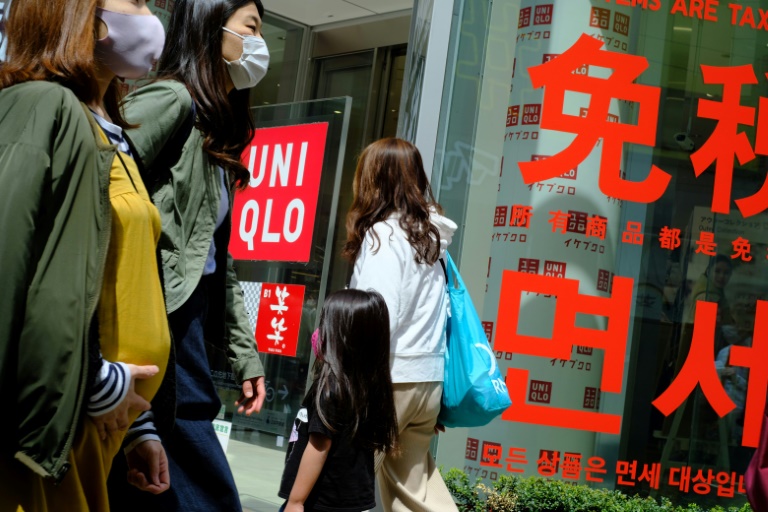
Fast Retailing, the operator of Japanese casualwear giant Uniqlo, revised its annual net profit forecast upwards on Thursday even as business in China is hit by fresh lockdowns.

China is a key market for Uniqlo, but consumer spending has been hampered by tough lockdowns imposed on cities like Shanghai under the country’s zero-Covid policy.

Uniqlo operations in mainland China saw “a decrease in revenue and a large decline in profit” for the six months to February, Fast Retailing said, attributing the falls to curbs on movement.

In a news conference, Fast Retailing president Tadashi Yanai described the effect of China’s zero-Covid policy on profits as “very troubling”.

But elsewhere in Asia, business was brisk — buoyed by a strong performance in countries including Malaysia, where virus restrictions were eased.

In North America, strengthened branding efforts helped boost sales, the company said, unveiling plans to increase its stores in the traditionally money-losing region from 57 to 200 within five years.

Overall, the group reported that net profit for the first half jumped 38.7 percent on-year to 146.8 billion yen ($1.2 billion).

Operating profit was up 12.7 percent on-year “even after stripping out the impact of yen depreciation”, the company said.

The cheap-chic Japanese clothing group — which rivals Zara, Gap and H&M — revised its full-year net profit forecast from the previous 175 billion yen to 190 billion yen.

Despite pandemic restrictions, Fast Retailing has aggressively expanded in China, where it aims to open 100 new stores each year.

But it has suspended sales in Russia and now expects a loss for the second half of the fiscal year, after a U-turn on an initial decision to stay open despite Moscow’s invasion of Ukraine.

Yanai came under fire for his original plan to keep Uniqlo stores open, and he touched only broadly on the conflict on Thursday, saying he remains “strongly opposed to all kinds of war”.

“The ongoing war must be stopped immediately, and we must think in earnest how we can solve serious conflicts between nations, create a peaceful world and ensure people around the world will live happy lives,” he added.

Asian, eurozone markets rise but inflation haunts outlook

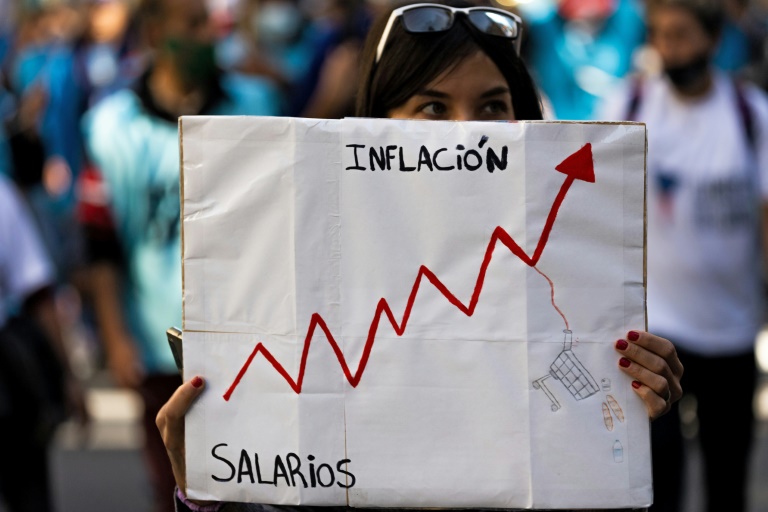
Asian and eurozone stocks rose Thursday after a recovery on Wall Street, but investors remained cautious about the ongoing impact of skyrocketing inflation and the war in Ukraine.

Prices were already soaring in major economies when Russia’s invasion of Ukraine sent shockwaves through the global energy, food and commodity markets.

Despite lingering concerns about the US Federal Reserve’s next moves to contain prices, Wall Street enjoyed a buoyant session — especially the tech-rich Nasdaq, which surged 2.0 percent.

Asia was in a similar mood Thursday as Tokyo closed 1.2 percent higher, while Hong Kong and Shanghai also ended in positive territory.

Sydney rose 0.6 percent as Australia posted its lowest unemployment rate — a smidge under four percent — in 48 years.

Seoul was flat, meanwhile, as South Korea’s central bank raised its key interest rate to the highest level since August 2019 to tame rising inflation.

Analysts had warned overnight that the uncertainty was far from over.

“With a thicker fog of war starting to roll in and engulf the global markets again, it is another worrying setup amid the widespread bearish sentiment out there,” Stephen Innes of SPI Asset Management said in a note.

Frankfurt and Paris opened higher as eyes turned to the European Central Bank policymakers meeting on Thursday, with the outlook for the eurozone economy still murky.

Elsewhere, London’s FTSE 100 index dropped at the open.

– ‘Countervailing forces’ –

Data this week from the United States — the world’s biggest economy — and Britain showed inflation at levels not seen in decades.

The grim outlook was reflected in the latest earnings report from JP Morgan Chase, the largest American bank by assets.

“There’s this very strong underlying economy,” its chief executive Jamie Dimon said.

But he pointed to “countervailing forces”, including rising interest rates, inflation and the war in Ukraine.

“And those things are going to collide at one point, probably sometime next year,” he said in a conference call with reporters.

“I’m not predicting a recession… But is it possible? Absolutely.”

Analysts said, however, that markets had welcomed an indication that US inflation may be approaching its peak.

Both main oil contracts stayed above the $100 per barrel mark, with fears swirling about global supply constraints over the invasion of Ukraine by Russia — a major producer of oil and gas.

“The oil complex is heavily fixated on the short-term,” Vandana Hari of Singapore-based Vanda Insights told Bloomberg News.

“The prospect of an EU ban on Russian oil will keep the market on edge as long as Ukraine festers.”

– Key figures around 0810 GMT –

Tokyo – Nikkei 225: UP 1.2 percent at 27,172.00 (close)

Hong Kong – Hang Seng: UP 0.7 percent at 21,518.08 (close)

Shanghai – Composite: UP 1.2 percent at 3,225.64 (close)

London – FTSE 100: DOWN 0.3 percent at 7,561.35

Euro/dollar: UP at 1.0911 from $1.0894 at 2100 GMT

Pound/dollar: UP at $1.3136 from $1.3109

Euro/pound: UP at 83.07 pence from 83.03 pence

Dollar/yen: DOWN at 125.35 from 125.59

Oil – Brent: DOWN 1.1 percent at 107.63 per barrel

Oil – WTI: DOWN 1.2 percent at 102.98 per barrel

New York – Dow: UP 1.0 percent at 34,564.59 (close)

— Bloomberg News contributed to this story —

New hope to help advanced Parkinson's patients walk, sleep again

People with advanced Parkinson’s disease often struggle to walk more than a few steps or sleep through the night, but new research offers hope of relief from these two debilitating symptoms.

Suffered by millions worldwide, the degenerative disease erodes motor functions and in its later stages often confines patients to a bed or wheelchair.

This is due to a condition called orthostatic hypotension, which occurs when a person stands up and their blood pressure drops, causing dizziness and even fainting after a couple of steps. 

For Parkinson’s sufferers, it happens because a regulator in the brain — which normally ensures sufficient blood flows to the brain when we stand up — has been disrupted.

But new French research published in the New England Journal of Medicine last week found that a spinal cord implant could help advanced Parkinson’s patients get back on their feet.

– Quality of life improved –  

Earlier this year, neurosurgeon Jocelyne Bloch and Gregoire Courtine revealed that such an implant had enabled three paralysed people to walk again.

Both were also involved in the latest research, which tested a similar implant on a 48-year-old woman.

While the woman did not have Parkinson’s, she had such similar symptoms — including orthostatic hypotension — that she was initially diagnosed with the disease.

For paralysed people, the spinal cord implant mimics how the brain sends electrical pulses to muscles, reconnecting a severed link.

But for orthostatic hypotension, it stimulates the regulator in the brain that senses the need to send more blood when people stand upright.

Before receiving the implant, the woman would faint after a taking a few of steps.

Three months after the surgery, she was able to walk more than 250 metres (820 feet) with the help of a walking frame, the study said.

“She is not cured, she would not run a marathon, but this surgery has clearly improved her quality of life,” Bloch told AFP.

However it is a single case and further research is needed, particularly involving Parkinson’s patients.

It is not yet certain that the form of orthostatic hypotension seen in Parkinson’s patients can be fixed solely by stimulating the regulator the implant targets.

– Anti-insomnia pump –

Insomnia is another common scourge of the 10 million Parkinson’s sufferers globally, more than three quarters of whom have sleep-related symptoms, according to the Parkinson’s Foundation.

Sleep can be affected by uncontrolled shaking which wakes patients up, while another factor is a lack of a dopamine, common in people with Parkinson’s.

The medication apomorphine is normally used to replace dopamine, lessening symptoms such as shaking and stiffness.

But when taken orally, the drug can cause dopamine to spike and then drop, leading to muscle spasms.

A device similar to an insulin pump that delivers continuous apomorphine throughout the night could solve the problem, according to a study published in the journal Lancet Neurology on Thursday.

Co-author Emmanuel Flamand-Roze led previous research indicating that such a pump would help with Parkinson’s, but the new study looked at how it helped with sleep.

The randomised study found that those using the pump had “significantly improved” sleep compared to those who received a placebo.

Flamand-Roze told AFP that “the constraints linked to wearing a small pump” are much lower during the night, compared to carrying such a device around all day.

However because the study had a small sample size — fewer than 50 people — and focused on people at an already advanced stage of Parkinson’s, further research is needed.

Uniqlo operator lifts profit outlook despite China lockdowns

Fast Retailing, the operator of Japanese casualwear giant Uniqlo, revised its annual net profit forecast upwards on Thursday even as business in China is hit by fresh lockdowns.

China is a key market for Uniqlo, but consumer spending has been hampered as coronavirus cases surge in cities such as Shanghai, prompting authorities to impose tough lockdowns under the country’s zero-Covid policy.

Uniqlo operations in mainland China saw “a decrease in revenue and a large decline in profit” for the six months to February, Fast Retailing said, attributing the falls to curbs on movement.

But elsewhere in Asia, business was brisk, buoyed by strong performance in countries such as Malaysia where virus restrictions were eased.

In North America, too, strengthened branding efforts helped boost sales, the company said.

These factors, coupled with what the group described as a “greater diversification” of its revenue streams, led to net profit for the first half jumping 38.7 percent on-year to 146.8 billion yen ($1.2 billion).

“Operating profit reached a record high, even after stripping out the impact of yen depreciation,” the company said as it logged 189.2 billion yen in operating profit in the first half, up 12.7 percent on-year.

The cheap-chic Japanese clothing group, which rivals Zara, Gap and H&M, revised its full-year net profit forecast from the previous 175 billion yen to 190 billion yen.

Pandemic restrictions have not stopped Fast Retailing from aggressively expanding in Greater China, where it aims to open 100 new stores each year.

The war in Ukraine has also forced the company to strike a delicate balance between politics and profitability.

Moscow’s invasion has prompted the temporary closure of Uniqlo operations in Russia, where Fast Retailing now expects to “report a loss in the second half of fiscal 2022”.

This suspension was announced in March, in a U-turn from the Japanese firm’s earlier decision to stay open in Russia.

“Clothing is a necessity of life. The people of Russia have the same right to live as we do,” Fast Retailing president Tadashi Yanai initially said in comments that prompted calls for a boycott.

Death toll from Philippines landslides, floods hits 117

The death toll from landslides and flooding in the Philippines triggered by tropical storm Megi rose to 117 on Thursday, official figures showed, as more bodies were found in mud-caked villages.

Scores of people are still missing and feared dead after the strongest storm to strike the archipelago nation this year dumped heavy rain over several days, forcing tens of thousands into evacuation centres.

In the central province of Leyte — the worst affected by Megi — devastating landslides smashed farming and fishing communities, wiping out houses and transforming the landscape.

The disaster-prone region is regularly ravaged by storms — including a direct hit from Super Typhoon Haiyan in 2013 — with scientists warning they are becoming more powerful as the world gets warmer because of climate change.

Emergency personnel in Abuyog municipality have retrieved dozens of bodies from the coastal village of Pilar that was destroyed by a landslide on Tuesday.

At least 28 people were killed and around 150 are missing, Abuyog Mayor Lemuel Traya told AFP, adding there was little hope of finding anyone else alive.

Bad weather and thick mud had complicated retrieval efforts in Pilar where the ground was unstable. Searchers were also combing the coastline after some bodies were swept kilometres away by ocean currents.

“This will not end soon, it could go on for days,” Traya warned. 

Many of those who died had hiked up a mountain to avoid flash floods, villagers told AFP. 

“It sounded like a helicopter,” said Pilar councillor Anacleta Canuto, 44, describing the noise made by the landslide.

Canuto, her husband and their two children survived, but they lost at least nine relatives.

Pilar fisherman Santiago Dahonog, 38, said he rushed into the sea with two siblings and a nephew as the landslide hurtled towards them.

“We got out of the house, ran to the water and started swimming,” he told AFP. “I was the only survivor.” 

– Scores missing in Baybay –

Another 86 people were killed and dozens injured in vegetable, rice and coconut-growing villages around Baybay City at the weekend, local authorities said. At least 117 are still missing.

The hardest hit was Kantagnos where 32 people died and 103 have not been found. 

In the nearby village of Bunga, 17 people perished when a wave of sodden soil swept down a hill and slammed into the riverside community. Only a few rooftops are visible in the mud which has started to smell of rotting flesh. 

Three people also drowned on the main southern island of Mindanao, the national disaster agency said in its latest update.

Another three deaths previously reported in the central province of Negros Oriental were dropped from the tally after they were found to be unrelated to the storm. 

Megi struck at the beginning of Holy Week, one of the most important holidays in the mainly Catholic country when thousands travel to visit relatives.

It came four months after a super typhoon devastated swathes of the country, killing more than 400 and leaving hundreds of thousands homeless.

The Philippines — ranked among the most vulnerable nations to the impacts of climate change — is hit by an average of 20 storms every year.

Judge slashes Tesla's damages to ex-employee in racism case

A San Francisco judge on Wednesday slashed the $137 million in damages Tesla was told to pay a former employee in a racial discrimination case down to $15 million but upheld the verdict.

In his ruling, US District Court Judge William Orrick said “the weight of the evidence amply supports the jury’s liability findings” but the damages ordered were “excessive,” citing constitutional limitations on punitive damages set by the Supreme Court.

Tesla was ordered in October to pay Black former employee Owen Diaz $137 million in damages for turning a blind eye to racism the man encountered at the firm’s Silicon Valley auto plant.

Rejecting Tesla’s request for a retrial, Orrick said “Tesla’s indifference to Diaz’s complaints is striking.”

He said the evidence presented to the jurors was “disturbing.”

“The jury heard that the Tesla factory was saturated with racism. Diaz faced frequent racial abuse, including the N-word and other slurs,” the judge wrote.

“His supervisors, and Tesla’s broader management structure, did little or nothing to respond. 

“And supervisors even joined in on the abuse, one going so far as to threaten Diaz and draw a racist caricature near his workstation.”

The original award comprised $130 million in punitive damages and $6.9 million for emotional distress, which Orrick cut to $13.5 million in punitive damages and $1.5 million for emotional harm, “the maximum amount supportable by proof.”

Hired through a staffing agency, Diaz had worked as an elevator operator between June 2015 and July 2016 at the Fremont plant, where he was subjected to racist abuse and a hostile work environment, according to the court filing.

In his lawsuit filed in 2017, Diaz said African-American employees at the factory, where his son also worked, were regularly subjected to racist epithets and derogatory imagery.

Diaz also said that, despite complaints to supervisors, Tesla took no action over the regular racist abuse.

Following the October verdict, Tesla released a blog post by human resources vice president Valerie Capers Workman, which downplayed the allegations of racist abuse in the lawsuit but acknowledged that at the time Diaz worked there, Tesla “was not perfect.”

Workman said Tesla had responded to Diaz’s complaints, firing two contractors and suspending a third.

In February, the California Department of Fair Employment and Housing, which enforces the state’s civil rights laws, sued Tesla over discrimination and harassment against Black workers at the same factory, which the complaint called a “racially segregated workplace.”

The agency said it had received hundreds of complaints from workers at the Fremont plant.

Asian markets rise but inflation, Ukraine fears linger

Asian stock markets rose Thursday after a recovery on Wall Street, but investors remained cautious about the ongoing impact of skyrocketing inflation and the war in Ukraine.

Prices were already soaring in major economies when Russia’s invasion of Ukraine sent shockwaves through the global energy, food and commodity markets.

Despite lingering concerns about the US Federal Reserve’s next moves to contain prices, Wall Street enjoyed a buoyant session — especially the tech-rich Nasdaq, which surged 2.0 percent.

Asia was in a similar mood Thursday as Tokyo closed 1.2 percent higher. Hong Kong and Shanghai were also in positive territory.

Sydney rose 0.6 percent as Australia posted its lowest unemployment rate — a smidge under four percent — in 48 years.

Seoul was flat, meanwhile, as South Korea’s central bank raised its key interest rate to the highest level since August 2019 to tame rising inflation.

Analysts had warned overnight that the uncertainty was far from over.

“With a thicker fog of war starting to roll in and engulf the global markets again, it is another worrying setup amid the widespread bearish sentiment out there,” Stephen Innes of SPI Asset Management said in a note.

– ‘Countervailing forces’ –

Data this week from the United States — the world’s biggest economy — and Britain showed inflation at levels not seen in decades.

The grim outlook was reflected in the latest earnings report from JP Morgan Chase, the largest American bank by assets.

“There’s this very strong underlying economy,” its chief executive Jamie Dimon said.

But he pointed to “countervailing forces”, including rising interest rates, inflation and the war in Ukraine.

“And those things are going to collide at one point, probably sometime next year,” he said in a conference call with reporters.

“I’m not predicting a recession… But is it possible? Absolutely.”

Analysts said, however, that markets had welcomed an indication that US inflation may be approaching its peak.

Eyes are also on the European Central Bank as its policy makers meet Thursday, with the outlook for the eurozone economy still murky.

Both main oil contracts stayed above the $100 per barrel mark, with fears swirling about global supply constraints over the invasion of Ukraine by Russia — a major producer of oil and gas.

“The oil complex is heavily fixated on the short-term,” Vandana Hari of Singapore-based Vanda Insights told Bloomberg News.

“The prospect of an EU ban on Russian oil will keep the market on edge as long as Ukraine festers.”

– Key figures around 0630 GMT –

Tokyo – Nikkei 225: UP 1.2 percent at 27,172.00 (close)

Hong Kong – Hang Seng: UP 0.9 percent at 21,555.85

Shanghai – Composite: UP 1.5 percent at 3,233.78

Euro/dollar: UP at 1.0915 from $1.0894 at 2100 GMT

Pound/dollar: UP at $1.3138 from $1.3109

Euro/pound: UP at 83.08 pence from 83.03 pence

Dollar/yen: DOWN at 125.41 from 125.59

Oil – Brent: DOWN 0.6 percent at 108.17 per barrel

Oil – WTI: DOWN 1.0 percent at 103.21 per barrel

New York – Dow: UP 1.0 percent at 34,564.59 (close)

London – FTSE 100: UP 0.1 percent at 7,580.80 (close)

— Bloomberg News contributed to this story —

ECB wrestles with record inflation and war risk

European Central Bank policymakers meet on Thursday faced with the challenge of threading a response between record-high inflation figures and weak growth due to the war in Ukraine.

The bank’s 25-member governing council gathers for the second time since Russia launched its invasion at the end of February, with the outlook for the eurozone economy still murky.

At its meeting in March, the ECB sped up the wind-down of its bond-buying programme, raising the possibility of a complete stop as soon as July. 

A move towards interest rate rises would follow “some time” after that — a time frame which could be a “week after” or “months later”, according to ECB President Christine Lagarde.

But calls for the ECB to act faster have grown louder as prices have continued to spiral, with the war in Ukraine sending the costs for energy, commodities and food upwards.

Inflation in the eurozone hit 7.5 percent in March, an all-time high for the currency bloc and well above the central bank’s own two-percent target.

Meanwhile, surging prices for oil and gas, as well as the added disruption for supply chains, threaten to drag on the economy. 

The high degree of uncertainty means the ECB will likely tread carefully. Thursday’s meeting would not produce an “Easter egg”, said Holger Schmieding, economist at Berenberg Bank. 

“Expect a lively debate but no major decision yet.”

– ‘Further steps’ –

Observers will be listening closely to Lagarde’s press conference at 1230 GMT for clues as to how the ECB might respond next. 

Among the things they will be listening for are “a further hint that the ECB may raise rates later this year”, Schmieding said, a policy pushed for by more “hawkish” governing council members.

Joachim Nagel, the head of Germany’s traditionally conservative central bank, has cautioned against “acting too late”.

Any hike would be the ECB’s first in over a decade and would lift rates from their current historic low levels.

The Frankfurt-based institution even set a negative deposit rate of minus 0.5 percent, meaning banks pay to park excess cash at the ECB.

Central bankers use interest rate rises as a tool to tame inflation, but pulling the trigger too soon risks hurting economic growth.

Minutes from the last ECB meeting revealed that many members of the governing council wanted “immediate further steps” to tackle inflation despite the darkening economic picture.

The Bank of England, the US Federal Reserve and the Bank of Canada have already moved on rate hikes, leaving the ECB looking out of step.

Carsten Brzeski, head of macro at ING bank, said he saw the ECB’s rates exiting negative territory “at the latest around the turn of the year”.

– Old predictions –

The ECB’s prediction that inflation would even out at 5.1 percent over the course of 2022 was “already outdated”, Brzeski said.

The persistence of high energy costs and the potential for new sanctions that could further limit supplies from Russia could drive the monthly figure into “double-digit” territory. 

Soaring energy prices would also saddle businesses and consumers with higher bills and “weigh on economic activity in the coming months”, Brzeski said.

Over recent years, the ECB has hoovered up billions of euros in government and corporate bonds each month to stoke the economy and keep credit flowing in the 19-nation currency club.

While the stimulus is being phased out, the advent of a fresh crisis has some speculating about the possibility of the ECB designing a new tool to contain the impact of the war.

The “geostrategic” programme would counter the risk of borrowing costs rising for certain countries in the eurozone that would make it harder for them to finance their response to the war, said Eric Dor, a director at the IESEG business school.

Signalling a willingness to use the new tool could be “sufficient” to keep costs low, Dor said, though it was probably “too early” for it to be launched.

Asian markets rise but inflation, Ukraine fears linger

Asian stock markets mostly rose in early trade Thursday after a recovery on Wall Street, but investors remained cautious about the ongoing impact of skyrocketing inflation and the war in Ukraine.

Prices were already soaring in major economies when Russia’s invasion of Ukraine sent shockwaves through the global energy, food and commodity markets.

Despite lingering concerns about the US Federal Reserve’s next moves to contain prices, Wall Street enjoyed a buoyant session — especially the tech-rich Nasdaq, which surged 2.0 percent.

Asia was in a similar mood Thursday as Tokyo soared 1.3 percent and Hong Kong put on 0.8 percent. Sydney, Shanghai and Taipei were also in positive territory, but Seoul dipped.

South Korea’s central bank on Thursday raised its key interest rate to the highest level since August 2019 to tame rising inflation.

Analysts warned overnight that the uncertainty is far from over.

“With a thicker fog of war starting to roll in and engulf the global markets again, it is another worrying setup amid the widespread bearish sentiment out there,” Stephen Innes of SPI Asset Management said in a note.

Data this week from the United States — the world’s biggest economy — and Britain showed inflation at levels not seen in decades.

Analysts said, however, that markets had welcomed an indication that US inflation may be approaching its peak.

– ‘Countervailing forces’ –

The grim outlook was reflected in the latest earnings report from JP Morgan Chase, the largest American bank by assets.

“There’s this very strong underlying economy,” its chief executive Jamie Dimon said.

But he pointed to “countervailing forces”, including rising interest rates, inflation and the war in Ukraine.

“And those things are going to collide at one point, probably sometime next year,” he said in a conference call with reporters.

“I’m not predicting a recession… But is it possible? Absolutely.”

Both main oil contracts hovered above the $100 per barrel mark, with fears swirling about global supply constraints over the invasion of Ukraine by Russia — a major producer of oil and gas.

“The oil complex is heavily fixated on the short-term,” Vandana Hari of Singapore-based Vanda Insights told Bloomberg News.

“The prospect of an EU ban on Russian oil will keep the market on edge as long as Ukraine festers.”

– Key figures around 0230 GMT –

Tokyo – Nikkei 225: UP 1.3 percent at 27,182.50

Hong Kong – Hang Seng: UP 0.8 percent at 21,535.37

Shanghai – Composite: UP 0.6 percent at 3,203.94

Euro/dollar: DOWN at 1.0888 from $1.0894 at 2100 GMT

Pound/dollar: UP at $1.3117 from $1.3109

Euro/pound: DOWN at 83.01 pence from 83.03 pence

Dollar/yen: UP at 125.62 from 125.59

Oil – Brent: DOWN 0.7 percent at 108.05 per barrel

Oil – WTI: DOWN 0.8 percent at 103.41 per barrel

New York – Dow: UP 1.0 percent at 34,564.59 (close)

London – FTSE 100: UP 0.1 percent at 7,580.80 (close)

— Bloomberg News contributed to this story —

Thai… caviar? Farm produces delicacy in tropical climate

At his upmarket Bangkok restaurant, Michelin-starred chef Thitid “Ton” Tassanakajohn spoons black caviar onto a plate, adding the newly affordable Thailand-made delicacy to his reinterpreted traditional family recipes.

The luxury food, better associated with chilly northern nations, is breaking into the Southeast Asian country’s fine-dining scene, with the 37-year-old celebrity cook able to economically serve the roe thanks to an innovative farm outside the capital.

Using high-tech harvesting methods, a Thai-Russian partnership is offering a more ethical and affordable product, sparing the endangered fish that provide the delicacy from their usual fate of death.

“The price is… more affordable, I would say, compared to the ones that we imported,” Ton explained, as he sprinkled caviar over Thai dip “Lhon Pu” at his restaurant Lahnyai Nusara.

Using caviar also helps challenge perceptions that Thai cuisine must always be spicy with strong flavours, he added.

“I think it’s opened many doors for many chefs to use it as well,” he said.

– Cool fish –

Roughly 200 kilometres away at the popular seaside resort town of Hua Hin, it is time to harvest “black gold” at the Thai Sturgeon Farm, which supplies local distributor Caviar House.

Hundreds of the giant fish swim in tanks kept at a balmy 21 degrees Celsius (70 Fahrenheit) — a world away from the chilly Caspian Sea where the species live in the wild.

“No one else has this kind of farm in a tropical climate,” the farm’s co-owner Alexey Tyutin told AFP.

The fish — considered living dinosaurs — can survive for up to 100 years and are typically up to four metres long.

Traditionally caviar producers kill the female fish to extract the eggs, but Tyutin’s farm “milks” the sturgeon.

Using the fish for as long as possible helps make the venture sustainable and profitable, the 55-year-old said.

During harvesting, fish are moved to the “winter room”, initially set at six degrees Celsius and increased to 15, before their eggs are extracted.

“Let’s say if the fish weighs 25 kilograms, we usually expect about 2.6 to 2.7 kilograms of caviar,” Tyutin said, adding that the farm estimates it may produce up to two tonnes this year.

Breeding sturgeons in a simulated environment requires vast amounts of energy — despite the use of solar panels, the monthly electricity bill is almost $9,000.

“We are chilling down the water because the water temperature outside is 31 degrees. These fish can’t tolerate it and they will die immediately,” Tyutin said.

But Thailand’s tropical climate has given the business a competitive advantage as the higher water temperature helps sturgeons mature at six years old compared to 11 in Russia.

– Thai pride –

While Caviar House is only selling domestically at the moment — with a tin of the delicacy retailing for between $230 and $832 — they hope to expand to exporting in the future.

Recent European Union sanctions against Moscow over the Ukraine invasion have targeted caviar, but the restrictions are largely symbolic as Russia is only a small exporter.

Instead, competition comes from China, which has become the market giant, producing 84 percent of the world’s sturgeons, according to a European Commission report.

The industry suffered during the pandemic with high-end restaurants, airlines and cruise ships battered by travel curbs, although some fine-dining establishments adapted by decreasing portions and incorporating them into takeaway meals.

But the international caviar market is expected to record a compound annual growth rate of seven percent between 2020 and 2025, according to a 2021 report by Technavio Research.

France, Germany, China, Spain, the United States, Japan and Russia are major markets but demand is fast growing in other parts of the Asia-Pacific region.

Well-heeled Thai foodies and chefs are recognising the benefits of caviar, rich in vitamins, minerals, and omega-3 fatty acids.

“It took only a few days for Thai chefs to start ordering after we sent samples for them to try,” farm co-owner Noppadon Khamsai, 43, told AFP.

“They say this is a good product and the importance is it’s made in Thailand, and they’re really proud to be presenting this Thai product.”

Close Bitnami banner
Bitnami