AFP

Ecuador expands oil extraction from Amazon reserve

Ecuador said Wednesday it had begun pumping oil from a third field located partly on a protected nature reserve in the Amazon rainforest.

Extraction of 3,600 barrels per day started in the Ishpingo oil field which together with the nearby fields of Tiputini and Tambococha form the so-called ITT block, which holds more than 40 percent of the South American country’s proven crude reserves.

The three fields together hold over 1.0 billion of former OPEC member Ecuador’s four billion barrels of proven oil reserves.

Extraction at Tiputini and Tambococha started in 2016 after years of fraught debate over whether to drill inside the Yasuni national park.

Then president Rafael Correa had tried to persuade the international community to pay Ecuador $3.6 billion not to exploit the ITT block — an ultimately failed initiative to protect the Amazon and help curb climate change.

With his government strapped for cash amid a plunge in global oil prices, the leftist leader in the end asked Congress to give the go-ahead to drill.

Current rightwing President Guillermo Lasso has plans to double Ecuador’s oil production in spite of opposition from indigenous communities and environmentalists.

“If this well (at Ishpingo) maintains the current production trend of 3,600 barrels per day… about $60 million will be generated annually, which will be invested in improvements to the education, health and safety system,” a government statement said Wednesday.

In 2021, the country produced over half-a-million barrels per day, mostly by state-owned Petroecuador, according to the Central Bank. 

It is envisaged that another 36 wells will be sunk in the Ishpingo field, operated by China’s CNPC Chuanqing Drilling Engineering Company Limited.

Besides being among the most biodiverse areas on Earth, the million-hectare (2.5-million acre) Yasuni park is home to some of the world’s last uncontacted indigenous populations.

Death toll from Philippines landslides, floods rises to 80

The death toll from landslides and floods in the Philippines rose to 80 on Wednesday with scores missing and feared dead, officials said, as rescuers dug up more bodies with bare hands and backhoes in crushed villages.

Most of the deaths from tropical storm Megi — the strongest to hit the archipelago this year — were in the central province of Leyte, where a series of landslides devastated communities.

Twenty-six people died and around 150 were missing in the coastal village of Pilar, which is part of Abuyog municipality, after a torrent of mud and earth on Tuesday pushed houses into the sea and buried most of the settlement, authorities said.

“I have to be honest, we are no longer expecting survivors,” Abuyog Mayor Lemuel Traya told AFP, adding that emergency personnel were now focused on the difficult task of retrieving bodies.

About 250 people were in evacuation centres after being rescued by boat after roads were cut by landslides, he said. 

A number of villagers were also in hospital.

A rumbling sound like “a helicopter” alerted Ara Mae Canuto, 22, to the landslide hurtling towards her family’s home in Pilar. 

She said she tried to outrun it, but was swept into the water and nearly drowned. 

“I swallowed dirt, and my ears and nose are full of mud,” Canuto told AFP by telephone from her hospital bed. Her father died, and her mother has not been found.

The disaster-prone region is regularly ravaged by storms — including a direct hit from Super Typhoon Haiyan in 2013 — with scientists warning they are becoming more powerful as the world gets warmer because of human-driven climate change.

Baybay City is also reeling after waves of sodden soil smashed into farming settlements over the weekend, killing at least 48 people and injuring more than 100, local authorities said. Twenty-seven are still missing, they added. 

Aerial photos showed a wide stretch of mud that had swept down a hill of coconut trees and engulfed Bunga village, where only a few rooftops poked through the now-transformed landscape.

“We were told to be on alert because a storm was coming, but they did not directly tell us we needed to evacuate,” said Bunga farmworker Loderica Portarcos, 47, who lost 17 relatives and a friend in the landslide.

Portarcos braved heat and humidity as she advised a backhoe operator where to dig for three bodies still embedded in the soft soil, which had started to smell of rotting flesh.

“Our dead relatives are all in the morgue, but there will be no time for a wake to mourn them because the mayor told us they smell bad,” she said.

– ‘Many of us died’ – 

Three people were also killed in the central province of Negros Oriental and three on the main southern island of Mindanao, according to the national disaster agency.

The death toll from Megi is expected to rise as rescue operations switch to recovering bodies. 

Black body bags containing 26 victims from Pilar were laid out on sand in Abuyog for relatives to identify on Wednesday. 

Abuyog police chief Captain James Mark Ruiz said more boats were needed, but getting access to the shore was difficult.

Photos posted by the Bureau of Fire Protection on Facebook showed buildings crushed or turned over by the force of the landslide and debris in the water.

“We’re using fiberglass boats, and there are steel bars exposed in the sea, so it’s very difficult,” Abuyog Mayor Traya said, adding that the ground was unstable and “very risky”.

While Pilar survivor Canuto counts herself lucky to be alive, she said “many of us died and a lot are missing, too”.

Pope Francis, having been informed of the storm’s destruction, expressed solidarity with the victims, the Vatican said in a statement.

“He also offers the assurance of prayers for the dead, injured and displaced as well as those engaged in recovery efforts,” the statement said.

“His Holiness willingly invokes upon all the Filipino people God’s blessings.”

Whipping up seas, Megi forced dozens of ports to temporarily suspend operations, stranding thousands of people at the start of Holy Week, one of the busiest travel periods of the year in the Philippines.

It came four months after super typhoon Rai devastated swathes of the country, killing more than 400 and leaving hundreds of thousands homeless.

The Philippines — ranked among the most vulnerable nations to the impacts of climate change — is hit by an average of 20 storms every year.


'Green cities' focus of largest Dutch garden expo

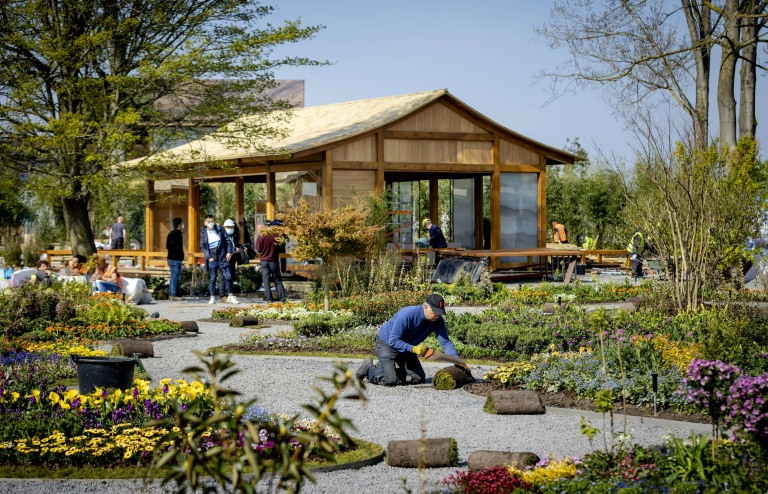
Dutch King Willem-Alexander on Wednesday opened the gates to one of Europe’s largest gardening fairs, a once-in-a-decade show focusing this year on how to make cities greener.

But critics have denounced the show, which features displays by 200 participants from 25 countries, as a “money pit” that has massively over-run its budget.

The Floriade 2022 exposition, which runs until early October, is expected to draw more than two million enthusiasts to the central city of Almere.

The Floriade 2022 shows “what a green city could be like in the future… what kind of materials could be used for this and what role the horticultural sector could play in it”, said its curator, Annemarie Jorritsma, a former mayor of the city.

“On top of that, when the show is finished it will be a fantastic residential area,” she told AFP.

Each decade, a different Dutch city gets to host the gardening extravaganza. Almere, the latest, is a city that was itself created by the Dutch by draining part of the former Zuiderzee bay to reclaim land.

As well as being a showcase for Dutch horticulture, each participating country has its own pavilion.

China’s is showing “new ways of using bamboo”, said Jorritsma. Italy is focusing on permaculture, while France shows how metallic imitations of trees can be used to cool cities.

The German pavilion is decorated with plants including garden plants, trees, food crops and wildflowers to form a “living ecosystem whose appearance would change throughout the exhibition”, organisers said.

“The Floriade is the best place to show what countries have to change their cities,” Detlef Wintzen, one of the exhibitors at the German pavilion, told AFP.

– Cost controversy –

The event has however been criticised for budget overruns that threatened its very existence.

Dutch media have reported that Almere has significantly over-run its 10-million-euro budget ($10.8 million) for the project.

Financial daily Financieele Dagblad estimated that costs could be as high as 200 million euros — with losses of up to 100 million — but said there was a “thick fog” hanging over the official costs.

First held in Rotterdam in 1960, the organisers of the last three Floriades — 1992, 2002 and 2012 — have all been criticised for losses totalling millions of euros.

And some media reports have even suggested that this could be the last-ever edition of the show.

Almere — the country’s youngest city — plans to have a “green residential area by the water” after the end of the Floriade designed by Dutch architect Winy Maas.

Some 660 homes will be built in the “Hortus” district, many of them made from durable materials such as moss and mushrooms.

An imposing colourful building in the middle of the exhibition will eventually serve as social housing, and “floating homes” are also planned.

Members of the public can visit the Floriade from Thursday onwards.

'Green cities' focus of largest Dutch garden expo

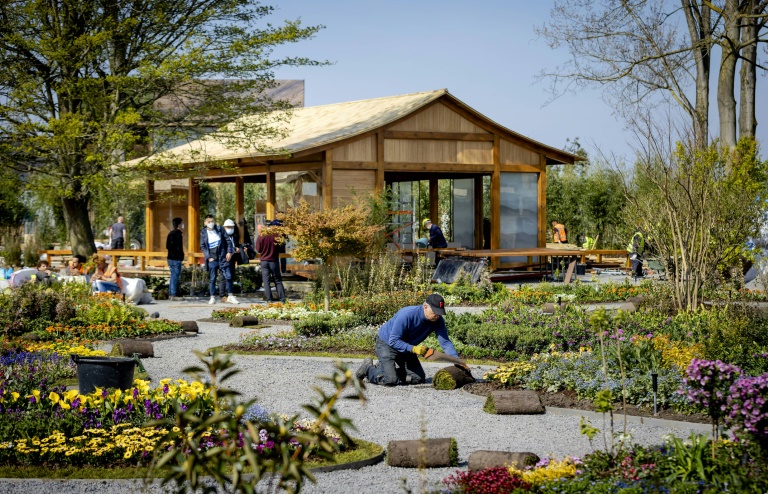
Dutch King Willem-Alexander on Wednesday opened the gates to one of Europe’s largest gardening fairs, a once-in-a-decade show focusing this year on how to make cities greener.

But critics have denounced the show, which features displays by 200 participants from 25 countries, as a “money pit” that has massively over-run its budget.

The Floriade 2022 exposition, which runs until early October, is expected to draw more than two million enthusiasts to the central city of Almere.

The Floriade 2022 shows “what a green city could be like in the future… what kind of materials could be used for this and what role the horticultural sector could play in it”, said its curator, Annemarie Jorritsma, a former mayor of the city.

“On top of that, when the show is finished it will be a fantastic residential area,” she told AFP.

Each decade, a different Dutch city gets to host the gardening extravaganza. Almere, the latest, is a city that was itself created by the Dutch by draining part of the former Zuiderzee bay to reclaim land.

As well as being a showcase for Dutch horticulture, each participating country has its own pavilion.

China’s is showing “new ways of using bamboo”, said Jorritsma. Italy is focusing on permaculture, while France shows how metallic imitations of trees can be used to cool cities.

The German pavilion is decorated with plants including garden plants, trees, food crops and wildflowers to form a “living ecosystem whose appearance would change throughout the exhibition”, organisers said.

“The Floriade is the best place to show what countries have to change their cities,” Detlef Wintzen, one of the exhibitors at the German pavilion, told AFP.

– Cost controversy –

The event has however been criticised for budget overruns that threatened its very existence.

Dutch media have reported that Almere has significantly over-run its 10-million-euro budget ($10.8 million) for the project.

Financial daily Financieele Dagblad estimated that costs could be as high as 200 million euros — with losses of up to 100 million — but said there was a “thick fog” hanging over the official costs.

First held in Rotterdam in 1960, the organisers of the last three Floriades — 1992, 2002 and 2012 — have all been criticised for losses totalling millions of euros.

And some media reports have even suggested that this could be the last-ever edition of the show.

Almere — the country’s youngest city — plans to have a “green residential area by the water” after the end of the Floriade designed by Dutch architect Winy Maas.

Some 660 homes will be built in the “Hortus” district, many of them made from durable materials such as moss and mushrooms.

An imposing colourful building in the middle of the exhibition will eventually serve as social housing, and “floating homes” are also planned.

Members of the public can visit the Floriade from Thursday onwards.

Iran says preliminary deal reached on frozen funds abroad

Iran’s foreign minister said Wednesday that a preliminary deal had been reached with a foreign bank over frozen funds belonging to the Islamic republic.

“An accord was concluded with a foreign bank to release a part of our financial claims,” Hossein Amir-Abdollahian said at a news conference.

“This is a preliminary agreement on when and how to release the funds,” he added.

Tens of billions of dollars in Iranian money were blocked in a number of countries, including China, South Korea and Japan, after the United States reimposed sanctions on the Islamic republic in 2018.

A 2015 nuclear deal had granted Tehran much-needed sanctions relief but the US unilaterally pulled out and reimposed punishing sanctions under then-president Donald Trump.

Until then, Iran had been one of South Korea’s main suppliers of crude.

According to Tasnim news agency, the deal announced on Wednesday aims to find a solution for frozen Iranian assets valued at more than $7 billion.

Last year Tehran threatened legal action unless Seoul released frozen funds for oil shipments, worth that same amount.

In early January, Iran had urged South Korea to unlock the funds and not to await the outcome of Vienna talks aiming to revive the nuclear agreement.

Amir-Abdollahian said a delegation from the concerned country, which he did not identify, had visited Tehran on Tuesday to follow up on the implementation of the deal with the foreign bank.

The delegation met officials from the Iranian central bank and the foreign ministry, he added.

Iran has been engaged for a year in talks with France, Germany, Britain, Russia and China directly, and the United States indirectly, to revive the nuclear deal, known formally as the Joint Comprehensive Plan of Action (JCPOA).

The talks have been paused since March 11, having progressed most of the way towards reviving the deal, but pending issues are still unresolved.

Half of US warehouse injuries in 2021 at Amazon: unions

Nearly half of all recorded injuries in US warehouses last year occurred at Amazon, according to a report released Tuesday by a coalition of unions.

The e-commerce giant has boomed during the pandemic with soaring home delivery demand, but has also faced criticism over workers’ conditions and its labor practices. 

“Amazon employed one-third of all warehouse workers in the US, but it was responsible for nearly one-half (49 percent) of all injuries in the warehouse industry,” according to the report by the Strategic Organizing Center (SOC).

The SOC report said US Amazon workers sustained more than 34,000 “serious injuries” on the job last year, a rate more than twice as high as that at warehouses not owned by the company.

Amazon acknowledged an increase in the number of injuries as tens of thousands of employees joined its workforce, but argued the rate at which its people got hurt had declined.

“Like other companies in the industry, we saw an increase in recordable injuries during this time from 2020 to 2021 as we trained so many new people,” the company said.

“However, when you compare 2021 to 2019, our recordable injury rate declined more than 13 percent year over year,” it added.

The coalition said it relies on data provided by Amazon to the US Occupational Safety and Health Administration — the federal agency responsible for preventing workplace injuries. 

“After relaxing some of its discipline systems in the first months of the Covid-19 pandemic, Amazon reimplemented its monitoring systems and production pressures in late 2020, and its injury rates rose substantially,” the SOC said. 

Hiring at Amazon has spiked during the pandemic.

In the United States, the company has gone from some 700 sites in 2020 to more than 900 in 2021, and from more than 200,000 employees in 2017 to over 560,000 in 2021, according to the report. 

In June 2021, Amazon changed working conditions, including longer breaks for its workers who prepare, ship and deliver packages. 

That decision came after a previous damning SOC report, and an attempt to unionize at an Amazon warehouse in Alabama. That failed, but the campaign exposed what many employees described as the company’s intense pace. 

“We need a better vision for our employees’ success,” wrote Amazon founder Jeff Bezos in an annual letter to shareholders in 2020. 

“We are going to be Earth’s Best Employer and Earth’s Safest Place to Work,” he promised. 

But “in stark contrast to Jeff Bezos’ recent pledge… the injury rate at Amazon facilities increased by 20 percent between 2020 and 2021,” the SOC said.

Amazon workers in New York have voted to launch the first US union at the e-commerce giant, an underdog upset against a company that has steadfastly opposed organized labor in its massive workforce.  

Stocks, oil rise as inflation soars

Stock markets mostly rose and oil prices climbed Wednesday as investors pored over data showing further spikes to inflation.

A day after data showed US annual consumer inflation hit a 40-year high in March, information showed wholesale price inflation hit a record annual rate of 11.2 percent over the same period.

Meanwhile in Britain, data showed that UK prices had jumped at the fastest pace in three decades in March. 

Global inflation, already rocketing on supply constraints as economies look to fully reopen following pandemic lockdowns, is rising further on fallout from the Ukraine war.

Analysts said markets had welcomed an indication that US inflation was approaching its peak, though it has raised expectations that the Federal Reserve will take more aggressive action to contain prices.

Wall Street stocks rose across the board, with the Dow rising 0.6 percent.

In Europe, London and Paris ended the day barely in positive territory, while Frankfurt dipped.

The gains on Wall Street also came despite a lacklustre start to the corporate earnings season, as JPMorgan Chase saw its first-quarter net profit plunge by 40 percent as it set $900 million aside to deal with potential losses due to the Ukraine conflict and inflation.

It already booked $524 million in losses as it sought to lower its exposure to soaring commodities prices and Russian counterparties.

Shares in JPMorgan Chase fell 2.5 percent.

Meanwhile, Delta Air Lines beat expectations even if it still lost money. It said it expected second-quarter revenue to come in at 97 percent of the pre-pandemic level in 2019.

Its shares rose 4.6 percent.

– Oil rises –

Elsewhere Wednesday, oil prices climbed further in a volatile trading week.

“Having rebounded strongly yesterday, oil prices are showing little sign of softening after Russian President Vladimir Putin said that peace talks with Ukraine were a ‘dead-end situation’,” said market analyst Michael Hewson at CMC Markets UK.

Russia is a major producer of oil and gas and the war has triggered fears of supply constraints.

“On the other hand, further gains in prices could be constrained after the IEA downgraded its global demand forecasts for this year due to the imposition of extended new lockdowns in China,” Hewson added.

The International Energy Agency also said that Russian oil supply is expected to continue to fall in April by 1.5 million barrels per day.

In currency trading Wednesday, the yen hit its lowest level against the dollar in two decades, extending recent falls as the gap widens between Japan’s ultra-loose monetary policy and Fed tightening.

Despite being traditionally considered a haven currency, uncertainty fuelled by the war in Ukraine has not caused the yen to strengthen.

Instead, the Fed’s move towards a more aggressive rate-tightening policy and the shock of rising oil prices in Japan — a major importer of fossil fuels — have pushed the currency lower, analysts said.

– Key figures around 1530 GMT –

New York – Dow: UP 0.6 percent at 34,408.95 points

EURO STOXX 50: DOWN 0.2 percent at 3,824.23

London – FTSE 100: UP less than 0.1 percent at 7,580.80 (close)

Paris – CAC 40: UP less than 0.1 percent at 6,542.14 (close)

Frankfurt – DAX: DOWN 0.3 percent at 14,076.44 (close)

Tokyo – Nikkei 225: UP 1.9 percent at 26,843.49 (close)

Hong Kong – Hang Seng Index: UP 0.3 percent at 21,374.37 (close)

Shanghai – Composite: DOWN 0.8 percent at 3,186.82 (close)

Brent North Sea crude: UP 2.6 percent at $107.32 per barrel

West Texas Intermediate: UP 2.2 percent at $102.85 per barrel

Euro/dollar: UP at $1.0854 from $1.0818

Pound/dollar: UP at $1.3050 from $1.2977

Euro/pound: DOWN at 83.22 pence from 83.36 pence

Dollar/yen: DOWN at 125.74 from 126.22 yen

burs-rl/jj

Delta shares fly as strong demand offsets jet fuel drag

Delta Air Lines offered an upbeat outlook for the summer travel season on Wednesday, saying strong demand is providing enough pricing power to make up for soaring fuel costs.

Shares jumped on the report and outlook, with Delta reporting a smaller than expected loss in the first quarter, even as it contended with a nearly 50 percent increase in jet fuel prices.

“Delta is well-positioned to capitalize on robust consumer demand and accelerating return of business and international travel,” said Delta President Glen Hauenstein in a press release. 

“In the June quarter, we are successfully recapturing higher fuel prices,” he said, adding that the company expects revenues equivalent to between 93 and 97 percent of the 2019 quarter. 

For the quarter ending March 31, Delta reported a loss $940 million, smaller than the year-ago loss. 

Revenues were $9.3 billion, more than double those from the 2021 quarter, but lower than the $10.5 billion in the pre-pandemic 2019 quarter.

Airlines are adjusting to a higher cost environment in general amid the tight labor market and supply chain problems. Jet fuel is typically the biggest cost for an airline, after labor.

Hauenstein said in March that the airline was targeting price increases of about $15 to $20 a ticket on a fare of $200 to make up for higher jet fuel costs.

On Wednesday, Delta executives declined to update those figures, but said brisk ticket sales meant higher prices on remaining available seats.

A July flight between Orlando and Los Angeles is currently priced at about $750 or more at most times.

“We haven’t seen a lot of resistance in the price points,” Hauenstein said. “My advice is to book early and be flexible if fare is your main attribute.” 

Executives said the heady market reflects pent-up consumer demand after two years of Covid-19 constraints.

“You’re seeing a pretty significant shift from goods to experiences,” said Delta Chief Executive Ed Bastian on a conference call with analysts.

“Consumers have not been traveling the last two years. So this is a category they have been prioritizing.”

Shares rose 4.3 percent to $40.26 in late-morning trading.

Paris climate targets feasible if nations keep vows

If all nations honour promises to reduce greenhouse gas emissions, there is a chance of capping the rise in global temperatures to under two degrees Celsius, the cornerstone target of the Paris Agreement, researchers said Wednesday.

But that is a very big “if”, they acknowledge in a peer-reviewed study, published in Nature.

The calculus includes not only carbon-cutting commitments officially registered under the 2015 treaty, but a raft of pledges made on the sidelines of last years COP26 UN climate summit in Glasgow — to curb deforestation and methane leaks, for example — that lack means for monitoring or verification.

They also include actions to lower emissions in developing countries that are contingent on financing, something wealthy nations have so far failed to deliver at agreed-upon levels.

The new estimates likewise fold in pledges to become carbon neutral by mid-century that do not detail how that will be achieved.

“Long-term targets should be treated with scepticism if they are not supported by short-term commitments to put countries on a pathway in the next decade to meet those targets,” Zeke Hausfather, a researcher at Berkeley Earth, said, commenting on the study.   

Most rich countries have announced they will be “net zero” by 2050, while China and India have vowed to reach that point by 2060 and 2070, respectively.

“Is our study a good news story?” lead author Malte Meinshausen, a professor at the University of Melbourne, asked in a briefing with journalists.

“Yes, because for the first time we can possibly keep warming below the symbolic 2C mark with promises on the table,” he continued.

– Curb your optimism –

“And no, because we show clearly that increased action this decade is necessary for us to have a chance of not shooting past 1.5C by a large margin.”

As deadly and costly climate impacts have increased, most nations have embraced the Paris deal’s more ambitious “aspirational” target of holding the rise in global temperatures to 1.5C above preindustrial levels.

The UN’s Intergovernmental Panel on Climate Change (IPCC) said in a landmark report earlier this month that carbon pollution must peak before 2025 and be cut in half by 2030 to have even a chance of reaching that goal.

Recent trends do not suggest the world is headed in the right direction: greenhouse gas emissions last year regained the record levels of 2019 after Covid lockdowns lowered them in 2020.

“Some government and business leaders are saying one thing –- but doing another,” UN chief Antonio Guterres said last week when the IPCC report was launched. “Simply put, they are lying.”

The new research analyses data from 196 countries from 2015 until the end of the COP26 meeting in mid-November 2021. 

It concludes that if all pledges are implemented in full and on time, warming can be limited to 1.9C to 2.0C.

Unless immediate steps are taken to drive down emissions even further, 1.5C will almost certainly remain out of reach, the authors said.

If no additional efforts are made beyond pledges — know as nationally determined contributions — submitted under the Paris Agreement, Earth’s surface will warm to a catastrophic 2.8C, the IPCC has said.

“Optimism should be curbed until promises to reduce emissions in the future are backed up with stronger short-term action,” Hausfather and Frances Moore, a scientist at the University of California, Davis said in a comment, also in Nature.

California start-up sends tiny robots on voyage into brains

Sending miniature robots deep inside the human skull to treat brain disorders has long been the stuff of science fiction — but it could soon become reality, according to a California start-up.

Bionaut Labs plans its first clinical trials on humans in just two years for its tiny injectable robots, which can be carefully guided through the brain using magnets.

“The idea of the micro robot came about way before I was born,” said co-founder and CEO Michael Shpigelmacher.

“One of the most famous examples is a book by Isaac Asimov and a film called ‘Fantastic Voyage,’ where a crew of scientists goes inside a miniaturized spaceship into the brain, to treat a blood clot.”

Just as cellphones now contain extremely powerful components that are smaller than a grain of rice, the tech behind micro-robots “that used to be science fiction in the 1950s and 60s” is now “science fact,” said Shpigelmacher. 

“We want to take that old idea and turn it into reality,” the 53-year-old scientist told AFP during a tour of his company’s Los Angeles research and development center.

Working with Germany’s prestigious Max Planck research institutes, Bionaut Labs settled on using magnetic energy to propel the robots — rather than optical or ultrasonic techniques — because it does not harm the human body.

Magnetic coils placed outside the patient’s skull are linked up to a computer that can remotely and delicately maneuver the micro-robot into the affected part of the brain, before removing it via the same route.

The entire apparatus is easily transportable, unlike an MRI, and uses 10 to 100 times less electricity.

– ‘You’re stuck’ –

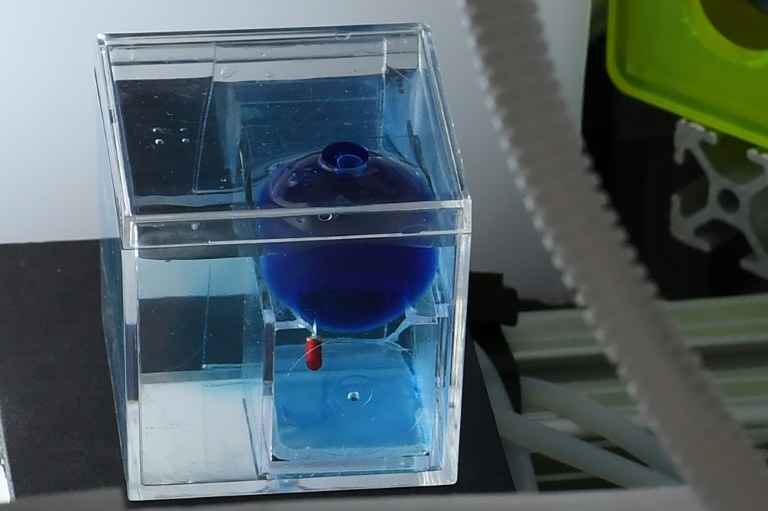
In a simulation watched by AFP, the robot — a metal cylinder just a few millimeters long, in the shape of a tiny bullet — slowly follows a pre-programed trajectory through a gel-filled container, which emulates the density of the human brain.

Once it nears a pouch filled with blue liquid, the robot is swiftly propelled like a rocket and pierces the sack with its pointed end, allowing liquid to flow out.

Inventors hope to use the robot to pierce fluid-filled cysts within the brain when clinical trials begin in two years.

If successful, the process could be used to treat Dandy-Walker Syndrome, a rare brain malformation affecting children.

Sufferers of the congenital ailment can experience cysts the size of a golf ball, which swell and increase pressure on the brain, triggering a host of dangerous neurological conditions.

Bionaut Labs has already tested its robots on large animals such as sheep and pigs, and “the data shows that the technology is safe for us” human beings, said Shpigelmacher.

If approved, the robots could offer key advantages over existing treatments for brain disorders.

“Today, most brain surgery and brain intervention is limited to straight lines — if you don’t have a straight line to the target, you’re stuck, you’re not going to get there,” said Shpigelmacher.

Micro-robotic tech “allows you to reach targets you were not able to reach, and reaching them repeatedly in the safest trajectory possible,” he added.

– ‘Heating up’ –

The US Food and Drug Administration (FDA) last year granted Bionaut Labs approvals that pave the way for clinical trials to treat Dandy-Walker Syndrome, as well as malignant gliomas — cancerous brain tumors often considered to be inoperable.

In the latter case, the micro-robots will be used to inject anti-cancer drugs directly into brain tumors in a “surgical strike.”

Existing treatment methods involve bombarding the whole body with drugs, leading to potential severe side effects and loss of effectiveness, said Shpigelmacher.

The micro-robots can also take measurements and collect tissue samples while inside the brain.

Bionaut Labs — which has around 30 employees — has held discussions with partners for the use of its tech to treat other conditions affecting the brain including Parkinson’s, epilepsy or strokes.

“To the best of my knowledge, we are the first commercial effort” to design a product of this type with “a clear path to the clinic trials,” said Shpigelmacher.

“But I don’t think that we will be the only one… This area is heating up.”

Close Bitnami banner
Bitnami