AFP

Asian markets track Wall St retreat on hawkish Fed bets

Equities sank Wednesday after Wall Street tumbled on bets the Federal Reserve will act more aggressively to bring inflation under control, while oil prices extended losses after the European Union refrained from imposing sanctions on Russian crude.

While the Ukraine war continues to cast a shadow across trading floors, Fed monetary policy is at the top of the agenda this week as investors fret over how quickly officials will withdraw their vast pandemic-era financial support.

After last month’s 0.25 percentage point hike in interest rates, the focus is now on its plans for May’s meeting, with expectations growing that it will announce a 0.50 point lift followed by several more before the end of the year.

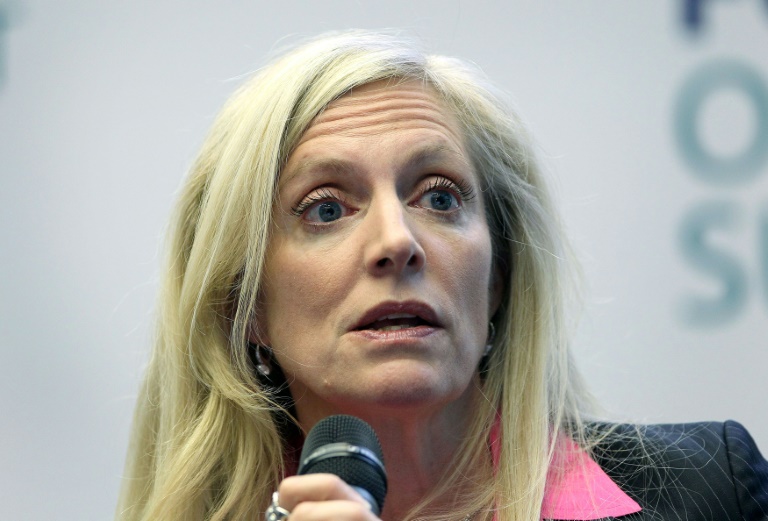
Fed governor Lael Brainard, who is considered a dove, on Tuesday spooked traders by saying bringing inflation down from 40-year highs was of “paramount importance” and that the bank was “prepared to take stronger action” if warranted.

Brainard, who is awaiting congressional confirmation for the position of Fed vice chair, also said bank policymakers were ready to start reducing its vast bond holdings, which have helped keep borrowing costs down.

“The market might have been looking for… Brainard to at least give more balanced remarks — instead, they were at the hawkish end of the spectrum from someone like Brainard,” said Stephen Innes of SPI Asset Management.

“She was not overly hawkish, but neither did she offer anything for the doves to cling to.”

Minutes from the Fed’s March meeting will be released later in the day and will be pored over for insights into officials’ thinking in light of the war and recent data suggesting the world’s top economy remains resilient for now.

All three main indexes on Wall Street ended in the red, with the Nasdaq off more than two percent owing to tech firms being more susceptible to higher rates.

And the selling seeped through to Asia, where Hong Kong, Shanghai and Taipei dropped on their return from a break.

Tokyo, Sydney, Seoul, Singapore, Manila, Jakarta and Wellington also retreated.

“Liquidity remains poor, and no one seems willing to take the other side as air pockets are becoming easier to find these days,” Innes added.

The European Union’s decision not to include Russian oil in a fresh round of sanctions saw both main contracts drop Tuesday and extend losses in early Asian business.

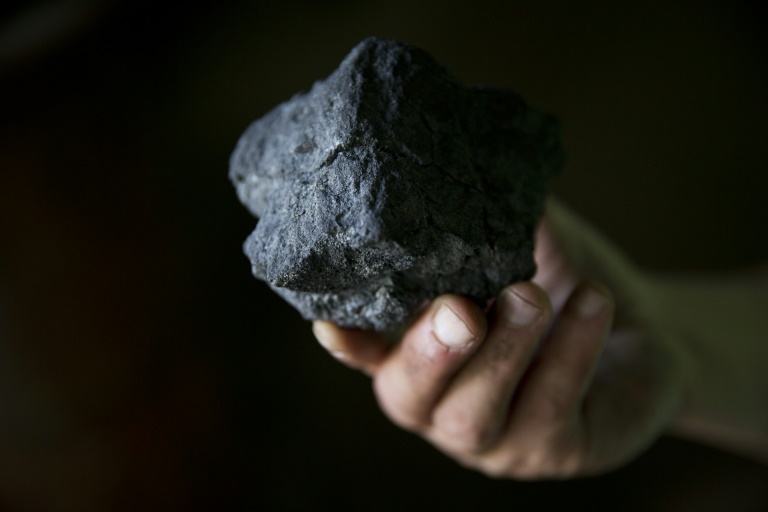
The reliance of the bloc — and particularly Germany — on crude from Russia has kept it from following the United States and Britain in imposing an embargo, though it signalled it wants to hit the country’s coal and shipping.

Adding to downward pressure on crude is the stronger dollar, which jumped in reaction to Brainard’s comments. Oil is priced in dollars, making it more expensive for clients using other currencies.

A coordinated move by Washington, Brussels and the G7 could also ban “all” new investments in Russia on Wednesday, while the US Treasury said Washington has barred Moscow from making debt payments using funds held at American banks.

Meanwhile, the Asian Development Bank lowered its 2022 growth forecast for developing Asia owing to “increasing” price pressures caused by Russia’s invasion of Ukraine, offsetting the recovery from Covid-19.

– Key figures around 0230 GMT –

Tokyo – Nikkei 225: DOWN 1.9 percent at 27,262.05 (break)

Hong Kong – Hang Seng Index: DOWN 1.8 percent at 22,106.00

Shanghai – Composite: DOWN 0.7 percent at 3,261.22

Brent North Sea crude: DOWN 0.2 percent at $106.44 per barrel

West Texas Intermediate: DOWN 0.3 percent at $101.68 per barrel

Dollar/yen: UP at 124.00 yen from 123.60 yen late Tuesday

Euro/dollar: DOWN at $1.0895 from $1.0903

Pound/dollar: DOWN at $1.3069 from $1.3071

Euro/pound: DOWN at 83.35 pence from 83.38 pence

New York – Dow: DOWN 0.8 percent at 34,641.18 (close)

London – FTSE 100: UP 0.7 percent at 7,613.72 (close) 
Twitter moves to limit reach of Russian govt accounts

Twitter announced Tuesday it was introducing new measures against Russian government accounts to reduce the impact of official propaganda on the social network. 

The official accounts will no longer be “recommended” to Twitter users across all categories of the app, including in searches, the platform said in a statement. 

The California company, like its rival Meta, parent company of Facebook and Instagram, had already blocked the accounts of the Russian state-run media RT and Sputnik in the European Union. 

Moscow responded by restricting access to Twitter in the country, and blocking Facebook and Instagram.

“We will not amplify or recommend government accounts belonging to states that limit access to free information and are engaged in armed interstate conflict — whether Twitter is blocked in that country or not,” Twitter said in a statement.

“When a government blocks or limits access to online services within their state, undercutting the public’s voice and ability to freely access information, but continues to use online services for their own communications, a severe information imbalance is created,” it said.

The official English account of Russian President Vladimir Putin has only 1.7 million followers. 

Since the start of the Russian offensive in Ukraine on February 24, the authorities have stepped up censorship — which was already strict — to control the way in which the war is portrayed on television and in the press, but also by private individuals on social networks. 

Using words such as “war” or “invasion” to describe the intervention or refer to actions against civilians is prohibited. The Russian government has instead labeled the conflict a “special military operation.”

In addition, the main independent media that still exist in Russia have been blocked or have suspended their work to avoid trouble.

Mexico seeks 'miracle' to save near-extinct vaquita porpoise

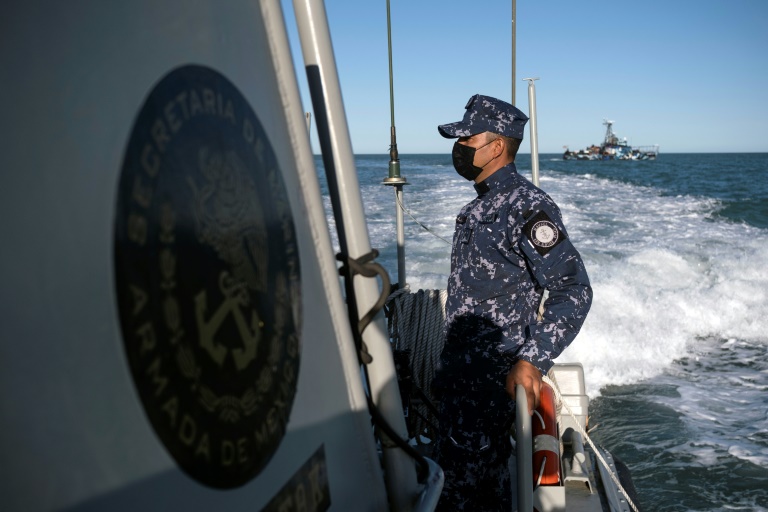
Mexican naval vessels, spotter planes and conservationists are patrolling the upper Gulf of California in a race against time to save the world’s rarest marine mammal from extinction.

Mexico’s navy and the environmental organization Sea Shepherd are working together to prevent the vaquita porpoise — which counts Leonardo DiCaprio among its celebrity defenders — disappearing forever.

The species is critically endangered, due to illegal gillnets used to catch totoaba, a large fish whose swim bladder can fetch thousands of dollars in China thanks to its supposed medicinal properties.

The navy stepped up surveillance in January amid criticism from the United States that Mexico was not doing enough to protect the vaquita, the smallest porpoise on the planet.

The deployment came after researchers sighted eight specimens of the mammal — known as the “panda of the sea” for the distinctive black circles around its eyes — between October and November.

There are estimated to be fewer than 20 individuals left in a small area in the Gulf of California, the only place in the world where the vaquita is found, according to Sea Shepherd.

Navy personnel and activists from the conservation group now monitor the area every day, looking for illegal nets and preventing fishermen from approaching a “zero tolerance zone.”

In the skies overhead, naval aircraft look for boats venturing into forbidden waters, in the latest phase of “Operation Miracle” — launched by Sea Shepherd in 2015 to try to save the vaquita.

“The efforts that we’ve seen, specifically seen over the last three or four months, mean the vaquita has the best chance that they’ve had in decades,” Sea Shepherd CEO Chuck Lindsey told reporters.

– ‘Fighting chance’ –

During a tour of the area for media, including AFP, Mexico’s navy said it had recovered 70 nets so far this year, compared with 172 for all of 2021.

Gillnets form invisible barriers under the water that can span several hundred feet and trap not just totoabas but also vaquitas, whales, dolphins, sharks and sea turtles, according to Sea Shepherd.

“As we see a dramatic reduction in the illegal nets in the water, we know that the vaquita have a fighting chance,” Lindsey said.

Conservationists have previously been involved in a number of violent confrontations with fishermen while working with Mexican authorities to remove illegal nets.

The vaquita grows up to a length of around 1.5 meters (five feet) and a weight of 50 kilos (110 pounds).

It has been listed as critically endangered by the International Union for Conservation of Nature since 1996.

In 2019 UNESCO added the Gulf of California’s islands and protected areas to the World Heritage in Danger list due to fears of the imminent extinction of the species.

From dawn, Mexican authorities now check that fishermen in the upper Gulf of California have the necessary paperwork, and later check their nets.

But “they should check beyond the breakwater. There are many boats that don’t have permits,” fisherman Roberto Lopez told reporters during an inspection.

Officials also scour beaches for nets washed ashore.

– DiCaprio, diplomacy –

International attention on the vaquita’s plight grew after DiCaprio in 2017 asked his millions of social media followers to sign a petition calling on Mexico’s then-president Enrique Pena Nieto to do more to protect the porpoise.

Last August, the Hollywood star accused President Andres Manuel Lopez Obrador’s government of abandoning the vaquita, “effectively ensuring that the remaining 10 or so porpoises will die in gillnets.”

Saving the vaquita has also become a source of diplomatic friction.

In February, the United States requested consultations with Mexico under a North American free trade pact on efforts to protect the species.

It was the first time a government has invoked the environmental provisions of the United States-Mexico-Canada Agreement, which took effect in July 2020.

Without a resolution, the move from the Washington could lead to imposition of tariffs, although US officials said at the time that it was premature to discuss punitive action.

In the meantime, the Mexican navy promises round-the-clock protection for the vaquita.

“The work that the navy has done, as in other places, is to protect the environment. We’re doing that here every day,” Admiral Luis Javier Robinson told AFP.

JetBlue seeks to buy Spirit Airways, threatening Frontier deal

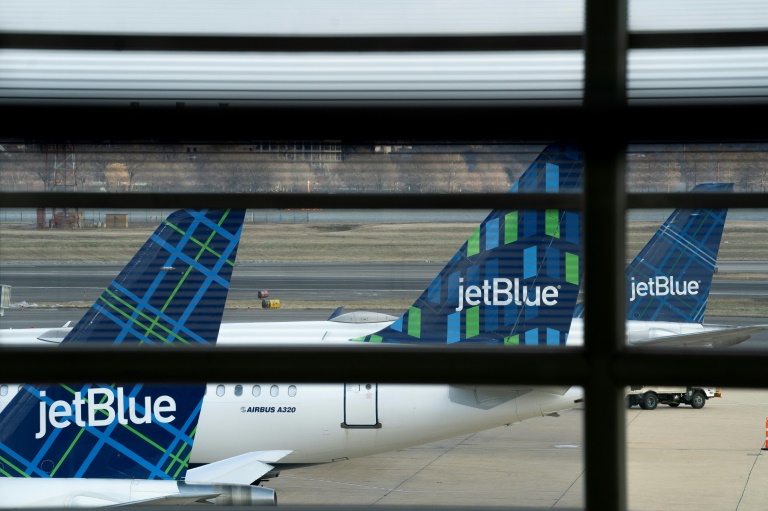
JetBlue Airways announced Tuesday a bid to acquire Spirit Airlines for $3.6 billion, setting up a bidding war with Frontier Airlines in the discount flying market.

The all-cash bid of $33 a share marks a 52 percent premium of Spirit’s price prior to its February 7 announcement of the deal with Frontier, according to JetBlue.

“JetBlue firmly believes its proposal constitutes a ‘superior proposal’ under Spirit’s merger agreement with Frontier and represents the most attractive opportunity for Spirit’s shareholders,” JetBlue said.

Spirit confirmed receipt of the “unsolicited” proposal from JetBlue, adding that its board would weigh the offer.

The board “will work with its financial and legal advisors to evaluate JetBlue’s proposal and pursue the course of action it determines to be in the best interests of Spirit and its stockholders,” Spirit said.

Frontier hit back at the JetBlue announcement and said its proposed merger with Spirit remained “in the best interest of consumers and shareholders,” a Frontier spokesperson said.

“Unlike the compelling Spirit-Frontier combination, an acquisition of Spirit by JetBlue, a high-fare carrier, would lead to more expensive travel for consumers. In particular, the significant East Coast overlap between JetBlue and Spirit would reduce competition and limit options for consumers.”

Frontier also said that JetBlue’s effort was “surprising” given an antitrust lawsuit by the Department of Justice challenging an alliance between American Airlines and JetBlue. 

In announcing the merger between Frontier and Spirit two months ago, executives from the two carriers argued they could together challenge larger US carriers and save about $1 billion in costs. 

JetBlue offered a similar argument Tuesday, saying the deal would “position JetBlue as the most compelling national low-fare challenger to the four large dominant US carriers.”

Shares of Spirit rose 22.4 percent Tuesday, while JetBlue fell 7.1 percent. Frontier Group rose 3.9 percent.

NASA delays final test for moon shot

The latest test of NASA’s giant Moon rocket SLS has been pushed back to allow for a SpaceX rocket to launch later this week, the US space agency announced Tuesday.

The dress rehearsal for the giant Space Launch System had been scheduled for Friday at launch pad 39B at Cape Canaveral, Florida, at the same time as SpaceX’s lift-off from pad 39A.

The test of the rocket, which is to return humans to the Moon, is now expected to resume shortly after the take-off of the SpaceX flight, which is to carry three businessmen and a former astronaut to the International Space Station. 

The 322-foot (98 meters) SLS rocket will remain on its launch pad while waiting.

In this final test before blast-off for the Moon later this year, all the steps leading up to launch must be rehearsed, from filling the tanks to the final countdown, which will be stopped just before the engines fire. 

The run-through started last Friday and was originally scheduled to end late Sunday, but NASA teams encountered “a whole myriad of technical challenges” as well as uncooperative weather on Saturday, said Mike Sarafin, the mission manager for the Artemis Moon landing. 

Among the problems encountered were four lightning strikes hitting the launch pad during a thunderstorm, which at least proved that the protection system had worked as planned. 

But the problems were not “major issues,” Sarafin said. “We haven’t run into any fundamental design flaws or design issues.”

“We take pride in learning from these tests,” he said, calling the ones already carried out in recent days “partially successful.” 

Artemis 1 will mark the first flight of the SLS, whose development has lagged years behind schedule. 

The Orion capsule at its top will be propelled to the Moon, where it will be placed in orbit before returning to Earth. 

The first mission will not have astronauts on board. The take-off date is to be announced after the so-called “wet” dress rehearsal. 

A launch window is possible in early June, and Sarafin said he was “not ready to give up on it yet.” 

Another launch window is possible in early July.

EU stocks sag on prospect of more Russia sanctions

EU stocks sagged on Tuesday after Brussels proposed further sanctions against Russia in response to killings in the Ukrainian town of Bucha that have prompted international condemnation.

Wall Street also ended lower after a top Federal Reserve official said the central bank could act more aggressively against inflation, while Asian equity markets rose. The dollar was mixed against major rivals.

Frankfurt stocks shed 0.7 percent while Paris slumped 1.3 percent after the European Union signaled it wants to impose sanctions on Russian coal and shipping.

“Tensions between Moscow and the West have ticked up, and that has prompted a decline in equities,” said market analyst David Madden at Equiti Capital, pointing to a thinly veiled threat by Russian President Vladimir Putin to withhold food exports to “hostile” nations.

Russia is a major exporter of wheat, as is Ukraine, where production is likely to be severely disrupted due to the invasion.

The EU however did not announce measures targeting Moscow’s oil exports. 

– ‘Pressure is growing’ –

Both Brent North Sea and WTI oil contracts dipped on Tuesday, after the prospects of sanctions on Russia crude had sent oil prices sharply higher Monday.

While coal sanctions are likely to have a limited impact, “the pressure is growing for this commitment to be extended to oil and gas supplies,” said market analyst Michael Hewson at CMC Markets UK. 

“It is becoming ever clearer that Russia is likely to become increasingly more isolated as sanctions get tightened and widened further, with the prospect that inflationary pressure in the global economy will remain more persistent in the coming months,” he added.

The additional EU sanctions came days after dozens of bodies were found on the streets in Bucha, northwest of Kyiv, though some countries remain worried of the potential fallout from targeting Russia’s economy.

Ukrainian President Volodymyr Zelensky blames Russian troops for the killings, but the Kremlin has denied responsibility.

Meanwhile a source told AFP that the United States, in coordination with the G7 and European Union, plans to ban “all” new investments in Russia on Wednesday, while the US Treasury said Washington has barred Russia from making debt payments using funds held at American banks.

In New York, major stock indices retreated after Fed Governor Lael Brainard said the US central bank was “prepared to take stronger action” to reduce inflation that has hit levels not seen since the 1980s.

The remarks helped lift the yield on the 10-year US Treasury note above 2.5 percent, well above where it was throughout the Covid-19 pandemic. 

“We already had the yields moving higher but after Lael Brainard’s comments, it just poured some fuel on the fire,” said Brad Bechtel, managing director at FX Jefferies.

US traders on Wednesday will be keeping a close eye on the minutes from the Fed’s most recent policy meeting, hoping for an insight into officials’ thinking over future monetary policy.

After the Fed’s expected quarter-point interest rate hike last month, central bankers have signaled a half-point increase is possible in May in light of soaring inflation, as strong jobs growth and other data suggest the US economy remains robust enough to absorb higher borrowing costs.

– Key figures around 2145 GMT –

New York – Dow: DOWN 0.8 percent at 34,641.18 (close)

New York – S&P 500: DOWN 1.3 percent at 4,525.12 (close)

New York – Nasdaq: DOWN 0.8 percent at 14,204.17 (close)

EURO STOXX 50: DOWN 0.8 percent at 3,917.85 (close)

London – FTSE 100: UP 0.7 percent at 7,613.72 (close) 
Frankfurt – DAX: DOWN 0.7 percent at 14,424.36 (close)

Paris – CAC 40: DOWN 1.3 percent at 6,645.51 (close)

Tokyo – Nikkei 225: UP 0.2 percent at 27,787.98 (close)

Hong Kong – Hang Seng Index: Closed for a holiday

Shanghai – Composite: Closed for a holiday

Brent North Sea crude: DOWN 0.8 percent at $106.64 per barrel

West Texas Intermediate: DOWN 1.3 percent at $101.96 per barrel

Euro/dollar: DOWN at $1.0903 from $1.0978 late Monday

Pound/dollar: UP at $1.3071 from $1.3114

Euro/pound: DOWN at 83.38 pence from 83.65 pence

Dollar/yen: UP at 123.60 yen from 122.78 yen

burs-rl/gw/cs/hs

Technology boosts pitchers for new baseball season

Pitchers and catchers will be given the option of using new technology to prevent sign-stealing as Major League Baseball looks to move on from its scandal-plagued recent past when the delayed new season finally gets under way on Thursday.

Five years after the Houston Astros claimed a controversial World Series victory over the Los Angeles Dodgers, baseball chiefs said Tuesday that clubs will be allowed to use new “PitchCom” equipment that has been successfully tested during Spring Training.

PitchCom is wearable technology that allows catchers and pitchers to communicate directly without needing to use hand signals — the traditional method of signaling what kind of pitches a batter will face.

Under the new technology, catchers wear a sleeve on their forearm with nine buttons that represent different pitches and the location where they will be thrown.

Messages from the catcher’s device are transmitted to a receiver fitted in the pitcher’s cap.

The Astros were fined $5 million and manager A.J. Hinch was suspended for a season after the MLB found the club had been using a camera hidden in the outfield to decode the signs being used by the Dodgers in the 2017 World Series.

The new technology — which is also aimed at speeding up the pace of play — has received broad support since being tested.

“Anything that can help the pitcher get the sign without anyone knowing what the sign is, we’re moving in the right direction,” was the verdict of Colorado Rockies director of pitching Steve Foster.

New York Yankees ace Luis Severino tested the system for the first time last weekend and was impressed.

“I think it was great,” Severino told reporters. “I was a little doubtful at the beginning, but when we started using it, it was really good. You know what pitch you’re going to throw right away.”

Thursday’s opening round of regular season fixtures comes after an acrimonious off-season dominated by the labor dispute between MLB owners and players.

– Dodgers favored –

The season had been due to start on March 31 but was delayed after negotiations for a new collective bargaining agreement became deadlocked.

The dispute came to an end last month after both sides reached agreement on a new deal that includes increased minimum salaries, a pre-arbitration bonus pool to reward top young players before they can negotiate new deals and a boost to the league’s luxury tax thresholds.

Designated hitters will replace batters in the National League, as they have for many years in the American League.

An expanded playoff format will see 12 teams advance, six from each league, adding two clubs to the post-season championship chase. 

The two top division winners in each league would receive first-round byes.

Bookmakers have installed the Dodgers as early favorites to repeat their World Series triumph from the pandemic-shortened 2020 season.

The Dodgers pulled off one of the coups of the off-season by prizing star first baseman Freddie Freeman away from the reigning champion Atlanta Braves.

Freeman, the National League Most Valuable Player in 2020, gives the Dodgers’ already formidable batting line-up another weapon as they chase an eighth World Series.

Although the Dodgers have not strengthened their starting rotation, and doubts continue to swirl around the availability of pitcher Trevor Bauer, who has effectively been frozen out of the league since the emergence of lurid allegations concerning his private life last year, the NL West powerhouses can still call on Walker Buehler, Clayton Kershaw and Julio Urias from the mound.

Dodgers manager Dave Roberts believes if his starters can stay healthy in 2022, his team will win a second title in three seasons.

“We are winning the World Series. Put it on record,” Roberts said last month.

“We are winning the World Series if our starting staff stays healthy. I know that’s vague, but that’s my answer. I think it’s about our starting pitching, just keeping our guys healthy.”

Colombian researchers seek safety for bees in urban jungle

Far from the flowery fields that are their natural home, honey bees imperiled by pesticides in rural Colombia are finding sanctuary on university campuses in the bustling capital Bogota.

Even though hives are banned from the city due to the risk the insects’ stings can pose to humans, universities enjoy an exemption for research purposes.

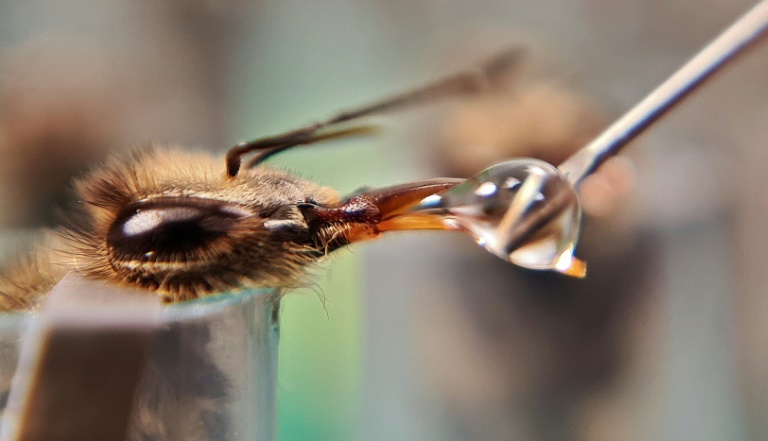
At the University of Rosario, biologist Andre Riveros very carefully feeds a bee some sugar water, watching attentively as it stretches its straw-like tongue, or proboscis, towards the sweet liquid.

The university boasts a rooftop apiary in a bamboo structure some six meters (nearly 20 feet) high, surrounded by trees and flowers.

Here, Riveros and his team study a colony of bees in the hopes of developing a food supplement that will offer the critical crop pollinators protection from insecticides

“Pesticides end up affecting some (neurological) regions that, for example, affect learning and memory and (the bees) end up with damage very similar to Alzheimer’s,” Riveros told AFP.

“We are trying to find a solution for the problem of bee disappearances,” he added. “We seek to shield the bees, in essence.”

The team’s work focuses on the Apis mellifera, or Western Honey Bee, one of about 20,000 known species worldwide.

Hundreds of hives have been killed off in Colombia in recent years, and investigations into the cause have pointed to fipronil, an insecticide banned in Europe and restricted in the United States and China.

Fipronil has been widely used in a profitable avocado and citrus boom in Colombia, though the Latin American country suspended its use in some crops for six months last year.

– ‘Fleeing the fields’ –

Elsewhere in Bogota, the EAN University boasts its own hives, perched on a six-story building overlooking the city of eight million people.

Beekeeper Gino Cala extracts honey from the hives as part of his work to instruct and assist universities in the management of urban apiaries.

But Cala told AFP Colombia’s bees “are fleeing the fields” partly due to the “indiscriminate use of agrochemicals.”

“These insects are extremely relevant and important… because they help guarantee part of the food security of Colombia and the world,” he added.

From the EAN University grounds, Cala’s bees help to pollinate plants in surrounding areas.

About 1.4 billion jobs and three-quarters of all crops around the world, according to a 2016 study, depend on pollinators — mainly bees — which provide free fertilization services worth billions of dollars.

In recent years, bees in North America, Europe, Russia, South America and elsewhere have started dying off from “colony collapse disorder,” a mysterious scourge blamed partly on pesticides but also on mites, viruses and fungi.

The UN warns that nearly half of insect pollinators, particularly bees and butterflies, risk global extinction.

Despite the city ban, there are private beekeepers in Bogota who sell products such as honey, pollen or beeswax.

The fire department of Bogota says it attends to eight bee sting-related emergencies on average every day.

Twitter names Elon Musk to board, further lifting shares

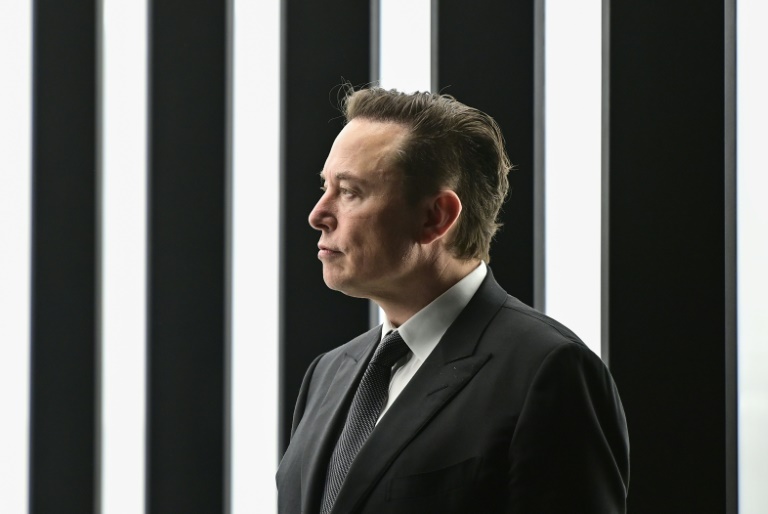
Twitter announced Tuesday that Elon Musk will join its board, boosting hopes the Tesla boss will lift the social media company’s prospects as some observers expressed wariness of the billionaire’s influence.

Shares rose for a second day on news of Musk’s board appointment after surging on Monday’s disclosure of the outspoken entrepreneur’s large stake in the company.

“I’m excited to share that we’re appointing @elonmusk to our board! Through conversations with Elon in recent weeks, it became clear to us that he would bring great value,” Twitter CEO Parag Agrawal said in a tweet.

Agrawal called Musk “a passionate believer and intense critic of the service which is exactly what we need,” while Musk said he looked forward to soon making “significant improvements to Twitter.”

Musk, who also leads the SpaceX venture and is the world’s richest man, had the day prior announced his purchase of 73.5 million shares or 9.2 percent of Twitter’s common stock, sending the company’s value up more than 27 percent on Wall Street.

Analysts at Wedbush said the invitation from Agrawal marks “a friendly move by the Twitter board to embrace Musk” that could lead to strategic shifts for a company “still struggling in a social media arms race,” according to a note.

Musk had previously questioned the platform’s committment to freedom of speech — criticism that has now fed hopes among political conservatives who accuse the platform of “censorship” and hope to see former US president Donald Trump returned to Twitter following a lifetime ban in the wake of the January 6 riot.

Some progressives expressed discomfort with Musk’s increased say at Twitter, which the Tesla boss has called a “de facto public town square.”

“What could possibly go wrong with an oligarch determining what constitutes free speech?” tweeted former Labor Secretary Robert Reich, who noted that Musk has “threatened to sue bloggers and fired employees for speaking out about safety concerns.”

Musk will remain on Twitter’s board until the company’s annual shareholder’s meeting in 2024, and he has promised not to take a stake larger than 14.9 percent in the company during that time, according to a securities filing.

– Political implications? –

The arrival of Musk cheered several analysts, who have rued the performance of a company that is influential in the political and media worlds but for which profitable growth has proved elusive.

In 2021, Twitter’s revenues were $5.1 billion, up 37 percent from 2020, but a fraction of the $33.7 billion reported by Facebook parent Meta.

CFRA Research analyst Angelino Zino applauded the arrival of a “true visionary” in Musk.

“Ultimately, the goal is to better monetize the platform, and we think Musk can only help, not hurt the process, with his recent criticism of the company as a refreshing sign,” Zino said, noting that the term’s of Musk’s stake mean he can’t take over the company.

Susannah Streeter, an analyst at Hargreaves Lansdown, offered a more muted outlook, characterizing Musk as “socially ambitious” and raising the possibility that the Tesla boss will use the platform to promote his ventures.

“Over the longer term, Twitter investors will want to see that high levels of governance are adhered to, otherwise the independence of Twitter could be questioned, and the risk is that users may start to drift away,” Streeter said.

In the political universe, far-right Republican House Representative Lauren Boebert was among those calling for Musk to “lift the political censorship.”

“Oh… and BRING BACK TRUMP!” she tweeted.

Two days after the January 6 attack on the US capitol, Twitter announced the “permanent suspension” of Trump’s account, citing the “risk of further incitement of violence.”

Historian James Fell was among those trying to preempt a Trump Twitter revival, saying if the ex-president is restored, “I’ll probably ditch this platform altogether.”

But others said Musk’s motivation behind the Twitter investment probably has little to do with national politics.

“Twitter is a key resource for him,” said David Kirsch, a professor at the Robert Smith School of Business, who has written extensively on electric vehicles and modern technology.

Musk currently has more than 80 million followers on the platform, which Kirsch said has likely saved him hundreds of millions of dollars in advertising.

“He is the master of the platform, at a certain point he couldn’t afford not to have a say in how it’s managed,” said Kirsch. “All the politics are secondary.”

Shares of Twitter rose 2.0 percent to $50.98 trading.

'Infurrection': red fox terrorizes humans in US Capitol rampage

Being outfoxed in Congress usually means losing a vote on an amended resolution or being too late for the donut line in the Senate cafeteria.

So spare a thought for the politicians and staff at the US Capitol in Washington, where a highly aggressive red fox spent at least two days stalking frightened humans, including a Democratic congressman.

Police officers warned Tuesday that they had received multiple reports of people “being attacked or bitten” by an aggressive canine at the seat of US democracy — in a statement first reported by none other than… Fox News.  

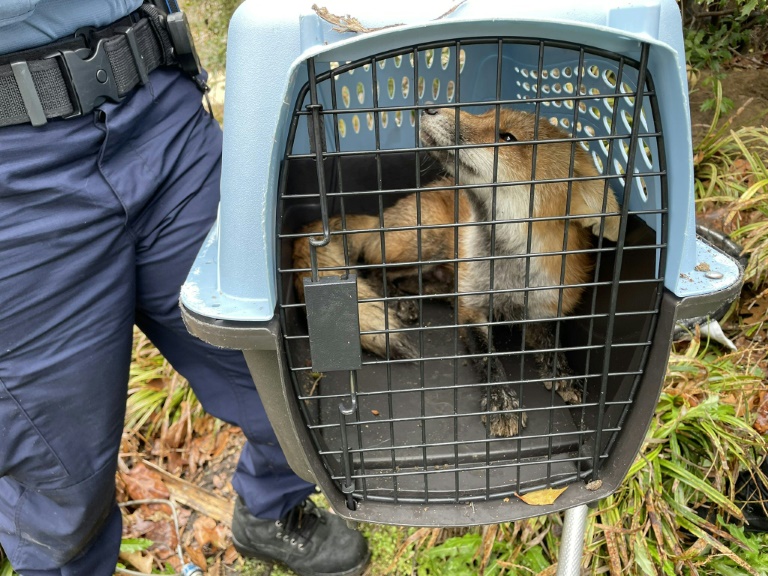
The force quickly dispatched animal control officers to “trap and relocate” any foxes they found — and within hours they posted pictures on social media of the beast, finally taken into custody, sitting in an animal cage above the caption: “Captured.”

Online political magazine Punchbowl News reported that congressman Ami Bera had to be rescued by police late Monday after squaring up to a fox that had just bitten him in an “unprovoked” attack.

“I didn’t see it and all of a sudden I felt something lunge at the back of my leg,” Bera, a physician by profession, told Punchbowl.

The 57-year-old Sacramento Democrat wasn’t hurt, but agreed “out of an abundance of caution” to get a series of rabies shots. 

– Bloodlust sated –

“I expect to get attacked if I go on Fox News, I don’t expect to get attacked by a fox,” he told Punchbowl.

Ximena Bustillo, a Congress reporter for Politico, said she was bitten on the ankle from behind as she was leaving the complex.

“I’m from Idaho. I know to not try and pet it!!” she tweeted.

Witnesses flooded social media with sightings, with several reporting seeing it munching on a squirrel or merely enjoying the sun — its bloodlust apparently sated — in the Senate gardens. 

Fifteen months after a violent mob stormed the Capitol to disrupt the certification of last presidential election, one wag even referred to the ongoing animal threat as an “infurrection.”

Inside the Capitol, reporters spent the weekly leaders’ press conferences in a breathless interrogation about possible action on the four-legged menace. 

Top Republican Mitch McConnell ignored the inquiries, but Iowa’s intrepid two-term senator Joni Ernst was proud to report that she had spotted the animal, without revealing how close the encounter was.

Red foxes — the most common of several North American species — are regularly found in towns and cities but tend to avoid people, according to the city environmental department.

They typically eat insects, small birds, squirrels and rabbits, and are not known for their predilection for legislators or their intimidated staffers.

The species has thrived during the pandemic, according to wildlife experts in the nation’s capital.

“Less ambient noise, less traffic, less interference… right now, life is better for them,” Bill McShea, a wildlife ecologist with the Smithsonian National Zoo, told DCist magazine.

“If there’s an upside to Covid, it’s on the wildlife.”

Close Bitnami banner
Bitnami