AFP

NASA exploring ways to keep ISS afloat without Russian help: official

NASA is exploring ways to keep the International Space Station in orbit without Russian help, but doesn’t see any immediate signs Moscow is withdrawing from the collaboration following the invasion of Ukraine, a senior official said Monday.

Kathy Lueders, who heads the agency’s human spaceflight program, told reporters on a call that operations on the research platform were proceeding “nominally” and “we’re not getting any indications at a working level that our counterparts are not committed.”

“That said, we always look for how do we get more operational flexibility and our cargo providers are looking at how do we add different capabilities,” she continued.

While the US side of the ISS supplies power and life support, Russia is responsible for propulsion and keeping the station afloat: it does this by using docked Progress spacecraft to periodically give the station a boost to maintain its altitude, approximately 250 miles (400 kilometers) high. 

Last week, though, Russia’s space chief Dmitry Rogozin raised the prospect of pulling out of the partnership in response to US sanctions, allowing the 400 ton structure to come crashing down to Earth while most likely avoiding his country, since its orbit doesn’t fly much over it.

Lueders said: “Northrop Grumman has been offering up a reboost capability, and you know, our SpaceX folks are looking at can we have additional capability.”

The last Northrop Grumman Cygnus cargo vessel that arrived at the ISS on February 21 was the first to boast a capacity to “reboost” the outpost without Russian help.

On Friday, SpaceX boss Elon Musk tweeted his company’s logo in response to Rogozin’s rhetorical question about who would save the ISS from an uncontrolled de-orbit.

But Lueders stressed that such plans were a contingency measure only. 

“It would be very difficult for us to be operating on our own — ISS is an international partnership that was created…with joint dependencies,” she said.

“As a team, we are looking at where we may have operational flexibilities, but… it would be a sad day for international operations if we can’t continue to peacefully operate in space,” she concluded.

A symbol of post Cold War detente, the ISS has been continuously habited for more than 21 years and has weathered past geopolitical storms, notably Russia’s invasion of Crimea in 2014. But some observers believe the invasion of Ukraine could hasten the demise of US-Russian space cooperation.

US Supreme Court hears climate case as UN issues stark warning

A divided US Supreme Court heard arguments on Monday in an environmental regulation case with potentially far-reaching implications for the Biden administration’s fight against climate change.

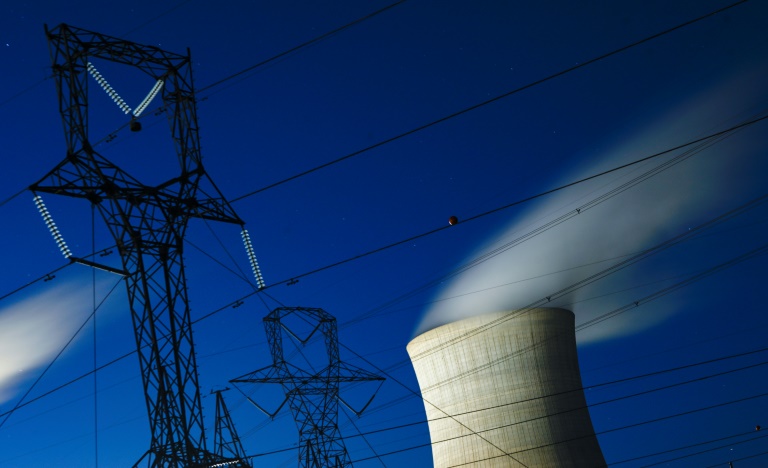
The high-stakes case concerns the authority of the Environmental Protection Agency (EPA) to regulate greenhouse gas emissions from coal-fired power plants, which produce nearly 20 percent of the electricity in the United States.

As the Supreme Court was hearing arguments, the United Nations issued a landmark report containing dire warnings over climate change.

While the three liberal justices on the nine-member Supreme Court appeared largely to support arguments that the EPA was operating within its brief, several of the conservative justices appeared skeptical.

“This agency is doing greenhouse gas regulation,” said Justice Sonia Sotomayor, one of the liberal members of the court. “This is in, you know, exactly in its wheelhouse.”

Jacob Roth, arguing for The North America Coal Corp., said the EPA is going beyond its remit.

“The agency is asking questions like: Should we phase out the coal industry? Should we build more solar farms in this country? Should we restrict how consumers use electricity in order to bring down emissions?

“Those are not the types of questions we expect the agency to be answering,” Roth said.

In 2007, the Supreme Court, by a narrow majority, ruled that the EPA has the power to regulate carbon dioxide emissions from power plants under the Clean Air Act of 1970.

In 2015, Democratic president Barack Obama unveiled his Clean Power Plan, which was intended to combat global warming by reducing carbon dioxide emissions from coal- and gas-burning plants and shifting energy production to clean sources such as solar and wind power.

The Clean Power Plan was blocked in the Supreme Court in 2016 and repealed by former Republican president Donald Trump, who replaced it with his own industry-friendly Affordable Clean Energy (ACE) rule.

Trump, a climate change skeptic hostile to government regulation of industry, also nominated three justices to the Supreme Court, giving conservatives a 6-3 majority.

– ‘Constrain EPA authority’ –

The US Court of Appeals for the District of Columbia threw out Trump’s ACE rule on the last day of his presidency, setting the stage for the case currently before the Supreme Court: West Virginia vs EPA.

West Virginia and several other coal-producing states asked the Supreme Court to intervene and define the powers of the EPA. The case has also been embraced by opponents of strong government regulatory authority.

Solicitor General Elizabeth Prelogar, arguing before the court for the administration of President Joe Biden, said the justices should just wait until the EPA publishes its new rules, expected before the end of the year.

“The DC Circuit’s judgment leaves no EPA rule in effect,” Prelogar said. “No federal regulation will occur until EPA completes its upcoming rulemaking.

“Petitioners aren’t harmed by the status quo,” she said. “Instead, what they seek from this court is a decision to constrain EPA authority in the upcoming rulemaking.”

In its brief to the court, West Virginia accused the EPA of acting like “the country’s central energy planning authority.”

Justice Samuel Alito, one of the more conservative members of the court, questioned how far the EPA could go in regulating emissions.

“Is there any reason EPA couldn’t force the adoption of a system for single family homes that is similar to what it has done, what it is claiming it can do, with respect to existing power plants?” Alito asked.

Prelogar, the solicitor general, replied that the EPA “has never listed homes as a source category and couldn’t do so because they are far too diverse and differentiated.”

Robert Percival, director of the Environmental Law Program at the University of Maryland, said the conservative majority on the court “seems determined to put a stake in the heart of a regulation that has been dead for years in order to rein in EPA in the future.”

UN experts, in the report issued Monday on the global impacts of climate change, said humanity is perilously close to missing its chance to secure a “liveable” future.

“The cumulative scientific evidence is unequivocal: Climate change is a threat to human wellbeing and planetary health,” the Intergovernmental Panel on Climate Change (IPCC) said.

Any further delay in global action to cut carbon pollution “will miss a brief and rapidly closing window of opportunity to secure a liveable and sustainable future for all,” the 195-nation IPCC warned.

Before the Supreme Court hearing, Harvard University environmental law professor Richard Lazarus said there was “good reason for concern” the conservative-leaning court would argue that Congress does not have the power to delegate its regulatory powers to the agency. 

Given the stalemate in Congress, he said “such a ruling would seriously threaten the national government’s ability to address some of the nation’s most pressing problems.” 

The Supreme Court is expected to issue its decision in West Virginia vs EPA before June.

Dogs show signs of mourning after loss of canine companions

Dogs are deeply affected by the deaths of canine companions, eating and playing less and seeking attention more following a loss, a large scientific study said Thursday.

Signs of grief have previously been reported across many species, including great apes, whales, dolphins, elephants and birds. 

Among the canid family, there were some prior indications: some wild wolves have been reported burying the carcasses of two-week-old pups, and a dingo mother had been observed transporting its deceased pup to different locations in the days following its death.

But the evidence was overall sparse, and, when it came to domestic dogs, confined to anecdotal reports from owners, which run the risk of anthropomorphism and over-stating the case.

The new study, published in the Nature journal Scientific Reports, involved a survey completed by 426 Italian adults who owned at least two dogs, one of whom had died while the other was alive.

Negative changes were reported by 86 percent of owners, with a quarter saying these lasted longer than six months.

These behaviors included more attention seeking (67 percent), reduced playfulness (57 percent), and reduced overall activity (46 percent).

Surviving dogs also slept more, became more fearful, ate less, and whined or barked more.

The researchers found that the length of time the two dogs had lived together was not an important factor in determining grief — rather it was the quality of the relationship the pair had shared that mattered.

How much the owner felt the loss also played a significant role, suggesting that the surviving dog was also responding to the human’s emotional cues.

“This is potentially a major welfare issue that has been overlooked,” with better understanding of behavior patterns key to meeting the animals’ emotional needs, concluded the authors.

No bull: New Zealand bovine rides raging floodwaters

A New Zealand bull has been hailed a “legend” after it was swept along a flooded river and survived going over a waterfall before being dumped 80 kilometres (50 miles) downstream.

South Island farmer Tony Peacock said the 18-month-old bull was one of three washed away earlier this month when the West Coast region experienced its worst flooding in almost 80 years.

“We had a massive dump of water that we weren’t expecting and just got caught out by not having stock on higher ground,” he told AFP.

“It was daylight by the time I realised how bad it was and by that stage they were gone. I never thought I’d see any of them again.”

But a week later, Peacock received a call saying one of his bulls had been found on the riverbank at Westport, about 80 kilometres away.

“It was a big surprise, as you can imagine,” he said, noting the bull survived a 10-metre drop at the Maruia Falls during its watery adventure.

He said the Hereford breed bull, which was identified by an ear tag, is being transported back to the farm and would be retired after returning home.

“We’ll be keeping him, he’s become a local legend now,” he said.

“He’s more famous than anything else we’ve produced.”

Peacock said the local school is now holding a competition to find a suitable name for the celebrity heavyweight.

9,000-year-old ritual complex found in Jordan desert

Archaeologists deep in the Jordanian desert have discovered a 9,000-year-old ritualistic complex near what is thought to be the earliest known large human-built structure worldwide.

The Stone Age shrine site, excavated last year, was used by gazelle hunters and features carved stone figures, an altar and a miniature model of a large-scale hunting trap.

The giant game traps the model represents — so-called “desert kites” — were made of long walls that converge to corral running gazelles into enclosures or holes for slaughter.

Similar structures of two or more stone walls, some several kilometres (miles) long, have been found in deserts across Saudi Arabia, Syria, Turkey and Kazakhstan.

The Neolithic-era ritual site was discovered inside a larger campsite last October by a joint French-Jordanian team called the South Eastern Badia Archaeological Project.

The nearby desert kites in Jibal al-Khashabiyeh are “the earliest large-scale human built structures worldwide known to date,” said a statement by the SEBA Project.

It hailed the “spectacular and unprecedented discovery” of the ritualistic site, believed to date to about 7000 BC.

It featured two steles with anthropomorphic features, the taller one 1.12 metres high, other artefacts including animal figurines, flints, and some 150 arranged marine fossils.

The wider, decade-old research project aims to study “the first pastoral nomadic societies, as well as the evolution of specialised subsistence strategies”. 

The desert kites suggest “extremely sophisticated mass hunting strategies, unexpected in such an early timeframe,” said the project’s statement.

The sacral symbolism was most likely meant “to invoke the supranatural forces for successful hunts and abundance of prey to capture,” it said. 

The teams of researchers have also found campsites with circular dwellings and large numbers of gazelle bones.

The project is a collaboration of Jordan’s Al Hussein Bin Talal University and the French Institute of the Near East.

French ambassador Veronique Vouland-Aneini hailed the “outcome for both the scientific world and Jordan”, saying “it provides us with a priceless testimony of the historical life in the Middle East, its traditions and rituals”.

More than $1.5 bn bid so far in US offshore wind auction

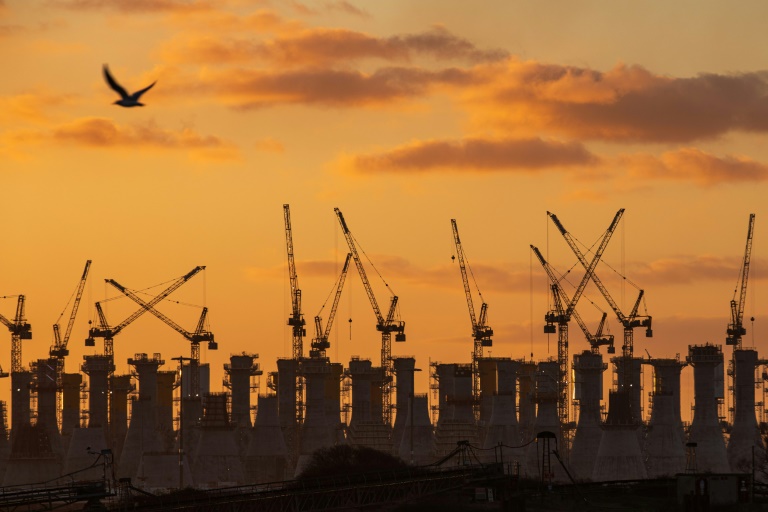
Energy companies interested in developing offshore wind sites bid more than $1.5 billion Wednesday in by far the biggest US auction for the renewable power.

After launching the auction Wednesday morning, US officials released updates throughout the day as the bids gradually rose on six available tracts involving nearly 500,000 acres off the coasts of New York and New Jersey.

After 21 rounds of bidding conducted Wednesday, the Bureau of Ocean Energy Management was set to resume the process on Thursday morning.

US President Joe Biden has embraced offshore wind as a component of an energy transition needed to combat climate change.

Development of all six tracts could generate as much as seven gigawatts of wind energy, enough to power some two million homes, the agency said.

Nearly 25 firms were authorized to participate in the auction, including European companies Avangrid Renewables, Equinor ASA and EDF Renewables Development, as well as US groups Invenergy and Arevia Power.

“People are excited because this is the first lease sale that has been held by the federal government since 2018,” said Lesley Jantarasami, an energy specialist at the Bipartisan Policy Center, a US think tank.

Jantarasami noted that the Biden administration has set a goal of producing 30 gigawatts of offshore wind energy by 2030.

“For a long time, everybody has been saying it’s poised to take off,” she said, alluding to the interest of European companies in the US offshore market. 

“But we had not seen the federal government take concrete action to make this a reality,” she said.

– Legal challenges possible –

Currently there are just two producing offshore wind sites in the United States generating a modest 42 megawatts.

But the Biden administration last year cleared construction of two larger offshore wind projects: Vineyard Wind in Massachusetts and South Ford Wind offshore Rhode Island.

The administration also envisions reviewing at least 16 plans to construct and operate commercial offshore wind energy facilities through 2025 and plans seven auctions through that year. Projects are expected near the coasts of North Carolina and California.

In 2018, an auction on three tracts across 390,000 acres near Massachusetts raised $405 million following 32 rounds of bidding.

Wednesday’s bidding easily overtook that level, said Timothy Fox, an analyst at Clearview Energy Partners.

While the White House’s principle legislative package, “Build Back Better,” remains stuck in Congress, Biden’s administration “may rely on the results of the auction to reinforce is green energy bona fides,” Fox said.

But the auction represents just the first step in a lengthy process before wind energy will be produced. Key permits will need to be granted and “legal challenges represent continued risk,” Fox said.

Fox said lawsuits on environmental grounds are possible after a permit to a specific site is granted. Of particular concern are US laws protecting endangered species, he said.

But Jantarasami expressed confidence in the projects, given the support of governors in New York and New Jersey, who see the ventures as beneficial on both environmental and energy grounds.

Additionally, the emerging industry could be a source of new jobs.

“We are turning the corner,” Jantarasami said. “This administration in particular and the governors want the projects to happen. They are going to work pretty closely to make the projects happen.”

Dog kennel hit by meteorite sells at auction

A Christie’s auction of rare meteorites Wednesday sold a rock from space that narrowly missed a German Shepherd when it smashed into his kennel in Costa Rica.

But the offer of the third-largest piece of Mars on Earth failed to make an impact at the auction house’s annual sale of unusual meteorites.

The buyer paid $21,420 for the three-by-1.5 inch (eight-by-four centimeter) carbonaceous chondrite stone that landed in the garden of dog Roky’s owner’s home in Aguas Zarcas in April 2019.

The wood and tin doghouse itself, complete with a seven-inch hole marking where the meteorite punctured the roof, sold separately for $44,100, Christie’s said.

That was much less than the pre-sale estimate of between $200,000 and $300,000.

A bidder paid $189,000 for a chunk of lunar rock that was discovered in Morocco in 2007, below pre-sale estimates of up to $300,000.

Another slice of the Moon — found in the Sahara desert in Mauritania — fetched $69,300 during the two-week online sale that ended Wednesday.

It was a disappointing auction for Mars, though. The 20-pound (9.1 kg) Martian rock had been priced at between $500,000 and $800,000 but failed to find a buyer.

US launches biggest yet auction for offshore wind

Bidding began Wednesday in the biggest US offshore wind energy auction yet, involving nearly 500,000 acres off the coasts of New York and New Jersey.

Through 13 rounds of bids by mid-afternoon, companies had offered $817 million for leases on on six tracts up for grabs, according to data from the Bureau of Ocean Energy Management.

The agency, part of the US Department of the Interior,  has said it could extend the bidding process through to Friday.

Development of all six tracts could generate as much seven gigawatts of wind energy, enough to power some two million homes, the agency said.

Nearly 25 firms were authorized to participate in the auction, including European companies Avangrid Renewables, Equinor ASA and EDF Renewables Development, as well as US groups Invenergy and Arevia Power.

“People are excited because this is the first lease sale that has been held by the federal government since 2018,” said Lesley Jantarasami, an energy specialist at the Bipartisan Policy Center, a US think tank.

Jantarasami noted that the Biden administration has set a goal of producing 30 gigawatts of offshore wind energy by 2030.

“For a long time, everybody has been saying it’s poised to take off,” she said, alluding to the interest of European companies in the US offshore market. 

“But we had not seen the federal government take concrete action to make this a reality,” she said.

In 2018, 11 companies bid on three tracts across 390,000 acres near Massachusetts. That sale raised $405 million following 32 rounds of bidding.

Rescue effort starts as Cyclone Emnati lashes Madagascar

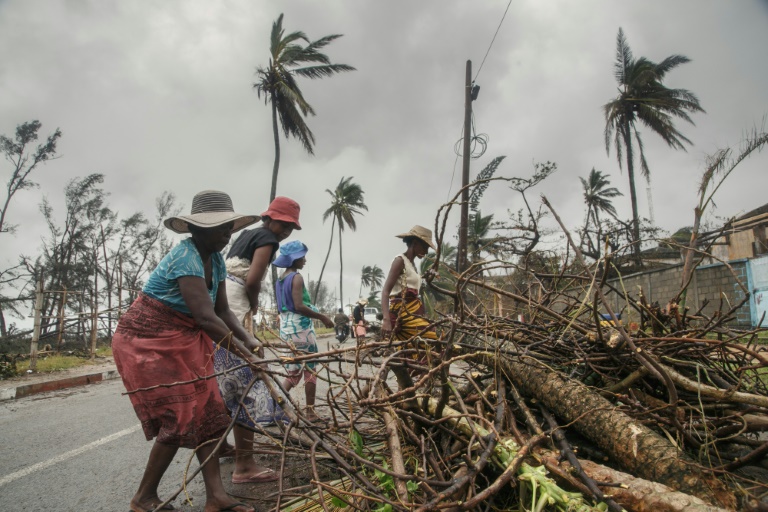
Rescuers in Madagascar on Wednesday began to assess the damage caused by Cyclone Emnati, which overnight lashed the island nation still reeling from the impact of another cyclone earlier this month.

Faly Aritiana Fabien, a senior official at Madagascar’s National Risk Management Office (BNGRC), told AFP no human casualties had been reported but said it was important to “remain cautious” less than 24 hours after Emnati’s arrival.

Houses were submerged in brown water, debris and uprooted trees, an AFP correspondent saw, as the weather conditions prevented rescuers from carrying out thorough searches in the worst-affected areas in the south and southeast.

Emnati “made landfall around 2300 GMT just north of the southeastern district of Manakara”, Fabien had earlier told AFP. 

The storm, which passed just north of the Indian Ocean islands of Mauritius and Reunion, had weakened slightly by the time it reached the eastern coast of Madagascar. 

But it was still packing winds of around 100 kilometres per hour (62 miles per hour) and gusts of 140 kph, according to Meteo-France. 

The cyclone is forecast to exit Madagascar Wednesday night, but national weather forecaster Meteo-Madagascar warned of strong gusts, heavy rain and widespread flooding around the southern and southeastern districts.

Meteo-France has warned that another tropical storm may form in the next five days.

UN agencies had on Tuesday said they were preparing “for the worst”. 

Another storm, Cyclone Batsirai, struck the island on February 5, affecting some 270,000 people and claiming 121 lives.

At the same time, some 21,000 people remain displaced from when Tropical Storm Ana struck in late January.

Another 5,000 were affected last week by Tropical Storm Dumako.

More than 37,000 people have been moved to emergency shelters as a precautionary measure.

One of the poorest countries in the world, Madagascar’s southern region has been ravaged by drought.

The UN says it is the worst in 40 years and blames climate change for the crisis.

Madagascar is prone to numerous storms and cyclones between November and April every year.

Melting glaciers, fast-disappering gauge of climate change

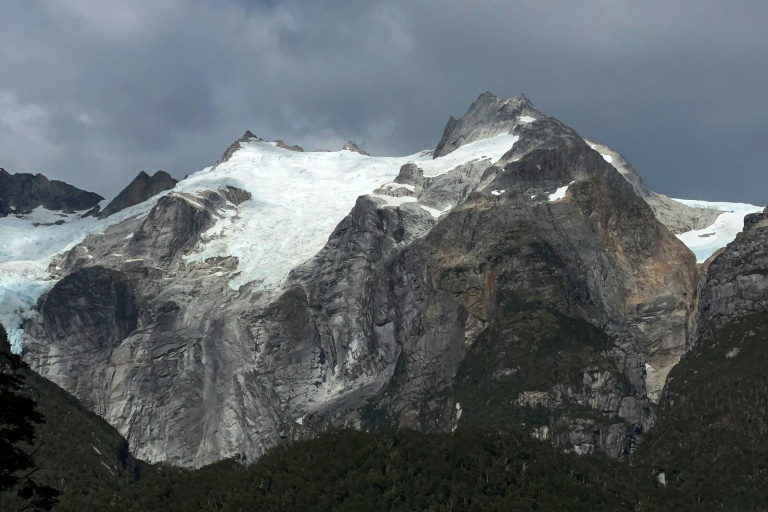
A crack widens in the San Rafael glacier in Chile’s extreme south, and a ten-storey iceberg crashes into the lake by the same name — a dramatic reminder of the impacts of global warming.

In the lake San Rafael, about 100 icebergs float today, pieces broken off from the glacier that 150 years ago stretched out over two-thirds of the body of water now free of ice cover.

The San Rafael glacier is one of 39 in the Northern Patagonian Ice Field (3,500 square kilometers or 1,350 square miles), which with the Southern Patagonian Ice Field (11,000 km2) in Chile’s Aysen region forms one of the world’s biggest ice masses.

According to the European Space Agency satellite images show San Rafael to be one of the world’s most actively calving glaciers and the fastest-moving in Patagonia, “flowing” at a speed of about 7.6 kilometers (4.7 miles) per year — “receding dramatically under the influence of global warming.”

Glaciers are bodies of slowly-moving ice on land that can be several hundred or several thousand years old.

Seasonal glacier melt is a natural phenomenon that with global warming has accelerated “significantly,” Jorge O’Kuinghttons, a regional head of glaciology at Chile’s water directorate, told AFP.

– ‘Excellent indicator’ –

At the moment, Patagonia’s glaciers are retreating faster than anywhere else in the world.

“Glaciers are an excellent indicator of climate change,” said Alexis Segovia, another government glaciologist who works in the remote region of southern Chile.  

All but two of Chile’s 26,000 glaciers are shrinking, he said, due to rising temperatures caused by manmade greenhouse gas emissions.

It is a vicious cycle. 

Ice-covered surfaces of Earth reflect excess heat back into space, and if these are reduced through melting, temperatures rise even more.

Melting glaciers also add to sea level rise, which increases coastal erosion and elevated storm surges.

And water dammed by glaciers can be released by a sudden collapse.

“Areas are being flooded these days that were never flooded before,” said O’Kuinghttons.

To learn more about what to expect in the future, glaciologists study the evolution of Chile’s glaciers, which contain a frozen record of how the climate has changed over time.

According to the WWF, more than a third of the world’s remaining glaciers will melt before 2100 even if mankind manages to curb emissions from the burning of fossil fuels.

– The heat is ‘strong’ –

East of San Rafael, on the lake General Carrera that is shared by Chile and Argentina, small-scale sheep and cattle farmer Santos Catalan has been living on the forefront of the change.

To augment his income, he criss-crosses the lake in a wooden boat with glacier-watching tourists.

Over the last 15 to 20 years, he told AFP, the landscape has become a lot less white as the ice has melted and snow dwindled. 

“Things have changed a lot,” he said. “The heat is very strong.”

Close Bitnami banner
Bitnami