AFP

Ethiopia to start generating power from Nile dam Sunday

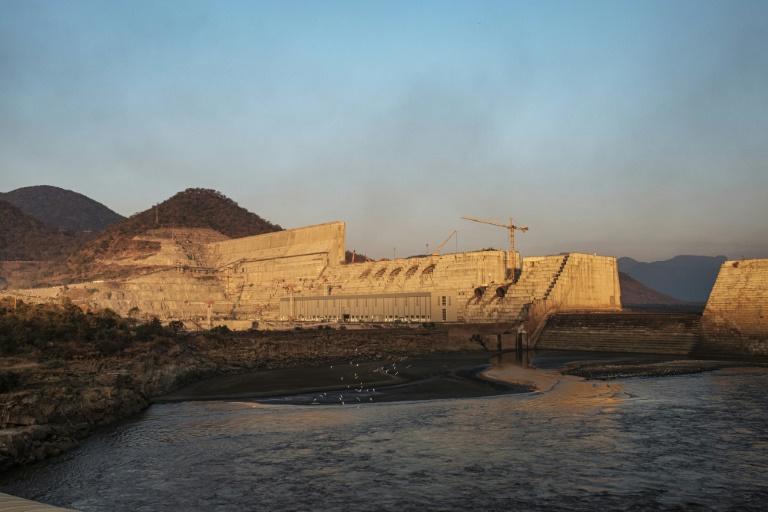
Ethiopia will start generating power from its mega-dam on the Blue Nile on Sunday, government officials told AFP, a major milestone for the controversial project.

The Grand Ethiopian Renaissance Dam (GERD), set to be the largest hydroelectric scheme in Africa, has been at the centre of a regional dispute ever since Ethiopia broke ground there in 2011. 

“Tomorrow will be the first energy generation of the dam,” an Ethiopian government official said on Saturday.

A second official confirmed the information. Both spoke on condition of anonymity because the development has not been officially announced.

Ethiopia’s downstream neighbours Egypt and Sudan view the dam as a threat because of their dependence on Nile waters, while Addis Ababa deems it essential for its electrification and development.

There was no immediate response from Cairo or Khartoum, which have been pressing Ethiopia to sign a binding agreement on the filling and operation of the dam ever since work first started.

The three governments have held multiple rounds of talks. but so far there has been no sign of any breakthrough.

The $4.2-billion (3.7-billion-euro) project is ultimately expected to produce more than 5,000 megawatts of electricity, more than doubling Ethiopia’s electricity output. 

Ethiopia had initially planned output of around 6,500 megawatts, but later reduced its target.

“The newly generated electricity from the GERD could help revive an economy that has been devastated by the combined forces of a deadly war, rising fuel prices and the Covid-19 pandemic,” said Addisu Lashitew of the Brookings Institution in Washington.

– Failed talks –

The 145-metre (475-foot) high dam lies on Blue Nile River in the Benishangul-Gumuz region of western Ethiopia, not far from the border with Sudan.

Egypt, which depends on the Nile for about 97 percent of its irrigation and drinking water, sees the dam as an existential threat.

Sudan hopes the project will regulate annual flooding, but fears its own dams could be harmed without agreement on the GERD’s operation.

Talks sponsored by the African Union (AU) have failed to yield a three-way agreement on the dam’s filling and operations, and Cairo and Khartoum have demanded Addis Ababa cease filling the massive reservoir until such a deal is reached. 

But Ethiopian officials have argued that filling is a natural part of the dam’s construction process and cannot be stopped.

The UN Security Council met last July to discuss the project, although Ethiopia later slammed the session as an “unhelpful” distraction from the AU-led process. 

In September the Security Council adopted a statement encouraging Egypt, Ethiopia and Sudan to resume negotiations under AU auspices.

Egypt claims a historic right to the Nile dating from a 1929 treaty that gave it veto power over construction projects along the river.

A 1959 treaty boosted Egypt’s allocation to around 66 percent of the river’s flow, with 22 percent for Sudan.

Yet Ethiopia was not party to those treaties and does not see them as valid.

The process of filling the GERD’s vast reservoir began in 2020, with Ethiopia announcing in July of that year it had hit its target of 4.9 billion cubic metres.

The reservoir’s total capacity is 74 billion cubic metres, and the target for 2021 was to add 13.5 million. 

Last July Ethiopia said it had hit that target, meaning there was enough water to begin producing energy, although some experts had cast doubt on the claims.
13 die as Storm Eunice leaves thousands in Europe without power

Emergency crews Saturday battled to restore power to hundreds of thousands of homes in Britain after Storm Eunice carved a deadly trail across Western Europe and left transport networks in disarray. 

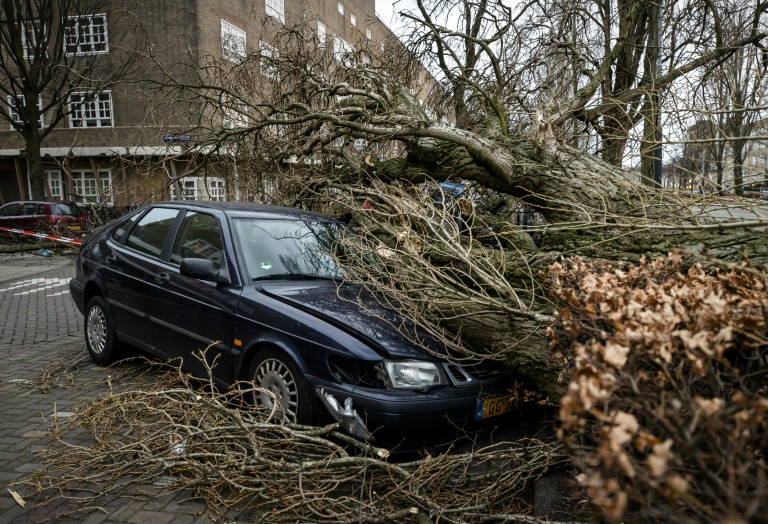
At least 13 people were killed by falling trees, flying debris and high winds in Britain, Ireland, the Netherlands, Belgium, Germany and Poland, emergency services said.

Train operators in Britain urged people not to travel, with trees still blocking several lines after most of the network was shut down when Eunice on Friday brought the largest wind gust ever recorded in England — 122 miles (196 kilometres) per hour.

The train network in the Netherlands was also paralysed, with no Eurostar and Thalys international services running from Britain and France after damage to overhead power lines.

France was also grappling with rail disruption and about 37,000 households were without power, while some 8,000 remained cut off in Ireland and 194,000 in Poland.

The UK was worst hit by power cuts with nearly 400,000 homes cut off nationwide after one of the most powerful tempests since the “Great Storm” hit Britain and northern France in 1987, sparking the first-ever “red” weather warning for London on Friday.

The Met Office, Britain’s meteorological service, issued a less-severe “yellow” wind warning for much of the south coast of England and South Wales on Saturday, which it said “could hamper recovery efforts from Storm Eunice”.

Scientists said both the 1987 storm and Eunice packed a “sting jet”, a rarely seen meteorological phenomenon borne out of an unusual confluence of pressure systems in the Atlantic that magnified the effects on Friday.

Planes struggled to land in high winds, a section of roof on London’s O2 Arena was shredded, and the spire of a church in the historic city of Wells, southwest England, crashed to the ground.

The UK’s total bill for damage could exceed £300 million ($410 million, 360 million euros), according to the Association of British Insurers, based on repairs from previous storms.

– ‘Explosive storms’ –

Hundreds of flights were cancelled or delayed at London’s Heathrow and Gatwick airports and Schiphol in Amsterdam. 

One easyJet flight from Bordeaux endured two aborted landings at Gatwick — which saw wind gusts peak at 78 miles per hour — before being forced to return to the French city.

Ferries across the Channel, the world’s busiest shipping lane, were suspended, before the English port of Dover reopened Friday afternoon. 

London’s rush-hour streets, where activity has been slowly returning to pre-pandemic levels, were virtually deserted Friday as many heeded government advice to stay at home.

The London Fire Brigade declared a “major incident” after taking 550 emergency calls in just over two hours — although it complained that several were “unhelpful”, including one from a resident complaining about a neighbour’s garden trampoline blowing around.

The RAC breakdown service said it had received unusually low numbers of call-outs on Britain’s main roads, indicating that motorists were “taking the weather warnings seriously and not setting out”.

Experts said the frequency and intensity of the storms could not be linked necessarily to climate change. 

But Richard Allan, professor of climate science at the University of Reading, said a heating planet was leading to more intense rainfall and higher sea levels.

Therefore, he said, “flooding from coastal storm surges and prolonged deluges will worsen still further when these rare, explosive storms hit us in a warmer world”.

13 die as Storm Eunice leaves many in Europe without power

Emergency crews Saturday battled to restore power to hundreds of thousands of homes in Britain after Storm Eunice carved a deadly trail across Western Europe and left transport networks in disarray. 

At least 13 people were killed by falling trees, flying debris and high winds in Britain, Ireland, the Netherlands, Belgium, Germany and Poland, according to emergency services.

Train operators in Britain urged people not to travel, with timetables in chaos after most of the network was shut down when Eunice on Friday brought the largest wind gust ever recorded in England — 122 miles (196 kilometres) per hour.

The train network in the Netherlands was also paralysed, with no Eurostar and Thalys international services running from Britain and France after damage to overhead power lines.

France was also grappling with rail disruption, and about 75,000 households were without power.

The UK was worst hit by power cuts with nearly 400,000 homes cut off nationwide after one of the most powerful tempests since the “Great Storm” hit Britain and northern France in 1987, sparking the first-ever “red” weather warning for London on Friday.

The Met Office, Britain’s meteorological service, issued a less-severe “yellow” wind warning for much of the south coast of England and South Wales on Saturday, which it said “could hamper recovery efforts from Storm Eunice”.

Scientists said both the 1987 storm and Eunice packed a “sting jet”, a rarely seen meteorological phenomenon borne out of an unusual confluence of pressure systems in the Atlantic that magnified the effects on Friday.

– ‘Explosive storms’ –

Ferries across the Channel, the world’s busiest shipping lane, were suspended, before the English port of Dover reopened Friday afternoon. 

Hundreds of flights were cancelled or delayed at London’s Heathrow and Gatwick airports and Schiphol in Amsterdam. One easyJet flight from Bordeaux endured two aborted landings at Gatwick — which saw wind gusts peak at 78 miles per hour — before being forced to return to the French city.

London’s rush-hour streets, where activity has been slowly returning to pre-pandemic levels, were virtually deserted Friday as many heeded government advice to stay at home.

The London Fire Brigade declared a “major incident” after taking 550 emergency calls in just over two hours — although it complained that several were “unhelpful”, including one from a resident complaining about a neighbour’s garden trampoline blowing around.

The RAC breakdown service said it had received unusually low numbers of call-outs on Britain’s main roads, indicating that motorists were “taking the weather warnings seriously and not setting out”.

Experts said the frequency and intensity of the storms could not be linked necessarily to climate change. 

But Richard Allan, professor of climate science at the University of Reading, said a heating planet was leading to more intense rainfall and higher sea levels.

Therefore, he said, “flooding from coastal storm surges and prolonged deluges will worsen still further when these rare, explosive storms hit us in a warmer world”.

Nine dead as Storm Eunice batters Europe

Storm Eunice killed at least nine people in Europe on Friday, pummelling Britain with record-breaking winds and forcing millions to take shelter as it disrupted flights, trains and ferries across Western Europe.

London was eerily empty after the British capital was placed under its first ever “red” weather warning, meaning there was “danger to life”. By nightfall, police there said a woman in her 30s had died after a tree fell on a car she was a passenger in.

Meanwhile a man in his 50s was also killed in northwest England after debris struck the windscreen of a vehicle he was travelling in, according to Merseyside Police.

Beyond Britain, falling trees killed three people in the Netherlands and a man in his 60s in southeast Ireland, while a Canadian man aged 79 died in Belgium, according to officials in each country.

A motorist was killed when their car crashed into a tree that had fallen across a road near Adorp in the Netherlands’ northern province of Groningen.

And in Germany, a motorist died after his car was hit by a tree near the town of Altenberge.

Dozens of homes were evacuated in The Hague amid fears a church steeple could collapse. Footage showed the steeple wobbling and a large piece of debris falling on a car.

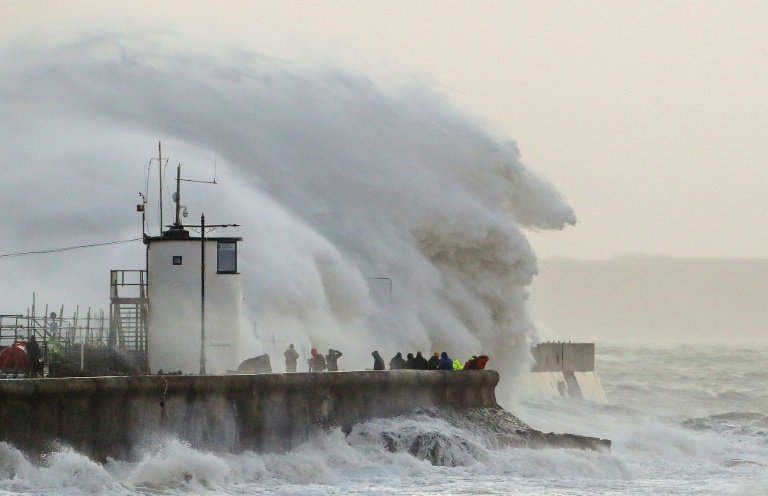
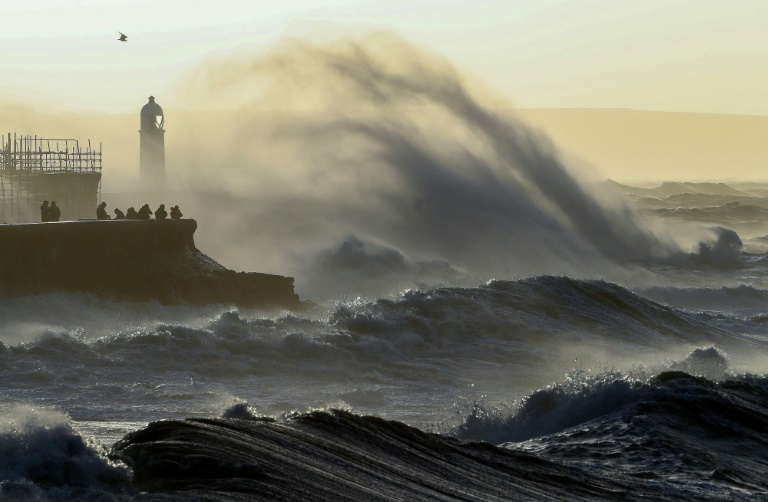
As well as in London, the highest weather alert level was declared across southern England, South Wales and the Netherlands, with many schools closed and rail travel paralysed, as towering waves breached sea walls along the coasts.

Meanwhile Eunice’s winds knocked out power to more than 140,000 homes in England, mostly in the southwest, and 80,000 properties in Ireland, utility companies said.

Around London, three people were taken to hospital after suffering injuries in the storm, and a large section of the roof on the Millennium Dome was shredded by the gales.

One wind gust of 122 miles (196 kilometres) per hour was measured on the Isle of Wight off southern England, “provisionally the highest gust ever recorded in England”, the Met Office said.

At the Tan Hill Inn, Britain’s highest pub in Yorkshire, staff were busy preparing even if the winds remained merely blustery in the region of northern England.

“But with the snow coming in now, the wind’s increasing, we’re battening down the hatches, getting ready for a bad day and worse night,” pub maintenance worker Angus Leslie told AFP.

– ‘Sting jet’ –

Scientists said the Atlantic storm’s tail could pack a “sting jet”, a rarely seen meteorological phenomenon that brought havoc to Britain and northern France in the “Great Storm” of 1987. 

Eunice caused high waves to batter the Brittany coast in northwest France, while Belgium, Denmark and Sweden all issued weather warnings. Long-distance and regional trains were halted in northern Germany.

Ferries across the Channel, the world’s busiest shipping lane, were suspended, before the English port of Dover reopened in the late afternoon. 

Hundreds of flights were cancelled or delayed at London’s Heathrow and Gatwick airports and Schiphol in Amsterdam. One easyJet flight from Bordeaux endured two aborted landings at Gatwick — which saw wind gusts peak at 78 miles per hour — before being forced to return to the French city.

Prime Minister Boris Johnson, who has placed the British army on standby, tweeted: “We should all follow the advice and take precautions to keep safe.”

Environment Agency official Roy Stokes warned weather watchers and amateur photographers against heading to Britain’s southern coastline in search of dramatic footage, calling it “probably the most stupid thing you can do”.

– Climate impact? –

London’s rush-hour streets, where activity has been slowly returning to pre-pandemic levels, were virtually deserted as many heeded government advice to stay at home.

Trains into the capital were already running limited services during the morning commute, with speed limits in place, before seven rail operators in England suspended all operations.

The London Fire Brigade declared a “major incident” after taking 550 emergency calls in just over two hours — although it complained that several were “unhelpful”, including one from a resident complaining about a neighbour’s garden trampoline blowing around.

The RAC breakdown service said it was receiving unusually low numbers of callouts on Britain’s main roads, indicating that motorists are “taking the weather warnings seriously and not setting out”.

The storm forced Prince Charles, the heir to the throne, to postpone a trip to South Wales on Friday “in the interests of public safety”, his office said Thursday.

Another storm, Dudley, had caused transport disruption and power outages when it hit Britain on Wednesday, although damage was not widespread.

Experts said the frequency and intensity of the storms could not be linked necessarily to climate change. 

But Richard Allan, professor of climate science at the University of Reading, said a heating planet was leading to more intense rainfall and higher sea levels.

Therefore, he said, “flooding from coastal storm surges and prolonged deluges will worsen still further when these rare, explosive storms hit us in a warmer world”.

burs/ser/mtp

Musk donates satellite gear to reconnect Tonga

Tonga says space entrepreneur and Tesla founder Elon Musk has donated 50 satellite terminals to help the volcano-damaged Pacific island reconnect with the world.

Tonga’s telecommunications system has been severely restricted since January 15 when a violent volcanic eruption and tsunami severed its underwater fibre-optic cable. 

Musk’s Space X corporation is providing 50 very-small-aperture terminals (VSAT) “and we are looking at how we can best utilize it,” Prime Minister Siaosi Sovaleni said Friday. 

The tiny South Pacific kingdom was also considering offers to increase Tonga’s internet capacity, which has been operating on a very small bandwidth since the cable was broken. 

“It’s something we are testing right now,” he said. 

Technical staff from SpaceX and the Tonga Government were working on installing the equipment to have it operational from next week. 

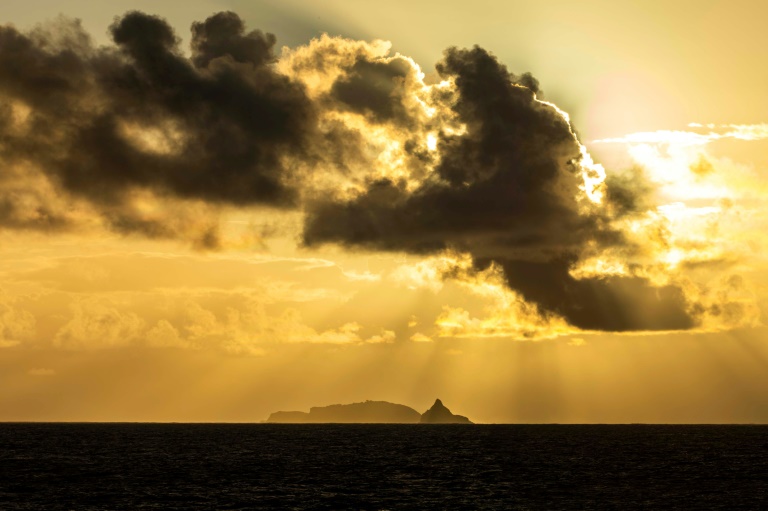
The volcanic eruption, so powerful it was heard as far away as Alaska and triggered a tsunami that flooded coastlines around the Pacific, shredded an 80-kilometre (50 miles) stretch of Tonga’s undersea telecommunications cable.

Sovaleni said he expected temporary repairs to be completed early next week.

Many anti-abortion Americans would still help friends and family seeking one

Almost half of Americans morally opposed to abortion would help a friend or family member with arrangements to get one, and a majority would offer emotional support, a new study said Friday.

The authors of the paper, which appeared in the journal Science Advances, wrote the finding showed that people are willing to cross ideological and partisan lines to help others in their personal networks, something they referred to as “discordant benevolence.”

“At first blush, these people may appear as hypocrites. They are not,” said Sarah Cowan, a sociologist at New York University and the lead author of the article, in a statement.

“They are at a moral crossroads, pulled by their opposition to abortion and by their inclination to support people they care about.” 

The study was drawn from surveys and interviews conducted in 2018 and 2019 respectively, and comes after Texas passed a law allowing residents of the state to sue others who “aided or abetted” abortions performed after six weeks of pregnancy.

The Supreme Court could soon roll back decades of precedent by ruling abortion is not a constitutional right. The issue is deeply contentious and divides the public along political lines between Democrats and Republicans.

The new study was based on survey responses from more than 1,574 people, and separately 74 in-depth interviews.

Of those morally opposed, 76 percent said they would offer emotional support —- compared to 96 percent of those who are not morally opposed, or whose view depended on circumstances. 

But the type of support varied greatly, reflecting the social meaning of money and the view that spending money is a means to enact one’s values, the authors said.

Just six percent of those morally opposed would directly help a friend or relative pay for the procedure, compared to the 45 percent who said they would help with ancillary costs.

Among those not morally opposed, 54 percent would help pay for the procedure, which typically costs $500 in the first trimester.

– Moral conflict –

Social scientists have long been interested in what explains helpful behavior.

Factors are thought to range from the act of kindness causing a person to feel good about themselves, to a sense of duty to their kinship networks and expectation of reciprocity in future.

But the authors said scenarios where rendering help placed the helper in a moral conflict were less studied.

Based on their in-depth interviews, they found people who were willing to help despite their inner opposition relied on three main rationalizations.

The first was “commiseration,” or reasoning that people are worthy of care despite their imperfections in an imperfect world. 

The second was “exemption” — carving out an exception for their loved ones in particular, while the third was “discretion,” — the idea that what is right or wrong is inherently personal, not universal.

“If it were my sister…I would want to talk to her to make sure she’s thinking about every possible thing,” said Ryan, a person interviewed in the survey.

“But if, ultimately, she’s like ‘No, (Ryan), I can handle this,’ then, ‘Ok, do what you gotta do,’ you know? But it’s just because you love someone.”

'Violent' attack by protesters at Canadian pipeline worksite

Canadian police said Friday they were investigating a “violent confrontation” at a gas pipeline construction site in the western province of British Columbia.

Shortly after midnight Thursday, police attempted to inspect the Coastal GasLink (CGL) construction site near Houston, where they say “approximately 20 people, some armed with axes” had been reported to be “attacking security guards and smashing their vehicle windows,” according to a statement released by the Royal Canadian Mounted Police.

On the road to the site, police discovered “downed trees, tar covered stumps, wire, boards with spikes in them, and fires” blocking the way.

“As police worked their way through the debris and traps, several people threw smoke bombs and fire lit sticks at the police, injuring one officer,” the statement added.

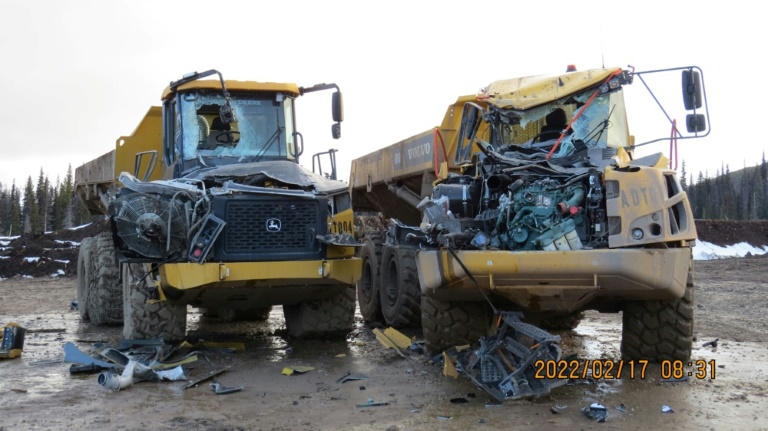
When the police finally arrived at the worksite, they discovered “a multimillion dollar path of destruction.”

Photos accompanying the statement showed heavy machinery overturned or their windows and engines smashed, and a trailer with a wall ripped off.

“This coordinated and criminal attack from multiple directions threatened the lives of several workers,” said CGL in a statement.

“In one of the most concerning acts, an attempt was made to set a vehicle on fire while workers were inside,” the company, headquartered in neighboring Alberta province, added.

The CGL pipeline aims to bring natural gas from eastern British Columbia to be liquified in a facility on the Pacific coast, before being exported.

The project has stirred controversy in Canada for years.

At the beginning of 2020, protesters against the pipeline mobilized across multiple Canadian provinces with some blocking rail traffic for weeks.

At the moment, the CGL pipeline is 60 percent completed, the company said.

Seven dead as Storm Eunice batters Europe

Storm Eunice killed at least seven people in Europe on Friday, pummelling Britain with record-breaking winds and forcing millions to take shelter as it disrupted flights, trains and ferries across Western Europe.

London was eerily empty after the British capital was placed under its first ever “red” weather warning, meaning there is “danger to life”. By nightfall, police there said a woman in her 30s had died after a tree fell on a car she was a passenger in.

Meanwhile a man in his 50s was also killed in northwest England after debris struck the windscreen of a vehicle he was travelling in, according to Merseyside Police.

Beyond Britain, falling trees killed three people in the Netherlands and a man in his 60s in southeast Ireland, while a Canadian man aged 79 died in Belgium, according to officials in each country.

As well as in London, the highest weather alert level was declared across southern England, South Wales and the Netherlands, with many schools closed and rail travel paralysed, as towering waves breached sea walls along the coasts.

Meanwhile Eunice’s winds knocked out power to more than 140,000 homes in England, mostly in the southwest, and 80,000 properties in Ireland, utility companies said.

Around the UK capital, three people were taken to hospital after suffering injuries in the storm, and a large section of the roof on the capital’s Millennium Dome was shredded by the gales.

One wind gust of 122 miles (196 kilometres) per hour was measured on the Isle of Wight off southern England, “provisionally the highest gust ever recorded in England”, the Met Office said.

At the Tan Hill Inn, Britain’s highest pub in Yorkshire, staff were busy preparing even if the winds remained merely blustery in the region of northern England.

“But with the snow coming in now, the wind’s increasing, we’re battening down the hatches, getting ready for a bad day and worse night,” pub maintenance worker Angus Leslie told AFP.

– ‘Sting jet’ –

Scientists said the Atlantic storm’s tail could pack a “sting jet”, a rarely seen meteorological phenomenon that brought havoc to Britain and northern France in the “Great Storm” of 1987. 

Eunice caused high waves to batter the Brittany coast in northwest France, while Belgium, Denmark and Sweden all issued weather warnings. Long-distance and regional trains were halted in northern Germany. 

Ferries across the Channel, the world’s busiest shipping lane, were suspended, before the English port of Dover reopened in the late afternoon. 

Hundreds of flights were cancelled or delayed at London’s Heathrow and Gatwick airports and Schiphol in Amsterdam. One easyJet flight from Bordeaux endured two aborted landings at Gatwick — which saw wind gusts peak at 78 miles per hour — before being forced to return to the French city.

Prime Minister Boris Johnson, who has placed the British army on standby, tweeted: “We should all follow the advice and take precautions to keep safe.”

Environment Agency official Roy Stokes warned weather watchers and amateur photographers against heading to Britain’s southern coastline in search of dramatic footage, calling it “probably the most stupid thing you can do”.

– Climate impact? –

London’s rush-hour streets, where activity has been slowly returning to pre-pandemic levels, were virtually deserted as many heeded government advice to stay home.

Trains into the capital were already running limited services during the morning commute, with speed limits in place, before seven rail operators in England suspended all operations.

The London Fire Brigade declared a “major incident” after taking 550 emergency calls in just over two hours — although it complained that several were “unhelpful”, including one from a resident complaining about a neighbour’s garden trampoline blowing around.

The RAC breakdown service said it was receiving unusually low numbers of callouts on Britain’s main roads, indicating that motorists are “taking the weather warnings seriously and not setting out”.

The storm forced Prince Charles, the heir to the throne, to postpone a trip to South Wales on Friday “in the interests of public safety”, his office said Thursday.

Another storm, Dudley, had caused transport disruption and power outages when it hit Britain on Wednesday, although damage was not widespread.

Experts said the frequency and intensity of the storms could not be linked necessarily to climate change. 

But Richard Allan, professor of climate science at the University of Reading, said a heating planet was leading to more intense rainfall and higher sea levels.

Therefore, he said, “flooding from coastal storm surges and prolonged deluges will worsen still further when these rare, explosive storms hit us in a warmer world”.

Three dead as Storm Eunice batters Europe

Storm Eunice killed three people in Europe on Friday, pummelling Britain with record-breaking winds and forcing millions to take shelter as it disrupted flights, trains and ferries across Western Europe.

London was eerily empty after the British capital was placed under its first ever “red” weather warning, meaning there is “danger to life”.

The same rare level of alert was in place across southern England, South Wales and the Netherlands, with many schools closed and rail travel paralysed, as towering waves breached sea walls along the coasts.

Eunice knocked out power to more than 140,000 homes in England, mostly in the southwest, and 80,000 properties in Ireland, utility companies said.

Two people were killed by falling trees in the Netherlands, Dutch emergency services said. A man in his 60s was killed by a tree in the Ballythomas area of southeast Ireland, police said. 

Around London, three people were hospitalised after suffering injuries in the storm, and a large section of the roof on the capital’s Millennium Dome was shredded by the high winds.

One wind gust of 122 miles (196 kilometres) per hour was measured on the Isle of Wight off southern England, “provisionally the highest gust ever recorded in England”, the Met Office said.

At the Tan Hill Inn, Britain’s highest pub in Yorkshire, staff were busy preparing even if the winds remained merely blustery in the region of northern England.

“But with the snow coming in now, the wind’s increasing, we’re battening down the hatches, getting ready for a bad day and worse night,” pub maintenance worker Angus Leslie told AFP.

– ‘Sting jet’ –

Scientists said the Atlantic storm’s tail could pack a “sting jet”, a rarely seen meteorological phenomenon that brought havoc to Britain and northern France in the “Great Storm” of 1987. 

Eunice caused high waves to batter the Brittany coast in northwest France, while Belgium, Denmark and Sweden all issued weather warnings. Long-distance and regional trains were halted in northern Germany. 

Ferries across the Channel, the world’s busiest shipping lane, were suspended, before the English port of Dover reopened in the late afternoon. 

Hundreds of flights were cancelled or delayed at Heathrow and Gatwick in London, and Schiphol in Amsterdam. One easyJet flight from Bordeaux endured two aborted landings at Gatwick before being forced to return to the French city.

Prime Minister Boris Johnson, who has placed the British army on standby, tweeted: “We should all follow the advice and take precautions to keep safe.”

Environment Agency official Roy Stokes warned weather watchers and amateur photographers against heading to Britain’s southern coastline in search of dramatic footage, calling it “probably the most stupid thing you can do”.

– Climate impact? –

London’s rush-hour streets, where activity has been slowly returning to pre-pandemic levels, were virtually deserted as many heeded government advice to stay home.

Trains into the capital were already running limited services during the morning commute, with speed limits in place, before seven rail operators in England suspended all operations.

The London Fire Brigade declared a “major incident” after taking 550 emergency calls in just over two hours — although it complained that several were “unhelpful”, including one from a resident complaining about a neighbour’s garden trampoline blowing around.

Widespread delays and cancellations were reported on bus and ferry services, with high bridges closed to traffic.

The RAC breakdown service said it was receiving unusually low numbers of callouts on Britain’s main roads, indicating that motorists are “taking the weather warnings seriously and not setting out”.

The storm forced Prince Charles, the heir to the throne, to postpone a trip to South Wales on Friday “in the interests of public safety”, his office said Thursday.

Another storm, Dudley, caused transport disruption and power outages when it hit Britain on Wednesday, although damage was not widespread.

Experts said the frequency and intensity of the storms could not be linked necessarily to climate change. 

But Richard Allan, professor of climate science at the University of Reading, said a heating planet was leading to more intense rainfall and higher sea levels.

Therefore, he said, “flooding from coastal storm surges and prolonged deluges will worsen still further when these rare, explosive storms hit us in a warmer world”.

Millions take shelter in UK as Storm Eunice threatens Europe

Millions hunkered down as Storm Eunice pummelled Britain with record-breaking winds on Friday, leaving the streets of London eerily empty and disrupting flights, trains and ferries across Western Europe.

The UK capital was placed under its first ever “red” weather warning, meaning there is “danger to life”. The same level of alert was in place across southern England and South Wales, where schools were closed and transport paralysed.

Eunice knocked out power to 80,000 homes and businesses in Ireland and more than 5,000 in Cornwall and Devon, southwest England, as towering waves breached sea walls along the coast.

One wind gust of 122 miles (196 kilometres) per hour was measured on the Isle of Wight off southern England, “provisionally the highest gust ever recorded in England”, the Met Office said.

A large section of the roof on the Millennium Dome in southeast London was shredded by the high winds, while all trains in Wales, western England and Kent in southeast England were cancelled.

Britain’s meteorological service also forecast heavy snow in Scotland and northern England. 

At the Tan Hill Inn, Britain’s highest pub in Yorkshire, staff were busy preparing even if the winds remained merely blustery in the region of northern England.

“But with the snow coming in now, the wind’s increasing, we’re battening down the hatches, getting ready for a bad day and worse night,” pub maintenance worker Angus Leslie told AFP.

Eunice accrued potency in a “sting jet”, a rarely seen meteorological phenomenon that brought havoc to Britain in the “Great Storm” of 1987, and sparked a red alert also in the Netherlands.

High waves battered the Brittany coast in northwest France. Long-distance and regional trains were being gradually halted in northern Germany, while warnings were also in place in Belgium, Denmark and Sweden.

Ferries across the Channel, the world’s busiest shipping lane, were cancelled, as were flights from northern Europe’s aviation hubs. Hundreds were cancelled or delayed at Heathrow and Gatwick in London, and Schiphol in Amsterdam.

One easyJet flight from Bordeaux endured two aborted landings at Gatwick before being forced to return to the French city.

Prime Minister Boris Johnson, who has placed the British army on standby, tweeted: “We should all follow the advice and take precautions to keep safe.”

The Met Office warned that roofs could be blown off, trees uprooted and power lines brought down across southern Britain. Widespread delays and cancellations were reported on bus and ferry services, with high bridges closed to traffic.

– Climate impact? –

Environment Agency official Roy Stokes warned weather watchers and amateur photographers against heading to Britain’s southern coastline in search of dramatic footage, calling it “probably the most stupid thing you can do”.

London’s rush-hour streets, where activity has been slowly returning to pre-pandemic levels, were virtually deserted as many heeded the advice to stay home.

Trains into the capital were already running limited services during the morning commute, with speed limits in place.

The RAC breakdown service said it was receiving unusually low numbers of callouts on Britain’s main roads, indicating that motorists are “taking the weather warnings seriously and not setting out”.

The arriving storm forced Prince Charles, the heir to the throne, to postpone a trip to South Wales on Friday “in the interests of public safety”, his office said.

Another storm, Dudley, caused transport disruption and power outages when it hit Britain on Wednesday, although damage was not widespread.

Experts said the frequency and intensity of the storms could not be linked necessarily to climate change, but that storms were causing more damage as a result.

“There is very little evidence that winds in these winter storms have gotten stronger with climate change,” said Richard Allan, professor of climate science at the University of Reading. 

“Yet with more intense rainfall and higher sea levels as human-caused climate change continues to heat the planet, flooding from coastal storm surges and prolonged deluges will worsen still further when these rare, explosive storms hit us in a warmer world.”

Close Bitnami banner
Bitnami