AFP

Treasured trash: UK waste gets new lease of life

From facial scrubs using coffee grounds to clothes made from plastic bottles and furniture decorated with agave fibres, efforts to upcycle or repurpose waste products are gaining traction in Britain.

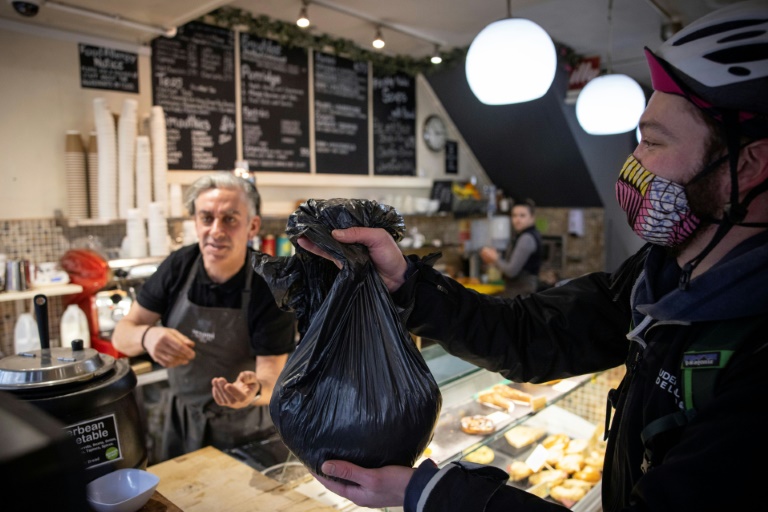
Every day a bike courier for the skincare brand Upcircle visits 25 cafes in London and collects some 100 kg (220 pounds) of coffee grounds that would otherwise be thrown away.

Set up six years ago by Anna Brightman and her brother Will Brightman, Upcircle reuses the coffee grounds to make beauty products, adding ingredients such as camomile infusions or a powder made from olive stones.

The siblings took the plunge to set up their own business after working for multinational companies. 

“I wanted to do something that was closer to my heart,” Anna Brightman told AFP.

“It was my brother who had the initial inspiration when asking out of curiosity at the coffee shop where he was going every day what happened to the coffee grounds,” she said.

“He was shocked to learn the coffee was disposed of at a landfill and they had to pay on top for it.”

She joked that she and her brother have since “made a name (for themselves) as the crazy siblings collecting coffee around London and making cosmetics”.

Once the coffee collections got going, “people started to contact us with all types of by-products,” Anna said, noting more than 15 of them are now incorporated into their range.

Among these are water from making concentrated fruit juices, fading flowers that get thrown away by florists and leftover chai spices.

– ‘Not gross’ –

Upcircle pay for some of these ingredients, though the coffee grounds, for example, are free. But the logistics involved in collecting them can be complex and costly.

Every year, half a million tonnes of coffee grounds are thrown away in the UK and the firm claims to have recycled 400 tonnes to date.

Nevertheless, the idea of marketing a beauty product made from “trash” initially got a thumbs-down from industry insiders, Anna Brightman admitted.

She said they have to work to get the message across that “these ingredients we are working with are not gross, old or unclean”.

Younger people are “more open to the idea of the circular economy”, she added.

“For obvious reasons, they are concerned about the future of our planet”.

Used coffee grounds work better as a skin care ingredient than dry ones, said Barbara Scott-Atkinson, the formulator for Upcircle’s products.

“It’s been heated and it’s damp. This makes it more suitable to use than plain ground coffee and the level of antioxidants increases.”

The company sends the ingredients for repurposing at its factory in Bridport on the southwest coast of England.

The smell of citrus essential oils wafts through the factory as they are being used to make a scrub. 

The production process is simple: coffee grounds are mixed with sugar and essential oils, then whipped shea butter and a natural preservative is added.

The exfoliant is then poured into glass jars, 3,000 of which are distributed around the UK every week.

Demand is growing rapidly, particularly in the United States, according to the company, which is reluctant to give figures on its sales or growth.

The burgeoning interest in repurposing food waste puts Upcircle in competition with other brands of natural cosmetics, such as Britain’s Wildefruit or Australia’s Frank Body, or even the UK giant Body Shop.

– ‘Put in landfill’-

As a result, coffee grounds are starting to become sought-after, Anna Brightman said.

“Some cafes tell us they… would like if we could split the week: they get the coffee waste Monday and Tuesday, and us the rest of the week,” she added.

To combat ravaging the planet’s resources, entrepreneurs and designers are increasingly coming up with new ways to create value from waste.

An exhibition called “Waste Age” at London’s Design Museum (until February 20) showcases the use of agave, or sisal fibres, by Mexican designer Fernando Laposse, who studied at London’s Central St Martin art school. 

Laposse turns the natural fibres of the plant — used to make tequila — into avant-garde furniture such as tables, benches and hammocks.

He also uses colourful corncobs from his country of birth to make furniture and veneer, helping boost the “circular economy” and create jobs.

“In the UK, we recycle 15 percent of our waste, the rest is incinerated or put in landfill”, said the exhibition’s curator Gemma Curtin.

The Design Museum exhibition also shows chairs made from old fridges, baskets decorated with fishnets recovered from the ocean and creations by fashion designers, such as Stella McCartney and Phoebe English, who use recycling.

Curtin added this prompts visitors to question what is really “luxury”?

The exhibition’s final room shows furniture and building blocks made of takeaway coffee cups. In Britain alone, 2.5 billion of these are thrown away each year, with their thin plastic coating making them impossible to recycle.

The huge amounts of plastics being made and then thrown away globally have prompted scientists to call for urgent production caps.

The United Nations will hold a meeting on tackling plastic pollution in Nairobi later this month, a potential prelude to talks on a worldwide plastics treaty.
Hunt on for great white shark that killed Sydney swimmer

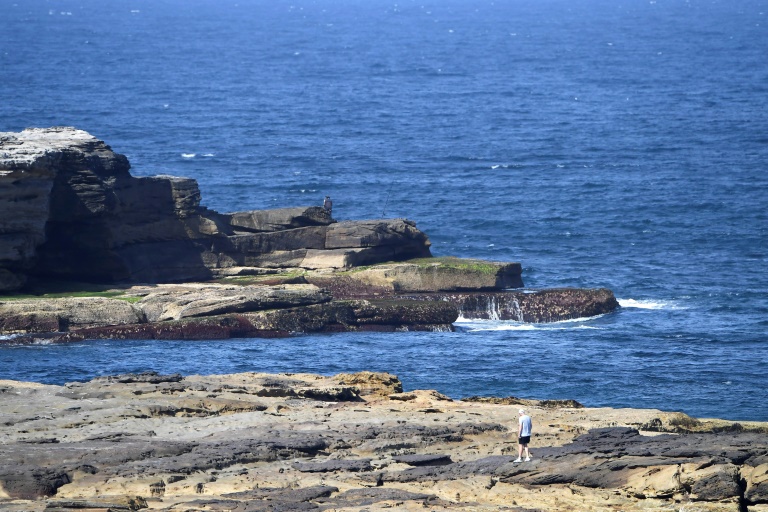
Sydney authorities on Thursday deployed baited lines to try to catch a giant great white shark that devoured an ocean swimmer, as beach communities in Australia’s largest city were rocked by the first such attack in decades.

Drones scoured the ocean from the air, spotters launched on boats and six drum lines were set to try to catch the creature, which is believed to be at least three metres (10 feet) in length.

Police believe they have identified the victim, a 35-year-old ocean swimmer who was attacked on a sunny Wednesday afternoon, leaving shocked fishermen and golfers to watch helplessly from nearby cliffs.

A rescue helicopter and four ambulances were dispatched, but the victim perished after suffering what emergency responders described as “catastrophic injuries”.

It was the first fatal shark attack in Sydney since 1963.

“Based on footage provided by the public including eyewitness accounts… shark biologists believe that a White Shark, at least three metres in length, was likely responsible,” the state government’s Department of Primary Industries said.

The department announced it was deploying “six SMART drumlines” around Little Bay Beach, near where the attack occurred in the city’s east.

Drum lines feature hooks loaded with bait and are used to trap sharks that can then be tagged and moved to deeper ocean away from the coast.

Their use is controversial because hooked animals have been known to die before being moved, and non-target species can become snagged.

– ‘We all know the risks’ –

The attack has rocked beach communities in Sydney’s east, where being in the water is a part of everyday life.

Each morning before dawn and later as the sun sets, surfers, swimmers and paddleboarders flock to the waves to work out or take a break from the strains of work life.

According to Sports Australia, 4.5 million Aussies swim regularly and at least 500,000 surf.

Whales, dolphins, rays and several species of shark live along the coast and it is not uncommon to spot animals in the water, or to hear the ringing of shark alarms urging everyone back to the beach.

But most Sydneysiders take the risk in their stride.

“We all know that we take a risk every time we get in the water,” said 45-year-old Kim Miller, who took up ocean swimming when she returned to Sydney in 2020. 

At the beginning, she admitted “I was scared of seaweed, and fish. I did have a real fear around it.”

“When I first started seeing grey nurse sharks at (nearby) Maroubra, I thought I’d run on water. But it was such a peaceful, beautiful experience that I found myself diving down to get closer to them.” 

On Thursday, as 13 beaches across the city were closed, swimmers’ WhatsApp groups filled with graphic images of the attack and messages to check if friends were safe and well.

An 800-competitor ocean swimming race scheduled for the area on Sunday has been postponed.

“It’s hit a little bit closer today when we heard it was a long-distance ocean swimmer, knowing it’s a route that we’ve done so many times,” Miller said. “I feel a little bit sick this afternoon.”

Her morning swim on Thursday was confined to an ocean pool, but she insisted “eventually we’ll all have the courage to get back in”.

“I know it’s going to take a while to get those images out of my head. A lot of the time when I’m swimming it is with the hope of seeing beautiful sea life, or not even thinking about it. It’s going to take some time to get back to that.”

Australia's largest coal-fired power plant to close

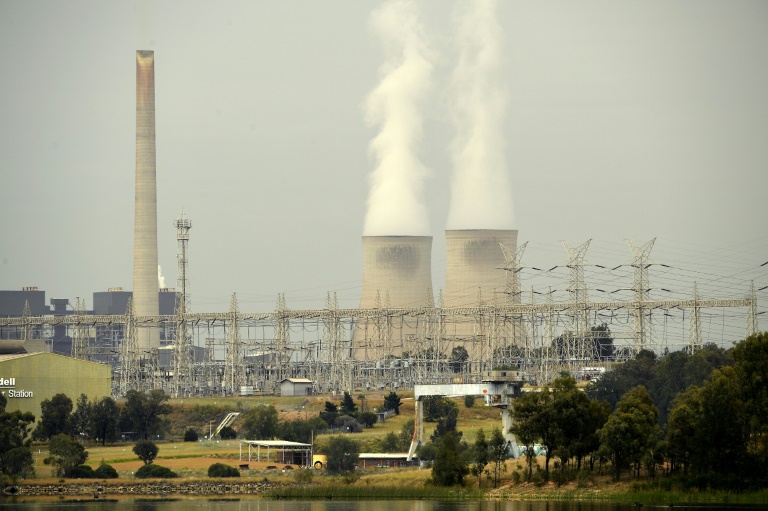
Australia’s largest coal-fired power plant will shut in 2025 — several years sooner than planned — operators announced Thursday, saying the facility is no longer viable given the low cost of renewables.

Origin Energy told investors the “influx of renewables” was “undermining the economics” of the vast decades-old Eraring plant just north of Sydney.

Australia is one of the world’s largest coal producers and the climate polluting fuel is an important source of export revenue, with the current administration backing more such plants.

“Today we have signalled the potential to accelerate Eraring’s closure to mid-2025,” Origin Energy CEO Frank Calabria said, acknowledging the move would be “challenging” for hundreds of staff.

The plant has been operational for almost 40 years and was due to be decommissioned in 2032.

“The reality is the economics of coal-fired power stations are being put under increasing, unsustainable pressure by cleaner and lower-cost generation, including solar, wind and batteries,” Calabria said.

The plant currently includes four 720-megawatt coal-fired generators and one 42-megawatt diesel generator, supplying Australia’s most populous state New South Wales with around a quarter of its electricity.

The company has an Aus$240 (US$173) million plan to repurpose the plant and install a large 700-megawatt battery.

Origin is the latest Australian energy producer to announce the early closure of coal assets, despite the conservative administration’s insistence on backing new coal projects.

Several coal mines and plants are also located in fiercely contested electoral seats, meaning both the government and the opposition Labor party have tried to avoid irking coal-backing voters.

The Mining and Energy Union said Eraring workers had been “blindsided” by the decision.

“For the many Lake Macquarie and Hunter Valley families that rely on the Eraring power station for their livelihoods, today’s announcement creates uncertainty for the future,” said union representative Robin Williams.

– ‘A dying industry’ –

Pro-coal government coalition MP Matt Canavan said the closure is “going to be a disaster,” predicting high energy prices.

Energy minister Angus Taylor, who has backed taxpayer investment in new coal plants, vowed to ensure there was a “like-for-like replacement” for the plant.

The move “puts affordability & reliability at risk”, he tweeted.

Monash University energy expert Ariel Liebman said while Origin Energy’s decision was made on commercial grounds, it pointed to a broader shift in how Australians get their energy.

“Everything is aligning to continually accelerate the energy transition to renewables,” he said.

Any price spike resulting from the closure will probably be shortlived, he added.

“Higher energy prices are not likely to last long as this announcement will bring forward several large wind and solar projects. It may even finally kick off an Australian off-shore wind revolution.”

Environmental groups cheered the news, but other experts warned it underscored the need for Canberra to face the reality that coal-fired plants will soon be a thing of the past.

“These decisions are entirely economic and the closures inevitable,” said Richie Merzian, a climate and energy expert at the left-leaning Australia Institute think tank.

“There are thousands of workers in Australian coal-fired power stations. They deserve certainty,” he said.

“Australian policymakers need to be planning to look after communities and workers in coal power regions, rather than selling false hope by trying to prop up a dying industry.”

Despair, solidarity for Brazil storm victims

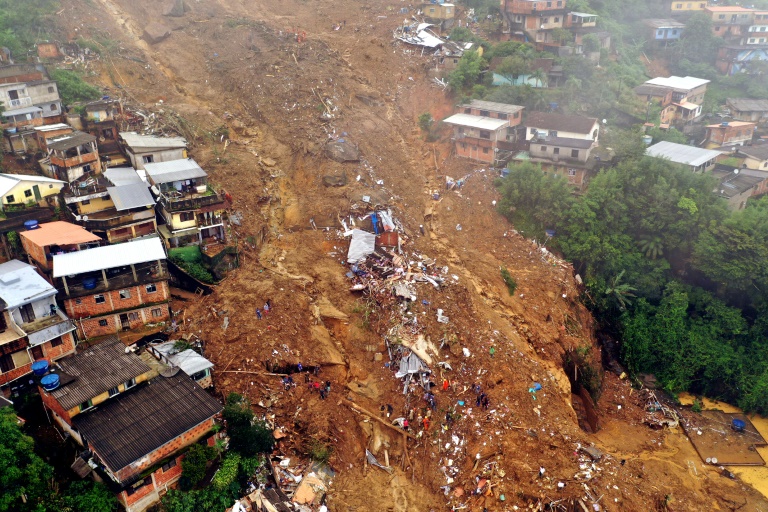
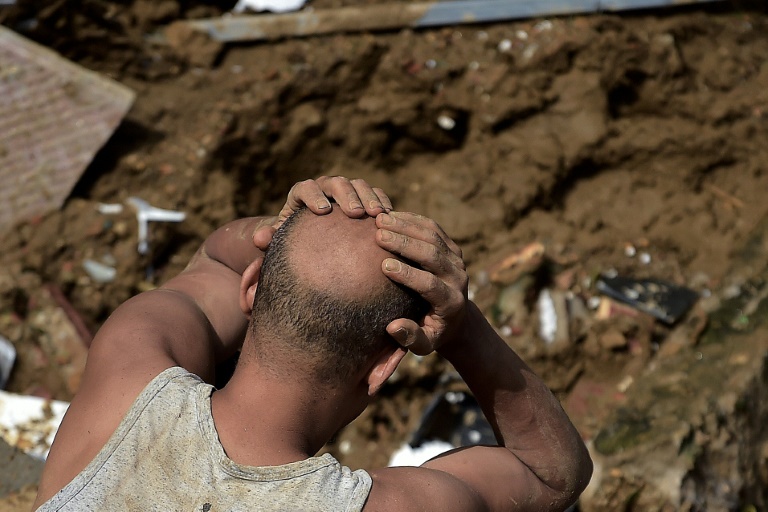
Holding the few possessions they are able to carry, families stream down the slopes of the hillside neighborhood of Alto da Serra, many in tears, fleeing the devastation left by deadly landslides in the Brazilian city of Petropolis.

Their modest neighborhood was one of the hardest hit by Tuesday’s storms, which dumped a month’s worth of rain on this scenic tourist town in a matter of hours, triggering flash floods and torrents of mud that gushed violently through the city.

“It’s devastating. We never could have imagined something like this,” says one fleeing resident, Elisabeth Lourenco, clutching two bags in which she stuffed some clothing when emergency officials ordered everyone in the neighborhood to evacuate.

“When the rain was falling hardest, a huge amount of mud came pouring down the hillside, and some tree branches fell on my house,” says the 32-year-old manicurist, on the verge of tears.

Nearby is a scene of total chaos. A giant swathe of hillside is covered in mud and strewn with the remains of shattered houses.

Authorities say the disaster killed at least 94 people across the city. There are fears the death toll, which rose steadily Wednesday, could climb further still as rescue workers continue digging through the mud and ruins.

Watching the rescue operation in disbelief, residents shudder with each deafening pass of the helicopters hovering overhead.

“I was eating dinner when the storm started. My brother came in and said, ‘We need to get out of here, the hillside is collapsing,'” says Jeronimo Leonardo, 47, whose home sits at the edge of the area wiped out by the landslide.

– ‘Up to our waists’ –

Residents of Alto da Serra have been evacuated to a church that sits atop another hill nearby.

From the square outside the small blue building, they can see the disaster zone through the mist.

Dozens of families swarm the church, carting their belongings in bags.

Outside, volunteers unload a truck of bottled water, as others sort through donated clothing.

“Can I have some shoes?” asks a little boy standing barefoot, his clothes stained with mud.

Inside, mattresses line the floor.

“We started taking people in as soon as the tragedy started Tuesday evening. We’re hosting around 150 to 200 people, including a lot of children,” says Father Celestino, a parish priest.

Yasmin Kennia Narciso, a 26-year-old teacher’s assistant, is sitting on a mattress nursing her nine-month-old baby.

“I didn’t sleep all night,” she says.

She tells the story of how she fled with her two daughters around 11:00 pm.

“We tried to leave earlier, but there were boulders strewn across the path and everything was flooded. We were in water up to our waists. We had no choice but to wait until it went down,” she says.

She adds that she is still waiting for news on several neighbors.

“An older lady and her three grandchildren who lived just above us were buried in the mud.”

Survivors know they likely face a long wait to learn if and when they can return home — for those who still have homes left.

Rescuers scour for survivors after Brazil floods, landslides kill 94

Rescue workers raced against the clock Wednesday searching for any remaining survivors among mud and wreckage after devastating flash floods and landslides hit the picturesque Brazilian city of Petropolis, killing at least 94 people.

Streets were turned into torrential rivers and houses swept away Tuesday when heavy storms dumped a month’s worth of rain in three hours on the scenic tourist town in the hills north of Rio de Janeiro.

With 35 people still reported missing, fears that the death toll could climb further sent firefighters and volunteers scrambling through the remains of houses washed away in torrents of mud, many of them in impoverished hillside slums.

It is the latest in a series of deadly storms to hit Brazil in the past three months, which experts say are being made worse by climate change.

The state government said at least 24 people had been rescued alive, as it reported the latest death toll Wednesday evening.

Using dogs, excavators and helicopters, rescue workers were urgently searching for more before it was too late, with the Rio Public Prosecutor’s office reporting that the 35 missing people had been registered on its missing persons list.

Around 300 people were being housed in shelters, mostly in schools, officials said. Charities called for donations of mattresses, food, water, clothing and face masks for victims.

Wendel Pio Lourenco, a 24-year-old resident, was walking through the street with a television in his arms, heading to a local church in search of shelter.

He said he was trying to save a few possessions, after spending a sleepless night helping search for victims.

“I found a girl who was buried alive,” he said.

“Everyone is saying it looks like a war zone.”

Governor Claudio Castro said much the same after visiting the scene.

“It looks like a scene from a war. It’s incredible,” he said, adding that it was the worst rain since 1932.

He praised rescue workers for managing “to save a large number of people before it was too late.”

Videos posted on social media from Tuesday’s rains showed streets in Petropolis, the 19th-century summer capital of the Brazilian empire, fill with violent floods that swept away cars, trees and nearly everything else in their paths.

Many shops were completely inundated by the rising water, which gushed down the streets of the historic city center, leaving jumbled piles of overturned cars in its wake.

Officials said more than 180 firefighters and other rescue workers were responding to the emergency, aided by 400 soldiers sent in as reinforcements.

City hall declared a “state of disaster” in the city of 300,000 people, which sits 68 kilometers (42 miles) north of Rio.

The city council declared three days of mourning for victims.

– ‘Tragedy’ –

Petropolis is a popular destination for tourists fleeing the summer heat of Rio.

The area is known for its leafy streets, stately homes, imperial palace — today a museum — and the natural beauty of the surrounding mountains.

Tuesday’s storms dumped 258 millimeters (10 inches) of rain on the city in three hours, nearly equal to all the rainfall from the previous month, the mayor’s office said.

The heaviest downpour had passed, but more moderate rain was expected to continue on and off for several days, authorities said.

President Jair Bolsonaro, on an official trip to Russia, said on Twitter he was keeping abreast of the “tragedy.”

“Thank you for your words of solidarity with the people of Petropolis,” he told President Vladimir Putin after meeting the Russian leader.

“May God comfort (the victims’) families.”

Brazil has been swept by heavy rains since December that have caused a series of deadly floods and landslides.

Experts say rainy season downpours are being augmented by La Nina — the cyclical cooling of the Pacific Ocean — and by the impact of climate change.

Because a warmer atmosphere holds more water, global warming increases the risk and intensity of flooding from extreme rainfall.

Last month, torrential rain triggered floods and landslides that killed at least 28 people in southeastern Brazil, mostly in Sao Paulo state.

There have also been heavy rains in the northeastern state of Bahia, where 24 people died in December.

Petropolis and the surrounding region were previously hit by severe storms in January 2011, when more than 900 people died in flooding and landslides.

How world's most precise clock could transform fundamental physics

Einstein’s theory of general relativity holds that a massive body like Earth curves space-time, causing time to slow as you approach the object — so a person on top of a mountain ages a tiny bit faster than someone at sea level.

US scientists have now confirmed the theory at the smallest scale ever, demonstrating that clocks tick at different rates when separated by fractions of a millimeter.

Jun Ye, of the National Institute of Standards and Technology (NIST) and the University of Colorado Boulder, told AFP their new clock was “by far” the most precise ever built — and could pave the way for new discoveries in quantum mechanics, the rulebook for the subatomic world.

Ye and colleagues published their findings Wednesday in the prestigious journal Nature, describing the engineering advances that enabled them to build a device 50 times more precise than today’s best atomic clocks.

It wasn’t until the invention of atomic clocks — which keep time by detecting the transition between two energy states inside an atom exposed to a particular frequency — that scientists could prove Albert Einstein’s 1915 theory.

Early experiments included the Gravity Probe A of 1976, which involved a spacecraft 6,000 miles (10,000 kilometers) above Earth’s surface and showed that an onboard clock was faster than an equivalent on Earth by one second every 73 years.

Since then, clocks have become more and more precise, and thus better able to detect the effects of relativity.

In 2010, NIST scientists observed time moving at different rates when their clock was moved 33 centimeters (just over a foot) higher.

– Theory of everything –

Ye’s key breakthrough was working with webs of light, known as optical lattices, to trap atoms in orderly arrangements. This is to stop the atoms from falling due to gravity or otherwise moving, resulting in a loss of accuracy.

Inside Ye’s new clock are 100,000 strontium atoms, layered on top of each other like a stack of pancakes, in total about a millimeter high.

The clock is so precise that when the scientists divided the stack into two, they could detect differences in time in the top and bottom halves.

At this level of accuracy, clocks essentially act as sensors.

“Space and time are connected,” said Ye. “And with time measurement so precise, you can actually see how space is changing in real time — Earth is a lively, living body.”

Such clocks spread out over a volcanically-active region could tell geologists the difference between solid rock and lava, helping predict eruptions. 

Or, for example, study how global warming is causing glaciers to melt and oceans to rise.

What excites Ye most, however, is how future clocks could usher in a completely new realm of physics. 

The current clock can detect time differences across 200 microns — but if that was brought down to 20 microns, it could start to probe the quantum world, helping bridge disparities in theory.

While relativity beautifully explains how large objects like planets and galaxies behave, it is famously incompatible with quantum mechanics, which deals with the very small.

According to quantum theory, every particle is also a wave — and can occupy multiple places at the same time, something known as superposition. But it’s not clear how an object in two places at once would distort space-time, per Einstein’s theory.

The intersection of the two fields therefore would bring physics a step closer to a unifying “theory of everything” that explains all physical phenomena of the cosmos.

'I'll kill you!': Mexico's nature defenders put lives on line

In the fir forests of Mexico, one of the world’s most dangerous countries for environmentalists, the legacy of butterfly defender Homero Gomez lives on two years after his suspected murder.

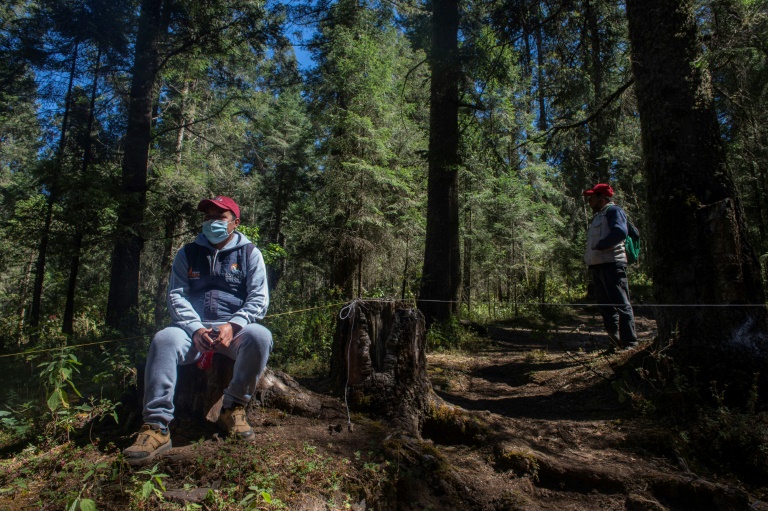
Despite the dangers of standing up to illegal loggers, fellow conservationists continue Gomez’s work guarding the El Rosario monarch butterfly sanctuary in Mexico’s central highlands.

The agricultural engineer dedicated much of his life to protecting the habitat of the iconic orange and black insects, which migrate several thousand kilometers (miles) each year to Mexico, fleeing the Canadian winter.

His legacy “is in all of us,” Olegario Sanchez told AFP during a patrol through the mountains of the El Rosario sanctuary, where swarms of butterflies delight visitors with majestic aerial dances.

The body of Gomez, who had gained international recognition for his activism and management of the sanctuary, was found at the bottom of a well in January 2020 in the state of Michoacan, where monarch butterflies spend the winter. 

Days later, the dead body of another butterfly conservationist, Raul Hernandez, was found bearing signs of violence in Michoacan, which is home to several criminal gangs.

The prosecution’s ongoing investigation suggests that Gomez, 50, was murdered.

He was one of 30 environmentalists killed in Mexico in 2020, according to rights group Global Witness.

The death toll soared 67 percent from 2019, making Mexico the second-deadliest country for environmentalists behind Colombia.

Almost a third of the attacks in Mexico were linked to logging, and half targeted Indigenous communities, Global Witness said.

Impunity was “shockingly high,” with up to 95 percent of murders going unprosecuted, it added.

– ‘It was murder’ –

The Michoacan prosecutor’s office, which did not respond to AFP’s request for an interview, said that Gomez died due to “mechanical suffocation due to submersion… with traumatic brain injury.” 

His family have no doubt that he was killed by criminals pillaging the forest that he loved.

“It wasn’t an accident. It was murder,” Gomez’s widow Rebeca Valencia told AFP, voicing fears of a cover-up given the lack of progress in the investigation. 

In the El Rosario sanctuary, near one of the many clusters of resting butterflies that hang from oyamel fir trees, Gomez’s companions smiled wistfully at his memory.

“He was a person with a lot of spirit,” said Sanchez, adding that the activist’s strength would live on through his fellow conservationists.

“There are 260 of us (community guards) and we keep going along the same path” of surveillance and reforestation, Sanchez said.

The wildlife defenders, some armed with machetes, walk up to 20 kilometers each shift, day and night, in groups of 10 to protect fir and pine trees from loggers as well as hungry livestock and fires.

When they detect suspicious activity, they report it to the authorities.

Police also stand guard on tourist trails in the sanctuary, which covers around 2,500 hectares (6,000 acres).

Together with other overwintering sites, it forms Mexico’s Monarch Butterfly Biosphere Reserve — a UNESCO World Heritage site visited by millions of the insects each year.

– ‘Immensely sad’ –

In Mexico’s central state of Hidalgo, Filiberta Nevado also refuses to abandon her work protecting the Zacacuautla forest despite the risks of confronting criminals lured in particular by its pine trees to use for carpentry.

In October 2020, a logger approached her to say: “If anything happens to me, I’ll kill you!”

Nevado, 66, showed apparent evidence of illegal activities during a tour of the area, pointing to dozens of tree trunks scattered on a dirt road.

Men wielding chainsaws were seen leaving when they saw visiting journalists.

In front of dozens of stumps of felled trees, Nevado lamented that her efforts to denounce loggers, helped by tip-offs from neighbors, were usually in vain.

“It makes me immensely sad, and not for my generation… but for the generations to come,” she said.

Thousands affected as quake hits Guatemala

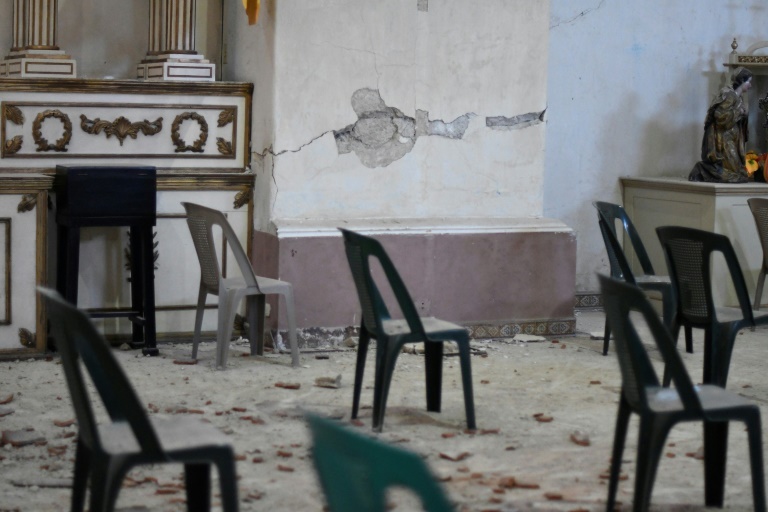
A 6.2-magnitude earthquake that struck western Guatemala early Wednesday caused damage affecting nearly 25,000 people, and caused three people to suffer fatal heart attacks, authorities said.

The epicenter of the quake, which struck at a depth of 84 kilometers (52 miles), was in the coastal district of Escuintla, less than 100 kilometers southwest of the capital, Guatemala City.

The United States Geological Survey said it measured as a 6.2-magnitude quake, though Guatemalan authorities estimated it was stronger, at 6.8, followed by an aftershock of 4.8.

The quake caused landslides on roads, damage to houses and power outages affecting some 31,300 people, according to rescue services.

Three women died of heart attacks, which officials linked to the quake without specifying how they were related.

One woman, 50, died in the village of Mixco, west of the capital. The other two women, whose ages authorities did not give, were in the northern department of Baja Verapaz and the western city of Quetzaltenango.

The tremor was felt as far away as El Salvador, to the southeast of Guatemala, and in southern Mexico.

Firefighters also reported a landslide on the road from the capital to Antigua, Guatemala’s main tourist city.

The Central American country, located at the meeting point of three tectonic plates, sits in a risk zone for earthquakes.

Last year, more than 125 earthquakes were recorded in Guatemala, without any deaths or significant damage.

Despair, solidarity for Brazil storm victims

Holding the few possessions they are able to carry, families stream down the slopes of the hillside neighborhood of Alto da Serra, many in tears, fleeing the devastation left by deadly landslides in the Brazilian city of Petropolis.

Their modest neighborhood was one of the hardest hit by Tuesday’s storms, which dumped a month’s worth of rain on this scenic tourist town in a matter of hours, triggering flash floods and torrents of mud that gushed violently through the city.

“It’s devastating. We never could have imagined something like this,” says one fleeing resident, Elisabeth Lourenco, clutching two bags in which she stuffed some clothing when emergency officials ordered everyone in the neighborhood to evacuate.

“When the rain was falling hardest, a huge amount of mud came pouring down the hillside, and some tree branches fell on my house,” says the 32-year-old manicurist, on the verge of tears.

Nearby is a scene of total chaos. A giant swathe of hillside is covered in mud and strewn with the remains of shattered houses.

Authorities say the disaster killed at least 78 people across the city. There are fears the death toll, which rose steadily through the day, could climb further still as rescue workers continue digging through the mud and ruins.

Watching the rescue operation in disbelief, residents shudder with each deafening pass of the helicopters hovering overhead.

“I was eating dinner when the storm started. My brother came in and said, ‘We need to get out of here, the hillside is collapsing,'” says Jeronimo Leonardo, 47, whose home sits at the edge of the area wiped out by the landslide.

– ‘Up to our waists’ –

Residents of Alto da Serra have been evacuated to a church that sits atop another hill nearby.

From the square outside the small blue building, they can see the disaster zone through the mist.

Dozens of families swarm the church, carting their belongings in bags.

Outside, volunteers unload a truck of bottled water, as others sort through donated clothing.

“Can I have some shoes?” asks a little boy standing barefoot, his clothes stained with mud.

Inside, mattresses line the floor.

“We started taking people in as soon as the tragedy started Tuesday evening. We’re hosting around 150 to 200 people, including a lot of children,” says Father Celestino, a parish priest.

Yasmin Kennia Narciso, a 26-year-old teacher’s assistant, is sitting on a mattress nursing her nine-month-old baby.

“I didn’t sleep all night,” she says.

She tells the story of how she fled with her two daughters around 11:00 pm.

“We tried to leave earlier, but there were boulders strewn across the path and everything was flooded. We were in water up to our waists. We had no choice but to wait until it went down,” she says.

She adds that she is still waiting for news on several neighbors.

“An older lady and her three grandchildren who lived just above us were buried in the mud.”

Survivors know they likely face a long wait to learn if and when they can return home — for those who still have homes left.

Chile's last Yaghan speaker dies aged 93

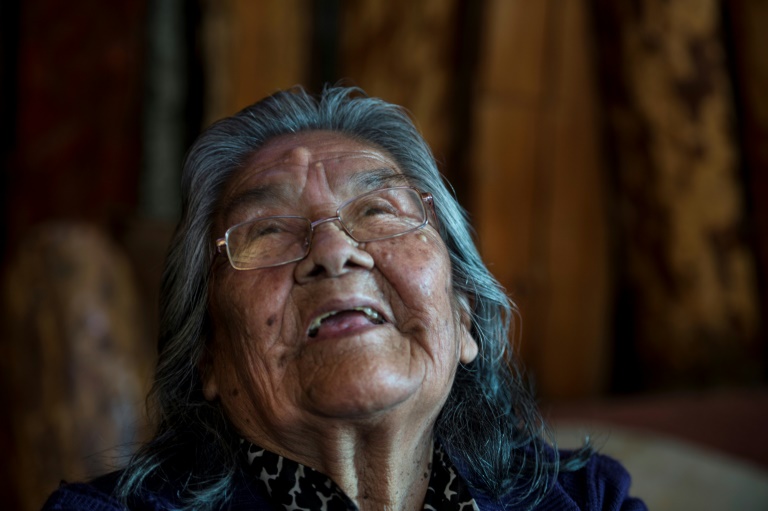
Cristina Calderon, the last native speaker of Chile’s indigenous Yaghan language, has died at the age of 93, her family said Wednesday, in a blow for a dwindling culture at South America’s extreme southern tip.

Calderon, known locally as “Grandma Cristina,” was recognized in 2009 by the Chilean government as a “living human treasure” for her work in preserving a culture at risk of extinction.

Until near the end of her long life, she spent her days making traditional reed baskets and other handicrafts, and imparting the language and culture of her people to her descendents.

The melodic Yaghan language has no written form.

“I’m the last speaker of Yaghan. Others can understand it but don’t speak it or know it like I do,” Calderon told journalists in 2017 in Villa Ukika, where the last few dozen of her people live.

Her daughter Lidia Gonzalez Calderon announced the death on Twitter Wednesday as “sad news for the Yaghan.”

“Everything I do in my work will be in your name. And in it will also be reflected your people,” she added.

The younger Calderon is vice president of the Constitutional Convention writing a new founding law for Chile.

– ‘Alive for ever’ –

The Yaghan once lived off fishing, paddling their canoes along coastal waterways, but mostly rely on tourism now, making handicrafts and working as seasonal laborers.

“The younger generation know the language but not to the same degree that Cristina does,” Maurice van de Maele, an anthropologist living in the region, warned five years ago.

Chile’s President-elect Gabriel Boric, who is from Punta Arenas in Chile’s extreme south, said on Twitter that Calderon’s “teachings and struggles from the south of the world, where everything begins, will remain alive for ever.”

The Yaghan have lived in the “End of the World” region at the tip of South America for some 6,000 years and numbered about 3,000 before the arrival of European settlers about 150 years ago. 

They fished the region’s notoriously dangerous waters, wearing little clothing and smearing their bodies in seal fat, only donning seal skins when temperatures plummeted.

The presence of the settlers changed the Yaghan, causing them to adopt a more sedentary lifestyle and to start wearing clothes.

While they retain some of their customs, such as weaving baskets with reeds, the Yaghan are losing their tribal legends as well as knowledge of ancient trails.

Calderon was long a symbol of cultural resistance for Chile’s indigenous communities.

Close Bitnami banner
Bitnami