AFP

Cyclone Batsirai approaches Madagascar, poses 'very serious threat'

Madagascar braced up for Cyclone Batsirai set to hit the eastern parts of the Indian Ocean island on Saturday, with powerful winds and torrential rains posing a “very serious threat” to millions.

Residents hunkered down before the storm makes landfall in an impoverished country still recovering from the deadly Tropical Storm Ana in late January.

The Meteo-France weather service warned of winds of up to 260 kilometres per hour (162 miles per hour) and waves as high as 15 metres (50 feet).

It said Batsirai would likely make landfall Saturday afternoon as an intense tropical cyclone, “presenting a very serious threat to the area” after passing Mauritius and drenching the French island of La Reunion for two days with torrential rain.

Residents in the eastern coastal town of Vatomandry were stockpiling supplies in preparation for the storm.

“We have been stocking up for a week, rice but also grains because with the electricity cuts we can not keep meat or fish,” said Odette Nirina, 65, a hotelier in the seafront town of Vatomandry. 

“I have also stocked up on coal. Here we are used to cyclones,” she told AFP.

Gusts of winds of more than 50km/h were pummelling Vatomandry town Saturday morning accompanied by intermittent rain. 

Residents have reinforced corrugated iron roofs with sandbags.

– ‘We are very nervous’ –

The United Nations said it was ramping up its preparedness with aid agencies, placing rescue aircraft on standby and stockpiling humanitarian supplies.

The impact of Batsirai on Madagascar is expected to be “considerable”, Jens Laerke, spokesman for the UN’s humanitarian organisation OCHA, told reporters in Geneva Friday.

At least 131,000 people were affected by Ana across Madagascar in late January. At least 58 people were killed, mostly in the capital Antananarivo. The storm also hit Malawi, Mozambique and Zimbabwe, causing dozens of deaths.

The UN’s World Food Programme (WFP) pointed to estimates from national authorities that some 595,000 people could risk being directly affected by Batsirai, and 150,000 more might be displaced due to new landslides and flooding.

“We are very nervous,” Pasqualina Di Sirio, who heads the WFP’s programme in Madagascar, told reporters by video-link from the Indian Ocean island.

Search and rescue teams on the island have been placed on alert and residents reinforced their homes.

Inland in Ampasipotsy Gare, sitting on top of his house, Tsarafidy Ben Ali, a 23-year-old coal seller, held down corrugated iron sheets on the roof with large bags filled with soil.

“The gusts of wind are going to be very strong. That’s why we’re reinforcing the roofs,” he told AFP.

The storm poses a risk to at least 4.4 million people in one way or another, the International Federation of Red Cross and Red Crescent Societies said.

burs-str-sn/cb
Cyclone Batsirai nears Madagascar, poses 'very serious threat'

Cyclone Batsirai was expected to reach eastern Madagascar on Saturday, posing a “very serious threat” to millions with powerful winds and torrential rains set to batter the large Indian Ocean island.

Residents hunkered down before the storm’s arrival and winds of more than 200 kilometres per hour (124 miles per hour) were forecast as it bore down on the country still recovering from the deadly Tropical Storm Ana in late January.

After passing Mauritius and drenching the French island of La Reunion for two days with torrential rain, Batsirai was about 250 kilometres east of Madagascar early Saturday, the Meteo-France weather agency said.

Batsirai should make landfall between late afternoon and evening Saturday as an intense tropical cyclone, “presenting a very serious threat to the area”, the forecaster said in its morning bulletin Saturday.

The eye of the storm was forecast to cross the centre of the island overnight into Sunday, before leaving its western shores by Monday.

Winds could reach “more than 200 or even 250 km/h… at the point of impact” and waves could reach as high as 15 metres (50 feet), Meteo-France said. 

The United Nations said it was ramping up its preparedness with aid agencies, placing rescue aircraft on standby and stockpiling humanitarian supplies.

The impact of Batsirai on Madagascar is expected to be “considerable”, Jens Laerke, spokesman for the UN’s humanitarian organisation OCHA, told reporters in Geneva Friday.

At least 131,000 people were affected by Ana across Madagascar in late January. At least 58 people were killed, mostly in the capital Antananarivo. The storm also hit Malawi, Mozambique and Zimbabwe, causing dozens of deaths.

The UN’s World Food Programme (WFP) pointed to estimates from national authorities that some 595,000 people could risk being directly affected by Batsirai, and 150,000 more might be displaced due to new landslides and flooding.

“We are very nervous,” Pasqualina Di Sirio, who heads the WFP’s programme in Madagascar, told reporters by video-link from the Indian Ocean island.

Search and rescue teams on the island have been placed on alert and residents reinforced their homes.

Sitting on top of his house, Tsarafidy Ben Ali, a 23-year-old coal seller, held down corrugated iron sheets on the roof with large bags filled with soil.

“The gusts of wind are going to be very strong. That’s why we’re reinforcing the roofs,” he told AFP.

The storm poses a risk to at least 4.4 million people in one way or another, the International Federation of Red Cross and Red Crescent Societies said.

mah-etr-apo-str-cld/ayv/am/jfx/mtp

Compulsory vaccination rules come into force in Austria

It’s official: From Saturday, Austrians over the age of 18 must be vaccinated against Covid-19 or face the possibility of a heavy fine, an unprecedented measure in the European Union.

The new measure, adopted on January 20 by Parliament, was signed into law by President Alexander Van der Bellen on Friday, the culmination of a process that began in November in the face of the rapid spread of the Omicron variant.

The government decided to pursue its new tougher approach despite criticism within the country.

“No other country in Europe is following us on compulsory vaccines,” said Manuel Krautgartner, who has campaigned against the new approach.

In neighbouring Germany, a similar law championed by the new Social Democrat Chancellor Olaf Scholz was debated last month in the Bundestag, or lower house of parliament, but has not made progress yet due to divisions within the political class.

– Checks from mid-March –

Despite the threat of such a drastic measure, the vaccination rate in Austria has still failed to take off, languishing below the levels seen in France or Spain.

Vienna vaccination centres remain relatively quiet.

“We are far from reaching maximum capacity, things are completely stagnating,” Stefanie Kurzweil, of the humanitarian association, Arbeiter Samariter Bund, which oversees one of these sites, told AFP a few days ago. 

Melanie, a 23-year-old waitress who preferred not to give her second name at the centre to get her booster jab, said she was mainly there to avoid ending up “locked up at home”.

Non-vaccinated people are currently excluded from restaurants, sports and cultural venues. 

But from now on they will also be subject to fines, which Melanie said was “unhealthy”.

The law applies to all adult residents with the exception of pregnant women, those who have contracted the virus within the past 180 days and those with medical exemptions.

Checks will begin from mid-March, with sanctions ranging from 600 to 3,600 euros ($690-$4,100).

They will, however, be lifted if the person fined gets vaccinated within two weeks.

– Protect against new variants – 

Waiting in the queue, others say they are in favour of vaccination for all.

“We would have finished a long time ago (with the pandemic) if everyone had been vaccinated”, said legal worker, Angelika Altmann.

More than 60 percent of Austrians support the measure, according to a recent survey, but large swathes of the population remain strongly opposed.

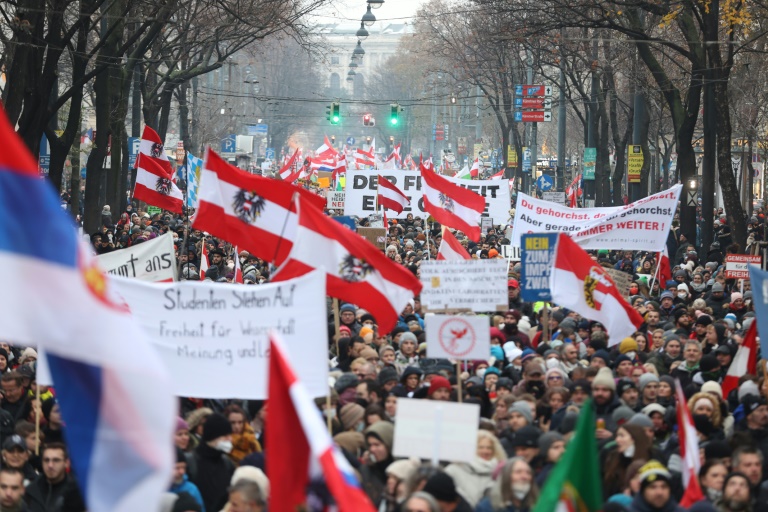
For several weeks after the announcement of the new law, tens of thousands of people took to the streets to protest against what they regard as a radical and draconian policy.

Critics have also questioned the need for compulsion given the far milder nature of the Omicron variant.

Conservative Chancellor Karl Nehammer, who leads the Alpine country with the environmentalist Greens, also announced at the same time a relaxation of earlier Covid-19 restrictions.

But for Health Minister Wolfgang Mueckstein, compulsory vaccination is aimed at both protecting the country against new waves and fighting new variants.

Vaccination passes are now a reality in an increasing number of countries for certain professions or activities.

In Ecuador, it is compulsory, including for children over the age of five, a world first.

Before that, two authoritarian states in Central Asia — Tajikistan and Turkmenistan — mandated vaccination, as did Indonesia, even if less than half the population is actually vaccinated.

Record heat, forest fires in Colombia's Amazon in January

January of this year was the hottest month in the Colombian Amazon in a decade, leading to an increase in forest fires in the southeastern region and very likely impacting air quality in the capital Bogota, according to an Environment Ministry report seen by AFP Friday.

It said the month of January recorded the “highest hot spot values in the last 10 years” in the Colombian Amazon. 

The phenomenon occurs, the ministry said, when the country goes through a season of low rainfall, and is due to “anthropic activities,” that is to say human activities, of which “the most important is associated with deforestation fronts.” 

At least 80 percent of the “hot spots” were forest fires, a ministry spokesman told AFP. At the end of January, the ministry identified more than 3,300 “hot spots” in the six departments that make up the Colombian Amazon, including 1,300 in the Guaviare region alone.

According to testimonies collected by AFP in October in the region, peasants and landowners take advantage of the dry season, from January to April, to burn or cut down trees and plant coca plants in their place, or to let cattle graze there. 

The Serrania del Chiribiquete National Park, listed as a UNESCO World Heritage Site, is particularly threatened, as is the Nukak National Nature Reserve, a vast territory of jungle inhabited by the last nomadic indigenous people of Colombia. 

The Foundation for Conservation and Sustainable Development (FCDS), which keeps its own count and regularly flies over the areas concerned, recorded at least 938 forest fires, the highest monthly January figure since 2012.

Quito flooding toll raised to 27

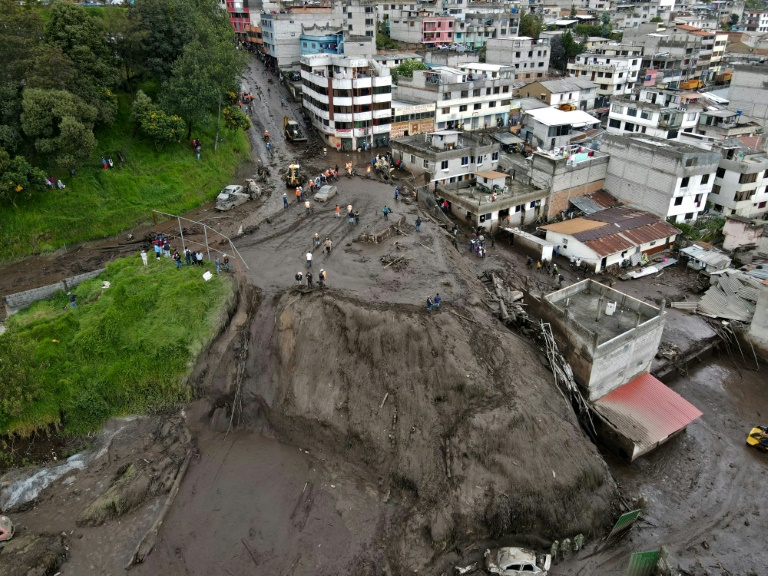
The heaviest flooding to hit Ecuador in two decades claimed 27 lives this week and left 53 people injured, municipal officials said Friday.

The floods inundated homes, carried off cars, and swept away volleyball players and spectators on a sports field.

Two people remain missing, Quito security official Guido Nunez told reporters.

A massive clean up operation was under way, and rescuers were continuing the search for victims in the vicinity of the sports field that was first in the path of the sudden deluge.

Rain that drenched Quito for 17 straight hours caused flooding and surges of mud that damaged roads, agricultural areas, clinics, schools, a police station and an electric power substation.

Quito mayor Santiago Guarderas said Monday’s rains overwhelmed a hillside water catchment structure that had a capacity of 4,500 cubic meters but was inundated with more than four times that volume.

Guarderas said Monday’s downpour brought down 75 liters per square meter (1.8 gallons per square foot) following 3.5 liters on Saturday.

This is “a record figure, which we have not had since 2003,” he added.

Three days of mourning were observed in Quito, a city of some 2.7 million people.

Heavy rains have hit 22 of Ecuador’s 24 provinces since October, claiming at least 44 lives.

Iceland to end whaling as demand dwindles

Iceland, one of the only countries that still hunts whales commercially, said Friday it plans to end the practice from 2024 as demand for whale meat dwindles.

For the past three years, Iceland’s whalers have barely taken their boats out into the North Atlantic despite the country’s large quotas.

Demand for Icelandic whale meat has decreased dramatically since Japan — Iceland’s main market, especially for fin whale meat — returned to commercial whaling in 2019 after a three-decade hiatus.

The extension of a no-fishing coastal zone, requiring whalers to go even further offshore, also made Iceland’s hunt more costly.

“There are few justifications to authorise the whale hunt beyond 2024”, Fisheries Minister Svandis Svavarsdottir, a member of the Left Green party, wrote in Morgunbladid newspaper.

“There is little proof that there is any economic advantage to this activity,” she said.

Iceland, Norway and Japan are the only countries that authorise the commercial whale hunt, despite criticism from animal rights activists and environmentalists, concerns about toxins in the meat and a shrinking market.

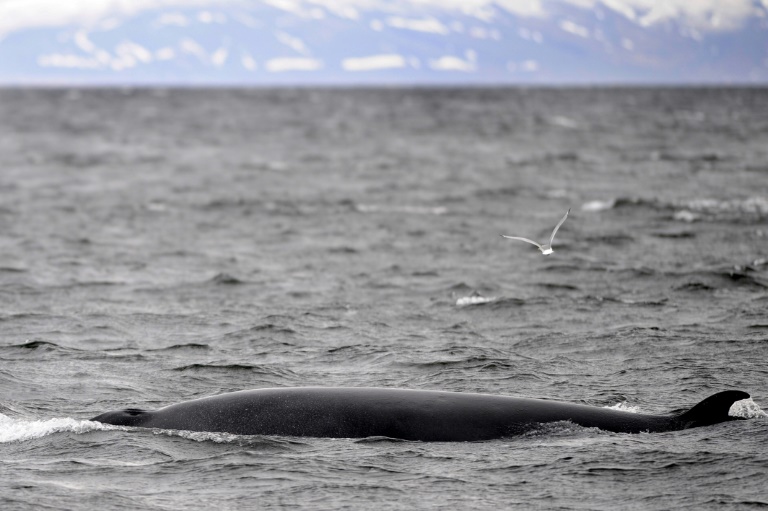
Iceland’s annual quotas for 2019 to 2023 allow for the hunting of 209 fin whales — the planet’s second-largest species after the blue whale and considered endangered — and 217 minke whales, one of the smallest species. 

– Pandemic slowdown –

But for the past three years, Iceland’s two main licence holders have suspended their whale hunts, and one of them, IP-Utgerd, hung up its harpoons for good in 2020.

Only one whale has been killed in the past three years — a Minke whale in 2021.

Other issues have also made whaling more challenging.

Safety requirements for imported meat are more stringent than for local products, rendering Icelandic exports more difficult. 

Social distancing restrictions imposed to combat the coronavirus pandemic also meant Icelandic whale meat processing plants were unable to carry out their tasks.

In Iceland’s last full season in 2018, 146 fin whales and six Minke whales were killed. 

Iceland resumed commercial whaling in 2003 despite a 1986 IWC moratorium, which both it and Norway opposed.

In neighbouring Norway, whalers have had similar experiences to Iceland in recent years, struggling to fill their quotas. 

The number of boats taking part in the hunt continues to shrink as well.

In 2021, 575 whales were harpooned in Norway, less than half the authorised quota, by the 14 boats still operating.

In Iceland, rather than ending up as steaks on a plate, whales have in recent years become the stars of a flourishing ecotourism scene.

More than 360,000 whale watchers flocked to the waters of the North Atlantic off Iceland to admire the majestic creatures in 2019, before the Covid-19 pandemic paralysed the tourism sector.

Toxic ash from DR Congo volcano falling on Goma

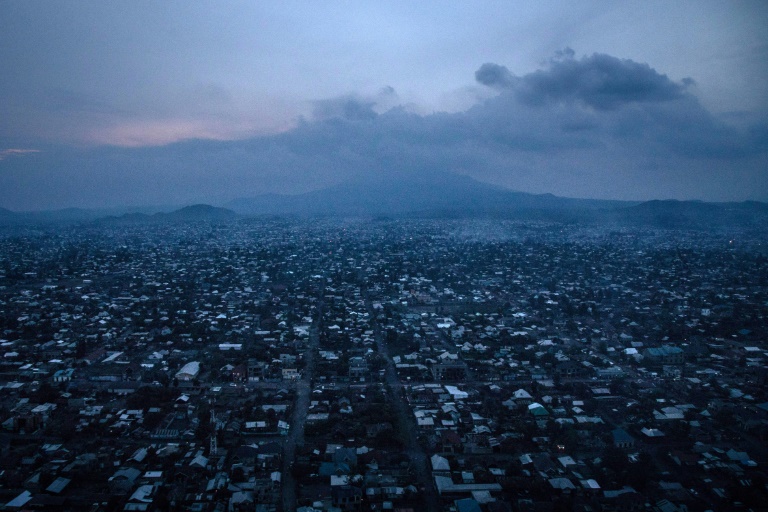
More than eight months after the Nyiragongo volcano erupted in the eastern Democratic Republic of Congo, toxic ash has started falling on nearby Goma, the city’s Volcano Observatory said on Friday. 

Thirty-two people died from burns or asphyxiation when Nyiragongo roared back into life on May 22-23, 2021, sending torrents of lava into the outskirts of Goma, capital of North Kivu province. Two more people died in accidents as residents fled en masse and hundreds of homes were destroyed. 

The OVG observatory said the volcano was spewing out ash and dust because what was left of its central crater after the eruption was now collapsing. 

There had been a magnitude two earthquake in the crater just beforehand, it added.

Given how toxic the ash was, the OVG urged locals to observe strict hygiene precautions — to wear masks, avoid drinking rainwater, wash vegetables in tap water, eat in covered areas and keep food plates indoors.

The observatory said the main volcanic activity was concentrated in Mount Nyiragongo’s central crater and “not all” its flanks were erupting.

Four months after the devastating May 2021 explosion, which forced an estimated 400,000 of Goma’s 600,000 residents to flee, a lava lake appeared in the central crater. 

Scientists said this would enable the 3,500-metre (11,500-foot) strato-volcano — which straddles the East African Rift tectonic divide — to “breathe”.

Mosque-goers pray for rain in drought-scorched Morocco

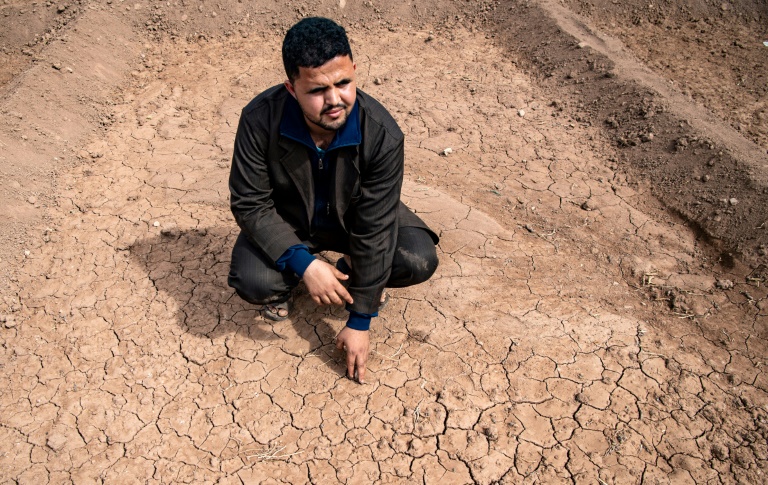
Mosques held prayers for rain on Friday across the parched North African kingdom of Morocco where farmers are battling an acute drought.

King Mohammed VI ordered all the country’s mosques to hold prayers “calling on God for rain”, the religious affairs ministry said in a statement carried by the official MAP news agency.

Such prayers, which also take place in other Muslim countries when rain is needed, are based on a verse from the Koran and on a saying of the Prophet Mohammed, who recommended an extra prayer “every time the rain is scarce”.

Morocco’s economy depends heavily on agriculture, but the country is in the midst of a severe drought. Reservoirs are at just 34 percent capacity, compared to 46 percent this time last year, according to official figures.

Despite improved harvests in 2021, the lack of water has battered the agricultural sector, which is responsible for about 14 percent of the country’s Gross Domestic Product.

The situation has sparked fears of spiralling prices for basic goods.

In January, tourist hotspot Marrakesh imposed tight restrictions on water usage, news website Medias24 reported.

That recalled 2020, when the Atlantic coastal city of Agadir cut off mains water supplies at night to rein in usage.

Agadir this month fired up the country’s first seawater desalination plant to meet the needs of desperately dry farmland nearby.

The agriculture ministry forecasts that average precipitation will drop by 11 percent by 2050, with the amount of water available for irrigation falling by a quarter.

Along with Morocco, the North African nations of Algeria, Libya and Tunisia are among the 30 most water-stressed countries in the world, according to the World Resources Institute.

Hippos and humans learning to live in peace in DR Congo

Just how do you calm down a rampaging hippopotamus? Or even a herd of angry hippos.

On the banks of the Ruzizi river that divides the Democratic Republic of Congo from Burundi, the villagers badly need to work it out after a spate of deaths — human and hippo. 

Despairing environmental activists arrived this week to try to help both sides to learn to live together in peace.

“In December, the hippos laid waste three hectares of fields that my neighbour had planted,” said Jeannette Chandazi, at Kamanyola, in DR Congo’s South-Kivu province.

Kamanyola and the neighbouring village of Katogota have seen seven people killed and six more injured by hippos since 2019, said David Wiragi, of a local civil society environmental group.

The problem, he told AFP, “is that people have encroached on the sides of the river”, in areas where the giant semi-aquatic mammals habitually forage for food.

“They attack people and in turn people hunt them,” Wiragi said.

The province’s environment bureau chief Innocent Bayubasire added: “These areas have been transformed into fields, there are even some structures that have been built.”

Officially it is illegal to occupy a 100-metre strip of land along the river banks, but the law is ignored.

“People have to be made aware that these hippopotamuses should not be treated as enemies, and understand that these places are opportunities for tourism and job creation,” said Josue Aruna, president of the environmental civil society for South-Kivu.

The Ruzizi plain has not escaped the plague of armed groups that have roamed Kivu for more than 25 years sowing death and destruction —  all the more reason to develop the area and provide jobs for youngsters tempted to take up arms and target tourists.

For now, Aruna notes, there is “a mass extermination of these animals, killed by the people here as well as by soldiers, looking for hippo hides and teeth to sell”.

Aruna said at least three hippos are killed every month on the Ruzizi and its outlet Lake Tanganyika.

Working with the provincial government in Bukavu, Aruna organised a “touristic” and awareness visit to the site on the occasion of World Wetlands Day on February 2.

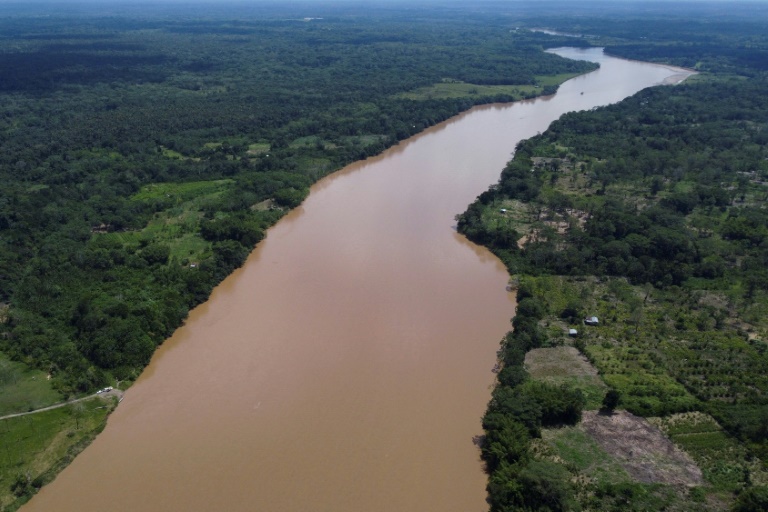
“We’ve been working on this question for three years now,” trying to preserve the biodiversity of the Albertine Rift, the western branch of the East African Rift valley, and ensure it can be a “refuge for giant African hippopotamuses”.

Hippo observation points will be set up, and a test site is already under construction.

New 'highly virulent' HIV strain discovered in the Netherlands

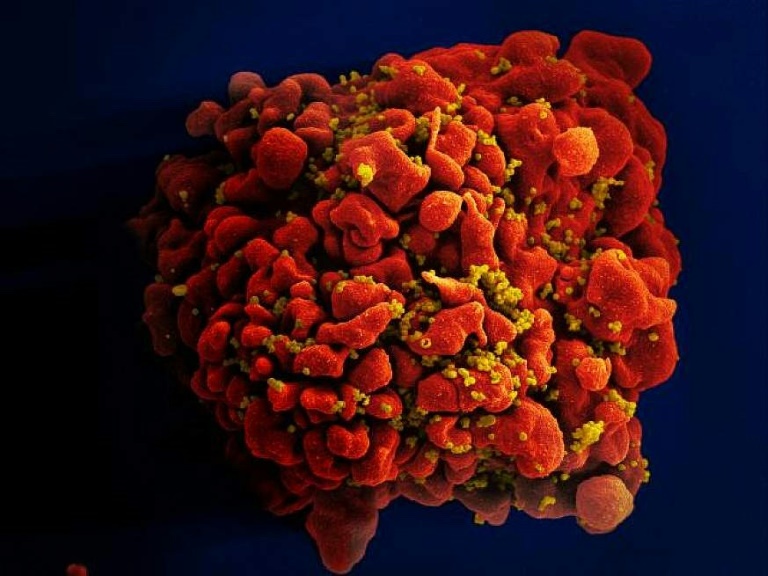
Oxford researchers announced Thursday the discovery of a highly virulent strain of HIV that has been lurking in the Netherlands for decades, but because of the effectiveness of modern treatments, is “no cause for alarm.”

Their analysis, published Thursday in the journal “Science,” showed that patients infected with what they call the “VB variant” had 3.5 to 5.5 times higher levels of the virus in their blood than those infected with other variants, as well as a more rapidly fading immune system.

However, the study also found that after starting treatment, individuals with the VB variant had similar immune system recovery and survival to individuals with other HIV variants.

“There’s no cause for alarm with this new viral variant,” said Oxford epidemiologist Chris Wymant, the lead author on the paper, in an interview with AFP.

The variant likely arose in the late 1980s and early 1990s in the Netherlands, according to the researchers, but began to decline around 2010.

Since modern interventions still seem to work on the variant, the research team believes that widespread HIV treatment in the Netherlands did not contribute to the virus’s evolution, and that early detection and treatment are paramount. 

“Our findings emphasize the importance of World Health Organization guidance that individuals at risk of acquiring HIV have access to regular testing to allow early diagnosis, followed by immediate treatment,” said co-author Christophe Fraser, also an Oxford researcher, in a press release announcing the findings.

The work also supports the theory that viruses can evolve to become more virulent, a widely-hypothesized idea for which few real-world examples have been found.

The Delta variant of the novel coronavirus was another recent example.

The discovery of the HIV variant should therefore “be a warning that we should never be overconfident about saying viruses will just evolve to become milder,” said Wymant to AFP.

In total, the team found 109 people infected with the VB variant, with only four living outside the Netherlands, but still in western Europe.

– 500 mutations –

The HIV virus is constantly evolving, so much so that each person infected has a slightly different version.

The VB variant, however, was found to have over 500 mutations.

“Finding a new variant is normal, but finding a new variant with unusual properties is not — especially one with increased virulence,” Wyman explained.

The research team first identified the VB variant in 17 HIV positive individuals by parsing a broad data set from the BEEHIVE project, a data collection and analysis initiative in Europe and Uganda.

Because 15 of the 17 were from the Netherlands, they further studied data from 6,700 HIV-positive Dutch individuals, identifying 92 others.

The earliest appearance of the VB variant in their data was found in someone diagnosed in 1992 who had an early version of the variant, and the most recent in 2014.

Other researchers have since found other individuals with the variant diagnosed after 2014.

Doctors usually measure HIV’s deterioration of the immune system by monitoring the decline of CD4 T-cells, which are targeted by the HIV virus and pivotal for protecting the body against infections.

In patients infected with the VB variant, CD4 decline occurred twice as fast compared to other variants, “placing them at risk of developing AIDS much more rapidly,” the researchers said. 

In addition to its increased impact on the immune system, the team also found the VB variant to be more highly transmissible.

They came to that conclusion after comparing the different versions of the VB variant drawn from infected patients.

The fact that they were so similar suggests that the virus passed rapidly to someone else before it could accumulate many mutations.

– ‘Critical’ to diagnose and treat early –

“Because the VB variant causes a more rapid decline in immune system strength, this makes it critical that individuals are diagnosed early and start treatment as soon as possible,” the press statement noted.

“This limits the amount of time HIV can damage an individual’s immune system and jeopardize their health,” added Fraser.

Fraser is also the principal investigator of the BEEHIVE project, which was launched in 2014 to gather data on how mutations in the HIV virus can lead to varying degrees of severity among patients.

Those differences have previously been thought to mostly relate to the strength of individuals’ own immune systems.

The researchers said they could not identify which genetic mutation in the VB variant caused its virulence, but they hope future studies will be able to.

Close Bitnami banner
Bitnami