AFP

Mexican kayaker on mission to clean up floating gardens

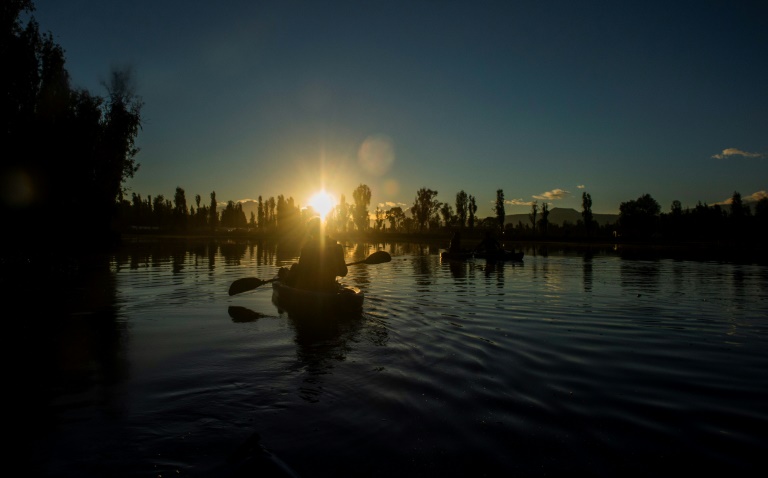
As dawn breaks over Mexico City’s floating gardens, Omar Menchaca paddles his kayak through a maze of canals collecting garbage left by visitors to one of the last vestiges of the ancient Aztec capital.

In the silence of the early morning, before the hordes of tourists arrive, the 66-year-old retiree fishes plastic bottles and other debris from the waters of Xochimilco.

“I came here to train for my competitions,” says the former athletics champion.

“Over time, unfortunately, I started noticing that these canals were full of garbage.”

As his single-seater kayak glides by, herons and pelicans take flight in the morning mist. 

In the distance, the Popocatepetl volcano, Mexico’s second highest summit, rises more than 5,400 meters (17,700 feet) above sea level.

Menchaca seems to be far from the network of congested roads that serve Mexico City and its nine million inhabitants.

In fact, “the ring road is only 600 meters away,” he says with a smile.

Menchaca regularly puts down his paddle and uses his bare hands to pick up garbage floating on the surface of the water amid aquatic flowers.

Xochimilco is a magnet for tourists who ride colorful gondolas through its network of canals and artificial islands created centuries ago by the area’s indigenous peoples.

On weekends in particular, couples, families and groups of friends come to eat, drink and dance to the sound of mariachi music.

The reserve is home to endemic species including the critically endangered axolotl, a salamander-like amphibian.

Cleaning up the waste left by visitors is a constant battle for Menchaca, who offers tours during which he recounts the history of the UNESCO World Heritage Site.

He likes nothing more than to see children copy him by collecting waste.

“Xochimilco is visited by around 6,000 people on weekends. Unfortunately, these people don’t take care of the place,” he says.

Conservationists also worry about the impact of development encroaching on the area, which is listed as a Wetlands of International Importance under an intergovernmental conservation treaty.

– ‘If we do nothing’ –

Menchaca curses when sees boats equipped with outboard motors.

“The canals are not very deep, barely half a meter,” he says.

“A boat with an engine that carries up to 40 people causes noise and pollutes the wetlands with oil and gasoline.”

At midday, Menchaca returns to the pier from which he set off through a vast canal with a breathtaking view of Mount Ajusco, which rises to some 3,900 meters within the city limits.

His kayak is overflowing with garbage. 

On the way he greets a man shoveling mud from the canal to use as a natural fertilizer.

“The people at the pier should pick up all the garbage and not Don Omar,” says the 69-year-old, Noe Coquis Salcedo.

Back on dry land, Menchaca deposes of the debris in a dumpster near the parking lot.

He believes his efforts make a small difference helping to preserve the place for future generations, in addition to the work of the city authorities who say they are “constantly” maintaining the canals.

“The canals are paths,” says Menchaca, enjoying a beer and enchilada in the January sunshine after his hours of physical exercise. 

“That’s why when I see this garbage, I try to collect it so that whoever passes afterward can enjoy a clean path,” he adds.

Nearby young people in swimsuits dive from the top of a gondola moored at the pier.

“If we do nothing for our planet there will come a time when…” Menchaca says before pausing, his hands outstretched like a gesture of helplessness.

“There won’t be much left for us to enjoy,” he concludes.
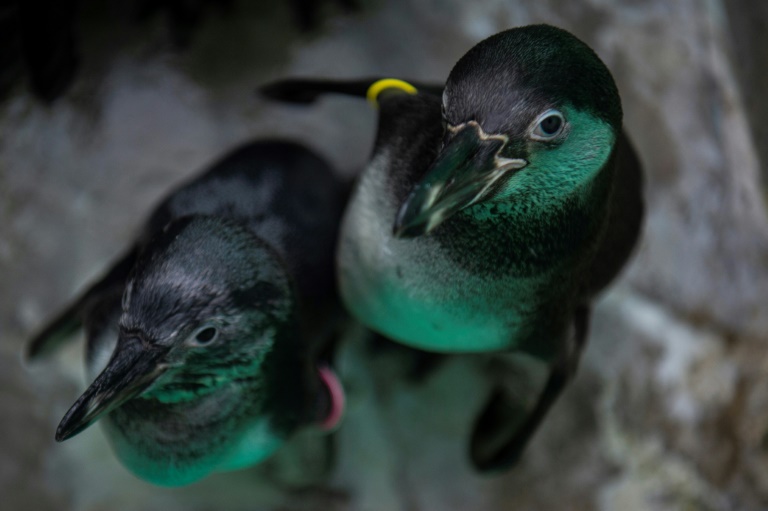
Round-the-clock care for Peru's oil-stained sea birds

Hand fed fish and given gentle yet rigorous baths, penguins and other sea birds are slowly regaining their strength at a Peruvian zoo after a major oil spill that claimed many of their friends.

Of about 150 oil-stained birds rescued alive after the January 15 spill of some 12,000 barrels of oil, half later died.

The survivors — penguins, cormorants and pelicans — are being nursed back to health and independence at the Parque de Las Leyendas zoo in Lima. 

With oil on their wings, birds cannot fly or feed, and they lose the insulation they need to keep warm.

Even birds not directly contaminated with crude fell ill or died after eating fish that were.

– ‘Very stressed’ –

At the zoo, the rescued birds are fed fish — for the penguins it is their preferred prey of silverside and anchovies.

They are given a special rehydration mixture through a tube, bathed, and dried with a towel.

“Many of them arrived in very bad condition, which makes it difficult for us to handle them,” said Giovanna Yepez, one of the rescuers at the zoo.

“The animals were very contaminated… were very stressed,” she added. “It is a very hard job.”

But after two weeks of intensive care, the penguins at least “have tripled their food consumption,” said Yepez.

“I believe the penguins are on the right track, they are clean and waiting for the impermeability of their feathers to return so they can be released.”

Even when the feathers appear clean, the slightest vestige of crude inside the beak “can affect (the bird) through the digestive system, the liver,” added veterinarian Giancarlo Inga Diaz, hence the need for patience and thoroughness.

– ‘Disaster’ –

The spill, described as an “ecological disaster” by the Peruvian government, happened when an Italian-flagged tanker was unloading oil at a refinery off Peru’s coast.

Spanish oil company Repsol said the tanker was hit by freak waves triggered by a tsunami after a massive volcanic eruption near Tonga, thousands of kilometers away.

The oil slick was dragged by ocean currents about 140 kilometers (87 miles) north of the refinery, prosecutors said, killing countless fish and birds, polluting tourist beaches and robbing fishermen of their livelihood.

The Humbold penguin — a species classified as “vulnerable” by the International Union for Conservation of Nature — lives in colonies on the Peruvian and Chilean coasts, feeding in the cold, nutrient-rich waters of the Humboldt Current which flows north from Antarctica.

Some 9,000 of the black-and-white flightless birds are known to exist in Peru.

They stand about 50 centimeters tall.

Peru has demanded compensation from Repsol for the spill at its refinery.

Repsol says Peru oil spill will be cleaned up in March

Spanish energy giant Repsol on Thursday vowed to finish by March cleaning up a devastating oil spill that has polluted beaches and killed wildlife.

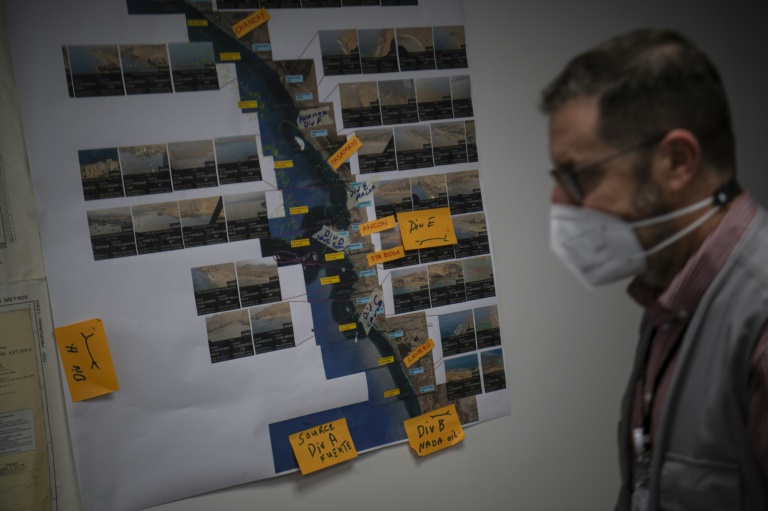
Almost 12,000 barrels of crude spilled into the sea off Peru on January 15 as a tanker unloaded oil at a Repsol owned refinery.

“We expect that if the weather allows us then, in mid-March” the cleaning of beaches and islands off the coast will be completed, Repsol’s environmental security director Jose Terol told reporters.

However, he warned that it would take a little longer to finish cleaning cliffs and rocks that are difficult to access.

“By mid-February, there will already be no more slicks in the sea. In an optimistic scenario, work on the difficult to access areas will be finished by the end of March,” said Terol.

Peru’s government described the spill — which Repsol blamed on freak waves caused by a volcanic eruption more than 10,000 kilometers away near Tonga — as an “ecological disaster.”

The oil slick has been dragged by ocean currents about 140 kilometers north of the refinery, prosecutors said, causing the death of an undetermined number of fish and seabirds. 

Peru has demanded compensation from Repsol, and the energy giant faces a potential $34.5 million fine, the Environment Ministry has said.

Even as the Repsol spokesman spoke, a group of protesters from the hard-hit nearby beach town of Ancon gathered with signs and chanted demands outside the plant.

“Repsol accept responsibility”, and “Repsol murderer, the beaches of Ancon are in mourning” were among their signs.

“The reason for the protest is that (the oil spill) has left us without work because of this contamination of the sea in Ancon,” Miguel Basurto, a 53-year-old motorcycle taxi driver, told AFP. 

“We feel outraged because we have no support from the Repsol company. They clean their hands of it, and go away and leave us with all this pollution that affects children and the elderly,” said merchant Ana Garrido, 40.

It was the first time since the spill that Repsol let journalists  visit its La Pampilla refinery — to see how 90 specialists  there are managing the 3,000 people who are cleaning up the spill.

Round-the-clock care for Peru's oil-stained sea birds

Hand fed fish and given gentle yet rigorous baths, penguins and other sea birds are slowly regaining their strength at a Peruvian zoo after a major oil spill that claimed many of their friends.

Of about 150 oil-stained birds rescued alive after the January 15 spill of some 12,000 barrels of oil, half later died.

The survivors — penguins, cormorants and pelicans — are being nursed back to health and independence at the Parque de Las Leyendas zoo in Lima. 

With oil on their wings, birds cannot fly or feed, and they lose the insulation they need to keep warm.

Even birds not directly contaminated with crude fell ill or died after eating fish that were.

– ‘Very stressed’ –

At the zoo, the rescued birds are fed fish — for the penguins it is their preferred prey of silverside and anchovies.

They are given a special rehydration mixture through a tube, bathed, and dried with a towel.

“Many of them arrived in very bad condition, which makes it difficult for us to handle them,” said Giovanna Yepez, one of the rescuers at the zoo.

“The animals were very contaminated… were very stressed,” she added. “It is a very hard job.”

But after two weeks of intensive care, the penguins at least “have tripled their food consumption,” said Yepez.

“I believe the penguins are on the right track, they are clean and waiting for the impermeability of their feathers to return so they can be released.”

Even when the feathers appear clean, the slightest vestige of crude inside the beak “can affect (the bird) through the digestive system, the liver,” added veterinarian Giancarlo Inga Diaz, hence the need for patience and thoroughness.

– ‘Disaster’ –

The spill, described as an “ecological disaster” by the Peruvian government, happened when an Italian-flagged tanker was unloading oil at a refinery off Peru’s coast.

Spanish oil company Repsol said the tanker was hit by freak waves triggered by a tsunami after a massive volcanic eruption near Tonga, thousands of kilometers away.

The oil slick was dragged by ocean currents about 140 kilometers (87 miles) north of the refinery, prosecutors said, killing countless fish and birds, polluting tourist beaches and robbing fishermen of their livelihood.

The Humbold penguin — a species classified as “vulnerable” by the International Union for Conservation of Nature — lives in colonies on the Peruvian and Chilean coasts, feeding in the cold, nutrient-rich waters of the Humboldt Current which flows north from Antarctica.

Some 9,000 of the black-and-white flightless birds are known to exist in Peru.

They stand about 50 centimeters tall.

Peru has demanded compensation from Repsol for the spill at its refinery.

UK's Kew tribute to Costa Rica at annual orchid fest

Britain’s Royal Botanic Gardens at Kew unveiled its annual orchid festival Thursday, turning a sliver of southwest London into a riot of tropical colour and flora celebrating biodiversity hotspot Costa Rica.

Kew’s 26th orchid showcase, opening Saturday, has this year been themed around the central American country hailed for conservation and features more than 5,000 orchids, some native to the nation on the Panama isthmus.

They include the national flower, a critically endangered orchid — named Guarianthe skinneri — bearing pink-purple petals and found in humid forests on tree trunks and branches or on granite cliff banks at some altitudes. 

The month-long exhibition, housed in Kew conservatory set to tropical temperatures and conditions, also promotes Costa Rica’s famed fauna, with handcrafted sculptures of some of animals made from natural materials and nestled in amongst the plants.

“Through the glass house we tried to bring in as much colour to just transport people into that sort of feel good world of Costa Rica… to make it really pretty and smashing,” florist and Kew volunteer Henck Roling told AFP.

The Dutchman, who in keeping with the orchid theme had dyed his hair and beard bright colours and was adorned with an orange garland, said the team had spent much of the past two years thinking about the festival.

It is returning to Kew after a one-year hiatus due to the coronavirus pandemic.

Around 6,000 plants have been brought in for the showcase, including the 5,000 orchids originating from around the world.

– ‘Amazing array’ –

Various individual displays of the different orchid types are dotted around Kew’s expansive and misty Princess of Wales conservatory, interspersed between water features, ferns, monsteras and other greenery.

The colourful host of plants began arriving in January and took dozens of volunteers and staff weeks to assemble by hand into their immaculate displays, said Alberto Trinco, acting supervisor of the conservatory.

“It’s one of the biggest plant families and they are such an amazing array of shapes, colours, and other adaptations and co-evolution with their pollinators, which is quite mind-blowing sometimes,” he added.

A section of the exhibition delves deeper into orchids, explaining everything from family tree and anatomy to their use for celebrations in Costa Rica.

Trinco noted the organisers chose the country, which is home to more than 1,600 orchid species, to “celebrate its biodiversity, its effort towards conservation and its culture”.

The Central American nation covers just 0.03 percent of the planet but is home to six percent of the world’s flora and fauna species and has been praised for how it manages the natural environment.

Costa Rica was last year one of the inaugural winners of Prince William’s UN-backed Earthshot Prize, in recognition of its efforts to tackle environmental degradation and promote sustainability.

Alex Munro, a botanist at Kew specialising in discovering new plant species in the tropics, said he and colleagues had worked with the Costa Rican ambassador in London to help inform some of the science behind the exhibits.

“They have lots of species in Costa Rica which you wouldn’t find anywhere else,” he told AFP.

“They capture fully the diversity of orchids in the Americas,” he added, stood aside one of the main displays.

Other countries previously as a theme for the yearly showcase include Indonesia, India and Colombia.

Kenya under fire over calls to 'weaken' forest protections

In his 15 years defending one of Nairobi’s last green spaces, Simon Nganga has seen off brazen attempts to seize what’s left of the lush forest bordered by highways and housing estates.

Persistent efforts by developers and powerful individuals to seize chunks of the bush as their own were defeated under historic laws enacted to protect Kenya’s dwindling forests from unchecked logging and environmental destruction.

But a proposal expected before parliament on Thursday seeks a major change to these protections, by allowing politicians to determine if public forest can be carved out and handed over to private interests.

Under the contentious amendment, anyone wishing to alter forest boundaries to claim ownership of land could lobby parliament directly, bypassing approval from the Kenya Forest Service (KFS), which is currently mandated to scrutinise such bids.

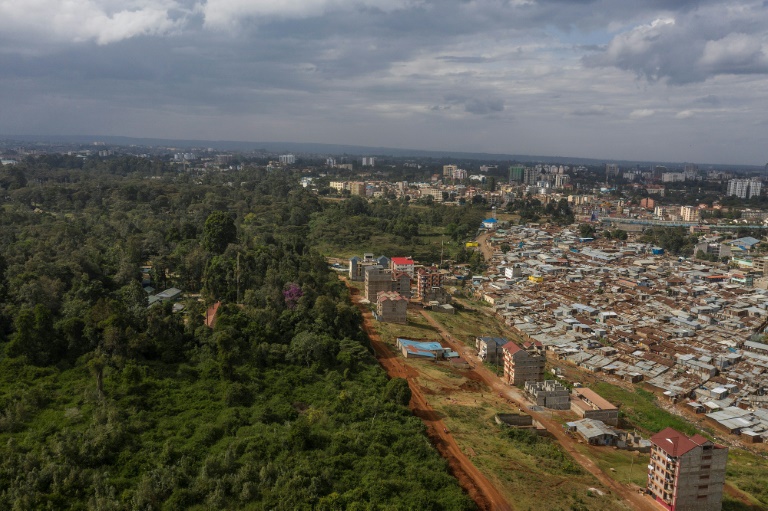
“If it goes through… that will open a Pandora’s Box,” Nganga told AFP beneath the canopy of Ngong Road Forest, a 1,224-hectare (3,025-acre) tract of indigenous woodland inhabited by bush bucks, Sykes monkeys and over 100 species of birds.

“Everyone will want a piece of the forest, which is very dangerous for our forests, and our future.”

The amendment to the Forest Conservation and Management Act –- reforms passed after decades of rampant land clearing — has been  opposed by the environment ministry and the KFS, and has roused significant community anger.

It has also drawn rare criticism from the United Nations, which headquarters its environment programme in Nairobi, and is just weeks away from staging the world’s highest-level decision-making assembly on nature and biodiversity in the Kenyan capital.

– Environmentalists blindsided –

The amendment argues that granting KFS primary authority over hearing and ruling on changes to forest boundaries “unnecessarily limits the right of any person to petition Parliament” as granted under the constitution. 

Environmentalists were blindsided by the proposal, which they say would shift power over Kenya’s forests from a dedicated government agency with a record of fighting land theft, to political elites trying to win a bitterly-contested election.

“Why do members of parliament want to condemn Kenya and the world to an unbearably hot future by weakening the Forest Act?” said conservation group Nature Kenya.

Nganga said the forest laws had proved a bulwark against encroachment — since first passing in 2005, no land within Ngong Road Forest had been legally hived off, keeping its boundary firmly intact.

It is a remarkable achievement for an urban forest pressed in on all sides by one of Africa’s fastest-growing cities, but it still bears the scars of battles won and lost.

A major highway slices through its interior, one unfenced side opens onto the vast Kibera slum, while forest doled out years ago to connected elites saw trees razed for apartments.

But it survived as a whole only because strong laws had kept land grabbers at bay, said Nganga, vice chairman of the Ngong Road Forest Association.

“It has been a success,” Nganga said at the forest edge overlooking Kibera, where men walked by carrying trees they had felled for firewood.

“We cannot talk about winding back success. We know what happened before the Act, when individuals could give out land. We don’t want to get back there.”

– ‘We’ll lose everything’ –

Parliament is considering the amendment as Nairobi this month prepares to host the UN Environment Assembly, where countries will be asked to commit to stronger protections for biodiversity.

In a letter to parliament, a top UN official in Nairobi warned the proposed changes threatened Kenya’s reputation and undermined its efforts to expand forest cover and tackle climate change.

“Unfortunately, we believe the proposed amendment takes us in a contrary direction, incompatible with Kenya’s laudable commitments and trajectory hitherto,” resident coordinator Stephen Jackson wrote in a February 1 letter seen by AFP.

Kenyan Environment Minister Keriako Tobiko said his office learned about the amendment through the press and regretted it had caused “panic and doubt in the international community”.

Land is extremely contentious in Kenya, and disputes over ownership can turn violent.

Environmental activist Joannah Stutchbury was shot dead outside her home in Nairobi in July 2021 after spearheading a vocal campaign to protect a forest near the city from developers.

The timing of this bill in a closely-fought election year has also raised eyebrows.

Electoral cycles have often spelled destruction for forests as land is promised to communities and political allies in exchange for votes, said Paula Kahumbu, the head of conservation group Wildlife Direct.

“Forests have always been up for grabs when it comes to elections,” she told AFP.

“It is kind of like the bribe that is not cash.”

Nganga has fought for the forest before, and knows what is at stake now.

“We will lose everything,” he said.

Wreck of British explorer James Cook's Endeavour found: researchers

The wreck of Captain James Cook’s famed vessel the Endeavour has been found off the coast of the US state of Rhode Island, Australian researchers said Thursday.

Their research partners in the United States, however, have described the announcement as premature.

The Endeavour, which the British explorer sailed in an historic voyage to Australia and New Zealand between 1768 and 1771, was scuttled in Newport Harbour during the American War of Independence.

For more than two centuries, it lay forgotten.

“Since 1999, we have been investigating several 18th-century shipwrecks in a two-square-mile area where we believed that Endeavour sank,” Kevin Sumption, director of the Australian National Maritime Museum, told a Thursday media briefing. 

“Based on archival and archaeological evidence, I’m convinced it’s the Endeavour.”

But the Rhode Island Marine Archaeology Project said it was too early to draw that conclusion.

In a statement, project executive director DK Abbass said the announcement was a “breach of contract”, adding that “conclusions will be driven by proper scientific process and not Australian emotions or politics”.

A spokesperson for the Australian museum said Abbass was “entitled to her own opinion regarding the vast amount of evidence we have accumulated.”

The museum does not believe it is in breach of any contracts.

Sumption was among a team of archaeologists that announced in 2018 they believed the Endeavour’s remains were at the Rhode Island site, but said then more analysis had to be done. 

The Endeavour was the ship Cook sailed from England to Tahiti and then New Zealand before reaching Australia in 1770 and charting the continent’s east coast.

By the time the ship sank in Newport Harbor in August 1778, it had been renamed the Lord Sandwich and was being used by the British to hold prisoners of war during the American revolution.

The British scuttled the ship, along with others, to block a French fleet from sailing into Newport Harbour to support the Americans.

This was just a few months before Cook’s death in Hawaii in February 1779.

After two centuries at the bottom of the harbour, only about 15 percent of the Endeavour remains intact, according to the Australian National Maritime Museum. 

“The focus is now on what can be done to protect and preserve it,” Sumption said Thursday. 

Kenya under fire over calls to 'weaken' forest protections

In his 15 years defending one of Nairobi’s last green spaces, Simon Nganga has seen off brazen attempts to seize what’s left of the lush forest bordered by highways and housing estates.

Persistent efforts by developers and powerful individuals to seize chunks of the bush as their own were defeated under historic laws enacted to protect Kenya’s dwindling forests from unchecked logging and environmental destruction.

But a proposal expected before parliament on Thursday seeks a major change to these protections, by allowing politicians to determine if public forest can be carved out and handed over to private interests.

Under the contentious amendment, anyone wishing to alter forest boundaries to claim ownership of land could lobby parliament directly, bypassing approval from the Kenya Forest Service (KFS), which is currently mandated to scrutinise such bids.

“If it goes through… that will open a Pandora’s Box,” Nganga told AFP beneath the canopy of Ngong Road Forest, a 1,224-hectare (3,025-acre) tract of indigenous woodland inhabited by bush bucks, Sykes monkeys and over 100 species of birds.

“Everyone will want a piece of the forest, which is very dangerous for our forests, and our future.”

The amendment to the Forest Conservation and Management Act –- reforms passed after decades of rampant land clearing — has been  opposed by the environment ministry and the KFS, and has roused significant community anger.

It has also drawn rare criticism from the United Nations, which headquarters its environment programme in Nairobi, and is just weeks away from staging the world’s highest-level decision-making assembly on nature and biodiversity in the Kenyan capital.

– Environmentalists blindsided –

The amendment argues that granting KFS primary authority over hearing and ruling on changes to forest boundaries “unnecessarily limits the right of any person to petition Parliament” as granted under the constitution. 

Environmentalists were blindsided by the proposal, which they say would shift power over Kenya’s forests from a dedicated government agency with a record of fighting land theft, to political elites trying to win a bitterly-contested election.

“Why do members of parliament want to condemn Kenya and the world to an unbearably hot future by weakening the Forest Act?” said conservation group Nature Kenya.

Nganga said the forest laws had proved a bulwark against encroachment — since first passing in 2005, no land within Ngong Road Forest had been legally hived off, keeping its boundary firmly intact.

It is a remarkable achievement for an urban forest pressed in on all sides by one of Africa’s fastest-growing cities, but it still bears the scars of battles won and lost.

A major highway slices through its interior, one unfenced side opens onto the vast Kibera slum, while forest doled out years ago to connected elites saw trees razed for apartments.

But it survived as a whole only because strong laws had kept land grabbers at bay, said Nganga, vice chairman of the Ngong Road Forest Association.

“It has been a success,” Nganga said at the forest edge overlooking Kibera, where men walked by carrying trees they had felled for firewood.

“We cannot talk about winding back success. We know what happened before the Act, when individuals could give out land. We don’t want to get back there.”

– ‘We’ll lose everything’ –

Parliament is considering the amendment as Nairobi this month prepares to host the UN Environment Assembly, where countries will be asked to commit to stronger protections for biodiversity.

In a letter to parliament, a top UN official in Nairobi warned the proposed changes threatened Kenya’s reputation and undermined its efforts to expand forest cover and tackle climate change.

“Unfortunately, we believe the proposed amendment takes us in a contrary direction, incompatible with Kenya’s laudable commitments and trajectory hitherto,” resident coordinator Stephen Jackson wrote in a February 1 letter seen by AFP.

Kenyan Environment Minister Keriako Tobiko said his office learned about the amendment through the press and regretted it had caused “panic and doubt in the international community”.

Land is extremely contentious in Kenya, and disputes over ownership can turn violent.

Environmental activist Joannah Stutchbury was shot dead outside her home in Nairobi in July 2021 after spearheading a vocal campaign to protect a forest near the city from developers.

The timing of this bill in a closely-fought election year has also raised eyebrows.

Electoral cycles have often spelled destruction for forests as land is promised to communities and political allies in exchange for votes, said Paula Kahumbu, the head of conservation group Wildlife Direct.

“Forests have always been up for grabs when it comes to elections,” she told AFP.

“It is kind of like the bribe that is not cash.”

Nganga has fought for the forest before, and knows what is at stake now.

“We will lose everything,” he said.

Texas butterfly sanctuary shuts citing threats from Trump supporters

A butterfly sanctuary caught in the crossfire of polarizing conspiracy theories on illegal immigration to the United States said it will shut its doors Thursday, citing security concerns after receiving threats from supporters of former president Donald Trump.

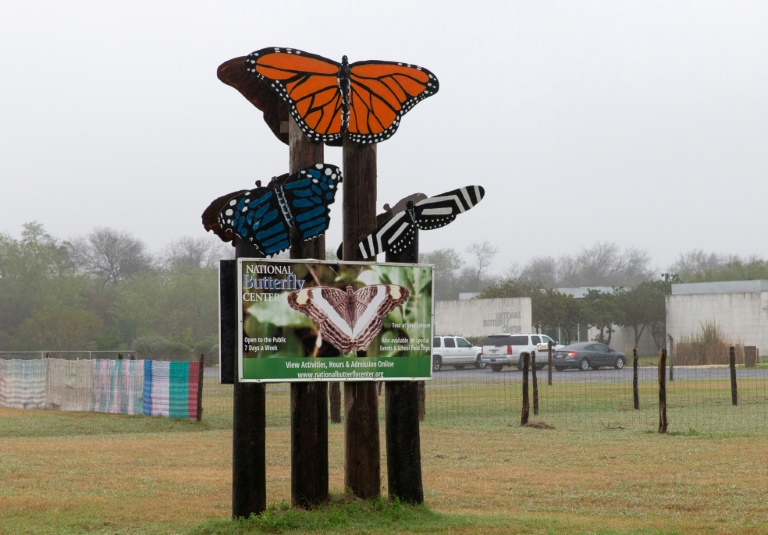
The National Butterfly Center in Texas, located on the banks of the Rio Grande that separates the United States from Mexico, had filed a complaint to block construction of the border wall that became a centerpiece of Trump’s presidency, saying it threatened the winged insects’ habitat.

The private sanctuary’s gardens are home to more than 200 species of butterfly as well as bobcats, coyotes, peccaries, armadillos and Texas tortoises. 

But it will now be closed until further notice because “the safety of our staff and visitors is our primary concern,” Jeffrey Glassberg, president of the North American Butterfly Association, which runs the organization, said in a statement Wednesday. 

Conspiracy theories targeting the sanctuary — which have been linked to far-right group QAnon by US media — have claimed it was helping to bring illegal migrants to America.

The facility already closed between January 28 and 30 because of “credible threats” related to an event held by supporters of the former president in nearby McAllen, Glassberg said. 

Photos purporting to be from the center had been circulating along with messages accusing the organization of helping smugglers bring migrants to the United States.

Several right-wing activists have posted videos on social media of themselves in front of the sanctuary.

“We don’t think the threat has passed,” the sanctuary’s executive director Marianna Trevino Wright told AFP on Wednesday, citing repeated “provocations” from these individuals.

Wright said she feared the allegations against the center would eventually push someone to “take action.”

“We look forward to reopening, soon, when the authorities and the professionals who are helping us get past this situation give us the green light,” Glassberg said in the statement, noting that employees would continue to receive their salaries during the closure. 

The QAnon far-right conspiracy movement began in 2017 with claims that the Democrats ran a satanic child-kidnapping sex-trafficking ring, and it has been blamed for fuelling a riot at the US Capitol on January 6 last year.

Trump has never condemned the movement and even fed QAnon fever before the US presidential election in 2020, floating his own conspiracy theories about a planeload of black-clad saboteurs disrupting his party convention.

Texas butterfly sanctuary shuts citing threats from Trump supporters

A butterfly sanctuary caught in the crossfire of polarizing conspiracy theories on illegal immigration to the United States said it will shut its doors Thursday, citing security concerns after receiving threats from supporters of former president Donald Trump.

The National Butterfly Center in Texas, located on the banks of the Rio Grande that separates the United States from Mexico, had filed a complaint to block construction of the border wall that became a centerpiece of Trump’s presidency, saying it threatened the winged insects’ habitat.

The private sanctuary’s gardens are home to more than 200 species of butterfly as well as bobcats, coyotes, peccaries, armadillos and Texas tortoises. 

But it will now be closed until further notice because “the safety of our staff and visitors is our primary concern,” Jeffrey Glassberg, president of the North American Butterfly Association, which runs the organization, said in a statement Wednesday. 

Conspiracy theories targeting the sanctuary — which have been linked to far-right group QAnon by US media — have claimed it was helping to bring illegal migrants to America.

The facility already closed between January 28 and 30 because of “credible threats” related to an event held by supporters of the former president in nearby McAllen, Glassberg said. 

Photos purporting to be from the center had been circulating along with messages accusing the organization of helping smugglers bring migrants to the United States.

Several right-wing activists have posted videos on social media of themselves in front of the sanctuary.

“We don’t think the threat has passed,” the sanctuary’s executive director Marianna Trevino Wright told AFP on Wednesday, citing repeated “provocations” from these individuals.

Wright said she feared the allegations against the center would eventually push someone to “take action.”

“We look forward to reopening, soon, when the authorities and the professionals who are helping us get past this situation give us the green light,” Glassberg said in the statement, noting that employees would continue to receive their salaries during the closure. 

The QAnon far-right conspiracy movement began in 2017 with claims that the Democrats ran a satanic child-kidnapping sex-trafficking ring, and it has been blamed for fuelling a riot at the US Capitol on January 6 last year.

Trump has never condemned the movement and even fed QAnon fever before the US presidential election in 2020, floating his own conspiracy theories about a planeload of black-clad saboteurs disrupting his party convention.

Close Bitnami banner
Bitnami