AFP

Bernard Arnault, emperor of luxury and world's top fortune

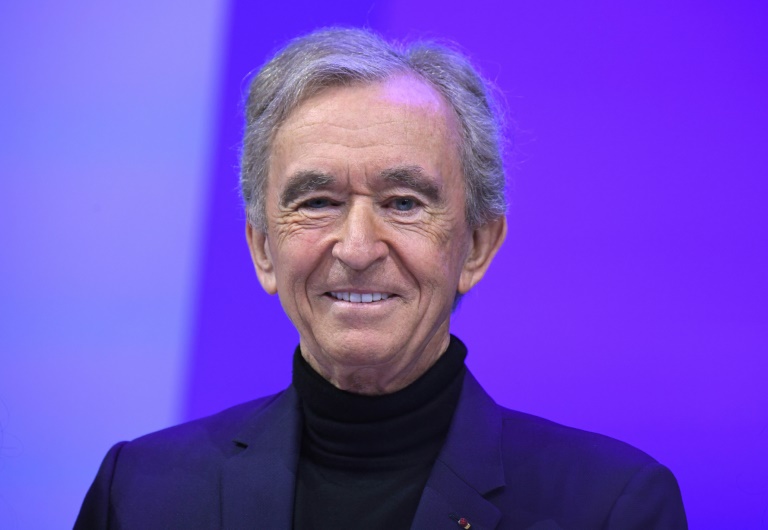
Bernard Arnault — who with his family now tops the wealth of Elon Musk — gradually built LVMH into a global luxury empire by buying up iconic brands, sealing his reputation as a formidable and insatiable businessman.

With $184 billion on Thursday, the 73-year-old Frenchman and his family moved to the top of Forbes’ billionaire list, knocking the Tesla, SpaceX and Twitter boss off the top spot.

LVMH — the world’s leading luxury group — boasts more than 75 brands, acquired over time.

They include some of the most recognisable names in fashion and prestige goods, from Louis Vuitton and Kenzo to Moet Hennessy and Tiffany.

“An essential quality in our family is patience,” Arnault acknowledged in a 2012 TV profile of him.

A decade later — by which time LVMH’s annual sales had more than doubled to over 64 billion euros ($68 billion) — he told France’s Radio Classique: “We can continue to progress — but let’s be patient. 

“No rush,” he said.

The businessman has also invested in the French media, a move he described during a Senate hearing in January 2022 as “more on the patronage side”.

During a hearing in the French Senate earlier this year Arnault said he had intervened to stop LVMH advertising in the Liberation newspaper, after it irked him with a front-page article.

– ‘Invest in something promising’ – 

Arnault was born in the northern French city of Roubaix on March 5, 1949 and joined his father’s public works building company at the age of 22.

He had just left the elite Ecole Polytechnique and convinced his father to transform the construction business into real-estate development instead.

In 1981, after socialist Francois Mitterrand was elected president, Arnault left France for the United States.

On his return three years later, he bought the debt-ridden textiles company Boussac, prevailing against several serious competitors with a promise to save jobs.

However, he embarked on a drastic reorganisation of the firm, only retaining some of its businesses, including the fashion house Christian Dior.

By then, Arnault was 35 years old.

“My father was surprised when I went to see him saying: ‘We’re going to redirect the family group and try to invest in something more promising, Christian Dior’,” the businessman recalled recently on Radio Classique.

It would be the foundation stone for his luxury empire.

LVMH was born out of the merger in 1987 of trunk-maker Louis Vuitton and the wines and spirits group Moet Hennessy.

Rivalry between the families owning the two companies aided Arnault’s ascendancy and he took control of the group in 1989 after no fewer than 17 legal proceedings.

“He’s a tough negotiator but unmatched, a visionary who knows how to surround himself with good people and who in the end always gets his way one way or another,” Arnaud Cadart, portfolio manager at financial services firm Flornoy, told AFP.

Arnault’s rise, however, has not been without some failures.

– Corporate criticisms – 

He lost Italian fashion and leather goods house Gucci to his French rival Francois Pinault, head of the PPR group, in 1999.

Arnault also tried in vain to take over Hermes, known for its silk scarves and leather handbags, by secretly building up a stake in the firm.

He rarely speaks publicly and does not like the limelight.

When the use of private jets by celebrities was being tracked on social media earlier this year, Arnault sold the LVMH jet.

“The upshot now is that no one else can know where I’m going because I lease planes,” he said on Radio Classique.

“It’s the French businessman’s lot to embody — sometimes in a totally unjustified way — the criticisms of the day since the mindset has for a few years now been a bit anti-corporate,” he lamented on France 2 in 2016.

That same year he was skewered in a satirical documentary entitled “Merci Patron!” (Thank you Boss!) by filmmaker and now politician Francois Ruffin, who often has Arnault in his crosshairs.

– Obama, Putin, Trump, Macron… –

Last year, LVMH paid a 10-million-euro fine to settle a case as part of a probe into spying.

Arnault abandoned his bid to secure Belgian nationality in 2013 issuing a mea culpa after it whipped up a storm of controversy which rumbled on for months amid public debate over the tax arrangements of the wealthy.

In 2011, he was received at the White House by president Barack Obama; Russian President Vladimir Putin welcomed him to Moscow five years later; former French president Francois Hollande cut the ribbon on his Louis Vuitton Foundation, while Donald Trump did the same for a Vuitton workshop in Texas.

And when the historic Samaritaine department store, owned by LVMH, reopened last year, French President Emmanuel Macron was a guest at the inauguration.

In Japan, China and the Middle East, the luxury mogul has access to top leaders.

Arnault has five children, all of whom work for LVMH, but shows little sign of slowing down — or handing over the reins just yet.

Every week he makes a point of touring all the group’s Paris-based companies.

At its last general meeting, the age limit for his role as LVMH chief executive was extended to 80 years old, ensuring the luxury conglomerate stays in family hands.

Married to a pianist and art lover, Arnault also created the Louis Vuitton Foundation, one of Paris’ most prestigious exhibition locations for contemporary art.

UN nature deal calls to protect 30% of planet by 2030

A UN nature deal proposed Sunday calls to protect at least 30 percent of the planet by 2030 and asks rich countries to stump up $20 billion in yearly aid for developing nations to save their ecosystems.

China, chairing the COP15 biodiversity summit in Montreal, presented a long-awaited compromise text aiming to seal a pact to save the species and ecosystems on which life depends.

It called on wealthy countries to increase financial aid to the developing world to $20 billion annually by 2025, rising to $30 billion per year by 2030.

The document also called on countries to “ensure and enable that by 2030 at least 30 percent of terrestrial, inland water, and coastal and marine areas” are effectively conserved and managed.

Crucially, it includes language safeguarding the rights of Indigenous people as stewards of their lands, strongly backed by campaigners.

The compromise text was quickly welcomed by conservationists, but still needs to be agreed upon by the 196 signatories to the Convention on Biological Diversity before it is finalized.

More than 10 days of fraught biodiversity negotiations came to a head as delegates examined the compromise draft agreement just as the football World Cup between France and Argentina kicked off in Qatar.

A plenary session was scheduled for Sunday evening when countries will have the opportunity to approve the deal. Negotiations over the past 10 days have been slow however and observers warned the talks, scheduled to end on Monday, could run over.

– Risk of pushback –

The proposal “responds to parties’ calls for ambitious outcomes by 2030, including calls to enhance ecological integrity, reduce the risk of pathogen spillover, and conserve at least 30% of our lands and oceans,” said Alfred DeGemmis of the Wildlife Conservation Society in a statement.

“However, parties may push back in plenary, so it’s important for China to bring any hesitant governments on board with the overwhelming global consensus that biodiversity loss is an urgent crisis that requires immediate action.”

He also cautioned that much of the text was too focused on action by 2050, as opposed to more immediate achievements by 2030.

Another key issue to watch for is the funding mechanism. 

Developing countries, spearheaded by Brazil, were seeking the creation of a new fund to signal the global north’s commitment to the cause. But the draft text instead suggests a compromise: a “trust fund” within the existing Global Environment Facility.

China’s Environment Minister Huang Rinqiu said ahead of Sunday’s publication: “It is not a perfect document, not a document that will make everyone happy. However… it is a document that must be adopted at this meeting, that is highly expected by the international community.”

Observers had warned the COP15 conference risked collapse as countries squabbled over how much the rich world should pay to fund the efforts, with developing nations walking out of talks at one point.

But Huang said Saturday he was “greatly confident” of a consensus and his Canadian counterpart Steven Guilbeault said “tremendous progress” had been made.

– Million species threatened –

Delegates are working to roll back the destruction and pollution that threaten an estimated one million plant and animal species with extinction, according to scientists that report to the United Nations.

The more than 20 targets also include reducing environmentally destructive farming subsidies, requiring businesses to assess and report on their biodiversity impacts, and tackling the scourge of invasive species.

Representatives of Indigenous communities, who safeguard 80 percent of the world’s remaining biodiversity, want their rights to practice stewardship of their lands to be enshrined in the final agreement.

The issue of how much money the rich countries will send to the developing world, home to most of the planet’s biodiversity, has been the biggest sticking point.

Lower income nations point out developed countries grew rich by exploiting their resources and therefore they should be paid to protect their own ecosystems.

Current financial flows to the developing world are estimated at around $10 billion per year.

Several countries have recently made new commitments. The European Union has committed seven billion euros ($7.4 billion) for the period until 2027, double its prior pledge.

Record-breaking snowfall blankets Moscow

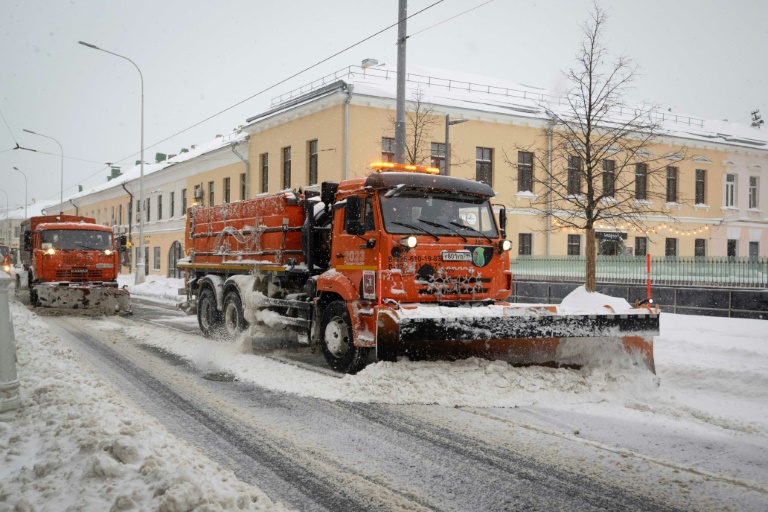
Heavy snowfall descended on the Russian capital on Sunday, disrupting traffic, delaying flights and leaving pavements buried with snow. 

In parts of Moscow, snow piled into mounds over 30 centimetres (12 inches) high, something not usually observed until the end of winter in February, the Fobos weather centre said.

The last time a similar depth of snow was recorded in Moscow in mid-December was in 1989 and in 1993, Fobos added. 

Close to 119,000 people and over 12,500 vehicles were deployed to clear the snow, according to Moscow city authorities, with snowfall forecast to continue until the evening. 

“It’s a snow Armageddon: in Moscow there is such a storm that you can’t walk or drive,” state-controlled Channel One said in a report.

Pavements in some parts of the capital were left completely covered in snow with snow-clearing equipment prioritising roads to ease the heavily congested traffic.

Air traffic was also affected with over 50 flights either delayed or cancelled at Moscow airports.

Spielberg regrets 'Jaws' impact on shark population

Film-maker Steven Spielberg has said he truly regrets the “decimation of the shark population” following the success of his 1975 film “Jaws”.

Spielberg’s Oscar-winning thriller told the story of a man-eating great white shark that attacked a US seaside town, prompting a rise in sports fishing across America.

“I truly and to this day regret the decimation of the shark population because of the book and the film. I really, truly regret that,” Spielberg, 75, told BBC Radio’s Desert Island Discs programme.

According to a study in Nature last year, the world’s population of oceanic sharks has fallen by 71 percent since the 1970s due to overfishing.

The Shark Conservation Fund, meanwhile, says 36 percent of the world’s 1,250 shark and ray species are currently threatened with extinction.

Researchers have blamed films such as “Jaws” for playing a role in the public’s perception of sharks, driving support for killing them.

Others, however, argue that this attributes too much significance to the influence of Hollywood.

Spielberg, who is also known for Hollywood blockbusters including ET, Indiana Jones and Jurassic Park, chose the 10 records he would take if he was stranded on a desert island in the Sunday broadcast.

– ‘It was a tightrope’ –

Asked by presenter Lauren Laverne how he felt about having real sharks circling his desert island, he said: “That’s one of the things I still fear.

“Not to get eaten by a shark, but that sharks are somehow mad at me for the feeding frenzy of crazy sports fishermen that happened after 1975.”

Spielberg also discussed his successful directing career, including his latest project — semi-autobiographical film “The Fabelmans”.

Spielberg’s latest film tells the mostly true story of his own childhood and introduction to film-making in post-war America.

The film, starring Paul Dano and Michelle Williams, has already received wide critical acclaim, picking up top nods at both the 2023 Golden Globes and Critics Choice Awards.

Discussing the making of the film, Spielberg admitted he had initially thought the project would be the “most self indulgent thing I’ve ever asked people to accompany me through”.

Describing it as “$40 million of therapy”, he said: “I didn’t know really what I was doing, except I was answering a need I had.

“Being an orphan, or recently orphaned by the loss of both parents, to recapture some of those memories in some way that wouldn’t seem too indulgent to actors I really respected.

“So it was a tightrope for a while.”

EU reaches deal on major carbon market reform

EU member states and parliamentarians on Sunday announced an agreement for a major reform to the bloc’s carbon market, the central plank of its ambitions to reduce emissions and invest in climate-friendly technologies.

The deal aims to accelerate emissions cuts, phase out free allowances to industries and targets fuel emissions from the building and road transport sectors, according to a European Parliament statement.

The EU Emissions Trading System (ETS) allows electricity producers and industries with high energy demands such as steel and cement to purchase “free allowances” to cover their carbon emissions under a “polluter pays” principle.

The quotas are designed to decrease over time to encourage them to emit less and invest in greener technologies as part of the European Union’s ultimate aim of achieving carbon neutrality.

Negotiators representing member states and the parliament had spent more than 24 hours in intense talks before reaching an agreement on Saturday night that widens the scope of the carbon market.

The deal means emissions in the ETS sectors are to be cut by 62 percent by 2030 based on 2005 levels, up from a previous goal of 43 percent. Concerned industries must cut their emissions by that amount.

The agreement also seeks to accelerate the timetable for phasing out the free allowances, with 48.5 percent phased out by 2030 and a complete removal by 2034, a schedule at the centre of fierce debates between MEPs and member states.

The carbon market will be progressively extended to the maritime sector and intra-European flights. Waste incineration sites will be included from 2028, depending on a favourable report by the commission.

Climate Action Network, a coalition of NGOs, criticised the agreement, saying it would allow major polluters to continue to receive billions of euros in free quotas for another decade while households would receive little.

– ‘Ambitious carbon price’ –

French MEP Pascal Canfin, president of the European Parliament’s environment committee, said the carbon price for industries affected by the ETS would be around 100 euros per tonne.

“No other continent has such an ambitious carbon price,” he tweeted.

A “carbon border tax”, which imposes environmental standards on imports into the bloc based on the carbon emissions linked to their production, will offset the reduction of free allowances and allow industries to compete with more polluting non-EU rivals.

The agreement also aims to make households pay for emissions linked to fuel and gas heating from 2027, but the price will be capped until 2030.

The European Commission had proposed a second carbon market targeting building heating and road fuels, but the plan raised concerns as households grapple with soaring energy prices exacerbated by Russia’s invasion of Ukraine.

The second carbon market would have obliged suppliers of fuel and gas to buy quotas to cover their emissions, but MEPs argued the measure should be limited to offices and large vehicles.

If energy prices continue to spiral, the application of this part of the agreement will be delayed by a year. 

Funds from this second market will go to a “Social Climate Fund” designed to help vulnerable households and businesses weather the energy price crisis.

– ‘Moment of truth’ –

“This deal will provide a huge contribution towards fighting climate change at low costs,” European Parliament rapporteur Peter Liese said in the statement.

“It will give breathing space for citizens and industry in difficult times and provide a clear signal to European industry that it pays off to invest in green technologies.”

The conservative German MEP added the bloc would have until 2026 to invest in green sources and energy efficiency, after which it would be “the moment of truth: we must reduce our emissions by then, or pay dear”.

The commission first proposed the carbon market reform in July 2021 as part of plans to reduce the bloc’s greenhouse gas emissions by at least 55 percent by 2030 compared with 1990 levels.

The ETS was created in 2005 and applies to around 40 percent of EU emissions.

EU reaches deal on major carbon market reform

EU member states and parliamentarians on Sunday announced an agreement for a major reform to the bloc’s carbon market, the central plank of its ambitions to reduce emissions and invest in climate-friendly technologies.

The deal aims to accelerate emissions cuts, phase out free allowances to industries and targets fuel emissions from the building and road transport sectors, according to a European Parliament statement.

The EU Emissions Trading System (ETS) allows electricity producers and industries with high energy demands such as steel and cement to purchase “free allowances” to cover their carbon emissions under a “polluter pays” principle.

The quotas are designed to decrease over time to encourage them to emit less and invest in greener technologies as part of the European Union’s ultimate aim of achieving carbon neutrality.

Negotiators representing member states and the parliament had spent more than 24 hours in intense talks before reaching an agreement on Saturday night that widens the scope of the carbon market.

The deal means emissions in the ETS sectors are to be cut by 62 percent by 2030 based on 2005 levels, up from a previous goal of 43 percent. Concerned industries must cut their emissions by that amount.

The agreement also seeks to accelerate the timetable for phasing out the free allowances, with 48.5 percent phased out by 2030 and a complete removal by 2034, a schedule at the centre of fierce debates between MEPs and member states.

The carbon market will be progressively extended to the maritime sector and intra-European flights. Waste incineration sites will be included from 2028, depending on a favourable report by the commission.

Climate Action Network, a coalition of NGOs, criticised the agreement, saying it would allow major polluters to continue to receive billions of euros in free quotas for another decade while households would receive little.

– ‘Ambitious carbon price’ –

French MEP Pascal Canfin, president of the European Parliament’s environment committee, said the carbon price for industries affected by the ETS would be around 100 euros per tonne.

“No other continent has such an ambitious carbon price,” he tweeted.

A “carbon border tax”, which imposes environmental standards on imports into the bloc based on the carbon emissions linked to their production, will offset the reduction of free allowances and allow industries to compete with more polluting non-EU rivals.

The agreement also aims to make households pay for emissions linked to fuel and gas heating from 2027, but the price will be capped until 2030.

The European Commission had proposed a second carbon market targeting building heating and road fuels, but the plan raised concerns as households grapple with soaring energy prices exacerbated by Russia’s invasion of Ukraine.

The second carbon market would have obliged suppliers of fuel and gas to buy quotas to cover their emissions, but MEPs argued the measure should be limited to offices and large vehicles.

If energy prices continue to spiral, the application of this part of the agreement will be delayed by a year. 

Funds from this second market will go to a “Social Climate Fund” designed to help vulnerable households and businesses weather the energy price crisis.

– ‘Moment of truth’ –

“This deal will provide a huge contribution towards fighting climate change at low costs,” European Parliament rapporteur Peter Liese said in the statement.

“It will give breathing space for citizens and industry in difficult times and provide a clear signal to European industry that it pays off to invest in green technologies.”

The conservative German MEP added the bloc would have until 2026 to invest in green sources and energy efficiency, after which it would be “the moment of truth: we must reduce our emissions by then, or pay dear”.

The commission first proposed the carbon market reform in July 2021 as part of plans to reduce the bloc’s greenhouse gas emissions by at least 55 percent by 2030 compared with 1990 levels.

The ETS was created in 2005 and applies to around 40 percent of EU emissions.

Beloved 'Hollywood Cat' mountain lion euthanized in Los Angeles

Hollywood Cat is no longer.

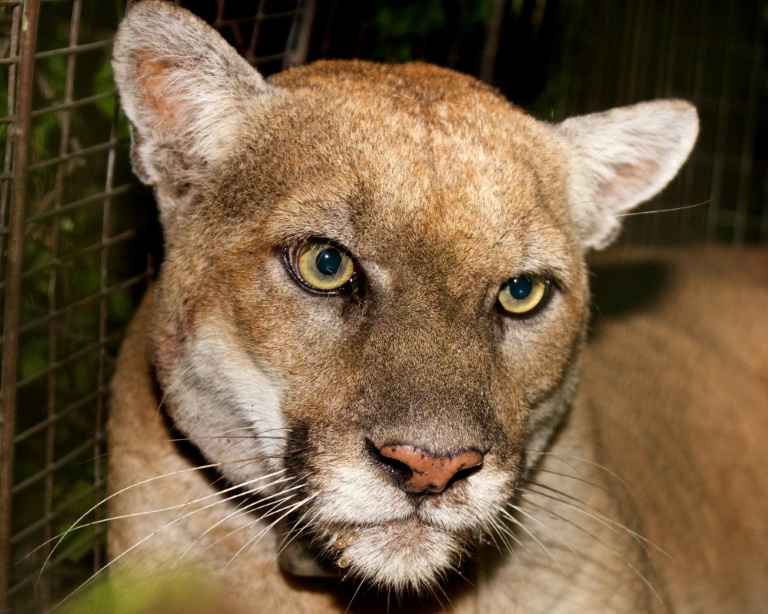
The Los Angeles area’s most famous mountain lion, an aged wild male feline sighted around the city’s Griffith Park, was euthanized Saturday, wildlife officials said.

For years, it was known to prowl around the hillside “Hollywood” sign visible around much of Los Angeles, a fitting setting for a celebrity cat.

It earned the nickname Hollywood Cat, but the mountain lion — estimated to be around 11 years old — is officially called P-22.

State and federal wildlife officers decided earlier this month to capture it due to its erratic behavior, perhaps associated with being struck by a vehicle.

Veterinarians found “significant trauma” to its head, right eye and internal organs, California’s Department of Fish and Wildlife said in a statement.

The experts also found underlying health issues, including “irreversible kidney disease, chronic weight loss, extensive parasitic skin infection over his entire body and localized arthritis.”

“The most difficult, but compassionate choice was to respectfully minimize his suffering and stress by humanely ending his journey,” the statement said.

“Mountain lion P-22 has had an extraordinary life and captured the hearts of the people of Los Angeles and beyond.”

Euthanizing the cougar was a punch to the gut for game experts who had grown to love the animal.

“This really hurts,” said Chuck Bonham, director of the Department of Fish and Wildlife, when he announced P-22’s death, according to USA Today.

“It’s been an incredibly difficult several days.”

– ‘Our favorite celebrity’ –

Congressman Adam Schiff, who represents part of Los Angeles County, said he was “heartbroken” at P-22’s passing.

“He was our favorite celebrity neighbor, occasional troublemaker, and beloved L.A. mascot,” Schiff tweeted.

“But most of all he was a magnificent, wild creature, who reminded us that we are part of a natural world much bigger than ourselves.”

California Governor Gavin Newsom praised P-22’s “incredible journey” in a statement.

“P-22’s survival on an island of wilderness in the heart of Los Angeles captivated people around the world,” Newsom said.

Griffith Park, where P-22 lived for perhaps a decade, is hemmed in by freeways and urban sprawl. It is a nine-square-mile (23-square-kilometer) isolated patch of nature.

Experts marveled at how the wild cat got across either of two major Los Angeles freeways — the 405 and 101 — to get to Griffith Park as early as 2012.

Officials said they were not looking for the driver who hit it.

“This situation is not the fault of P-22, nor of a driver who may have hit him,” the California Department of Fish and Wildlife said.

“Rather, it is an eventuality that arises from habitat loss and fragmentation, and it underscores the need for thoughtful construction of wildlife crossings and well-planned spaces that provide wild animals room to roam.”

In a profile of P-22 done long before its death, the National Park Service lamented that Griffith Park is too small for a second cougar, and “it’s unlikely he will ever find love with a female lion.”

The cat’s renown was due to frequent sightings, video doorbell cameras and physical encounters.

A Facebook page in honor of the cougar has more than 20,000 followers.

Beloved 'Hollywood Cat' mountain lion euthanized in Los Angeles

Hollywood Cat is no longer.

The Los Angeles area’s most famous mountain lion, an aged wild male feline sighted around the city’s Griffith Park, was euthanized Saturday, wildlife officials said.

For years, it was known to prowl around the hillside “Hollywood” sign visible around much of Los Angeles, a fitting setting for a celebrity cat.

It earned the nickname Hollywood Cat, but the mountain lion — estimated to be around 11 years old — is officially called P-22.

State and federal wildlife officers decided earlier this month to capture it due to its erratic behavior, perhaps associated with being struck by a vehicle.

Veterinarians found “significant trauma” to its head, right eye and internal organs, California’s Department of Fish and Wildlife said in a statement.

The experts also found underlying health issues, including “irreversible kidney disease, chronic weight loss, extensive parasitic skin infection over his entire body and localized arthritis.”

“The most difficult, but compassionate choice was to respectfully minimize his suffering and stress by humanely ending his journey,” the statement said.

“Mountain lion P-22 has had an extraordinary life and captured the hearts of the people of Los Angeles and beyond.”

Euthanizing the cougar was a punch to the gut for game experts who had grown to love the animal.

“This really hurts,” said Chuck Bonham, director of the Department of Fish and Wildlife, when he announced P-22’s death, according to USA Today.

“It’s been an incredibly difficult several days.”

– ‘Our favorite celebrity’ –

Congressman Adam Schiff, who represents part of Los Angeles County, said he was “heartbroken” at P-22’s passing.

“He was our favorite celebrity neighbor, occasional troublemaker, and beloved L.A. mascot,” Schiff tweeted.

“But most of all he was a magnificent, wild creature, who reminded us that we are part of a natural world much bigger than ourselves.”

California Governor Gavin Newsom praised P-22’s “incredible journey” in a statement.

“P-22’s survival on an island of wilderness in the heart of Los Angeles captivated people around the world,” Newsom said.

Griffith Park, where P-22 lived for perhaps a decade, is hemmed in by freeways and urban sprawl. It is a nine-square-mile (23-square-kilometer) isolated patch of nature.

Experts marveled at how the wild cat got across either of two major Los Angeles freeways — the 405 and 101 — to get to Griffith Park as early as 2012.

Officials said they were not looking for the driver who hit it.

“This situation is not the fault of P-22, nor of a driver who may have hit him,” the California Department of Fish and Wildlife said.

“Rather, it is an eventuality that arises from habitat loss and fragmentation, and it underscores the need for thoughtful construction of wildlife crossings and well-planned spaces that provide wild animals room to roam.”

In a profile of P-22 done long before its death, the National Park Service lamented that Griffith Park is too small for a second cougar, and “it’s unlikely he will ever find love with a female lion.”

The cat’s renown was due to frequent sightings, video doorbell cameras and physical encounters.

A Facebook page in honor of the cougar has more than 20,000 followers.

From battlefield to glampsite: the story of Saudi's Khaybar

A Saudi town best known for a fierce battle between the Prophet Mohammed and Jewish tribes is remodelling itself as an upscale tourist draw in line with the kingdom’s rebranding efforts.

Situated in an oasis amid a volcanic field north of Medina, the settlement of Khaybar was once home to thousands of Jews, who were defeated in a decisive seventh-century battle with the Prophet’s army as Islam expanded across the Arabian Peninsula.

The chant “Khaybar, Khaybar, o Jews, the army of Mohammed will return” can still sometimes be heard at present-day anti-Israel demonstrations, drawing objections from groups such as the Anti-Defamation League, which says it “can be perceived as a threat of armed violence”.

Last month, Saudi Arabia inaugurated a new visitors’ centre in Khaybar, which takes a longer view of the area’s history by highlighting references in ancient texts to its conquest by Babylonian-era King Nabonidus.

At the centre, displays avoid mentioning the seventh-century battle and tourists can arrange hikes to nearby volcanoes, strolls through lush palm springs or helicopter tours over ancient tombs and desert kites, which are dry stone walls that served as animal traps.

The project is part of a broader push in the conservative Sunni Muslim country, which only began issuing tourism visas in 2019, to attract some 30 million foreign visitors annually by the end of the decade, up from four million last year.

Khaybar tour guide Enass al-Sharif said it was important to shine a light on features of the area that go beyond its significance to Islam.

“Khaybar has a strong relationship with religion and it has a close relationship with the Prophet,” she told AFP.

However, “it also has a strong relationship with history and civilisation. All these things were collected in one place, which is why it is attracting many tourists.”

– ‘Quantum leap’ –

Archaeologists believe Khaybar has been inhabited for over 200,000 years, and it once served as a vital stop along the so-called Incense Route that linked it to Medina to the south, and the desert city of Al-Ula to the north.

But in the 1970s, the Saudi government began pushing residents to leave the old settlements for new structures with modern plumbing and electricity.

“We wanted some civilisation and development… so we left,” recalled Saifi al-Shilali, a Khaybar native who was in his early 20s when his family moved away.

Since then, the old settlements have been abandoned, and Shilali, now in his 60s, is among those who have been agitating for a revival.

The transformation of Khaybar into a potential tourism draw “is something we have been waiting for for a long time,” he told AFP.

“With my interest in research in Khaybar and in tourism… we have been waiting for this moment, so we consider it a quantum leap.”

Like other Saudi attractions such as Al-Ula, a budding arts hub located among ancient Nabataean tombs, Khaybar is largely geared toward well-heeled travellers.

The Khaybar Volcano Camp promises an “exclusive stay” that “takes glamping to another level”, with 10 rooms surrounded by imposing mountains.

The focus lies squarely on the setting rather than the historical events that took place there.

The camp even features a reiki energy healing master named Chamuel who conducts sound meditation sessions, inviting guests to enter “your own magical garden, a place beyond time and space”.

– Unsolved mysteries –

All the while, an archaeological survey and excavation project continues to unearth new details about human activity in the area as well as how its climate has evolved.

The project, backed by the French government and expected to last through the end of 2024, has already yielded a deeper understanding of neolithic campsites, canals and rock art.

Among the most intriguing finds are the “pendant tombs”, rock formations that when viewed from above resemble a pendant hanging from a chain.

The story behind them “remains a mystery”, according to the visitors’ centre, though archaeologists believe they date back 5,000 years.

Khaybar residents like Shilali are eager to learn more about the people who constructed them as part of rounding out a picture of the region’s past — including the Prophet Mohammed’s seventh-century victory, but also everything else.

“I think we are supposed to shed light on Khaybar as a historical region whose roots go back to prehistoric periods, including the Jewish period,” he said. 

“I believe that the history should be known in its true form, without any exaggerations.”

Dam plans threaten China's migratory bird haven

Spooked by a historic drought, local authorities in China have renewed controversial plans to dam the country’s biggest freshwater lake.

But environmentalists warn damming Poyang Lake, a winter stopover for over half a million birds, would threaten the fragile ecosystem and the endangered birds and other wildlife it supports.

China is currently chairing UN biodiversity talks in Montreal, billed as the “last best chance” to save the planet’s species and their habitats from irreversible human destruction.

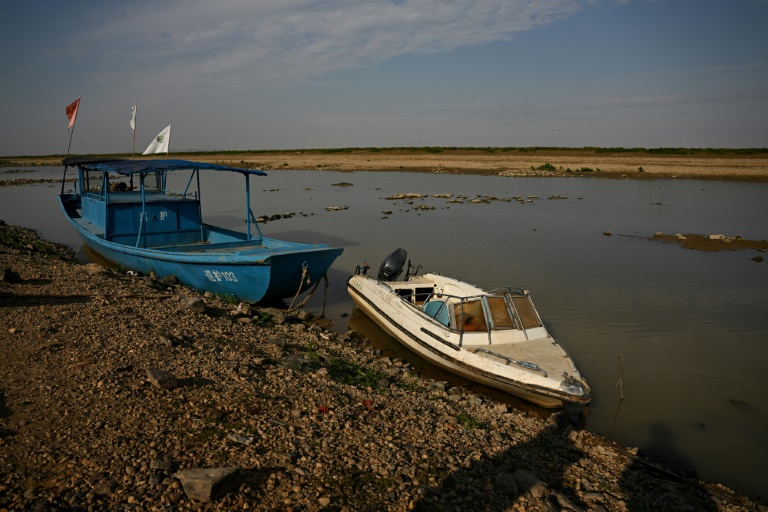
The Poyang dam, which is slowly recovering after shrinking to less than a third of its usual size, shows how fraught such efforts are in China.

Conservationist Zhang Daqian said that if realised, the 3,000-metre-long sluice gate across one of the lake’s channels would cut it off from the river Yangtze, “leaving Poyang a dead lake”.

China has built more than 50,000 dams in the Yangtze basin in the past 70 years — including the Three Gorges, which came in the face of widespread opposition from environmentalists.

Over the same period at least 70 percent of the river’s wetlands have vanished, according to data from the environment ministry.

When the project was initially proposed, complaints from ecologists succeeded in shelving it.

But the looming spectre of droughts — which are becoming ever more frequent and severe in the area thanks to climate change — has altered the calculus.

Poyang supplies water to Jiangxi province’s 4.8 million residents, and the local government says damming it will conserve water, irrigate more farmland and improve navigation.

An environmental impact assessment (EIA) published in May gave experts just two weeks to review 1,200 pages of documents and lodge complaints.

– Winter visitors –

In a normal wet season, Poyang can be three times the size of Los Angeles. 

Its mud flats are the primary winter feeding grounds for hundreds of thousands of birds flying south to escape the chill every autumn. 

They include the critically endangered Siberian crane, the population of which has shrunk to about 4,000.

This year’s drought was the worst in 70 years, with the region entering the dry season three months sooner than usual. 

Still, hundreds of birds were gathering at small pools of water left on the cracked riverbed when AFP visited a reserve in Yongxiu County in early November. 

“Migratory birds are still coming to Poyang, because it’s their habitual winter home,” said an employee surnamed Chen, looking across the dry expanse littered with empty mussel shells and fish skeletons. 

“But there are no fish or shrimp for them to eat. Many birds flock to nearby fields and farmers have been told to leave a bit of their paddy unharvested for the birds,” Chen said.

Officials have pumped water from nearby reservoirs to form small butterfly-shaped watering holes for the birds.

“There are no conflicts (between residents and birds), because migratory birds are nationally-protected animals, and people will not harm them,” He Fangjin, an employee at another wetland park, told AFP. 

At nearby Zhupao Hill, a popular bird-watching spot, about 90,000 migratory birds were spotted from October to early December, up from about 62,000 birds in the same period last year.

– Damage to ecosystem –

It’s not clear what stage of development the dam is currently in, and neither local authorities nor the environment ministry responded to questions put to them by AFP. 

But were they to go ahead, the sluice gate would disrupt the lake’s natural ebb and flow with the Yangtze, potentially threatening the tidal flats the birds feed on, said Lu Xixi, a geography professor at the National University of Singapore.

Losing its natural water circulation could also hurt Poyang’s ability to flush out nutrients, risking an algae build-up that could disrupt the food chain, Lu added.

The dam could also affect another critically endangered species that calls the lake its home — the Yangtze finless porpoise. There are just over 1,000 left in the wild.

During the drought, the porpoises took refuge in the same channel the dam would cut off, a ranger from the Beijing Environmental Protection Prairie League, who has patrolled the lake for over a month, told AFP.

Beijing-based Friends of Nature said the dam EIA failed to do a comprehensive evaluation of whether the porpoises’ migration would be blocked.

“Without comprehensive scientific evidence and before eliminating the environmental risks, the project should not be pushed forward,” the group said in a statement.

Close Bitnami banner
Bitnami