AFP

Franco-US satellite set for unprecedented survey of Earth's water

A Franco-US satellite is due for launch this week on a mission to survey with unprecedented accuracy nearly all water on Earth’s surface for the first time and help scientists investigate its impact on Earth’s climate.

For NASA and France’s space agency CNES, which have worked together in the field for 30 years, it’s a landmark scientific mission with a billion dollar budget.

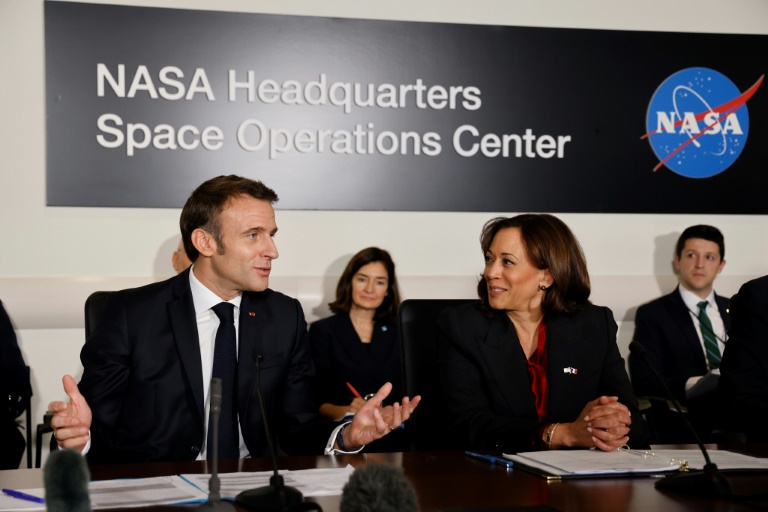
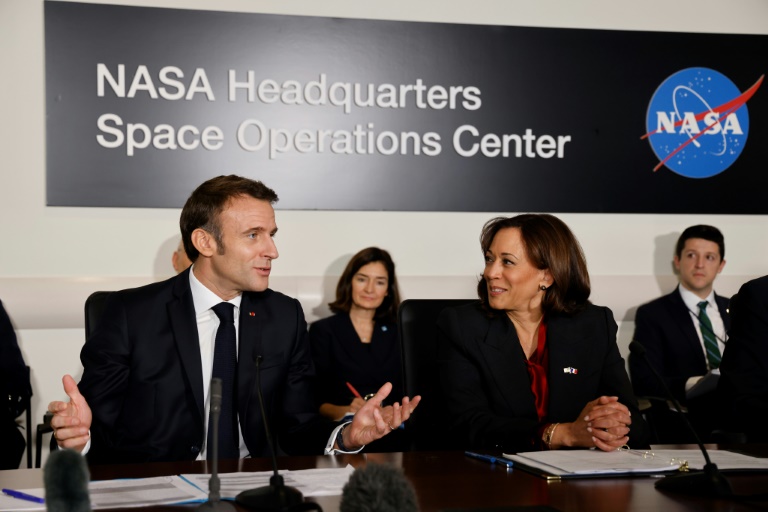
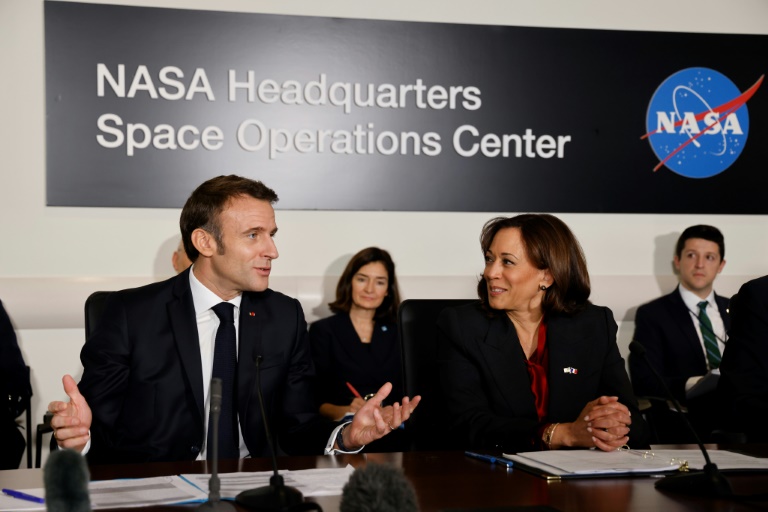
French President Emmanuel Macron went to NASA’s Washington headquarters at the end of November alongside US Vice President Kamala Harris.

He highlighted the liftoff — scheduled for early Thursday on the US west coast — of the Surface Water and Ocean Topography (SWOT) mission to monitor the levels of oceans, lakes and rivers, including in remote locations.

Its predecessor, TOPEX/Poseidon, launched in 1992, was also a Franco-US joint venture that measured ocean surface to an accuracy of 4.2 centimeters (1.7 inches).

It aided the forecast of the 1997-1998 El Nino weather phenomenon and improved understanding of ocean circulation and its effect on global climate.

The 2.2-tonne SWOT mission will be put into orbit from Vandenberg Space Force Base in California atop a SpaceX Falcon 9 rocket.

The satellite’s primary payload is an innovative instrument to measure the height of water called KaRin, or Ka-band radar interferometer. Its two antennas, separated by a big boom, create paralleled swaths of data.

“We’re going to get ten times better resolution than with current technologies to measure sea-surface height and understand the ocean fronts and eddies that help shape climate,” said NASA Earth Science Division Director Karen St. Germain.

“It’s like looking at a car number plate from space when before we could only see a street,” added Thierry Lafon, SWOT project leader at the CNES.

The stakes are high. While the impact of major ocean currents such as the Gulf Stream is known, more local flows and eddies covering dozens of kilometres remain more of a mystery.

But they too affect sea water surface temperatures and heat transfer as well as the absorption by the oceans of carbon dioxide from the atmosphere.

SWOT will improve weather and climate modelling, the observation of coastal erosion and help track how fresh and saltwater bodies change over time.

– Debris-free end of life –

With an “optimal” orbit of 890 kilometers (about 550 miles) above Earth, Lafon said SWOT will “take in all the components that affect water levels such as tides and the sun”.

NASA says SWOT will survey nearly all water on Earth’s surface for the first time.

It will monitor water levels, surface areas and quantities at more than 20 million lakes with shores of more than 250 metres. The entire length of rivers more than 100 metres wide will also be observed.

Water management, flood and drought prevention will be improved, said Lafon.

Flying the satellite to Vandenberg from the Thales Alenia Space (TAS) site in Cannes, southern France, proved a headache.

“Due to the conflict in Ukraine, there were no more Antonov 124s available and the 747 cargo is too small,” said TAS project leader Christophe Duplay.

“We decided to ask the USAF to provide one of its C-5 Galaxies.”

And that meant counting on NASA to have the US air force supply one of its rare giant aircraft to ship the huge payload.

SWOT has an estimated three-year lifetime — although Lafon said “nothing precludes the mission to last five to eight years” — and is set to become the first satellite to make a controlled re-entry into Earth’s atmosphere, reducing the amount of space debris, in line with the French space operations act.

Nearly 80 percent of the 400 kilos (880 pounds) of onboard fuel will be used to that end.
Franco-US satellite set for unprecedented survey of Earth's water

A Franco-US satellite is due for launch this week on a mission to survey with unprecedented accuracy nearly all water on Earth’s surface for the first time and help scientists investigate its impact on Earth’s climate.

For NASA and France’s space agency CNES, which have worked together in the field for 30 years, it’s a landmark scientific mission with a billion dollar budget.

French President Emmanuel Macron went to NASA’s Washington headquarters at the end of November alongside US Vice President Kamala Harris.

He highlighted the liftoff — scheduled for early Thursday on the US west coast — of the Surface Water and Ocean Topography (SWOT) mission to monitor the levels of oceans, lakes and rivers, including in remote locations.

Its predecessor, TOPEX/Poseidon, launched in 1992, was also a Franco-US joint venture that measured ocean surface to an accuracy of 4.2 centimeters (1.7 inches).

It aided the forecast of the 1997-1998 El Nino weather phenomenon and improved understanding of ocean circulation and its effect on global climate.

The 2.2-tonne SWOT mission will be put into orbit from Vandenberg Space Force Base in California atop a SpaceX Falcon 9 rocket.

The satellite’s primary payload is an innovative instrument to measure the height of water called KaRin, or Ka-band radar interferometer. Its two antennas, separated by a big boom, create paralleled swaths of data.

“We’re going to get ten times better resolution than with current technologies to measure sea-surface height and understand the ocean fronts and eddies that help shape climate,” said NASA Earth Science Division Director Karen St. Germain.

“It’s like looking at a car number plate from space when before we could only see a street,” added Thierry Lafon, SWOT project leader at the CNES.

The stakes are high. While the impact of major ocean currents such as the Gulf Stream is known, more local flows and eddies covering dozens of kilometres remain more of a mystery.

But they too affect sea water surface temperatures and heat transfer as well as the absorption by the oceans of carbon dioxide from the atmosphere.

SWOT will improve weather and climate modelling, the observation of coastal erosion and help track how fresh and saltwater bodies change over time.

– Debris-free end of life –

With an “optimal” orbit of 890 kilometers (about 550 miles) above Earth, Lafon said SWOT will “take in all the components that affect water levels such as tides and the sun”.

NASA says SWOT will survey nearly all water on Earth’s surface for the first time.

It will monitor water levels, surface areas and quantities at more than 20 million lakes with shores of more than 250 metres. The entire length of rivers more than 100 metres wide will also be observed.

Water management, flood and drought prevention will be improved, said Lafon.

Flying the satellite to Vandenberg from the Thales Alenia Space (TAS) site in Cannes, southern France, proved a headache.

“Due to the conflict in Ukraine, there were no more Antonov 124s available and the 747 cargo is too small,” said TAS project leader Christophe Duplay.

“We decided to ask the USAF to provide one of its C-5 Galaxies.”

And that meant counting on NASA to have the US air force supply one of its rare giant aircraft to ship the huge payload.

SWOT has an estimated three-year lifetime — although Lafon said “nothing precludes the mission to last five to eight years” — and is set to become the first satellite to make a controlled re-entry into Earth’s atmosphere, reducing the amount of space debris, in line with the French space operations act.

Nearly 80 percent of the 400 kilos (880 pounds) of onboard fuel will be used to that end.
Franco-US satellite set for unprecedented survey of Earth's water

A Franco-US satellite is due for launch this week on a mission to survey with unprecedented accuracy nearly all water on Earth’s surface for the first time and help scientists investigate its impact on Earth’s climate.

For NASA and France’s space agency CNES, which have worked together in the field for 30 years, it’s a landmark scientific mission with a billion dollar budget.

French President Emmanuel Macron went to NASA’s Washington headquarters at the end of November alongside US Vice President Kamala Harris.

He highlighted the liftoff — scheduled for early Thursday on the US west coast — of the Surface Water and Ocean Topography (SWOT) mission to monitor the levels of oceans, lakes and rivers, including in remote locations.

Its predecessor, TOPEX/Poseidon, launched in 1992, was also a Franco-US joint venture that measured ocean surface to an accuracy of 4.2 centimeters (1.7 inches).

It aided the forecast of the 1997-1998 El Nino weather phenomenon and improved understanding of ocean circulation and its effect on global climate.

The 2.2-tonne SWOT mission will be put into orbit from Vandenberg Space Force Base in California atop a SpaceX Falcon 9 rocket.

The satellite’s primary payload is an innovative instrument to measure the height of water called KaRin, or Ka-band radar interferometer. Its two antennas, separated by a big boom, create paralleled swaths of data.

“We’re going to get ten times better resolution than with current technologies to measure sea-surface height and understand the ocean fronts and eddies that help shape climate,” said NASA Earth Science Division Director Karen St. Germain.

“It’s like looking at a car number plate from space when before we could only see a street,” added Thierry Lafon, SWOT project leader at the CNES.

The stakes are high. While the impact of major ocean currents such as the Gulf Stream is known, more local flows and eddies covering dozens of kilometres remain more of a mystery.

But they too affect sea water surface temperatures and heat transfer as well as the absorption by the oceans of carbon dioxide from the atmosphere.

SWOT will improve weather and climate modelling, the observation of coastal erosion and help track how fresh and saltwater bodies change over time.

– Debris-free end of life –

With an “optimal” orbit of 890 kilometers (about 550 miles) above Earth, Lafon said SWOT will “take in all the components that affect water levels such as tides and the sun”.

NASA says SWOT will survey nearly all water on Earth’s surface for the first time.

It will monitor water levels, surface areas and quantities at more than 20 million lakes with shores of more than 250 metres. The entire length of rivers more than 100 metres wide will also be observed.

Water management, flood and drought prevention will be improved, said Lafon.

Flying the satellite to Vandenberg from the Thales Alenia Space (TAS) site in Cannes, southern France, proved a headache.

“Due to the conflict in Ukraine, there were no more Antonov 124s available and the 747 cargo is too small,” said TAS project leader Christophe Duplay.

“We decided to ask the USAF to provide one of its C-5 Galaxies.”

And that meant counting on NASA to have the US air force supply one of its rare giant aircraft to ship the huge payload.

SWOT has an estimated three-year lifetime — although Lafon said “nothing precludes the mission to last five to eight years” — and is set to become the first satellite to make a controlled re-entry into Earth’s atmosphere, reducing the amount of space debris, in line with the French space operations act.

Nearly 80 percent of the 400 kilos (880 pounds) of onboard fuel will be used to that end.

One in five cars on Norway's roads are electric

One in five cars on Norway’s roads are electric, a share that has doubled in less than three years, the Norwegian Electric Vehicle Association said Monday.

“The snowball is rolling faster and faster and a growing number of good electric car models are on Norway’s roads”, the head of the association, Christina Bu, said on its website.

While it took almost 10 years for the country’s electric car fleet to go from zero to 10 percent of the market — a level reached in March 2020 — it took less than three years for the share to then double to 20 percent, the body said.

A market share of 30 percent could be reached within two years, it said.

By comparison, 0.64 percent of cars on France’s roads were electric, according to French government figures from January 2021.

Norway, which is paradoxically Western Europe’s biggest oil and gas producer, aims for all its new cars to be “zero emission” — in other words, electric and hydrogen — by 2025.

Clean cars benefit from several advantages in the Scandinavian country.

Among other things, they are largely tax-free, enjoy lower fares for road tolls and public parking, and can in some cases use public transport lanes.

Electric cars now represent about 80 percent of Norway’s new car registrations, as an increasing number of models become available.

With the growing popularity of these cars, and the loss of income for the state, Norwegian authorities have started to roll back some of the benefits.

As of January 1, the 25 percent VAT exemption on the purchase of new electric vehicles will only apply to the first 500,000 kroner ($50,000) of the car’s price.

The change is expected to affect high-end electric car makes, such as Tesla, Mercedes and Audi.  

Stock markets diverge ahead of key rate decisions

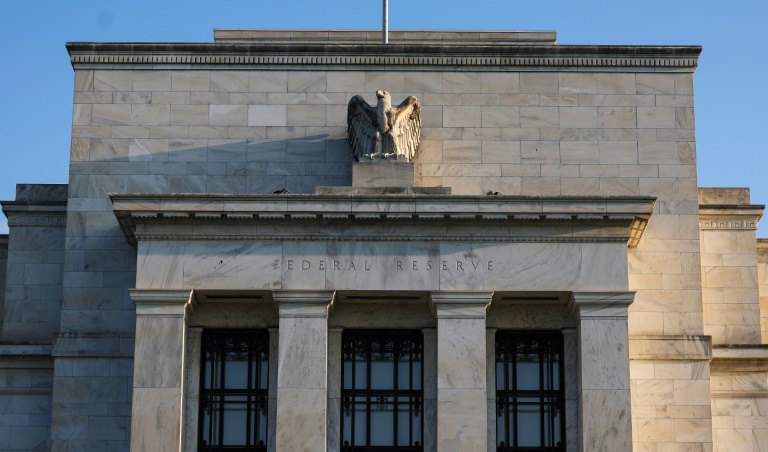
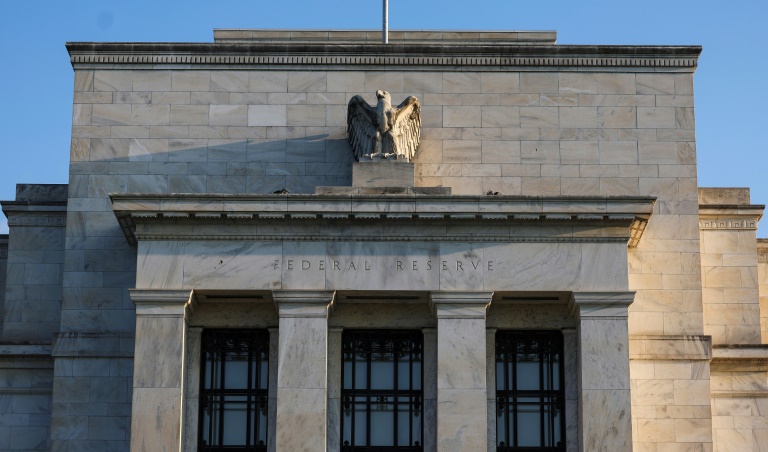
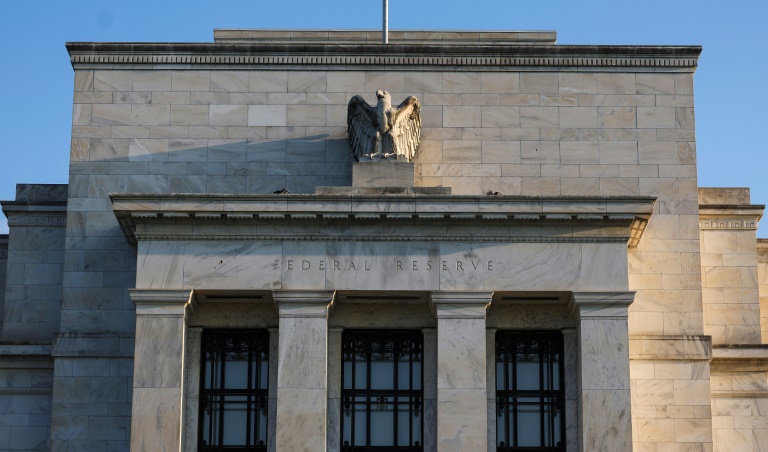
Wall Street pushed higher but European and Asian stock markets dropped Monday as investors looked ahead to interest rate decisions this week from major central banks including the Federal Reserve.

The dollar traded mixed against its main rivals, while oil prices rebounded following sharp falls last week.

Analysts are forecasting the Fed and the European Central Bank to announce smaller rate hikes at their meetings this week compared with recent decisions.

The Bank of England is meanwhile on course for a ninth increase in a row as policymakers try to bring down inflation from the highest levels in decades.

“Following a softer session in Asia, European markets are on edge, opening the week lower ahead of a critical few days for central bank action,” noted Victoria Scholar, head of investment at Interactive Investor. 

Wall Street opened higher, however, as bargain hunters moved in following losses at the end of last week.

“The ECB, the Fed and the Bank of England are expected to raise rates by 50 basis points each as the pace of tightening looks set to slow,” Scholar added.

The half-point jumps will still be steep rises, however, as central banks struggle to cool the pace of price increases, particularly regarding energy and food.

Ahead of the Fed’s policy meeting, investors were set to digest US inflation data due Tuesday.

“It will be a fitting hump day on Wednesday, because the (inflation) data and the Fed decision are big humps the market needs to get over if it wants to make a run at a year-end rally,” said market analyst Patrick J. O’Hare at Briefing.com.

“If either, or both, disappoint in a meaningful way, then a year-end rally becomes a more challenging proposition,” he added.

Traders were keeping an eye also on developments in China as it moves away from the zero-Covid policy that has hammered its economy, the world’s second largest after the United States.

The shift comes after widespread protests against the near three-year strategy, though there is concern about the expected spike in infections.

Uncertainty surrounding the strength of China’s demand recovery has hit oil prices hard, with crude futures shedding more than 10 percent last week.

“The gradual easing of Chinese Covid restrictions is… expected to lead to a further upswing in demand,” said Susannah Streeter, senior investment and markets analyst at Hargreaves Lansdown.

“However, concerns about the rapid spread of the virus remain, and China will have a tough fight on its hands, dealing with an expected explosion of infections while trying to open up the economy.”

– Key figures around 1430 GMT –

London – FTSE 100: DOWN 0.4 percent at 7,446.42 points

Frankfurt – DAX: DOWN 0.5 percent at 14,301.97

Paris – CAC 40: DOWN 0.5 percent at 6,644.94

EURO STOXX 50: DOWN 0.6 percent at 3,918.42

New York – Dow: UP 0.4 percent at 33,597.24

Tokyo – Nikkei 225: DOWN 0.2 percent at 27,842.33 (close)

Hong Kong – Hang Seng Index: DOWN 2.2 percent at 19,463.63 (close)

Shanghai – Composite: DOWN 0.9 percent at 3,179.04 (close)

Euro/dollar: UP at $1.0559 from $1.0534 on Friday

Dollar/yen: UP at 137.04 yen from 136.57 yen

Pound/dollar: UP at $1.2284 from $1.2262

Euro/pound: UP at 85.96 pence from 85.90 pence

West Texas Intermediate: UP 1.2 percent at $71.88 per barrel

Brent North Sea crude: UP 0.4 percent at $76.37 per barrel

burs-rl/imm

Stock markets diverge ahead of key rate decisions

Wall Street pushed higher but European and Asian stock markets dropped Monday as investors looked ahead to interest rate decisions this week from major central banks including the Federal Reserve.

The dollar traded mixed against its main rivals, while oil prices rebounded following sharp falls last week.

Analysts are forecasting the Fed and the European Central Bank to announce smaller rate hikes at their meetings this week compared with recent decisions.

The Bank of England is meanwhile on course for a ninth increase in a row as policymakers try to bring down inflation from the highest levels in decades.

“Following a softer session in Asia, European markets are on edge, opening the week lower ahead of a critical few days for central bank action,” noted Victoria Scholar, head of investment at Interactive Investor. 

Wall Street opened higher, however, as bargain hunters moved in following losses at the end of last week.

“The ECB, the Fed and the Bank of England are expected to raise rates by 50 basis points each as the pace of tightening looks set to slow,” Scholar added.

The half-point jumps will still be steep rises, however, as central banks struggle to cool the pace of price increases, particularly regarding energy and food.

Ahead of the Fed’s policy meeting, investors were set to digest US inflation data due Tuesday.

“It will be a fitting hump day on Wednesday, because the (inflation) data and the Fed decision are big humps the market needs to get over if it wants to make a run at a year-end rally,” said market analyst Patrick J. O’Hare at Briefing.com.

“If either, or both, disappoint in a meaningful way, then a year-end rally becomes a more challenging proposition,” he added.

Traders were keeping an eye also on developments in China as it moves away from the zero-Covid policy that has hammered its economy, the world’s second largest after the United States.

The shift comes after widespread protests against the near three-year strategy, though there is concern about the expected spike in infections.

Uncertainty surrounding the strength of China’s demand recovery has hit oil prices hard, with crude futures shedding more than 10 percent last week.

“The gradual easing of Chinese Covid restrictions is… expected to lead to a further upswing in demand,” said Susannah Streeter, senior investment and markets analyst at Hargreaves Lansdown.

“However, concerns about the rapid spread of the virus remain, and China will have a tough fight on its hands, dealing with an expected explosion of infections while trying to open up the economy.”

– Key figures around 1430 GMT –

London – FTSE 100: DOWN 0.4 percent at 7,446.42 points

Frankfurt – DAX: DOWN 0.5 percent at 14,301.97

Paris – CAC 40: DOWN 0.5 percent at 6,644.94

EURO STOXX 50: DOWN 0.6 percent at 3,918.42

New York – Dow: UP 0.4 percent at 33,597.24

Tokyo – Nikkei 225: DOWN 0.2 percent at 27,842.33 (close)

Hong Kong – Hang Seng Index: DOWN 2.2 percent at 19,463.63 (close)

Shanghai – Composite: DOWN 0.9 percent at 3,179.04 (close)

Euro/dollar: UP at $1.0559 from $1.0534 on Friday

Dollar/yen: UP at 137.04 yen from 136.57 yen

Pound/dollar: UP at $1.2284 from $1.2262

Euro/pound: UP at 85.96 pence from 85.90 pence

West Texas Intermediate: UP 1.2 percent at $71.88 per barrel

Brent North Sea crude: UP 0.4 percent at $76.37 per barrel

burs-rl/imm

Stock markets diverge ahead of key rate decisions

Wall Street pushed higher but European and Asian stock markets dropped Monday as investors looked ahead to interest rate decisions this week from major central banks including the Federal Reserve.

The dollar traded mixed against its main rivals, while oil prices rebounded following sharp falls last week.

Analysts are forecasting the Fed and the European Central Bank to announce smaller rate hikes at their meetings this week compared with recent decisions.

The Bank of England is meanwhile on course for a ninth increase in a row as policymakers try to bring down inflation from the highest levels in decades.

“Following a softer session in Asia, European markets are on edge, opening the week lower ahead of a critical few days for central bank action,” noted Victoria Scholar, head of investment at Interactive Investor. 

Wall Street opened higher, however, as bargain hunters moved in following losses at the end of last week.

“The ECB, the Fed and the Bank of England are expected to raise rates by 50 basis points each as the pace of tightening looks set to slow,” Scholar added.

The half-point jumps will still be steep rises, however, as central banks struggle to cool the pace of price increases, particularly regarding energy and food.

Ahead of the Fed’s policy meeting, investors were set to digest US inflation data due Tuesday.

“It will be a fitting hump day on Wednesday, because the (inflation) data and the Fed decision are big humps the market needs to get over if it wants to make a run at a year-end rally,” said market analyst Patrick J. O’Hare at Briefing.com.

“If either, or both, disappoint in a meaningful way, then a year-end rally becomes a more challenging proposition,” he added.

Traders were keeping an eye also on developments in China as it moves away from the zero-Covid policy that has hammered its economy, the world’s second largest after the United States.

The shift comes after widespread protests against the near three-year strategy, though there is concern about the expected spike in infections.

Uncertainty surrounding the strength of China’s demand recovery has hit oil prices hard, with crude futures shedding more than 10 percent last week.

“The gradual easing of Chinese Covid restrictions is… expected to lead to a further upswing in demand,” said Susannah Streeter, senior investment and markets analyst at Hargreaves Lansdown.

“However, concerns about the rapid spread of the virus remain, and China will have a tough fight on its hands, dealing with an expected explosion of infections while trying to open up the economy.”

– Key figures around 1430 GMT –

London – FTSE 100: DOWN 0.4 percent at 7,446.42 points

Frankfurt – DAX: DOWN 0.5 percent at 14,301.97

Paris – CAC 40: DOWN 0.5 percent at 6,644.94

EURO STOXX 50: DOWN 0.6 percent at 3,918.42

New York – Dow: UP 0.4 percent at 33,597.24

Tokyo – Nikkei 225: DOWN 0.2 percent at 27,842.33 (close)

Hong Kong – Hang Seng Index: DOWN 2.2 percent at 19,463.63 (close)

Shanghai – Composite: DOWN 0.9 percent at 3,179.04 (close)

Euro/dollar: UP at $1.0559 from $1.0534 on Friday

Dollar/yen: UP at 137.04 yen from 136.57 yen

Pound/dollar: UP at $1.2284 from $1.2262

Euro/pound: UP at 85.96 pence from 85.90 pence

West Texas Intermediate: UP 1.2 percent at $71.88 per barrel

Brent North Sea crude: UP 0.4 percent at $76.37 per barrel

burs-rl/imm

'Banshees of Inisherin' tops nominations as Golden Globes attempt comeback

Irish black comedy “The Banshees of Inisherin” topped the Golden Globes nominations Monday, as the scandal-struck Hollywood award show attempts to rebuild its reputation following last year’s boycott by A-listers and studios.

The movie from Disney-owned Searchlight Pictures picked up a whopping eight nods, including nominations for its star Colin Farrell, director Martin McDonagh, and for best comedy or musical — the most achieved by any film since “Cold Mountain” back in 2003.

Surreal sci-fi “Everything Everywhere All at Once” earned six nominations, while raucous Hollywood Golden Age drama “Babylon” and Steven Spielberg’s deeply personal “The Fabelmans” took five each.

The Hollywood Foreign Press Association, which organizes the film and television awards, has scrambled to reform itself since long-harbored criticisms of the group’s practices went public in early 2021.

Tinseltown completely distanced itself from the Globes last January over members’ lack of diversity, alleged corruption and lack of professionalism, and the show took place behind closed doors.

But broadcaster NBC has gambled that it is time to bring back the glitzy gala, which will take place in Beverly Hills on January 10.

Tinseltown is waiting to see which stars will show up. 

Brendan Fraser, who was nominated Monday for his starring role in “The Whale,” a drama about a morbidly obese man, has already said he will not attend the awards.

“It’s because of the history that I have with them. And my mother didn’t raise a hypocrite,” Fraser told GQ last month.

Fraser has alleged that a former HFPA president, Philip Berk, sexually assaulted him at an industry event in 2003. Berk denies the incident, and has since been expelled from the group for calling Black Lives Matter a “racist hate movement.”

Tom Cruise, who was widely seen as a strong contender in the acting categories this awards season for his lead role in “Top Gun: Maverick,” was overlooked by Globes voters Monday.

Cruise last year returned his three Golden Globes to the HFPA in protest at its behavior.

– Star power –

Nominations for the 80th Golden Globes were unveiled on NBC’s “Today” program Monday.

The Globes honor both film and television. Unlike the Oscars, the show divides its movies into “drama” and “comedy or musical” categories — hence boosting the star power by increasing the number of nominees.

Along with Spielberg’s “The Fabelmans” and “Top Gun: Maverick,” other films nominated for best drama included Baz Luhrmann’s rock-and-roll biopic “Elvis,” and James Cameron’s eagerly awaited “Avatar” sci-fi sequel.

“Tar,” which stars Cate Blanchett as a ruthless classical conductor, took the final drama spot.

In comedy or musical “Banshees,” “Everything Everywhere” and “Babylon” were joined by whodunnit sequel “Glass Onion: A Knives Out Mystery” and Cannes festival Palme d’Or-winner “Triangle of Sadness.”

No female movie directors were nominated this year. Spielberg, Cameron, Luhrmann and McDonagh will vie with “Everything Everywhere” directors Daniel Kwan and Daniel Scheinert.

A-listers among the acting nominees included Daniel Craig (“Glass Onion”) Hugh Jackman (“The Son”) Angela Bassett (“Black Panther: Wakanda Forever”) and Olivia Colman (“Empire of Light.”)

Danielle Deadwyler’s powerful performance as the mother of 14-year-old lynching victim Emmett Till in “Till” was among the morning’s most surprising omissions.

On the television side, comedy “Abbott Elementary” led with five nominations, while Netflix’s British royals drama “The Crown” was among several shows earning four nods.

– ‘Not the old HFPA’ –

In response to last year’s controversy, the HFPA has expanded its voting body to include people with more diverse backgrounds, banned members from accepting gifts, and halted its in-person press conferences with stars, which were often derided for the improper behavior of some members.

“This is really not the old HFPA anymore,” president Helen Hoehne recently told The Hollywood Reporter.

“I respect Brendan Fraser’s decision… And I personally, sincerely hope there’s a way for us to move forward and we are able to regain Mr Fraser’s trust, along with the trust of the entire entertainment community,” she added.

Still, powerful Hollywood publicists remain divided over the Globes, with some expressing skepticism about the reforms — and a reluctance to return to the event with their stars.

A plan by US billionaire Todd Boehly to spin off the awards show into a for-profit entity and pay salaries to members has raised eyebrows.

Mercedes plans 1 bn-euro electric van plant in Poland

German automaker Mercedes-Benz said Monday it planned to inject more than one billion euros into a new plant in Poland dedicated to building fully electric vans.

The site will be located in Jawor, southwestern Poland, where the group has already been manufacturing combustion engines since 2019 and battery systems since 2021.

“We will build our first pure electric plant in Jawor,” Mathias Geisen, head of Mercedes‑Benz Vans, said in a statement.

The move would “ensure our leading position in the field of all-electric light commercial vehicles” while at the same time “preserving the long-term prospects of the existing plants in Europe”, he added.

At a press conference in Warsaw, Geisen said the group planned to spend more than a billion euros on setting up the new site.

“The investment announced by Mercedes today is for Poland a very, very important investment,” Polish Prime Minister Mateusz Morawiecki told reporters.

It comes as Mercedes-Benz and rival automakers around the globe are spending vast sums as part of a major industry-wide shift towards electrification.

Mercedes had initially planned to partner with US start-up Rivian and build all-electric vans in Europe together.

But Mercedes on Monday said plans to establish a joint venture were “on hold due to Rivian’s ongoing reprioritisation of projects”.

Rivian, which has been grappling with supply chain woes that have forced it to curb production this year, said it had decided “to pause discussions” with Mercedes.

“At this point in time, we believe focusing on our consumer business, as well as our existing commercial business, represent the most attractive near-term opportunities to maximise value for Rivian,” CEO RJ Scaringe said in a statement.

Three boys die after falling into frozen lake in UK: police

Three boys aged eight, 10 and 11 have died and another boy remains in critical condition after they fell into an icy lake near Birmingham, central England, police said Monday.

“Three boys have tragically died after falling into the lake at Babbs Mill Park in Solihull yesterday afternoon,” West Midlands Police said in a statement.

The boys suffered a cardiac arrest and were rushed to hospital after being pulled from the water.

“Sadly, they could not be revived and our thoughts are with their family and friends at this deeply devastating time,” said police.

“A fourth boy, aged six, remains in a critical condition in hospital.”

Witnesses reported seeing other children on the lake, which froze during a cold snap that has hit swathes of Britain, but police have not reported anyone else missing. 

Emergency services were quickly on the scene, with fire and police officers wading into the frozen water in their uniforms, Solihull Superintendent Richard Harris said in a news conference.

One officer attempted to punch through the ice to get to the boys, he added.

Harris said the families were “absolutely devastated” and the fact it occurred during the Christmas period “adds to the tragedy”.

Identities of the victims will not be released until the families agree to do so, he added.

– Arctic blast –

The tragedy came as the UK was hit by heavy snow and freezing conditions, causing major travel disruption, on the eve of a national rail strike Tuesday that was already expected to bring the country to a grinding halt.

The UK has been experiencing a cold snap for several days, with temperatures dropping to -10 degrees Celsius (14 degrees Fahrenheit) in some areas, although the Met Office said the temperatures were “not unusual for this time of year”. 

The service has issued yellow alerts for snow, fog and frost in several areas, including southeast and southwest England, and the north of Scotland.

London Stansted airport warned of disruption. 

“Our runway is temporarily closed whilst we undertake snow clearing,” it said late Sunday, with many flights cancelled early Monday.

The airport later said that the runway was open and fully operational, but that travellers should still brace for delays.

The airport is a main hub of budget airline Ryanair, which also cautioned about disruption to its flights at Gatwick, south of London.

“Due to ongoing severe snowy weather across the UK, runways at both Stansted and Gatwick have been temporarily closed tonight (11 December), disrupting all flights scheduled to depart Stansted/Gatwick during this temporary closure period,” it said.

Dozens of stranded passengers posted videos on social media showing snow-covered runways and planes stuck on the ground.

More than 50 flights were also cancelled on Sunday at Heathrow, the UK’s largest airport, due to freezing fog. 

Train and bus services in London were also severely affected after the dump of around four inches (10 centimetres) of snow overnight, which also forced the closure of parts of the M25 orbital road around the capital, the country’s busiest motorway.

Some schools were also shut.

Close Bitnami banner
Bitnami