AFP

China's 'iPhone city' under Covid lockdown after violent clashes

Six million people were on Friday under Covid lockdown in a Chinese city home to the world’s largest iPhone factory, after clashes between police and workers furious over pay.

Authorities have ordered residents of eight districts in Zhengzhou, in the central province of Henan, not to leave the area for the next five days, building barriers around “high-risk” apartment buildings and setting up checkpoints to restrict travel.

There have been only a handful of coronavirus cases in the city.

The orders follow protests by hundreds of employees over conditions and pay at Foxconn’s vast iPhone factory on the outskirts of the city, with fresh images of rallies emerging Friday.

Video footage published on social media and geolocated by AFP showed a large group of people walking down a street in the east of the city, some holding signs.

“So many people,” a man can be heard saying. AFP was unable to verify precisely when the protests took place. 

And after scores of workers left the plant Thursday with payouts of 10,000 yuan ($1,400) from Foxconn, posts on Chinese short-video apps Douyin and Kuaishou said the Taiwanese tech giant was turning away many of the thousands of people that had answered its hiring ads after a raft of departures in October.

Many of those who have arrived to take up newly vacant posts at the factory are now stuck in quarantine hotels outside the plant, multiple workers told AFP.

“We are in a quarantine hotel, and have no way of going to the Foxconn campus,” one worker who asked to remain anonymous said.

Another employee said those turned away had been promised 10,000 yuan in compensation for being forced to quarantine, but received only a fraction of that amount.

“They are not letting us start the job and we cannot return home, Zhengzhou is under lockdown,” one worker forced to quarantine in nearby Ruzhou city, after being promised employment at Foxconn, told AFP.

He added that there were multiple small-scale protests in other Henan cities by Foxconn workers made to quarantine and unable to start work.

The unrest in Zhengzhou comes against the backdrop of mounting public frustration over the government’s zero-tolerance approach to Covid, which compels local authorities to impose gruelling lockdowns, travel restrictions and mass testing.

With China’s daily caseload at 33,000 on Friday — a record for the country of 1.4 billion — the unrelenting zero-Covid push has sparked sporadic protests and hit productivity in the world’s second-largest economy.

In the southeastern manufacturing hub of Guangzhou, millions of people have been ordered not to leave their homes without a negative virus test.

Social media footage published on Friday and geolocated by AFP showed residents of the city’s Haizhu district dismantling barricades and throwing objects at police in hazmat attire.

“What are you doing? What are you doing?” one police officer holding a shield can be heard asking as he and his colleagues back away from the projectiles.

China's 'iPhone city' under Covid lockdown after violent clashes

Six million people were on Friday under Covid lockdown in a Chinese city home to the world’s largest iPhone factory, after clashes between police and workers furious over pay.

Authorities have ordered residents of eight districts in Zhengzhou, in the central province of Henan, not to leave the area for the next five days, building barriers around “high-risk” apartment buildings and setting up checkpoints to restrict travel.

There have been only a handful of coronavirus cases in the city.

The orders follow protests by hundreds of employees over conditions and pay at Foxconn’s vast iPhone factory on the outskirts of the city, with fresh images of rallies emerging Friday.

Video footage published on social media and geolocated by AFP showed a large group of people walking down a street in the east of the city, some holding signs.

“So many people,” a man can be heard saying. AFP was unable to verify precisely when the protests took place. 

And after scores of workers left the plant Thursday with payouts of 10,000 yuan ($1,400) from Foxconn, posts on Chinese short-video apps Douyin and Kuaishou said the Taiwanese tech giant was turning away many of the thousands of people that had answered its hiring ads after a raft of departures in October.

Many of those who have arrived to take up newly vacant posts at the factory are now stuck in quarantine hotels outside the plant, multiple workers told AFP.

“We are in a quarantine hotel, and have no way of going to the Foxconn campus,” one worker who asked to remain anonymous said.

Another employee said those turned away had been promised 10,000 yuan in compensation for being forced to quarantine, but received only a fraction of that amount.

“They are not letting us start the job and we cannot return home, Zhengzhou is under lockdown,” one worker forced to quarantine in nearby Ruzhou city, after being promised employment at Foxconn, told AFP.

He added that there were multiple small-scale protests in other Henan cities by Foxconn workers made to quarantine and unable to start work.

The unrest in Zhengzhou comes against the backdrop of mounting public frustration over the government’s zero-tolerance approach to Covid, which compels local authorities to impose gruelling lockdowns, travel restrictions and mass testing.

With China’s daily caseload at 33,000 on Friday — a record for the country of 1.4 billion — the unrelenting zero-Covid push has sparked sporadic protests and hit productivity in the world’s second-largest economy.

In the southeastern manufacturing hub of Guangzhou, millions of people have been ordered not to leave their homes without a negative virus test.

Social media footage published on Friday and geolocated by AFP showed residents of the city’s Haizhu district dismantling barricades and throwing objects at police in hazmat attire.

“What are you doing? What are you doing?” one police officer holding a shield can be heard asking as he and his colleagues back away from the projectiles.
'Where are the mackerel?' Alarm as Bosphorus fish stocks crash

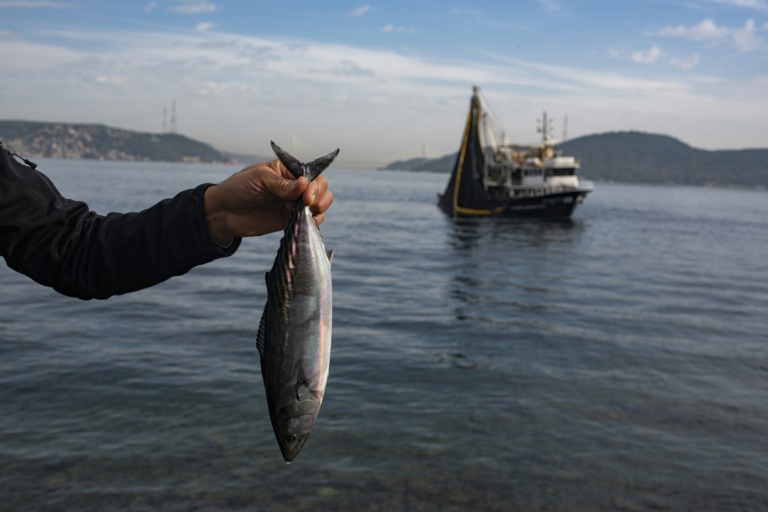
Despondent Sunday anglers watch crestfallen as a trawler winches an enormous net out of the waters of the Bosphorus.

“Clear off!” they shout from the shore, impatient to get their hooks back into the depths of the strait that runs through Istanbul.

“I have been here since 6 am but a trawler came and dropped its nets. That blocked us completely,” grumbled Mehmet Dogan, fed-up at only having caught one fish all day, a 40-centimetre (16-inch) bonito.

It is high season for the popular variety of tuna, with shoals teeming through the Bosphorus on their way from the Black Sea to the Mediterranean.

But pulled taut across the strait are fishing nets more than a kilometre (3,280 feet) long.

Anglers like Dogan who cram shoulder to shoulder along the banks say the nets leave them with little chance — and the fish with even less.

Fish stocks in the Bosphorus have plummeted, according to Saadet Karakulak of Istanbul University. In the space of a few years, hauls have fallen from 500,000 to 600,000 tonnes a year to 328,000 tonnes, she said, saying it is “proof that stocks are diminishing”.

“Because of these boats, the fish can’t enter the Bosphorus,” rued angler Murat Ayhanoglu, standing at Kirecburnu cove on the European side. “They can’t leave their eggs here.”

Nearby on the Gorenler II, a 35-metre trawler, the crew heaved in a net weighed down with fish.

There’s no chance of catching anything when boats like that are here, said Ayhanoglu, as he reeled off a list of fish getting ever rarer in the Bosphorus — horse mackerel, anchovy, picarel and bluefish.

– ‘Race to overfish’ –

But the dramatic fall in stocks didn’t stop the government trying to close the strait to traffic for half a day this month to give free rein to commercial fishing boats. 

The transport ministry later backed down after protests from scientists and campaigners about the “race to overfish” what they term is a biologically important “corridor”.

“You can’t do that. Stocks are in danger… We need sustainability,” said Bayram Ozturk, head of the marine biology department at Istanbul University.

He said it was high time for quotas on some species, with the anchovy currently threatened.

Plastic waste, pollution and heavy maritime traffic are also blighting fish stocks in one of the world’s business shipping lanes, warned Ozturk, who is also director of the Turkish Marine Research Foundation.

From container ships to tankers to bulk carriers transporting badly needed Ukrainian cereals to world markets, more than 200 ships a day pass through the Bosphorus.

With the strait only 760 metres wide at its narrowest point, Ozturk said fish stocks need to be managed by the region’s nations.

“Fish don’t have a passport. They spawn on the Ukrainian side (of the Black Sea), travel to the Turkish side”, he said, and might end up being eaten on Greek island.

– ‘We have to make sacrifices’ –

Competition between trawlers is “ferocious”, said captain Serkan Karadeniz as his boat waited to leave the quay to fish for bonito, having chased them all the way from its home port of Samsun on Turkey’s northern coast. 

The Gorenler has come from all the way from Canakkale on the Aegean Sea.

“October to November is when the fish migrate the most, to the Marmara and Aegean” seas, said Erdogan Kartal, head of Istanbul’s fishery cooperative.

The 60-year-old, who has been fishing since he was a lad, said fish “are getting smaller and smaller. 

“We have started to catch fish that have never had the chance to spawn, which is dangerous.”

He no longer sees the mackerel that were once so abundant.

“Where are the beautiful mackerel that we used to eat every day?” Kartal lamented, saying quota and size limits had to be set.

“We have to make some sacrifices,” he said. “If we let the fish pass, they will return.”

French-Lebanese architect seeks pro-climate construction transformation

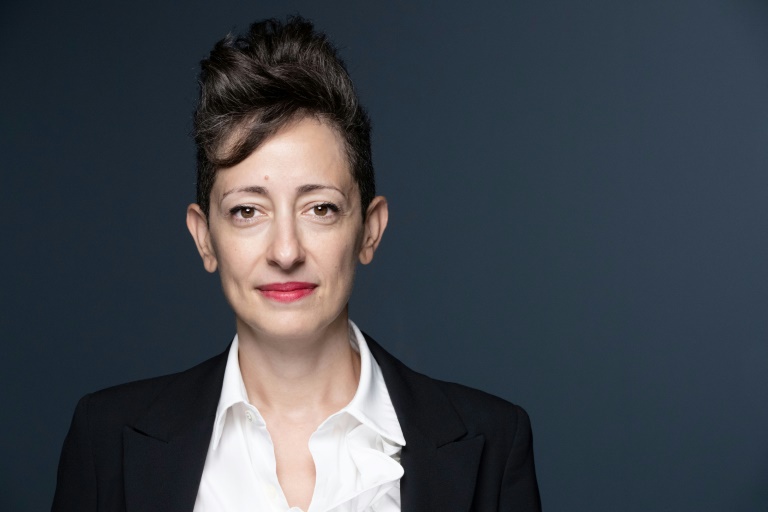
Lina Ghotmeh has pegged her career on sustainable construction.

The French-Lebanese architect wants to see her industry transformed by drastically reducing the use of concrete — a major CO2 contributor — using more local materials and reusing existing buildings and materials.

“We need to change our value system,” the 42-year-old told AFP last month.

The aim is to reduce the carbon footprint of the construction industry and create buildings that can better resist the impacts of climate change.

But it’s not an easy battle.

The industry accounts for almost 40 percent of global greenhouse gas emissions, according to the United Nations.

Ghotmeh, who designed the Estonian National Museum and taught at Yale University, doesn’t advocate for fewer buildings — she knows that’s an unrealistic goal in a world with a growing population.

“That would be like saying ‘stop eating,'” she said.

– ‘Don’t demolish’ –

Instead, we should “keep what already exists, don’t demolish,” but refurbish and retrofit old buildings in a sustainable way where possible.

Building a new detached house consumes 40 times more resources than renovating an existing property, and for a new apartment complex that rises to 80 times more, according to the French Agency for Ecological Transition (Ademe).

And where new constructions are needed, local materials and design should be used in a way that incorporates natural surroundings and saves energy.

Ghotmeh used more than 500,000 bricks made from local dirt for a new Hermes building in France, expected to open early next year.

The bricks also regulate the building’s temperature and reduce energy needs.

The building will produce as much energy as it consumes, by being made energy efficient and using geothermal power.  

– ‘Circular thinking’ –

Architects must, early in the project process, “think in a circular way,” Ghotmeh said, choosing reusable organic or natural materials like wood, hemp, linen or stone.

This shouldn’t stymie the design process either, she insists.

“In Canada, we build wooden towers, in Japan too. It’s a material that is quite capable of being used for tall buildings,” added Ghotmeh, who will build a wooden tower in Paris in 2023.

Another key approach is to build lighter, using less material and fewer toxins.

And then there’s concrete, the main material in so many modern buildings and perhaps the most challenging to move away from.

“We must drastically reduce the use of concrete”, she said, insisting it should only be used for essential purposes, such as foundations and building in earthquake-prone areas. 

Some 14 billion cubic metres of concrete are used every year, according to the Global Cement and Concrete Association.  

It emits more CO2 than the aviation industry, largely because of the intense heat required to make it. 

Alternatives to concrete already exist, such as stone, or making cement — a component of concrete — from calcium carbonate. There are also pushes for low-carbon cement made from iron and steel industry waste.

– Beirut inspiration –

Building more sustainably often comes with a higher price tag — it costs more to double or triple glaze windows and properly insulate a house — but the long-term payoff is lower energy costs.

For Ghotmeh, it’s an imperative investment in our future. 

It was her birthplace of Beirut that inspired her to become an architect, spurring a desire to rebuild the so-called “collapsed city” ravaged by war.

In 2020, she completed the “Stone Garden” apartment tower in the city, built with concrete covered with a combed coating, a technique often used by local craftsmen. She used concrete in the construction because of earthquake risks.

The building was strong enough to survive the port explosion in 2020 that destroyed a large part of the city.

And the city continues to inspire her today, even when it comes to climate sustainability.   

“Since there is practically only an hour of electricity per day, all the buildings have solar panels now. There is a kind of energy independence which is beginning to take place, by force,” she said. 

“Does it take a catastrophe like the one in Lebanon to make this transition?”

Twitter aims to diversify beyond advertising, but can it be done?

Is it a pipe dream or possibility? Elon Musk wants to diversify Twitter’s revenue stream beyond advertising, a feat none of the biggest social networks have yet pulled off.

Something of a gold standard, social media ads can be fine-tuned and tailored to individual users on a mass scale, and have been particularly lucrative for Meta’s Facebook and Instagram, as well as Google.

“Facebook pretty much set the standard for having an ad model for social networks,” said Jasmine Enberg, an analyst at Insider Intelligence. “But that doesn’t necessarily have to be the way that social platforms monetize.”

Social networks are facing budget cuts from inflation-afflicted advertisers and increased regulations on the use of lucrative personal data, so it makes sense for them “to be exploring new, non-ad monetization techniques,” she said.

The issue is delicate for Twitter, whose turnover is 90 percent dependent on advertising. Advertisers, on the other hand, do not necessarily need Twitter and can turn to other social networks.

The advertising situation at Twitter has been particularly dire since Musk took over the company in late October.

In recent weeks, half of Twitter’s 100 top advertisers have announced they are suspending or have otherwise “seemingly stopped advertising on Twitter,” an analysis conducted by nonprofit watchdog group Media Matters found.

They fear being associated with toxic content as Musk, who describes himself as a “free speech absolutist,” advocates for laxer moderation.

– Alternate solutions –

Social media sites are testing two alternate solutions in particular: charging everyday users and charging content creators. 

The forum platform Reddit has deployed a hybrid model, making money via advertising, paid subscriptions and digital coins that allow users access to special privileges.

That said, “It’s always hard to charge for something that used to be free,” said Carolina Milanesi of research firm Creative Strategies. 

“Unless you give something different or create a different product, you can’t go from not charging to charging,” she said.

While Twitter has been offering a paid subscription with additional features since last year, Musk aimed to raise the price to $8 a month and include account verification in the plan’s perks. 

A partial launch was chaotic, however, and prompted the proliferation of so many fake accounts that the rollout of so-called Twitter Blue has now been paused.

“Figuring out a way to charge users for premium features and make money off of users is not a bad idea,” Enberg said.

But she said the benefits Twitter offered may not have been enticing enough, and that the verification aspect should be more of a security feature than a monetizable feature.

Finally, because paid subscribers — arguably the most active on the network — would see 50 percent less advertising than non-paying users, the plan would “dilute the quality and the size of the addressable audience for advertisers.”

Some newer platforms are trying to do without advertising altogether, with no guarantee of long-term viability.

For example, on Discord, a live-discussion social network, subscribers have access to more emoticons.

And on the fledgling photo-sharing app BeReal, users can escape ads with in-app purchases for extra features, according to the Financial Times.

– ‘Big-name influencers’ –

Twitter had some 230 million daily active users as of June, and Musk continues to congratulate himself on growing that number since taking over.

But increased users do not necessarily translate into dollars.

Snapchat, which also launched a paid version in June, has gained more and more users, but not necessarily money.

Faced with this reality, platforms are competing for content creators to attract and retain audiences — and either taking commission or making them pay for the promotion of their messages and videos.

This represents “a really big opportunity” for Twitter, Enberg said. 

Twitter “does have a lot of celebrities and big-name influencers, politicians and journalists” with whom it could form a mutually financially beneficial relationship, she said.

Milanesi added that while the network already offers some promotional tools, they are “quite expensive, and not very effective.”

Twitter aims to diversify beyond advertising, but can it be done?

Is it a pipe dream or possibility? Elon Musk wants to diversify Twitter’s revenue stream beyond advertising, a feat none of the biggest social networks have yet pulled off.

Something of a gold standard, social media ads can be fine-tuned and tailored to individual users on a mass scale, and have been particularly lucrative for Meta’s Facebook and Instagram, as well as Google.

“Facebook pretty much set the standard for having an ad model for social networks,” said Jasmine Enberg, an analyst at Insider Intelligence. “But that doesn’t necessarily have to be the way that social platforms monetize.”

Social networks are facing budget cuts from inflation-afflicted advertisers and increased regulations on the use of lucrative personal data, so it makes sense for them “to be exploring new, non-ad monetization techniques,” she said.

The issue is delicate for Twitter, whose turnover is 90 percent dependent on advertising. Advertisers, on the other hand, do not necessarily need Twitter and can turn to other social networks.

The advertising situation at Twitter has been particularly dire since Musk took over the company in late October.

In recent weeks, half of Twitter’s 100 top advertisers have announced they are suspending or have otherwise “seemingly stopped advertising on Twitter,” an analysis conducted by nonprofit watchdog group Media Matters found.

They fear being associated with toxic content as Musk, who describes himself as a “free speech absolutist,” advocates for laxer moderation.

– Alternate solutions –

Social media sites are testing two alternate solutions in particular: charging everyday users and charging content creators. 

The forum platform Reddit has deployed a hybrid model, making money via advertising, paid subscriptions and digital coins that allow users access to special privileges.

That said, “It’s always hard to charge for something that used to be free,” said Carolina Milanesi of research firm Creative Strategies. 

“Unless you give something different or create a different product, you can’t go from not charging to charging,” she said.

While Twitter has been offering a paid subscription with additional features since last year, Musk aimed to raise the price to $8 a month and include account verification in the plan’s perks. 

A partial launch was chaotic, however, and prompted the proliferation of so many fake accounts that the rollout of so-called Twitter Blue has now been paused.

“Figuring out a way to charge users for premium features and make money off of users is not a bad idea,” Enberg said.

But she said the benefits Twitter offered may not have been enticing enough, and that the verification aspect should be more of a security feature than a monetizable feature.

Finally, because paid subscribers — arguably the most active on the network — would see 50 percent less advertising than non-paying users, the plan would “dilute the quality and the size of the addressable audience for advertisers.”

Some newer platforms are trying to do without advertising altogether, with no guarantee of long-term viability.

For example, on Discord, a live-discussion social network, subscribers have access to more emoticons.

And on the fledgling photo-sharing app BeReal, users can escape ads with in-app purchases for extra features, according to the Financial Times.

– ‘Big-name influencers’ –

Twitter had some 230 million daily active users as of June, and Musk continues to congratulate himself on growing that number since taking over.

But increased users do not necessarily translate into dollars.

Snapchat, which also launched a paid version in June, has gained more and more users, but not necessarily money.

Faced with this reality, platforms are competing for content creators to attract and retain audiences — and either taking commission or making them pay for the promotion of their messages and videos.

This represents “a really big opportunity” for Twitter, Enberg said. 

Twitter “does have a lot of celebrities and big-name influencers, politicians and journalists” with whom it could form a mutually financially beneficial relationship, she said.

Milanesi added that while the network already offers some promotional tools, they are “quite expensive, and not very effective.”

Twin crises: experts say nature and climate can't be siloed

Experts and activists were hoping UN climate talks would end last week with a prominent mention of biodiversity in the final text. They walked away disappointed.

Some say delegates at the COP27 summit missed a key opportunity to acknowledge the connection between the twin climate and nature crises, which many believe have been treated separately for too long.

Failing to address both could mean not only further decimating Earth’s life support systems, but also missing the key climate target of limiting warming to under 1.5 degrees Celsius, they warn.

“We’re doomed if we don’t solve climate, and we’re doomed if we don’t solve biodiversity,” Basile van Havre, co-chair of the UN biodiversity negotiations, told AFP.

At the COP15 UN biodiversity talks next month, dozens of countries will meet to hammer out a new framework to protect animals and plants from destruction by humans.

The meeting comes as scientists warn that climate change and biodiversity damage could cause the world’s sixth mass extinction event.

Such destruction of nature also risks worsening climate change.

The oceans have absorbed most of the excess heat created by humanity’s greenhouse gas emissions and, along with forests, are important carbon sinks.

“(Nature) is up to a third of the climate solution. And it is a proven technology,” Brian O’Donnell, director of Campaign for Nature, told AFP.

He said oceans in particular are unsung “superheroes”, which have absorbed carbon and heat, at the cost of acidification and coral-killing heatwaves.

As the world warms, species and ecosystems can also play a crucial role in building resilience. Mangroves, for example, can protect against coastal erosion caused by rising seas linked to a warming planet.

– ‘Missed opportunity’ –

Perhaps the most attention on the natural world at COP27 came during a visit by Brazil’s president-elect Luiz Inacio Lula da Silva, who will take office in January.

He has vowed to halt the rampant deforestation of the Amazon seen under incumbent Jair Bolsonaro and announced during the climate talks plans to create a ministry for indigenous people, custodians of the rainforest.

The crucial “30 by 30” biodiversity target also got a boost when a bloc of West African nations vowed to adhere to the goal of protecting 30 percent of the natural world by 2030. 

Biodiversity received a nod in the final COP27 text, including in a paragraph calling for “the urgent need to address, in a comprehensive and synergetic manner, the interlinked global crises of climate change and biodiversity loss”.

But the upcoming COP15 meeting in Montreal — tasked with setting out an ambitious plan for humanity’s relationship with nature for the coming decades — did not get the encouragement many were hoping for.

“It is a missed opportunity that COP15, taking place just in two weeks’ time, did not get a highlight by COP27,” Li Shuo, senior global policy adviser at Greenpeace East Asia, told AFP.

But he cautioned it “should not be a deal-breaker, this should not be the end of the world”. 

For Zoe Quiroz Cullen, head of climate and nature linkages at Fauna & Flora International, it was “deeply concerning” that the text “fails to recognise the crucial linkage to COP27’s sister convention on nature,” the UN Convention on Biological Diversity (CBD).

“The twin climate and biodiversity crises are at risk from being considered and treated in silos,” she told AFP.

– ‘Subcategory’ –

While energy policy has dominated the climate talks, and plastic and pesticide pollution are more the preserve of the biodiversity talks, other issues — food production, indigenous land rights, protections of oceans and forests — are entwined with both.

The United Nations has traditionally treated the climate and biodiversity crises distinctly, each getting their own COP meetings (Conference of the Parties), and each managed by its own institution: climate by the UN Framework Convention on Climate Change and biodiversity by the CBD.

Most experts say the two crises are serious enough to warrant this separate treatment. But some complain that biodiversity has been seen as “just a subcategory of climate”, as O’Donnell put it.

“Decades of approaching these things in isolation still continues, unfortunately, too much to this day.”

In the long term, neglecting nature could mean the unabated destruction of ecosystems and species — and missing the Paris Agreement climate goals.

“We cannot meet the 1.5 degree target for climate without bold action on nature,” O’Donnell said.

“We need to solve them both if we want to have a liveable planet for future generations.”

Asian markets mixed as easing Fed fears tempered by China Covid

Asian markets were mixed Friday at the end of a week that has seen hopes the Federal Reserve will tone down its monetary tightening campaign offset by fresh lockdown fears as Covid-19 cases surge in China.

With Wall Street closed for the Thanksgiving break, trading was light with few catalysts to drive action on trading floors and investors now looking ahead to the release of US jobs data next week.

The mood across markets has picked up this month as a series of indicators suggested the world’s top economy was showing signs of weakness after the Fed ramped up interest rates.

The standout reports were consumer and wholesale inflation, which came in much lower than forecast and provided the central bank with room to row back on its hawkishness. 

And while a selection of Fed officials lined up to warn there was more tightening to come, there is an expectation that the days of bumper 75-basis-point increases are gone.

That has slightly eased worries that the sharp rise in borrowing costs could tip the US economy into recession, though many observers still see a contraction coming.

Asian equities struggled to end the week on a positive note, however, with Tokyo, Hong Kong, Singapore, Seoul, Manila and Jakarta all down. There were gains in Shanghai, Sydney, Wellington and Taipei.

Regional sentiment was being sapped by ongoing fears about the spike in Covid cases in China, which authorities are trying to contain with a series of targeted measures in big cities including Beijing and Shanghai, though they are short of full-on lockdowns.

Still, SPI Asset Management’s Stephen Innes said there appeared to be less concern about the government’s reaction as it looks to ease parts of its strict Covid-zero strategy.

“Investors are recognising it’s normal for cases to increase as the Chinese economy begins its long and winding road to normalcy,” he said in a commentary.

“So stock and currency market investors are tentatively looking through the current lockdown regime while betting on the more optimistic interpretation that China is hitting the limits of ‘Covid-zero’ and the authorities’ efforts to loosen restrictions will continue.”

– Key figures around 0230 GMT –

Tokyo – Nikkei 225: DOWN 0.3 percent at 28,286.94 (break)

Hong Kong – Hang Seng Index: DOWN 1.3 percent at 17,435.15

Shanghai – Composite: UP 0.3 percent at 3,097.12

Euro/dollar: UP at $1.0415 from $1.0411 on Thursday

Dollar/yen: UP at 138.75 yen from 138.39 yen

Pound/dollar: DOWN at $1.2100 from $1.2131

Euro/pound: UP at 86.02 pence from 85.82 pence

West Texas Intermediate: UP 0.4 percent at $78.26 per barrel

Brent North Sea crude: UP 0.1 percent at $85.46 per barrel

New York – Dow: Closed for a holiday

London – FTSE 100: FLAT at 7,466.60 (close)

Asian markets mixed as easing Fed fears tempered by China Covid

Asian markets were mixed Friday at the end of a week that has seen hopes the Federal Reserve will tone down its monetary tightening campaign offset by fresh lockdown fears as Covid-19 cases surge in China.

With Wall Street closed for the Thanksgiving break, trading was light with few catalysts to drive action on trading floors and investors now looking ahead to the release of US jobs data next week.

The mood across markets has picked up this month as a series of indicators suggested the world’s top economy was showing signs of weakness after the Fed ramped up interest rates.

The standout reports were consumer and wholesale inflation, which came in much lower than forecast and provided the central bank with room to row back on its hawkishness. 

And while a selection of Fed officials lined up to warn there was more tightening to come, there is an expectation that the days of bumper 75-basis-point increases are gone.

That has slightly eased worries that the sharp rise in borrowing costs could tip the US economy into recession, though many observers still see a contraction coming.

Asian equities struggled to end the week on a positive note, however, with Tokyo, Hong Kong, Singapore, Seoul, Manila and Jakarta all down. There were gains in Shanghai, Sydney, Wellington and Taipei.

Regional sentiment was being sapped by ongoing fears about the spike in Covid cases in China, which authorities are trying to contain with a series of targeted measures in big cities including Beijing and Shanghai, though they are short of full-on lockdowns.

Still, SPI Asset Management’s Stephen Innes said there appeared to be less concern about the government’s reaction as it looks to ease parts of its strict Covid-zero strategy.

“Investors are recognising it’s normal for cases to increase as the Chinese economy begins its long and winding road to normalcy,” he said in a commentary.

“So stock and currency market investors are tentatively looking through the current lockdown regime while betting on the more optimistic interpretation that China is hitting the limits of ‘Covid-zero’ and the authorities’ efforts to loosen restrictions will continue.”

– Key figures around 0230 GMT –

Tokyo – Nikkei 225: DOWN 0.3 percent at 28,286.94 (break)

Hong Kong – Hang Seng Index: DOWN 1.3 percent at 17,435.15

Shanghai – Composite: UP 0.3 percent at 3,097.12

Euro/dollar: UP at $1.0415 from $1.0411 on Thursday

Dollar/yen: UP at 138.75 yen from 138.39 yen

Pound/dollar: DOWN at $1.2100 from $1.2131

Euro/pound: UP at 86.02 pence from 85.82 pence

West Texas Intermediate: UP 0.4 percent at $78.26 per barrel

Brent North Sea crude: UP 0.1 percent at $85.46 per barrel

New York – Dow: Closed for a holiday

London – FTSE 100: FLAT at 7,466.60 (close)

Ukraine battles to reconnect millions in the cold and dark

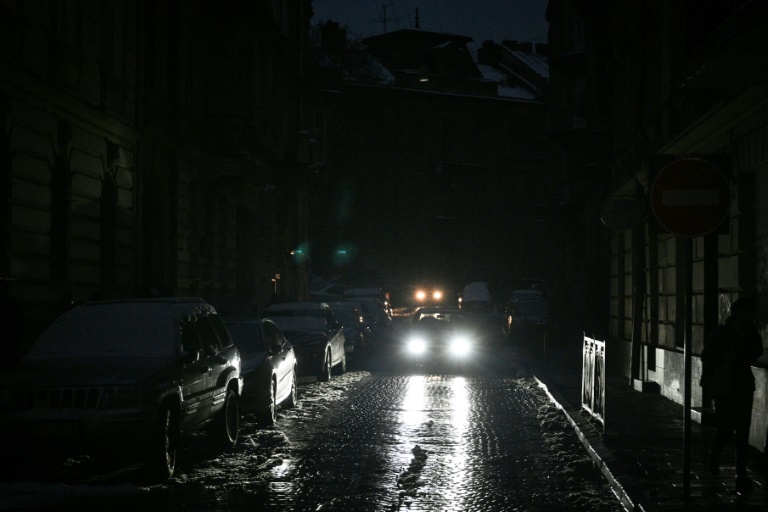
Ukraine battled Friday to get water and power to millions of people cut off after Russia launched dozens of cruise missiles that battered the country’s already crippled electricity grid.

The energy system in Ukraine is on the brink of collapse and millions have endured emergency blackouts over recent weeks.

The World Health Organization has warned of “life-threatening” consequences and estimated that millions could leave their homes as a result.

“The situation with electricity remains difficult in almost all regions,” Ukrainian President Volodymyr Zelensky said on Thursday evening. “However, we are gradually moving away from blackouts — every hour we return power to new consumers.”

More than 24 hours after Russian strikes smashed Kyiv, mayor Vitali Klitschko said late Thursday that 60 percent of homes in the capital were still suffering emergency outages. Water services had been fully restored however, said city officials.

But the shelling had killed seven people at Vyshgorod, on the outskirts of the city, said Oleksiy Kuleba, head of the Kyiv Regional Military Administration.

And a fresh round of strikes Thursday killed at least four people in the southern city of Kherson, recently recaptured by Ukraine, said a senior official there.

The latest attacks on the power grid come with winter setting in and temperatures in the capital hovering just above freezing.

The western region of Khmelnytsky was one of the worst affected by power outages, with just 35 percent of its normal capacity, but that was enough to connect critical infrastructure, according to Serhii Hamaliy, the head of the regional administration.

About 300,000 residents in the eastern Kharkiv region, near the border with Russia, were still without power on Thursday evening, but electricity supply had been restored for nearly 70 percent of consumers, said Oleh Synehubov of the regional military administration.

“We’ve restarted power supplies,” said Igor Terekhov, mayor of Kharkiv city, adding that water was being restored to homes and municipal workers were reconnecting public transport.

“Believe me, it was very difficult.”

Ukraine accused Russian forces of launching around 70 cruise missiles as well as drones in attacks that left 10 dead and around 50 wounded.

But Russia’s defence ministry denied striking any targets inside Kyiv, insisting that Ukrainian and foreign air defence systems had caused the damage.

“Not a single strike was made on targets within the city of Kyiv,” it said.

– ‘Scariest day’ –

Moscow is targeting power facilities in an apparent effort to force capitulation after nine months of war that has seen its forces fail in most of their stated territorial objectives.

“The way they fight and target civil infrastructure, it can cause nothing but fury,” said Oleksiy Yakovlenko, chief administrator at a hospital in Ukraine’s eastern city of Kramatorsk.

Despite the increasingly frequent blackouts, Yakovlenko said his resolve was unwavering.

“If they expect us to fall on our knees and crawl to them it won’t happen,” Yakovlenko told AFP. 

Russian troops have suffered a string of battlefield defeats.

Ukraine’s recapture of Kherson meant a withdrawal from the only regional capital Russia had captured, Moscow’s troops destroying key infrastructure as they retreated.

On Thursday, Yaroslav Yanushevych, head of the Kherson military administration, said Russian strikes there had killed at least four people.

“The Russian invaders opened fire on a residential area with multiple rocket launchers. A large building caught fire,” he said on Telegram.

Ukraine prosecutors also said Thursday that the authorities had discovered a total of nine torture sites used by the Russians in Kherson, as well as “the bodies of 432 killed civilians”.

Wednesday’s attacks disconnected three Ukrainian nuclear plants automatically from the national grid and triggered blackouts in neighbouring Moldova, where the energy network is linked to Ukraine.

All three nuclear facilities had been reconnected by Thursday morning, said the energy ministry.

Power was nearly entirely back online in ex-Soviet Moldova, where its pro-European president Maia Sandu convened a special meeting of her security council.

– ‘Shutdowns’ –

The Kremlin said Ukraine was ultimately responsible for the fallout from the strikes and that Kyiv could end the strikes by acquiescing to Russian demands.

Ukraine “has every opportunity to settle the situation, to fulfil Russia’s demands and as a result, end all possible suffering of the civilian population,” spokesman Dmitry Peskov said.

Zelensky said Ukraine’s forces were “preparing to advance” in some areas.

“Almost every hour I receive reports of occupiers’ attacks on Kherson and other communities of the region,” he said. 

“Such terror began immediately after the Russian army was forced to flee from Kherson region. This is the revenge of those who lost.”

The Ukrainian leader struck an optimistic tone at the end of his nightly address.

“We have withstood nine months of full-scale war, and Russia has not found a way to break us.”

Close Bitnami banner
Bitnami