AFP

Russia says thousands removed from Kherson daily

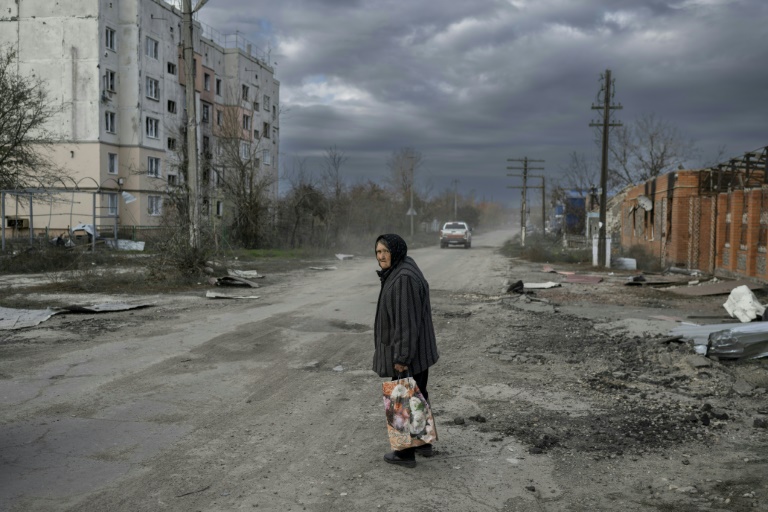
Moscow was pushing ahead Friday with a civilian pullout from the Russian-occupied Kherson region amid a mounting Ukrainian counter-offensive, with President Vladimir Putin saying residents must be “removed” from danger zones. 

The Russian army said “more than 5,000 civilians” were being led across the Dnipro River every day, showing footage of soldiers directing lines of cars onto flotillas crossing over to the river’s eastern bank.

Moscow’s forces began urging civilians to leave Kherson in mid-October, vowing to turn the region’s main city of the same name into a fortress ahead of an anticipated Ukrainian offensive. 

Kyiv has likened the departures to Soviet-style “deportations” of its people.

“Those who live in Kherson should be removed from zones of dangerous fighting,” Putin said on Red Square as he marked Russian Unity Day, a patriotic holiday. 

“The civilian population should not suffer from shelling, an offensive, a counter-offensive or other such things,” he said. 

Western countries, meanwhile, have urged Putin to extend a landmark deal for the export of Ukrainian grain to avert a global food crisis, which is up for renewal on November 19. 

Russia rejoined the UN-brokered deal on Wednesday, after suspending its participation for four days over a drone attack on its Black Sea fleet in Russian-annexed Crimea, but has threatened to pull out again.

On a visit to China, German Chancellor Olaf Scholz urged Putin to extend the deal.

“Hunger must not be used as a weapon,” he said.

“I urge the Russian president not to refuse to extend the grain agreement which ends in a few days.”

He asked China’s Xi Jinping — who has good relations with Putin — to use Beijing’s “influence” on Moscow to stop fighting in Ukraine.

“The Russian war in Ukraine is a dangerous situation for the whole world,” Scholz said.

The G7 group of wealthy nations also said it wants Russia to prolong the deal that allows the safe passage of grain shipments from Ukraine.

Its top diplomats have held two days of talks in the western German city of Muenster, with Ukraine topping the agenda. 

– ‘49,000 new recruits already fighting’ –

In Moscow, Putin led patriotic celebrations on Unity Day — a holiday he instated in 2005 to celebrate fending off a Polish invasion in 1612. 

Speaking on Red Square to a handful of patriotic volunteers, Putin said 318,000 recruits had signed up since he announced a military call-up in September, which has since been completed. 

That exceeded his target of 300,000 because “volunteers keep coming”, he claimed. 

Of that number, 49,000 were taking part in active fighting.

Putin’s draft led to another wave of tens of thousands rushing to leave the country. Russia’s ex-leader Dmitry Medvedev on Friday called them “cowardly traitors and greedy defectors”.

The Kremlin chief said he wanted to restore historical monuments in the occupied territories so that those “who lived under crazy, idiotic propaganda for 30 years” would know “where their ancestors came from”.

He singled out the port city of Mariupol on the Sea of Azov, which was flattened by weeks of battles over its steelworks and fell into Russian hands in May. 

“Mariupol is a very famous — an ancient, you could say — Russian city,” Putin said.  

He said Russian authorities had a “lot to work on” in reconstruction plans of the city. 

Putin’s offensive in Ukraine has dragged into its ninth month, forcing millions to flee the country and leaving thousands of troops dead on both sides.

Russia has recently hit Ukraine’s energy networks, with President Volodymyr Zelensky saying the strikes have left 4.5 million people without power. 
Stocks, oil prices rally on China hopes

Stock markets and oil prices rallied Friday on hopes China would roll back some of its economically-painful policies surrounding Covid.

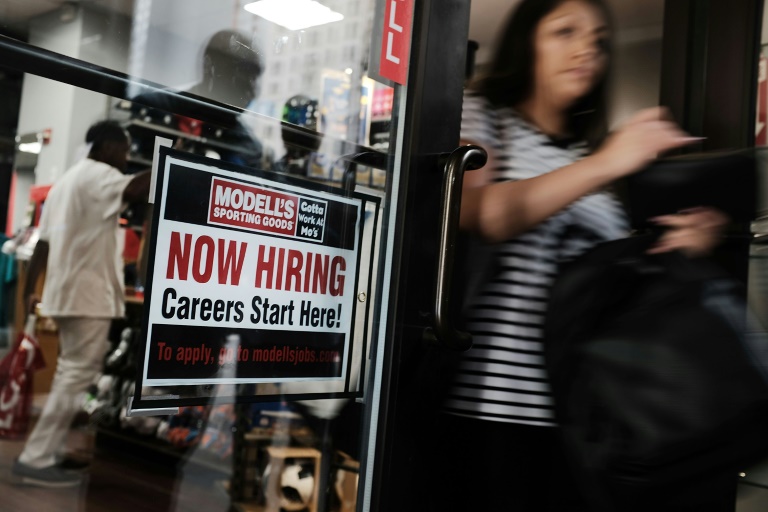
Equities also got a boost from the latest US jobs data, which raised hopes of a soft landing of the economy despite rising interest rates.

“Stocks jumped in anticipation that the Chinese government would relax its zero-Covid policy from March next year,” noted Russ Mould, investment director at AJ Bell.

All three of Europe’s top indices were up by at least two percent in afternoon trading.

Wall Street stocks also shot higher at the opening bell, with the Dow climbing 1.1 percent.

The optimism also lifted oil prices by more than four percent as traders eyed rising demand for crude on the news out of China.

In foreign exchange, the dollar slid more than one percent against the euro despite the prospect of higher US interest rates.

The pound also won back some ground against the dollar, rising one percent a day after tumbling as the Bank of England said the UK economy could face a two-year-long recession that it believes has already begun.

The BoE on Thursday also lifted its main interest rate by 0.75 percentage points, the most in 33 years in efforts to contain runaway inflation.

The week also saw the Federal Reserve hike its key rate by the same amount, as central banks try to cool decades-high inflation.

The Fed has pointed to a still-strong labour market as a key reason for not shifting from aggressive rate-tightening.

The addition of 261,000 jobs last month, far more than economists had forecast, will likely reinforce the determination of policymakers to continue the hawkish policy.

That would normally see equities tumble as higher interest rates are bad for most businesses.

But the figures are “consistent with achieving a soft landing for the economy”, said market analyst Patrick O’Hare at Briefing.com.

Fed Chair Jerome Powell has indicated that the central bank is willing to push the US economy into recession if necessary to tame inflation.

– Key figures around 1330 GMT –

London – FTSE 100: UP 2.0 percent at 7,334.50 points

Frankfurt – DAX: UP 2.2 percent at 13,448.66

Paris – CAC 40: UP 2.9 percent at 6,421.61

EURO STOXX 50: UP 2.6 percent at 3,686.05

New York – Dow: UP 1.1 percent at 32,358.37

Tokyo – Nikkei 225: DOWN 1.7 percent at 27,199.74 (close)

Hong Kong – Hang Seng Index: UP 5.4 percent at 16,161.14 (close)

Shanghai – Composite: UP 2.4 percent at 3,070.80 (close)

Pound/dollar: UP at $1.1279 from $1.1160 Thursday

Euro/dollar: UP at $0.9865 from $0.9751

Dollar/yen: DOWN at 147.11 yen from 148.25 yen

Euro/pound: DOWN at 87.52 pence from 87.73 pence

Brent North Sea crude: UP 3.9 percent at $98.36 per barrel

West Texas Intermediate: UP 4.5 percent at $92.13 per barrel

burs-rl/lth

Stocks, oil prices rally on China hopes

Stock markets and oil prices rallied Friday on hopes China would roll back some of its economically-painful policies surrounding Covid.

Equities also got a boost from the latest US jobs data, which raised hopes of a soft landing of the economy despite rising interest rates.

“Stocks jumped in anticipation that the Chinese government would relax its zero-Covid policy from March next year,” noted Russ Mould, investment director at AJ Bell.

All three of Europe’s top indices were up by at least two percent in afternoon trading.

Wall Street stocks also shot higher at the opening bell, with the Dow climbing 1.1 percent.

The optimism also lifted oil prices by more than four percent as traders eyed rising demand for crude on the news out of China.

In foreign exchange, the dollar slid more than one percent against the euro despite the prospect of higher US interest rates.

The pound also won back some ground against the dollar, rising one percent a day after tumbling as the Bank of England said the UK economy could face a two-year-long recession that it believes has already begun.

The BoE on Thursday also lifted its main interest rate by 0.75 percentage points, the most in 33 years in efforts to contain runaway inflation.

The week also saw the Federal Reserve hike its key rate by the same amount, as central banks try to cool decades-high inflation.

The Fed has pointed to a still-strong labour market as a key reason for not shifting from aggressive rate-tightening.

The addition of 261,000 jobs last month, far more than economists had forecast, will likely reinforce the determination of policymakers to continue the hawkish policy.

That would normally see equities tumble as higher interest rates are bad for most businesses.

But the figures are “consistent with achieving a soft landing for the economy”, said market analyst Patrick O’Hare at Briefing.com.

Fed Chair Jerome Powell has indicated that the central bank is willing to push the US economy into recession if necessary to tame inflation.

– Key figures around 1330 GMT –

London – FTSE 100: UP 2.0 percent at 7,334.50 points

Frankfurt – DAX: UP 2.2 percent at 13,448.66

Paris – CAC 40: UP 2.9 percent at 6,421.61

EURO STOXX 50: UP 2.6 percent at 3,686.05

New York – Dow: UP 1.1 percent at 32,358.37

Tokyo – Nikkei 225: DOWN 1.7 percent at 27,199.74 (close)

Hong Kong – Hang Seng Index: UP 5.4 percent at 16,161.14 (close)

Shanghai – Composite: UP 2.4 percent at 3,070.80 (close)

Pound/dollar: UP at $1.1279 from $1.1160 Thursday

Euro/dollar: UP at $0.9865 from $0.9751

Dollar/yen: DOWN at 147.11 yen from 148.25 yen

Euro/pound: DOWN at 87.52 pence from 87.73 pence

Brent North Sea crude: UP 3.9 percent at $98.36 per barrel

West Texas Intermediate: UP 4.5 percent at $92.13 per barrel

burs-rl/lth

Pilot strike adds to Kenya Airways woes

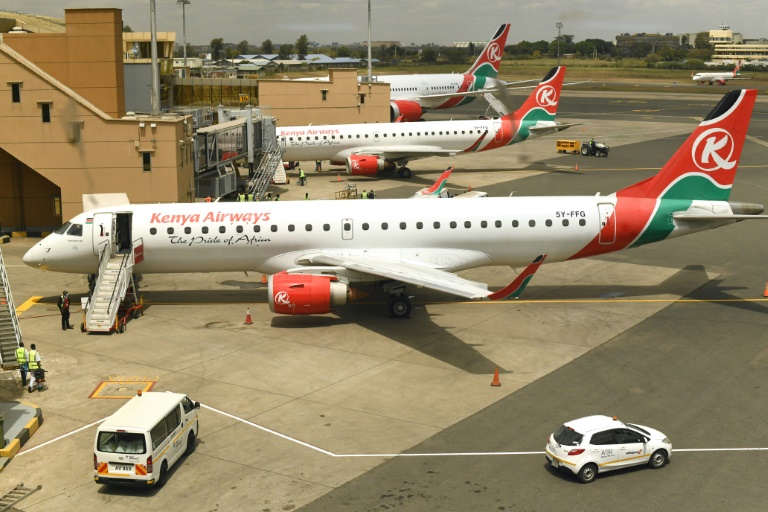
Pilots at Kenya Airways plan to go on strike from Saturday to seek better working conditions in defiance of a court order, adding to woes facing the troubled national carrier.

The airline, part owned by the government and Air France-KLM, is one of the biggest in Africa, connecting multiple countries to Europe and Asia, but it is facing turbulent times, including years of losses.

The Kenya Airlines Pilots Association (KALPA) said a series of meetings with airline management had failed to resolve grievances.

No Kenya Airways flight flown by KALPA pilots will depart Nairobi’s Jomo Kenyatta International Airport from 6:00 am (0300 GMT) on Saturday, said union secretary general Murithi Nyaga, without specifying how long the strike would last.

“Kenya Airways management’s actions have left us with no other option,” Nyaga said, adding that a 14-day notice on the industrial action had ended without a solution.

“We had hoped that the management of the airline would soften its stance and engage in negotiation on the issues raised.”

The pilots, who have had a particularly fraught relationship with management, are pressing for the reinstatement of contributions to a provident fund.

They also want back payment of all salaries stopped during the Covid-19 pandemic.

Kenya Airways on Wednesday warned the strike would jeopardise its recovery and said the pilots’ grievances did not warrant such action.

– ‘Delay and disrupt’ –

“Industrial action is unnecessary,” board chairman Michael Joseph said. “It will delay and disrupt the financial and operational recovery and cause reputational damage to Kenya Airways.”

The Kenya Association of Air Operators also opposed the planned strike, calling it an “extreme course of action”.

“We consider this action poorly considered in that KALPA is holding both the airline management and the government to ransom,” it said on Friday, urging both sides to resolve the impasse urgently.

On Monday, the airline won a court injunction stopping the strike, but the pilots’ union has nevertheless vowed to down tools.

An official at KALPA, which has 400 members, told AFP the pilots “were acting within the provisions of the law” and that they were yet to be served with a court injunction. 

Earlier this week, Kenya Airways estimated losses at $2.5 million per day if the strike goes ahead.

The airline was founded in 1977 following the demise of East African Airways and flies over four million passengers to 42 destinations annually.

But its slogan “The Pride of Africa” rings hollow as it operates thanks to state bailouts following years of losses.

Like other carriers around the world, Kenya Airways saw its revenue nosedive after the pandemic grounded planes worldwide because of stringent travel restrictions, devastating the aerospace and tourism industries.

– ‘Joke of the continent’ –

Despite the gloom, its cargo operations grew slightly in 2020 as it switched to delivering Covid vaccines and maximised its expertise in flying fresh roses to Europe.

In August, the airline reported a $81.5 million half-year loss citing high fuel costs, albeit a marked improvement on the $94.6 million loss in the same period last year.

This is despite the Kenyan government injecting some $520 million to keep the airline afloat.

On Wednesday, the airline’s management said it was on a path to recovery, flying at least 250,000 passengers each month, and aiming to cut its overall operating costs by 10 percent before the end of next year.

Kenya’s tourism arrivals, a major foreign exchange earner, have jumped more than 90 percent to 924,000, the government said in September, projecting that the number could hit 1.4 million by December.

Analysts say a misguided expansion strategy launched in 2011 is the root of the firm’s problems, a move that called for the purchase of new Boeing planes with the objective of doubling the size of its network.

A plan to nationalise the carrier, which would see it exempt from paying taxes on engines, maintenance and fuel, remains unimplemented.

On Tuesday, Kenya’s leading newspaper the Daily Nation called for a forensic audit of the state bailouts, saying the carrier had become “the joke of the continent.”

“It’s like pouring public funds down the drain,” the paper wrote in an editorial.

Heathrow Airport strike set to hit England football fans

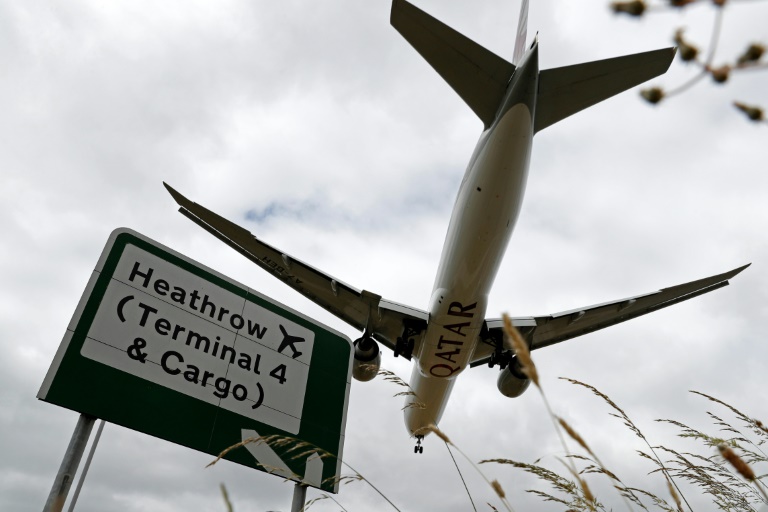
England football fans flying to the World Cup in Qatar face delays and cancellations after staff at Heathrow Airport on Friday announced a three-day strike in a dispute over pay. 

Around 700 members of the Unite union will strike between November 18 and November 21, with disruption expected at three of the London airport’s five terminals. 

Unite said the walkout will particularly hit Qatar Airways, which has laid on an additional 10 flights a week during the World Cup. 

The tournament kicks off on November 20, with England starting their campaign the next day.

The staff from aviation companies Dnata and Menzies carry out various roles including ground-handling, airside transport and cargo.

“Our members at Dnata and Menzies undertake highly challenging roles and are simply seeking a decent pay rise,” said Unite general secretary Sharon Graham.

“Both companies are highly profitable and can fully afford to make a fair pay increase. The owners and directors are simply lining their own pockets rather than paying their workers fairly.

“The workers at Heathrow will have Unite’s complete support,” she added.

The strikes are the latest to hit the UK, where train workers, dockers, postal staff and the legal profession have all announced walkouts amid a cost-of-living crisis fuelled by rampant inflation.

Other airlines set to be affected include Virgin, Singapore Airlines, Cathay-Pacific and Emirates. 

Dnata has offered its workers a five percent pay rise, while Menzies has proposed hikes of between two and six percent, according to Unite. 

But this represents a real-terms pay cut with inflation currently running at 10.1 percent.

Stocks, oil prices rally on China hopes

Stock markets and oil prices rallied Friday on hopes China would roll back some of its economically-painful policies surrounding Covid.

The dollar dropped as investors awaited the release of US jobs data later in the day, seeking fresh insight into the state of the world’s top economy and the outlook for interest rates.

“Stocks jumped in anticipation that the Chinese government would relax its zero-Covid policy from March next year,” noted Russ Mould, investment director at AJ Bell.

The optimism also lifted oil prices as traders eyed rising demand for crude on the news out of China.

In foreign exchange, the pound won back some ground against the dollar, a day after tumbling as the Bank of England said the UK economy could face a two-year-long recession that it believes has already begun.

The BoE on Thursday also lifted its main interest rate by 0.75 percentage points, the most in 33 years in efforts to contain runaway inflation.

The week also saw the Federal Reserve hike its key rate by the same amount, as central banks try to cool decades-high inflation.

With the Fed pointing to a still-strong labour market as a key reason for not shifting from aggressive rate-tightening, traders see another strong figure Friday as evidence that officials will carry on with large increases to borrowing costs.

“Friday’s payrolls will be the last vital data point this week, as signals on the labour market remain crucial to the Fed’s path forward,” said SPI Asset Management’s Stephen Innes.

In Asia, Hong Kong’s Hang Seng Index jumped almost nine percent this week after an unverified statement suggested officials in Beijing were discussing a change to its zero-Covid policy.

The gains continued despite pushback from authorities, and after President Xi Jinping reasserted the strict strategy at a major Communist Party gathering last month.

– Key figures around 1045 GMT –

London – FTSE 100: UP 1.1 percent at 7,268.46 points

Frankfurt – DAX: UP 1.5 percent at 13,319.98

Paris – CAC 40: UP 1.9 percent at 6,364.38

EURO STOXX 50: UP 1.6 percent at 3,649.59

Tokyo – Nikkei 225: DOWN 1.7 percent at 27,199.74 (close)

Hong Kong – Hang Seng Index: UP 5.4 percent at 16,161.14 (close)

Shanghai – Composite: UP 2.4 percent at 3,070.80 (close)

New York – Dow: DOWN 0.5 percent at 32,001.25 (close)

Pound/dollar: UP at $1.1239 from $1.1160 Thursday

Euro/dollar: UP at $0.9795 from $0.9751

Dollar/yen: DOWN at 147.74 yen from 148.25 yen

Euro/pound: DOWN at 87.18 pence from 87.73 pence

Brent North Sea crude: UP 2.8 percent at $97.35 per barrel

West Texas Intermediate: UP 3.1 percent at $90.90 per barrel

Stocks, oil prices rally on China hopes

Stock markets and oil prices rallied Friday on hopes China would roll back some of its economically-painful policies surrounding Covid.

The dollar dropped as investors awaited the release of US jobs data later in the day, seeking fresh insight into the state of the world’s top economy and the outlook for interest rates.

“Stocks jumped in anticipation that the Chinese government would relax its zero-Covid policy from March next year,” noted Russ Mould, investment director at AJ Bell.

The optimism also lifted oil prices as traders eyed rising demand for crude on the news out of China.

In foreign exchange, the pound won back some ground against the dollar, a day after tumbling as the Bank of England said the UK economy could face a two-year-long recession that it believes has already begun.

The BoE on Thursday also lifted its main interest rate by 0.75 percentage points, the most in 33 years in efforts to contain runaway inflation.

The week also saw the Federal Reserve hike its key rate by the same amount, as central banks try to cool decades-high inflation.

With the Fed pointing to a still-strong labour market as a key reason for not shifting from aggressive rate-tightening, traders see another strong figure Friday as evidence that officials will carry on with large increases to borrowing costs.

“Friday’s payrolls will be the last vital data point this week, as signals on the labour market remain crucial to the Fed’s path forward,” said SPI Asset Management’s Stephen Innes.

In Asia, Hong Kong’s Hang Seng Index jumped almost nine percent this week after an unverified statement suggested officials in Beijing were discussing a change to its zero-Covid policy.

The gains continued despite pushback from authorities, and after President Xi Jinping reasserted the strict strategy at a major Communist Party gathering last month.

– Key figures around 1045 GMT –

London – FTSE 100: UP 1.1 percent at 7,268.46 points

Frankfurt – DAX: UP 1.5 percent at 13,319.98

Paris – CAC 40: UP 1.9 percent at 6,364.38

EURO STOXX 50: UP 1.6 percent at 3,649.59

Tokyo – Nikkei 225: DOWN 1.7 percent at 27,199.74 (close)

Hong Kong – Hang Seng Index: UP 5.4 percent at 16,161.14 (close)

Shanghai – Composite: UP 2.4 percent at 3,070.80 (close)

New York – Dow: DOWN 0.5 percent at 32,001.25 (close)

Pound/dollar: UP at $1.1239 from $1.1160 Thursday

Euro/dollar: UP at $0.9795 from $0.9751

Dollar/yen: DOWN at 147.74 yen from 148.25 yen

Euro/pound: DOWN at 87.18 pence from 87.73 pence

Brent North Sea crude: UP 2.8 percent at $97.35 per barrel

West Texas Intermediate: UP 3.1 percent at $90.90 per barrel

Red Cross eyes digital emblem for cyberspace protection

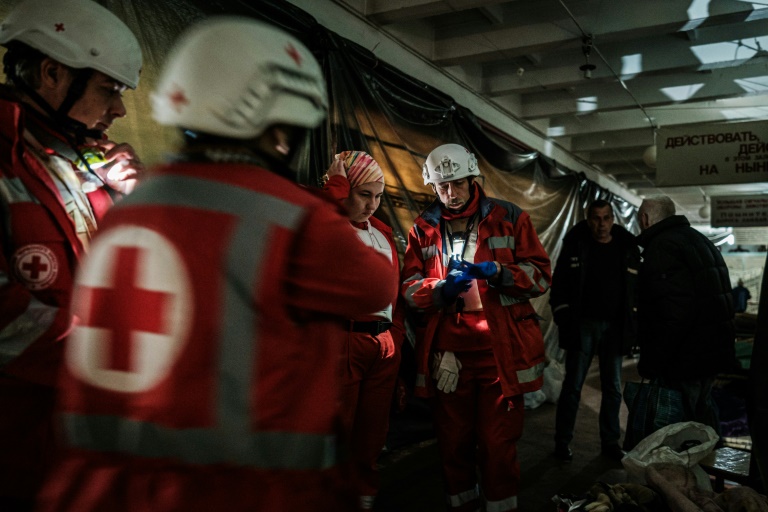
When Red Cross staff work in conflict zones, their recognisable red-on-white emblems signal that they and those they are helping should not be targeted.

Now, as warfare and attacks increasingly move into cyberspace, the organisation wants to create a digital emblem that would alert would-be attackers that they have entered computer systems of the Red Cross or medical facilities.

The International Committee of the Red Cross (ICRC) called Thursday on countries to support the idea, arguing that such a digital emblem would help protect humanitarian infrastructure against erroneous targeting.

“As societies digitalise, cyber operations are becoming a reality of armed conflict,” ICRC’s director-general Robert Mardini said in a statement.

“The ‘digital emblem’ is a concrete step to protect essential medical infrastructure and the ICRC in the digital realm.”

For more than 150 years, the organisation’s distinctive emblems — the red cross and red crescent, and more recently the red crystal — have conveyed in times of conflict that the people, facilities and objects they mark are protected under international law and that attacking them constitutes a war crime.

– Potential for abuse? –

But to date, there are no such signals in the cyber world. 

The ICRC has been mulling this idea for a while, launching a project in 2020 to examine the technical feasibility of creating a digital emblem, and opening consultations to weigh the benefits of such a system against potential for abuse.

Concerns have been raised that such an emblem could risk identifying a set of “soft targets” to malicious actors, making it easier to systematically target them. 

Malicious actors could also misuse a digital emblem to falsely identify their operations as having protected status under international law.

But on Thursday, the ICRC presented a new report titled “Digitalising the Red Cross, Red Crescent and Red Crystal emblems”, concluding that the advantages outweighed the risks.

In the foreword, Mardini stressed that cyber-attacks on medical facilities and humanitarian infrastructure can have dramatic, and deadly, real-life consequences.

He pointed to a growing numbers of cyber-attacks on hospitals since the onset of the Covid-19 pandemic, which “have disrupted life-saving treatment for patients and forced doctors and nurses to resort to pen and paper at a time when their urgent work was needed most.”

– ‘Massive shock’ –

And the ICRC itself fell victim to a massive cyber-attack last January, in which hackers seized the data of more than half a million extremely vulnerable people, including some fleeing conflict, detainees and unaccompanied migrants.

That attack “was really a massive shock for our institution,” Balthasar Staehelin, ICRC’s director of digital transformation and data, told a conference in Geneva recently.

While stressing that his organisation had long been focused on data protection, Mardini said the “data breach highlighted the urgency of our work in this area.”

“Protecting personal data, and ensuring the availability and integrity of our data and systems in the digital space, is essential to assist and protect people in the real world,” he added.

In the January case, the ICRC told AFP it had determined it was intentionally targeted “because the attackers created a piece of code designed purely for execution on the targeted ICRC servers.”

A digital emblem would therefore likely not have done much to avert that attack, but in many cases, it would provide “an additional layer of protection,” ICRC legal advisor Tilman Rodenhauser said during an event Thursday launching the report.

It would, he said, “signal to professional cyber operators that they need to stay out, by law and by ethics standards.”

ICRC said it had been working with a number of universities and others to develop possible technical solutions for a digital emblem.

It pointed to several possible approaches, including embedding the emblem in a domain name (for instance www.hospital.emblem), or embedding it in the IP address, with a specific sequence of numbers signalling a protected digital asset.

The organisation stressed though that to make a digital emblem a reality, countries need to agree on its use and incorporate it into International Humanitarian Law, alongside the three physical emblems currently in use. 

Twitter says layoffs to begin Friday

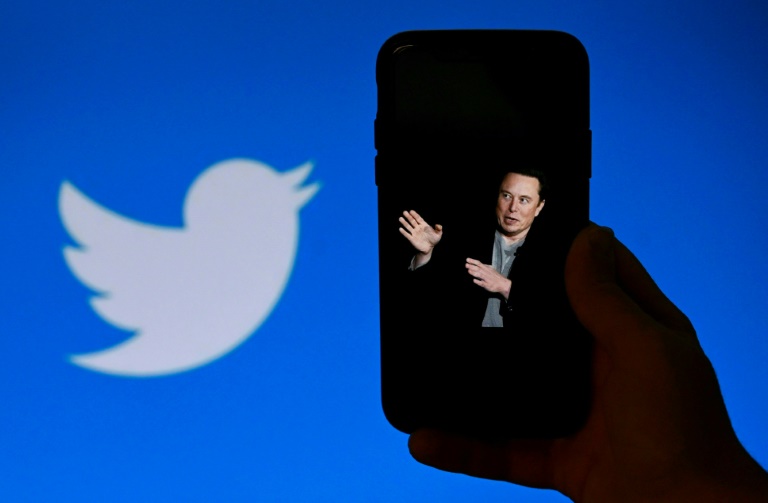
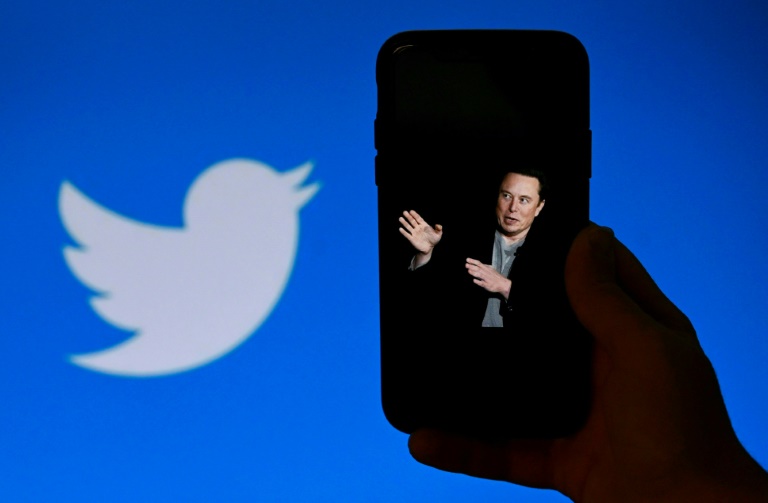
Twitter said it will start laying off employees on Friday, according to a memo sent to staff, with several workers filing a lawsuit alleging the move by new owner billionaire Elon Musk violates US labor law.

A company-wide email seen by AFP says Twitter employees will receive word via email at the start of business Friday, California time, as to what their fate is.

It does not give a number but the Washington Post and New York Times reported that about half of Twitter’s 7,500 employees will be let go.

“In an effort to place Twitter on a healthy path, we will go through the difficult process of reducing our global work force,” the email said.

Twitter employees have been bracing for this kind of bad news since Musk completed his mammoth $44 billion acquisition late last week and quickly set about dissolving its board and firing its chief executive and top managers.

Late on Thursday, a group of five Twitter employees who had already been fired filed a class action complaint against the company on the grounds that they had not been given the required 60-day notice period as required under US federal and California state law, according to the text of the complaint.

The lawsuit references the US Worker Adjustment and Retraining Notification (WARN) Act, which provides workers a right to advance notice in cases of mass layoffs or plant closings.

The lawsuit also asks the court to restrict Twitter from asking employees to sign documents that would waive their rights under the WARN Act.

– Workplace review process –

A workplace and employee review and other projects ordered by Musk were reportedly so exhaustive and grueling that some engineers slept at Twitter headquarters over the weekend.

The email sent Thursday told workers to go home and not report for work on Friday.

“Our offices will be temporarily closed and all badge access will be suspended,” the email said. Those on the way to the office should turn around and return home.”

The email acknowledged that Twitter is going through “an incredibly challenging experience.”

“We recognize that this will impact a number of individuals who have made valuable contributions to Twitter, but this action is unfortunately necessary to ensure the company’s success moving forward,” it added.

Some employees, however, were scathing in their criticism of the process.

“The current layoff process is a farce and a disgrace. Tesla’s henchmen are making decisions about people they know nothing about except the number of lines of code produced. This is completely absurd,” Taylor Leese, the manager of an engineering team who said he was fired, tweeted Sunday.

Many engineers had to print the last lines of code they had produced, according to an employee who spoke on condition of anonymity.

Lists comparing computer scientists with each other, mainly on the basis of production volume, were also drawn up, according to another employee.

– Financial trouble –

Saddled with the purchase of Twitter, for which Musk has said he overpaid, the tycoon is looking for ways for Twitter to make money — and fast.

His most recent idea was to charge $8 a month to anyone on Twitter who would receive a blue “verified” badge assuring the public that the account is authentic.

A news report this week said Musk wanted to charge $20 a month but faced a backlash, including from bestselling novelist Stephen King, who tweeted: “$20 a month to keep my blue check?” It was followed by an expletive.

Musk responded on Twitter, seemingly bargaining with King: “we need to pay the bills somehow! Twitter cannot rely entirely on advertisers. How about $8?”

Musk has said he wants to increase Twitter’s revenue from $5 billion last year to more than $26 billion in 2028.

Top global companies, including General Mills and Volkswagen, suspended their advertising on Twitter on Thursday as pressure builds on Musk to turn his platform into a successful business.

US auto giant General Motors last week was the first major advertiser to suspend advertising following the takeover.

Officials and civil rights groups have expressed worry that Musk will open the site to uncontrolled hate speech and misinformation as well as reinstate banned accounts, including that of former US president Donald Trump.

Advertisers are Twitter’s main source of revenue and Musk has tried to calm the nerves by reassuring that the site would not become a “free-for-all hellscape”.

Twitter says layoffs to begin Friday

Twitter said it will start laying off employees on Friday, according to a memo sent to staff, with several workers filing a lawsuit alleging the move by new owner billionaire Elon Musk violates US labor law.

A company-wide email seen by AFP says Twitter employees will receive word via email at the start of business Friday, California time, as to what their fate is.

It does not give a number but the Washington Post and New York Times reported that about half of Twitter’s 7,500 employees will be let go.

“In an effort to place Twitter on a healthy path, we will go through the difficult process of reducing our global work force,” the email said.

Twitter employees have been bracing for this kind of bad news since Musk completed his mammoth $44 billion acquisition late last week and quickly set about dissolving its board and firing its chief executive and top managers.

Late on Thursday, a group of five Twitter employees who had already been fired filed a class action complaint against the company on the grounds that they had not been given the required 60-day notice period as required under US federal and California state law, according to the text of the complaint.

The lawsuit references the US Worker Adjustment and Retraining Notification (WARN) Act, which provides workers a right to advance notice in cases of mass layoffs or plant closings.

The lawsuit also asks the court to restrict Twitter from asking employees to sign documents that would waive their rights under the WARN Act.

– Workplace review process –

A workplace and employee review and other projects ordered by Musk were reportedly so exhaustive and grueling that some engineers slept at Twitter headquarters over the weekend.

The email sent Thursday told workers to go home and not report for work on Friday.

“Our offices will be temporarily closed and all badge access will be suspended,” the email said. Those on the way to the office should turn around and return home.”

The email acknowledged that Twitter is going through “an incredibly challenging experience.”

“We recognize that this will impact a number of individuals who have made valuable contributions to Twitter, but this action is unfortunately necessary to ensure the company’s success moving forward,” it added.

Some employees, however, were scathing in their criticism of the process.

“The current layoff process is a farce and a disgrace. Tesla’s henchmen are making decisions about people they know nothing about except the number of lines of code produced. This is completely absurd,” Taylor Leese, the manager of an engineering team who said he was fired, tweeted Sunday.

Many engineers had to print the last lines of code they had produced, according to an employee who spoke on condition of anonymity.

Lists comparing computer scientists with each other, mainly on the basis of production volume, were also drawn up, according to another employee.

– Financial trouble –

Saddled with the purchase of Twitter, for which Musk has said he overpaid, the tycoon is looking for ways for Twitter to make money — and fast.

His most recent idea was to charge $8 a month to anyone on Twitter who would receive a blue “verified” badge assuring the public that the account is authentic.

A news report this week said Musk wanted to charge $20 a month but faced a backlash, including from bestselling novelist Stephen King, who tweeted: “$20 a month to keep my blue check?” It was followed by an expletive.

Musk responded on Twitter, seemingly bargaining with King: “we need to pay the bills somehow! Twitter cannot rely entirely on advertisers. How about $8?”

Musk has said he wants to increase Twitter’s revenue from $5 billion last year to more than $26 billion in 2028.

Top global companies, including General Mills and Volkswagen, suspended their advertising on Twitter on Thursday as pressure builds on Musk to turn his platform into a successful business.

US auto giant General Motors last week was the first major advertiser to suspend advertising following the takeover.

Officials and civil rights groups have expressed worry that Musk will open the site to uncontrolled hate speech and misinformation as well as reinstate banned accounts, including that of former US president Donald Trump.

Advertisers are Twitter’s main source of revenue and Musk has tried to calm the nerves by reassuring that the site would not become a “free-for-all hellscape”.

Close Bitnami banner
Bitnami