AFP

As Xi tightens grip, EU rethinks approach to China

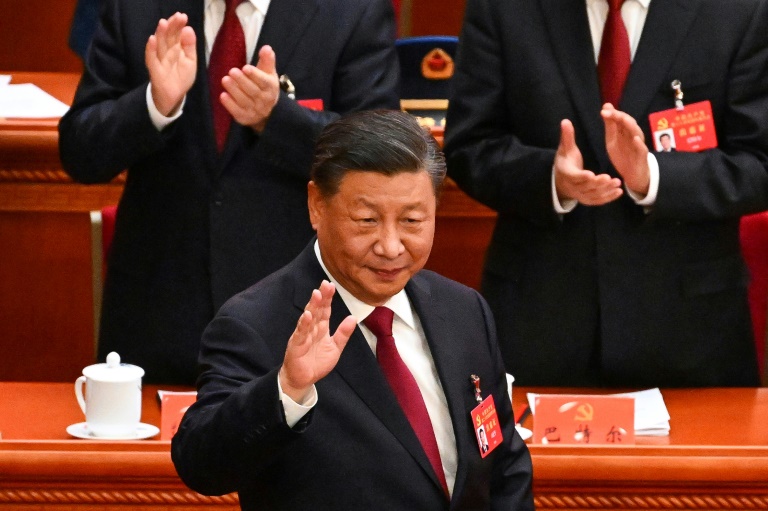
Partners, competitors or rivals? European Union leaders are debating whether to rethink their stance on China as President Xi Jinping tightens his grip over an ever more assertive Beijing. 

A two-day summit in Brussels from Thursday will be dominated by the fallout of Russia’s war on Ukraine and Europe’s soaring energy prices, but ties with the world’s second-largest economy will also loom. 

“In the light of the current geo-political context, we need to hold a strategic discussion on China,” European Council chief Charles Michel wrote in his invitation. 

Leaders must establish “how we wish to frame this critical relationship in the future,” he added.

Torn between the desire to access China’s vast markets and condemnation of its rights abuses and aggressive regional policies, the 27-nation bloc has traditionally struggled to fashion a cohesive approach towards Beijing.

Keen to cover all bases, the EU has dubbed Beijing a “cooperation partner”, “economic competitor” and “systemic rival” all at the same time. 

Now some are arguing that approach needs to stiffen as Xi pushes a more confrontational line with the West as he stands on the cusp of securing a third five-year term at the Communist Party Congress. 

“The message that China is sending out today is a message of competition,” EU Foreign Policy chief Josep Borrell said after the bloc’s foreign ministers discussed the issue on Monday.

– Russia, Taiwan – 

EU-China relations have been tense since a major investment pact was put on ice last year after Beijing angrily hit back at sanctions over its treatment of the Uighur minority in Xinjiang. 

The EU’s diplomatic service this month circulated a strategy paper, seen by AFP, that looked to balance the need to “speak, work, trade and negotiate” against pushing back on Beijing. 

“Management of the EU-China relationship will be a key determinant of the EU’s future economic and geostrategic security,” it said. 

One key area of cooperation remains the fight against climate change as there is recognition that progress can’t be made without the globe’s largest polluter on board. 

But there are far more major areas of frustration and concern over Beijing’s stance. 

Many are worried by China’s warm ties with Moscow and angered at its failure to come out against the war in Ukraine. 

“China cannot just stay on the sidelines — it is the second global power,” said one European diplomat. 

“It has to play a role in protecting, preserving or at least trying to maintain the principles on which this world order is founded.”

Fears are also high over Beijing’s belligerent vows to “reunify” Taiwan and the EU foreign service has urged member states to warn China of “possible consequences” if it seeks to take control through force. 

– ‘Dependency’ trap –

Chastened by the chaos caused by its reliance on Russia for energy, the EU is keen to ensure it doesn’t fall into the same trap by becoming dependant on China for critical raw materials and technologies.

“Now we are talking about our dependency, vulnerability from Russian gas. We have to avoid creating new ones,” Borrell said. 

But that will be easier said than done. 

“China has just got its hands on the cobalt reserves of the Democratic Republic of Congo and holds 85 percent of the rare earths in the world,” said Elvire Fabry, an analyst for the Jacques Delors Institute.

Some within Europe have pushed for the bloc to side closer with the United States as successive administrations there take a far tougher line on confronting Beijing’s growing might. 

But others insist that the EU needs to tread its own path and not be too reliant on Washington. 

“We need to get out of these dependencies, not substitute them with other dependencies,” said another European diplomat.

One thing is clear, EU officials insist, the bloc must remain united in its stance towards Beijing. 

For a 27-nation grouping with disparate economic and political demands, that is often far from easy. 

An early test could come soon with speculation that German Chancellor Olaf Scholz and French President Emmanuel Macron might be planning separate trips to Beijing. 

“The EU and member States should prevent and isolate China’s attempts to apply its divide et impera (divide and rule) tactics,” the bloc’s diplomatic service said. 
Fossil fuel CO2 emissions up slightly in 2022: IEA

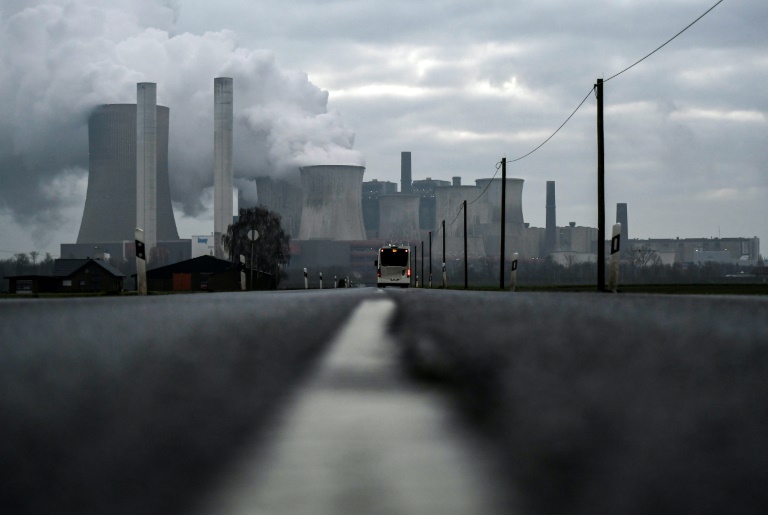
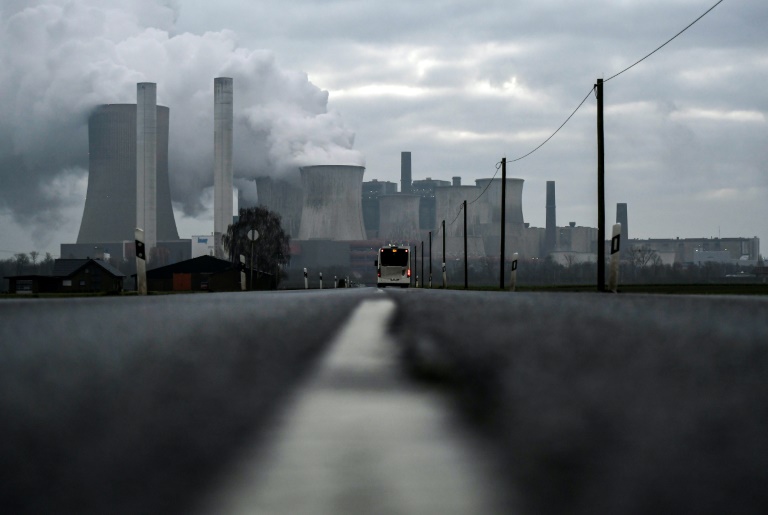
Global carbon dioxide emissions from fossil fuel combustion are expected to grow just one percent this year despite concerns over the impact of the energy crisis, the International Energy Agency said Wednesday, amid bumper growth for renewable energy.

The IEA predicted that the CO2 emitted for energy by burning oil, gas and coal would stand at 33.8 billion tonnes in 2022, more than 300 million tonnes more than in 2021.

That increase was however far smaller than the 2-billion-tonne jump the world experienced last year as countries turned to fossil fuels to power their Covid-19 recoveries, it added.

The United Nations says greenhouse gas emissions must be halved by 2030 to keep the Paris Agreement temperature goals within reach — effectively a drop of some eight percent each year this decade.

The energy crisis sparked by Russia’s invasion of Ukraine propped up some coal demand this year due to hikes in natural gas prices, said the IEA.

But the relatively small increase in coal emissions had been offset by widespread deployment of renewable tech, including electric vehicles (EVs) — and this had prevented a CO2 rise of some 1 billion tonnes in 2022.

“The encouraging news is that solar and wind are filling much of the gap, with the uptick in coal appearing to be relatively small and temporary,” said IEA Executive Director Fatih Birol. 

“This means that CO2 emissions are growing far less quickly this year than some people feared –- and that policy actions by governments are driving real structural changes in the energy economy.”

The IEA analysis showed that solar photovoltaic and wind capacity grew by more than 700 terawatt-hours in 2022, the largest single year rise on record. 

Birol said the trend is due to continue “thanks to the major clean energy policy plans that have advanced around the world in recent months”.

Coal was expected to register the next largest increase due to high gas prices, rising 200 millions tones in terms of CO2, or around two percent year-on-year.

The IEA said emissions in Europe were likely to fall slightly this year and continue their downward trajectory with a spate of new renewable projects slated for next year. 

In China, the world’s largest polluter, emissions will stay largely flat in 2022, it said.

Fossil fuel CO2 emissions up slightly in 2022: IEA

Global carbon dioxide emissions from fossil fuel combustion are expected to grow just one percent this year despite concerns over the impact of the energy crisis, the International Energy Agency said Wednesday, amid bumper growth for renewable energy.

The IEA predicted that the CO2 emitted for energy by burning oil, gas and coal would stand at 33.8 billion tonnes in 2022, more than 300 million tonnes more than in 2021.

That increase was however far smaller than the 2-billion-tonne jump the world experienced last year as countries turned to fossil fuels to power their Covid-19 recoveries, it added.

The United Nations says greenhouse gas emissions must be halved by 2030 to keep the Paris Agreement temperature goals within reach — effectively a drop of some eight percent each year this decade.

The energy crisis sparked by Russia’s invasion of Ukraine propped up some coal demand this year due to hikes in natural gas prices, said the IEA.

But the relatively small increase in coal emissions had been offset by widespread deployment of renewable tech, including electric vehicles (EVs) — and this had prevented a CO2 rise of some 1 billion tonnes in 2022.

“The encouraging news is that solar and wind are filling much of the gap, with the uptick in coal appearing to be relatively small and temporary,” said IEA Executive Director Fatih Birol. 

“This means that CO2 emissions are growing far less quickly this year than some people feared –- and that policy actions by governments are driving real structural changes in the energy economy.”

The IEA analysis showed that solar photovoltaic and wind capacity grew by more than 700 terawatt-hours in 2022, the largest single year rise on record. 

Birol said the trend is due to continue “thanks to the major clean energy policy plans that have advanced around the world in recent months”.

Coal was expected to register the next largest increase due to high gas prices, rising 200 millions tones in terms of CO2, or around two percent year-on-year.

The IEA said emissions in Europe were likely to fall slightly this year and continue their downward trajectory with a spate of new renewable projects slated for next year. 

In China, the world’s largest polluter, emissions will stay largely flat in 2022, it said.

Truss budget fiasco shows power of the markets

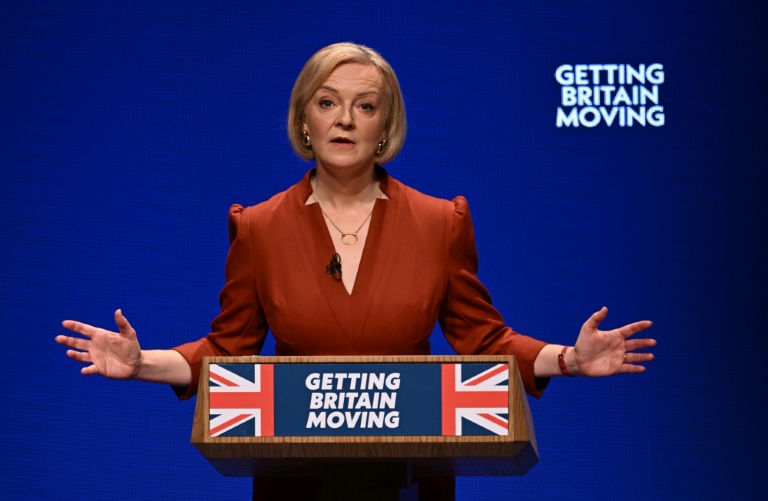
British Prime Minister Liz Truss’s humiliating budget U-turn shows how markets can wield influence over government fiscal policy.

The premier on Monday shredded her tax-slashing budget after it sparked markets chaos over rocketing state debt, as traders questioned the government’s credibility on public finances.

Truss was elected last month on a tax-cutting platform and her astonishing reversal prompted talk of a rebellion within the governing Conservative party.

The furore “is a rather extreme example of how markets react when a change in policy does not appear to be credible”, said economist Antoine Bouet at French economic forecaster CEPII.

– Not the first –

The Truss budget is not the first time that world governments have failed to overcome the verdict of markets.

Other examples include the pound’s exit from the gold standard in 1931 and from the Exchange Rate Mechanism in 1992, as well as the Asian financial crisis in 1997, analysts say.

Britain’s reversal has echoes of 1983 France, when socialist president Francois Mitterand switched to austerity in a major U-turn to restore market stability.

Truss’s flagship mini-budget on September 23 was aimed at boosting the recession-threatened economy and easing a cost-of-living crisis.

But her costly universal energy price freeze and tax cuts were financed by debt, fuelling fears of even higher inflation.

That sent UK government bond yields rocketing and the pound collapsing to a record dollar-low on debt concerns.

In reaction, the Bank of England launched an emergency bond-buying plan to help avert a financial catastrophe, while the International Monetary Fund urged a budget rethink amid a surge also in mortgage rates.

Three weeks later, Truss fired finance minister Kwasi Kwarteng and replaced him with Jeremy Hunt — who then axed most of the tax cuts, slashed the energy-price cap and warned of tough spending cutbacks.

“No government can control the markets but every government can give certainty about the sustainability of public finances,” Hunt said Monday as he took the axe to the budget.

– ‘Room for manoeuvre’ –

Bouet argued the markets did not dictate the political and economic policy, rather they reacted to it.

“There is a large amount of room for manoeuvre for governments, provided they do not go completely off the rails,” the economist told AFP.

The reaction would have been “on a smaller scale” if the UK had announced smaller tax cuts — or energy price assistance that was more targeted.

The market response was “brutal” because of “major inconsistencies”, Bouet said.

Truss’ budget was seen as adding to already sky-high inflation, which the Bank of England is struggling to bring down.

The BoE is set to deliver a super-sized interest rate hike next month after UK inflation hit a 40-year high of 10.1 percent in September.

Russ Mould, strategist at stockbroker AJ Bell, said the sheer size of bond and foreign exchange markets gave them a unique power to impact the UK economy.

– No ‘convincing plan’ –

“Financial markets can and will push governments around, especially if governments — or central banks — do something stupid,” Mould told AFP.

“Bond and currency markets are so large they can overwhelm almost anyone.”

Some have tried to take on markets, such as in 2012 when Mario Draghi — at the time head of the European Central Bank — vowed “to do whatever it takes” to save the euro. 

Draghi helped avert a eurozone debt crisis, although the euro weakened significantly.

“The EU debt crisis is a good example where markets lost confidence in debt sustainability in various southern European countries,” noted analyst Kay Neufeld at research group CEBR.

The Truss budget drama “showed what happens if you surprise markets — and don’t have a convincing plan on how to pay” for costly measures.

Methane in Turkey mine was below critical level: Erdogan

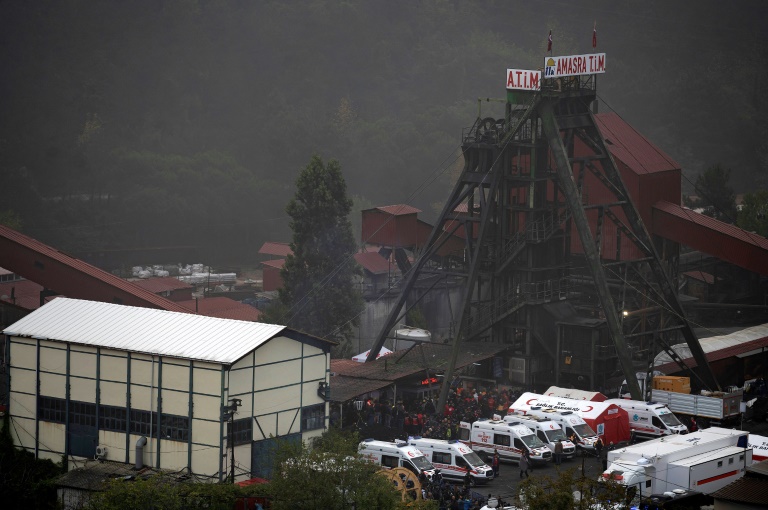
Turkish President Recep Tayyip Erdogan said Wednesday that the methane level in a mine in northwest Turkey was below the critical threshold before an explosion killed 41 people last week.

The blast ripped through the mine near the small coal town of Amasra on Turkey’s Black Sea coast shortly before sunset on Friday.

“According to measurements before the accident, the current was cut in the mine because of a methane level that reached 1.5 percent at 18:05 (15:05 GMT)”, or 10 minutes before the explosion, Erdogan told MPs belonging to his AKP Party.

“For methane to explode, its level in the air must reach at least five percent,” Erdogan said.

“We do not know yet how the explosion could have occurred despite all the precautions taken,” the president said. Erdogan visited the site of the disaster on Saturday.

Under Turkish law, mines are supposed to evacuate workers when the level of methane in the air reaches two percent in the tunnels.

Relatives of the dead told AFP and Turkish media that miners had complained of the smell of gas in the mine for about 10 days before the explosion.

“Everything that can be said will be speculation until we have a definitive accident report,” the head of state said.

– Opposition outcry –

The opposition has accused the government of failing to take the necessary measures to prevent the disaster.

“Mine accidents can happen anywhere in the world,” Erdogan said, alluding to an accident where 1,099 people had died in France. He did not specify that the Courrieres disaster happened in 1906.

“What century are we in?” opposition leader Kemal Kilicdaroglu asked Saturday. “Why are mining accidents always happening in Turkey?” 

Turkey suffered its deadliest coal mining disaster in 2014 when 301 workers died in a blast and ensuing fire that brought down a mining shaft in the western town of Soma.

Five mine managers were found guilty of negligence and handed jail terms of up to 22 years.

Turkey’s Supreme Court of Accounts said in its reports in 2019 and 2020 that there were irregularities in the Amasra mine, according to Turkish media.

Erdogan vowed Saturday that “nobody will be spared” if the accident report determines who is responsible.

But he also repeated his conviction that such accidents were a result of fate.

“If there are guilty people, they will be punished. But in doing this, we submit to fate, to the will of God. It’s indispensable for Muslims,” he said.

Putin declares martial law in annexed Ukraine regions

Russian President Vladimir Putin on Wednesday declared martial law in four regions of Ukraine recently annexed by Moscow as his proxy officials in a southern-held city pulled out with Ukraine troops advancing.

Putin’s decree to introduce military rule in the Moscow-controlled regions also gives additional power to authorities in Russian border areas and comes after a string of battlefield defeats.

“We are working on solving very complex large-scale tasks to ensure security and protect the future of Russia,” Putin said. 

The decree gives greater powers to limit movement to, from and within the areas and allows for the residents of those territories to be moved to “safe zones”.

Pro-Kremlin officials meanwhile said they were pulling out of the key southern Ukraine city of Kherson on Wednesday, as Kyiv’s forces advanced on territory in Russian hands since the war’s earliest days.

Kherson was the first major city to fall to Moscow’s troops since the February invasion began and retaking it would be a crucial prize in Ukraine’s counter-offensive.

“The entire administration is already moving today,” to the eastern bank of the Dnieper River, the Kherson region’s Moscow-installed head, Vladimir Saldo, told Russian state television.

But Andriy Yermak, the Ukrainian presidency’s chief of staff, called the moves a “propaganda show” and accused Russia of “trying to scare the people of Kherson”.

Ukrainian forces “do not fire at Ukrainian cities,” Yermak wrote on Telegram.

Kyiv’s recapturing of swathes of its territory in the east and parts of the south has however been followed by missile and drone strikes that have demolished large parts of Ukraine’s power grid ahead of winter.

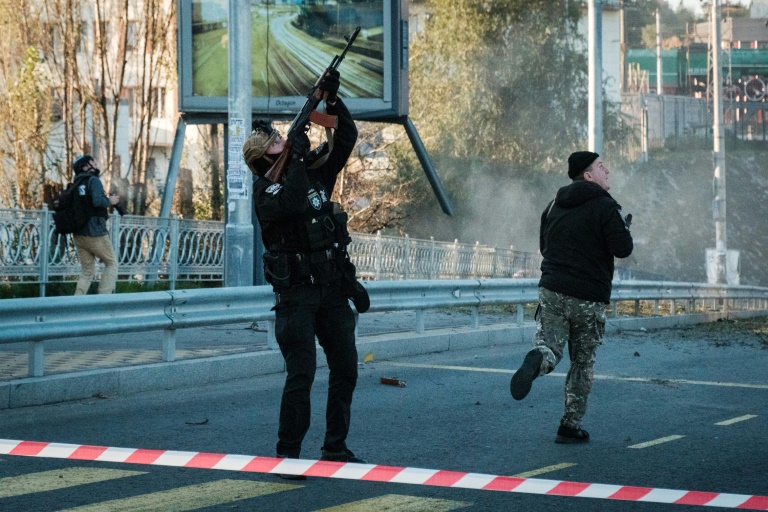
In a third day of attacks on the Ukrainian capital, Kyiv mayor Vitali Klitschko said “several Russian rockets” had been downed over the city after AFP reporters heard several loud explosions in the city centre.

– Evacuations by ferry –

Kherson is located on the western bank of the Dnieper, the same side where Ukrainian troops have been moving forward in a counter-offensive that began in August.

Saldo said the pull-out, along with the organised movement of civilians from the city, was a precaution and vowed that Russian forces would continue to fight against Ukraine.

Pro-Russian officials have said civilians would only be allowed to leave towards Russia or Russian-held parts of Ukraine.

However, Ukrainian forces have targeted bridges across the river to disrupt supply lines so Russian-installed officials said the evacuations were being done with ferries.

Russia’s Rossiya 24 state television channel showed images of people waiting to board ferries to cross the river.

Local officials said they were planning to move up to 60,000 civilians from the city of Kherson over a period of around six days.

Russia’s military commander for Ukraine operations, General Sergey Surovikin has said the Russian army will ensure “the safe evacuation of the population” from Kherson.

Speaking to Russian state TV on Tuesday, he accused Ukraine of strikes on civilian infrastructure in the region that “create a direct threat to the lives of residents”.

– Nuclear plant staff detained –

Ukraine has re-captured occupied territory in the east of the country in recent weeks.

Its advance in the south has been far slower but has been gaining momentum in recent days.

There have also been some Russian advances.

Russian forces on Tuesday claimed to have retaken territory from Ukrainian troops in the eastern Kharkiv region.

It was Moscow’s first announced capture of a village there since being nearly entirely pushed out of the region last month.

Moscow has also been building up its defences in the territory it still holds.

Russia’s Wagner mercenary group said it was working on building a fortified line of defence in Ukraine’s eastern Lugansk region.

“It is a multi-level and layered defence,” the group’s founder Yevgeny Prigozhin said on the social media of his company Concord.

Russian forces meanwhile continue to occupy the Zaporizhzhia nuclear power plant — Europe’s largest.

Petro Kotin, head of Ukraine’s nuclear energy agency Energoatom, told AFP on Wednesday that Russian forces were holding “about 50” plant employees in captivity.

– EU to sanction Iran –

Ukraine has scrambled to rebuild damaged energy facilities across the country following a series of Russian strikes.

The government has warned of the risk of blackouts, saying about 30 percent of Ukraine’s power stations have been destroyed.

Drones bombarded Kyiv on Monday, leaving five dead, in what the presidency described as an attack of Russian desperation after a string of battlefield losses.

An energy facility in the city was hit by strikes on Tuesday, leaving two people dead.

Kyiv and its Western allies have accused Moscow of using Iranian-made drones in the strikes, a move President Volodymyr Zelensky portrayed as a sign of Russia’s failure.

Ukraine said Wednesday it had shot down 223 Iranian-made drones since mid-September.

But the Kremlin has said it has no knowledge of its army using Iranian drones in Ukraine and Tehran has said the claims that it is providing Russia with weapons are “baseless”.

Nabila Massrali, spokeswoman for EU foreign policy chief Josep Borrell, said the EU has “sufficient evidence” that Tehran was supplying Russia with drones and would prepare fresh sanctions on Iran.

Empty shelves as German supermarkets resist price hikes

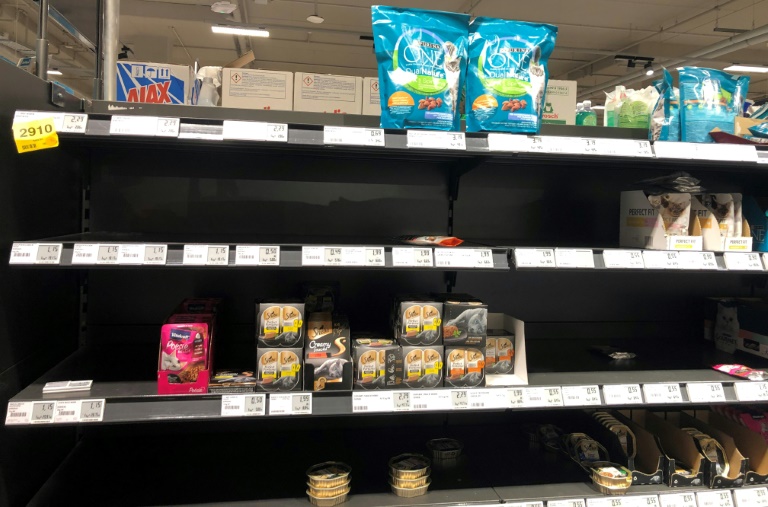
German shoppers are increasingly finding empty shelves where their favourite Kellogg’s cereal, Mars chocolate bar or rice brand used to be, as supermarkets square off against major food companies over price hikes.

“Dear customers: we are sorry to inform you that we can’t currently offer all the products of our supplier Mars GmbH,” reads a note in a sparsely stocked aisle at an Edeka supermarket in central Berlin.

With German inflation running at a record 10 percent, supermarket giants are pushing back against what they see as unreasonable price increases by some of the world’s best-known brands.

Food multinationals argue that their manufacturing costs have risen on the back of soaring energy and transport costs, in part because of the war in Ukraine.

But retailers in Europe’s top economy say they are protecting customers’ purchasing power at a difficult time, and that price hikes of up to 30 percent in some cases are overblown. 

“Many international brands are trying to take advantage of inflation to charge excessive prices in order to increase their profits,” an Edeka spokesman told AFP, calling Mars’s price demands “unjustified”.

Edeka and its rival Rewe, two of Germany’s biggest supermarket chains, have stopped getting delivery of around 300 products from the Mars company, known for its Twix and Snickers bars, Ben’s Original rice packets and Whiskas cat food.

They have also used the supermarket showdown to push their cheaper, own-brand products as alternatives.

– Coca-Cola court battle –

Mars for its part blames the “volatile context” and “inflationary pressure”.

Thomas Roeb, a retail expert at the Bonn-Rhein-Sieg University of Applied Sciences, said the battle of the brands was not new, and that items get pulled every year in spats between supermarkets and food companies.

“But this time it has gone a little less unnoticed, because Edeka and Rewe are affected at the same time,” Roeb told AFP.

At the Edeka in Berlin the absence of pet food, a sector where Mars dominates, is particularly glaring.

In a nearby Rewe, the rice aisle is half empty.

The cereal section is looking bare, too, after Rewe failed to reach a compromise with US company Kellogg’s — which according to German media was asking almost 30 percent more for its popular breakfast food.

Similar price wars are raging with other brands.

In some stores, tea and coffee products by Jacobs Douwe Egberts are missing from shelves. 

Discounters Aldi and Lidl aren’t stocking Danone, the world’s largest yoghurt maker.

Edeka and Coca-Cola are fighting out their row in court, with the supermarket appealing a recent ruling saying the drinks giant was within its rights to stop deliveries over the dispute.

– ‘Tastes the same’ –

“Food, drinks and even hygiene products are missing,” said Leana Kring, 24, outside a supermarket on Berlin’s Karl-Marx-Allee boulevard.

The supermarket woes add more strain for German consumers, who are already bracing for a grim winter amid high inflation and a deepening energy crisis following Russia’s cutoff of gas supplies. 

The German economy, usually a driver of European growth, is forecast to tip into recession next year.

A Rewe spokesman told AFP that supermarkets don’t want to see shoppers “unnecessarily penalised” during “these difficult times”.

But the retailers have also seized the opportunity to promote their store-brand products, which have grown in popularity as Germans try to watch their pennies.

“Astronomical prices from Mars? Then buy Netto,” read a recent tongue-in-cheek Instagram post from discounter Netto, owned by the Edeka group.

At a Rewe store at Berlin’s Friedrichstrasse station, the supermarket’s own “Ja” (Yes) cereals have already replaced the colourful rows of Kellogg’s boxes.

Own-brand sales accounted for 34.6 percent of revenues in German supermarkets in the first quarter of 2022, according to GfK pollsters, up 1.2 percentage points on a year earlier.

“It’s cheaper, and it tastes the same,” said Mirjam Branz, a 30-year-old Berlin resident, upon leaving Rewe.

Procter & Gamble earnings boosted by price hikes

Procter & Gamble turned in another solid quarter Wednesday as it pointed to indications that consumers are mostly sticking with  leading household brands despite higher prices.

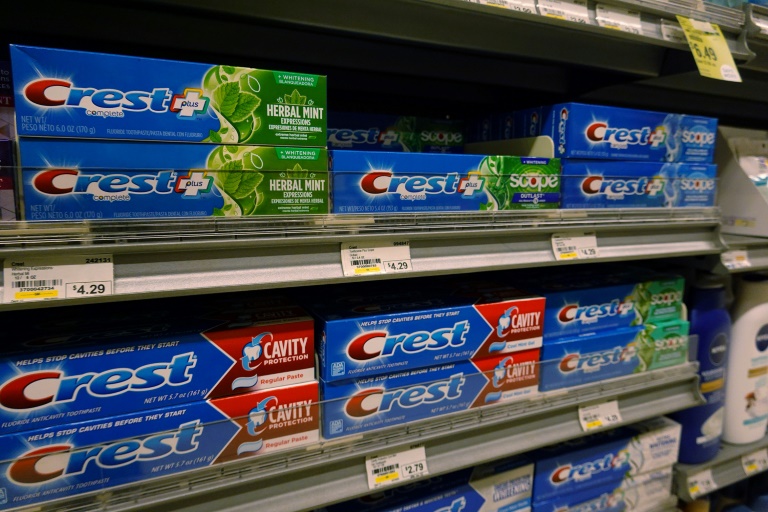
The maker of Crest toothpaste and Bounty paper towels, P&G saw a slight dip in profits due to cost pressures as it trimmed its sales forecast because of the strong dollar.

But results topped analysts; expectations as executives expressed confidence in the company’s ability to navigate what they described as a “very difficult” cost and operating environment.

“When we look at the aggregate picture, we feel very good about the consumers’ reaction to our price increases because we don’t see any major trade down,” Chief Financial Officer Andre Schulten said on a conference call with reporters.

Profits were $3.9 billion, down four percent from the year-ago period, while revenues increased one percent to $20.6 billion.

The company said its lower profit margins were the result of higher commodity and input material costs, as well as increased freight costs and spending on package reinvestment initiatives.

Offsetting these expenses were price increases across the P&G slate of goods, ranging from a six percent increase in health care to 11 percent in fabric and home care.

Overall, P&G’s prices rose nine percent, while product volumes decreased three percent.

Schulten said the breadth of P&G’s products allows it to meet consumers at “different value tiers,” meaning that wealthier consumers can opt for premium Pampers brand diapers, which are about twice the price of Luvs diapers.

In light of the strong dollar, P&G now expects sales to be down between one and three percent. In July, P&G projected fiscal 2023 sales of in-line to an increase of two percent. 

Shares of P&G rose 1.6 percent to $130.45 in pre-market trading.

Procter & Gamble earnings boosted by price hikes

Procter & Gamble turned in another solid quarter Wednesday as it pointed to indications that consumers are mostly sticking with  leading household brands despite higher prices.

The maker of Crest toothpaste and Bounty paper towels, P&G saw a slight dip in profits due to cost pressures as it trimmed its sales forecast because of the strong dollar.

But results topped analysts; expectations as executives expressed confidence in the company’s ability to navigate what they described as a “very difficult” cost and operating environment.

“When we look at the aggregate picture, we feel very good about the consumers’ reaction to our price increases because we don’t see any major trade down,” Chief Financial Officer Andre Schulten said on a conference call with reporters.

Profits were $3.9 billion, down four percent from the year-ago period, while revenues increased one percent to $20.6 billion.

The company said its lower profit margins were the result of higher commodity and input material costs, as well as increased freight costs and spending on package reinvestment initiatives.

Offsetting these expenses were price increases across the P&G slate of goods, ranging from a six percent increase in health care to 11 percent in fabric and home care.

Overall, P&G’s prices rose nine percent, while product volumes decreased three percent.

Schulten said the breadth of P&G’s products allows it to meet consumers at “different value tiers,” meaning that wealthier consumers can opt for premium Pampers brand diapers, which are about twice the price of Luvs diapers.

In light of the strong dollar, P&G now expects sales to be down between one and three percent. In July, P&G projected fiscal 2023 sales of in-line to an increase of two percent. 

Shares of P&G rose 1.6 percent to $130.45 in pre-market trading.

Record measurement of universe suggests 'something is fishy'

The most precise measurements ever made of the universe’s composition and how fast it is expanding suggest “something is fishy” in our understanding of the cosmos, the astrophysicist who led the research said Wednesday.

The comprehensive new study published in The Astrophysical Journal further confirmed that there is a significant discrepancy between two different ways to estimate the speed at which the universe is expanding. 

The study said that around five percent of the universe is made up of what we might think of as normal matter, while the rest is dark matter and dark energy — both of which remain shrouded in mystery.

Dark energy, a hypothetical force causing the universe to expand at an ever-increasing rate, makes up 66.2 percent of the cosmos, according to the study published in The Astrophysical Journal.

The remaining 33.8 percent is a combination of matter and dark matter, which is also unknown but may consist of some as-yet-undiscovered subatomic particle.

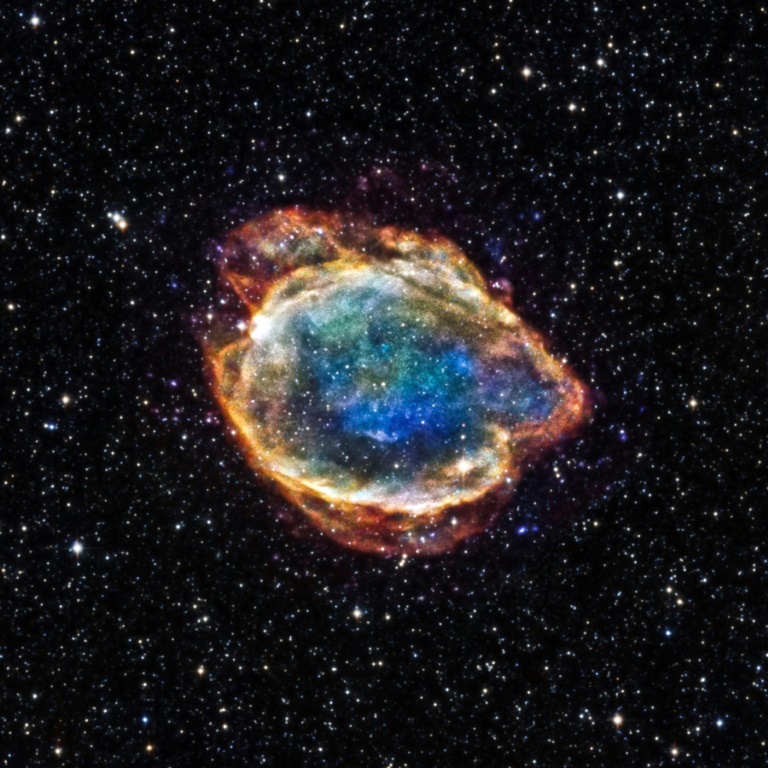
To arrive at the most precise limits yet put on what our universe is made up of, an international team of researchers observed exploding stars called supernovae.

They analysed the light from 1,550 different supernovae, ranging from close to home to more than 10 billion lights year away, back when the universe was a quarter of its current age.

“We can compare them and see how the universe is behaving and evolving over time,” said Dillon Brout of the Harvard–Smithsonian Center for Astrophysics and lead author of the study, called Pantheon+.

– Two decades of analysis –

The study updated the data from the Pantheon project a couple of years ago, stamping out possible problems and nailing down more precise calculations.

“This latest Pantheon+ analysis is a culmination of more than two decades’ worth of diligent efforts by observers and theorists worldwide in deciphering the essence of the cosmos,” US astrophysicist Adam Reiss, 2011’s physics Nobel winner, said in a statement.

It was by observing supernovae back in the late 1990s that Reiss and other scientists discovered the universe was not only expanding but also doing so at an increasing rate, meaning galaxies are racing away from each other.

“It was like if you threw a ball up, and instead of the ball coming down, it shot up and kept accelerating,” Brout said of the surprise of that discovery.

Pantheon+ also pooled data with the SH0ES supernova collaboration to find what is believed to be the most accurate measurement for how rapidly the universe is expanding.

They estimated the universe is currently expanding 73.4 kilometres a second every megaparsec, or 3.26 million light years. That works out to be around 255,000 kilometres (160,000 miles) per hour, according to a Harvard-Smithsonian statement.

But there’s a problem.

– The Hubble tension – 

Measuring cosmic microwave background radiation, which can look much farther back in time to around 300,000 years after the Big Bang, suggests the universe is expanding at a significantly slower rate — around 67 kilometres per megaparsec.

This discrepancy has been called the Hubble tension, after US astronomer Edwin Hubble.

The Pantheon+ results have raised the certainty of the Hubble tension above what is known as the five sigma threshold, which means the discrepancy “can no longer be attributed to luck”, Brout said.

“It certainly indicates that potentially something is fishy with our understanding of the universe,” Brout told AFP.

Some possible, unverified theories for the discrepancy could include another kind of dark energy in the very early universe, primordial magnetic fields, or even that the Milky Way sits in a cosmic void, potentially slowing it down.

But for now, Brout said that “we, as scientists thrive on not understanding everything.

“There’s still potentially a major revolution in our understanding, coming potentially in our lifetimes,” he added.

Close Bitnami banner
Bitnami