AFP

Hong Kong to 'trawl world for talent' in reboot attempt

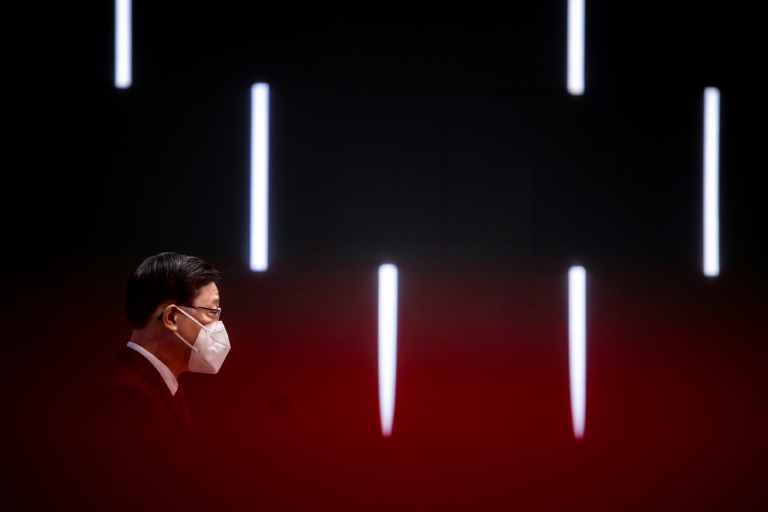
Hong Kong’s leader unveiled plans to resuscitate the business hub’s fortunes on Wednesday, hoping to lure back international expertise after an exodus of talent — but he vowed no let up in a political crackdown that has transformed the city.

John Lee, a Beijing-anointed former security chief, gave a debut policy speech that prioritised the revival of an economy mired in recession and maintaining security while recognising that tens of thousands of people had left a city that serves as a gateway to China and a regional business hub.

“Over the past two years, the local workforce shrank by about 140,000,” he said. “Apart from actively nurturing and retaining local talent, the government will proactively trawl the world for talent.”

The former British colony has lately undergone its most tumultuous period since its 1997 handover to China. 

Huge and sometimes violent democracy protests three years ago were followed by a sweeping clampdown on dissent as well as some of the world’s strictest coronavirus pandemic rules, many of which remained in place long after rivals reopened.

The city, which only scrapped mandatory quarantine for international arrivals last month, has seen its deficit soar while the border with the Chinese mainland remains all but closed because of Beijing’s strict zero-Covid rules.

– Talent office –

Lee’s speech offered his blueprint for reversing that downturn, including a new talent scouting office, a HK$30 billion ($3.8 billion) fund to attract overseas businesses and new rules to make it easier to hire foreigners in 13 key professions.

The city will give preferential treatment to “top talent”, described as people who earn HK$2.5 million or more annually and graduates from the top 100 universities around the world who have relevant work experience.

Even with investor-friendly measures, rebooting Hong Kong will be tough.

Lee took office in July at a time of rising global interest rates, fears for China’s zero-Covid economy, uncertainty sparked by Russia’s Ukraine invasion and dents in Hong Kong’s business-friendly reputation.

Hong Kong’s stock exchange has lost more than a quarter of its value since the start of the year, one of the region’s worst performers. It was down 1.2 percent in Wednesday morning trade.

– ‘Stability is the prerequisite’ –

After nearly three years, the city is gradually moving away from its version of China’s zero-Covid policy, which failed to keep out the virus and has left the city internationally cut-off.

Authorities have axed the unpopular hotel quarantine for incoming travellers and loosened some social-distancing rules. 

But the pace of reopening still lags regional rivals such as Singapore — which has gone on its own charm offensive to lure talent and has roared back as a global transport hub.

Lee stressed that the government would press ahead with further national security legislation and possible new rules on “false information”. 

“The development of Hong Kong allows no delay. Social stability is the prerequisite for our development, and we have to get rid of any interference,” Lee said.

Many departing residents have cited the ongoing political crackdown as a primary reason for leaving.

Beijing imposed a sweeping national security law on Hong Kong in 2020 after democracy protests the year before, flipping the city’s once outspoken vibe and eradicating most dissent.

Most prominent local democracy activists either are in jail, are awaiting trial or have fled overseas while schools have been ordered to turn students into Chinese patriots.

Lee’s policy speech — which lasted two hours and 45 minutes — also included major infrastructure projects to boost the economy and plans to deliver more housing in a city with one of the world’s least affordable property markets, something successive Hong Kong administrations have failed to tackle.
Hong Kong to 'trawl world for talent' in reboot attempt

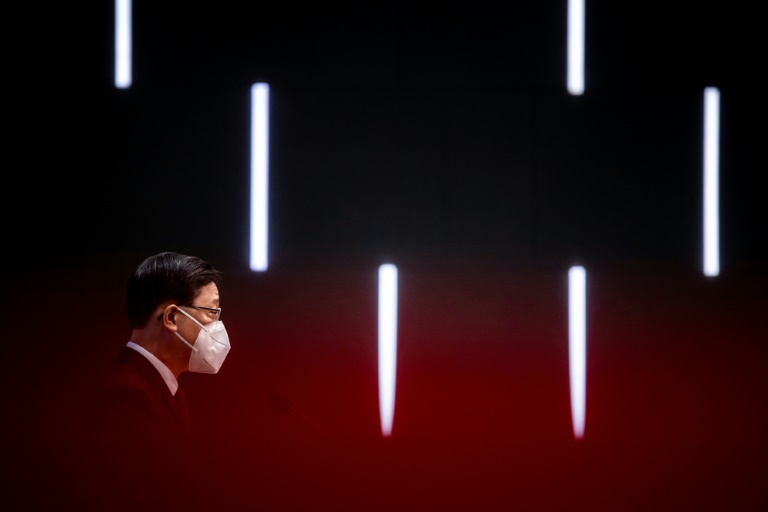
Hong Kong’s leader unveiled plans to resuscitate the business hub’s fortunes on Wednesday, hoping to lure back international expertise after an exodus of talent — but he vowed no let up in a political crackdown that has transformed the city.

John Lee, a Beijing-anointed former security chief, gave a debut policy speech that prioritised the revival of an economy mired in recession and maintaining security while recognising that tens of thousands of people had left a city that serves as a gateway to China and a regional business hub.

“Over the past two years, the local workforce shrank by about 140,000,” he said. “Apart from actively nurturing and retaining local talent, the government will proactively trawl the world for talent.”

The former British colony has lately undergone its most tumultuous period since its 1997 handover to China. 

Huge and sometimes violent democracy protests three years ago were followed by a sweeping clampdown on dissent as well as some of the world’s strictest coronavirus pandemic rules, many of which remained in place long after rivals reopened.

The city, which only scrapped mandatory quarantine for international arrivals last month, has seen its deficit soar while the border with the Chinese mainland remains all but closed because of Beijing’s strict zero-Covid rules.

– Talent office –

Lee’s speech offered his blueprint for reversing that downturn, including a new talent scouting office, a HK$30 billion ($3.8 billion) fund to attract overseas businesses and new rules to make it easier to hire foreigners in 13 key professions.

The city will give preferential treatment to “top talent”, described as people who earn HK$2.5 million or more annually and graduates from the top 100 universities around the world who have relevant work experience.

Even with investor-friendly measures, rebooting Hong Kong will be tough.

Lee took office in July at a time of rising global interest rates, fears for China’s zero-Covid economy, uncertainty sparked by Russia’s Ukraine invasion and dents in Hong Kong’s business-friendly reputation.

Hong Kong’s stock exchange has lost more than a quarter of its value since the start of the year, one of the region’s worst performers. It was down 1.2 percent in Wednesday morning trade.

– ‘Stability is the prerequisite’ –

After nearly three years, the city is gradually moving away from its version of China’s zero-Covid policy, which failed to keep out the virus and has left the city internationally cut-off.

Authorities have axed the unpopular hotel quarantine for incoming travellers and loosened some social-distancing rules. 

But the pace of reopening still lags regional rivals such as Singapore — which has gone on its own charm offensive to lure talent and has roared back as a global transport hub.

Lee stressed that the government would press ahead with further national security legislation and possible new rules on “false information”. 

“The development of Hong Kong allows no delay. Social stability is the prerequisite for our development, and we have to get rid of any interference,” Lee said.

Many departing residents have cited the ongoing political crackdown as a primary reason for leaving.

Beijing imposed a sweeping national security law on Hong Kong in 2020 after democracy protests the year before, flipping the city’s once outspoken vibe and eradicating most dissent.

Most prominent local democracy activists either are in jail, are awaiting trial or have fled overseas while schools have been ordered to turn students into Chinese patriots.

Lee’s policy speech — which lasted two hours and 45 minutes — also included major infrastructure projects to boost the economy and plans to deliver more housing in a city with one of the world’s least affordable property markets, something successive Hong Kong administrations have failed to tackle.

Surfers, miners fight over South Africa's white beaches

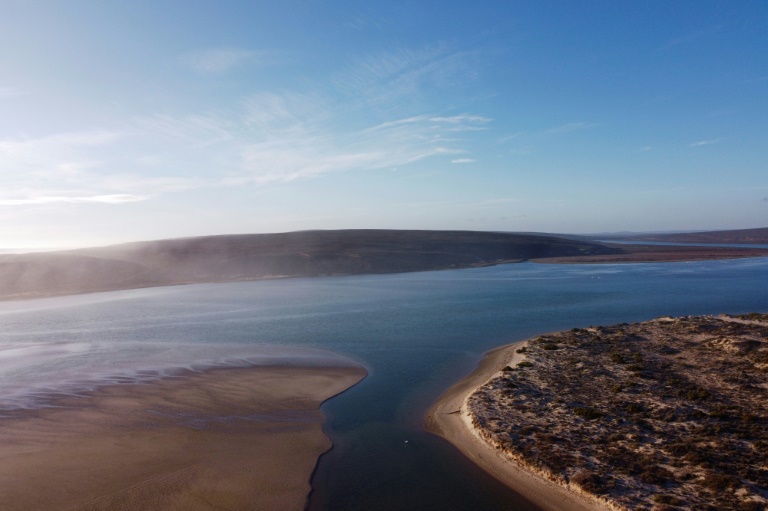
To those who live here, it’s like a little piece of heaven, boasting pink flamingos, white beaches and blue ocean waters.

Yet this stretch of South Africa’s west coast has also become a battleground, pitching mining firms against environmentalists fearful that one of nature’s last wild treasures is being bulldozed away.

Diamonds, zircon and other minerals have long been extracted in the sandy coastline near the Olifants river, which flows into the Atlantic about 300 kilometres (180 miles) north of Cape Town. 

But plans to expand the mining have angered surfers, animal lovers and residents in this remote, sparsely populated region — and they are pushing back with lawsuits and petitions. 

“It’s one of the last frontiers of the South African coastline where you can go and sort of lose yourself,” said surfer Mike Schlebach, 45, co-founder of a green campaign group, Protect the West Coast.

Mining companies say they bring much-needed jobs to the area and insist they abide by environmental rules. 

But locals contend the excavation, in which sand is extracted from beaches and the seabed and sifted for valuable minerals, is scaring off fish and tourists alike — and shrinking rather than broadening employment opportunities.

“If we are going to have sea mining, beach mining, land mining… where is the public going to have access to the coast?” questioned Suzanne Du Plessis, 61, a local resident and campaigner. 

– Dolphins, seals and excavators – 

From off-shore diamond prospecting to the construction of a new harbour, several projects threaten to scar the area, a biodiversity hotspot home to dolphins, seals and succulent plants, according to Protect the West Coast. 

Campaigners secured a small victory in June, when the operator of a mineral sand mine that had gained government approval to expand its activities to 10 more beaches, committed to additional environmental checks. 

This came on the back of a lawsuit brought by the Centre of Environment Rights (CER), another environmental group, that was settled out of court by the mine operator, Australian-owned Minerals Commodities. 

But activists remain wary. 

“CER is entitled to go back to court should the mine not comply with the provisions of the agreement,” said CER’s lawyer Zahra Omar.

The mine has already asked for more time to put together its biodiversity management plan, she said.

Minerals Commodities legal counsel Fletcher Hancock said the company was committed to conducting its operations “in an environmentally sustainable and responsible way.”

Activists and locals feel the government has left them to fend for themselves. 

Two government ministries in charge of mineral resources and environmental affairs did not respond to requests for comment. 

– Smaller catch –

In Doringbaai, a small town a few kilometres south of the Olifants estuary, a once-pristine beach where people used to walk their dogs and enjoy the sunset to the sound of crashing waves is now being torn up by heavy machinery.

Resident Peter Owies, 54, said locals were blindsided when mining started earlier this year.

“It was quite a surprise and shock to us,” he said. 

A meeting requested by the community to discuss the mining plans was never held, with the required consultation happening only online, said Du Plessis, the campaigner. 

Preston Goliath, a 46-year-old fisherman, said his catch had dwindled after the mining work began and the same is true for dozens of others. 

“Because they were pumping for diamonds… the fish moved away and our richest (fisheries) bank is now empty,” said Goliath.

Some residents want the beach mining to stop.

But mine owner Trans Hex said all its environmental papers are in order, adding it has held mining rights for the area since 1991.

With dozens more mining permits waiting for approval, Schlebach of Protect the West Coast said he hoped the government would rethink its strategy for the region.

“There’s a whole array of new industries that could have a profoundly positive effect on the people that live on that coastline like algae farming,” Schlebach said. 

“We’ve got to show them that there’s a much better way.

Activists here are optimistic, emboldened by victories scored elsewhere by environmentalists.

On September 1, activists claimed victory in a court case against energy giant Shell — despite the government’s support of the company — resulting in the ban of seismic exploration off the touristic Indian Ocean coast.

Suspected serial killer charged in 3 murders in California

Authorities in California on Tuesday charged a suspected serial killer with the murder of three men in a string of shootings that have shocked the local community, officials said.

Truck driver Wesley Brownlee, 43, was arrested Saturday in the city of Stockton, around 80 miles east of San Francisco, on suspicion of killing six men and wounding a woman over the past 18 months.

Police said Brownlee was potentially seeking another victim when he was arrested.

District attorney Tori Verber Salazar said Tuesday she expects to file more charges in the other murders Brownlee is suspected of carrying out.

“We’re waiting for additional evidence to be processed through that will most likely… allow us the opportunity to add those additional charges,” said Salazar.

“We’re only four days into this,” she added.

Five men were killed in one area of Stockton between July 8 and September 27, and the murders bore a number of similarities.

Another man was killed in Oakland, about 50 miles away, last year.

One woman also survived a shooting believed to have been carried out by Brownlee.

The victims ranged in age from 21 to 54.

Investigators, including the FBI, are working to piece together a possible motive and to identify any other potentially related homicide cases.

Several of the victims were homeless, and the murders, committed late at night or at dawn, are all linked by ballistics, police said.

Salazar said Brownlee, who moved to Stockton this summer, has a criminal record, including drug-related felony offenses.

Asian markets mixed as traders struggle to keep rally's momentum

Asian investors battled to push markets higher again Wednesday following another healthy run-up on Wall Street boosted by more positive earnings results that raised hopes for the reporting season.

However, while there is a more upbeat mood on trading floors for now, analysts warned that the current rally could soon turn as central banks press on with their interest rate hikes aimed at fighting multi-decade-high inflation.

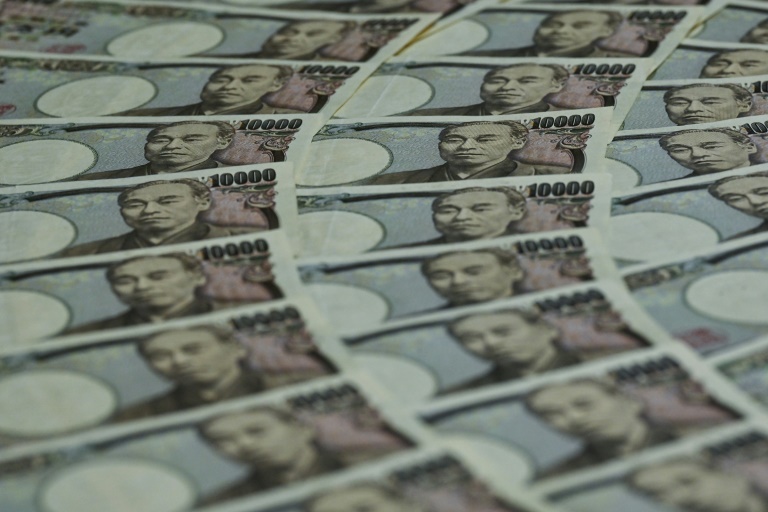
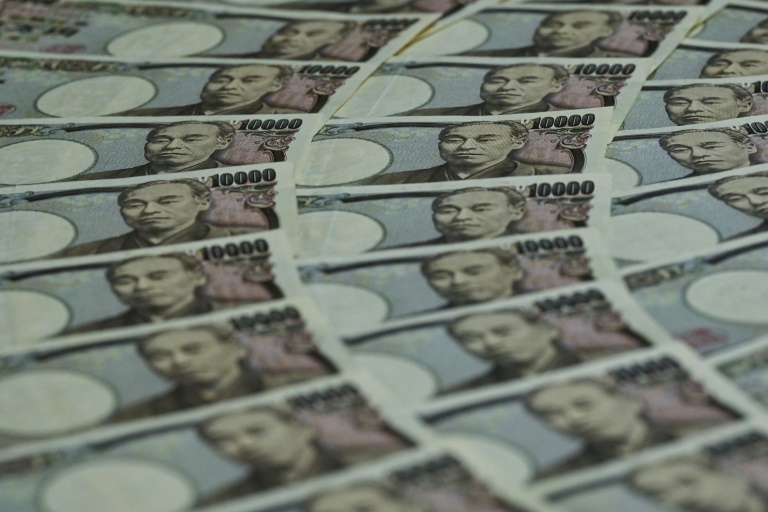
Forex traders were also keeping tabs on the yen as it edges closer to 150 per dollar, with Japanese officials holding off a second intervention in as many months but saying they are ready to act when necessary.

All three main indexes in New York enjoyed back-to-back gains as investors were heartened by forecast-beating results from Goldman Sachs and Johnson & Johnson.

They came on the heels of better-than-expected reports from banking giants Citi, JP Morgan and Wells Fargo.

Traders were given an extra boost by news that Netflix gained more than two million subscribers in July-September, easing worries about the impact of rising borrowing costs on consumers.

“Earnings season offers investors the opportunity to focus more on the actual earnings power of corporate America, and less on the machinations of the backward-looking economic data stream,” Art Hogan, a strategist at B. Riley, said.

“A better-than-feared earnings season may well be the catalyst the market needs to see a break in the steady grind lower.”

Still, Asian markets were mixed in early trade, with profit-takers weighing on Hong Kong after a healthy three-day run-up, while there were also losses in Shanghai, Taipei, Manila and Jakarta.

Tokyo, Sydney, Seoul, Singapore and Wellington rose.

– ‘Volatility up’ –

SPI Asset Management’s Stephen Innes warned there were still plenty of issues keeping a cap on equities including sticky inflation, weak sentiment, hawkish central banks, the Ukraine war, China’s economic woes and “a non-stop drum beat of recessionary rhetoric from vocal market participants”.

“The key to equity markets is (Federal Reserve) certainty, and that is the crucial turn on the road before the rates markets can settle back into a groove and Treasury volatility can decline,” he added.

“But for that to happen, the US data needs to roll over. Given the much hotter-than-expected inflation data, the Fed may do the opposite of what the market wants — turning volatility up again.”

On currency markets, eyes were now on Tokyo as the yen hovers just above 149 per dollar, with finance minister Shunichi Suzuki saying “we’ll respond appropriately against excessive moves”.

The unit is much weaker than the 145.90 level it touched last month before authorities stepped in, and analysts said they would likely act before it passes 150.

“If dollar-yen rises past the symbolic 150 level, price action will naturally accelerate, so they probably want to halt it before then or buy time,” said Yuji Saito of Credit Agricole CIB. 

Crude rose on renewed supply worries, having slumped Tuesday on bets that US President Joe Biden will order the release of more barrels from emergency reserves in order to keep fuel prices subdued heading into the winter and mid-term elections.

– Key figures around 0230 GMT –

Tokyo – Nikkei 225: UP 0.7 percent at 27,353.87 (break)

Hong Kong – Hang Seng Index: DOWN 0.8 percent at 16,781.79

Shanghai – Composite: DOWN 0.4 percent at 3,067.39

Pound/dollar: UP at $1.1344 from $1.1332 on Tuesday

Dollar/yen: DOWN at 149.17 yen from 149.21 yen

Euro/dollar: DOWN at $0.9859 from $0.9862 

Euro/pound: UP at 86.92 pence from 87.01 pence

West Texas Intermediate: UP 1.5 percent at $84.02 per barrel

Brent North Sea crude: UP 0.9 percent at $90.82 per barrel

New York – Dow: UP 1.1 percent at 30,523.80 (close)

London – FTSE 100: UP 0.2 percent at 6,936.74 (close)

Asian markets mixed as traders struggle to keep rally's momentum

Asian investors battled to push markets higher again Wednesday following another healthy run-up on Wall Street boosted by more positive earnings results that raised hopes for the reporting season.

However, while there is a more upbeat mood on trading floors for now, analysts warned that the current rally could soon turn as central banks press on with their interest rate hikes aimed at fighting multi-decade-high inflation.

Forex traders were also keeping tabs on the yen as it edges closer to 150 per dollar, with Japanese officials holding off a second intervention in as many months but saying they are ready to act when necessary.

All three main indexes in New York enjoyed back-to-back gains as investors were heartened by forecast-beating results from Goldman Sachs and Johnson & Johnson.

They came on the heels of better-than-expected reports from banking giants Citi, JP Morgan and Wells Fargo.

Traders were given an extra boost by news that Netflix gained more than two million subscribers in July-September, easing worries about the impact of rising borrowing costs on consumers.

“Earnings season offers investors the opportunity to focus more on the actual earnings power of corporate America, and less on the machinations of the backward-looking economic data stream,” Art Hogan, a strategist at B. Riley, said.

“A better-than-feared earnings season may well be the catalyst the market needs to see a break in the steady grind lower.”

Still, Asian markets were mixed in early trade, with profit-takers weighing on Hong Kong after a healthy three-day run-up, while there were also losses in Shanghai, Taipei, Manila and Jakarta.

Tokyo, Sydney, Seoul, Singapore and Wellington rose.

– ‘Volatility up’ –

SPI Asset Management’s Stephen Innes warned there were still plenty of issues keeping a cap on equities including sticky inflation, weak sentiment, hawkish central banks, the Ukraine war, China’s economic woes and “a non-stop drum beat of recessionary rhetoric from vocal market participants”.

“The key to equity markets is (Federal Reserve) certainty, and that is the crucial turn on the road before the rates markets can settle back into a groove and Treasury volatility can decline,” he added.

“But for that to happen, the US data needs to roll over. Given the much hotter-than-expected inflation data, the Fed may do the opposite of what the market wants — turning volatility up again.”

On currency markets, eyes were now on Tokyo as the yen hovers just above 149 per dollar, with finance minister Shunichi Suzuki saying “we’ll respond appropriately against excessive moves”.

The unit is much weaker than the 145.90 level it touched last month before authorities stepped in, and analysts said they would likely act before it passes 150.

“If dollar-yen rises past the symbolic 150 level, price action will naturally accelerate, so they probably want to halt it before then or buy time,” said Yuji Saito of Credit Agricole CIB. 

Crude rose on renewed supply worries, having slumped Tuesday on bets that US President Joe Biden will order the release of more barrels from emergency reserves in order to keep fuel prices subdued heading into the winter and mid-term elections.

– Key figures around 0230 GMT –

Tokyo – Nikkei 225: UP 0.7 percent at 27,353.87 (break)

Hong Kong – Hang Seng Index: DOWN 0.8 percent at 16,781.79

Shanghai – Composite: DOWN 0.4 percent at 3,067.39

Pound/dollar: UP at $1.1344 from $1.1332 on Tuesday

Dollar/yen: DOWN at 149.17 yen from 149.21 yen

Euro/dollar: DOWN at $0.9859 from $0.9862 

Euro/pound: UP at 86.92 pence from 87.01 pence

West Texas Intermediate: UP 1.5 percent at $84.02 per barrel

Brent North Sea crude: UP 0.9 percent at $90.82 per barrel

New York – Dow: UP 1.1 percent at 30,523.80 (close)

London – FTSE 100: UP 0.2 percent at 6,936.74 (close)

'Close the windows': Lebanon power plant sparks cancer fears

After losing four relatives to respiratory illness, Zeina Matar fled her hometown north of Lebanon’s capital where she says a decaying power plant generates little electricity but very deadly pollution.

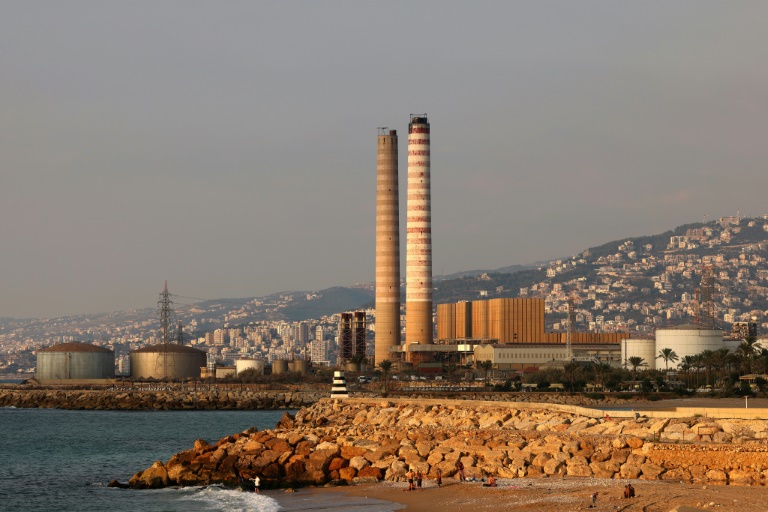
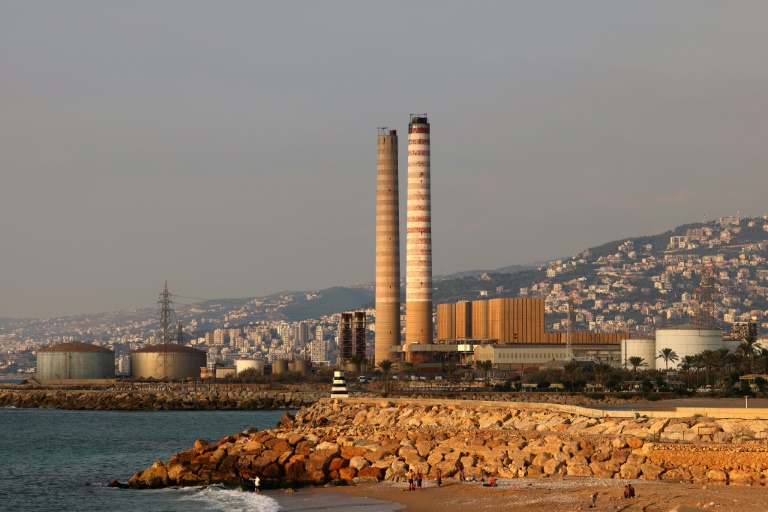
Thick black smoke sometimes billows from its red-and-white chimneys, leaving a grey haze in the air above the Zouk Mikael industrial district where the toxins remain trapped by a nearby mountain chain.

Zeina, aged 40, says she lost her younger sister and a cousin to pulmonary fibrosis and that two of her uncles died of lung cancer years earlier.

They all lived near the plant where, experts and residents believe, air pollution means people are more likely to develop cancer and respiratory disease than anywhere else in the crisis-torn country.

“We could die tomorrow,” said Zeina, who has relocated to Lebanon’s south to escape the plant’s emissions.

A Greenpeace study found that the surrounding Jounieh area ranked fifth in the Arab world and 23rd globally for cities most contaminated by nitrogen dioxide, a dangerous pollutant released when fuel is burnt.

The environmental group’s 2018 study singled out the Zouk plant, built in the 1940s, as well as cars on a busy motorway and privately owned electricity generators as the main causes of pollution.

The walls of Zeina’s balconies in her old Zouk Mikael home are blackened by the smoke, and laundry she used to hang outside would be damaged by toxic chemicals emanating from the plant, she said. 

“Whenever they refill the station with fuel oil, we would close the windows,” Zeina said. “The smell is unbearable.”

– Doctor says ‘I fled’ –

Lebanon’s economy has been in free-fall since a financial crisis hit late in 2019, with authorities now barely able to afford more than an hour of mains electricity a day.

The Zouk Mikael plant, one of the country’s largest, now runs at minimum capacity when it operates at all, but still its emissions are causing high rates of pulmonary disease, experts warn.

Among them is Paul Makhlouf, a lung doctor at the Notre Dame du Liban Hospital in Jounieh, who said he abandoned his local apartment after noticing a rise in respiratory disease among patients. 

In 2014, he found that lung ailments had increased by three percent in patients living near the plant compared to the previous year, an annual rise he estimates has now doubled.

“When I saw the results, I moved from there,” he said. “I fled.”

Makhlouf mainly blames the type of fuel burnt at the Zouk Mikael plant, which he says is rich in sulphide and nitric oxide — carcinogenic chemicals that affect the respiratory system and the skin.

Compounding the problem, he said, is the fact the seaside plant is located at a low altitude, with heavy smoke trapped in the densely-populated area by nearby mountains that overlook the Mediterranean.

– ‘Under black cloud’ –

Pictures went viral online last month of thick black smoke again billowing from the Zouk plant as it burnt low-quality fuel oil to produce just one hour of power that day.

The energy ministry said the plant had been forced to use heavy fuel to “keep supplying the airport, hospitals and other vital institutions” with electricity.

Since then, the plant has mostly operated at night.

“Sometimes, we wake up to a loud noise in the middle of the night” when the station kicks into action and burns fuel oil, said Zeina’s 80-year-old aunt Samia, who still lives near the plant. 

Elie Beaino, who heads the Zouk municipality, said a second plant, built without authorisation in 2014, runs somewhat more cleanly on higher-quality fuel or gas, but that it has stopped working as its operators cannot afford those higher-quality hydrocarbons.

“Most residents want the power plants to close down,” he said.

Lawmaker Najat Saliba, an atmospheric chemist, said residents near Zouk are at least seven times more likely to develop cancer than those of Beirut, citing a 2018 study she helped author for the American University of Beirut. 

She said the heavy fuel oil it uses releases harmful chemicals. “The solution is to import quality fuel oil and gas,” she said, adding however that Lebanon cannot afford those fuels.

“We have two options today,” she said. “To switch the lights off at the airport and in hospitals, or to sit under a black cloud in Zouk.”

'Close the windows': Lebanon power plant sparks cancer fears

After losing four relatives to respiratory illness, Zeina Matar fled her hometown north of Lebanon’s capital where she says a decaying power plant generates little electricity but very deadly pollution.

Thick black smoke sometimes billows from its red-and-white chimneys, leaving a grey haze in the air above the Zouk Mikael industrial district where the toxins remain trapped by a nearby mountain chain.

Zeina, aged 40, says she lost her younger sister and a cousin to pulmonary fibrosis and that two of her uncles died of lung cancer years earlier.

They all lived near the plant where, experts and residents believe, air pollution means people are more likely to develop cancer and respiratory disease than anywhere else in the crisis-torn country.

“We could die tomorrow,” said Zeina, who has relocated to Lebanon’s south to escape the plant’s emissions.

A Greenpeace study found that the surrounding Jounieh area ranked fifth in the Arab world and 23rd globally for cities most contaminated by nitrogen dioxide, a dangerous pollutant released when fuel is burnt.

The environmental group’s 2018 study singled out the Zouk plant, built in the 1940s, as well as cars on a busy motorway and privately owned electricity generators as the main causes of pollution.

The walls of Zeina’s balconies in her old Zouk Mikael home are blackened by the smoke, and laundry she used to hang outside would be damaged by toxic chemicals emanating from the plant, she said. 

“Whenever they refill the station with fuel oil, we would close the windows,” Zeina said. “The smell is unbearable.”

– Doctor says ‘I fled’ –

Lebanon’s economy has been in free-fall since a financial crisis hit late in 2019, with authorities now barely able to afford more than an hour of mains electricity a day.

The Zouk Mikael plant, one of the country’s largest, now runs at minimum capacity when it operates at all, but still its emissions are causing high rates of pulmonary disease, experts warn.

Among them is Paul Makhlouf, a lung doctor at the Notre Dame du Liban Hospital in Jounieh, who said he abandoned his local apartment after noticing a rise in respiratory disease among patients. 

In 2014, he found that lung ailments had increased by three percent in patients living near the plant compared to the previous year, an annual rise he estimates has now doubled.

“When I saw the results, I moved from there,” he said. “I fled.”

Makhlouf mainly blames the type of fuel burnt at the Zouk Mikael plant, which he says is rich in sulphide and nitric oxide — carcinogenic chemicals that affect the respiratory system and the skin.

Compounding the problem, he said, is the fact the seaside plant is located at a low altitude, with heavy smoke trapped in the densely-populated area by nearby mountains that overlook the Mediterranean.

– ‘Under black cloud’ –

Pictures went viral online last month of thick black smoke again billowing from the Zouk plant as it burnt low-quality fuel oil to produce just one hour of power that day.

The energy ministry said the plant had been forced to use heavy fuel to “keep supplying the airport, hospitals and other vital institutions” with electricity.

Since then, the plant has mostly operated at night.

“Sometimes, we wake up to a loud noise in the middle of the night” when the station kicks into action and burns fuel oil, said Zeina’s 80-year-old aunt Samia, who still lives near the plant. 

Elie Beaino, who heads the Zouk municipality, said a second plant, built without authorisation in 2014, runs somewhat more cleanly on higher-quality fuel or gas, but that it has stopped working as its operators cannot afford those higher-quality hydrocarbons.

“Most residents want the power plants to close down,” he said.

Lawmaker Najat Saliba, an atmospheric chemist, said residents near Zouk are at least seven times more likely to develop cancer than those of Beirut, citing a 2018 study she helped author for the American University of Beirut. 

She said the heavy fuel oil it uses releases harmful chemicals. “The solution is to import quality fuel oil and gas,” she said, adding however that Lebanon cannot afford those fuels.

“We have two options today,” she said. “To switch the lights off at the airport and in hospitals, or to sit under a black cloud in Zouk.”

Full-scale Noah's Ark — a showcase for US creationists

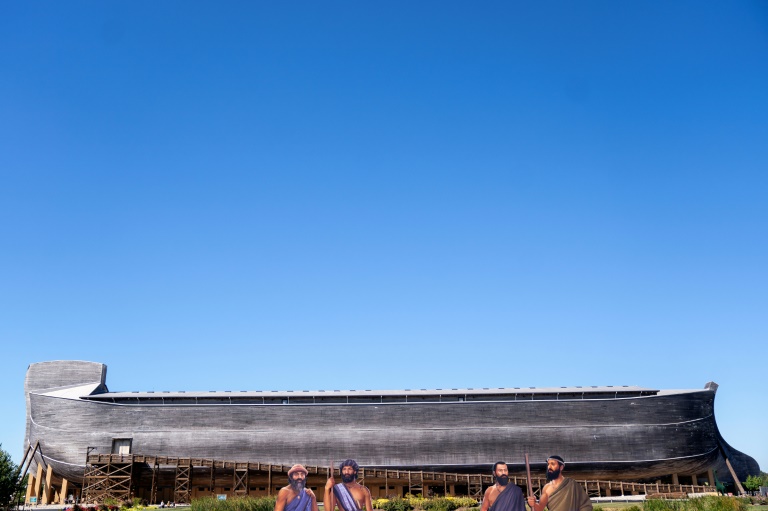
A full-sized model of Noah’s Ark sitting in rural Kentucky promotes a worldview that draws visitors from across the United States — that the theory of evolution is false.

The Ark Encounter and the associated Creation Museum espouse the belief that God literally created the Earth in six days around 4,000 BC.

Evangelical Christians flock to see the spectacular staging and sharp denunciations of scientific facts such as that dinosaurs became extinct about 65 million years ago.

Visitors also reflect America’s divided politics as the country heads into midterm elections, with creationists often aligned with the Republican Party on issues such as abortion and gay rights.

“Dinosaurs are often used by evolutionists to proclaim their worldview. So we’ve taken the dinosaurs back, if you will,” said Mark Looy, cofounder of the ark amusement park and the museum.

Standing a few steps from a model of an allosaurus skeleton, Looy said the site offers a different view of dinosaurs — that “most of them perished during the flood about 4,500 years ago.”

The museum opened in 2007 in Petersburg, Kentucky, financed by a donation campaign and supported by Answers in Genesis, a group that believes in strict creationism.

The Ark Encounter opened in 2016 about 70 kilometers (45 miles) away in Williamstown, and contains a replica of Noah’s Ark in keeping with its supposed Biblical measurements — 150 meters (510 feet) long, 15 meters (51 feet) high, and 25 meters (85 feet) wide.

– Bible ‘more than a story’ –

A combo ticket to the two sites costs $85, and Looys says more than a million people a year browse the exhibits — and also enjoy attractions such as zip-lining and a petting zoo 

Most visitors are committed to the cause.

“My husband and I… believe the Earth is about 6,000 years old,” said Suzanne Swindle, a 37-year-old executive from Atlanta who came to show her four-year-old daughter that the Bible “is more than just a story.”

However, she does not deny that species “adapt to their environment,” one of the pillars of Charles Darwin’s theory of evolution.

Similarly, Mike Barrington, a 70-year-old former veteran who lives in Louisiana, calls himself a creationist, but he adds that the exhibit’s explanation of dinosaurs “is new to me.”

Such contradictions are mirrored in the polls. According to a 2019 Gallup survey, 40 percent of Americans believe God created man less than 10,000 years ago.

But other polls ask subtler questions with more options and find about 15 percent reject the theory of evolution, said Adam Laats, a historian at Binghamton University in New York and author of the book “Creationism USA.”

Calling oneself a creationist in the United States is more “an identifying mark of a much broader cultural divide,” he said.

“Someone would go and say, ‘Oh, I guess I’m a creationist because I don’t like pornography, I don’t want abortion rights, and I don’t want LGBTQ rights.'”

Laats said decades of conflict over which institutions in the United States are trustworthy — ranging from justice and politics to science and the media — has created “radically different ideas about truth and reality.”

– Election issues –

The themes are at the heart of key midterm elections on November 8 and Laats sees “a correlation between the most archetypal MAGA (Donald Trump) conservatives and the most ardent museum-type creationists.”

At the two sites, “you’d find mostly Republicans,” Mark Looy said, and while the attractions must stay away from endorsing candidates, “we don’t shy away from some of the hot button issues of the day.”

In one clear example, a dummy video game at the museum reflects a binary reading of the world.

Two camps confront each other: “Man’s world,” associated with “abortion” or “gay marriage,” versus “God’s word,” synonymous with “marriage” and “sanctity of life.”

The mix of religion, activism and entertainment is also evident at the museum’s Garden of Eden.

After strolling through a bucolic landscape with Adam and Eve, visitors arrive in a screening room with projected black and white photos of the Holocaust, drug addicts and the terrorist attacks of September 11, 2001. 

To reinforce the message, big letters spell out: “Rejection of God’s word led to corruption.”

Peggy Mast, a 74-year-old woman from Kansas, agrees.

For her, “chaos reigns” in America, where “people are now committing anarchy with the acceptance of the administration of our government.”

So the museum is “a wonderful place to reaffirm the very things that we know about God,” she added.

Full-scale Noah's Ark — a showcase for US creationists

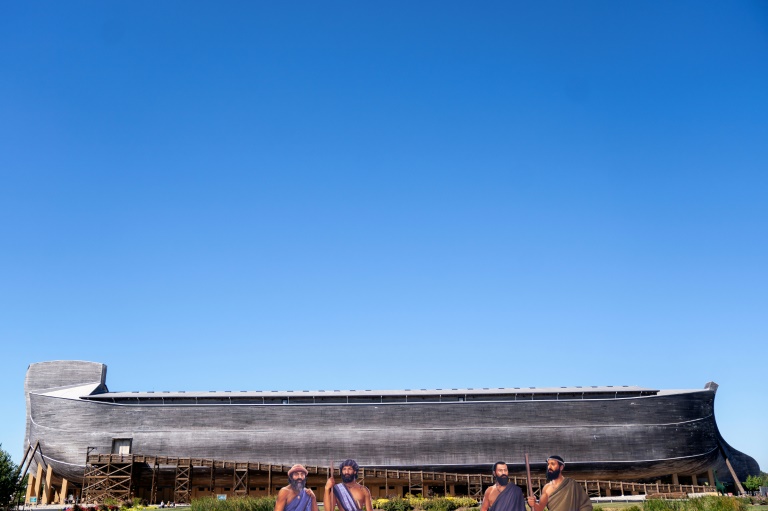
A full-sized model of Noah’s Ark sitting in rural Kentucky promotes a worldview that draws visitors from across the United States — that the theory of evolution is false.

The Ark Encounter and the associated Creation Museum espouse the belief that God literally created the Earth in six days around 4,000 BC.

Evangelical Christians flock to see the spectacular staging and sharp denunciations of scientific facts such as that dinosaurs became extinct about 65 million years ago.

Visitors also reflect America’s divided politics as the country heads into midterm elections, with creationists often aligned with the Republican Party on issues such as abortion and gay rights.

“Dinosaurs are often used by evolutionists to proclaim their worldview. So we’ve taken the dinosaurs back, if you will,” said Mark Looy, cofounder of the ark amusement park and the museum.

Standing a few steps from a model of an allosaurus skeleton, Looy said the site offers a different view of dinosaurs — that “most of them perished during the flood about 4,500 years ago.”

The museum opened in 2007 in Petersburg, Kentucky, financed by a donation campaign and supported by Answers in Genesis, a group that believes in strict creationism.

The Ark Encounter opened in 2016 about 70 kilometers (45 miles) away in Williamstown, and contains a replica of Noah’s Ark in keeping with its supposed Biblical measurements — 150 meters (510 feet) long, 15 meters (51 feet) high, and 25 meters (85 feet) wide.

– Bible ‘more than a story’ –

A combo ticket to the two sites costs $85, and Looys says more than a million people a year browse the exhibits — and also enjoy attractions such as zip-lining and a petting zoo 

Most visitors are committed to the cause.

“My husband and I… believe the Earth is about 6,000 years old,” said Suzanne Swindle, a 37-year-old executive from Atlanta who came to show her four-year-old daughter that the Bible “is more than just a story.”

However, she does not deny that species “adapt to their environment,” one of the pillars of Charles Darwin’s theory of evolution.

Similarly, Mike Barrington, a 70-year-old former veteran who lives in Louisiana, calls himself a creationist, but he adds that the exhibit’s explanation of dinosaurs “is new to me.”

Such contradictions are mirrored in the polls. According to a 2019 Gallup survey, 40 percent of Americans believe God created man less than 10,000 years ago.

But other polls ask subtler questions with more options and find about 15 percent reject the theory of evolution, said Adam Laats, a historian at Binghamton University in New York and author of the book “Creationism USA.”

Calling oneself a creationist in the United States is more “an identifying mark of a much broader cultural divide,” he said.

“Someone would go and say, ‘Oh, I guess I’m a creationist because I don’t like pornography, I don’t want abortion rights, and I don’t want LGBTQ rights.'”

Laats said decades of conflict over which institutions in the United States are trustworthy — ranging from justice and politics to science and the media — has created “radically different ideas about truth and reality.”

– Election issues –

The themes are at the heart of key midterm elections on November 8 and Laats sees “a correlation between the most archetypal MAGA (Donald Trump) conservatives and the most ardent museum-type creationists.”

At the two sites, “you’d find mostly Republicans,” Mark Looy said, and while the attractions must stay away from endorsing candidates, “we don’t shy away from some of the hot button issues of the day.”

In one clear example, a dummy video game at the museum reflects a binary reading of the world.

Two camps confront each other: “Man’s world,” associated with “abortion” or “gay marriage,” versus “God’s word,” synonymous with “marriage” and “sanctity of life.”

The mix of religion, activism and entertainment is also evident at the museum’s Garden of Eden.

After strolling through a bucolic landscape with Adam and Eve, visitors arrive in a screening room with projected black and white photos of the Holocaust, drug addicts and the terrorist attacks of September 11, 2001. 

To reinforce the message, big letters spell out: “Rejection of God’s word led to corruption.”

Peggy Mast, a 74-year-old woman from Kansas, agrees.

For her, “chaos reigns” in America, where “people are now committing anarchy with the acceptance of the administration of our government.”

So the museum is “a wonderful place to reaffirm the very things that we know about God,” she added.

Close Bitnami banner
Bitnami