AFP

Amazon workers reject union in latest US warehouse vote

Workers at an Amazon warehouse in the state of New York voted decisively against establishing a union, US officials announced Tuesday, dealing a setback to the fledgling labor drive at the e-commerce behemoth.

The tally was 406 against Amazon Labor Union’s (ALU) proposal and 206 in support of the organization, said a spokeswoman for the National Labor Relations Board.

The election marks the second straight defeat for the ALU, which surged to prominence in April following its upset win at a large Staten Island warehouse that voted to become Amazon’s first US facility to unionize.

ALU president Christian Smalls dismissed the vote at the Amazon facility near the city of Albany in New York state as unfair.

“It was a sham election where workers were subjected to intimidation and retaliation on a daily basis and even the workers who volunteered to be election observers were faced with threats of termination,” Small said in a statement.

Smalls said he was “proud of the brave workers in upstate New York who stood up in the face of a vicious anti-union campaign to challenge a trillion-dollar corporation.”

“We will continue to empower all workers to give them the right to unionize. You miss 100% of the shots you don’t take!” he added on Twitter.

Amazon, which has continued to contest its defeat in the first Staten Island vote, said it was pleased with Tuesday’s outcome.

“We’re glad that our team in Albany was able to have their voices heard, and that they chose to keep the direct relationship with Amazon as we think that this is the best arrangement for both our employees and customers,” said spokesperson Kelly Nantel. 

The elections at Amazon have come amid a wave of labor drives at consumer-facing companies, including Starbucks, Apple, REI and Chipotle, all of which have voted to unionize one or more store or restaurant. 

But Amazon’s initial victory in Staten Island, a New York borough, was on a much bigger scale, providing a jolt to the US labor movement while propelling Smalls and other ALU leaders to prominence. 

Smalls, a former Staten Island Amazon worker, and other current and ex-employees established the group  2021, denouncing Amazon’s rigid workforce practices during the pandemic and arguing a union was the way towards better pay and benefits.

But after prevailing in the 8,000 employee JFK8 warehouse, the ALU had also lost a second election in May at the smaller LDJ5 warehouse, which is also in Staten Island.

Besides trying to spread the ALU to new Amazon sites, the union’s leadership is also facing barriers in getting Amazon to come to the bargaining table to recognize the union and negotiate a contract.

Amazon has refused to accept the election outcome in the first Staten Island vote, citing alleged improprieties.

Last month, a National Labor Relations Board official rejected Amazon’s claims as groundless after a 24-day hearing.

But Amazon has said it plans to appeal that decision.

Amazon workers reject union in latest US warehouse vote

Workers at an Amazon warehouse in the state of New York voted decisively against establishing a union, US officials announced Tuesday, dealing a setback to the fledgling labor drive at the e-commerce behemoth.

The tally was 406 against Amazon Labor Union’s (ALU) proposal and 206 in support of the organization, said a spokeswoman for the National Labor Relations Board.

The election marks the second straight defeat for the ALU, which surged to prominence in April following its upset win at a large Staten Island warehouse that voted to become Amazon’s first US facility to unionize.

ALU president Christian Smalls dismissed the vote at the Amazon facility near the city of Albany in New York state as unfair.

“It was a sham election where workers were subjected to intimidation and retaliation on a daily basis and even the workers who volunteered to be election observers were faced with threats of termination,” Small said in a statement.

Smalls said he was “proud of the brave workers in upstate New York who stood up in the face of a vicious anti-union campaign to challenge a trillion-dollar corporation.”

“We will continue to empower all workers to give them the right to unionize. You miss 100% of the shots you don’t take!” he added on Twitter.

Amazon, which has continued to contest its defeat in the first Staten Island vote, said it was pleased with Tuesday’s outcome.

“We’re glad that our team in Albany was able to have their voices heard, and that they chose to keep the direct relationship with Amazon as we think that this is the best arrangement for both our employees and customers,” said spokesperson Kelly Nantel. 

The elections at Amazon have come amid a wave of labor drives at consumer-facing companies, including Starbucks, Apple, REI and Chipotle, all of which have voted to unionize one or more store or restaurant. 

But Amazon’s initial victory in Staten Island, a New York borough, was on a much bigger scale, providing a jolt to the US labor movement while propelling Smalls and other ALU leaders to prominence. 

Smalls, a former Staten Island Amazon worker, and other current and ex-employees established the group  2021, denouncing Amazon’s rigid workforce practices during the pandemic and arguing a union was the way towards better pay and benefits.

But after prevailing in the 8,000 employee JFK8 warehouse, the ALU had also lost a second election in May at the smaller LDJ5 warehouse, which is also in Staten Island.

Besides trying to spread the ALU to new Amazon sites, the union’s leadership is also facing barriers in getting Amazon to come to the bargaining table to recognize the union and negotiate a contract.

Amazon has refused to accept the election outcome in the first Staten Island vote, citing alleged improprieties.

Last month, a National Labor Relations Board official rejected Amazon’s claims as groundless after a 24-day hearing.

But Amazon has said it plans to appeal that decision.

California man guilty of murder in 1990s college case

More than 26 years after a California student disappeared while walking back to her dorm room from a college party, a man was convicted of her murder Tuesday.

The body of 19-year-old Kristin Smart has never been found, and for decades billboards and even a true-crime podcast appealed for evidence in a case that haunted the community, before long-standing suspect Paul Flores was arrested last year.

Flores, now 45, was convicted of first-degree murder by a jury at Monterey County Superior Court on Tuesday following a three-month trial.

“Our criminal and victim justice system has now finally delivered justice for Kristin,” Dan Dow, San Luis Obispo district attorney, said after the verdicts were read.

“The impact that Kristin Smart’s disappearance and the… investigation has had on the Smart family, on our community, spanning a quarter century, has been profound.”

“Today, justice delayed is not justice denied,” he told a press conference.

But Smart’s remains have still not been located, and Paul’s father Ruben was found not guilty Tuesday of helping to hide her body.

Smart’s father Stan said: “Without Kristin, there’s no joy or happiness in this verdict.”

“After 26 years, with today’s split verdicts, we learned that our quest for justice for Kristin will continue.”

Both Smart and Flores were students at Cal Poly San Luis Obispo, roughly midway between Los Angeles and San Francisco on California’s central coast, when she went missing in May 1996.

Flores was the last person seen with Smart, accompanying her on the 10-minute walk back to her dormitory from a party that night.

Prosecutors said Flores raped, or attempted to rape, and killed Smart before burying her remains under his father’s house deck.

During the trial, prosecutors said Paul Flores had stalked Smart for months, and suggested he may have drugged her drink at the party the night of her murder.

Smart was declared legally dead in 2002, but the mysterious case remained prominent in the San Luis Obispo community, drawing amateur sleuths including the “Your Own Backyard” podcast.

The court case had to be moved from San Luis Obispo to neighboring Monterey county to ensure a fair trial.

In 2019, a witness told detectives that Flores had admitted the crime to her.

As investigations intensified once more, prosecutors alleged that activity spotted at his father’s house the following year indicated attempts to move Smart’s remains.

– ‘Not over’ –

Ian Parkinson, the sheriff for San Luis Obispo County, vowed to continue searching for her body following the verdict.

“The reality is, there is some form of justice today, holding the person responsible,” he said.

“However, that doesn’t change the fact that their daughter, at 19, disappeared and was murdered. And they don’t have the opportunity to see her graduate from Cal Poly, be married, have grandchildren for them.”

Parkinson added: “Even though Paul was convicted today, this case is not over. This case will not be over until Kristin has returned home.”

Paul and Ruben Flores have always denied any involvement in Smart’s disappearance, and Ruben’s lawyer Harold Mesick told the San Luis Obispo Tribune there is a “reasonable inference” she is still alive, and that he expects his son to appeal.

Flores is due to be sentenced on December 9, and could face up to life in prison.

Paul Flores’ attorney Robert Sanger told AFP via email that “the matter is still pending” and declined to comment further. 

Netflix subscriber numbers re-ignite after chilly start to year

Netflix on Tuesday reported that it gained more than 2 million subscribers in the recent quarter, calming investor fears that the streaming giant was losing paying customers.

The company said it ended the third quarter with slightly more than 223 million subscribers worldwide, up some 2.4 million, after seeing subscriber ranks ebb during the first half of the year.

Netflix shares shot up more than 14 percent in after hours trading to $275 on the earnings news.

“Well, thank God we’re done with shrinking quarters,” Netflix co-chief executive said during an earnings call.

“We’re back to the positivity; we’ve got to pick up the momentum.”

The turn-around in subscriber growth comes as Netflix is poised to debut a subscription option subsidized by ads in November across a dozen countries.

The new “Basic with Ads” subscriptions will be priced at $6.99 in the United States — three dollars less than a no-ads basic option, Netflix chief operating officer Greg Peters said in a briefing.

“The timing is great because we really are at this pivotal moment in the entertainment industry and evolution of that industry,” Peters said.

“Now streaming has surpassed both broadcast and cable for total TV time in the United States.”

Netflix is working with Microsoft on its ad-supported tier, and teams at both companies will likely need to be bulked up to handle the huge demand by advertisers, Peters said.

“We’re turning some folks away right now because we just don’t have the marketing capacity to serve everyone,” Peters said

After having shunned advertising since it started its streaming service, Netflix acquiesced as competition in the market intensifies and as consumers recoil from soaring inflation.

Rival streaming platform Disney+ is to launch ad-subsidized subscriptions in December.

With the launch of cheaper, ad-supported subscriptions, Netflix and Disney+ are expected to bite into the revenue of traditional television channels.

“In directly acknowledging competition and using advertising, Netflix is adapting to the streaming landscape’s new normal,” said Insider Intelligence principal analyst Ross Benes.

– Covid ‘logjam’ –

Netflix expects to add another 4.5 million subscribers in the final quarter of this year.

“Although international growth continues, the US video streaming market is hitting its ceiling for subscribers,” said Third Bridge analyst Jamie Lumley.

“After periods of rapid expansion and extraordinary spending, Netflix, Disney and their competitive set will soon be forced to focus on improving margins and cutting back on content spending.”

Netflix said in a letter to shareholders that it believes its competitors have been losing money as they invest heavily to win audiences.

Netflix reported a quarterly profit of $1.4 billion on revenue of $7.9 billion — a net income slightly less than in the same period a year ago when it brought in more money.

Netflix plans to hold steady with spending some $17 billion a year on content, said co-chief executive Ted Sarandos.

“I feel better and better about that $17 billion of content spend, because what we have to do is be better at getting more impact per billion dollars spent than anybody else,” Serranos said.

“Big shows that folks engaged with and talk about drive a lot of growth.”

Peters noted hits such as “Stranger Things” and “Extraordinary Attorney Woo” and pending releases of keenly anticipated films such as “Glass Onion: A Knives Out Mystery.”

Netflix is also working to smooth out the show release rhythm that was disrupted by the pandemic, according to executives.

“Covid got a lot of content jammed up,” Sarandos said.

“It will take several years to completely unwind the Covid logjam.”

Netflix subscriber numbers re-ignite after chilly start to year

Netflix on Tuesday reported that it gained more than 2 million subscribers in the recent quarter, calming investor fears that the streaming giant was losing paying customers.

The company said it ended the third quarter with slightly more than 223 million subscribers worldwide, up some 2.4 million, after seeing subscriber ranks ebb during the first half of the year.

Netflix shares shot up more than 14 percent in after hours trading to $275 on the earnings news.

“Well, thank God we’re done with shrinking quarters,” Netflix co-chief executive said during an earnings call.

“We’re back to the positivity; we’ve got to pick up the momentum.”

The turn-around in subscriber growth comes as Netflix is poised to debut a subscription option subsidized by ads in November across a dozen countries.

The new “Basic with Ads” subscriptions will be priced at $6.99 in the United States — three dollars less than a no-ads basic option, Netflix chief operating officer Greg Peters said in a briefing.

“The timing is great because we really are at this pivotal moment in the entertainment industry and evolution of that industry,” Peters said.

“Now streaming has surpassed both broadcast and cable for total TV time in the United States.”

Netflix is working with Microsoft on its ad-supported tier, and teams at both companies will likely need to be bulked up to handle the huge demand by advertisers, Peters said.

“We’re turning some folks away right now because we just don’t have the marketing capacity to serve everyone,” Peters said

After having shunned advertising since it started its streaming service, Netflix acquiesced as competition in the market intensifies and as consumers recoil from soaring inflation.

Rival streaming platform Disney+ is to launch ad-subsidized subscriptions in December.

With the launch of cheaper, ad-supported subscriptions, Netflix and Disney+ are expected to bite into the revenue of traditional television channels.

“In directly acknowledging competition and using advertising, Netflix is adapting to the streaming landscape’s new normal,” said Insider Intelligence principal analyst Ross Benes.

– Covid ‘logjam’ –

Netflix expects to add another 4.5 million subscribers in the final quarter of this year.

“Although international growth continues, the US video streaming market is hitting its ceiling for subscribers,” said Third Bridge analyst Jamie Lumley.

“After periods of rapid expansion and extraordinary spending, Netflix, Disney and their competitive set will soon be forced to focus on improving margins and cutting back on content spending.”

Netflix said in a letter to shareholders that it believes its competitors have been losing money as they invest heavily to win audiences.

Netflix reported a quarterly profit of $1.4 billion on revenue of $7.9 billion — a net income slightly less than in the same period a year ago when it brought in more money.

Netflix plans to hold steady with spending some $17 billion a year on content, said co-chief executive Ted Sarandos.

“I feel better and better about that $17 billion of content spend, because what we have to do is be better at getting more impact per billion dollars spent than anybody else,” Serranos said.

“Big shows that folks engaged with and talk about drive a lot of growth.”

Peters noted hits such as “Stranger Things” and “Extraordinary Attorney Woo” and pending releases of keenly anticipated films such as “Glass Onion: A Knives Out Mystery.”

Netflix is also working to smooth out the show release rhythm that was disrupted by the pandemic, according to executives.

“Covid got a lot of content jammed up,” Sarandos said.

“It will take several years to completely unwind the Covid logjam.”

Biden to release 15 mln barrels from US oil reserves: official

President Joe Biden will announce Wednesday he’s putting the final 15 million barrels on the market from a record release of US strategic oil reserves, with more releases possible if energy prices spike, a senior US official said.

The new tranche of oil from the Strategic Petroleum Reserve will be “completing the 180 million barrel release authorized in the spring,” in response to price hikes linked to Russia’s invasion of Ukraine, a senior US official said Tuesday.

The order, which Biden will announce in a speech, means the president will be “making clear that the administration is prepared to undertake significant additional… sales this winter if they are needed due to Russian or other actions disrupting global markets,” the official added.

The decision to make the biggest ever dip into the emergency oil reserves — usually kept for responding to situations such as hurricane-related shutdowns at oil refineries — was Biden’s gambit to calm energy markets and shield the world’s biggest economy from Ukraine war shocks.

Major energy exporter Russia was hit with US and European sanctions soon after it invaded Ukraine in February, causing turmoil on markets. In addition, the Kremlin has threatened to use its leverage over energy supplies as an economic weapon against the West, which supports Ukraine’s fight to repel the invasion.

For Biden there are serious domestic concerns, with gasoline prices at one point averaging more than $5 a gallon, causing nationwide anger. While prices have since moderated, inflation remains the biggest factor driving Republican hopes of defeating the Democrats in November’s midterm legislative elections.

– Reserves in good shape –

The senior official, who spoke on condition of anonymity, stressed that the Strategic Petroleum Reserve was not being used irresponsibly.

At the same time as announcing the 15 million barrel drawdown for delivery in December — and flagging the possibility of more to come — Biden is highlighting a plan to refill the reserve as soon as prices hit around $67-72 a barrel, the official said.

This is “an important signal for producers that the SPR will be part of helping to moderate and stabilize price flows, not only when prices are going high but when prices are going low,” he said.

The reserve, meanwhile, remains in good shape, the official said, with more than 400 million barrels. “That is still a large amount” and allows for “additional opportunity… if we need to do more sales.”

The official described the SPR use as a “brilliant” bridge out of a crisis moment, playing “an incredibly constructive role through a very challenging time period.”

However, with “additional volatility” expected from Russia and production levels still not back to pre-Covid pandemic levels, stability is “not quite there yet.”

Asked whether the United States could take the more radical measure of curbing fuel exports — something that would help tamp down domestic prices but hurt foreign buyers, including in allied countries — an official declined to confirm or deny.

“We’re keeping all tools on the table,” the official, who also spoke on condition of anonymity, said.

But with the midterm vote just three weeks away, Republicans are seeking to paint Biden as a manipulator of the oil reserves in order to win support for his Democrats.

The move is not an effort to steady markets, “it’s a bid to try and save his party from getting walloped in the Midterm elections,” House Republican Byron Donalds tweeted, adding that “Biden’s mismanagement of our strategic oil reserves is a dire threat to national security.”

Host Qatar's World Cup 'carbon neutral' claims under fire

Organisers have promised a carbon neutral World Cup next month in Qatar but environmental groups are warning that the tournament will be far more polluting than advertised.

Hassan al-Thawadi, secretary general of Qatar 2022, said organisers will achieve net-zero emissions for the tournament as a whole “by measuring, mitigating and offsetting all our greenhouse gas emissions”.

This promise has failed to convince sceptics, however. Former Manchester United ace Eric Cantona recently slammed what he called an “ecological aberration”, pointing to the carbon footprint of what will be eight air-conditioned stadiums.

Julien Jreissati, programme director of Greenpeace Middle East, has accused organisers of “window dressing”, insisting that claims of net-zero emissions from the tournament “could be considered greenwashing/sportswashing”.

Gilles Dufrasne, a researcher for Carbon Market Watch and author of a report into Qatar 2022’s climate credentials, said that carbon neutrality claims were “misleading and dishonest about the true climate impact that the event will have.”

Organisers of football’s marquee event said it will generate 3.6 million tonnes of CO2 equivalent, compared with 2.1 million generated by the previous edition, in Russia in 2018.

The vast majority of these emissions, some 95 percent, are indirect from things like transport, infrastructure building and housing. 

But Carbon Market Watch says that the hosts’ estimate is incomplete. It says that Qatar has underestimated the footprint of constructing eight new stadiums, for example, by a factor of eight, generating 1.6 million tonnes of CO2 instead of the 200,000 tonnes disclosed.

Some of this difference can be explained by methodology. Qatar deems that most of the new stadiums will be used well after the tournament is over, meaning that their environmental impact shouldn’t be tied specifically to one event.

Carbon Market Watch differs, pointing out that banking on continued use of eight massive sporting venues in a country of just 2.4 million inhabitants is risky.

– ‘Huge error’ –

Stadium air conditioning in Qatar, contrary to popular belief, is expected to only contribute a minimal amount to the tournament’s climate impact.

“It’s relatively minimal compared to total emissions from constructing stadiums or from air transport,” said Dufrasne.

Given the vast amounts of infrastructure Qatar has had to build in order to accommodate the world’s largest sporting event, some experts believe the tiny Gulf nation was destined to struggle to keep emissions down.

“The huge error was made in December 2010 at the moment the World Cup wasn’t awarded to a country that already had all the infrastructure,” said Giles Pache, a specialist in logistics at France’s Aix-Marseille University, referring to the United States, which missed out on FIFA voting to Qatar.

“In Qatar we were starting with nothing, hosting a global event built on sand,” said Pache. 

“The US was really well equipped” in terms of stadiums and hotels, he said.

To achieve carbon neutrality, tournament organisers have promised that emissions will be offset in the form of carbon credits. These, in theory, balance out the emissions produced by saving emissions elsewhere in the world. 

With Qatar, organisers are working on renewable energy projects in Turkey as part of this scheme.

Jreissati said these carbon credits constituted a “distraction”. 

“They give the impression that a solution that doesn’t necessitate efforts to reduce greenhouse gas emissions through ambitious political decisions is possible,” he said.

“We need to reduce emissions at source as soon as possible.”

For future tournaments Dufrasne said he hoped for a “systemic reflection” in how World Cups are organised. 

This could include extending the gaps between tournaments or hosting global versions of the event.

“Hold matches across the world, playing in stadiums that are closest to the two teams playing,” he suggested.

Climate change may boost Arctic 'virus spillover' risk

A warming climate could bring viruses in the Arctic into contact with new environments and hosts, increasing the risk of “viral spillover”, according to research published Wednesday.

Viruses need hosts like humans, animals, plants or fungi to replicate and spread, and occasionally they can jump to a new one that lacks immunity, as seen during the Covid-19 pandemic.

Scientists in Canada wanted to investigate how climate change might affect spillover risk by examining samples from the Arctic landscape of Lake Hazen.

It is the largest lake in the world entirely north of the Arctic Circle, and “was truly unlike any other place I’ve been”, researcher Graham Colby, now a medical student at University of Toronto, told AFP.

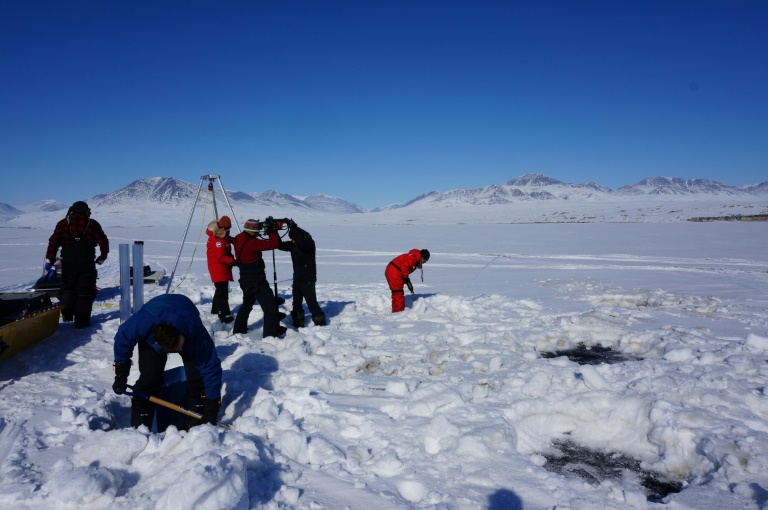
The team sampled soil that becomes a riverbed for melted glacier water in the summer, as well as the lakebed itself — which required clearing snow and drilling through two metres of ice, even in May when the research was carried out.

They used ropes and a snowmobile to lift the lake sediment through almost 300 metres (980 feet) of water, and samples were then sequenced for DNA and RNA, the genetic blueprints and messengers of life.

“This enabled us to know what viruses are in a given environment, and what potential hosts are also present,” said Stephane Aris-Brosou, an associate professor in the University of Ottawa’s biology department, who led the work.

But to find out how likely they were to jump hosts, the team needed to examine the equivalent of each virus and host’s family tree.

“Basically what we tried to do is measure how similar these trees are,” said Audree Lemieux, first author of the research.

Similar genealogies suggest a virus has evolved along with its host, but differences suggest spillover.

And if a virus has jumped hosts once, it is more likely to do so again.

– ‘Very unpredictable’ –

The analysis found pronounced differences between viruses and hosts in the lakebed, “which is directly correlated to the risk of spillover,” said Aris-Brosou.

The difference was less stark in the riverbeds, which the researchers theorise is because water erodes the topsoil, removing organisms and limiting interactions between viruses and potential new hosts.

Those instead wash into the lake, which has seen “dramatic change” in recent years, the study says, as increased water from melting glaciers deposits more sediment.

“That’s going to bring together hosts and viruses that would not normally encounter each other,” Lemieux said.

The authors of the research, published in the Proceedings of the Royal Society B: Biological Sciences journal, caution they are neither forecasting an actual spillover nor a pandemic.

“The likelihood of dramatic events remains very low,” Lemieux said.

They also warn more work is needed to clarify how big the difference between viruses and hosts needs to be to create serious spillover risk.

But they argue that warming weather could increase risks further if new potential hosts move into previously inhospitable regions.

“It could be anything from ticks to mosquitoes to certain animals, to bacteria and viruses themselves,” said Lemieux.

“It’s really unpredictable… and the effect of spillover itself is very unpredictable, it can range from benign to an actual pandemic.”

The team wants more research and surveillance work in the region to understand the risks.

“Obviously we’ve seen in the past two years what the effects of spillover can be,” said Lemieux.

Warming waters 'key culprit' in Alaska crab mass die-off

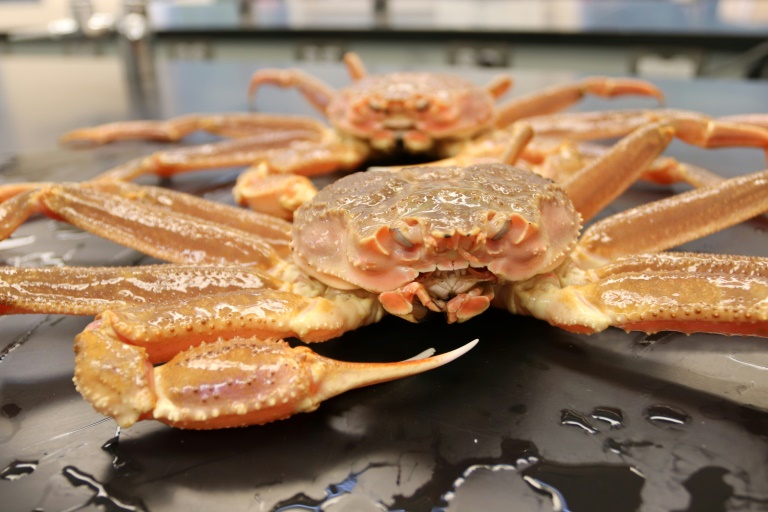
Climate change is a prime suspect in a mass die-off of Alaska’s snow crabs, experts say, after the state took the unprecedented step of canceling their harvest this season to save the species.

According to an annual survey of the Bering Sea floor carried out by the National Oceanic and Atmospheric Administration, estimates for the crustaceans’ total numbers fell to about 1.9 billion in 2022, down from 11.7 billion in 2018, or a reduction of about 84 percent.

For the first time ever, the Alaska Department of Fish and Game announced the Bering Sea snow crab season will remain closed for 2022-23, saying in a statement efforts must turn to “conservation and rebuilding given the condition of the stock.”

The species is also found in the more northward Chukchi and Beaufort Seas, but they do not grow to fishable sizes there.

Erin Fedewa, a marine biologist with the Alaska Fisheries Science Center, told AFP the shocking numbers seen today were the result of heatwaves in 2018 and 2019. 

The “cold water habitat that they need was virtually absent, which suggests that temperature is really the key culprit in this population decline,” she said.

Historically an abundant resource in the Bering Sea, their loss is considered a bellwether of ecological disruption.

There are thought to be several ways that warmer temperatures have depleted the species.

Studies have pointed toward a higher prevalence of Bitter Crab Disease as the temperature heats up. 

The crustaceans, named for their love of cold water, are also under greater metabolic stress in warmer waters, meaning they need more energy to stay alive.

“A working hypothesis right now is that the crabs starved, they couldn’t keep up with metabolic demands,” said Fedewa.

Young snow crabs in particular need low temperatures to hide out from their major predator, Pacific cod, and temperatures in regions where juveniles typically reside jumped from 1.5 degrees Celsius in 2017 to 3.5 Celsius in 2018 (35 degrees Fahrenheit to 38 degrees Fahrenheit) — with studies indicating 3C might be an important threshold.

– Overfishing not blamed –

More research is underway and findings should be published soon, but in the meantime, “everything really points to climate change,” Fedewa said.

“These are truly unprecedented and troubling times for Alaska’s iconic crab fisheries and for the hard-working fishermen and communities that depend on them,” Jamie Goen, executive director of Alaska Bering Sea Crabbers said in a statement, lamenting that second and third generation crab-fishing families “will go out of business.”

The industry was also hit by the cancellation of Bristol Bay red king crab fishing for the second year in a row.

Fedewa also noted that overfishing isn’t a big factor in the population collapse of snow crabs. 

Fishing removes only large adult males, she said, “and we’ve seen these declines across all sizes of snow crab, which really suggest some bottom-up environmental driver is at play.”

Male Alaska snow crabs can reach six inches (15 centimeters) in shell width, but females seldom grow larger than three inches, according to NOAA.

In some good news, this year’s survey saw significant increases in the immature crabs compared to last year — but it will take four or five years before the males among them grow to fishable size.

Following the heatwave years, temperatures have returned to normal, and “the hope is that leaving crabs untouched will allow them to reproduce, there’ll be no mortalities, and we can just let the stock try to recover,” said Fedewa. 

A hope that is pinned on no further heatwaves.

Warming waters 'key culprit' in Alaska crab mass die-off

Climate change is a prime suspect in a mass die-off of Alaska’s snow crabs, experts say, after the state took the unprecedented step of canceling their harvest this season to save the species.

According to an annual survey of the Bering Sea floor carried out by the National Oceanic and Atmospheric Administration, estimates for the crustaceans’ total numbers fell to about 1.9 billion in 2022, down from 11.7 billion in 2018, or a reduction of about 84 percent.

For the first time ever, the Alaska Department of Fish and Game announced the Bering Sea snow crab season will remain closed for 2022-23, saying in a statement efforts must turn to “conservation and rebuilding given the condition of the stock.”

The species is also found in the more northward Chukchi and Beaufort Seas, but they do not grow to fishable sizes there.

Erin Fedewa, a marine biologist with the Alaska Fisheries Science Center, told AFP the shocking numbers seen today were the result of heatwaves in 2018 and 2019. 

The “cold water habitat that they need was virtually absent, which suggests that temperature is really the key culprit in this population decline,” she said.

Historically an abundant resource in the Bering Sea, their loss is considered a bellwether of ecological disruption.

There are thought to be several ways that warmer temperatures have depleted the species.

Studies have pointed toward a higher prevalence of Bitter Crab Disease as the temperature heats up. 

The crustaceans, named for their love of cold water, are also under greater metabolic stress in warmer waters, meaning they need more energy to stay alive.

“A working hypothesis right now is that the crabs starved, they couldn’t keep up with metabolic demands,” said Fedewa.

Young snow crabs in particular need low temperatures to hide out from their major predator, Pacific cod, and temperatures in regions where juveniles typically reside jumped from 1.5 degrees Celsius in 2017 to 3.5 Celsius in 2018 (35 degrees Fahrenheit to 38 degrees Fahrenheit) — with studies indicating 3C might be an important threshold.

– Overfishing not blamed –

More research is underway and findings should be published soon, but in the meantime, “everything really points to climate change,” Fedewa said.

“These are truly unprecedented and troubling times for Alaska’s iconic crab fisheries and for the hard-working fishermen and communities that depend on them,” Jamie Goen, executive director of Alaska Bering Sea Crabbers said in a statement, lamenting that second and third generation crab-fishing families “will go out of business.”

The industry was also hit by the cancellation of Bristol Bay red king crab fishing for the second year in a row.

Fedewa also noted that overfishing isn’t a big factor in the population collapse of snow crabs. 

Fishing removes only large adult males, she said, “and we’ve seen these declines across all sizes of snow crab, which really suggest some bottom-up environmental driver is at play.”

Male Alaska snow crabs can reach six inches (15 centimeters) in shell width, but females seldom grow larger than three inches, according to NOAA.

In some good news, this year’s survey saw significant increases in the immature crabs compared to last year — but it will take four or five years before the males among them grow to fishable size.

Following the heatwave years, temperatures have returned to normal, and “the hope is that leaving crabs untouched will allow them to reproduce, there’ll be no mortalities, and we can just let the stock try to recover,” said Fedewa. 

A hope that is pinned on no further heatwaves.

Close Bitnami banner
Bitnami