AFP

Senegal not giving up on oil and gas

The new offshore gas terminal appears through the morning mist cloaking the Atlantic Ocean near Saint Louis, where Senegal meets Mauritania.

It has been hailed as a new economic beginning in developing Africa, and condemned as a new source of pollution in a world suffocating from global warming.

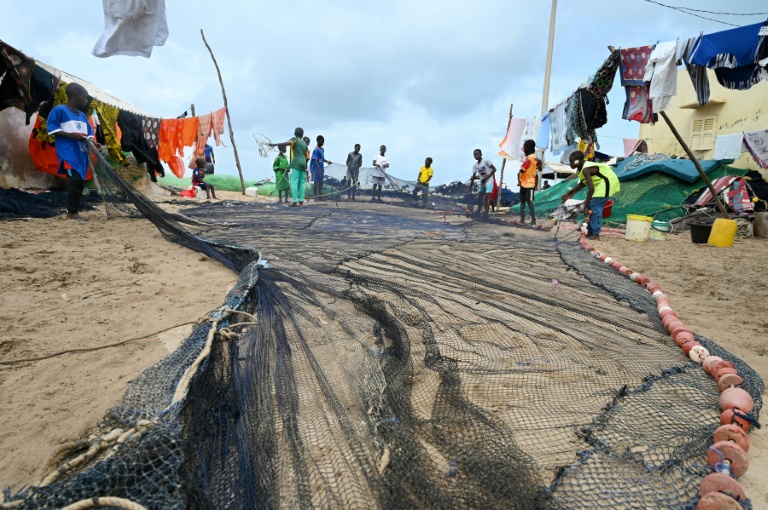
On the beach, a dugout canoe is hauled up the wet sand after a night’s fishing.

“Not a lot of fish,” scowls El Hadji Gaye, his eye catching the giant structure nearly 10 kilometres (six miles) out at sea.

Senegal, like the Democratic Republic of Congo, has discovered oil and gas reserves, raising hopes of future riches and industrialisation.

They have no intention of yielding to appeals to leave lucrative oil and gas in the ground in the name of fighting climate change.

Senegalese President Macky Sall says it would be “an injustice” and he has launched a diplomatic counter-offensive to justify extracting the resources, starting next year.

“Not being the greatest polluters since we are not industrialised, it would be unfair in the search for a solution (to global warming) to ban Africa from using the natural resources which are underground,” Sall told visiting German Chancellor Olaf Scholz in May.

And the message seems even more likely to be heard now that Europeans, facing a major energy crisis following Russia’s invasion of Ukraine, are looking to diversify their oil and gas supplies.

– ‘Exacerbate’ global warming –

Niger, the world’s poorest country according to the UN’s Human Development Index, is also building Africa’s longest oil pipeline — a nearly 2,000-kilometre (1,250-mile) link to Benin that will enable it to export crude from as early as next year.

Greenpeace Africa’s ocean campaign manager Aliou Ba stressed that exploiting fossil fuel deposits will further “exacerbate” the climate crisis, with efforts to limit the temperature rise to 1.5 degrees Celsius looking increasingly forlorn.

Francois Gemenne, an expert with the Intergovernmental Panel on Climate Change, said: “When you are poor it is very difficult to give up on treasure, so something more interesting has to be on offer.

“What’s at stake is that these countries can and do choose a decarbonised economy.

“And that requires the transfer of technology and investment in renewables, which is still generally lacking.”

The pre-COP27 talks held in Kinshasa at the start of October heard calls for alternative technologies and major financing to sustain a green transition.

But the government of the vast, rainforest-covered DRC is standing by its right to exploit petrol and gas, despite criticism from environmental groups warning against the release of huge quantities of carbon.

At the pre-COP gathering, Congolese Prime Minister Jean-Michel Sama Lukonde pointed out that some European nations have returned to burning highly polluting coal due to gas shortages triggered by the Russian invasion.

He warned against “discrimination”, “with certain states free to carry on or even increase their emissions, and others prevented from exploiting their natural resources”.

DRC senior climate negotiator Tosi Mpanu Mpanu sees a positive outcome. “Paradoxically, it’s the oil money that is seen as dirty which will allow us to have sufficient means to take back our environmental sovereignty and reduce emissions caused by deforestation,” he said.

– ‘Radical change’ –

Senegal’s oil and gas discoveries account for only 0.07 percent and 0.5 respectively of world reserves.

But Energy and Oil Minister Sophie Gladima said “they are important enough to radically change the economy and industrial fabric of our country and thereby its future prospects.”

“Just exploiting our hydrocarbons will enable us to accelerate public access to electricity and above all to lower the cost of production and encourage industrialisation.”

She underlined the legal framework needed to bring thousands of Senegalese jobs into the sector, and the setting up of the National Institute of Oil and Gas to turn out a highly qualified workforce.

But fishermen say they are being excluded from the future planned out by the state.

As the launch of gas production draws closer, the authorities are stepping up their control over the offshore platform.

A security perimeter has been set up and a boat patrols the coastline to block any seafarer tempted to cross an invisible barrier.

“This place was where we found most fish,” says El Hadji.

“Now we are caught in a trap because we can no longer go there or further north into Mauritanian waters,” the 39-year-old fisherman adds.

Behind him more than a dozen of his comrades chant rhythmically as they push their multicoloured canoe over the sand, following centuries-old traditions on a narrow strip of land separating the Senegal river from the Atlantic Ocean.

“I only know how to fish. My parents fished, my grandparents also. What will I become? What will my children do?” El Hadji asks.

He turns and looks at his friends, the waves crashing. In the distance, the gas platform looms above the ocean.
Green future is cause for worry in S.Africa's coal belt

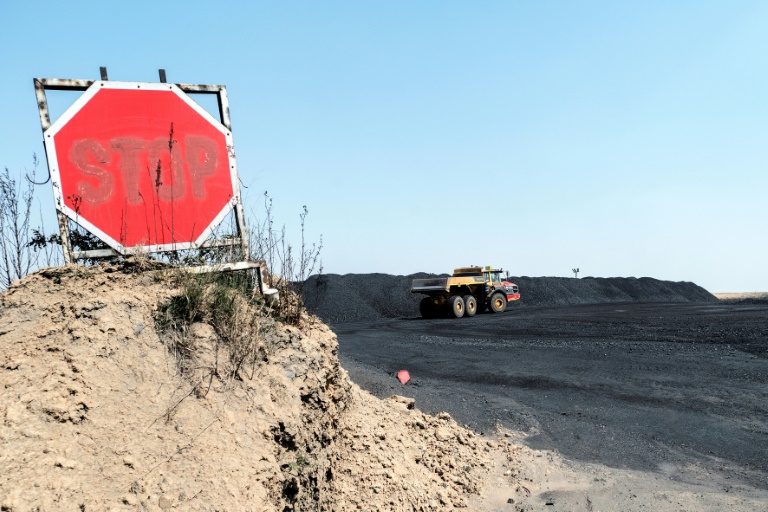
Miner Thokozani Mtshweni, 37, looks spent as he readies for a 12-hour shift huddled under a carport shelter to avoid the scorching sun. He fixes his belt weighed down by an oxygen tank and gas detecting tools. 

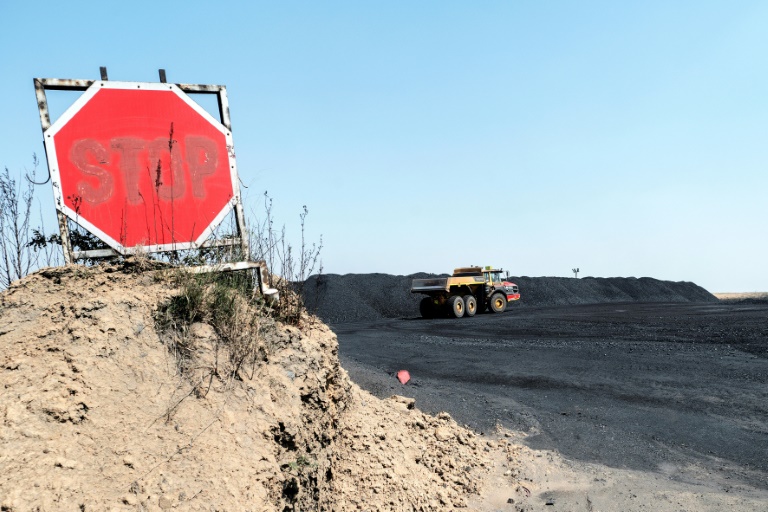
An hour’s drive from Johannesburg, Khutala Colliery is among more than 100 coal mines and a dozen coal-fired plants that dot the industrial landscape of the northeastern province of Mpumalanga, an area known as South Africa’s coal belt.

Workers kitted in soiled yellow overalls breathe in the hazy air as they wait to board trucks that will drive them to an underground shaft. 

“Closing these mines would affect our lives a lot,” Mtshweni tells AFP. “It would be chaos”.

Coal is a bedrock of South Africa’s economy, employing almost 100,000 people and accounting for 80 percent of electricity production. 

But the sector’s future is uncertain, as Africa’s most industrialised economy looks to wean itself off the carbon-emitting fuel in line with global efforts to tackle climate change. 

Last year, the government secured $8.5 billion in loans and grants from a group of rich nations to finance the transition to greener alternatives.

Fraught negotiations around how the money should be spent are expected to end before the COP27 climate summit in Egypt in November.

Supporters hope the money could act as a catalyst to transform the energy landscape in what is one of the world’s top 12 largest polluters. 

But questions remain over the country’s ability to make swift inroads towards its goal of reaching net-zero carbon emissions by 2050.

– Money and jobs –

“Significantly more funding” will be needed, said Daniel Mminele, who heads the finance task team of a climate commission set up by President Cyril Ramaphosa. 

A study by South Africa’s Stellenbosch University put the figure at $250 billion over the next 30 years. 

Recent studies suggest more jobs will be created than lost by going green, but analysts say the swap will not be painless. 

The coal industry is concentrated in Mpumalanga, which accounts for about 80 percent of all coal production.

“We need coal,” says Isaac Mahumapelo, a Khutala Colliery section manager, as piles of the black stuff are crushed behind him. 

“The cities, the towns in and around Mpumalanga have been established through the coal mines.”

Trade unions worry job losses will not be reabsorbed by the renewable sector. Unemployment is above 30 percent nationwide. 

“Wind and solar is not engineered in South Africa, it is fabricated elsewhere,” says energy analyst Tshepo Kgadima.

After a decade spent in the pits, Mtshweni, the miner, is among those fearing for their future.

“Everyone is dependent on this coal to provide for their loved ones,” he says. 

International pressure on South Africa to clean up its act is seen with antipathy by some. 

Europe’s renewed appetite for coal in the wake of the gas crisis sparked by Russia’s invasion of Ukraine is often cited as evidence of double standards.

“Coal will still be around for some time and whilst we wish to collaborate … Let’s have our own agenda that realistically recognises the socio-economic imperatives of South Africa,” says Mike Teke, CEO of Khutala Colliery’s operator, Seriti.

– No turning back –

Yet, things are starting to move.

Khutala Colliery lies near Kendal, an industrial town surrounded by coal silos and plumes of thick smoke.

The mine feeds a nearby power station — one of the world’s largest — operated by state energy firm Eskom. 

The plant and neighbouring mines are surrounded by maize and livestock farms.

Cattle graze under the grey polluted skies. Lumps of coal sit on the side of the road as trucks come and go. 

Still, Seriti recently set up a green energy branch to invest in wind and solar. 

“We need to diversify in line with what might be coming,” says Teke.  

Climate activists have tried to force the government to push the throttle forward by taking it to court. 

In a first victory this year, judges ordered authorities to reduce pollution in Mpumalanga — which Greenpeace says has some of the dirtiest air in the world. 

As Eskom’s ageing plants struggle to produce enough energy to keep the lights on, the government has laid out plans to ramp up renewables. 

Acting is a must, says Gaylor Montmasson-Clair, an economist at the Trade & Industrial Policy Strategies, a think tank, warning the cost of sticking to coal will be much higher in the long term.

The European Union is set to introduce a carbon tax on imports — a move that could be followed by other countries, and hit economies like South Africa hard, he warns. 

“If we do not decarbonise, job losses will be significant. We’ll lose our access to markets and finance,” he says. 

“Not transitioning is not an option. The consequences will be dire”.

Green future is cause for worry in S.Africa's coal belt

Miner Thokozani Mtshweni, 37, looks spent as he readies for a 12-hour shift huddled under a carport shelter to avoid the scorching sun. He fixes his belt weighed down by an oxygen tank and gas detecting tools. 

An hour’s drive from Johannesburg, Khutala Colliery is among more than 100 coal mines and a dozen coal-fired plants that dot the industrial landscape of the northeastern province of Mpumalanga, an area known as South Africa’s coal belt.

Workers kitted in soiled yellow overalls breathe in the hazy air as they wait to board trucks that will drive them to an underground shaft. 

“Closing these mines would affect our lives a lot,” Mtshweni tells AFP. “It would be chaos”.

Coal is a bedrock of South Africa’s economy, employing almost 100,000 people and accounting for 80 percent of electricity production. 

But the sector’s future is uncertain, as Africa’s most industrialised economy looks to wean itself off the carbon-emitting fuel in line with global efforts to tackle climate change. 

Last year, the government secured $8.5 billion in loans and grants from a group of rich nations to finance the transition to greener alternatives.

Fraught negotiations around how the money should be spent are expected to end before the COP27 climate summit in Egypt in November.

Supporters hope the money could act as a catalyst to transform the energy landscape in what is one of the world’s top 12 largest polluters. 

But questions remain over the country’s ability to make swift inroads towards its goal of reaching net-zero carbon emissions by 2050.

– Money and jobs –

“Significantly more funding” will be needed, said Daniel Mminele, who heads the finance task team of a climate commission set up by President Cyril Ramaphosa. 

A study by South Africa’s Stellenbosch University put the figure at $250 billion over the next 30 years. 

Recent studies suggest more jobs will be created than lost by going green, but analysts say the swap will not be painless. 

The coal industry is concentrated in Mpumalanga, which accounts for about 80 percent of all coal production.

“We need coal,” says Isaac Mahumapelo, a Khutala Colliery section manager, as piles of the black stuff are crushed behind him. 

“The cities, the towns in and around Mpumalanga have been established through the coal mines.”

Trade unions worry job losses will not be reabsorbed by the renewable sector. Unemployment is above 30 percent nationwide. 

“Wind and solar is not engineered in South Africa, it is fabricated elsewhere,” says energy analyst Tshepo Kgadima.

After a decade spent in the pits, Mtshweni, the miner, is among those fearing for their future.

“Everyone is dependent on this coal to provide for their loved ones,” he says. 

International pressure on South Africa to clean up its act is seen with antipathy by some. 

Europe’s renewed appetite for coal in the wake of the gas crisis sparked by Russia’s invasion of Ukraine is often cited as evidence of double standards.

“Coal will still be around for some time and whilst we wish to collaborate … Let’s have our own agenda that realistically recognises the socio-economic imperatives of South Africa,” says Mike Teke, CEO of Khutala Colliery’s operator, Seriti.

– No turning back –

Yet, things are starting to move.

Khutala Colliery lies near Kendal, an industrial town surrounded by coal silos and plumes of thick smoke.

The mine feeds a nearby power station — one of the world’s largest — operated by state energy firm Eskom. 

The plant and neighbouring mines are surrounded by maize and livestock farms.

Cattle graze under the grey polluted skies. Lumps of coal sit on the side of the road as trucks come and go. 

Still, Seriti recently set up a green energy branch to invest in wind and solar. 

“We need to diversify in line with what might be coming,” says Teke.  

Climate activists have tried to force the government to push the throttle forward by taking it to court. 

In a first victory this year, judges ordered authorities to reduce pollution in Mpumalanga — which Greenpeace says has some of the dirtiest air in the world. 

As Eskom’s ageing plants struggle to produce enough energy to keep the lights on, the government has laid out plans to ramp up renewables. 

Acting is a must, says Gaylor Montmasson-Clair, an economist at the Trade & Industrial Policy Strategies, a think tank, warning the cost of sticking to coal will be much higher in the long term.

The European Union is set to introduce a carbon tax on imports — a move that could be followed by other countries, and hit economies like South Africa hard, he warns. 

“If we do not decarbonise, job losses will be significant. We’ll lose our access to markets and finance,” he says. 

“Not transitioning is not an option. The consequences will be dire”.

'Black gold' for Guyana and Suriname, a blessing or curse?

Emerging as potential oil powers while the world seeks to wean itself off planet-warming fossil fuels, poverty-stricken South American neighbors Guyana and Suriname say they have to cash in while they can.

The former Dutch colonies are among the world’s most tree-covered countries, hosts to the so-called forest “lungs” that sequester massive amounts of planet-warming carbon dioxide.

Their economies and populations small, the countries have traditionally emitted little CO2 or other greenhouse gasses from fossil fuel use — in fact Suriname is one of only three carbon-negative countries in the world and Guyana claims carbon neutrality.

But some fear this could change with the recent discovery of rich offshore oil deposits in an area known as the Guyana-Suriname Basin.

Guyana, a country of 800,000 people, was recently found to have proven reserves of at least 10 billion barrels of oil, likely much more according to experts.

This makes it the country with the highest reserves per capita in the world — which consumes 99.4 million barrels of oil per day.

Early assessments suggest the reserves of Suriname, a country of 600,000 people, may not be far behind.

“It will be hard to remain carbon neutral as a country (involved in the) petroleum sector,” economist Steven Debipersad of the Anton de Kom University in Suriname’s capital Paramaribo, told AFP.

The projected $10 billion Suriname stands to make in the next 10 to 20 years, will likely bring economic growth at the cost of the environment, he said.

The country’s GDP today is about $3 billion.

– Hungry ‘every day’ –

Their presidents insist Guyana and Suriname cannot be expected to turn their backs on a chance to fill their countries’ coffers and raise the quality of life for their people.

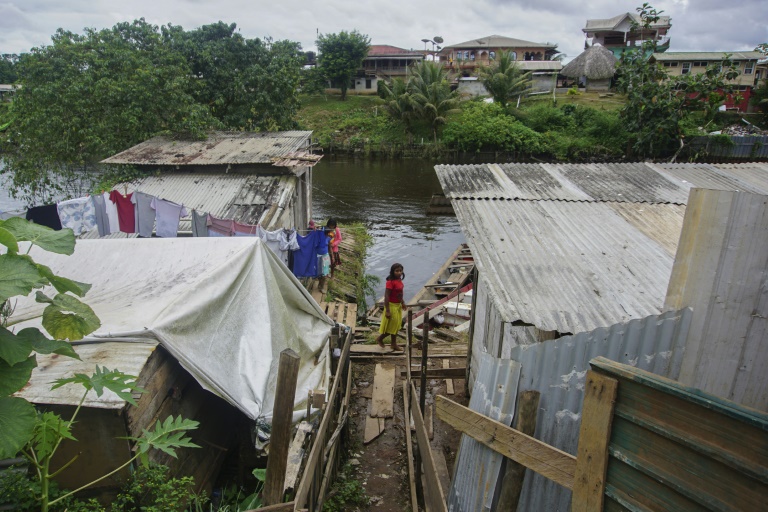
The countries are among the poorest in South America, with vast swathes of their populations living without electricity, clean water or access to adequate health services.

In a Paramaribo ghetto named Texas, dirty sewer water flows among dilapidated wooden homes.

Resident Edison Poekitie, a 23-year-old musician, scrapes by on no more than $50 a week. Does he go hungry?

“Every day!” he told AFP. “It’s hard out here, really hard.”

The community, he added, needs “water pipes, cables, new roads without potholes, schools, better houses, playgrounds…”

Poekitie said he hoped the government would spend the oil money “wisely,” a sentiment echoed by 45-year-old food truck owner Brian Braithwaite in a poor neighborhood of the Guyanese capital Georgetown.

“Hopefully they do something so that… people (who) live on the street can do better,” Braithwaite said.

– ‘Oil curse’ –

Both presidents have vowed to make judicious use of their windfall petroleum profits, though some are worried that will undercut the sovereign wealth funds set up to guard some money for future generations.

“We are quite aware of the oil curse,” Suriname President Chan Santokhi told AFP, alluding to neighbor Venezuela and other resource-rich countries such as Angola and Algeria that were unable to turn oil wealth into social and economic progress.

“We… should also get the opportunity to benefit from the production of oil and gas and its income” to address a biting economic crisis “and help our people to have better lives,” he insisted.

For his part, Guyanese President Mohamed Irfaan Ali wants to use the oil income to “create wealth for now, and future generations.”

Both speak of using the money to diversify their economies with investments in agriculture, tourism, housing, education and health care.

Eventually, “the oil and gas will be gone, but the food security should be guaranteed,” said Santokhi.

– Oil money for green energy –

Oil extraction and refining are major contributors to greenhouse gas emissions.

Though they have historically emitted little, Suriname and Guyana are both deeply affected by global warming — in the crosshairs of worsening tropical storms and of flooding from rising sea levels.

Presidents Santokhi and Irfaan Ali believe they can maintain their countries’ carbon balances by using oil money to protect their forests and invest in green energy.

Defending the forests that cover about 87 percent of Guyana and 93 percent of Suriname is also economically sage: both countries can sell so-called carbon credits to polluters who need to offset emissions.

For Guyana, carbon credits are worth about $190 million per year, said Irfaan Ali.

Monique Pool, director of the Green Heritage Fund of Suriname, is not convinced by the two-pronged approach.

“Carbon credit will give us more money faster than oil and gas and for longer because it will be sustainable,” she told AFP.

In Georgetown, activist Christopher Ram agreed the oil should be left in the ground, expressing fear of exploitation by ruthless companies in the absence of “good governance.”

Instead, “I would go to the international community and say: ‘We are a small country, we’ve always been good to the environment, we want to stay that way… help us get the benefits we would have got with oil’.”

But 53-year-old Cynthia Neel, who sent her daughter from Suriname to the Netherlands at the age of six for education and a chance at a better life, is hopeful of positive change.

“I hope that with the oil the children will no longer have to leave,” she told AFP.

World Cup boom pushes some Qatar residents out of homes

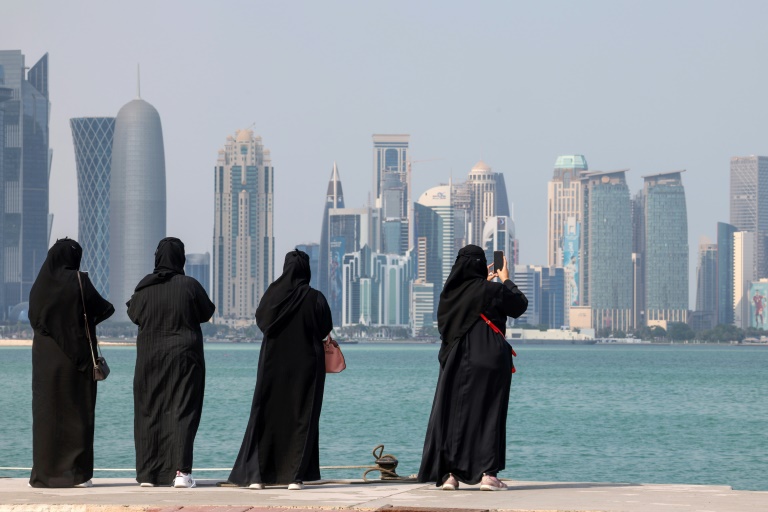
Qatari landlords eyeing profit from the looming World Cup have been kicking out a growing number of mostly foreign tenants, sometimes with just a few days’ notice.

More than one million football fans are expected to descend on the capital Doha during the November-December tournament, putting a strain on the tiny Gulf nation.

Landlords who have spotted an opening to increase rents “show no pity” and the market is dominated by “greed”, said a representative of a real estate company, speaking on condition of anonymity.

Reem, a foreigner working for a major Qatari company, was told she had a week to leave her apartment.

The woman, using a pseudonym to avoid blowback from her employer, told AFP the owner of the block wanted the dozens of apartments he has rented to her employers emptied so they could earn more during the World Cup.

“We felt humiliated,” Reem said.

The company has moved Reem and other employees into a hotel, but they can only stay there until November 15, five days before the tournament kicks off.

They were told they will then move into “temporary” apartments, she said.

“Leaving home with all our belongings in bags and boxes to go into a hotel room was a disaster.”

Other tenants in Doha told AFP they were similarly forced to choose between paying more on rent or leaving.

– Sky-high prices –

Properties in the tower where Reem used to live are advertised on booking.com for $1,700 a night during the World Cup with a minimum stay of 14 nights.

In the two years she had been in the apartment, Reem said rent was $2,500 a month.

Most fans will be staying in hotels, apartments, cruise ships and desert camps booked through the official World Cup portal.

Despite some concerns, organisers have insisted there will be enough accommodation for all fans in the emirate of just 2.8 million people.

To ease the crunch, FIFA recently released thousands of hotel rooms it had reserved, which experts have said could push prices down in the coming weeks.

Some World Cup visitors are turning to the open market for luxury apartments or better locations near specific stadiums, and the prices advertised for some Doha properties highlight owners’ sky-high hopes.

On Airbnb, apartments for two people go for $2,500 a night. 

A villa for the full 29 days of the World Cup will cost fans booking through the online platform at least $13,000 — but prices can go into the hundreds of thousands of dollars.

– ‘Very high’ demand –

Some Doha residents are putting their flats and houses up for rent and fleeing Qatar for the month.

Adel, who listed his small apartment on Airbnb for $900 a night, said that “demand was very high” when he first advertised it.

But he had to cancel the reservations after Airbnb asked him to provide a statement from his landlord approving the sublet.

Rents have also risen sharply for tenants coming to the end of their leases in recent months.

While Qatari law allows for an increase of up to 10 percent for a lease renewal, rents in some districts of Doha have risen by as much as 40 percent over the past year, according to Anum Hassan, head of research in Qatar at international consultancy firm Valustrat.

A Western diplomat in Doha said embassy staff have demanded increased salaries to meet their rent payments.

“Rents… will stay high for a while,” said Nabil Ghorra, a 59-year-old Lebanese-American who lives in Doha’s upscale Pearl district.

“I feel that there are people taking advantage of the situation, but this happens all over the world when there’s an event” like the World Cup.

Over a barrel, Biden faces tough options with Saudis

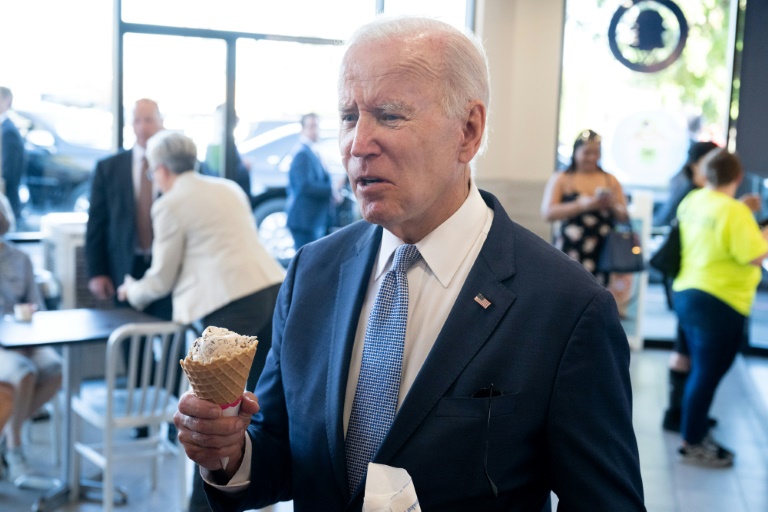
Joe Biden has vowed consequences for Saudi Arabia over its explosive slash in oil output but, like previous US presidents irked by the kingdom, he may find constraints as he assesses options.

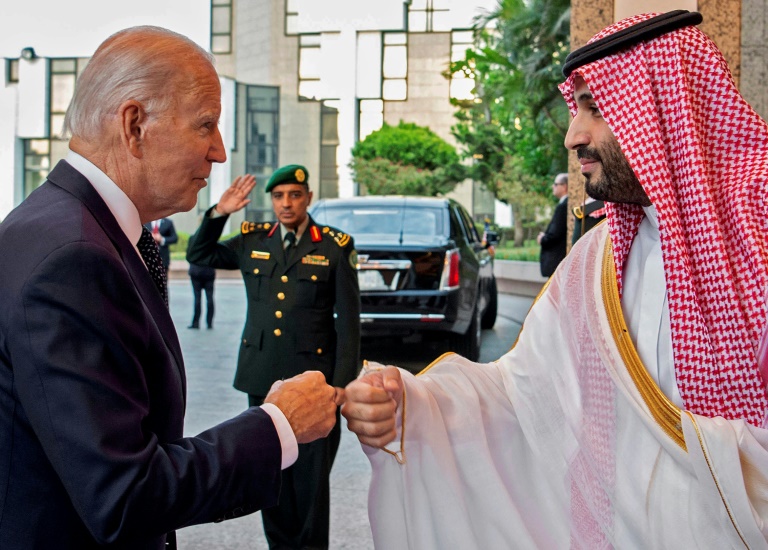
Biden endured criticism at home by traveling to Saudi Arabia in June and fist-bumping its de facto ruler, Crown Prince Mohammed bin Salman, despite earlier vowing to make him a pariah over human rights.

But Saudi Arabia reneged on the unstated reason for Biden’s visit, as the OPEC+ oil cartel led by the kingdom announced a production cut of two million barrels a day — raising much-needed revenue for Russia as it attacks Ukraine and hiking prices on US consumers weeks before congressional elections. 

The Biden administration has voiced openness to retaliatory measures in Congress by enraged fellow Democrats.

Senator Chris Murphy, a long-time critic of Saudi Arabia over its devastating war in Yemen, said the United States should suspend sales to the kingdom of medium-range air-to-air missiles and send them to Ukraine, as well as redeploy Patriot missile shields to Ukraine or NATO allies.

“These two steps would right-size our relationship with Saudi Arabia AND help Ukraine,” he said on Twitter.

Saudi Arabia’s backers warn that the United States could drive it into the arms of Russia or China, but many experts are doubtful the kingdom could easily do so after eight decades of partnership with the United States.

US National Security Advisor Jake Sullivan told CNN on Sunday that Biden would “act methodically, strategically” in re-evaluating US-Saudi relations, adding that the US leader had “no plans” to meet the crown prince at a November G20 summit in Indonesia.  

Russell Lucas, a Middle East expert at Michigan State University, said the Biden administration could at least slow down arms sales, especially resupplies to Saudi hardware.

“These cannot quickly be substituted by another arms supplier,” he said.

– Oil bonds –

But previous attempts to distance the United States from Saudi Arabia — including after mostly Saudi citizens carried out the September 11, 2001 attacks — have hit a major roadblock: oil.

Despite growing action on climate change, the United States is decades away from being insulated from high oil prices.

US officials are fond of noting that the United States has surpassed Saudi Arabia as the world’s top oil producer. But US output decisions are largely made by private firms; and oil extracted from shale, the heart of the US energy boom, is more difficult to scale up and down.

“This notion that just ramping up American capacity would protect us from these decisions of oil producers abroad is patently false,” said Annelle Sheline, a research fellow at the Quincy Institute for Responsible Statecraft, who supports a firmer approach with the Saudis.

“We will always remain dependent on these other countries as long as we remain dependent on oil,” she said.

But she added that Saudi Arabia was hurting its own case by no longer serving as America’s “predictable” source of oil.

– ‘Drama’ from the prince –

Saudi Arabia has insisted the OPEC+ decision was purely economic and said US weapons sales serve both countries’ interests.

The kingdom voted with the United States on Wednesday at the United Nations to condemn Russia’s annexations of Ukrainian territory.

But Bruce Riedel, a senior fellow at the Brookings Institution, said the oil hike was a clear act of electoral intervention by the crown prince, known by his initials MBS, on behalf of Donald Trump’s Republican Party.

The former president was a staunch supporter of the Saudis, boasting of saving MBS after US intelligence found that he authorized the killing and dismembering of a US-based journalist who criticized him, Jamal Khashoggi.

“One thing we know from the pattern of MBS’s behavior is he loves drama — and the more dramatic, the better,” Riedel said of the oil decision, adding that the prince was taking a page from Trump.

Riedel said the Saudis, if they wanted to improve relations, could ease pressure on Yemen or make gestures on human rights.

But one US option to reduce Saudi leverage — ending oil sanctions on its regional rival Iran — looks increasingly unlikely. 

Months of negotiations to restore a 2015 nuclear deal have stalemated, and the Biden administration is expected to be careful not to take action seen as benefiting the clerical leadership as it cracks down on mass protests sparked by the death of a young woman arrested by morality police.

Steven Cook, a senior fellow at the Council on Foreign Relations, said the United States should accept a “realist rapprochement” with Saudi Arabia that acknowledges the relationship is transactional.

“The United States still needs the Saudis, no matter how loathsome,” he said.

“In the meantime, the United States needs to get serious about an energy policy. If we had one for the last 40 or so years, we wouldn’t be in this position.”

Nigeria floods toll has passed 600: government

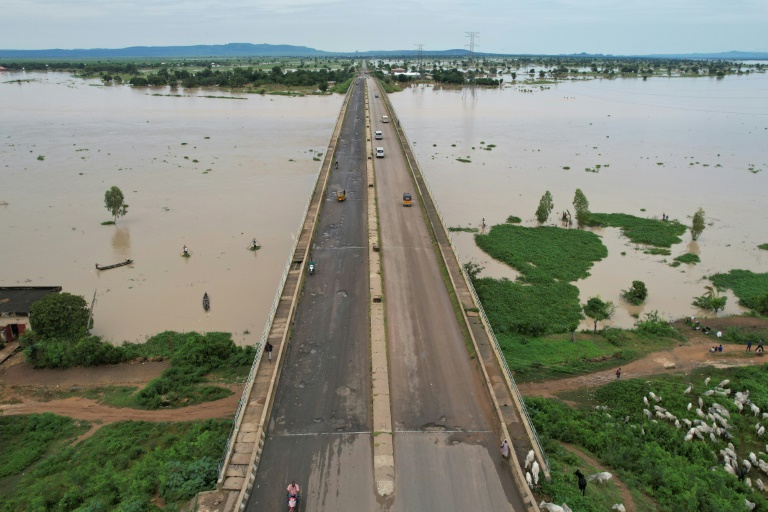
More than 600 people are now known to have perished in the worst floods in a decade in Nigeria, according to a new toll released Sunday.

The disaster had also forced more than 1.3 million from their homes, said a statement by Nigeria’s ministry of humanitarian affairs, released on Twitter.

“Unfortunately, over 603 lives have been lost as of today October 16, 2022,” said Humanitarian Affairs Minister Sadiya Umar Farouq.

The previous toll from last week stood at 500, but the numbers had risen in part because some state governments had not prepared for the floods, said the minister.

The flooding also completely destroyed more than 82,000 houses and nearly 110,000 hectares (272,000 acres) of farmland, said Umar Farouq.

While the rainy season usually begins around June, the rainfall had been particuarly heavy since August, said the National Emergency Management Agency (NEMA).

In 2012, 363 people died and more than 2.1 million were displaced by flooding. 

Sub-Saharan Africa is disproportionately affected by climate change and many of its economies are already struggling from ripple effects of the Russia-Ukraine war.

Rice producers have warned that the devastating floods could impact prices in the country of some 200 million people where rice imports are banned to stimulate local production.

The World Food Programme and the UN’s Food and Agriculture Organization said last month that Nigeria was among six countries facing a high risk of catastrophic levels of hunger.

Biden has 'no plans' to meet Saudi crown prince at G20 summit: US official

President Joe Biden has “no plans” to meet with Saudi Crown Prince Mohammed bin Salman at an upcoming G20 summit in Indonesia, US National Security Advisor Jake Sullivan said Sunday. 

Stormy US-Saudi relations have seen new strain over Riyadh’s recent support for oil production cuts, with Biden warning of unspecified “consequences.”

The move last week by OPEC+ — composed of the Riyadh-led OPEC cartel and an additional group of 10 exporters headed by Russia — would reduce global output by up to two million barrels per day from November.

It could send energy prices soaring amid an energy crisis triggered by the war in Ukraine, and as inflation-weary American voters prepare to cast ballots in midterm elections.

The move was widely seen as a diplomatic slap in the face, since Biden traveled to Saudi Arabia in July and met with the crown prince, despite vowing to make the kingdom an international “pariah” following the 2018 murder of journalist Jamal Khashoggi.

The Biden administration has voiced openness to retaliatory measures in Congress by enraged fellow Democrats. 

But Sullivan said Sunday the president would not “act precipitously.”

“He’s going to act methodically, strategically and take his time to consult with members of both parties, and also to have an opportunity for Congress to return so he can sit with them in person and work through the options,” he told CNN.

The White House has charged that OPEC+ was “aligning with Russia” on the cuts, saying they would boost Moscow’s revenue and undermine sanctions imposed over its invasion of Ukraine. 

Saudi officials have defended the move as motivated purely by economics, not politics.

The US-Saudi feud bled into talks by G20 finance ministers and central bankers in Washington, which closed on Thursday without a joint communique. The group was already divided over the conflict in Ukraine. 

G20 heads of state and government are due to meet next month in Bali, Indonesia, in a summit that could see Biden share the same venue as Russian President Vladimir Putin and another rival, Chinese leader Xi Jinping.

Aston Martin showroom hit as UK vows action on climate protests

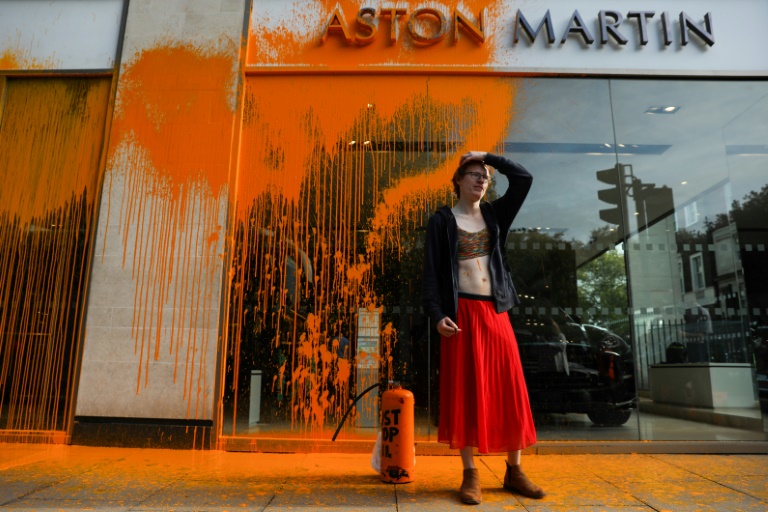
Climate activists on Sunday sprayed orange paint over an Aston Martin showroom in central London, as the government vowed new powers for police to halt an intensifying wave of “direct action” protests.

Members of the group Just Stop Oil also staged a sit-in protest on Park Lane where the sports carmaker’s store is located in an exclusive area of the British capital.

The action came after two Just Stop Oil activists hurled tomato soup over one of Vincent van Gogh’s “Sunflowers” paintings at London’s National Gallery on Friday.

Another spray-painting protest by the same group on Friday targeted the headquarters of London’s Metropolitan Police, who arrested 28 demonstrators.

Then on Saturday, Animal Rebellion protesters poured milk onto shop floors and displays at high-end retailers across Britain including Harrods in London, demanding the world end cattle farming.

Home Secretary Suella Braverman said she was introducing stronger legislation this week to counter citizen protests by groups such as Just Stop Oil and Extinction Rebellion.

Under the plan, the government would be able to apply for legal injunctions to outlaw such protests ahead of time, and make it easier for police to protect “essential” goods, services and infrastructure.

“I will not bend to protestors attempting to hold the British public to ransom,” the hardline Braverman said in a statement.

“This serious and dangerous disruption, let alone the vandalism, is not a freedom of expression, nor a human right. It must stop.” 

But outside the Aston Martin showroom, 19-year-old pregnant mother Chloe Thomas said she was fighting to protect the next generations of humanity.

“How do I explain to my daughter in the years to come where the animals went, where the culture went, where the beauty went, why there are no bees and why I can’t put food in her tummy?” she said.

Just Stop Oil has stepped up its campaign since the new UK government of Prime Minister Liz Truss vowed to allow new drilling for offshore fossil fuels, to counter a surge in energy prices triggered by Russia’s war in Ukraine.

Aston Martin showroom hit as UK vows action on climate protests

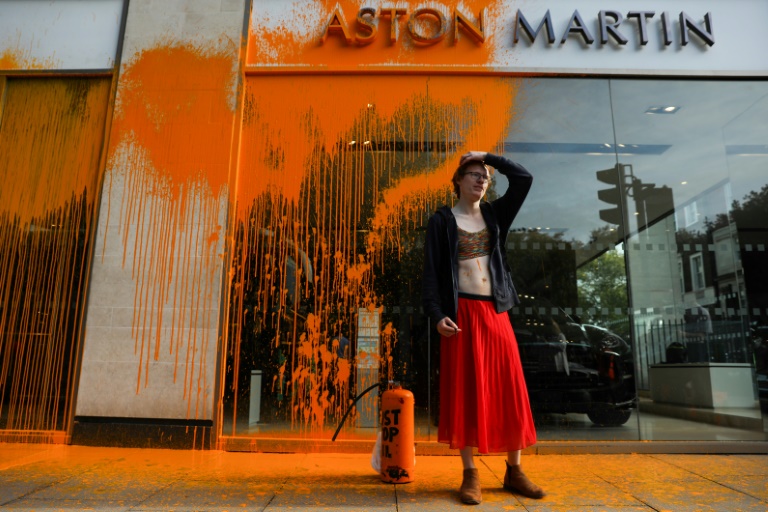
Climate activists on Sunday sprayed orange paint over an Aston Martin showroom in central London, as the government vowed new powers for police to halt an intensifying wave of “direct action” protests.

Members of the group Just Stop Oil also staged a sit-in protest on Park Lane where the sports carmaker’s store is located in an exclusive area of the British capital.

The action came after two Just Stop Oil activists hurled tomato soup over one of Vincent van Gogh’s “Sunflowers” paintings at London’s National Gallery on Friday.

Another spray-painting protest by the same group on Friday targeted the headquarters of London’s Metropolitan Police, who arrested 28 demonstrators.

Then on Saturday, Animal Rebellion protesters poured milk onto shop floors and displays at high-end retailers across Britain including Harrods in London, demanding the world end cattle farming.

Home Secretary Suella Braverman said she was introducing stronger legislation this week to counter citizen protests by groups such as Just Stop Oil and Extinction Rebellion.

Under the plan, the government would be able to apply for legal injunctions to outlaw such protests ahead of time, and make it easier for police to protect “essential” goods, services and infrastructure.

“I will not bend to protestors attempting to hold the British public to ransom,” the hardline Braverman said in a statement.

“This serious and dangerous disruption, let alone the vandalism, is not a freedom of expression, nor a human right. It must stop.” 

But outside the Aston Martin showroom, 19-year-old pregnant mother Chloe Thomas said she was fighting to protect the next generations of humanity.

“How do I explain to my daughter in the years to come where the animals went, where the culture went, where the beauty went, why there are no bees and why I can’t put food in her tummy?” she said.

Just Stop Oil has stepped up its campaign since the new UK government of Prime Minister Liz Truss vowed to allow new drilling for offshore fossil fuels, to counter a surge in energy prices triggered by Russia’s war in Ukraine.

Close Bitnami banner
Bitnami