AFP

Pharoah Sanders, cosmic jazz saxophonist, dead at 81

Pharoah Sanders, one of the most wildly inventive figures in jazz who wrestled his saxophone to its limits and felt equally at home in Indian and African music, died Saturday. He was 81.

His record label, Luaka Bop, said he died peacefully around friends and family in Los Angeles.

“Always and forever the most beautiful human being, may he rest in peace,” a label statement said.

Taking the open-mindedness of the free jazz movement to new heights, Sanders would virtually attack his saxophone by heavily overblowing on the mouthpiece — of which he collected hundreds — as well as biting the reed and even shouting into the bell of the instrument.

Sanders, a disciple of John Coltrane, who played aggressive solos on the jazz master’s classic late-career “Live in Japan” album, was often seen as a sort of successor to the global-minded legend after Coltrane’s sudden death in 1967.

Ornette Coleman — arguably the most important pioneer of free jazz — called Sanders “probably the best tenor player in the world.” 

But Sanders, who to a lesser extent played soprano and alto sax as well, also divided audiences and never reached quite the same commercial success as Coltrane, Coleman or other historic jazz innovators.

With solos that built from screeching and squawking to silky and melodic, Sanders was described as a godfather of spiritual or even cosmic jazz, although the reticent musician brushed aside labels.

His best-known works included “The Creator Has a Master Plan,” a nearly 33-minute track off his “Karma” album on which Sanders sounds as if he is exorcising demons, before reaching back to a heavenly state.

Leon Thomas sings on the track, released in 1969 at the apex of counterculture, with the lines, “The creator has a master plan / Peace and happiness for every man.”

“Upper Egypt and Lower Egypt,” off Sanders’ influential 1967 “Tauhid” album, builds off guitar twangs and a gentle xylophone paying tribute to African tradition as Sanders storms in with a saxophone that sounds like tortured howls.

– Seeing saxophone as self –

“I don’t really see the horn anymore. I’m trying to see myself,” he said in the liner notes to “Tauhid,” his first album on the Impulse! label that put out Coltrane.

“And similarly, as to the sounds I get, it’s not that I’m trying to scream on my horn, I’m just trying to put all my feelings into the horn,” he said.

Farrell Sanders — he changed his first name’s spelling at the encouragement of futuristic jazz composer Sun Ra — was born and raised in segregated Little Rock, Arkansas, where he played clarinet in a school band and explored jazz from touring artists.

He moved after high school to Oakland, California, where for the first time he enjoyed the freedom to attend racially mixed clubs and had a fateful first meeting with Coltrane as they shopped for mouthpieces.

He later headed to New York where he at times fell into homelessness, working as a cook and even selling his blood to survive.

He met Sun Ra while cooking at a Greenwich Village club. Discovering his musical talent, Sun Ra and Coltrane enlisted Sanders as a band member, with Sanders coming into his own as a band leader after Coltrane’s death.

Describing his style in a 1996 interview with the San Francisco Chronicle, Sanders said: “I have a dark sound; a lot of the younger guys have a bright sound, but I like a dark sound with more roundness, more depth and feeling in it,” he said.

“I want my sound to be like a fragrance that people will like — something fresh, like the smell of your grandmother’s cake cooking,” he said.

– Spiritual explorations –

Sanders — distinctive in his later years for his long white beard and fez cap — dabbled in pop music, starting with 1971’s “Thembi,” named after his wife.

But his mainstream direction was brief and he often found more musical kinship outside the United States. On 1969’s “Jewels of Thought,” Sanders explored mysticism from across Africa, opening with a Sufi meditation for peace.

Decades later on “The Trance of Seven Colors,” Sanders collaborated with Mahmoud Guinia, the Moroccan master of the spiritual gnawa music and of the guembri lute.

Sanders’ 1996 album “Message from Home” delved into the influences of sub-Saharan Africa including highlife, the pop mix of Western and traditional music that originated in Ghana.

He also explored Indian form with his collaborations with Alice Coltrane, the jazz master’s second wife, who became a yogi.

Sanders voiced the most admiration for Indian musicians, including Bismillah Khan, who brought a wider audience to the shehnai, a type of oboe played frequently at processions on the subcontinent, and Ravi Shankar, who made the sitar international.

Sanders, accustomed to the sharing of energy within jazz bands, described Indian musicians as achieving “pure music.”

“Nobody is trying to cut each other’s throat. There’s no ego,” he told the San Francisco Chronicle.

Describing his own music, he said: “I want to take the audience on a spiritual journey; I want to stir them up, excite them. Then I bring them back with a calming feeling.”

'Marlowe' closes San Sebastian film festival

Spain’s prestigious San Sebastian film festival wrapped up on Saturday with the international premiere of “Marlowe” starring Northern Irish actor Liam Neeson.

Based on John Banville’s novel “The Black Eyed Blonde”, the movie is set in 1930s Los Angeles.

Private eye Philip Marlowe — played by Neeson — is tasked with finding the missing ex-lover of Clare Cavendish, a beautiful heiress played by German-born actress Diane Kruger.

The character Marlowe has been played before by the likes of Humphrey Bogart and Elliott Gould, but Neeson said this pedigree didn’t phase him from taking part in the neo-noir thriller.

“Even though these wonderful actors have played it before, that didn’t intimidate me,” Neeson told a press conference in San Sebastian.

The film by Oscar-winning director Neil Jordan was screened out of competition at the 70th edition of the festival, which opened in San Sebastian in northern Spain on September 16.

“We don’t get to play those kind of characters very often anymore or those kind of films are not being made that often anymore,” said Kruger, known for films such as “Inglourious Basterds” and “Troy”.

“I knew Neil would give it a certain quirky twist and that he would cast it superbly,” said Neeson.

A total of 17 films are competing for the best award in the official selection, with the festival’s prizes to be announced at a ceremony late Saturday.

The festival is the fourth major European film gala of the year, following Cannes, Venice and Berlin.

It was originally intended to honour Spanish-language films but has established itself as a top showcase for new films.

The festival hosted the world premiere of Alfred Hitchcock’s spy thriller “North by Northwest” in 1959 and Woody Allen’s “Melinda and Melinda” in 2004.

Hurricane Fiona hits Canada after brushing Bermuda

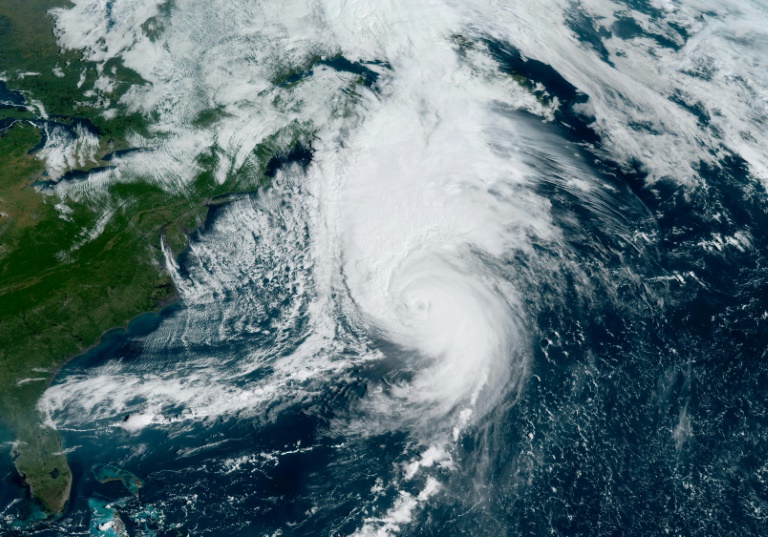
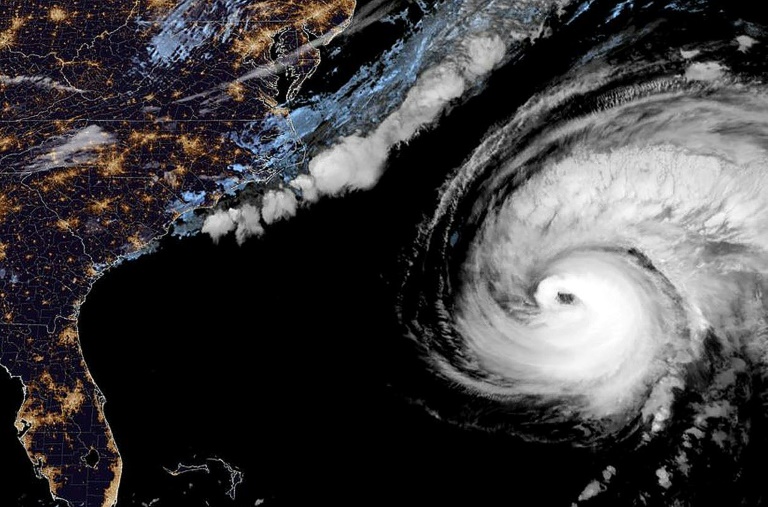
Hurricane Fiona made landfall in eastern Canada’s Nova Scotia on Saturday, the US National Hurricane Center said, with maximum sustained winds of 90 miles (144 kilometers) per hour and heavy rainfall.

The NHC said the storm would affect many parts of eastern Canada as a “powerful hurricane-force cyclone”. Canada has issued severe weather warnings for much of its eastern coast.

“Significant impacts from high winds, storm surge, and heavy rainfall are expected,” the NHC said in an advisory. 

The Canadian Hurricane Center (CHC) said high-speed winds had been reported in Nova Scotia, Prince Edward Island, Iles-de-la-Madeleine and southwestern Newfoundland.

Rainfall of up to 4.9 inches (125 millimeters) had been recorded in Nova Scotia and Prince Edward Island, the CHC said, with a “high likelihood” of storm surges affecting Nova Scotia, the Gulf of St. Lawrence and western Newfoundland. 

“It is certainly going to be a historic, extreme event for eastern Canada,” Bob Robichaud, a meteorologist for the CHC, told reporters before the storm made landfall. 

“It’s a major hurricane… All that momentum is trapped within the storm, so it’s very difficult for something like that to actually wind down.”

In its latest bulletin, the CHC said conditions would improve in western Nova Scotia and eastern New Brunswick on Saturday, but would persist elsewhere.

At 0900 GMT, the hurricane was located in eastern Nova Scotia, about 130 miles (210 km) northeast of Halifax, and was moving north-northwest at 40 miles (65 km) per hour, the CHC said.

The NHC said hurricane-force winds would extend out to 175 miles (280 km) from the storm’s center, and tropical-storm-force winds would affect areas up to 405 miles (650 km) away. 

Authorities in Nova Scotia issued an emergency alert on phones, saying power outages were likely and people should stay inside with enough supplies for at least 72 hours.

Prime Minister Justin Trudeau called the storm “a bad one,” adding it “could have significant impacts right across the region.”

In Halifax, the capital of Nova Scotia, stores sold out of propane gas cylinders for camping stoves as residents stocked up.

“Hopefully it will slow up when it hits the cooler water, but it doesn’t sound like it’s going to,” Dave Buis of the Northern Yacht Club in North Sydney, Nova Scotia, told Canadian television.

– Puerto Rico hard hit –

Bermuda, which Fiona skirted by a day earlier, had at the time called on residents to remain inside as strong winds raked over the British territory, but no fatalities or major damage were reported as the storm passed roughly 100 miles to the west of the island.

The Belco power company said 15,000 out of 36,000 households were without power on Friday evening, with electricity being rapidly returned to many areas.

The Royal Bermuda Regiment said it was waiting for winds to die down before clearing roads. Residents posted images of downed power lines and some flooding on social media.

“We had some minor damage to the premises but nothing serious,” Jason Rainer, owner of a souvenir shop in the capital Hamilton told AFP, saying some doors and windows had been blown out.

Store owners had covered windows with sheets of metal and wood.

The island of about 64,000 people is no stranger to hurricanes — but it is also tiny, just 21 square miles (54 sq km), and one of the most remote places in the world, 640 miles from its closest neighbor, the United States.

Bermuda, whose economy is fueled by international finance and tourism, is wealthy compared with most Caribbean countries, and structures must be built to strict planning codes to withstand storms. Some have done so for centuries.

Fiona killed four people in Puerto Rico earlier this week, according to US media, while two deaths were reported in the Dominican Republic and one in the French overseas department of Guadeloupe. 

President Joe Biden declared a state of emergency in Puerto Rico, a US territory that is still struggling to recover from Hurricane Maria five years ago.

In the Dominican Republic, President Luis Abinader declared three eastern provinces to be disaster zones.

burs-st-aha/smw

Hurricane Fiona hits Canada after brushing Bermuda

Hurricane Fiona made landfall in eastern Canada’s Nova Scotia on Saturday, the US National Hurricane Center said, with maximum winds of 90 miles (144 kilometers) per hour and heavy rainfall.

The NHC said the storm would affect many parts of eastern Canada as a “powerful hurricane-force cyclone”. Canada has issued severe weather warnings for much of its eastern coast.

“Significant impacts from high winds, storm surge, and heavy rainfall are expected,” the NHC said in an advisory. 

The Canadian Hurricane Center (CHC) said high-speed winds had been reported in Nova Scotia, Prince Edward Island, Iles-de-la-Madeleine and southwestern Newfoundland.

Rainfall of up to 4.9 inches (125 millimeters) had been recorded in Nova Scotia and Prince Edward Island, the CHC said, with a “high likelihood” of storm surges affecting Nova Scotia, the Gulf of St. Lawrence and western Newfoundland. 

“It is certainly going to be a historic, extreme event for eastern Canada,” Bob Robichaud, a meteorologist for the CHC, told reporters before the storm made landfall. 

“It’s a major hurricane… All that momentum is trapped within the storm, so it’s very difficult for something like that to actually wind down.”

In its latest bulletin, the CHC said conditions would improve in western Nova Scotia and eastern New Brunswick on Saturday, but would persist elsewhere.

At 0900 GMT, the hurricane was located in eastern Nova Scotia, about 130 miles (210 km) northeast of Halifax, and was moving north-northwest at 40 miles (65 km) per hour, the CHC said.

Authorities in Nova Scotia issued an emergency alert on phones, saying power outages were likely and people should stay inside with enough supplies for at least 72 hours.

Prime Minister Justin Trudeau called the storm “a bad one,” adding it “could have significant impacts right across the region.”

In Halifax, the capital of Nova Scotia, stores sold out of propane gas cylinders for camping stoves as residents stocked up.

“Hopefully it will slow up when it hits the cooler water, but it doesn’t sound like it’s going to,” Dave Buis of the Northern Yacht Club in North Sydney, Nova Scotia, told Canadian television.

– Puerto Rico hard hit –

Bermuda, which Fiona skirted by a day earlier, had at the time called on residents to remain inside as strong winds raked over the British territory, but no fatalities or major damage were reported as the storm passed roughly 100 miles to the west of the island.

The Belco power company said 15,000 out of 36,000 households were without power on Friday evening, with electricity being rapidly returned to many areas.

The Royal Bermuda Regiment said it was waiting for winds to die down before clearing roads. Residents posted images of downed power lines and some flooding on social media.

“We had some minor damage to the premises but nothing serious,” Jason Rainer, owner of a souvenir shop in the capital Hamilton told AFP, saying some doors and windows had been blown out.

Store owners had covered windows with sheets of metal and wood.

The island of about 64,000 people is no stranger to hurricanes — but it is also tiny, just 21 square miles (54 sq km), and one of the most remote places in the world, 640 miles from its closest neighbor, the United States.

Bermuda, whose economy is fueled by international finance and tourism, is wealthy compared with most Caribbean countries, and structures must be built to strict planning codes to withstand storms. Some have done so for centuries.

Fiona killed four people in Puerto Rico earlier this week, according to US media, while one death was reported in the French overseas department of Guadeloupe and another in the Dominican Republic. 

President Joe Biden declared a state of emergency in Puerto Rico, a US territory that is still struggling to recover from Hurricane Maria five years ago.

In the Dominican Republic, President Luis Abinader declared three eastern provinces to be disaster zones.

burs-st-aha/smw

Blinken urges calm on Taiwan in talks with China

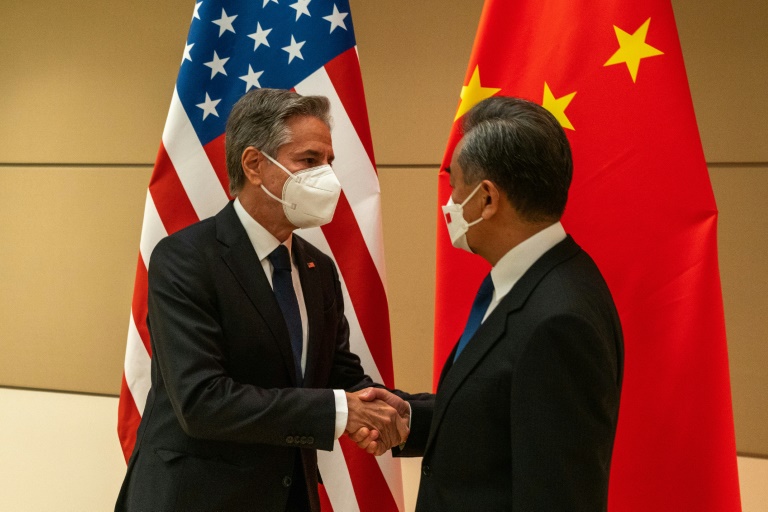
US Secretary of State Antony Blinken called Friday for calm over Taiwan as he met his Chinese counterpart, as soaring tensions showed signs of easing a notch.

Blinken met for 90 minutes with Chinese Foreign Minister Wang Yi in New York on the sidelines of the United Nations General Assembly, in talks a US official described as “extremely candid” and focused largely on Taiwan.

Blinken “stressed that preserving peace and stability across the Taiwan Strait is critical to regional and global security and prosperity,” a State Department statement said.

He “discussed the need to maintain open lines of communication and responsibly manage the US-PRC relationship, especially during times of tension,” it added, using the acronym for the People’s Republic of China.

A State Department official described the exchange on Taiwan as “direct and honest.” 

The official said Blinken also renewed US warnings not to support Russia’s invasion of Ukraine, amid guarded US hopes that Beijing is taking a distance from Moscow, nominally its ally.

Wang met in New York with Ukraine’s foreign minister for the first time since the war and, in a Security Council session Thursday, emphasized the need for a ceasefire rather than support for Russia.

Blinken, who went ahead with the talks despite the death of his father the previous day, met Wang for the first time since a sit-down in July in Bali, where both sides appeared optimistic for more stability.

One month later, House Speaker Nancy Pelosi visited Taiwan, infuriating Beijing, which staged exercises seen as a trial run for an invasion of the self-governing democracy, which it claims as its territory.

And in an interview aired Sunday, President Joe Biden said he was ready to intervene militarily if China uses force in Taiwan, once again deviating from decades of US ambiguity.

In the meeting with Blinken, Wang accused the US of “sending very wrong and dangerous signals” encouraging Taiwan independence, the Chinese foreign ministry said in a readout.

Wang told Blinken that China wished for “peaceful reunification” with Taiwan and warned that “the more rampant ‘Taiwan independence’ activities are, the less likely a peaceful solution would be,” according to the foreign ministry.

The US official said Blinken insisted to Wang that “there has been no change” to the US policy of only recognizing Beijing and voiced opposition to “unilateral changes to the status quo” by either side.

– Taiwan the ‘biggest risk’ –

In a sign that tensions have eased, Wang also met in New York with US climate envoy John Kerry, despite China’s announcement after Pelosi’s visit that it was curbing cooperation on the issue, a key priority for Biden.

But in a speech before his talks with Blinken, Wang called Taiwan “the biggest risk in China-US relations” and accused the United States of stoking pro-independence forces.

“Taiwan independence is like a highly disruptive great rhinoceros charging toward us. It must be stopped resolutely,” he said at the Asia Society think tank.

“Just as the US will not allow Hawaii to be stripped away, China has the right to uphold the unification of the country,” he said.

He denounced the US decision to “allow” the Taiwan visit by Pelosi, who is second in line to the presidency after the vice president. The Biden administration, while privately concerned about her trip, noted that Congress is a separate branch of government.

But Wang was conciliatory toward Biden. The New York talks are expected to lay the groundwork for a first meeting between Biden and President Xi Jinping since they became their two countries’ leaders, likely in Bali in November on the sidelines of a summit of the Group of 20 economic powers.

Wang said that both Biden and Xi seek to “make the China-US relationship work” and to “steer clear of conflict and confrontation.”

The US Congress is a stronghold of support for Taiwan, a vibrant democracy and major technological power.

Last week, a Senate committee took a first step to providing billions of dollars in weapons directly to Taiwan to deter China, a ramp-up from decades of only selling weapons requested by Taipei.

Tensions have also risen over human rights, with the United States accusing the communist state of carrying out genocide against the mostly Muslim Uyghur people.

Indigenous activists raise climate awareness on sidelines of UNGA

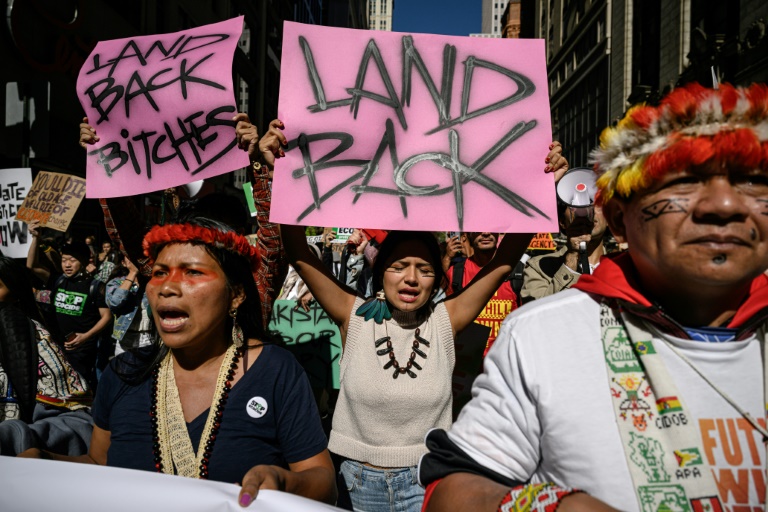
Uyukar Domingo Peas, an Ecuadorian Indigenous activist, says if there are still “reservoirs of natural resources” in the world, it is “because we have protected them for thousands of years.” 

Peas has been fighting against the destruction of forests for three decades and regrets that states and companies continue to destroy the Amazon despite the urgency of the climate crisis.

“The Amazon must remain intact for the youth and the rest of humanity,” the 58-year-old from the Achuar nation told AFP, lamenting that governments and corporations have not sought the ancestral knowledge of Indigenous peoples to save the planet.

Peas was speaking at Environment Week, a series of independent events involving Indigenous peoples from around the world that is being held in New York on the sidelines of the United Nations General Assembly.

An estimated 80 percent of the world’s tropical forests — about 800 million hectares — are in Indigenous territories, according to organizations that defend them. 

Many Indigenous people blame capitalism for the destruction of their forests. 

“We want companies and banks to stop investing for money and invest for the common good” because “climate change harms every human being,” he said. 

He is calling for funds to implement the Amazon Sacred Headwaters Initiative, which aims to protect 35 million hectares in the Amazon rainforest of Peru and Ecuador, and is home to 30 Indigenous communities with around 600,000 people.

He hopes that the nine countries that share the Amazon — often referred to as the lungs of the planet, spread over nearly 300 million hectares with three million inhabitants from more than 500 peoples — will also join this initiative.

– ‘Bioeconomy’ – 

Peas advocates for a new “bioeconomy,” with new sources of energy, tourism programs and other initiatives to ensure that Indigenous youth do not migrate away from their homelands. 

“We want to take care of the jungle and live off the jungle,” he said. 

Compared to the large sums needed for the oil and mining projects that pollute their lands and rivers, Peas’ initiative requires just $19 million over 10 years. 

“Mother Earth does not expect us to save her, she expects us to respect her,” said Nemonte Nenquimo, the Ecuadorian chief of the Waorani nation. 

– ‘Where does the money go?’- 

The Covid pandemic and “the collective hysteria of oil-dependent countries” following the conflict in Ukraine have dealt a severe blow to the Indigenous climate struggle, said Levi Sucre, of the Bribri community, an Indigenous people living between Costa Rica and Panama. 

With priorities set on economic recovery, Indigenous rights “have regressed alarmingly in the last two, three years,” he told AFP. 

He said that the most alarming case is that of Brazil, where the government “deliberately ignores the Indigenous peoples.” 

Indigenous peoples’ representatives complain that the resources agreed upon at climate meetings barely ever reached them. 

Monica Kristiani Ndoen, a young Indonesian Indigenous leader, said that “the challenge is to access climate funds directly.” 

“The question is where does the money go?” 

For the Venezuelan Gregorio Diaz Mirabal, general coordinator of the Indigenous Organizations of the Amazon Basin (COICA), the problem is that “we are not present in the meetings where the decisions are taken.”

“If you want us to continue to provide oxygen, rivers, forests, drinking water, respect our house,” he said. 

Indigenous activists raise climate awareness on sidelines of UNGA

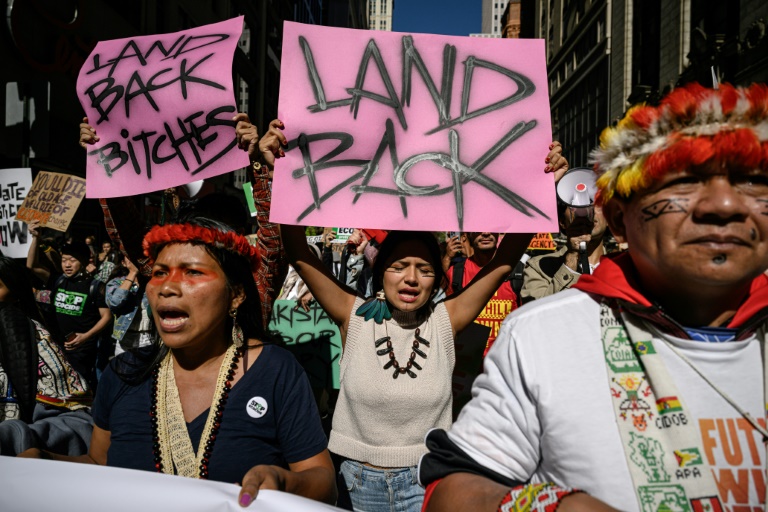
Uyukar Domingo Peas, an Ecuadorian Indigenous activist, says if there are still “reservoirs of natural resources” in the world, it is “because we have protected them for thousands of years.” 

Peas has been fighting against the destruction of forests for three decades and regrets that states and companies continue to destroy the Amazon despite the urgency of the climate crisis.

“The Amazon must remain intact for the youth and the rest of humanity,” the 58-year-old from the Achuar nation told AFP, lamenting that governments and corporations have not sought the ancestral knowledge of Indigenous peoples to save the planet.

Peas was speaking at Environment Week, a series of independent events involving Indigenous peoples from around the world that is being held in New York on the sidelines of the United Nations General Assembly.

An estimated 80 percent of the world’s tropical forests — about 800 million hectares — are in Indigenous territories, according to organizations that defend them. 

Many Indigenous people blame capitalism for the destruction of their forests. 

“We want companies and banks to stop investing for money and invest for the common good” because “climate change harms every human being,” he said. 

He is calling for funds to implement the Amazon Sacred Headwaters Initiative, which aims to protect 35 million hectares in the Amazon rainforest of Peru and Ecuador, and is home to 30 Indigenous communities with around 600,000 people.

He hopes that the nine countries that share the Amazon — often referred to as the lungs of the planet, spread over nearly 300 million hectares with three million inhabitants from more than 500 peoples — will also join this initiative.

– ‘Bioeconomy’ – 

Peas advocates for a new “bioeconomy,” with new sources of energy, tourism programs and other initiatives to ensure that Indigenous youth do not migrate away from their homelands. 

“We want to take care of the jungle and live off the jungle,” he said. 

Compared to the large sums needed for the oil and mining projects that pollute their lands and rivers, Peas’ initiative requires just $19 million over 10 years. 

“Mother Earth does not expect us to save her, she expects us to respect her,” said Nemonte Nenquimo, the Ecuadorian chief of the Waorani nation. 

– ‘Where does the money go?’- 

The Covid pandemic and “the collective hysteria of oil-dependent countries” following the conflict in Ukraine have dealt a severe blow to the Indigenous climate struggle, said Levi Sucre, of the Bribri community, an Indigenous people living between Costa Rica and Panama. 

With priorities set on economic recovery, Indigenous rights “have regressed alarmingly in the last two, three years,” he told AFP. 

He said that the most alarming case is that of Brazil, where the government “deliberately ignores the Indigenous peoples.” 

Indigenous peoples’ representatives complain that the resources agreed upon at climate meetings barely ever reached them. 

Monica Kristiani Ndoen, a young Indonesian Indigenous leader, said that “the challenge is to access climate funds directly.” 

“The question is where does the money go?” 

For the Venezuelan Gregorio Diaz Mirabal, general coordinator of the Indigenous Organizations of the Amazon Basin (COICA), the problem is that “we are not present in the meetings where the decisions are taken.”

“If you want us to continue to provide oxygen, rivers, forests, drinking water, respect our house,” he said. 

Elton John, a Trump favorite, sings at Biden White House

Elton John on Friday sang at the White House at the invitation of President Joe Biden, after declining invitations from his predecessor Donald Trump. 

Dressed in a glittering black suit and wearing orange glasses, the 75-year-old pop icon sat down at the piano on the South Lawn of the White House, with the US presidential residence lit up in the background.

“I don’t know what to say, what a dump,” John joked as he took the stage to perform his 1970 hit “Your Song.” 

“I’ve played in some beautiful places before, but this is probably the icing on the cake.” 

About 2,000 guests were invited to the event, including activists, LGBTQ campaigners, nurses, teachers and others. Also in attendance were Nobel Peace Prize winner Malala Yousafzai and former tennis champion and activist Billie Jean King, the White House said in a statement.

“It’s clear Elton John’s music has changed our lives,” Biden said.

The singer spoke of the importance of fighting HIV/AIDS and thanked the United States for its role in battling the virus.

According to the White House, Friday’s event was meant to celebrate the unifying power of music.

But as John performed his hits “Tiny Dancer” and “Rocket Man,” which were often played at Trump rallies, they were a reminder of the deep divisions in US politics. 

John, who was on a marathon global farewell tour, thanked Biden for the invitation and also praised former US President George W. Bush.

“I just wish America could be more bipartisan on everything,” John said.

At the end of the night, Biden surprised John by presenting him with the National Humanities Medal for empowering people to fight for justice.

“I’m never flabbergasted,” said a visibly emotional John. “But I’m flabbergasted.”

Hurricane Fiona bears down on Canada after brushing Bermuda

Hurricane Fiona barreled towards Canada on Friday with Nova Scotia province on high alert after the storm swept past Bermuda, where it left much of the population without power but caused little damage.

The US National Hurricane Center said Fiona was packing sustained winds of near 125 miles (205 kilometers) an hour and was “expected to be a powerful hurricane-force cyclone” when it makes landfall overnight into Saturday.

“It is certainly going to be a historic, extreme event for Eastern Canada,” Bob Robichaud, a meteorologist for the Canadian Hurricane Center, told reporters.

“It’s a major hurricane… All that momentum is trapped within the storm, so it’s very difficult for something like that to actually wind down.”

In its latest bulletin, the CHC described the storm as a “severe event” that will “impact Atlantic Canada and eastern Quebec with heavy rainfall and powerful hurricane force winds beginning tonight.”

At midnight GMT, the hurricane was located just over 200 km south of Sable Island, a small sandy strip off Nova Scotia, and was moving north at a speed of 56 kph, according to the CHC.

Authorities in Nova Scotia issued an emergency alert on phones, saying power outages were likely and people should stay inside with enough supplies for at least 72 hours.

Prime Minister Justin Trudeau called the storm “a bad one,” adding it “could have significant impacts right across the region.”

In Halifax, the capital of Nova Scotia, stores sold out of propane gas cylinders for camping stoves as residents stocked up.

“Hopefully it will slow up when it hits the cooler water, but it doesn’t sound like it’s going to,” Dave Buis of the Northern Yacht Club in North Sydney, Nova Scotia, told Canadian television.

– Puerto Rico hard hit –

Bermuda had earlier called on residents to remain inside as strong winds raked over the British territory, but no fatalities or major damage were reported as Fiona passed roughly 100 miles to the west of the island.

The Belco power company said 15,000 out of 36,000 households were without power on Friday evening, with electricity being rapidly returned to many areas.

The Royal Bermuda Regiment said it was waiting for winds to die down before clearing roads. Residents posted images of downed power lines and some flooding on social media.

“We had some minor damage to the premises but nothing serious,” Jason Rainer, owner of a souvenir shop in the capital Hamilton told AFP, saying some doors and windows had been blown out.

Store owners had covered windows with metal and wood sheets.

The island of about 64,000 people is no stranger to hurricanes — but it is also tiny, just 21 square miles (54 sq km), and one of the most remote places in the world, 640 miles from its closest neighbor, the United States.

Bermuda, whose economy is fueled by international finance and tourism, is wealthy compared with most Caribbean countries, and structures must be built to strict planning codes to withstand storms. Some have done so for centuries.

Fiona killed four people in Puerto Rico earlier this week, according to US media, while one death was reported in the French overseas department of Guadeloupe and another in the Dominican Republic. 

President Joe Biden declared a state of emergency in Puerto Rico, a US territory that is still struggling to recover from Hurricane Maria five years ago.

In the Dominican Republic, President Luis Abinader declared three eastern provinces to be disaster zones.

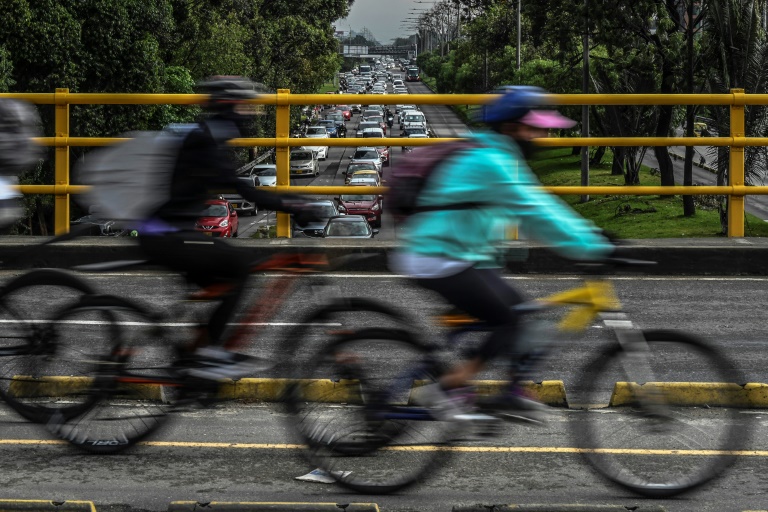
The bicycle making its way through Bogota's hellish traffic

Each morning, hundreds of cyclists ride through the socially disadvantaged neighborhood of Kennedy in southern Bogota.

Gripping their handlebars, laborers, seamstresses and students are choosing pedal power over cars and buses.

A cheap alternative to public transportation and an effective way to beat Bogota’s horrendous traffic jams, the bicycle has taken off in one of the world’s most congested cities.

“It’s a practical way to get around for the people of Bogota, also because we are poor,” said Carlos Felipe Pardo, founder of Despacio, an NGO that supports alternative forms of mobility.

Ricardo Buitrago’s bicycle repair business has taken off in the six years since he started it.

Hands blackened with grease, he says up to 10,000 cyclists use the bicycle lane in front of his workshop every day.

One of them is Maria Ellis. She lives close to her office in Bogota, but it still takes her more than 1.5 hours to get to work.

“By bike it takes 25 minutes, so the bicycle is much better,” she smiled.

– Traffic nightmare –

Bogota’s eight million residents dread every car journey. At rush hour, crossing the city can take up to three hours.

In 2019, 880,000 daily journeys were made by bicycle in Bogota, according to the mayor’s office, amounting to close to seven percent of all such movement in the capital.

And that figure jumped to 13 percent during the pandemic, according to Pardo.

Bogota was one of the first cities to create temporary cycle lanes during the pandemic to aid mobility while respecting distancing protocols.

It was a move that was replicated throughout the world, including Paris.

Bogota has close to 600 kilometers (370 miles) of dedicated cycle lanes, the most comprehensive cycle network in Latin America, and the government is working on expanding it further, said mobility minister Avila Moreno.

Not all of these are in a good condition. Some are only separated from the intense traffic by plastic bollards while others have been deformed by tree roots.

But at least they exist.

– Cheap but dangerous –

Unlike in many European capitals, where riding the bicycle is sometimes seen as trendy, in Colombia, which has a minimum wage of only $220 a month, it is considered a reliable and affordable form of transportation. 

“Many view the bicycle as a cheap way to avoid public transport,” said Moreno.

Security guard Pedro Quimbaya, 53, says he saves 150,000 pesos ($35) a month in bus fare.

The flip side is that it can be dangerous.

“At rush hour the traffic is very heavy, there are too many bicycles, the lanes aren’t very good, you have to be very careful,” said Ellis.

Over the first half of 2022, 50 cyclists were killed in traffic incidents in Bogota.

Then there is the risk of theft. Quimbaya says he has been attacked several times and his bicycle worth $270, more than a month’s salary, was stolen by a gang.

Nearly 11,000 bicycles were stolen in 2020, according to the mayor’s office and theft continues to rise.

Pardo says the capital needs more infrastructure, better security and better trained drivers.

“Bogota has progressed on all these fronts but still needs to improve,” he added.

– Next Copenhagen? –

Moreno, the recently appointed mobility minister, says the city has “huge potential.”

“It’s a work in progress that other big cities like Copenhagen have already been through,” she said. “Bogota is following the same path.”

The municipality will roll out 3,300 public free-to-use bicycles in October.

Colombia has long been in love with the bicycle, not least thanks to its great cycling champions such as Egan Bernal, who won the Tour de France in 2019, and Nairo Quintana, a two-time Grand Tour winner.

The last three Bogota mayors, including incumbent Claudia Lopez and current President Gustavo Petro, have promoted bicycle use.

Ever since 1974, the city’s main avenues have been closed off to vehicles for several hours on Sundays to be replaced by thousands of bicycles.

Bogota “could become the world bicycle capital. It’s possible, even though we’re still far from that,” said Pardo, the NGO head.

“We can get people out of their cars and onto bicycles,” said Moreno.

Buitrago, the bicycle repairman, agrees: “The bicycle is the future.”

Close Bitnami banner
Bitnami